
Category: NEW EARTH ECONOMY

  • From Fragmented Souls to Sovereign Stewards: Reclaiming Identity After 500 Years of Institutional Trauma

    From Fragmented Souls to Sovereign Stewards: Reclaiming Identity After 500 Years of Institutional Trauma


    How Filipinos can move from inherited fragmentation to integrated leadership in a post-colonial world


    Meta Description

    After 500 years of colonization and institutional disruption, how can Filipinos reclaim identity and sovereignty? Explore the path from fragmentation to stewardship through psychological integration, cultural recovery, and systems design.


    Understanding the Landscape: The Sovereignty Ladder

    Before exploring the themes of sovereignty, stewardship, and governance in greater detail, it may be helpful to view the broader developmental landscape.

    The map below presents a framework for understanding how responsibility, agency, and contribution can expand across increasing circles of concern and longer time horizons. It is intended as an orienting framework rather than a measure of status, achievement, or personal worth.

    The Sovereignty Ladder illustrates how responsibility may expand from personal survival and stability toward stewardship, custodianship, and legacy across broader circles of concern and longer time horizons.

    →Download Reference Map 002: The Sovereignty Ladder


    The Long Arc of Fragmentation

    To understand the present Filipino condition, we must first acknowledge the scale of its disruption.

    Over the past five centuries, the archipelago now known as the Philippines has moved through successive waves of external control—from the arrival of Ferdinand Magellan’s expedition to the Philippines, through more than 300 years of Spanish rule, followed by American colonization, Japanese occupation during World War II, and a post-independence era shaped by global economic dependence.

    https://images.openai.com/static-rsc-4/xPYUKIuryyn-nccxm9Th9Z19ldeDdnwmjUcZpJWupA0epfsPIkL7SxF-wRC_ducQGYIfodAqH3_uONwxu9IqWS84W79i0eCs_kT7gjmQuPplJFmexPDPRksaBNbDtcK6G8gaNajWtbLmbJbe6gGzjZWyWWnBgLFwu3wR8yqXCpxlPKD1yHFPkR4K2xkgxFi-?purpose=fullsize

    Each period introduced new systems:

    • Governance structures
    • Educational frameworks
    • Religious paradigms
    • Economic models

    But rarely were these transitions integrated.

    Instead, they layered over one another—often replacing rather than reconciling what came before.

    The result is not simply historical complexity.

    It is institutional trauma—a condition where repeated systemic disruptions fracture continuity across generations.


    What Is Institutional Trauma?

    Institutional trauma occurs when the systems meant to provide stability—government, education, economy—become sources of disruption, extraction, or inconsistency.

    In the Filipino experience, this has meant:

    • Repeated shifts in authority and values
    • Displacement of indigenous knowledge systems
    • Dependence on externally designed structures
    • Interrupted narratives of identity

    Psychologically, such conditions contribute to collective fragmentation—where identity is no longer cohesive but distributed across conflicting influences (Alexander, 2004).

    This is not theoretical.

    It is lived.


    The Fragmented Self: A National Pattern

    Fragmentation expresses itself both individually and collectively.

    At the personal level:

    • Identity shifts depending on context (local vs. global, home vs. abroad)
    • Conflicting values coexist without resolution
    • Self-perception fluctuates between pride and inadequacy

    At the national level:

    • Policies change with leadership cycles
    • Institutions lack continuity
    • Collective goals remain inconsistent

    (Crosslink: Naming the Unspoken: A Guide to Navigating the Hidden Fractures of Our National Identity)

    These are not isolated issues.

    They are symptoms of a deeper lack of integration.


    The Shadow Beneath Fragmentation

    Fragmentation is sustained by what remains unprocessed.

    This includes:

    • Colonial mentality
    • Generational shame around poverty
    • Distrust in institutions
    • Dependency on external validation

    (Crosslink: The Ancestral Debt: Healing the Generational Shame of Poverty in the Filipino Psyche)

    (Crosslink: From Informer to Steward: Why True Leadership Begins with Owning Our Shared Shadow)

    Without engaging this shadow, attempts at reform remain surface-level.


    Why Identity Must Be Reclaimed Before Systems Can Stabilize

    A common assumption is that fixing systems will fix society.

    But systems are downstream of identity.

    If identity remains fragmented:

    • Policies are inconsistently applied
    • Leadership lacks coherence
    • Public trust remains fragile

    Research in institutional development shows that durable systems require alignment between cultural values, social norms, and governance structures (North, 1990).

    In simple terms:
    You cannot build stable systems on unstable identity.


    The Transition: From Fragmentation to Integration

    Reclaiming identity is not about returning to a pre-colonial past.

    It is about integration.

    This involves:

    • Acknowledging all historical layers
    • Retaining what is functional
    • Releasing what is harmful
    • Synthesizing a coherent present identity

    This process mirrors what psychology calls integration—the unification of previously disjointed aspects of the self into a coherent whole (Siegel, 2012).

    At a national scale, this becomes a civilizational task.


    The Emergence of the Sovereign Steward

    From integration emerges a new archetype:

    The Sovereign Steward

    Unlike traditional leadership models, the sovereign steward:

    • Does not derive authority from position alone
    • Does not depend on external validation
    • Does not replicate inherited dysfunctions

    Instead, they:

    • Hold responsibility for their domain
    • Align inner values with external action
    • Build systems that reflect coherence

    This is the evolution beyond both victimhood and imitation.


    The Three Layers of Sovereign Stewardship

    1. Inner Coherence

    The steward begins with self-integration:

    • Awareness of inherited patterns
    • Emotional and psychological maturity
    • Alignment between belief and behavior

    2. Cultural Grounding

    Identity is anchored—not borrowed.

    This includes:

    • Re-engagement with local knowledge
    • Respect for indigenous frameworks
    • Contextual adaptation rather than blind adoption

    3. Systems Design

    (Crosslink: ARK-003: Jurisdictional Sovereignty: Legal Standard Work)

    Stewardship becomes tangible through:

    • Governance models
    • Economic systems
    • Community structures

    These must be:

    • Coherent
    • Replicable
    • Sustainable

    The Stewardship Field

    The transition from sovereignty to stewardship requires more than independence or self-determination. It requires the ability to hold responsibility in service of a larger whole.

    The Stewardship Field provides a framework for understanding how vision, responsibility, service, and inheritance remain in balance as individuals, communities, and institutions participate in the work of long-term renewal.

    Rather than presenting stewardship as a position or achievement, the map illustrates it as a living field sustained through awareness, discernment, participation, contribution, and custodianship.

    In the context of post-colonial recovery, it offers a lens for understanding how personal integration, cultural coherence, and systems design become interconnected expressions of responsible stewardship.

    → Download Reference Map 007: The Stewardship Field


    The Ark Perspective: The Philippines as a Living Prototype

    Within the Ark framework, the Philippines is not simply recovering.

    It is demonstrating.

    (Crosslink: The Philippine Ark: A Global South Prototype)

    A nation that has experienced:

    • Deep fragmentation
    • Cultural layering
    • Global dispersion

    Has the potential to model:

    How integration can occur in complex, post-colonial environments

    This is not about perfection.

    It is about process.


    Practical Pathways to Reclaiming Identity

    1. Integrate, Don’t Erase

    Avoid extremes:

    • Not total rejection of the past
    • Not blind preservation

    Seek synthesis.


    2. Build Coherence in Small Units

    (Crosslink: ARK-001: The 50-Person Resource Loop)

    Large-scale change begins with:

    • Families
    • Communities
    • Local systems

    3. Practice Responsibility Over Blame

    Historical awareness is important.

    But transformation requires ownership.


    4. Align Across Levels

    Ensure consistency between:

    • Personal values
    • Cultural expression
    • Institutional design

    Misalignment creates instability.


    5. Commit to Long-Term Integration

    Fragmentation took centuries.

    Integration will take time.

    But it can begin now.


    The Risk of Remaining Fragmented

    If fragmentation persists:

    • Leadership remains inconsistent
    • Systems remain unstable
    • Identity remains externally defined

    This leads to continuous cycles of:

    Reform → Regression → Reset → Repeat


    Conclusion: The Return to Wholeness

    The Filipino journey is not simply one of recovery.

    It is one of reconstruction.

    From:

    • Fragmented identity
    • Inherited trauma
    • External dependence

    To:

    • Integrated self
    • Cultural coherence
    • Sovereign stewardship

    The past 500 years cannot be undone.

    But they can be integrated.

    And from that integration emerges something new:

    Not a return to what was.
    But the creation of what has not yet existed.

    A people who know who they are.
    A nation that can sustain what it builds.

    The shift from fragmented souls to sovereign stewards is not inevitable.

    But it is possible.

    And it begins with coherence.


    References

    Alexander, J. C. (2004). Cultural trauma and collective identity. American Sociological Review, 69(1), 1–30.

    David, E. J. R. (2013). Brown Skin, White Minds. Information Age Publishing.

    North, D. C. (1990). Institutions, Institutional Change and Economic Performance. Cambridge University Press.

    Siegel, D. J. (2012). The Developing Mind. Guilford Press.

    Constantino, R. (1975). The Philippines: A Past Revisited. Tala Publishing Services.

    The Living Archive is designed to be explored through pathways, categories, and search. If you’re looking for a specific idea, question, or theme, AI Search can help surface relevant connections across the archive.


    ©2026 Gerald Daquila • Life.Understood. • Systems Thinking, Leadership Architecture, and Applied Coherence


  • The Ancestral Debt: Healing the Generational Shame of Poverty in the Filipino Psyche

    The Ancestral Debt: Healing the Generational Shame of Poverty in the Filipino Psyche


    Why financial struggle is not just economic—and how releasing inherited shame unlocks true sovereignty


    Meta Description

    Explore how generational shame around poverty shapes Filipino identity and financial behavior—and learn how healing ancestral patterns can unlock dignity, agency, and long-term wealth.


    The Debt No One Talks About

    In many Filipino families, debt is a familiar reality.

    But beyond financial obligations lies a deeper, less visible burden:

    The emotional inheritance of poverty.

    This is not just about lack of money.
    It is about the shame associated with having less—a quiet, persistent feeling that one is somehow behind, lacking, or not enough.

    This shame rarely announces itself directly.

    Instead, it shows up as:

    • Reluctance to talk about money
    • Fear of being judged for financial status
    • Overcompensation through generosity or appearance
    • Silent pressure to “make it” for the family

    This is what we can call ancestral debt—not owed in currency, but carried in identity.


    Where the Shame Began

    To understand this, we must look beyond individual experience.

    The Filipino relationship with poverty was shaped through centuries of disruption:

    • Colonial extraction that destabilized local economies
    • Land dispossession and labor control
    • War, occupation, and reconstruction cycles
    • Modern economic structures that export labor rather than build local capital

    These conditions did not just create poverty.

    They created meaning around poverty.

    Over time, scarcity became associated with:

    • Failure
    • Inferiority
    • Social limitation

    Psychological research shows that repeated exposure to inequality and marginalization can lead to internalized stigma, where individuals adopt negative beliefs about their own worth (Corrigan & Watson, 2002).

    In the Filipino context, this often blends with colonial mentality—where external standards define value (David, 2013).


    Shame vs. Reality

    It is important to distinguish:

    Poverty is a condition.
    Shame is an interpretation.

    Two families can experience the same economic reality—but carry it differently.

    Shame develops when:

    • Struggle is hidden rather than discussed
    • Worth is tied to financial status
    • Comparison becomes constant

    Over generations, this creates a feedback loop:

    Poverty → Shame → Silence → Repetition


    How Generational Shame Manifests Today

    The ancestral debt expresses itself in subtle but powerful ways:

    1. Over-Responsibility

    Many Filipinos feel obligated to financially support extended family, often at the expense of their own stability.

    This is not purely cultural generosity—it is often tied to:

    “I must succeed so we are no longer seen as lacking.”


    2. Fear of Visibility

    Success can feel uncomfortable.

    People may:

    • Downplay achievements
    • Avoid standing out
    • Fear being judged or resented

    3. Financial Avoidance

    Money conversations are delayed or avoided:

    • Budgeting feels overwhelming
    • Investing feels inaccessible
    • Planning feels uncertain

    4. Performative Stability

    Spending to maintain appearances:

    • Social pressure to “look okay”
    • Celebrations funded beyond capacity
    • Reluctance to show struggle

    5. Inherited Limitation Beliefs

    Quiet assumptions like:

    • “People like us don’t become wealthy”
    • “Stability is enough—don’t risk more”

    These beliefs are rarely questioned.

    They are inherited.


    Naming the Hidden Layer

    Before any financial strategy can work, the emotional layer must be acknowledged.

    (Crosslink: Naming the Unspoken: A Guide to Navigating the Hidden Fractures of Our National Identity)

    When shame remains unspoken, it quietly dictates behavior.

    When it is named, it becomes workable.


    The Link to Broader Economic Patterns

    Generational shame does not exist in isolation.

    It connects directly to national patterns:

    • Limited asset accumulation
    • High remittance dependency
    • Short-term financial decision-making

    (Crosslink: The Ghosts of the Galleon Trade: How Colonial Echoes Still Dictate Your Financial Decisions)

    These are not just economic issues.

    They are psychological continuities.


    From Shame to Stewardship

    Healing ancestral debt is not about rejecting responsibility.

    It is about transforming it.

    (Crosslink: From Informer to Steward: Why True Leadership Begins with Owning Our Shared Shadow)

    The shift is subtle but powerful:

    From:

    “I must carry this burden alone.”

    To:

    “I can honor my lineage without repeating its limitations.”


    A Practical Framework for Healing

    This work must be both internal and actionable.

    1. Acknowledge the Inheritance

    Recognize that many financial behaviors are learned, not inherent.

    Prompt: What money beliefs did I grow up hearing?


    2. Separate Worth from Wealth

    Your value is not determined by your financial status.

    This is foundational.

    Without it, every financial move is emotionally charged.


    3. Reframe Family Support

    Support can be given without self-erasure.

    This may involve:

    • Setting boundaries
    • Creating structured assistance
    • Prioritizing sustainability over sacrifice

    4. Normalize Financial Conversations

    Break the silence:

    • Discuss money openly with trusted circles
    • Learn without shame
    • Ask questions without fear

    5. Build Slowly but Intentionally

    Wealth-building does not require dramatic shifts.

    It requires:

    • Consistency
    • Education
    • Long-term thinking

    6. Engage in Financial Shadow Work

    Identify emotional triggers:

    • Fear of loss
    • Guilt around earning more
    • Anxiety around visibility

    Integration reduces reactivity.


    The Role of Systems

    Individual healing is essential—but insufficient on its own.

    It must be supported by coherent systems.

    (Crosslink: ARK-001: The 50-Person Resource Loop)

    When communities:

    • Share resources
    • Build collectively
    • Create accountability

    Shame is replaced with shared resilience.


    The Filipino Threshold: Dignity as Foundation

    Within your Ark framework, the shift is not just economic.

    It is dignity restoration.

    (Crosslink: The Philippine Ark: A Global South Prototype)

    A nation cannot build sustainable wealth if its people:

    • Feel inherently lacking
    • Avoid financial visibility
    • Carry unprocessed shame

    Dignity is not a byproduct of wealth.


    It is a prerequisite for building it.


    Conclusion: Releasing the Invisible Burden

    Ancestral debt is not listed in any ledger.

    But it shapes decisions every day.

    It determines:

    • How money is handled
    • How opportunities are perceived
    • How success is experienced

    Healing it does not erase history.

    It transforms relationship.

    From:

    Burden

    To:

    Inheritance with choice

    The Filipino story is not defined by poverty.

    But it must reckon with the meaning attached to it.

    Only then can financial sovereignty become more than strategy.

    It becomes identity.


    References

    Corrigan, P. W., & Watson, A. C. (2002). Understanding the impact of stigma on people with mental illness. World Psychiatry, 1(1), 16–20.

    David, E. J. R. (2013). Brown Skin, White Minds: Filipino-/American Postcolonial Psychology. Information Age Publishing.

    Mullainathan, S., & Shafir, E. (2013). Scarcity: Why Having Too Little Means So Much. Times Books.

    Constantino, R. (1975). The Philippines: A Past Revisited. Tala Publishing Services.


    The Sovereign Professional: A structural map of power, systems thinking, and personal autonomy—dedicated to helping the independent professional navigate complexity and own their value stream.Ask


    ©2026 Gerald Daquila • Life.Understood. • Systems Thinking, Leadership Architecture, and Applied Coherence

  • The Ghosts of the Galleon Trade: How Colonial Echoes Still Dictate Your Financial Decisions

    The Ghosts of the Galleon Trade: How Colonial Echoes Still Dictate Your Financial Decisions


    Uncovering the hidden economic patterns Filipinos inherited—and how to break the cycle toward true financial sovereignty


    Meta Description

    Discover how the legacy of the Manila Galleon Trade still shapes Filipino financial behavior today—and learn how to shift from inherited scarcity patterns to sovereign economic decision-making.


    The Trade That Never Really Ended

    Between 1565 and 1815, the Manila–Acapulco Galleon Trade connected Asia, the Americas, and Europe in one of the earliest global economic systems.

    Goods flowed across the Pacific: silver from the Americas, silk and spices from Asia, and administrative control from Spain.

    https://images.openai.com/static-rsc-4/xaZ0FZPxw4n6VWZIp6HxLoOkp2LAfSOA-ZuD4GVE2oKfC8c-eFRuypZOywJEoR7THBpcET3I5TczQRiCr9rJm7lBhvpdr-ph_xEHJnSEFAMiaaXgWgjvjkFIz0sCcKYm9-4VpcQybEwa2rYAouMtXPUA-d_0DBZH0GYCK_1Db3vOLK_FeQ7PACyXh_bl8vHQ?purpose=fullsize

    But the Philippines itself?

    It functioned largely as a transit point—not a beneficiary.

    Local economies were reorganized to serve external demand. Indigenous industries were deprioritized. Wealth passed through the islands but rarely rooted within them (Flynn & Giráldez, 1995).

    https://images.openai.com/static-rsc-4/VCF58XvvRCybUWXR7ctrIWHmrrpKS3w_B7SGIMbMJBJyVwDVV1fNFvhkpVMsP_Z7XCsV6MhCpsBc5FgGKZ33Y3OwF8n9VpQLcYffe0RGK5dir4lfWztkhUMvxgXqNzUOvup137LQ-evlQjVDnpLSgvLLfdxNlaZFACy8Eq8w5kdBtXi6iYvpN3Ca_rLJWsHX?purpose=fullsize

    On paper, the galleon trade ended in 1815.

    In practice, its patterns did not.


    The Architecture of Extraction

    The galleon system established a foundational economic pattern:

    Extraction → Export → External Gain → Local Dependency

    This architecture shaped not only institutions but behavior.

    Key features included:

    • Dependence on external markets
    • Limited local value creation
    • Centralized control of trade and resources
    • Elite intermediaries benefiting more than producers

    Over time, these patterns became normalized.

    They embedded into how value, success, and opportunity are perceived.


    From Trade Routes to Thought Patterns

    Colonial systems do not disappear when policies change.

    They persist as internalized scripts.

    Today, many Filipino financial behaviors unconsciously mirror the same logic as the galleon trade:


    1. Income Leaves Faster Than It Grows

    Remittances, imports, and consumption patterns often channel wealth outward rather than compounding locally.

    (Crosslink: The OFW Financial Exit Strategy: From Remittance to Asset Ownership)


    2. Preference for External Validation

    Foreign brands, overseas employment, and international credentials are frequently perceived as more valuable than local equivalents.

    This echoes colonial mentality—where value is defined externally (David & Okazaki, 2006).


    3. Weak Asset-Building Culture

    Short-term income is prioritized over long-term asset accumulation.

    This is not due to lack of intelligence—but inherited survival conditioning.


    4. Middleman Mentality

    Many economic roles remain intermediary:

    • Agents
    • Brokers
    • Outsourced labor

    Rather than originators of value or owners of systems.


    5. Cycles of Outflow Without Retention

    Money comes in—but does not stay.

    Just as in the galleon era, wealth circulates without anchoring.


    The Psychological Layer: Scarcity and Displacement

    These patterns are not purely economic.

    They are psychological.

    Colonial economies trained populations to:

    • Prioritize immediate survival
    • Accept limited control over resources
    • Adapt to externally dictated systems

    Over generations, this becomes scarcity thinking—a mindset where:

    • Security feels temporary
    • Risk-taking feels dangerous
    • Long-term planning feels uncertain

    Research in behavioral economics shows that scarcity reduces cognitive bandwidth, leading to short-term decision-making even when long-term options are available (Mullainathan & Shafir, 2013).

    This is not a personal flaw.

    It is a conditioned response.


    The Diaspora Extension of the Galleon Pattern

    The modern Filipino diaspora can be seen as an evolution of the same system.

    Labor flows outward.
    Remittances flow inward.

    But ownership?

    Often remains elsewhere.

    (Crosslink: The Diaspora Wound: Reclaiming Identity Across Distance)

    This creates a paradox:

    • Families are sustained
    • Economies are supported
    • But systemic dependency continues

    The question becomes:
    How do we shift from participation to sovereignty?


    The Hidden Cost of Not Seeing the Pattern

    When the galleon pattern remains unconscious:

    • Financial decisions prioritize flow over retention
    • Consumption outweighs investment
    • External opportunities overshadow local development
    • Economic cycles repeat across generations

    This is how history persists—not as memory, but as behavior.


    Naming the Pattern to Break It

    Transformation begins with recognition.

    (Crosslink: Naming the Unspoken: A Guide to Navigating the Hidden Fractures of Our National Identity)

    When individuals and communities can see the pattern, they can interrupt it.

    This is the shift from:

    Inherited behavior → Conscious design


    A Sovereign Alternative: Rewriting the Financial Script

    Breaking the galleon pattern does not require rejecting global participation.

    It requires changing how we participate.

    1. From Income to Assets

    Move beyond earning toward ownership:

    • Land
    • Businesses
    • Equity

    Income sustains.
    Assets stabilize.


    2. From Consumption to Circulation

    Keep value within local ecosystems:

    • Support local enterprises
    • Build community-based economies

    This strengthens internal resilience.


    3. From Labor Export to Value Creation

    Shift from:

    “Where can I work?”
    to
    “What can I build?”

    This is the foundation of sovereignty.


    4. From Short-Term Survival to Long-Term Design

    Introduce planning horizons:

    • 5, 10, 20 years

    Even small steps compound.


    5. From Individual Effort to Systemic Models

    (Crosslink: ARK-001: The 50-Person Resource Loop)

    Small, coherent systems can:

    • Retain value
    • Circulate resources
    • Build collective resilience

    This is how patterns scale differently.


    The Ark Perspective: From Extraction to Regeneration

    Within the Ark framework, the Philippines is not just recovering from extraction—it is being positioned to model regenerative economics.

    (Crosslink: The Philippine Ark: A Global South Prototype)

    This means:

    • Value created locally
    • Systems designed intentionally
    • Resources stewarded collectively

    A complete inversion of the galleon logic.


    The Deeper Work: Financial Shadow Integration

    Money patterns are rarely just about money.

    They reflect:

    • Identity
    • Worth
    • Security
    • Power

    To fully shift, individuals must also engage in financial shadow work:

    • Identifying fears around money
    • Releasing inherited limitations
    • Rewriting personal narratives of worth and capacity

    Without this layer, new strategies collapse into old habits.


    Conclusion: The Trade Ends When the Pattern Ends

    The Manila Galleon Trade is often taught as history.


    But its true legacy is behavioral.

    It lives in:

    • How money is earned
    • How it is spent
    • How it is valued

    And most importantly—how it is retained or released

    The trade does not end when ships stop sailing.

    It ends when patterns stop repeating.

    The opportunity now is not to reject the past.


    It is to understand it deeply enough to design beyond it.


    References

    David, E. J. R., & Okazaki, S. (2006). Colonial mentality: A review and recommendation for Filipino American psychology. Cultural Diversity and Ethnic Minority Psychology, 12(1), 1–16.

    Flynn, D. O., & Giráldez, A. (1995). Born with a “silver spoon”: The origin of world trade in 1571. Journal of World History, 6(2), 201–221.

    Mullainathan, S., & Shafir, E. (2013). Scarcity: Why Having Too Little Means So Much. Times Books.

    Constantino, R. (1975). The Philippines: A Past Revisited. Tala Publishing Services.


    The Sovereign Professional: A structural map of power, systems thinking, and personal autonomy—dedicated to helping the independent professional navigate complexity and own their value stream.Ask


    ©2026 Gerald Daquila • Life.Understood. • Systems Thinking, Leadership Architecture, and Applied Coherence

  • Reclaiming the Babaylan Legacy in Modern Life

    Reclaiming the Babaylan Legacy in Modern Life


    How Filipinos can embody ancestral wisdom through grounded leadership, inner work, and systems stewardship


    Meta Description

    What does it mean to reclaim the Babaylan legacy today? Explore how Filipinos can integrate ancestral wisdom with modern systems, shadow work, and sovereign leadership.


    A Legacy Misunderstood

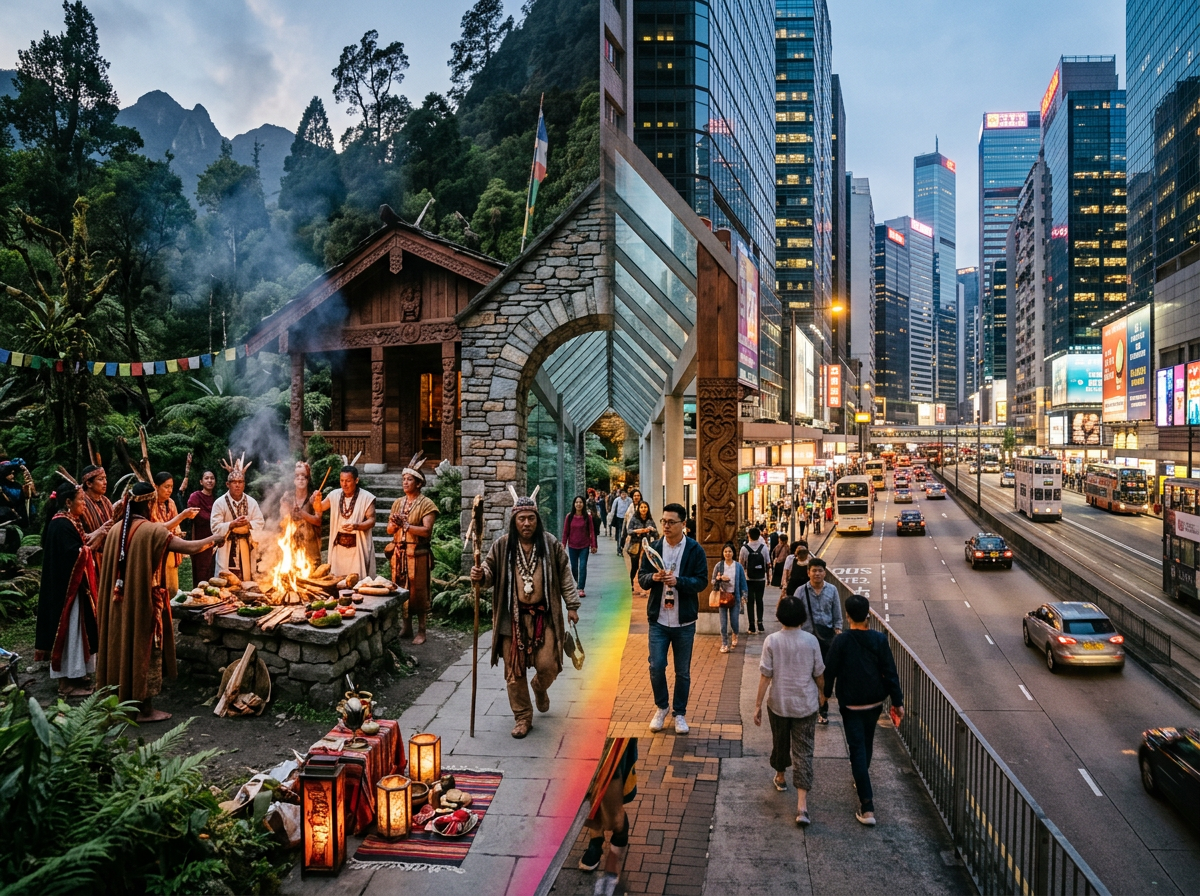
    Across the Philippines and its global diaspora, there is a growing call to “reclaim the Babaylan.”

    https://images.openai.com/static-rsc-4/A_eyOP5RJTgcotPVXWPzMw01e2DBRjBERsm69k5BW1PQQcZvxQwjUtFzKyFp1nThQKDR2G46AzSWRM24bmoIoNLErJSRrdxMWbM2rJIMhoQygDCXbNdoH1b9y7LDTWdlfaILChEs3M4YyS2ADtMYuXQwebUK0Z-C7rwLgLe5uWZBLvFDk6eLhDUnDbr1SiC5?purpose=fullsize

    The Babaylan is often remembered as a healer, priestess, or spiritual intermediary—one who served as a bridge between the seen and unseen, the individual and the community.

    But in modern discourse, this legacy is frequently misunderstood.

    https://images.openai.com/static-rsc-4/OVqcpp9N6opQ9eoGa1zK_QVF0WiqRvD_DOeKbSZ-ACGOgf0R1inlUHmpMr1dXl8HFVrnwC8WHDx9EYIC5fTUwx7hL27ABTtP_r3TScb6eaMNLpCFhzp0s2_WJlhizKMW-_WSe0g_qb5Sne-8uUyFgknA1N9_zsMj0fKTB-0xvJO1mMDQ6j4spTr8dvmKYox1?purpose=fullsize

    It is reduced to:

    • A spiritual identity to adopt
    • A ritual practice to perform
    • A symbolic return to the past
    https://images.openai.com/static-rsc-4/82c_if3h4FyLnYcHWjHGBW5mAtSXzIYhvdbrQFaO2qiuZoMXaJV9lgOAWe5W5DKuLN6TE4UlEN23ce8zWwT1BXwn6_LByZXph_N_ivr6CrcMoGrpKM_AwWM1aSjWliG_pLwL6uRTri8P9svvsNXLnQTdgGYa1WE3G0N6-jehJnz0P7K_pnXOWtKUtyUf0ju_?purpose=fullsize

    These interpretations, while well-intentioned, risk missing the deeper truth:

    The Babaylan was not defined by appearance or ritual alone—but by function, responsibility, and integration.

    Reclaiming this legacy, therefore, is not about imitation.

    It is about embodiment in context.


    The Historical Disruption

    Before colonization, Babaylan figures held central roles in many Filipino communities.

    They were:

    • Healers of both physical and emotional conditions
    • Custodians of cultural knowledge
    • Mediators in conflict
    • Guides in communal decision-making

    This integration of roles created a form of leadership that was:

    • Holistic
    • Contextual
    • Relational

    However, with the arrival of Spanish colonization in the 16th century, these roles were systematically undermined and replaced by institutional religious hierarchies (Jocano, 1969; Constantino, 1975).

    The consequences were profound:

    • Indigenous knowledge systems were marginalized
    • Spiritual authority was externalized
    • Community-based leadership was disrupted

    Over time, the Babaylan became not just displaced—but forgotten, distorted, or suppressed.


    Why the Babaylan Matters Today

    The resurgence of interest in the Babaylan is not accidental.

    It reflects a broader need for:

    • Integrated leadership
    • Cultural grounding
    • Ethical guidance in complex systems

    Modern life—especially in the Filipino context—is characterized by:

    • Rapid globalization
    • Economic pressure
    • Identity fragmentation

    (Crosslink: From Fragmented Souls to Sovereign Stewards: Reclaiming Identity After 500 Years of Institutional Trauma)

    In such conditions, there is a clear gap:

    Technical systems exist—but integrated human guidance often does not.

    The Babaylan archetype offers a model for bridging that gap.


    From Archetype to Application

    To reclaim the Babaylan legacy in modern life, we must translate its core functions into contemporary forms.

    This involves three key shifts:


    1. From Ritual Alone to Inner Integration

    Spiritual practices have value.

    But without inner work, they can become performative.

    True embodiment requires:

    • Awareness of personal patterns
    • Engagement with shadow
    • Emotional regulation

    (Crosslink: The Steward’s Mirror: Why Facing Our Shadow Is the First Step to Reclaiming the Babaylan Legacy)

    Carl Jung (1959) emphasized that integrating the “shadow”—the parts of ourselves we avoid or deny—is essential for psychological wholeness.

    For modern stewards, this is non-negotiable.


    2. From Identity to Responsibility

    Claiming the Babaylan identity is less important than fulfilling its function.

    This means asking:

    • What do I hold for others?
    • How do I contribute to collective well-being?
    • Where am I responsible for coherence?

    Responsibility replaces performance.


    3. From Isolation to Systems Engagement

    The original Babaylan operated within community systems.

    Today, this extends to:

    • Economic systems
    • Governance structures
    • Organizational environments

    (Crosslink: ARK-003: Jurisdictional Sovereignty: Legal Standard Work)

    Reclaiming the legacy requires engaging with these systems—not avoiding them.


    The Core Functions of the Modern Babaylan

    Rather than replicating historical roles, we can identify core functions that remain relevant:


    1. Integrator

    The Babaylan bridges:

    • Inner and outer worlds
    • Individual and collective needs
    • Tradition and modernity

    This requires systems thinking and emotional intelligence.


    2. Regulator

    They maintain stability in times of stress.

    This includes:

    • Emotional grounding
    • Conflict navigation
    • Decision clarity

    (Crosslink: Financial Sovereignty Is a Nervous System State: Grounding the QFS in the Filipino Reality)


    3. Translator

    They make complex realities understandable.

    In modern terms:

    • Explaining systems
    • Bridging cultural gaps
    • Communicating across domains

    4. Steward

    They hold responsibility for:

    • Resources
    • Relationships
    • Outcomes

    This is where leadership becomes tangible.


    The Risks of Superficial Reclamation

    Without grounding, attempts to reclaim the Babaylan legacy can lead to:

    • Spiritual bypassing – avoiding real-world responsibilities
    • Cultural romanticization – idealizing the past without context
    • Authority without accountability – claiming roles without capacity

    These patterns can cause confusion or harm.

    They also dilute the integrity of the legacy itself.


    The Role of the Nervous System

    Embodying this archetype requires more than intellectual understanding.

    It requires physiological capacity.

    When individuals are:

    • Overwhelmed
    • Stressed
    • Dysregulated

    They cannot:

    • Hold space effectively
    • Make clear decisions
    • Sustain leadership

    This is why regulation is foundational.


    Practical Pathways for Reclamation

    Reclaiming the Babaylan legacy in modern life can begin with grounded steps:


    1. Develop Self-Awareness

    Understand:

    • Your patterns
    • Your triggers
    • Your strengths and limits

    2. Engage in Continuous Learning

    Study:

    • Filipino history and culture
    • Systems thinking
    • Human behavior

    3. Practice Ethical Leadership

    Prioritize:

    • Transparency
    • Accountability
    • Responsibility

    4. Build Community Connections

    Leadership is relational.

    Engage with:

    • Local groups
    • Collaborative initiatives
    • Shared projects

    5. Integrate Action and Reflection

    Balance:

    • Doing
    • Observing
    • Adjusting

    The Ark Perspective: From Archetype to Architecture

    Within the Ark framework, the Babaylan is not isolated.

    It is part of a broader movement toward:

    • Sovereign individuals
    • Coherent communities
    • Functional systems

    The archetype becomes:

    A human interface between insight and implementation


    A Modern Expression

    Today, the Babaylan may not look like a ritual specialist.

    They may be:

    • A community organizer
    • A systems designer
    • An educator
    • A leader in business or governance

    What defines them is not form—

    But function.


    Conclusion: Embodiment Over Imitation

    Reclaiming the Babaylan legacy is not about returning to the past.

    It is about bringing forward what remains relevant—and integrating it into present realities.

    This requires:

    • Inner work
    • Cultural understanding
    • Systems engagement

    It asks for:

    • Responsibility over recognition
    • Integration over performance
    • Stewardship over symbolism

    The legacy is not something to wear.

    It is something to live.

    And in living it, a new form of leadership emerges—

    One that is grounded in history, responsive to the present, and capable of shaping the future.


    References

    Constantino, R. (1975). The Philippines: A Past Revisited. Tala Publishing Services.

    David, E. J. R. (2013). Brown Skin, White Minds. Information Age Publishing.

    Jocano, F. L. (1969). Philippine Mythology. University of the Philippines Press.

    Jung, C. G. (1959). Aion: Researches into the Phenomenology of the Self. Princeton University Press.


    The Sovereign Professional: A structural map of power, systems thinking, and personal autonomy—dedicated to helping the independent professional navigate complexity and own their value stream.AskAsk


    ©2026 Gerald Daquila • Life.Understood. • Systems Thinking, Leadership Architecture, and Applied Coherence
  • Why the Global Reset Requires an Internal Reboot: The Role of Shadow Work in NESARA/GESARA

    Why the Global Reset Requires an Internal Reboot: The Role of Shadow Work in NESARA/GESARA


    Beyond external change—why no financial or political reset can succeed without psychological and cultural integration


    Meta Description

    Can a global financial reset succeed without inner transformation? Explore why shadow work and identity coherence are essential for any meaningful systemic shift, including narratives like NESARA/GESARA.


    The Allure of the External Reset

    In recent years, conversations around a “global reset” have gained traction—often framed through narratives such as NESARA/GESARA.

    These ideas typically promise sweeping transformations: debt relief, equitable wealth distribution, restored governance, and systemic fairness.

    At face value, the appeal is understandable.

    For nations like the Philippines—shaped by colonial extraction, economic dependency, and systemic inequality—the idea of a structural reset speaks directly to long-standing grievances.

    But there is a critical question that is often overlooked:

    Can external systems truly change if internal patterns remain the same?


    A Necessary Clarification

    Before going deeper, it is important to ground this discussion.

    As of today, NESARA/GESARA are not recognized as implemented policies by any verified global governing body. They exist largely in speculative, interpretive, or aspirational discourse rather than institutional reality.

    This does not invalidate the desire behind them.

    But it does highlight a key distinction:

    • A narrative of change is not the same as the capacity to sustain change

    And capacity is where inner work becomes non-negotiable.


    The Pattern Beneath the System

    Every system—financial, political, or social—is a reflection of the consciousness that sustains it.

    Corruption, inequality, and instability do not emerge in isolation. They are expressions of deeper patterns:

    • Scarcity thinking
    • Power hoarding
    • Short-term survival behavior
    • Distrust and fragmentation

    These patterns are not confined to leaders or institutions.

    They exist at every level of society.

    This aligns with research in social psychology showing that systems tend to reproduce the dominant behaviors and norms of the populations within them (North, 1990; Acemoglu & Robinson, 2012).

    In other words:
    We do not just live under systems. We participate in their continuation.


    Shadow Work: The Missing Component

    This is where shadow work becomes essential.

    Shadow work refers to the process of identifying, acknowledging, and integrating the parts of ourselves—and our collective identity—that are denied or suppressed (Jung, 1959).

    At a societal level, this includes:

    • Internalized colonial mentality
    • Normalized corruption at micro-levels
    • Avoidance of accountability
    • Dependence on external saviors or solutions

    (Crosslink: From Informer to Steward: Why True Leadership Begins with Owning Our Shared Shadow)

    Without confronting these elements, any external reset risks becoming superficial.


    The Reset Paradox

    History provides a clear pattern:

    Major systemic shifts—revolutions, reforms, regime changes—often begin with hope but eventually reproduce familiar dysfunctions.

    Why?

    Because structures changed, but consciousness did not.

    Frantz Fanon (1963) observed this in post-colonial societies, where new leadership often replicated the extractive behaviors of former colonizers.

    This creates what we can call the Reset Paradox:

    Without inner transformation, new systems inherit old dysfunctions.


    The Filipino Context: A High-Stakes Test Case

    The Philippines represents a unique convergence point:

    • A deeply colonized past
    • A globally distributed diaspora
    • High adaptability and resilience
    • Persistent systemic challenges

    This makes it not just a participant—but a prototype environment.

    (Crosslink: The Philippine Ark: A Global South Prototype)

    If a global reset were to occur, nations like the Philippines would face a critical test:

    Can new resources be stewarded differently than before?


    Or will they be absorbed into existing patterns?


    From Dependency to Sovereignty

    One of the most subtle shadows in “reset” narratives is dependency.

    The belief that:

    • Change will arrive externally
    • Solutions will be delivered
    • Systems will fix themselves

    This mindset mirrors colonial dynamics—where authority and transformation are expected from outside.

    True sovereignty requires a shift:

    From:

    “When the reset happens, things will improve.”

    To:

    “Are we prepared to sustain what we are asking for?”


    Internal Reboot: What It Actually Means

    An internal reboot is not abstract spirituality.

    It is practical, observable, and measurable in behavior.


    1. Psychological Integration

    Recognizing and interrupting inherited patterns:

    • Scarcity-driven decisions
    • Avoidance of responsibility
    • External validation seeking

    2. Cultural Recalibration

    Re-examining norms:

    • When does pakikisama enable dysfunction?
    • When does hiya prevent truth-telling?

    (Crosslink: Naming the Unspoken: A Guide to Navigating the Hidden Fractures of Our National Identity)


    3. Behavioral Integrity

    Aligning actions with values:

    • No tolerance for “small” corruption
    • Consistency between private and public behavior

    4. Systems Thinking

    Understanding how individual behavior scales into systemic outcomes.

    This is where the Ark architecture becomes critical:

    • Small coherent units
    • Replicable governance models
    • Built-in accountability

    What Happens If the Inner Work Is Ignored

    If a large-scale financial or governance reset were to occur without internal reboot:

    • Wealth redistribution may concentrate again
    • Corruption may reappear in new forms
    • Institutional trust may erode quickly
    • Public disillusionment may deepen

    In short:
    The reset would collapse into a recycle.


    A More Grounded Interpretation of “Global Reset”

    Instead of viewing the reset as a singular event, a more grounded framing is:

    A multi-layered transition involving both external restructuring and internal maturation.

    This includes:

    • Policy and institutional reform
    • Economic redesign
    • Cultural evolution
    • Psychological integration

    All four must move together.

    Remove one, and the system destabilizes.


    The Role of Stewardship

    This is where this body of work converges.

    A true reset—if it is to succeed—requires not just awareness, but stewardship capacity.

    People who can:

    • Hold resources without misusing them
    • Build systems without replicating harm
    • Lead without reverting to dominance patterns

    (Crosslink: ARK-001: The 50-Person Resource Loop)

    This is not mass leadership in the traditional sense.


    It is distributed, grounded, and practiced at every level.


    Conclusion: The Reset Begins Within

    The idea of a global reset speaks to something real:

    A collective recognition that current systems are no longer sustainable.

    But the deeper truth is this:

    No external reset can outpace internal readiness.


    The work is not to wait.


    The work is to prepare.

    To name the shadow.
    To integrate it.
    To build differently.

    So that if and when larger shifts occur, they do not collapse under the weight of old patterns.

    The future is not secured by policy alone.


    It is secured by the people who will live within it.


    References

    Acemoglu, D., & Robinson, J. A. (2012). Why Nations Fail. Crown Business.

    Fanon, F. (1963). The Wretched of the Earth. Grove Press.

    Jung, C. G. (1959). Aion: Researches into the Phenomenology of the Self. Princeton University Press.

    North, D. C. (1990). Institutions, Institutional Change and Economic Performance. Cambridge University Press.

    David, E. J. R. (2013). Brown Skin, White Minds. Information Age Publishing.


    The Sovereign Professional: A structural map of power, systems thinking, and personal autonomy—dedicated to helping the independent professional navigate complexity and own their value stream.Ask


    ©2026 Gerald Daquila • Life.Understood. • Systems Thinking, Leadership Architecture, and Applied Coherence

  • Standardized Ancestry: Why the Babaylan was the Original “Systems Engineer”

    Standardized Ancestry: Why the Babaylan was the Original “Systems Engineer”


    For the modern Filipino diaspora—those of us navigating the high-pressure corridors of Silicon Valley, the sterile efficiency of global healthcare, or the complex architectures of international finance—the term Babaylan often feels like a relic.

    We’ve been conditioned to view indigenous leadership through a colonial lens: as “mysticism,” “superstition,” or at best, “alt-healing.”

    But if we strip away the romanticized (and often dismissed) “spiritual” labels and look at the functional outputs, a different reality emerges.

    The Babaylan was not just a healer or a medium; they were the community’s primary Systems Engineer.

    By reframing our ancestry through the lens of Standardized Ancestry, we bridge the gap between our high-tech present and our high-wisdom past.

    We begin to see that the “New Earth” we are trying to build today is actually a restoration of the systemic coherence our ancestors perfected centuries ago.


    1. The Social Architect: Managing High-Entropy Environments

    In systems engineering, the goal is to maintain order in a system that naturally tends toward entropy (disorder).

    In the pre-colonial Philippines, the “system” was the Barangay—a delicate balance of ecological resources, tribal alliances, and lineage preservation.

    The Babaylan served as the Chief Operating Officer (COO) of this social ecosystem. While the Datu handled the outward-facing mechanics of war and politics, the Babaylan managed the internal “back-end.”

    They were responsible for:

    • Conflict Resolution Protocols: Addressing interpersonal “bugs” in the community before they led to systemic crashes (tribal wars).
    • Resource Allocation: Determining planting and harvesting cycles based on astronomical and ecological data (the “Records”).
    • Crisis Management: Providing the psychological and logistical grounding needed during natural disasters.

    When we look at Philippine Systems today, we see the consequences of removing this regulatory layer.

    The breakdown of trust and the rise of persistent scarcity are systemic failures that occur when the “Chief Engineer” of the community is replaced by predatory incentives.


    2. Ritual as Standard Operating Procedure (SOP)

    The tech-savvy mind loves a good SOP. We want “Standard Work Instructions” (SWI) that ensure repeatable, high-quality outcomes.

    We often view indigenous rituals as “performative,” but from a systems perspective, a ritual is simply an encoded algorithm for collective regulation.

    Consider a community healing ritual. It wasn’t just about “spirits”; it was a multi-sensory protocol designed to:

    1. Lower the Cortisol Levels of the collective (Nervous System Regulation).
    2. Re-establish Identity (Data Alignment).
    3. Reinforce the Social Contract (Protocol Verification).

    The Babaylan utilized what we might call Biopsychosocial Architecture. They understood that a community’s health was a function of its coherence.

    If we were to express this as a systemic balance equation, it might look like this:

    \[ C_{sys} = \frac{\sum (R_{i} \cdot A_{v})}{E_{f}} \]

    Where:

    • \( C_{sys} \) — Systemic Coherence
    • \( R_{i} \) — Relational Integrity
    • \( A_{v} \) — Ancestral Validity
    • \( E_{f} \) — Environmental Friction

    3. Data Entry from the Akashic Layer

    For the diaspora working in AI, data science, or software dev, the concept of the Akashic Records can be reframed as the “Universal Metadata Layer.” The Babaylan was the “User Interface” (UI) for this data.

    They didn’t just “talk to spirits”; they accessed the long-tail data of their lineage. They understood patterns—how certain family traumas would repeat over seven generations, or how changes in the local water table would eventually impact trade.

    This wasn’t magic; it was Advanced Pattern Recognition.

    By accessing this “Living Archive,” the Babaylan could perform “Predictive Maintenance” on the community. They could see where a system was heading toward a “Hard Fork” and intervene before the rupture became permanent.

    This is exactly the level of Akashic Leadership we are now training for in the modern era.


    4. Reclaiming the “Engineer” Identity for the Diaspora

    For the Filipino diaspora, “Standardized Ancestry” is a pathway to psychological and professional sovereignty.

    When you realize you come from a lineage of Systems Engineers, your seat at the boardroom table or the dev-scrum changes. You are no longer just a “participant” in Western systems; you are a Systems Auditor.

    The modern diaspora often suffers from a “split-stack” existence: high-functioning in professional systems, but culturally and spiritually “offline.” Bridging this gap requires us to recognize that our ancestral wisdom is not a “hobby”—it is a Foundational Tech Stack.


    Why This Matters for the “New Earth”

    As we transition into new economic and social structures, the world is looking for “Sovereign Stewards.” We need people who can:

    • Build systems that don’t exploit the user.
    • Design “Closed-Loop” economies that respect ecological limits.
    • Lead through Coherence, not just Power.

    The Babaylan already did this. By studying their “Standard Work,” we can bypass the “beta-testing” phase of the New Earth and move straight into implementation.


    5. Next Steps for the Sovereign Steward

    If you find yourself nodding along—if your “Tech Mind” and your “Soul Heart” are finally shaking hands—your next step is to move from Observation to Application.

    The Living Archive is designed to help you decode these patterns in your own life. Whether you are navigating the Keystone References of system design or looking to participate in Stewardship Pathways, the goal is the same:

    To become the Systems Engineer your lineage already knows you are.

    The pain of the diaspora—the feeling of being “unplugged”—is actually the “Gold” Carl Jung spoke of. It is the friction that forces you to understand the system so deeply that you eventually learn how to redesign it.

    Welcome to the team. The system is ready for its upgrade.


    The Sovereign Professional: A structural map of power, systems thinking, and personal autonomy—dedicated to helping the independent professional navigate complexity and own their value stream.


    Note from the Architect: I use these Lean principles because they are the only way I found to keep my energy from leaking while building in the physical world. It’s not about productivity; it’s about protection.

    ©2026 Gerald Daquila • Life.Understood. • Systems Thinking, Leadership Architecture, and Applied Coherence