
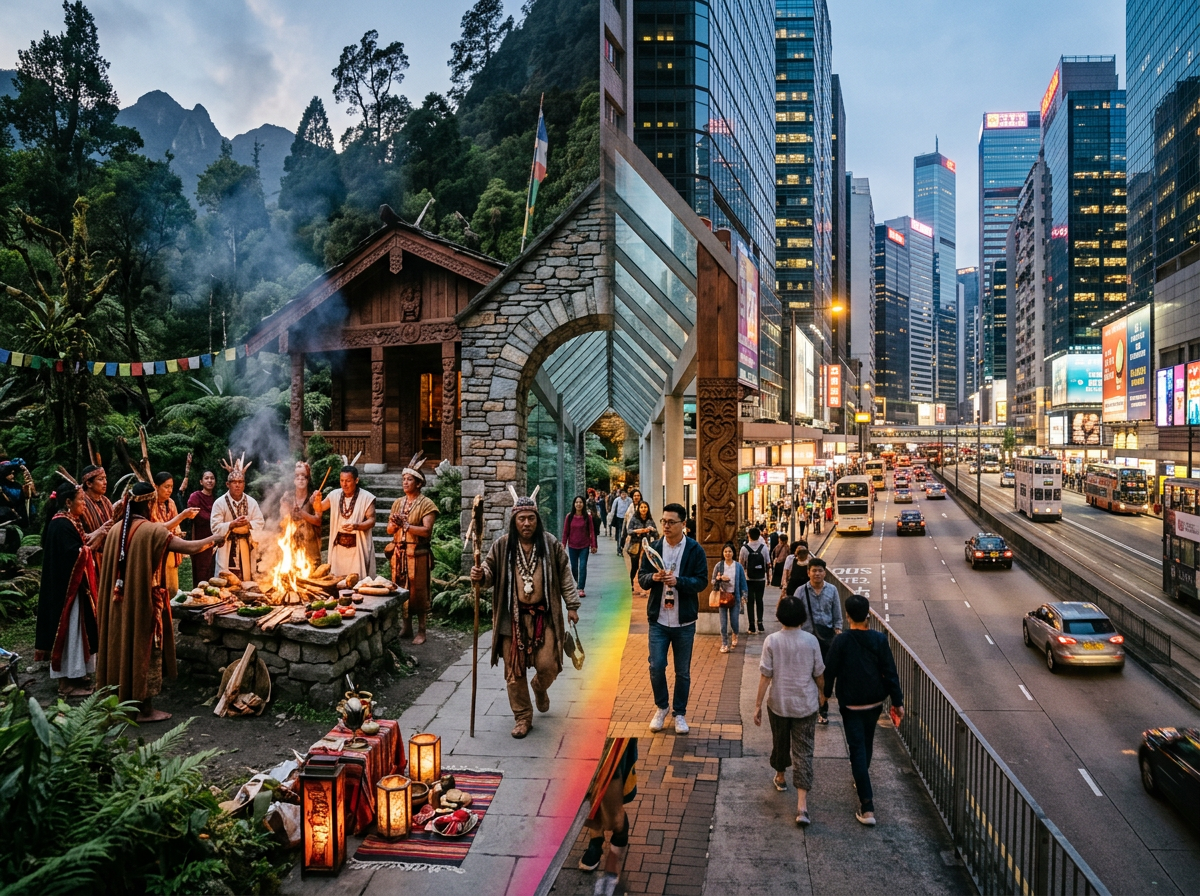
How Filipinos can embody ancestral wisdom through grounded leadership, inner work, and systems stewardship
Meta Description
What does it mean to reclaim the Babaylan legacy today? Explore how Filipinos can integrate ancestral wisdom with modern systems, shadow work, and sovereign leadership.
A Legacy Misunderstood
Across the Philippines and its global diaspora, there is a growing call to “reclaim the Babaylan.”

The Babaylan is often remembered as a healer, priestess, or spiritual intermediary—one who served as a bridge between the seen and unseen, the individual and the community.
But in modern discourse, this legacy is frequently misunderstood.

It is reduced to:
- A spiritual identity to adopt
- A ritual practice to perform
- A symbolic return to the past

These interpretations, while well-intentioned, risk missing the deeper truth:
The Babaylan was not defined by appearance or ritual alone—but by function, responsibility, and integration.
Reclaiming this legacy, therefore, is not about imitation.
It is about embodiment in context.
The Historical Disruption
Before colonization, Babaylan figures held central roles in many Filipino communities.
They were:
- Healers of both physical and emotional conditions
- Custodians of cultural knowledge
- Mediators in conflict
- Guides in communal decision-making
This integration of roles created a form of leadership that was:
- Holistic
- Contextual
- Relational
However, with the arrival of Spanish colonization in the 16th century, these roles were systematically undermined and replaced by institutional religious hierarchies (Jocano, 1969; Constantino, 1975).
The consequences were profound:
- Indigenous knowledge systems were marginalized
- Spiritual authority was externalized
- Community-based leadership was disrupted
Over time, the Babaylan became not just displaced—but forgotten, distorted, or suppressed.
Why the Babaylan Matters Today
The resurgence of interest in the Babaylan is not accidental.
It reflects a broader need for:
- Integrated leadership
- Cultural grounding
- Ethical guidance in complex systems
Modern life—especially in the Filipino context—is characterized by:
- Rapid globalization
- Economic pressure
- Identity fragmentation
(Crosslink: From Fragmented Souls to Sovereign Stewards: Reclaiming Identity After 500 Years of Institutional Trauma)
In such conditions, there is a clear gap:
Technical systems exist—but integrated human guidance often does not.
The Babaylan archetype offers a model for bridging that gap.
From Archetype to Application
To reclaim the Babaylan legacy in modern life, we must translate its core functions into contemporary forms.
This involves three key shifts:
1. From Ritual Alone to Inner Integration
Spiritual practices have value.
But without inner work, they can become performative.
True embodiment requires:
- Awareness of personal patterns
- Engagement with shadow
- Emotional regulation
(Crosslink: The Steward’s Mirror: Why Facing Our Shadow Is the First Step to Reclaiming the Babaylan Legacy)
Carl Jung (1959) emphasized that integrating the “shadow”—the parts of ourselves we avoid or deny—is essential for psychological wholeness.
For modern stewards, this is non-negotiable.
2. From Identity to Responsibility
Claiming the Babaylan identity is less important than fulfilling its function.
This means asking:
- What do I hold for others?
- How do I contribute to collective well-being?
- Where am I responsible for coherence?
Responsibility replaces performance.
3. From Isolation to Systems Engagement
The original Babaylan operated within community systems.
Today, this extends to:
- Economic systems
- Governance structures
- Organizational environments
(Crosslink: ARK-003: Jurisdictional Sovereignty: Legal Standard Work)
Reclaiming the legacy requires engaging with these systems—not avoiding them.
The Core Functions of the Modern Babaylan
Rather than replicating historical roles, we can identify core functions that remain relevant:
1. Integrator
The Babaylan bridges:
- Inner and outer worlds
- Individual and collective needs
- Tradition and modernity
This requires systems thinking and emotional intelligence.
2. Regulator
They maintain stability in times of stress.
This includes:
- Emotional grounding
- Conflict navigation
- Decision clarity
(Crosslink: Financial Sovereignty Is a Nervous System State: Grounding the QFS in the Filipino Reality)
3. Translator
They make complex realities understandable.
In modern terms:
- Explaining systems
- Bridging cultural gaps
- Communicating across domains
4. Steward
They hold responsibility for:
- Resources
- Relationships
- Outcomes
This is where leadership becomes tangible.
The Risks of Superficial Reclamation
Without grounding, attempts to reclaim the Babaylan legacy can lead to:
- Spiritual bypassing – avoiding real-world responsibilities
- Cultural romanticization – idealizing the past without context
- Authority without accountability – claiming roles without capacity
These patterns can cause confusion or harm.
They also dilute the integrity of the legacy itself.
The Role of the Nervous System
Embodying this archetype requires more than intellectual understanding.
It requires physiological capacity.
When individuals are:
- Overwhelmed
- Stressed
- Dysregulated
They cannot:
- Hold space effectively
- Make clear decisions
- Sustain leadership
This is why regulation is foundational.
Practical Pathways for Reclamation
Reclaiming the Babaylan legacy in modern life can begin with grounded steps:
1. Develop Self-Awareness
Understand:
- Your patterns
- Your triggers
- Your strengths and limits
2. Engage in Continuous Learning
Study:
- Filipino history and culture
- Systems thinking
- Human behavior
3. Practice Ethical Leadership
Prioritize:
- Transparency
- Accountability
- Responsibility
4. Build Community Connections
Leadership is relational.
Engage with:
- Local groups
- Collaborative initiatives
- Shared projects
5. Integrate Action and Reflection
Balance:
- Doing
- Observing
- Adjusting
The Ark Perspective: From Archetype to Architecture
Within the Ark framework, the Babaylan is not isolated.
It is part of a broader movement toward:
- Sovereign individuals
- Coherent communities
- Functional systems
The archetype becomes:
A human interface between insight and implementation
A Modern Expression
Today, the Babaylan may not look like a ritual specialist.
They may be:
- A community organizer
- A systems designer
- An educator
- A leader in business or governance
What defines them is not form—
But function.
Conclusion: Embodiment Over Imitation
Reclaiming the Babaylan legacy is not about returning to the past.
It is about bringing forward what remains relevant—and integrating it into present realities.
This requires:
- Inner work
- Cultural understanding
- Systems engagement
It asks for:
- Responsibility over recognition
- Integration over performance
- Stewardship over symbolism
The legacy is not something to wear.
It is something to live.
And in living it, a new form of leadership emerges—
One that is grounded in history, responsive to the present, and capable of shaping the future.
References
Constantino, R. (1975). The Philippines: A Past Revisited. Tala Publishing Services.
David, E. J. R. (2013). Brown Skin, White Minds. Information Age Publishing.
Jocano, F. L. (1969). Philippine Mythology. University of the Philippines Press.
Jung, C. G. (1959). Aion: Researches into the Phenomenology of the Self. Princeton University Press.
The Sovereign Professional: A structural map of power, systems thinking, and personal autonomy—dedicated to helping the independent professional navigate complexity and own their value stream.AskAsk
©2026 Gerald Daquila • Life.Understood. • Systems Thinking, Leadership Architecture, and Applied Coherence
Leave a Reply