
Meta Description
The Living Archive contains several kinds of documents, each serving a distinct role within the institution. This guide explains the purpose, scope, and methodological identity of every document type, helping readers understand not only what they are reading, but how it is intended to be read.
Document Type: Constitutional Method
Purpose: Defines the standards by which different kinds of claims are evaluated, recognizing that appropriate evidence depends upon the nature of the question being explored.
Scope: Applies across all public corpora as the constitutional framework for evaluating evidence with rigor, proportionality, and methodological integrity.
Every claim rests upon some form of evidence.
The quality of a conclusion depends not only on the reasoning applied, but also on the quality, relevance, and limitations of the evidence from which it is drawn.
Different questions require different forms of evidence.
No single standard is appropriate for every kind of inquiry.
The Living Archive therefore evaluates evidence according to its fitness for the question being asked rather than according to a single hierarchy of authority.
This approach recognizes that understanding often emerges through the careful integration of multiple forms of evidence rather than reliance upon any one source alone.
Empirical Evidence
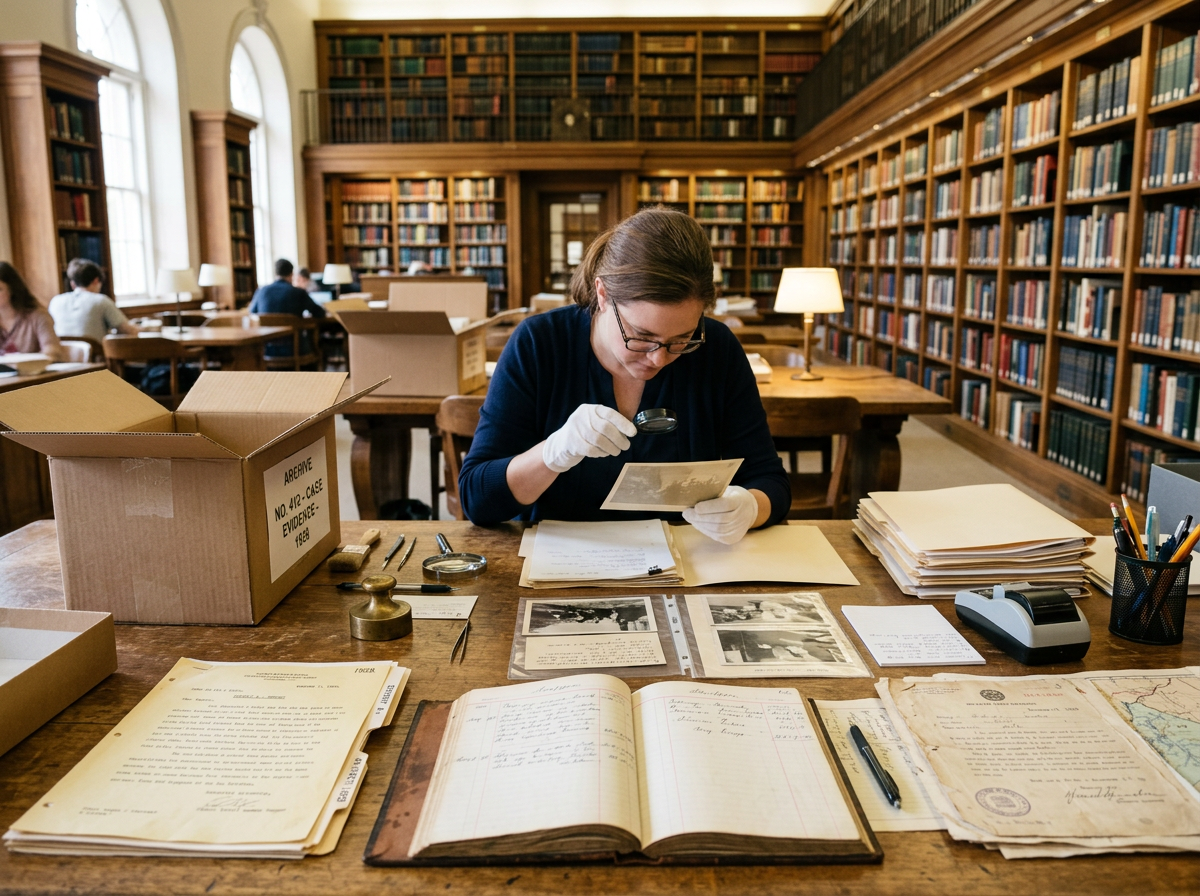
Empirical evidence arises from direct observation, measurement, experimentation, historical documentation, or other forms of verifiable investigation.
Whenever empirical claims are made, they should remain accountable to evidence that can be examined, challenged, and, where appropriate, independently verified.
Empirical evidence provides the strongest foundation for claims about observable reality.
Experiential Evidence
Human experience constitutes an important source of understanding, particularly in questions concerning meaning, development, relationships, and consciousness.
Individual experience should neither be dismissed as meaningless nor treated as universally conclusive.
The Living Archive values lived experience as evidence of human reality while recognizing its contextual nature and inherent limitations.
Historical Evidence
Patterns often become visible only across time.
Historical records, cultural developments, institutional evolution, and recurring human responses provide evidence that individual events alone cannot reveal.
Historical evidence should be interpreted with attention to context, continuity, and change.
Cross-Disciplinary Evidence
Complex human questions rarely belong to a single field of knowledge.
The Living Archive therefore draws insight from multiple disciplines where appropriate, seeking convergence rather than disciplinary isolation.
Agreement across independent domains of inquiry often strengthens confidence in an explanation.
Divergence may reveal either the limits of current understanding or the need for more careful integration.
Structural Evidence
Some patterns become visible not through isolated facts but through the relationships among many observations.
Systems, networks, recurring structures, and persistent dynamics may reveal forms of evidence that individual events cannot.
Structural evidence seeks understanding through patterns rather than isolated examples.
Philosophical Reflection
Certain questions concern concepts that cannot be settled through empirical investigation alone.
Reasoned philosophical analysis provides a disciplined means of examining assumptions, clarifying concepts, identifying contradictions, and exploring implications.
Such reflection contributes to understanding even where definitive proof remains unavailable.
No single form of evidence should automatically override all others.
Instead, evidence should be weighed according to its relevance, reliability, scope, and explanatory contribution to the question under consideration.
The Living Archive therefore seeks not the accumulation of evidence for its own sake, but the responsible integration of evidence appropriate to the nature of each inquiry.
Understanding grows strongest where multiple forms of evidence converge without forcing agreement where none yet exists.
Evidence informs judgment.
It does not replace it.
Constitutional Position
This document forms part of The Living Archive Method, the constitutional architecture that makes the Living Archive’s way of reasoning explicit, teachable, and open to examination.
The documents within this series describe how the Living Archive approaches inquiry. They are intended to make its reasoning transparent rather than prescribe what readers must conclude.
Continue Exploring
Previous: Levels of Claim
Learn how the Living Archive distinguishes among different kinds of claims and the standards appropriate to each.
Next: Boundary Conditions
Discover why every method requires clearly defined limits and how acknowledging them strengthens rather than weakens understanding.
Institutional Stewardship
Maintained by Gerald Daquila
Founder and Steward, Living Archive
Life.Understood.
© Gerald Daquila. All Rights Reserved.