
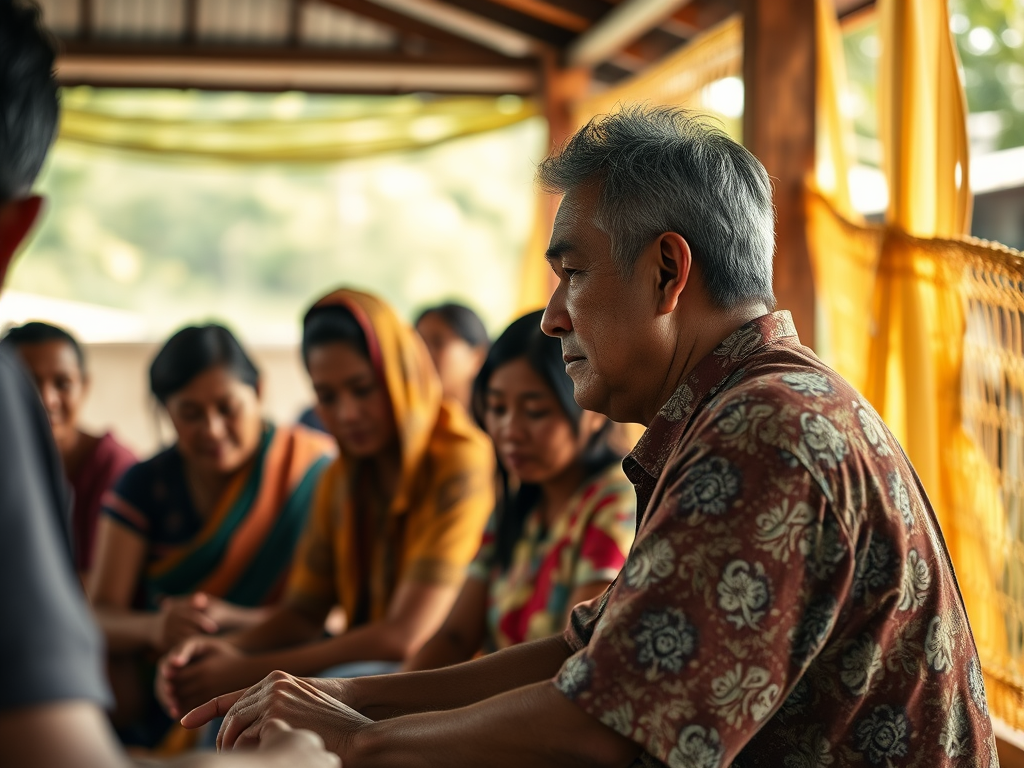
When Trust Becomes Personal Instead of Systemic
Meta Description
Why does trust break down in Philippine systems? This essay explores how uncertainty, inconsistent institutions, patronage networks, and survival behavior shape trust, cooperation, incentives, and social adaptation over time.
Trust is essential for any system to function.
It allows people to cooperate, participate, and engage with institutions under the assumption that outcomes will be fair, predictable, and consistent.
In strong systems, trust is embedded structurally:
- rules are applied consistently
- processes are reliable
- outcomes are not dependent on personal relationships
In the Philippines, trust often operates differently.
It is present—but conditional.
- trust is placed in people, not systems
- reliability depends on relationships, not procedures
- outcomes are often negotiated rather than assumed
This creates a distinct pattern:
Trust does not disappear—but it becomes localized, strategic, and adaptive.
Understanding why this happens requires examining how uncertainty, incentives, and survival interact over time.
What’s Actually Happening
Trust depends on predictability.
When individuals can expect consistent outcomes from similar actions, institutional trust forms naturally.
But in environments where:
- access is uneven
- rules are inconsistently applied
- outcomes vary depending on context
predictability weakens.
Under these conditions, individuals adapt—not by abandoning trust, but by redefining it.
Instead of trusting systems, they trust:
- family
- close networks
- known intermediaries
This aligns with institutional insights from Elinor Ostrom, which show that cooperation depends on reliable rules and enforcement.
When those are inconsistent, informal systems emerge.
Trust becomes:
- relational rather than procedural
- selective rather than general
- conditional rather than assumed
The Deeper Layer: Trust and Survival Behavior
In the Philippine context, this adaptation often begins early.
Because of poverty, uneven opportunity, and structural imbalance, individuals learn that:
- outcomes are not always based on merit
- access may depend on negotiation or connection
- systems cannot always be taken at face value
Perceptions of reality and fairness become increasingly negotiated through context and relationships.
This does not mean dishonesty in a moral sense.
It reflects an adaptive stance:
- questioning official processes
- interpreting signals beyond formal rules
- assuming that outcomes may be influenced behind the surface
As institutional trust weakens, a default assumption can emerge:
others may act in self-interest first
This creates a “defensive mindset”:
- caution replaces openness
- verification replaces assumption
- self-protection replaces cooperation
This is not irrational.
It is a survival strategy within an uncertain system.
The Pattern: How Trust Breaks Down
This dynamic follows a structured sequence:
1. Inconsistent System Experience
Individuals observe that outcomes vary—even under similar conditions.
2. Perceived Uncertainty
Confidence in institutional reliability declines.
Rules are seen as flexible or situational.
3. Cognitive Adjustment
Individuals begin to assume that:
- outcomes may be negotiated
- formal processes are not fully reliable
- others may act strategically
4. Shift to Personal Trust
Trust becomes localized:
- within family
- within known networks
- through intermediaries
5. Defensive Behavior
Individuals act to minimize risk:
- relying on connections
- avoiding exposure
- prioritizing certainty over fairness
6. System Reinforcement
As more individuals behave this way:
- informal systems strengthen
- institutional pathways weaken
- trust in systems declines further
7. Stabilized Low-Trust Equilibrium
The system reaches a stable state where:
- trust is uneven
- behavior is defensive
- cooperation is conditional
This reveals a critical insight:
Trust breakdown is not sudden—it is a gradual adaptation to uncertainty.
Connection to Patronage and Power
This dynamic directly reinforces the padrino system.
When institutional trust is limited:
- relationships provide predictability
- intermediaries reduce uncertainty
- outcomes become more controllable
At the same time, power concentration interacts with trust:
- those within networks operate with higher certainty
- those outside operate with higher risk
This creates two parallel realities:
- a high-trust environment within networks
- a low-trust environment outside them
This dual structure reinforces inequality and limits mobility.
Why It Keeps Happening
If low trust reduces system efficiency, why does it persist?
Because it works at the individual level.
Localized trust provides:
- faster resolution
- clearer expectations
- reduced uncertainty
At the same time, individuals who succeed within this system face a constraint.
Those who learn to navigate:
- patronage
- informal rules
- network-based access
often benefit from it.
This creates a structural tension:
Changing the system may undermine the very pathways that enabled success.
As a result:
- individuals adapt rather than challenge
- dysfunction becomes normalized
- the system reproduces itself
This creates a reinforcing loop:
- low trust → reliance on networks
- networks → unequal access
- unequal access → continued uncertainty
- uncertainty → sustained low trust
Second-Order Effects: What Low Trust Produces
Over time, this dynamic generates deeper system-wide effects:
- contextual interpretation of rules and outcomes
Rules and processes are treated as flexible rather than fixed - fragmented cooperation
Collaboration occurs within networks but not across them - high transaction costs
More effort is required to secure reliable outcomes - reduced scalability
Systems struggle to expand because trust does not generalize - externalization of trust
Individuals operate more effectively in systems with higher institutional reliability (e.g., OFWs) - self-reinforcing inequality
Access to trust networks determines access to opportunity
These effects stabilize the system.
Low trust becomes both a condition and a driver of continued dysfunction.
Why Reform Alone Is Not Enough
Reform efforts often focus on structure:
- policies
- rules
- enforcement
But trust is not created by design alone.
It is created through consistent experience over time.
If individuals continue to experience:
- variability in outcomes
- reliance on connections
- uncertainty in processes
then trust will not increase—even if formal systems improve.
This explains why reforms can:
- improve structure
- but fail to change behavior
What Changes the Outcome
Building institutional trust requires aligning structure, incentives, and experience.
Key conditions include:
1. Consistent Enforcement
Rules must apply uniformly across contexts.
2. Predictable Outcomes
Similar actions must produce similar results.
3. Reduced Dependence on Networks
Access should not require personal connections to be reliable.
4. Incentive Alignment
Behavior within institutions must reinforce fairness and consistency.
5. Repeated Positive Experience
Trust builds through accumulation, not declaration.
6. Gradual Transition
Informal systems must be replaced—not removed abruptly.
These elements must reinforce each other.
Trust emerges when reliability becomes the default.
Closing: Trust Follows Experience
The breakdown of trust in Philippine systems is not simply a matter of perception.
It reflects how systems are experienced in practice.
When outcomes are uncertain, trust becomes personal.
When systems become reliable, trust becomes institutional.
Understanding this shifts the question.
Instead of asking:
- Why don’t people trust the system?
It becomes possible to ask:
What experiences would make the system trustworthy?
Because trust is not demanded—it is earned through consistency.
And when trust expands, cooperation, participation, and system performance follow.
Steward Pathways & Reflective Inquiry
Some materials below are available primarily through Steward-access pathways.
These writings often engage more symbolic, contemplative, speculative, or metaphysical frameworks that benefit from slower, more intentional reading and stronger contextual grounding.
Steward-access materials are not presented as institutional doctrine or required belief, but as optional exploratory layers for readers choosing to engage these dimensions more deeply.
They are written for readers who want to go beyond surface analysis into structural and forward-looking perspectives.
→ Continue reading (Members Access)
Suggested Crosslinks
- Echoes of Empire: Unresolved Colonial Trauma and Its Role in Shaping Philippine Political Dynamics and Social Fragmentation — for how historical trauma continues to shape identity, behavior, and political structures.
- The Soul of a Nation: Unlocking the Philippines’ Manifest Destiny Through Systemic Transformation — for a systems-level perspective on national identity, purpose, and long-term transformation.
- Dynasties or Democracy: Envisioning the Philippines in 2035 Through Youth-Driven Reform — for future scenarios involving governance reform and generational change.
- The Philippines Awakens: Collective Healing for Humanity’s Future — for the role of collective consciousness and healing in shaping national and global trajectories.
- Reweaving Globalization: How Regenerative Communities and the Philippines’ New Earth Blueprint Are Redefining the Future — for how local systems intersect with global transformation trends.
References (Selected)
- Ostrom, E. (1990). Governing the Commons
- Fukuyama, F. (1995). Trust: The Social Virtues and the Creation of Prosperity
- North, D. (1990). Institutions, Institutional Change and Economic Performance
Explore More Philippine Analysis
- Culture and identity → Understanding the Filipino Psyche
- Precolonial systems → Living in the Barangay
- Governance and power → Political Dynasties in the Philippines
→ View the full Philippines Hub
Understanding these dynamics also requires clarity in how individuals respond under pressure—see Life Under Pressure.
About This Work
This article is part of a broader exploration of Philippine society, culture, and systems—integrating historical context, behavioral patterns, and structural analysis.
It is intended to support understanding, reflection, and informed discussion.
For a wider macro perspective, Global Reset: Systems Change, Economic Transition, and Future Models.
Explore the Rest of the Site
This work sits within a larger system of essays on human development, systems thinking, and societal transformation.
→ Living Archive
→ Stewardship Architecture
→ Main Blog
Attribution
The Living Archive
Integrative Frameworks for Regenerative Civilization
© 2026 Gerald Daquila. All rights reserved.
Part of the Life.Understood. knowledge ecosystem and Stewardship Institute initiative.
This article is intended for educational, reflective, and civic inquiry purposes.
Readers are encouraged to engage critically, think independently, and explore related pathways throughout the archive.
Leave a Reply