
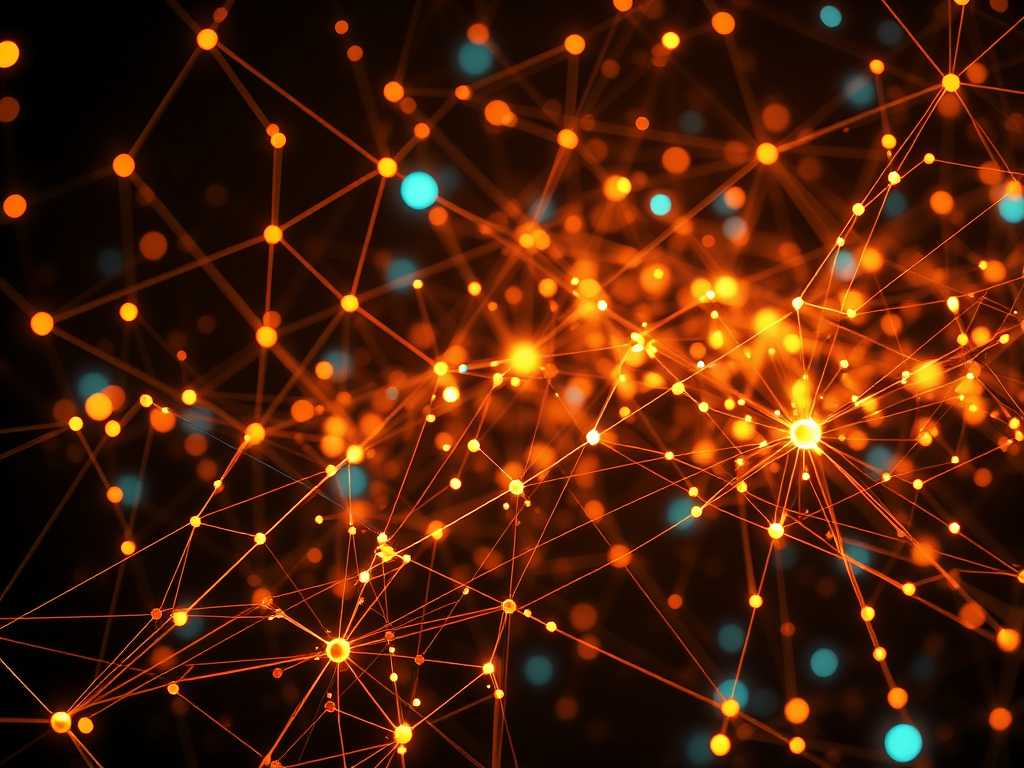
Understanding pattern, perception, and systems—without collapsing everything into one idea
The Question
Why does everything sometimes feel connected?
You notice patterns across different areas of life—personal experiences, social dynamics, economic systems, even ideas. Similar structures appear in different forms. Events sometimes seem to align. Insights from one domain appear relevant in another..
It can lead to a powerful intuition:
everything is connected.
But what does that actually mean? And more importantly, where does that intuition help—and where does it mislead?
Why the Feeling Is Real
The sense of connection is not imagined. It emerges from real features of how systems work.
Three factors contribute to this experience.
1. Interconnected Systems
Most systems do not operate in isolation.
- Economic systems influence political outcomes.
- Political structures shape social behavior.
- Social norms influence individual decisions.
These interactions create visible connections.
Example: Cost of Living
Rising costs are not caused by a single factor. They may reflect:
- global supply chains
- monetary policy
- local wage structures
- consumption patterns
These elements interact, producing outcomes that feel unified but are actually multi-layered.
Systems thinking shows that outcomes emerge from interactions, not isolated causes (Meadows, 2008).
2. Recurring Patterns Across Domains
Different systems can produce similar patterns.
- concentration of power in networks
- feedback loops reinforcing behavior
- cycles of growth and decline
These patterns appear in:
- economies
- organizations
- ecosystems
- social structures
Network theory, for example, shows that many systems naturally develop hubs—points of concentrated influence—regardless of domain (Barabási, 2016).
This creates a sense that:
similar structures appear across many domains.
But similarity does not mean identity.
3. The Brain’s Drive for Coherence
The human mind prefers coherence.
It links:
- events
- patterns
- meanings
into a unified understanding.
Cognitive research shows that people construct narratives that connect information, even when connections are incomplete or partially inferred (Kahneman, 2011).
This produces the experience of:
a coherent whole.
Where the Interpretation Goes Wrong
The intuition of connection becomes misleading when it turns into overgeneralization.
1. From Connection to Sameness
The first leap is subtle:
systems are connected → therefore they are the same
This is not accurate.
Example: Power Concentration
Power may concentrate in:
- politics
- corporations
- social networks
But the mechanisms differ:
- political power may rely on institutions and law
- corporate power on capital and market share
- social influence on attention and reputation
The pattern is similar. The causes are not identical.
2. From Pattern to Universal Rule
The next leap:
recurring pattern → universal principle
Example: Growth and Decline
Many systems experience cycles.
- economic expansion and recession
- organizational rise and stagnation
- personal productivity fluctuations
But not all systems follow the same cycle or timeline. Applying one pattern universally ignores variation and context (Mitchell, 2009).
3. From Coherence to “One Explanation”
The strongest leap:
everything connects → therefore one explanation explains everything
This is where clarity collapses.
Statements like:
- “everything follows the same structure”
- “one explanation can account for everything”
feel complete, but remove necessary distinctions.
Complex systems require multiple explanations, operating at different levels.
What “Connection” Actually Means
To stay grounded, connection needs to be defined more precisely.
1. Interaction, Not Identity
Systems are connected because they influence each other.
- policy affects markets
- markets affect behavior
- behavior affects outcomes
But influence does not mean sameness.
2. Similar Patterns, Different Mechanisms
Patterns can repeat across domains because:
- systems share constraints
- interactions produce similar dynamics
But the underlying mechanisms may differ.
3. Layered Relationships
Connection operates across levels:
- individual
- organizational
- systemic
- environmental
Each level contributes to outcomes.
Understanding requires holding multiple layers at once.
Example: A Real-World Integration
Consider economic mobility.
It may appear as a personal pattern:
- some people consistently succeed
- others struggle repeatedly
This can feel like:
a pattern of individual capability.
But deeper analysis shows:
- access to education
- geographic opportunity
- social networks
- institutional structures
all influence outcomes (Chetty et al., 2014).
The pattern is real.
The explanation is layered.
Why “Everything Is Connected” Feels Powerful
This idea persists because it satisfies multiple needs:
- reduces complexity
- provides coherence
- creates a sense of meaning
It answers uncertainty with a single framework.
But the cost is precision.
A More Accurate Way to Hold Connection
Instead of collapsing everything into one idea, use three distinctions.
1. Connection vs Causation
Just because elements are connected does not mean one directly causes another.
2. Pattern vs Mechanism
A visible pattern does not explain how it forms.
3. Coherence vs Accuracy
A simple explanation may feel right—but may exclude critical factors.
A Practical Calibration
When something feels “connected,” ask:
- What exactly is connected?
- How do these elements interact?
- Are the mechanisms the same or different?
- What level am I observing (individual, system, environment)?
- What am I ignoring to make this feel simple?
These questions preserve clarity without dismissing insight.
Integration with the Other Articles
This piece completes the layer:
- Pattern Discipline → ensures patterns are valid
- Systems × Self → identifies where patterns originate
- Making Sense of Life Without Oversimplifying It → ensures interpretation stays accurate
This article anchors all three by explaining:
why connection is perceived—and how to interpret it correctly.
What This Changes
Instead of thinking:
everything is one unified system
You move to:
systems are interconnected, but not identical
This shift:
- preserves insight
- avoids oversimplification
- improves analysis
Final Thought
The feeling that everything is connected is not wrong.
But it is incomplete.
Connection exists through:
- interaction
- shared patterns
- layered systems
Not through total sameness.
Clarity is not seeing everything as one.
It is understanding how things relate—
without losing the differences that make them real.
References
Meadows, D. (2008). Thinking in Systems: A Primer. Chelsea Green Publishing.
Mitchell, M. (2009). Complexity: A Guided Tour. Oxford University Press.
Barabási, A.-L. (2016). Network Science. Cambridge University Press.
Kahneman, D. (2011). Thinking, Fast and Slow. Farrar, Straus and Giroux.
Chetty, R., Hendren, N., Kline, P., & Saez, E. (2014). Where is the land of opportunity? Quarterly Journal of Economics, 129(4), 1553–1623.
Continue Exploring
Go Deeper
🏛 Core Frameworks • 🌱 Foundations • 🔄 Integration • 🔎 Series & Analysis • 🌍 Living Projects • 📚 Libraries
Living Archive — ongoing inquiry, synthesis, and stewardship.
©2026 Gerald Daquila • Life.Understood. • All rights reserved.
Leave a Reply