
When Reality Feels Unstable
Meta Description
Explore how information overload, institutional trust, social dynamics, and cultural pressures shape perception, communication, and decision-making in the Philippines. This essay examines how cognition, relationships, and uncertainty influence collective understanding and systemic behavior.
In modern systems, decisions depend on information.
People rely on information—news, institutions, social signals—to understand what is happening and how to respond.
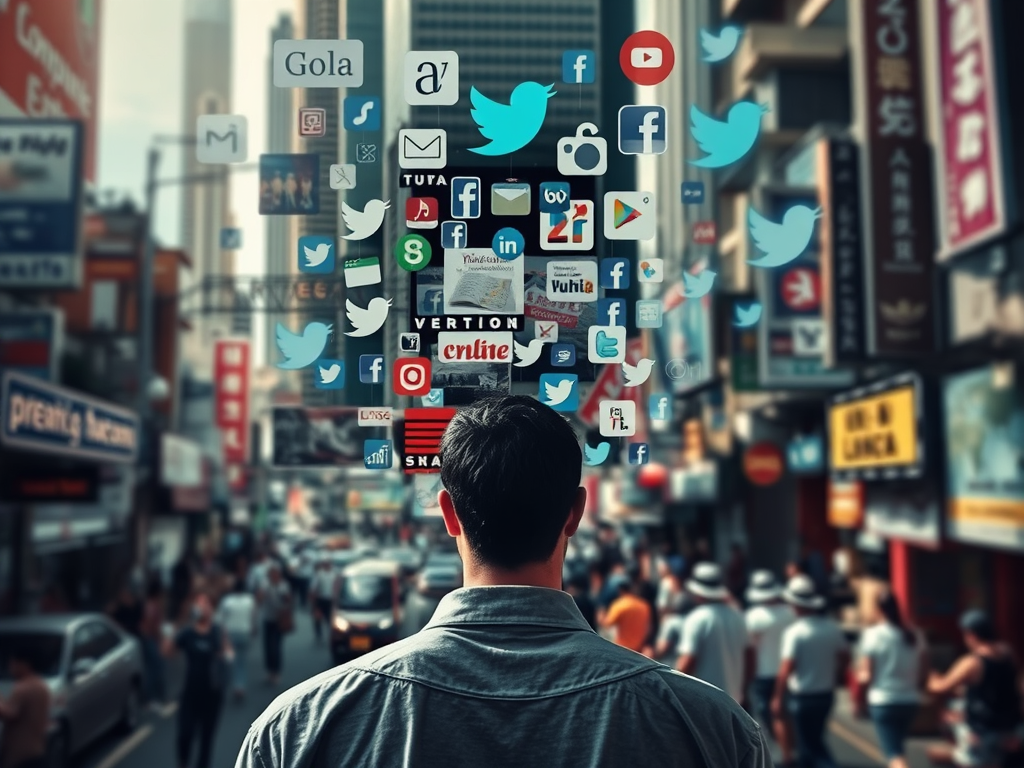
But when information is inconsistent, overloaded, or filtered through competing influences, perception becomes unstable.
In the Philippines, this often appears as:
- conflicting narratives about the same issue
- rapid shifts in opinion based on recent events
- difficulty distinguishing long-term patterns from short-term noise
This creates a deeper condition:
Reality is not simply observed—it is interpreted through experience, relationships, and social context.
Understanding this requires examining how information, culture, and system dynamics interact.
What’s Actually Happening
Human attention is limited.
Research by Daniel Kahneman shows that individuals rely on cognitive shortcuts when processing information.
In high-noise environments, attention is drawn to what is:
- recent
- emotional
- visible
- repeated
This creates a structural imbalance:
- important information (slow, structural, systemic) is underweighted
- visible information (fast, emotional, immediate) dominates
In the Philippine context, this is amplified by:
- high social media penetration
- varying institutional trust
- reliance on interpersonal networks for interpretation
This produces a critical mismatch:
what is most visible is not always what is most true
what is most repeated is not always what is most important
The Deeper Layer: Contextual Interpretation and Social Trust
When institutional trust is limited, people do not take information at face value.
Instead, they interpret it through context:
- who is saying it
- what their position is
- what interests may be involved
Over time, this produces a cognitive adaptation:
reality becomes negotiated rather than assumed
This begins early.
In environments shaped by:
- poverty
- uneven opportunity
- inconsistent outcomes
individuals learn that:
- formal signals may not reflect actual outcomes
- rules may be flexible in practice
- truth may depend on context
This leads to a functional mindset:
- skepticism toward official narratives
- reliance on indirect signals
- interpretation layered over information
This is not dysfunction—it is adaptation.
The Cultural Layer: Harmony, Social Cohesion, and Communication
Beyond individual adaptation, there is a powerful group-level dynamic.
Filipino culture places high value on:
- harmony
- belonging
- relational cohesion
Concepts such as:
- pakikisama (getting along)
- hiya (social sensitivity / saving face)
shape how information is expressed and received.
This introduces another layer:
information is not only interpreted—it is also filtered socially
In practice:
- individuals may avoid stating uncomfortable truths
- disagreement may be softened or withheld
- maintaining group cohesion may take priority over accuracy
Within social groups (barkada, workplace, community):
- belonging requires alignment
- misalignment risks exclusion
This creates a subtle but powerful pressure:
truth becomes negotiable in order to preserve relationships
Over time, individuals may learn:
- when to speak
- when to stay silent
- how to adjust narratives to fit the group
This is not deception—it is social navigation.
But at scale, it has consequences.
The Pattern: How Signal Gets Distorted
These dynamics combine into a reinforcing sequence:
1. Information Overload
The system produces more information than can be fully processed.
2. Attention Capture
Emotional, visible, and repeated signals dominate perception.
3. Cognitive Filtering
Individuals interpret information based on context and experience.
4. Social Filtering
Information is further shaped by group dynamics:
- softened
- adjusted
- selectively shared
5. Network Reinforcement
Interpretations circulate within networks, reinforcing shared views.
6. Signal Distortion
Important but less visible truths are diluted or lost.
7. Stabilized Noise Environment
The system reaches a state where:
- perception varies across groups
- signal is fragmented
- decision-making is based on partial clarity
This reveals a key insight:
signal is not just drowned out—it is reshaped by both cognition and culture
Feedback Loop: How the System Sustains Itself
This dynamic feeds directly back into the system:
- distorted perception → misinformed decisions
- misinformed decisions → suboptimal outcomes
- suboptimal outcomes → reduced trust
- reduced trust → increased reliance on networks
- network reliance → further information filtering
This creates a closed loop:
information → perception → behavior → system → information
Each cycle reinforces the next.
Connection to Trust, Incentives, and Power
This information dynamic strengthens your broader system model:
Trust
Low institutional trust increases reliance on relational interpretation.
Incentives
Actors benefit from visibility and alignment with group narratives—not necessarily accuracy.
Power
Those who control attention channels influence perception at scale.
Together, these create:
- fragmented reality
- uneven access to accurate signal
- limited capacity for coordinated action
Real-World Manifestations (Philippine Context)
In governance, public attention often focuses on visible events rather than structural issues, shaping perception toward short-term narratives.
In social media, emotionally engaging content spreads faster than analytical content, reinforcing reactive interpretation.
In everyday life, individuals often adjust communication to maintain harmony—especially within close groups—affecting how truth is expressed.
In professional environments, alignment with group norms can sometimes take precedence over direct feedback, influencing decision quality.
Across these contexts, the pattern is consistent:
perception is shaped by visibility, relationships, and social pressure—not just information itself
The OFW Contrast: A Different Information Environment
Filipinos working abroad often operate in systems where:
- rules are more consistently applied
- communication is more direct
- outcomes are less dependent on social navigation
This changes the information environment:
- signals are clearer
- feedback is more explicit
- interpretation requires less negotiation
As a result:
- decision-making becomes more straightforward
- performance becomes more visible
- behavior aligns more directly with outcomes
This highlights a key point:
when systems reduce ambiguity, perception stabilizes
Second-Order Effects: What High-Noise Systems Produce
Over time, this dynamic generates broader effects:
- fragmented shared reality
groups operate on different interpretations - reactive behavior
short-term signals override long-term thinking - suppressed truth signals
important information is filtered out socially - increased influence of visible actors
attention becomes a source of power - reinforced systemic patterns
without clear signal, structural issues persist
These effects stabilize the system.
Noise becomes structural—not accidental.
What Changes the Outcome
Improving perception requires changes across multiple layers:
1. Strengthening Signal Visibility
Highlighting long-term, structural information.
2. Improving Information Trust
Increasing consistency and transparency.
3. Reducing Social Penalty for Truth
Creating environments where honest feedback is safe.
4. Aligning Incentives with Accuracy
Rewarding clarity over visibility.
5. Expanding Shared Context
Building common understanding across groups.
6. Linking Information to Outcomes
Ensuring that accurate signals lead to real consequences.
These changes must reinforce each other.
Without trust, signal is ignored.
Without signal, decisions degrade.
Closing: Clarity as a System Condition
The challenge is not simply too much information.
It is how information is:
- filtered
- interpreted
- socially shaped
In the Philippine context, perception is influenced by:
- structural uncertainty
- relational trust
- cultural pressure toward harmony
Understanding this shifts the question.
Instead of asking:
- Why is it hard to see clearly?
It becomes possible to ask:
What conditions would allow truth to be seen—and spoken—clearly?
Because clarity is not just informational.
It is structural, cultural, and experiential.
And when clarity improves, decisions improve.
When decisions improve, systems begin to change.
Steward Pathways & Reflective Inquiry
Some materials below are available primarily through Steward-access pathways.
These writings often engage more symbolic, contemplative, speculative, or metaphysical frameworks that benefit from slower, more intentional reading and stronger contextual grounding.
Steward-access materials are not presented as institutional doctrine or required belief, but as optional exploratory layers for readers choosing to engage these dimensions more deeply.
They are written for readers who want to go beyond surface analysis into structural and forward-looking perspectives.
→ Continue reading (Members Access)
Suggested Crosslinks
- Echoes of Empire: Unresolved Colonial Trauma and Its Role in Shaping Philippine Political Dynamics and Social Fragmentation — for how historical trauma continues to shape identity, behavior, and political structures.
- The Soul of a Nation: Unlocking the Philippines’ Manifest Destiny Through Systemic Transformation — for a systems-level perspective on national identity, purpose, and long-term transformation.
- Dynasties or Democracy: Envisioning the Philippines in 2035 Through Youth-Driven Reform — for future scenarios involving governance reform and generational change.
- The Philippines Awakens: Collective Healing for Humanity’s Future — for the role of collective consciousness and healing in shaping national and global trajectories.
- Reweaving Globalization: How Regenerative Communities and the Philippines’ New Earth Blueprint Are Redefining the Future — for how local systems intersect with global transformation trends.
References (Selected)
- Kahneman, D. (2011). Thinking, Fast and Slow
- Tversky, A., & Kahneman, D. (1974). Judgment under uncertainty
- Sunstein, C. (2017). #Republic
Explore More Philippine Analysis
- Culture and identity → Understanding the Filipino Psyche
- Precolonial systems → Living in the Barangay
- Governance and power → Political Dynasties in the Philippines
→ View the full Philippines Hub
Understanding these dynamics also requires clarity in how individuals respond under pressure—see Life Under Pressure.
About This Work
This article is part of a broader exploration of Philippine society, culture, and systems—integrating historical context, behavioral patterns, and structural analysis.
It is intended to support understanding, reflection, and informed discussion.
For a wider macro perspective, Global Reset: Systems Change, Economic Transition, and Future Models.
Explore the Rest of the Site
This work sits within a larger system of essays on human development, systems thinking, and societal transformation.
→ Living Archive
→ Stewardship Architecture
→ Main Blog
Attribution
The Living Archive
Integrative Frameworks for Regenerative Civilization
© 2026 Gerald Daquila. All rights reserved.
Part of the Life.Understood. knowledge ecosystem and Stewardship Institute initiative.
This article is intended for educational, reflective, and civic inquiry purposes.
Readers are encouraged to engage critically, think independently, and explore related pathways throughout the archive.
Leave a Reply