Life.Understood.

Category: Sovereignty

  • Gemba Walking the Ancestral Soul: A Protocol for Heritage Retrieval in High-Pressure Environments

    Gemba Walking the Ancestral Soul: A Protocol for Heritage Retrieval in High-Pressure Environments


    In the lean manufacturing world, a Gemba Walk is the practice of going to “the real place” where value is created.


    It is a tool for observation, intended to strip away the abstractions of reports and spreadsheets to see the actual flow of work.

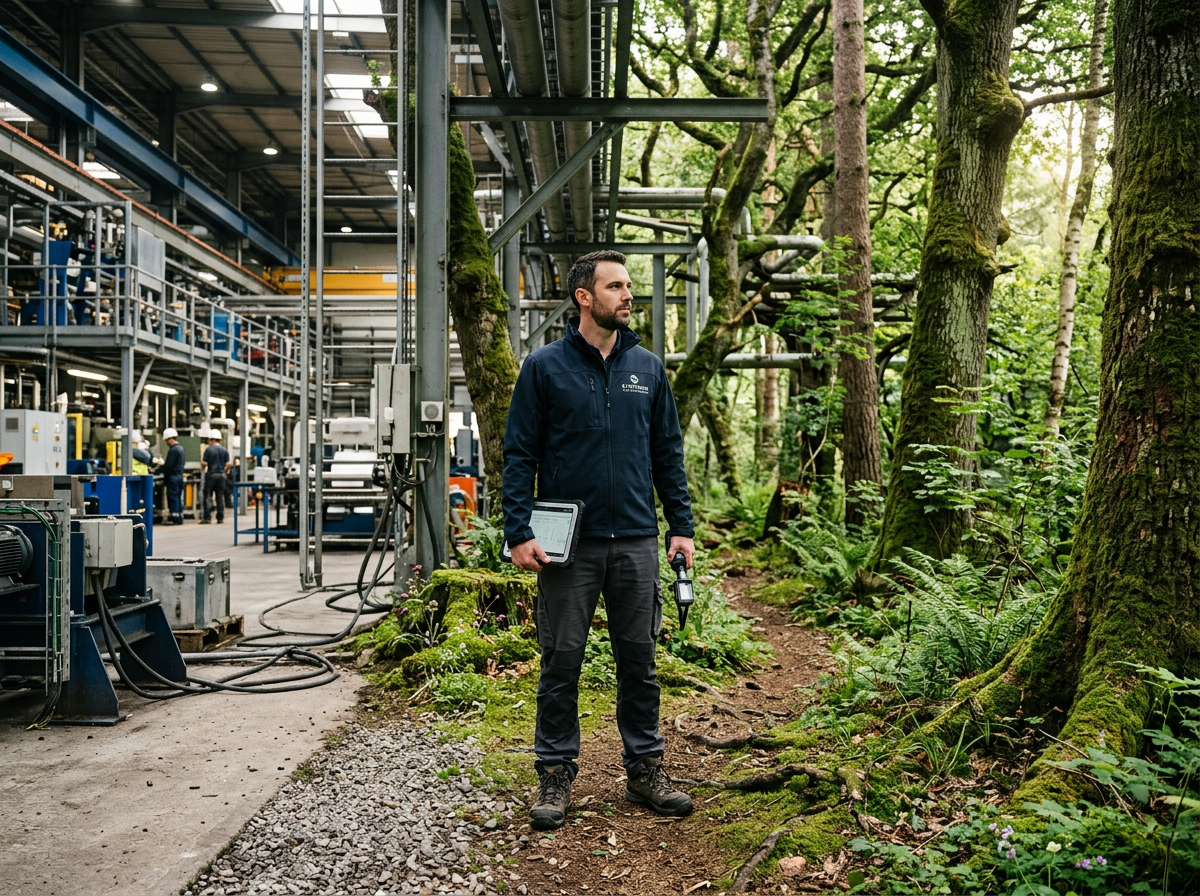
    For the Sovereign Professional operating in the toxic high-pressure corridors of 2026, the “Gemba” isn’t just the office floor or the digital workspace; it is the intersection of your current environment and your inherited ancestral wisdom.

    Most modern professionals approach “culture” as a costume—something to be worn during a DEI workshop or mentioned in a LinkedIn bio. But heritage is not an accessory; it is an Operating System (OS).

    When that OS is suppressed or overwritten by the extractive logic of corporate colonization, the result is a systemic “glitch” characterized by burnout, cynicism, and a loss of agency.

    This protocol is a Lean guide to heritage retrieval. We are not looking for “cultural appreciation”; we are looking for a structural reclamation of the source code that makes you indispensable.


    The Audit: Why Your Current OS is Failing

    Before we can retrieve the ancestral soul, we must recognize the waste in the current system. As explored in How Systems Shape Behavior (And Why It Feels Personal), many of the anxieties we carry are not personal failures; they are structural symptoms.

    We have been incentivized to optimize for a “Push” system—endless output, constant availability, and the surrender of intuition.

    When your heritage is relegated to a “costume,” you are operating on a fragmented OS. You are trying to run a high-bandwidth, indigenous sense-making heart on a low-fidelity, colonial-extraction brain.

    The friction between these two layers is where the “Muda” (waste) of your soul occurs.


    Phase 1: The Soul-Gemba (Observation)

    The first step of the protocol is to walk the “real place” of your daily professional interactions through the lens of Ancestral Sense-making.

    During your next high-pressure meeting or quarterly review, do not look at the KPIs. Look at the patterns.

    • The Incentive Check: Are the rewards in this room driving behavior that aligns with your “root” values? (Reference: Incentives Drive Behavior: Why Good Intentions Fail in Systems).
    • The Energy Audit: Is the work being done “generative” (nourishing the ecosystem) or “extractive” (mining the participants for short-term gain)?
    • The Silence Check: What is not being said? Ancestral intuition—specifically the Babaylan capacity for high-bandwidth pattern recognition—lives in the gaps between the data points.

    Phase 2: Root Cause Analysis (The 5 Whys of Disconnection)

    In Lean, we use the “5 Whys” to find a technical root cause. In heritage retrieval, we use it to find the point of colonial rupture.


    1. Why am I feeling burnt out?

    Because I am working 60 hours for a 40-hour lifestyle.


    2. Why am I working those extra 20 hours?

    To satisfy an incentive structure that rewards “effort” over “value.”


    3. Why do I value that incentive over my rest?

    Because I have been conditioned to believe that my worth is tied to my metabolic output.


    4. Why do I believe that output equals worth?

    Because the system I was trained in prioritizes the machine over the human.


    5. Why have I forgotten the alternative?

    (Root Cause): Because the ancestral OS—which views work as stewardship and contribution—has been overwritten by a colonized narrative of extraction.

    By reaching the fifth “Why,” you realize that Why Hard Work Alone Doesn’t Make You Valuable is a foundational truth of the Sovereign Professional.


    Phase 3: Poka-Yoke (Error-Proofing) via Ancestral Wisdom

    In Lean, Poka-Yoke is a mechanism that prevents a mistake from happening. In your professional life, your heritage provides the ultimate error-proofing.

    Indigenous wisdom often operates on “Non-Linear Time” and “Interconnected Logic.” When a corporate crisis hits, the colonized OS panics, looking for immediate “fixes.” The Ancestral OS, however, steps back to see the long-cycle pattern.

    The Protocol for Retrieval:

    • The Breath of the Center: Before responding to a high-pressure “Noise” signal, apply The Discipline of Inner Sovereignty. This is the modern version of the “centering” practiced by indigenous healers. It creates the “buffer” needed for discernment.
    • The Council Mindset: Even if you are a “solo” professional, view your decisions through the lens of “The Seventh Generation.” Does this decision nourish your future, or does it burn the field for a temporary win?
    • Language as Logic: Use your heritage’s specific concepts—like the Filipino Pakikipagkapwa (shared identity)—to re-contextualize your work. You are not “networking”; you are building a Kapwa ecosystem. This changes the incentive from competition to coherence.

    The Outcome: Signal Over Noise

    The result of “Gemba Walking the Ancestral Soul” is a radical clarity. You begin to see the “corporate waste-stream” for what it is—a noisy, extractive system that is failing to adapt to a high-complexity world.

    By retrieving your heritage as an OS, you gain the ultimate competitive advantage: Clear Thinking. As discussed in Signal vs Noise: Why Clear Thinking Is Rare, those who can navigate uncertainty without losing their center are the ones who become indispensable.

    You don’t find that center in a textbook; you find it in the “Gemba” of your own lineage.


    Conclusion: The Sovereign Blueprint

    Heritage retrieval is not about performing your culture for the benefit of a company’s “diversity” metrics. It is about excising the colonial “Muda” from your mind so you can work with the power of a whole human being.

    When you walk the Gemba with the soul of an ancestor and the mind of a Lean architect, you stop being a unit of labor. You become a Sovereign Professional—an architect of a new, coherent reality.


    The Sovereign Professional: A structural map of power, systems thinking, and personal autonomy—dedicated to helping the independent professional navigate complexity and own their value stream.


    ©2026 Gerald Daquila • Life.Understood. • Systems Thinking, Leadership Architecture, and Applied Coherence

  • [JID-001] The Jidoka of Ethics: Protocols for Systemic Integrity

    [JID-001] The Jidoka of Ethics: Protocols for Systemic Integrity


    In the traditional Lean manufacturing framework, Jidoka is often translated as “Autonomation”—or more evocatively, “Automation with a human touch.”


    It is the principle of building quality into the process rather than inspecting for it at the end.

    At the heart of Jidoka is the Andon Cord: the authority given to any worker on the line to stop the entire production process the moment a defect is detected.

    As we navigate the high-complexity, low-trust environment of 2026, the Sovereign Professional must apply this industrial logic to the most critical component of their operating system: Ethics.

    Systemic Integrity is not a moral luxury; it is a functional requirement for survival.

    In a world of Staying Sovereign in Uncertain Times — Inner Stability in an Unstable World, your integrity is the “sensor” that tells you when the system you are participating in has become toxic.

    [JID-001] is the protocol for installing an “Ethical Andon Cord”—ensuring that you never produce “Soul-Scrap” in the pursuit of professional output.


    The Defect of Compromise: Why Integrity Leaks

    In a corporate waste-stream, ethical “defects” rarely happen all at once.


    They occur through “incremental slippage”—small compromises in truth, minor surrenders of agency, and the slow normalization of extractive behavior.

    The reason most professionals fail to “stop the line” is a crisis of Identity.

    As analyzed in Identity: The Story We Learn to Tell About Ourselves, if your story is “I am a Senior VP at X Corporation,” then stopping the line to protect your integrity feels like a threat to your very existence.

    You allow the defect to pass through the system because you have prioritized the “Role” over the “Sovereign Node.”

    Jidoka demands a different logic. It asserts that a defect ignored is a system destroyed.

    When you compromise your integrity to satisfy a corporate KPI, you aren’t “playing the game”; you are introducing a fatal flaw into your own internal architecture.


    The Andon Cord of the Soul: Detecting the “Tilt”

    To practice [JID-001], you must identify your “integrity sensors.”

    These are the physiological and psychological cues that alert you when a transaction has become extractive.


    1. The Resonance Check

    Does this project, client, or directive align with your Sacred Exchange? If the exchange requires you to provide value while receiving “energetic debt” (stress, secrecy, or shame) in return, the sensor should trigger. This is a “System Fault.”


    2. The Narrative Alignment

    If you had to explain your current actions to your “Ancestral Council” or your “Future Self,” would the story hold up?

    If the narrative requires “Over-processing” (making excuses or using corporate-speak to hide the truth), you have detected a defect.


    3. The Burnout Proxy

    Often, what we call “burnout” is actually the result of ethical friction. It is the exhaustion that comes from running your “High-Vibrational” soul on a “Low-Integrity” fuel.

    If you are struggling with Helping Without Burning Out, check your Jidoka sensors. You might not be “working too hard”; you might be “compromising too much.”


    Protocol: Stopping the Line in 2026

    Once a defect is detected, Jidoka requires three immediate actions: Stop, Fix, and Root Cause.


    Step 1: Stop (The “Tactical No”)

    When an ethical boundary is crossed, you must pull the cord. This doesn’t always mean quitting your job instantly (which can be a “Motion Waste” of panic).

    It means pausing the specific transaction. “I cannot sign off on this data,” or “I need to recuse myself from this strategy.” This is a Poka-yoke for your soul.


    Step 2: Fix (The Threshold)

    You must address the immediate defect. Can the project be salvaged through transparency? If not, you must recognize that this Change is a Threshold, Not a Failure.

    Walking away from a toxic contract is not a loss; it is the “Quality Control” of your life.


    Step 3: Root Cause (The Systemic Audit)

    Why did the defect occur? Was it because you were desperate for revenue? (Suggests a defect in your Sovereign Resource Pipeline).

    Was it because you feared social rejection? (Suggests a defect in your Identity). Address the root cause so the defect does not recur.


    Integrity as a Competitive Advantage

    In the “Unstable World” of 2026, Trust is the rarest commodity.

    Most systems are currently failing because they have ignored Jidoka for decades—they have allowed defects of greed and deception to stack until the entire global line has stalled.

    The Sovereign Professional who maintains “Systemic Integrity” becomes an Infallible Node.

    Clients and collaborators seek you out because they know your “Andon Cord” is active. They know that if you are participating in a project, it has already passed a rigorous internal quality check.

    Your “No” gives your “Yes” its value.


    Conclusion: The Architecture of Truth

    Jidoka: Protocols for Systemic Integrity is about transforming ethics from a “vague feeling” into a Mechanical Protocol.

    It is about realizing that your soul is the most sophisticated machine you will ever steward, and it cannot run on lies.

    By the time we reach the end of 2026, the professionals who remain standing won’t be the ones who “optimized” their compromises.

    They will be the ones who had the courage to stop the line. They will be the Sovereign Nodes who recognized that integrity is the only “Value Stream” that leads to the New Earth.

    Pull the cord. Fix the defect. Protect the soul.


    The Sovereign Professional: A structural map of power, systems thinking, and personal autonomy—dedicated to helping the independent professional navigate complexity and own their value stream.


    ©2026 Gerald Daquila • Life.Understood. • Systems Thinking, Leadership Architecture, and Applied Coherence

  • The Hiya of Wealth: Why the Filipino Soul Resists NESARA/GESARA — and How to Reclaim Our Gold

    The Hiya of Wealth: Why the Filipino Soul Resists NESARA/GESARA — and How to Reclaim Our Gold


    Understanding the Landscape: The Sovereignty Ladder

    Before exploring the themes of sovereignty, stewardship, and governance in greater detail, it may be helpful to view the broader developmental landscape.

    The map below presents a framework for understanding how responsibility, agency, and contribution can expand across increasing circles of concern and longer time horizons. It is intended as an orienting framework rather than a measure of status, achievement, or personal worth.

    The Sovereignty Ladder illustrates how responsibility may expand from personal survival and stability toward stewardship, custodianship, and legacy across broader circles of concern and longer time horizons.

    →Download a complimentary copy here


    There is a quiet, almost imperceptible tension that surfaces in Filipino households whenever the conversation turns toward great wealth, systemic change, or a “global reset.”

    On one level, we are a people who pray—deeply, persistently—for deliverance from poverty.

    On another, we carry an inherited reflex to shrink from the very abundance we claim to desire.

    We call this reflex Hiya.

    In the context of proposed global financial transitions such as NESARA/GESARA, this Hiya functions as a psychological ceiling. It helps explain a paradox: many Filipinos can intellectually engage with the idea of transformation, yet emotionally resist stepping into it.

    We are comfortable with resilience—enduring hardship.

    We are far less comfortable with sovereignty—owning responsibility, power, and agency.

    If we are to meaningfully engage with any future of abundance—whether symbolic, structural, or economic—we must first examine the deeper architecture shaping our response.


    The Anatomy of Hiya: From Social Value to Survival Code

    At the surface level, Hiya is often described as propriety, modesty, or social awareness. But at a deeper psychological layer, it operates as something far more consequential: a learned survival strategy embedded within Filipino socialization (Jocano, 1997; Enriquez, 1992).

    For centuries under colonial rule, visible wealth or power carried risk. To stand out was to be noticed; to be noticed was to be vulnerable—to extraction, control, or punishment.

    Over generations, this produced an adaptive pattern:

    • Stay modest
    • Stay compliant
    • Stay within acceptable bounds

    From this emerged what can be described as a Poverty–Integrity Loop:

    To be poor is to be virtuous. To be wealthy is to be suspect.

    This pattern continues to shape modern perception, as explored in Understanding the Filipino Psyche: Strengths, Weaknesses, and Pathways to Growth.

    It is why conversations about large-scale transformation are often met not with grounded curiosity, but with skepticism or quiet discomfort:

    • “Too good to be true.”
    • “That’s not for people like us.”
    • “Better not expect too much.”

    These are not merely opinions. They are encoded responses.


    The Hiya of Abundance: An Identity Problem

    At its core, the resistance is not about policy or economics.

    It is about identity.

    For generations, the Filipino archetype has been shaped around the Survivor—resilient, adaptive, enduring. But when the organizing force of scarcity is challenged, a deeper question emerges:

    Who are you, if you are no longer struggling?

    This creates subtle friction. The removal of hardship is not immediately experienced as liberation—it can feel like disorientation.

    This helps explain the “wait-and-see” posture seen across Philippine society. Even as structural critiques—such as those outlined in Political Dynasties in the Philippines—gain traction, there remains hesitation to step into new roles.

    The pattern becomes:

    • observe
    • analyze
    • wait

    A form of permission-based consciousness persists.


    The Deeper “Gold”: Beyond Currency and Into Sovereignty

    Much of the discourse around NESARA/GESARA focuses on financial redistribution.

    But the more relevant “gold” is not speculative wealth—it is capacity:

    • psychological agency
    • cultural memory
    • systemic participation
    • sovereign decision-making

    What we are confronting is not a shortage of resources alone, but a readiness gap.

    As explored in Pieces of the Self: Soul Fragmentation Across Psyche, Society, and Spirit, the Filipino condition today reflects a form of internal fragmentation—between inherited identity and emerging potential.

    Historically, pre-colonial Filipino societies did not equate wealth with moral compromise. Gold was present not only materially, but symbolically—as part of status, ritual, and community life (Scott, 1994).

    Wealth was not the problem.

    Misalignment with stewardship is.


    The Wealth Stewardship Cycle

    Before exploring the practical shift from Hiya toward dignity, stewardship, and participation, it may be helpful to examine how wealth functions beyond the conventional framework of accumulation.

    The map below presents wealth as a cycle of creation, exchange, allocation, stewardship, regeneration, and legacy. Rather than treating abundance as something to acquire and protect, it illustrates how resources generate long-term value when they are responsibly circulated, renewed, and passed forward across generations.

    In the context of Filipino Hiya, this perspective is particularly important. Much of the discomfort surrounding wealth stems from inherited assumptions that abundance is either morally suspect or personally unsafe.

    The Stewardship Cycle offers a different lens: wealth is not primarily a possession to defend, but a responsibility to cultivate and transmit.

    Viewed this way, the question shifts from “Am I worthy of abundance?” to “How would I steward abundance if entrusted with it?”

    The Wealth Stewardship Cycle provides a framework for understanding how agency, responsibility, and prosperity become mutually reinforcing rather than mutually exclusive.

    → Download Reference Map 009: The Wealth Stewardship Cycle


    Breaking the Cycle: From Hiya to Dangal (Dignity)

    If the barrier is internal, then the work must begin there.


    1. Recognize the Trigger

    Notice discomfort around:

    • visibility
    • financial expansion
    • leadership

    These are often conditioned responses—not objective realities.


    2. Reframe the Duality

    Humility and sovereignty are not opposites.

    • Humility = accurate self-placement
    • Sovereignty = responsible action within that placement

    Integration—not substitution—is the goal.


    3. Practice Stewardship Now

    Do not wait for systemic change to begin acting differently.

    • manage current resources with intention
    • shift from fear-based decisions to responsibility-based ones
    • move from consumption to contribution

    Stewardship is not triggered by abundance.

    It is what makes one ready for it.


    Conclusion: Reclaiming the Right Relationship to Wealth

    The issue is not merely economic.

    It is structural, psychological, and cultural.

    As long as Hiya remains unexamined, it will continue to:

    • cap ambition
    • distort perception
    • delay participation

    Reclaiming “the gold” is not about sudden gain.

    It is about restoring a coherent relationship to value, responsibility, and agency.

    The shift required is precise:

    From:

    • shrinking → engaging
    • waiting → acting
    • surviving → stewarding

    The future—whatever form it takes—will not transform those who encounter it.

    It will amplify what is already present.

    The work, therefore, is not to wait for the reset.

    The work is to become ready for it.


    References

    Enriquez, V. G. (1992). From colonial to liberation psychology: The Philippine experience. University of the Philippines Press.

    Jocano, F. L. (1997). Filipino value system: A cultural definition. PUNLAD Research House.

    Scott, W. H. (1994). Barangay: Sixteenth-century Philippine culture and society. Ateneo de Manila University Press.


    Attribution

    © 2025–2026 Gerald Alba Daquila
    All rights reserved.

    This work is offered for reflection and independent interpretation. It does not represent a formal doctrine, institution, or required belief system.

  • 🍃 The Internal Reset: Awakening, Healing, and Psychological Sovereignty

    🍃 The Internal Reset: Awakening, Healing, and Psychological Sovereignty


    What happens when the world changes faster than your heart can process?


    Meta Description

    A grounded guide to awakening, healing, emotional integration, and psychological self-governance during times of rapid personal and societal change. Explore pathways for rebuilding clarity, resilience, meaning, and inner stability.


    This isn’t a rhetorical question.

    We are living through a period of rapid change in which financial systems, technology, institutions, and cultural norms are shifting faster than many people can comfortably process.

    But as the external world undergoes this visible, often chaotic transformation, a quieter psychological and existential shift is often taking place internally as well.

    You may find yourself no longer just questioning the news or the banks; you are questioning yourself.

    You are re-evaluating your identity, your purpose, and your sense of belonging in a world that feels increasingly fragmented.

    This Knowledge Hub is not just a collection of essays. It is a structured pathway designed to help people move from disorientation toward greater clarity, stability, and self-direction.

    If the “External Reset” is about the world’s systems, the Internal Reset is about the self as a system—one that must be stabilized, recalibrated, and consciously rebuilt.


    Steward Pathways & Reflective Inquiry

    Some materials within this section are available primarily through Steward-access pathways.

    These writings often engage more speculative, symbolic, contemplative, or metaphysical frameworks that benefit from slower, more intentional reading and stronger contextual grounding.

    Steward-access materials are not presented as institutional doctrine or required belief, but as optional exploratory layers for readers choosing to engage these dimensions more deeply.


    Pathway 1: The Experience of Awakening

    For those navigating the disorientation of seeing differently.

    The first phase of an internal reset is rarely peaceful. It is disruptive and often deeply isolating. This is the moment you realize the “old map” no longer works.

    You might experience awakening-related psychological and emotional shifts like a sudden shift in priorities, an intense sensitivity to injustice, or a feeling that the life you built no longer fits who you are becoming.

    This pathway begins with the foundational piece Waking Up to a Bigger World. This is your foundational guide for framing this shift not as a “breakdown,” but as a necessary expansion of your perception.


    The Constellation of Awakening:

    • The Quiet After the Awakening: A companion for when the “fire” of discovery fades, leaving you in the silent, often lonely work of integration.
    • The Ego Unveiled: Understanding why your mind resists this change and how to view that resistance with compassion rather than frustration.
    • The Experience of Awakening: Grounding your spiritual experience in the very real physical and emotional markers of change.

    Core Insight: Awakening is less about achieving “enlightenment” and more about surviving disorientation long enough to develop a more stable and coherent understanding of yourself and the world.


    Pathway 2: The Alchemy of Healing

    For those rebuilding after collapse, grief, or fragmentation.

    Seeing clearly is the first step, but it doesn’t automatically mend the heart.

    Once you awaken to the truth of the world, you often have to confront the “debris” of your own past—unprocessed trauma, generational wounds, and the structures of your life that were built on survival rather than long-term alignment or self-understanding.

    At the heart of this phase is our most resonant piece: The Transformative Power of Loss. Whether you are finding purpose after loss of a loved one, a career, or an old identity, this essay serves as a gateway to understanding grief as a transformative process of reorientation and integration.


    The Constellation of Healing:

    Core Insight: Healing is not about going back to who you were before the pain; it is about integrating that pain into a stronger, more coherent version of yourself.


    Pathway 3: Rebuilding Balance and Participation

    For those stepping beyond the individual into collective awareness.

    As you heal, your perspective naturally widens again. You begin to ask not just “Who am I?” but “How do I participate in the world without losing myself?”

    This phase is about reconnecting with forms of relational, emotional, and communal intelligence that are often deprioritized within highly competitive systems.

    This pathway centers on Rebalancing Relational and Regenerative Intelligence. This framework explores the restoration of relational, intuitive, and regenerative forms of intelligence often undervalued in competitive and control-oriented systems; it’s about the restoration of intuitive, relational, and regenerative intelligence in a world that has been dominated by control and competition.


    The Constellation of Balance:

    Core Insight: Balance isn’t found by escaping the system, but by bringing your full, integrated presence into it.


    Integration: The Discipline of Self-Governance

    All these pathways converge at a single point of realization:

    Awakening without discipline is just confusion. Inner sovereignty is the culmination of the Internal Reset.

    It is the shift from being a “passenger” in your life to being the “pilot.” It is the daily practice of choosing discernment over belief, stability over stimulation, and coherence over comfort.

    When you are internally sovereign, you become less reactive to external volatility. You make clearer decisions. You become a “steward” of your own attention, behavior, and emotional regulation.


    Bridging to the External Reset

    The Internal Reset does not exist in a vacuum. A stabilized, sovereign individual is the only one who can truly participate in the building of a new world.


    Explore the External Reset next:

    You cannot build a coherent system with incoherent individuals. The world is waiting for you to begin your internal reset.


    Where do you need to start?

    Move slowly. Let the coherence build. The internal reset is not a race; it is an alignment.


    Attribution

    ©2026 Gerald Daquila • Life.Understood.
    Steward of applied thinking at the intersection of systems, identity, and real-world constraint.

    This work draws from lived experience across cultures and environments, translated into practical frameworks for clearer thinking and more coherent contribution.

    This piece is part of an ongoing exploration of applied thinking in real-world systems.. Part of the ongoing Codex on leadership, awakening, and applied intelligence.

  • [PY-001] Poka-yoke for Information Intake

    [PY-001] Poka-yoke for Information Intake


    Error-Proofing the Sovereign Mind


    In the industrial Gemba, Poka-yoke is the practice of “error-proofing.” It is a mechanical or procedural constraint designed to make it physically impossible for a defect to occur.

    A plug that only fits into a socket one way is a Poka-yoke. A sensor that stops a machine when a hand gets too close is a Poka-yoke.

    As we navigate the hyper-accelerated landscape of 2026, the Sovereign Professional must recognize that the most dangerous defects are no longer on the assembly line—they are in the Information Intake Stream.

    We are currently drowning in “Information Muda” (waste). The algorithms that govern our digital lives are designed for extraction, not enlightenment.

    They “push” high-intensity, low-signal content into our consciousness to harvest our attention.

    To survive this, you cannot rely on “willpower” or “discipline.” You need a systemic intervention. You need to Poka-yoke your mind.


    The Problem: Information as Extractive Waste

    In a Lean system, overproduction is considered the “Mother of All Wastes” because it hides all other problems.

    In 2026, the internet is in a state of terminal overproduction. Most of what you consume is “Noise”—unprocessed data, speculative dread, and performative outrage.

    When you allow this noise into your system, you are introducing Defects into your reasoning.

    This cognitive clutter increases your “Lead Time” for making decisions and degrades your Signal vs Noise: Why Clear Thinking Is Rare.

    If your intake stream is unfiltered, your output will be defective. It is that simple.


    The Protocol: Three Tiers of Information Poka-yoke

    To error-proof your intake, you must move from a Push System (where the internet decides what you see) to a Sovereign Pull System (where you define the demand).

    This requires three specific tiers of mechanical constraints.


    1. The Physical Shut-off (The “Contact” Poka-yoke)

    The first tier is about preventing the “Noise” from ever reaching your sensory gates. This is the digital equivalent of a safety guard on a saw.

    • The “Zero-Inbox” Filter: Use aggressive, automated filters to move all non-essential communication to a “Read Later” folder. If a human didn’t specifically type your name, it shouldn’t hit your primary notification screen.
    • Algorithm Blocker: Use browser extensions and OS-level settings to hide “Recommended” feeds, “Trending” topics, and “Explore” pages. These are the primary sources of extractive waste.
    • The “Hard-Wire” Boundary: Designate specific physical zones and times for information intake. If you are in your “Creation Zone,” the device’s “Intake Pipe” must be physically or digitally severed.

    2. The Quality Gate (The “Sequential” Poka-yoke)

    In Lean, a sequential Poka-yoke ensures that Step B cannot happen unless Step A is done correctly.

    In your information diet, this means creating Friction between you and the content.

    • The 24-Hour Buffer: For any “urgent” news or trending topic, install a mandatory 24-hour waiting period before you engage. If the “Signal” hasn’t survived a day of scrutiny, it was likely just “Noise.”
    • Node Verification: Only pull information from “Trusted Nodes”—individuals or sources that have a proven track record of Discernment in a Confusing World. If a source consistently produces “Dread-Scrap,” it is a defective tool and must be removed from your toolkit.

    3. The Sensory Alert (The “Information” Poka-yoke)

    This tier uses visual or auditory cues to alert you when you have slipped into a waste-stream.

    • The “Doom-Scroll” Timer: Set a mechanical timer for any “Exploratory” research. When the bell rings, the “Gemba Walk” is over. This prevents the “Waste of Motion” where 5 minutes of research turns into 2 hours of aimless consumption.
    • Cognitive Load Monitoring: Learn to recognize the physical sensation of “Information Saturation”—that specific tension in the forehead or the blurring of focus. When this cue occurs, it is a “System Fault.” You must stop all intake and engage in “The Breath of the Center.”

    Poka-yoke and Soul Governance

    Why go to such lengths? Because How Systems Shape Behavior (And Why It Feels Personal) tells us that we are not as immune to the environment as we think.

    If the system around you is designed to make you anxious, distracted, and reactive, you will eventually become those things.

    By Poka-yoking your intake, you are practicing The Discipline of Inner Sovereignty. You are asserting that your attention is a Sovereign Resource that cannot be mined without your consent.

    You are shifting from a “Consumer” OS to a “Steward” OS.


    Conclusion: Mastering the Flow

    In 2026, the difference between a “High-Performer” and a “Sovereign Professional” is how they manage their intake.

    The High-Performer tries to “process more data” (Motion Waste). The Sovereign Professional builds a system that ensures only the highest-quality data is ever processed.

    Poka-yoke your information intake today. Turn off the “Push,” install the “Gates,” and listen for the “Signal.” Your brilliance depends on the quality of your constraints.


    The Sovereign Professional: A structural map of power, systems thinking, and personal autonomy—dedicated to helping the independent professional navigate complexity and own their value stream.


    ©2026 Gerald Daquila • Life.Understood. • Systems Thinking, Leadership Architecture, and Applied Coherence

  • The “Waiting Room” Trap: Why GESARA Is a Systemic Symptom Not a Solution

    The “Waiting Room” Trap: Why GESARA Is a Systemic Symptom Not a Solution


    Why GESARA is a Systemic Symptom, Not a Solution


    The global discourse surrounding the Global Economic Security and Reformation Act (GESARA) has reached a fever pitch.

    For many, it represents the ultimate “Exit” button—a total systemic reset, debt jubilee, and the dawning of a new era. But while the theory offers a vision of hope, the act of waiting for it has created a profound secondary crisis: the “Waiting Room” trap.

    When we treat a systemic reset as a future event to be observed rather than a present framework to be architected, we fall into a state of learned passivity. In Lean management terms, this is the ultimate form of Muda (Waste).

    To move from the passive observation of a theory to the active participation in a value stream, we must recognize that GESARA is not the solution we are waiting for; it is a systemic symptom of a world in transition.


    1. The Lean Analysis: The Muda of Speculation

    In the world of operational excellence, Muda is anything that consumes resources but creates no value. The most dangerous form of waste in the current transition is the Waste of Waiting.

    As explored in What Is NESARA and GESARA? Origins, Claims, and Why the Theory Keeps Resurfacing, the narrative often anchors people to a timeline they do not control. When you put your creative projects, financial investments, or community initiatives on hold until “the RV happens” or “the banks close,” you are allowing your most valuable asset—your time—to sit idle.

    In any value stream, idle time is lost velocity. If you are waiting for a savior system to provide permission for your prosperity, you are effectively over-processing “intel” while under-producing utility. This creates a “defect” in your personal economy where the output is always “theoretical” and never “tangible.”


    2. From Spectator to Architect: Breaking the Labyrinth

    The transition from a passive spectator to an active architect requires a fundamental shift in identity.

    Many started this journey as researchers, digging through the digital trenches to understand the global reset. However, there is a point where the research becomes a circle.

    In my own journey, documented in From Conspiracy to Creator: My Journey Through the GESARA Labyrinth, I realized that the “Labyrinth” is designed to keep you looking for answers outside of yourself.

    The “Architect” does not look for the reset; the Architect is the reset.

    Being an architect means moving beyond the Signal vs Noise of daily updates and focusing on the construction of the “New Earth” protocols. While the spectator asks, “When will it happen?” the architect asks, “How do I build a node of this system right here, right now?”


    3. Activating the Value Stream: Flow vs. Stagnation

    A “Value Stream” is the end-to-end movement of value from a concept to a person who needs it. If GESARA is about abundance, then the “Waiting Room” is the antithesis of GESARA because it represents stagnation.

    To move into active participation, we must apply GESARA Flow Mechanics to our daily lives. This involves:

    • Identifying the Pull: Stop pushing theories onto people and start identifying the real-world needs (the “Pull”) in your immediate environment.
    • Eliminating Waste: Audit your “Frequency Hygiene.” If your consumption of intel is causing anxiety or paralysis, it is a non-value-add activity.
    • Creating Value-Based Exchange: As outlined in Wealth Without Limits: Rethinking Value, Exchange, and Prosperity, prosperity isn’t a windfall; it’s a byproduct of effective value exchange.

    We are not waiting for a “Quantum Financial System” to be handed to us from a central authority. We are practicing Anchoring GESARA in Daily Life: Practical Tools for Embracing Financial Sovereignty to ensure that when the systemic transition completes, we already have the operational muscle to manage it.


    4. The 2026 Perspective: Positioning over Effort

    As we navigate 2026, the gap between the “Spectator” and the “Architect” is widening. The legacy systems are indeed crumbling, but they are not being replaced by magic; they are being replaced by the infrastructure built by those who refused to wait.

    In our current phase of transition, it is not just about hard work; it is about Positioning vs Effort: Why Hard Work Isn’t Enough. If you are positioned in the “Waiting Room,” no amount of effort in researching will create a harvest. However, if you are positioned as a GESARA Node Custodian, every action you take contributes to the new value stream.


    Conclusion: Nothing Was Wasted

    It is easy to look back at years of “waiting” with regret, but in the higher architecture of this reset, Nothing Was Wasted. The time spent in the waiting room was a period of intense pattern recognition and the shedding of old-world dependencies.

    However, the “Waiting Room” has now served its purpose. It was a shelter, but it has become a cage. To move forward, you must take the blueprints you have found in the theory and begin the construction. The “Value Stream” is open. The “Architect’s Table” is waiting.

    Stop being a witness to a theory. Start being the engine of the stream.


    The Sovereign Professional: A structural map of power, systems thinking, and personal autonomy—dedicated to helping the independent professional navigate complexity and own their value stream.


    ©2026 Gerald Daquila • Life.Understood. • Systems Thinking, Leadership Architecture, and Applied Coherence