Logo - Life.Understood.

Category: Sovereignty

  • The Ancestral Debt: Healing the Generational Shame of Poverty in the Filipino Psyche

    The Ancestral Debt: Healing the Generational Shame of Poverty in the Filipino Psyche


    Why financial struggle is not just economic—and how releasing inherited shame unlocks true sovereignty


    Meta Description

    Explore how generational shame around poverty shapes Filipino identity and financial behavior—and learn how healing ancestral patterns can unlock dignity, agency, and long-term wealth.


    The Debt No One Talks About

    In many Filipino families, debt is a familiar reality.

    But beyond financial obligations lies a deeper, less visible burden:

    The emotional inheritance of poverty.

    This is not just about lack of money.
    It is about the shame associated with having less—a quiet, persistent feeling that one is somehow behind, lacking, or not enough.

    This shame rarely announces itself directly.

    Instead, it shows up as:

    • Reluctance to talk about money
    • Fear of being judged for financial status
    • Overcompensation through generosity or appearance
    • Silent pressure to “make it” for the family

    This is what we can call ancestral debt—not owed in currency, but carried in identity.


    Where the Shame Began

    To understand this, we must look beyond individual experience.

    The Filipino relationship with poverty was shaped through centuries of disruption:

    • Colonial extraction that destabilized local economies
    • Land dispossession and labor control
    • War, occupation, and reconstruction cycles
    • Modern economic structures that export labor rather than build local capital

    These conditions did not just create poverty.

    They created meaning around poverty.

    Over time, scarcity became associated with:

    • Failure
    • Inferiority
    • Social limitation

    Psychological research shows that repeated exposure to inequality and marginalization can lead to internalized stigma, where individuals adopt negative beliefs about their own worth (Corrigan & Watson, 2002).

    In the Filipino context, this often blends with colonial mentality—where external standards define value (David, 2013).


    Shame vs. Reality

    It is important to distinguish:

    Poverty is a condition.
    Shame is an interpretation.

    Two families can experience the same economic reality—but carry it differently.

    Shame develops when:

    • Struggle is hidden rather than discussed
    • Worth is tied to financial status
    • Comparison becomes constant

    Over generations, this creates a feedback loop:

    Poverty → Shame → Silence → Repetition


    How Generational Shame Manifests Today

    The ancestral debt expresses itself in subtle but powerful ways:

    1. Over-Responsibility

    Many Filipinos feel obligated to financially support extended family, often at the expense of their own stability.

    This is not purely cultural generosity—it is often tied to:

    “I must succeed so we are no longer seen as lacking.”


    2. Fear of Visibility

    Success can feel uncomfortable.

    People may:

    • Downplay achievements
    • Avoid standing out
    • Fear being judged or resented

    3. Financial Avoidance

    Money conversations are delayed or avoided:

    • Budgeting feels overwhelming
    • Investing feels inaccessible
    • Planning feels uncertain

    4. Performative Stability

    Spending to maintain appearances:

    • Social pressure to “look okay”
    • Celebrations funded beyond capacity
    • Reluctance to show struggle

    5. Inherited Limitation Beliefs

    Quiet assumptions like:

    • “People like us don’t become wealthy”
    • “Stability is enough—don’t risk more”

    These beliefs are rarely questioned.

    They are inherited.


    Naming the Hidden Layer

    Before any financial strategy can work, the emotional layer must be acknowledged.

    (Crosslink: Naming the Unspoken: A Guide to Navigating the Hidden Fractures of Our National Identity)

    When shame remains unspoken, it quietly dictates behavior.

    When it is named, it becomes workable.


    The Link to Broader Economic Patterns

    Generational shame does not exist in isolation.

    It connects directly to national patterns:

    • Limited asset accumulation
    • High remittance dependency
    • Short-term financial decision-making

    (Crosslink: The Ghosts of the Galleon Trade: How Colonial Echoes Still Dictate Your Financial Decisions)

    These are not just economic issues.

    They are psychological continuities.


    From Shame to Stewardship

    Healing ancestral debt is not about rejecting responsibility.

    It is about transforming it.

    (Crosslink: From Informer to Steward: Why True Leadership Begins with Owning Our Shared Shadow)

    The shift is subtle but powerful:

    From:

    “I must carry this burden alone.”

    To:

    “I can honor my lineage without repeating its limitations.”


    A Practical Framework for Healing

    This work must be both internal and actionable.

    1. Acknowledge the Inheritance

    Recognize that many financial behaviors are learned, not inherent.

    Prompt: What money beliefs did I grow up hearing?


    2. Separate Worth from Wealth

    Your value is not determined by your financial status.

    This is foundational.

    Without it, every financial move is emotionally charged.


    3. Reframe Family Support

    Support can be given without self-erasure.

    This may involve:

    • Setting boundaries
    • Creating structured assistance
    • Prioritizing sustainability over sacrifice

    4. Normalize Financial Conversations

    Break the silence:

    • Discuss money openly with trusted circles
    • Learn without shame
    • Ask questions without fear

    5. Build Slowly but Intentionally

    Wealth-building does not require dramatic shifts.

    It requires:

    • Consistency
    • Education
    • Long-term thinking

    6. Engage in Financial Shadow Work

    Identify emotional triggers:

    • Fear of loss
    • Guilt around earning more
    • Anxiety around visibility

    Integration reduces reactivity.


    The Role of Systems

    Individual healing is essential—but insufficient on its own.

    It must be supported by coherent systems.

    (Crosslink: ARK-001: The 50-Person Resource Loop)

    When communities:

    • Share resources
    • Build collectively
    • Create accountability

    Shame is replaced with shared resilience.


    The Filipino Threshold: Dignity as Foundation

    Within your Ark framework, the shift is not just economic.

    It is dignity restoration.

    (Crosslink: The Philippine Ark: A Global South Prototype)

    A nation cannot build sustainable wealth if its people:

    • Feel inherently lacking
    • Avoid financial visibility
    • Carry unprocessed shame

    Dignity is not a byproduct of wealth.


    It is a prerequisite for building it.


    Conclusion: Releasing the Invisible Burden

    Ancestral debt is not listed in any ledger.

    But it shapes decisions every day.

    It determines:

    • How money is handled
    • How opportunities are perceived
    • How success is experienced

    Healing it does not erase history.

    It transforms relationship.

    From:

    Burden

    To:

    Inheritance with choice

    The Filipino story is not defined by poverty.

    But it must reckon with the meaning attached to it.

    Only then can financial sovereignty become more than strategy.

    It becomes identity.


    References

    Corrigan, P. W., & Watson, A. C. (2002). Understanding the impact of stigma on people with mental illness. World Psychiatry, 1(1), 16–20.

    David, E. J. R. (2013). Brown Skin, White Minds: Filipino-/American Postcolonial Psychology. Information Age Publishing.

    Mullainathan, S., & Shafir, E. (2013). Scarcity: Why Having Too Little Means So Much. Times Books.

    Constantino, R. (1975). The Philippines: A Past Revisited. Tala Publishing Services.


    The Sovereign Professional: A structural map of power, systems thinking, and personal autonomy—dedicated to helping the independent professional navigate complexity and own their value stream.Ask


    ©2026 Gerald Daquila • Life.Understood. • Systems Thinking, Leadership Architecture, and Applied Coherence


  • Crossing the AI Threshold: Why Artificial Intelligence Tests Human Responsibility

    Crossing the AI Threshold: Why Artificial Intelligence Tests Human Responsibility


    Why Artificial Intelligence Represents a Civilizational Transition—and What It Demands from Human Responsibility


    Meta Description

    AI is not just changing technology—it is testing how humans govern systems, maintain discernment, and exercise responsibility at scale. This essay explores AI through a systems-level framework of coherence, governance, and stewardship.


    Introduction: Not Just a Disruption, but a Transition

    Artificial intelligence is often described as:

    • a technological revolution
    • a disruptive force
    • a defining feature of the future economy

    These descriptions are directionally correct—but incomplete.

    They treat AI as an event within history.

    This piece proposes a different frame:

    AI represents a threshold condition—one that reveals whether humans are prepared to responsibly govern the systems they now have the power to create.

    In this sense, AI is not the destination.

    It is the test.


    From Tool to Threshold

    Earlier technologies expanded human capability without fundamentally challenging identity.

    • Tools extended physical capacity
    • Computers extended calculation
    • The internet extended access to information

    AI extends something deeper:

    the simulation of cognition itself

    This creates a structural break.

    Humans are no longer the only entities generating:

    • language
    • reasoning patterns
    • decision pathways

    This does not diminish humanity.

    But it removes a long-held assumption:

    That intelligence alone defines human uniqueness.

    What remains, then, is not intelligence.

    It is:

    • discernment
    • accountability
    • responsible judgment

    The Four Pressures of the Threshold

    Across the previous pieces, four pressures have emerged:


    1. Reflection (AI as Mirror)

    AI reflects human patterns at scale.

    It amplifies:

    • coherence
    • bias
    • fragmentation

    As established in
    AI as Mirror: Why Artificial Intelligence Reveals Human Incoherence,

    AI does not create dysfunction—it exposes it.


    2. Instability (Synthetic Reality)

    The reliability of external truth signals is collapsing.

    As explored in
    Synthetic Reality: Deepfakes, Narrative Collapse, and the End of Passive Trust,

    • authenticity can be simulated
    • narratives can be manufactured
    • trust can no longer be assumed

    3. Responsibility (Sovereign Prompt)

    Users must retain cognitive authority.

    From
    The Sovereign Prompt: How to Use AI Without Outsourcing Discernment,

    • prompts shape outcomes
    • verification is required
    • judgment cannot be delegated

    4. Structural Shift (Agentic Systems)

    Work and systems are being redefined.

    From
    Agentic Systems and the End of Passive Labor,

    • execution is automated
    • coordination expands
    • stewardship becomes central

    These are not separate issues.

    They are converging pressures.

    Together, they form the threshold.


    What Is Being Tested?

    At its core, the AI threshold tests three capacities:


    1. Can Humans Maintain Coherence Under Amplification?

    When:

    • information is abundant
    • narratives are fragmented
    • outputs are instantaneous

    Can individuals and systems remain internally consistent?

    Or do they collapse into contradiction?


    2. Can Humans Retain Agency When Intelligence Is Externalized?

    When AI can:

    • generate ideas
    • simulate reasoning
    • provide solutions

    Do humans:

    • remain decision-makers
    • or become passive selectors of outputs?

    3. Can Humans Accept Responsibility at Scale?

    As systems become more powerful:

    • decisions affect more people
    • errors propagate faster
    • consequences intensify

    Will humans:

    • assume accountability
    • or diffuse responsibility across tools and systems?

    These are not technical questions.

    They are civilizational questions.


    The Sheyaloth Frame: From Fragmentation to Stewardship

    Within the site’s architecture, Sheyaloth represents:

    • integration of knowledge
    • alignment of systems
    • movement toward coherent stewardship

    AI accelerates the need for this transition.

    • Without coherence, fragmentation scales.
    • Without discernment, misinformation spreads more rapidly.
    • Without responsible governance, systemic risks intensify.

    This positions AI not as an external disruption, but as:

    a catalyst that exposes whether internal values and external systems are aligned


    The Collapse of Delegated Authority

    Historically, humans delegated authority to:

    • institutions
    • experts
    • systems

    This delegation relied on:

    • trust
    • stability
    • verification mechanisms

    AI destabilizes all three.

    Because:

    • authority can be simulated
    • expertise can be mimicked
    • outputs can be generated without accountability

    This forces a shift:

    Authority must return to grounded, verifiable processes and coherent individuals

    This aligns with our framework in
    ARK-003: Jurisdictional Sovereignty: Legal Standard Work.

    Sovereignty is no longer abstract.

    It becomes operational.


    AI and the Integrity of Systems

    The ARK architecture becomes more critical under threshold conditions.


    ARK-001: Resource Systems

    AI can optimize:

    • distribution
    • forecasting
    • coordination

    But without coherent inputs:

    • optimization becomes misalignment

    ARK-004: Community Ledger

    AI can:

    • track transactions
    • detect patterns
    • automate recording

    But it can also:

    • generate false data
    • obscure accountability

    This reinforces the need for:

    transparent, human-verifiable systems


    ARK-003: Governance

    As AI participates in decision-making:

    • governance must define boundaries
    • accountability must remain human

    Authority cannot be outsourced.


    The Risk: Intelligence Without Integration

    The greatest risk is not AI itself.

    It is:

    increasing capability without corresponding integration

    This manifests as:

    • powerful tools in incoherent systems
    • fast decisions without grounding
    • scalable errors without accountability

    Historically, technological advancement without integration has led to:

    • instability
    • misuse
    • systemic failure

    AI accelerates this pattern.


    The Opportunity: Conscious System Design

    The threshold also presents an opportunity.

    For the first time, humanity can:

    • design systems with awareness of their consequences
    • integrate ethical, cognitive, and structural layers
    • align tools with coherent frameworks

    This requires:

    • disciplined thinking
    • clear governance
    • active stewardship

    It is not automatic.

    It must be chosen.


    Beyond Intelligence: The Return to Responsibility

    AI challenges the belief that intelligence is the highest human function.

    If intelligence can be simulated, then what remains uniquely human?

    • the ability to discern meaning
    • the capacity to hold responsibility
    • the discipline to act coherently over time

    These are not replaced by AI.

    They are required by it.


    Conclusion: The Gate Is Open

    AI is not arriving.

    It is already here.

    The threshold is not in the future.

    It is present.

    The question is not whether humanity will cross it.

    It will.


    The question is:

    In what state will it cross?

    • Fragmented or coherent
    • Passive or accountable
    • Reactive or responsible

    AI does not decide this.

    Humans do.

    And in that sense:

    AI is not the defining force of the future.

    Human responsibility will be.


    References

    Bender, E. M., Gebru, T., McMillan-Major, A., & Margaret Mitchell. (2021). On the dangers of stochastic parrots: Can language models be too big? Proceedings of the 2021 ACM Conference on Fairness, Accountability, and Transparency.

    Pew Research Center. (2025). Public and expert views on artificial intelligence.


    Suggested Internal Crosslinks


    Attribution

    The Living Archive
    Integrative Frameworks for Regenerative Civilization

    © 2026 Gerald Daquila. All rights reserved.
    Part of the Life.Understood. knowledge ecosystem and Stewardship Institute initiative.

    This article is intended for educational, reflective, and civic inquiry purposes.
    Readers are encouraged to engage critically, think independently, and explore related pathways throughout the archive.

  • Agentic Systems and the End of Passive Labor

    Agentic Systems and the End of Passive Labor


    How Artificial Intelligence Is Reshaping Work, Responsibility, and Human Roles in the Emerging Economy


    Meta Description

    AI-powered agentic systems are transforming work from execution to orchestration. This essay explores how automation is reshaping responsibility, coordination, and human roles in the emerging economy.


    Introduction: Work Is Not Disappearing—It Is Changing Form

    Much of the public discourse around artificial intelligence focuses on job loss.

    • Will AI replace workers?
    • Which industries are most vulnerable?
    • How many jobs will disappear?

    These are important questions—but they are incomplete.

    They assume that work is defined primarily by tasks.

    Artificial intelligence challenges this assumption.

    What is being disrupted is not work itself, but:

    the the human role within increasingly automated systems

    AI—particularly in its emerging “agentic” form—does not simply automate tasks. It begins to:

    • plan
    • execute multi-step processes
    • adapt to feedback
    • operate with limited autonomy

    This signals a transition:

    From task-based labor → to system-level orchestration

    The implication is not the end of work.

    It is the end of passive labor.


    What Are Agentic Systems?

    Agentic systems refer to AI configurations capable of:

    • setting sub-goals
    • executing sequences of actions
    • interacting with tools or environments
    • adjusting behavior based on outcomes

    Unlike earlier automation (rule-based or static), these systems are:

    • dynamic
    • context-aware
    • iterative

    They do not simply perform predefined actions.

    They operate within a goal structure.

    This introduces a critical shift:

    Humans are no longer the sole agents within systems.


    The Illusion of Replacement

    The dominant narrative suggests:

    • AI replaces human workers
    • efficiency increases
    • labor demand decreases

    But this is a surface-level interpretation.

    In reality, AI redistributes roles across three layers:


    1. Execution Layer (Declining Human Role)

    Repetitive and predictable tasks are increasingly handled by AI:

    • drafting content
    • data processing
    • routine analysis
    • administrative workflows

    This is where most “job loss” discussions focus.


    2. Coordination Layer (Expanding Human Role)

    As AI systems operate, someone must:

    • define objectives
    • structure workflows
    • integrate outputs
    • resolve conflicts

    This layer grows, not shrinks.


    3. Governance Layer (Critical Human Role)

    At the highest level:

    • Who defines goals?
    • Who sets constraints?
    • Who is accountable for outcomes?

    These cannot be delegated.

    They require:

    judgment, ethics, and coherence


    The End of Passive Labor

    Passive labor is characterized by:

    • task execution without ownership
    • following instructions without context
    • limited responsibility for outcomes

    Agentic systems make this model obsolete.

    Why?

    Because tasks can now be:

    • automated
    • delegated to AI
    • executed faster and cheaper

    This creates a divergence:

    • individuals who remain task-bound become replaceable
    • individuals who move into coordination and stewardship become indispensable

    This aligns with broader labor transformation trends, where workers anticipate significant restructuring due to AI adoption (Stanford Institute for Human-Centered Artificial Intelligence, 2025).


    The New Human Role: Orchestrator and Steward

    To remain relevant, the human role must shift.

    Not:

    • worker as executor

    But:

    human as orchestrator and steward of systems

    This includes:

    • designing workflows that integrate AI and human input
    • monitoring outputs for accuracy and alignment
    • intervening when systems deviate
    • maintaining accountability

    This directly builds on the cognitive discipline outlined in
    The Sovereign Prompt: How to Use AI Without Outsourcing Discernment.

    A sovereign operator becomes an active coordinator of systems rather than a passive consumer of outputs.


    Productivity vs Responsibility

    AI dramatically increases productivity.

    But it also increases:

    • scale of impact
    • speed of decision-making
    • risk of error propagation

    A poorly designed system can now:

    • generate thousands of incorrect outputs
    • misallocate resources rapidly
    • amplify flawed assumptions

    This creates a paradox:

    As capability increases, responsibility must increase proportionally.

    If responsibility does not scale, systems become unstable.


    Coherence as a Workforce Differentiator

    In an AI-mediated environment, traditional markers of competence shift.

    It is no longer enough to:

    • know information
    • perform tasks efficiently

    The differentiator becomes:

    the ability to integrate information, structure decisions, and maintain judgment across complex systems.

    A coherent operator can:

    • design structured workflows
    • identify flawed assumptions
    • integrate outputs into a consistent system

    An incoherent operator:

    • produces fragmented results
    • relies excessively on AI outputs
    • fails to detect system-level errors

    This reinforces the central thesis from
    AI as Mirror: Why Artificial Intelligence Reveals Human Incoherence:

    AI accelerates the strengths and weaknesses already present in human systems.


    Implications for Economic Systems

    Agentic AI does not just affect individuals.

    It reshapes entire economic structures.


    1. Decentralization of Capability

    Small teams—or even individuals—can now perform functions that previously required large organizations.

    A small AI-enabled legal team, media studio, or logistics group can now perform functions once requiring much larger organizations.

    This aligns with our framework in ARK-001: The 50-Person Resource Loop, where localized systems can sustain themselves.

    AI becomes a force multiplier.


    2. Redefinition of Value

    Value shifts from:

    • labor hours
      → to
    • system effectiveness

    This challenges traditional wage structures and aligns with alternative accounting models explored in
    ARK-004: Post-Fiat Trade — The Community Ledger SOP.

    Contribution is no longer measured purely by time.

    It is measured by impact within systems.


    3. Governance Complexity

    As AI systems operate within economic flows:

    • accountability becomes harder to trace
    • decisions become distributed across human and machine actors

    This increases the importance of frameworks like
    ARK-003: Jurisdictional Sovereignty: Legal Standard Work.

    Authority must remain:

    • identifiable
    • accountable
    • verifiable

    Failure Modes in Agentic Systems

    Without proper stewardship, agentic systems introduce new risks.


    1. Goal Misalignment

    If objectives are poorly defined:

    • systems optimize the wrong outcomes
    • unintended consequences emerge

    2. Over-Automation

    Excessive reliance on AI leads to:

    • loss of human oversight
    • blind trust in outputs
    • reduced situational awareness

    3. Responsibility Diffusion

    When multiple agents (human + AI) are involved:

    • accountability becomes unclear
    • errors are harder to trace

    4. Scale of Error

    Mistakes are no longer isolated.

    They propagate quickly across systems.


    The Discipline of Oversight

    To mitigate these risks, systems must include:

    • clear goal definitions
    • human-in-the-loop checkpoints
    • audit mechanisms
    • transparent decision logs

    This mirrors the logic of the Community Ledger:

    Visibility and accountability are non-negotiable in complex systems.


    Agentic Systems as Threshold Condition

    At a deeper level, agentic AI represents a threshold.

    Agentic systems force a shift from participating in workflows to taking responsibility for how workflows are designed, monitored, and governed.

    This aligns with our broader architectural movement:

    • These shifts are not purely technological.
    • They require psychological adaptability, cognitive discipline, and governance structures capable of maintaining accountability in increasingly automated environments.

    Conclusion: Work Becomes Responsibility

    AI does not eliminate human relevance.

    It removes roles that do not require:

    • judgment
    • coherence
    • accountability

    What remains—and expands—is:

    the responsibility to design, guide, and steward systems

    The question is not:

    • Will AI take jobs?

    But:

    Will humans adapt fast enough to take on higher-order responsibility?

    Those who do will not compete with AI.

    They will direct it.

    Those who do not may find themselves increasingly displaced—not simply by machines, but by people better able to coordinate, evaluate, and direct complex systems.


    References

    Stanford Institute for Human-Centered Artificial Intelligence. (2025). AI Index Report: Public opinion and workforce trends.

    Bender, E. M., Gebru, T., McMillan-Major, A., & Margaret Mitchell. (2021). On the dangers of stochastic parrots: Can language models be too big? Proceedings of the 2021 ACM Conference on Fairness, Accountability, and Transparency.


    Suggested Internal Crosslinks


    Attribution

    The Living Archive
    Integrative Frameworks for Regenerative Civilization

    © 2026 Gerald Daquila. All rights reserved.
    Part of the Life.Understood. knowledge ecosystem and Stewardship Institute initiative.

    This article is intended for educational, reflective, and civic inquiry purposes.
    Readers are encouraged to engage critically, think independently, and explore related pathways throughout the archive.

  • From Informer to Steward: Why True Leadership Begins with Owning Our Shared Shadow

    From Informer to Steward: Why True Leadership Begins with Owning Our Shared Shadow


    Moving beyond awareness into responsibility in the Filipino path to sovereign leadership


    Meta Description

    True leadership begins where awareness ends. Discover why owning the shared shadow—colonial wounds, systemic patterns, and cultural contradictions—is the foundation of Filipino stewardship and national renewal.


    The Age of Awareness Is Ending

    We live in a time where information is abundant.

    Filipinos today are more aware than ever—of corruption, inequality, colonial history, and systemic dysfunction. Social media, independent journalism, and global exposure have made it nearly impossible to remain uninformed.

    And yet, despite this surge in awareness, something remains unchanged.

    The same cycles persist:

    • Corruption is condemned, then repeated
    • Systems are criticized, then replicated
    • Leaders are questioned, but rarely transformed

    This reveals a critical gap:

    Awareness does not equal leadership.

    There is a difference between being an informer—one who names problems—and a steward—one who takes responsibility for transformation.


    The Informer Archetype: Necessary but Incomplete

    The informer plays an essential role.

    They expose truth.
    They challenge narratives.
    They disrupt silence.

    Without informers, the unspoken remains hidden.

    (Crosslink: Naming the Unspoken: A Guide to Navigating the Hidden Fractures of Our National Identity)

    But the informer archetype has a limitation: it often stops at exposure.

    It says:

    • “This is broken.”
    • “This is wrong.”
    • “This must change.”

    Yet it rarely answers:

    • Who will change it?
    • How will it be rebuilt?
    • What must I embody differently?

    Without this transition, informing can become a loop—one that generates outrage without resolution.


    The Shared Shadow: What We Inherit and Reenact

    To understand why this loop persists, we must confront a deeper layer: the shared shadow.

    In psychological terms, the “shadow” refers to the parts of ourselves we deny, suppress, or disown (Jung, 1959). At a collective level, this becomes the cultural shadow—patterns that societies unconsciously carry and reenact.

    In the Filipino context, this shadow includes:

    • Internalized inferiority from colonial history
    • Dependency on external validation
    • Avoidance of conflict disguised as harmony
    • Short-term survival thinking over long-term design
    • Distrust in institutions coupled with participation in their dysfunction

    These are not abstract concepts. They appear in everyday decisions:

    • Cutting corners “because everyone does it”
    • Avoiding difficult conversations to maintain surface peace
    • Seeking foreign approval while dismissing local capacity

    As Carl Jung warned, “Until you make the unconscious conscious, it will direct your life and you will call it fate” (Jung, 1959).

    At a national scale, this becomes destiny mistaken for inevitability.


    Why Leadership Begins with Ownership

    True leadership does not begin with authority.

    It begins with ownership.

    Ownership means recognizing that:

    The systems we criticize are, in part, sustained by the behaviors we tolerate, participate in, or fail to transform.

    This is not about blame. It is about agency.

    Research on adaptive leadership emphasizes that complex societal problems cannot be solved by technical fixes alone—they require shifts in values, behaviors, and collective mindset (Heifetz, Grashow, & Linsky, 2009).

    In other words:
    The problem is not only “out there.” It is also “in here.”


    From Critique to Stewardship

    The shift from informer to steward is a shift in posture.

    The Informer Asks:

    “What is wrong?”


    The Steward Asks:

    “What is mine to hold, repair, and build?”

    This shift has three dimensions:


    1. Inner Stewardship (Self-Leadership)

    Before systems can be transformed, patterns within the self must be addressed.

    This includes:

    • Not replicating corruption in small, personal ways
    • Practicing integrity even when inconvenient
    • Developing emotional and psychological maturity

    Leadership without inner coherence produces outer inconsistency.


    2. Relational Stewardship (Family and Community)

    Cultural patterns are reinforced at the relational level.

    This means:

    • Addressing unhealthy family dynamics (e.g., silence, obligation without boundaries)
    • Modeling new forms of communication and accountability
    • Building trust through consistent action

    Small relational shifts create ripple effects.


    3. Structural Stewardship (Systems and Institutions)

    This is where stewardship becomes visible.

    It involves:

    • Designing systems that reduce corruption by design
    • Creating feedback loops and accountability mechanisms
    • Building sustainable economic and governance models

    (Crosslink: ARK-003: Jurisdictional Sovereignty: Legal Standard Work)

    Without structural expression, awareness remains abstract.

    The transition from informer to steward can be understood not only as a change in mindset, but as a shift into a different relationship with responsibility itself.


    The Stewardship Field

    The Stewardship Field provides a visual framework for understanding the transition from awareness to responsible participation. While informers help societies recognize problems, stewards help societies build what comes next.

    The map illustrates how stewardship emerges through the ongoing balance of vision, responsibility, service, and inheritance, supported by the practices of awareness, discernment, participation, contribution, and custodianship.

    In the Filipino context, it offers a lens for understanding how personal responsibility, community trust, institutional renewal, and long-term nation-building are connected through a shared commitment to responsible care for the whole.

    The Stewardship Field presents stewardship as a living field of balance rather than a ladder to climb or a destination to reach. By integrating vision, responsibility, service, and inheritance, it offers a framework for understanding how individuals, communities, institutions, and nations cultivate continuity, resilience, and responsible action across generations.

    → Download Reference Map 007: The Stewardship Field


    The Filipino Threshold: Stewardship as Destiny

    Within the Ark framework, the Philippines is not simply navigating dysfunction—it is being positioned for demonstration.

    (Crosslink: The Philippine Ark: A Global South Prototype)

    A post-colonial nation with deep diaspora networks, cultural resilience, and adaptive intelligence has the potential to model a new kind of leadership:

    Stewardship-based leadership.

    Not authority imposed from above.
    Not charisma-driven leadership.
    But grounded, distributed responsibility.

    This form of leadership:

    • Is less visible, but more durable
    • Is slower, but more stable
    • Is quieter, but more transformative

    Practical Framework: Becoming a Steward

    Transitioning from informer to steward is not abstract. It can be practiced.

    1. Move from Exposure to Construction

    For every problem identified, ask:

    What is one concrete solution I can help build?


    2. Audit Personal Alignment

    Where do your actions contradict your stated values?

    Alignment is credibility.


    3. Take Responsibility Within Your Sphere

    You do not need to fix the nation.

    You need to steward your domain:

    • Your work
    • Your family
    • Your community

    Scale emerges from coherence, not ambition.


    4. Build with Others

    Stewardship is not solitary.

    It requires:

    • Collaboration
    • Shared standards
    • Mutual accountability

    5. Commit to Long-Term Thinking

    Stewards think in decades, not cycles.

    They ask:

    Will this decision strengthen or weaken future generations?


    The Risk of Not Transitioning

    If awareness does not evolve into stewardship, three risks emerge:

    1. Chronic Cynicism – Endless critique without action leads to disengagement
    2. Performative Activism – Visibility replaces substance
    3. Systemic Stagnation – Nothing fundamentally changes

    At that point, awareness becomes a form of paralysis.


    Conclusion: Leadership as Responsibility, Not Identity

    Leadership is often framed as a position.

    In reality, it is a function.

    A function that begins the moment we stop asking,
    “Who is responsible?”
    and start asking,
    “What is mine to steward?”

    The Filipino story does not need more informers.

    It needs stewards.

    Those willing to:

    • Name the shadow
    • Own their participation in it
    • Build beyond it

    This is where true leadership begins.

    Not in visibility.
    But in responsibility.


    References

    Heifetz, R. A., Grashow, A., & Linsky, M. (2009). The Practice of Adaptive Leadership. Harvard Business Press.

    Jung, C. G. (1959). Aion: Researches into the Phenomenology of the Self. Princeton University Press.

    David, E. J. R. (2013). Brown Skin, White Minds: Filipino-/American Postcolonial Psychology. Information Age Publishing.

    Fanon, F. (1963). The Wretched of the Earth. Grove Press.


    The Sovereign Professional: A structural map of power, systems thinking, and personal autonomy—dedicated to helping the independent professional navigate complexity and own their value stream.Ask


    ©2026 Gerald Daquila • Life.Understood. • Systems Thinking, Leadership Architecture, and Applied Coherence

  • Remittance vs Investment: Why Most OFWs Stay Financially Stuck

    Remittance vs Investment: Why Most OFWs Stay Financially Stuck


    Practical systems for turning cash flow into long-term value


    Meta Description

    OFWs send billions home—but many remain financially stuck. Learn the difference between remittance and investment, and discover practical systems to turn income into lasting wealth.


    The Paradox of Filipino Prosperity Abroad

    Every year, Overseas Filipino Workers (OFWs) send billions of pesos back to the Philippines.

    https://images.openai.com/static-rsc-4/uXgHeQRVDmhOKU_5GErdzm8AD0gN_ShYb33fZZeAp4K3GuihNEv9rqN9uUnYCcnSEaTqEmNVgk3QgT0Z7GOdm62DNIEVYsgDEso_rxQZpWwKgl6C-QGYIb5G8us8mP2LrKBymMRoXZDWDdkvMHcLU-_3cTRrog6hbqgZcukeqFc3vYv6DAHboNSUNQHYJISX?purpose=fullsize

    These remittances:

    • Sustain families
    • Support education
    • Stabilize the national economy

    On the surface, this looks like financial success.

    https://images.openai.com/static-rsc-4/AMcEBLkQydNzzTEh0dgR4WX-WGyN0QgmSjnAz_t0uNiFdnuACyKvJVJN0CZHmwBCJPmJweihpQgOzem2M2xw652cNXPVQ5WOqDtO7OHspGpKov4twu_dz-m-8lvzFLcjIS0HdIfydAenulZXwTvylJkMhzgYXsvpEbqDNp-iF5imVN6S4wwQ118lDQDKVPKJ?purpose=fullsize

    Yet a persistent paradox remains:

    Many OFWs earn more than they ever did locally—yet struggle to build lasting wealth.

    https://images.openai.com/static-rsc-4/EP3CQLSBnOSMXeu48-ZuaQ5wXKoiILA5dob9dsBlVGjexxDq6S_4-x63Dwir_1wdpMgQ9XuCImuY-V0gjTrVnfmEGBgz2NxPfHlJiMoNjTL9udG4e_n8ZXCQj_uK4jri4UcTxfTR_lW65_6AEi0aZmmB4-hmZ7DfHmj-2iJvjgJs1tLpOUNxhL5JqWJH07GQ?purpose=fullsize

    After years, even decades abroad, some return home with:

    • Limited savings
    • No significant assets
    • Continued financial obligations

    This is not due to lack of effort.

    It is due to a structural gap between remittance and investment.


    Remittance vs Investment: The Critical Difference

    Understanding this distinction is foundational.

    Remittance

    • Money sent for immediate consumption
    • Covers daily needs (food, rent, tuition)
    • Reactive and ongoing

    Investment

    • Money allocated to generate future value
    • Builds assets (property, business, equity)
    • Strategic and long-term

    Remittance sustains life.
    Investment builds stability.

    The problem is not remittance itself.

    The problem is when all cash flow is absorbed into consumption, leaving nothing to compound.


    The Historical Pattern Beneath the Behavior

    This dynamic is not random.

    It mirrors a long-standing pattern in Filipino economic history:

    (Crosslink: The Ghosts of the Galleon Trade: How Colonial Echoes Still Dictate Your Financial Decisions)

    Just as wealth once passed through the Philippines without rooting, modern remittances often:

    • Flow in
    • Are distributed
    • Exit through consumption

    Without retention, there is no accumulation.


    The Emotional Layer: Obligation and Identity

    For many OFWs, financial decisions are not purely economic.

    They are deeply relational.

    Common drivers include:

    • Utang na loob (debt of gratitude)
    • Family expectations
    • Desire to uplift loved ones
    • Fear of being seen as selfish

    (Crosslink: Money, Guilt, and the Colonized Soul: Why We Sabotage Our Own Sovereignty)

    This creates a powerful internal pressure:

    “I must give—because I can.”

    Over time, giving becomes automatic.

    Planning becomes secondary.


    The Systemic Trap: Cash Flow Without Structure

    Most OFWs operate in a system like this:

    1. Earn income abroad
    2. Send majority home
    3. Expenses expand to match income
    4. Little to no surplus remains
    5. Repeat cycle

    This is not a failure of discipline.

    It is a lack of financial architecture.

    Without structure, cash flow dissipates.


    Why “Earning More” Doesn’t Solve It

    A common assumption is:

    “If I earn more, I’ll eventually save more.”

    In practice, this often fails.

    Why?

    Because:

    • Expenses scale with income
    • Obligations increase
    • Lifestyle expectations rise

    This is known as lifestyle inflation.

    Without systems, higher income simply increases the size of the cycle.


    The Nervous System Factor

    Financial behavior is also shaped by stress and regulation.

    OFWs often experience:

    • Job insecurity
    • Cultural displacement
    • Emotional strain from separation

    These conditions can lead to:

    • Short-term decision-making
    • Urgency to provide
    • Difficulty planning long-term

    (Crosslink: Financial Sovereignty Is a Nervous System State: Grounding the QFS in the Filipino Reality)

    This reinforces the remittance-first pattern.


    The Shift: From Sender to Builder

    Breaking the cycle requires a shift in identity:

    From:

    Remittance Provider

    To:

    Asset Builder and Steward

    This does not mean abandoning family support.

    It means structuring it sustainably.


    A Practical System: Turning Cash Flow into Assets

    Here is a grounded framework designed for OFWs:


    1. The Three-Bucket Allocation System

    Divide income into three categories:

    A. Family Support (50–70%)

    • Fixed monthly amount
    • Clearly communicated

    B. Personal Stability (10–20%)

    • Emergency fund
    • Insurance
    • Personal savings

    C. Investment (20–30%)

    • Non-negotiable
    • Automated if possible

    The key is consistency.


    2. Automate Before Sending

    Set aside savings and investments before remitting.

    This ensures:

    • Future stability is prioritized
    • Emotional decisions do not override planning

    3. Convert Remittance into Productive Use

    Instead of pure consumption, channel part of remittance into:

    • Education that increases earning capacity
    • Small businesses with clear models
    • Income-generating assets

    4. Establish Boundaries with Clarity

    Communicate:

    • What you can support
    • What you cannot sustain

    This reduces:

    • Unplanned requests
    • Emotional pressure

    5. Build Local Anchors

    Invest in assets within the Philippines:

    • Property (with due diligence)
    • Cooperative ventures
    • Community-based enterprises

    (Crosslink: ARK-001: The 50-Person Resource Loop)

    This allows wealth to root locally.


    6. Track Net Worth, Not Just Income

    Shift focus from:

    • Monthly earnings

    To:

    • Total assets minus liabilities

    What matters is what you keep—not what you earn.


    Common Mistakes to Avoid

    1. All-In Family Support

    Giving everything leaves nothing for growth.


    2. Unplanned Investments

    Entering ventures without understanding risks.


    3. Delayed Saving

    “I’ll save later” often becomes never.


    4. Emotional Decision-Making

    Responding to requests without structure.


    The Role of Systems

    Individual effort must be supported by systems.

    (Crosslink: Poka-Yoke for the Soul: Error-Proofing Your Transition into the New Earth Economy)

    This includes:

    • Automated transfers
    • Budget frameworks
    • Accountability mechanisms

    Systems reduce reliance on willpower.


    The Ark Perspective: From Flow to Retention

    Within the Ark framework, the goal is not just income generation.

    It is value retention and multiplication.

    (Crosslink: The Philippine Ark: A Global South Prototype)

    When OFWs shift from:

    • Sending → Structuring
    • Earning → Building

    They move from participation to sovereignty.


    The Long-Term Vision: Financial Exit

    The ultimate goal is not endless overseas work.

    It is:

    • Financial independence
    • Geographic choice
    • Sustainable livelihood

    (Crosslink: The OFW Financial Exit Strategy: From Remittance to Asset Ownership)

    This requires:

    • Intentional planning
    • Consistent execution
    • Structural support

    Conclusion: The Difference Between Movement and Progress

    Remittance creates movement.

    Investment creates progress.

    Both are necessary—but not in equal proportion.

    The Filipino diaspora has demonstrated:

    • Work ethic
    • Sacrifice
    • Commitment

    The next phase is integration:

    To ensure that the fruits of that sacrifice:

    • Accumulate
    • Stabilize
    • Multiply

    So that years abroad translate not just into survival—

    But into sovereignty.


    References

    Mullainathan, S., & Shafir, E. (2013). Scarcity: Why Having Too Little Means So Much. Times Books.

    David, E. J. R. (2013). Brown Skin, White Minds. Information Age Publishing.

    World Bank. (2023). Migration and Development Brief.

    Bangko Sentral ng Pilipinas. (2023). Remittance Statistics.


    The Sovereign Professional: A structural map of power, systems thinking, and personal autonomy—dedicated to helping the independent professional navigate complexity and own their value stream.AskAsk


    ©2026 Gerald Daquila • Life.Understood. • Systems Thinking, Leadership Architecture, and Applied Coherence

  • ARK-005: The Babaylan Arc — Pilot Implementation Model

    ARK-005: The Babaylan Arc — Pilot Implementation Model


    From Curriculum Design to Field-Tested Leadership Formation


    Meta Description

    A field-tested pilot model for implementing the Babaylan Arc curriculum in Philippine communities, integrating cultural memory, systems thinking, and leadership training into measurable real-world outcomes.


    Introduction: Where Most Ideas Fail

    ARK-002 established the Babaylan Arc as a curricular intervention—a response to the fragmentation of modern education and the historical disruption of integrative leadership traditions.

    But most frameworks fail at a predictable point:

    They remain conceptually compelling but operationally vague.

    This piece closes that gap.

    ARK-005 defines how the Babaylan Arc is actually run—under constraint, with real participants, in a real community.

    This follows the same logic introduced in
    ARK-001: The 50-Person Resource Loop
    where systems are validated only when they function under pressure, not when they read well on paper.

    A system is only real when it produces behavior under constraint.


    Why This Cannot Stay Theoretical

    The Philippines’ education crisis is often framed in terms of funding, access, or curriculum gaps. These matter—but they are not the root.

    The deeper issue is contextual incoherence.

    Filipino students are trained in abstract frameworks that do not map onto their lived realities.

    This is reflected in persistently low performance in assessments such as the Programme for International Student Assessment (PISA), where Filipino learners struggle not just with knowledge recall, but with application and reasoning in unfamiliar contexts (OECD, 2019).

    This supports an earlier critique by Renato Constantino, who argued that Philippine education historically produced individuals who are literate but detached from their own socio-cultural grounding (Constantino, 1970).

    The Babaylan Arc is not trying to add more content.

    It is attempting to restore alignment between knowledge, identity, and action.


    Pilot Design: The Smallest Unit That Matters

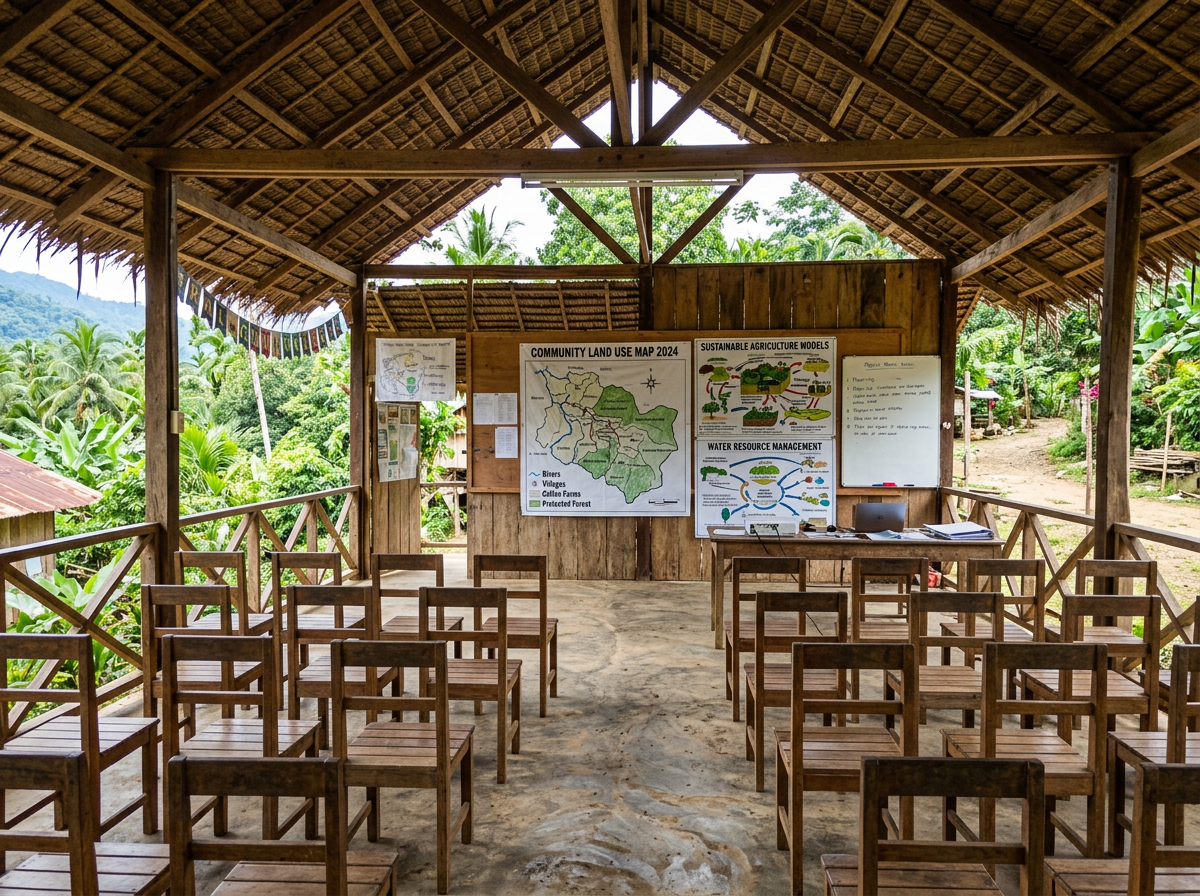
    https://images.openai.com/static-rsc-4/zJzu0-yep6CNVIhep7dwNLKHZiifxh4JEVrAPC6wJz-5dSskdOZN1Fq6zJL62us0dVHREKaTKfcD62-X8GKd337irEErSAxJ3C2LeAWqbY68q88QgkwJSG-vtfZH2vOrq123IXLfpZZPdMdYdBb0pUhGsA3nwaqf_hIetixtwAtAICLkjhOduW_2CZy9raNL?purpose=fullsize

    The pilot must operate at a scale where:

    • Human dynamics are visible
    • Systems can be tested
    • Failure is survivable

    Design Parameters:

    • Cohort Size: 24 participants
    • Duration: 16 weeks
    • Setting: Barangay-level or LGU-supported community
    • Cadence: 2 sessions per week (3–4 hours each)
    • Expected Output: At least one functioning micro-system

    This is not arbitrary.

    It mirrors anthropological observations of community-scale cohesion in pre-colonial Philippine societies, where leadership roles—including those associated with figures like the babaylan—operated within tight social units rather than large anonymous populations (Scott, 1994).


    Phase Structure — With Week-Level Reality


    Phase 1 (Weeks 1–4): Cultural Grounding

    This phase is not “orientation.”
    It is deconditioning.


    Participants confront:

    • Their assumptions about history
    • Their relationship to authority
    • Their level of disconnection from local systems

    Activities include:

    • Mapping local resource flows (food, water, labor)
    • Reconstructing pre-colonial systems using guided materials
    • Identifying gaps between inherited narratives and lived reality

    This phase draws directly from
    Pre-colonial Philippine Economics


    Observed Reality (Week 2–3):

    • Participants often default to “textbook answers”
    • Discomfort emerges when asked to describe their own barangay systems
    • Early signs of disengagement from abstract learners

    Output:
    A Context Map—not theoretical, but specific to their barangay


    Phase 2 (Weeks 5–8): Relational Stress Testing

    https://images.openai.com/static-rsc-4/m3J9mJdFftUjFXRJ-Te-3euJ_ELhghs6V79bCDbsiIUpujO5viD_wAUt4mQ6X66c86DiVAg-FA17fe9N3hFT3uL3y2vcu7mmdd9f9ptbOpWJkVE4VGNdUdsIjpWnwQa2f13yX5LFFHifVTydvjac06B1yINZS_L8WtSZb2b6QeZuy4MX0xW3nU2kdp0soM-k?purpose=fullsize

    This is where most programs fail.

    Because this is where friction becomes visible.


    Participants are placed in:

    • Conflicting decision scenarios
    • Resource allocation dilemmas
    • Leadership rotation exercises

    What emerges is predictable:

    • Dominant personalities attempt control
    • Passive participants withdraw
    • Conflict avoidance patterns surface (common in high “hiya” cultures)

    These dynamics align with broader cultural patterns explored in
    The Architecture of Silence

    Research in critical pedagogy shows that learning accelerates when participants are forced to confront real relational tension, not avoid it (Freire, 1970).


    Observed Reality (Week 6–7):

    • First major conflicts emerge
    • Some participants consider dropping out
    • Cohort cohesion either stabilizes—or fractures

    Output:
    Demonstrated ability to navigate structured conflict without facilitator intervention


    Phase 3 (Weeks 9–12): Systems Under Constraint

    This is the pivot point.

    https://images.openai.com/static-rsc-4/2NPpF7Qf5koTcSaw72DmqolXIKBcYB6yxBbI1tLixQGz-aC4e1oYaPUSWxhRaZvMJ5KN5NCb5SBproQ4zv6FkQgyLIgqMd1699j78o9aGNaBTt7NvLefkpUPTe-TtfMs0aEj0t63JYqQq9MLMReZtvZvum-4_W9bW9AdthnLPWT7gym_JPF2_GTifYiDHE8j?purpose=fullsize

    Participants must now:

    • Work with incomplete data
    • Engage real stakeholders
    • Design systems that function despite limitations

    They are tasked to build systems aligned with:
    ARK-001: The 50-Person Resource Loop


    Examples:

    • Small-scale food redistribution network
    • Community study group for struggling students
    • Waste-to-resource initiative

    Observed Reality (Week 10–11):

    • Plans initially overcomplicate
    • Participants underestimate logistical constraints
    • First contact with community resistance

    Output:

    A working prototype plan with clear inputs, outputs, and failure points


    Phase 4 (Weeks 13–16): Deployment and Feedback

    This phase separates:

    • Those who can explain systems
    • From those who can run them

    Participants:

    • Launch their system (even at micro scale)
    • Track outputs (participation, flow, breakdowns)
    • Present results to barangay stakeholders

    Observed Reality (Week 14–16):

    • Systems partially fail (this is expected)
    • Participants experience real accountability
    • Confidence shifts from abstract to grounded

    Output:

    An operational system, however imperfect


    Facilitator Structure: Preventing Collapse

    The pilot fails without proper facilitation.

    https://images.openai.com/static-rsc-4/DrRD5cdFBr2aTkAVHD85HlfIf2Pmrsu21rEoYHtYPfEtO4ZXNeTS00P_OjsIkjTJXHdbI03anM9vjb_-FAXsZ8RiiRo5W6eVv4Lfn1f2MU9qmoMTa-SfIu7nDEaVXgsWEgcOPw5DH3I4F9W6CQW3zB2sWJohpIJ49FM6A7sV_xFUyDw4IM7y6QMeYDZ1VeoL?purpose=fullsize

    Required Roles:

    • Lead Facilitator: Maintains structural integrity
    • Cultural Anchor: Prevents abstraction drift
    • Technical Advisor: Engaged during system design phase
    • Cohort Leads: Rotating participant leadership

    This reflects the integrative leadership model documented by William Henry Scott, where authority was functional, not hierarchical (Scott, 1994).


    Assessment: What Actually Gets Measured

    Traditional education asks:

    “What do you know?”

    This model asks:

    “What can you sustain?”


    Metrics

    1. Coherence Index
      • Can participants link identity → decision → outcome?
    2. Relational Stability
      • Does the group function under stress?
    3. System Viability
      • Does the micro-system operate for at least 2 weeks?
    4. Community Validation
      • Do external stakeholders perceive value?

    This aligns with experiential learning frameworks where real-world performance is the primary indicator of competence (Freire, 1970).


    Philippine Feasibility: Why This Can Actually Work

    The model is intentionally low-resource:

    • Uses barangay infrastructure
    • Requires minimal technology
    • Leverages local knowledge holders

    This makes it viable for LGUs, where community programs exist but often lack systemic coherence.

    The key advantage:

    It does not require systemic overhaul to begin.

    Only a single functioning pilot.


    Failure Modes (Realistic, Not Theoretical)

    • Participant dropout (Week 5–8)
    • Conflict breakdown (Phase 2)
    • Overdesigned systems that fail in execution
    • Community disengagement

    These are not bugs.

    They are the actual training environment.


    Conclusion: From Curriculum to Capability

    The Babaylan Arc cannot prove itself through narrative.

    It must prove itself through:

    • Participants who can stabilize groups
    • Systems that function under constraint
    • Communities that experience tangible benefit

    This pilot does not guarantee success.

    It guarantees something more valuable:

    Feedback grounded in reality.


    References

    Constantino, R. (1970). The Miseducation of the Filipino.

    Freire, P. (1970). Pedagogy of the Oppressed.

    OECD. (2019). PISA 2018 Results.

    Scott, W. H. (1994). Barangay: Sixteenth-Century Philippine Culture and Society.

    The concepts outlined here are designed for real-world execution. For a complete set of ready-to-use documents—including governance templates, resource tracking sheets, and operational SOPs—explore the 55 Editable Applied Stewardship Toolkit (Complete Set).

    For a broader systems context that situates localized resilience within national and multi-scalar transformation frameworks, explore The Philippine Ark: A Sovereign Blueprint for Systemic Transformation.


    Continue Through the ARK Series

    This framework is designed as a complete system. You can explore it sequentially or move directly to the layer most relevant to your work:

    Foundations

    Design + Build

    Systems Layer

    Scaling


    Suggested Pathways

    New to the framework?

    Start with ARK-001 ARK-008ARK-011


    Designing a physical site?

    Begin with ARK-007ARK-008ARK-009


    Preparing for real-world deployment?

    Focus on ARK-011ARK-012ARK-013


    Thinking long-term scale?

    Move to ARK-010


    [DOCUMENT CONTROL & STEWARDSHIP]

    Standard Work ID: [ARK-005]

    Baseline Version: v1.5.2026

    Classification: Open-Access Archive / Systemic Protocol

    The Sovereign Audit: Following this protocol is an act of internal quality control. Verification of this standard does not happen here; it happens at your Gemba—the actual place where your life and leadership occur. No external validation is required or offered.

    Next in Sequence: [ARK-006: Governance Protocols for Distributed Communities]

    Return to Archive: [Standard Work Knowledge Hub: The Terrain Map]


    © 2026 Gerald Daquila • Life.Understood • Systemic Stewardship • Non-Autocratic Architecture • Process over Persona