Logo - Life.Understood.

Category: Trauma Healing

  • Healing vs Transcendence: Two Very Different Spiritual Paths

    Healing vs Transcendence: Two Very Different Spiritual Paths


    Why Growth Sometimes Requires Integration Rather Than Escape—and Why the Difference Matters


    Meta Description

    What is the difference between healing and transcendence? Explore two distinct spiritual paths, the risks of spiritual bypassing, psychological integration, and the role of both healing and awakening in human development.


    Many spiritual traditions speak about awakening.

    • Psychology often speaks about healing.
    • Personal development emphasizes growth.
    • Contemplative traditions emphasize transcendence.

    These concepts are frequently treated as if they describe the same process.

    In practice, they often do not.

    One of the most important distinctions in modern spirituality is the difference between healing and transcendence.

    Both can be valuable.

    Both can transform lives.

    Yet they address fundamentally different aspects of human experience.

    Confusing the two can create significant misunderstandings about personal growth, spiritual development, and psychological well-being.

    Understanding this distinction helps explain why some people pursue years of spiritual practice yet remain emotionally reactive, while others engage deeply in healing work without necessarily pursuing transcendent states of consciousness.

    The paths overlap.

    But they are not identical.


    What Is Healing?

    Healing generally involves the integration of unresolved experiences.

    Psychologically, healing often focuses on:

    • Trauma
    • Emotional wounds
    • Grief
    • Attachment patterns
    • Internal conflicts
    • Limiting beliefs
    • Dysregulated nervous system responses

    The goal is not perfection.

    The goal is greater wholeness.

    Psychiatrist Bessel van der Kolk argues that healing involves restoring the capacity to remain present with experience rather than remaining trapped in unresolved patterns from the past (van der Kolk, 2014).

    Healing asks questions such as:

    • What happened?
    • What remains unresolved?
    • What requires acknowledgment?
    • What needs integration?

    Healing tends to move toward the material of life rather than away from it.

    It invites engagement with experience.


    What Is Transcendence?

    Transcendence refers to experiences that move beyond ordinary identification with the personal self.

    Across contemplative traditions, transcendence often involves:

    • Expanded awareness
    • Mystical experiences
    • States of unity
    • Nondual consciousness
    • Deep meditation
    • Spiritual awakening
    • Experiences of interconnectedness

    Psychologist Abraham Maslow described transcendence as experiences in which individuals move beyond ordinary ego concerns and encounter broader dimensions of meaning and existence (Maslow, 1964).

    Transcendence asks different questions:

    • Who am I beyond personal identity?
    • What remains when ordinary mental narratives quiet?
    • How is consciousness related to reality?
    • What lies beyond the separate self?

    Where healing often moves downward into unresolved material, transcendence often moves upward into expanded awareness.


    Different Problems, Different Solutions

    Healing and transcendence address different challenges.

    • Healing addresses fragmentation.
    • Transcendence addresses identification.

    Healing asks:

    “How do I become whole?”

    Transcendence asks:

    “Who is the ‘I’ seeking wholeness?”

    These questions are related.

    Yet they are not interchangeable.

    A person may experience profound spiritual states while still carrying unresolved trauma.

    Likewise, a psychologically healthy individual may have little interest in transcendental experiences.

    Each path solves different problems.


    Why Spiritual Experiences Do Not Automatically Heal Trauma

    One of the most common misconceptions in contemporary spirituality is the belief that awakening automatically resolves psychological wounds.

    Research and clinical experience suggest otherwise.

    Trauma is often stored not merely as conscious memory but as embodied patterns involving nervous system regulation, emotional responses, and relational dynamics (van der Kolk, 2014).

    A profound spiritual experience may temporarily alter perception.

    However, it does not necessarily reorganize every unresolved emotional pattern.

    Individuals may therefore experience:

    • Deep mystical insight
    • Powerful meditation states
    • Experiences of unity

    while still struggling with:

    • Anxiety
    • Attachment wounds
    • Relationship difficulties
    • Emotional reactivity
    • Shame
    • Fear

    Spiritual insight and psychological integration are related but distinct developmental processes.


    The Phenomenon of Spiritual Bypassing

    Psychologist John Welwood introduced the term spiritual bypassing to describe the use of spiritual ideas or practices to avoid unresolved psychological issues (Welwood, 2000).

    Examples may include:

    • Using nonduality to avoid emotional pain
    • Using forgiveness to suppress anger
    • Using detachment to avoid intimacy
    • Using transcendence to escape grief
    • Using spiritual concepts to deny vulnerability

    In these cases, spirituality becomes a defense mechanism rather than a path toward deeper integration.

    The problem is not spirituality itself.

    The problem is using transcendence to avoid healing.


    The Strengths of the Healing Path

    Healing work develops capacities that are essential for human flourishing.

    These often include:

    • Emotional regulation
    • Self-awareness
    • Resilience
    • Relational health
    • Compassion
    • Authenticity

    Healing helps individuals become more capable of inhabiting their lives fully.

    It strengthens the ability to remain present with reality rather than defending against it.

    Research in trauma recovery consistently suggests that integration occurs through safety, connection, emotional processing, and meaning-making rather than avoidance (Herman, 2015).

    Healing therefore deepens embodiment.

    It helps people become more fully human.


    The Strengths of the Transcendent Path

    Transcendent practices offer different gifts.

    Research on contemplative traditions suggests benefits including:

    • Increased well-being
    • Reduced stress
    • Enhanced compassion
    • Expanded perspective
    • Greater self-transcendence (Yaden et al., 2017)

    Transcendent experiences often reduce excessive identification with personal narratives.

    Individuals may discover that thoughts, emotions, and identities are not the entirety of who they are.

    • This realization can reduce suffering.
    • It can also foster greater humility and interconnectedness.
    • Transcendence expands perspective.
    • It helps people recognize larger contexts of meaning.

    Why Mature Development Requires Both

    Many contemporary developmental models increasingly emphasize integration.

    Psychologist Ken Wilber distinguishes between “waking up” and “growing up” as separate dimensions of development (Wilber, 2000).

    One can awaken spiritually without fully maturing psychologically.

    One can mature psychologically without pursuing spiritual awakening.

    The healthiest developmental trajectories often involve both.

    Healing without transcendence may become excessively self-focused.

    Transcendence without healing may become detached from lived reality.

    • Together they create balance.
    • One deepens humanity.
    • The other expands perspective.

    The Role of Community

    Both healing and transcendence are influenced by social environments.

    Healthy communities provide:

    • Support
    • Accountability
    • Reflection
    • Belonging
    • Shared meaning

    Conversely, communities can sometimes reinforce avoidance.

    • Groups that idealize transcendence may inadvertently discourage emotional honesty.
    • Groups focused exclusively on healing may overlook larger questions of meaning and purpose.

    Sustainable growth often requires environments capable of supporting both dimensions.


    Integration: The Meeting Point

    Perhaps the most fruitful perspective is not choosing between healing and transcendence.

    It is understanding how they complement one another.

    • Healing helps individuals become more capable of meeting experience directly.
    • Transcendence helps individuals recognize dimensions of experience beyond the personal self.

    Healing integrates the story.

    • Transcendence expands beyond the story.

    Healing restores connection to life.

    • Transcendence reveals broader contexts within which life unfolds.

    The two paths intersect through integration.


    Beyond Either/Or

    Many spiritual traditions ultimately recognize both dimensions.

    Contemplative insight without compassion is incomplete.

    Psychological health without meaning may feel insufficient.

    Human development appears multidimensional.

    It involves:

    • Body
    • Mind
    • Emotion
    • Relationship
    • Meaning
    • Consciousness

    Reducing growth to a single dimension often creates imbalance.

    The challenge is not determining which path is superior.

    The challenge is discerning what is needed at different stages of development.


    Conclusion

    Healing and transcendence are often spoken about together because both involve transformation. Yet they address different aspects of human experience.

    Healing focuses on integration. It helps individuals process unresolved wounds, regulate emotional responses, and develop greater wholeness.

    Transcendence focuses on expanded awareness. It invites individuals beyond ordinary identification with the personal self and into broader experiences of meaning, connection, and consciousness.

    Neither path replaces the other.

    • Spiritual awakening does not automatically heal trauma.
    • Psychological healing does not automatically produce transcendent insight.
    • Mature development often involves both.

    The deepest growth may emerge when individuals learn not only to rise beyond suffering, but also to meet it with honesty, compassion, and integration.

    • The goal is not escape.
    • The goal is becoming fully present to reality—both human and transcendent.

    Related Reading


    References

    Herman, J. L. (2015). Trauma and recovery: The aftermath of violence—from domestic abuse to political terror (Rev. ed.). Basic Books.

    Maslow, A. H. (1964). Religions, values, and peak-experiences. Ohio State University Press.

    van der Kolk, B. A. (2014). The body keeps the score: Brain, mind, and body in the healing of trauma. Viking.

    Welwood, J. (2000). Toward a psychology of awakening: Buddhism, psychotherapy, and the path of personal and spiritual transformation. Shambhala.

    Wilber, K. (2000). Integral psychology: Consciousness, spirit, psychology, therapy. Shambhala.

    Yaden, D. B., Haidt, J., Hood, R. W., Jr., Vago, D. R., & Newberg, A. B. (2017). The varieties of self-transcendent experience. Review of General Psychology, 21(2), 143–160. https://doi.org/10.1037/gpr0000102

    The Living Archive is designed to be explored through pathways, categories, and search. If you’re looking for a specific idea, question, or theme, AI Search can help surface relevant connections across the archive.


    Attribution

    The Living Archive
    Integrative Frameworks for Regenerative Civilization

    © 2026 Gerald Daquila. All rights reserved.
    Part of the Life.Understood. knowledge ecosystem and Stewardship Institute initiative.

    This article is intended for educational, research, and civic inquiry purposes.
    Readers are encouraged to engage critically, verify sources independently, and explore related knowledge hubs for broader systems context.
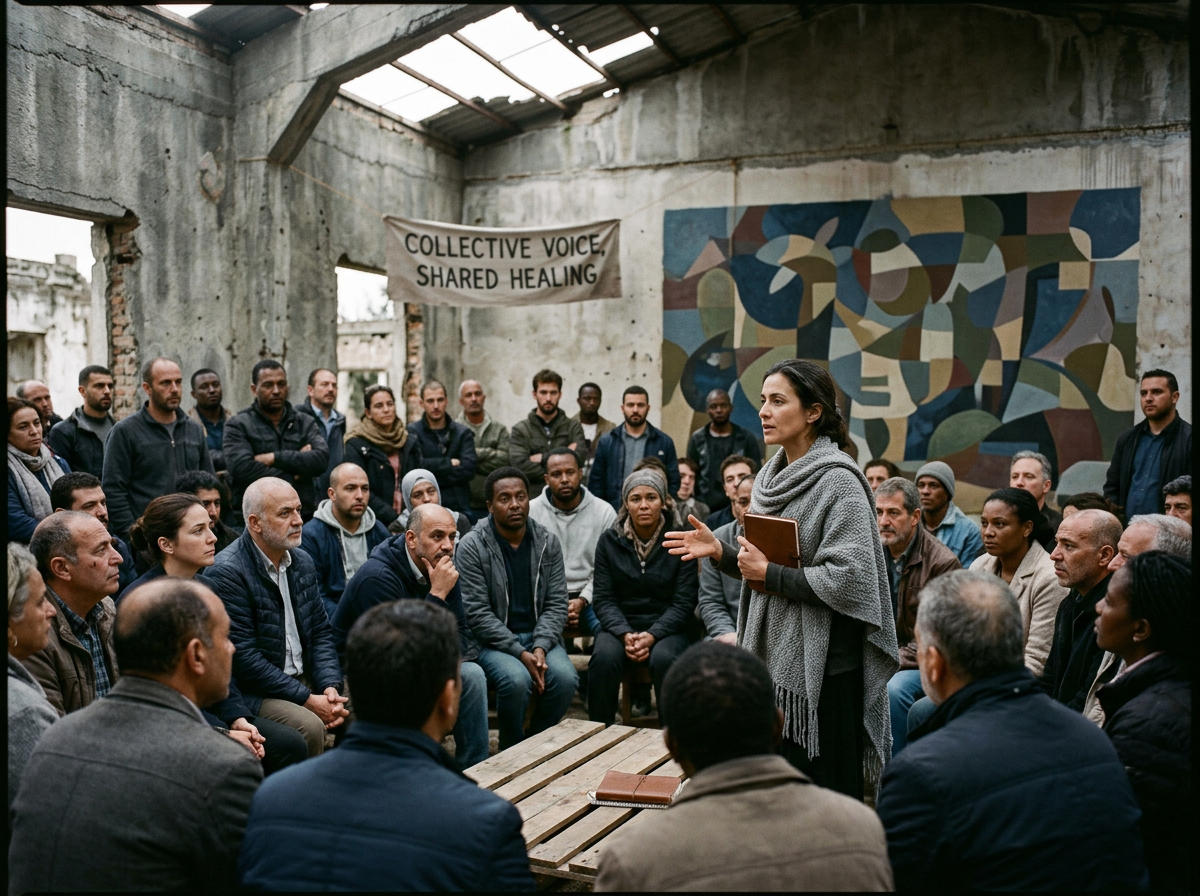

  • Trauma and Governance: How Unhealed Societies Create Dysfunctional Institutions

    Trauma and Governance: How Unhealed Societies Create Dysfunctional Institutions


    Exploring the Hidden Links Between Collective Trauma, Trust, Leadership, and Institutional Performance


    Meta Description

    How collective trauma shapes governance, trust, leadership, and institutions. Explore why unhealed societies often create dysfunctional systems—and what genuine healing requires.


    Why do some societies struggle with corruption, distrust, political instability, weak institutions, or cycles of dysfunctional leadership despite repeated reforms?

    Conventional explanations often focus on economics, laws, incentives, or political structures. These factors matter. Yet beneath many institutional failures lies a deeper and often overlooked reality: collective trauma.

    Trauma is not merely an individual psychological experience. When traumatic experiences affect entire populations—through colonization, war, oppression, poverty, displacement, political violence, or systemic neglect—the effects can become embedded within culture, social norms, leadership patterns, and institutional behavior (Alexander et al., 2004).

    In this sense, governance is not simply a legal or administrative process. Governance becomes a reflection of collective consciousness, historical memory, and unresolved social wounds.

    Understanding this connection helps explain why dysfunctional systems often persist even when people genuinely desire change.


    Trauma Beyond the Individual

    Psychologists typically define trauma as an overwhelming experience that exceeds a person’s ability to cope and integrate the event (van der Kolk, 2014).

    However, trauma can also exist at larger scales:

    • Family trauma
    • Community trauma
    • Historical trauma
    • Cultural trauma
    • Intergenerational trauma

    Research demonstrates that traumatic experiences can influence future generations through social learning, family dynamics, cultural narratives, and even biological mechanisms associated with stress regulation (Yehuda & Lehrner, 2018).

    When enough people share similar unresolved wounds, these patterns can begin shaping entire social systems.

    A traumatized individual may struggle with trust, emotional regulation, or healthy boundaries.

    A traumatized society often struggles with:

    • Institutional trust
    • Cooperative behavior
    • Long-term planning
    • Accountability
    • Civic participation
    • Leadership selection

    The result is not merely personal suffering but systemic dysfunction.


    How Trauma Shapes Institutions

    Institutions do not emerge independently from society. Governments, corporations, schools, religious organizations, and community structures are all created and maintained by human beings.

    Consequently, institutions often inherit the unresolved psychological patterns of the populations that build them.

    Sociologists describe institutions as expressions of collective beliefs and social norms (Berger & Luckmann, 1966).

    If collective beliefs are shaped by fear, scarcity, distrust, or unresolved historical wounds, those dynamics frequently become embedded in institutional design.

    This can manifest in several ways.

    Hyper-Control and Centralization

    Trauma frequently creates a desire for safety through control.

    Individuals who have experienced instability often seek predictability and certainty. Societies may do the same.

    As a result, institutions can become excessively centralized, bureaucratic, and rigid.

    • Rules multiply.
    • Decision-making becomes concentrated.
    • Authority becomes protected rather than accountable.

    While these structures may initially appear stabilizing, excessive centralization often reduces adaptability and responsiveness.

    The system begins protecting itself rather than serving its intended purpose.

    Distrust as a Default Setting

    One of trauma’s most common consequences is the erosion of trust.

    People who have repeatedly experienced betrayal learn to anticipate future betrayal.

    At the societal level, this may create:

    • Suspicion of government
    • Distrust of media
    • Distrust of experts
    • Distrust of neighbors
    • Distrust of institutions

    Low-trust societies typically experience higher transaction costs, weaker cooperation, and slower collective problem-solving (Fukuyama, 1995).

    Without trust, governance becomes increasingly difficult because every interaction requires defensive mechanisms.

    Short-Term Thinking

    Trauma often forces attention toward immediate survival.

    When individuals or communities remain trapped in survival-oriented thinking, long-term planning becomes difficult.

    This can produce:

    • Reactive policymaking
    • Electoral short-termism
    • Resource depletion
    • Debt accumulation
    • Underinvestment in future generations

    The system becomes optimized for managing crises rather than preventing them.


    The Leadership Problem

    Many governance failures are ultimately leadership failures.

    However, trauma affects leadership selection as much as leadership performance.

    In healthy systems, leadership tends to be associated with competence, integrity, and stewardship.

    In traumatized systems, leadership may become associated with:

    • Dominance
    • Charisma
    • Patronage
    • Control
    • Status
    • Emotional reassurance

    Citizens experiencing uncertainty often seek figures who project strength, certainty, and protection.

    Unfortunately, these traits are not necessarily indicators of wisdom or competence.

    Research in political psychology suggests that fear and perceived threat can significantly influence voter preferences and leadership selection (Marcus et al., 2000).

    This dynamic helps explain why societies sometimes repeatedly choose leaders who reinforce existing dysfunctions rather than transform them.

    The issue is not simply individual leaders.

    The deeper issue is the collective psychological environment that determines which leaders rise to power.


    Trauma and Corruption

    Corruption is often discussed primarily as a legal or ethical problem.

    Yet corruption can also emerge as an adaptive response to unstable environments.

    In low-trust systems, people may conclude that formal institutions cannot reliably meet their needs.

    • As a result, informal networks become more important.
    • Relationships replace rules.
    • Connections replace procedures.
    • Loyalty replaces merit.

    Over time, these adaptive survival strategies can evolve into entrenched patronage systems.

    What begins as a coping mechanism eventually becomes institutionalized.

    This perspective does not excuse corruption.

    Rather, it helps explain why anti-corruption campaigns frequently fail when underlying social conditions remain unchanged.

    Without addressing the roots of distrust and insecurity, dysfunctional behaviors often reappear in new forms.


    Historical Trauma and National Identity

    Many societies carry unresolved historical wounds.

    Examples include:

    • Colonial domination
    • Slavery
    • Genocide
    • Civil war
    • Authoritarian rule
    • Forced displacement

    These experiences shape collective narratives about power, identity, and belonging.

    Historical trauma often influences how citizens relate to authority.

    • Some populations become highly deferential.
    • Others become deeply skeptical.
    • Many oscillate between dependence and rebellion.

    These patterns can persist for generations after the original events have ended (Alexander et al., 2004).

    Consequently, governance challenges frequently reflect unresolved historical experiences rather than merely contemporary political disagreements.


    Why Structural Reform Alone Often Fails

    One of the most important lessons from systems thinking is that outcomes emerge from underlying structures.

    • However, structures themselves emerge from culture.
    • And culture is shaped by shared experiences, beliefs, and memories.
    • This means governance reform cannot rely exclusively on new laws, constitutions, policies, or organizational charts.
    • Structural changes matter.

    But if collective behavior remains unchanged, old dynamics often reappear inside new institutions.

    A society may replace leaders while preserving the same power dynamics.

    • It may redesign agencies while maintaining the same distrust.
    • It may introduce accountability mechanisms while retaining the same culture of avoidance.

    The visible structure changes.

    The invisible operating system remains the same.


    Healing as Governance Infrastructure

    If trauma contributes to institutional dysfunction, then healing becomes more than a personal concern.

    It becomes a governance concern.

    Healthy governance requires citizens capable of:

    • Trusting appropriately
    • Managing conflict constructively
    • Cooperating across differences
    • Thinking beyond immediate survival
    • Participating in civic life

    These capacities depend partly upon psychological and cultural health.

    Societies that invest in healing often strengthen governance indirectly through:

    • Education
    • Community building
    • Truth and reconciliation processes
    • Trauma-informed institutions
    • Restorative justice practices
    • Mental health support systems

    Healing does not eliminate political disagreements.

    Nor does it guarantee good governance.

    However, it improves the collective capacity required to sustain healthy institutions.


    From Trauma Loops to Stewardship Cultures

    The deepest challenge is not merely fixing broken systems.

    It is transforming the conditions that continually recreate them.

    Trauma tends to generate cycles of fear, distrust, fragmentation, and reactive leadership.

    Healing creates the possibility of different cycles:

    • Trust instead of suspicion
    • Cooperation instead of fragmentation
    • Stewardship instead of domination
    • Responsibility instead of blame
    • Long-term thinking instead of survival thinking

    In this sense, governance is not only about constitutions, elections, regulations, or bureaucracies.

    It is also about the quality of relationships within a society.

    Institutions ultimately reflect the people who create them.

    When societies heal, institutions gain the possibility of healing as well.

    The future of governance may therefore depend not only on better policies, but on our collective willingness to confront historical wounds, integrate difficult truths, and build cultures capable of sustaining trust across generations.

    True institutional renewal begins where social healing and structural design meet.


    Conclusion

    Dysfunctional institutions rarely emerge from nowhere.

    They are often the visible expression of invisible social wounds accumulated across generations. Collective trauma shapes trust, leadership, power, cooperation, and institutional behavior in ways that conventional political analysis sometimes overlooks.

    Understanding governance through the lens of trauma does not reduce every problem to psychology. Rather, it expands our understanding of how culture, history, and human behavior influence systems. Lasting reform requires both structural change and collective healing.

    The healthiest societies are not those without trauma.

    They are those that develop the capacity to acknowledge it, learn from it, and prevent it from unconsciously shaping the future.

    Governance, at its best, becomes not merely the administration of power, but the stewardship of collective well-being.


    Related Reading


    References

    Alexander, J. C., Eyerman, R., Giesen, B., Smelser, N. J., & Sztompka, P. (2004). Cultural trauma and collective identity. University of California Press.

    Berger, P. L., & Luckmann, T. (1966). The social construction of reality. Anchor Books.

    Fukuyama, F. (1995). Trust: The social virtues and the creation of prosperity. Free Press.

    Marcus, G. E., Neuman, W. R., & MacKuen, M. (2000). Affective intelligence and political judgment. University of Chicago Press.

    van der Kolk, B. A. (2014). The body keeps the score: Brain, mind, and body in the healing of trauma. Viking.

    Yehuda, R., & Lehrner, A. (2018). Intergenerational transmission of trauma effects: Putative role of epigenetic mechanisms. World Psychiatry, 17(3), 243–257. https://doi.org/10.1002/wps.20568

    The Living Archive is designed to be explored through pathways, categories, and search. If you’re looking for a specific idea, question, or theme, AI Search can help surface relevant connections across the archive.


    Attribution

    The Living Archive
    Integrative Frameworks for Regenerative Civilization

    © 2026 Gerald Daquila. All rights reserved.
    Part of the Life.Understood. knowledge ecosystem and Stewardship Institute initiative.

    This article is intended for educational, research, and civic inquiry purposes.
    Readers are encouraged to engage critically, verify sources independently, and explore related knowledge hubs for broader systems context.

  • Beyond the “Wait and See” Mindset: Overcoming the Psychological Weight of Persistent Scarcity

    Beyond the “Wait and See” Mindset: Overcoming the Psychological Weight of Persistent Scarcity


    Why hesitation feels safe—and how breaking the cycle unlocks agency, stability, and sovereign action


    Meta Description

    Why do so many Filipinos stay in “wait and see” mode? Discover how scarcity conditioning shapes hesitation—and how to shift toward decisive, grounded financial and life choices.


    The Comfort of Waiting

    https://images.openai.com/static-rsc-4/JIA0FiI6wmes5ubRstZYsdstVK0XsZyRr2HAyms3fLk4HU76jkbFAaGQA_AC5qmbcx-yNYGce8TVcSJdxQd8BQAwcf7sLRyjD09p88lin0WJrh4_pV9HGn8nKtS21i04BefVybBueO_5KsVpmacPFw9P5G27lP81jv9YcKQw_ova31wpZGHocTNn37WAMeL-?purpose=fullsize

    “Hintayin muna natin.”
    “Let’s see what happens.”
    “Maybe next time.”

    Across the Philippines, the language of waiting is familiar.

    https://images.openai.com/static-rsc-4/jyUXOFqJ8L03_o3wmfq-ZkEpU509Og05t8C0Fa9kdIG_ZV20yY256g5Iexh4XjqCio5doLA6c_uHZ5TlGswqcfp78SP4BqeJ_0PiM4h2fMdgkwwEEi8zOkCAmm2fcKpLgL_PRK4lJBrOZFn_nuFT2MB7gPKKO_Wh0Y1l4gaaevyL8hbnKneW-XNFRy-R8Mx6?purpose=fullsize

    It appears in:

    • Financial decisions (“I’ll invest when things are more stable”)
    • Career moves (“I’ll apply when I’m more ready”)
    • Business ideas (“I’ll start when the timing is right”)

    On the surface, this looks like caution.

    https://images.openai.com/static-rsc-4/zCf2QgaVG2M8MQQw9GeOa87LUbywfshdcFSfLKRfG4elMg2UrMBBKNR7C8WLD1N7o8jFe8Yi3Ec8_fd0HH9Z7lK7nbxnPIVRUlBgVshzgvW8NsR4OxfZ1UseZSG4891RbzoIGWX3fBEg3_BFAFW8fMmq-HO3dEu17fQqr1OlMfHqr7edsoRM-jITUVvnAg7_?purpose=fullsize

    But beneath it often lies something deeper:

    A learned relationship with uncertainty shaped by persistent scarcity.


    What Is the “Wait and See” Mindset?

    The “wait and see” mindset is not simple procrastination.

    It is a protective strategy.

    It emerges when individuals:

    • Anticipate instability
    • Fear loss more than they value gain
    • Lack confidence in future conditions

    In environments where resources are limited and risks are high, waiting can feel like the safest option.

    And in many cases, historically, it was.


    The Roots of Persistent Scarcity

    To understand this mindset, we must look at the conditions that shaped it.

    The Filipino experience includes:

    • Colonial extraction that limited wealth accumulation
    • Economic structures dependent on external markets
    • Income volatility and limited safety nets
    • Generational poverty in many communities

    These conditions create persistent scarcity—not just occasional lack, but ongoing uncertainty.

    Behavioral research shows that scarcity captures attention and narrows focus, making long-term planning more difficult (Mullainathan & Shafir, 2013).


    In such contexts, waiting becomes rational.


    When Protection Becomes Limitation

    The problem arises when this adaptive strategy becomes default—even when conditions allow for movement.

    The “wait and see” mindset begins to:

    • Delay opportunities
    • Reinforce inaction
    • Reduce exposure to growth

    Over time, it creates a loop:

    Uncertainty → Waiting → Missed opportunities → Continued uncertainty

    This loop can persist even when external conditions improve.


    The Psychological Weight of Waiting

    Waiting is not neutral.

    It carries emotional and cognitive weight.

    1. Decision Fatigue

    Constantly postponing decisions keeps them unresolved, consuming mental energy.


    2. Reduced Confidence

    The longer action is delayed, the more difficult it feels to begin.


    3. Reinforced Fear

    Avoidance signals to the brain that the situation is dangerous.


    4. Loss of Momentum

    Progress requires movement.

    Waiting interrupts flow.


    (Crosslink: Financial Sovereignty Is a Nervous System State: Grounding the QFS in the Filipino Reality)

    From a nervous system perspective, waiting often reflects a freeze response—a state where action is inhibited to avoid perceived risk.


    The Cultural Layer: Collective Waiting

    The “wait and see” mindset is not only individual.

    It is cultural.

    It appears in:

    • Hesitation to adopt new systems
    • Delayed collective action
    • Preference for observing before engaging

    (Crosslink: Why Resiliency Is a Trap: Moving from Colonial Survival to New Earth Stewardship)

    While caution has value, excessive delay can prevent necessary transformation.


    The Hidden Influence of Guilt and Obligation

    Waiting is often reinforced by emotional factors:

    • Fear of making the “wrong” move for the family
    • Guilt around taking risks that may affect others
    • Pressure to maintain stability rather than pursue growth

    (Crosslink: Money, Guilt, and the Colonized Soul: Why We Sabotage Our Own Sovereignty)

    This creates internal conflict:

    The desire to move forward… and the need to stay safe.


    The Illusion of Perfect Timing

    One of the core beliefs behind waiting is:

    “I will act when the timing is right.”

    But in dynamic environments, perfect conditions rarely arrive.

    Instead:

    • Markets shift
    • Opportunities evolve
    • Circumstances change

    Waiting for certainty often results in missed windows.


    Research on decision-making shows that action under uncertainty is a necessary condition for growth (Kahneman, 2011).


    From Waiting to Agency

    Breaking the cycle does not mean becoming reckless.

    It means shifting from passive delay to active engagement.

    The Key Difference:

    • Waiting: reacting to external conditions
    • Agency: shaping outcomes through informed action

    A Practical Framework for Moving Forward

    1. Define Acceptable Risk

    Not all decisions require full certainty.

    Ask:

    What level of risk can I realistically manage?


    2. Start Small

    Large decisions can feel overwhelming.

    Break them into:

    • Small, testable steps
    • Low-risk experiments

    3. Set Decision Windows

    Avoid indefinite waiting by creating timelines:

    • “I will decide within 2 weeks”
    • “I will test this for 3 months”

    4. Build Safety Nets

    Reduce fear by creating buffers:

    • Emergency funds
    • Support networks
    • Backup plans

    5. Reframe Failure

    Instead of:

    “What if this goes wrong?”

    Consider:

    “What will I learn if it does?”


    6. Strengthen Internal Regulation

    (Crosslink: The Ancestral Debt: Healing the Generational Shame of Poverty in the Filipino Psyche)

    Calm, regulated states improve decision-making capacity.


    The Role of Systems

    Individual action is necessary—but insufficient without supportive structures.

    (Crosslink: ARK-001: The 50-Person Resource Loop)

    Coherent systems:

    • Reduce individual risk
    • Share responsibility
    • Enable collective movement

    When systems are strong, individuals do not have to wait as long.


    The Ark Perspective: Timing vs. Readiness

    Within your framework, the question shifts from:

    “Is the timing right?”

    To:

    “Am I prepared to engage?”

    (Crosslink: From Fragmented Souls to Sovereign Stewards: Reclaiming Identity After 500 Years of Institutional Trauma)

    Readiness is internal.

    Timing is external.

    Sovereignty prioritizes the former.


    The Risk of Staying in Waiting Mode

    If the “wait and see” mindset persists:

    • Opportunities continue to pass
    • Confidence decreases
    • Dependency increases
    • Patterns repeat across generations

    This reinforces the very scarcity individuals are trying to escape.


    Conclusion: The Courage to Move

    Waiting once served a purpose.

    It protected against uncertainty.

    But what protects in one context can limit in another.

    The shift now is not toward impulsivity—but toward intentional action.

    To move:

    • With awareness
    • With preparation
    • With willingness to learn

    Because sovereignty is not built in perfect conditions.

    It is built in real ones.

    And it begins the moment waiting ends.


    References

    Kahneman, D. (2011). Thinking, Fast and Slow. Farrar, Straus and Giroux.

    Mullainathan, S., & Shafir, E. (2013). Scarcity: Why Having Too Little Means So Much. Times Books.

    North, D. C. (1990). Institutions, Institutional Change and Economic Performance. Cambridge University Press.

    David, E. J. R. (2013). Brown Skin, White Minds. Information Age Publishing.


    The Sovereign Professional: A structural map of power, systems thinking, and personal autonomy—dedicated to helping the independent professional navigate complexity and own their value stream.Ask


    ©2026 Gerald Daquila • Life.Understood. • Systems Thinking, Leadership Architecture, and Applied Coherence

  • The Steward’s Mirror: Why Facing Our Shadow Is the First Step to Reclaiming the Babaylan Legacy

    The Steward’s Mirror: Why Facing Our Shadow Is the First Step to Reclaiming the Babaylan Legacy


    From inherited fragmentation to embodied guidance—how inner work restores the integrity of Filipino leadership


    Meta Description

    Reclaiming the Babaylan legacy begins within. Discover how shadow work, identity integration, and cultural grounding shape the next generation of Filipino stewards.


    The Return of a Forgotten Archetype

    Across the Philippines, there is a quiet resurgence of interest in the Babaylan—the precolonial figure often described as healer, mediator, ritual specialist, and community guide.

    Before colonization, the Babaylan was not marginal.

    They were central.

    https://images.openai.com/static-rsc-4/yQ1a7GXCoQ_lbYALVKw6pFnqeND28K9D2AxeUVHLCCtMaZP7eZeyXjhcmMZCoBWDFOMXu1lYFXfhkVwZOWZeKR_LUBUbYyZ1YmVuukAn9zYF5QTFBJpB3iMXwTXL9vkeFakQU87TL0i_GtevSUCBLH2m4cpQ20BtaIj-kkTBwnOnUeSSxH3-50X382BV88Vt?purpose=fullsize

    They held roles that integrated:

    • Spiritual leadership
    • Emotional and communal care
    • Ecological awareness
    • Decision-making influence
    https://images.openai.com/static-rsc-4/1RnuAWILwAHsShghkSyc5jMUmBp6Ogp2Nzvr8U8BWyWf-YkwIPpEZcWw4YbdCQUJ2GFkWlQro5VGef3A2hLOhRDBLU4f6P3XfrLxQWf7ictXyTgJPqO7DfCrE1mEB5BZb9I_wC2yLQWl4aXPwWgw6jziYeM5I91I5XuA9OIPaJGfjSVJnWzWEygOXxoQZWLH?purpose=fullsize

    But with the arrival of colonial systems, this archetype was systematically displaced—replaced by external religious hierarchies and institutional authority (Jocano, 1969).

    Today, as Filipinos seek to reclaim identity and sovereignty, the Babaylan re-emerges not as a relic—but as a reference point.

    https://images.openai.com/static-rsc-4/0UlJo-MT3w5SYKXzHSgtVVAgoLuPphJGjruuXkemoPoIoIkcnpG9cWt4q2LtNlvkFf1PQSiHCX_RxD3aGhIo-arczPzmY6MbknrN973A2iLHaatAuScoDQfZqjF8wmcgSnVGY-yfmggykLZtyUzMx-B5ZpYp0XhdFZTO-dqmYEH7MQgAZBS_smeJF8Qi23t_?purpose=fullsize

    Yet there is a crucial misunderstanding that must be addressed:

    The Babaylan is not reclaimed through imitation.
    It is reclaimed through integration.


    The Mirror Before the Mantle

    There is a growing desire to “step into” the Babaylan role—often expressed through spiritual language, rituals, or symbolic identification.

    But the original function of the Babaylan required something deeper:

    Clarity of self.

    A guide who has not faced their own shadow cannot safely hold space for others.

    This is where many modern attempts falter.

    They seek the mantle without the mirror.


    What Is the Steward’s Mirror?

    The steward’s mirror is the process of turning inward to examine:

    • Personal motivations
    • Emotional triggers
    • Inherited patterns
    • Unresolved wounds

    It asks difficult questions:

    • Why do I want to lead or guide?
    • Where am I still reactive or defensive?
    • What parts of myself do I avoid seeing?

    This aligns with psychological frameworks of shadow work, where integrating disowned aspects of the self leads to greater coherence and stability (Jung, 1959).

    Without this process, leadership becomes projection.


    The Filipino Shadow: A Collective Layer

    Shadow work in the Filipino context is not only individual.

    It is collective.

    (Crosslink: Naming the Unspoken: A Guide to Navigating the Hidden Fractures of Our National Identity)

    The shared shadow includes:

    • Colonial mentality
    • Generational shame around poverty
    • Avoidance of conflict
    • Dependency on external validation

    These patterns shape how leadership is expressed:

    • Over-accommodation instead of clarity
    • Avoidance of difficult truths
    • Desire to be accepted rather than effective

    (Crosslink: Money, Guilt, and the Colonized Soul: Why We Sabotage Our Own Sovereignty)

    If unaddressed, these dynamics are carried into any leadership role—including spiritual ones.


    Why Shadow Work Comes First

    Reclaiming the Babaylan legacy requires more than cultural memory.

    It requires energetic and psychological integrity.

    Shadow work provides this by:

    1. Reducing Projection

    Unintegrated emotions are often projected onto others.

    A steward must be able to distinguish:

    • What belongs to them
    • What belongs to the community

    2. Increasing Emotional Capacity

    Holding space for others requires the ability to remain grounded in the presence of:

    • Pain
    • Conflict
    • Uncertainty

    3. Aligning Intention and Action

    Without integration, there is often a gap between:

    • What one says
    • What one does

    This erodes trust.


    4. Preventing Replication of Harm

    Unexamined leaders can unintentionally recreate:

    • Hierarchies
    • Dependency
    • Manipulation

    Even within “healing” spaces.


    The Difference Between Role and Function

    One of the key distinctions in this framework is this:

    The Babaylan is not a title. It is a function.

    It is defined by:

    • What is held
    • What is facilitated
    • What is transformed

    This shifts the focus from identity performance to responsibility.

    (Crosslink: From Informer to Steward: Why True Leadership Begins with Owning Our Shared Shadow)


    The Path of Integration

    Reclaiming the Babaylan legacy involves integrating three layers:


    1. Personal Shadow

    This includes:

    • Emotional wounds
    • Behavioral patterns
    • Internal contradictions

    Work here creates self-coherence.


    2. Cultural Shadow

    (Crosslink: The Ancestral Debt: Healing the Generational Shame of Poverty in the Filipino Psyche)

    This involves:

    • Understanding inherited narratives
    • Releasing limiting beliefs
    • Reframing identity

    3. Systemic Awareness

    A modern steward must also understand:

    • How systems function
    • Where power operates
    • How change is implemented

    (Crosslink: ARK-003: Jurisdictional Sovereignty: Legal Standard Work)

    Without this, leadership remains symbolic.


    The Nervous System Dimension

    Shadow work is not purely cognitive.

    It is embodied.

    When individuals confront difficult truths, the nervous system responds:

    • Activation (fight/flight)
    • Withdrawal (freeze)

    Learning to regulate these responses is essential.

    (Crosslink: Financial Sovereignty Is a Nervous System State: Grounding the QFS in the Filipino Reality)

    A regulated steward can:

    • Stay present in discomfort
    • Respond rather than react
    • Maintain clarity under pressure

    The Risk of Skipping the Mirror

    If the mirror is bypassed, several risks emerge:

    • Spiritual bypassing – using practices to avoid real issues
    • Authority without accountability – claiming roles without responsibility
    • Community harm – reinforcing dependency or confusion
    • Personal burnout – inability to sustain the role

    These outcomes undermine the very legacy being reclaimed.


    The Ark Perspective: Stewardship as Continuity

    Within the Ark framework, the Babaylan archetype is not isolated.

    It is part of a broader movement toward sovereign stewardship.

    (Crosslink: From Fragmented Souls to Sovereign Stewards: Reclaiming Identity After 500 Years of Institutional Trauma)

    This means:

    • Leadership is distributed
    • Responsibility is shared
    • Systems are designed, not just experienced

    The Babaylan becomes one expression of this larger coherence.


    Practical Pathways: Engaging the Steward’s Mirror

    1. Daily Self-Observation

    Notice reactions without immediate judgment.


    2. Pattern Identification

    Track recurring behaviors:

    • Where do I avoid?
    • Where do I overcompensate?

    3. Emotional Processing

    Allow emotions to be:

    • Felt
    • Named
    • Understood

    4. Feedback Integration

    Invite trusted perspectives.

    Blind spots are often relational.


    5. Continuous Alignment

    Regularly ask:

    Are my actions aligned with my stated values?


    Beyond Reclamation: Toward Evolution

    The goal is not to recreate the past exactly as it was.

    The original Babaylan operated within a different context.

    Today’s world requires:

    • Integration of modern knowledge
    • Engagement with complex systems
    • Adaptation to global realities

    This is not dilution.

    It is evolution.


    Conclusion: The Mirror as Initiation

    The desire to reclaim the Babaylan legacy reflects something real:

    A longing for grounded, integrated, culturally rooted leadership.

    But this path does not begin with outward expression.

    It begins with inward clarity.

    The mirror is not an obstacle.

    It is the initiation.

    To face the shadow is to:

    • Reduce harm
    • Increase capacity
    • Build trust

    And from that foundation, something authentic can emerge:

    Not a performance of leadership.

    But its embodiment.


    References

    Jocano, F. L. (1969). Philippine Mythology. University of the Philippines Press.

    Jung, C. G. (1959). Aion: Researches into the Phenomenology of the Self. Princeton University Press.

    David, E. J. R. (2013). Brown Skin, White Minds. Information Age Publishing.

    Constantino, R. (1975). The Philippines: A Past Revisited. Tala Publishing Services.


    The Sovereign Professional: A structural map of power, systems thinking, and personal autonomy—dedicated to helping the independent professional navigate complexity and own their value stream.Ask


    ©2026 Gerald Daquila • Life.Understood. • Systems Thinking, Leadership Architecture, and Applied Coherence

  • Why Resiliency Is a Trap: Moving from Colonial Survival to New Earth Stewardship

    Why Resiliency Is a Trap: Moving from Colonial Survival to New Earth Stewardship


    How the celebrated strength of the Filipino spirit can quietly reinforce the very systems it seeks to endure


    Meta Description

    Is Filipino resilience empowering—or limiting? Discover how resilience can become a trap, and why moving toward stewardship is the key to true sovereignty and long-term transformation.


    The Most Celebrated Trait

    “Filipinos are resilient.”

    https://images.openai.com/static-rsc-4/8uoZccnLBOsVBEpiVtl-A4H4f8zEuTPtT1BpKUZHVNW6XZ_NsDlQooLYPCr3xKXgv4T3-pDEVe_X5N-yGRDBZeS0Ydg5UsQlb6kQ9cQid42b6wHGWIblYoMwmuTLJRihRtv9TjAbtb_9S7KjBWgu3fIpzJIFoyUea3abRN0jL2hww4Kd-tbCD2BdyJtEQU7s?purpose=fullsize

    It is a phrase repeated in media, policy discussions, and everyday conversation—especially in the aftermath of crisis. Typhoons, economic shocks, political instability—each time, the same narrative emerges:

    Despite everything, Filipinos endure.

    https://images.openai.com/static-rsc-4/fe88O7ddP7tw1LZKJQwPppeAXbXzaOJJektrABqnWB_30-YMX3uG88hgJGL5GeBlOZ6ebG9s9D1jvarCEwfXalUndJUcjtppWeaw3VcXvTl-Q4Kw-SBguodSPKkHqjicob7GxMbOIN0ELeS-emyDoJgBJ3eTZT7UI4GGWEJRAe8IJBcIKArg801Sd_xM2wIh?purpose=fullsize

    At first glance, this seems like a compliment.

    And in many ways, it is. The ability to adapt, recover, and continue in the face of difficulty is undeniably a strength.

    https://images.openai.com/static-rsc-4/o_q500qPnpqgI-bxsWh8oj3a5DShjE7zniqmccfbAhTG_B7jV5oDs-r1A6Rjqt8gwKHGi6MdHr3ij7nmppv7vd1j1lzOfkGEYYZs_ZNQ-g6N1NrldYPoyk0obprt5PijlrnLngn89xJkmsBjcj3Oz1ON-KmsNZp7sh6VoZV5CVajAbPZiEAIYgEstmF5egq3?purpose=fullsize

    But there is a deeper question that is rarely asked:

    What if resilience, when over-relied upon, becomes a mechanism that keeps people in cycles they should no longer have to endure?


    Resilience vs. Transformation

    Resilience is the capacity to withstand and recover.


    Transformation is the capacity to change the conditions that require recovery in the first place.

    These are not the same.

    A resilient system can survive dysfunction indefinitely.

    A transformed system eliminates the need for constant survival.


    The danger arises when resilience is mistaken for progress.


    The Colonial Roots of Survival

    To understand why resilience is so deeply embedded in the Filipino identity, we must examine its origins.

    Centuries of colonization—Spanish, American, and Japanese—created conditions where survival was not optional. It was required.

    • Economic extraction limited local wealth-building
    • Political control reduced autonomy
    • Cultural disruption fragmented identity

    In such environments, resilience becomes adaptive.

    It allows individuals and communities to:

    • Endure instability
    • Maintain social cohesion
    • Continue functioning under pressure

    But over generations, this adaptation becomes identity.


    And identity becomes expectation.


    When Strength Becomes a Script

    The problem is not resilience itself.


    The problem is when it becomes the default script, even when conditions change.

    This script says:

    • “Just keep going.”
    • “We’ll get through this.”
    • “That’s life.”

    While these statements can provide comfort, they can also:

    • Normalize systemic dysfunction
    • Discourage structural change
    • Suppress legitimate frustration

    Research in social systems suggests that populations can become adapted to suboptimal conditions, maintaining stability at the cost of progress (North, 1990).

    In other words:

    People adjust to what should be changed.


    The Resilience Trap

    The resilience trap occurs when:

    1. Hardship is expected
    2. Endurance is praised
    3. Change is deprioritized

    This creates a loop:

    Crisis → Adaptation → Recovery → Repeat

    Over time, resilience becomes a form of containment.

    It keeps individuals functioning—but within the same constraints.


    The Filipino Context: Everyday Resilience

    In the Philippines, this trap appears in multiple domains:

    1. Economic Survival

    Multiple jobs, overseas work, and informal economies are normalized responses to systemic gaps.

    (Crosslink: The Ghosts of the Galleon Trade: How Colonial Echoes Still Dictate Your Financial Decisions)


    2. Family Responsibility

    Extended support structures absorb financial strain—often without addressing root causes.


    3. Disaster Response

    Communities rebuild repeatedly, but underlying vulnerabilities remain.


    4. Institutional Tolerance

    Corruption and inefficiency are criticized—but often endured.

    (Crosslink: Naming the Unspoken: A Guide to Navigating the Hidden Fractures of Our National Identity)


    These are not failures.

    They are evidence of resilience operating at scale.


    The Psychological Cost

    While resilience enables survival, it carries hidden costs:

    • Chronic stress
    • Burnout
    • Emotional suppression
    • Reduced expectations for improvement

    Over time, individuals may internalize the belief that:

    “This is as good as it gets.”

    This aligns with research on learned adaptation, where repeated exposure to uncontrollable conditions reduces motivation to change them (Seligman, 1975).


    From Resilience to Stewardship

    If resilience is not the endpoint, what is?

    Stewardship.


    Stewardship shifts the focus from enduring systems to designing better ones.

    (Crosslink: From Informer to Steward: Why True Leadership Begins with Owning Our Shared Shadow)

    A steward does not ask:

    “How do we survive this?”

    They ask:

    “How do we ensure this no longer happens?”


    The New Earth Framing (Grounded Interpretation)

    “New Earth” is often used in spiritual discourse to describe a higher state of collective existence.

    Grounded practically, it can be understood as:

    • Systems designed for sustainability
    • Economies built on value creation and retention
    • Governance rooted in accountability
    • Cultures that support dignity and growth

    This is not an escape from reality.

    It is an evolution of it.


    The Shift: Survival → Design

    Moving beyond the resilience trap requires a shift in orientation.

    From:

    • Reactive adaptation
    • Short-term coping
    • Individual endurance

    To:

    • Proactive design
    • Long-term planning
    • Collective responsibility

    (Crosslink: ARK-001: The 50-Person Resource Loop)

    Small, well-designed systems reduce the need for constant resilience.


    Practical Pathways Out of the Trap

    1. Question the Narrative

    When resilience is praised, ask:

    What condition required this resilience?


    2. Validate Frustration

    Discomfort is not weakness.

    It is often a signal that change is needed.


    3. Build Stability, Not Just Recovery

    Focus on:

    • Preventive systems
    • Risk reduction
    • Long-term security

    4. Shift from Coping to Creating

    Instead of:

    “How do I manage this?”

    Ask:

    “What can I build that changes this?”


    5. Develop Stewardship Capacity

    (Crosslink: From Fragmented Souls to Sovereign Stewards: Reclaiming Identity After 500 Years of Institutional Trauma)

    This includes:

    • Systems thinking
    • Emotional regulation
    • Collaborative leadership

    The Role of the Nervous System

    Resilience often operates in a stress-adapted state.

    To move into stewardship, individuals must access regulated states:

    • Calm
    • Clarity
    • Strategic thinking

    (Crosslink: Financial Sovereignty Is a Nervous System State: Grounding the QFS in the Filipino Reality)

    Without this shift, efforts remain reactive.


    The Risk of Overcorrecting

    It is important not to reject resilience entirely.

    Resilience is still necessary.

    But it must be:

    • Contextual, not constant
    • Transitional, not permanent
    • Supported by systems, not relied on alone

    The goal is not to stop being resilient.

    It is to stop needing resilience as often.


    The Ark Perspective: From Endurance to Emergence

    Within the Ark framework, the Philippines is positioned not just to endure—but to demonstrate transition.

    (Crosslink: The Philippine Ark: A Global South Prototype)

    A society that has mastered survival has the raw capacity for stewardship.

    The question is whether that capacity is redirected.


    Conclusion: The Courage to Want More

    Resilience has carried the Filipino people through centuries of disruption.


    It deserves recognition.


    But it is not the destination.

    The next phase requires something different:

    The courage to say:

    “Surviving is not enough.”

    The willingness to ask:

    “What would it look like to design a life—and a system—where survival is no longer the baseline?”

    This is the shift from:

    • Enduring the world
      to
    • Shaping it

    From:

    • Resilient individuals
      to
    • Sovereign stewards

    References

    North, D. C. (1990). Institutions, Institutional Change and Economic Performance. Cambridge University Press.

    Seligman, M. E. P. (1975). Helplessness: On Depression, Development, and Death. Freeman.

    David, E. J. R. (2013). Brown Skin, White Minds. Information Age Publishing.

    Constantino, R. (1975). The Philippines: A Past Revisited. Tala Publishing Services.


    The Sovereign Professional: A structural map of power, systems thinking, and personal autonomy—dedicated to helping the independent professional navigate complexity and own their value stream.Ask


    ©2026 Gerald Daquila • Life.Understood. • Systems Thinking, Leadership Architecture, and Applied Coherence

  • When Agency Collapses

    When Agency Collapses


    Loving Those Who Have Forgotten Their Own Power

    4–6 minutes

    Some people do not resist sovereignty.

    They cannot feel it.

    After enough trauma, betrayal, or repeated failure, the nervous system can stop trying. Psychologists call this learned helplessness. Spiritually, it can look like a soul who has gone quiet inside.

    They may say:
    “It doesn’t matter.”
    “Nothing will change.”
    “What’s the point?”

    From the outside, it can feel unbearable to witness.

    Because love wants to lift.
    But sovereignty cannot be forced.


    The Hard Truth: Change Cannot Be Done To Someone

    No amount of insight, love, or effort from outside can create lasting change if the person has not re-engaged their own will.

    We can support.
    We can offer.
    We can invite.

    But we cannot live their life for them without crossing into control, rescue patterns, or subtle domination.

    Even help, when it overrides someone’s agency, can reinforce helplessness.

    This is the painful paradox:

    The very act of over-carrying someone can confirm to them that they cannot stand.


    What Can Be Done From the Outside

    While we cannot generate their agency, we can create conditions where it feels safer for it to return.

    This includes:

    • offering presence without pressure
    • speaking truth without shaming
    • setting boundaries that preserve dignity
    • modeling regulated nervous system states
    • reminding them of their capacity without insisting on it

    The key is tone.

    Not:
    “You need to fix yourself.”

    But:
    “I see your strength, even if you can’t right now.”

    Hope is offered, not imposed.


    Are We Interfering With Their Soul’s Lessons?

    This is a subtle spiritual trap.

    The idea that someone “chose” suffering at a soul level can be used to justify emotional withdrawal.

    But sovereignty does not mean indifference.

    If a child falls, we do not say, “Perhaps their soul chose this lesson,” and walk away.

    We respond with care appropriate to the situation — while still allowing them to regain their own footing.

    The question is not:
    “Is this their lesson?”

    The question is:
    “Am I helping in a way that supports their agency, or replacing it?”

    Support that restores dignity aligns with sovereignty.
    Rescue that reinforces dependency does not.


    The Boundary Between Love and Overreach

    Love says:
    “I am here.”

    Overreach says:
    “I will carry what you must carry.”

    Care says:
    “I believe in your capacity.”

    Control says:
    “I don’t think you can do this without me.”

    Boundaries are not abandonment. They are clarity about what belongs to you and what belongs to the other.

    You can sit beside someone in darkness without walking the path for them.


    When Do We Step Back?

    We step back when:

    Our help is resented but still demanded
    We feel responsible for their emotional state
    We begin neglecting our own well-being
    Our support enables avoidance rather than growth

    Stepping back does not mean withdrawing love. It means shifting from carrying to witnessing.

    Witnessing says:
    “I will not abandon you — and I will not replace you.”


    Living Without Guilt When We Cannot Save Someone

    One of the heaviest burdens witnesses carry is guilt.

    “If I were more loving, wiser, stronger — maybe they’d change.”

    But sovereignty includes recognizing the limits of your role in another person’s path.

    You are responsible for offering care, honesty, and healthy boundaries.

    You are not responsible for their choices, timing, or readiness.

    When you have:

    offered support
    spoken truth
    remained kind
    held boundaries

    …you have done your part.

    Grief may still be present. Love may still ache. But guilt begins to loosen when we stop confusing care with control.


    A Quiet Reframe

    Some souls are not meant to be fixed by us.

    Some are meant to be loved without being managed.

    Some journeys move through long winters before spring returns.

    Your role may simply be to stand nearby, holding a light that does not blind, push, or pull.

    Just enough for them to see — when they are ready to look.


    Caregiver Reflection Prompt

    Loving Without Losing Yourself

    Take a breath before reading. This is not about blame — only clarity.

    1. When I think of this person, what emotion arises first — love, fear, responsibility, or exhaustion?
    Your first emotion often reveals whether you are relating from care or from over-carrying.


    2. Am I trying to reduce their suffering… or my discomfort at witnessing it?
    Sometimes we rush to fix because we cannot bear the feeling of helplessness.


    3. Where have I been offering support that restores dignity?
    Where might I be offering help that unintentionally replaces their agency?

    Both can look like love. Only one strengthens sovereignty.


    4. What boundary, if honored, would protect both of us right now?
    A boundary is not a wall. It is a line that keeps care clean and sustainable.


    5. If nothing changed for a while, could I still remain kind without collapsing into guilt?
    This question helps separate love from the need to control outcomes.


    Closing Ground

    You are not asked to save another soul.

    You are asked to show up with honesty, steadiness, and respect for their path — including the parts you cannot walk for them.

    Care that honors sovereignty does not always look dramatic.
    Sometimes it looks like staying present…
    without stepping over the line where love turns into control.

    That is not abandonment.

    That is mature compassion.


    Light Crosslinks for Continued Reading

    If this reflection resonates, you may also find support in:

    When the Ego Fights Back – on understanding inner protection patterns beneath behavior
    Leading Among Sovereigns – on boundaries, responsibility, and non-control in relationships
    Sovereignty & Governance – on how personal responsibility forms the foundation of healthy systems


    About the author

    Gerry explores themes of change, emotional awareness, and inner coherence through reflective writing. His work is shaped by lived experience during times of transition and is offered as an invitation to pause, notice, and reflect.

    If you’re curious about the broader personal and spiritual context behind these reflections, you can read a longer note here.