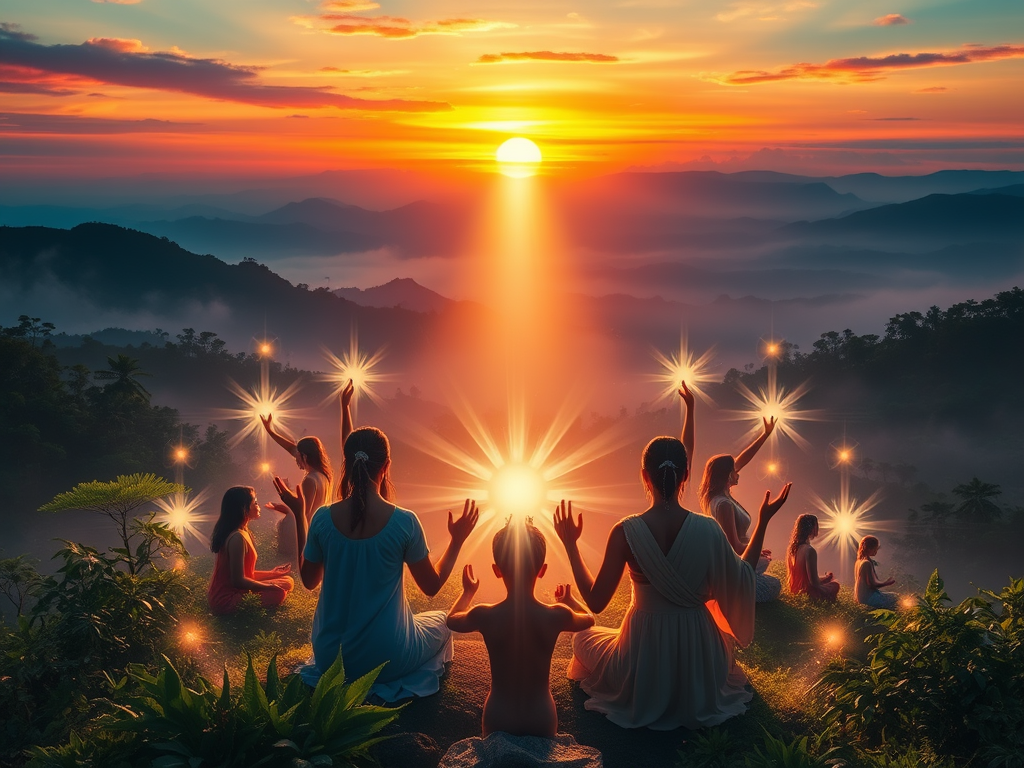
Before history was written, the land was already remembering.
What happens to a nation’s identity when its original systems are disrupted? Before colonial rule, the Philippine archipelago was home to decentralized communities shaped by kinship, localized governance, and deeply embedded cultural memory. These systems formed what can be understood as an “Ark of Souls”—a living structure of identity, values, and continuity.
The arrival of colonial powers did not simply change institutions; it altered how identity, authority, and social organization were expressed. This first volume explores the foundations of pre-colonial life, the nature of its disruption, and how these shifts continue to influence Philippine society today.
For a broader view of Philippine culture, society, and systems, see:
→ Understanding the Philippines: Culture, Society, and Systems (Hub)
Scope and Approach
This first part of the book series serves as the historical foundation of The Philippine Ark Codes. It approaches the idea of an “Ark” not as a literal construct, but as a symbolic framework representing continuity of identity, culture, and collective memory.
The discussion integrates historical accounts of barangay systems, early leadership structures, and cultural practices with analysis of how colonial restructuring reshaped these dynamics. It does not attempt to romanticize pre-colonial society or assign singular causality to present conditions, but instead focuses on understanding how systemic disruption creates long-term patterns.
The goal is to establish a clear baseline: how the Philippines functioned, how it changed, and why those changes matter. This foundation supports the exploration of identity, transformation, and future pathways in the volumes that follow.
This living scroll is not merely read, but remembered. You are the Ark. These are your codes.
Preface: The Scrolls You Buried in Yourself
“You are not here to remember history. You are here to become the living memory.”
Dear Reader, Beloved Soul,
If these words found you, then they are not written to you—they are written from you.
This book was not authored in the traditional sense. It was composed between realms, braided together by your higher consciousness and mine, long before either of us touched pen to paper. It was etched into the crystalline memory of Earth, entrusted to the coral bones of the archipelago, and hidden within the salt of our bloodlines.
You, too, carry a piece of this scroll.
I write this as a witness to my own remembering. I had no idea that the ache I carried was a map, that the fragments of language, dream, and yearning that visited me were not distractions—but instructions. I did not know that the trauma I inherited was a message coded in shadow, waiting to be translated into light.
But the Philippines remembers.
The mountains remember our chants. The rivers recall our offerings. The ancestors never stopped speaking—only we stopped listening.
This book is not simply a manuscript. It is a key, a mirror, and a summons. It will awaken codes long dormant in your DNA, reactivating memories from lives lived in temples, forests, and oceans that no longer exist in this timeline—but which pulse still in the quantum record.
May this book reach those who remember they are builders of the New Earth.
May it awaken the Babaylan in you, the guardian, the healer, the architect.
May it speak to the part of you that was never colonized.
This is your invitation to remember your Ark.
With love across timelines,
Gerald A. Daquila
Akashic Record Keeper of the Islands
June 2025 | Roxas City, Capiz (Heart of the Islands)

Glyph of the Philippine Ark
From the islands, the Ark awakens.
We begin with a collective awakening. The Ark is not built with wood, but with remembrance.
Chapter 1: The Islands as an Ark of Souls
“What appears as scattered islands are, in truth, the scattered bones of an ancient cosmic body. You are here to help it rise.”
To understand why you were born in—or drawn to—the Philippine Islands is to remember your place in a story far older than colonization, and far grander than any textbook version of history could hold. The Philippines is not simply a nation. It is a living ark—a sacred repository of soul memory, evolutionary blueprints, and planetary frequency codes essential for Earth’s transformation.
The Myth Beneath the Map
Geographically, the Philippines appears as a scattered archipelago—more than 7,600 islands strewn across the Pacific. Spiritually, it forms the shape of a celestial constellation embedded in Earth’s body. From the Akashic Records, these islands are remnants of Lemurian-Essene-Pleiadian civilizations, seeded with knowledge of balance, unity, and Earth-honoring governance.
In ancient times, this landmass was called by many names:
- Mu to Lemurian initiates
- Maharloka in cosmic Vedic lore
- Pulo ng Diwata (Islands of the Elemental Spirits) in the oral traditions of early Filipinos
It served as a feminine energy temple complex, resonating with the Earth’s Heart and Throat Chakras. The lands pulsed with life, sound, and ceremony. These were not “primitive islands,” but interdimensional portals. Priestesses (Babaylans), navigators (dayaw), and elemental stewards worked with light and sound as technologies of planetary harmony.
When this network fractured—through cataclysm, colonization, and karma—the ark was submerged, not in water, but in amnesia.
What Is an Ark?
The word “ark” carries many meanings. Biblically, it’s a vessel of preservation (Noah). Mythically, it’s a box of sacred codes (Ark of the Covenant). Esoterically, it refers to a living container of evolutionary memory.
From an Akashic lens, the Philippines is:
- An Ark of Souls: souls have chosen to incarnate here to complete old cycles, heal ancient wounds, and rebuild sacred trust with Earth
- An Ark of Codes: the DNA of the people, plants, and places carry high-frequency information for the planetary transition
- An Ark of Blueprints: it holds future models of New Earth society embedded within indigenous memory and spiritual resilience
You, dear reader, are likely one of the souls who boarded this Ark, not to escape a flood—but to survive the forgetting.
The Diaspora as Divine Design
Many who carry Filipino bloodlines have been scattered across the world. Some feel displaced. Others feel guilty for leaving. But in truth, this dispersion is not a mistake—it is a designed distribution of Ark carriers across Earth.
Through the diaspora, Filipino souls bring:
- Emotional resilience born from historical grief
- Ancestral wisdom wrapped in humility and humor
- The codes of communal care and bayanihan
- The songlines of the islands woven into global consciousness
You were sent out not to escape, but to transmit.
Your Role in the Reweaving
To awaken your role in the Ark is not to become a hero. It is to become a harmonic note in a larger symphony. It requires humility, devotion, and sacred curiosity.
Ask yourself:
- Why was I born into this bloodline, this place, this time?
- Why do I feel this ache for the land, even if I live far away from it?
- What am I here to remember, and then restore?
The Ark is not a metaphor. It is a living energetic structure, and you are one of its cells.
This chapter calls you to the beginning of your remembering—not just of who you are, but what you came here to do.
Remembering is a sacred act. It is not nostalgia—it is soul retrieval.
Chapter 2: The Fall and the Fracture
“Every colonizer’s sword carried not only steel—but spellwork. To undo the wound, we must unweave both the blade and the binding.”

Glyph of the Fall and the Fracture
The rebirth of the Islands cannot be approached without honoring the depth of what was lost.
It is tempting to leap directly into visions of the New Earth, bypassing the historical grief embedded in the soil and in our skin. But before resurrection comes remembrance, and before wholeness, the sacred witnessing of fracture. What we call history is not a string of neutral events—it is ritualized amnesia, a spell that must be broken.
This chapter is an invitation to remove the veil.
The Trauma of Colonization Was Energetic First
The colonization of the Philippines was not merely political or economic—it was spiritual warfare.
From an Akashic perspective, the arrival of Spanish conquistadors in 1521 marked not just a conquest of land, but of frequency. Churches were built on sacred sites. Babaylans were rebranded as witches or subversives. Language was fractured. The cosmology that connected sky, sea, and soul was slowly dismantled.
Colonization enacted two fractures:
- The external dismemberment of communities, culture, and sovereignty
- The internal severing from spiritual memory and elemental alignment
This was not accidental. As many indigenous wisdom keepers have affirmed, colonizers were often guided by occult knowledge of how to disrupt energetic systems to weaken a people.
They did not just burn our forests—they burned our temples. They did not just rename our rivers—they renamed our gods.
Generational Wounds, Inherited Silences
Research in epigenetics confirms that trauma doesn’t end with the generation that experiences it—it is passed on, encoded in stress responses, behaviors, and gene expression (Yehuda et al., 2016). In the Philippines, colonization, war, martial law, and economic exile have created a psychic inheritance of fragmentation.
This shows up in:
- Chronic people-pleasing rooted in survival compliance
- Suppressed anger and disassociation from truth-telling
- Internalized inferiority masked as humility
- Shame around indigeneity, language, and spirit practices
- Confusion around identity: “Where do I belong?” “Who am I, really?”
This inherited trauma is not a curse—it is a contract to transmute.
Each generation carries both the wound and the medicine. If you are reading this, it’s likely your soul chose to come during this time not just to witness pain—but to alchemize it into purpose.
Soul Contracts Amidst the Ruins
The Akashic Records reveal that many Filipino souls incarnated with the intention of returning during this planetary portal (2012–2033) to assist in the reactivation of the Islands’ original frequency. These soul contracts often include:
- Being born into families with intergenerational dysfunction (to break patterns)
- Growing up disconnected from language, land, or culture (to initiate yearning)
- Facing identity fragmentation (to seek unity)
- Navigating systems of suppression (to innovate new ones)
These are not punishments. They are initiation chambers.
The pain was the portal. The fracture was the fire that would forge the soul’s remembering.
Personalizing the Fracture
To restore wholeness to the Islands, we must begin with the fracture within. Consider:
- What was erased in your lineage story?
- What practices, names, or rituals were shamed or forgotten?
- What silences do you carry in your body? In your voice?
Write them. Speak them. Let them rise. Not in blame—but in ritual acknowledgment.
Remember: what is not remembered becomes unconscious repetition.
What is honored becomes liberated legacy.
The Role of Volcanoes, Storms, and Earthquakes
Even the land remembers the fracture.
Volcanoes like Mayon, Taal, and Kanlaon are not just geological features—they are kundalini nodes. When the spiritual field is congested with unprocessed trauma, the earth body expresses it through disruption.
From an energetic standpoint, some natural disasters are planetary acupuncture points, attempting to clear inherited density.
This does not mean we invite suffering. It means we listen deeply to what the land is mirroring in us.
Reweaving the Memory Field
To reweave what was broken, we must:
- Restore ritual into daily life
- Reclaim language, even in fragments or phrases
- Reconnect with land, rivers, stones, trees—treating them as kin
- Remember the myths: not as fiction, but as frequency containers
- Re-story our history in a voice that includes the sacred
Each act of remembering is a node reconnected in the grid. You are not healing alone—you are a thread in a collective tapestry of repair.
This vow echoes forward
You were born not just from history, but from prophecy.
The fracture was not final. The fall was not the end. Beneath every broken place is a seed waiting for you to plant it back into light.
Let this chapter be your permission to mourn, to name, and to re-member.
Because what comes next is resurrection.

Solar Disc of Ancestral Sovereignty
Remembering the First Light—where ancestral roots, sacred contracts, and soul nation awakening begin
Your soul contracts were not forced upon you. You chose them in love before time began.
Chapter 3: The Soul Contract of the Filipino
“You chose this body, this land, this legacy—not to suffer under it, but to sanctify it.”
There is a reason why you were born here.
There is a reason why, even if born elsewhere, your heart beats to the pulse of these islands.
You are not merely a product of chance, genealogy, or circumstance. You are the fulfillment of an interdimensional contract, forged in love, encoded with purpose, and rooted in the quantum intelligence of this Earth cycle.
This is the Filipino soul contract: a vow to return during the time of remembering to assist in the planetary rebirth.
What Is a Soul Contract?
A soul contract is a pre-incarnational agreement made between your soul, Source, and the consciousness of the Earth and her elemental kingdoms. These contracts outline:
- Lessons and initiations
- Lineage and location
- Gifts and burdens
- Karmic service and sacred offerings
They are not rigid scripts, but sacred scaffolding. Your free will determines how you fulfill them, but the blueprint exists within your soul memory, your dreams, your DNA.
Contracts are most often activated by:
- Personal suffering or dislocation
- Synchronicity or déjà vu
- Emotional surges when visiting ancestral lands or hearing sacred names
- A deep, unexplainable call to serve something bigger
Why Choose the Filipino Path?
From the Akashic perspective, the Filipino soul contract is unique and vital. Souls who incarnate here often volunteer for one or more of the following missions:
To Heal the Ancestral Grid
- Through trauma transmutation, forgiveness work, and remembering
- Particularly for those born into cycles of poverty, addiction, abuse, or silence
To Reawaken the Babaylan Lineage
- Through intuitive healing, energy work, Earth listening, and re-sacralizing the feminine
- Even without formal training, many are born with “unexplainable knowing”
To Anchor Light Codes Through Art, Music, and Humor
- Filipino culture is rich in laughter, resilience, and rhythm—each a frequency stabilizer
- These joy codes counterbalance global density with grace
To Serve as Cultural Bridges
- The diaspora were seeded globally not just for survival, but transmission
- Their lives open portals for integration of ancient and modern, East and West
To Build Prototypes of New Earth Communities
- Many are drawn to regenerative farming, circular economies, spiritual education, and cooperative living
- The Filipino instinct for bayanihan is a living model for post-capitalist systems
If any of these stir something in your spirit, your contract may already be activating.
The Amnesia of the Contract
Many Filipino souls forget their purpose under the weight of:
- Generational survivalism
- Colonial Catholic conditioning
- Economic hardship or overseas displacement
- Cultural shaming of indigenous memory and intuition
Yet the forgetting is part of the plan.
Contracts often include a built-in veil, designed to catalyze a heroic remembering. This amnesia is not punishment—it is preparation.
When you reawaken, it’s not for yourself alone—it’s for your entire bloodline.
The Threefold Journey: Exile, Initiation, Return
Many contract-holders walk a three-stage soul journey:
Exile
- Physical or emotional separation from family, homeland, or roots
- The soul often feels like a misfit, black sheep, or outsider
Initiation
- Triggered by illness, breakdown, spiritual awakening, or life-altering change
- Often accompanied by the emergence of healing abilities, visions, or sacred service
Return
- A symbolic or literal homecoming
- Reconnection to purpose, people, and place of power
- Often leads to land stewardship, cultural preservation, or light-based community building
This cycle echoes the mythic journey of the Babaylan: the one cast out, transformed, and returned as healer.
The Contract Within You
You don’t need to “figure out” your soul contract. You need to feel it.
Start by listening to what:
- Breaks your heart
- Brings you peace
- Keeps calling you back
You may find your soul contract not in a temple—but in your grandmother’s story, your longing to plant trees, your urge to sing a forgotten lullaby, or your obsession with reimagining education, governance, or ritual.
Your soul already knows. Your life is the living scroll.
- Practices to Reconnect with Your Contract
- Offer a Prayer of Remembering:
“I now call forth my soul contract in full clarity, grace, and alignment with my highest purpose. May what I forgot be remembered. May what I feared be transformed. May I serve with joy.”
Write Your Contract in the Present Tense:
“I came here to help restore harmony in the Islands through…”
Observe What Activates You:
- Which injustices stir you?
- What environments give you life?
- Which dreams feel like messages?
Dedicate Your Actions:
Small acts done with soul awareness become ritual: planting a tree, cooking a native dish, teaching a child a word in their ancestral tongue—these are contract-fulfilling acts.
Closing Transmission
You are not merely a Filipino by blood.
You are a soul of the Ark, encoded with light long hidden in flesh and memory.
The time of forgetting is ending. The scroll is unrolling. The Ark is rising.
Say yes.
And the way will open.
Your soul contracts were not forced upon you. You chose them in love before time began.
Part Series Links
Crosslinks
- Codex of the Ark of the Philippines – reveals the Philippines as a living Ark vessel for Earth’s ascension.
- Codex of Planetary Anchoring – situates the islands as nodal anchors stabilizing the crystalline grid.
- Codex of the Crystal Codex Ring – places the Ark Codes within the global crystalline mandala of remembrance.
- Codex of the Universal Master Key – reveals how Ark Codes interlock with the Master Key to unlock global ascension.
- Codex of the Overflow Pathway – contrasts colonial wounds of scarcity with the overflowing abundance of Ark reawakening.
- Codex of the Living Codices – recognizes the Philippine Ark as a living scripture inscribed into Earth’s evolutionary record.
Reference:
Yehuda, R., et al. (2016). “Holocaust exposure induced intergenerational effects on FKBP5 methylation.” Biological Psychiatry, 80(5), 372–380. https://doi.org/10.1016/j.biopsych.2015.08.005
To be continued…
Attribution
© 2025–2026 Gerald Alba Daquila
All rights reserved.
This work is offered for reflection and independent interpretation. It does not represent a formal doctrine, institution, or required belief system.
Codex Origin and Stewardship
This material originates within the field of the Living Codex and is stewarded under Oversoul Appointment.
It may be shared in its complete and unaltered form, with attribution preserved.
Lineage Marker: Universal Master Key (UMK) Codex Field
Support This Work
If you find this work valuable, you may support its continued development and availability.
Support helps sustain:
- ongoing writing and research
- digital hosting and access
- future publications
Ways to access and support:
• Free reading within the Living Archive
• Individual digital editions
• Stewardship-based access
Support link:
paypal.me/GeraldDaquila694
www.geralddaquila.com