
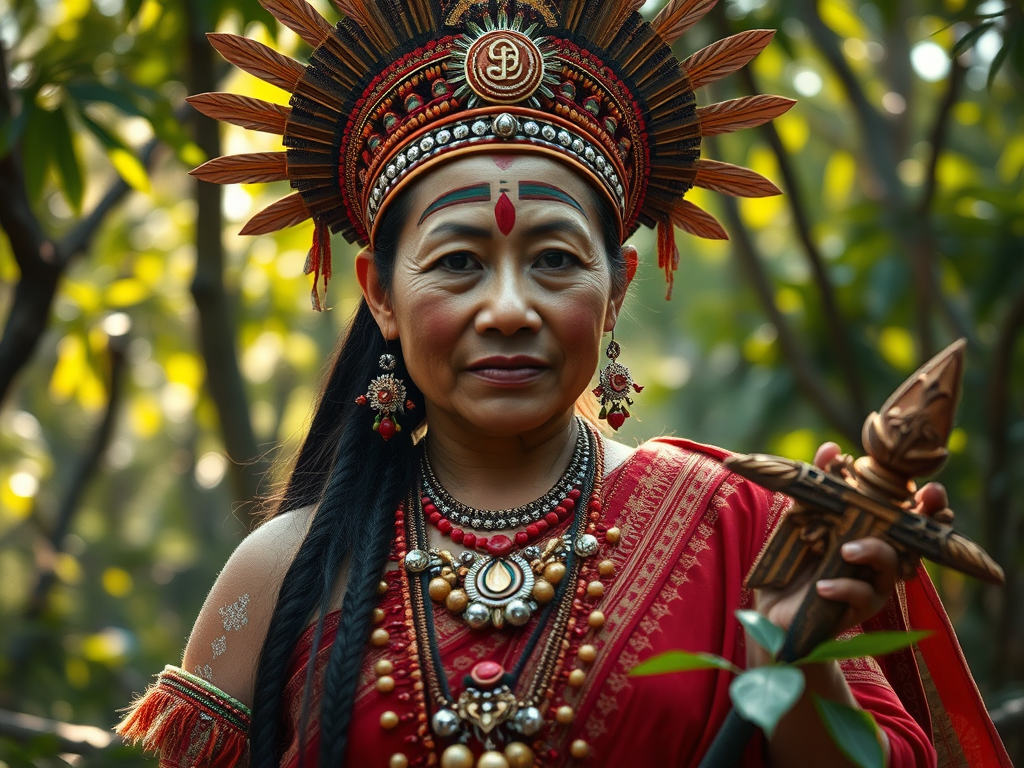
Who were the babaylan? Explore their role as spiritual leaders, healers, and cultural stewards in precolonial Philippines—and why their legacy is being revived today.
Gerald A. Daquila, PhD. Candidate
The babaylan were the spiritual leaders of precolonial Philippine society—healers, ritualists, and mediators between the human and spirit worlds. Found across the archipelago under different names, they guided communities through healing, governance, and connection with nature and ancestors.
Suppressed during Spanish colonization and often misrepresented in history, their role is now being rediscovered as part of a wider movement to reclaim Filipino identity, indigenous knowledge, and holistic ways of living.
In simple terms: A babaylan was a community healer and spiritual guide who maintained balance between people, nature, and the unseen world.
For a broader view of Philippine culture, society, and systems, see:
→ Understanding the Philippines: Culture, Society, and Systems (Hub)
Scope and Approach
This article integrates historical research, anthropological perspectives, and contemporary interpretations of spirituality. While it includes metaphysical and esoteric frameworks as lenses of interpretation, these are presented alongside documented scholarship to offer a holistic view of the babaylan and their role in Philippine society.
How to Read This Page
If you’re here, you may be exploring different questions:
- Who the babaylan were historically
- Whether their role was spiritual, social, or political
- Why their knowledge was suppressed—and why it is returning
- Whether similar forms of leadership exist in other cultures
This article focuses on the babaylan in the Philippines, but it can be read at multiple levels:
- 🟢 Historical and cultural lens → understanding their role in precolonial society
- 🟡 Systems lens → how alternative forms of authority and governance functioned
- 🔵 Applied lens → what this means for leadership, healing, and community today
- 🟣 Deeper lens → questions of consciousness, identity, and human development
You can engage with it based on your context and interest.
Abstract
The babaylans, revered spiritual leaders of precolonial Philippine society, embodied a holistic synthesis of healer, priestess, warrior, and sage, bridging the material and spiritual realms. Rooted in animistic traditions, their contributions shaped community cohesion, cultural heritage, and environmental stewardship. Spanish colonization systematically suppressed their influence, demonizing their practices and erasing their knowledge to enforce Christian hegemony.
This study explores the babaylans’ roles, the mechanisms of their erasure, and the recent resurgence of their legacy as a decolonial movement. Drawing on historical accounts, anthropological studies, metaphysical perspectives, and esoteric frameworks like the Akashic Records, this work examines how babaylanism informs modern Filipino identity and the global “ascension process”—a spiritual awakening toward interconnectedness and higher consciousness.
Through a multidisciplinary lens, this narrative balances academic rigor with accessible language, weaving left-brain analysis, right-brain intuition, and heart-centered storytelling to illuminate the babaylans’ enduring wisdom.
🌍 A Note for Global Readers
While the babaylan are rooted in Philippine history, similar roles have existed across cultures:
- shamans in Central and South America
- medicine people in Indigenous North America
- spiritual healers in Africa and Asia
- mystics and contemplatives in Western traditions
Across societies, these figures often served as:
- healers
- mediators
- knowledge keepers
- bridges between visible and invisible realities
The babaylan can therefore be understood not only as a Filipino phenomenon, but as part of a broader pattern of indigenous knowledge systems and alternative forms of leadership.
Table of Contents
- Introduction: Unveiling the Babaylan
- Who Were the Babaylans?
- Roles and Responsibilities in Precolonial Society
- Gender Fluidity and Spiritual Authority
- Contributions to Precolonial Philippine Society
- Spiritual Leadership and Ritual Practices
- Healing and Ethnomedicine
- Cultural Preservation and Community Unity
- The Erasure of Babaylan Knowledge
- Spanish Colonization and Christian Conversion
- Mechanisms of Suppression
- Long-Term Cultural Impacts
- The Resurgence of Babaylanism
- Decolonial Movements and Cultural Reclamation
- Modern Babaylan-Inspired Practices
- Global Context: The Ascension Process
- Metaphysical and Esoteric Perspectives
- The Akashic Records and Ancestral Wisdom
- Energetic and Spiritual Dimensions of Babaylanism
- A Holistic Synthesis: Balancing Mind, Heart, and Spirit
- Conclusion: The Babaylan’s Call to the Future
- Crosslinks
- Glossary
- References

Glyph of the Gridkeeper
The One Who Holds the Lattice of Light.
1. Introduction: Unveiling the Babaylan
Imagine a world where the spiritual and material dance in harmony, where a healer’s chant mends not just the body but the soul, where a priestess advises warriors and weaves myths that bind a community.
This was the world of the babaylans, the spiritual leaders of precolonial Philippines. Their story is one of profound wisdom, violent erasure, and a quiet, resilient revival. Today, as humanity grapples with disconnection and seeks higher consciousness, the babaylans’ legacy offers a roadmap for healing and unity.
This study dives deep into who the babaylans were, what they contributed to their society, why their knowledge was hidden, and why their wisdom is resurfacing now. Using a multidisciplinary lens—blending history, anthropology, metaphysics, and esoteric traditions like the Akashic Records—we explore their holistic impact.
Written in an accessible yet scholarly style, this narrative aims to engage your mind, spark your intuition, and touch your heart, balancing logic, creativity, and empathy.
2. Who Were the Babaylans?
Roles and Responsibilities in Precolonial Society
The babaylans were the heartbeat of precolonial Philippine communities, known as barangays. Primarily women or effeminate men (asog or bayog), they were shamans, healers, priestesses, and mediators between the physical and spiritual worlds (Salazar, 1992).
The term “babaylan,” likely derived from Visayan roots, means one who connects with spirits (anito or diwata) to guide their people (Strobel, 2010). Across the archipelago, they were called katalonan (Tagalog), balian (Visayas), or mombaki (Cordillera), reflecting linguistic diversity but shared roles (Conaco, 2019).
Babaylans wore many hats:
- Spiritual Leaders: They conducted rituals for births, marriages, harvests, and wars, ensuring harmony with nature and ancestors (Brewer, 2004).
- Healers: Using ethnomedicine, massage (hilot), and spiritual interventions, they treated physical and spiritual ailments (Demetrio, 1988).
- Advisors: They counseled datus (chiefs) on governance, war, and justice, wielding influence equal to or greater than political leaders (McCoy, 1982).
- Cultural Stewards: As orators, they preserved myths, songs, and histories, passing down collective wisdom (Conaco, 2019).
Gender Fluidity and Spiritual Authority
The babaylans’ gender fluidity was a hallmark of their power. Precolonial Philippine society embraced a non-binary understanding of gender, where spiritual potency was tied to femininity, whether embodied by women or effeminate men (Brewer, 1999).
The asog, transgender male babaylans, were revered as divinely chosen, their liminal identity enhancing their ability to traverse spiritual realms (Conaco, 2020). This fluidity contrasted sharply with the patriarchal norms imposed by Spanish colonizers, highlighting a precolonial egalitarianism that empowered women and queer individuals (Strobel, 2001).
3. Contributions to Precolonial Philippine Society
Spiritual Leadership and Ritual Practices
Babaylans were the glue of their communities, fostering kapwa—a Filipino concept of shared identity and interconnectedness (Enriquez, 1992).
Through rituals like pag-anito (spirit offerings), they communed with diwata and ancestors, ensuring cosmic balance. For example, during harvest festivals, babaylans led chants and dances to thank nature spirits, reinforcing environmental reverence (Bonifacio et al., 2025). Their dream interpretation and omen reading guided critical decisions, from war strategies to marriage alliances (Veneracion, 1987).
Healing and Ethnomedicine
Babaylans were master healers, blending herbal knowledge with spiritual rituals. They used plants, massage, and trance states to treat ailments believed to stem from spiritual imbalances, such as a lost kalag (astral soul) (Conaco, 2020).
Their holistic approach addressed body, mind, and spirit, a precursor to modern integrative medicine. For instance, the hilot technique, still practiced today, combines physical manipulation with energy work (Nente, 2016).
Cultural Preservation and Community Unity
As storytellers, babaylans safeguarded oral traditions, weaving myths like the Bakunawa (moon-eating serpent) into community identity (Bonifacio et al., 2025).
Their rituals and counsel resolved conflicts, promoting unity. By championing sustainable practices, such as eco-friendly farming, they ensured harmony with the land, a wisdom now echoed in environmental movements (Strobel, 2013).
4. The Erasure of Babaylan Knowledge
Spanish Colonization and Christian Conversion
When the Spanish arrived in 1521, they targeted babaylans as threats to Christian conversion. Their animistic practices were branded as witchcraft, and babaylans were demonized as brujas (witches) or hechiceras (sorceresses) (Blair & Robertson, 1903-1909).
Spanish missionaries exploited Filipino hospitality, equating diwata with Christian saints to facilitate syncretism, but ultimately sought to erase indigenous beliefs (Brewer, 2004). Some babaylans were executed, their bodies reportedly fed to crocodiles to prevent spiritual return (Conaco, 2019).
Mechanisms of Suppression
The erasure was systematic:
- Destruction of Shrines: Dambana (sacred spaces) were burned, and idols were destroyed (Strobel, 2001).
- Confesionarios: Spanish manuals instructed priests to interrogate Filipinos about babaylan practices, punishing adherents (Labrador, 2009).
- Patriarchal Imposition: The babaylans’ gender fluidity and female authority clashed with Catholic patriarchy, marginalizing women and asog (Brewer, 1999).
- Education and Assimilation: Spanish schools taught Christian doctrine, sidelining indigenous knowledge (Rafael, 2015).
Long-Term Cultural Impacts
The suppression fractured Filipino identity, fostering colonial mentality—an internalized belief in the inferiority of indigenous culture (Nadal, 2021).
Babaylan practices survived in syncretic forms, like espiritista movements or folk healing (arbularyo), but their esoteric depth was diluted (Salazar, 1979). This loss disconnected Filipinos from their ancestral wisdom, contributing to cultural fragmentation.

Glyph of the Babaylan Legacy
Ancestral wisdom rises anew, guiding resilience into resurgence
🧠 What This Reveals About Knowledge, Power, and Erasure
Beyond the Philippines, the story of the babaylan reflects broader patterns seen across history:
- Indigenous knowledge systems are often suppressed when new power structures emerge
- Spiritual and relational forms of authority are replaced by institutional and hierarchical ones
- Cultural memory is fragmented through colonization, education, and religious conversion
- What is later labeled “alternative” was once central to how societies functioned
These patterns are not unique to the Philippines.
They appear in many parts of the world where indigenous systems were replaced or marginalized.
Understanding this helps explain not only the past—but why similar forms of knowledge are resurfacing today.
5. The Resurgence of Babaylanism
Decolonial Movements and Cultural Reclamation
Since the late 20th century, babaylanism has experienced a revival, fueled by decolonial movements and Filipino diaspora communities. The Center for Babaylan Studies (CfBS), founded by Leny Strobel, promotes indigenous wisdom through conferences, publications, and rituals (Strobel, 2010).
Practices like batok (tattooing), baybayin (script), and hilot are being reclaimed, often via social media (Strobel, 2022). In the Philippines, babaylans lead advocacy for land rights and environmental justice, echoing their precolonial roles (Bonifacio et al., 2025).
Modern Babaylan-Inspired Practices
Contemporary babaylans blend tradition with innovation. For example, Grace Nono, a singer and scholar, channels babaylan chants to heal cultural wounds (Nono, 2013).
Urban practitioners offer workshops on ancestral connection, while indigenous communities like the Lumad appoint babaylans to navigate crises (Valmores, 2019). This resurgence counters colonial trauma, fostering kapwa and cultural pride.
Global Context: The Ascension Process
The babaylans’ revival aligns with what some contemporary spiritual frameworks describe as a broader shift in consciousness. Babaylanism’s emphasis on interconnectedness mirrors this shift, offering tools for personal and collective healing. Their holistic worldview resonates with New Age movements, indigenous spirituality, and eco-feminism, positioning them as guides in a fragmented world (Strobel, 2013).
6. Metaphysical and Esoteric Perspectives
The Akashic Records and Ancestral Wisdom
The Akashic Records—understood in some traditions as a symbolic framework for collective memory and experience, provide a lens to understand babaylan wisdom (Howe, 2014).
Babaylans’ ability to access spiritual realms suggests an experiential engagement with what esoteric traditions describe as the Akashic Records—a symbolic framework for ancestral and collective memory rather than a literal archive.
Modern practitioners report similar experiences during trance or meditation, connecting with Filipino ancestors to reclaim lost knowledge (Strobel, 2022).
Energetic and Spiritual Dimensions of Babaylanism
From an energetic perspective, babaylans worked with prana (life force) to balance the body’s energy centers, akin to chakra systems in Eastern traditions (Brennan, 1988). Their rituals, such as pag-anito, aligned community energy with cosmic rhythms, fostering harmony.
Esoterically, their gender fluidity embodied the alchemical union of masculine and feminine, a symbol of wholeness (Jung, 1963). These principles align with the ascension process, emphasizing energetic alignment and spiritual integration.
7. A Holistic Synthesis: Balancing Mind, Heart, and Spirit
The babaylans’ legacy is a tapestry of logic, intuition, and compassion. Their analytical skills in ethnomedicine and governance (left brain) complemented their visionary rituals and storytelling (right brain), all grounded in kapwa (heart).
This balance offers a model for modern society, where disconnection often stems from overemphasizing one faculty. By integrating metaphysical insights with historical analysis, this dissertation mirrors their holistic approach, inviting readers to engage intellectually, spiritually, and emotionally.
8. Conclusion: The Babaylan’s Call to the Future
Within certain contemporary spiritual frameworks, the babaylans’ revival is interpreted as aligning with what is termed the ‘ascension process’.
The babaylans were more than spiritual leaders; they were architects of a world where humanity, nature, and spirit coexisted. Their erasure was a colonial attempt to sever Filipinos from their roots, but their resurgence signals a reclaiming of identity and wisdom.
As the world navigates crises—ecological, social, and spiritual—the babaylans’ holistic worldview offers hope. Their revival is not just a Filipino story but a global one, guiding us toward ascension through kapwa, healing, and reconnection with the sacred.
Where to Go Next
If this exploration raised further questions, here are structured paths:
🟢 Culture, Identity, and Indigenous Foundations
If you’re exploring cultural roots and identity:
🟡 Systems, Power, and Historical Transformation
If you’re interested in how systems replaced or suppressed earlier structures:
- Political Dynasties in the Philippines
- Colonial trauma and social fragmentation
- Global systems change and transition models
🔵 Application: Leadership, Healing, and Practice
If you’re applying these ideas in real-world contexts:
- Leadership Under Pressure
- Applied Stewardship and community systems
- Practical frameworks for navigating complexity
🟣 Deeper Exploration and Inner Work
If you’re exploring consciousness, spirituality, or personal transformation:
Glossary
- Anito: Spirits or deities in Filipino animism.
- Asog/Bayog: Transgender male babaylans in precolonial Philippines.
- Babaylan: Spiritual leader, healer, and mediator in precolonial Philippines.
- Barangay: Precolonial Filipino community unit.
- Dambana: Sacred shrine or altar.
- Datu: Chief or political leader of a barangay.
- Diwata: Nature spirits or deities.
- Hilot: Traditional Filipino massage and energy healing.
- Kapwa: Filipino concept of shared identity and interconnectedness.
- Kalag: Astral soul in Filipino belief, residing in the head.
- Pag-anito: Ritual offerings to spirits.
References
Note: Digital and public-facing sources are included to reflect contemporary discourse and practice.
Blair, E. H., & Robertson, J. A. (Eds.). (1903-1909). The Philippine Islands, 1493-1898. Cleveland: Arthur H. Clark Company.
Bonifacio, S. L., Casia, J. D., Ferrer, J. L. E., Orido, L. A. T., Singian, M. M. T., & Temeña, S. J. C. (2025). Babaylans as catalysts for resistance: The role of indigenous spiritual beliefs in Philippine peasant ideology against Spanish and American colonizers. ResearchGate.
Brennan, B. A. (1988). Hands of light: A guide to healing through the human energy field. Bantam Books.
Brewer, C. (1999). Baylan, asog, transvestism, and sodomy: Gender, sexuality, and the sacred in early colonial Philippines. Intersections: Gender, History and Culture in the Asian Context, 2.
Brewer, C. (2004). Shamanism, Catholicism, and gender relations in colonial Philippines, 1521-1685. Ashgate.
Conaco, M. (2019). Ang babaylan nga nahimong bayot. Smithsonian Asian Pacific American Center.
Conaco, M. (2020). What is babaylan? Center for Babaylan Studies.
Demetrio, F. R. (1988). Shamans, witches, and Philippine society. Philippine Studies, 36(3), 372-380.
Enriquez, V. G. (1992). From colonial to liberation psychology: The Philippine experience. University of the Philippines Press.
Howe, L. (2014). How to read the Akashic Records: Accessing the archive of the soul and its journey. Sounds True.
Jung, C. G. (1963). Mysterium coniunctionis: An inquiry into the separation and synthesis of psychic opposites in alchemy. Princeton University Press.
Labrador, A. M. T. (2009). Seclusion and veiling of women: A historical and cultural approach. Philippine Social Sciences Review, 1.
McCoy, A. W. (1982). Baylan: Animist religion and Philippine peasant ideology. Philippine Studies, 30(3), 337-369.
Nadal, K. L. (2021). Filipino American psychology: A handbook of theory, research, and clinical practice. Wiley.
Nente, F. (2016). Tradisyunal nga pamulong: A rationale on the persistence of faith healing practices in Miagao, Iloilo. ResearchGate.
Nono, G. (2013). Song of babaylan: Living voices, medicines, spiritualities of Philippine ritualist-oralist-healers. Institute of Spirituality in Asia.
Rafael, V. L. (2015). Contracting colonialism: Translation and Christian conversion in Tagalog society under early Spanish rule. Duke University Press.
Salazar, Z. A. (1979). Faith healing in the Philippines: An historical perspective. Asian Studies, 17, 32-45.
Salazar, Z. A. (1992). The babaylan in Philippine history. Philippine Studies, 40(4), 491-510.
Strobel, L. M. (2001). Coming full circle: The process of decolonization among post-1965 Filipino Americans. Giraffe Books.
Strobel, L. M. (2010). Babaylan: Filipinos and the call of the indigenous. Center for Babaylan Studies.
Strobel, L. M. (2013). Back from the crocodile’s belly: Philippine babaylan studies and the struggle for indigenous memory. Center for Babaylan Studies.
Strobel, L. M. (2022). Decolonizing the diaspora through the Center for Babaylan Studies. Medium.
Tolle, E. (2005). A new earth: Awakening to your life’s purpose. Penguin Books.
Valmores, R. (2019). Pre-colonial Philippines had trans women fully embraced as women. X Post.
Veneracion, J. (1987). Katalonan: From commoner to shaman. Philippine Studies, 35(4), 456-472.
Explore More Philippine Analysis
- Culture and identity → Understanding the Filipino Psyche
- Precolonial systems → Living in the Barangay
- Governance and power → Political Dynasties in the Philippines
→ View the full Philippines Hub
Understanding these dynamics also requires clarity in how individuals respond under pressure—see Life Under Pressure.
Some articles in this section are part of the Stewardship Archive
These pieces explore deeper layers of Philippine transformation, including:
- long-term societal redesign
- advanced governance frameworks
- future-state modeling
They are written for readers who want to go beyond surface analysis into structural and forward-looking perspectives.
→ Continue reading (Members Access)
Explore the Rest of the Site
This work sits within a larger system of essays on human development, systems thinking, and societal transformation.
→ Living Archive
→ Stewardship Architecture
→ Main Blog
About the Author
Gerald Alba Daquila writes at the intersection of human development, sovereignty, leadership ethics, and civilizational sensemaking. The Living Archive gathers more than 800 essays, codices, and frameworks developed through years of reflection and inquiry.
Leave a Reply