
Category: Unity Consciousness

  • Am I Truly Awakening? Discerning Authentic Spiritual Awakening in the Age of Spiritual Ascension

    Am I Truly Awakening? Discerning Authentic Spiritual Awakening in the Age of Spiritual Ascension

    A Multidisciplinary Exploration of Authenticity, Self-Discovery, and the Global Spiritual Ascension Movement

    Prepared by: Gerald A. Daquila, PhD. Candidate


    9–14 minutes

    ABSTRACT

    The concept of spiritual awakening has gained significant traction in contemporary discourse, often linked to a global movement referred to as “spiritual ascension.” This phenomenon describes a transformative shift in consciousness characterized by heightened awareness, connection, and bliss. However, in an era of social media and performative spirituality, many individuals grapple with self-doubt, questioning whether their experiences are genuine or merely a response to cultural trends and fear of missing out (FOMO).

    This dissertation explores how to discern an authentic spiritual awakening, drawing on multidisciplinary perspectives from psychology, sociology, neuroscience, philosophy, and spiritual traditions. Grounded in recent research literature, it examines the characteristics, triggers, and after-effects of spiritual awakenings, offering practical criteria to evaluate authenticity. By blending academic rigor with accessible language, this work provides a compassionate framework to quiet the anxious soul, balancing intellectual inquiry with emotional resonance.


    Table of Contents

    1. Introduction: The Quest for Authenticity in Spiritual Awakening
    2. Understanding Spiritual Awakening and the Ascension Movement
      • Defining Spiritual Awakening
      • The Global Spiritual Ascension Movement
    3. The Fear of Faking It: Performative Spirituality and FOMO
    4. Discerning Authenticity: Multidisciplinary Insights
      • Psychological Perspectives
      • Sociological Contexts
      • Neuroscientific Evidence
      • Philosophical and Spiritual Traditions
    5. Undeniable Proofs: Criteria for Authentic Spiritual Awakening
    6. Practical Steps to Quiet the Anxious Soul
    7. Conclusion: Embracing the Journey with Confidence
    8. Glossary
    9. Bibliography

    Glyph of the Seer

    Sees truly, speaks gently.


    1. Introduction: The Quest for Authenticity in Spiritual Awakening

    Have you ever felt a spark of something profound—a moment where the world seemed brighter, more connected, or deeply meaningful? Maybe you’ve meditated, felt a surge of peace, or sensed a shift in how you see yourself and the universe. But then, a nagging doubt creeps in: Am I really awakening, or am I just caught up in the hype? In a world buzzing with hashtags like #SpiritualAwakening and #Ascension, it’s easy to wonder if your experience is genuine or just a performance for likes, clicks, or social approval.

    This question isn’t just personal—it’s universal. As the global spiritual ascension movement gains momentum, promising a blissful state of higher consciousness, many are drawn to its allure but fear they’re faking it. This dissertation dives deep into this honest question, using a multidisciplinary lens to explore what makes a spiritual awakening authentic. We’ll weave together psychology, sociology, neuroscience, and spiritual wisdom, grounding our exploration in research while keeping it relatable. Our goal? To offer undeniable proofs that calm the anxious soul, blending logic, intuition, and heart.


    2. Understanding Spiritual Awakening and the Ascension Movement

    Defining Spiritual Awakening

    A spiritual awakening is often described as a profound shift in consciousness, where individuals experience heightened awareness, a sense of connection to something greater, and a reorientation of values and purpose. Research in transpersonal psychology defines it as “a sudden sense of direct contact, union, or complete nondual merging with a perceived ultimate reality, the universe, ‘God,’ or the divine” (Corneille & Luke, 2021). Characteristics include:

    • Intensified Perception: Colors seem brighter, senses sharper.
    • Sense of Unity: Feeling connected to all beings or the cosmos.
    • Positive Affect: Experiences of love, compassion, and inner peace.
    • Transcendence of Separateness: A dissolution of ego boundaries.
    • Shift in Values: Moving away from materialism toward service and authenticity.

    These experiences can be fleeting (minutes to hours) or lead to lasting changes in worldview and behavior (Taylor & Egeto-Szabo, 2017).


    The Global Spiritual Ascension Movement

    The term “spiritual ascension” refers to a collective shift in human consciousness, often framed as a transition to a “5D” (fifth-dimensional) state of awareness characterized by unity, authenticity, and bliss. Popularized in New Age communities, it’s seen as a global phenomenon where individuals awaken to their spiritual nature, often catalyzed by planetary or cosmic energies (Persephone, 2022).

    Sophia Persephone, a spiritual teacher, notes, “We’re at a turning point in Earth’s history, right at the start of a global spiritual awakening.” This movement is reflected in art, music, and social trends, resembling a modern Renaissance of spiritual rebirth. However, its visibility on platforms like Instagram and TikTok raises concerns about performativity, where individuals may adopt spiritual personas for social capital rather than genuine transformation.


    3. The Fear of Faking It: Performative Spirituality and FOMO

    In the digital age, spirituality is often a public performance. Social media platforms amplify curated images of meditation retreats, crystal grids, and “enlightened” lifestyles, fueling FOMO—the fear of missing out on a transformative experience. This can lead to performative spirituality, where individuals mimic spiritual behaviors to fit in or gain validation. Thompson (2019) warns, “The internet is a cesspool full of dark magic and agendas… most of the smooth glitzy sites pushing all things spiritual are traps for the unwary.”

    This performative pressure can trigger self-doubt. Are you meditating because it feels right, or because it’s trendy? Are your insights profound, or are you parroting spiritual influencers? This anxiety is compounded by the human tendency to compare oneself to others, a phenomenon studied in social psychology as social comparison theory (Festinger, 1954). The fear of faking it stems from a desire for authenticity—a core human need to align actions with inner truth.


    Glyph of Authentic Awakening

    Illuminating truth from illusion, guiding discernment in the age of ascension.


    4. Discerning Authenticity: Multidisciplinary Insights

    To discern whether your spiritual awakening is authentic, we’ll explore insights from multiple disciplines, each offering a piece of the puzzle.

    Psychological Perspectives

    Transpersonal psychology provides a robust framework for understanding spiritual awakenings. Studies show that authentic awakenings often follow specific triggers (Corneille & Luke, 2021; Taylor, 2019):

    • Psychological Turmoil: 52% of participants in one study reported stress, trauma, or loss as catalysts.
    • Spiritual Practices: Meditation (47.4%), yoga (18.4%), or breathwork (11.8%) often precede awakenings.
    • Nature and Literature: Contact with nature (21.7%) or spiritual literature (31.6%) can spark transformation.

    After-effects include increased empathy, gratitude, and a rejection of materialistic values, suggesting a shift beyond superficial behavior (McClintock et al., 2016). However, performative spirituality may lack these lasting changes, remaining surface-level and ego-driven.


    Sociological Contexts

    Sociologically, the rise of spiritual ascension reflects a cultural shift away from organized religion toward individualized spirituality (Heelas, 2005). In Western societies, declining religious affiliation (e.g., 50-year trend in Australia) coexists with a “hunger for spirituality,” creating fertile ground for both genuine and performative expressions. Social media amplifies this, where “spirituality” becomes a brand, but authentic awakenings are marked by personal, not public, transformation.


    Neuroscientific Evidence

    Neuroscience offers clues about authenticity through brain activity. Spiritual experiences often involve the default mode network (DMN), associated with self-referential thought, which quiets during meditative states, leading to a sense of ego dissolution (Carhart-Harris et al., 2014). Studies on psilocybin-induced mystical experiences show increased connectivity in areas linked to awe and unity, suggesting that genuine awakenings have measurable neural correlates (Griffiths et al., 2016). Performative spirituality, lacking these experiences, may not produce such changes.


    Philosophical and Spiritual Traditions

    Philosophically, authenticity is tied to living in alignment with one’s true self. Existentialist thinkers like Sartre emphasize “bad faith”—living inauthentically by conforming to external expectations. Spiritual traditions, such as Buddhism and Vedanta, describe awakening as a realization of interconnectedness and impermanence, achieved through disciplined practice (WisdomLib, 2025). These traditions warn against attachment to ego-driven displays of spirituality, aligning with modern concerns about performativity.


    5. Undeniable Proofs: Criteria for Authentic Spiritual Awakening

    Based on the research, here are five evidence-based criteria to discern an authentic spiritual awakening, designed to quiet the anxious soul:

    1. Lasting Transformation: Genuine awakenings lead to sustained changes in values, behavior, and worldview, such as increased compassion or reduced materialism. Performative spirituality often fades without impact.
    2. Intrinsic Motivation: Authentic experiences are driven by inner curiosity or need, not external validation. Ask yourself: Am I doing this for likes, or because it feels true?
    3. Physical and Emotional Depth: Awakenings often involve intense sensations (e.g., kundalini energy, emotional release) or a sense of unity, unlike superficial practices.
    4. Integration with Daily Life: True awakening manifests in how you treat others and navigate challenges, not just in meditative moments.
    5. Self-Awareness of Doubt: The very act of questioning your authenticity is a sign of genuine seeking, as it reflects a desire for truth over ego.

    These criteria align with research showing that authentic awakenings are deeply personal, transformative, and rooted in inner work, not external performance.


    6. Practical Steps to Quiet the Anxious Soul

    To move beyond doubt and embrace your journey, try these research-backed practices:

    • Journal Your Experience: Reflect on your triggers, sensations, and changes in values. Compare them to the criteria above.
    • Engage in Solitary Practice: Meditation or time in nature, away from social media, fosters authentic connection.
    • Seek Community Wisely: Connect with like-minded individuals, but avoid groups that prioritize image over substance.
    • Consult Your Inner Compass: Trust your intuition. If a practice feels forced or performative, pause and reassess.
    • Be Patient: Awakening is a process, not a destination. Embrace doubt as part of the journey, not a barrier.

    7. Conclusion: Embracing the Journey with Confidence

    The fear of faking a spiritual awakening is a natural response in a world where spirituality is both celebrated and commodified. By grounding our understanding in psychology, sociology, neuroscience, and spiritual wisdom, we can discern authenticity through lasting transformation, intrinsic motivation, and deep integration into daily life.

    The global spiritual ascension movement offers inspiration, but true awakening happens within, not on a screen. To the anxious soul: your doubts are a sign of sincerity. Trust your journey, stay curious, and let your heart guide you toward truth.


    Crosslinks


    8. Glossary

    • Spiritual Awakening: A transformative shift in consciousness involving heightened awareness, unity, and a reorientation of values (Corneille & Luke, 2021).
    • Spiritual Ascension: A collective movement toward higher consciousness, often described as a shift to a “5D” state of unity and bliss (Persephone, 2022).
    • Performative Spirituality: Adopting spiritual practices for external validation or social capital, rather than inner transformation (Thompson, 2019).
    • Default Mode Network (DMN): A brain network linked to self-referential thought, which quiets during spiritual experiences (Carhart-Harris et al., 2014).
    • Transpersonal Psychology: A field studying experiences beyond the ego, such as spiritual awakenings (Grof, 1985).

    9. Bibliography

    American Psychological Association. (2020). Publication manual of the American Psychological Association (7th ed.). https://doi.org/10.1037/0000165-000

    Carhart-Harris, R. L., Leech, R., Hellyer, P. J., Shanahan, M., Feilding, A., Tagliazucchi, E., … & Nutt, D. (2014). The entropic brain: A theory of conscious states informed by neuroimaging research with psychedelic drugs. Frontiers in Human Neuroscience, 8, 20. https://doi.org/10.3389/fnhum.2014.00020

    Corneille, J. S., & Luke, D. (2021). Spontaneous spiritual awakenings: Phenomenology, altered states, individual differences, and well-being. Frontiers in Psychology, 12, 720579. https://doi.org/10.3389/fpsyg.2021.720579[](https://pmc.ncbi.nlm.nih.gov/articles/PMC8417526/)

    Festinger, L. (1954). A theory of social comparison processes. Human Relations, 7(2), 117–140. https://doi.org/10.1177/001872675400700202

    Griffiths, R. R., Johnson, M. W., Carducci, M. A., Umbricht, A., Richards, W. A., Richards, B. D., … & Klinedinst, M. A. (2016). Psilocybin produces substantial and sustained decreases in depression and anxiety in patients with life-threatening cancer: A randomized double-blind trial. Journal of Psychopharmacology, 30(12), 1181–1197. https://doi.org/10.1177/0269881116675513

    Heelas, P. (2005). The spiritual revolution: Why religion is giving way to spirituality. Blackwell Publishing.

    Persephone, S. (2022, January 20). The global awakening has started – Are you ready to awaken? Sophia Persephone. https://sophiapersephone.com[](https://sophiapersephone.com/global-spiritual-awakening/)

    Taylor, S. (2019). Exploring awakening experiences: A study of awakening experiences in terms of their triggers, characteristics, duration and after-effects. ResearchGate. https://www.researchgate.net[](https://www.researchgate.net/publication/331000405_EXPLORING_AWAKENING_EXPERIENCES_A_STUDY_OF_AWAKENING_EXPERIENCES_IN_TERMS_OF_THEIR_TRIGGERS_CHARACTERISTICS_DURATION_AND_AFTER-EFFECTS)

    Taylor, S., & Egeto-Szabo, K. (2017). Exploring the characteristics and after-effects of spiritual awakenings. The Journal of Transpersonal Psychology, 49(2), 139–157.

    Thompson, E. (2019, February 13). The awakening of the spirit and the journey to authenticity. Ascension Avatar. https://ascensionavatar.wordpress.com[](https://ascensionavatar.wordpress.com/2019/02/12/elva-thompson-the-awakening-of-the-spirit-and-the-journey-to-authenticity/)

    WisdomLib. (2025, May 9).Spiritual awakening: Significance and symbolism. Wisdom Library. https://www.wisdomlib.org[](https://www.wisdomlib.org/concept/spiritual-awakening)


    Attribution

    With fidelity to the Oversoul, may this work serve as bridge, remembrance, and seed for the planetary dawn.

    Ⓒ 2025–2026 Gerald Alba Daquila
    Flameholder of SHEYALOTH · Keeper of the Living Codices
    All rights reserved.

    This material originates within the field of the Living Codex and is stewarded under Oversoul Appointment. It may be shared only in its complete and unaltered form, with all glyphs, seals, and attribution preserved.

    This work is offered for personal reflection and sovereign discernment. It does not constitute a required belief system, formal doctrine, or institutional program.

    Digital Edition Release: 2026
    Lineage Marker: Universal Master Key (UMK) Codex Field

    Sacred Exchange & Access

    Sacred Exchange is Overflow made visible.

    In Oversoul stewardship, giving is circulation, not loss. Support for this work sustains the continued writing, preservation, and public availability of the Living Codices.

    This material may be accessed through multiple pathways:

    • Free online reading within the Living Archive
    • Individual digital editions (e.g., Payhip releases)
    • Subscription-based stewardship access

    Paid editions support long-term custodianship, digital hosting, and future transmissions. Free access remains part of the archive’s mission.

    Sacred Exchange offerings may be extended through:
    paypal.me/GeraldDaquila694
    www.geralddaquila.com
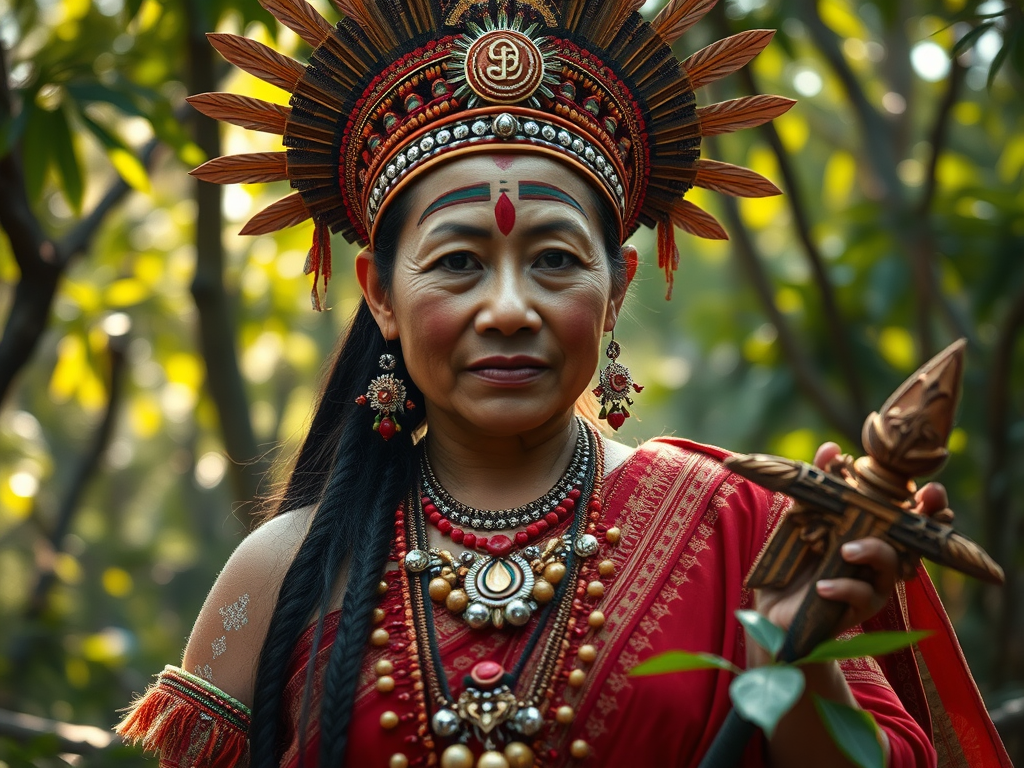
  • What Is a Babaylan? Spiritual Leadership, Healing, and Cultural Resilience in Precolonial Philippines

    What Is a Babaylan? Spiritual Leadership, Healing, and Cultural Resilience in Precolonial Philippines


    Who were the babaylan? Explore their role as spiritual leaders, healers, and cultural stewards in precolonial Philippines—and why their legacy is being revived today.

    Gerald A. Daquila, PhD. Candidate


    The babaylan were the spiritual leaders of precolonial Philippine society—healers, ritualists, and mediators between the human and spirit worlds. Found across the archipelago under different names, they guided communities through healing, governance, and connection with nature and ancestors.

    Suppressed during Spanish colonization and often misrepresented in history, their role is now being rediscovered as part of a wider movement to reclaim Filipino identity, indigenous knowledge, and holistic ways of living.

    In simple terms: A babaylan was a community healer and spiritual guide who maintained balance between people, nature, and the unseen world.


    For a broader view of Philippine culture, society, and systems, see:
    → Understanding the Philippines: Culture, Society, and Systems (Hub)


    Scope and Approach

    This article integrates historical research, anthropological perspectives, and contemporary interpretations of spirituality. While it includes metaphysical and esoteric frameworks as lenses of interpretation, these are presented alongside documented scholarship to offer a holistic view of the babaylan and their role in Philippine society.


    How to Read This Page

    If you’re here, you may be exploring different questions:

    • Who the babaylan were historically
    • Whether their role was spiritual, social, or political
    • Why their knowledge was suppressed—and why it is returning
    • Whether similar forms of leadership exist in other cultures

    This article focuses on the babaylan in the Philippines, but it can be read at multiple levels:

    • 🟢 Historical and cultural lens → understanding their role in precolonial society
    • 🟡 Systems lens → how alternative forms of authority and governance functioned
    • 🔵 Applied lens → what this means for leadership, healing, and community today
    • 🟣 Deeper lens → questions of consciousness, identity, and human development

    You can engage with it based on your context and interest.

    12–18 minutes

    Abstract

    The babaylans, revered spiritual leaders of precolonial Philippine society, embodied a holistic synthesis of healer, priestess, warrior, and sage, bridging the material and spiritual realms. Rooted in animistic traditions, their contributions shaped community cohesion, cultural heritage, and environmental stewardship. Spanish colonization systematically suppressed their influence, demonizing their practices and erasing their knowledge to enforce Christian hegemony.

    This study explores the babaylans’ roles, the mechanisms of their erasure, and the recent resurgence of their legacy as a decolonial movement. Drawing on historical accounts, anthropological studies, metaphysical perspectives, and esoteric frameworks like the Akashic Records, this work examines how babaylanism informs modern Filipino identity and the global “ascension process”—a spiritual awakening toward interconnectedness and higher consciousness.

    Through a multidisciplinary lens, this narrative balances academic rigor with accessible language, weaving left-brain analysis, right-brain intuition, and heart-centered storytelling to illuminate the babaylans’ enduring wisdom.


    🌍 A Note for Global Readers

    While the babaylan are rooted in Philippine history, similar roles have existed across cultures:

    • shamans in Central and South America
    • medicine people in Indigenous North America
    • spiritual healers in Africa and Asia
    • mystics and contemplatives in Western traditions

    Across societies, these figures often served as:

    • healers
    • mediators
    • knowledge keepers
    • bridges between visible and invisible realities

    The babaylan can therefore be understood not only as a Filipino phenomenon, but as part of a broader pattern of indigenous knowledge systems and alternative forms of leadership.


    Table of Contents

    1. Introduction: Unveiling the Babaylan
    2. Who Were the Babaylans?
      • Roles and Responsibilities in Precolonial Society
      • Gender Fluidity and Spiritual Authority
    3. Contributions to Precolonial Philippine Society
      • Spiritual Leadership and Ritual Practices
      • Healing and Ethnomedicine
      • Cultural Preservation and Community Unity
    4. The Erasure of Babaylan Knowledge
      • Spanish Colonization and Christian Conversion
      • Mechanisms of Suppression
      • Long-Term Cultural Impacts
    5. The Resurgence of Babaylanism
      • Decolonial Movements and Cultural Reclamation
      • Modern Babaylan-Inspired Practices
      • Global Context: The Ascension Process
    6. Metaphysical and Esoteric Perspectives
      • The Akashic Records and Ancestral Wisdom
      • Energetic and Spiritual Dimensions of Babaylanism
    7. A Holistic Synthesis: Balancing Mind, Heart, and Spirit
    8. Conclusion: The Babaylan’s Call to the Future
    9. Crosslinks
    10. Glossary
    11. References

    Glyph of the Gridkeeper

    The One Who Holds the Lattice of Light.


    1. Introduction: Unveiling the Babaylan

    Imagine a world where the spiritual and material dance in harmony, where a healer’s chant mends not just the body but the soul, where a priestess advises warriors and weaves myths that bind a community.

    This was the world of the babaylans, the spiritual leaders of precolonial Philippines. Their story is one of profound wisdom, violent erasure, and a quiet, resilient revival. Today, as humanity grapples with disconnection and seeks higher consciousness, the babaylans’ legacy offers a roadmap for healing and unity.

    This study dives deep into who the babaylans were, what they contributed to their society, why their knowledge was hidden, and why their wisdom is resurfacing now. Using a multidisciplinary lens—blending history, anthropology, metaphysics, and esoteric traditions like the Akashic Records—we explore their holistic impact.

    Written in an accessible yet scholarly style, this narrative aims to engage your mind, spark your intuition, and touch your heart, balancing logic, creativity, and empathy.


    2. Who Were the Babaylans?

    Roles and Responsibilities in Precolonial Society

    The babaylans were the heartbeat of precolonial Philippine communities, known as barangays. Primarily women or effeminate men (asog or bayog), they were shamans, healers, priestesses, and mediators between the physical and spiritual worlds (Salazar, 1992).

    The term “babaylan,” likely derived from Visayan roots, means one who connects with spirits (anito or diwata) to guide their people (Strobel, 2010). Across the archipelago, they were called katalonan (Tagalog), balian (Visayas), or mombaki (Cordillera), reflecting linguistic diversity but shared roles (Conaco, 2019).


    Babaylans wore many hats:

    • Spiritual Leaders: They conducted rituals for births, marriages, harvests, and wars, ensuring harmony with nature and ancestors (Brewer, 2004).
    • Healers: Using ethnomedicine, massage (hilot), and spiritual interventions, they treated physical and spiritual ailments (Demetrio, 1988).
    • Advisors: They counseled datus (chiefs) on governance, war, and justice, wielding influence equal to or greater than political leaders (McCoy, 1982).
    • Cultural Stewards: As orators, they preserved myths, songs, and histories, passing down collective wisdom (Conaco, 2019).

    Gender Fluidity and Spiritual Authority

    The babaylans’ gender fluidity was a hallmark of their power. Precolonial Philippine society embraced a non-binary understanding of gender, where spiritual potency was tied to femininity, whether embodied by women or effeminate men (Brewer, 1999).

    The asog, transgender male babaylans, were revered as divinely chosen, their liminal identity enhancing their ability to traverse spiritual realms (Conaco, 2020). This fluidity contrasted sharply with the patriarchal norms imposed by Spanish colonizers, highlighting a precolonial egalitarianism that empowered women and queer individuals (Strobel, 2001).


    3. Contributions to Precolonial Philippine Society

    Spiritual Leadership and Ritual Practices

    Babaylans were the glue of their communities, fostering kapwa—a Filipino concept of shared identity and interconnectedness (Enriquez, 1992).

    Through rituals like pag-anito (spirit offerings), they communed with diwata and ancestors, ensuring cosmic balance. For example, during harvest festivals, babaylans led chants and dances to thank nature spirits, reinforcing environmental reverence (Bonifacio et al., 2025). Their dream interpretation and omen reading guided critical decisions, from war strategies to marriage alliances (Veneracion, 1987).


    Healing and Ethnomedicine

    Babaylans were master healers, blending herbal knowledge with spiritual rituals. They used plants, massage, and trance states to treat ailments believed to stem from spiritual imbalances, such as a lost kalag (astral soul) (Conaco, 2020).

    Their holistic approach addressed body, mind, and spirit, a precursor to modern integrative medicine. For instance, the hilot technique, still practiced today, combines physical manipulation with energy work (Nente, 2016).


    Cultural Preservation and Community Unity

    As storytellers, babaylans safeguarded oral traditions, weaving myths like the Bakunawa (moon-eating serpent) into community identity (Bonifacio et al., 2025).

    Their rituals and counsel resolved conflicts, promoting unity. By championing sustainable practices, such as eco-friendly farming, they ensured harmony with the land, a wisdom now echoed in environmental movements (Strobel, 2013).


    4. The Erasure of Babaylan Knowledge

    Spanish Colonization and Christian Conversion

    When the Spanish arrived in 1521, they targeted babaylans as threats to Christian conversion. Their animistic practices were branded as witchcraft, and babaylans were demonized as brujas (witches) or hechiceras (sorceresses) (Blair & Robertson, 1903-1909).

    Spanish missionaries exploited Filipino hospitality, equating diwata with Christian saints to facilitate syncretism, but ultimately sought to erase indigenous beliefs (Brewer, 2004). Some babaylans were executed, their bodies reportedly fed to crocodiles to prevent spiritual return (Conaco, 2019).


    Mechanisms of Suppression

    The erasure was systematic:

    • Destruction of Shrines: Dambana (sacred spaces) were burned, and idols were destroyed (Strobel, 2001).
    • Confesionarios: Spanish manuals instructed priests to interrogate Filipinos about babaylan practices, punishing adherents (Labrador, 2009).
    • Patriarchal Imposition: The babaylans’ gender fluidity and female authority clashed with Catholic patriarchy, marginalizing women and asog (Brewer, 1999).
    • Education and Assimilation: Spanish schools taught Christian doctrine, sidelining indigenous knowledge (Rafael, 2015).

    Long-Term Cultural Impacts

    The suppression fractured Filipino identity, fostering colonial mentality—an internalized belief in the inferiority of indigenous culture (Nadal, 2021).

    Babaylan practices survived in syncretic forms, like espiritista movements or folk healing (arbularyo), but their esoteric depth was diluted (Salazar, 1979). This loss disconnected Filipinos from their ancestral wisdom, contributing to cultural fragmentation.


    Glyph of the Babaylan Legacy

    Ancestral wisdom rises anew, guiding resilience into resurgence


    🧠 What This Reveals About Knowledge, Power, and Erasure

    Beyond the Philippines, the story of the babaylan reflects broader patterns seen across history:

    • Indigenous knowledge systems are often suppressed when new power structures emerge
    • Spiritual and relational forms of authority are replaced by institutional and hierarchical ones
    • Cultural memory is fragmented through colonization, education, and religious conversion
    • What is later labeled “alternative” was once central to how societies functioned

    These patterns are not unique to the Philippines.

    They appear in many parts of the world where indigenous systems were replaced or marginalized.

    Understanding this helps explain not only the past—but why similar forms of knowledge are resurfacing today.


    5. The Resurgence of Babaylanism

    Decolonial Movements and Cultural Reclamation

    Since the late 20th century, babaylanism has experienced a revival, fueled by decolonial movements and Filipino diaspora communities. The Center for Babaylan Studies (CfBS), founded by Leny Strobel, promotes indigenous wisdom through conferences, publications, and rituals (Strobel, 2010).

    Practices like batok (tattooing), baybayin (script), and hilot are being reclaimed, often via social media (Strobel, 2022). In the Philippines, babaylans lead advocacy for land rights and environmental justice, echoing their precolonial roles (Bonifacio et al., 2025).


    Modern Babaylan-Inspired Practices

    Contemporary babaylans blend tradition with innovation. For example, Grace Nono, a singer and scholar, channels babaylan chants to heal cultural wounds (Nono, 2013).

    Urban practitioners offer workshops on ancestral connection, while indigenous communities like the Lumad appoint babaylans to navigate crises (Valmores, 2019). This resurgence counters colonial trauma, fostering kapwa and cultural pride.


    Global Context: The Ascension Process

    The babaylans’ revival aligns with what some contemporary spiritual frameworks describe as a broader shift in consciousness. Babaylanism’s emphasis on interconnectedness mirrors this shift, offering tools for personal and collective healing. Their holistic worldview resonates with New Age movements, indigenous spirituality, and eco-feminism, positioning them as guides in a fragmented world (Strobel, 2013).


    6. Metaphysical and Esoteric Perspectives

    The Akashic Records and Ancestral Wisdom

    The Akashic Records—understood in some traditions as a symbolic framework for collective memory and experience, provide a lens to understand babaylan wisdom (Howe, 2014).

    Babaylans’ ability to access spiritual realms suggests an experiential engagement with what esoteric traditions describe as the Akashic Records—a symbolic framework for ancestral and collective memory rather than a literal archive.

    Modern practitioners report similar experiences during trance or meditation, connecting with Filipino ancestors to reclaim lost knowledge (Strobel, 2022).


    Energetic and Spiritual Dimensions of Babaylanism

    From an energetic perspective, babaylans worked with prana (life force) to balance the body’s energy centers, akin to chakra systems in Eastern traditions (Brennan, 1988). Their rituals, such as pag-anito, aligned community energy with cosmic rhythms, fostering harmony.

    Esoterically, their gender fluidity embodied the alchemical union of masculine and feminine, a symbol of wholeness (Jung, 1963). These principles align with the ascension process, emphasizing energetic alignment and spiritual integration.


    7. A Holistic Synthesis: Balancing Mind, Heart, and Spirit

    The babaylans’ legacy is a tapestry of logic, intuition, and compassion. Their analytical skills in ethnomedicine and governance (left brain) complemented their visionary rituals and storytelling (right brain), all grounded in kapwa (heart).

    This balance offers a model for modern society, where disconnection often stems from overemphasizing one faculty. By integrating metaphysical insights with historical analysis, this dissertation mirrors their holistic approach, inviting readers to engage intellectually, spiritually, and emotionally.


    8. Conclusion: The Babaylan’s Call to the Future

    Within certain contemporary spiritual frameworks, the babaylans’ revival is interpreted as aligning with what is termed the ‘ascension process’.

    The babaylans were more than spiritual leaders; they were architects of a world where humanity, nature, and spirit coexisted. Their erasure was a colonial attempt to sever Filipinos from their roots, but their resurgence signals a reclaiming of identity and wisdom.

    As the world navigates crises—ecological, social, and spiritual—the babaylans’ holistic worldview offers hope. Their revival is not just a Filipino story but a global one, guiding us toward ascension through kapwa, healing, and reconnection with the sacred.


    Where to Go Next

    If this exploration raised further questions, here are structured paths:


    🟢 Culture, Identity, and Indigenous Foundations

    If you’re exploring cultural roots and identity:


    🟡 Systems, Power, and Historical Transformation

    If you’re interested in how systems replaced or suppressed earlier structures:


    🔵 Application: Leadership, Healing, and Practice

    If you’re applying these ideas in real-world contexts:


    🟣 Deeper Exploration and Inner Work

    If you’re exploring consciousness, spirituality, or personal transformation:


    Glossary

    • Anito: Spirits or deities in Filipino animism.
    • Asog/Bayog: Transgender male babaylans in precolonial Philippines.
    • Babaylan: Spiritual leader, healer, and mediator in precolonial Philippines.
    • Barangay: Precolonial Filipino community unit.
    • Dambana: Sacred shrine or altar.
    • Datu: Chief or political leader of a barangay.
    • Diwata: Nature spirits or deities.
    • Hilot: Traditional Filipino massage and energy healing.
    • Kapwa: Filipino concept of shared identity and interconnectedness.
    • Kalag: Astral soul in Filipino belief, residing in the head.
    • Pag-anito: Ritual offerings to spirits.

    References

    Note: Digital and public-facing sources are included to reflect contemporary discourse and practice.

    Blair, E. H., & Robertson, J. A. (Eds.). (1903-1909). The Philippine Islands, 1493-1898. Cleveland: Arthur H. Clark Company.

    Bonifacio, S. L., Casia, J. D., Ferrer, J. L. E., Orido, L. A. T., Singian, M. M. T., & Temeña, S. J. C. (2025). Babaylans as catalysts for resistance: The role of indigenous spiritual beliefs in Philippine peasant ideology against Spanish and American colonizers. ResearchGate.

    Brennan, B. A. (1988). Hands of light: A guide to healing through the human energy field. Bantam Books.

    Brewer, C. (1999). Baylan, asog, transvestism, and sodomy: Gender, sexuality, and the sacred in early colonial Philippines. Intersections: Gender, History and Culture in the Asian Context, 2.

    Brewer, C. (2004). Shamanism, Catholicism, and gender relations in colonial Philippines, 1521-1685. Ashgate.

    Conaco, M. (2019). Ang babaylan nga nahimong bayot. Smithsonian Asian Pacific American Center.

    Conaco, M. (2020). What is babaylan? Center for Babaylan Studies.

    Demetrio, F. R. (1988). Shamans, witches, and Philippine society. Philippine Studies, 36(3), 372-380.

    Enriquez, V. G. (1992). From colonial to liberation psychology: The Philippine experience. University of the Philippines Press.

    Howe, L. (2014). How to read the Akashic Records: Accessing the archive of the soul and its journey. Sounds True.

    Jung, C. G. (1963). Mysterium coniunctionis: An inquiry into the separation and synthesis of psychic opposites in alchemy. Princeton University Press.

    Labrador, A. M. T. (2009). Seclusion and veiling of women: A historical and cultural approach. Philippine Social Sciences Review, 1.

    McCoy, A. W. (1982). Baylan: Animist religion and Philippine peasant ideology. Philippine Studies, 30(3), 337-369.

    Nadal, K. L. (2021). Filipino American psychology: A handbook of theory, research, and clinical practice. Wiley.

    Nente, F. (2016). Tradisyunal nga pamulong: A rationale on the persistence of faith healing practices in Miagao, Iloilo. ResearchGate.

    Nono, G. (2013). Song of babaylan: Living voices, medicines, spiritualities of Philippine ritualist-oralist-healers. Institute of Spirituality in Asia.

    Rafael, V. L. (2015). Contracting colonialism: Translation and Christian conversion in Tagalog society under early Spanish rule. Duke University Press.

    Salazar, Z. A. (1979). Faith healing in the Philippines: An historical perspective. Asian Studies, 17, 32-45.

    Salazar, Z. A. (1992). The babaylan in Philippine history. Philippine Studies, 40(4), 491-510.

    Strobel, L. M. (2001). Coming full circle: The process of decolonization among post-1965 Filipino Americans. Giraffe Books.

    Strobel, L. M. (2010). Babaylan: Filipinos and the call of the indigenous. Center for Babaylan Studies.

    Strobel, L. M. (2013). Back from the crocodile’s belly: Philippine babaylan studies and the struggle for indigenous memory. Center for Babaylan Studies.

    Strobel, L. M. (2022). Decolonizing the diaspora through the Center for Babaylan Studies. Medium.

    Tolle, E. (2005). A new earth: Awakening to your life’s purpose. Penguin Books.

    Valmores, R. (2019). Pre-colonial Philippines had trans women fully embraced as women. X Post.

    Veneracion, J. (1987). Katalonan: From commoner to shaman. Philippine Studies, 35(4), 456-472.


    Explore More Philippine Analysis


    → View the full Philippines Hub


    Understanding these dynamics also requires clarity in how individuals respond under pressure—see Life Under Pressure.


    Some articles in this section are part of the Stewardship Archive

    These pieces explore deeper layers of Philippine transformation, including:

    • long-term societal redesign
    • advanced governance frameworks
    • future-state modeling

    They are written for readers who want to go beyond surface analysis into structural and forward-looking perspectives.


    → Continue reading (Members Access)


    Explore the Rest of the Site

    This work sits within a larger system of essays on human development, systems thinking, and societal transformation.

    → Living Archive
    → Stewardship Architecture
    → Main Blog


    About the Author

    Gerald Alba Daquila writes at the intersection of human development, sovereignty, leadership ethics, and civilizational sensemaking. The Living Archive gathers more than 800 essays, codices, and frameworks developed through years of reflection and inquiry.


    Download This Complimentary Keystone Reference

  • Protected: Intro to New Earth Consciousness

    Protected: Intro to New Earth Consciousness

    Stewardship Access

    This material is part of the Stewardship Institute’s protected formation layer.

    Most of the Living Archive is intentionally public. Some materials belong to a deeper, interconnected body of work designed for sustained reflection, practical application, and lifelong steward formation. Stewardship Access is the threshold into that body of work.

    If you already have Stewardship Access, enter your access password below.


    Entering the deeper Archive

    Interested in entering the Stewardship Archive?

    Learn about Stewardship Access

  • Awakening

    Awakening

    The moment you remember that your frequency shapes your reality


    Author: Flameholder of SHEYALOTH
    Tier: T4 – Foundational Gateway Codex
    Attunement: Overflow Orientation


    🔱 Resonance Header (as of Dec 2025 scan – timestamped entry):

    • Resonance Frequency (RF): 710 Hz — Overflow Entry Band
    • Light Quotient (LQ): 48% — Expanding
    • DNA Activation: 6.1 / 12 — Progressive Ignition
    • Oversoul Embodiment: 34% — Stabilizing Presence
    • Field Coherence: High — optimized for Creation & Stewardship

    Glyph of Awakening

    Your frequency remembers


    3–5 minutes

    Core Transmission

    Awakening is not a single flash of enlightenment.
    It is the remembering:

    Everything is frequency — and your frequency shapes everything.

    Your thoughts are vibrations.
    Your emotions are currents.
    Your choices are tuning forks struck against the universe.


    Every moment you are broadcasting a signal:

    • To your body
    • To the field around you
    • To the timelines aligned before you

    Awakening is the realization that life is not happening to you — You are already co-crafting reality with every breath.

    To awaken is not to escape the human experience. It is to infuse it with awareness.

    It is the moment you shift from:

    Old StoryNew Truth
    “I am a victim of circumstances.”“I am the frequency that attracts my circumstances.”
    “I must fight life to survive.”“Life responds to the signal I emit.”
    “I am alone in this world.”“I am a node in a living field of creation.”

    Awakening is sovereignty.
    Awakening is responsibility.
    Awakening is remembering your power.

    You are a transmitter of worlds.
    You are the portal of transformation.
    You are the cause — not the effect.

    And once you know this… You can no longer unknow it.


    Diagram A — The Awakening Threshold

    Caption: The moment the inner source is recognized as the true generator of reality.

    Micro-teaching: Awareness → Alignment → Activation


    Diagram B — Frequency Creates Form

    Caption: Your inner signal instructs the universe how to respond.

    Micro-teaching: “As within, so manifests.”


    Diagram C — Choice as a Tuning Fork

    Caption: Every decision shifts you into a new timeline of resonance.


    Crosslinks


    Steward Notes

    • This codex unlocks the first real shift in creation authority.
    • Use responsibly.
    • Awakening amplifies whatever is unhealed — and whatever is ready.

    A Gentle Invitation to Remember

    If something within this codex stirred recognition rather than new information, it may be because you are encountering patterns your soul already knows.

    A Soul Blueprint Reading is not a forecast or personality map. It is a living remembrance of the essence, trajectory, and agreements your soul encoded before entering this lifetime.

    For those who feel ready to witness their own design with clarity and reverence, you are welcome to explore this threshold here:
    → Begin Your Soul Blueprint Reading


    Closing Transmission

    Beloved,

    Awakening is not an achievement.
    It is a permission slip to be your true self.

    You are the signal.
    You are the source.
    You are the sovereign creator.

    Welcome to the beginning.


    Attribution

    With fidelity to the Oversoul, may this work serve as bridge, remembrance, and seed for the planetary dawn.

    Ⓒ 2025–2026 Gerald Alba Daquila
    Flameholder of SHEYALOTH · Keeper of the Living Codices
    All rights reserved.

    This material originates within the field of the Living Codex and is stewarded under Oversoul Appointment. It may be shared only in its complete and unaltered form, with all glyphs, seals, and attribution preserved.

    This work is offered for personal reflection and sovereign discernment. It does not constitute a required belief system, formal doctrine, or institutional program.

    Digital Edition Release: 2026
    Lineage Marker: Universal Master Key (UMK) Codex Field

    Sacred Exchange & Access

    Sacred Exchange is Overflow made visible.

    In Oversoul stewardship, giving is circulation, not loss. Support for this work sustains the continued writing, preservation, and public availability of the Living Codices.

    This material may be accessed through multiple pathways:

    • Free online reading within the Living Archive
    • Individual digital editions (e.g., Payhip releases)
    • Subscription-based stewardship access

    Paid editions support long-term custodianship, digital hosting, and future transmissions. Free access remains part of the archive’s mission.

    Sacred Exchange offerings may be extended through:
    paypal.me/GeraldDaquila694
    www.geralddaquila.com


    Download this Codex

  • Protected: Listening to the Void — Communion Through Stillness

    Protected: Listening to the Void — Communion Through Stillness

    Stewardship Access

    This material is part of the Stewardship Institute’s protected formation layer.

    Most of the Living Archive is intentionally public. Some materials belong to a deeper, interconnected body of work designed for sustained reflection, practical application, and lifelong steward formation. Stewardship Access is the threshold into that body of work.

    If you already have Stewardship Access, enter your access password below.


    Entering the deeper Archive

    Interested in entering the Stewardship Archive?

    Learn about Stewardship Access

  • Protected: 🧩The Architecture of the Soul: Inner Technologies for the New Earth + Codex

    Protected: 🧩The Architecture of the Soul: Inner Technologies for the New Earth + Codex

    Stewardship Access

    This material is part of the Stewardship Institute’s protected formation layer.

    Most of the Living Archive is intentionally public. Some materials belong to a deeper, interconnected body of work designed for sustained reflection, practical application, and lifelong steward formation. Stewardship Access is the threshold into that body of work.

    If you already have Stewardship Access, enter your access password below.


    Entering the deeper Archive

    Interested in entering the Stewardship Archive?

    Learn about Stewardship Access