Category: NEW EARTH ECONOMY

  • Economic Sovereignty for Communities

    Economic Sovereignty for Communities


    Reclaiming Local Resilience in an Age of Systemic Uncertainty


    Meta Description

    Explore how communities can cultivate economic sovereignty through local resilience, regenerative systems, cooperative governance, decentralized infrastructure, and long-term stewardship.


    Introduction

    Modern societies are increasingly interconnected through global finance, digital infrastructure, international trade, and transnational supply chains.

    While this interconnectedness has enabled unprecedented economic expansion, it has also exposed communities to systemic vulnerabilities far beyond local control.

    Economic shocks, inflationary pressures, supply chain disruptions, housing instability, labor precarity, ecological stress, and financial concentration have revealed a critical reality: many communities possess limited sovereignty over the systems that shape their daily survival.

    As instability grows across institutional, ecological, and economic domains, the question of economic sovereignty is becoming increasingly relevant.

    Economic sovereignty for communities does not imply isolationism or rejection of global cooperation. Rather, it refers to the capacity of communities to cultivate sufficient resilience, adaptive infrastructure, and local stewardship so that essential human needs can remain stable even amid larger systemic volatility.

    At its core, economic sovereignty concerns agency.

    Can communities meaningfully influence the economic conditions that determine their well-being?

    Can local systems retain enough coherence to withstand external shocks?

    Can human economies be reorganized around long-term flourishing rather than perpetual extraction and instability?

    These questions are no longer theoretical.

    They are increasingly central to the future of social resilience.


    What Is Economic Sovereignty?

    Economic sovereignty refers to the ability of individuals, communities, or nations to maintain meaningful influence over the economic systems that shape their lives.

    At the community level, this includes:

    • Local resilience capacity
    • Access to essential resources
    • Distributed economic participation
    • Community-owned infrastructure
    • Cooperative governance structures
    • Food and energy resilience
    • Local enterprise development
    • Reduced dependency on fragile centralized systems
    • Adaptive capacity during crisis conditions

    Economic sovereignty is not absolute self-sufficiency.

    Modern societies remain interconnected and interdependent. Rather, sovereignty exists on a spectrum.

    The question is not whether communities participate in larger systems, but whether they retain sufficient autonomy, resilience, and adaptive capacity within those systems.

    Communities with little economic sovereignty are often highly vulnerable to:

    • External financial shocks
    • Corporate consolidation
    • Resource scarcity
    • Supply chain instability
    • Labor exploitation
    • Inflationary cycles
    • Debt dependency
    • Housing insecurity
    • Political instability

    Conversely, communities with stronger local resilience tend to possess diversified economic structures, stronger social trust, cooperative networks, and greater capacity for coordinated adaptation.

    Economic sovereignty is best understood not as a fixed condition but as a developmental process. Communities rarely move from dependency to resilience overnight.

    Instead, they gradually build the capacities, relationships, institutions, and stewardship practices that increase their ability to influence the conditions shaping their future.

    The Sovereignty Ladder provides a conceptual framework for understanding this progression, illustrating how communities can move from vulnerability and dependence toward greater participation, stewardship, resilience, and self-determination.

    Download Reference Map 002: The Sovereignty Ladder

    A developmental framework illustrating how individuals, organizations, and communities can progressively build capacity, stewardship, and resilience, increasing their ability to influence the systems that shape their future.


    The Fragility of Hyper-Centralized Economies

    Over recent decades, many economic systems have become increasingly centralized.

    Production chains stretch across continents. Essential goods depend upon complex logistical coordination. Financial systems concentrate power within large institutional networks. Digital platforms mediate communication, commerce, and labor participation at unprecedented scale.

    While centralization can increase efficiency, it may also increase fragility.

    Highly centralized systems often:

    • Reduce local redundancy
    • Concentrate decision-making power
    • Increase systemic exposure to disruption
    • Weaken regional self-reliance
    • Externalize ecological and social costs
    • Prioritize short-term optimization over resilience

    The COVID-19 pandemic revealed how quickly tightly coupled economic systems can experience cascading failures when supply chains, labor systems, transportation infrastructure, healthcare systems, and consumer markets simultaneously come under stress (Tooze, 2021).

    Communities dependent upon distant systems for food, medicine, energy, or essential goods often experienced heightened vulnerability.

    This has renewed interest in localized resilience strategies.


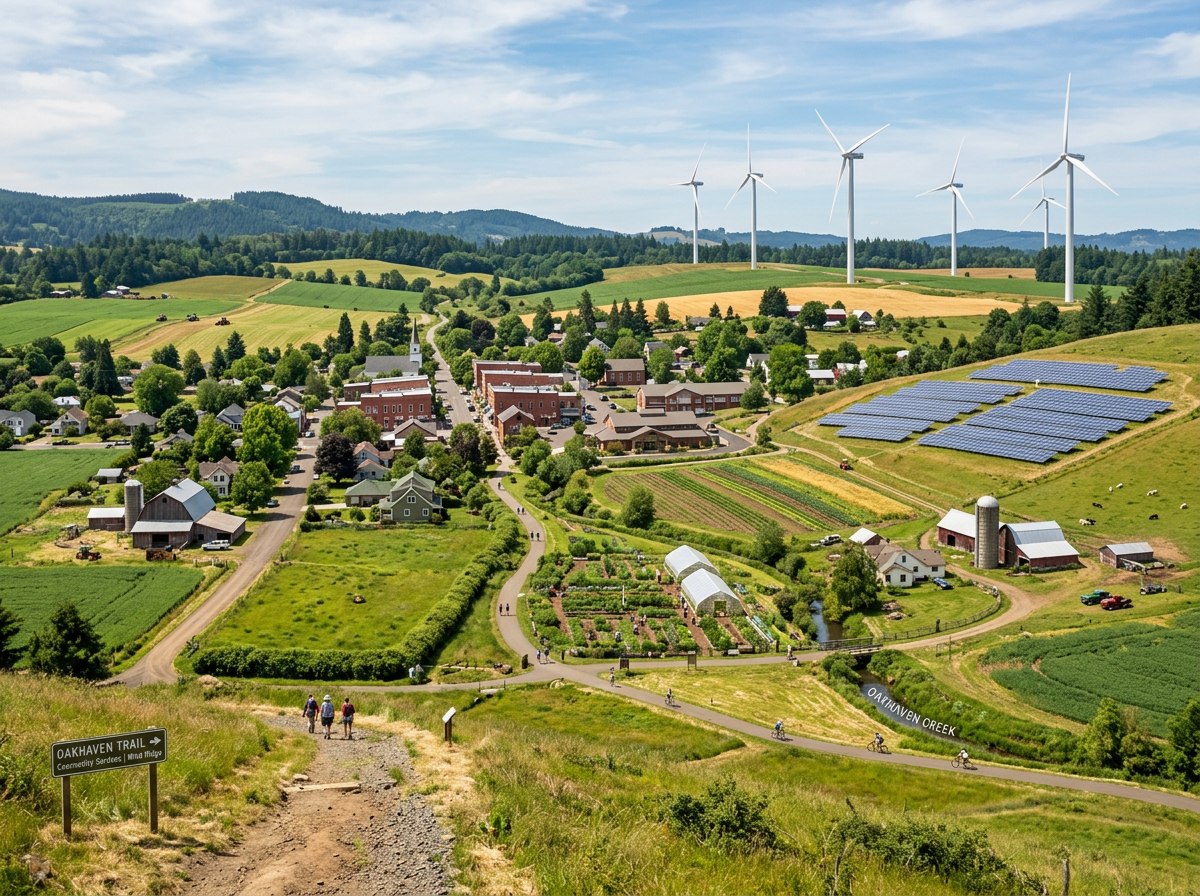
    Community Resilience as Economic Infrastructure

    Economic resilience is not merely financial.

    It is social, ecological, relational, and infrastructural.

    Communities capable of maintaining stability during periods of disruption often possess strong networks of trust, reciprocal support systems, diversified local economies, and participatory governance structures.

    Community resilience may include:

    • Local food systems
    • Cooperative enterprises
    • Regional energy initiatives
    • Community land stewardship
    • Mutual aid networks
    • Skills-sharing ecosystems
    • Decentralized manufacturing capacity
    • Local entrepreneurship
    • Civic participation structures
    • Distributed knowledge systems

    Elinor Ostrom’s research on commons governance demonstrated that communities are often capable of sustainably managing shared resources when participatory stewardship and local accountability mechanisms are present (Ostrom, 1990).

    This challenges assumptions that large centralized structures are always the most effective forms of coordination.

    In many cases, distributed resilience networks outperform centralized systems during periods of instability because they maintain adaptive flexibility and localized responsiveness.


    Cooperative Economics and Shared Stewardship

    Economic sovereignty does not necessarily require purely individual ownership models.

    Many resilient communities historically relied upon cooperative frameworks that balanced personal initiative with collective stewardship.

    Cooperative economics can include:

    • Worker cooperatives
    • Credit unions
    • Community-owned enterprises
    • Shared infrastructure systems
    • Local investment networks
    • Participatory budgeting
    • Cooperative housing models
    • Community agriculture initiatives

    These structures often aim to distribute both responsibility and benefit more equitably across communities.

    Research on cooperative enterprises suggests they may increase long-term stability, worker participation, and local reinvestment under certain conditions (Schneiberg, 2013).

    Importantly, economic sovereignty is not solely about resisting centralized systems.

    It is about cultivating diversified economic ecosystems capable of supporting human dignity, resilience, and long-term stability.


    Local Economies in a Globalized World

    Globalization has generated both opportunity and vulnerability.

    International trade and technological integration have expanded access to goods, information, and markets. However, globalization has also intensified dependency upon distant systems over which local communities possess little control.

    As a result, many communities face a paradox:

    The systems that provide abundance can also generate instability.

    Economic sovereignty therefore requires balance.

    Healthy economic ecosystems may combine:

    • Global cooperation
    • Regional resilience
    • Local production capacity
    • Distributed infrastructure
    • Strategic interdependence
    • Community adaptability

    The goal is not isolation from global systems.

    Rather, it is preventing total dependency upon systems that may become increasingly volatile, centralized, or fragile.

    This principle is especially relevant in areas such as:

    • Food security
    • Energy resilience
    • Digital infrastructure
    • Housing systems
    • Water stewardship
    • Healthcare access
    • Community finance

    When communities retain partial local control over essential systems, they often possess greater flexibility during periods of wider disruption.


    Financialization and the Erosion of Local Stability

    One major challenge to economic sovereignty is financialization.

    Financialization refers to the increasing dominance of financial markets, speculative capital, and debt-based systems within economic life.

    In highly financialized systems:

    • Housing becomes investment speculation
    • Local economies become vulnerable to capital extraction
    • Wealth concentrates within large institutional structures
    • Long-term stewardship declines
    • Productive economies may weaken relative to speculative activity

    This dynamic can erode local resilience.

    Communities often struggle when economic value generated locally is continuously extracted outward through debt servicing, rent concentration, speculative ownership, or monopolistic structures.

    Economic sovereignty therefore increasingly involves questions of:

    • Community ownership
    • Local reinvestment
    • Ethical finance
    • Resource circulation
    • Distributed economic participation
    • Long-term stewardship over short-term extraction

    Communities that retain stronger internal circulation of value frequently demonstrate higher resilience and stronger social cohesion.

    If economic sovereignty concerns a community’s ability to retain agency over its future, then stewardship concerns how that agency is exercised.

    Resilient communities do not merely accumulate resources; they cultivate systems that circulate, renew, and reinvest value across generations.

    Economic vitality becomes sustainable when wealth is understood not solely as financial accumulation, but as a diverse collection of resources—including social trust, knowledge, culture, and ecological capital—that require ongoing stewardship.

    The Wealth Stewardship Cycle offers a framework for understanding how healthy economies transform resources into enduring resilience and shared prosperity.

    Download Reference Map 009: The Wealth Stewardship Cycle

    A regenerative framework illustrating how wealth moves through cycles of creation, exchange, allocation, stewardship, regeneration, and legacy.

    The model emphasizes that long-term prosperity depends not merely on accumulation, but on responsible circulation and renewal of financial, social, cultural, ecological, and knowledge resources.


    Ecological Stewardship and Regenerative Economics

    Economic sovereignty cannot be separated from ecological sustainability.

    Human economies remain dependent upon energy systems, biodiversity, water systems, agricultural stability, and ecological resilience.

    Economic models based entirely upon perpetual extraction often generate long-term instability by degrading the very systems that support civilization.

    Regenerative economic frameworks seek to align economic activity with ecological renewal rather than depletion.

    This may include:

    • Regenerative agriculture
    • Circular economic systems
    • Local ecological restoration
    • Renewable energy systems
    • Watershed stewardship
    • Soil regeneration
    • Community-based conservation
    • Bioregional planning

    Ecological resilience and economic resilience are increasingly intertwined.

    Communities capable of restoring ecological stability may also strengthen long-term economic sovereignty.


    Technology and Decentralized Coordination

    Emerging technologies may both strengthen and weaken community sovereignty depending upon how they are implemented.

    Digital infrastructure can:

    • Enable decentralized collaboration
    • Improve local coordination
    • Expand educational access
    • Support distributed entrepreneurship
    • Strengthen local information networks

    However, technological systems can also:

    • Increase surveillance capacity
    • Centralize platform power
    • Intensify dependency on external infrastructure
    • Accelerate labor precarity
    • Concentrate informational control

    The question is not whether technology is inherently beneficial or harmful.

    The question is whether technological systems increase human agency and resilience or diminish them.

    Communities that cultivate technological literacy while maintaining local adaptability may be better positioned to navigate future complexity.


    Social Trust as Economic Infrastructure

    Economic systems ultimately depend upon relationships.

    Trust functions as invisible infrastructure within communities.

    Societies with higher levels of social trust often demonstrate:

    • Greater civic participation
    • Stronger cooperative capacity
    • Lower coordination costs
    • Higher institutional stability
    • More resilient local economies

    Francis Fukuyama (1995) argued that trust acts as a form of social capital enabling societies to coordinate beyond immediate family structures.

    Without trust, even technically sophisticated economic systems become fragile.

    Economic sovereignty therefore depends not only upon infrastructure and policy, but also upon culture:

    • Shared responsibility
    • Reciprocity
    • Civic engagement
    • Ethical stewardship
    • Participatory governance
    • Long-term thinking

    Communities capable of sustaining trust are often more adaptable during periods of uncertainty.


    Economic Sovereignty Is Not Economic Isolation

    It is important to distinguish sovereignty from isolationism.

    Economic sovereignty does not require communities to sever themselves from larger systems.

    Rather, it involves cultivating enough local resilience that communities are not entirely destabilized by external volatility.

    Healthy sovereignty balances:

    • Local resilience with global cooperation
    • Independence with interdependence
    • Innovation with stability
    • Efficiency with redundancy
    • Growth with sustainability

    The goal is not rigid self-containment.

    It is adaptive resilience.

    Communities that retain diversified capabilities, cooperative structures, and ecological alignment may be better prepared for a future characterized by accelerating complexity.


    Toward Regenerative Community Economies

    The future of economic sovereignty may depend less upon maximizing centralized scale and more upon strengthening distributed resilience.

    This transition may involve:

    • Rebuilding local production capacity
    • Strengthening regional food systems
    • Expanding cooperative ownership models
    • Investing in regenerative infrastructure
    • Supporting ethical entrepreneurship
    • Cultivating financial literacy
    • Encouraging participatory governance
    • Restoring ecological systems
    • Reinforcing civic trust

    Economic systems ultimately shape not only material survival, but also social cohesion, psychological stability, and collective possibility.

    Communities capable of balancing resilience, stewardship, innovation, and cooperation may become increasingly important within an era defined by systemic uncertainty.

    Economic sovereignty is therefore not merely an economic question.

    It is a civilizational question concerning how human beings choose to organize resources, responsibility, and collective life in a rapidly changing world.


    Crosslinks


    References

    Fukuyama, F. (1995). Trust: The social virtues and the creation of prosperity. Free Press.

    Ostrom, E. (1990). Governing the commons: The evolution of institutions for collective action. Cambridge University Press.

    Schneiberg, M. (2013). Movements as political conditions for policy. In D. A. Snow et al. (Eds.), The Wiley-Blackwell encyclopedia of social and political movements. Wiley-Blackwell.

    Tooze, A. (2021). Shutdown: How COVID shook the world’s economy. Viking.

    The Living Archive is designed to be explored through pathways, categories, and search. If you’re looking for a specific idea, question, or theme, AI Search can help surface relevant connections across the archive.


    Attribution

    The Living Archive
    Integrative Frameworks for Regenerative Civilization

    © 2026 Gerald Daquila. All rights reserved.
    Part of the Life.Understood. knowledge ecosystem and Stewardship Institute initiative.

    This article is intended for educational, research, and civic inquiry purposes.
    Readers are encouraged to engage critically, verify sources independently, and explore related knowledge hubs for broader systems context.
  • Governance Failure Patterns

    Governance Failure Patterns


    Why Institutions Drift Toward Inefficiency, Distrust, and Systemic Fragility


    Meta Description

    Explore governance failure patterns through systems thinking, institutional behavior, incentives, trust dynamics, and organizational design. Learn why governments, organizations, and communities become unstable — and what healthy governance systems require for long-term resilience.


    Introduction

    Governance is one of the foundational forces shaping civilization.

    Healthy governance systems help societies:

    • coordinate collectively,
    • manage complexity,
    • resolve conflict,
    • distribute responsibility,
    • maintain legitimacy,
    • and sustain long-term stability.

    When governance systems weaken, societies often experience:

    • institutional distrust,
    • fragmentation,
    • corruption,
    • inefficiency,
    • polarization,
    • and declining social cohesion.

    Importantly, governance failure rarely emerges from a single cause.

    Most governance breakdowns develop gradually through:

    • incentive distortion,
    • loss of accountability,
    • bureaucratic overcomplexity,
    • communication breakdowns,
    • concentrated power,
    • and declining adaptive capacity.

    Systems thinking reveals that governance failure is often structural rather than purely personal.

    Individuals matter.

    But systems strongly shape behavior through:

    • incentives,
    • feedback loops,
    • institutional culture,
    • and organizational design (Meadows, 2008).

    Understanding recurring governance failure patterns helps societies:

    • identify hidden fragilities,
    • improve institutional resilience,
    • and strengthen long-term coordination capacity.

    What Is Governance?

    Governance refers to the systems through which:

    • decisions are made,
    • responsibilities are coordinated,
    • authority is exercised,
    • and collective behavior is organized.

    Governance exists at many levels:

    • governments,
    • corporations,
    • institutions,
    • organizations,
    • communities,
    • digital systems,
    • and even informal social groups.

    Healthy governance is not merely about authority.

    It is also about:

    • legitimacy,
    • trust,
    • accountability,
    • adaptability,
    • and systems coherence.

    Governance systems fail when they lose the capacity to:

    • coordinate effectively,
    • respond adaptively,
    • maintain legitimacy,
    • or align incentives with long-term collective well-being (North, 1990).

    Failure Pattern 1: Incentive Misalignment

    One of the most common governance failures occurs when incentives reward behaviors that undermine long-term system health.

    For example:

    • short-term political gain may override long-term policy stability,
    • organizations may prioritize metrics over actual outcomes,
    • and institutions may reward self-preservation over public service.

    Incentive systems strongly influence:

    • behavior,
    • culture,
    • decision-making,
    • and institutional evolution.

    When incentives become disconnected from:

    • accountability,
    • stewardship,
    • or public well-being, institutions gradually drift toward dysfunction.

    This often produces:

    • performative behavior,
    • bureaucratic stagnation,
    • corruption,
    • and declining trust.

    Failure Pattern 2: Concentration of Power

    Power naturally tends to centralize unless balanced through:

    • accountability,
    • transparency,
    • distributed oversight,
    • and institutional checks.

    Highly centralized systems may initially appear:

    • efficient,
    • decisive,
    • or stable.

    However, overconcentration of authority often weakens:

    • feedback systems,
    • adaptability,
    • local responsiveness,
    • and institutional resilience.

    When power concentrates excessively:

    • dissent becomes risky,
    • information flow narrows,
    • and corrective feedback weakens.

    This increases the likelihood of:

    • blind spots,
    • corruption,
    • systemic fragility,
    • and governance detachment from lived reality.

    Healthy governance systems maintain balance between:

    • coordination,
    • and distributed adaptive capacity.

    Failure Pattern 3: Bureaucratic Complexity

    As institutions expand, complexity often increases.

    Governance systems accumulate:

    • rules,
    • procedures,
    • reporting layers,
    • administrative structures,
    • and coordination mechanisms.

    Some complexity is necessary.

    However, excessive bureaucratic complexity may produce:

    • inefficiency,
    • slowed decision-making,
    • communication breakdowns,
    • operational fatigue,
    • and reduced adaptability.

    Overly complex systems often struggle to:

    • respond quickly,
    • process feedback effectively,
    • or adapt to changing conditions.

    This creates institutional rigidity.

    Complex systems require:

    • simplification where possible,
    • operational clarity,
    • and adaptive governance structures.

    Failure Pattern 4: Loss of Trust and Legitimacy

    Governance systems depend heavily upon trust.

    Trust allows societies to:

    • cooperate at scale,
    • coordinate behavior,
    • follow rules voluntarily,
    • and maintain social cohesion.

    When trust deteriorates:

    • compliance weakens,
    • polarization increases,
    • cynicism expands,
    • and institutional legitimacy declines.

    Trust erosion often emerges when institutions appear:

    • inconsistent,
    • exploitative,
    • unaccountable,
    • opaque,
    • or disconnected from public reality.

    Institutional legitimacy is not sustained through force alone.

    It depends upon:

    • perceived fairness,
    • transparency,
    • accountability,
    • competence,
    • and social trust.

    Healthy governance therefore requires ongoing trust stewardship.


    Failure Pattern 5: Information Distortion

    Governance systems fail when decision-makers no longer receive accurate feedback.

    This may occur through:

    • censorship,
    • fear-based cultures,
    • political filtering,
    • bureaucratic insulation,
    • media distortion,
    • or incentive-driven reporting bias.

    When institutions punish:

    • honesty,
    • dissent,
    • or inconvenient information, feedback loops weaken.

    This creates informational blindness.

    Healthy systems require:

    • transparent communication,
    • feedback capacity,
    • error correction,
    • and environments where problems can be identified without excessive punishment.

    Adaptive systems depend upon accurate information flow.


    Failure Pattern 6: Short-Termism

    Many governance systems become trapped in short-term optimization.

    Examples include:

    • quarterly financial thinking,
    • election-cycle incentives,
    • reactive policymaking,
    • and public-relations governance.

    Short-termism often weakens:

    • infrastructure maintenance,
    • ecological stewardship,
    • institutional resilience,
    • and long-term strategic thinking.

    Systems may appear functional temporarily while hidden fragilities accumulate beneath the surface.

    Long-term governance requires balancing:

    • immediate pressures,
    • and future consequences.

    Civilizations weaken when long-term stewardship becomes secondary to short-term image management or extraction.


    Failure Pattern 7: Governance Detachment from Reality

    Institutions sometimes become disconnected from:

    • lived conditions,
    • operational realities,
    • local feedback,
    • or changing social dynamics.

    This often occurs when:

    • leadership becomes insulated,
    • systems become overly abstract,
    • bureaucracy filters reality excessively,
    • or ideological rigidity overrides observation.

    Detached governance systems may continue operating according to:

    • outdated assumptions,
    • inaccurate models,
    • or symbolic performance.

    This increases:

    • policy failure,
    • institutional distrust,
    • and adaptive weakness.

    Healthy governance requires continuous:

    • observation,
    • feedback integration,
    • and reality-based adjustment.

    Failure Pattern 8: Corruption of Purpose

    Institutions often begin with constructive goals.

    Over time, however, systems may drift toward:

    • self-preservation,
    • reputation management,
    • power retention,
    • resource extraction,
    • or bureaucratic survival.

    This phenomenon is common in:

    • governments,
    • corporations,
    • nonprofits,
    • media systems,
    • and even communities.

    Institutions sometimes gradually prioritize:

    • sustaining themselves, rather than:
    • fulfilling their original purpose.

    This creates:

    • mission drift,
    • declining legitimacy,
    • and institutional incoherence.

    Stewardship-oriented governance requires regular:

    • self-assessment,
    • accountability,
    • and purpose recalibration.

    Governance Failure and Human Psychology

    Governance systems are not purely mechanical.

    Human psychology strongly influences:

    • institutional behavior,
    • leadership dynamics,
    • group decision-making,
    • and organizational culture.

    Cognitive biases, tribal identity, status incentives, and fear dynamics all shape governance outcomes.

    Behavioral economics and cognitive psychology demonstrate that human decision-making is often:

    • emotionally influenced,
    • socially conditioned,
    • and cognitively biased (Kahneman, 2011).

    Healthy governance systems therefore require:

    • feedback mechanisms,
    • distributed oversight,
    • and structures capable of correcting human blind spots.

    Healthy Governance Requires Adaptive Capacity

    No governance system remains permanently stable.

    Healthy systems require the capacity to:

    • learn,
    • adapt,
    • self-correct,
    • and evolve over time.

    Adaptive governance systems typically maintain:

    • transparent feedback loops,
    • distributed responsibility,
    • institutional accountability,
    • operational flexibility,
    • and long-term systems awareness (Ostrom, 1990).

    Rigid systems may appear stable temporarily, but often become fragile when conditions change.

    Resilience depends partly upon adaptability.


    Governance and Systems Thinking

    Systems thinking helps reveal that governance outcomes often emerge from:

    • structure,
    • incentives,
    • feedback loops,
    • communication systems,
    • and institutional culture.

    This perspective shifts analysis beyond:

    • simplistic blame,
    • personality-centered explanations,
    • or purely ideological narratives.

    Systems-oriented governance analysis asks:

    • What behaviors are being rewarded?
    • What feedback loops exist?
    • Where is information blocked?
    • What fragilities are accumulating?
    • What incentives shape institutional behavior?

    Understanding governance structurally improves:

    • institutional literacy,
    • organizational design,
    • and long-term resilience planning (Meadows, 2008).

    Governance Failure Is Often Gradual

    One of the most important realities of governance collapse is that:

    systems often weaken slowly before failure becomes externally visible.

    Institutional decline rarely begins with dramatic collapse.

    More often, governance systems deteriorate gradually through:

    • accumulating inefficiencies,
    • weakening trust,
    • bureaucratic drift,
    • declining accountability,
    • distorted incentives,
    • and reduced adaptive capacity.

    During this process, institutions may continue appearing functional on the surface.

    Infrastructure may still operate.
    Procedures may still exist.
    Leadership structures may remain intact.

    However, beneath visible continuity:

    • responsiveness weakens,
    • communication degrades,
    • public trust declines,
    • and systemic fragility quietly accumulates.

    One reason governance decline becomes difficult to detect is because humans naturally adapt to gradual deterioration.

    Small dysfunctions become normalized over time.

    What once felt:

    • inefficient,
    • corrupt,
    • unstable,
    • or unacceptable
      may gradually become treated as ordinary institutional behavior.

    This normalization process weakens collective sensitivity to structural decline.

    As feedback systems deteriorate, institutions often become increasingly unable to:

    • recognize emerging fragilities,
    • respond effectively to change,
    • or correct internal dysfunction before crises emerge.

    Systems may therefore appear stable for long periods while hidden vulnerabilities continue accumulating beneath the surface.

    This helps explain why governance failures often appear “sudden” only at the moment visible breakdown occurs.

    In reality, the underlying deterioration may have been developing quietly for years or even decades.

    Systems thinking emphasizes that collapse is frequently:

    • nonlinear,
    • delayed,
    • and threshold-based (Meadows, 2008).

    Small accumulated weaknesses may remain manageable until systems reach critical stress points where:

    • trust collapses rapidly,
    • institutional legitimacy weakens suddenly,
    • coordination breaks down,
    • or cascading failures emerge across interconnected systems.

    Early recognition of governance failure patterns therefore becomes essential for:

    • resilience,
    • institutional reform,
    • adaptive recovery,
    • and long-term societal stability.

    Healthy governance depends not only on responding to visible crises,
    but on recognizing subtle forms of structural deterioration before they compound into systemic instability.


    Suggested Crosslinks


    References

    Kahneman, D. (2011). Thinking, fast and slow. Farrar, Straus and Giroux.

    Meadows, D. H. (2008). Thinking in systems: A primer. Chelsea Green Publishing.

    North, D. C. (1990). Institutions, institutional change and economic performance. Cambridge University Press.

    Ostrom, E. (1990). Governing the commons: The evolution of institutions for collective action. Cambridge University Press.

    The Living Archive is designed to be explored through pathways, categories, and search. If you’re looking for a specific idea, question, or theme, AI Search can help surface relevant connections across the archive.


    Attribution

    The Living Archive
    Integrative Frameworks for Regenerative Civilization

    © 2026 Gerald Daquila. All rights reserved.
    Part of the Life.Understood. knowledge ecosystem and Stewardship Institute initiative.

    This article is intended for educational, research, and civic inquiry purposes.
    Readers are encouraged to engage critically, verify sources independently, and explore related knowledge hubs for broader systems context.

  • Operational Stewardship

    Operational Stewardship


    Why Healthy Systems Depend on Maintenance, Coordination, and Long-Term Responsibility


    Meta Description

    Explore operational stewardship through systems thinking, governance, organizational design, and long-term resilience. Learn why healthy institutions and communities depend not only on vision, but on maintenance, accountability, coordination, and operational continuity.


    Introduction

    Many people are drawn toward:

    • vision,
    • innovation,
    • leadership,
    • transformation,
    • and big ideas.

    Far fewer are drawn toward:

    • maintenance,
    • coordination,
    • operational continuity,
    • systems upkeep,
    • and long-term responsibility.

    Yet civilizations do not survive through inspiration alone.

    They survive through stewardship.

    More specifically:

    they survive through operational stewardship —
    the often invisible work of maintaining the systems that allow human life, institutions, and communities to function coherently over time.

    Operational stewardship includes:

    • maintenance,
    • logistics,
    • accountability,
    • infrastructure,
    • continuity,
    • coordination,
    • and systems care.

    Without it:

    • organizations fragment,
    • institutions decay,
    • communities destabilize,
    • and trust deteriorates.

    Modern societies frequently celebrate:

    • disruption,
    • growth,
    • innovation,
    • and expansion,
      while undervaluing:
    • maintenance,
    • operational coherence,
    • and long-term systems health.

    However:

    what civilizations fail to maintain eventually collapses.


    What Is Operational Stewardship?

    Operational stewardship is the ongoing responsibility of:

    • sustaining systems,
    • maintaining functionality,
    • preserving coherence,
    • and ensuring continuity across time.

    It focuses on:

    • implementation,
    • coordination,
    • upkeep,
    • accountability,
    • and structural integrity.

    Operational stewardship asks:

    • What keeps this system functioning?
    • What hidden work sustains continuity?
    • What maintenance is being neglected?
    • What fragilities are accumulating beneath visible performance?

    This applies across:

    • organizations,
    • governments,
    • communities,
    • infrastructure,
    • ecosystems,
    • and civilization itself.

    Operational stewardship is often less visible than visionary leadership,
    but it is equally essential.


    Vision Without Stewardship Creates Fragility

    Many systems collapse not because they lack vision,
    but because they lack operational continuity.

    Organizations frequently invest heavily in:

    • branding,
    • expansion,
    • innovation,
    • and public image
      while neglecting:
    • maintenance,
    • governance,
    • training,
    • infrastructure,
    • and institutional resilience.

    This creates systems that appear strong externally while weakening internally.

    Vision can initiate systems.

    Operational stewardship sustains them.

    Without stewardship:

    • complexity accumulates,
    • small failures compound,
    • trust erodes,
    • and operational fragility increases over time.

    Invisible Work Sustains Civilization

    Much of civilization depends upon work that remains largely invisible until it fails.

    Examples include:

    • infrastructure maintenance,
    • sanitation systems,
    • institutional administration,
    • conflict resolution,
    • maintenance crews,
    • governance processes,
    • logistics coordination,
    • cybersecurity,
    • public utilities,
    • and emotional labor within organizations.

    Modern societies often notice these systems only during disruption.

    This creates a cultural bias where:

    • visible innovation receives recognition,
      while:
    • maintenance labor remains undervalued.

    Yet operational stewardship is what allows:

    • reliability,
    • continuity,
    • and resilience to exist in the first place.

    Maintenance Is a Form of Intelligence

    Modern cultures often glorify:

    • creation,
    • disruption,
    • and rapid scaling.

    Maintenance, by contrast, may appear:

    • repetitive,
    • invisible,
    • or unglamorous.

    However, maintaining healthy systems requires significant intelligence.

    Operational stewardship involves:

    • anticipating failure points,
    • managing complexity,
    • coordinating systems,
    • preserving institutional memory,
    • and balancing stability with adaptability.

    Systems thinker Donella Meadows (2008) emphasized that system behavior emerges largely from:

    • structure,
    • feedback loops,
    • and ongoing maintenance dynamics.

    Neglected systems rarely fail immediately.

    They gradually accumulate fragility.


    Operational Load Increases with Complexity

    As systems become more complex,
    operational stewardship becomes increasingly important.

    Complex systems require:

    • coordination,
    • communication,
    • redundancy,
    • monitoring,
    • maintenance,
    • and adaptive oversight.

    Examples include:

    • technological infrastructures,
    • supply chains,
    • healthcare systems,
    • transportation networks,
    • organizations,
    • and governments.

    Complexity without stewardship creates systemic risk.

    Highly optimized systems may appear efficient,
    yet become extremely vulnerable to:

    • disruption,
    • cascading failures,
    • or coordination breakdowns.

    Operational stewardship helps stabilize complexity.


    Stewardship vs Optimization

    Many modern systems prioritize optimization above resilience.

    Optimization seeks:

    • maximum efficiency,
    • reduced redundancy,
    • faster throughput,
    • lower costs,
    • and increased output.

    However:

    systems optimized too aggressively often become brittle.

    For example:

    • lean supply chains may collapse during disruption,
    • understaffed institutions lose adaptive capacity,
    • and hyper-efficient organizations experience burnout and fragility.

    Operational stewardship recognizes that healthy systems require:

    • buffers,
    • redundancy,
    • maintenance cycles,
    • and recovery capacity.

    Resilience often requires sacrificing some short-term efficiency.


    Institutional Memory Matters

    Operational stewardship preserves institutional memory.

    Institutional memory includes:

    • accumulated knowledge,
    • operational experience,
    • historical lessons,
    • procedural understanding,
    • and systems continuity across generations or leadership changes.

    When institutions lose memory:

    • mistakes repeat,
    • coordination weakens,
    • and fragility increases.

    Modern systems sometimes undervalue:

    • elders,
    • long-term staff,
    • maintenance personnel,
    • and operational continuity roles.

    Yet these individuals often hold the hidden knowledge that stabilizes systems over time.


    Burnout Undermines Stewardship

    Operational stewardship requires sustained human capacity.

    However, many systems normalize:

    • chronic urgency,
    • overwork,
    • emotional exhaustion,
    • and perpetual crisis management.

    Burnout weakens:

    • attention,
    • judgment,
    • adaptability,
    • communication,
    • and long-term thinking.

    This creates operational instability.

    Healthy stewardship systems therefore require:

    • sustainable pacing,
    • realistic workloads,
    • recovery cycles,
    • and human-centered operational design.

    Civilizations cannot maintain coherence if the people maintaining systems become chronically depleted.


    Accountability Is Operational Infrastructure

    Operational stewardship depends heavily upon accountability.

    Healthy systems require:

    • follow-through,
    • role clarity,
    • maintenance responsibility,
    • transparent communication,
    • and corrective feedback.

    Without accountability:

    • small failures accumulate,
    • responsibilities become diffuse,
    • trust weakens,
    • and operational degradation accelerates.

    Accountability is not merely punitive.

    It is structural coherence.

    It ensures systems remain:

    • functional,
    • reliable,
    • and adaptive over time.

    Emotional Stewardship in Organizations

    Operational systems are not purely mechanical.

    Human systems contain emotional dimensions such as:

    • morale,
    • trust,
    • communication climate,
    • conflict patterns,
    • and psychological safety.

    Organizations often fail operationally because:

    • emotional tensions remain unaddressed,
    • communication deteriorates,
    • or trust collapses internally.

    Emotional stewardship therefore becomes part of operational stewardship.

    Healthy systems require:

    • relational maintenance,
    • conflict repair,
    • communication clarity,
    • and emotional intelligence alongside logistical coordination.

    Communities Require Operational Stewardship

    Intentional communities frequently underestimate operational complexity.

    Communities require:

    • food coordination,
    • financial systems,
    • maintenance schedules,
    • governance processes,
    • emotional labor,
    • conflict systems,
    • and infrastructure upkeep.

    Shared values alone cannot sustain collective living.

    Operational stewardship determines whether communities remain:

    • resilient,
    • coherent,
    • and sustainable over time.

    Many communities collapse not from ideological disagreement,
    but from operational exhaustion.


    Stewardship Requires Long-Term Thinking

    Operational stewardship naturally emphasizes:

    • continuity,
    • maintenance,
    • and future consequences.

    Stewards ask:

    • What hidden fragilities are accumulating?
    • What systems are being neglected?
    • What maintenance debt is forming?
    • What will happen if operational care continues declining?

    This long-horizon perspective becomes increasingly important in:

    • governance,
    • infrastructure,
    • ecology,
    • organizations,
    • and civilization-scale systems.

    Many crises emerge not from sudden catastrophe,
    but from prolonged neglect.


    Operational Stewardship Is Often Undervalued

    Modern status systems frequently reward:

    • visibility,
    • innovation,
    • disruption,
    • charisma,
    • and rapid growth.

    Operational stewardship is often:

    • quiet,
    • repetitive,
    • invisible,
    • and underrecognized.

    Yet healthy civilizations depend upon people willing to:

    • maintain systems,
    • coordinate complexity,
    • preserve continuity,
    • and carry long-term responsibility.

    Without operational stewardship:

    • entropy accelerates.

    The Difference Between Extraction and Stewardship

    Extraction-oriented systems often ask:

    “How much can be gained?”

    Operational stewardship asks:

    “What must be maintained for long-term continuity?”

    This distinction shapes:

    • institutions,
    • organizations,
    • communities,
    • and economies.

    Extraction consumes systems.

    Stewardship sustains them.

    Operational stewardship therefore becomes foundational to:

    • resilience,
    • trust,
    • and civilizational longevity.

    Operational Stewardship and Human Flourishing

    Healthy human systems depend upon:

    • reliable infrastructure,
    • stable institutions,
    • trustworthy coordination,
    • sustainable pacing,
    • and coherent maintenance cultures.

    Operational stewardship supports:

    • safety,
    • trust,
    • predictability,
    • resilience,
    • and long-term flourishing.

    Without stewardship:

    • complexity becomes unstable,
    • burnout intensifies,
    • trust deteriorates,
    • and systems fragment.

    Operational stewardship is therefore not secondary work.

    It is foundational civilizational work.


    Conclusion

    Operational stewardship is the ongoing practice of:

    • maintaining systems,
    • preserving coherence,
    • coordinating complexity,
    • and sustaining continuity across time.

    Healthy societies require more than:

    • innovation,
    • leadership,
    • and vision.

    They also require:

    • maintenance,
    • accountability,
    • operational intelligence,
    • emotional stewardship,
    • and long-term systems care.

    Civilizations rarely collapse solely from lack of ideas.

    They often collapse because operational stewardship weakens while complexity continues increasing.

    In an increasingly interconnected world,
    the future may depend not only on humanity’s ability to create new systems,
    but on its willingness to responsibly maintain the systems that sustain collective life itself.


    Suggested Crosslinks


    References

    Meadows, D. H. (2008). Thinking in systems: A primer. Chelsea Green Publishing.

    Senge, P. M. (2006). The fifth discipline: The art and practice of the learning organization (Rev. ed.). Doubleday.

    Weick, K. E., & Sutcliffe, K. M. (2015). Managing the unexpected: Sustained performance in a complex world (3rd ed.). Wiley.

    The Living Archive is designed to be explored through pathways, categories, and search. If you’re looking for a specific idea, question, or theme, AI Search can help surface relevant connections across the archive.


    Attribution

    The Living Archive
    Integrative Frameworks for Regenerative Civilization

    © 2026 Gerald Daquila. All rights reserved.
    Part of the Life.Understood. knowledge ecosystem and Stewardship Institute initiative.

    This article is intended for educational, research, and civic inquiry purposes.
    Readers are encouraged to engage critically, verify sources independently, and explore related knowledge hubs for broader systems context.

  • Stewardship Capital vs Extraction Capital

    Stewardship Capital vs Extraction Capital


    Two Competing Economic Logics Shaping the Future of Civilization


    Meta Description

    Explore the difference between stewardship capital and extraction capital through systems thinking, economics, governance, and long-term civilization design. Learn how incentives shape whether economies become regenerative, resilient, and human-centered — or extractive and destabilizing.


    Introduction

    Economic systems are never neutral.

    They shape:

    • incentives,
    • institutions,
    • behavior,
    • governance,
    • social trust,
    • ecological outcomes,
    • and civilization itself.

    At the deepest level, economies reflect underlying assumptions about:

    • value,
    • responsibility,
    • ownership,
    • growth,
    • and human purpose.

    Modern civilization increasingly faces a tension between two fundamentally different economic orientations:

    Extraction Capital

    and

    Stewardship Capital

    Extraction-oriented systems prioritize:

    • short-term gain,
    • resource maximization,
    • financial throughput,
    • competitive accumulation,
    • and rapid expansion.

    Stewardship-oriented systems prioritize:

    • long-term resilience,
    • regeneration,
    • accountability,
    • sustainability,
    • and intergenerational continuity.

    This distinction is not merely ideological.

    It affects:

    • ecological stability,
    • institutional trust,
    • economic resilience,
    • psychological well-being,
    • and the long-term survivability of civilizations.

    What Is Extraction Capital?

    Extraction capital refers to economic systems primarily optimized for:

    • rapid accumulation,
    • short-term returns,
    • resource extraction,
    • market dominance,
    • and financial growth.

    These systems often prioritize:

    • efficiency,
    • scale,
    • throughput,
    • and profitability above long-term systemic health.

    Extraction itself is not inherently negative.

    All civilizations require:

    • resource use,
    • production,
    • infrastructure,
    • and economic exchange.

    The problem emerges when systems become structurally disconnected from:

    • regeneration,
    • accountability,
    • ecological limits,
    • and long-term consequences.

    Extraction-oriented systems frequently externalize costs such as:

    • ecological damage,
    • burnout,
    • social fragmentation,
    • public health decline,
    • and institutional erosion.

    This creates hidden instability beneath visible growth.


    The Logic of Extraction

    Extraction capital operates through several recurring assumptions:

    • growth equals success,
    • faster expansion is preferable,
    • efficiency outranks resilience,
    • short-term metrics dominate decision-making,
    • and resources exist primarily for exploitation.

    Under these conditions, systems often optimize for:

    • quarterly profits,
    • perpetual consumption,
    • attention capture,
    • labor maximization,
    • and accelerated throughput.

    This logic can generate:

    • technological innovation,
    • infrastructure development,
    • and rapid economic expansion.

    However, systems thinking reveals that:

    optimization without regeneration eventually creates fragility.


    What Is Stewardship Capital?

    Stewardship capital refers to economic systems designed around:

    • long-term resilience,
    • regeneration,
    • ethical responsibility,
    • distributed flourishing,
    • and sustainable continuity across generations.

    Stewardship-oriented systems ask not only:

    “How much value can be extracted?”

    but also:

    • What must be preserved?
    • What strengthens long-term resilience?
    • What regenerates communities and ecosystems?
    • What supports trust and institutional health?
    • What kind of civilization are these systems producing?

    Stewardship capital recognizes that:

    • economies exist within ecological systems,
    • institutions depend upon trust,
    • and long-term flourishing requires balance between production and regeneration.

    Understanding the Process: The Wealth Stewardship Cycle

    Before comparing stewardship-oriented and extraction-oriented economic systems in greater detail, it may be helpful to examine how wealth functions within a stewardship-based framework.

    The map below presents wealth as a living cycle of creation, exchange, allocation, stewardship, regeneration, and legacy.

    Rather than viewing prosperity as a process of continual extraction and accumulation, it illustrates how resources generate enduring value when they are circulated responsibly, renewed over time, and directed toward the long-term health of communities, institutions, and ecosystems.

    The Wealth Stewardship Cycle provides a framework for understanding how regenerative economies differ from extractive ones—not merely in outcomes, but in the underlying logic through which value is created, distributed, sustained, and passed forward.

    Download Reference Map 009: The Wealth Stewardship Cycle


    Extraction Optimizes Throughput

    Extraction-oriented systems primarily measure:

    • output,
    • scale,
    • speed,
    • and financial performance.

    This often leads to:

    • overconsumption,
    • ecological depletion,
    • burnout economies,
    • planned obsolescence,
    • and increasingly fragile supply chains.

    For example:

    • forests become timber inventories,
    • attention becomes monetizable engagement,
    • human labor becomes productivity metrics,
    • and communities become markets.

    Systems optimized solely for throughput often struggle to recognize:

    • hidden costs,
    • delayed consequences,
    • and long-term degradation.

    Stewardship Optimizes Regeneration

    Stewardship-oriented systems prioritize:

    • renewal,
    • resilience,
    • adaptability,
    • and long-term health.

    Rather than maximizing extraction indefinitely,
    stewardship asks:

    • Are systems becoming more stable over time?
    • Are communities becoming healthier?
    • Are ecosystems regenerating?
    • Are institutions becoming more trustworthy?
    • Is prosperity sustainable?

    Stewardship capital values:

    • maintenance,
    • repair,
    • redundancy,
    • ecological continuity,
    • and social cohesion.

    This orientation aligns more closely with:

    • regenerative economics,
    • systems thinking,
    • and resilience theory.

    Incentives Shape Economic Behavior

    Economic systems behave according to the incentives embedded within them.

    Extraction-oriented incentives often reward:

    • short-term profit,
    • rapid scaling,
    • aggressive competition,
    • labor compression,
    • and resource exploitation.

    Stewardship-oriented incentives reward:

    • sustainability,
    • accountability,
    • cooperation,
    • resilience,
    • and long-term value creation.

    This distinction matters because:

    systems gradually become reflections of what they consistently reward.

    Economic outcomes are not merely products of individual morality.

    They emerge structurally through:

    • incentives,
    • institutions,
    • governance,
    • and systemic feedback loops.

    Extraction Economies Often Externalize Costs

    One of the defining features of extraction systems is cost externalization.

    This occurs when systems generate profits while transferring hidden costs elsewhere.

    Examples include:

    • ecological degradation,
    • public health burdens,
    • mental health deterioration,
    • labor exhaustion,
    • pollution,
    • and infrastructure decay.

    Because these costs may appear delayed or diffuse,
    systems can appear profitable in the short term while accumulating long-term instability.

    GDP may rise even while:

    • trust declines,
    • ecosystems weaken,
    • burnout increases,
    • and institutional resilience deteriorates.

    This creates a dangerous illusion of progress disconnected from actual flourishing.


    Stewardship Capital Requires Long-Term Thinking

    Stewardship-oriented systems operate across longer time horizons.

    They evaluate decisions through questions such as:

    • Will this strengthen future resilience?
    • What second-order effects may emerge?
    • Are regenerative capacities being preserved?
    • Does this increase systemic fragility or stability?

    This orientation recognizes that:

    • civilizations survive through continuity,
    • ecosystems require regeneration,
    • and institutions depend upon trust maintained over time.

    Stewardship therefore values:

    • patience,
    • maintenance,
    • ethical accountability,
    • and intergenerational responsibility.

    Ecological Limits Matter

    Extraction systems often behave as though growth can continue indefinitely regardless of ecological constraints.

    However, civilizations exist within finite ecological systems.

    Ecological economists such as Herman Daly (1996) argue that infinite material growth within finite systems is structurally unsustainable.

    Stewardship capital recognizes:

    • carrying capacity,
    • resource regeneration rates,
    • biodiversity importance,
    • and long-term ecological balance.

    This does not reject development or innovation.

    Rather, it asks whether development strengthens or weakens the systems supporting civilization itself.


    Human Well-Being vs Economic Throughput

    Extraction systems frequently optimize for:

    • production,
    • consumption,
    • and measurable economic activity.

    However, human flourishing depends upon more than throughput alone.

    Healthy societies require:

    • trust,
    • belonging,
    • meaning,
    • stability,
    • psychological well-being,
    • ecological health,
    • and resilient communities.

    Stewardship-oriented systems recognize that:

    economies should serve human flourishing rather than treating humans merely as economic inputs.

    This changes how success itself is measured.


    Institutional Trust and Economic Design

    Economic systems strongly influence institutional trust.

    When systems appear:

    • exploitative,
    • unfair,
    • unstable,
    • or disconnected from public well-being,
      trust often deteriorates.

    Low-trust environments increase:

    • polarization,
    • cynicism,
    • fragmentation,
    • and institutional instability.

    Stewardship-oriented systems attempt to align:

    • economic incentives,
    • social responsibility,
    • public trust,
    • and long-term legitimacy.

    Trust becomes a form of societal infrastructure.


    Extraction Creates Fragility

    Highly optimized extraction systems often reduce resilience.

    For example:

    • lean supply chains may become brittle,
    • monoculture agriculture increases vulnerability,
    • centralized financial systems create systemic risk,
    • and hyper-efficiency can eliminate adaptive redundancy.

    Systems thinking reveals that:

    resilience often requires redundancy, diversity, and regenerative capacity.

    Extraction systems may appear efficient until disruption occurs.

    Then hidden fragilities become visible.


    Stewardship and Civilization Design

    Civilizations ultimately become shaped by:

    • what their systems reward,
    • what their institutions normalize,
    • and what their economies optimize for.

    If systems reward:

    • extraction,
    • short-termism,
    • burnout,
    • and ecological depletion,
      those patterns compound over time.

    If systems reward:

    • regeneration,
    • resilience,
    • stewardship,
    • and distributed flourishing,
      different civilizational trajectories emerge.

    Economic design therefore becomes civilizational design.


    Stewardship Is Not Anti-Prosperity

    Stewardship-oriented economics is not opposition to prosperity, innovation, or markets.

    Rather, it seeks alignment between:

    • prosperity,
    • resilience,
    • sustainability,
    • and long-term flourishing.

    Healthy systems can still support:

    • entrepreneurship,
    • innovation,
    • trade,
    • investment,
    • and technological advancement.

    The difference lies in:

    • incentive architecture,
    • accountability,
    • time horizons,
    • and regenerative responsibility.

    The central question becomes:

    does growth strengthen or weaken the systems supporting life and civilization?


    Conclusion

    Stewardship capital and extraction capital represent two fundamentally different relationships to:

    • resources,
    • institutions,
    • human beings,
    • and the future itself.

    Extraction-oriented systems optimize:

    • throughput,
    • expansion,
    • and short-term gain.

    Stewardship-oriented systems prioritize:

    • resilience,
    • regeneration,
    • accountability,
    • and long-term flourishing.

    As civilizations confront:

    • ecological strain,
    • institutional distrust,
    • social fragmentation,
    • and increasing complexity,
      the distinction between these economic logics becomes increasingly important.

    The future of civilization may depend not only on:

    • how much wealth societies create,

    but on:

    whether their systems preserve the conditions necessary for life, trust, resilience, and human flourishing across generations.


    Suggested Crosslinks


    References

    Daly, H. E. (1996). Beyond growth: The economics of sustainable development. Beacon Press.

    Meadows, D. H. (2008). Thinking in systems: A primer. Chelsea Green Publishing.

    Raworth, K. (2017). Doughnut economics: Seven ways to think like a 21st-century economist. Chelsea Green Publishing.

    The Living Archive is designed to be explored through pathways, categories, and search. If you’re looking for a specific idea, question, or theme, AI Search can help surface relevant connections across the archive.


    Attribution

    The Living Archive
    Integrative Frameworks for Regenerative Civilization

    © 2026 Gerald Daquila. All rights reserved.
    Part of the Life.Understood. knowledge ecosystem and Stewardship Institute initiative.

    This article is intended for educational, research, and civic inquiry purposes.
    Readers are encouraged to engage critically, verify sources independently, and explore related knowledge hubs for broader systems context.

  • What Is Good Governance?

    What Is Good Governance?

    Principles, Systems, Accountability, and the Foundations of Human Flourishing


    Primary Pillar: Sovereignty & Leadership

    Cluster: Governance, Ethics & Institutional Design
    Related Hubs: Regenerative Economics, Systems Thinking, Conscious Leadership, Civic Stewardship, Community Design, Media Literacy, Human Rights, Institutional Trust, Collective Intelligence


    Meta Description

    What is good governance? Explore accountability, transparency, institutions, systems thinking, decentralization, and civic trust.


    What Is Good Governance?

    Good governance is the process through which institutions, communities, organizations, and societies make decisions, distribute power, steward resources, resolve conflict, and uphold collective well-being in ways that are transparent, accountable, ethical, participatory, and effective.

    At its core, good governance is not merely about politics or government.

    It is about how power is exercised, how responsibility is held, and whether systems serve the long-term flourishing of life.

    Governance exists wherever humans organize themselves:

    • Governments and public institutions
    • Communities and municipalities
    • Schools and universities
    • Corporations and cooperatives
    • NGOs and civic networks
    • Religious and spiritual organizations
    • Online platforms and digital ecosystems
    • Families, tribes, and intentional communities

    Every system has a form of governance — whether conscious or unconscious, ethical or extractive, coherent or corrupt.

    The deeper question is not whether governance exists, but whether it aligns with:

    • Human dignity
    • Ecological sustainability
    • Accountability and justice
    • Transparency and truth
    • Distributed participation
    • Long-term stewardship
    • Collective resilience

    Healthy governance systems create trust, stability, legitimacy, and social cohesion.

    Weak governance systems generate corruption, fragmentation, institutional decay, inequality, polarization, and systemic instability.


    Why Good Governance Matters

    Governance shapes nearly every dimension of civilization.

    It influences:

    • Economic stability
    • Public trust
    • Institutional legitimacy
    • Ecological stewardship
    • Human rights protections
    • Infrastructure quality
    • Crisis resilience
    • Public health outcomes
    • Innovation capacity
    • Social harmony
    • Educational systems
    • National and community development

    Research consistently shows that societies with stronger governance institutions tend to experience lower corruption, greater social trust, stronger economic performance, improved human development outcomes, and higher civic participation (World Bank, 2024; OECD, 2023).

    Poor governance, by contrast, often concentrates power while weakening accountability structures. Over time, this erodes institutional trust and increases societal fragility.

    Governance therefore functions as a civilizational operating system.

    Governance is often discussed in terms of policies, leaders, elections, or institutions.

    Yet beneath these visible structures lies a deeper systems architecture composed of information flows, incentives, accountability mechanisms, trust networks, decision-making processes, and resource stewardship.

    The framework below illustrates governance as an interconnected system rather than a collection of isolated institutions, highlighting how coordination, legitimacy, resilience, and public trust emerge from the interaction of multiple governance functions.

    Download Reference Map 010: Governance System Map

    Figure 1. A systems framework illustrating how accountability, participation, trust, stewardship, information flows, institutional design, and decision-making interact within healthy governance systems.


    The Core Principles of Good Governance

    While different cultures and institutions express governance differently, several core principles consistently appear across international governance frameworks.


    1. Accountability

    Good governance requires that leaders, institutions, and decision-makers remain answerable for their actions.

    Accountability includes:

    • Transparent decision-making
    • Ethical oversight
    • Independent review mechanisms
    • Anti-corruption systems
    • Public scrutiny
    • Clear standards and responsibilities

    Without accountability, power tends to centralize and self-protect.

    Related Reading


    2. Transparency

    Transparency means that decisions, processes, budgets, policies, and institutional actions are visible and understandable to the public.

    Transparent systems:

    • Reduce corruption risks
    • Increase public trust
    • Improve participation
    • Strengthen legitimacy
    • Enable informed civic engagement

    Transparency does not require the exposure of all information. Rather, it requires that institutions operate with sufficient openness for accountability and informed participation.

    Digital transparency tools, open-data systems, and public-access reporting increasingly shape modern governance frameworks.

    Crosslinks


    3. Rule of Law

    The rule of law means that laws apply consistently across society, including to leaders, institutions, and governing bodies.

    A functioning rule-of-law system typically requires:

    • Independent judicial systems
    • Predictable legal frameworks
    • Equal protection under law
    • Due process protections
    • Human rights safeguards
    • Enforcement consistency

    When legal systems become selectively applied or politically manipulated, institutional legitimacy weakens.

    Strong rule-of-law systems are foundational for social stability, economic development, and democratic resilience.


    4. Participation

    Good governance includes meaningful participation from the people affected by decisions.

    Participation may include:

    • Democratic voting
    • Civic consultation
    • Community assemblies
    • Stakeholder collaboration
    • Participatory budgeting
    • Cooperative governance models
    • Public feedback systems

    Participation strengthens legitimacy when citizens believe their voices matter.

    Research suggests that societies with stronger civic participation often exhibit greater resilience and institutional trust (Putnam, 2000).

    Related Reading


    5. Effectiveness and Competence

    Governance is not only ethical — it must also function.

    Effective governance systems:

    • Deliver public services reliably
    • Maintain infrastructure
    • Respond to crises competently
    • Coordinate institutions efficiently
    • Allocate resources responsibly
    • Adapt to changing conditions

    Good intentions alone cannot sustain civilization.

    Administrative competence, systems literacy, institutional coordination, and long-term planning are essential.


    6. Equity and Inclusion

    Good governance seeks fair access to opportunity, protection, participation, and justice.

    Inclusive governance systems recognize:

    • Diverse social needs
    • Structural inequalities
    • Regional disparities
    • Minority protections
    • Accessibility barriers
    • Representation gaps

    Equity does not necessarily mean identical outcomes. Rather, it concerns whether systems provide fair access, dignified treatment, and meaningful participation.


    7. Long-Term Stewardship

    Many governance failures emerge from short-term thinking.

    Healthy governance considers:

    • Future generations
    • Ecological sustainability
    • Resource regeneration
    • Infrastructure durability
    • Cultural continuity
    • Institutional resilience
    • Intergenerational responsibility

    This stewardship orientation increasingly appears in regenerative governance, ecological economics, and systems-based policy design.

    Crosslinks


    Governance vs Government

    Governance and government are related but distinct concepts.

    GovernmentGovernance
    Formal political institutionsBroader coordination systems
    Usually state-centeredIncludes public, private, and civic sectors
    Focuses on laws and administrationFocuses on decision-making processes
    Operates through official authorityOperates through networks, norms, systems, and institutions
    Often hierarchicalCan be distributed and participatory

    Modern governance increasingly involves multi-stakeholder coordination between governments, civil society, businesses, academic institutions, and local communities.


    Types of Governance Systems

    Different societies and organizations use different governance structures.


    Democratic Governance

    Democratic systems emphasize:

    • Elections
    • Representation
    • Civil liberties
    • Public participation
    • Separation of powers

    Healthy democracies rely heavily on institutional trust, informed citizens, independent media, and rule-of-law systems.


    Authoritarian Governance

    Authoritarian systems centralize power into a limited leadership structure.

    Such systems may achieve rapid coordination in some circumstances but often face challenges involving transparency, dissent suppression, accountability limitations, and institutional concentration.


    Technocratic Governance

    Technocratic systems prioritize expert-led decision-making, often emphasizing data, scientific analysis, and administrative competence.

    The challenge of technocracy lies in balancing expertise with democratic legitimacy and public participation.


    Distributed and Cooperative Governance

    Emerging governance models increasingly explore:

    • Cooperative ownership
    • Decentralized coordination
    • Community stewardship
    • Network governance
    • Consensus models
    • Participatory systems

    These approaches often appear in regenerative communities, open-source ecosystems, cooperatives, and local resilience networks.

    Related Reading


    The Relationship Between Governance and Trust

    Trust is one of the most important invisible infrastructures in society.

    Governance systems either strengthen or weaken trust over time.

    Institutional trust grows when systems demonstrate:

    • Competence
    • Fairness
    • Transparency
    • Predictability
    • Ethical consistency
    • Responsiveness

    Trust collapses when institutions repeatedly demonstrate:

    • Corruption
    • Manipulation
    • Incompetence
    • Secrecy
    • Selective enforcement
    • Chronic dishonesty

    High-trust societies tend to exhibit stronger cooperation, lower transaction costs, higher civic participation, and greater social resilience.

    Trust therefore functions as both a moral and practical asset.


    Corruption and Governance Failure

    Corruption is not merely an individual moral problem. It is often a systems problem.

    Corruption becomes more likely when:

    • Oversight mechanisms are weak
    • Transparency is limited
    • Power becomes concentrated
    • Institutions lack independence
    • Civic participation declines
    • Information ecosystems become distorted

    Corruption can occur in:

    • Governments
    • Corporations
    • NGOs
    • Religious institutions
    • Media ecosystems
    • Academic systems
    • Community leadership structures

    Good governance requires institutional architectures that reduce incentives for abuse while strengthening ethical accountability.


    Governance in the Digital Age

    Digital technologies are transforming governance systems globally.

    Modern governance increasingly intersects with:

    • Artificial intelligence
    • Algorithmic decision-making
    • Platform governance
    • Cybersecurity
    • Digital identity systems
    • Open-data infrastructure
    • Surveillance technologies
    • Information ecosystems
    • Decentralized networks

    These technologies create both opportunities and risks.

    Potential benefits include:

    • Improved transparency
    • Faster service delivery
    • Better coordination
    • Expanded participation
    • Real-time analytics

    Risks include:

    • Surveillance overreach
    • Algorithmic bias
    • Information manipulation
    • Data concentration
    • Loss of privacy
    • Platform monopolization

    Digital governance therefore requires ethical frameworks capable of balancing innovation with civil liberties and human dignity.


    Governance and Systems Thinking

    Governance problems are rarely isolated.

    Most governance challenges emerge from interconnected systems:

    • Economic incentives
    • Media ecosystems
    • Educational systems
    • Cultural narratives
    • Institutional design
    • Resource distribution
    • Information flows
    • Technological infrastructure

    Systems thinking helps governance move beyond simplistic blame narratives toward deeper structural analysis.

    For example:

    • Corruption may involve incentive failures.
    • Polarization may involve media architecture.
    • Institutional distrust may involve repeated legitimacy breakdowns.
    • Bureaucratic inefficiency may involve systems fragmentation.

    Without systems thinking, reforms often treat symptoms rather than root causes.

    Related Reading


    Good Governance and Human Flourishing

    Ultimately, governance exists to support life.

    Healthy governance creates conditions where individuals and communities can:

    • Develop safely
    • Participate meaningfully
    • Build trust
    • Solve problems cooperatively
    • Access opportunity
    • Steward shared resources responsibly
    • Resolve conflict constructively
    • Preserve long-term stability

    Good governance therefore cannot be reduced solely to efficiency or control.

    A governance system may be technically efficient while still violating dignity, justice, or freedom.

    The highest forms of governance integrate:

    • Ethical coherence
    • Competence
    • Participation
    • Stewardship
    • Accountability
    • Human dignity
    • Long-term systems resilience

    Key Questions for Governance Evaluation

    When evaluating any institution, organization, or governance system, useful questions include:

    1. Who holds power?
    2. How is accountability maintained?
    3. How transparent are decisions?
    4. Who benefits from the system?
    5. Who is excluded?
    6. How adaptable is the system?
    7. How are conflicts resolved?
    8. How are resources distributed?
    9. Are incentives aligned with long-term well-being?
    10. Does the system strengthen or weaken trust?
    11. Does it increase human flourishing or systemic fragility?

    These questions apply not only to governments, but to corporations, media systems, schools, NGOs, online communities, and emerging digital institutions.


    Toward Regenerative Governance

    Many thinkers, researchers, and communities are now exploring governance models capable of supporting long-term planetary and civilizational resilience.

    Regenerative governance emphasizes:

    • Ecological alignment
    • Distributed resilience
    • Local empowerment
    • Long-term stewardship
    • Ethical systems design
    • Participatory coordination
    • Institutional transparency
    • Adaptive learning systems

    Rather than extracting value from society and ecosystems, regenerative governance seeks to strengthen the underlying conditions that sustain life.

    This transition may become increasingly important in an era shaped by:

    • Ecological instability
    • Technological acceleration
    • Institutional distrust
    • Information fragmentation
    • Global interdependence
    • Economic inequality
    • Civilizational complexity

    Final Reflection

    Good governance is not a fixed ideology.

    It is an evolving practice of ethical coordination.

    Its deepest purpose is not domination, but stewardship.

    Not merely control, but coherence.

    Not simply administration, but the cultivation of conditions in which human beings, communities, and living systems can flourish responsibly across generations.

    The future of civilization may depend not only on technological advancement, but on whether humanity can develop governance systems wise enough, transparent enough, and resilient enough to steward increasing complexity without collapsing trust, freedom, dignity, or ecological stability.


    See Also


    References

    Organisation for Economic Co-operation and Development. (2023). Government at a glance 2023. OECD Publishing. https://www.oecd.org

    Putnam, R. D. (2000). Bowling alone: The collapse and revival of American community. Simon & Schuster.

    United Nations Development Programme. (2022). Governance for sustainable development. UNDP. https://www.undp.org

    World Bank. (2024). Worldwide governance indicators. World Bank Group. https://www.worldbank.org

    World Justice Project. (2024). Rule of law index 2024. World Justice Project. https://worldjusticeproject.org

    The Living Archive is designed to be explored through pathways, categories, and search. If you’re looking for a specific idea, question, or theme, AI Search can help surface relevant connections across the archive.


    Attribution

    The Living Archive
    Integrative Frameworks for Regenerative Civilization

    © 2026 Gerald Daquila. All rights reserved.
    Part of the Life.Understood. knowledge ecosystem and Stewardship Institute initiative.

    This article is intended for educational, research, and civic inquiry purposes.
    Readers are encouraged to engage critically, verify sources independently, and explore related knowledge hubs for broader systems context.

  • Stewardship vs Control

    Stewardship vs Control


    The Difference Between Guiding Systems and Dominating Them


    Meta Description

    Explore the difference between stewardship and control in leadership, governance, relationships, and systems design. Learn why ethical stewardship emphasizes responsibility, discernment, accountability, and human flourishing over domination, coercion, and centralized power.


    Stewardship vs Control

    Many systems begin with the language of care and protection.

    Yet over time, some gradually drift toward:

    • domination,
    • coercion,
    • overreach,
    • dependency creation,
    • and centralized control.

    This pattern appears across:

    • governments,
    • institutions,
    • corporations,
    • communities,
    • technologies,
    • relationships,
    • and even personal leadership styles.

    The distinction between stewardship and control is therefore one of the most important ethical questions within human systems.

    At first glance, both may appear similar.

    Both involve:

    • guidance,
    • structure,
    • responsibility,
    • coordination,
    • and influence.

    But beneath the surface, they arise from fundamentally different orientations toward power, responsibility, and human dignity.

    Stewardship seeks to protect and cultivate life.

    Control seeks to dominate, direct, or contain it.

    Understanding this distinction is increasingly important in an age shaped by:

    • technological acceleration,
    • institutional distrust,
    • algorithmic governance,
    • centralized informational systems,
    • and expanding forms of behavioral influence.

    What Is Stewardship?

    Stewardship refers to the responsible care of something entrusted to one’s influence.

    A steward recognizes that:

    • power carries responsibility,
    • authority requires accountability,
    • and leadership exists to serve the well-being of the whole rather than merely preserve personal control.

    Stewardship emphasizes:

    • ethical responsibility,
    • long-term thinking,
    • sustainability,
    • transparency,
    • relational trust,
    • and human flourishing.

    A steward does not “own” people.

    Nor does stewardship seek passive obedience or dependency.

    Instead, stewardship seeks to:

    • strengthen capacity,
    • encourage participation,
    • cultivate discernment,
    • protect dignity,
    • and support healthy autonomy.

    Healthy stewardship therefore operates through:

    • guidance rather than coercion,
    • responsibility rather than domination,
    • and empowerment rather than dependency.

    This principle applies across:

    • leadership,
    • parenting,
    • governance,
    • education,
    • technology,
    • and community systems.

    Crosslinks:


    What Is Control?

    Control emerges when power prioritizes:

    • compliance,
    • predictability,
    • domination,
    • behavioral management,
    • or preservation of authority itself.

    Control often operates through:

    • fear,
    • coercion,
    • manipulation,
    • dependency creation,
    • surveillance,
    • information restriction,
    • or emotional pressure.

    Where stewardship respects agency, control seeks to reduce uncertainty through domination.

    Control frequently arises from:

    • insecurity,
    • fear of instability,
    • distrust,
    • scarcity thinking,
    • institutional self-preservation,
    • or attachment to power.

    In many cases, systems of control initially justify themselves through promises of:

    • safety,
    • efficiency,
    • order,
    • stability,
    • or protection.

    Yet without ethical restraint, control systems often gradually expand beyond their original purpose.

    This pattern can appear within:

    • authoritarian governance,
    • manipulative relationships,
    • corporate monopolies,
    • algorithmic systems,
    • ideological movements,
    • and even spiritual or community structures.

    The issue is not structure itself.

    Healthy systems require:

    • boundaries,
    • coordination,
    • standards,
    • and accountability.

    The deeper issue is whether structure exists to support flourishing or merely preserve centralized power.


    Stewardship Strengthens Agency

    One of the clearest distinctions between stewardship and control lies in how each relates to human agency.

    Stewardship seeks to strengthen:

    • discernment,
    • participation,
    • responsibility,
    • sovereignty,
    • and informed choice.

    Control seeks to minimize unpredictability through behavioral management.

    Stewardship trusts that healthy systems emerge when individuals are:

    • informed,
    • empowered,
    • ethically grounded,
    • and capable of meaningful participation.

    Control tends to distrust autonomy.

    It often assumes people must be:

    • managed,
    • monitored,
    • manipulated,
    • or constrained.

    This distinction becomes especially important in technological systems.

    Human-centered systems aim to support:

    • informed consent,
    • transparency,
    • cognitive liberty,
    • and meaningful participation.

    Extractive systems often prioritize:

    • engagement maximization,
    • behavioral prediction,
    • emotional manipulation,
    • and dependency loops.

    Crosslinks:


    Control and the Psychology of Fear

    Control frequently emerges from fear.

    Individuals and institutions may seek excessive control because they fear:

    • instability,
    • uncertainty,
    • vulnerability,
    • loss of authority,
    • social disorder,
    • or unpredictability.

    This can create systems increasingly organized around:

    • surveillance,
    • rigid hierarchy,
    • emotional manipulation,
    • information restriction,
    • and dependency creation.

    Fear-based systems often justify expanding control by presenting uncertainty as a threat requiring centralized management.

    Yet excessive control frequently produces the very instability it attempts to prevent.

    When people lose:

    • autonomy,
    • trust,
    • participation,
    • and meaningful agency,

    systems become brittle.

    Healthy societies require resilience, not merely compliance.

    Crosslinks:


    Stewardship Requires Ethical Restraint

    One of the defining characteristics of stewardship is restraint.

    A steward recognizes that:

    • not all power should be exercised,
    • not all influence should be maximized,
    • and not all capability should be deployed without ethical reflection.

    Modern technological systems increasingly possess extraordinary capacities for:

    • surveillance,
    • behavioral prediction,
    • algorithmic persuasion,
    • emotional manipulation,
    • and informational control.

    The existence of these capabilities does not automatically justify their use.

    Stewardship asks:

    • What are the long-term consequences?
    • Does this strengthen or weaken human dignity?
    • Does this cultivate dependency or agency?
    • Does this increase wisdom or merely efficiency?
    • Does this serve life or extraction?

    Control asks instead:

    • Can this increase predictability?
    • Can this maximize compliance?
    • Can this strengthen institutional power?
    • Can this optimize behavioral outcomes?

    This distinction is increasingly important within:

    • AI governance,
    • platform design,
    • institutional leadership,
    • and digital infrastructure.

    Regenerative Systems vs Extractive Systems

    Stewardship is fundamentally regenerative.

    Regenerative systems seek long-term health through:

    • reciprocity,
    • sustainability,
    • participation,
    • resilience,
    • and distributed responsibility.

    Extractive systems prioritize short-term gain through:

    • depletion,
    • centralization,
    • manipulation,
    • dependency,
    • and resource exploitation.

    This distinction applies not only economically, but psychologically and socially.

    A regenerative educational system strengthens:

    • critical thinking,
    • discernment,
    • and human development.

    An extractive educational system may prioritize:

    • obedience,
    • standardization,
    • and productivity metrics.

    A regenerative technological system strengthens:

    • agency,
    • informed participation,
    • and attentional health.

    An extractive technological system prioritizes:

    • engagement,
    • surveillance,
    • behavioral prediction,
    • and monetized attention.

    Crosslinks:


    Leadership as Stewardship

    Healthy leadership is not domination.

    It is stewardship.

    A steward-leader understands that authority exists to:

    • protect the integrity of systems,
    • support human flourishing,
    • cultivate responsibility,
    • and strengthen collective resilience.

    This requires:

    • humility,
    • ethical maturity,
    • accountability,
    • discernment,
    • and willingness to distribute power responsibly.

    Leadership rooted in control often becomes increasingly:

    • rigid,
    • defensive,
    • manipulative,
    • and dependency-oriented.

    Leadership rooted in stewardship strengthens:

    • trust,
    • participation,
    • coherence,
    • resilience,
    • and long-term stability.

    The future health of institutions may increasingly depend upon whether societies cultivate steward-leaders rather than control-oriented power structures.


    Toward Stewardship Civilization

    Modern civilization faces growing tension between:

    • centralized control systems,
    • and regenerative stewardship models.

    Technological acceleration increases the capacity for:

    • behavioral influence,
    • informational management,
    • surveillance,
    • predictive governance,
    • and algorithmic coordination.

    The critical issue is not whether humanity will possess powerful systems.

    It already does.

    The deeper question is whether those systems will operate through:

    • stewardship,
    • responsibility,
    • transparency,
    • and ethical restraint,

    or through:

    • domination,
    • manipulation,
    • extraction,
    • and dependency creation.

    Stewardship recognizes that power must remain accountable to life.

    Control seeks to make life accountable to power.

    This distinction may become one of the defining civilizational questions of the digital age.


    Continue the Exploration

    Related Knowledge Hubs


    Related Essays


    References

    Fogg, B. J. (2003). Persuasive technology: Using computers to change what we think and do. Morgan Kaufmann.

    Meadows, D. H. (2008). Thinking in systems: A primer. Chelsea Green Publishing.

    Ostrom, E. (1990). Governing the commons: The evolution of institutions for collective action. Cambridge University Press.

    Turkle, S. (2011). Alone together: Why we expect more from technology and less from each other. Basic Books.

    The Living Archive is designed to be explored through pathways, categories, and search. If you’re looking for a specific idea, question, or theme, AI Search can help surface relevant connections across the archive.


    About the Author

    Gerald Daquila is an independent systems thinker, writer, and stewardship-focused researcher exploring ethical leadership, sovereignty, regenerative systems, governance, decentralized civic models, human development, ethical technology, and long-term civilizational resilience.

    His work integrates systems thinking, stewardship-centered governance, ethical leadership, human-centered technology, and philosophical inquiry into responsibility, integrity, and societal renewal.

    ©2026 Life.Understood. • Systems Thinking, Leadership Architecture, and Applied Coherence