
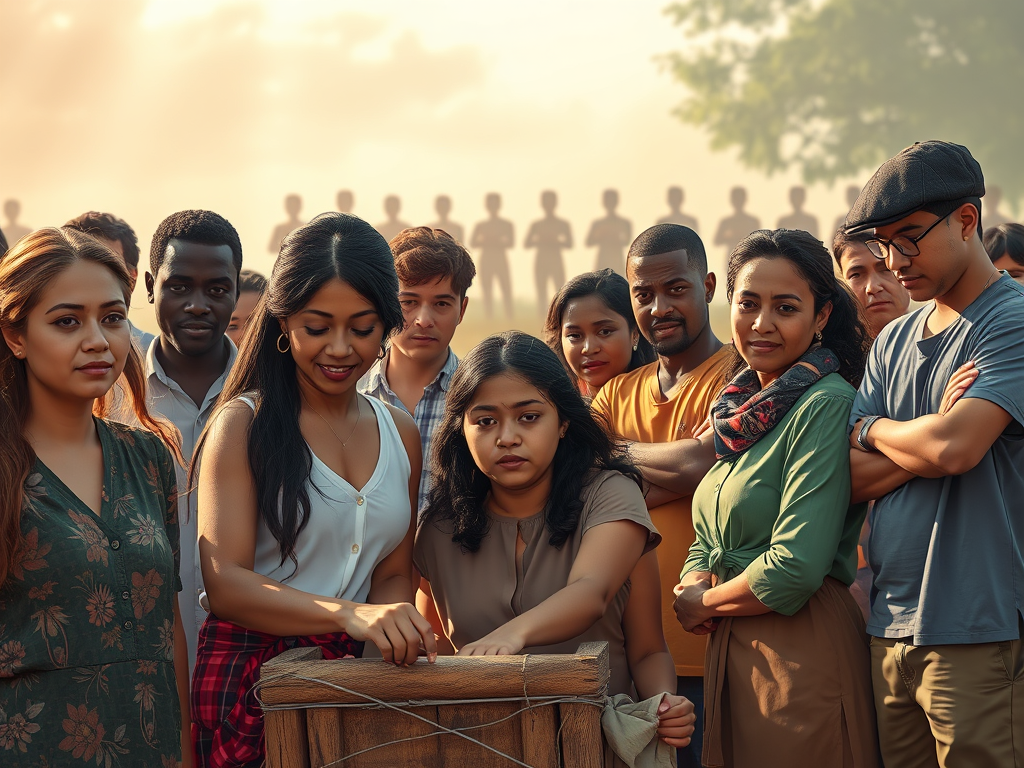
When Working Together Stops Working
Cooperation is often described as natural.
Communities rely on it. Organizations depend on it. Societies are built upon it. Concepts like trust, collaboration, and shared purpose are seen as foundational to stable systems.
And yet, cooperation frequently breaks down.
Groups fragment. Trust erodes. Individuals prioritize self-interest over collective outcomes—even when cooperation would produce better results for everyone involved.
This breakdown is often attributed to personal failure—selfishness, lack of integrity, or poor leadership.
But these explanations are incomplete.
Because even in systems where individuals value cooperation, breakdown still occurs.
This suggests a deeper dynamic:
Cooperation is not sustained by intention alone—it depends on the structure of incentives, trust, and perceived survival.
Understanding why cooperation breaks down requires examining how these forces interact under real conditions.
What’s Actually Happening
Cooperation exists within tension.
On one side is collective benefit—outcomes that improve when individuals work together.
On the other is individual risk—what each person stands to lose if others do not cooperate.
Game theory, influenced by John von Neumann and later expanded by Thomas Schelling, shows that even when cooperation produces the best collective outcome, individuals may choose not to cooperate if trust is uncertain.
This is because cooperation requires mutual expectation.
Each participant must believe that others will also act cooperatively.
When that expectation weakens, behavior shifts.
At the same time, insights from institutional economics—such as those from Elinor Ostrom—demonstrate that cooperation is sustained when systems provide clear rules, shared norms, and mechanisms for accountability.
Without these, cooperation becomes fragile.
This creates a structural reality:
- cooperation requires trust
- trust requires predictability
- predictability requires stable systems
When any of these weaken, cooperation becomes difficult to maintain.
The Pattern: How Cooperation Breaks Down
This dynamic follows a recognizable sequence:
1. Initial Alignment
Individuals begin with shared goals or mutual benefit.
There is an assumption—explicit or implicit—that cooperation will produce better outcomes.
2. Uncertainty Emerges
Doubts arise about whether others will continue to cooperate.
This may be triggered by ambiguity, past experiences, or lack of transparency.
3. Trust Erosion
Confidence in mutual cooperation begins to decline.
Even small signals—missed commitments, unclear intentions—can weaken trust.
4. Defensive Adjustment
Individuals begin to protect themselves.
Behavior shifts from cooperative to cautious:
- withholding effort
- prioritizing personal outcomes
- reducing exposure to risk
5. Reciprocal Breakdown
Others observe these defensive behaviors and adjust accordingly.
This creates a feedback loop where reduced cooperation leads to further reduction.
6. Competitive Shift
The system transitions from cooperative to competitive.
Individuals act to secure advantage rather than maximize collective outcomes.
7. Stabilized Fragmentation
Over time, the system normalizes low trust and limited cooperation.
Fragmentation becomes the default state.
This pattern reveals a key insight:
Cooperation does not collapse suddenly—it degrades through feedback loops driven by uncertainty and risk perception.
Why It Keeps Happening
If cooperation produces better outcomes, why does breakdown persist?
Because cooperation carries inherent vulnerability.
To cooperate is to accept the possibility of loss if others do not reciprocate.
In uncertain environments, this risk becomes more significant.
At the same time, incentives often reinforce competitive behavior:
- individual rewards may exceed shared rewards
- performance is measured at the individual level
- short-term gains are prioritized over long-term cooperation
This creates a reinforcing loop:
- uncertainty reduces trust
- reduced trust increases defensive behavior
- defensive behavior reduces cooperation
- reduced cooperation increases uncertainty
Over time, this loop becomes self-sustaining.
Importantly, individuals within this system may still value cooperation.
But structural conditions push behavior in the opposite direction.
This explains a common paradox:
People can prefer cooperation—and still act in ways that undermine it.
Real-World Examples (With Interpretation)
In governance, public trust plays a central role in sustaining cooperation between citizens and institutions. When trust in institutions declines—due to perceived inconsistency, lack of transparency, or unequal enforcement—citizens may reduce compliance or participation. This can weaken system effectiveness, further reducing trust in a reinforcing cycle.
In organizations, collaboration often breaks down when incentives are misaligned. If teams are evaluated individually rather than collectively, cooperation becomes secondary to performance metrics. Even when collaboration is encouraged, the structure may reward competition.
In economic systems, market competition can both enable and undermine cooperation. While competition drives efficiency, excessive competition can erode trust and discourage collective solutions to shared problems—such as resource management or long-term investment.
At the individual level, social relationships reflect similar dynamics. Trust builds through repeated positive interactions but can erode quickly when expectations are not met. Once trust declines, individuals may become more guarded, reducing openness and cooperation.
Across these contexts, the mechanism is consistent:
cooperation depends on trust, and trust depends on stable expectations within the system.
Second-Order Effects: What Happens After Breakdown
Once cooperation breaks down, the effects extend beyond immediate interactions.
Several second-order dynamics emerge:
- Increased monitoring and control
Systems compensate for low trust by introducing rules, oversight, and enforcement mechanisms. - Higher transaction costs
More effort is required to coordinate, verify, and enforce agreements. - Reduced innovation
Low-trust environments discourage risk-taking and information sharing. - Short-term orientation
Individuals prioritize immediate outcomes over long-term collaboration. - System rigidity
Increased controls reduce flexibility, making adaptation more difficult.
These effects reinforce fragmentation.
The system becomes more stable in its low-cooperation state, even if that state is less efficient overall.
What Changes the Outcome
Sustaining cooperation requires addressing both trust and incentives simultaneously.
Effective conditions include:
- predictable rules and enforcement
Consistency reduces uncertainty and supports trust formation - aligned incentives for cooperation
Reward structures must support collective outcomes, not just individual performance - repeated interaction frameworks
Ongoing relationships allow trust to build over time - transparent communication
Clear information reduces misinterpretation and suspicion - graduated accountability mechanisms
Systems that respond proportionally to violations maintain balance between trust and enforcement
These elements are interdependent.
For example, incentives alone cannot sustain cooperation without trust. Trust alone cannot survive without predictable rules. Effective systems integrate both.
At a systems level, cooperation is most stable when individuals do not have to continuously assess whether others will cooperate.
The goal is to reduce uncertainty to a level where cooperation becomes the rational default.
Closing: Cooperation as a System Condition
Cooperation is often framed as a moral choice.
But in practice, it is a structural outcome.
When systems provide trust, alignment, and stability, cooperation emerges naturally.
When these conditions weaken, cooperation becomes fragile—and often collapses.
Understanding this shifts the focus.
Instead of asking why individuals fail to cooperate, it becomes possible to ask:
What conditions make cooperation sustainable?
Because when those conditions are present, cooperation is not enforced—it becomes the most logical way to act.
Suggested Crosslinks
- Echoes of Empire: Unresolved Colonial Trauma and Its Role in Shaping Philippine Political Dynamics and Social Fragmentation — for how historical trauma continues to shape identity, behavior, and political structures.
- The Soul of a Nation: Unlocking the Philippines’ Manifest Destiny Through Systemic Transformation — for a systems-level perspective on national identity, purpose, and long-term transformation.
- Dynasties or Democracy: Envisioning the Philippines in 2035 Through Youth-Driven Reform — for future scenarios involving governance reform and generational change.
- The Philippines Awakens: Collective Healing for Humanity’s Future — for the role of collective consciousness and healing in shaping national and global trajectories.
- Reweaving Globalization: How Regenerative Communities and the Philippines’ New Earth Blueprint Are Redefining the Future — for how local systems intersect with global transformation trends.
References (Selected)
- von Neumann, J., & Morgenstern, O. (1944). Theory of Games and Economic Behavior
- Schelling, T. (1960). The Strategy of Conflict
- Ostrom, E. (1990). Governing the Commons
Explore More Philippine Analysis
- Culture and identity → Understanding the Filipino Psyche
- Precolonial systems → Living in the Barangay
- Governance and power → Political Dynasties in the Philippines
→ View the full Philippines Hub
Understanding these dynamics also requires clarity in how individuals respond under pressure—see Life Under Pressure.
Some articles in this section are part of the Stewardship Archive
These pieces explore deeper layers of Philippine transformation, including:
- long-term societal redesign
- advanced governance frameworks
- future-state modeling
They are written for readers who want to go beyond surface analysis into structural and forward-looking perspectives.
→ Continue reading (Members Access)
About This Work
This article is part of a broader exploration of Philippine society, culture, and systems—integrating historical context, behavioral patterns, and structural analysis.
It is intended to support understanding, reflection, and informed discussion.
For a wider macro perspective, Global Reset: Systems Change, Economic Transition, and Future Models.
Explore the Rest of the Site
This work sits within a larger system of essays on human development, systems thinking, and societal transformation.
→ Living Archive
→ Stewardship Architecture
→ Main Blog
Attribution
© 2025–2026 Gerald Alba Daquila
All rights reserved.
This work is offered for reflection and independent interpretation. It does not represent a formal doctrine, institution, or required belief system.
Codex Origin and Stewardship
This material originates within the field of the Living Codex and is stewarded under Oversoul Appointment.
It may be shared in its complete and unaltered form, with attribution preserved.
Lineage Marker: Universal Master Key (UMK) Codex Field
Support This Work
If you find this work valuable, you may support its continued development and availability.
Support helps sustain:
- ongoing writing and research
- digital hosting and access
- future publications
Ways to access and support:
• Free reading within the Living Archive
• Individual digital editions
• Stewardship-based access
Support link:
paypal.me/GeraldDaquila694
www.geralddaquila.com
Leave a Reply