Category: Mindfulness

  • What Is a Babaylan? Spiritual Leadership, Healing, and Cultural Resilience in Precolonial Philippines

    What Is a Babaylan? Spiritual Leadership, Healing, and Cultural Resilience in Precolonial Philippines


    Who were the babaylan? Explore their role as spiritual leaders, healers, and cultural stewards in precolonial Philippines—and why their legacy is being revived today.

    Gerald A. Daquila, PhD. Candidate


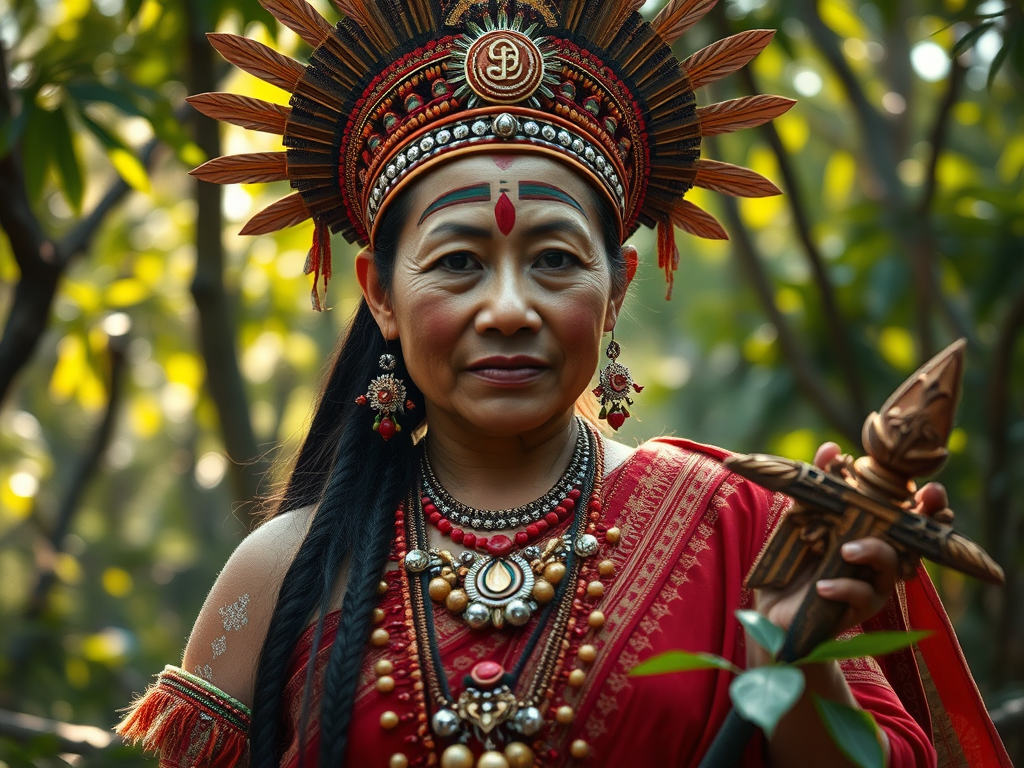
    The babaylan were the spiritual leaders of precolonial Philippine society—healers, ritualists, and mediators between the human and spirit worlds. Found across the archipelago under different names, they guided communities through healing, governance, and connection with nature and ancestors.

    Suppressed during Spanish colonization and often misrepresented in history, their role is now being rediscovered as part of a wider movement to reclaim Filipino identity, indigenous knowledge, and holistic ways of living.

    In simple terms: A babaylan was a community healer and spiritual guide who maintained balance between people, nature, and the unseen world.


    For a broader view of Philippine culture, society, and systems, see:
    → Understanding the Philippines: Culture, Society, and Systems (Hub)


    Scope and Approach

    This article integrates historical research, anthropological perspectives, and contemporary interpretations of spirituality. While it includes metaphysical and esoteric frameworks as lenses of interpretation, these are presented alongside documented scholarship to offer a holistic view of the babaylan and their role in Philippine society.


    How to Read This Page

    If you’re here, you may be exploring different questions:

    • Who the babaylan were historically
    • Whether their role was spiritual, social, or political
    • Why their knowledge was suppressed—and why it is returning
    • Whether similar forms of leadership exist in other cultures

    This article focuses on the babaylan in the Philippines, but it can be read at multiple levels:

    • 🟢 Historical and cultural lens → understanding their role in precolonial society
    • 🟡 Systems lens → how alternative forms of authority and governance functioned
    • 🔵 Applied lens → what this means for leadership, healing, and community today
    • 🟣 Deeper lens → questions of consciousness, identity, and human development

    You can engage with it based on your context and interest.

    12–18 minutes

    Abstract

    The babaylans, revered spiritual leaders of precolonial Philippine society, embodied a holistic synthesis of healer, priestess, warrior, and sage, bridging the material and spiritual realms. Rooted in animistic traditions, their contributions shaped community cohesion, cultural heritage, and environmental stewardship. Spanish colonization systematically suppressed their influence, demonizing their practices and erasing their knowledge to enforce Christian hegemony.

    This study explores the babaylans’ roles, the mechanisms of their erasure, and the recent resurgence of their legacy as a decolonial movement. Drawing on historical accounts, anthropological studies, metaphysical perspectives, and esoteric frameworks like the Akashic Records, this work examines how babaylanism informs modern Filipino identity and the global “ascension process”—a spiritual awakening toward interconnectedness and higher consciousness.

    Through a multidisciplinary lens, this narrative balances academic rigor with accessible language, weaving left-brain analysis, right-brain intuition, and heart-centered storytelling to illuminate the babaylans’ enduring wisdom.


    🌍 A Note for Global Readers

    While the babaylan are rooted in Philippine history, similar roles have existed across cultures:

    • shamans in Central and South America
    • medicine people in Indigenous North America
    • spiritual healers in Africa and Asia
    • mystics and contemplatives in Western traditions

    Across societies, these figures often served as:

    • healers
    • mediators
    • knowledge keepers
    • bridges between visible and invisible realities

    The babaylan can therefore be understood not only as a Filipino phenomenon, but as part of a broader pattern of indigenous knowledge systems and alternative forms of leadership.


    Table of Contents

    1. Introduction: Unveiling the Babaylan
    2. Who Were the Babaylans?
      • Roles and Responsibilities in Precolonial Society
      • Gender Fluidity and Spiritual Authority
    3. Contributions to Precolonial Philippine Society
      • Spiritual Leadership and Ritual Practices
      • Healing and Ethnomedicine
      • Cultural Preservation and Community Unity
    4. The Erasure of Babaylan Knowledge
      • Spanish Colonization and Christian Conversion
      • Mechanisms of Suppression
      • Long-Term Cultural Impacts
    5. The Resurgence of Babaylanism
      • Decolonial Movements and Cultural Reclamation
      • Modern Babaylan-Inspired Practices
      • Global Context: The Ascension Process
    6. Metaphysical and Esoteric Perspectives
      • The Akashic Records and Ancestral Wisdom
      • Energetic and Spiritual Dimensions of Babaylanism
    7. A Holistic Synthesis: Balancing Mind, Heart, and Spirit
    8. Conclusion: The Babaylan’s Call to the Future
    9. Crosslinks
    10. Glossary
    11. References

    Glyph of the Gridkeeper

    The One Who Holds the Lattice of Light.


    1. Introduction: Unveiling the Babaylan

    Imagine a world where the spiritual and material dance in harmony, where a healer’s chant mends not just the body but the soul, where a priestess advises warriors and weaves myths that bind a community.

    This was the world of the babaylans, the spiritual leaders of precolonial Philippines. Their story is one of profound wisdom, violent erasure, and a quiet, resilient revival. Today, as humanity grapples with disconnection and seeks higher consciousness, the babaylans’ legacy offers a roadmap for healing and unity.

    This study dives deep into who the babaylans were, what they contributed to their society, why their knowledge was hidden, and why their wisdom is resurfacing now. Using a multidisciplinary lens—blending history, anthropology, metaphysics, and esoteric traditions like the Akashic Records—we explore their holistic impact.

    Written in an accessible yet scholarly style, this narrative aims to engage your mind, spark your intuition, and touch your heart, balancing logic, creativity, and empathy.


    2. Who Were the Babaylans?

    Roles and Responsibilities in Precolonial Society

    The babaylans were the heartbeat of precolonial Philippine communities, known as barangays. Primarily women or effeminate men (asog or bayog), they were shamans, healers, priestesses, and mediators between the physical and spiritual worlds (Salazar, 1992).

    The term “babaylan,” likely derived from Visayan roots, means one who connects with spirits (anito or diwata) to guide their people (Strobel, 2010). Across the archipelago, they were called katalonan (Tagalog), balian (Visayas), or mombaki (Cordillera), reflecting linguistic diversity but shared roles (Conaco, 2019).


    Babaylans wore many hats:

    • Spiritual Leaders: They conducted rituals for births, marriages, harvests, and wars, ensuring harmony with nature and ancestors (Brewer, 2004).
    • Healers: Using ethnomedicine, massage (hilot), and spiritual interventions, they treated physical and spiritual ailments (Demetrio, 1988).
    • Advisors: They counseled datus (chiefs) on governance, war, and justice, wielding influence equal to or greater than political leaders (McCoy, 1982).
    • Cultural Stewards: As orators, they preserved myths, songs, and histories, passing down collective wisdom (Conaco, 2019).

    Gender Fluidity and Spiritual Authority

    The babaylans’ gender fluidity was a hallmark of their power. Precolonial Philippine society embraced a non-binary understanding of gender, where spiritual potency was tied to femininity, whether embodied by women or effeminate men (Brewer, 1999).

    The asog, transgender male babaylans, were revered as divinely chosen, their liminal identity enhancing their ability to traverse spiritual realms (Conaco, 2020). This fluidity contrasted sharply with the patriarchal norms imposed by Spanish colonizers, highlighting a precolonial egalitarianism that empowered women and queer individuals (Strobel, 2001).


    3. Contributions to Precolonial Philippine Society

    Spiritual Leadership and Ritual Practices

    Babaylans were the glue of their communities, fostering kapwa—a Filipino concept of shared identity and interconnectedness (Enriquez, 1992).

    Through rituals like pag-anito (spirit offerings), they communed with diwata and ancestors, ensuring cosmic balance. For example, during harvest festivals, babaylans led chants and dances to thank nature spirits, reinforcing environmental reverence (Bonifacio et al., 2025). Their dream interpretation and omen reading guided critical decisions, from war strategies to marriage alliances (Veneracion, 1987).


    Healing and Ethnomedicine

    Babaylans were master healers, blending herbal knowledge with spiritual rituals. They used plants, massage, and trance states to treat ailments believed to stem from spiritual imbalances, such as a lost kalag (astral soul) (Conaco, 2020).

    Their holistic approach addressed body, mind, and spirit, a precursor to modern integrative medicine. For instance, the hilot technique, still practiced today, combines physical manipulation with energy work (Nente, 2016).


    Cultural Preservation and Community Unity

    As storytellers, babaylans safeguarded oral traditions, weaving myths like the Bakunawa (moon-eating serpent) into community identity (Bonifacio et al., 2025).

    Their rituals and counsel resolved conflicts, promoting unity. By championing sustainable practices, such as eco-friendly farming, they ensured harmony with the land, a wisdom now echoed in environmental movements (Strobel, 2013).


    4. The Erasure of Babaylan Knowledge

    Spanish Colonization and Christian Conversion

    When the Spanish arrived in 1521, they targeted babaylans as threats to Christian conversion. Their animistic practices were branded as witchcraft, and babaylans were demonized as brujas (witches) or hechiceras (sorceresses) (Blair & Robertson, 1903-1909).

    Spanish missionaries exploited Filipino hospitality, equating diwata with Christian saints to facilitate syncretism, but ultimately sought to erase indigenous beliefs (Brewer, 2004). Some babaylans were executed, their bodies reportedly fed to crocodiles to prevent spiritual return (Conaco, 2019).


    Mechanisms of Suppression

    The erasure was systematic:

    • Destruction of Shrines: Dambana (sacred spaces) were burned, and idols were destroyed (Strobel, 2001).
    • Confesionarios: Spanish manuals instructed priests to interrogate Filipinos about babaylan practices, punishing adherents (Labrador, 2009).
    • Patriarchal Imposition: The babaylans’ gender fluidity and female authority clashed with Catholic patriarchy, marginalizing women and asog (Brewer, 1999).
    • Education and Assimilation: Spanish schools taught Christian doctrine, sidelining indigenous knowledge (Rafael, 2015).

    Long-Term Cultural Impacts

    The suppression fractured Filipino identity, fostering colonial mentality—an internalized belief in the inferiority of indigenous culture (Nadal, 2021).

    Babaylan practices survived in syncretic forms, like espiritista movements or folk healing (arbularyo), but their esoteric depth was diluted (Salazar, 1979). This loss disconnected Filipinos from their ancestral wisdom, contributing to cultural fragmentation.


    Glyph of the Babaylan Legacy

    Ancestral wisdom rises anew, guiding resilience into resurgence


    🧠 What This Reveals About Knowledge, Power, and Erasure

    Beyond the Philippines, the story of the babaylan reflects broader patterns seen across history:

    • Indigenous knowledge systems are often suppressed when new power structures emerge
    • Spiritual and relational forms of authority are replaced by institutional and hierarchical ones
    • Cultural memory is fragmented through colonization, education, and religious conversion
    • What is later labeled “alternative” was once central to how societies functioned

    These patterns are not unique to the Philippines.

    They appear in many parts of the world where indigenous systems were replaced or marginalized.

    Understanding this helps explain not only the past—but why similar forms of knowledge are resurfacing today.


    5. The Resurgence of Babaylanism

    Decolonial Movements and Cultural Reclamation

    Since the late 20th century, babaylanism has experienced a revival, fueled by decolonial movements and Filipino diaspora communities. The Center for Babaylan Studies (CfBS), founded by Leny Strobel, promotes indigenous wisdom through conferences, publications, and rituals (Strobel, 2010).

    Practices like batok (tattooing), baybayin (script), and hilot are being reclaimed, often via social media (Strobel, 2022). In the Philippines, babaylans lead advocacy for land rights and environmental justice, echoing their precolonial roles (Bonifacio et al., 2025).


    Modern Babaylan-Inspired Practices

    Contemporary babaylans blend tradition with innovation. For example, Grace Nono, a singer and scholar, channels babaylan chants to heal cultural wounds (Nono, 2013).

    Urban practitioners offer workshops on ancestral connection, while indigenous communities like the Lumad appoint babaylans to navigate crises (Valmores, 2019). This resurgence counters colonial trauma, fostering kapwa and cultural pride.


    Global Context: The Ascension Process

    The babaylans’ revival aligns with what some contemporary spiritual frameworks describe as a broader shift in consciousness. Babaylanism’s emphasis on interconnectedness mirrors this shift, offering tools for personal and collective healing. Their holistic worldview resonates with New Age movements, indigenous spirituality, and eco-feminism, positioning them as guides in a fragmented world (Strobel, 2013).


    6. Metaphysical and Esoteric Perspectives

    The Akashic Records and Ancestral Wisdom

    The Akashic Records—understood in some traditions as a symbolic framework for collective memory and experience, provide a lens to understand babaylan wisdom (Howe, 2014).

    Babaylans’ ability to access spiritual realms suggests an experiential engagement with what esoteric traditions describe as the Akashic Records—a symbolic framework for ancestral and collective memory rather than a literal archive.

    Modern practitioners report similar experiences during trance or meditation, connecting with Filipino ancestors to reclaim lost knowledge (Strobel, 2022).


    Energetic and Spiritual Dimensions of Babaylanism

    From an energetic perspective, babaylans worked with prana (life force) to balance the body’s energy centers, akin to chakra systems in Eastern traditions (Brennan, 1988). Their rituals, such as pag-anito, aligned community energy with cosmic rhythms, fostering harmony.

    Esoterically, their gender fluidity embodied the alchemical union of masculine and feminine, a symbol of wholeness (Jung, 1963). These principles align with the ascension process, emphasizing energetic alignment and spiritual integration.


    7. A Holistic Synthesis: Balancing Mind, Heart, and Spirit

    The babaylans’ legacy is a tapestry of logic, intuition, and compassion. Their analytical skills in ethnomedicine and governance (left brain) complemented their visionary rituals and storytelling (right brain), all grounded in kapwa (heart).

    This balance offers a model for modern society, where disconnection often stems from overemphasizing one faculty. By integrating metaphysical insights with historical analysis, this dissertation mirrors their holistic approach, inviting readers to engage intellectually, spiritually, and emotionally.


    8. Conclusion: The Babaylan’s Call to the Future

    Within certain contemporary spiritual frameworks, the babaylans’ revival is interpreted as aligning with what is termed the ‘ascension process’.

    The babaylans were more than spiritual leaders; they were architects of a world where humanity, nature, and spirit coexisted. Their erasure was a colonial attempt to sever Filipinos from their roots, but their resurgence signals a reclaiming of identity and wisdom.

    As the world navigates crises—ecological, social, and spiritual—the babaylans’ holistic worldview offers hope. Their revival is not just a Filipino story but a global one, guiding us toward ascension through kapwa, healing, and reconnection with the sacred.


    Where to Go Next

    If this exploration raised further questions, here are structured paths:


    🟢 Culture, Identity, and Indigenous Foundations

    If you’re exploring cultural roots and identity:


    🟡 Systems, Power, and Historical Transformation

    If you’re interested in how systems replaced or suppressed earlier structures:


    🔵 Application: Leadership, Healing, and Practice

    If you’re applying these ideas in real-world contexts:


    🟣 Deeper Exploration and Inner Work

    If you’re exploring consciousness, spirituality, or personal transformation:


    Glossary

    • Anito: Spirits or deities in Filipino animism.
    • Asog/Bayog: Transgender male babaylans in precolonial Philippines.
    • Babaylan: Spiritual leader, healer, and mediator in precolonial Philippines.
    • Barangay: Precolonial Filipino community unit.
    • Dambana: Sacred shrine or altar.
    • Datu: Chief or political leader of a barangay.
    • Diwata: Nature spirits or deities.
    • Hilot: Traditional Filipino massage and energy healing.
    • Kapwa: Filipino concept of shared identity and interconnectedness.
    • Kalag: Astral soul in Filipino belief, residing in the head.
    • Pag-anito: Ritual offerings to spirits.

    References

    Note: Digital and public-facing sources are included to reflect contemporary discourse and practice.

    Blair, E. H., & Robertson, J. A. (Eds.). (1903-1909). The Philippine Islands, 1493-1898. Cleveland: Arthur H. Clark Company.

    Bonifacio, S. L., Casia, J. D., Ferrer, J. L. E., Orido, L. A. T., Singian, M. M. T., & Temeña, S. J. C. (2025). Babaylans as catalysts for resistance: The role of indigenous spiritual beliefs in Philippine peasant ideology against Spanish and American colonizers. ResearchGate.

    Brennan, B. A. (1988). Hands of light: A guide to healing through the human energy field. Bantam Books.

    Brewer, C. (1999). Baylan, asog, transvestism, and sodomy: Gender, sexuality, and the sacred in early colonial Philippines. Intersections: Gender, History and Culture in the Asian Context, 2.

    Brewer, C. (2004). Shamanism, Catholicism, and gender relations in colonial Philippines, 1521-1685. Ashgate.

    Conaco, M. (2019). Ang babaylan nga nahimong bayot. Smithsonian Asian Pacific American Center.

    Conaco, M. (2020). What is babaylan? Center for Babaylan Studies.

    Demetrio, F. R. (1988). Shamans, witches, and Philippine society. Philippine Studies, 36(3), 372-380.

    Enriquez, V. G. (1992). From colonial to liberation psychology: The Philippine experience. University of the Philippines Press.

    Howe, L. (2014). How to read the Akashic Records: Accessing the archive of the soul and its journey. Sounds True.

    Jung, C. G. (1963). Mysterium coniunctionis: An inquiry into the separation and synthesis of psychic opposites in alchemy. Princeton University Press.

    Labrador, A. M. T. (2009). Seclusion and veiling of women: A historical and cultural approach. Philippine Social Sciences Review, 1.

    McCoy, A. W. (1982). Baylan: Animist religion and Philippine peasant ideology. Philippine Studies, 30(3), 337-369.

    Nadal, K. L. (2021). Filipino American psychology: A handbook of theory, research, and clinical practice. Wiley.

    Nente, F. (2016). Tradisyunal nga pamulong: A rationale on the persistence of faith healing practices in Miagao, Iloilo. ResearchGate.

    Nono, G. (2013). Song of babaylan: Living voices, medicines, spiritualities of Philippine ritualist-oralist-healers. Institute of Spirituality in Asia.

    Rafael, V. L. (2015). Contracting colonialism: Translation and Christian conversion in Tagalog society under early Spanish rule. Duke University Press.

    Salazar, Z. A. (1979). Faith healing in the Philippines: An historical perspective. Asian Studies, 17, 32-45.

    Salazar, Z. A. (1992). The babaylan in Philippine history. Philippine Studies, 40(4), 491-510.

    Strobel, L. M. (2001). Coming full circle: The process of decolonization among post-1965 Filipino Americans. Giraffe Books.

    Strobel, L. M. (2010). Babaylan: Filipinos and the call of the indigenous. Center for Babaylan Studies.

    Strobel, L. M. (2013). Back from the crocodile’s belly: Philippine babaylan studies and the struggle for indigenous memory. Center for Babaylan Studies.

    Strobel, L. M. (2022). Decolonizing the diaspora through the Center for Babaylan Studies. Medium.

    Tolle, E. (2005). A new earth: Awakening to your life’s purpose. Penguin Books.

    Valmores, R. (2019). Pre-colonial Philippines had trans women fully embraced as women. X Post.

    Veneracion, J. (1987). Katalonan: From commoner to shaman. Philippine Studies, 35(4), 456-472.


    Explore More Philippine Analysis


    → View the full Philippines Hub


    Understanding these dynamics also requires clarity in how individuals respond under pressure—see Life Under Pressure.


    Some articles in this section are part of the Stewardship Archive

    These pieces explore deeper layers of Philippine transformation, including:

    • long-term societal redesign
    • advanced governance frameworks
    • future-state modeling

    They are written for readers who want to go beyond surface analysis into structural and forward-looking perspectives.


    → Continue reading (Members Access)


    Explore the Rest of the Site

    This work sits within a larger system of essays on human development, systems thinking, and societal transformation.

    → Living Archive
    → Stewardship Architecture
    → Main Blog


    About the Author

    Gerald Alba Daquila writes at the intersection of human development, sovereignty, leadership ethics, and civilizational sensemaking. The Living Archive gathers more than 800 essays, codices, and frameworks developed through years of reflection and inquiry.


    Download This Complimentary Keystone Reference

  • Sovereignty Without Paranoia: Reclaiming Agency Without Losing Balance

    Sovereignty Without Paranoia: Reclaiming Agency Without Losing Balance


    In times of institutional distrust, the word “sovereignty” becomes popular.

    1–2 minutes

    But sovereignty misunderstood can turn into isolation, suspicion, or reaction.

    True sovereignty is not rebellion.

    It is responsibility.


    1. Sovereignty Is Not Withdrawal From Society

    It does not mean rejecting every institution.
    It does not mean assuming hidden motives everywhere.
    It does not mean disengaging from civic life.

    It means understanding systems clearly — and participating consciously.

    There is a difference.


    2. Agency Requires Emotional Stability

    Without emotional regulation, sovereignty collapses into reactivity.

    When we are angry or afraid, we outsource our thinking to narratives that confirm our feelings.

    Paranoia feels powerful because it simplifies complexity.

    But it narrows perception.

    Sovereignty widens perception.

    It tolerates nuance.
    It allows for uncertainty.
    It resists absolutism.


    3. Power Structures Exist — But So Do Constraints

    Yes, institutions have incentives.

    Yes, power concentrates.

    But power also competes internally.

    Systems are rarely unified monoliths.
    They are networks of competing interests.

    Understanding this complexity prevents both naivety and paranoia.


    4. Sovereignty Begins Locally

    Before changing systems, examine:

    • Your spending patterns
    • Your information diet
    • Your emotional triggers
    • Your skill sets
    • Your resilience habits

    The person who cannot regulate their own reactions cannot build sustainable sovereignty.

    Real sovereignty is quiet competence.

    It does not require dramatic declarations.


    A Quiet Note to the Reader

    If the world feels loud, move slowly.

    Systems evolve. Narratives surge and fade. Institutions adapt and fracture.
    Clarity is not found in urgency — it is built through steady attention.

    This space is dedicated to thoughtful inquiry:

    • Systems literacy without hysteria
    • Sovereignty without isolation
    • Spiritual reflection without escapism

    If you are here seeking coherence rather than noise, you are welcome.


    Further Reading


    About the author

    Gerry explores themes of change, emotional awareness, and inner coherence through reflective writing. His work is shaped by lived experience during times of transition and is offered as an invitation to pause, notice, and reflect.

    If you’re curious about the broader personal and spiritual context behind these reflections, you can read a longer note here.

  • The Sovereign Witness: How to Stay Powerful When Everything Goes Wrong

    The Sovereign Witness: How to Stay Powerful When Everything Goes Wrong

    4–6 minutes

    Meta Description:

    It is easy to be “sovereign” when things are calm, but can you stay powerful when the floor drops out?

    Master the art of the “Sovereign Witness” to maintain internal clarity, power, and responsibility during times of deep systemic harm or crisis.


    What This Is

    This article explores how to remain grounded and responsible when encountering suffering—whether within oneself or in others—without disengaging or becoming overwhelmed.


    Who This Is For

    This is for individuals navigating complex emotional or ethical situations where clarity, responsibility, and presence are required.


    As we grow into personal sovereignty, we learn an important truth:

    We are not here to control other people’s lives.

    But sooner or later, a harder question appears:

    What do we do when we witness harm?


    Abuse. Manipulation. Emotional coercion. A person who feels trapped and powerless. Someone expressing suicidal intent. A child we suspect is being harmed.

    Suddenly, sovereignty is no longer philosophical.
    It becomes deeply ethical.

    How do we honor the sovereignty of everyone involved — the person being harmed, the person causing harm, and ourselves as the witness?


    1. When Sovereignty Is Misunderstood

    A common early misunderstanding is:

    “If everyone is sovereign, I shouldn’t interfere.”

    But sovereignty does not mean passive observation while harm unfolds. Sovereignty means each being has inherent agency and dignity — and when that agency is compromised, protection can be an act of respect, not violation.

    Stepping in to interrupt abuse is not domination.
    It is a stand for the restoration of someone’s ability to choose freely.


    2. When Agency Is Buried — Learned Helplessness

    Sometimes the person being harmed appears to “choose” to stay. This can be deeply confusing to witnesses.

    Psychology calls one part of this learned helplessness — a state where a person’s nervous system and beliefs have adapted to powerlessness. They may:

    • Struggle to see options
    • Feel intense fear at the thought of leaving
    • Believe they deserve the treatment
    • Feel incapable of surviving on their own

    From the outside, it may look like consent. Inside, it may feel like survival.

    In such cases, offering support, resources, or protection is not overriding sovereignty. It can be a bridge back to it.


    3. The Difference Between Control and Protection

    This distinction is essential.

    Control says:
    “I know what’s best for you, and I will impose it.”

    Protection says:
    “I cannot live your life for you, but I will not ignore harm when safety or dignity is at risk.”

    Reporting abuse, calling for help in a crisis, or intervening when someone is in immediate danger is not spiritual interference. It is ethical participation in a shared world.

    Sovereignty exists alongside responsibility — not instead of it.


    4. The Witness’s Dilemma

    Witnesses often carry heavy guilt:
    “I should have done more.”
    “It wasn’t my place.”
    “I was afraid of making it worse.”


    Sovereignty helps bring clarity here.

    You are not responsible for living someone else’s life.
    You are responsible for how you respond to what you see.

    You cannot guarantee outcomes.
    You can choose integrity in action.


    That may mean:

    • Speaking up
    • Checking in
    • Offering resources
    • Seeking professional or legal support
    • Or, in some cases, recognizing the limits of what you can change

    Being a conscious witness means acting where you can, and releasing what you cannot carry.


    5. Situations Where Action Is Necessary

    There are circumstances where silence is not neutrality — it is risk.

    When there is:

    • Imminent suicide risk
    • Child abuse or sexual abuse
    • Domestic violence
    • Serious threats of harm

    Sovereignty does not mean looking away.

    It means reaching out for help through appropriate channels: crisis lines, emergency services, trusted adults, mandated reporters, or professionals trained to handle these situations.

    You are not overriding destiny.
    You are honoring life.


    6. Mature Sovereignty in Hard Moments

    Mature sovereignty sounds like this:

    ✔ I will not control other people’s lives
    ✔ I will not ignore harm
    ✔ I will act when safety or agency is at risk
    ✔ I will seek appropriate help instead of trying to be the savior
    ✔ I accept that I cannot carry the outcome alone

    This is not detachment.
    This is ethical presence.

    Sovereignty does not make you passive.
    It makes you conscious about how and why you act.


    7. Releasing False Guilt

    Even when we act with care, outcomes are not always what we hope.

    Sovereignty includes allowing others their path — even when we wish it were different. Acting responsibly does not mean guaranteeing rescue, healing, or change.

    You are not here to control the story.
    You are here to participate with integrity.

    Sometimes the most sovereign thing you can do is act with courage — and then let go of the result.


    Sovereignty is not a shield against responsibility.
    It is the ground from which responsible action becomes clear.

    Awakening deepens not only how we live our own lives — but how we stand in the lives of others when things become difficult.


    You might also resonate with these related pieces:

    The Return of Inner Authority — Reclaiming Personal Sovereignty – Explores how sovereignty first returns within you before it can guide your actions toward others.

    Living Among Sovereign Beings — Love, Authority, and the End of Control – Looks at how recognizing others’ sovereignty reshapes relationships, care, and leadership.

    The Stress of Becoming More Honest With Yourself – Supports the emotional challenges that arise when you begin acting from deeper integrity in complex situations.


    Part of a larger pathway:

    → This article is part of the When Meaning Breaks: Navigating Despair, Loss, and Renewal collection.


    About the author

    Gerry explores themes of change, emotional awareness, and inner coherence through reflective writing. His work is shaped by lived experience during times of transition and is offered as an invitation to pause, notice, and reflect.

    If you’re curious about the broader personal and spiritual context behind these reflections, you can read a longer note here.

  • Emotional Intelligence Was Survival First

    Emotional Intelligence Was Survival First


    How empathy evolves from people-pleasing and emotional management into self-awareness, authenticity, and conscious connection

    4–6 minutes


    Prologue Transmission

    Many of us learned to read emotions before we learned to read ourselves.

    We could sense tension in a room, predict someone’s reaction, soften our tone, adjust our words, and smooth conflict before it surfaced. We called this maturity. We called it empathy. We called it emotional intelligence.

    And in many ways, it was.

    But for a long time, it was also survival.

    There comes a point in inner growth when emotional intelligence turns inward. What once helped us stay safe in the world begins guiding us back to ourselves. The same sensitivity that once scanned for danger starts listening for truth. The same awareness that once managed others begins to anchor the self.

    This is the evolution from emotional intelligence as adaptation… to emotional intelligence as awakening.


    I · Emotional Intelligence in the Unconscious State

    In an unconscious or fear-driven state, emotional intelligence is often used to maintain safety, belonging, and control.

    This doesn’t make someone manipulative in a malicious sense. It makes them highly adapted.

    Unconscious EQ often looks like:

    • Reading emotions to avoid conflict
    • Soothing others to prevent rejection
    • Adjusting personality depending on who is present
    • Saying what will be received well instead of what is true
    • Hiding personal feelings to keep the emotional field stable
    • Taking responsibility for other people’s emotional states

    This is emotional intelligence used for survival and attachment.

    At this stage, the nervous system is asking:
    “What do I need to be so I don’t lose connection?”

    The result is often subtle self-abandonment that looks like kindness, maturity, or being “good with people.”

    But beneath it is a quiet cost:

    “I know how everyone feels… but I don’t know what I feel.”


    II · When EQ Becomes a Social Weapon (Without Us Knowing)

    When emotional intelligence is disconnected from self-awareness, it can become a tool for control — even in gentle, socially acceptable ways.

    Not through cruelty, but through fear.

    Examples of unconscious weaponization:

    • Empathy used to steer conversations toward preferred outcomes
    • Emotional attunement used to influence decisions
    • Regulation used to suppress truth so others stay comfortable
    • Sensitivity used to anticipate reactions and pre-edit authenticity
    • Care used as leverage for approval, love, or security

    This often develops in childhood or early relationships where emotional safety depended on reading others well.

    It worked. It helped us belong.

    But over time, it creates a pattern where connection is maintained through management, not authenticity.


    III · The Turning Point — When Awareness Enters

    Growth begins when emotional intelligence turns inward.

    Instead of asking:
    “How is everyone else feeling?”

    We begin asking:
    “What am I actually feeling right now?”

    This shift can feel disorienting. Old roles start to dissolve:

    • The peacemaker feels tired
    • The empath feels overwhelmed
    • The “emotionally mature one” feels unseen
    • The strong one feels the weight of unexpressed truth

    We start noticing that we’ve been regulating everyone else — but not listening to ourselves.

    This is not regression.
    This is emotional intelligence evolving into self-awareness.

    EQ is no longer just about reading the room.
    It becomes about recognizing the self inside the room.


    IV · Emotional Intelligence in a Conscious State

    As awareness deepens, emotional intelligence shifts from control to coherence.

    In a more conscious state, EQ looks like:

    • Feeling others’ emotions without taking responsibility for them
    • Expressing truth without emotional aggression
    • Allowing discomfort without rushing to fix it
    • Regulating yourself without suppressing yourself
    • Listening without shaping the outcome
    • Caring without controlling connection

    The inner question changes from:
    “How do I keep everyone okay?”
    to
    “How do I stay true while staying open?”

    This is where emotional intelligence becomes a doorway to unity consciousness — not as a concept, but as lived experience.

    You realize:

    Connection does not require control.
    Presence is more powerful than performance.


    V · Why Manipulation Stops Working in Conscious Relationships

    In unconscious systems, emotional intelligence can create power over others.
    In conscious systems, emotional intelligence returns power to the self.

    As more people become self-aware:

    • Guilt loses its grip
    • Emotional pressure becomes visible
    • Over-functioning is no longer seen as love
    • People stop responding to subtle emotional steering

    Not because they become cold — but because they become sovereign.

    In a conscious field, authenticity replaces strategy.
    Truth replaces performance.
    Presence replaces management.

    And relationships become less about emotional choreography… and more about mutual coherence.


    VI · The Integration — From Emotional Performance to Emotional Presence

    Many adults are quietly in this transition right now.

    They are:

    • Learning to feel without fixing
    • Learning to speak without over-explaining
    • Learning to care without self-erasing
    • Learning to let others have their emotions without absorbing them

    This can feel like becoming “less nice,” when in reality it is becoming more real.

    Emotional intelligence is no longer a mask.
    It becomes a mirror.

    And through that mirror, we begin to see that the sensitivity we once used to survive… is the very sensitivity that can guide us home.


    Closing Reflection

    Emotional intelligence was never the final destination.
    It was the training ground.

    First, it helped us navigate the world.
    Then, it helps us return to ourselves.

    When we stop using emotion to control connection,
    we begin using presence to create it.

    And that is where emotional intelligence becomes not just a skill —
    but a doorway to awakening.


    Light Crosslinks

    You may also resonate with:

    “Four Horsemen of Relationships — Early Warning & Repair”

    “The Call to Return”

    “The Returning Flame”


    About the author

    Gerry explores themes of change, emotional awareness, and inner coherence through reflective writing. His work is shaped by lived experience during times of transition and is offered as an invitation to pause, notice, and reflect.

    If you’re curious about the broader personal and spiritual context behind these reflections, you can read a longer note here.

  • Witnessing Without Carrying

    Witnessing Without Carrying


    How to Support Others Without Taking Over Their Path

    4–6 minutes

    As we awaken, something softens in us.

    Our empathy deepens. We feel others’ pain more vividly. We sense their struggles not just intellectually, but in our bodies and hearts. Compassion becomes less of an idea and more of a lived experience.

    And with that comes a new challenge:

    How do we help without taking over?
    How do we love without carrying what is not ours to carry?

    This is one of the most subtle and important shifts on the path of embodied awakening.


    🌿 From Rescuing to Witnessing

    Many of us were taught that love means fixing.

    If someone we care about is struggling, we move in quickly:
    to advise, to solve, to soothe, to prevent discomfort. Helping becomes synonymous with intervening.

    Before awakening, this often goes unnoticed. It feels like kindness.

    After awakening, we begin to see the cost.

    When we constantly step in, we may:

    • take on emotional burdens that are not ours
    • prevent others from developing their own strength
    • create subtle dependency
    • exhaust ourselves while believing we are being generous

    The shift is not from caring → not caring.

    It is from rescuing → witnessing.


    🕊 What Witnessing Really Means

    Witnessing is not indifference.
    It is not withdrawal.
    It is not emotional distance.

    Witnessing is a form of presence that says:

    “I am here with you.
    I trust your capacity to move through this.
    I will not abandon you — but I will not walk your path for you.”

    It is staying connected without absorbing.
    Supporting without directing.
    Loving without controlling the outcome.

    This kind of support is quieter, but often more empowering than intervention.


    ⚖️ The Fine Line, Especially With Loved Ones

    This becomes most challenging with people close to us:
    a partner, a child, a dear friend.

    Their pain touches us directly. We may feel urgency:
    “If I don’t help, they will suffer longer.”
    “If I can ease this, why wouldn’t I?”

    Sometimes intervention is truly needed. There are moments when protection or action is appropriate.

    But often, what we are witnessing is not a crisis — it is curriculum.

    A difficult relationship dynamic may be teaching someone boundaries.
    A setback may be building resilience.
    A period of confusion may be prompting deeper self-reflection.

    When we rush to remove the discomfort, we may unintentionally interrupt their learning process.


    🧠 Why This Is So Emotionally Hard

    Old patterns equate love with responsibility for another’s well-being.

    We might believe:
    “If they struggle, I have failed them.”
    “If I step back, I’m being selfish.”
    “If I don’t fix this, I’m not truly supportive.”

    Awakening invites a different understanding.

    Each soul is here with its own lessons, timing, and path of growth. You can support someone’s journey, but you cannot live it for them.

    Taking over their responsibility may feel like love in the moment, but it can weaken their trust in their own capacity over time.

    Witnessing, by contrast, communicates:
    “I believe in your strength, even when you doubt it.”


    🌱 Holding Space Without Losing Yourself

    Witnessing requires inner steadiness.

    It asks you to:

    • feel your compassion without being swept away by it
    • tolerate the discomfort of seeing someone struggle
    • trust that growth often comes through challenge
    • stay connected to your own limits and boundaries

    You are not asked to close your heart.
    You are asked to keep your heart open and stay rooted in yourself.

    This balance protects both people:
    you do not deplete yourself, and the other does not lose their agency.


    🤝 The Role of Sovereignty

    At the core of this shift is sovereignty.

    Sovereignty means:
    I am responsible for my field, my choices, my growth.
    You are responsible for yours.

    We can walk beside each other, share love, offer support, and remain deeply connected — without merging our paths or taking over one another’s lessons.

    When sovereignty leads, support becomes cleaner and more respectful. It carries less hidden control, less resentment, less exhaustion.

    It becomes:
    “I stand with you, not in place of you.”


    🌅 A New Kind of Love

    Witnessing without carrying is a sign of maturing compassion.

    It does not dramatize itself. It does not rush to prove its care. It trusts the deeper intelligence at work in each soul’s journey.

    This kind of love says:
    I will listen.
    I will care.
    I will be present.
    And I will trust your life to teach you what you are here to learn.

    In doing so, you honor not only their sovereignty, but your own.

    And from that mutual respect, a steadier, more sustainable form of connection becomes possible — one where both people grow stronger, not smaller, in the presence of the other.


    🌿 Gentle Crosslinks for Continued Reflection

    You may also resonate with:

    Awakening deepens compassion.
    Maturity teaches us how to express that compassion without losing ourselves — or each other.


    About the author

    Gerry explores themes of change, emotional awareness, and inner coherence through reflective writing. His work is shaped by lived experience during times of transition and is offered as an invitation to pause, notice, and reflect.

    If you’re curious about the broader personal and spiritual context behind these reflections, you can read a longer note here.

  • When We Compare Our Awakening to Others

    When We Compare Our Awakening to Others


    Remembering That Your Path Is Designed, Not Delayed

    4–6 minutes

    Awakening opens the heart, expands perception, and softens old identities. We begin to see life through a wider lens, to feel a deeper connection to something beyond the surface of things.

    And yet, even here, an old habit often follows us into this new terrain:

    We compare.

    Not about careers or appearances the way we once might have, but about awareness, embodiment, clarity, or perceived spiritual progress.

    Someone seems more grounded.
    Someone else seems more intuitive.
    Another appears to be living their purpose already.

    And quietly, a thought arises:
    “Maybe I’m behind.”

    This is not a sign that you are failing at awakening.
    It is a sign that the ego is learning how to exist in a spiritual landscape.


    🧥 When Comparison Puts on Spiritual Clothing

    Before awakening, comparison often revolved around visible measures: success, status, approval.

    After awakening, the comparison becomes subtler:

    • Who seems more peaceful
    • Who appears more “aligned”
    • Who has clearer gifts or direction
    • Who seems to be further along in their healing

    The language changes, but the mechanism is familiar.

    The ego, whose job has long been to ensure survival and belonging, scans the environment and asks:
    “Where do I stand?”

    This is not something to be ashamed of. It is a survival strategy trying to orient itself in new territory.

    But spiritual growth cannot be measured on a shared timeline.


    🌱 Souls Do Not Share the Same Curriculum

    One of the quiet truths of awakening is that every soul arrives with a different design.

    Different souls carry:

    • different life lessons
    • different emotional histories
    • different nervous system capacities
    • different service roles
    • different pacing

    Some awaken through gentle expansion.
    Others through intense disruption.
    Some are here to guide visibly.
    Others are here to stabilize quietly.
    Some are meant to bloom later in life.
    Others early.

    Comparison assumes we are in the same classroom.

    But awakening is not a standardized program. It is a deeply individual unfolding.


    ⏳ The Illusion of “Being Behind”

    When we compare, we often assume others’ outward expressions reflect inner completion.

    But what we see is a snapshot, not a full journey.

    Someone may look confident but still be navigating deep inner work. Another may appear quiet or hidden while integrating profound transformation.

    Progress in awakening is not linear, and it is rarely visible in accurate ways.

    The feeling of being “behind” often arises not from truth, but from an old habit of measuring worth through position.

    Awakening gently invites us to release that measurement altogether.


    🪞Turning Comparison Into Self-Inquiry

    Instead of judging yourself for comparing, you can let the moment become a doorway inward.

    You might ask:
    What part of me feels inadequate right now?
    What am I afraid this says about me?
    What am I overlooking about my own growth?

    Comparison often points toward an unmet need for reassurance, clarity, or self-trust.

    When met with compassion, it becomes a guide rather than a critic.


    🌿 Remembering Your Unique Design

    Your path is not delayed.
    It is unfolding according to the rhythm your system can truly sustain.

    For some, that rhythm is slow and deep.
    For others, rapid and expressive.

    You are not meant to walk someone else’s timeline. You are here to live the one your soul chose — with its own sequence of openings, integrations, and expressions.

    Sometimes it helps to receive reflections that illuminate your own pattern more clearly — not to define you, but to help you recognize yourself. The most useful mirrors never give you an identity to adopt. They help you see the one already forming from within.


    🌅 Orientation Instead of Comparison

    When the urge to compare arises, it can be gently redirected.

    Instead of asking:
    “Where am I compared to them?”

    Try:
    “What is life asking of me right now?”
    “What is ready to grow here, in my actual circumstances?”
    “What feels quietly true for me, even if no one else sees it?”

    These questions return you to your own ground.

    Your awakening is not a race. It is a relationship — between your soul, your body, your history, and the life you are actually living.


    🌱 You Are Not Late

    The feeling of being behind is a story the ego tells when it loses its old markers of worth.

    But awakening invites a different measure.

    Not how far you’ve gone.
    Not how visible your gifts are.
    Not how others perceive you.

    But how honestly you are meeting your own path.

    You are not late.
    You are not missing anything.
    You are not less because your unfolding looks different.

    You are exactly where your soul and your nervous system can meet without breaking.

    And from that meeting point, your true contribution — in its own timing, in its own form — naturally begins to emerge.


    🌿 Gentle Crosslinks for Continued Reflection

    You may also resonate with:

    Your path is not measured against others.
    It is revealed through your willingness to walk it as yourself.


    About the author

    Gerry explores themes of change, emotional awareness, and inner coherence through reflective writing. His work is shaped by lived experience during times of transition and is offered as an invitation to pause, notice, and reflect.

    If you’re curious about the broader personal and spiritual context behind these reflections, you can read a longer note here.