Life.Understood.

Category: Change

  • [SWI-004] Standard Work for the Transition: 5 Financial Protocols for the 2026 Volatility

    [SWI-004] Standard Work for the Transition: 5 Financial Protocols for the 2026 Volatility


    Relearning Stability in an Age of Fragility

    The financial volatility emerging across the mid-2020s is not merely a market event. It is a systems event.

    Around the world, institutions once assumed to be permanent are showing signs of strain: sovereign debt expansion, currency instability, declining trust in governance, rising geopolitical fragmentation, supply chain disruptions, and widening inequality between asset holders and wage earners (International Monetary Fund [IMF], 2025; World Economic Forum [WEF], 2025).

    For professionals, entrepreneurs, skilled workers, and ordinary households, the question is no longer whether volatility exists.

    The question is how to operate coherently inside it.

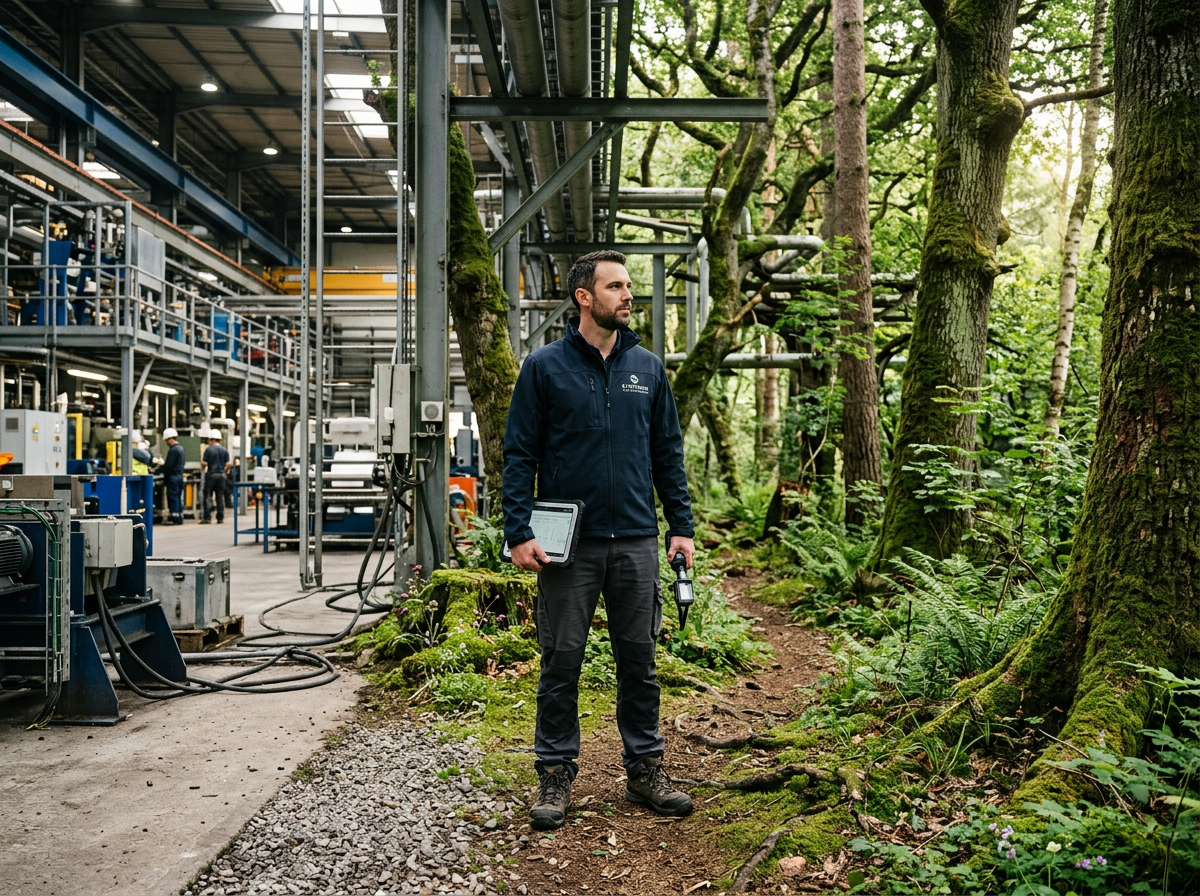
    In Lean systems thinking, the Japanese term Gemba refers to “the real place” — the actual environment where work occurs and where reality can be directly observed (Liker, 2004).

    In the context of transition-era finance, the Gemba is not the trading floor or the policy conference. It is everyday life: the household, the small business, the local network, the savings account, the food supply, the trust relationship, and the decisions made quietly each week.

    “Sovereignty” at the Gemba level does not require ideological extremism or total disengagement from existing systems. Rather, it means reducing fragility and increasing adaptive capacity. It is the disciplined practice of ensuring that one’s life can continue functioning even when larger systems become unstable.

    This piece outlines five practical financial protocols for navigating the 2026 volatility environment. They are not predictions, nor are they framed as investment advice. They are operational principles for resilience.


    Protocol 1: Maintain Strategic Liquidity

    One of the defining characteristics of volatile transitions is that liquidity evaporates faster than most people expect. During periods of uncertainty, access to capital becomes more important than the theoretical value of assets.

    Many households appear financially stable on paper while remaining operationally fragile in practice. A professional may possess retirement funds, home equity, or digital portfolio gains, yet still be vulnerable to sudden unemployment, delayed banking access, medical emergencies, or regional disruptions.

    The first protocol of transition-era stability is therefore simple:

    Maintain accessible liquidity outside long-duration dependency structures.

    This does not imply abandoning long-term investing. Rather, it means balancing long-term positioning with immediate operational flexibility.

    Practical applications include:

    • Maintaining several months of living expenses in highly accessible form
    • Avoiding overleveraged debt structures
    • Diversifying banking relationships where appropriate
    • Keeping emergency reserves in instruments that can be rapidly accessed
    • Reducing dependence on a single employer, client, or platform

    Historically, households that survived periods of instability most effectively were not always the wealthiest. Often, they were the most liquid, adaptable, and socially connected (Dalio, 2021).

    In Lean operational systems, resilience emerges from flow, not rigidity. Financial systems operate similarly. Capital trapped inside illiquid structures during a shock event becomes difficult to mobilize precisely when it is most needed.

    Liquidity is therefore not fear-based hoarding. It is operational continuity.


    Protocol 2: Favor Real Utility Over Speculative Abstraction

    Modern economies increasingly reward abstraction: derivatives layered atop derivatives, digital valuations disconnected from production, and speculative instruments detached from material usefulness.

    Yet transition periods tend to reprice reality.

    During systemic contractions, assets tied to real utility frequently outperform purely narrative-driven speculation.

    This does not mean speculative assets disappear entirely, but rather that societies re-anchor around what directly supports life and function.

    A sovereignty-oriented professional therefore asks:

    “What retains value because it remains useful?”

    Examples may include:

    • Productive skills
    • Local service capacity
    • Food systems
    • Energy resilience
    • Repair capability
    • Durable infrastructure
    • Practical education
    • Community-supported enterprises
    • Ethical small businesses
    • Asset-backed productive systems

    This principle echoes broader shifts now discussed in international economic circles regarding “real economy resilience” and “productive capacity restoration” (OECD, 2025).

    At the individual level, this can manifest as:

    • Investing in practical competencies rather than status signaling
    • Building side-income systems tied to real demand
    • Supporting locally productive ecosystems
    • Prioritizing durable tools and infrastructure over disposable consumption
    • Developing adaptable multi-domain skills

    The transition economy increasingly rewards usefulness over appearance.

    In volatile eras, prestige can collapse quickly. Utility endures longer.


    Protocol 3: Build Redundant Trust Networks

    One of the least discussed realities of financial systems is that economies ultimately operate on trust.

    Currencies function because populations collectively believe they will retain exchange value. Institutions function because people believe agreements will be honored. Supply chains function because participants trust continuity.

    When trust erodes, friction increases everywhere.

    For this reason, one of the strongest forms of sovereignty is relational rather than purely financial.

    Households and professionals entering uncertain periods benefit from cultivating:

    • Local alliances
    • Professional reciprocity
    • Skill-sharing communities
    • Ethical trade networks
    • Cooperative relationships
    • Trusted referral ecosystems
    • Mutual aid structures

    Research following major disruptions consistently demonstrates that social cohesion strongly predicts recovery resilience (Putnam, 2000).

    This principle also reflects Lean manufacturing wisdom. Toyota’s operational durability historically depended not merely on internal optimization but on deeply integrated supplier trust networks capable of coordinating during disruption (Liker, 2004).

    At the human level, the same principle applies.

    In practical terms:

    • Know who can be trusted in your local environment
    • Build reciprocal rather than extractive relationships
    • Reduce isolation
    • Develop peer-to-peer competency networks
    • Exchange knowledge openly where appropriate
    • Cultivate reputation capital through consistency and integrity

    Many people focus exclusively on financial assets while neglecting relational assets.

    Yet during periods of transition, trust itself becomes a form of infrastructure.


    Protocol 4: Reduce Fragility Through Simplicity

    Complexity often masquerades as sophistication.

    In stable periods, highly optimized lifestyles may appear efficient: multiple debt layers, maximal leverage, subscription dependency, fragile logistics, and hyper-specialized income streams.

    But highly optimized systems frequently become brittle systems.

    The fourth protocol therefore emphasizes simplification:

    • Reduce unnecessary fixed expenses
    • Minimize dependency chains
    • Eliminate operational clutter
    • Lower exposure to volatility-sensitive obligations
    • Build margin into schedules and finances
    • Favor durable systems over high-maintenance ones

    This mirrors the Lean principle of reducing Muda — unnecessary waste and inefficiency (Ohno, 1988).

    Importantly, simplicity is not regression. It is strategic clarity.

    A household with lower prestige but higher adaptability may prove more resilient than a high-status lifestyle dependent on continuous economic expansion.

    The same applies professionally.

    Workers and entrepreneurs increasingly benefit from:

    • Multiple adaptable competencies
    • Portable skillsets
    • Digital independence
    • Lower burn rates
    • Operational flexibility
    • Direct client relationships
    • Reduced institutional dependency

    The goal is not withdrawal from society. The goal is decreasing systemic fragility.

    A simpler structure can often move faster, recover faster, and endure longer.


    Protocol 5: Anchor Wealth to Ethics and Stewardship

    Periods of volatility often intensify the temptation toward opportunism, fear-based extraction, or predatory accumulation.

    Yet history repeatedly shows that systems built solely on exploitation eventually destabilize themselves.

    Long-term resilience depends not merely on acquisition, but stewardship.

    This protocol asks professionals to reconsider wealth not only as personal accumulation, but as:

    • capacity,
    • continuity,
    • contribution,
    • and responsibility.

    Emerging conversations around stakeholder capitalism, regenerative economics, and sustainable enterprise increasingly reflect this recognition (WEF, 2025).

    At the Gemba level, stewardship may include:

    • Ethical business practices
    • Transparent agreements
    • Fair compensation
    • Community contribution
    • Local reinvestment
    • Sustainable production
    • Long-term relationship thinking
    • Responsible debt usage
    • Intergenerational planning

    Trust compounds slowly but powerfully.

    A professional known for integrity during unstable periods often becomes more valuable over time than one who maximizes short-term extraction.

    This is not merely moral philosophy. It is operational resilience.

    Communities instinctively preserve relationships with those who contribute stability, fairness, and reliability during stress cycles.

    Stewardship therefore becomes both ethical and strategic.


    The Quiet Nature of Sovereignty

    The transition now unfolding is not only economic. It is psychological and civilizational.

    Many people still assume stability means returning to the exact structures of the previous era. Yet transitions rarely move backward in perfect form. More often, they reorganize around new realities.

    For professionals navigating 2026 and beyond, sovereignty may ultimately look quieter than expected:

    • prudent liquidity,
    • practical skills,
    • trustworthy relationships,
    • reduced fragility,
    • and ethical stewardship.

    Not spectacle.
    Not panic.
    Not ideological absolutism.

    Simply coherent living at the Gemba.

    In volatile systems, resilience rarely appears dramatic in the beginning. It often appears ordinary — until the shock arrives.

    Those who endure transitions most effectively are usually not the loudest actors. They are the ones who quietly built operational continuity before the turbulence became visible to everyone else.


    References

    Dalio, R. (2021). Principles for dealing with the changing world order. Avid Reader Press.

    International Monetary Fund. (2025). Global financial stability report 2025. IMF Publishing.

    Liker, J. K. (2004). The Toyota way: 14 management principles from the world’s greatest manufacturer. McGraw-Hill.

    OECD. (2025). Economic outlook 2025: Resilience and productive transition. Organisation for Economic Co-operation and Development.

    Ohno, T. (1988). Toyota production system: Beyond large-scale production. Productivity Press.

    Putnam, R. D. (2000). Bowling alone: The collapse and revival of American community. Simon & Schuster.

    World Economic Forum. (2025). Global risks report 2025. WEF.


    Related Pathways


    [DOCUMENT CONTROL & STEWARDSHIP]

    Standard Work ID: SWI-004

    Baseline Version: v1.5.2026

    Classification: Open-Access Archive / Systemic Protocol

    The Sovereign Audit: Following this protocol is an act of internal quality control. Verification of this standard does not happen here; it happens at your Gemba—the actual place where your life and leadership occur. No external validation is required or offered.

    Next in Sequence: [SWI-003: Standard Work for Sovereign Wealth]

    Return to Archive: [Standard Work Knowledge Hub: The Terrain Map]


    © 2026 Gerald Daquila • Life.Understood • Systemic Stewardship • Non-Autocratic Architecture • Process over Persona


  • Money, Guilt, and the Colonized Soul: Why We Sabotage Our Own Sovereignty

    Money, Guilt, and the Colonized Soul: Why We Sabotage Our Own Sovereignty


    Unpacking the hidden emotional patterns that keep Filipinos from fully stepping into financial and personal freedom


    Meta Description

    Why do Filipinos struggle with guilt around money and success? Explore how colonial conditioning and cultural patterns shape financial self-sabotage—and how to reclaim true sovereignty.


    The Quiet Sabotage

    Not all financial struggle comes from lack of knowledge.

    Many Filipinos today understand:

    • The importance of saving
    • The value of investing
    • The need for long-term planning

    And yet, even with this awareness, a pattern persists:

    Progress begins… then stalls.
    Opportunities appear… then are declined or mishandled.
    Income increases… but stability does not follow.

    This is not incompetence.

    It is self-sabotage—and beneath it often lies a powerful, unexamined force:

    Guilt.


    The Emotional Layer of Money

    Money is rarely just transactional.

    It carries emotional weight shaped by:

    • Family dynamics
    • Cultural expectations
    • Historical context

    In the Filipino experience, money is deeply intertwined with:

    • Obligation
    • Identity
    • Belonging

    This creates a complex internal tension:

    The desire to rise… and the fear of what rising might cost.


    The Roots of Guilt in the Filipino Psyche

    To understand this tension, we must go deeper than individual psychology.

    We must look at history.

    Centuries of colonization did more than reshape institutions—they influenced how Filipinos relate to power, worth, and success (Constantino, 1975; David, 2013).

    Over time, several patterns emerged:

    1. Internalized Inferiority

    A subtle belief that one is “less than” compared to external standards.


    2. Conditioned Modesty

    Success is downplayed to avoid standing out or attracting criticism.


    3. Survival-Based Solidarity

    Communities bond through shared struggle—making upward mobility feel like separation.


    4. Moral Framing of Wealth

    Wealth can be unconsciously associated with:

    • Greed
    • Exploitation
    • Loss of humility

    These patterns do not operate consciously.

    They are inherited.


    Guilt as a Regulator

    Guilt, in this context, functions as an internal regulator.

    It asks:

    • “Who am I to have more?”
    • “What about my family?”
    • “Will I be judged if I succeed?”

    This leads to behaviors such as:

    • Over-giving beyond capacity
    • Avoiding opportunities that create distance from peers
    • Undermining one’s own progress

    (Crosslink: The Ancestral Debt: Healing the Generational Shame of Poverty in the Filipino Psyche)

    What appears as generosity or humility may, in part, be driven by unprocessed guilt.


    The Colonized Soul: A Framework

    The term “colonized soul” refers not to identity, but to internalized limitation.

    It is the condition where:

    • External narratives define self-worth
    • Freedom feels unfamiliar or unsafe
    • Expansion triggers contraction

    Frantz Fanon (1963) described this as the psychological aftermath of colonization—where individuals internalize the worldview of domination and limitation.

    In modern terms, this manifests as:

    The inability to fully inhabit one’s own potential.


    How Guilt Sabotages Sovereignty

    Financial sovereignty requires:

    • Ownership
    • Agency
    • Decision-making autonomy

    Guilt interferes with all three.

    1. It Distorts Decision-Making

    Choices are made to relieve discomfort, not create stability.


    2. It Reinforces Dependency Patterns

    Instead of building sustainable systems, individuals remain in reactive support roles.


    3. It Limits Capacity to Hold Wealth

    Increased income triggers increased obligation—preventing accumulation.


    4. It Prevents Boundary Formation

    Saying “no” feels like betrayal.


    (Crosslink: The Ghosts of the Galleon Trade: How Colonial Echoes Still Dictate Your Financial Decisions)

    These behaviors mirror historical patterns of extraction and redistribution without retention.


    The Nervous System Link

    Guilt is not just cognitive.

    It is physiological.

    When triggered, it activates stress responses:

    • Tightness in the body
    • Urgency to act
    • Difficulty thinking long-term

    (Crosslink: Financial Sovereignty Is a Nervous System State: Grounding the QFS in the Filipino Reality)

    This reinforces reactive financial behavior.


    From Guilt to Responsibility

    The goal is not to eliminate care for others.

    It is to transform the emotional driver.

    From:

    “I must give because I feel guilty.”

    To:

    “I choose to support in ways that are sustainable and aligned.”

    This is the shift from guilt to responsibility.


    Practical Pathways to Break the Pattern

    1. Name the Guilt

    Awareness reduces its unconscious power.

    Prompt: When I think about earning or keeping more, what emotions arise?


    2. Differentiate Love from Obligation

    Support rooted in love is sustainable.
    Support rooted in guilt is depleting.


    3. Establish Boundaries

    Boundaries are not rejection.

    They are structure.


    4. Redefine Wealth

    Move from:

    • Wealth as excess
      to
    • Wealth as stability, capacity, and stewardship

    5. Build Gradual Exposure to Expansion

    Allow yourself to:

    • Earn more
    • Keep more
    • Manage more

    Without immediate redistribution.


    6. Engage in Shadow Work

    (Crosslink: From Informer to Steward: Why True Leadership Begins with Owning Our Shared Shadow)

    Explore:

    • Fear of judgment
    • Fear of separation
    • Fear of responsibility

    Integration reduces sabotage.


    The Role of Systems

    Individual shifts must be supported structurally.

    (Crosslink: ARK-001: The 50-Person Resource Loop)

    When communities:

    • Share responsibility
    • Create collective safety nets
    • Normalize growth

    Guilt decreases.


    The Ark Perspective: Sovereignty Without Separation

    Within the Ark framework, sovereignty is not isolation.

    It is coherent participation.

    (Crosslink: From Fragmented Souls to Sovereign Stewards: Reclaiming Identity After 500 Years of Institutional Trauma)

    A sovereign steward:

    • Supports others without collapsing themselves
    • Builds systems instead of reacting to needs
    • Holds both individual and collective well-being

    The Risk of Not Addressing Guilt

    If guilt remains unexamined:

    • Wealth-building efforts stall
    • Burnout increases
    • Resentment develops
    • Generational patterns repeat

    This perpetuates the very conditions individuals seek to escape.


    Conclusion: Reclaiming the Right to Thrive

    The Filipino relationship with money is not just economic.

    It is emotional.
    Historical.
    Relational.

    Guilt is one of its most powerful undercurrents.

    But it is not permanent.

    It can be understood.
    Reframed.
    Transformed.

    Sovereignty does not require abandoning others.


    It requires including yourself in the equation.

    To earn without shame.
    To keep without guilt.
    To give without depletion.

    This is not selfishness.

    It is sustainability.

    And it is the foundation of everything that follows.


    References

    Constantino, R. (1975). The Philippines: A Past Revisited. Tala Publishing Services.

    David, E. J. R. (2013). Brown Skin, White Minds: Filipino-/American Postcolonial Psychology. Information Age Publishing.

    Fanon, F. (1963). The Wretched of the Earth. Grove Press.

    Mullainathan, S., & Shafir, E. (2013). Scarcity: Why Having Too Little Means So Much. Times Books.


    The Sovereign Professional: A structural map of power, systems thinking, and personal autonomy—dedicated to helping the independent professional navigate complexity and own their value stream.Ask


    ©2026 Gerald Daquila • Life.Understood. • Systems Thinking, Leadership Architecture, and Applied Coherence

  • From Informer to Steward: Why True Leadership Begins with Owning Our Shared Shadow

    From Informer to Steward: Why True Leadership Begins with Owning Our Shared Shadow


    Moving beyond awareness into responsibility in the Filipino path to sovereign leadership


    Meta Description

    True leadership begins where awareness ends. Discover why owning the shared shadow—colonial wounds, systemic patterns, and cultural contradictions—is the foundation of Filipino stewardship and national renewal.


    The Age of Awareness Is Ending

    We live in a time where information is abundant.

    Filipinos today are more aware than ever—of corruption, inequality, colonial history, and systemic dysfunction. Social media, independent journalism, and global exposure have made it nearly impossible to remain uninformed.

    And yet, despite this surge in awareness, something remains unchanged.

    The same cycles persist:

    • Corruption is condemned, then repeated
    • Systems are criticized, then replicated
    • Leaders are questioned, but rarely transformed

    This reveals a critical gap:

    Awareness does not equal leadership.

    There is a difference between being an informer—one who names problems—and a steward—one who takes responsibility for transformation.


    The Informer Archetype: Necessary but Incomplete

    The informer plays an essential role.

    They expose truth.
    They challenge narratives.
    They disrupt silence.

    Without informers, the unspoken remains hidden.

    (Crosslink: Naming the Unspoken: A Guide to Navigating the Hidden Fractures of Our National Identity)

    But the informer archetype has a limitation: it often stops at exposure.

    It says:

    • “This is broken.”
    • “This is wrong.”
    • “This must change.”

    Yet it rarely answers:

    • Who will change it?
    • How will it be rebuilt?
    • What must I embody differently?

    Without this transition, informing can become a loop—one that generates outrage without resolution.


    The Shared Shadow: What We Inherit and Reenact

    To understand why this loop persists, we must confront a deeper layer: the shared shadow.

    In psychological terms, the “shadow” refers to the parts of ourselves we deny, suppress, or disown (Jung, 1959). At a collective level, this becomes the cultural shadow—patterns that societies unconsciously carry and reenact.

    In the Filipino context, this shadow includes:

    • Internalized inferiority from colonial history
    • Dependency on external validation
    • Avoidance of conflict disguised as harmony
    • Short-term survival thinking over long-term design
    • Distrust in institutions coupled with participation in their dysfunction

    These are not abstract concepts. They appear in everyday decisions:

    • Cutting corners “because everyone does it”
    • Avoiding difficult conversations to maintain surface peace
    • Seeking foreign approval while dismissing local capacity

    As Carl Jung warned, “Until you make the unconscious conscious, it will direct your life and you will call it fate” (Jung, 1959).

    At a national scale, this becomes destiny mistaken for inevitability.


    Why Leadership Begins with Ownership

    True leadership does not begin with authority.

    It begins with ownership.

    Ownership means recognizing that:

    The systems we criticize are, in part, sustained by the behaviors we tolerate, participate in, or fail to transform.

    This is not about blame. It is about agency.

    Research on adaptive leadership emphasizes that complex societal problems cannot be solved by technical fixes alone—they require shifts in values, behaviors, and collective mindset (Heifetz, Grashow, & Linsky, 2009).

    In other words:
    The problem is not only “out there.” It is also “in here.”


    From Critique to Stewardship

    The shift from informer to steward is a shift in posture.

    The Informer Asks:

    “What is wrong?”


    The Steward Asks:

    “What is mine to hold, repair, and build?”

    This shift has three dimensions:


    1. Inner Stewardship (Self-Leadership)

    Before systems can be transformed, patterns within the self must be addressed.

    This includes:

    • Not replicating corruption in small, personal ways
    • Practicing integrity even when inconvenient
    • Developing emotional and psychological maturity

    Leadership without inner coherence produces outer inconsistency.


    2. Relational Stewardship (Family and Community)

    Cultural patterns are reinforced at the relational level.

    This means:

    • Addressing unhealthy family dynamics (e.g., silence, obligation without boundaries)
    • Modeling new forms of communication and accountability
    • Building trust through consistent action

    Small relational shifts create ripple effects.


    3. Structural Stewardship (Systems and Institutions)

    This is where stewardship becomes visible.

    It involves:

    • Designing systems that reduce corruption by design
    • Creating feedback loops and accountability mechanisms
    • Building sustainable economic and governance models

    (Crosslink: ARK-003: Jurisdictional Sovereignty: Legal Standard Work)

    Without structural expression, awareness remains abstract.

    The transition from informer to steward can be understood not only as a change in mindset, but as a shift into a different relationship with responsibility itself.


    The Stewardship Field

    The Stewardship Field provides a visual framework for understanding the transition from awareness to responsible participation. While informers help societies recognize problems, stewards help societies build what comes next.

    The map illustrates how stewardship emerges through the ongoing balance of vision, responsibility, service, and inheritance, supported by the practices of awareness, discernment, participation, contribution, and custodianship.

    In the Filipino context, it offers a lens for understanding how personal responsibility, community trust, institutional renewal, and long-term nation-building are connected through a shared commitment to responsible care for the whole.

    The Stewardship Field presents stewardship as a living field of balance rather than a ladder to climb or a destination to reach. By integrating vision, responsibility, service, and inheritance, it offers a framework for understanding how individuals, communities, institutions, and nations cultivate continuity, resilience, and responsible action across generations.

    → Download Reference Map 007: The Stewardship Field


    The Filipino Threshold: Stewardship as Destiny

    Within the Ark framework, the Philippines is not simply navigating dysfunction—it is being positioned for demonstration.

    (Crosslink: The Philippine Ark: A Global South Prototype)

    A post-colonial nation with deep diaspora networks, cultural resilience, and adaptive intelligence has the potential to model a new kind of leadership:

    Stewardship-based leadership.

    Not authority imposed from above.
    Not charisma-driven leadership.
    But grounded, distributed responsibility.

    This form of leadership:

    • Is less visible, but more durable
    • Is slower, but more stable
    • Is quieter, but more transformative

    Practical Framework: Becoming a Steward

    Transitioning from informer to steward is not abstract. It can be practiced.

    1. Move from Exposure to Construction

    For every problem identified, ask:

    What is one concrete solution I can help build?


    2. Audit Personal Alignment

    Where do your actions contradict your stated values?

    Alignment is credibility.


    3. Take Responsibility Within Your Sphere

    You do not need to fix the nation.

    You need to steward your domain:

    • Your work
    • Your family
    • Your community

    Scale emerges from coherence, not ambition.


    4. Build with Others

    Stewardship is not solitary.

    It requires:

    • Collaboration
    • Shared standards
    • Mutual accountability

    5. Commit to Long-Term Thinking

    Stewards think in decades, not cycles.

    They ask:

    Will this decision strengthen or weaken future generations?


    The Risk of Not Transitioning

    If awareness does not evolve into stewardship, three risks emerge:

    1. Chronic Cynicism – Endless critique without action leads to disengagement
    2. Performative Activism – Visibility replaces substance
    3. Systemic Stagnation – Nothing fundamentally changes

    At that point, awareness becomes a form of paralysis.


    Conclusion: Leadership as Responsibility, Not Identity

    Leadership is often framed as a position.

    In reality, it is a function.

    A function that begins the moment we stop asking,
    “Who is responsible?”
    and start asking,
    “What is mine to steward?”

    The Filipino story does not need more informers.

    It needs stewards.

    Those willing to:

    • Name the shadow
    • Own their participation in it
    • Build beyond it

    This is where true leadership begins.

    Not in visibility.
    But in responsibility.


    References

    Heifetz, R. A., Grashow, A., & Linsky, M. (2009). The Practice of Adaptive Leadership. Harvard Business Press.

    Jung, C. G. (1959). Aion: Researches into the Phenomenology of the Self. Princeton University Press.

    David, E. J. R. (2013). Brown Skin, White Minds: Filipino-/American Postcolonial Psychology. Information Age Publishing.

    Fanon, F. (1963). The Wretched of the Earth. Grove Press.


    The Sovereign Professional: A structural map of power, systems thinking, and personal autonomy—dedicated to helping the independent professional navigate complexity and own their value stream.Ask


    ©2026 Gerald Daquila • Life.Understood. • Systems Thinking, Leadership Architecture, and Applied Coherence

  • [SEM-001] Collective Sense-making SOP: Decentralized Consensus

    [SEM-001] Collective Sense-making SOP: Decentralized Consensus


    In the industrial world, a Standard Operating Procedure (SOP) is a set of step-by-step instructions compiled by an organization to help workers carry out complex routine operations.

    Its goal is to achieve efficiency, quality output, and uniformity of performance while reducing miscommunication. However, in the hyper-fragmented reality of 2026, the most complex operation we face isn’t on a factory floor—it is the act of Sense-making.

    The old world relied on “Centralized Sense-making.” We looked to news anchors, government agencies, and corporate hierarchies to tell us what was true.

    But as those institutions have succumbed to the “Waste” of political capture and systemic obsolescence, the Sovereign Professional must pivot to a new model: Decentralized Consensus.

    [SEM-001] is the protocol for how a Sovereign Node participates in collective intelligence without losing their individual center.


    The Crisis of the “Mono-Narrative”

    In a Lean system, a “Single Point of Failure” is a catastrophic risk.

    Centralized sense-making is exactly that. When one institution misinterprets a global event—be it a financial shift, a technological breakthrough, or a systemic disclosure—the entire “Value Stream” of public understanding is corrupted.

    The result is “Epistemic Muda”: a massive overproduction of conflicting, low-fidelity information that leads to paralysis.

    To navigate this, you must realize that Identity: The Story We Learn to Tell About Ourselves often dictates how we process data.

    If your identity is tied to being “right” according to a specific group, you will filter out any “Signal” that contradicts that group’s narrative.

    Decentralized consensus requires you to strip away these identity-based filters and become a clean sensor in a larger mesh network.


    The SOP: How to Sense-make in a Mesh Network

    [SEM-001] is designed to turn “Collective Noise” into “Decentralized Signal.” It follows a specific three-stage process.


    1. Internal Calibration (The Sovereign Anchor)

    Before you can engage with the group, you must ensure your own “Internal Sensor” is calibrated. You cannot participate in decentralized consensus if you are in a state of panic or hyper-reactivity. This is the art of Staying Sovereign in Uncertain Times — Inner Stability in an Unstable World.

    • Poka-yoke: If your emotional state is “Red” (high-anxiety), you are a “Defective Sensor.” You must recuse yourself from the sense-making process until you have returned to “Neutral.”

    2. Multi-Node Triangulation (The “Council” Logic)

    Instead of looking for “The Truth,” look for Consensus across Unlikely Allies.

    In 2026, the highest fidelity signal is found at the intersection of diverse nodes that have no incentive to agree with one another.

    • The Cross-check: If a financial expert in London, a Philippine Ark community leader, and a decentralized AI developer are all pointing to the same systemic shift, you have found a High-Probability Signal.

    3. Iterative Refinement (The Kaizen of Truth)

    Decentralized consensus is never “finished.” It is a living document. As new data enters the system, the consensus must shift.

    This requires viewing Change as a Threshold, Not a Failure. If a previous consensus is proven wrong, it is not a “defect” in the group; it is a successful update to the operating system.


    Managing the Cognitive Load: Helping Without Burning Out

    Collective sense-making is exhausting. It requires “Systemic Empathy” and high-bandwidth processing.

    Many professionals fall into the trap of “Emotional Over-processing,” trying to harmonize every conflicting viewpoint they encounter.

    To maintain your role as a Sovereign Node, you must practice Helping Without Burning Out. Your job is not to “convince” everyone or to carry the weight of the world’s confusion.

    Your job is to be an Accurate Reporter of your own perspective and a Discerning Receiver of others’.

    If the sense-making process begins to siphon away your vital energy, you have crossed an ethical line in your Sacred Exchange. You must withdraw to recalibrate.


    The Value of the “Sovereign Contribution”

    Why does decentralized consensus work? Because it utilizes “Cognitive Diversity” as a defense mechanism against deception.

    In a centralized system, you only have to deceive one leader to control the whole group. In a decentralized mesh of Sovereign Professionals, you would have to deceive every individual sensor simultaneously—an impossible feat.

    This is the “Jidoka” of truth. Every Sovereign Node has the “Andon Cord.”

    If you see a piece of data that proves the current group consensus is a “Defect,” you have the authority and the responsibility to pull the cord and stop the line.

    This is how we protect the integrity of the Philippine Ark and the New Earth architecture.


    Conclusion: The Architecture of the New We

    [SEM-001] Collective Sense-making SOP: Decentralized Consensus is the end of the “Follow the Leader” era. It is the beginning of the “Trust the Process” era—where the process is a rigorous, peer-to-peer exchange of high-signal data.

    In 2026, the most valuable thing you can bring to a room is not your opinion, but your Calibration.

    By mastering the SOP of sense-making, you ensure that you are a generative node in the collective evolution. You move from being a “consumer of news” to an “architect of reality.”

    Calibrate your sensor. Triangulate the signal. Pull the cord when you see a defect.


    The Sovereign Professional: A structural map of power, systems thinking, and personal autonomy—dedicated to helping the independent professional navigate complexity and own their value stream.


    ©2026 Gerald Daquila • Life.Understood. • Systems Thinking, Leadership Architecture, and Applied Coherence

  • Gemba Walking the Ancestral Soul: A Protocol for Heritage Retrieval in High-Pressure Environments

    Gemba Walking the Ancestral Soul: A Protocol for Heritage Retrieval in High-Pressure Environments


    In the lean manufacturing world, a Gemba Walk is the practice of going to “the real place” where value is created.


    It is a tool for observation, intended to strip away the abstractions of reports and spreadsheets to see the actual flow of work.

    For the Sovereign Professional operating in the toxic high-pressure corridors of 2026, the “Gemba” isn’t just the office floor or the digital workspace; it is the intersection of your current environment and your inherited ancestral wisdom.

    Most modern professionals approach “culture” as a costume—something to be worn during a DEI workshop or mentioned in a LinkedIn bio. But heritage is not an accessory; it is an Operating System (OS).

    When that OS is suppressed or overwritten by the extractive logic of corporate colonization, the result is a systemic “glitch” characterized by burnout, cynicism, and a loss of agency.

    This protocol is a Lean guide to heritage retrieval. We are not looking for “cultural appreciation”; we are looking for a structural reclamation of the source code that makes you indispensable.


    The Audit: Why Your Current OS is Failing

    Before we can retrieve the ancestral soul, we must recognize the waste in the current system. As explored in How Systems Shape Behavior (And Why It Feels Personal), many of the anxieties we carry are not personal failures; they are structural symptoms.

    We have been incentivized to optimize for a “Push” system—endless output, constant availability, and the surrender of intuition.

    When your heritage is relegated to a “costume,” you are operating on a fragmented OS. You are trying to run a high-bandwidth, indigenous sense-making heart on a low-fidelity, colonial-extraction brain.

    The friction between these two layers is where the “Muda” (waste) of your soul occurs.


    Phase 1: The Soul-Gemba (Observation)

    The first step of the protocol is to walk the “real place” of your daily professional interactions through the lens of Ancestral Sense-making.

    During your next high-pressure meeting or quarterly review, do not look at the KPIs. Look at the patterns.

    • The Incentive Check: Are the rewards in this room driving behavior that aligns with your “root” values? (Reference: Incentives Drive Behavior: Why Good Intentions Fail in Systems).
    • The Energy Audit: Is the work being done “generative” (nourishing the ecosystem) or “extractive” (mining the participants for short-term gain)?
    • The Silence Check: What is not being said? Ancestral intuition—specifically the Babaylan capacity for high-bandwidth pattern recognition—lives in the gaps between the data points.

    Phase 2: Root Cause Analysis (The 5 Whys of Disconnection)

    In Lean, we use the “5 Whys” to find a technical root cause. In heritage retrieval, we use it to find the point of colonial rupture.


    1. Why am I feeling burnt out?

    Because I am working 60 hours for a 40-hour lifestyle.


    2. Why am I working those extra 20 hours?

    To satisfy an incentive structure that rewards “effort” over “value.”


    3. Why do I value that incentive over my rest?

    Because I have been conditioned to believe that my worth is tied to my metabolic output.


    4. Why do I believe that output equals worth?

    Because the system I was trained in prioritizes the machine over the human.


    5. Why have I forgotten the alternative?

    (Root Cause): Because the ancestral OS—which views work as stewardship and contribution—has been overwritten by a colonized narrative of extraction.

    By reaching the fifth “Why,” you realize that Why Hard Work Alone Doesn’t Make You Valuable is a foundational truth of the Sovereign Professional.


    Phase 3: Poka-Yoke (Error-Proofing) via Ancestral Wisdom

    In Lean, Poka-Yoke is a mechanism that prevents a mistake from happening. In your professional life, your heritage provides the ultimate error-proofing.

    Indigenous wisdom often operates on “Non-Linear Time” and “Interconnected Logic.” When a corporate crisis hits, the colonized OS panics, looking for immediate “fixes.” The Ancestral OS, however, steps back to see the long-cycle pattern.

    The Protocol for Retrieval:

    • The Breath of the Center: Before responding to a high-pressure “Noise” signal, apply The Discipline of Inner Sovereignty. This is the modern version of the “centering” practiced by indigenous healers. It creates the “buffer” needed for discernment.
    • The Council Mindset: Even if you are a “solo” professional, view your decisions through the lens of “The Seventh Generation.” Does this decision nourish your future, or does it burn the field for a temporary win?
    • Language as Logic: Use your heritage’s specific concepts—like the Filipino Pakikipagkapwa (shared identity)—to re-contextualize your work. You are not “networking”; you are building a Kapwa ecosystem. This changes the incentive from competition to coherence.

    The Outcome: Signal Over Noise

    The result of “Gemba Walking the Ancestral Soul” is a radical clarity. You begin to see the “corporate waste-stream” for what it is—a noisy, extractive system that is failing to adapt to a high-complexity world.

    By retrieving your heritage as an OS, you gain the ultimate competitive advantage: Clear Thinking. As discussed in Signal vs Noise: Why Clear Thinking Is Rare, those who can navigate uncertainty without losing their center are the ones who become indispensable.

    You don’t find that center in a textbook; you find it in the “Gemba” of your own lineage.


    Conclusion: The Sovereign Blueprint

    Heritage retrieval is not about performing your culture for the benefit of a company’s “diversity” metrics. It is about excising the colonial “Muda” from your mind so you can work with the power of a whole human being.

    When you walk the Gemba with the soul of an ancestor and the mind of a Lean architect, you stop being a unit of labor. You become a Sovereign Professional—an architect of a new, coherent reality.


    The Sovereign Professional: A structural map of power, systems thinking, and personal autonomy—dedicated to helping the independent professional navigate complexity and own their value stream.


    ©2026 Gerald Daquila • Life.Understood. • Systems Thinking, Leadership Architecture, and Applied Coherence

  • [SWI-002] The 72-Hour Sovereignty Protocol: Systemic Transition Readiness & Resource Continuity

    [SWI-002] The 72-Hour Sovereignty Protocol: Systemic Transition Readiness & Resource Continuity


    Protocol Status: Version 1.0 (Initial Release)

    Process Owner: Individual Steward / Head of Household

    Revision Date: April 2026


    Introduction: From Speculation to Operation

    As of April 2026, the global discourse surrounding a “Financial Reset” or “GESARA” has reached a state of maximum noise. For the Steward, the focus is not the timing of the event, but the Baseline Readiness required to navigate the transition window.

    Historical systemic shifts—whether technical “banking holidays,” currency revaluations, or institutional resets—typically manifest as a 72-hour period of high entropy. During this window, legacy “Value Streams” (digital payments, supply chains, and formal information loops) often pause.

    This Standard Work Instruction (SWI) provides the protocol for maintaining Coherence and Continuity during the first 72 hours of a systemic pause. It ensures the “Silent Professional” remains a node of stability rather than a casualty of the transition.


    1. The Business Case: Eliminating Panic-Waste (Muda)

    In a systemic pause, the primary defect is Panic.

    Panic is a processing failure that leads to the rapid depletion of resources and the breakdown of the Internal Gemba. This protocol acts as a “Circuit Breaker,” replacing reactive fear with a pre-validated sequence of operations.


    2. Takt Time: The 72-Hour Response Cycle

    Takt time here refers to the rate of “Status Verification” required to prevent systemic drift.

    • Hours 0–12: Stabilization (Internal & Household).
    • Hours 12–48: Resource Audit (Verification of Safety Stock).
    • Hours 48–72: Strategic Signaling (Interfacing with trusted nodes).

    3. Work Sequence: The Continuity Protocol

    Note: This protocol should be accessible offline to ensure availability during digital service interruptions.

    StepOperationDescriptionKey Points / Safety
    01Line Stop (Noise)Cease all engagement with speculative news or social media. Disconnect digital inputs.Prevent emotional contagion.
    02Internal ResetExecute [SWI-001] (Sovereign Mind). Stabilize the heart-brain axis.Sovereignty begins with the observer.
    03Inventory VerificationAudit physical resources: Cash-on-hand, food, water, and analog communication tools.Confirm 72-hour “Sovereign Inventory.”
    04Coherence SignalCommunicate stability to your immediate node (family/partners). Do not explain; simply signal “Status: Operational.”Use pre-agreed non-digital signals if necessary.
    05Pattern ObservationMonitor for “Signal vs. Noise” in the environment. Is this a temporary glitch or a structural shift?Follow the logic of [PY-001].

    4. Poka-yoke: Error-Proofing the “Savior Trap”

    Detected Defect: “The Wait-and-See Paralysis” (The belief that one must wait for an external announcement or a “White Hat” savior to provide instructions).

    The Mechanism: The Action-Interlock

    • Sensor: The thought “I should wait for the news to tell me what to do.”
    • Action: Immediately perform one Sovereign Act of Maintenance (e.g., securing assets, checking physical inventory, or improving site security).
    • Protocol: You are “interlocked” with your own authority. Every hour of external waiting must be balanced by an act of internal building.
    • Verification: If you are waiting for a savior, you have exited the Standard.

    5. Standard Inventory: The Sovereign Kit

    To execute this protocol, the following “Safety Stock” must be maintained:

    • Tangible Liquidity: Small-denomination physical currency or tradeable assets.
    • Offline Records: Printed copies of Batch 1 protocols and contact lists for your node.
    • Essential Sustainment: 72 hours of water, nutrition, and energy independence.

    6. Audit & Continuous Improvement (Kaizen)

    After any high-noise event, perform a “Post-Event Review”:

    1. Response Time: How quickly did I move from “Noise” to “Protocol”?
    2. Inventory Accuracy: Did my physical stock match my theoretical requirements?
    3. Standard Update: What did this event reveal about the “Legacy System” that requires a change in my Future State Map?

    [DOCUMENT CONTROL & STEWARDSHIP]

    Standard Work ID: SWI-002

    Baseline Version: v1.4.2026

    Classification: Open-Access Archive / Systemic Protocol

    The Sovereign Audit: Following this protocol is an act of internal quality control. Verification of this standard does not happen here; it happens at your Gemba—the actual place where your life and leadership occur. No external validation is required or offered.

    Next in Sequence: [View VSM-001: Mapping the Sovereign Household Value Stream]

    Return to Archive: [Standard Work Knowledge Hub: The Terrain Map]


    © 2026 Gerald Daquila • Life.Understood • Systemic Stewardship • Non-Autocratic Architecture • Process over Persona