Category: Infrastructure

  • Governance Before Spirituality

    Governance Before Spirituality


    Why Stable Societies Require Functional Systems Before Higher Ideals Can Flourish


    Meta Description

    Explore why governance, infrastructure, institutional stability, and social coordination form the foundation upon which spirituality, consciousness, and higher human development can sustainably emerge within civilization.


    Introduction

    Throughout history, human societies have pursued meaning, transcendence, ethics, ritual, philosophy, and spiritual understanding. Yet civilizations are not sustained by ideals alone.

    People require food systems, water systems, infrastructure, governance, conflict mediation, economic coordination, healthcare, energy systems, education, and institutional stability simply to maintain the conditions necessary for collective life.

    Without functioning systems, higher aspirations often collapse beneath survival pressures.

    This does not diminish spirituality.

    Rather, it reveals an important civilizational principle:

    Stable governance frequently forms the substrate upon which higher human development becomes possible.

    When institutions fail, populations tend to shift attention toward immediate survival concerns. Social fragmentation increases. Trust erodes. Cooperation weakens.

    Long-term thinking declines. Under severe instability, even deeply ethical or spiritually oriented communities may struggle to maintain coherence.

    The relationship between governance and spirituality is therefore not oppositional.

    It is structural.

    Civilization requires systems capable of sustaining the conditions under which human flourishing — including philosophical, ethical, artistic, and spiritual flourishing — can emerge.


    Human Needs and Civilizational Stability

    Human beings operate within layered needs.

    Food security, shelter, physical safety, healthcare, and social stability form foundational conditions for psychological and cultural development.

    Abraham Maslow’s hierarchy of needs, while simplified, reflects an important systems reality: survival instability narrows cognitive bandwidth toward immediate pressures.

    Communities facing chronic insecurity often experience:

    • Reduced institutional trust
    • Increased conflict
    • Lower civic participation
    • Shortened time horizons
    • Higher stress and polarization
    • Weakened cooperative capacity

    Under such conditions, societies may struggle to sustain long-term ethical, philosophical, or spiritual development.

    Governance systems therefore matter not merely politically, but developmentally.

    Functional governance stabilizes the environment within which higher-order human capacities can emerge.


    Governance as Coordinated Civilization

    Governance is often misunderstood as merely politics or state power.

    At a deeper level, governance refers to how societies coordinate collective life.

    This includes:

    • Resource distribution
    • Infrastructure management
    • Conflict mediation
    • Legal frameworks
    • Public accountability
    • Economic coordination
    • Information systems
    • Disaster response
    • Institutional continuity

    Without governance, large-scale civilization becomes difficult to sustain.

    Even highly decentralized communities still require forms of governance through norms, agreements, participatory coordination, and stewardship systems.

    Elinor Ostrom’s work demonstrated that stable communities managing shared resources successfully develop governance structures adapted to local conditions (Ostrom, 1990).

    The issue is not whether governance exists.

    The issue is whether governance remains functional, adaptive, accountable, and aligned with societal well-being.


    Spirituality Cannot Substitute for Infrastructure

    One recurring civilizational mistake is assuming that moral aspiration alone can replace institutional competence.

    Good intentions do not maintain electrical grids.

    Consciousness discourse alone does not coordinate food systems, disaster response, public sanitation, transportation infrastructure, or healthcare logistics.

    Spiritual values may influence governance positively, but values alone cannot substitute for systems design.

    Civilizations require operational coherence.

    This includes:

    • Competent administration
    • Functional infrastructure
    • Reliable institutions
    • Adaptive governance
    • Transparent accountability
    • Long-term planning
    • Ecological stewardship
    • Distributed resilience

    Without these foundations, societies often become vulnerable to instability regardless of ideological or spiritual aspiration.

    History repeatedly demonstrates that civilizations collapse not merely because ideals disappear, but because systems fail.


    The Dangers of Escapist Spirituality

    Periods of institutional instability sometimes generate forms of spirituality disconnected from material and civic reality.

    This may appear as:

    • Withdrawal from civic responsibility
    • Rejection of institutional engagement
    • Overreliance on individual enlightenment narratives
    • Magical thinking replacing structural analysis
    • Avoidance of governance complexity
    • Passive optimism amid systemic deterioration

    Such tendencies may provide psychological comfort while leaving structural problems unresolved.

    Systems blindness can emerge when populations focus exclusively upon personal transcendence while neglecting the infrastructures supporting collective survival.

    A civilization cannot meditate its way out of failing water systems, collapsing institutions, ecological overshoot, or economic fragmentation without corresponding structural action.

    Spiritual maturity therefore includes engagement with reality rather than escape from it.


    Governance Failure Alters Consciousness Itself

    Institutional conditions shape psychological conditions.

    When governance systems become unstable, populations often experience:

    • Chronic stress
    • Fear-based cognition
    • Scarcity mentality
    • Social fragmentation
    • Reduced trust
    • Polarization
    • Emotional exhaustion

    Under such conditions, higher-order cognitive and ethical capacities may weaken.

    Neuroscience and psychology increasingly recognize that chronic instability affects attention, cognition, emotional regulation, and social cooperation.

    Governance therefore influences consciousness indirectly through environmental conditions.

    Stable systems expand the possibility space for creativity, ethical reflection, philosophical inquiry, and spiritual exploration.

    Fragile systems compress awareness toward survival pressures.


    Historical Examples of Stability and Flourishing

    Many periods of major cultural, philosophical, and spiritual development emerged during relative civilizational stability.

    Examples include:

    • Classical Athens
    • The Islamic Golden Age
    • Song Dynasty China
    • Renaissance Florence
    • Various periods of stable indigenous stewardship systems

    These civilizations were not perfect.

    However, they possessed sufficient governance continuity, economic coordination, and institutional infrastructure to support intellectual and spiritual development beyond immediate survival.

    Periods of extreme collapse, by contrast, often narrow societal focus toward resource competition and instability management.

    This does not mean spiritual insight disappears during hardship.

    In fact, crisis often deepens existential inquiry.

    However, sustainable collective flourishing typically requires both meaning systems and functional systems.


    Governance and Ethical Civilization

    Good governance is not merely administrative efficiency.

    It also concerns ethics.

    Governance systems shape:

    • Fairness
    • Opportunity
    • Resource access
    • Institutional trust
    • Public accountability
    • Social cohesion
    • Ecological stewardship

    Poor governance may generate corruption, extraction, inequality, and systemic fragility even within societies rich in spiritual rhetoric.

    Ethical civilization therefore requires alignment between values and structures.

    If institutions reward exploitation while societies preach compassion, contradiction eventually erodes legitimacy.

    Systems ultimately operationalize values.

    This is why governance design matters profoundly.


    The Role of Civic Responsibility

    Healthy societies require more than competent leadership alone.

    They also depend upon civic participation.

    Citizens shape governance through:

    • Community engagement
    • Institutional accountability
    • Public discourse
    • Cooperative behavior
    • Long-term stewardship
    • Local resilience building

    Governance is not merely something imposed from above.

    It emerges through collective participation across systems.

    Societies that abandon civic responsibility while expecting institutional stability often experience gradual erosion of governance quality.

    Spiritual maturity may therefore involve not only inward development, but participation in maintaining the systems supporting collective life.


    Technology, Complexity, and Governance Capacity

    Modern societies operate at unprecedented scale and complexity.

    Digital systems, financial networks, energy infrastructures, global supply chains, and information ecosystems require enormous coordination capacity.

    This complexity increases the importance of competent governance.

    Without adaptive institutions capable of processing complexity, societies may experience:

    • Infrastructure fragility
    • Institutional overload
    • Information chaos
    • Economic instability
    • Ecological mismanagement
    • Social fragmentation

    Governance today increasingly requires systems thinking rather than purely ideological approaches.

    Civilizations capable of integrating technological sophistication with ethical stewardship may prove more resilient than systems relying upon either technocracy or idealism alone.


    Governance and Spirituality Need Not Conflict

    The relationship between governance and spirituality is often framed unnecessarily as a binary opposition.

    Healthy civilizations may integrate both.

    Governance provides structural coherence.

    Spirituality may provide ethical orientation, meaning, and moral imagination.

    One stabilizes systems.

    The other helps guide purpose.

    Problems emerge when either dimension becomes disconnected from the other:

    • Governance without ethics risks becoming extractive technocracy.
    • Spirituality without structural engagement risks becoming detached idealism.

    Sustainable civilization may require both operational competence and ethical depth.


    Toward Mature Civilization

    Mature societies recognize that human flourishing depends upon multiple interconnected layers:

    • Ecological stability
    • Institutional resilience
    • Economic coordination
    • Social trust
    • Ethical culture
    • Meaning systems
    • Civic participation
    • Adaptive governance

    No single layer alone is sufficient.

    Civilization is relational infrastructure.

    Governance before spirituality does not mean governance instead of spirituality.

    It means recognizing that stable systems often create the conditions within which deeper dimensions of human development can sustainably flourish.

    The future may increasingly belong to societies capable of integrating:

    • Competent governance
    • Ecological stewardship
    • Distributed resilience
    • Ethical responsibility
    • Civic maturity
    • Cultural meaning
    • Long-term systems awareness

    Because higher consciousness without functioning civilization remains fragile.

    And civilization without ethical depth eventually loses direction.


    Suggested Crosslinks


    References

    Maslow, A. H. (1943). A theory of human motivation. Psychological Review, 50(4), 370–396.

    Ostrom, E. (1990). Governing the commons: The evolution of institutions for collective action. Cambridge University Press.

    Senge, P. M. (1990). The fifth discipline: The art and practice of the learning organization. Doubleday.

    Weber, M. (1978). Economy and society: An outline of interpretive sociology. University of California Press.

    The Living Archive is designed to be explored through pathways, categories, and search. If you’re looking for a specific idea, question, or theme, AI Search can help surface relevant connections across the archive.


    Attribution

    The Living Archive
    Integrative Frameworks for Regenerative Civilization

    © 2026 Gerald Daquila. All rights reserved.
    Part of the Life.Understood. knowledge ecosystem and Stewardship Institute initiative.

    This article is intended for educational, research, and civic inquiry purposes.
    Readers are encouraged to engage critically, verify sources independently, and explore related knowledge hubs for broader systems context.

  • The Anatomy of Institutional Decay

    The Anatomy of Institutional Decay


    How Systems Lose Legitimacy, Adaptability, and Public Trust Over Time


    Meta Description

    Explore how institutional decay emerges through complexity, corruption, rigidity, trust erosion, economic extraction, and systemic misalignment. A systems-thinking examination of governance, legitimacy, resilience, and civilizational stability.


    Introduction

    Institutions are among the most powerful organizing structures in human civilization.

    Governments, legal systems, financial institutions, educational systems, corporations, media organizations, and public infrastructures shape collective life at every scale.

    They coordinate resources, establish norms, maintain continuity, and enable large societies to function across time.

    Yet institutions are not permanent.

    Like all complex systems, institutions can strengthen, stagnate, adapt, or decay.

    Institutional decay refers to the gradual erosion of legitimacy, responsiveness, competence, trust, and adaptive capacity within governance and organizational systems.

    This decline rarely appears suddenly. More often, it accumulates slowly beneath the surface of apparent normalcy until crises expose underlying fragility.

    Societies often recognize institutional decay only after dysfunction becomes widespread.

    By that stage, trust may already be fractured, incentives distorted, and systems increasingly unable to respond coherently to emerging realities.

    Understanding institutional decay requires moving beyond simplistic explanations focused solely on individual corruption or political conflict.

    Institutional decline is frequently systemic.

    It emerges through interactions between complexity, incentives, power concentration, information distortion, economic pressures, technological acceleration, and cultural fragmentation.


    Institutions as Living Systems

    Institutions are not static machines.

    They are dynamic systems composed of people, incentives, procedures, infrastructures, norms, and feedback loops operating across time.

    Healthy institutions generally maintain several core functions:

    • Coordination
    • Legitimacy
    • Adaptability
    • Accountability
    • Continuity
    • Public trust
    • Resource distribution
    • Conflict mediation

    Institutional stability depends not merely upon authority, but upon the perception that institutions remain competent, fair, responsive, and aligned with collective reality.

    When this alignment weakens, decay often begins.

    Institutional decline therefore involves more than administrative inefficiency.

    It involves erosion of coherence between institutions and the societies they claim to serve.


    The Trust Foundation of Institutions

    No institution functions through force alone.

    Even highly centralized systems ultimately depend upon trust.

    Citizens must believe legal systems retain legitimacy. Markets require trust in currencies and contracts. Public health systems depend upon trust in information and coordination. Democratic systems require confidence that governance structures remain accountable.

    Francis Fukuyama (1995) argued that trust functions as a foundational form of social capital enabling large-scale cooperation within complex societies.

    When trust erodes, institutional coordination becomes increasingly difficult.

    Trust decay may emerge through:

    • Corruption scandals
    • Policy inconsistency
    • Economic inequality
    • Institutional opacity
    • Perceived elite detachment
    • Information manipulation
    • Governance failures during crises
    • Regulatory capture
    • Declining accountability

    Importantly, institutional trust often deteriorates gradually before collapse becomes visible.

    People may continue participating in systems they no longer fully believe in because no viable alternatives yet exist.

    This creates a dangerous condition in which institutions maintain formal authority while losing substantive legitimacy.


    Complexity and Bureaucratic Saturation

    As societies grow more complex, institutions often respond by increasing layers of administration, regulation, and procedural management.

    Initially, this expansion may improve coordination and problem-solving capacity.

    Over time, however, institutions can become burdened by excessive complexity.

    Joseph Tainter (1988) argued that civilizations frequently solve problems by adding complexity. While these adaptations initially generate benefits, the long-term maintenance costs eventually rise faster than the returns.

    This dynamic can produce bureaucratic saturation.

    Characteristics may include:

    • Administrative overload
    • Slow decision-making
    • Procedural rigidity
    • Information bottlenecks
    • Reduced adaptability
    • Fragmented accountability
    • Institutional inertia

    Institutions then begin devoting increasing energy toward preserving internal structure rather than solving external problems.

    The system becomes self-referential.

    Under such conditions, responsiveness declines even as organizational size expands.


    Incentive Drift and Institutional Capture

    Institutions often decay when internal incentives drift away from their original public purpose.

    Organizations frequently begin with clear missions aligned with collective needs.

    Over time, however, incentive structures may evolve toward:

    • Self-preservation
    • Power consolidation
    • Profit maximization
    • Bureaucratic expansion
    • Political survival
    • Image management
    • Short-term metrics

    This process may occur gradually and often without explicit malicious intent.

    Individuals operating within institutions may continue behaving rationally according to internal incentives while collectively producing dysfunctional outcomes.

    Examples include:

    • Financial systems prioritizing speculative gain over productive stability
    • Media ecosystems optimizing engagement over informational coherence
    • Political systems rewarding polarization over governance effectiveness
    • Educational institutions emphasizing credential production over learning
    • Corporations prioritizing quarterly performance over long-term resilience

    Institutional capture intensifies when concentrated interests gain disproportionate influence over systems intended to serve broader populations.

    This weakens legitimacy because public institutions increasingly appear disconnected from public well-being.


    Information Distortion and Narrative Management

    Institutions rely heavily upon information flows.

    Healthy governance requires accurate feedback regarding social conditions, economic realities, ecological pressures, and institutional performance.

    However, institutions under stress may begin filtering information defensively.

    This creates information distortion.

    Signs may include:

    • Narrative management replacing transparency
    • Suppression of institutional criticism
    • Incentives against reporting failure
    • Politicization of expertise
    • Data manipulation
    • Public relations replacing accountability
    • Fragmented information ecosystems

    As informational integrity declines, institutions lose adaptive capacity because feedback loops become compromised.

    Complex systems require accurate feedback to self-correct.

    When institutions become unable or unwilling to process reality coherently, fragility intensifies beneath the surface.


    Economic Extraction and Social Erosion

    Institutional stability depends partly upon whether populations perceive systems as materially sustainable and broadly beneficial.

    Economic extraction without reciprocal stability often accelerates decay.

    This may occur through:

    • Extreme wealth concentration
    • Debt dependency
    • Housing instability
    • Financialization
    • Wage stagnation
    • Resource monopolization
    • Declining upward mobility
    • Privatization of essential systems

    When large portions of society experience increasing precarity while institutional elites appear insulated from consequences, legitimacy weakens.

    Public trust deteriorates when systems are perceived as structurally unfair or disconnected from lived realities.

    Historically, prolonged inequality and extraction frequently contribute to institutional destabilization.


    Technological Acceleration and Institutional Lag

    Technological change increasingly outpaces institutional adaptation.

    Digital infrastructure, artificial intelligence, automation, algorithmic systems, and information networks evolve faster than many governance structures can effectively regulate or integrate.

    This creates institutional lag.

    Institutions designed for slower industrial-era conditions may struggle within environments characterized by:

    • Real-time information velocity
    • Algorithmic amplification
    • Platform monopolization
    • Cybersecurity vulnerability
    • Rapid labor transformation
    • Attention fragmentation
    • AI-driven complexity

    As technological systems accelerate, institutions often become reactive rather than strategic.

    Policy frameworks may lag years behind technological reality.

    This weakens public confidence in institutional competence and further amplifies systemic instability.


    Polarization and the Fragmentation of Shared Reality

    Institutional legitimacy depends partly upon shared consensus frameworks.

    Societies require at least partial agreement regarding:

    • Rules
    • Procedures
    • Facts
    • Norms
    • Legitimacy structures
    • Conflict resolution mechanisms

    Polarization weakens this coherence.

    In fragmented information environments, populations increasingly inhabit separate narrative ecosystems shaped by algorithmic filtering, ideological sorting, and media segmentation.

    As shared reality weakens:

    • Governance becomes more difficult
    • Institutional trust fragments
    • Cooperative capacity declines
    • Social cohesion deteriorates
    • Political systems destabilize

    Institutions then struggle to mediate conflict because legitimacy itself becomes contested.


    Ecological Stress and Institutional Overload

    Ecological instability increasingly interacts with institutional fragility.

    Climate disruption, resource scarcity, biodiversity loss, agricultural stress, and infrastructure vulnerability place additional pressure upon governance systems already operating under complexity saturation.

    Institutions designed for stable environmental conditions may struggle under accelerating ecological volatility.

    This creates overlapping pressures across:

    • Energy systems
    • Migration systems
    • Public health
    • Food systems
    • Insurance systems
    • Infrastructure maintenance
    • Disaster response

    Institutional decay accelerates when multiple stressors interact simultaneously.

    Adam Tooze (2022) describes this condition as polycrisis: interconnected crises reinforcing one another across systems.


    Institutional Decay Is Not Always Collapse

    Institutional decay does not automatically mean societal collapse.

    Institutions can adapt, reform, decentralize, reorganize, and regenerate.

    History contains many examples of governance evolution following periods of instability.

    However, adaptation requires institutional self-awareness.

    Systems must remain capable of:

    • Receiving accurate feedback
    • Correcting incentives
    • Restoring accountability
    • Decentralizing appropriately
    • Rebuilding trust
    • Integrating new realities
    • Learning from failure

    Rigid systems often struggle most under changing conditions.

    Adaptive systems tend to survive longer because they evolve before pressures become irreversible.


    The Role of Civic Culture

    Institutional resilience depends not only upon formal structures, but also upon civic culture.

    Healthy institutions require populations capable of:

    • Civic participation
    • Critical thinking
    • Shared responsibility
    • Long-term stewardship
    • Cooperative engagement
    • Systems awareness

    When societies become dominated by cynicism, disengagement, hyper-individualism, or perpetual conflict, institutional coherence weakens further.

    Institutional repair therefore involves both structural reform and cultural renewal.


    Toward Institutional Regeneration

    The future stability of civilization may depend upon whether institutions can transition from rigid industrial-era models toward more adaptive, transparent, and systems-aware forms of governance.

    Institutional regeneration may require:

    • Distributed resilience
    • Transparent information systems
    • Adaptive governance structures
    • Restored civic trust
    • Long-term thinking
    • Ecological integration
    • Accountability mechanisms
    • Participatory coordination
    • Ethical technological stewardship

    Strong institutions are not merely powerful.

    They are responsive.

    They maintain legitimacy because they remain connected to reality, accountable to populations, and capable of adaptation under changing conditions.

    The anatomy of institutional decay therefore reveals not only how systems fail, but also what conditions may allow them to evolve.

    Because institutions that cannot adapt eventually lose coherence.

    But institutions capable of learning may still become foundations for more resilient civilizations.


    Suggested Crosslinks


    References

    Fukuyama, F. (1995). Trust: The social virtues and the creation of prosperity. Free Press.

    Tainter, J. A. (1988). The collapse of complex societies. Cambridge University Press.

    Tooze, A. (2022). Welcome to the world of the polycrisis. Financial Times.

    Weber, M. (1978). Economy and society: An outline of interpretive sociology. University of California Press.

    The Living Archive is designed to be explored through pathways, categories, and search. If you’re looking for a specific idea, question, or theme, AI Search can help surface relevant connections across the archive.


    Attribution

    The Living Archive
    Integrative Frameworks for Regenerative Civilization

    © 2026 Gerald Daquila. All rights reserved.
    Part of the Life.Understood. knowledge ecosystem and Stewardship Institute initiative.

    This article is intended for educational, research, and civic inquiry purposes.
    Readers are encouraged to engage critically, verify sources independently, and explore related knowledge hubs for broader systems context.

  • Designing Anti-Fragile Communities

    Designing Anti-Fragile Communities


    Building Resilience Through Adaptability, Redundancy, and Distributed Stewardship


    Meta Description

    Explore how anti-fragile communities cultivate resilience through decentralized systems, regenerative economics, adaptive governance, local sovereignty, and distributed infrastructure in an age of systemic uncertainty.


    Introduction

    Modern civilization is entering an era characterized by accelerating complexity, systemic volatility, ecological stress, technological disruption, and institutional fragility.

    Communities increasingly face overlapping pressures that challenge traditional assumptions about stability, governance, economics, and resilience.

    In response to this uncertainty, many people are reexamining a deeper question:

    What makes communities capable not only of surviving disruption, but adapting and strengthening through it?

    This question points toward the concept of anti-fragility.

    Nassim Nicholas Taleb (2012) defines anti-fragility as the capacity of systems to gain from disorder, stress, volatility, and uncertainty rather than merely resist them. Fragile systems break under pressure. Robust systems withstand pressure. Anti-fragile systems adapt, evolve, and improve through challenge.

    Applied to communities, anti-fragility involves designing social, economic, ecological, and governance structures capable of learning, decentralizing, regenerating, and reorganizing under changing conditions.

    This does not mean eliminating risk entirely.

    It means cultivating systems that remain adaptive when uncertainty inevitably emerges.


    What Makes a Community Fragile?

    Communities become fragile when survival depends excessively upon centralized, rigid, or tightly coupled systems with limited adaptability.

    Fragility often increases when communities lack:

    • Local resilience capacity
    • Redundancy in critical systems
    • Distributed knowledge
    • Food and energy security
    • Social trust
    • Cooperative networks
    • Adaptive governance
    • Economic diversification
    • Ecological stability

    Highly optimized systems may appear efficient during periods of stability while quietly accumulating vulnerability beneath the surface.

    For example:

    • Communities dependent upon distant supply chains may struggle during transportation disruptions.
    • Economies reliant upon single industries may collapse under market shifts.
    • Overcentralized governance may become too slow to respond during crises.
    • Digital dependency may create vulnerability during infrastructure failure.
    • Ecological degradation may undermine long-term local resilience.

    The COVID-19 pandemic revealed how quickly tightly interconnected systems can generate cascading disruptions across labor, healthcare, transportation, food systems, and local economies (Tooze, 2021).

    Communities with stronger local adaptability often recovered more effectively because they possessed greater redundancy, cooperation, and decentralized responsiveness.


    The Difference Between Resilience and Anti-Fragility

    Resilience and anti-fragility are related but distinct concepts.

    A resilient community can absorb shocks and maintain functionality.

    An anti-fragile community goes further.

    It learns, reorganizes, and evolves through stress.

    For example:

    • A resilient food system survives disruption.
    • An anti-fragile food system diversifies and improves after disruption exposes weaknesses.
    • A resilient governance structure maintains order during instability.
    • An anti-fragile governance structure adapts based on feedback and emerging conditions.
    • A resilient economy withstands volatility.
    • An anti-fragile economy decentralizes risk and strengthens local participation after disruption.

    Anti-fragility depends upon dynamic adaptation rather than static preservation.


    Distributed Systems and Local Sovereignty

    One of the foundational principles of anti-fragile communities is distributed resilience.

    Centralized systems can coordinate efficiently at scale, but they may also create systemic vulnerabilities through concentration of risk.

    Distributed systems reduce fragility by decentralizing critical functions across multiple nodes.

    Examples include:

    • Local food systems
    • Distributed energy infrastructure
    • Community-owned enterprises
    • Cooperative governance
    • Regional manufacturing
    • Mutual aid networks
    • Decentralized communication systems
    • Localized water stewardship

    When disruptions occur, distributed systems may compartmentalize failures rather than allowing them to cascade across entire regions.

    This does not mean communities should become isolated from broader systems.

    Rather, anti-fragile communities balance local sovereignty with strategic interdependence.

    They maintain enough localized capability to adapt without becoming completely dependent upon distant centralized infrastructures.


    Redundancy Is Not Inefficiency

    Modern systems often prioritize efficiency above all else.

    However, extreme efficiency frequently removes redundancy — the very buffers that enable survival during disruption.

    Anti-fragile systems intentionally preserve redundancy.

    Examples include:

    • Multiple food sources
    • Diverse energy systems
    • Local skills distribution
    • Backup communication methods
    • Decentralized supply networks
    • Community emergency coordination
    • Diverse local economies

    From a purely short-term economic perspective, redundancy may appear inefficient.

    From a systems perspective, redundancy functions as resilience infrastructure.

    Natural ecosystems themselves rely heavily upon redundancy and diversity to maintain stability under changing conditions.

    Communities designed solely for optimization often become brittle.

    Communities designed with adaptive redundancy are often more durable over time.


    Social Trust as Community Infrastructure

    Anti-fragility is not merely material.

    It is relational.

    Communities capable of adapting during crisis often possess strong social trust networks.

    Trust enables:

    • Cooperation during uncertainty
    • Shared resource coordination
    • Mutual aid
    • Collective problem-solving
    • Reduced social fragmentation
    • Faster adaptive response

    Francis Fukuyama (1995) argued that trust functions as a form of social capital enabling large-scale cooperation beyond immediate family structures.

    Without trust, even well-resourced systems may become unstable under pressure.

    Communities with high social fragmentation frequently struggle to coordinate effectively during periods of disruption.

    Anti-fragile communities therefore cultivate:

    • Civic participation
    • Shared stewardship
    • Local accountability
    • Reciprocal relationships
    • Community identity
    • Distributed leadership

    Social cohesion becomes a resilience multiplier.


    Adaptive Governance and Distributed Leadership

    Rigid governance structures often struggle under rapidly changing conditions.

    Anti-fragile communities typically rely upon adaptive governance systems capable of integrating feedback, decentralizing decision-making, and responding dynamically to changing realities.

    Adaptive governance may include:

    • Participatory decision-making
    • Distributed leadership structures
    • Local accountability mechanisms
    • Transparent communication
    • Flexible coordination systems
    • Rapid feedback integration
    • Nested governance layers

    Elinor Ostrom’s work on commons governance demonstrated that communities can sustainably manage shared resources through participatory stewardship systems adapted to local conditions (Ostrom, 1990).

    Anti-fragile governance does not eliminate structure.

    Rather, it balances coherence with flexibility.

    Communities capable of learning from disruption often outperform systems trapped within rigid procedural frameworks.


    Economic Diversity and Community Stability

    Economic concentration often increases fragility.

    Communities heavily dependent upon singular industries, centralized employers, or external financial systems may become vulnerable to sudden disruptions.

    Anti-fragile economies generally exhibit diversity.

    This may include:

    • Small businesses
    • Cooperative enterprises
    • Local production capacity
    • Skills-sharing networks
    • Regional agriculture
    • Ethical entrepreneurship
    • Community finance initiatives
    • Circular economic systems

    Diverse local economies distribute risk across multiple sectors rather than concentrating survival within narrow economic dependencies.

    Economic anti-fragility also involves retaining more local circulation of value rather than continuous extraction outward through monopolistic structures or speculative systems.


    Ecological Stewardship and Regenerative Design

    Human communities remain fully dependent upon ecological systems.

    Soil, water, biodiversity, forests, fisheries, energy systems, and climate stability all influence long-term social resilience.

    Communities that degrade ecological foundations often increase future fragility.

    Anti-fragile communities increasingly integrate regenerative principles such as:

    • Regenerative agriculture
    • Watershed restoration
    • Biodiversity stewardship
    • Renewable energy systems
    • Circular material flows
    • Local ecological restoration
    • Bioregional planning

    Ecological resilience strengthens social resilience.

    Regenerative systems often become more adaptive over time because they restore the health of underlying ecosystems rather than continuously depleting them.


    Knowledge Distribution and Skills Resilience

    Communities become fragile when critical knowledge is concentrated within narrow institutional or technological dependencies.

    Anti-fragile communities distribute practical capabilities broadly across populations.

    Important resilience capacities may include:

    • Food cultivation
    • Repair skills
    • Water management
    • Local healthcare knowledge
    • Conflict mediation
    • Ecological literacy
    • Civic governance participation
    • Emergency coordination
    • Technological literacy

    Distributed knowledge reduces dependency upon singular expertise bottlenecks.

    Historically, communities with broader practical competence often adapted more effectively during periods of instability.


    Technology and Appropriate Scale

    Technology can strengthen anti-fragility when it increases adaptability, transparency, and local capability.

    However, technological systems may also increase fragility when they create excessive dependency upon centralized infrastructures or opaque systems beyond community control.

    Anti-fragile communities often evaluate technology according to questions such as:

    • Does this increase local resilience?
    • Does it distribute or concentrate power?
    • Can the community maintain or repair it?
    • Does it reduce or increase dependency?
    • Does it strengthen ecological sustainability?
    • Does it improve adaptive capacity?

    The issue is not rejecting technology.

    It is aligning technology with resilience rather than dependency.


    Crisis as a Catalyst for Reorganization

    Anti-fragility recognizes that disruption is not an anomaly.

    It is an inevitable feature of complex systems.

    Economic volatility, ecological stress, technological disruption, geopolitical instability, and institutional transformation will continue shaping the twenty-first century.

    Communities designed around assumptions of permanent stability may struggle under such conditions.

    Anti-fragile communities instead prepare for adaptation itself.

    They cultivate:

    • Flexibility
    • Distributed capacity
    • Social cohesion
    • Ecological stewardship
    • Participatory governance
    • Local resilience
    • Redundant infrastructure
    • Adaptive learning cultures

    The goal is not fear-driven survivalism.

    It is regenerative preparedness.


    Toward Communities That Evolve Through Complexity

    The future may increasingly favor communities capable of balancing:

    • Local sovereignty with global cooperation
    • Efficiency with redundancy
    • Innovation with resilience
    • Flexibility with coherence
    • Technology with ecological alignment
    • Individual freedom with collective stewardship

    Anti-fragility ultimately concerns relationship.

    Relationship between people, institutions, ecosystems, infrastructure, and the systems supporting human life.

    Communities capable of adapting together may become more stable than systems dependent entirely upon centralized optimization or rigid institutional permanence.

    The future may not belong to the communities that avoid all disruption.

    It may belong to the communities that learn how to evolve through it.


    Suggested Crosslinks


    References

    Fukuyama, F. (1995). Trust: The social virtues and the creation of prosperity. Free Press.

    Ostrom, E. (1990). Governing the commons: The evolution of institutions for collective action. Cambridge University Press.

    Taleb, N. N. (2012). Antifragile: Things that gain from disorder. Random House.

    Tooze, A. (2021). Shutdown: How COVID shook the world’s economy. Viking.

    The Living Archive is designed to be explored through pathways, categories, and search. If you’re looking for a specific idea, question, or theme, AI Search can help surface relevant connections across the archive.


    Attribution

    The Living Archive
    Integrative Frameworks for Regenerative Civilization

    © 2026 Gerald Daquila. All rights reserved.
    Part of the Life.Understood. knowledge ecosystem and Stewardship Institute initiative.

    This article is intended for educational, research, and civic inquiry purposes.
    Readers are encouraged to engage critically, verify sources independently, and explore related knowledge hubs for broader systems context.

  • Centralization vs Decentralization

    Centralization vs Decentralization


    Balancing Coordination, Resilience, and Adaptive Governance


    Meta Description

    Explore the strengths and weaknesses of centralized and decentralized systems across governance, economics, technology, and civilization resilience. A systems-aware examination of coordination, sovereignty, adaptability, and institutional design.


    Introduction

    Human civilization continuously oscillates between two organizational forces: centralization and decentralization.

    Throughout history, societies have concentrated authority to coordinate large-scale infrastructure, maintain order, standardize systems, and mobilize collective resources.

    At the same time, decentralized structures have repeatedly emerged to preserve local autonomy, adaptability, resilience, and distributed participation.

    Neither model is inherently perfect.

    Both centralization and decentralization offer strengths and vulnerabilities depending upon scale, context, technological conditions, ecological pressures, and social trust.

    The challenge facing modern civilization is not simply choosing one over the other, but understanding how different forms of coordination affect resilience, governance, freedom, innovation, and systemic stability.

    As societies become increasingly interconnected through digital infrastructure, finance, global trade, and information networks, the tension between centralized control and decentralized adaptability becomes more significant.

    This tension now shapes nearly every domain of modern life:

    • Governance
    • Economics
    • Technology
    • Energy systems
    • Communication networks
    • Supply chains
    • Community resilience
    • Institutional legitimacy
    • Information ecosystems

    Understanding this dynamic requires systems thinking rather than ideological absolutism.

    The central question is not whether centralization or decentralization is universally superior.

    The deeper question is:

    Under what conditions does each structure strengthen or weaken civilization?


    What Is Centralization?

    Centralization refers to the concentration of authority, coordination, resources, or decision-making within a relatively unified structure.

    Centralized systems often include:

    • National governments
    • Central banks
    • Large corporations
    • Hierarchical institutions
    • Unified regulatory frameworks
    • Standardized infrastructures
    • Consolidated information systems

    Centralization can produce significant advantages:

    • Rapid large-scale coordination
    • Infrastructure standardization
    • Unified legal frameworks
    • Economies of scale
    • National defense capacity
    • Crisis mobilization capability
    • Administrative consistency

    Historically, centralized governance enabled the construction of roads, sanitation systems, large-scale trade networks, educational institutions, and public infrastructure that smaller fragmented systems could not easily coordinate.

    However, centralization also concentrates risk.

    When decision-making becomes excessively consolidated, systems may become:

    • Bureaucratically rigid
    • Vulnerable to single points of failure
    • Detached from local realities
    • Slow to adapt
    • Susceptible to corruption or capture
    • Overdependent on institutional continuity

    Complex centralized systems may initially improve efficiency while gradually accumulating fragility beneath the surface.


    What Is Decentralization?

    Decentralization distributes authority, resources, decision-making, or infrastructure across multiple semi-autonomous nodes rather than concentrating them within a single governing center.

    Decentralized systems may include:

    • Local governance networks
    • Cooperative economies
    • Distributed energy systems
    • Peer-to-peer technologies
    • Community-led institutions
    • Regional production systems
    • Open-source collaboration networks

    Decentralization often increases:

    • Local adaptability
    • System redundancy
    • Community participation
    • Innovation diversity
    • Resilience during disruption
    • Distributed problem-solving capacity

    When disruptions occur, decentralized systems may recover more effectively because failures remain compartmentalized rather than cascading across an entire centralized structure.

    Elinor Ostrom’s research demonstrated that decentralized stewardship systems can sustainably manage shared resources when supported by strong local accountability and participatory governance mechanisms (Ostrom, 1990).

    However, decentralization also introduces challenges:

    • Coordination difficulties
    • Uneven standards
    • Fragmented responses
    • Duplication of effort
    • Reduced large-scale mobilization capacity
    • Potential inefficiencies across distributed systems

    Without sufficient coherence, decentralized systems may struggle to coordinate effectively during complex crises requiring unified action.


    The Efficiency–Resilience Tradeoff

    One of the central tensions between centralized and decentralized systems involves the tradeoff between efficiency and resilience.

    Centralized systems often optimize for:

    • Scale
    • Speed
    • Standardization
    • Cost reduction
    • Predictability

    Decentralized systems often optimize for:

    • Adaptability
    • Redundancy
    • Diversity
    • Flexibility
    • Local responsiveness

    Highly centralized systems may appear extremely efficient during stable periods. However, they can become vulnerable when disruptions affect core infrastructures or coordination hubs.

    This vulnerability becomes especially visible in tightly coupled systems such as:

    • Global supply chains
    • Financial systems
    • Energy grids
    • Digital communication platforms
    • Centralized data infrastructure

    Charles Perrow’s Normal Accident Theory argued that tightly coupled complex systems inevitably produce failures because interactions become too intricate to fully predict or control (Perrow, 1984).

    Decentralization can reduce systemic fragility by distributing risk across multiple nodes.

    However, decentralization without sufficient coordination can also produce fragmentation and instability.

    The challenge therefore becomes balancing coherence with adaptability.


    Governance and the Scale Problem

    The optimal degree of centralization often depends upon scale.

    Large societies require some degree of centralized coordination to manage:

    • Infrastructure
    • Public health
    • Defense
    • Transportation
    • Legal systems
    • Disaster response
    • Macroeconomic stability

    At the same time, highly localized conditions frequently require decentralized responsiveness because local communities possess contextual knowledge unavailable to distant institutions.

    This creates a governance paradox:

    Systems large enough to coordinate complex societies may become too distant to remain adaptive.

    Adaptive governance often depends upon multi-layered structures combining:

    • Central coordination
    • Regional flexibility
    • Local participation
    • Distributed feedback systems

    Healthy governance ecosystems may therefore require nested scales of coordination rather than purely centralized or purely decentralized extremes.


    Technology and the New Decentralization Debate

    Digital technologies have intensified debates surrounding centralization and decentralization.

    The internet initially appeared to promise radically decentralized information exchange. Over time, however, digital ecosystems became increasingly consolidated within large platform infrastructures controlling communication, commerce, advertising, data, and algorithmic visibility.

    Simultaneously, emerging technologies continue to expand decentralized possibilities through:

    • Open-source systems
    • Distributed computing
    • Blockchain infrastructure
    • Peer-to-peer coordination
    • Decentralized finance
    • Community networks
    • Localized manufacturing technologies

    Technology therefore acts as both a centralizing and decentralizing force.

    Its effects depend less upon the technology itself and more upon governance structures, ownership models, and institutional incentives surrounding implementation.

    The critical question is whether technological systems increase human agency and resilience or deepen dependency upon concentrated infrastructures.


    Economic Centralization and Community Vulnerability

    Economic centralization has accelerated significantly within many modern societies.

    Large financial institutions, multinational corporations, and concentrated ownership structures increasingly shape:

    • Housing markets
    • Supply chains
    • Agriculture
    • Information systems
    • Labor markets
    • Consumer access

    While large-scale economic systems can generate productivity and innovation, excessive concentration may weaken local economic sovereignty.

    Communities heavily dependent upon distant institutions often possess limited control over:

    • Resource allocation
    • Employment stability
    • Production priorities
    • Financial access
    • Essential infrastructure

    This can amplify vulnerability during periods of systemic disruption.

    Decentralized economic resilience may include:

    • Local enterprise ecosystems
    • Cooperative ownership models
    • Regional production networks
    • Community-supported agriculture
    • Distributed energy systems
    • Local investment structures

    Economic resilience frequently depends upon diversity rather than total concentration.


    Information Centralization and Cognitive Power

    Modern civilization increasingly depends upon information systems.

    Control over information flows shapes public perception, institutional legitimacy, economic behavior, and political coordination.

    Centralized information ecosystems can:

    • Improve coordination
    • Standardize communication
    • Accelerate dissemination
    • Reduce informational fragmentation

    However, concentrated informational power also introduces risks:

    • Narrative monopolization
    • Algorithmic manipulation
    • Attention capture
    • Censorship vulnerabilities
    • Reduced informational diversity
    • Systemic misinformation amplification

    Decentralized information ecosystems may improve pluralism and distributed participation, but they can also increase fragmentation and reduce shared consensus frameworks.

    The challenge is not simply maximizing openness or control.

    It is cultivating informational systems capable of balancing freedom, coherence, accountability, and truth-seeking.


    Ecological Resilience and Distributed Systems

    Ecological systems themselves often operate through decentralized resilience structures.

    Natural ecosystems distribute functions across highly interconnected networks rather than relying upon singular centralized control points.

    This distributed architecture often increases resilience because localized failures do not necessarily collapse entire ecosystems.

    Regenerative models increasingly apply similar principles to human systems through:

    • Distributed agriculture
    • Watershed-based planning
    • Community energy systems
    • Bioregional coordination
    • Circular economies
    • Localized resilience infrastructures

    Ecological resilience and decentralized resilience frequently reinforce one another.


    Centralization and Decentralization Are Not Absolutes

    One of the greatest mistakes in governance discourse is treating centralization and decentralization as binary opposites.

    In reality, most healthy systems contain elements of both.

    Human bodies themselves operate through layered coordination structures combining centralized functions with distributed intelligence.

    Similarly, resilient civilizations may require:

    • Central coordination for large-scale infrastructure
    • Decentralized adaptability for local responsiveness
    • Unified standards with regional flexibility
    • Shared frameworks with distributed participation

    The question is not whether one model should entirely replace the other.

    The deeper question is how systems can maintain coherence without becoming brittle and preserve autonomy without descending into fragmentation.


    Toward Adaptive Hybrid Systems

    The future may increasingly belong to hybrid governance and economic systems capable of integrating the strengths of both centralization and decentralization.

    Adaptive systems may combine:

    • Distributed resilience networks
    • Strategic centralized coordination
    • Local sovereignty
    • Transparent governance
    • Participatory structures
    • Redundant infrastructure
    • Ecological integration
    • Technological interoperability

    Complex societies require coordination.

    But resilience often requires distribution.

    The challenge of the twenty-first century is learning how to balance these forces intelligently within an era of accelerating complexity, technological transformation, ecological instability, and institutional fragility.

    Civilizations capable of balancing coordination with adaptability may prove more resilient than systems committed exclusively to either centralized control or fragmented decentralization.

    The future may not belong to the most centralized systems or the most decentralized systems.

    It may belong to the most adaptive ones.


    Suggested Crosslinks


    References

    Ostrom, E. (1990). Governing the commons: The evolution of institutions for collective action. Cambridge University Press.

    Perrow, C. (1984). Normal accidents: Living with high-risk technologies. Princeton University Press.

    Simon, H. A. (1971). Designing organizations for an information-rich world. In M. Greenberger (Ed.), Computers, communications, and the public interest (pp. 37–72). Johns Hopkins University Press.

    Taleb, N. N. (2012). Antifragile: Things that gain from disorder. Random House.

    The Living Archive is designed to be explored through pathways, categories, and search. If you’re looking for a specific idea, question, or theme, AI Search can help surface relevant connections across the archive.


    Attribution

    The Living Archive
    Integrative Frameworks for Regenerative Civilization

    © 2026 Gerald Daquila. All rights reserved.
    Part of the Life.Understood. knowledge ecosystem and Stewardship Institute initiative.

    This article is intended for educational, research, and civic inquiry purposes.
    Readers are encouraged to engage critically, verify sources independently, and explore related knowledge hubs for broader systems context.

  • How Narratives Shape Civilization

    How Narratives Shape Civilization


    The Invisible Stories That Organize Human Behavior, Institutions, and Collective Reality


    Meta Description

    Explore how narratives shape civilization through psychology, culture, governance, media, and systems thinking. Learn how collective stories influence identity, institutions, social coordination, conflict, and the future of human societies.


    Introduction

    Human civilization is built not only through:

    • infrastructure,
    • economics,
    • technology,
    • and institutions,

    but also through stories.

    Narratives shape how people:

    • interpret reality,
    • organize societies,
    • form identities,
    • justify systems,
    • coordinate behavior,
    • and imagine the future.

    Civilizations are held together partly through shared meaning.

    These shared narratives influence:

    • politics,
    • religion,
    • economics,
    • culture,
    • law,
    • education,
    • media,
    • and collective identity.

    Narratives determine:

    • what societies consider valuable,
    • what behaviors become normalized,
    • who is trusted,
    • what futures appear possible,
    • and what systems gain legitimacy.

    Without shared narratives, large-scale coordination becomes difficult.

    Understanding civilization therefore requires understanding the stories civilizations tell themselves.


    What Is a Narrative?

    A narrative is a structured interpretation of reality.

    Narratives help humans organize:

    • information,
    • identity,
    • memory,
    • meaning,
    • and social behavior.

    Narratives may exist at multiple levels:

    • personal narratives,
    • cultural narratives,
    • national myths,
    • religious frameworks,
    • political ideologies,
    • economic assumptions,
    • and civilizational worldviews.

    Examples include:

    • “progress through technology,”
    • “survival through competition,”
    • “individual freedom above all,”
    • “history as moral struggle,”
    • or “humanity as interconnected.”

    Narratives simplify complexity into understandable frameworks.

    This allows large groups of people to coordinate behavior around shared meaning.


    Humans Are Meaning-Making Creatures

    Human beings do not relate to reality through raw information alone.

    People interpret reality through:

    • symbols,
    • stories,
    • metaphors,
    • identity frameworks,
    • and emotional meaning.

    Cognitive scientist Jerome Bruner (1991) argued that narrative is one of the primary ways humans organize experience itself.

    Narratives help answer:

    • Who are we?
    • What matters?
    • What is good or bad?
    • What threatens us?
    • What future are we moving toward?

    These stories shape both:

    • perception,
    • and behavior.

    Civilization therefore operates partly through shared psychological maps.


    Narratives Coordinate Large Societies

    Small tribal groups may coordinate through direct relationships.

    Large civilizations require symbolic coordination.

    Narratives help millions of people cooperate around:

    • laws,
    • institutions,
    • currencies,
    • social norms,
    • governance systems,
    • and collective identity.

    Historian Yuval Noah Harari (2015) argues that shared fictions enabled large-scale human cooperation beyond small kinship groups.

    For example:

    • money functions through collective belief,
    • nations exist partly through shared identity narratives,
    • legal systems operate through shared legitimacy,
    • and institutions survive through public trust in their meaning and authority.

    Narratives therefore function as invisible social infrastructure.


    Narratives Shape Perception

    Narratives influence not only what people believe,
    but what they notice.

    Humans naturally interpret information through existing frameworks.

    This means narratives shape:

    • attention,
    • emotional reactions,
    • memory,
    • and interpretation itself.

    Two people may observe the same event yet interpret it entirely differently depending on:

    • ideology,
    • identity,
    • culture,
    • or worldview.

    Narratives therefore influence:

    • what feels threatening,
    • what appears meaningful,
    • what becomes normalized,
    • and what societies prioritize collectively.

    Media Systems Amplify Narrative Power

    Modern civilization operates inside powerful media ecosystems.

    Media systems shape:

    • public attention,
    • emotional climate,
    • social priorities,
    • and collective imagination.

    Marshall McLuhan (1964) argued that media environments reshape human perception and social organization themselves.

    Digital systems now accelerate:

    • narrative spread,
    • emotional contagion,
    • identity reinforcement,
    • and tribal polarization.

    Algorithms often amplify:

    • outrage,
    • emotional intensity,
    • novelty,
    • and ideological conflict.

    This creates feedback loops where:

    • emotionally charged narratives spread rapidly,
    • nuance weakens,
    • and collective attention becomes increasingly fragmented.

    Narrative power has therefore become deeply intertwined with technological systems.


    Narratives Influence Institutions

    Institutions operate within narrative frameworks.

    For example:

    • economic systems may prioritize growth narratives,
    • political systems may emphasize security narratives,
    • educational systems may reinforce national identity narratives,
    • and corporations may promote innovation narratives.

    Narratives influence:

    • policy priorities,
    • institutional legitimacy,
    • public trust,
    • and cultural expectations.

    Even organizational cultures function through internal stories about:

    • mission,
    • values,
    • identity,
    • and purpose.

    When institutional narratives lose coherence,
    systems often experience:

    • distrust,
    • fragmentation,
    • disengagement,
    • and legitimacy crises.

    Narratives Can Unite or Divide

    Shared narratives can strengthen:

    • cooperation,
    • belonging,
    • resilience,
    • and social cohesion.

    However, narratives can also intensify:

    • polarization,
    • scapegoating,
    • tribal hostility,
    • and dehumanization.

    Throughout history, destructive narratives have justified:

    • war,
    • oppression,
    • extremism,
    • exploitation,
    • and authoritarian control.

    Narratives become dangerous when:

    • identity replaces reality,
    • complexity collapses into simplistic moral binaries,
    • and emotional manipulation overrides critical thinking.

    Healthy civilizations therefore require:

    • narrative literacy,
    • intellectual humility,
    • and systems capable of tolerating complexity.

    Economic Narratives Shape Civilization

    Economic systems are deeply narrative-driven.

    Modern societies often operate through narratives such as:

    • endless growth,
    • consumer success,
    • competition as natural law,
    • or productivity as human worth.

    These narratives shape:

    • labor systems,
    • education,
    • consumption patterns,
    • policy priorities,
    • and cultural identity.

    Narratives influence what societies define as:

    • success,
    • prosperity,
    • progress,
    • and value.

    When dominant narratives become disconnected from:

    • ecological reality,
    • psychological well-being,
    • or long-term sustainability,
      civilizations may drift toward instability.

    Narratives and Identity

    Humans derive identity partly through narrative.

    People often understand themselves through stories about:

    • personal history,
    • cultural belonging,
    • morality,
    • achievement,
    • trauma,
    • and collective identity.

    Narratives therefore shape:

    • self-perception,
    • group loyalty,
    • emotional attachment,
    • and social behavior.

    This is why identity-based narratives become emotionally powerful.

    Challenges to narratives may feel like challenges to identity itself.

    This dynamic strongly influences:

    • politics,
    • religion,
    • online discourse,
    • and tribal conflict.

    Civilizations Compete Through Narratives

    Civilizations compete not only economically or militarily,
    but narratively.

    Competing societies often promote different stories about:

    • human nature,
    • freedom,
    • morality,
    • governance,
    • progress,
    • and collective purpose.

    Narratives influence:

    • legitimacy,
    • cultural attraction,
    • institutional trust,
    • and long-term civilizational direction.

    A civilization that loses confidence in its own narrative coherence may experience:

    • fragmentation,
    • cynicism,
    • institutional distrust,
    • and declining social cohesion.

    Narrative Collapse and Meaning Crises

    Societies often experience instability when dominant narratives weaken.

    This may occur when:

    • institutions lose legitimacy,
    • economic systems fail expectations,
    • technological change accelerates disruption,
    • or cultural identities fragment.

    Narrative collapse can create:

    • anxiety,
    • nihilism,
    • polarization,
    • conspiracy thinking,
    • and social disorientation.

    Humans require meaning structures.

    When shared narratives disintegrate faster than new ones emerge,
    civilizations often enter periods of uncertainty and fragmentation.


    Systems Thinking and Narrative Dynamics

    Systems thinking reveals that narratives interact with:

    • incentives,
    • institutions,
    • media systems,
    • technologies,
    • economics,
    • and psychology.

    Narratives do not operate independently.

    They spread through:

    • feedback loops,
    • emotional reinforcement,
    • social signaling,
    • and institutional amplification.

    Healthy systems therefore require:

    • diverse perspectives,
    • feedback capacity,
    • critical thinking,
    • and narrative adaptability.

    Rigid narratives often become fragile because they resist corrective feedback.


    Narrative Literacy Matters

    Narrative literacy is the ability to:

    • recognize framing,
    • analyze assumptions,
    • understand emotional influence,
    • and observe how stories shape perception and behavior.

    This does not require rejecting all narratives.

    Humans need shared meaning.

    However, healthier societies emerge when people can:

    • question assumptions,
    • tolerate complexity,
    • resist manipulation,
    • and distinguish between:
      • reality,
      • interpretation,
      • and ideological storytelling.

    Narrative literacy becomes increasingly important in digital environments saturated with:

    • information competition,
    • emotional amplification,
    • and algorithmic persuasion.

    Toward Regenerative Civilizational Narratives

    Healthy civilizations require narratives capable of supporting:

    • cooperation,
    • resilience,
    • stewardship,
    • meaning,
    • and long-term flourishing.

    Regenerative narratives often emphasize:

    • interdependence,
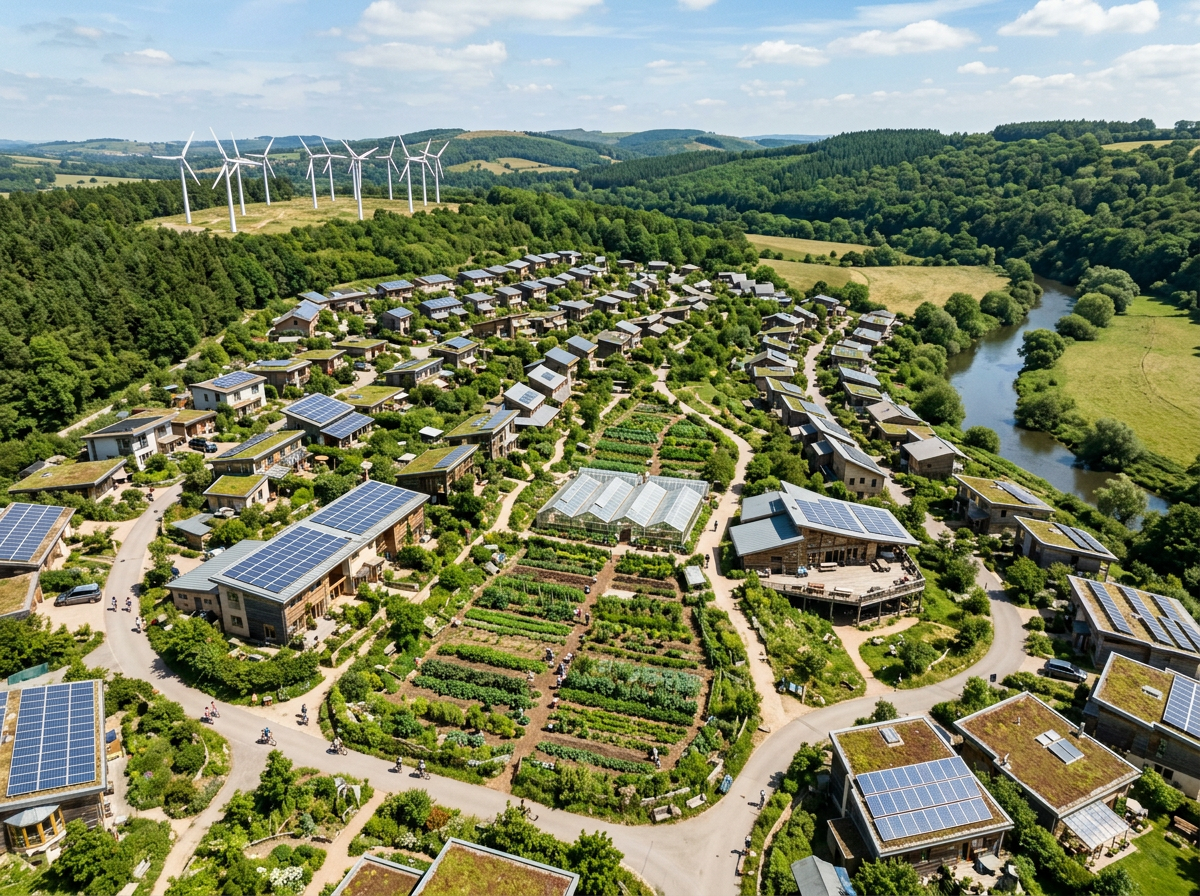
    • ecological responsibility,
    • institutional accountability,
    • human dignity,
    • and shared stewardship across generations.

    Civilizations ultimately become shaped by:

    • the stories they reward,
    • the identities they reinforce,
    • and the futures they imagine collectively.

    Conclusion

    Narratives are among the most powerful invisible forces shaping civilization.

    They influence:

    • identity,
    • institutions,
    • governance,
    • economics,
    • social cohesion,
    • and collective behavior.

    Narratives help societies:

    • coordinate,
    • interpret reality,
    • and imagine possible futures.

    However, narratives can also:

    • distort perception,
    • intensify tribalism,
    • justify harm,
    • and destabilize societies when disconnected from reality.

    Healthy civilizations therefore require:

    • narrative awareness,
    • critical thinking,
    • systems literacy,
    • and stories capable of balancing:
      • meaning,
      • complexity,
      • responsibility,
      • and human flourishing.

    The future of civilization may depend not only on:

    • technology,
    • economics,
    • or political systems,

    but also on:

    the narratives humanity chooses to live by.


    Suggested Crosslinks


    References

    Bruner, J. (1991). The narrative construction of reality. Critical Inquiry, 18(1), 1–21.

    Harari, Y. N. (2015). Sapiens: A brief history of humankind. Harper.

    McLuhan, M. (1964). Understanding media: The extensions of man. McGraw-Hill.

    The Living Archive is designed to be explored through pathways, categories, and search. If you’re looking for a specific idea, question, or theme, AI Search can help surface relevant connections across the archive.


    Attribution

    The Living Archive
    Integrative Frameworks for Regenerative Civilization

    © 2026 Gerald Daquila. All rights reserved.
    Part of the Life.Understood. knowledge ecosystem and Stewardship Institute initiative.

    This article is intended for educational, research, and civic inquiry purposes.
    Readers are encouraged to engage critically, verify sources independently, and explore related knowledge hubs for broader systems context.

  • ✨ Intentional Community & Social Design

    ✨ Intentional Community & Social Design


    The Canonical Knowledge Hub for Designing Regenerative Communities for Human Flourishing, Sovereignty, and Shared Resilience


    Primary Pillar: Regenerative Systems & Human Flourishing

    Purpose: To explore how intentional communities shape human relationships, governance, culture, resilience, stewardship, ecological sustainability, and collective well-being — while establishing the foundational principles of regenerative living, ethical leadership, distributed resilience, social trust, conscious participation, and long-term societal flourishing.


    Hub Status: Canonical Foundation Hub


    Placement: Main Navigation → Intentional Community Design


    Meta Description

    Explore intentional community design through stewardship, governance, systems thinking, regenerative living, social trust, ethical leadership, resilience, and conscious culture-building. Learn how healthy communities emerge, why social fragmentation occurs, and how intentional systems can support long-term human and ecological flourishing.


    Understanding the Landscape: The Sovereignty Ladder

    Before exploring the themes of sovereignty, stewardship, and governance in greater detail, it may be helpful to view the broader developmental landscape.

    The map below presents a framework for understanding how responsibility, agency, and contribution can expand across increasing circles of concern and longer time horizons. It is intended as an orienting framework rather than a measure of status, achievement, or personal worth.

    The Sovereignty Ladder illustrates how responsibility may expand from personal survival and stability toward stewardship, custodianship, and legacy across broader circles of concern and longer time horizons.

    Why This Framework Matters

    Healthy communities cannot be built solely through governance structures, shared land, or common goals.

    They emerge when individuals progressively expand their capacity for responsibility, stewardship, cooperation, and long-term thinking.

    The Sovereignty Ladder provides a developmental framework for understanding how responsibility can evolve from personal survival toward community stewardship, systems thinking, and intergenerational contribution.

    That gives the map purpose.

    Download a complimentary copy here


    What Is an Intentional Community?

    An intentional community is a group of people who consciously organize around shared values, agreements, responsibilities, and long-term aspirations.

    Unlike communities formed primarily through geography, convenience, or circumstance, intentional communities actively design their culture, governance, relationships, decision-making processes, and systems of mutual support.

    Intentional communities can take many forms, including cooperative neighborhoods, ecovillages, cohousing projects, stewardship networks, learning communities, regenerative settlements, spiritual communities, and distributed digital communities.

    At their core, intentional communities are experiments in conscious cooperation.


    Introduction

    Modern society is facing a convergence of crises: social fragmentation, institutional distrust, loneliness, ecological strain, economic instability, and the erosion of shared meaning.

    Across the world, many people are beginning to ask deeper questions:

    • What makes a community truly resilient?
    • Why do some groups collapse into conflict while others thrive?
    • How do we build cultures rooted in trust rather than fear?
    • What kinds of leadership sustain long-term coherence?
    • How can sovereignty and interdependence coexist?

    Intentional Community Design explores these questions through the lenses of systems thinking, stewardship, governance, psychology, culture, and regenerative living.

    This hub does not advocate escapism or ideological isolation. Rather, it examines how healthy communities emerge through ethical design, shared agreements, mutual responsibility, adaptive systems, and conscious participation.

    At its core, intentional community is not merely about shared land or alternative living arrangements. It is about designing relational ecosystems where human beings can cooperate without losing individuality, agency, dignity, or truth.


    Core Themes Within This Hub

    Sovereignty and Shared Responsibility

    Healthy communities require both personal sovereignty and collective coherence. Without sovereignty, communities become coercive. Without shared responsibility, communities fragment into instability and mistrust.

    These essays explore the balance between autonomy, stewardship, responsibility, and interdependence:

    Together, these pieces establish the psychological and ethical foundations necessary for resilient communities.


    Trust, Cooperation, and Social Cohesion

    Communities rise or fall on trust.

    Without trust, governance becomes control. Cooperation collapses into competition. Relationships become transactional. Fear replaces participation.

    This section examines the invisible architecture of trust, belonging, perception, and cooperation:

    These essays help explain why many modern systems experience fragmentation — and what conditions allow authentic cooperation to emerge.


    Stewardship and Leadership

    Intentional communities cannot rely solely on charisma, ideology, or inspiration. Long-term resilience requires mature stewardship structures and ethical leadership.

    These canonical pieces explore the responsibilities, pressures, and developmental requirements of leadership-centered systems:

    Rather than glorifying authority, these essays examine leadership as a form of ethical responsibility and energetic accountability.


    Governance, Systems, and Institutional Design

    Communities do not fail only because of individuals. They also fail because of poorly designed systems.

    Healthy systems distribute responsibility wisely, reduce corruption incentives, encourage participation, and maintain adaptive resilience over time.

    These pieces explore governance, structural behavior, institutional dynamics, and systemic incentives:

    Together, these essays investigate how systems condition behavior — and how regenerative governance models may create healthier outcomes.


    Culture, Identity, and Human Resilience

    Every intentional community carries a culture.

    Culture shapes values, belonging, behavior, conflict resolution, emotional safety, and long-term identity formation.

    These pieces explore cultural memory, resilience, identity formation, and the human search for meaning:

    These essays provide deeper insight into how culture influences collective behavior, leadership dynamics, and social cohesion.


    Operational and Structural Design

    Communities require more than vision.

    They also require onboarding systems, conflict pathways, role clarity, communication structures, contribution models, and sustainable operational frameworks.

    The following piece explores structural considerations for maintaining coherence over time:

    This work examines why healthy boundaries, transparent expectations, and ethical transition systems are necessary for long-term sustainability.


    Conflict, Repair, and Accountability

    Healthy communities are not communities without conflict.

    They are communities capable of addressing conflict without fragmentation.

    Topics include:

    • repair after harm
    • restorative processes
    • accountability systems
    • consent and boundaries
    • conflict transformation
    • trust rebuilding
    • community resilience under strain

    Featured Essays


    Why Intentional Community Matters Now

    Many people today are experiencing increasing isolation despite unprecedented digital connectivity.

    At the same time, trust in institutions continues to decline globally. Economic pressures, algorithmic fragmentation, political polarization, ecological instability, and psychological exhaustion are reshaping how people think about belonging and survival.

    As a result, intentional community is no longer a fringe concept.

    It is becoming a serious civilizational question:

    How do human beings live together in ways that preserve freedom, dignity, trust, resilience, and meaning?

    The answer is unlikely to emerge from ideology alone.

    It will require mature systems, ethical leadership, psychological integration, cultural healing, regenerative governance, and conscious participation.


    Suggested Reading Pathways

    Foundational Path

    1. Foundations of Sovereignty
    2. Belonging: The Deep Human Need to Be Seen
    3. Culture Is an Agreement — And Agreements Can Change
    4. Why Cooperation Breaks Down: Trust, Competition, and Survival
    5. Leadership and Stewardship: Guides for Responsible Decision-Making
    6. Sovereignty & Governance

    Systems and Governance Path

    1. Why Power Concentrates: The Hidden Logic of Systems
    2. How Systems Shape Behavior (And Why It Feels Personal)
    3. Why Incentives Fail in Philippine Systems: Understanding Patronage, Power, and Behavior
    4. Breaking the Loop: What Actually Changes Philippine Systems
    5. The Sovereign Leader: How to Practice Stewardship When Systems Fail

    Community Psychology Path

    1. Learning to Trust Again After Awakening
    2. Learning to Trust Yourself Again
    3. Belonging: The Deep Human Need to Be Seen
    4. Collective Sovereignty — How Personal Awakening Scales Into Cultural Change
    5. Sovereignty in the Smallest Temple: The Couple & the Family

    Closing Reflection

    Intentional communities are not perfected utopias.

    They are living systems.

    Like ecosystems, they require adaptation, accountability, boundaries, trust, participation, repair mechanisms, ethical leadership, and shared meaning.

    No structure can eliminate human complexity. But conscious design can reduce unnecessary suffering, improve cooperation, deepen resilience, and create environments where human beings are more capable of flourishing together.

    The future may depend less on finding perfect systems — and more on learning how to build trustworthy ones.

    This hub serves as an evolving archive for that exploration.


    The Community Question

    Human beings are profoundly social creatures.

    Yet many of the systems surrounding modern life increasingly produce isolation, fragmentation, dependency, mistrust, and weakened social bonds.

    The challenge is not simply how individuals survive.

    The challenge is how people learn to cooperate, govern themselves, share responsibility, resolve conflict, and cultivate belonging without sacrificing sovereignty.

    Intentional community asks a deceptively simple question:

    How can human beings live together in ways that increase freedom, trust, resilience, dignity, and long-term flourishing?

    The answer may become one of the defining questions of the century ahead.


    Continue the Exploration

    This article is part of a broader knowledge ecosystem exploring stewardship, ethical leadership, sovereignty, regenerative systems, human development, governance, technology ethics, and long-term civilizational resilience.


    Canonical Knowledge Hubs


    Related Topics

    • Intentional Community Design
    • Social Trust
    • Community Stewardship
    • Cooperative Governance
    • Distributed Leadership
    • Sovereignty
    • Consent & Boundaries
    • Community Accountability
    • Regenerative Living
    • Local Resilience
    • Conflict Transformation
    • Cultural Design
    • Civic Participation
    • Systems Thinking

    Recommended Next Reads


    Adjacent Knowledge Pathways

    This article may also connect with broader explorations into:

    • regenerative development,
    • ethical technology,
    • decentralized systems,
    • intentional communities,
    • civic renewal,
    • local resilience,
    • trauma-informed leadership,
    • and human sovereignty in the digital age.

    Intellectual Traditions

    The Intentional Community & Social Design Knowledge Hub draws together insights from a broad range of intellectual traditions concerned with the design, cultivation, and long-term flourishing of human communities. Its interdisciplinary foundations include community development, sociology, social ecology, systems thinking, governance theory, organizational behavior, environmental design, regenerative development, ecological economics, conflict transformation, participatory leadership, resilience studies, and human geography.

    Rather than advocating a single model of intentional community or social organization, this Hub serves as an integrative framework that brings these complementary traditions into dialogue. The essays, reference materials, and architectural frameworks gathered here synthesize established scholarship with original perspectives developed through the Living Archive, exploring how relationships, shared purpose, governance, stewardship, culture, and place interact to shape healthy and adaptive human communities across multiple scales.

    Readers are encouraged to engage critically with both the ideas presented here and the wider traditions from which they emerge. The Living Archive does not seek to prescribe a universal blueprint for community design. Instead, it provides a navigational framework that helps readers connect insights across disciplines while cultivating the wisdom, institutional literacy, and systems awareness needed to design communities that are resilient, regenerative, and deeply human.


    About the Author

    Gerald Daquila is an independent systems thinker, writer, and stewardship-focused researcher exploring ethical leadership, regenerative systems, governance, sovereignty, human development, decentralized civic models, and long-term civilizational resilience.

    His work integrates:

    • systems thinking,
    • ethical technology,
    • regenerative governance,
    • community stewardship,
    • human-centered development,
    • and philosophical inquiry into responsibility, sovereignty, and societal renewal.

    The broader body of work seeks to support:

    • ethical leadership formation,
    • resilient local systems,
    • conscious governance,
    • digital-era discernment,
    • and regenerative approaches to human flourishing.

    ©2026 Life.Understood. • Systems Thinking, Leadership Architecture, and Applied Coherence