Logo - Life.Understood.

Category: Civilizational Analysis

  • Trauma and Governance: How Unhealed Societies Create Dysfunctional Institutions

    Trauma and Governance: How Unhealed Societies Create Dysfunctional Institutions


    Exploring the Hidden Links Between Collective Trauma, Trust, Leadership, and Institutional Performance


    Meta Description

    How collective trauma shapes governance, trust, leadership, and institutions. Explore why unhealed societies often create dysfunctional systems—and what genuine healing requires.


    Why do some societies struggle with corruption, distrust, political instability, weak institutions, or cycles of dysfunctional leadership despite repeated reforms?

    Conventional explanations often focus on economics, laws, incentives, or political structures. These factors matter. Yet beneath many institutional failures lies a deeper and often overlooked reality: collective trauma.

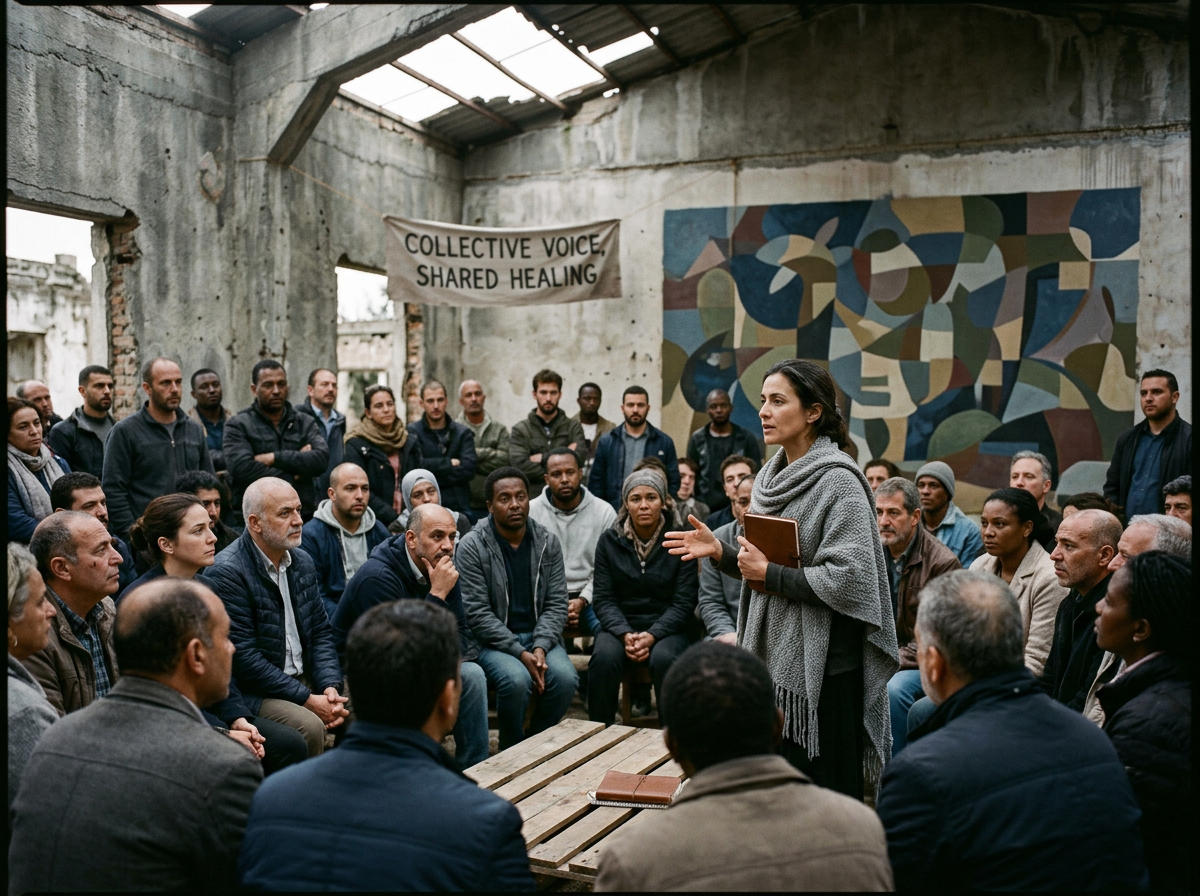
    Trauma is not merely an individual psychological experience. When traumatic experiences affect entire populations—through colonization, war, oppression, poverty, displacement, political violence, or systemic neglect—the effects can become embedded within culture, social norms, leadership patterns, and institutional behavior (Alexander et al., 2004).

    In this sense, governance is not simply a legal or administrative process. Governance becomes a reflection of collective consciousness, historical memory, and unresolved social wounds.

    Understanding this connection helps explain why dysfunctional systems often persist even when people genuinely desire change.


    Trauma Beyond the Individual

    Psychologists typically define trauma as an overwhelming experience that exceeds a person’s ability to cope and integrate the event (van der Kolk, 2014).

    However, trauma can also exist at larger scales:

    • Family trauma
    • Community trauma
    • Historical trauma
    • Cultural trauma
    • Intergenerational trauma

    Research demonstrates that traumatic experiences can influence future generations through social learning, family dynamics, cultural narratives, and even biological mechanisms associated with stress regulation (Yehuda & Lehrner, 2018).

    When enough people share similar unresolved wounds, these patterns can begin shaping entire social systems.

    A traumatized individual may struggle with trust, emotional regulation, or healthy boundaries.

    A traumatized society often struggles with:

    • Institutional trust
    • Cooperative behavior
    • Long-term planning
    • Accountability
    • Civic participation
    • Leadership selection

    The result is not merely personal suffering but systemic dysfunction.


    How Trauma Shapes Institutions

    Institutions do not emerge independently from society. Governments, corporations, schools, religious organizations, and community structures are all created and maintained by human beings.

    Consequently, institutions often inherit the unresolved psychological patterns of the populations that build them.

    Sociologists describe institutions as expressions of collective beliefs and social norms (Berger & Luckmann, 1966).

    If collective beliefs are shaped by fear, scarcity, distrust, or unresolved historical wounds, those dynamics frequently become embedded in institutional design.

    This can manifest in several ways.

    Hyper-Control and Centralization

    Trauma frequently creates a desire for safety through control.

    Individuals who have experienced instability often seek predictability and certainty. Societies may do the same.

    As a result, institutions can become excessively centralized, bureaucratic, and rigid.

    • Rules multiply.
    • Decision-making becomes concentrated.
    • Authority becomes protected rather than accountable.

    While these structures may initially appear stabilizing, excessive centralization often reduces adaptability and responsiveness.

    The system begins protecting itself rather than serving its intended purpose.

    Distrust as a Default Setting

    One of trauma’s most common consequences is the erosion of trust.

    People who have repeatedly experienced betrayal learn to anticipate future betrayal.

    At the societal level, this may create:

    • Suspicion of government
    • Distrust of media
    • Distrust of experts
    • Distrust of neighbors
    • Distrust of institutions

    Low-trust societies typically experience higher transaction costs, weaker cooperation, and slower collective problem-solving (Fukuyama, 1995).

    Without trust, governance becomes increasingly difficult because every interaction requires defensive mechanisms.

    Short-Term Thinking

    Trauma often forces attention toward immediate survival.

    When individuals or communities remain trapped in survival-oriented thinking, long-term planning becomes difficult.

    This can produce:

    • Reactive policymaking
    • Electoral short-termism
    • Resource depletion
    • Debt accumulation
    • Underinvestment in future generations

    The system becomes optimized for managing crises rather than preventing them.


    The Leadership Problem

    Many governance failures are ultimately leadership failures.

    However, trauma affects leadership selection as much as leadership performance.

    In healthy systems, leadership tends to be associated with competence, integrity, and stewardship.

    In traumatized systems, leadership may become associated with:

    • Dominance
    • Charisma
    • Patronage
    • Control
    • Status
    • Emotional reassurance

    Citizens experiencing uncertainty often seek figures who project strength, certainty, and protection.

    Unfortunately, these traits are not necessarily indicators of wisdom or competence.

    Research in political psychology suggests that fear and perceived threat can significantly influence voter preferences and leadership selection (Marcus et al., 2000).

    This dynamic helps explain why societies sometimes repeatedly choose leaders who reinforce existing dysfunctions rather than transform them.

    The issue is not simply individual leaders.

    The deeper issue is the collective psychological environment that determines which leaders rise to power.


    Trauma and Corruption

    Corruption is often discussed primarily as a legal or ethical problem.

    Yet corruption can also emerge as an adaptive response to unstable environments.

    In low-trust systems, people may conclude that formal institutions cannot reliably meet their needs.

    • As a result, informal networks become more important.
    • Relationships replace rules.
    • Connections replace procedures.
    • Loyalty replaces merit.

    Over time, these adaptive survival strategies can evolve into entrenched patronage systems.

    What begins as a coping mechanism eventually becomes institutionalized.

    This perspective does not excuse corruption.

    Rather, it helps explain why anti-corruption campaigns frequently fail when underlying social conditions remain unchanged.

    Without addressing the roots of distrust and insecurity, dysfunctional behaviors often reappear in new forms.


    Historical Trauma and National Identity

    Many societies carry unresolved historical wounds.

    Examples include:

    • Colonial domination
    • Slavery
    • Genocide
    • Civil war
    • Authoritarian rule
    • Forced displacement

    These experiences shape collective narratives about power, identity, and belonging.

    Historical trauma often influences how citizens relate to authority.

    • Some populations become highly deferential.
    • Others become deeply skeptical.
    • Many oscillate between dependence and rebellion.

    These patterns can persist for generations after the original events have ended (Alexander et al., 2004).

    Consequently, governance challenges frequently reflect unresolved historical experiences rather than merely contemporary political disagreements.


    Why Structural Reform Alone Often Fails

    One of the most important lessons from systems thinking is that outcomes emerge from underlying structures.

    • However, structures themselves emerge from culture.
    • And culture is shaped by shared experiences, beliefs, and memories.
    • This means governance reform cannot rely exclusively on new laws, constitutions, policies, or organizational charts.
    • Structural changes matter.

    But if collective behavior remains unchanged, old dynamics often reappear inside new institutions.

    A society may replace leaders while preserving the same power dynamics.

    • It may redesign agencies while maintaining the same distrust.
    • It may introduce accountability mechanisms while retaining the same culture of avoidance.

    The visible structure changes.

    The invisible operating system remains the same.


    Healing as Governance Infrastructure

    If trauma contributes to institutional dysfunction, then healing becomes more than a personal concern.

    It becomes a governance concern.

    Healthy governance requires citizens capable of:

    • Trusting appropriately
    • Managing conflict constructively
    • Cooperating across differences
    • Thinking beyond immediate survival
    • Participating in civic life

    These capacities depend partly upon psychological and cultural health.

    Societies that invest in healing often strengthen governance indirectly through:

    • Education
    • Community building
    • Truth and reconciliation processes
    • Trauma-informed institutions
    • Restorative justice practices
    • Mental health support systems

    Healing does not eliminate political disagreements.

    Nor does it guarantee good governance.

    However, it improves the collective capacity required to sustain healthy institutions.


    From Trauma Loops to Stewardship Cultures

    The deepest challenge is not merely fixing broken systems.

    It is transforming the conditions that continually recreate them.

    Trauma tends to generate cycles of fear, distrust, fragmentation, and reactive leadership.

    Healing creates the possibility of different cycles:

    • Trust instead of suspicion
    • Cooperation instead of fragmentation
    • Stewardship instead of domination
    • Responsibility instead of blame
    • Long-term thinking instead of survival thinking

    In this sense, governance is not only about constitutions, elections, regulations, or bureaucracies.

    It is also about the quality of relationships within a society.

    Institutions ultimately reflect the people who create them.

    When societies heal, institutions gain the possibility of healing as well.

    The future of governance may therefore depend not only on better policies, but on our collective willingness to confront historical wounds, integrate difficult truths, and build cultures capable of sustaining trust across generations.

    True institutional renewal begins where social healing and structural design meet.


    Conclusion

    Dysfunctional institutions rarely emerge from nowhere.

    They are often the visible expression of invisible social wounds accumulated across generations. Collective trauma shapes trust, leadership, power, cooperation, and institutional behavior in ways that conventional political analysis sometimes overlooks.

    Understanding governance through the lens of trauma does not reduce every problem to psychology. Rather, it expands our understanding of how culture, history, and human behavior influence systems. Lasting reform requires both structural change and collective healing.

    The healthiest societies are not those without trauma.

    They are those that develop the capacity to acknowledge it, learn from it, and prevent it from unconsciously shaping the future.

    Governance, at its best, becomes not merely the administration of power, but the stewardship of collective well-being.


    Related Reading


    References

    Alexander, J. C., Eyerman, R., Giesen, B., Smelser, N. J., & Sztompka, P. (2004). Cultural trauma and collective identity. University of California Press.

    Berger, P. L., & Luckmann, T. (1966). The social construction of reality. Anchor Books.

    Fukuyama, F. (1995). Trust: The social virtues and the creation of prosperity. Free Press.

    Marcus, G. E., Neuman, W. R., & MacKuen, M. (2000). Affective intelligence and political judgment. University of Chicago Press.

    van der Kolk, B. A. (2014). The body keeps the score: Brain, mind, and body in the healing of trauma. Viking.

    Yehuda, R., & Lehrner, A. (2018). Intergenerational transmission of trauma effects: Putative role of epigenetic mechanisms. World Psychiatry, 17(3), 243–257. https://doi.org/10.1002/wps.20568

    The Living Archive is designed to be explored through pathways, categories, and search. If you’re looking for a specific idea, question, or theme, AI Search can help surface relevant connections across the archive.


    Attribution

    The Living Archive
    Integrative Frameworks for Regenerative Civilization

    © 2026 Gerald Daquila. All rights reserved.
    Part of the Life.Understood. knowledge ecosystem and Stewardship Institute initiative.

    This article is intended for educational, research, and civic inquiry purposes.
    Readers are encouraged to engage critically, verify sources independently, and explore related knowledge hubs for broader systems context.

  • Narrative Architecture: How Meaning Shapes Collective Reality

    Narrative Architecture: How Meaning Shapes Collective Reality


    Why the Stories Societies Tell Become the Structures They Inhabit


    Meta Description

    Stories do more than entertain—they shape institutions, identities, and civilizations. Explore narrative architecture, collective meaning-making, and how shared narratives influence trust, governance, culture, and social reality.


    Human beings live in two worlds simultaneously.

    The first is the physical world.

    • It consists of material realities, biological constraints, geography, infrastructure, technology, and the tangible conditions of existence.

    The second is the world of meaning.

    • This world consists of stories, symbols, identities, beliefs, values, memories, aspirations, and shared understandings.

    While the physical world determines what is possible, the world of meaning often determines what people attempt, tolerate, resist, or pursue.

    This distinction is important because societies are not held together by material systems alone.

    Civilizations depend upon shared interpretations of reality.

    • People cooperate because they believe certain things to be true.
    • They support institutions because they perceive them as legitimate.
    • They make sacrifices because they identify with larger narratives.
    • They participate in collective endeavors because they believe those endeavors matter.

    In this sense, societies are built not only through laws, markets, and technologies but through what might be called narrative architecture: the structures of meaning that shape how people understand themselves, one another, and the world they inhabit.

    Understanding narrative architecture may be essential for understanding culture, governance, institutional stability, and social change in the twenty-first century.


    Human Beings Are Meaning-Making Creatures

    Unlike most species, human beings do not merely respond to their environment.

    • They interpret it.
    • Events rarely speak for themselves.
    • People assign meaning to events through stories.

    The same experience can produce radically different responses depending upon how it is interpreted.

    • A setback may be understood as failure or as growth.
    • A social change may be perceived as progress or decline.
    • A crisis may be seen as catastrophe or opportunity.

    Psychologist Jerome Bruner argued that narrative is one of the primary ways human beings organize experience and construct reality (Bruner, 1991).

    Stories help individuals answer fundamental questions:

    • Who am I?
    • What matters?
    • Where do I belong?
    • What future am I moving toward?
    • What sacrifices are worth making?

    At the societal level, narrative performs similar functions.

    • It creates coherence.
    • It provides direction.
    • It enables coordination.

    Without narrative, information remains fragmented.

    Meaning emerges when information is organized into stories.


    Narrative Architecture Is Social Infrastructure

    When people hear the word infrastructure, they typically think of roads, power grids, communication networks, or transportation systems.

    These forms of infrastructure are essential.

    Yet societies also rely on less visible forms of infrastructure.

    • Trust.
    • Shared memory.
    • Identity.
    • Legitimacy.
    • Meaning.

    Narrative architecture belongs within this category.

    It functions as a form of symbolic infrastructure that enables large-scale cooperation.

    As explored in Civilizations Run on Stories: The Hidden Power of Symbolic Infrastructure,” collective narratives help societies coordinate behavior among people who may never meet one another.

    Nations exist partly because citizens share stories about belonging.

    • Institutions function because people believe in their legitimacy.
    • Economies operate because participants trust symbolic systems such as currencies, contracts, and markets.

    Narrative architecture provides the framework that makes these systems intelligible.

    Without it, coordination becomes increasingly difficult.

    To understand why narrative functions as a form of social infrastructure, it is useful to examine the process through which information becomes meaning.

    Human beings do not respond directly to facts alone. Experiences are interpreted through symbols, language, memory, identity, and narrative frameworks that shape how reality is perceived and understood.

    The framework below illustrates how meaning emerges through these layers of interpretation and why shared narratives play such a powerful role in shaping collective behavior, institutions, and social reality.

    Figure 1. Meaning as a Mediating Layer Between Information and Social Reality.

    Download Reference Map 005: Semantic Mediation Model

    Human beings do not interact with reality through raw information alone. Experience is interpreted through symbols, narratives, identities, and shared meaning systems that influence perception, behavior, and collective action.

    The Semantic Mediation Model illustrates how these interpretive layers shape institutions, governance, culture, and the social realities societies ultimately inhabit.


    Every Institution Tells a Story

    Institutions often appear objective.

    • Governments have laws.
    • Universities have curricula.
    • Organizations have procedures.
    • Courts have legal frameworks.

    Yet beneath these structures lies narrative.

    Every institution embodies assumptions about:

    • Human nature
    • Authority
    • Responsibility
    • Justice
    • Success
    • Social order

    These assumptions are communicated through stories.

    • A democracy tells a story about participation and representation.
    • A meritocratic system tells a story about achievement and opportunity.
    • A market economy tells a story about exchange and value creation.
    • The story may not always be explicit.

    Nevertheless, it influences how people interpret institutional behavior.

    This insight connects directly with Every Governance System Encodes a Model of Human Consciousness.”

    Governance systems are not merely administrative arrangements.

    They are narrative expressions of deeper assumptions about human beings and society.


    Shared Narratives Create Collective Reality

    One of the most remarkable features of human civilization is the ability of large groups to cooperate around shared narratives.

    Historian Yuval Noah Harari (2015) argues that many of humanity’s most important social structures depend upon collective belief.

    • Money.
    • Corporations.
    • Governments.
    • Legal systems.
    • Nations.

    These entities possess real consequences.

    Yet they function because people collectively agree to participate in the narratives that sustain them.

    The power of narrative therefore extends beyond communication.

    • Narratives help create social reality.
    • They shape expectations.
    • They influence behavior.
    • They guide decision-making.

    When enough people believe a story, institutions often emerge to support it.

    Over time, those institutions reinforce the story in return.

    This creates a feedback loop between narrative and structure.


    Meaning Shapes Perception

    Narratives do more than describe reality.

    • They shape what people perceive.
    • Human attention is limited.
    • People cannot process everything happening around them simultaneously.
    • Narratives help determine what receives attention and what remains invisible.

    For example, two individuals may observe the same event yet interpret it differently because they operate within different narrative frameworks.

    • One may view technological change as progress.
    • Another may view it as disruption.
    • One may interpret globalization as opportunity.
    • Another may interpret it as loss.
    • Neither perception emerges solely from facts.
    • Interpretation depends upon meaning.

    This dynamic connects closely with Attention as Ecology: Why Human Focus Is Becoming a Civilizational Resource.

    Attention and narrative function together.

    Narratives guide attention.

    Attention reinforces narratives.

    Together they shape collective perception.


    Narrative Breakdown Precedes Institutional Breakdown

    Institutional collapse rarely begins with structural failure alone.

    Often, it begins with narrative failure.

    • People stop believing.
    • They stop identifying with collective stories.
    • They lose confidence in institutions.
    • They become uncertain about shared goals.

    As explored in Why Institutional Collapse Often Begins as Psychological Disconnection,” institutions depend upon psychological participation.

    That participation is sustained partly through narrative legitimacy.

    When shared narratives weaken, institutions often struggle to maintain trust and cooperation.

    This does not mean narratives must remain static.

    Healthy societies continuously update their stories.

    However, they require enough narrative coherence to sustain collective action.

    Without it, fragmentation increases.


    Narrative Competition in the Digital Era

    For much of history, narratives evolved relatively slowly.

    Religious traditions, cultural myths, educational institutions, and civic structures provided relatively stable frameworks of meaning.

    Digital technologies have changed this environment dramatically.

    • Information flows now operate at unprecedented speed.
    • Individuals encounter countless narratives daily.
    • Social media platforms amplify competing interpretations of reality.
    • AI systems increasingly participate in the production and distribution of meaning.

    The result is a highly competitive narrative ecosystem.

    While this creates opportunities for diverse perspectives, it also creates challenges.

    • Shared understanding becomes more difficult to maintain.
    • Common reference points weaken.
    • People increasingly inhabit different informational realities.

    This phenomenon contributes to many contemporary discussions surrounding polarization, trust, and social fragmentation.

    As explored in The Future of Knowing: From Search Engines to Semantic Mediation,” the challenge is no longer access to information.

    The challenge increasingly involves interpretation.


    Narrative Architecture and Identity

    Individuals construct identity through narrative.

    People understand their lives through stories about:

    • Origins
    • Experiences
    • Relationships
    • Aspirations
    • Challenges
    • Achievements

    Psychologist Dan McAdams (2001) describes identity as a life story that individuals continuously revise and reinterpret.

    Societies function similarly.

    Cultures maintain narratives about:

    • History
    • Values
    • Collective achievements
    • Shared struggles
    • Future possibilities

    These narratives provide continuity across generations.

    They help people locate themselves within larger contexts.

    This relationship between narrative and identity is explored further in Memory, Identity, and Civilizational Amnesia.”

    Memory preserves experience.

    Narrative organizes memory into meaning.

    Identity emerges from the relationship between the two.


    Healthy Narratives Must Adapt

    One common misconception is that stability requires preserving narratives unchanged.

    History suggests otherwise.

    Narratives that cannot adapt often lose relevance.

    • Societies evolve.
    • Technologies change.
    • Institutions transform.
    • New realities emerge.

    Healthy narrative systems maintain continuity while remaining open to revision.

    This process resembles what is explored in Adaptive Meaning Systems: How Humans Navigate Rapid Cultural Change.”

    Adaptive narratives provide enough stability to preserve identity while remaining flexible enough to incorporate new information.

    This balance is essential.

    • Narratives that become too rigid may become disconnected from reality.
    • Narratives that become too fluid may fail to provide coherence.
    • Resilience depends upon maintaining both continuity and adaptability.

    Narrative Architecture and Governance

    Governance ultimately depends upon shared meaning.

    • Laws can establish rules.
    • Institutions can create procedures.
    • Policies can define incentives.

    Yet governance also requires legitimacy.

    People must believe the system deserves participation.

    This legitimacy emerges partly from narrative.

    Narratives explain:

    • Why institutions exist
    • What purposes they serve
    • What values they protect
    • What future they seek to create

    As explored in Leadership Beyond Control: The Rise of Coherence-Based Governance and Regenerative Governance: What Comes After Extraction-Based Systems?, modern governance increasingly depends upon trust, participation, and shared understanding.

    Narrative architecture provides the cultural foundation that makes these conditions possible.


    The Future Will Be Shaped by Meaning

    Technological change often dominates discussions about the future.

    • Artificial intelligence.
    • Automation.
    • Biotechnology.
    • Digital networks.

    These developments matter enormously.

    Yet technology alone does not determine societal outcomes.

    Human interpretation determines how technologies are understood, adopted, regulated, and integrated.

    The future therefore depends not only on innovation but on meaning.

    • What stories will societies tell about progress?
    • What narratives will shape identity?
    • What visions of flourishing will guide decision-making?

    These questions are not secondary.

    They are central.

    Narrative architecture influences which futures become imaginable and which remain inaccessible.


    The Stories We Inhabit Become the Worlds We Build

    Civilizations are shaped by more than resources, technologies, and institutions.

    They are shaped by the meanings people share.

    Narratives organize experience.

    • They guide attention.
    • They sustain identity.
    • They support cooperation.
    • They create legitimacy.
    • They influence governance.

    Most importantly, they help transform collections of individuals into societies capable of collective action.

    The strongest narratives are not necessarily those that eliminate complexity.

    They are those that help people navigate complexity together.

    As humanity enters an era defined by rapid technological, cultural, and institutional change, understanding narrative architecture becomes increasingly important.

    Because before societies build structures, they build stories.

    And over time, the stories they inhabit often become the realities they create.


    Related Reading


    References

    Bruner, J. (1991). The narrative construction of reality. Critical Inquiry, 18(1), 1–21.

    Harari, Y. N. (2015). Sapiens: A brief history of humankind. Harper.

    McAdams, D. P. (2001). The psychology of life stories. Review of General Psychology, 5(2), 100–122.

    Taylor, C. (2007). A secular age. Harvard University Press.

    Berger, P. L., & Luckmann, T. (1966). The social construction of reality: A treatise in the sociology of knowledge. Anchor Books.


    Attribution

    The Living Archive
    Integrative Frameworks for Systems, Leadership, Meaning, and Human Flourishing

    © 2026 Gerald Daquila. All rights reserved.

    Part of the Life.Understood. knowledge ecosystem and Stewardship Institute initiative.

    This archive is intended for educational, reflective, and civic inquiry purposes. Readers are encouraged to engage critically, think independently, and explore the material at their own pace.

    “Before societies build institutions, they build meanings. Before they build meanings, they tell stories.”

  • Feedback Loops and Civilization

    Feedback Loops and Civilization


    How Reinforcing and Balancing Dynamics Shape Societies Over Time


    Meta Description

    Explore how feedback loops shape civilization through economics, governance, technology, ecology, institutions, and human behavior. A systems-thinking examination of reinforcing and balancing dynamics in complex societies.


    Introduction

    Civilizations are not static structures.

    They are dynamic systems continuously shaped by feedback.

    Economic systems respond to incentives. Governance systems react to public trust and institutional performance. Ecological systems respond to extraction pressures. Technological systems reshape behavior, which then alters institutions, culture, and social organization in return.

    These interacting cycles form feedback loops.

    Feedback loops influence whether systems stabilize, destabilize, adapt, expand, fragment, or collapse over time.

    Understanding civilization therefore requires more than analyzing isolated events or individual decisions.

    It requires understanding the recursive dynamics shaping collective behavior across interconnected systems.

    Many of the most important forces influencing societies are not immediately visible because feedback loops often operate gradually, indirectly, and across multiple scales simultaneously.

    Yet they profoundly shape:

    • Economic stability
    • Governance legitimacy
    • Social trust
    • Ecological resilience
    • Technological acceleration
    • Institutional adaptation
    • Cultural transformation
    • Civilizational continuity

    Feedback loops are among the foundational mechanisms through which complex systems evolve.

    Civilization itself can be understood as a vast network of interacting feedback systems.


    What Is a Feedback Loop?

    A feedback loop occurs when the output of a system influences the future behavior of that same system.

    In simple terms:

    A system reacts to its own effects.

    Feedback loops exist throughout nature, technology, economics, governance, ecosystems, and human behavior.

    There are two primary categories:

    Positive Feedback Loops

    These amplify change.

    They reinforce movement in a particular direction.

    Examples include:

    • Viral social media amplification
    • Financial bubbles
    • Population growth cycles
    • Escalating political polarization
    • Compounding technological adoption

    Positive feedback loops accelerate systems.

    They increase momentum.


    Negative Feedback Loops

    These stabilize systems.

    They counteract extremes and restore balance.

    Examples include:

    • Thermostatic regulation
    • Ecological predator-prey balancing
    • Regulatory oversight
    • Community accountability systems
    • Market corrections

    Negative feedback loops increase stability and resilience.

    Healthy systems generally contain both reinforcing and balancing dynamics.


    Civilization as a Feedback System

    Human civilization operates through countless interacting feedback loops.

    Economic systems influence governance legitimacy. Governance structures shape public trust. Public trust affects institutional stability. Institutional conditions influence economic behavior. Ecological systems shape resource availability, which then affects political and economic systems.

    These interactions continuously reshape civilization over time.

    Importantly, many feedback loops are nonlinear.

    Small changes can produce disproportionately large outcomes when loops amplify themselves recursively.

    For example:

    • Small technological innovations may transform entire industries.
    • Minor financial instability can trigger systemic contagion.
    • Social narratives can escalate rapidly through networked communication systems.
    • Ecological degradation may compound across decades before becoming visibly destabilizing.

    Civilizational change therefore often appears gradual until feedback amplification accelerates visible transformation.


    Economic Feedback Loops

    Economic systems are deeply recursive.

    Consumer behavior influences markets. Markets influence employment. Employment shapes consumption patterns. Financial systems influence investment, which then reshapes production and infrastructure.

    Examples of reinforcing economic feedback loops include:

    Wealth Concentration

    Capital accumulation often generates increasing returns, allowing wealth concentration to reinforce itself over time.

    Financial Speculation

    Rising asset prices attract more speculation, which further inflates prices until instability emerges.

    Debt Expansion

    Easy credit stimulates consumption and growth, which may encourage further debt expansion.

    Balancing feedback loops also exist:

    • Market corrections
    • Regulatory intervention
    • Resource constraints
    • Interest rate adjustments

    When balancing mechanisms weaken, positive loops may become destabilizing.

    This can contribute to economic bubbles, systemic fragility, and institutional stress.


    Governance and Institutional Feedback

    Governance systems depend heavily upon feedback integrity.

    Healthy institutions require accurate information regarding:

    • Public conditions
    • Infrastructure performance
    • Economic stability
    • Ecological stress
    • Institutional trust
    • Policy outcomes

    When governance systems process feedback effectively, adaptation becomes possible.

    However, institutional decay often involves feedback distortion.

    Examples include:

    • Bureaucratic filtering of bad news
    • Politicization of information
    • Narrative management replacing transparency
    • Incentive structures discouraging accountability
    • Data manipulation
    • Public distrust reducing informational coherence

    As feedback quality deteriorates, institutions lose adaptive capacity.

    Systems become increasingly disconnected from reality while maintaining surface stability.

    Eventually, accumulated distortions may produce systemic crises.


    Technology and Accelerating Feedback Loops

    Modern technology dramatically accelerates feedback dynamics.

    Digital systems compress communication timescales from days or months to seconds.

    This amplification reshapes:

    • Information spread
    • Financial markets
    • Political mobilization
    • Cultural trends
    • Social coordination
    • Emotional contagion

    Social media platforms operate heavily through positive feedback loops.

    Algorithms amplify content generating high engagement. Increased engagement produces greater visibility, which generates further engagement.

    This recursive amplification can intensify:

    • Polarization
    • Outrage cycles
    • Viral misinformation
    • Memetic contagion
    • Collective emotional synchronization

    Technological acceleration therefore increases the speed and scale at which feedback loops shape civilization.


    Ecological Feedback Loops

    Ecological systems contain complex balancing and reinforcing feedback structures.

    Examples include:

    Climate Feedback Loops

    Melting ice reduces planetary reflectivity, increasing heat absorption and accelerating warming.

    Soil Degradation

    Loss of biodiversity weakens ecosystem resilience, increasing vulnerability to further degradation.

    Deforestation Cycles

    Forest loss alters rainfall patterns, which may intensify ecological instability.

    Human systems increasingly interact with ecological feedback loops at planetary scale.

    Industrial civilization often disrupts balancing mechanisms while unintentionally amplifying destabilizing loops.

    Ecological overshoot emerges when extraction and consumption exceed regenerative capacity over time.

    Understanding ecological feedback dynamics is therefore essential for long-term civilizational stability.


    Social Trust and Civilizational Stability

    Trust itself operates through feedback dynamics.

    High-trust societies often experience:

    • Greater cooperation
    • Stronger institutions
    • Lower transaction costs
    • More effective governance
    • Higher civic participation

    These conditions reinforce one another.

    Conversely, distrust may generate destabilizing loops:

    • Institutional failure reduces trust
    • Reduced trust weakens cooperation
    • Weak cooperation reduces governance effectiveness
    • Governance failures further erode trust

    Francis Fukuyama (1995) described trust as a form of social capital enabling large-scale coordination.

    Civilizations therefore depend not only upon material infrastructure, but upon relational feedback systems.


    Feedback Delays and Systems Blindness

    One major challenge in complex systems is delayed feedback.

    Actions may generate consequences years or decades later.

    Examples include:

    • Ecological degradation
    • Infrastructure neglect
    • Debt accumulation
    • Institutional erosion
    • Educational decline
    • Public health deterioration

    Delayed consequences often create systems blindness because short-term conditions may appear stable while long-term fragility accumulates invisibly.

    This delay encourages short-term optimization even when long-term risks intensify.

    Political systems especially struggle with delayed feedback because electoral cycles often reward immediate visible outcomes over long-term resilience planning.


    Positive Feedback and Civilizational Fragility

    Positive feedback loops are not inherently harmful.

    They often drive innovation, growth, learning, and adaptation.

    However, unchecked positive loops may destabilize systems when balancing mechanisms weaken.

    Examples include:

    • Financial bubbles
    • Ecological overshoot
    • Hyper-polarization
    • Runaway technological acceleration
    • Institutional overcomplexification
    • Resource extraction spirals

    Joseph Tainter (1988) argued that societies often respond to problems by increasing complexity, which initially improves coordination but eventually increases maintenance burdens and systemic fragility.

    This can become a reinforcing loop:

    More complexity → higher maintenance burden → more institutional strain → reduced adaptability → further complexity accumulation.

    Without balancing mechanisms, civilizations may become increasingly brittle.


    Balancing Feedback and Resilience

    Resilient systems depend heavily upon balancing feedback loops.

    Examples include:

    • Ecological regeneration cycles
    • Constitutional checks and balances
    • Community accountability
    • Transparent information systems
    • Distributed governance
    • Economic regulation
    • Cultural norms reinforcing cooperation

    Balancing mechanisms help systems remain adaptive without collapsing into instability.

    Healthy civilizations generally maintain dynamic equilibrium rather than permanent stasis.

    Too much rigidity weakens adaptability.

    Too much amplification destabilizes coherence.

    Resilience emerges through adaptive balance.


    Information Systems and Reality Integrity

    Civilizations increasingly depend upon informational feedback systems.

    Public understanding influences:

    • Economic behavior
    • Governance legitimacy
    • Social coordination
    • Crisis response
    • Institutional trust

    When information systems become distorted, societies lose accurate feedback regarding reality itself.

    This may occur through:

    • Disinformation ecosystems
    • Algorithmic amplification
    • Ideological fragmentation
    • Attention economies
    • Narrative monopolization

    Without reliable informational feedback, adaptive governance becomes difficult because systems lose the ability to perceive conditions accurately.

    Reality integrity therefore becomes a civilizational resilience issue.


    Feedback Loops and Human Consciousness

    Feedback loops also shape human psychology and culture.

    Human behavior responds continuously to:

    • Social reinforcement
    • Institutional incentives
    • Technological environments
    • Economic pressures
    • Cultural narratives
    • Emotional contagion

    Civilization is therefore partly a cognitive feedback environment.

    Cultural norms reinforce behaviors, which reshape institutions, which then influence future behavior.

    Understanding civilization requires recognizing that societies continuously recreate themselves recursively through collective interaction.


    Adaptive Civilizations and Feedback Literacy

    Adaptive civilizations tend to maintain stronger feedback sensitivity.

    This includes:

    • Transparent information systems
    • Institutional accountability
    • Ecological awareness
    • Long-term thinking
    • Distributed governance
    • Open scientific inquiry
    • Civic participation
    • Corrective mechanisms

    Healthy systems remain capable of self-correction because they preserve feedback integrity.

    Fragile systems often suppress, distort, or ignore feedback until instability becomes unavoidable.

    Feedback literacy may therefore become an essential form of civilizational intelligence.


    Toward Feedback-Aware Governance

    Modern civilization increasingly operates within tightly interconnected systems where feedback amplification occurs at unprecedented speed and scale.

    Future resilience may depend upon building governance systems capable of:

    • Detecting emerging instability early
    • Integrating distributed information
    • Preserving accountability
    • Maintaining balancing mechanisms
    • Reducing runaway amplification
    • Supporting adaptive learning

    This requires systems thinking rather than isolated event-based analysis.

    Civilization is not shaped solely by isolated decisions.

    It evolves recursively through interacting loops of behavior, incentives, information, ecology, infrastructure, and institutional adaptation.

    The future may belong to societies capable of understanding these dynamics without becoming overwhelmed by them.

    Because civilizations often rise or fall not from singular events alone, but from the feedback systems silently shaping them across time.


    Suggested Crosslinks


    References

    Fukuyama, F. (1995). Trust: The social virtues and the creation of prosperity. Free Press.

    Meadows, D. H. (2008). Thinking in systems: A primer. Chelsea Green Publishing.

    Senge, P. M. (1990). The fifth discipline: The art and practice of the learning organization. Doubleday.

    Tainter, J. A. (1988). The collapse of complex societies. Cambridge University Press.

    The Living Archive is designed to be explored through pathways, categories, and search. If you’re looking for a specific idea, question, or theme, AI Search can help surface relevant connections across the archive.


    Attribution

    The Living Archive
    Integrative Frameworks for Regenerative Civilization

    © 2026 Gerald Daquila. All rights reserved.
    Part of the Life.Understood. knowledge ecosystem and Stewardship Institute initiative.

    This article is intended for educational, research, and civic inquiry purposes.
    Readers are encouraged to engage critically, verify sources independently, and explore related knowledge hubs for broader systems context.

  • Institutional Memory Systems

    Institutional Memory Systems


    Why Civilizations Depend Upon the Preservation, Transmission, and Integrity of Knowledge


    Meta Description

    Explore how institutional memory systems preserve governance continuity, organizational resilience, collective knowledge, and civilizational stability through archives, culture, education, and adaptive systems design.


    Introduction

    Civilizations are not sustained by infrastructure alone.

    They are sustained by memory.

    Every society depends upon the preservation and transmission of knowledge across generations.

    Governance systems, legal frameworks, engineering practices, ecological understanding, cultural traditions, scientific discoveries, organizational procedures, and social norms all rely upon institutional memory systems capable of maintaining continuity over time.

    Without memory, systems repeatedly lose accumulated learning.

    Mistakes recur. Coordination weakens. Fragility increases. Institutions become reactive rather than adaptive because hard-earned knowledge disappears faster than societies can integrate it.

    Institutional memory systems therefore function as civilizational infrastructure.

    They preserve not only information, but continuity itself.

    In an era of accelerating complexity, technological disruption, informational overload, and institutional instability, the integrity of collective memory may become increasingly important to long-term societal resilience.

    Because civilizations that cannot remember eventually struggle to sustain coherence.


    What Is Institutional Memory?

    Institutional memory refers to the accumulated knowledge, experience, practices, cultural understanding, operational procedures, and historical awareness retained within organizations, communities, and societies across time.

    Institutional memory may include:

    • Governance procedures
    • Legal precedents
    • Engineering knowledge
    • Ecological stewardship practices
    • Historical records
    • Cultural traditions
    • Organizational lessons
    • Scientific understanding
    • Crisis response experience
    • Social coordination mechanisms

    This memory can exist within:

    • Archives
    • Educational systems
    • Oral traditions
    • Cultural norms
    • Digital databases
    • Institutional structures
    • Experienced individuals
    • Community practices

    Institutional memory allows societies to build cumulatively rather than restarting continuously from fragmentation.


    Civilization as Accumulated Knowledge

    Human civilization advances partly because knowledge accumulates across generations.

    Agriculture, medicine, governance, architecture, science, mathematics, engineering, philosophy, and infrastructure all emerged through preserved learning over long historical timescales.

    When knowledge transmission weakens, societal capacity may decline rapidly.

    Historical collapses often involved not merely political instability, but degradation of institutional continuity itself.

    Examples throughout history include:

    • Loss of engineering knowledge
    • Decline of literacy systems
    • Fragmentation of governance records
    • Disruption of trade coordination
    • Collapse of educational institutions
    • Destruction of archives and libraries

    Civilizations require mechanisms capable of carrying forward operational understanding across periods of instability.

    Without memory systems, complexity becomes difficult to sustain.


    Institutional Memory and Governance Stability

    Governance systems rely heavily upon continuity.

    Administrative competence depends upon accumulated operational knowledge regarding:

    • Legal systems
    • Infrastructure management
    • Resource coordination
    • Crisis response
    • Diplomatic processes
    • Financial systems
    • Public administration

    When experienced personnel disappear without effective knowledge transfer, institutional capability often weakens.

    This phenomenon may appear through:

    • Bureaucratic dysfunction
    • Repeated policy failures
    • Loss of procedural coherence
    • Organizational inefficiency
    • Declining adaptive capacity

    Institutional memory therefore functions as a stabilizing mechanism within governance systems.

    Healthy institutions preserve learning while remaining capable of adaptation.

    Fragile institutions frequently lose memory faster than they develop wisdom.


    Tacit Knowledge and the Limits of Documentation

    Not all institutional knowledge can be fully written down.

    Much operational competence exists as tacit knowledge — practical understanding developed through lived experience.

    Examples include:

    • Leadership judgment
    • Community trust networks
    • Ecological intuition
    • Skilled craftsmanship
    • Crisis management experience
    • Informal coordination systems
    • Cultural interpretation

    Tacit knowledge is often difficult to formalize because it depends upon context, relationships, timing, and embodied practice.

    As a result, institutional memory depends not only upon archives, but upon mentorship, apprenticeship, participation, and intergenerational transmission.

    Societies that lose pathways for transmitting tacit knowledge may experience hidden forms of decline even when formal information remains available.


    Information Overload and the Modern Memory Crisis

    Modern civilization produces unprecedented quantities of information.

    However, information abundance does not automatically create wisdom.

    In fact, excessive informational fragmentation may weaken institutional memory by overwhelming the capacity for coherent integration.

    Herbert Simon (1971) warned that an abundance of information creates a scarcity of attention.

    Modern systems increasingly face challenges such as:

    • Data overload
    • Fragmented archives
    • Algorithmic filtering
    • Shortened attention cycles
    • Rapid media turnover
    • Ephemeral digital content
    • Loss of contextual understanding

    Under such conditions, societies may accumulate massive amounts of information while simultaneously losing long-term coherence.

    This creates a paradox:

    Civilization may become increasingly data-rich while becoming memory-poor.


    Digital Systems and the Fragility of Knowledge Preservation

    Digital systems dramatically expand humanity’s capacity to store information.

    However, digital memory systems also introduce new vulnerabilities.

    These include:

    • Platform dependency
    • Data corruption
    • Cybersecurity risks
    • Proprietary access control
    • Technological obsolescence
    • Algorithmic invisibility
    • Information manipulation
    • Centralized infrastructure fragility

    Unlike physical archives that can survive independently across centuries, digital systems often depend upon highly complex technological ecosystems requiring constant maintenance and compatibility.

    Long-term preservation therefore becomes a systems challenge rather than merely a storage challenge.

    Questions increasingly emerge regarding:

    • Digital sovereignty
    • Open standards
    • Decentralized archives
    • Redundant preservation systems
    • Knowledge accessibility
    • Information integrity

    Institutional memory in the digital age depends not only upon storage capacity, but resilience architecture.


    Cultural Memory and Civilizational Identity

    Institutional memory is not purely administrative.

    Culture itself functions as a memory system.

    Stories, rituals, language, art, philosophy, ethics, myths, and collective narratives transmit civilizational identity across generations.

    Cultural memory helps societies preserve:

    • Shared meaning
    • Moral frameworks
    • Historical lessons
    • Identity continuity
    • Collective orientation
    • Intergenerational cohesion

    When cultural memory fragments, societies may experience increasing disorientation, polarization, and instability.

    Civilizations require not only technical coordination, but narrative coherence.

    Without shared memory, collective identity weakens.


    Ecological Memory and Indigenous Knowledge

    Many traditional and indigenous societies preserved sophisticated ecological memory systems across generations.

    These systems often included:

    • Seasonal agricultural knowledge
    • Watershed management
    • Biodiversity stewardship
    • Fire management practices
    • Fisheries coordination
    • Ecological observation cycles

    Such knowledge frequently emerged through long-term relationship with specific ecosystems rather than abstract centralized planning.

    Modern industrial systems sometimes displaced these memory systems while underestimating their adaptive sophistication.

    As ecological instability increases, societies may increasingly recognize the importance of preserving diverse forms of ecological memory and localized stewardship knowledge.


    Organizational Amnesia and Institutional Fragility

    Organizations frequently experience institutional amnesia.

    This occurs when knowledge loss outpaces knowledge transfer.

    Common causes include:

    • Leadership turnover
    • Short-term incentives
    • Bureaucratic fragmentation
    • Rapid scaling
    • Outsourcing of expertise
    • Technological disruption
    • Weak documentation systems
    • Cultural erosion

    Institutional amnesia increases fragility because organizations repeatedly encounter problems they previously solved but failed to remember.

    This creates cyclical dysfunction.

    Adaptive systems require mechanisms for retaining lessons across time.

    Otherwise, complexity repeatedly resets itself through avoidable failure.


    Learning Systems and Adaptive Civilization

    Healthy institutional memory systems do more than preserve the past.

    They enable adaptive learning.

    This requires balancing:

    • Stability and flexibility
    • Preservation and innovation
    • Tradition and adaptation
    • Continuity and experimentation

    Rigid institutions sometimes preserve outdated structures too aggressively.

    Conversely, hyper-disrupted systems may lose continuity entirely.

    Adaptive civilizations maintain memory while remaining capable of integrating new realities.

    This may involve:

    • Transparent archives
    • Open knowledge systems
    • Intergenerational mentorship
    • Civic education
    • Decentralized preservation
    • Historical literacy
    • Institutional accountability
    • Long-term systems thinking

    Learning societies strengthen resilience because they accumulate wisdom rather than merely accumulating information.


    Institutional Memory and Civilizational Resilience

    Resilience depends partly upon whether societies can remember previous disruptions, adaptations, and failures.

    Institutional memory strengthens:

    • Crisis preparedness
    • Governance continuity
    • Ecological stewardship
    • Technological adaptation
    • Infrastructure maintenance
    • Social coordination
    • Civic trust

    Without memory systems, civilizations often become trapped in cycles of repeated instability.

    Each generation rediscovers problems already encountered by previous generations.

    Institutional memory therefore acts as a form of temporal resilience.

    It allows civilizations to extend learning beyond individual lifespans.


    The Ethics of Memory Preservation

    Institutional memory also raises ethical questions.

    Who controls collective memory?

    Which narratives are preserved?

    Which histories are erased?

    Which knowledge systems are considered legitimate?

    Power strongly shapes memory preservation.

    Throughout history, institutions often preserved certain narratives while marginalizing others.

    Healthy memory systems therefore require pluralism, transparency, and distributed access rather than centralized informational monopolies.

    Civilizational wisdom depends partly upon preserving diverse perspectives and maintaining openness to revision based upon emerging understanding.


    Toward Resilient Memory Systems

    As modern civilization faces increasing complexity, institutional memory systems may become more important than ever.

    Future resilience may depend upon building systems capable of preserving:

    • Knowledge integrity
    • Historical awareness
    • Ecological understanding
    • Governance continuity
    • Cultural coherence
    • Technical competence
    • Civic literacy
    • Distributed archives

    This requires more than technological storage.

    It requires cultures capable of valuing long-term continuity within an age dominated by acceleration and distraction.

    Civilizations survive not merely through power or innovation alone.

    They survive through their ability to remember, learn, adapt, and transmit wisdom across generations.

    Because societies that lose memory often lose continuity itself.


    Suggested Crosslinks


    References

    Assmann, J. (2011). Cultural memory and early civilization: Writing, remembrance, and political imagination. Cambridge University Press.

    Ostrom, E. (1990). Governing the commons: The evolution of institutions for collective action. Cambridge University Press.

    Simon, H. A. (1971). Designing organizations for an information-rich world. In M. Greenberger (Ed.), Computers, communications, and the public interest (pp. 37–72). Johns Hopkins University Press.

    Tainter, J. A. (1988). The collapse of complex societies. Cambridge University Press.

    The Living Archive is designed to be explored through pathways, categories, and search. If you’re looking for a specific idea, question, or theme, AI Search can help surface relevant connections across the archive.


    Attribution

    The Living Archive
    Integrative Frameworks for Regenerative Civilization

    © 2026 Gerald Daquila. All rights reserved.
    Part of the Life.Understood. knowledge ecosystem and Stewardship Institute initiative.

    This article is intended for educational, research, and civic inquiry purposes.
    Readers are encouraged to engage critically, verify sources independently, and explore related knowledge hubs for broader systems context.