Category: Unity Consciousness

  • What Is a Babaylan? Spiritual Leadership, Healing, and Cultural Resilience in Precolonial Philippines

    What Is a Babaylan? Spiritual Leadership, Healing, and Cultural Resilience in Precolonial Philippines


    Who were the babaylan? Explore their role as spiritual leaders, healers, and cultural stewards in precolonial Philippines—and why their legacy is being revived today.

    Gerald A. Daquila, PhD. Candidate


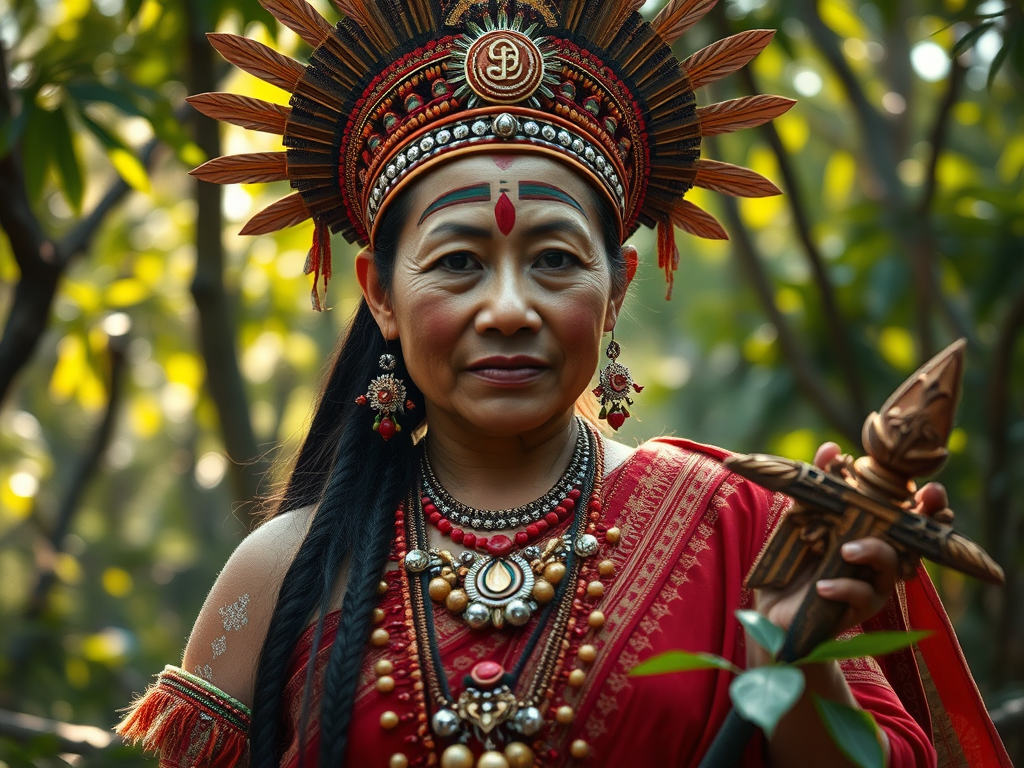
    The babaylan were the spiritual leaders of precolonial Philippine society—healers, ritualists, and mediators between the human and spirit worlds. Found across the archipelago under different names, they guided communities through healing, governance, and connection with nature and ancestors.

    Suppressed during Spanish colonization and often misrepresented in history, their role is now being rediscovered as part of a wider movement to reclaim Filipino identity, indigenous knowledge, and holistic ways of living.

    In simple terms: A babaylan was a community healer and spiritual guide who maintained balance between people, nature, and the unseen world.


    For a broader view of Philippine culture, society, and systems, see:
    Understanding the Philippines: Culture, Society, and Systems (Hub)


    Scope and Approach

    This article integrates historical research, anthropological perspectives, and contemporary interpretations of spirituality. While it includes metaphysical and esoteric frameworks as lenses of interpretation, these are presented alongside documented scholarship to offer a holistic view of the babaylan and their role in Philippine society.


    How to Read This Page

    If you’re here, you may be exploring different questions:

    • Who the babaylan were historically
    • Whether their role was spiritual, social, or political
    • Why their knowledge was suppressed—and why it is returning
    • Whether similar forms of leadership exist in other cultures

    This article focuses on the babaylan in the Philippines, but it can be read at multiple levels:

    • 🟢 Historical and cultural lens → understanding their role in precolonial society
    • 🟡 Systems lens → how alternative forms of authority and governance functioned
    • 🔵 Applied lens → what this means for leadership, healing, and community today
    • 🟣 Deeper lens → questions of consciousness, identity, and human development

    You can engage with it based on your context and interest.

    12–18 minutes

    Abstract

    The babaylans, revered spiritual leaders of precolonial Philippine society, embodied a holistic synthesis of healer, priestess, warrior, and sage, bridging the material and spiritual realms. Rooted in animistic traditions, their contributions shaped community cohesion, cultural heritage, and environmental stewardship. Spanish colonization systematically suppressed their influence, demonizing their practices and erasing their knowledge to enforce Christian hegemony.

    This study explores the babaylans’ roles, the mechanisms of their erasure, and the recent resurgence of their legacy as a decolonial movement. Drawing on historical accounts, anthropological studies, metaphysical perspectives, and esoteric frameworks like the Akashic Records, this work examines how babaylanism informs modern Filipino identity and the global “ascension process”—a spiritual awakening toward interconnectedness and higher consciousness.

    Through a multidisciplinary lens, this narrative balances academic rigor with accessible language, weaving left-brain analysis, right-brain intuition, and heart-centered storytelling to illuminate the babaylans’ enduring wisdom.


    🌍 A Note for Global Readers

    While the babaylan are rooted in Philippine history, similar roles have existed across cultures:

    • shamans in Central and South America
    • medicine people in Indigenous North America
    • spiritual healers in Africa and Asia
    • mystics and contemplatives in Western traditions

    Across societies, these figures often served as:

    • healers
    • mediators
    • knowledge keepers
    • bridges between visible and invisible realities

    The babaylan can therefore be understood not only as a Filipino phenomenon, but as part of a broader pattern of indigenous knowledge systems and alternative forms of leadership.


    Table of Contents

    1. Introduction: Unveiling the Babaylan
    2. Who Were the Babaylans?
      • Roles and Responsibilities in Precolonial Society
      • Gender Fluidity and Spiritual Authority
    3. Contributions to Precolonial Philippine Society
      • Spiritual Leadership and Ritual Practices
      • Healing and Ethnomedicine
      • Cultural Preservation and Community Unity
    4. The Erasure of Babaylan Knowledge
      • Spanish Colonization and Christian Conversion
      • Mechanisms of Suppression
      • Long-Term Cultural Impacts
    5. The Resurgence of Babaylanism
      • Decolonial Movements and Cultural Reclamation
      • Modern Babaylan-Inspired Practices
      • Global Context: The Ascension Process
    6. Metaphysical and Esoteric Perspectives
      • The Akashic Records and Ancestral Wisdom
      • Energetic and Spiritual Dimensions of Babaylanism
    7. A Holistic Synthesis: Balancing Mind, Heart, and Spirit
    8. Conclusion: The Babaylan’s Call to the Future
    9. Crosslinks
    10. Glossary
    11. References

    Glyph of the Gridkeeper

    The One Who Holds the Lattice of Light.


    1. Introduction: Unveiling the Babaylan

    Imagine a world where the spiritual and material dance in harmony, where a healer’s chant mends not just the body but the soul, where a priestess advises warriors and weaves myths that bind a community.

    This was the world of the babaylans, the spiritual leaders of precolonial Philippines. Their story is one of profound wisdom, violent erasure, and a quiet, resilient revival. Today, as humanity grapples with disconnection and seeks higher consciousness, the babaylans’ legacy offers a roadmap for healing and unity.

    This study dives deep into who the babaylans were, what they contributed to their society, why their knowledge was hidden, and why their wisdom is resurfacing now. Using a multidisciplinary lens—blending history, anthropology, metaphysics, and esoteric traditions like the Akashic Records—we explore their holistic impact.

    Written in an accessible yet scholarly style, this narrative aims to engage your mind, spark your intuition, and touch your heart, balancing logic, creativity, and empathy.


    2. Who Were the Babaylans?

    Roles and Responsibilities in Precolonial Society

    The babaylans were the heartbeat of precolonial Philippine communities, known as barangays. Primarily women or effeminate men (asog or bayog), they were shamans, healers, priestesses, and mediators between the physical and spiritual worlds (Salazar, 1992).

    The term “babaylan,” likely derived from Visayan roots, means one who connects with spirits (anito or diwata) to guide their people (Strobel, 2010). Across the archipelago, they were called katalonan (Tagalog), balian (Visayas), or mombaki (Cordillera), reflecting linguistic diversity but shared roles (Conaco, 2019).


    Babaylans wore many hats:

    • Spiritual Leaders: They conducted rituals for births, marriages, harvests, and wars, ensuring harmony with nature and ancestors (Brewer, 2004).
    • Healers: Using ethnomedicine, massage (hilot), and spiritual interventions, they treated physical and spiritual ailments (Demetrio, 1988).
    • Advisors: They counseled datus (chiefs) on governance, war, and justice, wielding influence equal to or greater than political leaders (McCoy, 1982).
    • Cultural Stewards: As orators, they preserved myths, songs, and histories, passing down collective wisdom (Conaco, 2019).

    Gender Fluidity and Spiritual Authority

    The babaylans’ gender fluidity was a hallmark of their power. Precolonial Philippine society embraced a non-binary understanding of gender, where spiritual potency was tied to femininity, whether embodied by women or effeminate men (Brewer, 1999).

    The asog, transgender male babaylans, were revered as divinely chosen, their liminal identity enhancing their ability to traverse spiritual realms (Conaco, 2020). This fluidity contrasted sharply with the patriarchal norms imposed by Spanish colonizers, highlighting a precolonial egalitarianism that empowered women and queer individuals (Strobel, 2001).


    3. Contributions to Precolonial Philippine Society

    Spiritual Leadership and Ritual Practices

    Babaylans were the glue of their communities, fostering kapwa—a Filipino concept of shared identity and interconnectedness (Enriquez, 1992).

    Through rituals like pag-anito (spirit offerings), they communed with diwata and ancestors, ensuring cosmic balance. For example, during harvest festivals, babaylans led chants and dances to thank nature spirits, reinforcing environmental reverence (Bonifacio et al., 2025). Their dream interpretation and omen reading guided critical decisions, from war strategies to marriage alliances (Veneracion, 1987).


    Healing and Ethnomedicine

    Babaylans were master healers, blending herbal knowledge with spiritual rituals. They used plants, massage, and trance states to treat ailments believed to stem from spiritual imbalances, such as a lost kalag (astral soul) (Conaco, 2020).

    Their holistic approach addressed body, mind, and spirit, a precursor to modern integrative medicine. For instance, the hilot technique, still practiced today, combines physical manipulation with energy work (Nente, 2016).


    Cultural Preservation and Community Unity

    As storytellers, babaylans safeguarded oral traditions, weaving myths like the Bakunawa (moon-eating serpent) into community identity (Bonifacio et al., 2025).

    Their rituals and counsel resolved conflicts, promoting unity. By championing sustainable practices, such as eco-friendly farming, they ensured harmony with the land, a wisdom now echoed in environmental movements (Strobel, 2013).


    4. The Erasure of Babaylan Knowledge

    Spanish Colonization and Christian Conversion

    When the Spanish arrived in 1521, they targeted babaylans as threats to Christian conversion. Their animistic practices were branded as witchcraft, and babaylans were demonized as brujas (witches) or hechiceras (sorceresses) (Blair & Robertson, 1903-1909).

    Spanish missionaries exploited Filipino hospitality, equating diwata with Christian saints to facilitate syncretism, but ultimately sought to erase indigenous beliefs (Brewer, 2004). Some babaylans were executed, their bodies reportedly fed to crocodiles to prevent spiritual return (Conaco, 2019).


    Mechanisms of Suppression

    The erasure was systematic:

    • Destruction of Shrines: Dambana (sacred spaces) were burned, and idols were destroyed (Strobel, 2001).
    • Confesionarios: Spanish manuals instructed priests to interrogate Filipinos about babaylan practices, punishing adherents (Labrador, 2009).
    • Patriarchal Imposition: The babaylans’ gender fluidity and female authority clashed with Catholic patriarchy, marginalizing women and asog (Brewer, 1999).
    • Education and Assimilation: Spanish schools taught Christian doctrine, sidelining indigenous knowledge (Rafael, 2015).

    Long-Term Cultural Impacts

    The suppression fractured Filipino identity, fostering colonial mentality—an internalized belief in the inferiority of indigenous culture (Nadal, 2021).

    Babaylan practices survived in syncretic forms, like espiritista movements or folk healing (arbularyo), but their esoteric depth was diluted (Salazar, 1979). This loss disconnected Filipinos from their ancestral wisdom, contributing to cultural fragmentation.


    Glyph of the Babaylan Legacy

    Ancestral wisdom rises anew, guiding resilience into resurgence


    🧠 What This Reveals About Knowledge, Power, and Erasure

    Beyond the Philippines, the story of the babaylan reflects broader patterns seen across history:

    • Indigenous knowledge systems are often suppressed when new power structures emerge
    • Spiritual and relational forms of authority are replaced by institutional and hierarchical ones
    • Cultural memory is fragmented through colonization, education, and religious conversion
    • What is later labeled “alternative” was once central to how societies functioned

    These patterns are not unique to the Philippines.

    They appear in many parts of the world where indigenous systems were replaced or marginalized.

    Understanding this helps explain not only the past—but why similar forms of knowledge are resurfacing today.


    5. The Resurgence of Babaylanism

    Decolonial Movements and Cultural Reclamation

    Since the late 20th century, babaylanism has experienced a revival, fueled by decolonial movements and Filipino diaspora communities. The Center for Babaylan Studies (CfBS), founded by Leny Strobel, promotes indigenous wisdom through conferences, publications, and rituals (Strobel, 2010).

    Practices like batok (tattooing), baybayin (script), and hilot are being reclaimed, often via social media (Strobel, 2022). In the Philippines, babaylans lead advocacy for land rights and environmental justice, echoing their precolonial roles (Bonifacio et al., 2025).


    Modern Babaylan-Inspired Practices

    Contemporary babaylans blend tradition with innovation. For example, Grace Nono, a singer and scholar, channels babaylan chants to heal cultural wounds (Nono, 2013).

    Urban practitioners offer workshops on ancestral connection, while indigenous communities like the Lumad appoint babaylans to navigate crises (Valmores, 2019). This resurgence counters colonial trauma, fostering kapwa and cultural pride.


    Global Context: The Ascension Process

    The babaylans’ revival aligns with what some contemporary spiritual frameworks describe as a broader shift in consciousness. Babaylanism’s emphasis on interconnectedness mirrors this shift, offering tools for personal and collective healing. Their holistic worldview resonates with New Age movements, indigenous spirituality, and eco-feminism, positioning them as guides in a fragmented world (Strobel, 2013).


    6. Metaphysical and Esoteric Perspectives

    The Akashic Records and Ancestral Wisdom

    The Akashic Records—understood in some traditions as a symbolic framework for collective memory and experience, provide a lens to understand babaylan wisdom (Howe, 2014).

    Babaylans’ ability to access spiritual realms suggests an experiential engagement with what esoteric traditions describe as the Akashic Records—a symbolic framework for ancestral and collective memory rather than a literal archive.

    Modern practitioners report similar experiences during trance or meditation, connecting with Filipino ancestors to reclaim lost knowledge (Strobel, 2022).


    Energetic and Spiritual Dimensions of Babaylanism

    From an energetic perspective, babaylans worked with prana (life force) to balance the body’s energy centers, akin to chakra systems in Eastern traditions (Brennan, 1988). Their rituals, such as pag-anito, aligned community energy with cosmic rhythms, fostering harmony.

    Esoterically, their gender fluidity embodied the alchemical union of masculine and feminine, a symbol of wholeness (Jung, 1963). These principles align with the ascension process, emphasizing energetic alignment and spiritual integration.


    7. A Holistic Synthesis: Balancing Mind, Heart, and Spirit

    The babaylans’ legacy is a tapestry of logic, intuition, and compassion. Their analytical skills in ethnomedicine and governance (left brain) complemented their visionary rituals and storytelling (right brain), all grounded in kapwa (heart).

    This balance offers a model for modern society, where disconnection often stems from overemphasizing one faculty. By integrating metaphysical insights with historical analysis, this dissertation mirrors their holistic approach, inviting readers to engage intellectually, spiritually, and emotionally.


    8. Conclusion: The Babaylan’s Call to the Future

    Within certain contemporary spiritual frameworks, the babaylans’ revival is interpreted as aligning with what is termed the ‘ascension process’.

    The babaylans were more than spiritual leaders; they were architects of a world where humanity, nature, and spirit coexisted. Their erasure was a colonial attempt to sever Filipinos from their roots, but their resurgence signals a reclaiming of identity and wisdom.

    As the world navigates crises—ecological, social, and spiritual—the babaylans’ holistic worldview offers hope. Their revival is not just a Filipino story but a global one, guiding us toward ascension through kapwa, healing, and reconnection with the sacred.


    Where to Go Next

    If this exploration raised further questions, here are structured paths:


    🟢 Culture, Identity, and Indigenous Foundations

    If you’re exploring cultural roots and identity:


    🟡 Systems, Power, and Historical Transformation

    If you’re interested in how systems replaced or suppressed earlier structures:


    🔵 Application: Leadership, Healing, and Practice

    If you’re applying these ideas in real-world contexts:


    🟣 Deeper Exploration and Inner Work

    If you’re exploring consciousness, spirituality, or personal transformation:


    Glossary

    • Anito: Spirits or deities in Filipino animism.
    • Asog/Bayog: Transgender male babaylans in precolonial Philippines.
    • Babaylan: Spiritual leader, healer, and mediator in precolonial Philippines.
    • Barangay: Precolonial Filipino community unit.
    • Dambana: Sacred shrine or altar.
    • Datu: Chief or political leader of a barangay.
    • Diwata: Nature spirits or deities.
    • Hilot: Traditional Filipino massage and energy healing.
    • Kapwa: Filipino concept of shared identity and interconnectedness.
    • Kalag: Astral soul in Filipino belief, residing in the head.
    • Pag-anito: Ritual offerings to spirits.

    References

    Note: Digital and public-facing sources are included to reflect contemporary discourse and practice.

    Blair, E. H., & Robertson, J. A. (Eds.). (1903-1909). The Philippine Islands, 1493-1898. Cleveland: Arthur H. Clark Company.

    Bonifacio, S. L., Casia, J. D., Ferrer, J. L. E., Orido, L. A. T., Singian, M. M. T., & Temeña, S. J. C. (2025). Babaylans as catalysts for resistance: The role of indigenous spiritual beliefs in Philippine peasant ideology against Spanish and American colonizers. ResearchGate.

    Brennan, B. A. (1988). Hands of light: A guide to healing through the human energy field. Bantam Books.

    Brewer, C. (1999). Baylan, asog, transvestism, and sodomy: Gender, sexuality, and the sacred in early colonial Philippines. Intersections: Gender, History and Culture in the Asian Context, 2.

    Brewer, C. (2004). Shamanism, Catholicism, and gender relations in colonial Philippines, 1521-1685. Ashgate.

    Conaco, M. (2019). Ang babaylan nga nahimong bayot. Smithsonian Asian Pacific American Center.

    Conaco, M. (2020). What is babaylan? Center for Babaylan Studies.

    Demetrio, F. R. (1988). Shamans, witches, and Philippine society. Philippine Studies, 36(3), 372-380.

    Enriquez, V. G. (1992). From colonial to liberation psychology: The Philippine experience. University of the Philippines Press.

    Howe, L. (2014). How to read the Akashic Records: Accessing the archive of the soul and its journey. Sounds True.

    Jung, C. G. (1963). Mysterium coniunctionis: An inquiry into the separation and synthesis of psychic opposites in alchemy. Princeton University Press.

    Labrador, A. M. T. (2009). Seclusion and veiling of women: A historical and cultural approach. Philippine Social Sciences Review, 1.

    McCoy, A. W. (1982). Baylan: Animist religion and Philippine peasant ideology. Philippine Studies, 30(3), 337-369.

    Nadal, K. L. (2021). Filipino American psychology: A handbook of theory, research, and clinical practice. Wiley.

    Nente, F. (2016). Tradisyunal nga pamulong: A rationale on the persistence of faith healing practices in Miagao, Iloilo. ResearchGate.

    Nono, G. (2013). Song of babaylan: Living voices, medicines, spiritualities of Philippine ritualist-oralist-healers. Institute of Spirituality in Asia.

    Rafael, V. L. (2015). Contracting colonialism: Translation and Christian conversion in Tagalog society under early Spanish rule. Duke University Press.

    Salazar, Z. A. (1979). Faith healing in the Philippines: An historical perspective. Asian Studies, 17, 32-45.

    Salazar, Z. A. (1992). The babaylan in Philippine history. Philippine Studies, 40(4), 491-510.

    Strobel, L. M. (2001). Coming full circle: The process of decolonization among post-1965 Filipino Americans. Giraffe Books.

    Strobel, L. M. (2010). Babaylan: Filipinos and the call of the indigenous. Center for Babaylan Studies.

    Strobel, L. M. (2013). Back from the crocodile’s belly: Philippine babaylan studies and the struggle for indigenous memory. Center for Babaylan Studies.

    Strobel, L. M. (2022). Decolonizing the diaspora through the Center for Babaylan Studies. Medium.

    Tolle, E. (2005). A new earth: Awakening to your life’s purpose. Penguin Books.

    Valmores, R. (2019). Pre-colonial Philippines had trans women fully embraced as women. X Post.

    Veneracion, J. (1987). Katalonan: From commoner to shaman. Philippine Studies, 35(4), 456-472.


    Explore More Philippine Analysis


    View the full Philippines Hub


    Understanding these dynamics also requires clarity in how individuals respond under pressure—see Life Under Pressure.


    Some articles in this section are part of the Stewardship Archive

    These pieces explore deeper layers of Philippine transformation, including:

    • long-term societal redesign
    • advanced governance frameworks
    • future-state modeling

    They are written for readers who want to go beyond surface analysis into structural and forward-looking perspectives.


    → Continue reading (Members Access)


    Explore the Rest of the Site

    This work sits within a larger system of essays on human development, systems thinking, and societal transformation.

    Living Archive
    Stewardship Architecture
    Main Blog


    About the Author

    Gerald Alba Daquila writes at the intersection of human development, sovereignty, leadership ethics, and civilizational sensemaking. The Living Archive gathers more than 800 essays, codices, and frameworks developed through years of reflection and inquiry.


    Download This Complimentary Keystone Reference

  • Echoes of Empire: Unresolved Colonial Trauma and Its Role in Shaping Philippine Political Dynamics and Social Fragmentation

    Echoes of Empire: Unresolved Colonial Trauma and Its Role in Shaping Philippine Political Dynamics and Social Fragmentation

    A Multidisciplinary Path to Healing the Filipino Psyche through Trauma-Informed Care and Cultural Change

    Prepared by: Gerald A. Daquila, PhD. Candidate


    How does a nation’s past continue to shape its present behavior? In the Philippines, centuries of colonial rule did not only restructure institutions—it also left enduring psychological and cultural imprints.

    These unresolved patterns, often described as forms of collective or historical trauma, can still be observed in political dynamics, social divisions, and patterns of authority and dependence.

    This article examines how colonial-era disruptions may continue to influence modern Filipino society, and how these inherited dynamics contribute to fragmentation, governance challenges, and evolving national identity.


    For a broader view of Philippine culture, society, and systems, see:
    Understanding the Philippines: Culture, Society, and Systems (Hub)


    Scope and Approach

    This article explores the concept of unresolved colonial influence through a structural and behavioral lens. It does not treat “trauma” as a clinical diagnosis applied to a population, but as a framework for understanding how prolonged external control can shape collective responses over time.

    The discussion integrates historical context with observable patterns in governance, leadership structures, and social interaction. It considers how hierarchical systems, dependency relationships, and identity reconfiguration introduced during colonial periods may persist in subtle but impactful ways.

    Rather than attributing current conditions solely to the past, this approach examines how historical imprints interact with contemporary systems, incentives, and decisions. It also avoids reductive explanations, recognizing that Philippine society is shaped by multiple overlapping forces—local, regional, and global.

    The goal is to provide clarity, not conclusion. By identifying patterns that may otherwise remain implicit, this work supports more informed interpretation of political behavior, institutional trust, and social cohesion in the Philippines today.

    12–18 minutes

    ABSTRACT

    The Philippines, molded by over 350 years of Spanish and American colonial rule, bears the enduring marks of collective trauma, manifesting in political corruption, social fragmentation, and a fractured national psyche. This paper investigates the hypothesis that unresolved colonial trauma significantly contributes to the nation’s current challenges, particularly politicians’ self-enrichment at the expense of the common good, societal fragmentation, and deficits in systems and critical thinking.

    It explores whether cultural attitudes like bahala na (fatalistic resilience) stem from this trauma. Drawing from psychology, sociology, anthropology, history, and political science, this study evaluates supporting and challenging evidence, assesses the potential for healing the Filipino psyche, and proposes a culturally responsive trauma-informed care (TIC) framework integrated with a cultural change model to address societal artifacts.

    By reclaiming pre-colonial strengths—such as kapwa (shared identity), communal values, and indigenous wisdom—this work outlines pathways to foster unity, critical thinking, and sustainable change. Written for a broad audience, it balances academic rigor with accessible storytelling, offering practical steps to initiate and sustain healing through community-driven efforts and policy reforms.


    Table of Contents

    1. Introduction: A Nation Carrying History’s Weight
    2. Conceptual Framework: Collective Trauma and the Filipino Psyche
      • Defining Collective Trauma
      • Colonialism’s Enduring Legacy in the Philippines
    3. Manifestations of Trauma in Philippine Society
      • Political Dynamics: Corruption and Self-Enrichment
      • Societal Fragmentation and Lack of Systems Thinking
      • The Bahala Na Attitude: A Trauma Artifact?
    4. Evidence Supporting the Trauma Hypothesis
      • Psychological Roots: Colonial Mentality and Internalized Oppression
      • Historical Foundations of Political and Economic Dispossession
    5. Evidence Challenging the Hypothesis
      • Filipino Resilience and Agency
      • Alternative Explanations: Post-Colonial and Global Factors
    6. Healing the Filipino Psyche: Is Recovery Possible?
      • Reclaiming Pre-Colonial Strengths
      • Challenges to Collective Healing
    7. Trauma-Informed Care for a Collective Psyche
      • Adapting TIC Principles for the Philippines
      • Culturally Responsive Interventions
    8. A Cultural Change Model to Sustain Healing
      • Initiating Change: Where to Begin
      • Sustaining Gains through Systems and Community
    9. Multidisciplinary Lens: Weaving Insights Across Disciplines
    10. Conclusion: Envisioning a Unified Future
    11. Glossary
    12. References

    Glyph of the Living Archive

    You are not just reading the Records — you are becoming them.


    1. Introduction: A Nation Carrying History’s Weight

    Imagine a nation of over 110 million people across 7,641 islands, each island a thread in a vibrant tapestry of cultures, languages, and histories. The Philippines pulses with resilience and creativity, yet it grapples with deep challenges: rampant political corruption, stark economic inequality, environmental crises, and a fragmented sense of nationhood.

    Politicians often enrich themselves at the expense of the common Filipino, perpetuating a cycle of distrust and division. Many trace these issues to a colonial past spanning over 350 years—Spanish rule (1565–1898), American governance (1898–1946), and a brief Japanese occupation during World War II.

    Could these struggles stem from unresolved collective trauma, a wound etched into the Filipino psyche, manifesting in societal fragmentation, a lack of systems and critical thinking, and even the cultural attitude of bahala na?

    This paper examines whether the Philippines’ current state—particularly its political dynamics and social fragmentation—can be attributed to colonial trauma. It explores how trauma manifests in politicians’ self-interest, societal disconnection, and attitudes like bahala na, and evaluates the potential for healing.

    Grounded in multidisciplinary research from psychology, sociology, anthropology, history, and political science, this study proposes a trauma-informed care (TIC) framework integrated with a cultural change model to address these artifacts.

    By anchoring interventions in pre-colonial strengths like kapwa (shared identity) and communal wisdom, it outlines practical steps to initiate and sustain healing. Written for a wide audience, this work weaves scholarly rigor with empathetic storytelling to inform, inspire, and chart a path toward unity.


    2. Conceptual Framework: Collective Trauma and the Filipino Psyche

    Defining Collective Trauma

    Collective trauma occurs when a group experiences large-scale, shared suffering—such as oppression, violence, or cultural erasure—that disrupts social cohesion, identity, and values across generations (Alexander, 2012).

    Unlike individual trauma, it reshapes collective narratives and behaviors, often embedding itself in cultural attitudes and institutions. In the Philippines, colonialism inflicted systemic trauma through cultural suppression, economic exploitation, and social fragmentation (David & Okazaki, 2006).


    Colonialism’s Enduring Legacy in the Philippines

    Spanish colonization imposed forced Christianization, land dispossession, and a feudal system, dismantling indigenous governance and spiritual practices (Agoncillo, 1990).

    American rule introduced cultural assimilation and economic dependency, fostering a colonial mentality that prioritized Western ideals (Constantino, 1978).

    These disruptions fractured communal bonds, suppressed indigenous knowledge, and laid the foundation for modern political and social challenges (Enriquez, 1992).


    3. Manifestations of Trauma in Philippine Society

    Political Dynamics: Corruption and Self-Enrichment

    Philippine politics is marred by politicians’ penchant for self-enrichment, often at the expense of the common good. Political dynasties, controlling over 70% of congressional seats, perpetuate patronage systems rooted in colonial hierarchies (Teehankee, 2013).

    Corruption scandals, such as the 2013 pork barrel scam, highlight how public funds are siphoned off, deepening public distrust and economic inequality (Hutchcroft, 1991). This behavior reflects a fragmented psyche, prioritizing individual gain over collective welfare, a legacy of colonial divide-and-rule tactics.


    Societal Fragmentation and Lack of Systems Thinking

    The Philippines exhibits societal fragmentation, with regional, ethnic, and class divides hindering national unity. A lack of systems thinking—evident in disjointed urban planning, inadequate disaster preparedness, and reactive governance—exacerbates challenges like poverty and environmental degradation (Bankoff, 2003).

    Critical thinking is often stifled by rote education systems inherited from colonial models, limiting collective problem-solving (Bautista, 2000). These issues suggest a psyche shaped by trauma, struggling to envision interconnected solutions.


    The Bahala Na Attitude: A Trauma Artifact?

    The Filipino phrase bahala na (roughly “leave it to fate”) reflects a mix of resilience and fatalism. While often viewed as adaptive, enabling Filipinos to cope with uncertainty, it can also manifest as passivity or avoidance of systemic change (Pe-Pua & Protacio-Marcelino, 2000).

    Scholars suggest bahala na may trace back to colonial trauma, where powerlessness under oppressive rule fostered reliance on fate over agency (Lagmay, 1977). This attitude may reinforce fragmentation by discouraging collective action against corruption or inequality.


    4. Evidence Supporting the Trauma Hypothesis

    Psychological Roots: Colonial Mentality and Internalized Oppression

    Colonial mentality, the internalized preference for Western culture over Filipino identity, remains prevalent. Studies show Filipinos often favor foreign products, languages, and appearances, reflecting self-denigration rooted in colonial education systems (David & Okazaki, 2006). This mindset undermines national pride and fuels political apathy, enabling corrupt leaders to thrive (Tuason et al., 2007).


    Historical Foundations of Political and Economic Dispossession

    Colonial policies created enduring inequalities. The Spanish encomienda system concentrated wealth among elites, a structure mirrored in modern political dynasties (Anderson, 1988).

    American economic policies tied the Philippines to global markets, fostering dependency and poverty (Corpuz, 1989). These historical roots sustain a fragmented society where self-interest overshadows collective goals.


    5. Evidence Challenging the Hypothesis

    Filipino Resilience and Agency

    Despite trauma, Filipinos demonstrate resilience. The concept of kapwa fosters community support, seen in mutual aid during crises (Enriquez, 1992).

    Movements like the 1986 People Power Revolution highlight agency, challenging the notion of a permanently damaged psyche (Ileto, 1998).


    Alternative Explanations: Post-Colonial and Global Factors

    Some argue that current challenges stem more from post-colonial mismanagement and global pressures than colonial trauma. Neoliberal policies and globalization have widened inequality, independent of historical wounds (Bello, 2005).

    Weak institutions and elite capture, while rooted in colonialism, are perpetuated by modern governance failures (Quimpo, 2005).


    6. Healing the Filipino Psyche: Is Recovery Possible?

    Reclaiming Pre-Colonial Strengths

    Pre-colonial Filipino society valued kapwa, communal responsibility, and harmony with nature (Enriquez, 1992). Indigenous practices, such as babaylan (spiritual leadership) and consensus-based governance, offer models for unity and critical thinking (Salazar, 1999). Reviving these strengths can counter fragmentation and colonial mentality.


    Challenges to Collective Healing

    Healing faces obstacles: entrenched political dynasties resist change, economic pressures limit resources, and cultural globalization dilutes indigenous identity (Teehankee, 2013). Overcoming these requires sustained, grassroots efforts and systemic reforms.


    Glyph of Echoes of Empire

    From fractured echoes, truth and healing emerge.


    7. Trauma-Informed Care for a Collective Psyche

    Adapting TIC Principles for the Philippines

    Trauma-informed care emphasizes safety, trust, empowerment, collaboration, and cultural sensitivity (SAMHSA, 2014). For a collective psyche, TIC can be adapted through community dialogues, public education, and policy reforms that address trauma’s societal impacts. For example, programs fostering kapwa can rebuild trust eroded by corruption (Mendoza, 2018).


    Culturally Responsive Interventions

    Interventions must align with Filipino values. Community-based initiatives, like bayanihan (collective effort), can promote healing through shared projects, such as reforestation or cooperative enterprises (Pe-Pua & Protacio-Marcelino, 2000). Integrating indigenous knowledge into education can counter colonial mentality and foster critical thinking.


    8. A Cultural Change Model to Sustain Healing

    Initiating Change: Where to Begin

    Healing begins with grassroots efforts:

    • Community Dialogues: Facilitate discussions on colonial trauma and its manifestations, using kapwa to build empathy and unity (Mendoza, 2018).
    • Education Reform: Integrate decolonized curricula emphasizing Filipino history, critical thinking, and systems thinking (Bautista, 2000).
    • Policy Advocacy: Push for anti-corruption measures and equitable resource distribution to address systemic inequalities (Hutchcroft, 1991).

    Sustaining Gains through Systems and Community

    A cultural change model, such as Kotter’s 8-Step Process (Kotter, 1996), can guide transformation:

    1. Create Urgency: Highlight the cost of corruption and fragmentation to galvanize action.
    2. Build a Coalition: Unite community leaders, educators, and activists.
    3. Develop a Vision: Promote a unified, decolonized Filipino identity.
    4. Communicate the Vision: Use media and arts to inspire change.
    5. Empower Action: Support community initiatives and policy reforms.
    6. Generate Short-Term Wins: Celebrate local successes, like transparent governance in select municipalities.
    7. Consolidate Gains: Institutionalize reforms through laws and education.
    8. Anchor Change: Embed kapwa and critical thinking in cultural norms.

    Sustainability requires ongoing community engagement, monitoring of reforms, and global partnerships to address economic pressures (Bello, 2005).


    9. Multidisciplinary Lens: Weaving Insights Across Disciplines

    Psychology illuminates colonial mentality and bahala na as trauma responses (David & Okazaki, 2006). Sociology reveals how fragmentation perpetuates inequality (Hutchcroft, 1991). Anthropology highlights pre-colonial strengths for healing (Salazar, 1999).

    History contextualizes political dynamics (Agoncillo, 1990), while political science offers strategies for systemic reform (Teehankee, 2013). This integrated lens ensures a holistic approach to understanding and addressing trauma’s artifacts.


    10. Conclusion: Envisioning a Unified Future

    The Philippines’ challenges—political corruption, societal fragmentation, and cultural attitudes like bahala na—reflect the enduring wounds of colonial trauma. Yet, the Filipino psyche, resilient and rooted in kapwa, holds immense potential for healing.

    By adapting trauma-informed care and leveraging a cultural change model, the nation can reclaim its pre-colonial strengths, foster critical and systems thinking, and build a unified future.

    This journey begins with communities, educators, and leaders working together to transform trauma into triumph, ensuring a Philippines where the common good prevails.


    Suggested Crosslinks


    Glossary

    • Bahala Na: A Filipino attitude combining resilience and fatalism, often translated as “leave it to fate.”
    • Bayanihan: A traditional Filipino practice of communal cooperation and mutual aid.
    • Colonial Mentality: Internalized preference for Western culture and devaluation of Filipino identity.
    • Encomienda: Spanish colonial system granting land and labor to elites, fostering inequality.
    • Kapwa: Filipino concept of shared identity and interconnectedness.

    References

    Agoncillo, T. A. (1990). History of the Filipino people (8th ed.). Garotech Publishing.

    Alexander, J. C. (2012). Trauma: A social theory. Polity Press.

    Anderson, B. (1988). Cacique democracy in the Philippines: Origins and dreams. New Left Review, 169, 3–31.

    Bankoff, G. (2003). Cultures of disaster: Society and natural hazard in the Philippines. Routledge.

    Bautista, M. L. S. (2000). The Philippine educational system: A historical perspective. In Education in the Philippines (pp. 15–30). University of the Philippines Press.

    Bello, W. (2005). The anti-development state: The political economy of permanent crisis in the Philippines. Zed Books.

    Constantino, R. (1978). Neocolonial identity and counter-consciousness: Essays on cultural decolonization. M. E. Sharpe.

    Corpuz, O. D. (1989). The roots of the Filipino nation. Aklahi Foundation.

    David, E. J. R., & Okazaki, S. (2006). Colonial mentality: A review and conceptual framework for Filipino Americans. Cultural Diversity and Ethnic Minority Psychology, 12(1), 1–16. https://doi.org/10.1037/1099-9809.12.1.1

    Enriquez, V. G. (1992). From colonial to liberation psychology: The Philippine experience. University of the Philippines Press.

    Hutchcroft, P. D. (1991). Oligarchs and cronies in the Philippine state: The politics of patrimonial plunder. World Politics, 43(3), 414–450. https://doi.org/10.2307/2010401

    Ileto, R. C. (1998). Filipinos and their revolution: Event, discourse, and historiography. Ateneo de Manila University Press.

    Kotter, J. P. (1996). Leading change. Harvard Business Review Press.

    Lagmay, A. V. (1977). Bahala na: A psychological analysis. Philippine Journal of Psychology, 10(1), 23–30.

    Mendoza, L. C. (2018). Community-based healing: Trauma-informed approaches in Filipino contexts. Journal of Philippine Social Work, 45(2), 89–104.

    Pe-Pua, R., & Protacio-Marcelino, E. (2000). Sikolohiyang Pilipino (Filipino psychology): A legacy of Virgilio G. Enriquez. Asian Journal of Social Psychology, 3(1), 49–71. https://doi.org/10.1111/1467-839X.00054

    Quimpo, N. G. (2005). The left, elections, and the political party system in the Philippines. Critical Asian Studies, 37(1), 3–28. https://doi.org/10.1080/1467271052000305246

    Rafael, V. L. (1988). Contracting colonialism: Translation and Christian conversion in Tagalog society under early Spanish rule. Cornell University Press.

    Salazar, Z. A. (1999). The babaylan in Filipino history: A critique of traditional historiography. Philippine Studies, 47(4), 483–510.

    SAMHSA. (2014). SAMHSA’s concept of trauma and guidance for a trauma-informed approach. Substance Abuse and Mental Health Services Administration. https://store.samhsa.gov/product/SAMHSA-s-Concept-of-Trauma-and-Guidance-for-a-Trauma-Informed-Approach/SMA14-4884

    Teehankee, J. C. (2013). And the clans play on: Political dynasties in the Philippines. In Democracy in Asia (pp. 87–104). Routledge.

    Tuason, M. T. G., Taylor, A. R., Rollings, L., Harris, T., & Martin, C. (2007). On both sides of the hyphen: Exploring the Filipino-American identity. Journal of Counseling Psychology, 54(4), 362–372. https://doi.org/10.1037/0022-0167.54.4.362


    Explore More Philippine Analysis


    View the full Philippines Hub


    Understanding these dynamics also requires clarity in how individuals respond under pressure—see Life Under Pressure.


    Some articles in this section are part of the Stewardship Archive

    These pieces explore deeper layers of Philippine transformation, including:

    • long-term societal redesign
    • advanced governance frameworks
    • future-state modeling

    They are written for readers who want to go beyond surface analysis into structural and forward-looking perspectives.


    → Continue reading (Members Access)


    About This Work

    This article is part of a broader exploration of Philippine society, culture, and systems—integrating historical context, behavioral patterns, and structural analysis.

    It is intended to support understanding, reflection, and informed discussion.

    For a wider macro perspective, Global Reset: Systems Change, Economic Transition, and Future Models.


    Explore the Rest of the Site

    This work sits within a larger system of essays on human development, systems thinking, and societal transformation.

    Living Archive
    Stewardship Architecture
    Main Blog


    Attribution

    © 2025–2026 Gerald Alba Daquila
    All rights reserved.

    This work is offered for reflection and independent interpretation. It does not represent a formal doctrine, institution, or required belief system.


    Codex Origin and Stewardship

    This material originates within the field of the Living Codex and is stewarded under Oversoul Appointment.

    It may be shared in its complete and unaltered form, with attribution preserved.

    Lineage Marker: Universal Master Key (UMK) Codex Field


    Support This Work

    If you find this work valuable, you may support its continued development and availability.

    Support helps sustain:

    • ongoing writing and research
    • digital hosting and access
    • future publications

    Ways to access and support:

    • Free reading within the Living Archive
    • Individual digital editions
    • Stewardship-based access

    Support link:
    paypal.me/GeraldDaquila694
    www.geralddaquila.com

  • Am I Truly Awakening? Discerning Authentic Spiritual Awakening in the Age of Spiritual Ascension

    Am I Truly Awakening? Discerning Authentic Spiritual Awakening in the Age of Spiritual Ascension

    A Multidisciplinary Exploration of Authenticity, Self-Discovery, and the Global Spiritual Ascension Movement

    Prepared by: Gerald A. Daquila, PhD. Candidate


    9–14 minutes

    ABSTRACT

    The concept of spiritual awakening has gained significant traction in contemporary discourse, often linked to a global movement referred to as “spiritual ascension.” This phenomenon describes a transformative shift in consciousness characterized by heightened awareness, connection, and bliss. However, in an era of social media and performative spirituality, many individuals grapple with self-doubt, questioning whether their experiences are genuine or merely a response to cultural trends and fear of missing out (FOMO).

    This dissertation explores how to discern an authentic spiritual awakening, drawing on multidisciplinary perspectives from psychology, sociology, neuroscience, philosophy, and spiritual traditions. Grounded in recent research literature, it examines the characteristics, triggers, and after-effects of spiritual awakenings, offering practical criteria to evaluate authenticity. By blending academic rigor with accessible language, this work provides a compassionate framework to quiet the anxious soul, balancing intellectual inquiry with emotional resonance.


    Table of Contents

    1. Introduction: The Quest for Authenticity in Spiritual Awakening
    2. Understanding Spiritual Awakening and the Ascension Movement
      • Defining Spiritual Awakening
      • The Global Spiritual Ascension Movement
    3. The Fear of Faking It: Performative Spirituality and FOMO
    4. Discerning Authenticity: Multidisciplinary Insights
      • Psychological Perspectives
      • Sociological Contexts
      • Neuroscientific Evidence
      • Philosophical and Spiritual Traditions
    5. Undeniable Proofs: Criteria for Authentic Spiritual Awakening
    6. Practical Steps to Quiet the Anxious Soul
    7. Conclusion: Embracing the Journey with Confidence
    8. Glossary
    9. Bibliography

    Glyph of the Seer

    Sees truly, speaks gently.


    1. Introduction: The Quest for Authenticity in Spiritual Awakening

    Have you ever felt a spark of something profound—a moment where the world seemed brighter, more connected, or deeply meaningful? Maybe you’ve meditated, felt a surge of peace, or sensed a shift in how you see yourself and the universe. But then, a nagging doubt creeps in: Am I really awakening, or am I just caught up in the hype? In a world buzzing with hashtags like #SpiritualAwakening and #Ascension, it’s easy to wonder if your experience is genuine or just a performance for likes, clicks, or social approval.

    This question isn’t just personal—it’s universal. As the global spiritual ascension movement gains momentum, promising a blissful state of higher consciousness, many are drawn to its allure but fear they’re faking it. This dissertation dives deep into this honest question, using a multidisciplinary lens to explore what makes a spiritual awakening authentic. We’ll weave together psychology, sociology, neuroscience, and spiritual wisdom, grounding our exploration in research while keeping it relatable. Our goal? To offer undeniable proofs that calm the anxious soul, blending logic, intuition, and heart.


    2. Understanding Spiritual Awakening and the Ascension Movement

    Defining Spiritual Awakening

    A spiritual awakening is often described as a profound shift in consciousness, where individuals experience heightened awareness, a sense of connection to something greater, and a reorientation of values and purpose. Research in transpersonal psychology defines it as “a sudden sense of direct contact, union, or complete nondual merging with a perceived ultimate reality, the universe, ‘God,’ or the divine” (Corneille & Luke, 2021). Characteristics include:

    • Intensified Perception: Colors seem brighter, senses sharper.
    • Sense of Unity: Feeling connected to all beings or the cosmos.
    • Positive Affect: Experiences of love, compassion, and inner peace.
    • Transcendence of Separateness: A dissolution of ego boundaries.
    • Shift in Values: Moving away from materialism toward service and authenticity.

    These experiences can be fleeting (minutes to hours) or lead to lasting changes in worldview and behavior (Taylor & Egeto-Szabo, 2017).


    The Global Spiritual Ascension Movement

    The term “spiritual ascension” refers to a collective shift in human consciousness, often framed as a transition to a “5D” (fifth-dimensional) state of awareness characterized by unity, authenticity, and bliss. Popularized in New Age communities, it’s seen as a global phenomenon where individuals awaken to their spiritual nature, often catalyzed by planetary or cosmic energies (Persephone, 2022).

    Sophia Persephone, a spiritual teacher, notes, “We’re at a turning point in Earth’s history, right at the start of a global spiritual awakening.” This movement is reflected in art, music, and social trends, resembling a modern Renaissance of spiritual rebirth. However, its visibility on platforms like Instagram and TikTok raises concerns about performativity, where individuals may adopt spiritual personas for social capital rather than genuine transformation.


    3. The Fear of Faking It: Performative Spirituality and FOMO

    In the digital age, spirituality is often a public performance. Social media platforms amplify curated images of meditation retreats, crystal grids, and “enlightened” lifestyles, fueling FOMO—the fear of missing out on a transformative experience. This can lead to performative spirituality, where individuals mimic spiritual behaviors to fit in or gain validation. Thompson (2019) warns, “The internet is a cesspool full of dark magic and agendas… most of the smooth glitzy sites pushing all things spiritual are traps for the unwary.”

    This performative pressure can trigger self-doubt. Are you meditating because it feels right, or because it’s trendy? Are your insights profound, or are you parroting spiritual influencers? This anxiety is compounded by the human tendency to compare oneself to others, a phenomenon studied in social psychology as social comparison theory (Festinger, 1954). The fear of faking it stems from a desire for authenticity—a core human need to align actions with inner truth.


    Glyph of Authentic Awakening

    Illuminating truth from illusion, guiding discernment in the age of ascension.


    4. Discerning Authenticity: Multidisciplinary Insights

    To discern whether your spiritual awakening is authentic, we’ll explore insights from multiple disciplines, each offering a piece of the puzzle.

    Psychological Perspectives

    Transpersonal psychology provides a robust framework for understanding spiritual awakenings. Studies show that authentic awakenings often follow specific triggers (Corneille & Luke, 2021; Taylor, 2019):

    • Psychological Turmoil: 52% of participants in one study reported stress, trauma, or loss as catalysts.
    • Spiritual Practices: Meditation (47.4%), yoga (18.4%), or breathwork (11.8%) often precede awakenings.
    • Nature and Literature: Contact with nature (21.7%) or spiritual literature (31.6%) can spark transformation.

    After-effects include increased empathy, gratitude, and a rejection of materialistic values, suggesting a shift beyond superficial behavior (McClintock et al., 2016). However, performative spirituality may lack these lasting changes, remaining surface-level and ego-driven.


    Sociological Contexts

    Sociologically, the rise of spiritual ascension reflects a cultural shift away from organized religion toward individualized spirituality (Heelas, 2005). In Western societies, declining religious affiliation (e.g., 50-year trend in Australia) coexists with a “hunger for spirituality,” creating fertile ground for both genuine and performative expressions. Social media amplifies this, where “spirituality” becomes a brand, but authentic awakenings are marked by personal, not public, transformation.


    Neuroscientific Evidence

    Neuroscience offers clues about authenticity through brain activity. Spiritual experiences often involve the default mode network (DMN), associated with self-referential thought, which quiets during meditative states, leading to a sense of ego dissolution (Carhart-Harris et al., 2014). Studies on psilocybin-induced mystical experiences show increased connectivity in areas linked to awe and unity, suggesting that genuine awakenings have measurable neural correlates (Griffiths et al., 2016). Performative spirituality, lacking these experiences, may not produce such changes.


    Philosophical and Spiritual Traditions

    Philosophically, authenticity is tied to living in alignment with one’s true self. Existentialist thinkers like Sartre emphasize “bad faith”—living inauthentically by conforming to external expectations. Spiritual traditions, such as Buddhism and Vedanta, describe awakening as a realization of interconnectedness and impermanence, achieved through disciplined practice (WisdomLib, 2025). These traditions warn against attachment to ego-driven displays of spirituality, aligning with modern concerns about performativity.


    5. Undeniable Proofs: Criteria for Authentic Spiritual Awakening

    Based on the research, here are five evidence-based criteria to discern an authentic spiritual awakening, designed to quiet the anxious soul:

    1. Lasting Transformation: Genuine awakenings lead to sustained changes in values, behavior, and worldview, such as increased compassion or reduced materialism. Performative spirituality often fades without impact.
    2. Intrinsic Motivation: Authentic experiences are driven by inner curiosity or need, not external validation. Ask yourself: Am I doing this for likes, or because it feels true?
    3. Physical and Emotional Depth: Awakenings often involve intense sensations (e.g., kundalini energy, emotional release) or a sense of unity, unlike superficial practices.
    4. Integration with Daily Life: True awakening manifests in how you treat others and navigate challenges, not just in meditative moments.
    5. Self-Awareness of Doubt: The very act of questioning your authenticity is a sign of genuine seeking, as it reflects a desire for truth over ego.

    These criteria align with research showing that authentic awakenings are deeply personal, transformative, and rooted in inner work, not external performance.


    6. Practical Steps to Quiet the Anxious Soul

    To move beyond doubt and embrace your journey, try these research-backed practices:

    • Journal Your Experience: Reflect on your triggers, sensations, and changes in values. Compare them to the criteria above.
    • Engage in Solitary Practice: Meditation or time in nature, away from social media, fosters authentic connection.
    • Seek Community Wisely: Connect with like-minded individuals, but avoid groups that prioritize image over substance.
    • Consult Your Inner Compass: Trust your intuition. If a practice feels forced or performative, pause and reassess.
    • Be Patient: Awakening is a process, not a destination. Embrace doubt as part of the journey, not a barrier.

    7. Conclusion: Embracing the Journey with Confidence

    The fear of faking a spiritual awakening is a natural response in a world where spirituality is both celebrated and commodified. By grounding our understanding in psychology, sociology, neuroscience, and spiritual wisdom, we can discern authenticity through lasting transformation, intrinsic motivation, and deep integration into daily life.

    The global spiritual ascension movement offers inspiration, but true awakening happens within, not on a screen. To the anxious soul: your doubts are a sign of sincerity. Trust your journey, stay curious, and let your heart guide you toward truth.


    Crosslinks


    8. Glossary

    • Spiritual Awakening: A transformative shift in consciousness involving heightened awareness, unity, and a reorientation of values (Corneille & Luke, 2021).
    • Spiritual Ascension: A collective movement toward higher consciousness, often described as a shift to a “5D” state of unity and bliss (Persephone, 2022).
    • Performative Spirituality: Adopting spiritual practices for external validation or social capital, rather than inner transformation (Thompson, 2019).
    • Default Mode Network (DMN): A brain network linked to self-referential thought, which quiets during spiritual experiences (Carhart-Harris et al., 2014).
    • Transpersonal Psychology: A field studying experiences beyond the ego, such as spiritual awakenings (Grof, 1985).

    9. Bibliography

    American Psychological Association. (2020). Publication manual of the American Psychological Association (7th ed.). https://doi.org/10.1037/0000165-000

    Carhart-Harris, R. L., Leech, R., Hellyer, P. J., Shanahan, M., Feilding, A., Tagliazucchi, E., … & Nutt, D. (2014). The entropic brain: A theory of conscious states informed by neuroimaging research with psychedelic drugs. Frontiers in Human Neuroscience, 8, 20. https://doi.org/10.3389/fnhum.2014.00020

    Corneille, J. S., & Luke, D. (2021). Spontaneous spiritual awakenings: Phenomenology, altered states, individual differences, and well-being. Frontiers in Psychology, 12, 720579. https://doi.org/10.3389/fpsyg.2021.720579[](https://pmc.ncbi.nlm.nih.gov/articles/PMC8417526/)

    Festinger, L. (1954). A theory of social comparison processes. Human Relations, 7(2), 117–140. https://doi.org/10.1177/001872675400700202

    Griffiths, R. R., Johnson, M. W., Carducci, M. A., Umbricht, A., Richards, W. A., Richards, B. D., … & Klinedinst, M. A. (2016). Psilocybin produces substantial and sustained decreases in depression and anxiety in patients with life-threatening cancer: A randomized double-blind trial. Journal of Psychopharmacology, 30(12), 1181–1197. https://doi.org/10.1177/0269881116675513

    Heelas, P. (2005). The spiritual revolution: Why religion is giving way to spirituality. Blackwell Publishing.

    Persephone, S. (2022, January 20). The global awakening has started – Are you ready to awaken? Sophia Persephone. https://sophiapersephone.com[](https://sophiapersephone.com/global-spiritual-awakening/)

    Taylor, S. (2019). Exploring awakening experiences: A study of awakening experiences in terms of their triggers, characteristics, duration and after-effects. ResearchGate. https://www.researchgate.net[](https://www.researchgate.net/publication/331000405_EXPLORING_AWAKENING_EXPERIENCES_A_STUDY_OF_AWAKENING_EXPERIENCES_IN_TERMS_OF_THEIR_TRIGGERS_CHARACTERISTICS_DURATION_AND_AFTER-EFFECTS)

    Taylor, S., & Egeto-Szabo, K. (2017). Exploring the characteristics and after-effects of spiritual awakenings. The Journal of Transpersonal Psychology, 49(2), 139–157.

    Thompson, E. (2019, February 13). The awakening of the spirit and the journey to authenticity. Ascension Avatar. https://ascensionavatar.wordpress.com[](https://ascensionavatar.wordpress.com/2019/02/12/elva-thompson-the-awakening-of-the-spirit-and-the-journey-to-authenticity/)

    WisdomLib. (2025, May 9).Spiritual awakening: Significance and symbolism. Wisdom Library. https://www.wisdomlib.org[](https://www.wisdomlib.org/concept/spiritual-awakening)


    Attribution

    With fidelity to the Oversoul, may this work serve as bridge, remembrance, and seed for the planetary dawn.

    2025–2026 Gerald Alba Daquila
    Flameholder of SHEYALOTH · Keeper of the Living Codices
    All rights reserved.

    This material originates within the field of the Living Codex and is stewarded under Oversoul Appointment. It may be shared only in its complete and unaltered form, with all glyphs, seals, and attribution preserved.

    This work is offered for personal reflection and sovereign discernment. It does not constitute a required belief system, formal doctrine, or institutional program.

    Digital Edition Release: 2026
    Lineage Marker: Universal Master Key (UMK) Codex Field

    Sacred Exchange & Access

    Sacred Exchange is Overflow made visible.

    In Oversoul stewardship, giving is circulation, not loss. Support for this work sustains the continued writing, preservation, and public availability of the Living Codices.

    This material may be accessed through multiple pathways:

    Free online reading within the Living Archive
    Individual digital editions (e.g., Payhip releases)
    Subscription-based stewardship access

    Paid editions support long-term custodianship, digital hosting, and future transmissions. Free access remains part of the archive’s mission.

    Sacred Exchange offerings may be extended through:
    paypal.me/GeraldDaquila694
    www.geralddaquila.com

  • From Crisis to Clarity: A Multidisciplinary Guide to Spiritual Awakening

    From Crisis to Clarity: A Multidisciplinary Guide to Spiritual Awakening

    Navigating the Journey of Consciousness Through Metaphysical, Scientific, and Esoteric Lenses

    Prepared by: Gerald A. Daquila, PhD. Candidate


    13–19 minutes

    ABSTRACT

    Spiritual awakening, a profound shift in consciousness, is an enigmatic and transformative experience that reshapes an individual’s perception of self, reality, and the universe. This dissertation explores the markers, triggers, stages, and lived experiences of spiritual awakening, drawing from metaphysical, spiritual, esoteric, psychological, and quantum physics perspectives.

    By synthesizing multidisciplinary literature, including anecdotal accounts and empirical studies, this work elucidates the physical, mental, and spiritual signs of awakening, their significance, and strategies for navigating this often tumultuous journey. Analogies to other human experiences, such as psychological breakthroughs and creative epiphanies, provide relatable frameworks, while quantum physics and esoteric traditions offer deeper insights into the nature of consciousness.

    The narrative balances academic rigor with accessible language, appealing to both scholars and a general audience. Key findings suggest that spiritual awakening is a universal yet highly individualized process, often triggered by trauma, introspection, or cosmic alignment, and marked by heightened awareness, existential questioning, and energetic shifts. Recommendations for those undergoing awakening emphasize self-compassion, community support, and grounding practices to integrate the experience holistically.


    Table of Contents

    1. Introduction: The Call to Awaken
    2. What Is Spiritual Awakening?
    3. Markers of Spiritual Awakening
      • Physical Signs
      • Mental and Emotional Signs
      • Spiritual Signs
    4. Triggers: What Sparks the Awakening?
    5. The Lived Experience: What Is It Like?
    6. Stages of Spiritual Awakening
    7. Surviving and Thriving: Advice for the Journey
    8. Analogies and Metaphors: Understanding Awakening Through Human Experience
    9. Is Awakening a Soul’s Decision?
    10. Multidisciplinary Perspectives
      • Metaphysical and Spiritual Lenses
      • Esoteric Traditions
      • Quantum Physics
      • Psychological and Neuroscientific Insights
    11. Conclusion: Embracing the Infinite
    12. Glossary
    13. References

    Glyph of the Seer

    Sees truly, speaks gently.


    1. Introduction: The Call to Awaken

    Imagine standing at the edge of a vast ocean, waves crashing against your feet, whispering secrets of the universe. For some, this moment arrives unexpectedly—a sudden realization that life is more than it seems. For others, it’s a slow unraveling, a quiet tug at the soul. This is spiritual awakening: a profound shift in consciousness that redefines existence. Across cultures and eras, humans have described this experience as a journey toward truth, unity, and transcendence. Yet, what does it mean to awaken? How do we know it’s happening? And how do we navigate its turbulent waters?

    This dissertation dives deep into the phenomenon of spiritual awakening, exploring its signs, triggers, stages, and transformative power. By weaving together metaphysical, spiritual, esoteric, psychological, and quantum physics perspectives, we aim to create a cohesive narrative that resonates with both the heart and mind. Written in an accessible yet scholarly tone, this work is for anyone curious about the mysteries of consciousness—whether you’re experiencing an awakening, supporting someone who is, or simply seeking to understand the human spirit’s evolution.


    2. What Is Spiritual Awakening?

    At its core, spiritual awakening is a shift in awareness that transcends the ego and connects the individual to a greater reality—whether described as God, the universe, or pure consciousness (Taylor, 2017). Unlike religious conversion or intellectual enlightenment, spiritual awakening is deeply experiential, often involving a dissolution of old beliefs and a sense of unity with all existence (Melillo, 2025). It’s not a destination but a process, marked by cycles of expansion and contraction.

    From a metaphysical perspective, awakening is the soul’s remembrance of its divine nature (Chopra, 2020). Esoteric traditions view it as the activation of latent energies, such as kundalini, that align the individual with cosmic forces (Grof, 1985). Quantum physics suggests it may involve a shift in the observer’s relationship to reality, where consciousness influences the material world (Bohm, 1980). Psychologically, it’s akin to a paradigm shift, dismantling outdated mental frameworks (Maslow, 1971). Together, these lenses reveal awakening as a multidimensional phenomenon, bridging the personal and universal.


    3. Markers of Spiritual Awakening

    Spiritual awakening manifests through physical, mental, and spiritual signs, each offering clues to the profound changes unfolding within. Below, we explore these markers and their significance, drawing from literature and anecdotal accounts.

    Physical Signs

    Physical symptoms often accompany awakening, reflecting the body’s adjustment to heightened energy or consciousness. Common signs include:

    • Heightened Senses: Vision, hearing, or touch may become intensified, as if perceiving reality more vividly (Kaiser, 2023). This may indicate an alignment with the present moment, a hallmark of awakened awareness.
    • Fatigue and Sleep Disturbances: Many report exhaustion, insomnia, or vivid dreams (LonerWolf, 2025). These suggest the body is recalibrating to integrate new energetic frequencies.
    • Tingling or Energetic Sensations: Sensations like electric currents or vibrations may occur, often linked to kundalini energy rising through the spine (Grof, 1985). These reflect the activation of subtle energy systems.
    • Changes in Diet or Weight: A sudden aversion to processed foods or meat, or unexplained weight fluctuations, may signal a shift toward lighter, more vibrant energy (WikiHow, 2025).
    • Headaches or Brain Fog: These may arise as the brain rewires to process expanded awareness (Melillo, 2025).

    Significance: Physical signs highlight the mind-body-spirit connection, showing how consciousness impacts the material form. They remind us that awakening is not purely abstract but deeply embodied.


    Mental and Emotional Signs

    Mentally and emotionally, awakening can feel like a rollercoaster, oscillating between clarity and confusion. Key markers include:

    • Existential Questioning: Questions like “Who am I?” or “What’s the purpose of life?” emerge, signaling a breakdown of ego-driven narratives (LonerWolf, 2025).
    • Heightened Empathy: A deeper connection to others’ emotions may arise, reflecting a shift toward unity consciousness (Melillo, 2025).
    • Emotional Intensity: Waves of joy, grief, or anxiety may surface as old traumas are released (Wagner, 2023). This purging fosters emotional maturity.
    • Detachment from Materialism: A loss of interest in societal norms or possessions often occurs, indicating a reorientation toward inner values (Alma, 2021).
    • Synchronicities: Noticing meaningful coincidences, like repeated numbers or serendipitous events, suggests alignment with universal flow (In5D, 2018).

    Significance: These signs mark the dissolution of the ego and the emergence of a broader, interconnected self. They challenge individuals to confront their shadows and embrace authenticity.


    Spiritual Signs

    Spiritually, awakening opens a doorway to the transcendent. Common markers include:

    • Sense of Oneness: A feeling of unity with all life, often described as “becoming one with everything” (Prescott, 2019). This reflects nondual awareness, a core spiritual principle.
    • Intuitive Awakening: Enhanced intuition or psychic abilities, such as clairvoyance, may emerge, linked to pineal gland activation (Jeffrey, 2025).
    • Connection to Nature: A profound appreciation for the natural world signals a recognition of the divine in all things (Chopra, 2020).
    • Mystical Experiences: Visions, out-of-body experiences, or encounters with spirit guides may occur, expanding one’s perception of reality (Swedenborg Foundation, 2024).
    • Inner Peace: Moments of profound calm amidst chaos indicate alignment with the higher self (Zella Life, 2023).

    Significance: Spiritual signs point to a reconnection with the soul’s essence, fostering a sense of purpose and cosmic belonging.


    4. Triggers: What Sparks the Awakening?

    Spiritual awakenings often begin with a catalyst that disrupts the status quo. Common triggers include:

    • Trauma or Crisis: A “dark night of the soul,” such as loss, illness, or divorce, can shatter illusions, prompting introspection (Stern, 2022). In a study by Corneille and Luke (2021), 52% of participants attributed their awakening to psychological turmoil.
    • Meditation or Spiritual Practices: Regular meditation, yoga, or breathwork can activate latent energies, with 47.4% of awakenings linked to meditation (Corneille & Luke, 2021).
    • Near-Death Experiences (NDEs): NDEs often catalyze profound shifts, with 13.2% of awakenings tied to such events (Corneille & Luke, 2021). These experiences reveal the impermanence of the physical self.
    • Cosmic or Astrological Influences: Some attribute awakenings to the Age of Aquarius, a period of collective consciousness expansion (Melillo, 2025).
    • Spontaneous Events: For 9.2% of individuals, awakenings occur without discernible triggers, suggesting a soul-driven process (Corneille & Luke, 2021).

    Significance: Triggers act as catalysts, dismantling old structures to make way for new awareness. They highlight the interplay between personal choice and cosmic timing.


    5. The Lived Experience: What Is It Like?

    Going through a spiritual awakening is both exhilarating and disorienting, like sailing uncharted waters. Many describe it as a simultaneous expansion and contraction—a sense of infinite possibility coupled with existential uncertainty. Common experiences include:

    • Emotional Turbulence: Waves of grief, joy, or anger may surface as the ego dissolves (Wagner, 2023). One individual shared, “The crash was brutal, scaring my family” (Jeffrey, 2025).
    • Social Isolation: As values shift, relationships may strain, leaving individuals feeling lonely yet craving solitude (Melillo, 2025).
    • Reality Shifts: The world may feel dreamlike or surreal, as if the veil between dimensions has thinned (In5D, 2018).
    • Energetic Overload: Sensations of vibrating or buzzing energy can be overwhelming, particularly during kundalini awakenings (Grof, 1985).
    • Moments of Bliss: Brief glimpses of unity or peace offer hope amidst chaos (Zella Life, 2023).

    Anecdotal Insight: A participant in a Reddit thread described awakening as “realizing you’re a soul trapped in a flawed body, yearning for the cosmos” (Evolved_hippie, 2021). This captures the paradox of feeling both limited and infinite.


    Glyph of Crisis Transmutation

    From the fractures of turmoil emerges the light of clarity and awakening


    6. Stages of Spiritual Awakening

    While each awakening is unique, many sources describe common stages, which we synthesize into a five-phase model:

    1. Dissatisfaction: A sense of emptiness or disconnection prompts questioning (Life of an Empath, 2021). This stage reflects the soul’s urge to seek meaning.
    2. Crisis or Dark Night: Trauma or existential doubt intensifies, dismantling old beliefs (Stern, 2022). This is a crucible for transformation.
    3. Exploration: Curiosity drives exploration of spiritual practices, metaphysics, or quantum physics (Melillo, 2025). This stage is marked by openness to new paradigms.
    4. Integration: Insights are embodied, leading to emotional healing and authenticity (Alma, 2021). This phase balances the mystical and practical.
    5. Transcendence: A state of ongoing unity, peace, and purpose emerges, though cycles of growth continue (Chopra, 2020).

    Significance: These stages provide a roadmap, reassuring individuals that chaos is part of the process. They emphasize the cyclical nature of awakening, akin to a spiral of growth.


    7. Surviving and Thriving: Advice for the Journey

    Navigating a spiritual awakening requires resilience and self-compassion. Based on literature and anecdotal wisdom, here are practical tips:

    • Ground Yourself: Spend time in nature, eat nourishing foods, or practice yoga to stabilize energy (Melillo, 2025).
    • Seek Support: Connect with like-minded communities or spiritual guides to feel less alone (Jeffrey, 2025). Online forums like r/awakened on Reddit offer solidarity.
    • Journal and Reflect: Writing helps process emotions and track synchronicities (LonerWolf, 2025).
    • Be Patient: Awakening is nonlinear; trust the process, even during setbacks (Zella Life, 2023).
    • Balance Inquiry and Rest: Alternate between exploring esoteric knowledge and resting to avoid overwhelm (Chopra, 2020).
    • Consult Professionals: If symptoms like anxiety or brain fog persist, seek medical or therapeutic support to rule out physical causes (Swedenborg Foundation, 2024).

    Caution: Rapid awakenings can lead to spiritual crisis or psychosis-like symptoms (Borges, 2025). Grounding practices and guidance from experienced mentors are crucial.


    8. Analogies and Metaphors: Understanding Awakening Through Human Experience

    To make awakening relatable, we can draw analogies to familiar human experiences:

    • Caterpillar to Butterfly: Like metamorphosis, awakening involves a painful dissolution of the old self before a new form emerges (Chopra, 2020).
    • Waking from a Dream: Awakening feels like realizing life’s illusions, akin to lucid dreaming (In5D, 2018).
    • Rebooting a Computer: The disorientation of awakening mirrors a system reset, clearing outdated programming (Melillo, 2025).
    • Falling in Love: The intensity, vulnerability, and sense of connection resemble falling in love with the universe (Alma, 2021).
    • Scientific Breakthrough: Like Einstein’s theory of relativity, awakening shifts paradigms, revealing new truths (Woollacott, 2022).

    These metaphors bridge the mystical and mundane, helping individuals contextualize their experience.


    9. Is Awakening a Soul’s Decision?

    The question of whether awakening is a soul’s choice is both philosophical and metaphysical. Esoteric traditions suggest the soul preplans life events, including awakenings, to fulfill its purpose (Grof, 1985). Astrological perspectives, such as the Age of Aquarius, imply collective cosmic timing (Melillo, 2025). Quantum physics posits that consciousness collapses probabilities, suggesting the soul may co-create the awakening experience (Bohm, 1980).

    Psychologically, however, awakening often feels involuntary, triggered by external events like trauma (Corneille & Luke, 2021). This tension suggests a dance between free will and destiny. Perhaps the soul chooses the potential for awakening, but human circumstances determine its timing. As one experiencer noted, “The awakening is always available, but your earthly circumstances determine when you accept” (Life of an Empath, 2021).


    10. Multidisciplinary Perspectives

    To fully understand spiritual awakening, we integrate insights from multiple disciplines, creating a holistic framework.

    Metaphysical and Spiritual Lenses

    Metaphysical traditions view awakening as the soul’s return to its divine source. Chopra (2020) describes it as realizing “you are the universe manifesting as a human being.” Spiritual texts, like the Upanishads, emphasize nondual awareness, where the self merges with the infinite (Easwaran, 2007). These perspectives frame awakening as a universal process, accessible to all.


    Esoteric Traditions

    Esoteric systems, such as Kundalini Yoga and Hermeticism, describe awakening as the activation of subtle energies or the alignment of chakras (Grof, 1985). The pineal gland, often called the “third eye,” is linked to psychic awakening, distinct from spiritual awakening’s heart-centered focus (Jeffrey, 2025). These traditions offer practices like meditation and sacred geometry to facilitate the process.


    Quantum Physics

    Quantum physics provides a scientific lens, suggesting consciousness shapes reality. The observer effect, where observation alters quantum states, parallels awakening’s shift in perception (Bohm, 1980). Quantum entanglement, where particles remain connected across distances, mirrors the sense of oneness (Melillo, 2025). These concepts imply that awakening may involve a reconfiguration of the individual’s relationship to the quantum field.


    Psychological and Neuroscientific Insights

    Psychologically, awakening resembles Maslow’s (1971) concept of self-actualization, where individuals transcend ego-driven needs. Neuroscience links mystical experiences to changes in the default mode network, reducing self-referential thinking (Woollacott, 2022). However, intense awakenings can mimic psychosis, highlighting the need for grounding (Borges, 2025).

    Synthesis: Together, these disciplines reveal awakening as a convergence of personal, cosmic, and energetic forces. It’s both a scientific and mystical process, grounded in the interplay of consciousness and matter.


    11. Conclusion: Embracing the Infinite

    Spiritual awakening is a journey of rediscovery, where the soul remembers its infinite nature. Marked by physical, mental, and spiritual signs, triggered by crisis or curiosity, and unfolding through stages of chaos and clarity, it challenges individuals to integrate their humanity with their divinity. By drawing on metaphysical, esoteric, quantum, and psychological insights, we see awakening as a universal yet deeply personal process—a dance between the soul and the cosmos.

    For those navigating this path, embrace the mystery with courage and compassion. Trust that each sign, stage, and struggle is a step toward wholeness. As the poet Rumi wrote, “Beyond the ideas of wrongdoing and rightdoing, there is a field. I’ll meet you there” (Barks, 1995). In awakening, we find that field within ourselves, forever connected to the infinite.


    Crosslinks


    12. Glossary

    • Dark Night of the Soul: A period of intense emotional or existential crisis that often precedes spiritual awakening.
    • Kundalini: A latent spiritual energy believed to reside at the base of the spine, activated during awakening.
    • Nondual Awareness: A state of consciousness where the distinction between self and other dissolves.
    • Observer Effect: A quantum physics principle where observation influences the state of a particle.
    • Synchronicity: Meaningful coincidences that suggest alignment with universal flow.
    • Third Eye: The pineal gland, associated with intuition and psychic abilities in esoteric traditions.

    13. References

    Alma, D. (2021, July 13). 27 signs you are spiritually awakening. Medium. https://medium.com/spiritual-truth-growth-and-development/27-signs-you-are-spiritually-awakening[](https://medium.com/spiritual-truth-growth-and-development/27-signs-you-are-spiritually-awakening-1804a0a7c6b6)

    Barks, C. (1995). The essential Rumi. HarperOne.

    Bohm, D. (1980). Wholeness and the implicate order. Routledge.

    Borges, P. (2025). The spectrum of spiritual awakening: Transcendence or crisis? Substack. https://api.substack.com[](https://api.substack.com/feed/podcast/4104834/s/204377.rss)

    Chopra, D. (2020, September 22). All articles. Chopra. https://chopra.com[](https://chopra.com/pages/all-articles)

    Corneille, J., & Luke, D. (2021). Spontaneous spiritual awakenings: Phenomenology, altered states, individual differences, and well-being. Frontiers in Psychology. https://www.frontiersin.org[](https://www.frontiersin.org/journals/psychology/articles/10.3389/fpsyg.2021.720579/full)

    Easwaran, E. (2007). The Upanishads. Nilgiri Press.

    Evolved_hippie. (2021, September 14). What a “spiritual awakening” REALLY is (without the fluff and non-sense). Reddit. https://www.reddit.com/r/awakened[](https://www.reddit.com/r/awakened/comments/pnvbw4/what_a_spiritual_awakening_really_is_without_the/)

    Grof, S. (1985). Beyond the brain: Birth, death, and transcendence in psychotherapy. SUNY Press.

    In5D. (2018, January 30). 50 signs of quantum upgrades. In5D. https://in5d.com[](https://in5d.com/50-signs-quantum-upgrades/)

    Jeffrey, S. (2025, June 7). 10 signs of spiritual awakening (and 5 common traps). scottjeffrey.com. https://scottjeffrey.com[](https://scottjeffrey.com/spiritual-awakening-signs/)

    Kaiser, S. (2023, May 12). 21 signs you’re going through a spiritual awakening + how to embrace it. MindBodyGreen. https://www.mindbodygreen.com[](https://www.mindbodygreen.com/articles/spiritual-awakening)

    Life of an Empath. (2021, February 9). The stages of awakening. Life of an Empath. https://www.lifeofanempath.com[](https://www.lifeofanempath.com/blog/2021/2/1/the-stages-of-awakening)

    LonerWolf. (2025, April 3). Spiritual awakening: 23 major signs + symptoms. LonerWolf. https://lonerwolf.com[](https://lonerwolf.com/spiritual-awakening/)

    Maslow, A. H. (1971). The farther reaches of human nature. Viking Press.

    Melillo, A. (2025, May 17). 19 common symptoms of spiritual awakening + why the world is awakening now. Ashley Melillo. https://www.ashleymelillo.com[](https://www.ashleymelillo.com/blog/19-stages-symptoms-spiritual-awakening-ascension)

    Prescott, G. (2019, June 11). 17 advanced signs of spiritual awakening. In5D. https://in5d.com[](https://in5d.com/advanced-signs-of-spiritual-awakening/)

    Stern, S. (2022, January 15). How a spiritual awakening affects your life. Medium. https://medium.com[](https://medium.com/%40HolisticLifestyleGuide/how-a-spiritual-awakening-affects-your-life-6569118d95d2)

    Swedenborg Foundation. (2024, January 11). 10 early signs of a spiritual awakening. Swedenborg Foundation. https://swedenborg.com[](https://swedenborg.com/spiritual-awakening/10-early-signs-of-a-spiritual-awakening/)

    Taylor, S. (2017). The leap: The psychology of spiritual awakening. New World Library.

    Wagner, S. (2023, January 27). A spiritual awakening: Symptoms, signs, stages, & side effects. Sheryl Wagner Medium. https://www.sherylwagnermedium.com[](https://www.sherylwagnermedium.com/blog/symptoms-and-signs-of-a-spiritual-awakening)

    WikiHow. (2025, May 10). 17 signs of spiritual awakening + tips for enlightenment. WikiHow. https://www.wikihow.com[](https://www.wikihow.com/Signs-of-Spiritual-Awakening)

    Woollacott, M. (2022, September 7). Spiritual awakening and transformation in scientists and academics. ScienceDirect. https://www.sciencedirect.com[](https://www.sciencedirect.com/science/article/abs/pii/S1550830722001586)

    Zella Life. (2023, July 28). From darkness to light: The stages of spiritual awakening. Zella Life. https://www.zellalife.com[](https://www.zellalife.com/blog/from-darkness-to-light-the-stages-of-spiritual-awakening/)


    Attribution

    With fidelity to the Oversoul, may this work serve as bridge, remembrance, and seed for the planetary dawn.

    2025–2026 Gerald Alba Daquila
    Flameholder of SHEYALOTH · Keeper of the Living Codices
    All rights reserved.

    This material originates within the field of the Living Codex and is stewarded under Oversoul Appointment. It may be shared only in its complete and unaltered form, with all glyphs, seals, and attribution preserved.

    This work is offered for personal reflection and sovereign discernment. It does not constitute a required belief system, formal doctrine, or institutional program.

    Digital Edition Release: 2026
    Lineage Marker: Universal Master Key (UMK) Codex Field

    Sacred Exchange & Access

    Sacred Exchange is Overflow made visible.

    In Oversoul stewardship, giving is circulation, not loss. Support for this work sustains the continued writing, preservation, and public availability of the Living Codices.

    This material may be accessed through multiple pathways:

    Free online reading within the Living Archive
    Individual digital editions (e.g., Payhip releases)
    Subscription-based stewardship access

    Paid editions support long-term custodianship, digital hosting, and future transmissions. Free access remains part of the archive’s mission.

    Sacred Exchange offerings may be extended through:
    paypal.me/GeraldDaquila694
    www.geralddaquila.com

  • Pausing the Rat Race: Reclaiming Time for Reflection in a World of Relentless Pace

    Pausing the Rat Race: Reclaiming Time for Reflection in a World of Relentless Pace

    Lessons from the Pandemic on Slowing Down, Reevaluating Values, and Rediscovering What Matters

    Prepared by: Gerald A. Daquila, PhD. Candidate | Read Time: 12 mins


    ABSTRACT

    In an era defined by the relentless pace of the “rat race,” modern life often feels like a programmed sprint toward deadlines, distractions, and societal expectations. The COVID-19 pandemic, a global disruption, forced humanity to pause, offering a rare opportunity to reflect on how we spend our time and what truly matters. This dissertation explores why slowing down is so difficult, whether this difficulty signals misplaced values, and what lessons the pandemic may have taught us about living more mindfully.

    Drawing from psychology, sociology, philosophy, and mindfulness studies, this work examines the cultural, systemic, and personal barriers to pausing and the transformative potential of practices like meditation and reflection. While the pandemic exposed the fragility of our frenetic lifestyles, it also revealed the resilience of human introspection. Yet, post-pandemic trends suggest a return to old habits, raising questions about whether we have truly learned to prioritize meaning over motion. This paper argues for a reorientation toward intentional living, challenging readers to integrate mindfulness into daily life to escape the rat race and align with deeper values.


    Glyph of the Gridkeeper

    The One Who Holds the Lattice of Light


    Introduction

    We’ve all felt it: the gnawing pressure to keep moving, to check the next box, to scroll one more post, or to meet one more deadline. The “rat race”—a term that captures the endless, often meaningless pursuit of productivity, status, or distraction—has become the default rhythm of modern life. Even when we try to stop, to breathe, to “smell the roses,” an invisible force tugs us back to the grind. Why is it so hard to slow down? What does this restlessness reveal about our values? And did the global pause of the COVID-19 pandemic teach us anything lasting about how to live?

    The pandemic was a seismic interruption, halting commutes, social events, and even our sense of normalcy. For many, it was the first time in years they had space to reflect on their lives, relationships, and priorities. Practices like meditation, yoga, and journaling surged as people sought meaning amid uncertainty (Lomas et al., 2021). Yet, as the world reopened, many snapped back to the rat race, as if the pause never happened.

    This dissertation dives into the tension between our programmed busyness and the call to slow down, using a multidisciplinary lens to explore what life is about and whether we’ve learned from the pandemic’s forced reset. Blending psychology, sociology, philosophy, and mindfulness studies, this work aims to resonate with both the mind and the heart, inviting readers to question their own pace and purpose.


    The Rat Race: A Cultural and Psychological Trap

    The term “rat race” evokes a hamster wheel: endless motion, no destination. Coined in the mid-20th century, it describes a competitive, often futile pursuit of success defined by external markers—wealth, status, or productivity (Schor, 1992). Sociologically, the rat race is fueled by capitalist systems that prioritize output over well-being. Psychologically, it’s reinforced by conditioning: we’re taught to equate busyness with worth. Studies show that people who appear busy are often perceived as more competent, even when their tasks lack meaning (Gershuny, 2011).

    This conditioning starts early. Children are shuttled between school, sports, and extracurriculars, learning that idle time is wasted time. As adults, we internalize this, filling our lives with meetings, notifications, and endless content consumption. Social media, with its infinite scroll, exploits our dopamine-driven need for stimulation, making stillness feel unnatural (Alter, 2017). Even sleep, a biological necessity, is sacrificed—40% of Americans report getting less than seven hours per night, often to “keep up” (Walker, 2017).

    Why is slowing down so uncomfortable? Psychologists point to “time anxiety,” a fear that pausing means falling behind (De Graaf, 2018). This anxiety is compounded by social comparison, amplified by platforms like X, where curated lives fuel the pressure to hustle. Philosophically, this reflects a deeper misalignment: we’ve prioritized doing over being, mistaking motion for meaning (Heidegger, 1962). The rat race, then, isn’t just a lifestyle—it’s a cultural and psychological trap that obscures what matters.


    The Pandemic Pause: A Forced Reckoning

    When COVID-19 swept the globe in 2020, it disrupted the rat race overnight. Lockdowns halted commutes, canceled events, and emptied offices. For many, this was disorienting but also liberating. With nowhere to go, people turned inward. Google Trends data from 2020 shows a spike in searches for “meditation,” “yoga,” and “mindfulness,” reflecting a collective hunger for calm and clarity (Lomas et al., 2021). Anecdotes from X posts during this period echo this: users shared stories of rediscovering hobbies, reconnecting with family, or simply sitting still for the first time in years.

    This pause wasn’t just personal—it was philosophical. Existentialist thinkers like Sartre (1943) argue that moments of crisis force us to confront life’s “big questions”: Why am I here? What do I value? The pandemic stripped away distractions, exposing the fragility of our systems and the emptiness of relentless busyness. For some, this led to profound shifts. A 2021 study found that 25% of workers reevaluated their careers during the pandemic, prioritizing flexibility and purpose over pay (Microsoft, 2021). Others embraced mindfulness practices, with apps like Headspace reporting a 50% increase in usage (Headspace, 2020).

    Yet, not everyone found peace. For marginalized groups, the pandemic amplified inequities, with essential workers and low-income families facing heightened stress (Blundell et al., 2020). This disparity reminds us that the ability to “slow down” is often a privilege, tied to socioeconomic factors. Still, the global pause offered a rare chance to question the rat race and imagine a different way of living.


    The Post-Pandemic Return: Did We Learn Anything?

    As vaccines rolled out and economies reopened, the world seemed eager to resume its frantic pace. Hybrid work models gave way to packed schedules, and social media resumed its role as a distraction machine. A 2023 survey found that 60% of Americans felt more stressed post-pandemic than during it, citing a return to “normal” pressures (American Psychological Association, 2023). On X, posts lamenting the return of long commutes and burnout became common, suggesting the lessons of the pause were fading.

    Why did we revert? Sociologically, systems resist change. Capitalism thrives on productivity, and workplaces quickly reasserted expectations of availability (Schor, 2020). Psychologically, humans crave familiarity, even when it’s harmful—a phenomenon called “status quo bias” (Kahneman et al., 1991). Philosophically, this points to a deeper issue: our values remain tethered to external markers of success. The pandemic showed us we could slow down, but without sustained effort, old habits reclaim us.

    Mindfulness offers a counterpoint. Practices like meditation and yoga, rooted in Buddhist and Hindu traditions, teach us to anchor in the present, resisting the pull of busyness (Kabat-Zinn, 1990). Studies show mindfulness reduces stress and increases life satisfaction, yet only 14% of Americans practice it regularly (Gallup, 2022). This gap suggests a cultural resistance to slowing down, perhaps because it requires confronting uncomfortable truths about our priorities.


    Glyph of Sacred Pause

    Stepping out of the relentless pace, reclaiming time for reflection and renewal.


    Reframing Life: What Matters and How to Live It

    What is life about? Philosophers have wrestled with this for centuries. Aristotle’s concept of eudaimonia—a life of flourishing through virtue and purpose—offers a timeless guide (Aristotle, 350 BCE/2009). Modern psychology echoes this, with research on “meaning in life” linking well-being to relationships, purpose, and self-awareness (Steger, 2012). The rat race, with its focus on external rewards, often undermines these.

    The pandemic taught us that time is finite and relationships are fragile. Stories of loss and reconnection dominated X during 2020, reminding us that love, community, and presence outweigh status or wealth. Yet, living this truth requires courage. Slowing down means saying no to distractions, setting boundaries, and embracing discomfort. It means valuing being over doing.

    Mindfulness practices are a practical start. Meditation, for instance, rewires the brain to reduce reactivity and enhance focus (Davidson & Lutz, 2008). Even five minutes a day can shift how we relate to time. Beyond practices, systemic change is needed: workplaces must prioritize well-being, and policies like universal basic income could reduce the pressure to hustle (Bregman, 2017). Individually, we can ask: What am I chasing, and why? The answers may lead us to redefine success.


    Conclusion: A Call to Pause

    The rat race is a human construct, not a law of nature. The pandemic proved we can break its rhythm, but it also showed how quickly we revert without intention. Slowing down is hard because it challenges our conditioning, our systems, and our egos. Yet, it’s in the pause—those quiet moments of reflection—that we find clarity about what matters: connection, purpose, and presence.

    Have we learned from the pandemic? Some have, embracing mindfulness and reevaluating their lives. Others have not, swept back into the race. The choice is ours. By integrating mindfulness, questioning our values, and advocating for systemic change, we can escape the hamster wheel and live with intention. The roses are waiting—will we stop to smell them?


    Crosslinks


    Glossary

    • Eudaimonia: An ancient Greek term for a life of flourishing, achieved through virtue and purpose (Aristotle, 350 BCE/2009).
    • Mindfulness: The practice of being fully present in the moment, often through meditation or awareness exercises (Kabat-Zinn, 1990).
    • Rat Race: A metaphor for the competitive, often futile pursuit of success defined by external markers like wealth or status (Schor, 1992).
    • Status Quo Bias: The tendency to prefer familiar conditions, even when change might be beneficial (Kahneman et al., 1991).
    • Time Anxiety: The fear of wasting time or falling behind, often driving relentless busyness (De Graaf, 2018).

    Bibliography

    Alter, A. (2017). Irresistible: The rise of addictive technology and the business of keeping us hooked. Penguin Books.

    American Psychological Association. (2023). Stress in America 2023: A nation recovering from collective trauma. https://www.apa.org/news/press/releases/stress/2023/collective-trauma-recovery

    Aristotle. (2009). Nicomachean ethics (W. D. Ross, Trans.). Oxford University Press. (Original work published 350 BCE)

    Blundell, R., Costa Dias, M., Joyce, R., & Xu, X. (2020). COVID-19 and inequalities. Fiscal Studies, 41(2), 291–319. https://doi.org/10.1111/1475-5890.12232

    Bregman, R. (2017). Utopia for realists: How we can build the ideal world. Little, Brown and Company.

    Davidson, R. J., & Lutz, A. (2008). Buddha’s brain: Neuroplasticity and meditation. IEEE Signal Processing Magazine, 25(1), 176–174. https://doi.org/10.1109/MSP.2007.914237

    De Graaf, J. (2018). Take back your time: Fighting overwork and time poverty in America. Berrett-Koehler Publishers.

    Gallup. (2022). Mindfulness and meditation in the U.S.: A 2022 survey. https://www.gallup.com/wellbeing/123456/mindfulness-meditation-2022.aspx

    Gershuny, J. (2011). Time-use surveys and the measurement of busyness. Social Indicators Research, 101(2), 189–195. https://doi.org/10.1007/s11205-010-9643-1

    Headspace. (2020). Annual report on mindfulness trends. https://www.headspace.com/reports/2020

    Heidegger, M. (1962). Being and time (J. Macquarrie & E. Robinson, Trans.). Harper & Row. (Original work published 1927)

    Kabat-Zinn, J. (1990). Full catastrophe living: Using the wisdom of your body and mind to face stress, pain, and illness. Delacorte Press.

    Kahneman, D., Kn personally, J., & Thaler, R. H. (1991). Anomalies: The endowment effect, loss aversion, and status quo bias. Journal of Economic Perspectives, 5(1), 193–206. https://doi.org/10.1257/jep.5.1.193

    Lomas, T., Case, B., & Bartels, L. (2021). Mindfulness in the time of COVID-19: A global perspective. Mindfulness, 12(6), 1345–1356. https://doi.org/10.1007/s12671-021-01623-5

    Microsoft. (2021). Work trend index: The next great disruption is hybrid work. https://www.microsoft.com/en-us/worklab/work-trend-index/hybrid-work

    Sartre, J.-P. (1943). Being and nothingness: An essay on phenomenological ontology (H. E. Barnes, Trans.). Philosophical Library.

    Schor, J. B. (1992). The overworked American: The unexpected decline of leisure. Basic Books.

    Schor, J. B. (2020). After the gig: How the sharing economy got hijacked and how to win it back. University of California Press.

    Steger, M. F. (2012). Experiencing meaning in life: Optimal functioning at the nexus of well-being, psychopathology, and spirituality. In P. T. P. Wong (Ed.), The human quest for meaning (pp. 165–184). Routledge.

    Walker, M. (2017). Why we sleep: Unlocking the power of sleep and dreams. Scribner.


    Attribution

    With fidelity to the Oversoul, may this work serve as bridge, remembrance, and seed for the planetary dawn.

    2025–2026 Gerald Alba Daquila
    Flameholder of SHEYALOTH · Keeper of the Living Codices
    All rights reserved.

    This material originates within the field of the Living Codex and is stewarded under Oversoul Appointment. It may be shared only in its complete and unaltered form, with all glyphs, seals, and attribution preserved.

    This work is offered for personal reflection and sovereign discernment. It does not constitute a required belief system, formal doctrine, or institutional program.

    Digital Edition Release: 2026
    Lineage Marker: Universal Master Key (UMK) Codex Field

    Sacred Exchange & Access

    Sacred Exchange is Overflow made visible.

    In Oversoul stewardship, giving is circulation, not loss. Support for this work sustains the continued writing, preservation, and public availability of the Living Codices.

    This material may be accessed through multiple pathways:

    Free online reading within the Living Archive
    Individual digital editions (e.g., Payhip releases)
    Subscription-based stewardship access

    Paid editions support long-term custodianship, digital hosting, and future transmissions. Free access remains part of the archive’s mission.

    Sacred Exchange offerings may be extended through:
    paypal.me/GeraldDaquila694
    www.geralddaquila.com

  • Protected: In Search of a New Societal Blueprint for Happiness

    Protected: In Search of a New Societal Blueprint for Happiness

    This content is password-protected. To view it, please enter the password below.