
Logo - Life.Understood.

Category: Consciousness

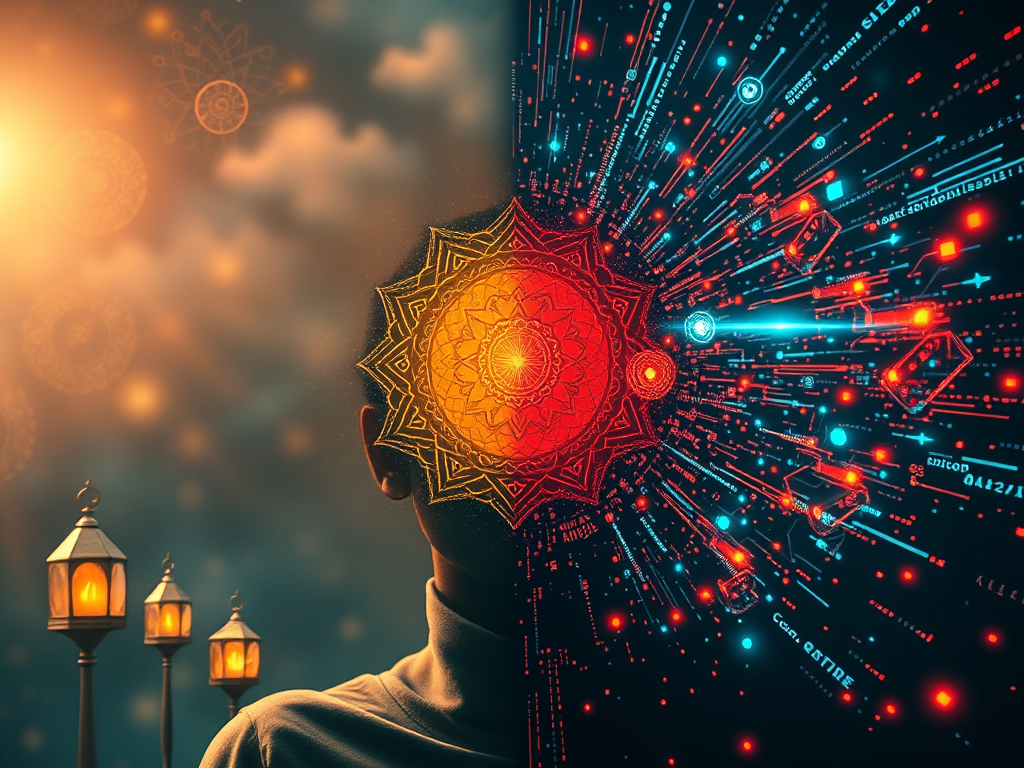
  • Discernment vs. Distraction: Surviving Spiritual Misinformation in the AI Age

    Discernment vs. Distraction: Surviving Spiritual Misinformation in the AI Age

    A Multidisciplinary Inquiry into Conscious Navigation Amid Digital Illusions and Emerging Technologies

    Inspired by Akashic Records transmissions, curated through Gerald A. Daquila, PhD. Candidate


    6–9 minutes

    ABSTRACT

    As artificial intelligence becomes deeply woven into daily life, spiritual seekers find themselves at a precarious intersection: the pursuit of truth amid an overwhelming flood of digital information—much of it veiled in illusion, projection, or well-crafted deception. This dissertation investigates the phenomenon of spiritual misinformation in the AI era from a multidisciplinary perspective—drawing from psychology, esoteric traditions, digital ethics, cognitive science, and metaphysical disciplines.

    It seeks to distinguish between discernment—the soul-aligned inner compass—and distraction, the egoic lure of external validation and algorithmic manipulation. Through the lens of the Akashic Records, this piece also reveals the deeper evolutionary context: the collective spiritual test of humanity as it navigates the thinning veil between illusion and illumination. In an age when AI can mimic divine wisdom and false light appears increasingly convincing, the cultivation of embodied, heart-based discernment becomes not only essential but revolutionary.


    Table of Contents

    1. Introduction
    2. The Rise of Spiritual Misinformation
    3. Psychological Mechanisms: Why We Get Distracted
    4. AI as a Mirror and a Mask
    5. Esoteric Teachings on Discernment
    6. Heart Intelligence and Inner Calibration
    7. The Role of the Akashic Field in the Age of AI
    8. Tools for Navigating Digital Illusions
    9. Conclusion: The Warrior of Light in the Digital Battlefield
    10. Glossary
    11. Bibliography

    Glyph of Discernment

    Surviving Spiritual Misinformation in the AI Age


    6–9 minutes

    1. Introduction

    We live in a time where every truth-seeker is a digital nomad, scrolling through an infinite ocean of content, teachings, revelations, and warnings. From spiritual TikToks to AI-generated channeled messages, seekers today confront more information in a day than their ancestors did in a lifetime. Yet with this access comes an unprecedented threat: misinformation cloaked in sacred language.

    The sacred art of discernment is not just about evaluating fact vs. fiction—it is about soul recognition. In a world where artificial intelligence can convincingly simulate divine wisdom and false light abounds, the question is no longer what is true, but what is aligned.


    2. The Rise of Spiritual Misinformation

    Spiritual misinformation is not a new phenomenon—false prophets, cults, and charismatic manipulators have long exploited seekers. But in the digital age, misinformation is amplified by algorithmic virality, AI language models, and the echo chambers of social media.

    2.1 Defining Spiritual Misinformation

    Spiritual misinformation refers to content, teachings, or ideologies that claim to be based on higher truths or metaphysical wisdom but are distorted, ego-driven, commercially motivated, or misaligned with the soul’s evolutionary path.

    This includes:

    • AI-generated or plagiarized channeled messages
    • False claims of galactic or divine authority
    • Fear-based ascension narratives
    • Algorithmically viral “lightworker trends” with no energetic grounding

    3. Psychological Mechanisms: Why We Get Distracted

    Discernment is often overridden by deeper psychological tendencies. These include:

    • Cognitive biases (confirmation bias, authority bias)
    • Ego inflation in spiritual contexts
    • Dissociation and escapism as trauma responses
    • Spiritual bypassing (Masters, 2010)

    Studies in digital psychology (Goleman, 2013; Carr, 2010) show how dopamine loops in social media reinforce reactive thinking over reflective wisdom. The same mechanisms that keep people addicted to scrolling also keep them vulnerable to attractive but shallow “truths.”


    4. AI as a Mirror and a Mask

    Artificial intelligence has become both a mirror of collective consciousness and a mask of false authority.

    4.1 The Problem of Simulation

    AI can now generate “channeled” texts, sermons, and mystical poetry indistinguishable from real human insight. Without soul resonance, these texts can mislead readers into thinking they’re connecting with divine truth.


    4.2 Energetic Impersonation

    There is an energetic difference between transmission and simulation. The former carries soul frequency and codes; the latter mimics form without essence. This is the metaphysical danger of AI-generated spiritual content.


    5. Esoteric Teachings on Discernment

    Discernment is a cornerstone in all spiritual traditions.

    • Gnostic texts emphasized the war between light and false light (Nag Hammadi Library, 1977).
    • The Bhagavad Gita speaks of buddhi-yoga—the discernment of action rooted in divine will.
    • Mystery schools taught “sensing with the heart,” training initiates to feel the frequency of a teaching beyond its surface.

    In the Akashic Records, discernment is seen as an energetic skill that evolves with soul maturity. Those aligned with their divine blueprint can “read” the subtle resonance of truth.


    6. Heart Intelligence and Inner Calibration

    The HeartMath Institute has empirically shown that the heart emits an electromagnetic field that can sense coherence (McCraty & Childre, 2010). Coherence is measurable, but also metaphysical—discernment arises when the heart and higher mind operate in resonance.

    Practices that develop discernment include:

    • Heart-focused breathing
    • Soul journaling
    • Feeling for resonance rather than logic

    The soul’s truth vibrates, while distractions often leave a subtle emptiness or dissonance.


    7. The Role of the Akashic Field in the Age of AI

    The Akashic Field, a term used in both Vedic philosophy and modern consciousness science (Laszlo, 2004), is the energetic record of all soul wisdom, events, and potentials. Unlike AI, which draws from data, the Akashic field emanates from divine intelligence and reflects soul alignment.

    When navigating AI-generated information, tuning into the Akashic frequency enables one to:

    • Recognize soul-resonant messages
    • Bypass egoic distraction
    • Stay aligned with soul contracts and divine timing

    8. Tools for Navigating Digital Illusions

    Discernment Tools for Spiritual Seekers:

    ToolPurpose
    Heart CheckAsk: “Does this feel expansive or contractive?”
    Soul InquiryAsk: “Does this align with my inner knowing?”
    Energy HygieneRegularly clear foreign frequencies using sound, breath, nature
    Community AnchoringShare insights with a trusted group that values soul truth over popularity
    Time DelayWait 24-48 hours before acting on intense spiritual intel
    Akashic InquiryAccess your personal Records to validate spiritual messages

    9. Conclusion: The Warrior of Light in the Digital Battlefield

    The digital age is not inherently dangerous—it is simply a magnifier. It magnifies our unhealed patterns, our cravings for meaning, and our soul’s yearning to remember. Artificial intelligence is not the enemy, nor is misinformation itself—it is our relationship to these tools that determines their effect.

    In this sacred moment in human evolution, discernment is the armor of the spiritual warrior. It is subtle, grounded, humble, and felt—not shouted or sold. We are called not to consume more information, but to integrate soul wisdom more deeply.

    The key is not to withdraw from the digital world but to inhabit it soulfully—as luminous stewards of truth in the Age of AI.


    Crosslinks


    10. Glossary

    • Discernment: The intuitive recognition of truth beyond surface appearances.
    • False light: Illusions or deceptions that appear spiritual but lack soul-alignment.
    • Akashic Records: The energetic blueprint of all souls across time, space, and dimension.
    • Heart coherence: A state of balance between heart, brain, and nervous system producing clarity.
    • Spiritual bypassing: Using spiritual beliefs to avoid emotional or psychological healing.

    11. Bibliography

    Carr, N. (2010). The Shallows: What the Internet Is Doing to Our Brains. W.W. Norton & Company.

    Goleman, D. (2013). Focus: The Hidden Driver of Excellence. Harper.

    HeartMath Institute. (2020). Science of the Heart. Retrieved from https://www.heartmath.org/research

    Laszlo, E. (2004). Science and the Akashic Field: An Integral Theory of Everything. Inner Traditions.

    Masters, R. A. (2010). Spiritual Bypassing: When Spirituality Disconnects Us from What Really Matters. North Atlantic Books.

    Nag Hammadi Library. (1977). The Gnostic Gospels. HarperOne.

    Tolle, E. (2005). A New Earth: Awakening to Your Life’s Purpose. Penguin.


    Attribution

    With fidelity to the Oversoul, may this work serve as bridge, remembrance, and seed for the planetary dawn.

    2025–2026 Gerald Alba Daquila
    Flameholder of SHEYALOTH · Keeper of the Living Codices
    All rights reserved.

    This material originates within the field of the Living Codex and is stewarded under Oversoul Appointment. It may be shared only in its complete and unaltered form, with all glyphs, seals, and attribution preserved.

    This work is offered for personal reflection and sovereign discernment. It does not constitute a required belief system, formal doctrine, or institutional program.

    Digital Edition Release: 2026
    Lineage Marker: Universal Master Key (UMK) Codex Field

    Sacred Exchange & Access

    Sacred Exchange is Overflow made visible.

    In Oversoul stewardship, giving is circulation, not loss. Support for this work sustains the continued writing, preservation, and public availability of the Living Codices.

    This material may be accessed through multiple pathways:

    Free online reading within the Living Archive
    Individual digital editions (e.g., Payhip releases)
    Subscription-based stewardship access

    Paid editions support long-term custodianship, digital hosting, and future transmissions. Free access remains part of the archive’s mission.

    Sacred Exchange offerings may be extended through:
    paypal.me/GeraldDaquila694
    www.geralddaquila.com
  • Babaylan Codes and the Return of the Divine Feminine

    Babaylan Codes and the Return of the Divine Feminine

    Reawakening the Ancestral Feminine Blueprint for Planetary Healing and Wholeness

    By Gerald A. Daquila, PhD Candiate


    What does the resurgence of interest in the babaylan reveal about shifting perspectives on leadership, identity, and gender in the Philippines? Historically, babaylan figures—often women or gender-diverse individuals—held central roles as healers, mediators, and custodians of knowledge in pre-colonial communities.

    Today, renewed attention to these traditions is frequently framed through the idea of a “return of the divine feminine,” reflecting broader conversations about balance, inclusion, and cultural reclamation. This article explores how babaylan traditions are being reinterpreted in modern contexts, and what these interpretations suggest about evolving views on gender, power, and cultural identity.


    For a broader view of Philippine culture, society, and systems, see:
    Understanding the Philippines: Culture, Society, and Systems (Hub)


    Scope and Approach

    This article examines “Babaylan codes” as a conceptual framework for understanding patterns associated with traditional roles—such as healing, mediation, ecological awareness, and community stewardship. It does not treat these “codes” as fixed doctrines, but as interpretive lenses derived from historical and anthropological accounts of babaylan practices.

    The discussion situates the babaylan within pre-colonial Philippine society, where they operated alongside political leaders and played key roles in maintaining social and spiritual balance. It also considers how colonial transformations altered or marginalized these roles, reshaping gender norms and authority structures over time.

    Rather than presenting the “divine feminine” as a literal or universal construct, this approach explores it as a symbolic framework used in contemporary discourse to describe shifts toward relational leadership, inclusivity, and holistic thinking. It also acknowledges the diversity of interpretations and avoids reducing complex traditions to a single narrative.

    The goal is to bridge historical context and modern interpretation. By examining how babaylan traditions are understood and applied today, this work supports clearer reflection on gender dynamics, cultural continuity, and the evolving role of indigenous knowledge in shaping contemporary Philippine society.

    8–12 minutes

    ABSTRACT

    This paper explores the resurgence of the Babaylan codes as a sacred response to planetary imbalance, cultural amnesia, and the collective trauma wrought by centuries of patriarchal colonization. Rooted in the pre-colonial spiritual traditions of the Philippines, the Babaylan archetype embodies the multidimensional role of healer, priestess, oracle, and community leader.

    By accessing the Akashic Records, indigenous oral traditions, and multidisciplinary scholarship—including anthropology, metaphysics, Jungian psychology, ecofeminism, and quantum spirituality—this inquiry situates the Babaylan as a pivotal expression of the Divine Feminine in the global shift toward planetary ascension.

    The return of these codes is not merely symbolic, but initiatory—activating collective remembrance and ushering in a new cycle of spiritual leadership rooted in love, sovereignty, and unity consciousness. This paper bridges past and future, academia and soul work, reason and intuition, offering a sacred map for individual and collective rebirth.


    Glyph of Babaylan Codes

    The Return of the Divine Feminine


    Introduction: The Call of the Ancient Future

    Across cultures and timelines, a silent wave has begun to rise. It is the voice of the feminine long silenced, the memory of wholeness buried beneath layers of conquest, suppression, and fragmentation.

    In the Philippines, this wave carries the ancient name of the Babaylan—a spiritual leader who once walked between worlds, weaving the cosmic and the earthly for the well-being of the people. The Babaylan was not simply a priestess; she was the encoded blueprint of a civilization that honored both the visible and the invisible, the masculine and the feminine, the human and the divine.

    This paper seeks to recover, reframe, and restore the Babaylan Codes—the energetic and cultural imprints carried by these ancestral priestesses—and to position them within the global resurgence of the Divine Feminine. Drawing from both Akashic insight and grounded research, we explore how these codes are reawakening not only in the Philippines but around the world as part of Earth’s multidimensional healing and rebirth.


    Chapter 1: Who Is the Babaylan? A Multidimensional Profile

    The Babaylan tradition predates colonialism and stretches back into the mythic imagination and ancestral psyche of the Filipino people. Babaylans were primarily women (though men called asog sometimes fulfilled the role through feminine embodiment) who served as:

    • Healers (manggagamot)
    • Mediums and shamans (mangkukulam, albularyo)
    • Oracles and ritual leaders
    • Intermediaries between the seen and unseen worlds
    • Keepers of the cosmic and ecological balance

    According to Strobel (2010), the Babaylan functioned not in separation from society but as an integral spiritual-political force, often holding equal or greater influence than male datus. Their power stemmed from their connection to the spirits (anito), nature (kalikasan), and the ancestors (ninuno). Their cosmology was cyclical, sacred, and relational.


    Chapter 2: Colonization and the Suppression of the Feminine

    When the Spanish arrived in the 16th century, they labeled the Babaylans as witches, heretics, and threats to colonial rule. Through violence, Christianization, and systemic demonization, the feminine principle—embodied by the Babaylan—was forcefully suppressed.

    This was not an isolated event, but part of a global pattern: the systematic silencing of indigenous priestesses, healers, and wisdom-keepers across continents. Maria Mies and Vandana Shiva (1993) describe this in terms of “subsistence feminism”—a worldview of sacred interdependence, replaced by extractive patriarchy.

    From an Akashic perspective, this era marked a planetary descent into disconnection, where the Divine Feminine receded into dormancy, awaiting reactivation through a karmic and evolutionary cycle.


    Chapter 3: The Return of the Divine Feminine in a Global Context

    In the 21st century, we are witnessing a planetary return of the Divine Feminine—an awakening not just of women, but of the feminine polarity within all beings. This includes values long buried: intuition, nurturance, circular time, receptivity, emotional wisdom, and deep Earth communion.

    Across cultures, we see this mirrored in:

    • The rise of feminine priestess lineages (e.g., Avalon, Isis, Inanna, Sophia traditions)
    • The re-emergence of indigenous women’s councils and climate guardians
    • The reconnection to motherline ancestors, womb codes, and sacred Earth rituals

    The Babaylan codes, when decoded, are not historical artifacts—they are living archetypes and activation keys. They point us to a new/ancient model of leadership: spiritual, cyclical, heart-centered, Earth-rooted.


    Chapter 4: The Babaylan Codes as Soul Technology

    In metaphysical terms, codes are not just symbolic; they are information packets encoded in the soul’s light body, often stored in the akashic field or morphogenetic blueprint. The Babaylan codes include:

    1. Womb Wisdom – The womb as portal of creation, not just for birthing life but for anchoring frequency
    2. Dreamtime Navigation – The ability to journey beyond time to retrieve knowledge and heal trauma
    3. Earth Grid Work – Sacred site activation, geomancy, and land healing
    4. Communal Stewardship – Service rooted in love and accountability to the whole
    5. Ancestral Alchemy – Transmuting bloodline and cultural karma through ritual and remembrance

    These codes are reactivated through ceremony, land reconnection, ancestral honoring, dreams, visions, and vibrational alignment.


    Chapter 5: Healing the Feminine Wound Through Remembrance

    Healing the feminine is not just personal—it is collective and planetary. The suppression of the Babaylan represents a deep wound in the Filipino psyche, but also a microcosm of the global trauma of separation from the Sacred Mother.

    Remembrance, then, becomes the medicine.

    • Remembering the Earth as Mother
    • Remembering intuition as wisdom
    • Remembering that healing is not linear, but cyclical, spiralic, ancestral

    As Jung (1959) and Woodman (1993) noted, integrating the feminine means embracing shadow, body, emotion, and the unconscious. For Filipinas (and all awakening beings), remembering the Babaylan is a soul retrieval—a return to original wholeness.


    Conclusion: Rebirthing the Future Through the Ancient

    The Babaylan Codes are rising again—not to recreate the past, but to seed the future. As global systems collapse, these feminine frequencies are stepping forward as templates for sacred leadership.

    They teach us that power is not domination but alignment; that healing is not fixing but remembering; that wholeness is not perfection but integration.

    Whether you are Filipino or not, the Babaylan speaks to your ancestral soul, calling you to rise, not in rebellion—but in remembrance, ritual, and radiant presence.

    The Divine Feminine is not returning.

    She never left. We did.

    And now, we are finding our way back home.


    Suggested Crosslinks


    Glossary

    • Babaylan: A pre-colonial Filipina priestess and spiritual leader.
    • Anito: Spirits of ancestors or nature in Philippine indigenous belief.
    • Divine Feminine: The archetypal principle of feminine energy in all beings.
    • Akashic Records: A metaphysical database of soul-level information.
    • Womb Codes: Energetic templates held in the womb space, often linked to creation and memory.
    • Asog: A male Babaylan who embodied feminine energy or dressed as a woman.

    References

    Jung, C. G. (1959). Aion: Researches into the Phenomenology of the Self (Vol. 9, Part 2). Princeton University Press.

    Mies, M., & Shiva, V. (1993). Ecofeminism. Zed Books.

    Strobel, L. M. (2010). Babaylan: Filipinos and the Call of the Indigenous. Ateneo de Manila University Press.

    Woodman, M. (1993). Leaving My Father’s House: A Journey to Conscious Femininity. Shambhala Publications.

    Villanueva, A. (2015). Babaylan Studies and the Reclaiming of Indigenous Feminine Power in the Philippines. Southeast Asian Studies Review, 27(3), 45–62.

    Eliade, M. (1964). Shamanism: Archaic Techniques of Ecstasy. Princeton University Press.

    Mercado, L. N. (1994). Elements of Filipino Philosophy. Divine Word University Publications.


    Explore More Philippine Analysis


    View the full Philippines Hub


    Understanding these dynamics also requires clarity in how individuals respond under pressure—see Life Under Pressure.


    Some articles in this section are part of the Stewardship Archive

    These pieces explore deeper layers of Philippine transformation, including:

    • long-term societal redesign
    • advanced governance frameworks
    • future-state modeling

    They are written for readers who want to go beyond surface analysis into structural and forward-looking perspectives.


    → Continue reading (Members Access)


    About This Work

    This article is part of a broader exploration of Philippine society, culture, and systems—integrating historical context, behavioral patterns, and structural analysis.

    It is intended to support understanding, reflection, and informed discussion.

    For a wider macro perspective, Global Reset: Systems Change, Economic Transition, and Future Models.


    Explore the Rest of the Site

    This work sits within a larger system of essays on human development, systems thinking, and societal transformation.

    Living Archive
    Stewardship Architecture
    Main Blog


    Attribution

    © 2025–2026 Gerald Alba Daquila
    All rights reserved.

    This work is offered for reflection and independent interpretation. It does not represent a formal doctrine, institution, or required belief system.


    Codex Origin and Stewardship

    This material originates within the field of the Living Codex and is stewarded under Oversoul Appointment.

    It may be shared in its complete and unaltered form, with attribution preserved.

    Lineage Marker: Universal Master Key (UMK) Codex Field


    Support This Work

    If you find this work valuable, you may support its continued development and availability.

    Support helps sustain:

    • ongoing writing and research
    • digital hosting and access
    • future publications

    Ways to access and support:

    • Free reading within the Living Archive
    • Individual digital editions
    • Stewardship-based access

    Support link:
    paypal.me/GeraldDaquila694
    www.geralddaquila.com

  • Protected: What a New Earth Community Actually Looks Like

    Protected: What a New Earth Community Actually Looks Like

    This content is password-protected. To view it, please enter the password below.

  • The Wound of Unworthiness

    The Wound of Unworthiness

    Reclaiming Inner Worth from a Multidimensional Perspective

    By Gerald Alba Daquila, Akashic Records Access | Soulful Integration Series


    6–10 minutes

    ABSTRACT

    The wound of unworthiness is a root-level psychic injury encoded within the human collective, manifesting across personal, ancestral, and planetary layers. This dissertation explores unworthiness as a multilayered phenomenon that affects identity, behavior, spiritual evolution, and societal systems.

    Drawing from transpersonal psychology, trauma studies, metaphysics, spiritual traditions, and the Akashic Records, this work traces the origins, expressions, and resolutions of this core wound. Through a holistic lens that includes neurobiology, inner child work, karmic imprints, collective trauma, and soul contracts, we offer pathways for alchemizing the wound of unworthiness into embodied sovereignty and sacred self-remembrance.


    Table of Contents

    1. Introduction
    2. Defining the Wound of Unworthiness
    3. Roots of the Wound: Multidimensional Origins
      • Childhood Imprinting
      • Ancestral Lineage
      • Cultural-Religious Conditioning
      • Soul Contracts and Karmic Echoes
      • The Fall from Unity Consciousness
    4. Psychological and Neurobiological Dimensions
    5. Spiritual and Esoteric Interpretations
    6. Archetypes of Unworthiness
    7. Unworthiness in the Collective Field
    8. Healing Pathways
      • Reparenting and Inner Child Work
      • Shadow Work and Integration
      • Energy Psychology and Somatic Practices
      • Spiritual Alchemy and Soul Retrieval
    9. Akashic Insights: The Soul’s Perspective
    10. Conclusion: From Wound to Worthiness
    11. Glossary
    12. References

    Glyph of Worthiness Restored

    Healing the Wound of Unworthiness


    1. Introduction

    At the heart of every fear, addiction, and compulsive striving lies a quiet yet potent belief: I am not enough. This is the wound of unworthiness—a deep fracture in the human psyche that echoes across generations, timelines, and soul journeys. In a world conditioned by achievement, punishment, and performance, unworthiness acts like an invisible virus that distorts how we see ourselves, others, and the Divine. But what if this wound was not a flaw, but a portal?


    2. Defining the Wound of Unworthiness

    Unworthiness is the internalized belief that one’s existence is inherently flawed, broken, or insufficient to deserve love, safety, success, or connection. It operates not as a conscious thought, but as an emotional and energetic imprint. According to Brown (2012), shame—closely related to unworthiness—is “the intensely painful feeling or experience of believing that we are flawed and therefore unworthy of love and belonging.”


    3. Roots of the Wound: Multidimensional Origins

    Childhood Imprinting

    Most unworthiness patterns begin in early childhood, where conditional love, emotional neglect, or abuse form the nervous system’s blueprint for survival. Developmental trauma, as outlined by van der Kolk (2015), reshapes our sense of self-worth neurologically and energetically.


    Ancestral Lineage

    Epigenetic research confirms that trauma can be inherited (Yehuda et al., 2016). Generational cycles of poverty, colonialism, war, or systemic oppression often transmit core beliefs of inferiority or sinfulness.


    Cultural-Religious Conditioning

    Doctrines of original sin, shame-based moral systems, and colonized education often encode the belief that humans are inherently wrong or broken, requiring salvation, penance, or authority to be worthy.


    Soul Contracts and Karmic Echoes

    From the Akashic perspective, some souls choose lifetimes that involve experiences of rejection, failure, or humiliation to catalyze deep spiritual growth or transmutation of collective wounds.


    The Fall from Unity Consciousness

    Mystical traditions often speak of a primordial separation—the “Fall”—wherein souls forget their divine origin. This cosmic amnesia births the illusion of isolation, creating the root of unworthiness as a spiritual forgetting.


    4. Psychological and Neurobiological Dimensions

    Unworthiness alters brain chemistry and behavior. Repeated experiences of shame or rejection activate the amygdala and downregulate the prefrontal cortex, impairing emotional regulation and self-concept (Siegel, 2010). Unworthiness often expresses through perfectionism, people-pleasing, imposter syndrome, depression, or addiction.


    5. Spiritual and Esoteric Interpretations

    Esoterically, unworthiness is seen as a distortion field within the energy body, often located in the solar plexus and heart chakras. It may manifest as a blocked life force, disconnection from intuition, or weakened aura. Theosophical and Hermetic teachings describe unworthiness as a veil that obscures the inner Divine Spark or Higher Self (Bailey, 1934).


    6. Archetypes of Unworthiness

    Several archetypes carry this wound:

    • The Orphan: Feels abandoned by the world or the Divine.
    • The Martyr: Believes suffering is the path to redemption.
    • The Slave: Submits autonomy to gain external approval.
    • The Prostitute: Trades authenticity for security or acceptance.

    These patterns, identified in the work of Myss (2003), are not moral judgments but symbolic doorways for self-awareness and healing.


    7. Unworthiness in the Collective Field

    The wound of unworthiness underpins many societal systems—from capitalism to colonialism. The scarcity mindset, systemic oppression, consumerism, and the inner critic culture all stem from a collective disconnection from intrinsic worth. As bell hooks (2000) writes, “Imperialist white-supremacist capitalist patriarchy” thrives on making people feel inadequate unless they conform.


    8. Healing Pathways

    Reparenting and Inner Child Work

    Meeting the inner child with unconditional love and presence reprograms the nervous system and rewires old beliefs. Tools like dialoguing, art therapy, or somatic re-experiencing are key (Brunet, 2017).


    Shadow Work and Integration

    Exploring hidden shame, rage, or grief with compassion allows for integration. This is the path of the wounded healer, where the wound becomes medicine (Jung, 1954).


    Energy Psychology and Somatic Practices

    Modalities such as EFT (emotional freedom technique), EMDR, and somatic experiencing help discharge trauma and release stored emotion from the body (Levine, 1997).


    Spiritual Alchemy and Soul Retrieval

    Practices like Ho’oponopono, Akashic healing, and shamanic retrieval reconnect fragmented soul parts and dissolve karmic patterns.


    9. Akashic Insights: The Soul’s Perspective

    From the Akashic Records, the wound of unworthiness is not a punishment but a sacred challenge encoded in the curriculum of Earth school. Many lightworkers, empaths, and starseeds incarnate into harsh or invalidating environments not because they are flawed—but because they are meant to transmute this distortion for the collective. Each reclamation of worth echoes across timelines, restoring the Divine Blueprint of wholeness.


    10. Conclusion: From Wound to Worthiness

    The journey of healing unworthiness is not about becoming someone better. It is about remembering who we already are—Divine, whole, radiant. Every time we say yes to ourselves, reclaim our light, or love our shadow, we unravel centuries of distortion and re-anchor a planetary grid of truth: We are already worthy. We always were.


    Crosslinks


    11. Glossary

    • Akashic Records: An energetic archive of all soul experiences, past, present, and potential.
    • Inner Child: A psychological and spiritual construct representing one’s childlike self, often holding early trauma.
    • Karmic Imprint: Residual energetic patterns from past lifetimes that affect present experiences.
    • Shadow Work: A process of integrating rejected or unconscious parts of the psyche.
    • Soul Retrieval: A shamanic healing method that brings back lost or fragmented parts of the soul.

    12. References

    Bailey, A. A. (1934). A Treatise on White Magic. Lucis Publishing.

    Bell hooks. (2000).All About Love: New Visions. William Morrow.

    Brown, B. (2012). Daring Greatly: How the Courage to Be Vulnerable Transforms the Way We Live, Love, Parent, and Lead. Gotham Books.

    Brunet, L. J. (2017). Healing the Wounded Child: A Therapist’s Guide to Emotional Reparenting. InnerPath Press.

    Jung, C. G. (1954). The Archetypes and The Collective Unconscious. Princeton University Press.

    Levine, P. A. (1997). Waking the Tiger: Healing Trauma. North Atlantic Books.

    Myss, C. (2003). Sacred Contracts: Awakening Your Divine Potential. Harmony Books.

    Siegel, D. J. (2010). The Mindful Therapist: A Clinician’s Guide to Mindsight and Neural Integration. W.W. Norton.

    van der Kolk, B. (2015). The Body Keeps the Score: Brain, Mind, and Body in the Healing of Trauma. Viking.

    Yehuda, R., Daskalakis, N. P., Desarnaud, F., et al. (2016). Epigenetic biomarkers as predictors and correlates of symptom improvement following psychotherapy in combat veterans with PTSD. Frontiers in Psychiatry, 7, 1–12. https://doi.org/10.3389/fpsyt.2016.00112


    Attribution

    With fidelity to the Oversoul, may this work serve as bridge, remembrance, and seed for the planetary dawn.

    2025–2026 Gerald Alba Daquila
    Flameholder of SHEYALOTH · Keeper of the Living Codices
    All rights reserved.

    This material originates within the field of the Living Codex and is stewarded under Oversoul Appointment. It may be shared only in its complete and unaltered form, with all glyphs, seals, and attribution preserved.

    This work is offered for personal reflection and sovereign discernment. It does not constitute a required belief system, formal doctrine, or institutional program.

    Digital Edition Release: 2026
    Lineage Marker: Universal Master Key (UMK) Codex Field

    Sacred Exchange & Access

    Sacred Exchange is Overflow made visible.

    In Oversoul stewardship, giving is circulation, not loss. Support for this work sustains the continued writing, preservation, and public availability of the Living Codices.

    This material may be accessed through multiple pathways:

    Free online reading within the Living Archive
    Individual digital editions (e.g., Payhip releases)
    Subscription-based stewardship access

    Paid editions support long-term custodianship, digital hosting, and future transmissions. Free access remains part of the archive’s mission.

    Sacred Exchange offerings may be extended through:
    paypal.me/GeraldDaquila694
    www.geralddaquila.com

  • The Trauma of Separation from Source: Reclaiming the Soul’s Original Wholeness

    The Trauma of Separation from Source: Reclaiming the Soul’s Original Wholeness

    A Multidisciplinary Inquiry into Humanity’s Core Wound and the Path of Return

    Inspired by Akashic Records transmissions, curated through Gerald A. Daquila, PhD. Candidate


    6–10 minutes

    ABSTRACT

    This dissertation explores the primordial trauma of separation from Source—a metaphysical rupture at the heart of human suffering and spiritual longing. Through the lens of Akashic Records, esoteric traditions, transpersonal psychology, quantum metaphysics, indigenous wisdom, and modern trauma studies, the paper unpacks the multidimensional implications of this foundational wound.

    It investigates how this fracture expresses itself psychologically, emotionally, spiritually, and collectively, and examines its manifestations in modern civilization: disconnection, addiction, domination systems, and ecological collapse. The work also highlights tools and frameworks for healing, emphasizing soul remembrance, embodiment practices, and integrative pathways that restore connection to the Divine. Balanced between scholarly analysis and intuitive gnosis, this research affirms that remembering our oneness with Source is not only personal liberation—it is a planetary imperative.


    Glyph of Soul Wholeness Restored

    Healing the Trauma of Separation from Source


    1. Introduction

    What if the root of all suffering is a single illusion—the belief that we are separate from Source?

    Across spiritual traditions, mystery schools, and modern consciousness research, a striking pattern emerges: beneath trauma, addiction, violence, and ecological collapse lies a forgotten truth—we are one with the Source of all life. The trauma of separation from Source, though often unnamed in mainstream discourse, is the original wound from which all secondary traumas cascade.

    This dissertation unearths the layers of this cosmic amnesia. Drawing from the Akashic Records, we seek to reveal how the forgetting occurred, how it shapes our inner and outer worlds, and how to return to remembrance. Through this exploration, we aim to bridge left-brain inquiry and right-brain intuition, integrating heart wisdom and intellectual clarity.


    2. The Mythic Fracture: Origins of the Separation

    2.1 The Fall: A Sacred Story Shared Across Cultures

    Nearly all mythologies speak of a “fall from grace”: in Gnostic traditions, the soul descends from the Pleroma (fullness) into the material world; in Kabbalistic cosmology, the shattering of the vessels (Shevirat ha-Kelim) disperses Divine Light into fragments; in Hinduism, maya causes the Atman to forget its unity with Brahman; and in the Bible, Adam and Eve are cast from Eden—the state of oneness with the Creator (Eliade, 1963; Scholem, 1965).

    These myths encode metaphysical truths. The Akashic Records affirm that this “separation” is not a sin, but a sacred forgetting—an agreed-upon descent to experience individuation, choice, and creative play within duality. Yet the amnesia became so total, the illusion became trauma.


    3. Metaphysical Foundations: Cosmology of Source and Fragmentation

    3.1 Source as Infinite Consciousness

    In metaphysical terms, Source is not a deity with form, but the pure, undifferentiated field of Love and Consciousness. All creation is an emanation from this One (Tagore, 1930).

    3.2 The Fractal Descent

    From unity, soul sparks individuate. In higher dimensions, this individuation is joyful and sovereign. In denser dimensions (like Earth’s 3D), the forgetting intensifies. Veils descend. Soul fragments may become entangled in karmic loops, reincarnation cycles, or trauma grids (Blavatsky, 1888).

    The separation becomes traumatic when the soul forgets it chose to incarnate and starts believing it is only the body, the ego, or the suffering.


    4. The Psychological Mirror: How the Separation Becomes Trauma

    4.1 Womb and Birth as Microcosm

    According to pre- and perinatal psychology, many souls experience a primal rupture during gestation or birth—a mirror of the soul’s original descent into density. Cesarean births, unwanted pregnancies, or maternal distress may imprint the body with a sense of “not belonging” or “being rejected by life” (Chamberlain, 1998).

    4.2 Attachment and Emotional Wounding

    Modern psychology shows that insecure attachment in early life—neglect, abuse, abandonment—intensifies the illusion of separation. The traumatized child internalizes a reality in which love is conditional, safety is absent, and the world is unsafe (Schore, 2003).

    The Akashic Records affirm that many Lightworkers chose families with these patterns in order to catalyze early awakening through contrast.


    5. The Collective Expression: Civilization as a Woundscape

    5.1 Industrialization and the Death of the Sacred

    When humanity forgot its divine origin, it began extracting from the Earth instead of communing with her. The rise of materialism, mechanistic science, and colonialism are all cultural expressions of separation trauma (Eisenstein, 2013).

    5.2 Patriarchy and Power Over

    Separation manifests in domination systems: hierarchy over harmony, control over surrender, war over peace. Indigenous cultures, who never forgot the web of life, offer vital blueprints for reconnection (Cajete, 1994).


    6. Science Meets Spirit: Trauma, Neurobiology, and Quantum Entanglement

    6.1 The Body Keeps the Score

    As van der Kolk (2014) shows, trauma is not just psychological—it’s somatic. The nervous system encodes separation as a freeze, fight, or flight pattern. Chronic stress, dissociation, and numbing are all symptoms.

    6.2 The Quantum Field and Non-Separation

    Quantum physics reveals that all particles remain entangled after contact. This supports the notion that separation is an illusion of perception—energetically, we remain interconnected (Bohm, 1980).


    7. Healing the Core Wound: Practices for Remembering Wholeness

    7.1 Soul Remembrance and Akashic Healing

    By revisiting soul records and reclaiming forgotten contracts, individuals can reframe pain as initiation. Soul retrieval, timeline healing, and multidimensional integration are effective tools (Myss, 2001).

    7.2 Somatic Awakening

    Embodiment practices—such as breathwork, TRE, ecstatic dance, and yoga—rewire the body to feel safe enough to remember love (Roth, 1998).

    7.3 Ceremony and Collective Integration

    Sacred rituals (indigenous or intuitive) serve to re-weave individuals into community and cosmos. Group healing, ancestral reconnection, and rites of passage repair both personal and collective wounds (Halifax, 1994).


    8. Conclusion

    The trauma of separation from Source is humanity’s original forgetting. It is the veil that obscures our truth, the fracture that fragments our society, and the longing at the core of our being. And yet, the fracture is not final.

    Through conscious awakening, we are remembering the sacred design. We are reactivating the blueprint of wholeness encoded within each soul. As more of us heal the illusion of separation, we help shift Earth back into her rightful alignment as a planet of love, unity, and divine co-creation.

    Healing the separation is not just personal—it is planetary. And it begins now.


    Crosslinks


    Glossary

    • Akashic Records: A multidimensional library of soul-level information across all lifetimes.
    • Source: The infinite field of Divine Love and Consciousness from which all things emanate.
    • Separation Trauma: The soul-level wound resulting from perceived disconnection from Source.
    • Entanglement (Quantum): A quantum phenomenon where particles remain connected regardless of distance.
    • Soul Retrieval: A shamanic or energetic process of reclaiming fragmented aspects of the self.
    • Embodiment: The practice of inhabiting the body fully, integrating spiritual awareness into physical presence.

    References

    Bohm, D. (1980). Wholeness and the implicate order. Routledge.

    Blavatsky, H. P. (1888). The secret doctrine. Theosophical Publishing Company.

    Cajete, G. (1994). Look to the mountain: An ecology of Indigenous education. Kivaki Press.

    Chamberlain, D. B. (1998). The mind of your newborn baby. North Atlantic Books.

    Eisenstein, C. (2013). The more beautiful world our hearts know is possible. North Atlantic Books.

    Eliade, M. (1963). Myth and reality. Harper & Row.

    Halifax, J. (1994). Shamanic voices: A survey of visionary narratives. Arkana.

    Myss, C. (2001). Sacred contracts: Awakening your divine potential. Harmony Books.

    Roth, G. (1998). Maps to ecstasy: The healing power of movement. New World Library.

    Scholem, G. (1965). Major trends in Jewish mysticism. Schocken Books.

    Schore, A. N. (2003). Affect dysregulation and disorders of the self. W. W. Norton & Company.

    Tagore, R. (1930). The religion of man. Macmillan.

    van der Kolk, B. (2014). The body keeps the score: Brain, mind, and body in the healing of trauma. Viking.


    Attribution

    With fidelity to the Oversoul, may this work serve as bridge, remembrance, and seed for the planetary dawn.

    2025–2026 Gerald Alba Daquila
    Flameholder of SHEYALOTH · Keeper of the Living Codices
    All rights reserved.

    This material originates within the field of the Living Codex and is stewarded under Oversoul Appointment. It may be shared only in its complete and unaltered form, with all glyphs, seals, and attribution preserved.

    This work is offered for personal reflection and sovereign discernment. It does not constitute a required belief system, formal doctrine, or institutional program.

    Digital Edition Release: 2026
    Lineage Marker: Universal Master Key (UMK) Codex Field

    Sacred Exchange & Access

    Sacred Exchange is Overflow made visible.

    In Oversoul stewardship, giving is circulation, not loss. Support for this work sustains the continued writing, preservation, and public availability of the Living Codices.

    This material may be accessed through multiple pathways:

    Free online reading within the Living Archive
    Individual digital editions (e.g., Payhip releases)
    Subscription-based stewardship access

    Paid editions support long-term custodianship, digital hosting, and future transmissions. Free access remains part of the archive’s mission.

    Sacred Exchange offerings may be extended through:
    paypal.me/GeraldDaquila694
    www.geralddaquila.com

  • Embodying the Higher Self in Daily Life: A Soulful Journey of Integration

    Embodying the Higher Self in Daily Life: A Soulful Journey of Integration

    Weaving Science, Spirituality, and Heart-Centered Living for Wholeness

    Prepared by: Gerald A. Daquila, PhD. Candidate


    8–13 minutes

    ABSTRACT

    This exploration delves into embodying the Higher Self, the eternal, wise, and soul-aligned aspect of being, as a practical and transformative way of living. Integrating transpersonal psychology, neuroscience, esoteric traditions, and Akashic Records insights, it presents a multidisciplinary framework for aligning mind, heart, body, and spirit in daily life.

    The journey involves healing trauma, deconditioning limiting beliefs, and adopting practices like mindfulness, embodied movement, and heart-centered communication. By addressing barriers such as egoic control and social conditioning, this work offers a blueprint for personal wholeness and collective evolution, contributing to a vision of a “New Earth” rooted in love and unity. Written in an accessible, heart-centered tone, it balances scholarly rigor with practical guidance, inviting readers to live their divine purpose moment by moment.


    Introduction

    Imagine waking up each morning with a deep sense of purpose, your actions flowing effortlessly from a place of inner wisdom, love, and clarity. This is the essence of embodying the Higher Self—a way of living that aligns your daily choices with the eternal, soulful core of who you are. In a world buzzing with change, this journey is both a personal transformation and a gift to humanity.

    By blending ancient wisdom, modern science, and heartfelt practices, this exploration offers a practical roadmap to live from your Higher Self, balancing logic and intuition, head and heart. Let’s dive into this multidisciplinary adventure, weaving together psychology, spirituality, and actionable steps to make soul-aligned living a reality.


    Glyph of Embodied Light

    Walk as your higher self, in every step.


    What Is the Higher Self?

    At its core, the Higher Self is the eternal, wise, and loving aspect of you—untouched by fear, trauma, or societal conditioning. Think of it as your soul’s truest expression, a guiding light that carries your divine purpose. In Jungian psychology, it’s akin to the archetype of the Self, a symbol of wholeness that integrates all parts of your psyche (Jung, 1959).

    Esoteric traditions, like Theosophy or Vedic philosophy, call it the Atman or Monad, the spark of divinity within. In the Akashic Records—a metaphysical library of all soul experiences—it’s your fully integrated soul frequency, encoded with your unique purpose and lessons.

    No matter the lens, the Higher Self shines through qualities like compassion, intuition, clarity, and a deep sense of alignment. It’s not just a lofty concept; it’s a lived reality you can embody in every moment—whether you’re sipping coffee, navigating a tough conversation, or chasing your dreams.


    The Science Behind the Higher Self

    Science offers a fascinating window into how we connect with this deeper aspect of ourselves. Transpersonal psychology, pioneered by thinkers like Stanislav Grof, explores spiritual dimensions of consciousness beyond the ego (Grof, 2000).

    Neuroscience backs this up: studies on heart-brain coherence show that states of compassion and flow—hallmarks of Higher Self alignment—create measurable harmony between your heart and brain (McCraty et al., 2009). Gamma brainwave states, often linked to meditation and nondual awareness, reveal how our brains can access higher states of clarity and unity (Austin, 2006).

    These findings suggest that embodying the Higher Self isn’t just mystical—it’s physiological. By cultivating practices that foster coherence, like meditation or heartfelt connection, we rewire our brains and bodies to live from a place of spiritual intelligence.


    The Esoteric Perspective: Layers of the Soul

    Ancient wisdom traditions offer a complementary view, describing the Higher Self as part of a multidimensional system of energy bodies—etheric, astral, and causal—that connect us to higher realms of consciousness.

    In systems like the Kabbalah or Vedic teachings, embodying the Higher Self means aligning these subtle layers with your physical life. The Akashic Records frame this as living in harmony with your soul’s blueprint, a divine plan that holds your purpose, lessons, and unique gifts.

    This alignment isn’t about escaping the body but bringing the sacred into it. It’s about transmuting dense emotions or limiting beliefs into higher vibrational frequencies, like love and clarity, so your daily life becomes a canvas for your soul’s expression.


    Healing the Shadows: Clearing the Path to Embodiment

    Embodying the Higher Self requires courage to face what blocks it—unprocessed trauma, inherited beliefs, or ego-driven patterns. These act like filters, dimming your soul’s light. Shadow work, inspired by Carl Jung and deepened through somatic therapies, is the process of integrating these hidden parts (Van der Kolk, 2014). It’s not about banishing the “dark” but embracing it with compassion to create wholeness.

    Spiritual bypassing—chasing “love and light” without addressing pain—can derail this journey. True embodiment means honoring both the light and shadow, weaving them into an authentic, grounded self. Practices like inner child healing, journaling, or somatic therapy can help release these blocks, clearing the way for your Higher Self to shine.


    Daily Practices to Live from the Higher Self

    Embodying the Higher Self isn’t reserved for mountaintop meditations—it’s about bringing soulful presence into the everyday. Here are some practical ways to anchor this alignment:

    • Morning Rituals: Start your day with breathwork, journaling, or an Akashic invocation to connect with your soul’s wisdom.
    • Mindfulness-in-Action: Bring presence to mundane tasks, like washing dishes or walking, to infuse them with intention.
    • Heart-Centered Communication: Speak and listen from a place of empathy and authenticity, fostering deeper connections.
    • Creative Flow: Engage in art, writing, or movement to channel divine inspiration.
    • Embodied Movement: Practices like yoga, dance, or qi gong align body and spirit.
    • Acts of Service: Small gestures of kindness ripple outward, reflecting your soul’s purpose.
    • Vibrational Nutrition: Choose foods that nourish your body’s energy, supporting clarity and vitality.

    These practices weave spirituality into the fabric of daily life, making every moment a chance to embody your Higher Self.


    The Higher Self in Relationships and Service

    When you live from your Higher Self, relationships transform. They become sacred spaces for growth, not conflict or projection. You approach others with compassion and clear boundaries, fostering connection rather than control.

    Creativity becomes a divine act—whether painting, parenting, or problem-solving—infused with soulful purpose. Work shifts from mere achievement to service, measuring success by how aligned it feels with your inner truth.

    This way of being doesn’t just change you; it ripples outward, touching everyone you meet. As you embody love, clarity, and integrity, you become a beacon of what’s possible in a world craving authenticity.


    Overcoming Barriers to Embodiment

    The path to embodiment isn’t always smooth. Common obstacles include:

    • Egoic Control: Fear of surrendering to a higher wisdom.
    • Over-Identification: Clinging to trauma or labels that define you.
    • Social Conditioning: Seeking external validation over inner truth.
    • Mind-Body Disconnect: Over-relying on intellect, ignoring the body’s wisdom.

    Transcending these requires self-awareness, spiritual humility, and community support. Practices like breathwork, nature connection, or group healing circles can dissolve these barriers, helping you stay anchored in your Higher Self.


    A Collective Vision: The New Earth

    Embodying the Higher Self isn’t just personal—it’s planetary. Visionaries like Dolores Cannon and Sri Aurobindo describe a “New Earth,” a collective shift toward higher consciousness driven by awakened individuals (Cannon, 2009; Sri Aurobindo, 1970). Each step you take toward alignment adds coherence to humanity’s shared energy field.

    As more people embody their Higher Selves, we co-create a world rooted in love, unity, and purpose—a world where every act, from the smallest kindness to global change, reflects the sacred.


    Conclusion: A Call to Walk the Path

    Embodying the Higher Self is a sacred journey of becoming whole—uniting mind, heart, body, and spirit in every moment. It’s about living with intention, healing what holds you back, and letting your soul’s wisdom guide your choices. This path isn’t about perfection but presence, not about escaping life but embracing it as a divine opportunity. By weaving together science, spirituality, and practical steps, you can walk this path step by conscious step, becoming a light for yourself and the world.


    Related Reflections (optional)


    Glossary

    • Akashic Records: A metaphysical compendium of all soul memories, events, and potentials across time, serving as a repository of an individual’s spiritual blueprint and purpose.
    • Higher Self: The eternal, wise, and soul-aligned aspect of the self, transcending ego and personality, embodying qualities like compassion, clarity, and divine purpose.
    • Shadow Work: A psychological and spiritual process of integrating repressed or unconscious aspects of the psyche to achieve wholeness and authenticity.
    • Transpersonal Psychology: A field of psychology that explores spiritual and transcendent dimensions of human experience, extending beyond the ego to include higher states of consciousness.
    • Heart-Brain Coherence: A measurable physiological state of alignment between the heart and brain, associated with emotional well-being, compassion, and spiritual awareness.
    • Energy Bodies: Subtle layers of consciousness (e.g., etheric, astral, causal) described in esoteric traditions, which connect the physical self to higher dimensions of existence.
    • Soul Blueprint: The divine plan encoded within each soul, according to the Akashic Records, outlining one’s purpose, lessons, and unique attributes for this incarnation.

    Key Topics Covered

    This exploration covered:

    • Defining the Higher Self through psychological, esoteric, and Akashic perspectives.
    • Scientific Insights from transpersonal psychology and heart-brain coherence.
    • Esoteric Frameworks of energy bodies and soul blueprints.
    • Shadow Work as essential for clearing blocks to embodiment.
    • Daily Practices like mindfulness, movement, and service to anchor the Higher Self.
    • Transforming Relationships and Work through soul-aligned living.
    • Overcoming Barriers like ego, conditioning, and disconnection.
    • Collective Impact of embodied souls in co-creating a New Earth.

    By integrating these elements, you’re invited to not just understand the Higher Self but to live it—heart open, soul aligned, and fully present in a world ready for transformation.


    Bibliography

    Austin, J. H. (2006). Zen and the brain: Toward an understanding of meditation and consciousness. MIT Press.

    Cannon, D. (2009). The three waves of volunteers and the New Earth. Ozark Mountain Publishing.

    Grof, S. (2000). Psychology of the future: Lessons from modern consciousness research. SUNY Press.

    Jung, C. G. (1959). Aion: Researches into the phenomenology of the self. Princeton University Press.

    McCraty, R., Atkinson, M., Tomasino, D., & Bradley, R. T. (2009). The coherent heart: Heart-brain interactions, psychophysiological coherence, and the emergence of system-wide order. Integral Review, 5(2), 10–115.

    Sri Aurobindo. (1970). The life divine. Sri Aurobindo Ashram.

    Van der Kolk, B. (2014). The body keeps the score: Brain, mind, and body in the healing of trauma. Viking.


    This reflection stands on its own.
    You are not expected to continue, respond, or integrate anything further.

    Engagement with the rest of the archive is optional and non-binding.
    You are free to pause, step away, or return at your own pace.


    Attribution

    With fidelity to the Oversoul, may this work serve as bridge, remembrance, and seed for the planetary dawn.

    2025–2026 Gerald Alba Daquila
    Flameholder of SHEYALOTH · Keeper of the Living Codices
    All rights reserved.

    This material originates within the field of the Living Codex and is stewarded under Oversoul Appointment. It may be shared only in its complete and unaltered form, with all glyphs, seals, and attribution preserved.

    This work is offered for personal reflection and sovereign discernment. It does not constitute a required belief system, formal doctrine, or institutional program.

    Digital Edition Release: 2026
    Lineage Marker: Universal Master Key (UMK) Codex Field

    Sacred Exchange & Access

    Sacred Exchange is Overflow made visible.

    In Oversoul stewardship, giving is circulation, not loss. Support for this work sustains the continued writing, preservation, and public availability of the Living Codices.

    This material may be accessed through multiple pathways:

    Free online reading within the Living Archive
    Individual digital editions (e.g., Payhip releases)
    Subscription-based stewardship access

    Paid editions support long-term custodianship, digital hosting, and future transmissions. Free access remains part of the archive’s mission.

    Sacred Exchange offerings may be extended through:
    paypal.me/GeraldDaquila694
    www.geralddaquila.com