This material is part of the Stewardship Institute’s protected formation layer.
Most of the Living Archive is intentionally public. Some materials belong to a deeper, interconnected body of work designed for sustained reflection, practical application, and lifelong steward formation. Stewardship Access is the threshold into that body of work.
This material is part of the Stewardship Institute’s protected formation layer.
Most of the Living Archive is intentionally public. Some materials belong to a deeper, interconnected body of work designed for sustained reflection, practical application, and lifelong steward formation. Stewardship Access is the threshold into that body of work.
A Personal and Spiritual Journey from Success to Service
Prepared by: Gerald A. Daquila, PhD. Candidate
9–14 minutes
ABSTRACT
I’ve achieved wealth, fame, and power, yet I feel an unshakable emptiness—a void that grows when I focus on myself but fades when I help others. This thesis explores that emptiness as a signal from the Universe or Source, urging me to find meaning through service.
Blending my personal story with psychology, spiritual teachings like The Law of One, and practical steps, I unpack why success didn’t deliver happiness and how helping others fills the gap. Written for anyone feeling lost despite “having it all,” this work offers a relatable path to fulfillment, balancing scholarly insight with heartfelt reflection.
Introduction
I did everything right. From childhood to adulthood, I followed society’s playbook: work hard, chase success, and happiness will follow. I earned wealth, fame, and power, but instead of joy, I found a hollow ache—an emptiness that lingers like a quiet guest.
Why, after checking all the boxes, do I feel this way? And why does helping others, even in small ways, make me feel lighter, almost whole? This thesis is my attempt to understand that void and share what I’ve learned, not as an expert but as someone wrestling with the same questions you might be.
I believe this emptiness is the Universe—or what some call the Source—trying to get my attention, nudging me toward a life of purpose. Drawing on psychology, spiritual wisdom like The Law of One, and my own experience, I’ll explore what this void means, why success didn’t fix it, and how serving others became my lifeline.
The journey unfolds in four parts: understanding emptiness, seeing through the myth of success, hearing the Universe’s call, and building a life of meaning. My hope is that my story resonates, offering you a map if you’re feeling lost too.
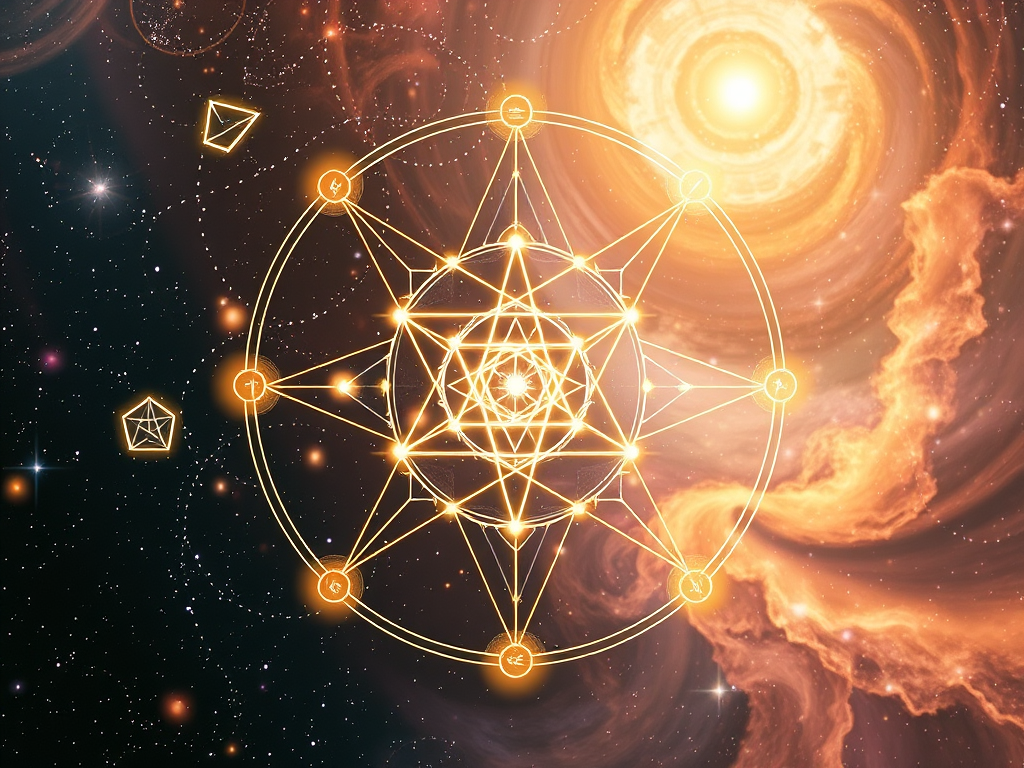
Glyph of the Threshold
In the Emptiness, the Next World Opens
1. What Emptiness Feels Like
Mental health is about more than not being “sick”—it’s how I feel, think, and connect with the world (World Health Organization, 2022). It’s the balance that lets me handle stress, love others, and find purpose. When I feel empty, that balance is off, and it shows up in ways I can’t ignore.
Physically, it’s like a weight in my chest or a restless energy I can’t shake. Sometimes I’m just tired, even after sleeping. Research says this might be my brain’s chemistry—dopamine or serotonin—thrown off by years of chasing goals, leaving me numb to joy (Seligman, 2011). My body’s telling me it needs care, not another hustle.
Emotionally, it’s a void, like I’m disconnected from myself and others. I go through the motions, but nothing feels real. Psychologists say this happens when we ignore our need for real connection or authentic expression (Baumeister & Leary, 1995). I’ve been so focused on winning that I forgot how to feel.
Spiritually, it’s the worst—a sense that nothing matters. I ask, “What’s the point?” Viktor Frankl, a Holocaust survivor, said we need a “why” to live, and without it, life feels meaningless (Frankl, 1946/2006). That’s where I’m stuck.
This emptiness isn’t just a bad day; it’s a signal that something’s out of alignment. To understand why it’s there, I need to look at what I thought would make me happy.
2. Why Success Didn’t Work
I bought into the dream: work hard, get rich, get famous, and you’ll be happy. I did it—I’ve got the money, the status, the power. But the joy? It’s fleeting, like chasing a high that never lasts. Psychologists call this the hedonic treadmill: my brain gets used to the wins, so I need bigger ones to feel anything (Brickman & Campbell, 1971). It’s exhausting.
Abraham Maslow’s pyramid of needs explains it too (Maslow, 1943). Money and status cover basics like safety and security, but they don’t touch the higher stuff—growing as a person or giving back to the world. I climbed the ladder, but it was leaning against the wrong wall. Society sold me a lie, promising happiness but delivering a void. Philosopher Alain de Botton calls this “status anxiety,” where we chase what the world values, not what our souls need (de Botton, 2004).
The worst part? The emptiness gets louder when I focus on myself—my needs, my wants. It’s like the more I try to fill the void with “me,” the bigger it grows. That’s my first clue that the answer lies elsewhere.
3. A Cosmic Nudge from the Universe
What if this emptiness isn’t a curse but a gift? What if it’s the Universe—or the Source, as some call it—trying to wake me up? The Law of One, a spiritual text, says we’re all part of one infinite Creator, here to learn and grow (Ra, 1984). It describes two paths: “service-to-self” (chasing ego, power, stuff) and “service-to-others” (living for love, unity, giving). Emptiness, in this view, is a nudge to switch paths, to choose service over self.
Other traditions say similar things:
Buddhism teaches that clinging to material things causes suffering, and peace comes from compassion (Dalai Lama, 1995).
Christian mystics like St. John of the Cross talk about the “dark night of the soul,” a painful void that leads you closer to God through surrender (St. John of the Cross, 1577/1991).
Existentialists like Jean-Paul Sartre argue we create meaning by acting for something bigger than ourselves (Sartre, 1943/1992).
When I focus on myself, the void screams. But when I help others—whether it’s time, kindness, or resources—I feel lighter, like I’m on the right track. The Law of One would say the Universe is guiding me toward service-to-others, where I’ll find the purpose I’m craving. This emptiness, then, isn’t a failure—it’s a cosmic invitation to live differently.
Glyph of the Cosmic Nudge
In the silence of emptiness, the soul is nudged toward its true purpose.
4. Finding Purpose Through Service
The biggest clue came by accident: helping others makes me happy. When I give my time or energy, I feel alive, not empty. Science backs this up—acts of kindness release feel-good chemicals like oxytocin and serotonin, creating a “helper’s high” (Harbaugh et al., 2007). Spiritually, it fits with The Law of One’s idea that serving others connects us to the Creator’s love (Ra, 1984). So how do I make this a way of life?
Here’s what I’m doing to turn this discovery into purpose:
Taking Care of My Body:
I’m moving more—walking, yoga, anything to boost my energy (Ratey, 2008).
I’m eating better and sleeping 7–8 hours to keep my mood steady.
I try mindfulness, even just 5 minutes of breathing, to feel grounded (Kabat-Zinn, 1990).
Healing Emotionally:
I’m opening up to friends and considering therapy to share what’s really going on (Brown, 2012).
I’m joining groups—like volunteering or hobbies—where I can connect with people who share my values.
I write down three things I’m grateful for each day, and it’s shifting how I see the world (Emmons & McCullough, 2003).
Aligning Spiritually:
I volunteer a few hours a week for causes I care about, like mentoring or community projects (Post, 2005).
I do small acts of kindness daily, like helping a neighbor or sending a kind note. It’s simple but powerful.
I’m reflecting on what matters to me—compassion, creativity—and reading books like Frankl’s Man’s Search for Meaning to stay inspired (Frankl, 1946/2006).
Changing My Habits:
I set goals to help others, like making someone’s day better, instead of chasing more “stuff.”
I notice how I feel after giving versus focusing on myself—it’s night and day.
I’m redefining success as how much good I do, not how much I have (Seligman, 2011).
This isn’t about ignoring my needs but balancing them with giving. The more I serve, the more I feel connected—to others, to the Universe, to myself. It’s like the void is filling with purpose, one act at a time.
Summary
I thought wealth, fame, and power would make me happy, but they left me empty—a void that’s physical, emotional, and spiritual. I see now that this emptiness is the Universe’s way of nudging me toward a better path, one of service and connection.
The Law of One and other wisdom traditions show that true fulfillment comes from giving, not getting. My accidental discovery—that helping others makes me feel alive—is my guide.
By taking care of my body, healing my heart, aligning with purpose, and building habits of service, I’m turning this void into a life that feels meaningful. If you’re feeling empty too, I hope my story shows you’re not alone—and there’s a way forward.
Key Takeaways
Emptiness is a Message: That hollow feeling might be the Universe telling you to find a deeper purpose.
Success Isn’t Enough: Money and fame don’t fill the soul’s need for meaning or connection.
Giving Heals: Helping others sparks joy in your body, heart, and spirit, easing the void.
Small Steps Matter: Simple acts—like kindness, gratitude, or volunteering—can transform your life.
You’re Not Alone: Emptiness is a shared human experience, and service is a universal path to purpose.
Suggested Crosslinks
The Living Record of Becoming – Affirms that even in the void, the soul’s unfolding is preserved in the Akashic continuum.
Emptiness: A feeling of hollowness, showing up as physical fatigue, emotional detachment, or spiritual disconnection.
Hedonic Treadmill: The cycle where you need bigger wins to feel happy, but the joy never lasts.
Law of One: A spiritual teaching that we’re all part of one Creator, growing through self-focused or other-focused choices.
Service-to-Others: Living for love, unity, and helping others, as opposed to chasing personal gain.
Transcendence: Going beyond yourself to connect with a bigger purpose or the greater good.
Bibliography
Baumeister, R. F., & Leary, M. R.(1995). The need to belong: Desire for interpersonal attachments as a fundamental human motivation. Psychological Bulletin, 117(3), 497–529.
Shows why connection is key to emotional health.
Brickman, P., & Campbell, D. T. (1971). Hedonic relativism and planning the good society. In M. H. Appley (Ed.), Adaptation-level theory (pp. 287–302). Academic Press.
Explains why success doesn’t keep you happy.
Brown, B. (2012). Daring greatly: How the courage to be vulnerable transforms the way we live, love, parent, and lead. Gotham Books.
Talks about vulnerability as a path to connection.
Dalai Lama. (1995). The path to tranquility: Daily wisdom. Penguin Books.
Shares Buddhist ideas on compassion and peace.
de Botton, A. (2004). Status anxiety. Hamish Hamilton.
Critiques society’s focus on status over meaning.
Emmons, R. A., & McCullough, M. E. (2003). Counting blessings versus burdens: An experimental investigation of gratitude and subjective well-being in daily life. Journal of Personality and Social Psychology, 84(2), 377–389.
Proves gratitude boosts happiness.
Frankl, V. E. (1946/2006). Man’s search for meaning. Beacon Press.
Argues that purpose is essential to life.
Harbaugh, W. T., Mayr, U., & Burghart, D. R. (2007). Neural responses to taxation and voluntary giving reveal motives for charitable donations. Science, 316(5831), 1622–1625.
Shows the brain’s reward for giving.
Kabat-Zinn, J. (1990). Full catastrophe living: Using the wisdom of your body and mind to face stress, pain, and illness. Delacorte Press.
Introduces mindfulness for grounding.
Maslow, A. H. (1943). A theory of human motivation. Psychological Review, 50(4), 370–396.
Explains why success doesn’t meet all needs.
Post, S. G. (2005). Altruism, happiness, and health: It’s good to be good. International Journal of Behavioral Medicine, 12(2), 66–77.
Links giving to better health and happiness.
Ra. (1984). The Law of One: Book I. L/L Research.
Offers a spiritual view of emptiness as a call to serve.
Ratey, J. J. (2008). Spark: The revolutionary new science of exercise and the brain. Little, Brown Spark.
Shows how movement helps mental health.
Sartre, J.-P. (1943/1992). Being and nothingness. Washington Square Press.
Discusses creating meaning through action.
Seligman, M. E. P. (2011). Flourish: A visionary new understanding of happiness and well-being. Free Press.
Explores happiness through purpose and connection.
St. John of the Cross. (1577/1991). Dark night of the soul. Dover Publications.
Gateway Essay — Orientation within the Living Archive
This essay serves as an entry point into a broader set of ideas explored throughout the archive.
It forms part of the Living Archive, a long-form body of work exploring human development, ethical leadership, sovereignty, and the deeper patterns shaping individual and collective evolution.
The archive now contains more than 800 essays, codices, and frameworks developed through years of reflection and lived inquiry.
Gerald Alba Daquila writes on human development, sovereignty, leadership ethics, and civilizational sensemaking. His work integrates psychology, philosophy, and long-term reflections on responsible stewardship.
A Psychological and Metaphysical Exploration of Ego, Integration, and Ascension
Prepared by: Gerald A. Daquila, PhD. Candidate
9–14 minutes
ABSTRACT
This article explores the ego as a psychological and metaphysical construct, tracing its emergence, evolution, and role in personal and spiritual development. Integrating psychological theories (e.g., Freud, Jung) and the metaphysical framework of the Law of One, it examines how the ego shapes identity, power dynamics, and spiritual growth in third-density existence.
Central to this journey is shadow work, a practice for integrating repressed aspects of the psyche to heal fragmentation and align with unity consciousness.
The article highlights the ego’s necessity as a catalyst for growth, its potential destructiveness, and the profound challenge of transcending it for ascension. Practical shadow work techniques and insights into karma and power dynamics offer a roadmap for navigating relationships, work, and community, fostering personal authenticity and collective harmony.
Glyph of the Ego’s Journey
From masks of identity through shadow’s depth, the ego dissolves into unity.
Introduction
The ego, our sense of self or “I,” is a cornerstone of human experience, shaping how we perceive ourselves and interact with the world.
Psychologically, it mediates between instinctual drives and societal norms; metaphysically, it serves as the soul’s vehicle for navigating the physical world’s challenges.
Yet, the ego’s attachment to separateness can hinder spiritual growth, particularly in the Law of One, a channeled teaching that describes reality as unified consciousness (Ra, 1984).
This article explores the ego’s origins, manifestations, and evolution, emphasizing shadow work as a critical practice for integrating its fragmented aspects.
By examining the ego’s role in power dynamics, karma, and ascension, and offering practical techniques, this article provides a comprehensive guide for transcending egoic separateness, aligning with love and unity, and navigating life’s complexities.
The Ego: A Psychological and Metaphysical Construct
The ego is the psychological structure representing an individual’s identity, balancing internal desires and external realities.
In Freudian psychology, it mediates between the id’s impulses and the superego’s moral standards (Freud, 1923). Carl Jung views it as the center of conscious awareness, distinct from the unconscious and the Self, the totality of the psyche (Jung, 1964).
Metaphysically, the ego is the soul’s tool for experiencing individuality in third-density existence, as described by the Law of One, a channeled work positing that all existence is one infinite Creator, progressing through densities with lessons of love and unity (Ra, 1984).
The ego creates the illusion of separateness, enabling free will and polarity—key dynamics for spiritual growth.
Emergence and Evolution
The ego emerges in early childhood, around 2–3 years old, as self-awareness develops, evidenced by mirror self-recognition and assertive behaviors like “mine!” (Gallup, 1970).
Cognitive milestones (language, memory) and social feedback from caregivers shape its contours, with secure attachment fostering balance and trauma leading to insecurity or grandiosity (Bowlby, 1969; Ainsworth, 1978).
In adolescence, the ego seeks identity through peer groups and rebellion, solidifying in adulthood through roles, relationships, and challenges.
Determinants like genetics, upbringing, trauma, and choices influence its manifestation, shaping whether it aligns with service to others (STO, love and unity) or service to self (STS, control and separation) (Ra, 1984).
Utility and Destructiveness
The ego is both a catalyst and a potential obstacle:
Useful: It drives ambition, creativity, and resilience, enabling personal growth and societal contributions (e.g., pursuing goals, setting boundaries).
Destructive: When inflated or insecure, it fuels pride, greed, or control, creating conflict and spiritual stagnation (e.g., manipulation, prejudice).
The ego’s trajectory depends on biological (e.g., temperament), psychological (e.g., self-esteem), social (e.g., cultural norms), and spiritual (e.g., karmic patterns) factors.
The Ego and the Law of One: A Framework for Ascension
The Law of One, channeled by Carla Rueckert in the 1980s, describes reality as a unified consciousness experiencing itself through infinite distortions across density (Ra, 1984).
Third density, humanity’s current stage, is the density of choice, where the ego plays a pivotal role:
Illusion of Separation: The ego’s sense of individuality, enabled by the “veil of forgetting,” creates the illusion of separateness, allowing souls to explore free will and polarity (Ra, 1984).
Polarity and Choice: The ego navigates the spectrum between STO (serving others through love) and STS (serving self through power). Ego-driven struggles (e.g., jealousy, fear) are catalysts for choosing forgiveness and compassion, aligning with STO.
Catalyst for Growth: The ego’s desires and conflicts prompt self-reflection, driving lessons about unity and love essential for spiritual maturation.
Transcendence for Ascension: Ascension to fourth density, characterized by love and understanding, requires releasing egoic attachment to separateness. This is profoundly challenging, as the ego is entrenched through a lifetime of conditioning, habits, and fears. Transcendence does not erase individuality but integrates it into unity consciousness, recognizing all as one (Ra, 1984).
The ego is a necessary tool in third density, but clinging to its illusions perpetuates cycles of suffering. Ascension demands letting go, a process facilitated by shadow work.
Shadow Work: Integrating the Ego for Wholeness
Shadow work, rooted in Jungian psychology, involves confronting and integrating the unconscious, repressed aspects of the psyche—traits, emotions, or beliefs deemed unacceptable by the ego or society (Jung, 1964).
In the Law of One, shadow work heals ego fragmentation, reduces attachment to separateness, and aligns with STO, preparing the soul for ascension.
Fragmentation, often caused by trauma or repression, leads to inner conflict, emotional pain, and karmic stagnation. Shadow work restores wholeness by:
Place a symbolic object (e.g., a stone) and offer compassion.
Transform energy (e.g., light a candle).
Close with gratitude, visualizing wholeness.
Example: Burning a paper with “shame” and lighting a candle for self-love.
Considerations for Shadow Work
Compassion: Approach the shadow with love, aligning with STO.
Patience: Integration is gradual, requiring courage to face painful truths.
Support: Use therapists or communities to process intense emotions.
Consistency: Regular practice deepens alignment with unity consciousness.
Shadow work heals karmic wounds, reduces projection, and fosters authenticity, making it a cornerstone of ego transcendence and ascension.
Power Dynamics and Karma
The ego’s attachment to separateness manifests in power dynamics:
Control (STS): Insecurity, trauma, or karmic patterns drive some to dominate, reinforced by cultural hierarchies or narcissistic traits (Kohut, 1977; Ra, 1984).
Submission (Unbalanced STO): Low self-worth or learned helplessness leads others to relinquish power, sometimes mistaking submission for service (Ra, 1984).
These dynamics reflect karmic imprints, requiring resolution through awareness and shadow work. Karma, the law of cause and effect, shapes ego experiences across lifetimes:
Learning: Ego-driven actions create imprints, resolved through challenges or healing.
Collective Karma: Societal structures reflect collective patterns, healable through unity.
Metaphysical truths—unity, free will, and polarity—underline these dynamics. Recognizing all as one dissolves egoic struggles, aligning with ascension.
Practical Applications for Life Navigation
Understanding the ego and practicing shadow work enhance life’s domains:
Relationships: Recognizing ego defenses (e.g., blame) and integrating the shadow fosters empathy and intimacy.
Work: Balancing ambition with service aligns career with purpose, preventing burnout.
Community: A mature ego promotes unity, reducing conflict.
World: Transcending separateness fosters global compassion, contributing to collective evolution.
These practices empower conscious choices, heal karmic patterns, and align with love and wisdom.
Conclusion
The ego is a vital tool for third-density growth, enabling individuality and choice, yet its attachment to separateness challenges ascension.
The Law of One frames the ego as a catalyst for polarity, requiring transcendence through shadow work to align with unity consciousness.
By integrating repressed aspects with compassion, shadow work heals fragmentation, fosters authenticity, and prepares the soul for fourth-density love and understanding.
Though letting go of egoic conditioning is profoundly difficult, practical techniques like journaling, inner dialogue, and somatic practices offer a roadmap.
By embracing the ego’s journey, individuals can navigate relationships, work, and community with wisdom, heal power dynamics and karma, and contribute to a world rooted in unity and service.
Jung, C. G. (1964). Man and his symbols. Doubleday.
Kohut, H. (1977). The restoration of the self. International Universities Press.
Levine, P. A. (1997). Waking the tiger: Healing trauma. North Atlantic Books.
Ra. (1984). The Law of One: Book I (D. Elkins, J. Rueckert, & C. Rueckert, Eds.). Schiffer Publishing.
Cornerstone Essay Series
This essay forms part of the Living Archive of Sovereign Sensemaking and Stewardship — a long-term body of work exploring human development, responsible leadership, and the deeper patterns shaping individual and collective evolution.
Readers wishing to explore related ideas may continue through the Living Archive or navigate the broader Stewardship Architecture of the site.
Gerald Alba Daquila writes at the intersection of human development, sovereignty, leadership ethics, and civilizational sensemaking. The Living Archive gathers more than 800 essays, codices, and frameworks developed through years of reflection and inquiry.
An Objective Investigation into the Sequence of Events After Death, the Purpose of Reincarnation, and the Soul’s Path
Prepared by: Gerald A. Daquila, PhD. Candidate
11–16 minutes
ABSTRACT
This investigation synthesizes findings from hypnotic regression accounts (Michael Newton, Dolores Cannon), near-death experience (NDE) survivor testimonies, and other researchers to map the sequence of events following physical death, the afterlife experience, and the process of reincarnation.
By comparing hypnotic and NDE accounts, this study explores the consistency and pervasiveness of reported phenomena, such as soul departure, spirit realm activities, life review, pre-life planning, and rebirth.
The concepts of karma and reincarnation, often unfamiliar in Judeo-Christian contexts, are examined for their role in soul development. The findings suggest a structured, purposeful afterlife where souls engage in learning, healing, and planning for future lives, offering comfort to those grappling with loss.
This objective account transcends religious dogma, aiming to provide solace and understanding through a universal perspective on death and beyond.
Mapping the Soul’s Journey: A 360-Degree View of Life, Death, and the Afterlife
Before examining individual traditions, research streams, and reported experiences, it may be helpful to view the terrain as a whole. The map below offers a synthesis of recurring patterns that appear across spiritual teachings, near-death experiences, reincarnation research, consciousness studies, and other inquiry pathways. It is intended as an orienting framework rather than a definitive description of reality.
The Soul Journey Wheel presents a systems-level view of the life–death–afterlife cycle. It integrates recurring patterns reported across spiritual traditions, near-death experiences, reincarnation research, consciousness studies, and other inquiry pathways. The model is intended as an orienting map for exploration rather than a definitive statement of what occurs beyond physical life.
Death is a universal experience, yet its mystery evokes fear, curiosity, and grief. Traditional Judeo-Christian teachings emphasize heaven, hell, or judgment, but alternative perspectives from hypnotic regression and near-death experiences (NDEs) offer detailed, often consistent accounts of what happens after death.
Researchers like Michael Newton and Dolores Cannon, through decades of hypnotic regression, describe a structured afterlife where souls engage in reflection, learning, and planning for reincarnation.
NDE survivors, such as those documented by Raymond Moody and Eben Alexander, provide firsthand glimpses into the afterlife, often aligning with hypnotic accounts. This investigation seeks to answer: What happens immediately after death? What is the afterlife like? Why do souls reincarnate, and what is karma’s role?
By synthesizing these sources, this study aims to provide an objective, comforting framework for understanding death, alleviating fear, and helping survivors find peace.
Glyph of Soul Continuum
The Eternal Passage of Life, Death, and Rebirth
Methodology
This investigation draws from:
Hypnotic Regression: Michael Newton’s Journey of Souls and Destiny of Souls, Dolores Cannon’s Between Death and Life, and related works by Brian Weiss and others, based on thousands of client sessions under deep hypnosis.
NDE Accounts: Firsthand testimonies from Raymond Moody’s Life After Life, Eben Alexander’s Proof of Heaven, Anita Moorjani’s Dying to Be Me, and online NDE archives (e.g., NDERF.org).
Other Research: Ian Stevenson’s studies on spontaneous past-life memories in children, Hindu and Buddhist perspectives on karma, and contemporary spiritual literature.
Web Sources: Peer-reviewed articles, spiritual forums, and online discussions (e.g., Reddit, Quora) to gauge public sentiment and additional case studies.
Accounts were compared for consistency, pervasiveness, and differences, with a focus on transcending religious bias to present a universal narrative.
Comparing Hypnotic Regression and NDE Accounts
Hypnotic Regression (Newton, Cannon, Weiss):
Pervasiveness: Newton’s work, based on over 7,000 clients, and Cannon’s 16 years of regression reveal highly consistent accounts of the afterlife. Clients, unaware of each other, describe similar processes: soul departure, spirit realm navigation, life review, and reincarnation planning. Newton notes that clients in a “superconscious” state do not lie and correct misinterpretations, suggesting authenticity (Newton, 1994;).
Details: Souls report floating above their bodies, entering a tunnel, meeting guides, and engaging in structured activities (e.g., life review, learning in “schools”). The afterlife is described as a place of light, love, and order, with souls grouped by developmental level (Newton, 1994; Cannon, 1993;,).
Karma and Reincarnation: Karma is an interlocking system of cause and effect, where actions influence future lives to balance lessons or debts. Reincarnation is a choice to learn and evolve, guided by councils and soul groups (Cannon, 1993; Newton, 2000;,).
NDE Accounts (Moody, Alexander, Moorjani):
Pervasiveness: NDE survivors, documented by Moody (1975) and others, report consistent experiences: leaving the body, entering a tunnel, encountering light or beings, and feeling profound peace. The Near-Death Experience Research Foundation (NDERF) archives thousands of cases with similar themes (Schlottman, 2023;).
Details: NDErs describe out-of-body experiences, a life review with emotional insight, and encounters with deceased loved ones or guides. Unlike hypnotic accounts, NDEs are often brief and lack detailed descriptions of reincarnation planning, focusing on immediate post-death sensations (Moody, 1975; Alexander, 2012).
Karma and Reincarnation: NDErs rarely mention reincarnation explicitly, but many report a “cosmic law” of love and compassion, akin to karma, where actions return to the self (Wilcock, 2013;).
Comparison:
Similarities: Both groups describe leaving the body, a tunnel, a welcoming light, and encounters with guides or loved ones. Life reviews are common, emphasizing learning from past actions. The afterlife is universally described as loving and purposeful.
Differences: Hypnotic accounts provide a structured, long-term view of the afterlife (e.g., soul groups, councils, pre-life planning), while NDEs focus on immediate post-death experiences and emotional transformation. NDErs rarely discuss reincarnation unless prompted by later reflection.
Reliability Concerns: Critics question hypnosis for suggestibility, but Newton and Cannon’s consistent results across thousands of clients counter this (,). NDEs are spontaneous but vary in depth due to their brevity. Both methods lack empirical proof, yet their convergence suggests a shared phenomenon.
Sequence of Events After Death
Based on synthesized accounts, the following sequence outlines the soul’s journey after death, in the afterlife, and through rebirth:
Death and Departure:
Description: Upon physical death, the soul detaches from the body, often floating above it. Many report a sense of freedom and lightness, observing their surroundings without physical constraints (Newton, 1994; Moody, 1975;).
Hypnotic Accounts: Clients describe a gentle exit, sometimes lingering to comfort loved ones. Younger souls may feel confused, while advanced souls move swiftly (Newton, 1994;).
NDE Accounts: Survivors report hovering over their bodies, sometimes hearing medical staff, before being drawn toward a light (Moody, 1975; Alexander, 2012).
Cultural Notes: Hindu texts describe the soul’s departure through subtle energy channels, aligning with the “light” in Western accounts (Parihar, 2014;).
Transition Through a Tunnel:
Description: The soul enters a tunnel or vortex, often accompanied by light, music, or familiar imagery. This acts as a bridge to the spirit realm (Newton, 1994; Cannon, 1993;).
Hypnotic Accounts: Newton suggests the tunnel’s imagery (e.g., stars, scenery) reflects memories to ease the transition. Guides assist younger souls (Newton, 1994;).
NDE Accounts: NDErs frequently describe a tunnel leading to a radiant light, often feeling peace or love (Moody, 1975; Schlottman, 2023).
Consistency: The tunnel is nearly universal, suggesting a shared mechanism for crossing dimensions.
Homecoming and Greeting:
Description: The soul arrives in the spirit realm, greeted by loved ones, guides, or luminous beings. This realm is described as a place of light, peace, and unconditional love (Newton, 1994; Cannon, 1993;).
Hypnotic Accounts: Souls reunite with “soul groups”—close companions from past lives. Guides, advanced beings, offer comfort and orientation (Newton, 1994;).
NDE Accounts: NDErs often meet deceased relatives or beings of light, feeling overwhelming love. Some report partial memories of past lives (Moorjani, 2012; Alexander, 2012).
Purpose: This stage restores familiarity and prepares the soul for reflection.
Orientation and Healing:
Description: Souls undergo a period of rest and healing, especially after traumatic lives. This may occur in “healing spaces” with light or energy (Newton, 1994; Cannon, 1993).
Hypnotic Accounts: Newton describes healing chambers where souls’ energy is restored. Orientation with guides helps souls process their recent life (Newton, 1994;).
NDE Accounts: NDErs report brief healing sensations but rarely elaborate due to their short duration (Moorjani, 2012).
Significance: Healing ensures the soul is ready for reflection and growth.
Life Review:
Description: Souls review their past life, often with guides or a council of elders, experiencing events from multiple perspectives to understand their impact (Newton, 1994; Cannon, 1993).
Hypnotic Accounts: The review is nonjudgmental, focusing on learning. Souls feel the emotions of those they affected, reinforcing karmic lessons (Newton, 1994;).
NDE Accounts: NDErs describe panoramic reviews, reliving moments with emotional clarity. This aligns with hypnotic accounts but is less structured (Moody, 1975; Schlottman, 2023).
Karma’s Role: The review highlights karmic patterns, where actions (cause) create consequences (effect) to be balanced in future lives (Cannon, 1993;).
Learning and Integration:
Description: Souls engage in learning, often in “schools” or libraries, studying past lives or universal knowledge. Soul groups collaborate to share insights (Newton, 1994; Cannon, 1993;).
Hypnotic Accounts: Newton describes specialized soul groups and structured learning environments. Souls may explore their purpose or practice skills for future lives (Newton, 1994;).
NDE Accounts: NDErs rarely mention learning environments but report instantaneous knowledge or cosmic understanding (Alexander, 2012).
Purpose: This phase prepares souls for growth and future challenges.
Pre-Life Planning:
Description: Souls, with guides and councils, plan their next life, choosing bodies, families, and challenges to address karmic lessons or soul growth (Newton, 1994; Cannon, 1993;).
Hypnotic Accounts: Planning is detailed, including “synchronicities” (e.g., meeting soulmates) and life scenarios. Souls choose difficulties to accelerate learning (Newton, 1994;).
NDE Accounts: NDErs rarely describe planning but may sense a purpose for returning to life (Moorjani, 2012).
Karma and Reincarnation: Reincarnation is driven by the soul’s desire to evolve. Karma ensures lessons are addressed, not as punishment but as opportunities (Cannon, 1993;).
Rebirth:
Description: The soul returns to Earth through a tunnel, entering a fetus or newborn. Integration with the body occurs gradually, with full merging by age 5 (Newton, 1994;).
Hypnotic Accounts: Souls retain partial awareness in early childhood, sometimes leaving the body to visit the spirit realm. Memories fade as the brain develops (Newton, 1994;).
NDE Accounts: NDErs returning to life describe a “snap” back into their bodies but do not discuss rebirth (Moody, 1975).
Cultural Notes: Hindu texts describe rebirth as a cycle of purification, aligning with hypnotic accounts (Parihar, 2014;).
Glyph of the Journey Beyond
Through portals of death and rebirth, the soul continues its spiral beyond.
Karma and Reincarnation: Understanding from a Judeo-Christian Perspective
Karma: In hypnotic accounts, karma is not punitive but a natural law of balance. Actions create energy that must be resolved, often through relationships or challenges in future lives (Cannon, 1993;). For Judeo-Christian readers, this aligns with “reaping what you sow” (Galatians 6:7), reframed as learning rather than judgment.
Reincarnation: Hypnotic accounts suggest reincarnation is voluntary, chosen to fulfill soul purposes. While absent from mainstream Christianity, early Christian texts (e.g., Origen’s writings) and Gnostic traditions entertained reincarnation until suppressed in 553 CE (Newton, 2016;). NDErs occasionally sense past lives, supporting this concept (Moorjani, 2012).
Purpose: Both karma and reincarnation aim for soul evolution, offering a hopeful alternative to eternal judgment. This perspective comforts those grieving by suggesting loved ones continue their journey purposefully.
Comfort for the Bereaved
The synthesized accounts suggest death is not an end but a transition to a loving, purposeful realm. Loved ones remain connected in the spirit world, often greeting the newly deceased.
The afterlife’s focus on healing, learning, and choice reframes loss as part of a larger, meaningful cycle. While absolute proof is elusive, the consistency across thousands of accounts offers reassurance that death is a continuation, not a termination.
Summary
This investigation reveals a consistent sequence of events after death, supported by hypnotic regression and NDE accounts:
Departure: The soul leaves the body, often lingering briefly.
Transition: A tunnel leads to the spirit realm.
Homecoming: Souls are greeted by loved ones and guides.
Healing: Traumatic energies are restored.
Life Review: Past actions are analyzed for learning.
Learning: Souls study and integrate knowledge.
Planning: The next life is chosen with purpose.
Rebirth: The soul enters a new body, continuing its journey.
Karma and reincarnation emerge as mechanisms for soul growth, transcending Judeo-Christian dogma by emphasizing learning over punishment. The afterlife is depicted as a place of love, order, and purpose, offering comfort to those grieving by suggesting continuity and connection beyond death. While not empirically verifiable, the pervasiveness of these accounts across cultures and methods provides a compelling, hopeful narrative.
Suggested Crosslinks
The Living Record of Becoming – Affirms that every soul’s journey, across lifetimes, is preserved in the Akashic continuum.
Codex of the Living Glyphs – Reveals archetypal symbols that bridge the soul’s passage between lifetimes and realms.
Schlottman, J. (2023). Near-death experience research foundation (NDERF). https://www.nderf.org/
Weiss, B. L. (1988). Many lives, many masters: The true story of a prominent psychiatrist, his young patient, and the past-life therapy that changed both their lives. Simon & Schuster.
Wilcock, D. (2013). The synchronicity key: The hidden intelligence guiding the universe and you. Dutton.
Gateway Essay — Orientation within the Living Archive
This essay serves as an entry point into a broader set of ideas explored throughout the archive.
It forms part of the Living Archive, a long-form body of work exploring human development, ethical leadership, sovereignty, and the deeper patterns shaping individual and collective evolution.
The archive now contains more than 800 essays, codices, and frameworks developed through years of reflection and lived inquiry.
Gerald Alba Daquila writes on human development, sovereignty, leadership ethics, and civilizational sensemaking. His work integrates psychology, philosophy, and long-term reflections on responsible stewardship.
This material is part of the Stewardship Institute’s protected formation layer.
Most of the Living Archive is intentionally public. Some materials belong to a deeper, interconnected body of work designed for sustained reflection, practical application, and lifelong steward formation. Stewardship Access is the threshold into that body of work.