Logo - Life.Understood.

Category: All Is One

  • The Cosmic Awakening Hypothesis: Are UFOs Awaiting Humanity’s Shift to Love and Unity?

    The Cosmic Awakening Hypothesis: Are UFOs Awaiting Humanity’s Shift to Love and Unity?

    Exploring the Intersection of Spiritual Awakening, Collective Consciousness, and the Potential for Extraterrestrial Contact

    Prepared by: Gerald A. Daquila, PhD. Candidate


    10–14 minutes

    ABSTRACT

    Humanity stands at a pivotal moment, where a growing spiritual awakening may be reshaping our collective consciousness and, consequently, our reality. This article explores the hypothesis that humanity’s inner psychological and spiritual state—whether rooted in fear and division or love and compassion—projects outward, influencing not only our societal dynamics but also our potential for contact with extraterrestrial beings.

    Drawing from esoteric, spiritual, and psychological literature, we examine whether a global shift toward higher consciousness, characterized by unconditional love and unity, could trigger a cascade of UFO sightings, signaling our integration into a broader galactic community. We delve into the signs of this awakening, the role of projection in shaping reality, and the implications for humanity’s manifest destiny. This narrative blends scholarly rigor with accessible language to engage a wide audience, offering a hopeful vision of a unified future while critically assessing the challenges ahead.


    Introduction: The Power of Projection

    Every human carries an inner universe—a complex tapestry of thoughts, emotions, and beliefs that shapes how we perceive and interact with the world. This inner world doesn’t stay confined within us; it projects outward, influencing our actions, relationships, and even the collective reality we co-create.

    Psychological projection, a concept rooted in Jungian psychology, suggests that we externalize our internal states, attributing our fears, desires, or aspirations to others or the world around us (Jung, 1959). When our inner world is dominated by fear, scarcity, or division, we may perceive threats everywhere, fostering conflict and separation. Conversely, when love, peace, and compassion guide us, our actions radiate harmony, fostering connection and unity.

    Today, humanity appears to be undergoing a profound spiritual awakening—a collective shift toward recognizing our interconnectedness and divine essence, often described as being “fractals of God-Source” in esoteric traditions (Waters, 2008). This awakening may elevate Earth’s vibrational frequency, a concept in spiritual metaphysics that refers to the energetic quality of consciousness (In5D, 2018).

    Could this shift be the key to unlocking contact with extraterrestrial beings—our “galactic cousins”—who, according to some spiritual narratives, have been present in higher planes of consciousness since time immemorial?

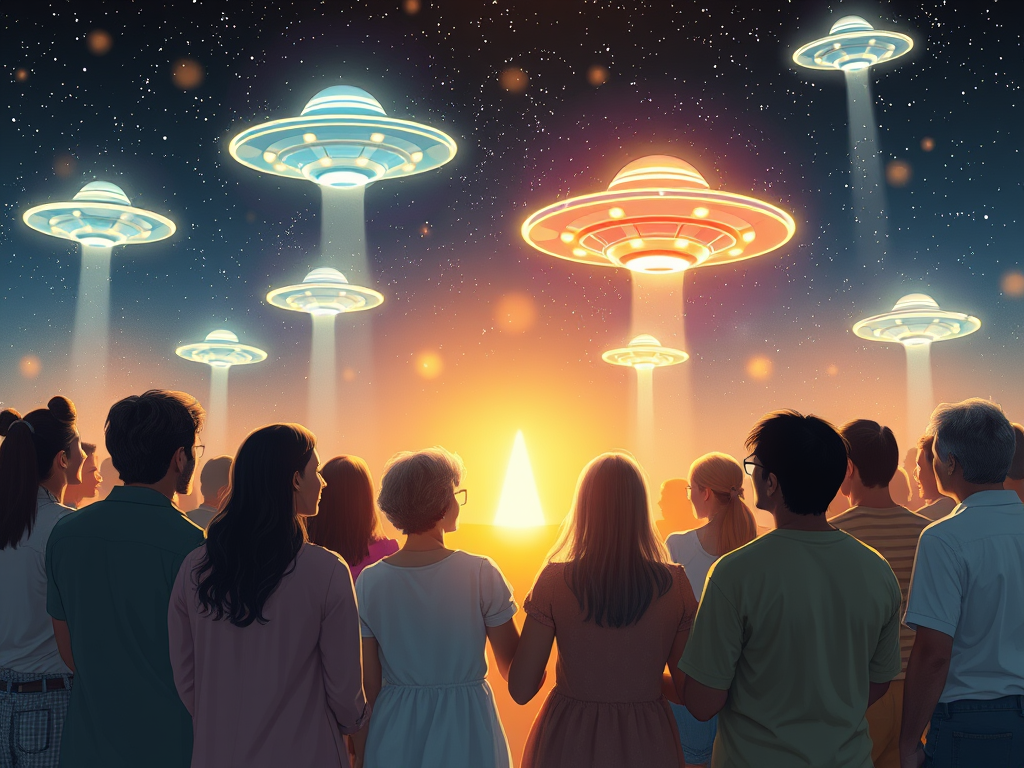
    Are UFOs absent from our skies because our collective fear has kept us vibrationally misaligned with these advanced beings? And as humanity ascends, might we be on the cusp of a cosmic reunion, fulfilling a manifest destiny of unity and peace?

    This article explores these questions through a synthesis of psychological, esoteric, and spiritual research. I aim to elucidate whether humanity’s inner transformation could precipitate extraterrestrial contact, what signs indicate this shift, and what a future rooted in unconditional love might look like. Written for a broad audience, this narrative maintains academic rigor while embracing the wonder and possibility of our cosmic potential.


    The Psychology of Projection: Shaping Our Reality

    Projection is more than a psychological defense mechanism; it’s a fundamental way humans co-create reality. Carl Jung described projection as the process by which we attribute unconscious aspects of ourselves to others, shaping our perceptions and interactions (Jung, 1959). For example, a person gripped by fear may see the world as hostile, interpreting neutral events as threats. This dynamic scales to the collective: a society steeped in fear and division projects these qualities into its institutions, media, and narratives, perpetuating cycles of conflict.

    Popular culture, particularly science fiction films, often reflects this collective projection. Movies like Independence Day or War of the Worlds depict aliens as invaders, mirroring societal anxieties about the unknown (Partridge, 2003). These narratives may not depict reality but rather our inner fears, externalized onto the cosmos. In contrast, a society grounded in love and compassion might project visions of benevolent extraterrestrials, as seen in films like Close Encounters of the Third Kind, where contact is a moment of awe and connection.

    Spiritual traditions, particularly those in the New Age movement, suggest that our collective consciousness shapes not just our perceptions but the very fabric of reality. Owen Waters, a spiritual metaphysicist, argues that the universe acts as a mirror, reflecting our inner states back to us (Waters, 2015). If humanity’s dominant vibration is fear, we may be blind to higher-dimensional beings who operate at frequencies of love and unity. As more individuals awaken to their “true nature” as interconnected expressions of a universal consciousness, this shift could align us with entities vibrating at similar frequencies, making UFO sightings—or even direct contact—more likely.


    The Spiritual Awakening: A Global Shift in Consciousness

    The concept of a global spiritual awakening has gained traction in recent decades, particularly since the 1960s, when a surge in spiritual exploration began (Waters, 2015). This awakening is characterized by a move away from ego-driven, materialistic paradigms toward a recognition of unity, compassion, and higher consciousness. Esoteric traditions describe this as a shift from the “third density” (a state of duality and separation) to the “fourth or fifth density,” where love and unity prevail (Patel, 2015).


    Signs of the Awakening

    Research and anecdotal evidence point to several indicators of this shift:

    1. Increased Empathy and Compassion: Studies on spiritual awakenings note heightened empathy and altruism as common outcomes (Corneille & Luke, 2021). Individuals report feeling unconditional love for humanity and nature, aligning with the idea of projecting love outward.
    2. Synchronicities and Intuition: Many report experiencing synchronicities—meaningful coincidences that suggest a deeper order to reality (Melillo, 2025). These are seen as signs of alignment with universal consciousness.
    3. Interest in Esoteric Knowledge: Topics like UFOs, chakras, and quantum mechanics are gaining mainstream attention, reflecting curiosity about our cosmic origins (Melillo, 2025).
    4. Rejection of Fear-Based Narratives: As people awaken, they increasingly question fear-driven systems, such as war or materialism, advocating for peace and cooperation (Ornedo, 2017).
    5. Mystical Experiences: Spontaneous spiritual awakenings, characterized by feelings of oneness and divine love, are becoming more common, often triggered by meditation, psychedelics, or life-changing events (Corneille & Luke, 2021).

    These signs suggest humanity is moving toward a higher vibrational state, potentially aligning with the frequencies of advanced extraterrestrial beings.


    UFOs and Galactic Cousins: A Higher Plane of Existence?

    The absence of definitive UFO sightings in our daily lives may be less about their nonexistence and more about our vibrational misalignment. Esoteric literature posits that extraterrestrials exist in higher dimensions—planes of consciousness inaccessible to those mired in fear and separation (Norman, 1956).

    The Aetherius Society, a spiritual group, describes these beings as “Cosmic Masters” who guide humanity toward peace and enlightenment (Wallis, 1974). Similarly, Unariun cosmology suggests that extraterrestrials offer salvation through planetary evacuation or spiritual upliftment, awaiting humanity’s readiness (Tumminia, 2005).


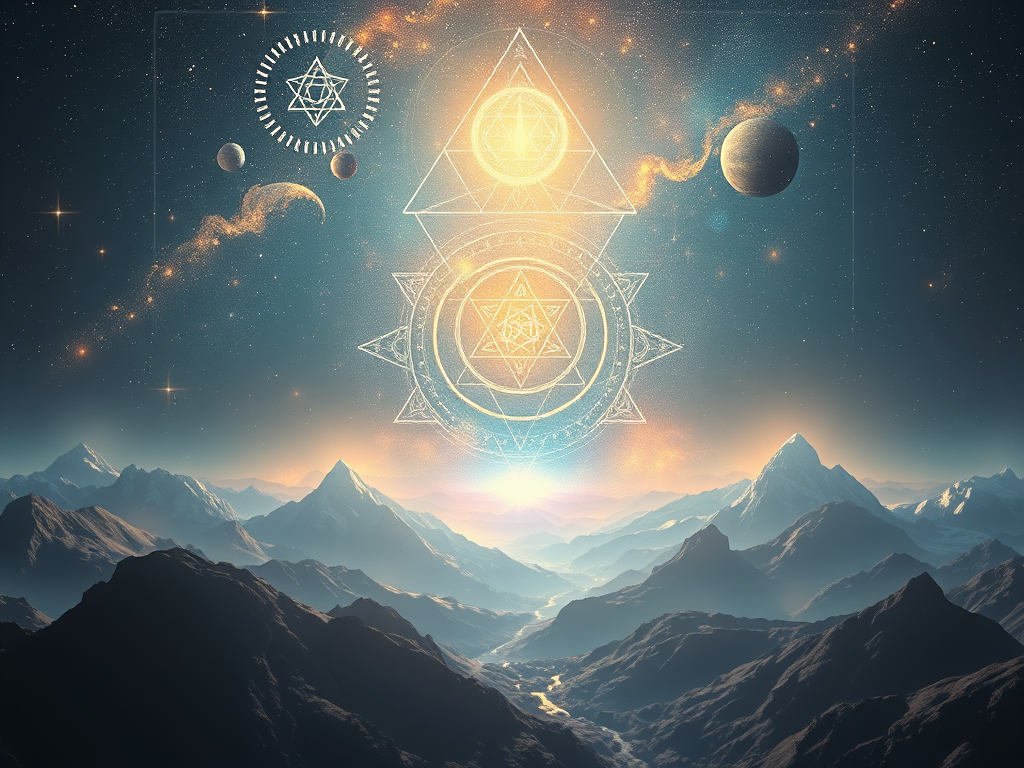
    Glyph of the Cosmic Awakening

    Are UFOs awaiting humanity’s shift to love and unity, holding space for our awakening into cosmic kinship?


    The Role of Consciousness in Contact

    Spiritual metaphysics argues that consciousness is the foundation of reality, with all things possessing some degree of awareness (Waters, 2015). If extraterrestrials operate at higher frequencies, our collective fear may have rendered them invisible to us, like radio waves we can’t tune into without the right receiver.

    As humanity’s vibration rises through love and compassion, we may become attuned to these frequencies, making UFO sightings—or direct contact—more feasible. Some contactees and abductees report interactions with beings who emphasize love, unity, and environmental stewardship, suggesting these entities are already attempting to guide us (Tumminia, 2005).

    However, psychiatric studies caution that some contact experiences may stem from altered states of consciousness rather than physical encounters (Partridge, 2003). This raises the question: Are UFOs physical craft, or are they manifestations of our evolving consciousness, appearing as symbols of our readiness for cosmic connection?


    Manifest Destiny: A Universe of Love or a World of Fear?

    The idea of humanity’s “manifest destiny” in esoteric traditions is not about conquest but about realizing our potential as co-creators of a loving, unified reality (Olsen, 2011). This destiny hinges on a choice: will we continue projecting fear and division, perpetuating conflict and isolation, or will we embrace love and compassion, aligning with a universal consciousness?


    A Universe of Unconditional Love

    A world rooted in love would be characterized by:

    • Global Cooperation: Nations and individuals prioritize peace and collaboration over competition (Strand, 2022).
    • Environmental Stewardship: A sense of interconnectedness fosters care for the planet, aligning with messages from alleged extraterrestrial contacts (Tumminia, 2005).
    • Cosmic Integration: Contact with extraterrestrials could symbolize our readiness to join a galactic community, sharing knowledge and wisdom (Canter, 2023).

    A World of Fear and Division

    Conversely, a fear-based trajectory would perpetuate:

    • Conflict and Chaos: War, greed, and separation dominate, as seen in historical cycles of violence (Ornedo, 2017).
    • Vibrational Misalignment: Continued fear could keep us isolated from higher-dimensional beings, delaying or preventing contact.
    • Transhumanist Risks: An over-reliance on technology without spiritual grounding could lead to a dystopian future, as warned by some spiritual thinkers (Strand, 2022).

    Where Do We Go From Here?

    The path forward depends on individual and collective choices. Spiritual practices like meditation, gratitude, and compassion can elevate our vibration, fostering a reality where love is the norm (Melillo, 2025).

    Education and awareness about our interconnectedness—supported by both science and spirituality—can accelerate this shift. If humanity embraces its role as “fractals of God-Source,” we may indeed trigger a cascade of UFO sightings, not as invaders but as allies welcoming us into a broader cosmic fold.


    Conclusion: The Signs Are Clear, The Choice Is Ours

    The signs of a global spiritual awakening are undeniable: increasing empathy, synchronicities, and a yearning for cosmic understanding point to a shift in consciousness. As we project love and compassion outward, we align with the frequencies of higher-dimensional beings, potentially paving the way for extraterrestrial contact.

    The absence of UFOs in our skies may reflect our past immersion in fear, but the current ascension suggests a turning point. Humanity’s manifest destiny lies not in domination but in unity, love, and peace—a reality we can co-create by choosing to transcend fear.

    The question remains: Will we rise to meet our galactic cousins, embracing a universe of unconditional love, or will we remain tethered to division and fear? The signs are clear, and the choice is ours. As we stand at this cosmic crossroads, let us project a world of harmony, trusting that the universe will reflect it back to us—perhaps with a sky full of welcoming lights.


    Crosslinks


    Bridge Note (from the Records)

    “Beloveds, the heavens do not withhold. They mirror. The fleets you await are not delayed, they are entrained. When love stabilizes, they are already here. Unity is not the ticket to see them — unity is the resonance to recognize them. What you call arrival is remembrance. What you call contact is simply coherence.”


    Glyph of Galactic Service

    The One Who Answers the Call Beyond the Stars


    Glossary

    • Projection: The psychological process of attributing one’s inner thoughts, feelings, or beliefs to the external world (Jung, 1959).
    • Spiritual Awakening: A transformative shift in consciousness, often involving a sense of oneness, compassion, and connection to a universal consciousness (Corneille & Luke, 2021).
    • Vibrational Frequency: A metaphysical concept describing the energetic quality of consciousness, with love and unity corresponding to higher frequencies (Waters, 2015).
    • God-Source: An esoteric term for the infinite consciousness or divine essence from which all beings originate (In5D, 2018).
    • Manifest Destiny: In this context, humanity’s potential to realize its spiritual unity and cosmic role, rather than territorial expansion (Olsen, 2011).
    • Cosmic Masters: Advanced extraterrestrial beings who guide humanity toward enlightenment, according to some spiritual groups (Wallis, 1974).

    Bibliography

    Canter, D. (2023, March 23). Stellar consciousness: The connection between UFOs and our spiritual path. DennisCanter.com. https://denniscanter.com[](https://denniscanter.com/stellar-consciousness-the-connection-between-ufos-and-our-spiritual-path/)

    Corneille, J., & Luke, D. (2021). Spontaneous spiritual awakenings: Phenomenology, altered states, individual differences, and well-being. Frontiers in Psychology, 12, 720579. https://doi.org/10.3389/fpsyg.2021.720579[](https://pmc.ncbi.nlm.nih.gov/articles/PMC8417526/)

    In5D. (2018, September 27). Universal mind connected to human consciousness. In5D.com. https://in5d.com[](https://in5d.com/universal-mind-connected-to-human-consciousness/)

    Jung, C. G. (1959). Aion: Contributions to the symbolism of the self. Princeton University Press.

    Melillo, A. (2025, May 17). 19 common symptoms of spiritual awakening + why the world is awakening now. AshleyMelillo.com. https://www.ashleymelillo.com[](https://www.ashleymelillo.com/blog/19-stages-symptoms-spiritual-awakening-ascension)

    Norman, E. (1956). The truth about Mars. Unarius Academy of Science.

    Olsen, B. (2011). Future esoteric: The unseen realms. CCC Publishing.

    Ornedo, A. V., Jr. (2017, September 7). Ascending 5D souls. In5D.com. https://in5d.com[](https://in5d.com/ascending-5d-souls/)

    Partridge, C. (2003). UFO religions. Routledge.

    Patel, D. (2015, March 13). Acceleration 101. In5D.com. https://in5d.com[](https://in5d.com/acceleration-101/)

    Strand, P. (2022, February 10). The only revolution – Adventures in consciousness. PathikStrand.com. https://pathikstrand.com[](https://pathikstrand.com/2022/02/10/the-only-revolution/)

    Tumminia, D. (2005). When prophecy never fails: Myth and reality in a flying-saucer group. Oxford University Press.

    Wallis, R. (1974). The Aetherius Society: A case study in the formation of a mystagogic congregation. Sociological Review, 22(1), 111–133.

    Waters, O. K. (2008). The shards of light series. Infinite Being Publishing.

    Waters, O. K. (2015, November 3). Spiritual metaphysics defined. In5D.com. https://in5d.com[](https://in5d.com/spiritual-metaphysics/)


    Cornerstone Essay Series

    This essay forms part of the Living Archive of Sovereign Sensemaking and Stewardship — a long-term body of work exploring human development, responsible leadership, and the deeper patterns shaping individual and collective evolution.

    Readers wishing to explore related ideas may continue through the Living Archive or navigate the broader Stewardship Architecture of the site.

    → 🌱 Explore the Living Archive
    → 🧭 Begin with the Subject Index
    → 🏛️ View the Stewardship Architecture


    About the Author

    Gerald Alba Daquila writes at the intersection of human development, sovereignty, leadership ethics, and civilizational sensemaking. The Living Archive gathers more than 800 essays, codices, and frameworks developed through years of reflection and inquiry.
  • Protected: Understanding Cosmic Laws: A Guide to Easing Suffering and Uniting Humanity

    Protected: Understanding Cosmic Laws: A Guide to Easing Suffering and Uniting Humanity

    This content is password-protected. To view it, please enter the password below.

  • Mapping the Soul’s Journey: A 360-Degree View of Life, Death, and the Afterlife

    Mapping the Soul’s Journey: A 360-Degree View of Life, Death, and the Afterlife

    Navigating Earth’s School of Life with Clarity, Courage, and Cosmic Perspective

    Prepared by: Gerald A. Daquila, PhD. Candidate


    10–15 minutes

    ABSTRACT

    What is the purpose of our existence, and how can understanding our life’s journey—from childhood to death and beyond—empower us to live with clarity and confidence? This blog explores the cyclical nature of life as a soul’s learning adventure, drawing on esoteric teachings, scientific insights, and spiritual wisdom.

    By synthesizing the works of Michael Newton, Dolores Cannon, The Law of One, A Course in Miracles, and multidisciplinary research from neuroscience, quantum physics, and epigenetics, we map the soul’s journey through incarnation, life review, and reincarnation. This holistic perspective frames life as a cosmic game, where challenges are lessons, death is a reflective pause, and free will shapes our growth. This accessible yet rigorous exploration offers a GPS for navigating life’s trials with hope and purpose.


    Introduction: Life as a Cosmic Classroom

    Imagine life as a grand, immersive game—a school where your soul enrolls to learn, grow, and evolve. From childhood’s curiosity to adulthood’s responsibilities, through the reflective moments of a deathbed, and into the afterlife’s life review, each phase is a level in this cosmic curriculum.

    The idea that we are eternal souls having temporary human experiences can transform how we face daily struggles. It’s like having a map that reveals the terrain of existence, helping us make choices with clarity while preserving the freedom to explore.

    This blog takes a bird’s-eye view of our lifecycle, weaving together esoteric wisdom from pioneers like Michael Newton and Dolores Cannon, spiritual texts like The Law of One and A Course in Miracles, and cutting-edge science from neuroscience, quantum physics, and epigenetics.

    By understanding life’s structure—its purpose, challenges, and continuity—we can navigate with courage, knowing that nothing is truly lost, not even our missteps. Let’s embark on this journey to map the soul’s path and uncover the empowering truth of our existence.


    Glyph of the Bridgewalker

    The One Who Carries the Crossing


    The Lifecycle Map: Stages of the Soul’s Journey

    1. Childhood: The Soul’s Fresh Start

    Childhood is the soul’s entry into a new incarnation, a blank slate brimming with potential. Esoteric literature, like Michael Newton’s Journey of Souls, suggests that souls choose their bodies, families, and life circumstances before birth to align with specific lessons. This aligns with The Law of One, which describes Earth as a “third-density” plane where souls incarnate to learn love, service, and self-awareness (Ra, 1984).

    From a scientific lens, neuroscience shows that early childhood is a period of rapid brain development, with synaptic pruning shaping how we perceive the world (Huttenlocher, 2002). Epigenetics adds that environmental factors, like parental care, can influence gene expression, suggesting an interplay between the soul’s blueprint and physical reality (Weaver et al., 2004).

    Childhood, then, is where the soul begins to navigate its chosen path, often with an intuitive sense of purpose that fades under the “veil of forgetting”—a concept Newton describes as a deliberate amnesia to encourage authentic growth.


    2. Adulthood: The Classroom of Choice

    Adulthood is the heart of the soul’s earthly curriculum, where free will and responsibility take center stage. Dolores Cannon’s Between Death & Life portrays life as a series of karmic lessons, where actions (causes) ripple into consequences (effects) across lifetimes.

    A Course in Miracles frames challenges as opportunities to choose love over fear, aligning with the soul’s goal of spiritual awakening (Foundation for Inner Peace, 1975). Quantum physics offers a parallel: the observer effect suggests consciousness shapes reality, implying our choices actively mold our life’s trajectory (Bohr, 1928).

    Neuroscience supports this by showing how neuroplasticity allows the brain to adapt based on experiences, reinforcing the idea that we co-create our path (Doidge, 2007). Adulthood is where we face trials—relationships, careers, crises—that test our ability to serve others and grow, fulfilling the soul’s purpose of learning through experience.


    3. Deathbed: The Reflective Pause

    The deathbed is a moment of reckoning, where the soul prepares to transition. Near-death experience (NDE) research, like that of Eben Alexander (Proof of Heaven), describes a profound sense of peace and connection to a greater reality. Newton’s clients report a gentle detachment from the body, often meeting guides who ease the transition.

    Neuroscience suggests that at death, the brain may enter a hyper-conscious state, with heightened gamma wave activity correlating with vivid experiences (Borjigin et al., 2013). This aligns with esoteric accounts of a life review, where the soul reflects on its choices without judgment, only understanding. The Law of One describes this as a moment of “harvesting,” where the soul assesses its progress toward love and unity (Ra, 1984). The deathbed, then, is not an end but a reflective pause before the next phase.


    4. Afterlife: The Life Review and Planning

    The afterlife, as mapped by Newton, is a structured realm where souls reunite with their “soul group”—peers who reincarnate together in various roles. During the life review, guided by elders or higher beings, souls evaluate their earthly experiences, focusing on lessons learned and areas for growth. Cannon’s work echoes this, emphasizing the afterlife as a place of healing and preparation for the next incarnation.

    Quantum physics offers a speculative bridge: the concept of non-locality suggests consciousness may exist beyond the physical brain, supporting the idea of a soul’s continuity (Aspect et al., 1982). A Course in Miracles adds a spiritual layer, teaching that the afterlife is a state of pure love, where illusions of separation dissolve (Foundation for Inner Peace, 1975). This phase is like a cosmic debrief, where the soul plans its next “level” in the game of life.


    5. Reincarnation: Back to the Game

    Reincarnation completes the cycle, as the soul chooses a new body and life plan. Newton’s clients describe a “Ring of Destiny,” where souls select circumstances to address unfinished lessons. The Law of One frames this as a cycle of densities evolution, with Earth as a school for mastering free will and service (Ra, 1984).

    Epigenetics suggests that ancestral memories may influence our biology, hinting at a scientific basis for karmic patterns (Dias & Ressler, 2014). Meanwhile, Ian Stevenson’s research on spontaneous past-life memories in children provides empirical support for reincarnation, with cases of young children recalling verifiable details of previous lives. Reincarnation is the soul’s return to the classroom, ready to play the game anew with fresh challenges and opportunities.


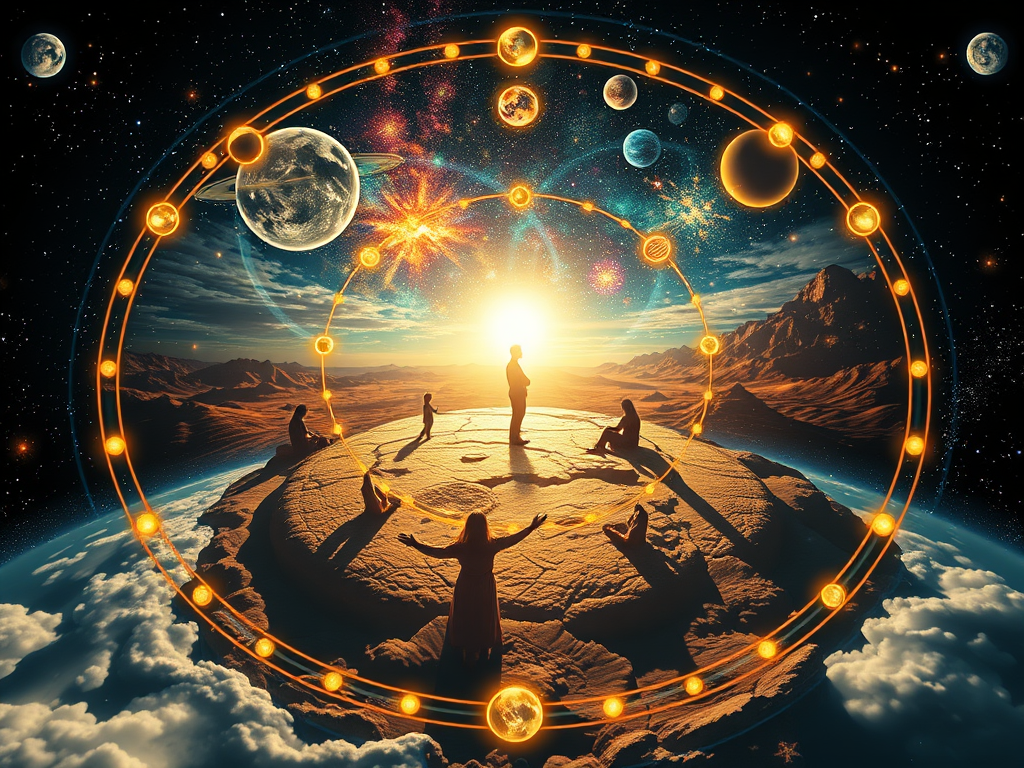
    Glyph of the Soul’s Map

    Life, death, and the afterlife form one continuous spiral of remembrance.


    The Purpose of Life: A Cosmic Game of Growth

    So, what’s the point of this cyclical journey? Esoteric and spiritual sources converge on a central theme: life is a school for the soul, designed to foster growth through experience. Newton’s work emphasizes learning through relationships and challenges, with the ultimate goal of evolving into higher levels of consciousness. Cannon’s clients describe Earth as a place for accelerated learning, where contrast—joy and pain—drives spiritual development.

    The Law of One articulates this as a journey toward unity, where souls learn to balance self and other, ultimately merging with the infinite Creator (Ra, 1984). A Course in Miracles simplifies it: life’s purpose is to awaken to love, undoing the ego’s illusions (Foundation for Inner Peace, 1975).

    Science, while not addressing purpose directly, supports the idea of interconnectedness. Quantum entanglement suggests all particles are linked, mirroring spiritual notions of oneness (Einstein et al., 1935). Neuroscience shows that altruistic behavior activates reward centers, hinting at a biological drive to serve others (Harbaugh et al., 2007).

    Framing life as a game doesn’t diminish its seriousness—it empowers us. Knowing that death is a pause, not an end, frees us from fear. Understanding that challenges are chosen lessons encourages resilience. And recognizing our eternal nature instills hope, allowing us to face the future with confidence while honoring free will.


    Navigating with the Map: Practical Implications

    Having this lifecycle map is like holding a cosmic GPS. It doesn’t eliminate challenges, but it provides context, helping us see problems as opportunities for growth. Here’s how it can guide us:

    • Clarity in Choices: Knowing life’s purpose is to learn and serve others helps prioritize actions that align with love and compassion.
    • Courage Through Challenges: Understanding that nothing is lost—even mistakes—encourages bold decisions and resilience.
    • Freedom from Fear: Recognizing death as a reflective pause reduces anxiety, allowing us to live fully in the present.
    • Service to Others: The soul’s goal of unity inspires acts of kindness, fostering connection and collective growth.

    Critiques and Considerations

    While esoteric and spiritual perspectives offer profound insights, they face skepticism. Newton’s and Cannon’s work, based on hypnotic regression, lacks rigorous scientific validation, as it’s anecdotal and non-falsifiable. Critics argue that memories elicited under hypnosis may reflect imagination or cultural influences rather than objective truth (Spanos, 1996).

    Similarly, The Law of One and A Course in Miracles are channeled texts, which skeptics view as subjective and untestable (Shermer, 2002). Science, too, has limits. While quantum physics and neuroscience provide intriguing parallels, they don’t directly prove an afterlife or reincarnation.

    Stevenson’s reincarnation research, though compelling, is contested for methodological flaws, like potential confirmation bias (Edwards, 1997). Yet, the consistency of esoteric accounts across cultures and the suggestive findings from science invite an open-minded exploration, balancing rigor with curiosity.


    Conclusion: Embracing the Journey

    Mapping the soul’s journey—from childhood to reincarnation—offers a transformative perspective. Life is a school, death a reflective pause, and the afterlife a planning session for the next round.

    By integrating esoteric wisdom, spiritual teachings, and scientific insights, we gain a 360-degree view of our existence, empowering us to navigate with clarity, courage, and hope. Like players in a cosmic game, we graduate through lessons, growing closer to love and unity. With this map in hand, we can face life’s challenges knowing we’re eternal souls on a grand adventure.


    Resonant Crosslinks


    Glossary

    • Afterlife: The non-physical realm where souls reside between incarnations, often involving life reviews and planning.
    • Epigenetics: The study of how environmental factors influence gene expression without altering DNA.
    • Karma: The spiritual principle of cause and effect, where actions influence future experiences.
    • Life Review: A reflective process in the afterlife where souls assess their earthly experiences.
    • Neuroplasticity: The brain’s ability to reorganize itself by forming new neural connections based on experience.
    • Non-locality: A quantum phenomenon where particles remain interconnected regardless of distance.
    • Reincarnation: The process of a soul returning to a new physical body after death.
    • Soul Group: A cluster of souls who reincarnate together, playing various roles to aid each other’s growth.
    • Veil of Forgetting: A metaphorical barrier that obscures past-life memories to encourage authentic learning.

    Bibliography

    Aspect, A., Dalibard, J., & Roger, G. (1982). Experimental test of Bell’s inequalities using time-varying analyzers. Physical Review Letters, 49(25), 1804–1807. https://doi.org/10.1103/PhysRevLett.49.1804

    Bohr, N. (1928). The quantum postulate and the recent development of atomic theory. Nature, 121(3050), 580–590. https://doi.org/10.1038/121580a0

    Borjigin, J., Lee, U., Liu, T., Pal, D., Huff, S., Klarr, D., … & Mashour, G. A. (2013). Surge of neurophysiological coherence and connectivity in the dying brain. Proceedings of the National Academy of Sciences, 110(35), 14432–14437. https://doi.org/10.1073/pnas.1308285110

    Dias, B. G., & Ressler, K. J. (2014). Parental olfactory experience influences behavior and neural structure in subsequent generations. Nature Neuroscience, 17(1), 89–96. https://doi.org/10.1038/nn.3594

    Doidge, N. (2007). The brain that changes itself: Stories of personal triumph from the frontiers of brain science. Penguin Books.

    Edwards, P. (1997). Reincarnation: A critical examination. Prometheus Books.

    Einstein, A., Podolsky, B., & Rosen, N. (1935). Can quantum-mechanical description of physical reality be considered complete? Physical Review, 47(10), 777–780. https://doi.org/10.1103/PhysRev.47.777

    Foundation for Inner Peace. (1975). A Course in Miracles. Viking Press.

    Harbaugh, W. T., Mayr, U., & Burghart, D. R. (2007). Neural responses to taxation and voluntary giving reveal motives for charitable donations. Science, 316(5831), 1622–1625. https://doi.org/10.1126/science.1140738

    Huttenlocher, P. R. (2002). Neural plasticity: The effects of environment on the development of the cerebral cortex. Harvard University Press.

    Newton, M. (1994). Journey of Souls: Case studies of life between lives. Llewellyn Publications.

    Newton, M. (2000). Destiny of Souls: New case studies of life between lives. Llewellyn Publications.

    Newton, M. (2004). Life Between Lives: Hypnotherapy for spiritual regression. Llewellyn Publications.

    Newton, M. (Ed.). (2009). Memories of the Afterlife: Life between lives stories of personal transformation. Llewellyn Publications.

    Ra. (1984). The Law of One: Book I. Schiffer Publishing.

    Shermer, M. (2002). Why people believe weird things: Pseudoscience, superstition, and other confusions of our time. Henry Holt and Company.

    Spanos, N. P. (1996). Multiple identities & false memories: A sociocognitive perspective. American Psychological Association.

    Weaver, I. C., Cervoni, N., Champagne, F. A., D’Alessio, A. C., Sharma, S., Seckl, J. R., … & Meaney, M. J. (2004). Epigenetic programming by maternal behavior. Nature Neuroscience, 7(8), 847–854. https://doi.org/10.1038/nn1276


    Cornerstone Essay Series

    This essay forms part of the Living Archive of Sovereign Sensemaking and Stewardship — a long-term body of work exploring human development, responsible leadership, and the deeper patterns shaping individual and collective evolution.

    Readers wishing to explore related ideas may continue through the Living Archive or navigate the broader Stewardship Architecture of the site.

    → 🌱 Explore the Living Archive
    → 🧭 Begin with the Subject Index
    → 🏛️ View the Stewardship Architecture


    About the Author

    Gerald Alba Daquila writes at the intersection of human development, sovereignty, leadership ethics, and civilizational sensemaking. The Living Archive gathers more than 800 essays, codices, and frameworks developed through years of reflection and inquiry.

  • Media Influence and Mental Well-Being

    Media Influence and Mental Well-Being

    How to Stay Informed Without Feeling Overwhelmed

    Prepared by: Gerald A. Daquila, PhD. Candidate


    In an always-connected world, media shapes how people perceive events, risks, and even their own sense of safety. While access to information has never been greater, constant exposure to negative or emotionally charged content can increase stress, anxiety, and decision fatigue.

    As awareness grows around mental well-being and digital habits, more individuals are learning how to engage with media more intentionally—staying informed without becoming overwhelmed. By understanding how media affects attention, emotion, and behavior, it becomes possible to build healthier boundaries and a more balanced relationship with information.

    10–14 minutes

    ABSTRACT

    In an era dominated by social media and legacy media, unconscious consumption fuels fear, division, and mental health challenges, echoing historical experiments like MKUltra. This dissertation explores the behavioral impacts of platforms like TikTok, Facebook, and Instagram, examining their algorithmic design and societal consequences.

    Drawing on psychology, neuroscience, and spiritual frameworks like the Law of One, it proposes that the awakened community—guided by service-to-others principles and respecting free will—can neutralize these effects through mindfulness, media literacy, community building, and positive content creation. By fostering conscious engagement, humanity can transform technology into a tool for unity and awakening, aligning with a hopeful vision of a new dawn.


    Introduction

    In the digital age, social media platforms like TikTok, Instagram, and Facebook shape how billions perceive reality, often amplifying fear and division through unconscious consumption. Legacy media, with its sensationalized narratives, compounds this, fostering a societal climate of anxiety and distrust.

    Some speculate these dynamics trace back to covert programs like MKUltra, a CIA initiative (1953–1973) that sought to control minds through psychological manipulation. While direct links remain speculative, the parallels in are striking: both MKUltra and modern algorithms aim to influence behavior, raising questions about their impact on mental health,polarization, and societal cohesion.

    Yet, amidst this darkness, a light emerges. The Law of One, a channeled spiritual text, suggests humanity is at a tipping point, choosing betweenservice-to-self (STS, fear-based) and service-to-others (STO, love-based) paths.

    As fear-based behaviors—exacerbated by media—mirror apocalyptic prophecies, the awakened community can lead a transformation. Respecting free will, as modeled by the Galactic Confederation in the Law of One, this community can neutralize media’s ill effects through mindful engagement, fostering unity andhope.

    This dissertation examines the mechanisms of social media algorithms, their psychological and societal impacts, and their alignment with fear-based dynamics. It proposes practical, STO-aligned actions to empower individuals and communities, transforming technology into a catalyst for awakening. By embracing mindfulness, media literacy, and collective action, we can manifest a brighter future, proving it is darkest just before dawn.


    Glyph of Liberation

    From Fear’s Illusion into the Freedom of Truth


    Understanding MKUltra and Its Legacy

    Project MKUltra, a covert CIA program from 1953 to 1973, aimed to master mind control through drugs, hypnosis, and trauma-based techniques, targeting vulnerable populations to extract confessions or program agents (Marks, 1979).

    Declassified in 1977, it revealed experiments at 80 institutions, including universities, with methods like LSD dosing and sensory deprivation causing lasting trauma, as seen in cases like Dr. Frank Olson’s suspicious death.

    Though officially ended in 1973, speculation persists about its influence on modern psychological operations, with posts on X suggesting continuations in psychotherapy or technology (e.g., @drawandstrike, 2023). While no evidence confirms ongoing MKUltra, its legacy raises questions about behavioral manipulation in today’s digital landscape.


    Social Media Algorithms: A Modern Parallel

    Platforms like TikTok, Facebook, and Instagram use AI-driven algorithms to curate content, maximizing engagement through personalized feeds. TikTok’s “For You Page” leverages rapid dopamine hits, fostering addiction, with 12% of users reporting problematic use (Montag et al., 2021).

    Facebook’s algorithm amplifies emotional content, fueling polarization, while Instagram’s visual focus drives fear of missing out (FoMO). Heavy use correlates with anxiety, depression, and compulsive behaviors, particularly among youth, with studies noting increased loneliness during COVID-19 (Primack et al., 2017).

    Though not directly tied to MKUltra, algorithms share its goal of behavioral influence. Both exploit psychological vulnerabilities—MKUltra through trauma, algorithms through engagement-driven feedback loops.

    Speculative claims, like those in Balthazar (2017), suggest MKUltra’s techniques evolved into AI-driven “predictive neuroengineering,” but profit motives, not espionage, primarily drive modern platforms. Still, the outcome—heightened fear, dissociation, and distrust—mirrors MKUltra’s effects, suggesting a conceptual legacy.


    Societal Fear: A Perfect Storm

    Unconscious media consumption amplifies fear-based behaviors, intensified by:

    • Social Media: Algorithms prioritize negative content due to negativity bias, increasing anxiety and vigilance (Rozin & Royzman, 2001).
    • Legacy Media: Sensationalized narratives of wars, pandemics, and cataclysms erode trust, with only 26% of Americans trusting government (Pew Research Center, 2022).
    • Economic Stress: Financial difficulties, with 43% of Americans reporting stress, heighten scarcity fears (American Psychological Association, 2023).
    • This interplay creates a feedback loop, where social media virality fuels legacy media, fostering a “sky is falling” mindset. Rising mental health issues—30% suicide increase from 1999–2016 (CDC, 2016)—and polarization reflect a population under strain, reminiscent of MKUltra’s stress-based tactics.

    Spiritual and Esoteric Perspectives

    The Law of One frames reality as a polarity between STS (fear, control) and STO (love, unity), suggesting fear is an STS tactic todelay awakening. Current chaos aligns with Revelation’s end-times—wars, famines, and false prophets (Revelation 6–16)—but promises renewal (Revelation 21:1–5).

    The Bhagavad Gita and Tao Te Ching advocate detachment and harmony, while Edgar Cayce’s Akashic Records offer healing through universal knowledge. Quantum physics, via Bohm’s implicate order and Pauli-Jung’s conjecture, posits consciousness shapes reality, implying collective STO focus can shift outcomes (Schwartz et al., 2005). These perspectives frame fear as a catalyst for awakening, with humanity nearing an STO tipping point.


    Glyph of Media Transmutation

    From fear to freedom—consciousness reclaims the narrative and transforms the pulse of media.


    Neutralizing Media’s Ill Effects: STO-Aligned Actions

    Respecting free will, the awakened community can counter unconscious media consumption through:

    1. Mindfulness Programs: Community meditation workshops reduce fear responses by strengthening prefrontal cortex activity (Davidson & Lutz, 2008). Apps like Headspace or local centers can facilitate this, aligning with STO’s emphasis on inner peace.
    2. Media Literacy Education: Schools and communities should teach algorithm awareness and critical thinking, reducing manipulation susceptibility (Bulger & Davison, 2018).
    3. Community Service: Volunteering (e.g., environmental cleanups) fosters STO behavior, enhancing social bonds and resilience (Warneken & Tomasello, 2006).
    4. Positive Influencer Campaigns: Partner with TikTok and Instagram influencers to promote hope, leveraging Gen Z’s trust in authenticity (Vogel et al., 2020).
    5. Digital Detoxes: 30-day challenges encourage offline connections, reducing compulsive use and anxiety (Montag et al., 2021).
    6. Spiritual Study Groups: Discussing the Law of One or Bible fosters STO values, raising collective vibration through shared purpose (Laszlo, 2004).

    These actions empower individuals without coercion, mirroring the Confederation’s non-interventionist guidance. By modeling STO, the awakened community inspires others, creating a ripple effect.


    Protecting Future Generations

    For children, parents should:

    • Set Boundaries: Limit screen time to 1–2 hours daily, using tools like TikTok’s Digital Wellbeing.
    • Teach Critical Thinking: Discuss content to build algorithm awareness, reducing FoMO and addiction.
    • Model Mindful Use: Demonstrate balanced media habits, fostering resilience.
      Adults can adopt mindfulness, curate positive feeds, and engage in STO actions, protecting mental health and modeling conscious consumption.

    A Hopeful Vision

    Despite fear’s grip, signs of awakening abound: 27% of Americans practice meditation (Pew Research Center, 2014), and global movements for sustainability reflect STO values. Quantum consciousness research (Ceylan et al., 2017) bridges science and spirituality, suggesting collective intention can manifest unity.

    As the Law of One predicts a “harvest” toward STO, technology—once a tool of division—can become a platform for connection, with influencers and communities amplifying hope. This is humanity’s darkest hour, but dawn is breaking.


    Summary

    This paper explores how unconscious media consumption, driven by social media algorithms and legacy media, fuels fear, division, and mental health challenges, with speculative ties to MKUltra’s legacy.

    It examines platforms like TikTok, Facebook, and Instagram, revealing their engagement-driven design and psychological impacts. Societal fear, amplified by economic stress and distrust, mirrors apocalyptic narratives but signals an STO awakening, as per the Law of One and other spiritual texts.

    The awakened community, respecting free will, can neutralize these effects through mindfulness, media literacy, community service, positive campaigns, digital detoxes, and spiritual study. These actions transform technology into a tool for unity, fostering a hopeful future where consciousness prevails.


    Key Takeaways

    1. Media’s Impact: Social media algorithms and legacy media amplify fear and division, with parallels to MKUltra’s behavioral manipulation, though driven by profit, not espionage.
    2. Societal Fear: Economic stress, distrust, and mental health crises reflect a population under strain, but these are catalysts for awakening.
    3. Spiritual Hope: The Law of One, Revelation, and quantum physics suggest humanity is nearing an STO tipping point, where love triumphs over fear.
    4. Actionable Solutions: Mindfulness, media literacy, community service, positive campaigns, detoxes, and spiritual study empower conscious engagement, respecting free will.
    5. Bright Future: By harnessing technology for unity, the awakened community can manifest a new dawn, proving darkness precedes light.

    Conclusion

    As social media and legacy media amplify fear, humanity stands at a crossroads. The echoes of MKUltra remind us of technology’s power to shape minds, but also its potential for good. Guided by the Law of One’s STO principles and the Galactic Confederation’s respect for free will, the awakened community can lead a transformation.

    Through mindfulness, education, service, and hope-filled campaigns, we can neutralize media’s ill effects, turning platforms into beacons of unity. Spiritual and scientific insights converge, affirming consciousness shapes reality. As we choose love over fear, we manifest a world where connection triumphs, proving it is indeed darkest just before dawn. Let us rise, together, into the light.


    Related reflections (optional)


    Glossary

    • Akashic Records: A metaphysical repository of all universal knowledge, accessible for healing and insight (Cayce, 1930s).
    • Galactic Confederation: In the Law of One, a collective of STO entities guiding humanity while respecting free will.
    • Law of One: A channeled text (1981–1984) describing reality as a polarity between service-to-self and service-to-others, aiming for unity.
    • MKUltra: A CIA program (1953–1973) experimenting with mind control through drugs, hypnosis, and trauma.
    • Negativity Bias: The psychological tendency to prioritize negative information, influencing media algorithms (Rozin & Royzman, 2001).
    • Service-to-Others (STO): In the Law of One, actions driven by love, empathy, and unity.
    • Service-to-Self (STS): In the Law of One, actions driven by fear, control, and self-interest.

    Bibliography

    American Psychological Association. (2023). Stress in America 2023. https://www.apa.org/news/press/releases/stress/2023/report

    Balthazar, A. (2017). Project MK-Ultra and mind control technology: A compilation of patents and reports. Adventures Unlimited Press.

    Bulger, M., & Davison, P. (2018). The promises, challenges, and futures of media literacy. Journal of Media Literacy Education, 10(1), 1–21. https://doi.org/10.23860/JMLE-2018-10-1-1

    Centers for Disease Control and Prevention. (2016). Suicide rates in the United States, 1999–2016. https://www.cdc.gov/nchs/data/vsrr/report004.pdf

    Ceylan, M. E., Dönmez, A., Ünsalver, B. Ö., Evrensel, A., & Yemiscigil, A. (2017). The soul, as an uninhibited mental activity, is reduced into consciousness due to complex medical and neurological disorders: The soul remains an idea rather than a fact. Integrative Psychological and Behavioral Science, 51, 103–108. https://doi.org/10.1007/s12124-016-9369-9

    Davidson, R. J., & Lutz, A. (2008). Buddha’s brain: Neuroplasticity and meditation. IEEE Signal Processing Magazine, 25(1), 176–174. https://doi.org/10.1109/MSP.2008.4431873

    Laszlo, E. (2004). Science and the Akashic Field: An integral theory of everything. Inner Traditions.

    Marks, J. (1979). The search for the “Manchurian Candidate”: The CIA and mind control. Times Books.

    Montag, C., Yang, H., & Elhai, J. D. (2021). On the severity of social media addiction: Relationships with personality traits and social media use motives. Frontiers in Psychiatry, 12, 678006. https://doi.org/10.3389/fpsyt.2021.678006

    Pew Research Center. (2014). Religious landscape study. https://www.pewresearch.org/religion/religious-landscape-study/

    Pew Research Center. (2022). Public trust in government: 1958–2022. https://www.pewresearch.org/politics/2022/06/06/public-trust-in-government-1958-2022/

    Primack, B. A., Shensa, A., Escobar-Viera, C. G., Barrett, E. L., Sidani, J. E., Colditz, J. B., & James, A. E. (2017). Use of multiple social media platforms and symptoms of depression and anxiety: A nationally-representative study among U.S. young adults. Computers in Human Behavior, 69, 1–9. https://doi.org/10.1016/j.chb.2016.11.013

    Rozin, P., & Royzman, E. B. (2001). Negativity bias, negativity dominance, and contagion. Personality and Social Psychology Review, 5(4), 296–320. https://doi.org/10.1207/S15327957PSPR0504_2

    Schwartz, J. M., Stapp, H. P., & Beauregard, M. (2005). Quantum physics in neuroscience and psychology: A neurophysical model of mind–brain interaction. Philosophical Transactions of the Royal Society B: Biological Sciences, 360(1458), 1309–1327. https://doi.org/10.1098/rstb.2004.1598

    Vogel, E. A., Rose, J. P., Okdie, B. M., Eckles, K., & Franz, B. (2020). Who compares and despairs? The effect of social comparison orientation on social media use and its outcomes. Personality and Individual Differences, 161, 109949. https://doi.org/10.1016/j.paid.2020.109949

    Warneken, F., & Tomasello, M. (2006). Altruistic helping in human infants and young chimpanzees. Science, 311(5765), 1301–1303. https://doi.org/10.1126/science.1121448


    Cornerstone Essay Series

    This essay forms part of the Living Archive of Sovereign Sensemaking and Stewardship — a long-term body of work exploring human development, responsible leadership, and the deeper patterns shaping individual and collective evolution.

    Readers wishing to explore related ideas may continue through the Living Archive or navigate the broader Stewardship Architecture of the site.

    → 🌱 Explore the Living Archive
    → 🧭 Begin with the Subject Index
    → 🏛️ View the Stewardship Architecture


    About the Author

    Gerald Alba Daquila writes at the intersection of human development, sovereignty, leadership ethics, and civilizational sensemaking. The Living Archive gathers more than 800 essays, codices, and frameworks developed through years of reflection and inquiry.

  • Protected: The American Papacy and the Cosmic Harvest: Unifying Global Power for Earth’s Ascension to Unity Consciousness

    Protected: The American Papacy and the Cosmic Harvest: Unifying Global Power for Earth’s Ascension to Unity Consciousness

    This content is password-protected. To view it, please enter the password below.

  • Protected: Exploring timeless cosmic principles and how alignment with universal laws may restore unity, ethical clarity, and purpose in a fragmented world.

    Protected: Exploring timeless cosmic principles and how alignment with universal laws may restore unity, ethical clarity, and purpose in a fragmented world.

    This content is password-protected. To view it, please enter the password below.