A Constitutional Inquiry into the First Principle of Living Wealth
Meta Description
Where does real wealth come from? Explore how nature, stewardship, and living systems reveal the deeper principles behind flourishing, abundance, and Overflow.
The tree has never learned generosity.
No one persuaded it to produce more fruit than it could ever consume.
No one explained that birds would one day nest among its branches, that insects would gather around its blossoms, or that fallen leaves would slowly become the soil from which other living things would draw nourishment.
The tree does not perform these acts because it has learned a moral lesson.
It simply lives according to its nature.
The Mango
Late one afternoon, a child sits beneath a mango tree.
The fruit is perfectly ripe. Its sweetness belongs to no recipe and follows no formula. It is simply the quiet culmination of sunlight, rain, soil, patient seasons, and a tree that has stood where it was planted for many years. When the last bite has been eaten, only the seed remains. The child turns it over once or twice in small hands before tossing it absentmindedly into the grass, already distracted by the next adventure waiting nearby.
Nothing about the moment appears remarkable.
It has happened countless times before, in villages and cities, in gardens and orchards, across generations too numerous to remember. Most of us have lived some version of this scene. We have eaten fruit without wondering how many futures were hidden inside it.
Yet if the conditions are right, that ordinary seed may one day become another tree. Not immediately, nor dramatically, but gradually, almost beyond notice. It will push unseen roots into the earth before lifting a single leaf toward the light. Seasons will pass. The sapling will thicken into a trunk, its branches reaching farther each year until, one day, children not yet born will sit beneath its shade eating fruit from limbs that once existed only as possibility.
No one taught the tree to be generous.
No one persuaded it to produce more fruit than it could ever consume.
No one explained that birds would one day nest among its branches, that insects would gather around its blossoms, or that fallen leaves would slowly become the soil from which other living things would draw nourishment.
The tree does not perform these acts because it has learned a moral lesson.
It simply lives according to its nature.
For a long time, I assumed this was merely a beautiful feature of trees. Like many ordinary wonders, it seemed too familiar to deserve sustained attention. A mango tree produced mangoes. An acacia cast shade. Rivers flowed downhill. Forests renewed themselves. These belonged to the quiet background of life, so constant that they became almost invisible.
Only much later did another question begin to emerge.
What if these were not simply characteristics of nature?
What if they were clues?
The Question Nobody Asked
Human beings have devoted extraordinary energy to understanding wealth.
Few subjects have occupied our imagination more completely. We have built economic systems, legal frameworks, financial institutions, and political philosophies around the creation, protection, and exchange of value.
Entire civilizations have risen upon different answers to a single enduring question: How do people become prosperous?
The conversation has never lacked intelligence. It has produced remarkable insights into trade, specialization, innovation, finance, and governance. Much of the modern world rests upon these achievements, and many lives have flourished because of them.
Yet every field occasionally reaches a moment when it must pause—not because its answers are wrong, but because it begins to suspect that an earlier question has quietly gone unasked.
Sometimes the greatest discoveries do not come from finding a better answer.
They come from noticing that we have been asking the wrong question all along.
When we speak of wealth, we almost instinctively think of things that can be counted. Income. Assets. Property. Capital. Savings. Investments. These matter. Material security is not an illusion, nor should genuine poverty ever be romanticized. A family unable to meet its basic needs experiences a form of suffering that no philosophy should dismiss.
And yet, even where material abundance has grown beyond historical imagination, another pattern has quietly emerged. Many societies now possess unprecedented productive capacity while simultaneously struggling with depleted soils, fractured communities, declining trust, loneliness, ecological instability, and institutions that seem increasingly unable to hold the common good together.
The contradiction is difficult to ignore.
We appear to have become more capable of creating wealth while becoming less certain that we know what wealth actually is.
Perhaps this uncertainty does not begin in our economies.
Perhaps it begins in our definitions.
What Every Forest Already Knows
A forest never attends an economics lecture.
It has no theory of markets, no concept of gross domestic product, no quarterly reports, no strategic plan for long-term growth. If we were to judge it by many of the categories through which modern civilization measures success, it would appear almost impossibly unorganized.
And yet forests endure.
Not every forest. Nature knows disturbance as well as renewal. Fires sweep through landscapes. Storms fell ancient trees. Drought changes entire ecosystems. Life does not promise permanence.
But wherever living systems remain healthy, something quietly remarkable becomes visible.
Life creates conditions in which more life becomes possible.
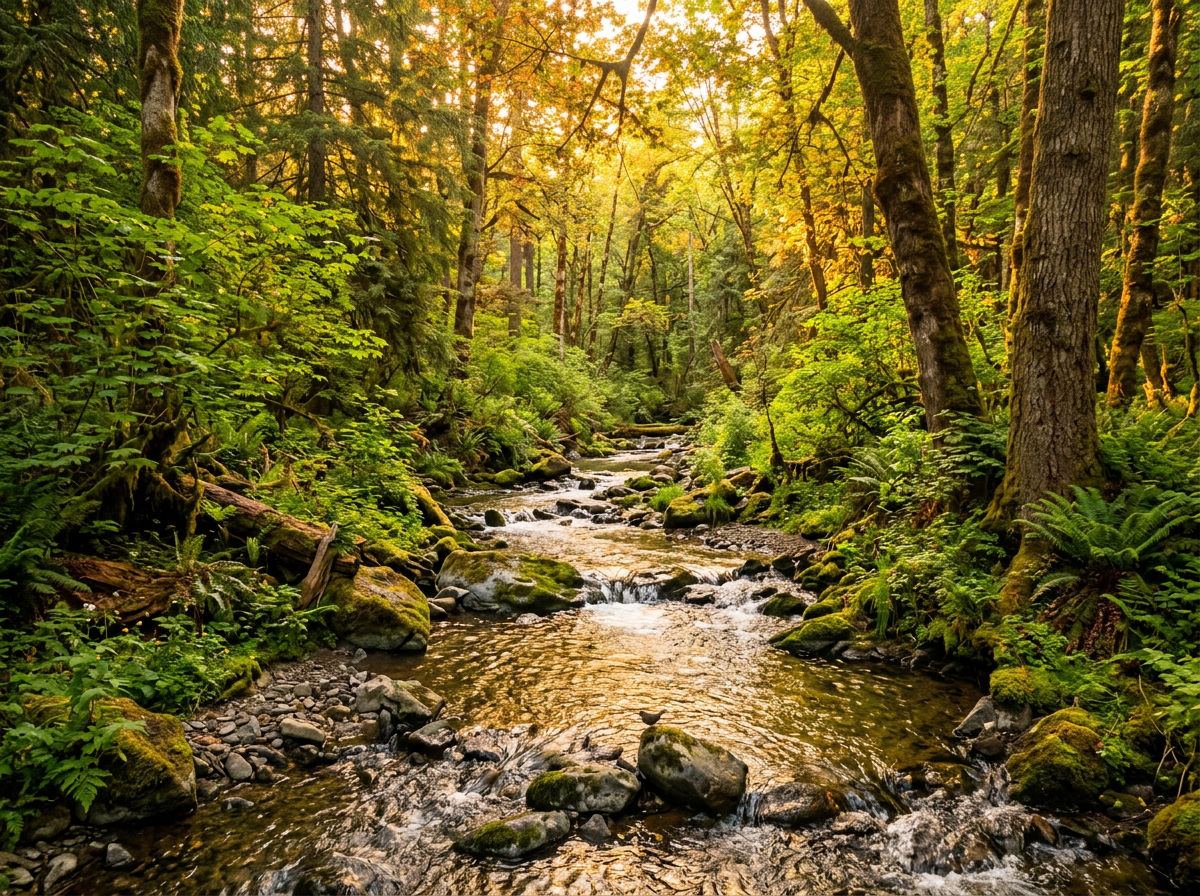
The canopy softens the force of rain before it reaches the forest floor. Fallen leaves become the beginnings of new soil. Fungi exchange nutrients with roots hidden beneath the surface. Pollinators move from blossom to blossom without knowing they participate in the future of the forest. Nothing appears isolated. Each life is caught up in relationships that sustain far more than the individual organism itself (Kimmerer, 2013; Capra & Luisi, 2014).
The forest is not merely a collection of successful trees.
It is a community whose relationships continually generate possibilities that none of its members could create alone.
Standing within such a place, one begins to suspect that the deepest form of wealth may not reside in what any single tree possesses.
It may reside in the living relationships that allow the entire forest to flourish.
The Wealth Before Money
There is an old habit of mind that is difficult to notice precisely because it has become so familiar.
We often imagine that wealth begins when something acquires value in the marketplace. A forest becomes valuable when timber can be harvested. A river becomes valuable when it irrigates crops or generates electricity. Land becomes valuable when it can be bought, sold, or developed.
There is truth in these observations. Human societies must find ways to transform the gifts of the natural world into homes, food, medicines, roads, schools, and livelihoods. Stewardship does not ask us to abandon the practical realities of civilization. It asks something quieter, and perhaps more demanding.
It asks whether value begins only when we recognize it.
The forest was already performing astonishing work long before anyone measured its economic contribution.
It was gathering sunlight into living tissue, drawing carbon from the atmosphere, slowing rainfall so that it could seep gently into the earth, sheltering countless forms of life, and weaving together relationships so intricate that even now we understand only a fraction of them. None of these processes required human permission. None depended upon a market assigning them a price.
They were expressions of life itself.
What we see, we protect. What we fail to see, we often consume without understanding.
Perhaps this is why so many indigenous traditions speak of gratitude before harvest. Gratitude is not merely a spiritual practice. It is also a way of seeing. It reminds us that what sustains us was already at work long before we arrived.
Robin Wall Kimmerer describes this as the practice of entering into relationships of reciprocity with the living world rather than treating it simply as a storehouse of resources (Kimmerer, 2013).
Whether one approaches this insight through science, philosophy, or spiritual tradition, the invitation is remarkably similar: learn to see the relationships that make life possible before attempting to measure what they produce.
Only then do we begin to recognize a different kind of wealth.
The Tree That Never Learned Generosity
For many years I believed that generosity was one of humanity’s highest virtues.
I still do.
But I no longer believe that generosity begins with human beings.
The mango tree has never attended a course on ethics. It has never been persuaded that giving is better than taking. It has never wrestled with questions of altruism or self-interest. It does not calculate how much fruit it can spare while preserving enough for itself. It simply flowers when the season arrives. The fruit ripens. Birds feed. Children climb its branches. Fallen mangoes nourish insects, animals, and eventually the soil itself.
None of this diminishes the tree.
Indeed, it is difficult to describe the tree apart from these relationships. A mango tree isolated from pollinators, fungi, rain, soil organisms, and countless other participants would no longer be the flourishing tree we recognize. Its abundance is inseparable from the web of life within which it exists.
The same appears to be true almost everywhere we look.
Healthy rivers nourish floodplains that, in turn, support forests whose roots stabilize the riverbanks. Coral reefs shelter juvenile fish that later replenish surrounding waters. Wetlands filter water while providing habitat for birds, insects, amphibians, and countless unseen organisms. Even the human body depends upon trillions of microbial companions without whom health becomes impossible.
Life rarely flourishes alone.
The image of isolated success begins to dissolve.
Perhaps we have misunderstood abundance because we have imagined it as something possessed by individuals rather than something emerging from relationships.
If this is true, then the tree is not generous because it chooses to give.
The tree appears generous because flourishing naturally extends beyond itself.
That possibility deserves to linger for a moment.
It asks us to consider whether what we call generosity may sometimes be the visible expression of something even deeper.
A Pattern Hidden in Plain Sight
Once certain patterns become visible, they begin appearing almost everywhere.
Parents rise in the middle of the night to comfort a crying child, rarely thinking of themselves as participating in an economic act. A teacher spends decades cultivating minds whose greatest contributions may emerge long after retirement. Volunteers quietly prepare meals after floods and typhoons. Neighbors gather to repair a damaged roof before anyone thinks to ask who will be paid.
These moments rarely appear in national accounts.
Yet remove them, and societies begin to unravel.
Economists have long recognized that markets depend upon forms of social trust that markets alone cannot produce (Ostrom, 1990).
Communities rely upon reservoirs of goodwill, cooperation, and reciprocity accumulated across countless ordinary interactions. Families perform enormous amounts of unpaid care without which no economy could reproduce itself from one generation to the next. Healthy neighborhoods often possess invisible networks of mutual assistance that only become fully visible during moments of crisis.
We have become remarkably skilled at measuring transactions while remaining far less skilled at recognizing the conditions that make them possible.
Which invites a different question.
What allows wealth to become possible in the first place?
That question will accompany us throughout the chapters ahead. It will lead us into forests and villages, into neuroscience and regenerative agriculture, into stewardship, institutions, and eventually into the future of civilization itself.
For now, it is enough simply to notice that nature has been quietly offering the same lesson for a very long time.
Where life flourishes, it rarely stops with itself.
It becomes the condition through which other life may flourish as well.
Perhaps that is not merely a beautiful feature of the world.
Perhaps it is one of its deepest laws.
When We Mistake the River
There is a reason rivers have become enduring symbols across so many cultures. They are among the clearest expressions of a simple truth that is surprisingly easy to forget.
A river remains alive because it flows.
The moment water ceases to move, something begins to change. Oxygen diminishes. Sediment accumulates. What was once vibrant slowly becomes stagnant. The river has not failed because it lacked water. It has failed because the movement that gave the water life has been interrupted.
The distinction seems obvious until we notice how often our own thinking about wealth follows the opposite pattern.
We celebrate accumulation.
We admire reserves.
We speak of storing, securing, protecting, preserving. These are not misguided instincts. Every family requires a measure of stability. Every community benefits from prudent stewardship. Even nature stores. Seeds carry energy through winter. Trees lay down rings that preserve seasons of growth. Animals gather food before harsh weather arrives.
Nature is not opposed to storing.
It is opposed to forgetting why anything is stored.
A seed does not preserve its energy in order to remain forever a seed.
Its reserves exist for the moment they can be given away.
The same is true of snow gathered upon distant mountains. For months it appears inactive, almost hidden from the valleys below. Yet spring eventually arrives, and what seemed like stored abundance becomes rivers, fields, drinking water, orchards, and harvests. Its purpose was never accumulation for its own sake. Storage served a future season of circulation.
I began wondering whether much of what we call wealth follows the same pattern.
Perhaps the deepest question is not whether something has been accumulated.
Perhaps it is whether it still knows how to flow.
The Fear Beneath Hoarding
This realization changed the way I began looking at scarcity.
For many years it seemed obvious that greed was simply the opposite of generosity. One accumulated. The other shared. The distinction felt morally straightforward.
Reality proved more compassionate than that.
Anyone who has spent time with people who lived through war, famine, displacement, or profound insecurity soon notices that accumulation often speaks a quieter language.
- Sometimes it is the language of remembered hunger.
- Sometimes it is the language of uncertainty.
- Sometimes it is simply the nervous system whispering, Never again.
- A pantry filled beyond reasonable need may not begin with greed.
- It may begin with a child who once watched cupboards stand empty.
Land may become something to cling to because land once meant survival.
Money may become difficult to release because someone remembers what it felt like to have none. Institutions themselves can inherit similar memories. Nations shaped by repeated invasion often become preoccupied with security. Economies marked by repeated instability learn to prize reserves above circulation.
The behavior appears similar.
The stories beneath it are often very different.
This does not excuse extraction when it harms others.
It does, however, invite a deeper kind of understanding.
If fear shapes the architecture of our institutions, then no amount of moral instruction alone will restore generosity. Fear cannot simply be argued away. It must gradually encounter conditions in which trust becomes possible again.
That observation has stayed with me because it echoes what we see throughout the living world.
Healthy ecosystems are not careless with resources.
They are confident enough in the continuity of life that circulation becomes possible.
Perhaps the opposite of scarcity is not abundance after all.
Perhaps the opposite of scarcity is trust.
Or perhaps trust is simply what becomes possible when life repeatedly discovers that it belongs within relationships capable of sustaining it.
I am no longer certain where one ends and the other begins.
The Village Before the Marketplace
As these questions unfolded, my thoughts kept returning to places that had quietly shaped me long before I possessed language to describe them.
I remembered families in which children wandered freely from one household to another without anyone finding it unusual. Meals seemed to expand whenever unexpected guests arrived. A neighbor’s difficulty became everyone’s concern before anyone thought to calculate whose responsibility it was.
During times of loss, people appeared carrying food, tools, or simply their presence, not because a contract required it, but because life together had taught them that another person’s burden was never entirely separate from their own.
These memories are hardly unique to the Philippines. Variations of them have existed in villages across the world. Yet Filipino culture still preserves many of these practices with unusual resilience.
Bayanihan remains one of its most recognizable expressions, though the spirit reaches far beyond the famous image of neighbors carrying an entire house together.
It appears in countless ordinary acts of shared labor, hospitality, kinship, and mutual care that often pass unnoticed precisely because they are woven into daily life.
It would be easy to romanticize these traditions.
That would be a mistake.
Every culture carries shadows alongside its gifts. Networks of obligation can become burdensome. Loyalty can drift into favoritism. Family solidarity can obscure accountability. No human system remains untouched by imperfection.
Yet even acknowledging these realities, I find myself reluctant to dismiss what these practices may still have to teach us.
Perhaps they preserve something modern civilization has not entirely forgotten, but has gradually learned to overlook.
The marketplace is one way human beings coordinate value.
- It is not the first.
- Long before prices, there were relationships.
- Long before contracts, there was trust.
- Long before transactions, there was belonging.
Markets remain indispensable.
They flourish best when rooted within the deeper human ecology from which they first emerged.
The Name We Have Been Searching For
By this point in the inquiry, I found myself returning again and again to the same quiet observation.
It appeared in forests and rivers, in families and villages, in the patient work of teachers and the hidden labor of parents. It revealed itself in healthy soils, in coral reefs, in communities that somehow remained resilient despite possessing few material resources, and even in those fleeting moments after calamity when neighbors instinctively stepped toward one another before anyone had organized a formal response.
Each example looked different on the surface, yet each seemed to arise from the same underlying movement.
Wherever life was flourishing, it was somehow producing conditions in which other life could flourish as well.
For some time I resisted giving this pattern a name. There is always a temptation, once we recognize something, to define it too quickly. A premature definition can become a kind of prison, reducing a living reality to a convenient label. It seemed wiser simply to continue observing, allowing the pattern to reveal itself a little more fully before attempting to describe it.
Eventually, however, language became necessary.
Not because the pattern depended upon a word, but because words allow us to point together toward something that has always been there.
The word that gradually emerged was Overflow.
Not abundance.
Not generosity.
Not prosperity.
Those words each illuminate part of the landscape, but none seemed to describe the whole.
Overflow is what becomes visible when life is so deeply rooted in its own flourishing that it naturally extends beyond itself.
It is the fruit borne by the tree, the river that nourishes valleys far downstream, the grandmother whose wisdom quietly shapes generations she will never live to meet, the teacher whose influence continues long after the final lesson has ended, the entrepreneur whose work enlarges opportunities for others rather than merely extracting value from them.
Overflow is not another possession to acquire. It is the signature left behind whenever life becomes fully alive.
Seen in this light, Overflow is not an achievement standing at the end of the journey. It is the evidence that something deeper has already become true.
I had spent years asking how individuals and societies might become more generous, more sustainable, more regenerative.
Gradually it became apparent that these were never separate questions. They were different windows opening onto the same house.
The inquiry itself belonged one level deeper.
What conditions allow life to become so coherent that Overflow simply becomes its natural expression?
The question itself felt strangely liberating. It shifted the focus away from moral effort and toward careful cultivation. Instead of asking how to persuade people to become generous, one begins asking what prevents generosity from emerging in the first place.
Instead of designing systems that merely redistribute scarcity, one begins wondering how communities might cultivate the conditions from which new forms of living wealth continually arise.
Nature, once again, had quietly been waiting with the same answer.
The Work of Stewardship
This was also the moment when stewardship itself began to appear in a different light.
For many years I had understood stewardship primarily as responsible care.
That understanding remains true as far as it goes. Every steward protects what has been entrusted to them. Every good steward acts with humility toward resources that ultimately belong to something larger than themselves.
Yet nature seemed to be inviting a deeper understanding.
The finest gardener does not command a seed to grow. The orchardist cannot pull fruit into existence by determination alone. A forester cannot manufacture a mature woodland by assembling individual trees as though constructing a building.
Each understands, often through years of patient observation, that life possesses an intelligence of its own. Their work is not to replace that intelligence but to cooperate with it.
The gardener prepares the soil, protects young shoots from unnecessary harm, waters when rain is scarce, prunes when growth becomes unhealthy, and waits through seasons that cannot be hurried. None of these actions creates life. They create the conditions within which life may express itself more fully.
The distinction is subtle.
It is also transformative.
Perhaps stewardship has always been less about managing resources than about cultivating conditions.
- Healthy soil.
- Healthy relationships.
- Healthy institutions.
- Healthy cultures.
- Healthy economies.
Stewardship enlarges the possibility that life, once rooted there, may continue unfolding according to its own generative nature.
When viewed from this perspective, stewardship is no longer primarily defensive. It is profoundly creative. It asks, again and again,
“What must become true here so that life may flourish beyond us?”
Every authentic steward eventually discovers that the answer is rarely found in tighter control. More often it is found in deeper understanding, wiser restraint, restored trust, and relationships capable of sustaining growth long after the steward has stepped away.
That, perhaps, explains why the greatest stewards are so often difficult to notice. Their success is measured less by what they accomplish personally than by what continues flourishing after they are gone.
A mature forest does not advertise the countless generations of stewardship that made it possible.
Neither does a healthy family.
Neither does a civilization.
What Civilization Rewards
Every civilization, whether consciously or not, becomes a teacher.
Long before its values are written into constitutions or carved into monuments, they are quietly inscribed into the ordinary incentives of daily life. Children learn what adults celebrate. Institutions reveal what societies truly believe. Over time, what is rewarded becomes what is repeated, and what is repeated gradually becomes what people mistake for human nature itself.
This realization has made me more cautious whenever I hear sweeping claims about what people are supposedly like. We often say that human beings are naturally selfish, naturally competitive, naturally acquisitive. Others insist with equal confidence that we are naturally cooperative, naturally compassionate, naturally communal. Both positions seem to gather evidence in their favor because both can point to genuine aspects of human experience.
Perhaps the difficulty lies in the question itself.
A seed placed upon bare rock reveals one possibility. The very same seed planted in rich soil reveals another. It would be strange to conclude that the seed possesses two contradictory natures when the more obvious explanation is that the surrounding conditions profoundly shaped what became possible.
Human beings are surely more complex than seeds.
We possess agency, imagination, conscience, and the mysterious freedom to choose against our circumstances. Yet we remain deeply responsive to the worlds we inhabit. Institutions cultivate habits.
Economies cultivate expectations. Families cultivate emotional reflexes. Cultures cultivate entire landscapes of meaning within which some possibilities become easier to imagine than others.
If a civilization consistently rewards extraction above contribution, accumulation above circulation, domination above relationship, should we be surprised when these behaviors become increasingly common?
And if another civilization patiently cultivates trust, reciprocity, craftsmanship, responsibility, and care across generations, should we be surprised when different patterns begin to emerge?
The question is not whether incentives matter. They clearly do.
The deeper question is whether our institutions are cultivating the conditions from which Overflow naturally arises, or whether they are unintentionally interrupting it before it has the chance to mature.
The Civilization of Enough
One afternoon, while these questions continued to occupy my thoughts, I found myself remembering something that had puzzled me for years.
I had known people who possessed very little by conventional standards and yet seemed remarkably difficult to impoverish.
Their homes were modest. Their savings, if they existed at all, were small. Material security was often uncertain. Yet there remained around them a kind of quiet resilience that could not easily be measured.
When illness arrived, relatives appeared. When crops failed, neighbors shared what they could spare. When grief entered a household, no one mourned alone for very long.
None of this eliminated hardship. Poverty is not made beautiful simply because love survives within it. To suggest otherwise would be deeply unfair to those who endure genuine deprivation.
And yet there remained a form of wealth that refused to disappear.
At the same time, I had encountered individuals surrounded by extraordinary material abundance who nevertheless lived with an almost permanent anxiety that what they possessed might never be enough.
Their calendars overflowed while their relationships quietly withered. Their homes grew larger even as loneliness settled more deeply into the rooms. Security remained elusive because every achievement simply enlarged the horizon of what still needed protecting.
I do not offer these observations as contrasts between rich and poor. Life is more complicated than that. Material prosperity has lifted millions from suffering and remains one of humanity’s great achievements. Nor are close communities immune to cruelty, exclusion, or injustice.
What I am describing is something subtler.
There appears to be a difference between having enough and experiencing enoughness.
- The first belongs largely to circumstances.
- The second belongs to relationships.
Enoughness is not the denial of ambition. It is not complacency, nor is it a romantic rejection of progress. Rather, it is the quiet confidence that one’s life participates in a web of mutual care strong enough that the future need not always be faced alone.
When enoughness is present, accumulation slowly loses its urgency.
Not because possessions become unimportant, but because they are no longer asked to carry burdens they were never capable of carrying in the first place.
No amount of wealth can substitute for belonging.
No investment portfolio can purchase trust.
No technology can manufacture a community that has forgotten how to care for one another.
These are forms of wealth that arise differently.
Nature has been demonstrating their logic for millions of years.
Returning to the Mango
Whenever an inquiry grows too abstract, I have learned to return to the place where it first began.
So I find myself once again beneath the mango tree.
Nothing about the tree has changed since the opening pages of this essay. It continues doing what it has always done. Its roots disappear silently into the earth. Its leaves gather light without applause. Birds arrive and depart without asking permission. Children continue climbing its branches, often unaware that the shade cooling their afternoon was planted by hands that may have disappeared decades before they were born.
The tree has never heard the word Overflow.
It does not need to.
Reality is never dependent upon our vocabulary.
The word exists for our sake, not for the tree’s.
It gives us a way of noticing something that has quietly surrounded us all along.
The fruit was never the whole story.
Neither was the seed.
The deeper story was always the life moving through both of them, continually becoming more than itself without ever ceasing to be itself. What appears, from one perspective, to be generosity is, from another, simply life’s astonishing habit of creating futures it will never personally inhabit.
I have come to believe that this may be one of the deepest definitions of wealth available to us.
Wealth is not merely what sustains a life.
It is what enables life to become a source of life beyond itself.
Everything else, valuable though it may be, derives its meaning from this deeper reality.
Money matters because it can become one expression of that movement.
Institutions matter because they shape the conditions within which human flourishing either expands or contracts.
Stewardship matters because it learns to recognize this movement, protect it where it already exists, and patiently cultivate it where it has been forgotten.
Perhaps this has always been the work before us.
Not to manufacture abundance.
Not even to pursue Overflow as though it were another destination to reach.
But to become the kind of people, communities, institutions, and civilizations through which life once again remembers its own generative nature.
The mango tree has been teaching this lesson all along.
We simply needed to learn how to see it.
“The greatest form of wealth is not what we are able to keep. It is what continues to nourish life long after our own hands have let it go.”
References
Bateson, G. (1972). Steps to an ecology of mind. Chandler Publishing.
Berry, W. (1981). The gift of good land. North Point Press.
Capra, F., & Luisi, P. L. (2014). The systems view of life: A unifying vision. Cambridge University Press.
Frankl, V. E. (2006). Man’s search for meaning. Beacon Press. (Original work published 1946)
Kimmerer, R. W. (2013). Braiding sweetgrass: Indigenous wisdom, scientific knowledge, and the teachings of plants. Milkweed Editions.
Meadows, D. H. (2008). Thinking in systems: A primer. Chelsea Green.
Ostrom, E. (1990). Governing the commons: The evolution of institutions for collective action. Cambridge University Press.
Raworth, K. (2017). Doughnut economics: Seven ways to think like a 21st-century economist. Chelsea Green.
Senge, P. M. (2006). The fifth discipline: The art and practice of the learning organization (Rev. ed.). Doubleday.
Living Archive Companion
Every Cornerstone forms part of a larger architecture of inquiry. The Living Archive Companion situates this essay within the broader Living Archive by highlighting its scholarly context, methodological foundations, scope, continuing questions, and related pathways for exploration. As the Living Archive evolves, this companion may expand to reflect new scholarship, empirical research, historical case studies, and practical applications.
Comparative Perspectives
Where this essay sits within the broader conversation
Where Wealth Actually Comes From explores one of the Living Archive’s foundational questions: What is the first principle from which genuine wealth emerges? Rather than treating wealth primarily as an economic outcome or financial construct, the essay begins with careful observation of living systems and asks what nature itself reveals about generativity, circulation, stewardship, and flourishing.
Its central contribution is not the proposal of a new economic ideology, but a reframing of wealth as an emergent property of coherent living systems. By moving from forests, rivers, families, and communities toward institutions and civilizations, the essay develops a systems-based understanding of Overflow as the natural expression of flourishing life.
Systems Thinking
Systems thinking has demonstrated that healthy systems are defined less by isolated components than by relationships, feedback loops, resilience, and emergence. This essay extends that insight by asking whether wealth itself may be understood as an emergent property of healthy relational systems rather than simply the accumulation of discrete assets.
Ecological Economics
Ecological economists have argued that economies remain embedded within larger ecological systems whose limits and regenerative capacities cannot be ignored indefinitely. This essay shares that concern while extending the inquiry beyond sustainability toward the deeper question of how living systems continually generate new possibilities for flourishing.
Regenerative Development
Regenerative approaches seek not merely to reduce harm but to cultivate conditions through which ecosystems and communities become increasingly capable of renewing themselves. This essay complements that tradition by proposing that stewardship consists primarily in cultivating the conditions under which life’s intrinsic generativity may unfold.
Psychology of Scarcity
Contemporary psychology and behavioral economics increasingly recognize that scarcity often functions not only as an economic condition but also as a cognitive and emotional experience shaped by trauma, uncertainty, and chronic insecurity. This essay incorporates those insights while suggesting that lasting abundance cannot emerge solely through redistribution, but through restoring the relational conditions from which trust and circulation naturally arise.
Comparative Cultural Traditions
Across cultures, long-standing practices of reciprocity, hospitality, kinship, mutual aid, and shared responsibility have preserved forms of living wealth that are not easily captured by conventional economic measures. The essay draws upon Filipino experiences such as bayanihan while recognizing that similar relational patterns have appeared throughout many civilizations.
The Living Archive’s distinctive contribution
The Living Archive integrates systems thinking, ecology, psychology, stewardship, economics, philosophy, and human development into a unified architecture of sensemaking. Rather than asking readers to choose between markets, communities, institutions, or nature, this essay explores the deeper generative principles from which each may derive enduring forms of wealth.
Its central claim is neither ideological nor prescriptive.
It begins instead with a simple observation:
Healthy life naturally becomes a source of further life.
Evidence & Foundations
Knowledge domains informing this essay
Primary disciplines
- Systems Thinking
- Ecology
- Ecological Economics
- Regenerative Development
- Complexity Science
- Psychology
- Behavioral Economics
- Human Development
- Stewardship Studies
- Philosophy
Representative thinkers
- Donella Meadows
- Fritjof Capra
- Robin Wall Kimmerer
- Elinor Ostrom
- Janine Benyus
- Kate Raworth
- Viktor Frankl
- Peter Senge
- Gregory Bateson
- Wendell Berry
Nature of the evidence
✓ Integrative synthesis across multiple disciplines
✓ Systems-based interpretation of living wealth
✓ Ecological observation of regenerative systems
✓ Psychology of scarcity, trust, and human flourishing
✓ Comparative cultural observation
◻ Future empirical development through stewardship instrumentation
◻ Comparative institutional case studies (planned)
This essay presents an integrative architectural synthesis informed by ecology, systems thinking, psychology, philosophy, regenerative economics, and historical observation. It distinguishes between empirical observation, systems interpretation, philosophical reflection, and normative stewardship while preserving the integrity of each. As the Living Archive evolves, these ideas may be refined through interdisciplinary scholarship, comparative institutional research, longitudinal case studies, and stewardship practice.
Boundaries & Limitations
This essay explores the first principles of living wealth rather than proposing a comprehensive economic theory.
Accordingly, it should not be interpreted as:
- a rejection of markets or entrepreneurship;
- an argument against material prosperity or economic growth;
- a complete theory of macroeconomics, finance, or public policy;
- a romanticization of poverty or traditional societies;
- a claim that ecological observation alone resolves all economic questions.
Instead, the essay investigates the deeper generative conditions from which enduring forms of wealth appear to emerge, inviting readers from diverse economic, philosophical, and cultural traditions into continued dialogue.
The Questions That Remain
Where Wealth Actually Comes From opens numerous avenues for future interdisciplinary exploration.
Readers may wish to explore:
- Under what conditions do living systems naturally generate Overflow?
- How do trauma and chronic insecurity interrupt circulation within individuals, communities, and institutions?
- Which institutional designs consistently cultivate trust-based rather than fear-based economies?
- How might regenerative economics reshape governance, education, leadership, and organizational design?
- Can societies intentionally cultivate cultures that produce Overflow without coercion or centralized control?
- What practical forms of stewardship best preserve life’s generative capacities across generations?
These questions continue to shape the Living Archive’s evolving research agenda.
Continue Exploring
If you’re exploring systems and emergence…
If you’re exploring stewardship and flourishing…
If you’re exploring economics and civilizational development…
- Regenerative Economics: Building Systems That Produce Human Flourishing
- From Extraction to Circulation: The Systems Logic of Ethical Abundance
- The Psychology of Scarcity: Why Fear-Based Systems Reproduce Instability
If you’re exploring meaning and human development…
Search the Living Archive
The Living Archive is designed to be explored through pathways, frameworks, and connected ideas. If you are looking for a specific concept, question, theme, or relationship, AI Search can help surface relevant essays, maps, hubs, and resources from across the archive.
Ask a question, explore a topic, or follow a thread of inquiry.
About the Living Archive
The Living Archive is an evolving body of work dedicated to helping people navigate complexity through sensemaking. Drawing from systems thinking, ecology, psychology, philosophy, stewardship, economics, leadership, science, history, and contemplative traditions, it seeks not to provide final answers but to cultivate deeper orientation. Each essay forms part of an interconnected knowledge ecosystem designed to help readers better understand themselves, one another, and the living systems they inhabit.
Life.Understood.
From lived fracture to clearer human systems.
Understanding begins where certainty ends.
A living archive for navigating complexity through sensemaking.
©2026 Gerald Daquila. All rights reserved.