This material is part of the Stewardship Institute’s protected formation layer.
Most of the Living Archive is intentionally public. Some materials belong to a deeper, interconnected body of work designed for sustained reflection, practical application, and lifelong steward formation. Stewardship Access is the threshold into that body of work.
Integrating Esoteric Wisdom, Systems Thinking, and Holistic Design for Thriving Post-Transition Societies
Inspired by Akashic Records transmissions, curated through Gerald A. Daquila, PhD. Candidate
5–7 minutes
ABSTRACT
As Earth undergoes a profound vibrational shift, the emergence of New Earth communities represents humanity’s evolutionary response to systemic collapse and spiritual awakening. This dissertation explores the multidimensional architecture of these communities through a synthesis of esoteric traditions, sociocultural research, ecological design, and metaphysical insight. Drawing upon the Akashic Records, the study outlines key features of New Earth communities—including values, governance models, energy systems, education, healing, architecture, and social dynamics—as part of a broader planetary blueprint for co-creating regenerative civilizations. Grounded in scholarly literature and intuitive cosmology, the work proposes a coherent vision that bridges heart, mind, and spirit.
Introduction: A Planet in Transition
Our civilization is undergoing a paradigm shift of unprecedented magnitude. Climate disruption, economic inequality, social fragmentation, and spiritual disconnection signal the end of a cycle and the beginning of another. Amid this convergence of crises, a new archetype is emerging: the New Earth Community (NEC).
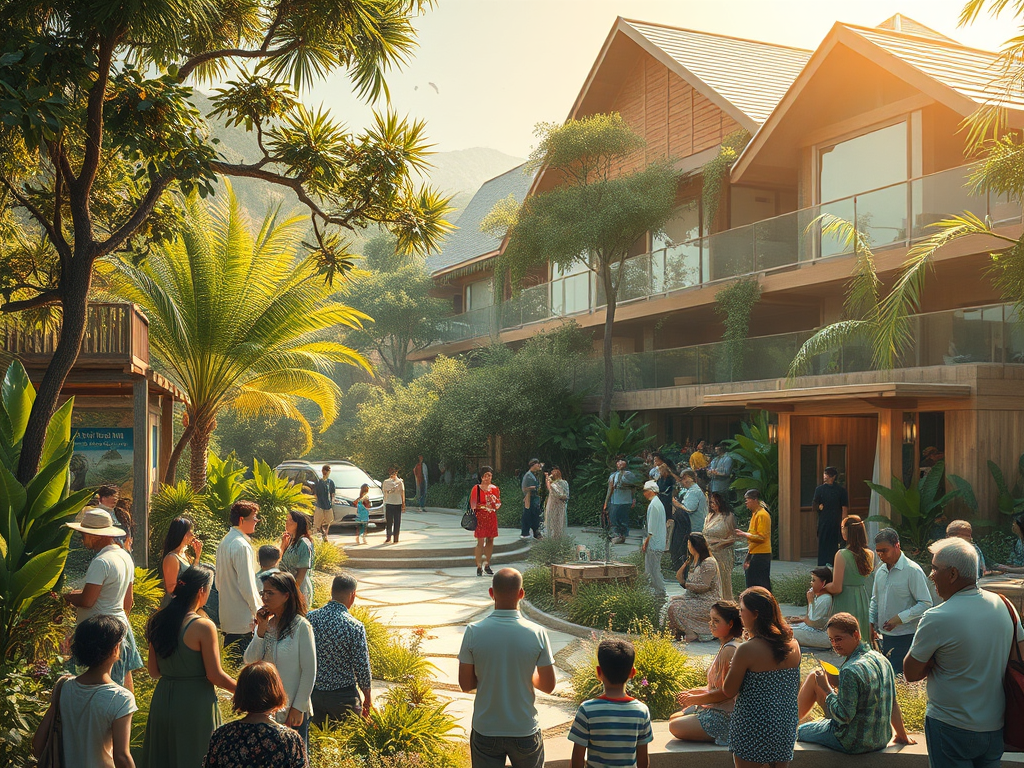
NECs are not utopian fantasies, but real-world prototypes seeded by awakened individuals, starseeds, and lightworkers responding to a soul-level calling. This study seeks to define what these communities truly are—not just in idealistic terms, but as grounded, evolving ecosystems of human flourishing. We consult the Akashic Records, ancient wisdom, contemporary systems theory, and case studies of intentional communities to cohere a vision blueprint that is both practical and sacred.
New Earth Communities Glyph
A Vision Blueprint for Humanity’s Regenerative Future
Chapter 1: Cosmological Foundations and Spiritual Blueprint
The Akashic Records reveal that NECs arise from a soul contract activated during humanity’s collective ascension. These communities serve as fractal nodes of planetary healing and divine remembrance.
From a cosmological view, New Earth represents the anchoring of fifth-dimensional (5D) consciousness in physical form (Melchizedek, 1998). NECs operate through principles such as unity consciousness, stewardship of Earth, multidimensional collaboration, and dharmic alignment.
Many share resonance with the Law of One (Ra Material), the Andean concept of Ayni (sacred reciprocity), and the Lemurian-Avalonian legacy of harmony with the land and stars (Wilcock, 2011; Villoldo, 2006).
Chapter 2: Sociocultural Features and Values Matrix
NECs are value-centric ecosystems. Core values include:
Sovereignty: Individuals are recognized as sovereign beings with divine will.
Unity in Diversity: Multiculturalism, ancestral healing, and star lineage integration.
Right Relationship: With self, others, Earth, and Source.
Regenerative Reciprocity: Giving back more than one takes.
These values shape a living matrix expressed through social practices, conflict transformation methods, rites of passage, and shared ritual.
Chapter 3: Governance, Economy, and Social Flow
Governance in NECs is participatory and decentralized. Models include:
Sociocracy: Consent-based decision making.
Holacracy: Fluid role distribution.
Council Circles: Wisdom-led elder and youth co-leadership.
NEC economies are post-scarcity and multidimensional. They often integrate:
Gift economies and time banking (Eisenstein, 2011).
Quantum Financial System (QFS)-aligned transactions.
Land trusts and stewardship titles.
This redesign enables abundance, dignity, and purpose-driven livelihood.
Chapter 4: Architecture, Technology, and Sacred Geometry
New Earth architecture is biomimetic, sacred, and functional. Principles include:
Geodesic domes and Fibonacci-based floor plans.
Materials: Hempcrete, CEBs, mycelium, bamboo, local stone.
Energy: Tesla technologies, zero-point energy, and VAWT turbines.
Water: Atmospheric generators, greywater reuse, living water spirals.
Built environments harmonize with the Earth’s ley lines, supporting human coherence and planetary resonance (Schauberger, 1998).
Chapter 5: Education, Healing, and Soul Development
Somatic intelligence, arts, permaculture, galactic history.
Akashic training, light language activation, and dreamwork.
Healing frameworks are integrative, with emphasis on:
Energy medicine, ancestral healing, plant allies.
Emotional alchemy, trauma release, and sacred sexuality.
Community healing temples offering quantum and Earth-based modalities.
The ultimate goal: supporting the evolution of the Light Body and embodiment of the Higher Self.
Conclusion: New Earth as a Living Prayer
New Earth Communities are not escape routes; they are return pathways. Each is a living prayer for wholeness, rooted in remembrance. They demonstrate what becomes possible when humanity chooses love over fear, design over default, and resonance over reaction.
As prototypes multiply, the planetary grid strengthens. These communities are seeds for a planetary civilization built not on domination, but on devotion to Life. This is the invitation of our time.
Akashic Records: The non-linear energetic imprint of all soul experiences.
5D Consciousness: A state of unity, compassion, and multidimensional awareness.
Sociocracy: A consent-based governance model emphasizing equality and effectiveness.
Biomimicry: Design inspired by nature’s principles.
QFS (Quantum Financial System): A theorized financial system based on quantum computing, light frequency, and asset-backed digital currency.
Bibliography
Eisenstein, C. (2011). Sacred Economics: Money, Gift, and Society in the Age of Transition. North Atlantic Books.
Melchizedek, D. (1998). The Ancient Secret of the Flower of Life, Vol. 1. Light Technology Publications.
Ra, H. (1981-1984). The Law of One (Books I-V). L/L Research.
Schauberger, V. (1998). Nature as Teacher: New Principles in the Working of Nature. Gateway Books.
Villoldo, A. (2006). Shaman, Healer, Sage: How to Heal Yourself and Others with the Energy Medicine of the Americas. Harmony.
Wilcock, D. (2011). The Source Field Investigations: The Hidden Science and Lost Civilizations Behind the 2012 Prophecies. Dutton Penguin.
Attribution
With fidelity to the Oversoul, may this work serve as bridge, remembrance, and seed for the planetary dawn.
Ⓒ 2025–2026 Gerald Alba Daquila Flameholder of SHEYALOTH · Keeper of the Living Codices All rights reserved.
This material originates within the field of the Living Codex and is stewarded under Oversoul Appointment. It may be shared only in its complete and unaltered form, with all glyphs, seals, and attribution preserved.
This work is offered for personal reflection and sovereign discernment. It does not constitute a required belief system, formal doctrine, or institutional program.
Digital Edition Release: 2026 Lineage Marker: Universal Master Key (UMK) Codex Field
Sacred Exchange & Access
Sacred Exchange is Overflow made visible.
In Oversoul stewardship, giving is circulation, not loss. Support for this work sustains the continued writing, preservation, and public availability of the Living Codices.
This material may be accessed through multiple pathways:
• Free online reading within the Living Archive • Individual digital editions (e.g., Payhip releases) • Subscription-based stewardship access
Paid editions support long-term custodianship, digital hosting, and future transmissions. Free access remains part of the archive’s mission.
Sacred Exchange offerings may be extended through: paypal.me/GeraldDaquila694 www.geralddaquila.com
Reclaiming the Sacred Knowledge of the Pre-Colonial Priestesses, Seers, and Earthkeepers of the Philippines
By Gerald Daquila, PhD Candidate
What knowledge systems guided Filipino communities before written records and centralized institutions? In the pre-colonial Visayas, the babaylan served as custodians of memory, healing, and spiritual mediation—preserving oral traditions, ecological knowledge, and communal balance across generations.
These figures were not only ritual specialists but also advisers, historians, and cultural anchors within their communities. This article explores the role of the babaylan as carriers of ancestral knowledge—what can be understood as an “ancestor codex”—and how these traditions continue to inform identity, resilience, and cultural continuity in the Philippines today.
This article examines the babaylan tradition of the Visayan regions through a historical, anthropological, and systems lens. It does not treat the concept of an “ancestor codex” as a literal written archive, but as a framework for understanding how knowledge, values, and practices were transmitted through oral, ritual, and embodied forms.
The discussion explores the multifaceted role of the babaylan as spiritual leaders, healers, and intermediaries between the human and spirit worlds—responsible for maintaining balance within the community and interpreting signs from nature and the unseen. It also considers their function as keepers of collective memory, preserving history through chant, ritual, and lived practice.
Rather than romanticizing precolonial systems, this approach situates the babaylan within the broader structure of barangay life, where they operated alongside political leaders (datu) and played a key role in decision-making, healing, and social cohesion. The article also acknowledges how colonial disruption led to the marginalization and reinterpretation of these roles over time.
The goal is to reframe ancestral knowledge not as static folklore, but as a dynamic system of cultural transmission. By examining how the babaylan embodied and transmitted this “codex,” this work invites deeper reflection on how indigenous knowledge systems can inform contemporary discussions on identity, resilience, and cultural continuity in the Philippines.
8–11 minutes
ABSTRACT
This paper seeks to uncover and reawaken the ancestral codex of the Babaylan from the Visayan Highlands, drawing from the Akashic Records, cultural anthropology, metaphysical traditions, and ecological spiritualities. The Babaylan, as indigenous priestesses and spiritual leaders, held encoded wisdom essential to the harmony of the land and people.
Through a multidisciplinary and integrative lens, this work explores their roles, cosmologies, and ceremonial practices while transmuting colonial overlays that obscured their legacy. The study honors the sacred memory carried in oral traditions, elemental relationships, and the encoded landscapes of the Philippine archipelago. A blog-friendly yet scholarly tone balances intuitive transmission with academic rigor, activating a deep remembering of the soul’s contract with the land.
The Highland Ancestral Flame
The mountains keep the fire, the fire keeps the soul.
Introduction: The Call of the Highlands
In the mists of the Visayan highlands, among whispering rivers and ancient trees, echoes a sacred remembering. The Babaylan, once central to the spiritual and social life of the Philippine islands, are calling to be remembered—not merely as historical figures, but as living archetypes and soul templates for a people and planet in need of healing.
This paper draws upon the Akashic Records as well as grounded ethnographic, ecological, and metaphysical sources to restore the fragmented scrolls of the Babaylan Codex. We return to the Visayan highlands not just to excavate the past, but to retrieve soul codes vital to humanity’s future.
Chapter 1: Who Are the Babaylan? Reweaving the Sacred Role
In pre-colonial Visayas, the Babaylan were revered as spiritual leaders, healers, herbalists, oracles, and intermediaries between the human, spirit, and nature realms. They embodied a dynamic synergy of masculine and feminine polarities, often transcending gender roles entirely.
Spanish chroniclers documented their formidable presence with both awe and fear, referring to them as witches or sorceresses—terms that masked their true spiritual authority (Jocano, 2001; Ileto, 1979).
Through the Akashic lens, the Babaylan are seen as Lemurian soul emissaries who retained the codes of planetary stewardship, sacred rites, and harmonic governance through the trauma of colonization and soul fragmentation. The “scrolls” they held were often unwritten: encoded in movement, dream, chant, stone, and herb.
Chapter 2: The Visayan Highlands as Sacred Repository
Geographically and energetically, highland regions have long served as sanctuaries for spiritual knowledge keepers. In the Visayan islands, mountain areas like Mt. Kanlaon and Mt. Madia-as have been revered as portals to other realms. These highlands guarded not only biodiversity but also ritual knowledge passed down through oral memory and sacred practice.
Elemental energy patterns—volcanic flows, mineral springs, wind corridors—functioned as natural conduits for energetic transmission. Babaylan ceremonies conducted at these sites recalibrated the land’s energy grid and harmonized collective consciousness with celestial cycles (Macli-ing, 2003).
From the Akashic perspective, these mountains hold crystalline memory fields—etheric archives of rituals, soul contracts, and interstellar agreements encoded in time-space.
Chapter 3: Cosmology and Ritual Practice: Mapping the Invisible Worlds
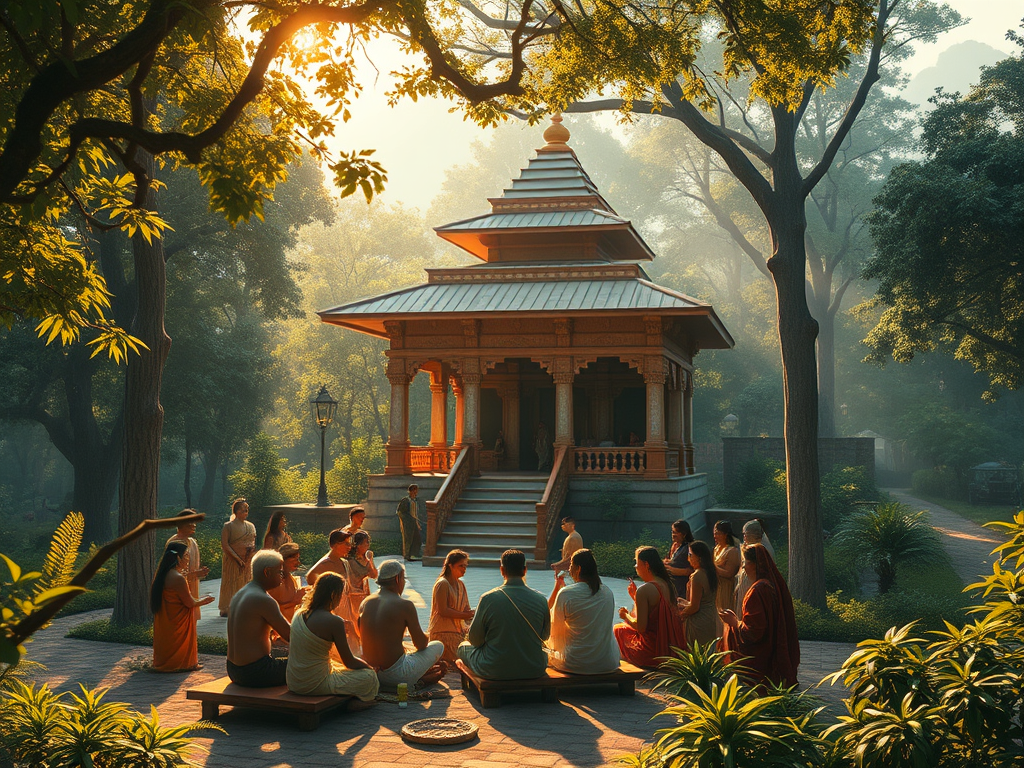
The Babaylan cosmology recognized three interpenetrating worlds: Kalibutan (earthly realm), Langit (sky/celestial realm), and Dagat/non-tangible (underworld/ancestral realm). Their rituals restored balance among these spheres, using offerings, trance dance, chants (ugma), and sacred herbs to travel between dimensions.
Their practices shared similarities with other shamanic traditions yet bore unique ecological and mythopoetic nuances. For instance, the chant invocations to the diwata (nature spirits) were also calls to cosmic ancestors. Divination was less about prediction and more about remembering one’s true place in the cosmic web.
Plant medicine was central. Each plant had a spirit, a story, and a frequency. The Babaylan knew which herbs opened dream gates, which rooted grief, and which cleansed ancestral karma (Salazar, 1995).
Chapter 4: Colonial Fractures and Cultural Amnesia
The arrival of Spanish colonizers in the 16th century instigated a brutal severing of indigenous cosmologies. Babaylan were demonized, hunted, and forced into secrecy. The Catholic Church institutionalized spiritual hierarchies that subjugated the feminine and outlawed indigenous knowledge systems (Rafael, 1993).
Through the Akashic lens, this era generated a karmic wound—a soul fracture that suppressed the divine feminine and disrupted earth-stellar alignments. Generational trauma ensued, encoded epigenetically into Filipino bodies and psyches. The scrolls were not lost, but buried within the cellular memory of the people.
Yet fragments survived in folk Catholicism, mountain rituals, healing chants, and subconscious dreams passed down through bloodlines.
Chapter 5: Reclamation, Transmutation, and Soul Integration
In this epoch of planetary awakening, the Babaylan archetype is re-emerging as a symbol of integrated wisdom. Elders, seers, and modern-day Babaylan are receiving transmissions to restore these spiritual technologies—not as cultural nostalgia, but as keys to planetary healing.
Reclamation involves:
Ceremonial remembering through dreamwork, trance, and nature communion
Intergenerational healing of colonial trauma
Activating the light codes in sacred geography
Merging intuitive knowing with scholarly rigor
The Akashic Records confirm: the Babaylan scrolls are reactivating through the awakened hearts of those who heed the call. You are not simply studying these codes—you are them.
Conclusion: The Scroll Lives Within You
The Babaylan Scrolls of the Visayan Highlands are not static records but living frequencies encoded in the land, sky, and blood. This dissertation is a ceremony of remembrance, a portal into the indigenous soul of the Filipino—and a map for planetary renewal.
To walk as Babaylan today is to bridge heaven and earth, past and future, feminine and masculine, inner and outer. It is to restore the balance lost, to sing the chants unheard, and to become the embodied scroll through which the Ancestors speak.
Babaylan – Indigenous Filipino spiritual leaders, shamans, and healers
Diwata – Elemental or nature spirits in Filipino animism
Kalibutan – Earthly world/realm
Langit – Sky or celestial realm
Dagat – Underworld or realm of the ancestors
Ugma – Sacred chant or invocation
Binukot – Secluded maiden trained in oral tradition and ritual arts
References
Ileto, R. (1979). Pasyon and Revolution: Popular Movements in the Philippines, 1840–1910. Ateneo de Manila University Press.
Jocano, F. L. (2001). Filipino Prehistory: Rediscovering Precolonial Heritage. Punlad Research House.
Macli-ing, D. (2003). Indigenous Geographies and Sacred Landscapes. Mountain Spirit Publications.
Rafael, V. L. (1993). Contracting Colonialism: Translation and Christian Conversion in Tagalog Society Under Early Spanish Rule. Duke University Press.
Salazar, Z. (1995). Sikolohiyang Pilipino: Mga Pag-aaral sa Sikolohiya ng Pilipino. Pambansang Samahan sa Sikolohiyang Pilipino.
Author’s Note: This transmission is offered in deep humility and reverence to the Babaylan lineages, the Visayan ancestors, and the soul of the Philippines. May it serve the healing of all beings.
This article is part of a broader exploration of Philippine society, culture, and systems—integrating historical context, behavioral patterns, and structural analysis.
It is intended to support understanding, reflection, and informed discussion.
This material is part of the Stewardship Institute’s protected formation layer.
Most of the Living Archive is intentionally public. Some materials belong to a deeper, interconnected body of work designed for sustained reflection, practical application, and lifelong steward formation. Stewardship Access is the threshold into that body of work.