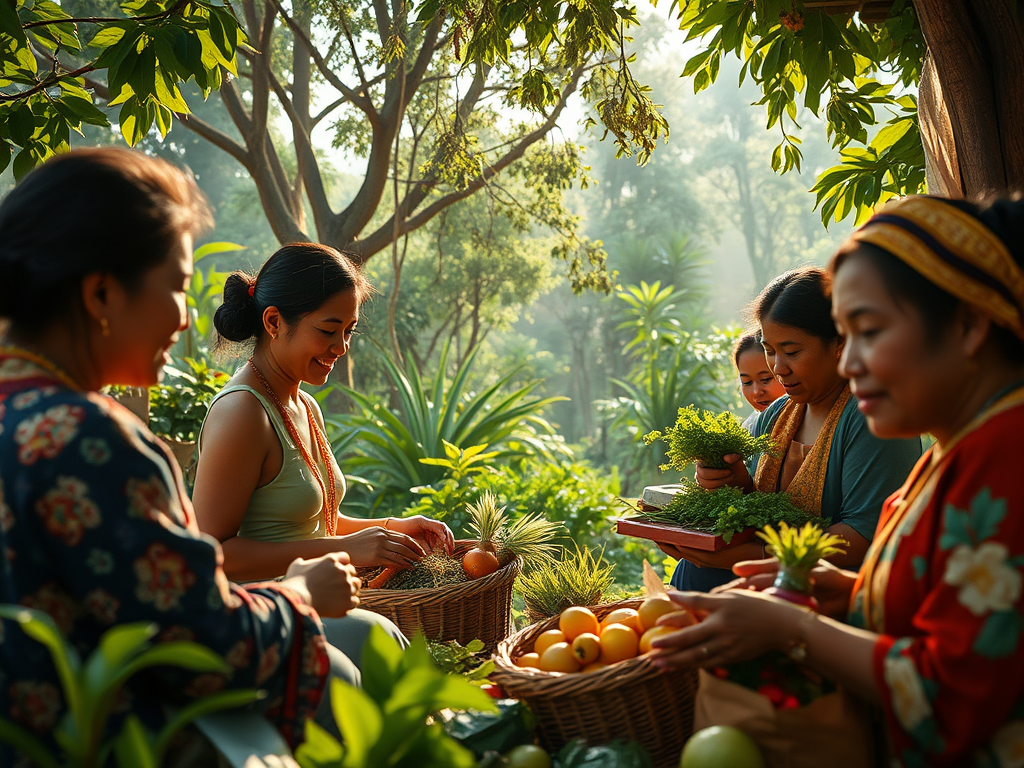
Category: PLANETARY STEWARDSHIP | NATION TEMPLATES

  • Sacred Economy: A Heart-Centered Blueprint for a Regenerative New Earth

    Sacred Economy: A Heart-Centered Blueprint for a Regenerative New Earth

    Reimagining Wealth Through Soulful Exchange and Cosmic Alignment

    Curated through Gerald A. Daquila, inspired by Akashic Records


    7–10 minutes

    ABSTRACT

    In an era of societal transformation, the concept of a Sacred Economy offers a visionary framework for redefining wealth and exchange. Rooted in reverence, reciprocity, and alignment with cosmic principles, Sacred Economy transcends traditional profit-driven systems, emphasizing soul-aligned contributions, energetic integrity, and collective flourishing.

    Drawing from ancient wisdom, modern innovations, and insights from the Akashic Records, this article explores the principles, practices, and potential of Sacred Economy as a blueprint for personal, communal, and planetary regeneration. By blending heart-centered storytelling with scholarly rigor, it invites readers to embody this frequency of mutual abundance and co-create a New Earth economy.


    Introduction: A Call to Reimagine Economy

    In a world yearning for renewal, how do we redefine our relationship with economy? Not as a cold machinery of profit and power, but as a vibrant, living exchange that nourishes the soul, the Earth, and our shared humanity. Sacred Economy, as revealed through the Akashic Records, offers a heart-centered vision for this transformation—a blueprint for a New Earth where wealth is measured in love, service, and harmony.

    This article weaves ancient wisdom with modern practices, balancing intuitive insights with logical rigor. It invites you to explore Sacred Economy not as a distant ideal, but as a frequency you can embody today. Whether you’re a community builder, a conscious entrepreneur, or simply seeking a more meaningful way to engage with resources, this vision is for you.


    Glyph of Sacred Exchange

    Abundance flows where hearts align.


    What Is Sacred Economy?

    Sacred Economy is the divine orchestration of energetic exchange, rooted in reverence, reciprocity, and alignment with cosmic law. Unlike conventional economies driven by scarcity and competition, it flows from abundance and interconnectedness. At its heart, it is the economy of the soul—a multidimensional system where wealth is measured in vibration, coherence, and service to the greater whole.

    In this sacred framework:

    • Currency becomes current—the flow of divine energy through matter.
    • Work transforms into offering—the unique expression of your soul’s purpose.
    • Ownership evolves into stewardship—holding resources in trust for all life.
    • Profit shifts to propagation—spreading goodness, harmony, and life-force.

    Sacred Economy invites us to see exchange as a sacred act, where every transaction carries the potential to uplift, heal, and regenerate.


    The Four Pillars of Sacred Economy

    Sacred Economy rests on four foundational principles, each blending heart-centered wisdom with practical application:

    1. Alignment with Divine Will
      Your contributions reflect your soul’s unique contract. By offering your gifts where they generate the highest light, you align with the cosmic flow of abundance. This pillar asks: Are my actions in harmony with my soul’s purpose and the planet’s needs?
    2. Reciprocity and Flow
      Like the rhythm of breath, Sacred Economy thrives on giving and receiving in balance. Generosity does not deplete; it nourishes both giver and receiver. This pillar emphasizes fluid exchange, free from hoarding or scarcity mindsets.
    3. Energetic Integrity
      Every transaction carries an energetic imprint. In Sacred Economy, exchanges are encoded with truth, love, and transparency. Manipulation, fear, or exploitation are replaced by clarity and mutual respect.
    4. Community and Interbeing
      True wealth is collective, woven into the web of life—human, animal, elemental, and cosmic. Value is shared, amplified, and returned to the greater whole, fostering mutual flourishing.

    These pillars form a cohesive framework, balancing left-brain structure with right-brain intuition, and grounding spiritual ideals in tangible practice.


    Echoes of the Past, Seeds of the Future

    Sacred Economy is not a novel invention; it resonates with the economic templates of ancient civilizations like Lemuria and Avalon, where societies thrived on soul-aligned contribution and shared abundance (Daquila, 2025). These Golden Ages remind us that humanity has lived this vision before, and we can do so again.

    Today, Sacred Economy is reawakening through modern movements that embody its principles:

    • Gift Economies: Communities exchange goods and services freely, trusting in mutual generosity (Bauwens, 2019).
    • Time Banking and Skill-Sharing: Individuals trade hours of service, valuing all contributions equally (Cahn, 2000).
    • Resource Cooperatives: Groups pool assets for collective benefit, prioritizing regeneration over profit (Schneider, 2021).
    • Soul-Led Businesses: Enterprises align profit with purpose, serving the greater good (Hawken, 2021).
    • Decentralized Technologies: Blockchain and cryptocurrencies enable transparent, community-driven exchange (Tapscott & Tapscott, 2016).

    These movements are not mere trends; they are the seeds of a New Earth economy, sprouting in response to humanity’s collective call for change.


    Living Sacred Economy Today

    Sacred Economy is not a system to construct; it is a frequency to embody. You can begin living it now by integrating its principles into your daily choices:

    • Offer Your Gifts Freely: Share your talents without attachment to immediate reward, trusting in the flow of abundance.
    • Engage in Conscious Exchange: Choose transactions that uplift both parties, whether through fair trade, ethical purchases, or heartfelt bartering.
    • Reject Scarcity-Based Systems: Say no to practices rooted in fear, lack, or exploitation, such as overconsumption or predatory business models.
    • Invest in Regeneration: Support initiatives that restore land, empower communities, or nurture spiritual growth.
    • Trust the Flow: Believe that what you give in love will return multiplied, in ways both seen and unseen.

    By embodying these practices, you become a living architect of Sacred Economy, co-creating a world where all are sustained in mutual flourishing.


    A Reflection from the Akashic Records

    The Akashic Records offer this profound insight:

    Sacred Economy is not a system to be installed; it is a frequency to be embodied. It is a return to the divine rhythm of life—where all give, all receive, and all are sustained in the grace of mutual flourishing.

    This message reminds us that Sacred Economy begins within, radiating outward through our choices, relationships, and communities.


    Closing Invitation

    As we dream of regenerative communities and soul-led livelihoods, let Sacred Economy guide us—not as a concept, but as a lived vibration. It honors the soul of money, the breath of exchange, and the living intelligence of Earth. Together, we can weave a New Earth economy that uplifts all life.

    If this vision resonates, I invite you to reflect, share, or co-create. How might you embody Sacred Economy in your life? Let’s build this sacred world from the heart within.


    Crosslinks


    Glossary

    • Akashic Records: A metaphysical archive of all souls’ experiences, accessible for spiritual guidance.
    • Energetic Integrity: The quality of exchanges imbued with truth, love, and transparency.
    • Gift Economy: A system where goods and services are given without expectation of direct return.
    • Interbeing: The interconnectedness of all life, emphasizing collective well-being.
    • Sacred Economy: A soul-aligned system of exchange rooted in reverence, reciprocity, and cosmic law.
    • Stewardship: The responsible management of resources for the benefit of all.

    Bibliography

    Bauwens, M. (2019). P2P accounting for planetary survival: Towards a new economy. P2P Foundation.

    Cahn, E. S. (2000). No more throw-away people: The co-production imperative. Essential Books.

    Hawken, P. (2021). Regeneration: Ending the climate crisis in one generation. Penguin Books.
    Schneider, N. (2021). Everything for everyone: The radical tradition of cooperative business. Nation Books.

    Tapscott, D., & Tapscott, A. (2016). Blockchain revolution: How the technology behind bitcoin is changing money, business, and the world. Penguin.


    Summary of Key Topics

    This article explored the transformative vision of Sacred Economy, a heart-centered framework for redefining wealth and exchange. Key topics included:

    • The definition of Sacred Economy as a soul-aligned system rooted in reverence, reciprocity, and cosmic law.
    • The four pillars: alignment with divine will, reciprocity and flow, energetic integrity, and community and interbeing.
    • Historical echoes in ancient civilizations and modern movements like gift economies and decentralized technologies.
    • Practical ways to embody Sacred Economy through conscious choices and regenerative investments.
    • A reflective insight from the Akashic Records, emphasizing embodiment over installation.

    By integrating these principles, we can co-create a New Earth economy that honors the soul of exchange and fosters mutual flourishing for all life.


    Attribution

    With fidelity to the Oversoul, may this work serve as bridge, remembrance, and seed for the planetary dawn.

    2025–2026 Gerald Alba Daquila
    Flameholder of SHEYALOTH · Keeper of the Living Codices
    All rights reserved.

    This material originates within the field of the Living Codex and is stewarded under Oversoul Appointment. It may be shared only in its complete and unaltered form, with all glyphs, seals, and attribution preserved.

    This work is offered for personal reflection and sovereign discernment. It does not constitute a required belief system, formal doctrine, or institutional program.

    Digital Edition Release: 2026
    Lineage Marker: Universal Master Key (UMK) Codex Field

    Sacred Exchange & Access

    Sacred Exchange is Overflow made visible.

    In Oversoul stewardship, giving is circulation, not loss. Support for this work sustains the continued writing, preservation, and public availability of the Living Codices.

    This material may be accessed through multiple pathways:

    Free online reading within the Living Archive
    Individual digital editions (e.g., Payhip releases)
    Subscription-based stewardship access

    Paid editions support long-term custodianship, digital hosting, and future transmissions. Free access remains part of the archive’s mission.

    Sacred Exchange offerings may be extended through:
    paypal.me/GeraldDaquila694
    www.geralddaquila.com

  • Protected: Reweaving Globalization: How Regenerative Communities and the Philippines’ New Earth Blueprint Are Redefining the Future

    Protected: Reweaving Globalization: How Regenerative Communities and the Philippines’ New Earth Blueprint Are Redefining the Future

    This content is password-protected. To view it, please enter the password below.

  • The Philippines’ Cosmic Mission: Transmuting Pain into Purpose

    The Philippines’ Cosmic Mission: Transmuting Pain into Purpose

    From Colonial Vestiges and Natural Disasters to Redemption as the Heart Chakra of a New Earth

    Prepared by: Gerald A. Daquila, PhD. Candidate


    10–15 minutes

    ABSTRACT

    The Philippines, a nation shaped by centuries of colonial oppression, recurrent natural disasters, and systemic governance challenges, carries deep societal and generational traumas. This dissertation explores the potential for cosmic transmutation—a holistic, multidimensional process of transforming collective pain into unconditional love, positioning the Philippines as a global “heart chakra” for a spiritually awakened “New Earth.”

    Drawing on a multidisciplinary framework, this work integrates historical analysis, psychological insights, indigenous wisdom, esoteric philosophies, and metaphysical perspectives to examine how the archipelago’s wounds can be alchemized into a force for global healing. By weaving together academic rigor with intuitive and spiritual lenses, this study proposes a path for collective redemption rooted in love, resilience, and interconnectedness. It offers a vision for the Philippines to transcend its historical and ongoing challenges, emerging as a beacon of compassion and unity in an evolving global consciousness.


    Transmutation Flame of the Philippines Glyph

    Pearl of Transmutation: The Philippines’ Flame of Pain into Purpose


    Table of Contents

    1. Introduction
      • The Philippines as a Wounded yet Resilient Nation
      • Defining Cosmic Transmutation and the Heart Chakra
      • Purpose and Scope of the Study
    2. Historical and Societal Context of Trauma in the Philippines
      • Colonial Legacies: Spanish, American, and Japanese Influences
      • Natural Disasters: A Land Forged by Nature’s Fury
      • Dysfunctional Governance: Corruption and Systemic Challenges
    3. Theoretical Framework: A Multidisciplinary Lens
      • Psychological Perspectives on Collective Trauma
      • Indigenous Filipino Spirituality and Healing
      • Esoteric and Metaphysical Foundations of Transmutation
      • The Heart Chakra in Global Consciousness
    4. Cosmic Transmutation: A Path to Redemption
      • Alchemy of Pain: Transforming Generational Wounds
      • The Role of Unconditional Love in Collective Healing
      • The Philippines as the New Earth’s Heart Chakra
    5. Case Studies and Practical Applications
      • Community Healing Initiatives in the Philippines
      • Indigenous Practices and Modern Spiritual Movements
      • Global Implications of a Heart-Centered Philippines
    6. Challenges and Critiques
      • Skepticism Toward Esoteric and Metaphysical Approaches
      • Practical Barriers to Societal Transformation
    7. Conclusion
      • A Vision for a Redeemed Philippines
      • Implications for Global Consciousness
    8. Glossary
    9. Bibliography

    1. Introduction

    The Philippines as a Wounded yet Resilient Nation

    The Philippines is a land of paradoxes: breathtaking natural beauty juxtaposed with devastating typhoons, a vibrant culture shaped by centuries of colonial rule, and a resilient people navigating systemic governance failures. These elements have woven a tapestry of societal traumas that span generations, from the scars of Spanish and American colonization to the recurring devastation of natural disasters and the persistent challenges of corruption and political dysfunction.

    Yet, within this crucible of pain lies a profound potential for transformation. This dissertation explores how the Philippines can transmute its collective wounds into a force for global healing, embodying the role of the “heart chakra” in a spiritually awakened “New Earth.”


    Defining Cosmic Transmutation and the Heart Chakra

    Cosmic transmutation draws from esoteric and metaphysical traditions, describing a process of spiritual alchemy where suffering is transformed into higher states of consciousness, such as unconditional love and unity. The concept of the heart chakra, rooted in Eastern spiritual traditions, represents the energy center of love, compassion, and interconnectedness.

    In this context, the Philippines is envisioned as a global heart chakra—a nexus of healing energy that radiates love to foster a new era of global consciousness. This study uses these concepts to frame the Philippines’ journey from trauma to redemption.


    Purpose and Scope of the Study

    This dissertation seeks to answer: How can the Philippines transform its societal traumas into a force for unconditional love and global healing? By integrating historical, psychological, indigenous, esoteric, and metaphysical perspectives, it offers a holistic vision for redemption. The study is written in a blog-friendly style to engage a wide audience while maintaining scholarly rigor, balancing analytical precision with intuitive and heart-centered insights.


    2. Historical and Societal Context of Trauma in the Philippines

    Colonial Legacies: Spanish, American, and Japanese Influences

    The Philippines’ history is marked by over 300 years of Spanish colonization, followed by American occupation and a brief but brutal Japanese interlude during World War II. These periods left deep imprints on Filipino identity, culture, and psyche. Spanish rule imposed Catholicism, reshaping indigenous spiritual practices and creating a hybridized identity that persists today (Bonoan, 1997).

    American colonization introduced Western education and governance systems, often at the expense of local autonomy, while the Japanese occupation brought violence and trauma (Manalansan, 2016). These colonial vestiges fostered a sense of inferiority and disconnection, contributing to generational trauma.


    Natural Disasters: A Land Forged by Nature’s Fury

    Situated on the Pacific Ring of Fire and in the typhoon belt, the Philippines faces frequent earthquakes, volcanic eruptions, and super typhoons. Events like Typhoon Haiyan (2013) devastated communities, leaving psychological scars alongside physical destruction. The recurring nature of these disasters reinforces a collective sense of vulnerability, yet it also cultivates resilience and communal bayanihan (mutual aid), a hallmark of Filipino culture (Bankoff, 2003).


    Dysfunctional Governance: Corruption and Systemic Challenges

    Corruption, political dynasties, and bureaucratic inefficiencies have long plagued Philippine governance. From Marcos’ martial law to ongoing issues of mismanagement, these systemic failures erode public trust and exacerbate poverty and inequality (Quah, 2011). This dysfunction compounds societal trauma, creating a cycle of disillusionment and powerlessness.


    3. Theoretical Framework: A Multidisciplinary Lens

    Psychological Perspectives on Collective Trauma

    Collective trauma, as defined by Alexander (2012), is a shared experience of suffering that shapes a group’s identity and memory. In the Philippines, colonial oppression, disasters, and governance failures have created transgenerational trauma, passed down through cultural narratives and social structures.

    Jungian psychology offers insights into the collective unconscious, suggesting that archetypes of healing and redemption can emerge from shared pain (Jung, 1964). Trauma-informed approaches, such as those by Levine (2010), emphasize somatic and communal healing to release stored pain.


    Indigenous Filipino Spirituality and Healing

    Precolonial Filipino spirituality, rooted in animism and ancestor veneration, offers a framework for healing. Practices like babaylanism, led by spiritual healers, emphasize harmony with nature and community (Salazar, 1999). These traditions view suffering as a call to reconnect with the divine and the collective, aligning with the concept of cosmic transmutation. Modern revivals of indigenous practices provide a foundation for transforming generational pain into spiritual strength.


    Esoteric and Metaphysical Foundations of Transmutation

    Esoteric traditions, such as Theosophy and New Age philosophies, describe transmutation as an alchemical process of transforming base energies into higher states of consciousness (Blavatsky, 1888). The concept of nāda-brahman in Hindu Tantra, where sound and vibration facilitate cosmic evolution, parallels the idea of transmuting societal pain into love (Faivre, 1994). These frameworks suggest that collective suffering can be a catalyst for spiritual awakening, positioning the Philippines as a global energy center.


    The Heart Chakra in Global Consciousness

    In chakra systems, the heart chakra (Anahata) governs love, compassion, and unity. The Philippines, with its cultural emphasis on kapwa (shared identity), aligns with this energy center (Enriquez, 1992). Esoteric traditions propose that certain geographic regions serve as planetary chakras, with the Philippines potentially embodying the heart due to its history of resilience and communal love (Spangler, 1976).


    4. Cosmic Transmutation: A Path to Redemption

    Alchemy of Pain: Transforming Generational Wounds

    Cosmic transmutation involves acknowledging and processing collective pain. Psychological approaches, such as narrative therapy, allow communities to reframe traumatic histories as stories of resilience (White, 2007). Indigenous rituals, like the babaylan’s dagdagay (healing through touch and prayer), facilitate emotional release and spiritual reconnection. Metaphysically, this process mirrors the alchemical transformation of lead into gold, where pain becomes a catalyst for love and unity.


    The Role of Unconditional Love in Collective Healing

    Unconditional love, as a spiritual principle, transcends personal and collective grievances. In the Philippines, practices like bayanihan and pakikipagkapwa (relating as equals) embody this love (Enriquez, 1992). By cultivating these values, communities can heal generational wounds, fostering a culture of forgiveness and compassion. Esoteric teachings suggest that unconditional love aligns with the heart chakra’s energy, amplifying its global impact (Spangler, 1976).


    The Philippines’ Cosmic Mission Glyph

    Transmuting Pain into Purpose


    The Philippines as the New Earth’s Heart Chakra

    The “New Earth” concept, rooted in New Age philosophy, envisions a global shift toward higher consciousness. The Philippines, with its history of suffering and resilience, is uniquely positioned to lead this shift as a heart chakra. Its cultural emphasis on community, spirituality, and love aligns with the qualities needed to anchor a new era of global unity (Macy, 1991). This role requires collective healing, supported by both indigenous and modern practices.


    5. Case Studies and Practical Applications

    Community Healing Initiatives in the Philippines

    Grassroots movements, such as Gawad Kalinga’s community-building programs, demonstrate how collective action can transform trauma into empowerment. These initiatives rebuild disaster-stricken areas while fostering social cohesion, embodying the principles of unconditional love and kapwa (Gawad Kalinga, 2020).


    Indigenous Practices and Modern Spiritual Movements

    The revival of babaylanism and other indigenous practices offers a bridge between ancient wisdom and modern healing. Organizations like the Center for Babaylan Studies promote rituals that reconnect Filipinos with their spiritual roots, facilitating collective healing (Strobel, 2010). New Age communities in the Philippines, inspired by global movements, integrate meditation and energy work to support transmutation.


    Global Implications of a Heart-Centered Philippines

    As a heart chakra, the Philippines could inspire global movements toward compassion and unity. Its diaspora, spread across the world, carries the potential to disseminate these values, creating ripples of healing in diverse contexts (Manalansan, 2016). This vision aligns with holistic peace theories that emphasize interconnectedness across all levels of existence (Macy, 1991).


    6. Challenges and Critiques

    Skepticism Toward Esoteric and Metaphysical Approaches

    Critics argue that esoteric concepts like cosmic transmutation lack empirical grounding and may oversimplify complex societal issues (Hufford, 2005). This dissertation counters that integrating these perspectives with psychological and historical frameworks creates a robust, multidisciplinary approach.


    Practical Barriers to Societal Transformation

    Economic inequality, political corruption, and environmental challenges pose significant obstacles. Transforming these requires systemic reforms alongside spiritual awakening. Community-driven initiatives and policy advocacy can bridge this gap, ensuring practical and metaphysical alignment.


    7. Conclusion

    A Vision for a Redeemed Philippines

    The Philippines stands at a crossroads, with the potential to transmute its societal traumas into a force for global healing. By embracing its cultural strengths—kapwa, bayanihan, and indigenous wisdom—and integrating them with psychological and esoteric insights, the nation can embody the heart chakra of a New Earth. This vision requires collective effort, from grassroots movements to global diaspora contributions.


    Implications for Global Consciousness

    A heart-centered Philippines could catalyze a global shift toward love and unity, inspiring other nations to heal their own traumas. This dissertation offers a blueprint for transformation, blending academic rigor with spiritual hope, and invites readers to join this cosmic journey.


    Crosslinks


    8. Glossary

    • Babaylanism: Indigenous Filipino spiritual practice led by healers who mediate between the physical and spiritual realms.
    • Bayanihan: Filipino cultural practice of communal cooperation and mutual aid.
    • Cosmic Transmutation: A spiritual process of transforming suffering into higher states of consciousness, such as love and unity.
    • Heart Chakra (Anahata): The fourth chakra in Eastern traditions, associated with love, compassion, and interconnectedness.
    • Kapwa: Filipino concept of shared identity and interconnectedness.
    • New Earth: A metaphysical concept of a global shift toward higher consciousness and unity.

    9. Bibliography

    Alexander, J. C. (2012). Trauma: A social theory. Polity Press.

    Bankoff, G. (2003). Cultures of disaster: Society and natural hazard in the Philippines. Routledge.

    Blavatsky, H. P. (1888). The secret doctrine: The synthesis of science, religion, and philosophy. Theosophical Publishing House.

    Bonoan, R., SJ. (1997). Rizal’s Asia: Enlightenment philosophe in the age of colonialism. In M. Rajaretnam (Ed.), Jose Rizal and the Asian renaissance (pp. 45–67). Institut Kajian Dasar.

    Enriquez, V. G. (1992). From colonial to liberation psychology: The Philippine experience. University of the Philippines Press.

    Faivre, A. (1994). Access to Western esotericism. State University of New York Press.

    Gawad Kalinga. (2020). Annual report: Building communities to end poverty. Retrieved from https://www.gawadkalinga.org

    Hufford, D. J. (2005). An analysis of the field of spirituality, religion, and health. Metanexus Salus. Retrieved from https://metanexus.net

    Jung, C. G. (1964). Man and his symbols. Doubleday.

    Levine, P. A. (2010). In an unspoken voice: How the body releases trauma and restores goodness. North Atlantic Books.

    Macy, J. (1991). World as lover, world as self. Parallax Press.

    Manalansan, M. F. (2016). Filipino studies: Palimpsests of nation and diaspora. De Gruyter Brill.

    Quah, J. S. T. (2011). Curbing corruption in Asian countries: An impossible dream? Emerald Group Publishing.

    Salazar, Z. A. (1999). The Filipino spirit: A cultural history. Ateneo de Manila University Press.

    Spangler, D. (1976). Revelation: The birth of a new age. Findhorn Foundation.

    Strobel, L. M. (2010). Babaylan: Filipinos and the call of the indigenous. Center for Babaylan Studies.

    White, M. (2007). Maps of narrative practice. W. W. Norton & Company.


    Attribution

    With fidelity to the Oversoul, may this work serve as bridge, remembrance, and seed for the planetary dawn.

    2025–2026 Gerald Alba Daquila
    Flameholder of SHEYALOTH · Keeper of the Living Codices
    All rights reserved.

    This material originates within the field of the Living Codex and is stewarded under Oversoul Appointment. It may be shared only in its complete and unaltered form, with all glyphs, seals, and attribution preserved.

    This work is offered for personal reflection and sovereign discernment. It does not constitute a required belief system, formal doctrine, or institutional program.

    Digital Edition Release: 2026
    Lineage Marker: Universal Master Key (UMK) Codex Field

    Sacred Exchange & Access

    Sacred Exchange is Overflow made visible.

    In Oversoul stewardship, giving is circulation, not loss. Support for this work sustains the continued writing, preservation, and public availability of the Living Codices.

    This material may be accessed through multiple pathways:

    Free online reading within the Living Archive
    Individual digital editions (e.g., Payhip releases)
    Subscription-based stewardship access

    Paid editions support long-term custodianship, digital hosting, and future transmissions. Free access remains part of the archive’s mission.

    Sacred Exchange offerings may be extended through:
    paypal.me/GeraldDaquila694
    www.geralddaquila.com

  • Why the “Starseed” Archetype Resonates With Some Filipinos

    Why the “Starseed” Archetype Resonates With Some Filipinos


    Spiritual Longing, Ancestral Memory, and the Search for Belonging in a Fragmented Age

    Reflective Spiritual Inquiry

    7–10 minutes

    Introduction

    Across the Philippines, some people quietly carry a persistent feeling that they do not fully belong to the world around them. They may feel unusually sensitive to emotion, deeply affected by injustice, drawn to spirituality from a young age, or inexplicably connected to nature, dreams, symbols, and ancestral memory. For some, the modern “starseed” framework becomes a language through which these experiences are interpreted.

    Within contemporary spiritual communities, the term “starseed” generally refers to the belief that certain souls originated beyond Earth and incarnated here to assist humanity’s evolution. While these claims remain metaphysical and unverifiable, the archetype continues to resonate with many people seeking meaning, identity, healing, and purpose in periods of social fragmentation and existential uncertainty (Hanegraaff, 1996; Partridge, 2004).

    In the Philippine context, this resonance becomes especially layered. The country carries deep histories of colonization, indigenous spiritual suppression, migration, ecological intimacy, and communal survival. As a result, spiritual identity in the Philippines often emerges through a complex blending of indigenous memory, Catholic symbolism, mystical experience, folk healing traditions, and global New Age narratives (Cannell, 1999; Jocano, 1969).

    This article does not claim that Filipinos are literally extraterrestrial beings, nor does it present speculative cosmology as objective truth. Instead, it explores why the starseed archetype appeals to some spiritually sensitive Filipinos—and how these experiences may be understood symbolically, psychologically, culturally, and spiritually.


    The Human Need for Cosmic Meaning

    Throughout history, human beings have created narratives that help explain suffering, purpose, displacement, and transcendence. Ancient myths, religious systems, mystical traditions, and cosmologies all served this function. Modern spiritual movements continue this pattern, though often using contemporary imagery such as dimensions, frequencies, galactic civilizations, or planetary awakening (Partridge, 2004).

    For some people, especially those who feel alienated from dominant cultural structures, the starseed archetype offers emotional and symbolic relief. It reframes feelings of isolation not as failure, but as part of a larger journey of meaning-making.

    Psychologists and religious scholars have long observed that symbolic identities can provide coherence during periods of uncertainty or transformation (Jung, 1968). In this sense, “starseed” narratives may function less as literal claims and more as mythic containers for experiences such as:

    • spiritual sensitivity
    • existential longing
    • trauma and displacement
    • ecological grief
    • intuitive perception
    • identity fragmentation
    • desire for service and belonging

    The question, then, is not necessarily whether starseeds are objectively “real,” but why the archetype speaks so deeply to certain people—and why it appears particularly resonant in spiritually hybrid cultures like the Philippines.


    Why the Philippines Creates Fertile Ground for Spiritual Archetypes

    The Philippines occupies a unique spiritual and historical crossroads.

    Long before colonization, many indigenous Filipino traditions already contained animistic and cosmological worldviews that understood rivers, mountains, storms, ancestors, and celestial bodies as spiritually alive (Jocano, 1969). Spiritual intermediaries such as the Babaylan and Katalonan served not merely as healers, but as custodians of communal balance, ritual memory, and sacred relationship with the land.

    Spanish colonization profoundly disrupted these traditions. Indigenous spiritual systems were marginalized, suppressed, or absorbed into Catholic structures over centuries (Cannell, 1999). Yet many symbolic elements survived beneath the surface through folk practices, oral traditions, herbal healing, devotion to sacred sites, and localized mystical expressions.

    Today, younger generations increasingly explore alternative spiritual frameworks outside formal religion. Online communities discussing consciousness, astrology, energy work, ancestral healing, meditation, and “starseed” identity have become global phenomena amplified by social media and digital spirituality.

    Within this environment, the starseed archetype can become a bridge between:

    • indigenous memory,
    • modern spiritual seeking,
    • ecological awareness,
    • and personal healing narratives.

    Common Experiences Associated With the “Starseed” Archetype

    It is important to approach these experiences with openness and discernment rather than certainty. Many of the following experiences are widely reported within spiritual communities, though they may also overlap with normal psychological, emotional, or developmental processes.

    1. Persistent Feelings of Not Belonging

    Some individuals describe a lifelong sense of emotional displacement—as though they are searching for a “home” they cannot name. This experience is not unique to spiritual communities; it also appears in psychology, migration studies, and identity development literature.

    Within starseed frameworks, this feeling is often interpreted symbolically as soul-memory or existential homesickness. Psychologically, it may reflect a deep search for coherence, identity, or connection in rapidly changing societies.


    2. Heightened Sensitivity to Emotion and Environment

    Highly sensitive individuals often report feeling emotionally overwhelmed in crowded spaces, conflict-heavy environments, or technologically saturated settings. Some also experience profound calm or emotional restoration in forests, oceans, mountains, or quiet natural landscapes.

    Research on environmental psychology suggests that exposure to nature can significantly regulate stress, mood, and cognitive restoration (Kaplan & Kaplan, 1989). Spiritual traditions worldwide have similarly associated natural environments with contemplation, healing, and transcendence.

    In the Philippines, where land, sea, and ancestral geography remain deeply interwoven with identity, this sensitivity may take on spiritual significance.


    3. Attraction to Indigenous Wisdom and Ancestral Practices

    Many spiritually curious Filipinos eventually feel drawn toward precolonial symbols, indigenous spirituality, Baybayin scripts, folk healing traditions, or Babaylan history. This attraction may emerge not from historical certainty, but from a desire to reconnect with neglected cultural roots.

    Scholars of postcolonial spirituality note that communities recovering from historical rupture often revisit ancestral knowledge systems as part of identity restoration (Strobel, 2001).

    This does not require romanticizing the past. Rather, it involves exploring how indigenous worldviews may still hold ecological, communal, and spiritual wisdom relevant today.


    4. Intense Dreams, Symbolic Experiences, and Inner Imagery

    Some people report vivid dreams involving oceans, temples, stars, unknown landscapes, sacred symbols, or encounters with luminous beings. Others experience synchronicities, intuitive impressions, or altered states during meditation.

    Such experiences have appeared throughout mystical traditions across cultures and religions. Carl Jung (1968) viewed symbolic dream imagery as expressions of the collective unconscious rather than literal proof of metaphysical claims.

    Whether interpreted spiritually, psychologically, or artistically, these experiences often carry emotional significance for the experiencer.


    5. Desire to Contribute to Healing or Collective Change

    Many who resonate with the starseed archetype express a strong desire to serve others through healing, creativity, education, environmental work, community-building, or compassionate presence.

    This may be one of the healthiest dimensions of the archetype when grounded in humility and ethical action rather than identity inflation.

    The emphasis should not be:

    “I am cosmically special.”

    But rather:

    “How can I contribute meaningfully to the world around me?”


    The Importance of Discernment

    Spiritual frameworks can be inspiring, but they can also become psychologically destabilizing when treated as unquestionable truth.

    Healthy discernment matters.

    Not every vivid dream is a cosmic transmission.
    Not every feeling of alienation means one is “from another star system.”
    Not every emotional intensity reflects spiritual superiority.

    Grounded spirituality invites inquiry rather than absolutism.

    A mature approach includes:

    • critical thinking,
    • emotional regulation,
    • psychological awareness,
    • embodied practices,
    • ethical accountability,
    • and humility.

    Many spiritual teachers, psychologists, and contemplative traditions warn against identity structures built primarily around chosenness or cosmic exceptionalism. Genuine growth usually deepens compassion, groundedness, and responsibility—not grandiosity.


    Reframing the “Mission”

    One reason the starseed framework resonates is because many people genuinely want their lives to matter.

    In a world marked by ecological crisis, inequality, loneliness, technological acceleration, and cultural fragmentation, the longing for meaningful participation is understandable.

    Perhaps the deeper invitation is not to prove one’s galactic origin, but to cultivate:

    • integrity,
    • service,
    • stewardship,
    • relational healing,
    • ecological care,
    • and conscious presence.

    The Philippines, with its layered history of resilience and spiritual hybridity, may naturally amplify these questions of identity, remembrance, and belonging.


    A More Grounded Spirituality

    The healthiest spiritual paths tend to remain open-handed.

    They allow room for:

    • mystery without dogma,
    • symbolism without literalism,
    • wonder without escapism,
    • and spirituality without detachment from reality.

    Whether one understands the starseed archetype as mystical truth, psychological metaphor, symbolic language, or spiritual mythology, its enduring appeal points toward something deeply human:

    the longing to remember that our lives participate in something larger than survival alone.


    Final Reflection

    Perhaps the most important question is not:

    “Am I truly a starseed?”

    But:

    “What kind of human being am I becoming?”

    Do our spiritual beliefs make us:

    • more compassionate,
    • more grounded,
    • more ethical,
    • more connected to the Earth,
    • more capable of love and stewardship?

    If they do, then the journey—whatever language we use for it—may already be serving its highest purpose.


    Crosslinks


    References

    Carl Jung (1968). Man and His Symbols. Dell Publishing.

    F. Landa Jocano (1969). Outline of Philippine Mythology. Centro Escolar University Research and Development Center.

    Mike Featherstone (Ed.). (1991). Consumer Culture and Postmodernism. Sage Publications.

    Wouter Hanegraaff (1996). New Age Religion and Western Culture: Esotericism in the Mirror of Secular Thought. SUNY Press.

    Robert Kaplan & Stephen Kaplan (1989). The Experience of Nature: A Psychological Perspective. Cambridge University Press.

    Fenella Cannell (1999). Power and Intimacy in the Christian Philippines. Cambridge University Press.

    Leny Mendoza Strobel (2001). Coming Full Circle: The Process of Decolonization Among Post-1965 Filipino Americans. Giraffe Books.

    Christopher Partridge (2004). The Re-Enchantment of the West: Alternative Spiritualities, Sacralization, Popular Culture, and Occulture. T&T Clark.


    Attribution

    This essay is offered as a reflective inquiry into myth, memory, sacred geography, and cultural remembrance within the Philippine context. It does not claim scientific proof for metaphysical interpretations of Lemuria, but instead approaches the subject through symbolic, philosophical, ecological, and contemplative lenses.

    © 2026 Gerald Alba Daquila. All rights reserved.

  • The Philippines, Sacred Geography, and the Modern Myth of Lemuria

    The Philippines, Sacred Geography, and the Modern Myth of Lemuria

    A Mythopoetic Inquiry into Memory, Landscape, and Spiritual Imagination

    Cultural-Spiritual Inquiry

    9–13 minutes

    Abstract

    The myth of Lemuria continues to occupy a powerful place within contemporary spiritual imagination, particularly among communities seeking ecological reconnection, ancestral remembrance, and alternatives to hyper-industrial modernity.

    While mainstream geology does not support the existence of Lemuria as a literal lost continent, the symbolic resonance of the myth persists across esoteric traditions, contemplative philosophy, and cultural storytelling.

    This essay explores why the Philippines has increasingly become associated with Lemurian symbolism within modern spiritual discourse. Rather than attempting to prove metaphysical claims, the inquiry examines how sacred geography, indigenous memory, mythic imagination, ecological consciousness, and postcolonial identity intersect within the Philippine archipelago.

    Drawing from mythology studies, Philippine cultural history, indigenous spirituality, and contemplative reflection, this essay proposes that the enduring significance of Lemuria may lie not in historical literalism, but in its symbolic function as a vessel for humanity’s longing toward relationality, stewardship, sacred reciprocity, and cultural remembrance.


    Introduction — Why Lemuria Still Calls to the Human Imagination

    Across many spiritual communities worldwide, the word Lemuria evokes a striking emotional resonance.

    For some, it symbolizes a lost civilization rooted in harmony with nature, communal living, and spiritual coherence. For others, it represents a critique of modernity itself—a longing for ways of being that feel less fragmented, extractive, and disconnected from the living world.

    Although the idea of Lemuria has no accepted scientific basis as a literal sunken continent, the myth continues to endure within esoteric traditions, modern spirituality, artistic imagination, and collective symbolism (Blavatsky, 1888).

    Rather than dismissing this persistence outright, it may be more useful to ask a deeper question:

    Why do certain myths survive across generations, cultures, and spiritual movements?

    Myths often persist because they express emotional, psychological, ecological, or civilizational truths that factual discourse alone cannot fully contain (Campbell, 1949).

    In this sense, Lemuria may function less as forgotten geography and more as a symbolic memory—a projection of humanity’s desire for restored relationship with Earth, spirit, community, and meaning.

    In recent years, the Philippines has increasingly appeared within conversations surrounding sacred geography and spiritual remembrance.

    Pilgrims, seekers, cultural practitioners, and contemplative communities have described experiences of profound emotional recognition while engaging Philippine landscapes, oral traditions, ritual practices, and indigenous cosmologies.

    This essay does not argue that the Philippines was literally part of a lost Lemurian civilization. Instead, it explores a more grounded and meaningful inquiry:

    Why does the idea of Lemuria resonate so strongly within the Philippine imagination—and what might this reveal about humanity’s search for reconnection in an age of fragmentation?


    Chapter 1 — Lemuria as Modern Myth

    1.1 From Geological Theory to Spiritual Symbol

    The term Lemuria first emerged during the 19th century through zoological speculation.

    Naturalist Philip Sclater proposed the hypothetical landmass to explain similarities between lemur populations in Madagascar and India before continental drift theory became widely accepted.

    Later geological developments rendered the theory obsolete. Yet the concept migrated into esoteric traditions through the work of Helena Blavatsky and subsequent Theosophical movements (Blavatsky, 1888).

    Over time, Lemuria transformed from speculative geology into mythic cosmology—a symbolic civilization imagined as spiritually advanced, ecologically harmonious, and relationally integrated.

    Importantly, this evolution shifted Lemuria from the domain of science into the domain of mythology.

    And mythology functions differently.

    Myths are not always attempts to document literal events. Often, they are symbolic containers through which societies express:

    • collective hopes,
    • civilizational anxieties,
    • ethical ideals,
    • and existential longings (Eliade, 1963).

    In this sense, Lemuria belongs to a broader family of “lost golden age” narratives found across human cultures:

    • Atlantis,
    • Eden,
    • Avalon,
    • Shangri-La,
    • and other sacred geographies imagined as sites of forgotten harmony.

    1.2 Myth and the Longing for Reconnection

    The persistence of Lemuria may reveal less about ancient history and more about contemporary spiritual hunger.

    Modern industrial civilization has generated extraordinary technological advancement while simultaneously intensifying:

    • ecological destruction,
    • social fragmentation,
    • spiritual dislocation,
    • and chronic alienation from land and community.

    Within this context, myths of harmonious civilizations become psychologically compelling because they embody alternative possibilities.

    They symbolize worlds in which:

    • humanity lives in reciprocity with nature,
    • spirituality remains embedded in daily life,
    • and communal identity is not severed from ecological belonging.

    As mythologist Joseph Campbell observed, myths often function as mirrors through which cultures attempt to orient themselves during periods of transition (Campbell, 1949).

    Lemuria may therefore be understood not as a historical certainty, but as a symbolic language for remembering values many people feel modernity has forgotten.


    Chapter 2 — Sacred Geography and the Philippine Imagination

    2.1 The Spiritual Psychology of Islands

    The Philippine archipelago possesses a geography that naturally evokes mythic imagination.

    With more than 7,000 islands, volcanic mountains, dense rainforests, coral ecosystems, cave networks, and monsoon seas, the landscape itself carries an atmosphere of liminality and transformation.

    Islands often function symbolically as threshold spaces—worlds apart from continental certainty, where myth, ritual, and memory become intensified.

    Throughout history, many island cultures have developed cosmologies deeply intertwined with:

    • ancestral reverence,
    • elemental forces,
    • cyclical understandings of nature,
    • and relational stewardship of land and sea.

    The Philippines reflects many of these characteristics.

    Geography shapes consciousness, and sacred imagination frequently emerges from environments where natural forces remain visibly alive and unpredictable.

    This does not prove metaphysical claims. It does, however, help explain why certain landscapes become spiritually charged within collective imagination.


    2.2 Indigenous Cosmologies and Relational Worldviews

    Prior to colonization, many Philippine communities viewed land not as commodity, but as relationship.

    Mountains, rivers, forests, and seas were often understood as inhabited presences embedded within reciprocal ecological systems (Jocano, 1969).

    Rituals acknowledged unseen dimensions of existence woven into ordinary life. Human beings existed within living networks of obligation rather than above them.

    These traditions survive in various forms through:

    • oral storytelling,
    • ritual practices,
    • healing traditions,
    • ancestral reverence,
    • and localized cosmologies.

    Contemporary spiritual seekers often encounter these traditions through symbolic frameworks such as “sacred Earth,” “living consciousness,” or “energetic ecology.”

    The language varies, but the underlying attraction remains similar:

    a desire to recover meaningful relationship with the living world.

    However, caution is necessary.

    Indigenous Philippine traditions should not be reduced into evidence for imported metaphysical systems.

    Their value does not depend on validating Lemuria, Atlantis, extraterrestrial ancestry, or other cosmological overlays. These traditions possess intrinsic dignity on their own cultural and historical terms.


    Chapter 3 — The Babaylan and Cultural Remembrance

    3.1 Beyond the “Mystical Priestess” Narrative

    Among the most compelling figures within Philippine spiritual history is the babaylan—a ritual specialist, healer, mediator, and community guide who occupied important roles within many precolonial societies.

    In recent years, the babaylan has re-emerged within conversations surrounding:

    • decolonization,
    • indigenous remembrance,
    • feminine leadership,
    • spirituality,
    • and cultural restoration.

    Yet modern interpretations sometimes romanticize the babaylan into generalized “mystical priestess” archetypes detached from historical and cultural specificity.

    A more responsible understanding recognizes the babaylan not as evidence of hidden civilizations, but as testimony to the sophistication of indigenous Philippine cosmologies and social systems (Tiongson, 2008).

    The contemporary resurgence of interest in the babaylan reflects something historically important:

    societies recovering forms of wisdom marginalized during colonization.


    3.2 Colonization and Fragmented Memory

    Colonization reshaped not only political structures but also:

    • spiritual identity,
    • cultural memory,
    • language,
    • ritual life,
    • and relationships to land.

    Traditional cosmologies were frequently suppressed, stigmatized, or dismissed as primitive. Yet fragments endured through folklore, local ritual, healing traditions, and intergenerational memory.

    Today, many Filipinos are revisiting these fragments—not necessarily to recreate an idealized past, but to recover forms of relationality and belonging obscured by colonial modernity.

    This process requires discernment.

    Cultural remembrance becomes strongest when grounded in humility, historical awareness, and respectful listening—not when inflated into grand cosmological certainty.


    Chapter 4 — Why Certain Landscapes Feel Sacred

    4.1 Sacred Geography Across Cultures

    Human societies throughout history have identified particular landscapes as spiritually meaningful:

    • mountains,
    • caves,
    • forests,
    • springs,
    • deserts,
    • and islands.

    The Philippines contains many places that evoke this sensibility:

    • the forests of Palawan,
    • the volcanic terrain of Camiguin,
    • the ritual traditions associated with Mount Banahaw,
    • and the layered folklore surrounding Siquijor.

    Such places often evoke awe, humility, introspection, and emotional intensity.

    Psychology may interpret these experiences through symbolism and embodiment, while spiritual traditions may describe them through sacred presence or energetic sensitivity.

    Regardless of interpretation, sacred geography reveals something enduring:

    human beings continue to seek intimacy with place.

    As religious historian Mircea Eliade argued, sacred spaces function as orienting centers through which communities construct meaning and identity (Eliade, 1959).


    4.2 Myth Without Literalism

    Modern discourse often assumes that myths must either be literally true or entirely meaningless.

    But myth rarely functions so simply.

    A myth may carry psychological, ethical, symbolic, or spiritual significance without operating as historical fact.

    In this sense, the symbolic value of Lemuria may lie not in proving a vanished continent, but in expressing enduring human aspirations:

    • ecological reciprocity,
    • collective stewardship,
    • reverence for life,
    • balance between inner and outer worlds,
    • and the possibility of civilizational renewal.

    When approached symbolically rather than dogmatically, myth becomes less about escaping reality and more about illuminating neglected dimensions of human experience.


    Chapter 5 — Ecological Spirituality and the Future of Remembrance

    5.1 From Exceptionalism to Stewardship

    It can be tempting to describe nations through grand metaphysical narratives:

    • “chosen lands,”
    • “planetary heart centers,”
    • “destined civilizations.”

    Yet such narratives risk encouraging spiritual exceptionalism rather than ethical responsibility.

    Perhaps the deeper significance of the Philippines lies elsewhere—not in cosmic superiority, but in the continued survival of relational values urgently needed within an ecologically destabilized world.

    These values may include:

    • communal resilience,
    • reciprocity,
    • reverence for biodiversity,
    • ritualized care,
    • and relational understandings of land and community.

    Such wisdom does not require mythic inflation in order to matter profoundly.


    5.2 Reclaiming the Sacred Responsibly

    Today, many people across cultures are searching for forms of spirituality capable of reconnecting:

    • inner life,
    • ecological awareness,
    • cultural memory,
    • and communal ethics.

    This longing is understandable.

    But responsible remembrance requires:

    • humility over certainty,
    • stewardship over grandiosity,
    • listening over projection,
    • and relationship over ideological fixation.

    The challenge is not to prove the literal existence of perfect lost civilizations. The challenge is to cultivate wiser forms of presence within the imperfect world already before us.

    As ecologist and writer Robin Wall Kimmerer observes, reciprocal relationship with the Earth begins not with domination, but with attention, gratitude, and participation (Kimmerer, 2013).


    Conclusion — What the Heart Truly Remembers

    Perhaps Lemuria endures not because humanity remembers an actual vanished continent, but because humanity remembers a possibility.

    A possibility that civilization itself could be organized differently:

    • with greater reverence,
    • deeper reciprocity,
    • and less separation from the living world.

    Within the Philippine archipelago—through its landscapes, ritual memory, indigenous traditions, ecological richness, and communal resilience—many people encounter symbols that awaken this longing.

    Whether interpreted spiritually, psychologically, culturally, or poetically, these experiences point toward an enduring human need:

    the need to belong once more to something relational, sacred, and alive.

    The Philippines does not need to be mythologized into a cosmic exception in order to matter profoundly.

    Its significance already exists:

    • in its biodiversity,
    • in its ancestral traditions,
    • in its cultural endurance,
    • and in the ongoing efforts of communities seeking to restore relationship between humanity, memory, and Earth.

    In this light, the value of the Lemurian myth may not lie in proving the past.

    It may lie in illuminating what kind of future humanity still hopes to create.


    Crosslinks


    References

    Blavatsky, H. P. (1888). The Secret Doctrine. Theosophical Publishing House.

    Campbell, J. (1949). The Hero with a Thousand Faces. Pantheon Books.

    Eliade, M. (1959). The Sacred and the Profane: The Nature of Religion. Harcourt.

    Eliade, M. (1963). Myth and Reality. Harper & Row.

    Jocano, F. L. (1969). Growing Up in a Philippine Barrio. Community Publishers.

    Kimmerer, R. W. (2013). Braiding Sweetgrass: Indigenous Wisdom, Scientific Knowledge, and the Teachings of Plants. Milkweed Editions.

    Salazar, Z. (1999). Pantayong Pananaw. Palimbagan ng Lahi.

    Tiongson, N. G. (2008). The Woman Question in the Philippines: Babaylan, Church, and State. Ateneo de Manila University Press.

    Wallis, R. J. (2003). Shamans/Neo-Shamans: Ecstasies, Alternative Archaeologies and Contemporary Pagans. Routledge.


    Attribution

    This essay is offered as a reflective inquiry into myth, memory, sacred geography, and cultural remembrance within the Philippine context. It does not claim scientific proof for metaphysical interpretations of Lemuria, but instead approaches the subject through symbolic, philosophical, ecological, and contemplative lenses.

    © 2025-2026 Gerald Alba Daquila. All rights reserved.

  • Protected: QFS: A New Earth Currency

    Protected: QFS: A New Earth Currency

    This content is password-protected. To view it, please enter the password below.