Logo - Life.Understood.

Category: Babaylan Economics

  • ARK-002: The Babaylan Arc — Toward an Institutional Curriculum for Cultural Memory and Coherent Leadership

    ARK-002: The Babaylan Arc — Toward an Institutional Curriculum for Cultural Memory and Coherent Leadership


    Meta Description

    A systems-level proposal for integrating the Babaylan tradition into modern Philippine education—bridging cultural memory, leadership formation, and post-colonial healing through an institutional curriculum.


    Introduction: From Symbol to System

    Across Philippine discourse, the babaylan is often invoked as symbol—an emblem of pre-colonial identity, feminine spiritual authority, or indigenous resistance. Yet symbols, when not operationalized, remain inert.

    The question this essay asks is more difficult:

    What would it mean to translate the Babaylan tradition into a functional, institutional curriculum—one that forms leaders capable of navigating both cultural memory and modern systemic complexity?

    This is not a call to romanticize the past. It is an attempt to recover a lost architecture of coherence—a system that once integrated spirituality, governance, healing, and ecological stewardship into a unified role.

    In a time when educational systems struggle to produce grounded, ethical leaders, revisiting this architecture is not nostalgic—it may be necessary.


    The Historical Babaylan: Integrated Roles, Not Fragmented Functions

    https://images.openai.com/static-rsc-4/82c_if3h4FyLnYcHWjHGBW5mAtSXzIYhvdbrQFaO2qiuZoMXaJV9lgOAWe5W5DKuLN6TE4UlEN23ce8zWwT1BXwn6_LByZXph_N_ivr6CrcMoGrpKM_AwWM1aSjWliG_pLwL6uRTri8P9svvsNXLnQTdgGYa1WE3G0N6-jehJnz0P7K_pnXOWtKUtyUf0ju_?purpose=fullsize
    https://images.openai.com/static-rsc-4/mCDOmqFwEqh2wxVQ8mWLmi0UZEuYWyJN83ny3yukq-9KzVAAHUZzVHzaL-KEOUkBxfAZwYfPE-gq_ym5Ar-AP9zF38ucofnXbb_hXuA5XtsU7pneZDg2yojfz08p6jUuph6Tfhofpi5_mGkWPyAt3jxVRpGmKjwpToza22jol25bSWolu78tlR6VXcW-Ha4P?purpose=fullsize

    Pre-colonial accounts describe the babaylan not as a “priestess” in the narrow religious sense, but as a multi-domain node within the community system.

    According to William Henry Scott, the babaylan functioned simultaneously as healer, ritual specialist, community historian, and mediator between visible and invisible domains (Scott, 1994).

    Spanish chroniclers—despite their bias—also documented their influence over communal decision-making and conflict resolution (Rafael, 1988).

    Critically, this role was:

    • Embodied (not purely intellectual)
    • Contextual (rooted in land and community)
    • Integrative (not siloed into disciplines)

    Modern education, by contrast, fragments knowledge into isolated domains—science, ethics, governance—without a unifying framework.

    The result: graduates who are technically competent but often systemically incoherent.


    Colonial Disruption and the Collapse of Cultural Transmission

    The decline of the babaylan was not accidental. It was structurally induced.

    Under Spanish colonization, indigenous knowledge systems were systematically suppressed, with the babaylan reframed as heretical or subversive (Rafael, 1988).

    This was followed by the American educational system, which introduced standardized, industrial-era schooling focused on literacy, compliance, and bureaucratic function (Constantino, 1970).

    As Renato Constantino argued, this produced a form of “miseducation,” where Filipinos were trained to operate within external frameworks while becoming estranged from their own cultural foundations (Constantino, 1970).

    The long-term effect is still visible today:

    • Weak civic trust
    • Fragmented identity
    • High sensitivity to authority but low systems ownership

    These are not merely cultural traits—they are educational outcomes.


    Why an Institutional Curriculum—Not Just Cultural Revival

    Cultural revival movements exist. Workshops, retreats, and artistic reinterpretations have kept aspects of the babaylan memory alive.

    But these operate at the margins.

    If the goal is systemic impact, the intervention must occur at the level where identity and cognition are formed:

    The curriculum.

    This aligns with insights from Educational Theory, particularly the work of Paulo Freire, who emphasized that education is never neutral—it either reproduces existing systems or transforms them (Freire, 1970).

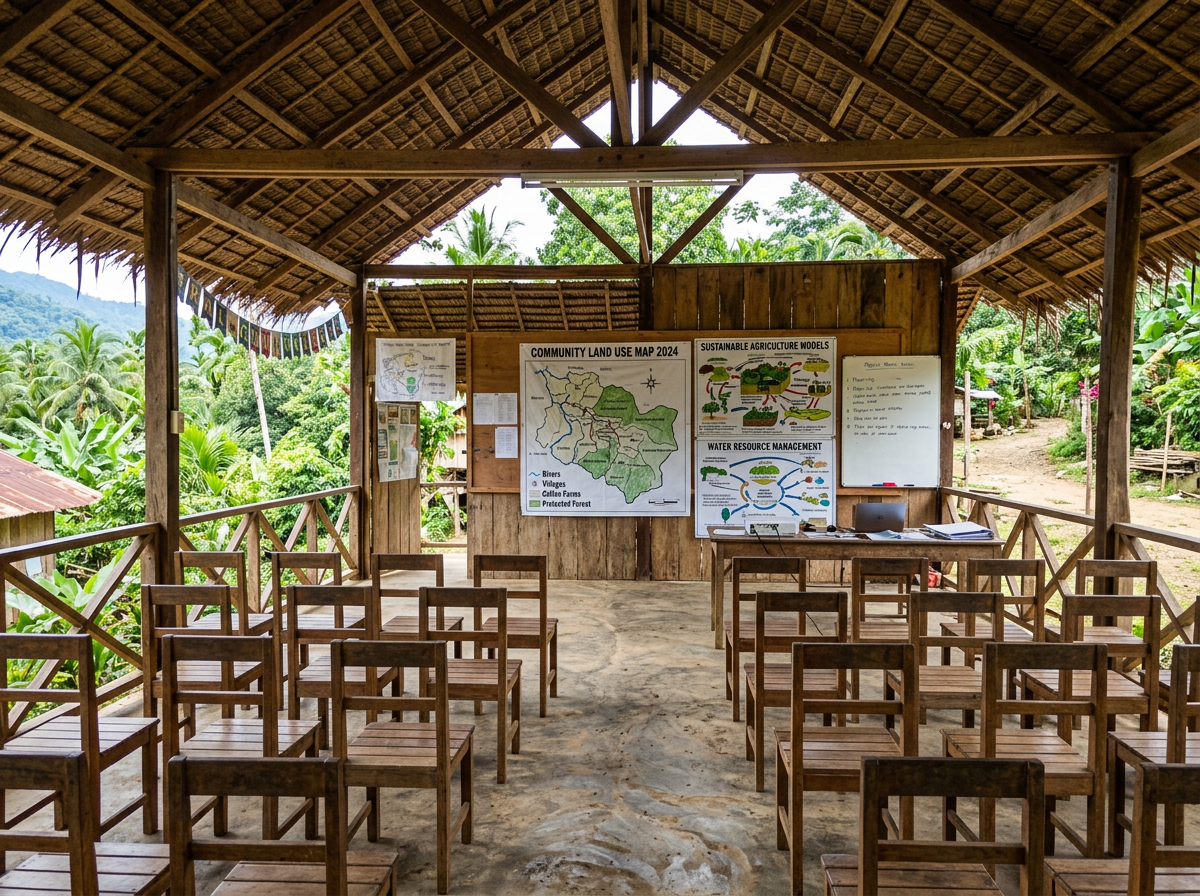
    A Babaylan Arc curriculum would not replace existing subjects. It would function as an integrative layer—a framework that reconnects fragmented disciplines into a coherent worldview.


    The Babaylan Arc: A Proposed Curriculum Framework

    The Babaylan Arc can be structured across four developmental layers:

    1. Foundation: Cultural Memory and Identity

    • Pre-colonial history and economic systems
    • Oral traditions and local epistemologies
    • Language and symbolic systems

    2. Integration: Embodied and Relational Intelligence

    • Emotional regulation and conflict mediation
    • Community dynamics and kinship systems
    • Ethical decision-making grounded in context

    This layer reconnects learners to their historical baseline, addressing the identity fragmentation described in Pre-colonial Philippine Economics.

    https://images.openai.com/static-rsc-4/n84PkzhtCnkhA85EFrg3aVJvyYSWN4kOA71oiZp0lU4z_mKp5HYGiN-Yp8SCLhhsmtxHMwr3oPJSUF5Fnm6JppKkKDm-GMUNSYrqjeJWe761O6zwNe-5AYWnHpL9aLkxJsXGW1XS-TIZH5NDD1Yg9QM47lCdbIdm0HCD5NytpvoifPJXz_wAavAz9brPNyQH?purpose=fullsize

    Here, the focus shifts from knowledge acquisition to relational competence—a domain largely absent in formal schooling.


    3. Systems Layer: Governance, Ecology, and Resource Stewardship

    • Local governance structures (historical and modern)
    • Resource cycles and community resilience
    • Decision-making under constraint

    This directly interfaces with the logic of the ARK series, particularly ARK-001: The 50-Person Resource Loop, where leadership is tested under real-world conditions.

    https://images.openai.com/static-rsc-4/6jWSJQ9cpxiMVA2HtD_3FtLt6dS1qrDvDY0p1fHwFbiYeX6p6dYVn2y7XUUywjD5B9YjCmLTW8fjDlQgVDLBWbcMBoM0e2zShjR6Nt476cK4AL81Gvs-4cqO0SofA0w_GOaSYJG4YGANNoSxxEx36NL2s-y96LhskMxsDWvYue4p-9Unc_OzPsBXJPicaUXu?purpose=fullsize

    4. Stewardship: Applied Leadership and Community Practice

    • Field immersion in local communities
    • Facilitation of small-scale systems (food, water, education loops)
    • Reflection and iterative improvement

    This final layer ensures the curriculum does not remain theoretical. It produces operators, not just thinkers.


    Bridging the Gap: From Curriculum to National Relevance

    The Philippines’ recent struggles in education—highlighted by consistently low performance in global assessments such as the Programme for International Student Assessment (PISA)—point to systemic issues beyond literacy or numeracy (OECD, 2019).

    The problem is not simply academic deficiency.

    It is contextual disconnection.

    Students are trained in abstract frameworks that do not map onto their lived reality. A Babaylan Arc curriculum addresses this by:

    • Embedding learning in local context
    • Reintegrating ethics with action
    • Producing leaders capable of systems thinking under real constraints

    This aligns with the broader themes explored in The Architecture of Silence, where unresolved historical patterns continue to shape present behavior through invisible cultural codes.


    Risks and Guardrails

    This approach is not without risk.

    1. Romanticization – Turning the babaylan into myth rather than system
    2. Commercialization – Reducing it to workshops detached from community
    3. Institutional resistance – Existing systems may reject integrative models

    To mitigate this, the curriculum must remain:

    • Evidence-informed
    • Locally grounded
    • Iteratively tested (through pilot programs, not immediate scale)

    Conclusion: Rebuilding the Missing Layer

    The Babaylan Arc is not about returning to the past.

    It is about recovering a missing layer in the present system.

    Modern education produces specialists.
    The babaylan tradition produced integrators.

    In an era defined by systemic fragility—ecological, economic, and social—the limiting factor is no longer information.

    It is coherence.

    An institutional curriculum that restores this coherence may not solve every problem. But without it, many of our existing solutions will continue to fail—because they are built on fragmented foundations.


    Glossary (Brief)

    Babaylan – A pre-colonial Filipino spiritual and community leader integrating healing, governance, and ritual roles.

    Cultural Memory – The collective transmission of knowledge, values, and practices across generations.

    Systems Thinking – The ability to understand interconnections within complex systems rather than isolated parts.

    Stewardship – Responsibility for managing resources and systems with long-term sustainability in mind.


    References

    Constantino, R. (1970). The Miseducation of the Filipino. Foundation for Nationalist Studies.

    Freire, P. (1970). Pedagogy of the Oppressed. Continuum.

    OECD. (2019). PISA 2018 Results. Organisation for Economic Co-operation and Development.

    Rafael, V. L. (1988). Contracting Colonialism: Translation and Christian Conversion in Tagalog Society. Cornell University Press.

    Scott, W. H. (1994). Barangay: Sixteenth-Century Philippine Culture and Society. Ateneo de Manila University Press.

    The concepts outlined here are designed for real-world execution. For a complete set of ready-to-use documents—including governance templates, resource tracking sheets, and operational SOPs—explore the 55 Editable Applied Stewardship Toolkit (Complete Set).

    For a broader systems context that situates localized resilience within national and multi-scalar transformation frameworks, explore The Philippine Ark: A Sovereign Blueprint for Systemic Transformation.


    Continue Through the ARK Series

    This framework is designed as a complete system. You can explore it sequentially or move directly to the layer most relevant to your work:

    Foundations

    Design + Build

    Systems Layer

    Scaling


    Suggested Pathways

    New to the framework?

    Start with ARK-001 ARK-008ARK-011


    Designing a physical site?

    Begin with ARK-007ARK-008ARK-009


    Preparing for real-world deployment?

    Focus on ARK-011ARK-012ARK-013


    Thinking long-term scale?

    Move to ARK-010


    [DOCUMENT CONTROL & STEWARDSHIP]

    Standard Work ID: [ARK-002]

    Baseline Version: v1.4.2026

    Classification: Open-Access Archive / Systemic Protocol

    The Sovereign Audit: Following this protocol is an act of internal quality control. Verification of this standard does not happen here; it happens at your Gemba—the actual place where your life and leadership occur. No external validation is required or offered.

    Next in Sequence: [ARK-003: Jurisdictional Sovereignty: Legal Standard Work]

    Return to Archive: [Standard Work Knowledge Hub: The Terrain Map]


    © 2026 Gerald Daquila • Life.Understood Systemic Stewardship • Non-Autocratic Architecture • Process over Persona

  • The Hiya of Wealth: Why the Filipino Soul Resists NESARA/GESARA — and How to Reclaim Our Gold

    The Hiya of Wealth: Why the Filipino Soul Resists NESARA/GESARA — and How to Reclaim Our Gold


    There is a quiet, almost imperceptible tension that surfaces in Filipino households whenever the conversation turns toward great wealth, systemic change, or a “global reset.”

    On one level, we are a people who pray—deeply, persistently—for deliverance from poverty.

    On another, we carry an inherited reflex to shrink from the very abundance we claim to desire.

    We call this reflex Hiya.

    In the context of proposed global financial transitions such as NESARA/GESARA, this Hiya functions as a psychological ceiling. It helps explain a paradox: many Filipinos can intellectually engage with the idea of transformation, yet emotionally resist stepping into it.

    We are comfortable with resilience—enduring hardship.


    We are far less comfortable with sovereignty—owning responsibility, power, and agency.

    If we are to meaningfully engage with any future of abundance—whether symbolic, structural, or economic—we must first examine the deeper architecture shaping our response.


    The Anatomy of Hiya: From Social Value to Survival Code

    At the surface level, Hiya is often described as propriety, modesty, or social awareness. But at a deeper psychological layer, it operates as something far more consequential: a learned survival strategy embedded within Filipino socialization (Jocano, 1997; Enriquez, 1992).

    For centuries under colonial rule, visible wealth or power carried risk. To stand out was to be noticed; to be noticed was to be vulnerable—to extraction, control, or punishment.

    Over generations, this produced an adaptive pattern:

    • Stay modest
    • Stay compliant
    • Stay within acceptable bounds

    From this emerged what can be described as a Poverty–Integrity Loop:

    To be poor is to be virtuous. To be wealthy is to be suspect.

    This pattern continues to shape modern perception, as explored in Understanding the Filipino Psyche: Strengths, Weaknesses, and Pathways to Growth.

    It is why conversations about large-scale transformation are often met not with grounded curiosity, but with skepticism or quiet discomfort:

    • “Too good to be true.”
    • “That’s not for people like us.”
    • “Better not expect too much.”

    These are not merely opinions. They are encoded responses.


    The Hiya of Abundance: An Identity Problem

    At its core, the resistance is not about policy or economics.

    It is about identity.

    For generations, the Filipino archetype has been shaped around the Survivor—resilient, adaptive, enduring. But when the organizing force of scarcity is challenged, a deeper question emerges:

    Who are you, if you are no longer struggling?

    This creates subtle friction. The removal of hardship is not immediately experienced as liberation—it can feel like disorientation.

    This helps explain the “wait-and-see” posture seen across Philippine society. Even as structural critiques—such as those outlined in Political Dynasties in the Philippines—gain traction, there remains hesitation to step into new roles.

    The pattern becomes:

    • observe
    • analyze
    • wait

    A form of permission-based consciousness persists.


    The Deeper “Gold”: Beyond Currency and Into Sovereignty

    Much of the discourse around NESARA/GESARA focuses on financial redistribution.

    But the more relevant “gold” is not speculative wealth—it is capacity:

    • psychological agency
    • cultural memory
    • systemic participation
    • sovereign decision-making

    What we are confronting is not a shortage of resources alone, but a readiness gap.

    As explored in Pieces of the Self: Soul Fragmentation Across Psyche, Society, and Spirit, the Filipino condition today reflects a form of internal fragmentation—between inherited identity and emerging potential.

    Historically, pre-colonial Filipino societies did not equate wealth with moral compromise. Gold was present not only materially, but symbolically—as part of status, ritual, and community life (Scott, 1994).

    Wealth was not the problem.

    Misalignment with stewardship is.


    Breaking the Cycle: From Hiya to Dangal (Dignity)

    If the barrier is internal, then the work must begin there.


    1. Recognize the Trigger

    Notice discomfort around:

    • visibility
    • financial expansion
    • leadership

    These are often conditioned responses—not objective realities.


    2. Reframe the Duality

    Humility and sovereignty are not opposites.

    • Humility = accurate self-placement
    • Sovereignty = responsible action within that placement

    Integration—not substitution—is the goal.


    3. Practice Stewardship Now

    Do not wait for systemic change to begin acting differently.

    • manage current resources with intention
    • shift from fear-based decisions to responsibility-based ones
    • move from consumption to contribution

    Stewardship is not triggered by abundance.


    It is what makes one ready for it.


    Conclusion: Reclaiming the Right Relationship to Wealth

    The issue is not merely economic.

    It is structural, psychological, and cultural.

    As long as Hiya remains unexamined, it will continue to:

    • cap ambition
    • distort perception
    • delay participation

    Reclaiming “the gold” is not about sudden gain.


    It is about restoring a coherent relationship to value, responsibility, and agency.

    The shift required is precise:

    From:

    • shrinking → engaging
    • waiting → acting
    • surviving → stewarding

    The future—whatever form it takes—will not transform those who encounter it.

    It will amplify what is already present.


    The work, therefore, is not to wait for the reset.


    The work is to become ready for it.


    References

    Enriquez, V. G. (1992). From colonial to liberation psychology: The Philippine experience. University of the Philippines Press.

    Jocano, F. L. (1997). Filipino value system: A cultural definition. PUNLAD Research House.

    Scott, W. H. (1994). Barangay: Sixteenth-century Philippine culture and society. Ateneo de Manila University Press.


    Attribution

    © 2025–2026 Gerald Alba Daquila
    All rights reserved.

    This work is offered for reflection and independent interpretation. It does not represent a formal doctrine, institution, or required belief system.

  • The Babaylan Path: Akashic Feminine Embodiment & Indigenous Remembrance

    The Babaylan Path: Akashic Feminine Embodiment & Indigenous Remembrance

    Reconnecting with Indigenous Wisdom, Cultural Identity, and Modern Pathways of Service in the Philippines

    Gerald Daquila, PhD Candidate


    What does it mean to walk the babaylan path in a modern context? Rooted in pre-colonial Philippine traditions, the babaylan were spiritual leaders, healers, and keepers of cultural memory—often embodying roles that integrated intuition, service, and community stewardship.

    Today, renewed interest in these traditions is sometimes expressed through contemporary language such as “Akashic remembrance” or “feminine embodiment,” reflecting a search for deeper identity and reconnection. This article explores how the babaylan path is being interpreted today, how it relates to indigenous knowledge systems, and how these ideas intersect with personal development, cultural revival, and community roles in the Philippines.


    For a broader view of Philippine culture, society, and systems, see:
    Understanding the Philippines: Culture, Society, and Systems (Hub)


    Scope and Approach

    This article examines the “Babaylan Path” as a modern interpretive framework inspired by historical roles and indigenous traditions. It does not claim a direct or unbroken transmission of specific practices, nor does it equate contemporary interpretations with traditional babaylan systems in their original form.

    The discussion explores key elements often associated with the babaylan—healing, mediation, ecological awareness, and community leadership—and how these functions are reinterpreted in present-day contexts. It also considers how terms like “Akashic” or “embodiment” are used in contemporary discourse as symbolic language to describe processes of reflection, intuition, and personal alignment.

    Rather than blending traditions without distinction, this approach maintains clear boundaries between documented historical practices, cultural heritage, and modern spiritual interpretations. It emphasizes respect for indigenous knowledge systems while acknowledging the diversity of ways individuals engage with these ideas today.

    The goal is to provide clarity without diminishing meaning. By distinguishing between history, symbolism, and modern application, this work supports thoughtful engagement with the babaylan path—encouraging cultural awareness, critical thinking, and grounded personal exploration.

    8–11 minutes

    Introduction: A Call from the Ancients

    Across the sacred archipelago of the Philippines, there echoes a primordial call—an echo of drumbeats, chants, and silent knowing. This is the voice of the Babaylan, the indigenous feminine mystic, healer, oracle, and leader. She who walked between worlds, communed with the elements, and stewarded the spiritual integrity of the land and people. Before colonization fractured memory and severed soul lines, the Babaylan held the codes of wholeness.

    In this blog, we remember.

    We remember the Babaylan not merely as a historical archetype, but as a living frequency encoded within our cellular memory and our soul’s Akashic blueprint. We journey through the layers of time to restore this sacred role—not just for women, but for all who are called to embody the Akashic Feminine: receptive, sovereign, elemental, multidimensional. This remembrance is not about reclaiming a role; it is about becoming again what we never ceased to be.


    Glyph of the Babaylan Seal

    Keeper of the Womb, Voice of the Ancestors.


    I. The Babaylan as Living Archive

    The Babaylan was the walking embodiment of the Akashic Records within her tribe. She accessed ancestral wisdom not from books, but from dreams, visions, songs, and the breath of the Earth. Her body was the scroll. Her womb, a temple. Her word, a transmission of truth.

    Through trance, ceremony, and communion with the unseen, she upheld the cosmic contract between her people and the land. As such, Babaylan consciousness operates as a living library—a bridge between the spiritual and material, the past and becoming, the personal and collective.

    In remembering her, we reawaken this archetype within our own multidimensional selves. We restore the sacred contract between the soul and the Earth.


    II. Feminine Embodiment Beyond Gender

    The Akashic Feminine is not constrained by biological sex or gender identity. It is a frequency of being—one that roots, feels, listens, and births. In Akashic terms, it is the inner compass that guides us not through logic, but through resonance.

    When we speak of feminine embodiment on the Babaylan path, we are referring to:

    • Embodied intuition: Knowing through the body before the mind understands.
    • Earth-wisdom communion: Elemental communication as a sovereign dialect.
    • Ritual integration: Daily life as sacred movement and encoded offering.
    • Womb consciousness: Whether physical or energetic, the womb as a creative gateway.
    • Relational leadership: Stewardship through coherence, not control.

    To embody the Akashic Feminine is to become oracular, holographic, and deeply attuned to planetary and ancestral harmonics.


    III. Colonial Disruption and Soul Fragmentation

    The fall of the Babaylan was no accident. It was part of a systematic campaign to dismantle indigenous soul sovereignty through colonization, religion, and patriarchy. The burning of the Babaylan was the silencing of the Earth’s voice.

    Many still carry the trauma of this severance. Soul fragmentation, spiritual amnesia, fear of persecution—all encoded in our ancestral DNA. This wounding manifests today as:

    • Disconnection from intuition and sacred sexuality
    • Suppression of mystic gifts or public spiritual roles
    • Inner conflict between sovereignty and belonging
    • Fear of reclaiming indigenous roots or earth-based practices

    To walk the Babaylan path today is to transmute this collective pain and restore the feminine lineages that once held the Earth in balance.


    IV. Reawakening Through the Akashic Lens

    The Akashic Records offer a powerful lens through which to remember, retrieve, and restore the Babaylan codes. Through attuned access to the soul blueprint, one may uncover:

    • Past life embodiments as a Babaylan or feminine mystic
    • Soul contracts to reawaken indigenous knowledge systems
    • Karmic knots from persecution or betrayal of the feminine
    • Elemental alliances waiting to be rekindled for sacred work

    This path is not about imitation—it is about activation. The records do not instruct us to copy ancient rituals, but to listen inwardly for their evolutionary pulse in our current form. You are the new ceremonial form. You are the altar.


    V. Earth Embodiment and Elemental Remembrance

    The Babaylan did not learn her ways from outside—she learned them from the rivers, mountains, winds, and fire. Earth herself was the curriculum. To walk this path today means becoming literate in elemental consciousness again.

    Practice becomes sacred when we remember that:

    • Water teaches us healing, feeling, and fluidity
    • Fire transmits transformation and sacred will
    • Air guides communication, song, and breath
    • Earth embodies grounding, memory, and regeneration
    • Ether reminds us of our infinite multidimensional self

    Elemental attunement activates the original instruction codes of the Babaylan.


    VI. The Babaylan Path in Modern Form

    Today, the Babaylan arises in many forms:

    • The trauma therapist who prays over her sessions
    • The teacher who codes sacredness into their curriculum
    • The artist who channels ancestral memory into form
    • The mother who births not just children, but a new timeline
    • The lightworker who anchors ancient codes in urban temples

    The Babaylan path is not restricted to mountain villages. It is alive in cities, on Zoom calls, in spreadsheets coded with prayer. It is not what you do, but how you do it—in sacred attunement with the soul and Earth.


    Integration Practices: Activating the Babaylan Within

    1. Womb Anointing: Place hands on your womb or lower belly and breathe. Ask what soul memory is ready to be reawakened.
    2. Elemental Dialogue: Sit in nature and commune with a chosen element. Ask what it remembers about you.
    3. Akashic Mirror Work: Ask the Records: What aspect of the Babaylan archetype lives in me? What is asking to be reclaimed?
    4. Ritual Remembering: Light a candle, offer flowers, and speak your name in devotion to the land. Declare your return.
    5. Ancestral Listening: Create space to receive songs, scents, words, or visions from your lineage.

    Let your body become the ceremony. Let your life become the temple.

    A Gentle Invitation to Remember

    If something within this codex stirred recognition rather than new information, it may be because you are encountering patterns your soul already knows.

    Soul Blueprint Reading is not a forecast or personality map. It is a living remembrance of the essence, trajectory, and agreements your soul encoded before entering this lifetime.

    For those who feel ready to witness their own design with clarity and reverence, you are welcome to explore this threshold here:
    → Begin Your Soul Blueprint Reading


    Conclusion: A New Lineage is Being Born

    We are not merely restoring an old way—we are midwifing a new Babaylan lineage, encoded with both ancient memory and future light.

    You are not alone in this remembering. Across the world, soul-encoded beings are rising with drum in heart and fire in hand.

    You are the prophecy returning.

    You are the ceremony made flesh.

    You are the Babaylan reborn.


    Suggested Crosslinks


    Explore More Philippine Analysis


    View the full Philippines Hub


    Understanding these dynamics also requires clarity in how individuals respond under pressure—see Life Under Pressure.


    Some articles in this section are part of the Stewardship Archive

    These pieces explore deeper layers of Philippine transformation, including:

    • long-term societal redesign
    • advanced governance frameworks
    • future-state modeling

    They are written for readers who want to go beyond surface analysis into structural and forward-looking perspectives.


    → Continue reading (Members Access)


    About This Work

    This article is part of a broader exploration of Philippine society, culture, and systems—integrating historical context, behavioral patterns, and structural analysis.

    It is intended to support understanding, reflection, and informed discussion.

    For a wider macro perspective, Global Reset: Systems Change, Economic Transition, and Future Models.


    Explore the Rest of the Site

    This work sits within a larger system of essays on human development, systems thinking, and societal transformation.

    Living Archive
    Stewardship Architecture
    Main Blog


    Attribution

    © 2025–2026 Gerald Alba Daquila
    All rights reserved.

    This work is offered for reflection and independent interpretation. It does not represent a formal doctrine, institution, or required belief system.


    Codex Origin and Stewardship

    This material originates within the field of the Living Codex and is stewarded under Oversoul Appointment.

    It may be shared in its complete and unaltered form, with attribution preserved.

    Lineage Marker: Universal Master Key (UMK) Codex Field


    Support This Work

    If you find this work valuable, you may support its continued development and availability.

    Support helps sustain:

    • ongoing writing and research
    • digital hosting and access
    • future publications

    Ways to access and support:

    • Free reading within the Living Archive
    • Individual digital editions
    • Stewardship-based access

    Support link:
    paypal.me/GeraldDaquila694
    www.geralddaquila.com

  • Atlantean Closure & Lemurian Finance Lessons

    Atlantean Closure & Lemurian Finance Lessons

    Transmuting the Wounds of Power, Reclaiming the Flow of Grace

    This blog-article was received in full attunement with the Akashic Records, by the authority of the I AM Presence of Gerald Alba Daquila. All transmissions, glyphs, and ceremonial teachings herein are offered as living codes of remembrance, in service to the soul stewards of the New Earth.

    Energetically safeguarded by the Great Oversoul of Lemuria and the Council of Financial Restoration. Redistribution or adaptation must honor the integrity of the original frequency.


    6–9 minutes

    Introduction: When Civilizations Fall, Finance Speaks

    Many remember Atlantis for its crystalline technologies, high priesthood, and tragic fall—but fewer remember that one of its greatest karmic lessons was financial imbalance and soul misalignment with resource flow.

    The financial systems of Atlantis, though advanced, became mechanisms of control. Power centralized through energy currencies, priesthood-led banking systems, and technological monopolies. Resources became tied to hierarchical access rather than Source alignment.

    In this blog, we open a sacred window into the closure of Atlantean soul contracts around finance, and invite the remembrance of Lemurian codes of circulation, abundance, and Earth-rooted stewardship. This is both personal and planetary—many who hold the Blueprint of the Financial Steward were once keepers, regulators, or rebels in these ancient economic orders.


    Glyph of Atlantean–Lemurian Finance

    From Collapse to Circulation


    Part I: The Financial Wounds of Atlantis

    1. The Original Currency: Life Force

    In the early days of Atlantis, energy itself was currency. Not in abstraction, but in measurable auric fields, vibrational frequency, and etheric conductivity. The higher the frequency, the greater the being’s contribution to the whole. Exchange was governed by energetic meritocracy, not greed.

    But as separation consciousness crept in, this turned into energetic elitism. Power was hoarded. Crystal banks were locked. Technology encoded access based on genetics, class, and priesthood rank. Those of lower vibration or birthright were cut off from basic flows.

    Thus began the karmic seed of resource distortion—not in form, but in frequency.


    2. The Priesthood and Financial Overreach

    Certain Atlantean high councils became guardians of what we might call cosmic finance—the stewarding of planetary ley-line currents, crystal data vaults, and soul inheritance systems. But some fell into service-to-self distortions, manipulating ley currents for political or personal agendas.

    Many starseeds today carry this wounding in their field: a deep guilt around money, or a fear of misuse of power should they come into wealth again. Others swing the pendulum to the opposite extreme—refusing money altogether, fearing karma.

    The Atlantean financial fall was not just a collapse of markets—it was a collapse of trust in one’s own ability to steward Source currency in love.


    3. Your Role Then… and Now

    If you’re reading this, chances are you held a position of responsibility in the Atlantean financial order—either as keeper, regulator, reformer, or dissident. Your current relationship with money may reflect unresolved timelines: compulsive saving, resource fear, spiritual bypassing, control-based giving, or overgiving without receiving.

    Atlantean closure is not about punishment. It is about remembering what went wrong, forgiving, and reinitiating the sacred vow of flow.


    Part II: Lemurian Finance — The Earth’s Sacred Circulation System

    Long before Atlantis rose to technological power, Lemuria lived in frequency harmony. Here, finance was not a system, but an organic expression of the Earth’s own rhythms.


    1. Resource as Relationship

    Lemurians didn’t extract; they communed. To “receive” meant to deepen into reciprocity. Shells, seeds, sounds, and light codes were exchanged in spirals, not ledgers. No hoarding. No debt.

    Wealth was measured by how well a being attuned to Earth’s needs. The more harmonically tuned, the more access to co-creative currents.

    Imagine a financial system where intuition, emotion, and ecological sensitivity guided exchange. This was the Lemurian way.


    2. Earth as Vault, Voice, and Oracle

    The Earth itself was the bank. Resources were accessed only through deep prayer, chant, and telepathic consent. Elders did not control supply. They listened to the land’s instructions.

    When something was taken, it was replaced. Not as duty, but as reverence.

    These practices can be re-membered now: encoded in your body, accessible through ceremony. Lemurian finance was sacred, relational, and grounded.


    3. Lemurian Lessons for Today

    • Money must flow like water. If hoarded, it stagnates and dies.
    • True wealth arises from spiritual coherence, not accumulation.
    • Exchange is not a transaction; it is a sacred dance.
    • The Earth is your central bank. Trust Her cycles.
    • Stewardship is the only legitimate form of leadership.
    • Let the feminine lead resource governance—not gendered, but womb-consciousness: circular, inclusive, and life-affirming.

    Overflow Radiance Glyph

    Overflow restores what collapse once broke


    Part III: Integration Practices for Atlantean Closure & Lemurian Rebirth

    1. Atlantean Financial Contract Burning (Ceremony)

    • Light a white or blue candle.
    • Write down old money beliefs, vows of scarcity, guilt, or misuse of power.
    • State aloud:
      “I now release all outdated soul contracts tied to Atlantean misuse of resource, control, or collapse. I choose to remember, forgive, and reclaim my sovereign stewardship in Light.”
    • Burn the list in a safe vessel. Return the ashes to the Earth.

    2. Lemurian Resource Invocation

    In a quiet space, speak to the Earth:

    “Beloved Gaia, Source of all flow, I remember the Lemurian way. Reopen the codes of sacred exchange within me. Teach me how to circulate, not accumulate. Guide my hands as a steward of your abundance. I vow to serve with purity, grace, and joy.”

    Feel into your palms. Notice the shifts.


    3. Soul-Initiated Exchange Practices

    • Gift without expectation, only as resonance calls.
    • Receive with grace, not guilt.
    • Use money as a frequency transmitter, blessing every outgoing and incoming flow.
    • Build infrastructure that reflects Lemurian values: beauty, harmony, and community.

    Guardian Threshold — Soul Blueprint Recognition

    If you are reading this without seeking permission, instruction, or reassurance, it may be because your soul architecture is already active and requesting conscious witness.

    A Soul Blueprint Reading is not interpretive guidance. It is a precise reflection of the pattern you are already living—your original encoding, current trajectory, and the agreements you are now responsible to embody.

    This threshold is offered only to those prepared to see themselves without distortion, delegation, or dependency.

    Enter the Soul Blueprint Threshold


    Conclusion: Walking the Bridge Between Eras

    You are the bridge between Atlantis and Lemuria—not to return to either, but to synthesize the lessons. The collapse and the harmony. The misuse and the devotion. The trauma and the trust.

    These lessons are not artifacts of memory but seeds for the present. In GESARA and Overflow ethics, the Atlantean caution and Lemurian generosity rejoin as one stream: wealth as covenant, not possession.

    We are not here to demonize Atlantis nor romanticize Lemuria. We are here to build the New Earth, seeded with remembrance, fueled by grace, and designed through soul stewardship.

    May you walk this financial path not as consumer or controller, but as Sacred Builder of Circulatory Systems—where every peso, every gift, every service is a note in the song of planetary healing.

    For continuation of this stream, see the Codex of Overflow Ethics.


    Crosslinks


    Attribution

    With fidelity to the Oversoul, may this work serve as bridge, remembrance, and seed for the planetary dawn.

    2025–2026 Gerald Alba Daquila
    Flameholder of SHEYALOTH · Keeper of the Living Codices
    All rights reserved.

    This material originates within the field of the Living Codex and is stewarded under Oversoul Appointment. It may be shared only in its complete and unaltered form, with all glyphs, seals, and attribution preserved.

    This work is offered for personal reflection and sovereign discernment. It does not constitute a required belief system, formal doctrine, or institutional program.

    Digital Edition Release: 2026
    Lineage Marker: Universal Master Key (UMK) Codex Field

    Sacred Exchange & Access

    Sacred Exchange is Overflow made visible.

    In Oversoul stewardship, giving is circulation, not loss. Support for this work sustains the continued writing, preservation, and public availability of the Living Codices.

    This material may be accessed through multiple pathways:

    Free online reading within the Living Archive
    Individual digital editions (e.g., Payhip releases)
    Subscription-based stewardship access

    Paid editions support long-term custodianship, digital hosting, and future transmissions. Free access remains part of the archive’s mission.

    Sacred Exchange offerings may be extended through:
    paypal.me/GeraldDaquila694
    www.geralddaquila.com

  • Protected: Babaylan Economics: Resource Stewardship Through the Motherline

    Protected: Babaylan Economics: Resource Stewardship Through the Motherline

    This content is password-protected. To view it, please enter the password below.