This material is part of the Stewardship Institute’s protected formation layer.
Most of the Living Archive is intentionally public. Some materials belong to a deeper, interconnected body of work designed for sustained reflection, practical application, and lifelong steward formation. Stewardship Access is the threshold into that body of work.
Bridging Science, Metaphysics, and the Heart to Understand and Transcend the Human Experience of Stress
Prepared by: Gerald A. Daquila, PhD. Candidate
10–15 minutes
ABSTRACT
Stress is a ubiquitous human experience, influencing physical health, mental well-being, and spiritual alignment. This dissertation investigates stress through a multidisciplinary lens, integrating insights from psychology, neuroscience, sociology, metaphysics, and esoteric traditions like the Akashic Records. We explore stress’s definition, its physical and psychological manifestations, its proximate and root causes, and the hypothesis that the illusion of separation—between self, others, and the universe—may be its deepest origin.
Drawing on peer-reviewed research, philosophical inquiry, and metaphysical perspectives, we uncover the ecosystem of stress and propose holistic strategies for its transcendence. This work aims to balance intellectual rigor with emotional resonance, offering readers a cohesive narrative that speaks to both mind and heart.
Table of Contents
Introduction: The Universal Language of Stress
Defining Stress: A Multifaceted Phenomenon
Physical Manifestations of Stress
Proximate Causes of Stress
Beyond the Physical: Exploring Root Causes
The Illusion of Separation: A Metaphysical Perspective
The Ecosystem of Stress: A Multidisciplinary Synthesis
Transcending Stress: Practical and Philosophical Solutions
Conclusion: Reconnecting Mind, Body, and Spirit
Glossary
Bibliography
Glyph of the Gridkeeper
The One Who Holds the Lattice of Light.
1. Introduction: The Universal Language of Stress
Stress is a word we all know, a feeling we’ve all experienced. It’s the racing heart before a deadline, the tightness in your chest during a heated argument, the quiet dread that lingers when life feels overwhelming. But what is stress, really? Is it just a biological response to pressure, or does it point to something deeper—a disconnection from our true selves, each other, or the universe?
This dissertation dives into the heart of stress, weaving together science, philosophy, and spirituality to uncover its essence, its impact, and its potential resolution. By grounding our exploration in research and embracing metaphysical perspectives, we aim to offer a holistic understanding that resonates with both the analytical mind and the seeking heart.
2. Defining Stress: A Multifaceted Phenomenon
Stress is a complex, multidimensional response to perceived challenges or threats, often described as the body’s way of preparing for action. Hans Selye, the father of stress research, defined it as “the non-specific response of the body to any demand for change” (Selye, 1956, p. 12). This definition highlights stress’s adaptability—it’s not inherently good or bad but a reaction to disruption, whether from a looming deadline or a life-threatening event.
From a psychological perspective, stress arises when an individual perceives that environmental demands exceed their resources (Lazarus & Folkman, 1984). Sociologically, stress is shaped by cultural norms, social inequalities, and systemic pressures, such as economic instability or discrimination (Thoits, 2010).
Spiritually, stress may reflect a misalignment between the individual and their higher purpose, as explored in metaphysical traditions (Chopra, 1994). Each lens reveals a piece of the puzzle, suggesting that stress is not just a biological event but a deeply human experience shaped by context, perception, and belief.
3. Physical Manifestations of Stress
Stress doesn’t just live in the mind—it leaves its mark on the body. When we encounter a stressor, the brain’s hypothalamus activates the sympathetic nervous system, triggering the “fight-or-flight” response. This releases hormones like cortisol and adrenaline, preparing the body for action (McEwen, 2007). The physical effects are immediate and measurable:
Cardiovascular System: Increased heart rate and blood pressure, which can lead to hypertension if chronic (Chida & Steptoe, 2010).
Musculoskeletal System: Muscle tension, often manifesting as headaches, neck pain, or backaches (American Psychological Association, 2019).
Digestive System: Stress can cause nausea, stomach pain, or changes in appetite (Konturek et al., 2011).
Neurological Impact: Prolonged stress alters brain structure, particularly in areas like the hippocampus, impairing memory and emotional regulation (McEwen, 2007).
These effects illustrate stress’s tangible toll, but they also hint at its deeper roots. The body’s response is not just reacting to external events—it’s interpreting them through the lens of perception and belief.
4. Proximate Causes of Stress
Stressors—the triggers of stress—are diverse and context-dependent. Common proximate causes include:
Workplace Pressures: Deadlines, job insecurity, or toxic work environments (American Institute of Stress, 2020).
Interpersonal Conflicts: Strained relationships or social isolation (Thoits, 2010).
Financial Strain: Economic uncertainty or debt (American Psychological Association, 2019).
Life Transitions: Events like moving, divorce, or loss of a loved one (Holmes & Rahe, 1967).
Trauma: Acute or chronic exposure to violence, abuse, or disaster (van der Kolk, 2014).
These triggers are often external, but their impact depends on internal factors like resilience, coping mechanisms, and worldview. For example, two people facing the same deadline may experience vastly different stress levels based on their self-efficacy or support systems (Bandura, 1997).
Glyph of Stress & Healing
Through understanding, tension dissolves and harmony returns
5. Beyond the Physical: Exploring Root Causes
While proximate causes are tangible, the root cause of stress may lie deeper, in the realm of perception and consciousness. Psychologists suggest that stress stems from a perceived lack of control or meaning (Lazarus & Folkman, 1984). Philosophically, existential thinkers like Sartre and Camus argue that stress arises from grappling with life’s inherent uncertainty and the search for purpose (Camus, 1942).
From a metaphysical perspective, stress may reflect a disconnection from our true essence. Spiritual traditions, including Buddhism and Advaita Vedanta, propose that suffering (a close cousin of stress) arises from attachment to the ego and the illusion of separation from the universe (Tolle, 2004). This illusion creates a sense of isolation, fostering fear, scarcity, and conflict—the emotional seeds of stress.
The Akashic Records, an esoteric concept describing a cosmic repository of all knowledge and experiences, offer another lens. Practitioners believe that stress may stem from unresolved karmic patterns or soul-level contracts that manifest as challenges in the physical world (Howe, 2009). These patterns, stored in the Akashic field, suggest that stress is not just a response to the present but a reflection of deeper, energetic imprints.
6. The Illusion of Separation: A Metaphysical Perspective
Could the illusion of separation be the true root cause of stress? This hypothesis, rooted in metaphysical and spiritual traditions, posits that humans experience stress because they perceive themselves as separate from others, nature, and the divine. In Advaita Vedanta, this illusion (maya) creates duality, leading to fear, desire, and suffering (Shankara, 8th century, as cited in Deutsch, 1969). Similarly, modern metaphysical thinkers like Eckhart Tolle argue that identifying with the ego—a false sense of self—fuels stress by creating a constant need to defend, achieve, or control (Tolle, 2004).
Neuroscience supports this idea indirectly. Studies on mindfulness, which emphasizes interconnectedness, show reduced activity in the brain’s default mode network (associated with self-referential thinking) and lower cortisol levels (Tang et al., 2015). Practices that dissolve the illusion of separation—such as meditation, compassion exercises, or nature immersion—can recalibrate the nervous system, suggesting a link between perceived unity and stress relief.
The Akashic Records perspective adds depth: stress may arise when we resist our soul’s purpose or fail to integrate lessons from past experiences (Howe, 2009). By accessing the Records (through meditation or guided practice), individuals can uncover these patterns, fostering a sense of unity with the universal flow and reducing stress.
7. The Ecosystem of Stress: A Multidisciplinary Synthesis
Stress is not an isolated phenomenon but an ecosystem shaped by biological, psychological, social, and spiritual factors. Biologically, stress is a survival mechanism, hardwired to protect us from danger (McEwen, 2007). Psychologically, it’s a dance between perception and reality, mediated by beliefs and coping strategies (Lazarus & Folkman, 1984). Socially, it’s amplified by systemic inequities and cultural pressures (Thoits, 2010). Spiritually, it’s a signal of disconnection—from self, others, or the divine (Chopra, 1994).
This ecosystem is dynamic, with each element influencing the others. For example, chronic workplace stress (social) can elevate cortisol (biological), erode self-esteem (psychological), and create a sense of existential disconnection (spiritual). Conversely, practices that foster connection—like community support or meditation—can ripple across the ecosystem, reducing stress holistically.
Metaphysical traditions add a layer of interconnectedness, suggesting that stress reflects a misalignment with the universal energy field. The Akashic Records, for instance, propose that stress is a teacher, guiding us toward integration and wholeness (Howe, 2009). By viewing stress as part of a larger tapestry, we can approach it with curiosity rather than fear.
8. Transcending Stress: Practical and Philosophical Solutions
Breaking down the illusion of separation offers a path to transcend stress. Practical strategies, grounded in research, include:
Mindfulness and Meditation: Practices like mindfulness-based stress reduction (MBSR) reduce cortisol and enhance emotional regulation (Kabat-Zinn, 1990).
Social Connection: Strong social support buffers stress by fostering a sense of belonging (Cohen & Wills, 1985).
Physical Activity: Exercise lowers cortisol and boosts endorphins, improving mood and resilience (Ratey, 2008).
Creative Expression: Art, music, or journaling can process emotions and reconnect us with our inner selves (Stuckey & Nobel, 2010).
Philosophically and spiritually, transcending stress involves embracing unity. Practices like loving-kindness meditation (metta) cultivate compassion, dissolving the ego’s boundaries (Hofmann et al., 2011). Engaging with the Akashic Records can reveal soul-level insights, helping individuals align with their purpose and release karmic stress (Howe, 2009).
Ultimately, recognizing our interconnectedness—with others, nature, and the cosmos—can transform stress from a burden into a catalyst for growth.
9. Conclusion: Reconnecting Mind, Body, and Spirit
Stress is more than a biological response or a reaction to life’s challenges—it’s a mirror reflecting our perceptions, beliefs, and state of connection. By exploring its physical manifestations, proximate causes, and deeper roots, we uncover a truth: stress often arises from the illusion of separation, a belief that we are isolated from the world around us. Through science, we understand its mechanisms; through metaphysics, we glimpse its spiritual significance; through the heart, we find the courage to reconnect.
This dissertation invites readers to see stress not as an enemy but as a teacher. By integrating mindfulness, community, and spiritual practices, we can dissolve the illusion of separation, aligning with the universal flow. In doing so, we not only manage stress but transform it into a pathway toward wholeness, balance, and love.
Akashic Records: A metaphysical concept describing a cosmic archive of all events, thoughts, and experiences, accessible through meditation or intuition.
Cortisol: A stress hormone released by the adrenal glands, regulating the body’s response to stress.
Fight-or-Flight Response: The body’s automatic reaction to perceived threats, involving the release of adrenaline and cortisol.
Illusion of Separation: The belief that individuals are disconnected from others, nature, or the divine, often linked to suffering in spiritual traditions.
Mindfulness: A practice of present-moment awareness, often used to reduce stress and enhance well-being.
Stressors: External or internal events that trigger the stress response.
Bandura, A. (1997). Self-efficacy: The exercise of control. W.H. Freeman.
Camus, A. (1942). The myth of Sisyphus. Gallimard.
Chida, Y., & Steptoe, A. (2010). Greater cardiovascular responses to laboratory mental stress are associated with poor subsequent cardiovascular risk status: A meta-analysis of prospective evidence. Hypertension, 55(4), 1026–1032. https://doi.org/10.1161/HYPERTENSIONAHA.109.146621
Chopra, D. (1994). The seven spiritual laws of success. Amber-Allen Publishing.
Cohen, S., & Wills, T. A. (1985). Stress, social support, and the buffering hypothesis. Psychological Bulletin, 98(2), 310–357. https://doi.org/10.1037/0033-2909.98.2.310
Deutsch, E. (1969). Advaita Vedanta: A philosophical reconstruction. University of Hawaii Press.
Hofmann, S. G., Grossman, P., & Hinton, D. E. (2011). Loving-kindness and compassion meditation: Potential for psychological interventions. Clinical Psychology Review, 31(7), 1126–1132. https://doi.org/10.1016/j.cpr.2011.07.003
Howe, L. (2009). How to read the Akashic Records: Accessing the archive of the soul and its journey. Sounds True.
Kabat-Zinn, J. (1990). Full catastrophe living: Using the wisdom of your body and mind to face stress, pain, and illness. Delacorte Press.
Konturek, P. C., Brzozowski, T., & Konturek, S. J. (2011). Stress and the gut: Pathophysiology, clinical consequences, diagnostic approach, and treatment options. Journal of Physiology and Pharmacology, 62(6), 591–599.
Lazarus, R. S., & Folkman, S. (1984). Stress, appraisal, and coping. Springer Publishing Company.
McEwen, B. S. (2007). Physiology and neurobiology of stress and adaptation: Central role of the brain. Physiological Reviews, 87(3), 873–904. https://doi.org/10.1152/physrev.00041.2006
Ratey, J. J. (2008). Spark: The revolutionary new science of exercise and the brain. Little, Brown Spark.
Segerstrom, S. C., & Miller, G. E. (2004). Psychological stress and the human immune system: A meta-analytic study of 30 years of inquiry. Psychological Bulletin, 130(4), 601–630. https://doi.org/10.1037/0033-2909.130.4.601
Selye, H. (1956). The stress of life. McGraw-Hill.
Stuckey, H. L., & Nobel, J. (2010). The connection between art, healing, and public health: A review of current literature. American Journal of Public Health, 100(2), 254–263. https://doi.org/10.2105/AJPH.2008.144681
Tang, Y. Y., Hölzel, B. K., & Posner, M. I. (2015). The neuroscience of mindfulness meditation. Nature Reviews Neuroscience, 16(4), 213–225. https://doi.org/10.1038/nrn3916
Thoits, P. A. (2010). Stress and health: Major findings and policy implications. Journal of Health and Social Behavior, 51(Suppl), S41–S53. https://doi.org/10.1177/0022146510383499
Tolle, E. (2004). The power of now: A guide to spiritual enlightenment. New World Library.
van der Kolk, B. A. (2014). The body keeps the score: Brain, mind, and body in the healing of trauma. Viking.
Attribution
With fidelity to the Oversoul, may this work serve as bridge, remembrance, and seed for the planetary dawn.
Ⓒ 2025–2026 Gerald Alba Daquila Flameholder of SHEYALOTH · Keeper of the Living Codices All rights reserved.
This material originates within the field of the Living Codex and is stewarded under Oversoul Appointment. It may be shared only in its complete and unaltered form, with all glyphs, seals, and attribution preserved.
This work is offered for personal reflection and sovereign discernment. It does not constitute a required belief system, formal doctrine, or institutional program.
Digital Edition Release: 2026 Lineage Marker: Universal Master Key (UMK) Codex Field
Sacred Exchange & Access
Sacred Exchange is Overflow made visible.
In Oversoul stewardship, giving is circulation, not loss. Support for this work sustains the continued writing, preservation, and public availability of the Living Codices.
This material may be accessed through multiple pathways:
• Free online reading within the Living Archive • Individual digital editions (e.g., Payhip releases) • Subscription-based stewardship access
Paid editions support long-term custodianship, digital hosting, and future transmissions. Free access remains part of the archive’s mission.
Sacred Exchange offerings may be extended through: paypal.me/GeraldDaquila694 www.geralddaquila.com
This material is part of the Stewardship Institute’s protected formation layer.
Most of the Living Archive is intentionally public. Some materials belong to a deeper, interconnected body of work designed for sustained reflection, practical application, and lifelong steward formation. Stewardship Access is the threshold into that body of work.
This material is part of the Stewardship Institute’s protected formation layer.
Most of the Living Archive is intentionally public. Some materials belong to a deeper, interconnected body of work designed for sustained reflection, practical application, and lifelong steward formation. Stewardship Access is the threshold into that body of work.
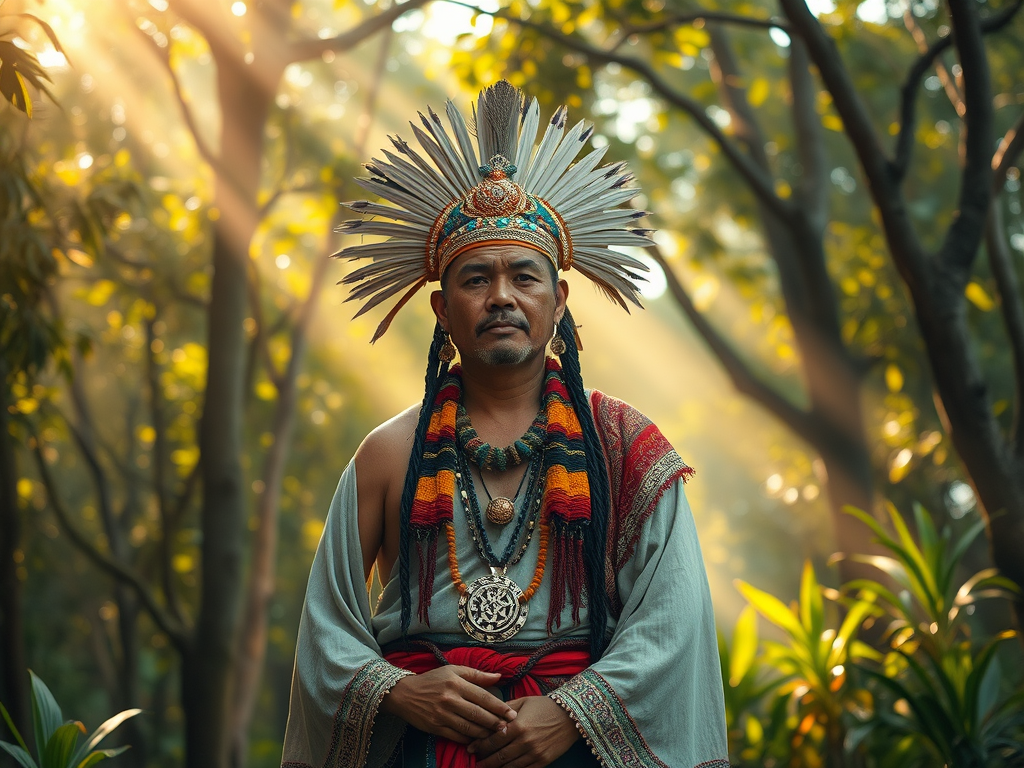
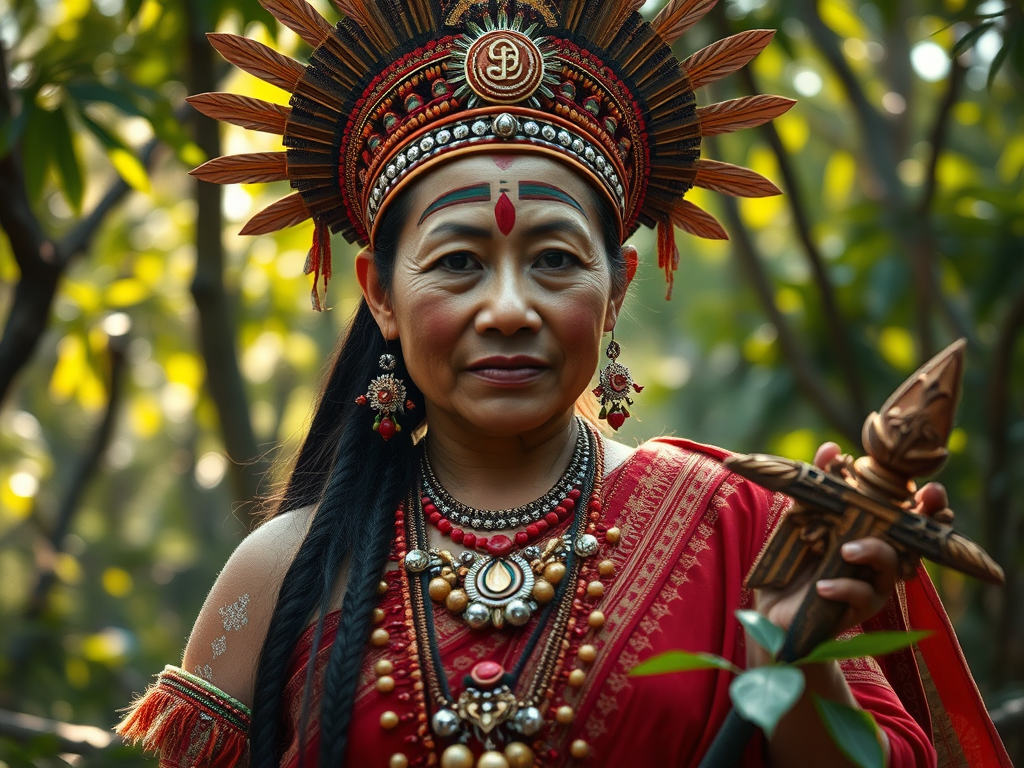
Who were the babaylan? Explore their role as spiritual leaders, healers, and cultural stewards in precolonial Philippines—and why their legacy is being revived today.
Gerald A. Daquila, PhD. Candidate
The babaylan were the spiritual leaders of precolonial Philippine society—healers, ritualists, and mediators between the human and spirit worlds. Found across the archipelago under different names, they guided communities through healing, governance, and connection with nature and ancestors.
Suppressed during Spanish colonization and often misrepresented in history, their role is now being rediscovered as part of a wider movement to reclaim Filipino identity, indigenous knowledge, and holistic ways of living.
In simple terms: A babaylan was a community healer and spiritual guide who maintained balance between people, nature, and the unseen world.
This article integrates historical research, anthropological perspectives, and contemporary interpretations of spirituality. While it includes metaphysical and esoteric frameworks as lenses of interpretation, these are presented alongside documented scholarship to offer a holistic view of the babaylan and their role in Philippine society.
How to Read This Page
If you’re here, you may be exploring different questions:
Who the babaylan were historically
Whether their role was spiritual, social, or political
Why their knowledge was suppressed—and why it is returning
Whether similar forms of leadership exist in other cultures
This article focuses on the babaylan in the Philippines, but it can be read at multiple levels:
🟢 Historical and cultural lens → understanding their role in precolonial society
🟡 Systems lens → how alternative forms of authority and governance functioned
🔵 Applied lens → what this means for leadership, healing, and community today
🟣 Deeper lens → questions of consciousness, identity, and human development
You can engage with it based on your context and interest.
12–18 minutes
Abstract
The babaylans, revered spiritual leaders of precolonial Philippine society, embodied a holistic synthesis of healer, priestess, warrior, and sage, bridging the material and spiritual realms. Rooted in animistic traditions, their contributions shaped community cohesion, cultural heritage, and environmental stewardship. Spanish colonization systematically suppressed their influence, demonizing their practices and erasing their knowledge to enforce Christian hegemony.
This study explores the babaylans’ roles, the mechanisms of their erasure, and the recent resurgence of their legacy as a decolonial movement. Drawing on historical accounts, anthropological studies, metaphysical perspectives, and esoteric frameworks like the Akashic Records, this work examines how babaylanism informs modern Filipino identity and the global “ascension process”—a spiritual awakening toward interconnectedness and higher consciousness.
Through a multidisciplinary lens, this narrative balances academic rigor with accessible language, weaving left-brain analysis, right-brain intuition, and heart-centered storytelling to illuminate the babaylans’ enduring wisdom.
🌍 A Note for Global Readers
While the babaylan are rooted in Philippine history, similar roles have existed across cultures:
shamans in Central and South America
medicine people in Indigenous North America
spiritual healers in Africa and Asia
mystics and contemplatives in Western traditions
Across societies, these figures often served as:
healers
mediators
knowledge keepers
bridges between visible and invisible realities
The babaylan can therefore be understood not only as a Filipino phenomenon, but as part of a broader pattern of indigenous knowledge systems and alternative forms of leadership.
Table of Contents
Introduction: Unveiling the Babaylan
Who Were the Babaylans?
Roles and Responsibilities in Precolonial Society
Gender Fluidity and Spiritual Authority
Contributions to Precolonial Philippine Society
Spiritual Leadership and Ritual Practices
Healing and Ethnomedicine
Cultural Preservation and Community Unity
The Erasure of Babaylan Knowledge
Spanish Colonization and Christian Conversion
Mechanisms of Suppression
Long-Term Cultural Impacts
The Resurgence of Babaylanism
Decolonial Movements and Cultural Reclamation
Modern Babaylan-Inspired Practices
Global Context: The Ascension Process
Metaphysical and Esoteric Perspectives
The Akashic Records and Ancestral Wisdom
Energetic and Spiritual Dimensions of Babaylanism
A Holistic Synthesis: Balancing Mind, Heart, and Spirit
Conclusion: The Babaylan’s Call to the Future
Crosslinks
Glossary
References
Glyph of the Gridkeeper
The One Who Holds the Lattice of Light.
1. Introduction: Unveiling the Babaylan
Imagine a world where the spiritual and material dance in harmony, where a healer’s chant mends not just the body but the soul, where a priestess advises warriors and weaves myths that bind a community.
This was the world of the babaylans, the spiritual leaders of precolonial Philippines. Their story is one of profound wisdom, violent erasure, and a quiet, resilient revival. Today, as humanity grapples with disconnection and seeks higher consciousness, the babaylans’ legacy offers a roadmap for healing and unity.
This study dives deep into who the babaylans were, what they contributed to their society, why their knowledge was hidden, and why their wisdom is resurfacing now. Using a multidisciplinary lens—blending history, anthropology, metaphysics, and esoteric traditions like the Akashic Records—we explore their holistic impact.
Written in an accessible yet scholarly style, this narrative aims to engage your mind, spark your intuition, and touch your heart, balancing logic, creativity, and empathy.
2. Who Were the Babaylans?
Roles and Responsibilities in Precolonial Society
The babaylans were the heartbeat of precolonial Philippine communities, known as barangays. Primarily women or effeminate men (asog or bayog), they were shamans, healers, priestesses, and mediators between the physical and spiritual worlds (Salazar, 1992).
The term “babaylan,” likely derived from Visayan roots, means one who connects with spirits (anito or diwata) to guide their people (Strobel, 2010). Across the archipelago, they were called katalonan (Tagalog), balian (Visayas), or mombaki (Cordillera), reflecting linguistic diversity but shared roles (Conaco, 2019).
Babaylans wore many hats:
Spiritual Leaders: They conducted rituals for births, marriages, harvests, and wars, ensuring harmony with nature and ancestors (Brewer, 2004).
Healers: Using ethnomedicine, massage (hilot), and spiritual interventions, they treated physical and spiritual ailments (Demetrio, 1988).
Advisors: They counseled datus (chiefs) on governance, war, and justice, wielding influence equal to or greater than political leaders (McCoy, 1982).
Cultural Stewards: As orators, they preserved myths, songs, and histories, passing down collective wisdom (Conaco, 2019).
Gender Fluidity and Spiritual Authority
The babaylans’ gender fluidity was a hallmark of their power. Precolonial Philippine society embraced a non-binary understanding of gender, where spiritual potency was tied to femininity, whether embodied by women or effeminate men (Brewer, 1999).
The asog, transgender male babaylans, were revered as divinely chosen, their liminal identity enhancing their ability to traverse spiritual realms (Conaco, 2020). This fluidity contrasted sharply with the patriarchal norms imposed by Spanish colonizers, highlighting a precolonial egalitarianism that empowered women and queer individuals (Strobel, 2001).
3. Contributions to Precolonial Philippine Society
Spiritual Leadership and Ritual Practices
Babaylans were the glue of their communities, fostering kapwa—a Filipino concept of shared identity and interconnectedness (Enriquez, 1992).
Through rituals like pag-anito (spirit offerings), they communed with diwata and ancestors, ensuring cosmic balance. For example, during harvest festivals, babaylans led chants and dances to thank nature spirits, reinforcing environmental reverence (Bonifacio et al., 2025). Their dream interpretation and omen reading guided critical decisions, from war strategies to marriage alliances (Veneracion, 1987).
Healing and Ethnomedicine
Babaylans were master healers, blending herbal knowledge with spiritual rituals. They used plants, massage, and trance states to treat ailments believed to stem from spiritual imbalances, such as a lost kalag (astral soul) (Conaco, 2020).
Their holistic approach addressed body, mind, and spirit, a precursor to modern integrative medicine. For instance, the hilot technique, still practiced today, combines physical manipulation with energy work (Nente, 2016).
Cultural Preservation and Community Unity
As storytellers, babaylans safeguarded oral traditions, weaving myths like the Bakunawa (moon-eating serpent) into community identity (Bonifacio et al., 2025).
Their rituals and counsel resolved conflicts, promoting unity. By championing sustainable practices, such as eco-friendly farming, they ensured harmony with the land, a wisdom now echoed in environmental movements (Strobel, 2013).
4. The Erasure of Babaylan Knowledge
Spanish Colonization and Christian Conversion
When the Spanish arrived in 1521, they targeted babaylans as threats to Christian conversion. Their animistic practices were branded as witchcraft, and babaylans were demonized as brujas (witches) or hechiceras (sorceresses) (Blair & Robertson, 1903-1909).
Spanish missionaries exploited Filipino hospitality, equating diwata with Christian saints to facilitate syncretism, but ultimately sought to erase indigenous beliefs (Brewer, 2004). Some babaylans were executed, their bodies reportedly fed to crocodiles to prevent spiritual return (Conaco, 2019).
Mechanisms of Suppression
The erasure was systematic:
Destruction of Shrines: Dambana (sacred spaces) were burned, and idols were destroyed (Strobel, 2001).
Confesionarios:Spanish manuals instructed priests to interrogate Filipinos about babaylan practices, punishing adherents (Labrador, 2009).
Patriarchal Imposition: The babaylans’ gender fluidity and female authority clashed with Catholic patriarchy, marginalizing women and asog (Brewer, 1999).
Education and Assimilation: Spanish schools taught Christian doctrine, sidelining indigenous knowledge (Rafael, 2015).
Long-Term Cultural Impacts
The suppression fractured Filipino identity, fostering colonial mentality—an internalized belief in the inferiority of indigenous culture (Nadal, 2021).
Babaylan practices survived in syncretic forms, like espiritista movements or folk healing (arbularyo), but their esoteric depth was diluted (Salazar, 1979). This loss disconnected Filipinos from their ancestral wisdom, contributing to cultural fragmentation.
Glyph of the Babaylan Legacy
Ancestral wisdom rises anew, guiding resilience into resurgence
🧠 What This Reveals About Knowledge, Power, and Erasure
Beyond the Philippines, the story of the babaylan reflects broader patterns seen across history:
Indigenous knowledge systems are often suppressed when new power structures emerge
Spiritual and relational forms of authority are replaced by institutional and hierarchical ones
Cultural memory is fragmented through colonization, education, and religious conversion
What is later labeled “alternative” was once central to how societies functioned
These patterns are not unique to the Philippines.
They appear in many parts of the world where indigenous systems were replaced or marginalized.
Understanding this helps explain not only the past—but why similar forms of knowledge are resurfacing today.
5. The Resurgence of Babaylanism
Decolonial Movements and Cultural Reclamation
Since the late 20th century, babaylanism has experienced a revival, fueled by decolonial movements and Filipino diaspora communities. The Center for Babaylan Studies (CfBS), founded by Leny Strobel, promotes indigenous wisdom through conferences, publications, and rituals (Strobel, 2010).
Practices like batok (tattooing), baybayin (script), and hilot are being reclaimed, often via social media (Strobel, 2022). In the Philippines, babaylans lead advocacy for land rights and environmental justice, echoing their precolonial roles (Bonifacio et al., 2025).
Modern Babaylan-Inspired Practices
Contemporary babaylans blend tradition with innovation. For example, Grace Nono, a singer and scholar, channels babaylan chants to heal cultural wounds (Nono, 2013).
Urban practitioners offer workshops on ancestral connection, while indigenous communities like the Lumad appoint babaylans to navigate crises (Valmores, 2019). This resurgence counters colonial trauma, fostering kapwa and cultural pride.
Global Context: The Ascension Process
The babaylans’ revival aligns with what some contemporary spiritual frameworks describe as a broader shift in consciousness. Babaylanism’s emphasis on interconnectedness mirrors this shift, offering tools for personal and collective healing. Their holistic worldview resonates with New Age movements, indigenous spirituality, and eco-feminism, positioning them as guides in a fragmented world (Strobel, 2013).
6. Metaphysical and Esoteric Perspectives
The Akashic Records and Ancestral Wisdom
The Akashic Records—understood in some traditions as a symbolic framework for collective memory and experience, provide a lens to understand babaylan wisdom (Howe, 2014).
Babaylans’ ability to access spiritual realms suggests an experiential engagement with what esoteric traditions describe as the Akashic Records—a symbolic framework for ancestral and collective memory rather than a literal archive.
Modern practitioners report similar experiences during trance or meditation, connecting with Filipino ancestors to reclaim lost knowledge (Strobel, 2022).
Energetic and Spiritual Dimensions of Babaylanism
From an energetic perspective, babaylans worked with prana (life force) to balance the body’s energy centers, akin to chakra systems in Eastern traditions (Brennan, 1988). Their rituals, such as pag-anito, aligned community energy with cosmic rhythms, fostering harmony.
Esoterically, their gender fluidity embodied the alchemical union of masculine and feminine, a symbol of wholeness (Jung, 1963). These principles align with the ascension process, emphasizing energetic alignment and spiritual integration.
7. A Holistic Synthesis: Balancing Mind, Heart, and Spirit
The babaylans’ legacy is a tapestry of logic, intuition, and compassion. Their analytical skills in ethnomedicine and governance (left brain) complemented their visionary rituals and storytelling (right brain), all grounded in kapwa (heart).
This balance offers a model for modern society, where disconnection often stems from overemphasizing one faculty. By integrating metaphysical insights with historical analysis, this dissertation mirrors their holistic approach, inviting readers to engage intellectually, spiritually, and emotionally.
8. Conclusion: The Babaylan’s Call to the Future
Within certain contemporary spiritual frameworks, the babaylans’ revival is interpreted as aligning with what is termed the ‘ascension process’.
The babaylans were more than spiritual leaders; they were architects of a world where humanity, nature, and spirit coexisted. Their erasure was a colonial attempt to sever Filipinos from their roots, but their resurgence signals a reclaiming of identity and wisdom.
As the world navigates crises—ecological, social, and spiritual—the babaylans’ holistic worldview offers hope. Their revival is not just a Filipino story but a global one, guiding us toward ascension through kapwa, healing, and reconnection with the sacred.
Where to Go Next
If this exploration raised further questions, here are structured paths:
Asog/Bayog: Transgender male babaylans in precolonial Philippines.
Babaylan: Spiritual leader, healer, and mediator in precolonial Philippines.
Barangay: Precolonial Filipino community unit.
Dambana: Sacred shrine or altar.
Datu: Chief or political leader of a barangay.
Diwata: Nature spirits or deities.
Hilot: Traditional Filipino massage and energy healing.
Kapwa: Filipino concept of shared identity and interconnectedness.
Kalag: Astral soul in Filipino belief, residing in the head.
Pag-anito: Ritual offerings to spirits.
References
Note: Digital and public-facing sources are included to reflect contemporary discourse and practice.
Blair, E. H., & Robertson, J. A. (Eds.). (1903-1909). The Philippine Islands, 1493-1898. Cleveland: Arthur H. Clark Company.
Bonifacio, S. L., Casia, J. D., Ferrer, J. L. E., Orido, L. A. T., Singian, M. M. T., & Temeña, S. J. C. (2025). Babaylans as catalysts for resistance: The role of indigenous spiritual beliefs in Philippine peasant ideology against Spanish and American colonizers. ResearchGate.
Brennan, B. A. (1988). Hands of light: A guide to healing through the human energy field. Bantam Books.
Brewer, C. (1999). Baylan, asog, transvestism, and sodomy: Gender, sexuality, and the sacred in early colonial Philippines. Intersections: Gender, History and Culture in the Asian Context, 2.
Brewer, C. (2004). Shamanism, Catholicism, and gender relations in colonial Philippines, 1521-1685. Ashgate.
Conaco, M. (2019). Ang babaylan nga nahimong bayot. Smithsonian Asian Pacific American Center.
Conaco, M. (2020). What is babaylan? Center for Babaylan Studies.
Demetrio, F. R. (1988). Shamans, witches, and Philippine society. Philippine Studies, 36(3), 372-380.
Enriquez, V. G. (1992). From colonial to liberation psychology: The Philippine experience. University of the Philippines Press.
Howe, L. (2014). How to read the Akashic Records: Accessing the archive of the soul and its journey. Sounds True.
Jung, C. G. (1963). Mysterium coniunctionis: An inquiry into the separation and synthesis of psychic opposites in alchemy. Princeton University Press.
Labrador, A. M. T. (2009). Seclusion and veiling of women: A historical and cultural approach. Philippine Social Sciences Review, 1.
McCoy, A. W. (1982). Baylan: Animist religion and Philippine peasant ideology. Philippine Studies, 30(3), 337-369.
Nadal, K. L. (2021). Filipino American psychology: A handbook of theory, research, and clinical practice. Wiley.
Nente, F. (2016). Tradisyunal nga pamulong: A rationale on the persistence of faith healing practices in Miagao, Iloilo. ResearchGate.
Nono, G. (2013). Song of babaylan: Living voices, medicines, spiritualities of Philippine ritualist-oralist-healers. Institute of Spirituality in Asia.
Rafael, V. L. (2015). Contracting colonialism: Translation and Christian conversion in Tagalog society under early Spanish rule. Duke University Press.
Salazar, Z. A. (1979). Faith healing in the Philippines: An historical perspective. Asian Studies, 17, 32-45.
Salazar, Z. A. (1992). The babaylan in Philippine history. Philippine Studies, 40(4), 491-510.
Strobel, L. M. (2001). Coming full circle: The process of decolonization among post-1965 Filipino Americans. Giraffe Books.
Strobel, L. M. (2010). Babaylan: Filipinos and the call of the indigenous. Center for Babaylan Studies.
Strobel, L. M. (2013). Back from the crocodile’s belly: Philippine babaylan studies and the struggle for indigenous memory. Center for Babaylan Studies.
Strobel, L. M. (2022). Decolonizing the diaspora through the Center for Babaylan Studies. Medium.
Tolle, E. (2005). A new earth: Awakening to your life’s purpose. Penguin Books.
Valmores, R. (2019). Pre-colonial Philippines had trans women fully embraced as women. X Post.
Veneracion, J. (1987). Katalonan: From commoner to shaman. Philippine Studies, 35(4), 456-472.
Gerald Alba Daquila writes at the intersection of human development, sovereignty, leadership ethics, and civilizational sensemaking. The Living Archive gathers more than 800 essays, codices, and frameworks developed through years of reflection and inquiry.
A Multidisciplinary Path to Healing the Filipino Psyche through Trauma-Informed Care and Cultural Change
Prepared by: Gerald A. Daquila, PhD. Candidate
How does a nation’s past continue to shape its present behavior? In the Philippines, centuries of colonial rule did not only restructure institutions—it also left enduring psychological and cultural imprints.
These unresolved patterns, often described as forms of collective or historical trauma, can still be observed in political dynamics, social divisions, and patterns of authority and dependence.
This article examines how colonial-era disruptions may continue to influence modern Filipino society, and how these inherited dynamics contribute to fragmentation, governance challenges, and evolving national identity.
This article explores the concept of unresolved colonial influence through a structural and behavioral lens. It does not treat “trauma” as a clinical diagnosis applied to a population, but as a framework for understanding how prolonged external control can shape collective responses over time.
The discussion integrates historical context with observable patterns in governance, leadership structures, and social interaction. It considers how hierarchical systems, dependency relationships, and identity reconfiguration introduced during colonial periods may persist in subtle but impactful ways.
Rather than attributing current conditions solely to the past, this approach examines how historical imprints interact with contemporary systems, incentives, and decisions. It also avoids reductive explanations, recognizing that Philippine society is shaped by multiple overlapping forces—local, regional, and global.
The goal is to provide clarity, not conclusion. By identifying patterns that may otherwise remain implicit, this work supports more informed interpretation of political behavior, institutional trust, and social cohesion in the Philippines today.
12–18 minutes
ABSTRACT
The Philippines, molded by over 350 years of Spanish and American colonial rule, bears the enduring marks of collective trauma, manifesting in political corruption, social fragmentation, and a fractured national psyche. This paper investigates the hypothesis that unresolved colonial trauma significantly contributes to the nation’s current challenges, particularly politicians’ self-enrichment at the expense of the common good, societal fragmentation, and deficits in systems and critical thinking.
It explores whether cultural attitudes like bahala na (fatalistic resilience) stem from this trauma. Drawing from psychology, sociology, anthropology, history, and political science, this study evaluates supporting and challenging evidence, assesses the potential for healing the Filipino psyche, and proposes a culturally responsive trauma-informed care (TIC) framework integrated with a cultural change model to address societal artifacts.
By reclaiming pre-colonial strengths—such as kapwa (shared identity), communal values, and indigenous wisdom—this work outlines pathways to foster unity, critical thinking, and sustainable change. Written for a broad audience, it balances academic rigor with accessible storytelling, offering practical steps to initiate and sustain healing through community-driven efforts and policy reforms.
Table of Contents
Introduction: A Nation Carrying History’s Weight
Conceptual Framework: Collective Trauma and the Filipino Psyche
Defining Collective Trauma
Colonialism’s Enduring Legacy in the Philippines
Manifestations of Trauma in Philippine Society
Political Dynamics: Corruption and Self-Enrichment
Societal Fragmentation and Lack of Systems Thinking
The Bahala Na Attitude: A Trauma Artifact?
Evidence Supporting the Trauma Hypothesis
Psychological Roots: Colonial Mentality and Internalized Oppression
Historical Foundations of Political and Economic Dispossession
Evidence Challenging the Hypothesis
Filipino Resilience and Agency
Alternative Explanations: Post-Colonial and Global Factors
Healing the Filipino Psyche: Is Recovery Possible?
Reclaiming Pre-Colonial Strengths
Challenges to Collective Healing
Trauma-Informed Care for a Collective Psyche
Adapting TIC Principles for the Philippines
Culturally Responsive Interventions
A Cultural Change Model to Sustain Healing
Initiating Change: Where to Begin
Sustaining Gains through Systems and Community
Multidisciplinary Lens: Weaving Insights Across Disciplines
Conclusion: Envisioning a Unified Future
Glossary
References
Glyph of the Living Archive
You are not just reading the Records — you are becoming them.
1. Introduction: A Nation Carrying History’s Weight
Imagine a nation of over 110 million people across 7,641 islands, each island a thread in a vibrant tapestry of cultures, languages, and histories. The Philippines pulses with resilience and creativity, yet it grapples with deep challenges: rampant political corruption, stark economic inequality, environmental crises, and a fragmented sense of nationhood.
Politicians often enrich themselves at the expense of the common Filipino, perpetuating a cycle of distrust and division. Many trace these issues to a colonial past spanning over 350 years—Spanish rule (1565–1898), American governance (1898–1946), and a brief Japanese occupation during World War II.
Could these struggles stem from unresolved collective trauma, a wound etched into the Filipino psyche, manifesting in societal fragmentation, a lack of systems and critical thinking, and even the cultural attitude of bahala na?
This paper examines whether the Philippines’ current state—particularly its political dynamics and social fragmentation—can be attributed to colonial trauma. It explores how trauma manifests in politicians’ self-interest, societal disconnection, and attitudes like bahala na, and evaluates the potential for healing.
Grounded in multidisciplinary research from psychology, sociology, anthropology, history, and political science, this study proposes a trauma-informed care (TIC) framework integrated with a cultural change model to address these artifacts.
By anchoring interventions in pre-colonial strengths like kapwa (shared identity) and communal wisdom, it outlines practical steps to initiate and sustain healing. Written for a wide audience, this work weaves scholarly rigor with empathetic storytelling to inform, inspire, and chart a path toward unity.
2. Conceptual Framework: Collective Trauma and the Filipino Psyche
Defining Collective Trauma
Collective trauma occurs when a group experiences large-scale, shared suffering—such as oppression, violence, or cultural erasure—that disrupts social cohesion, identity, and values across generations (Alexander, 2012).
Unlike individual trauma, it reshapes collective narratives and behaviors, often embedding itself in cultural attitudes and institutions. In the Philippines, colonialism inflicted systemic trauma through cultural suppression, economic exploitation, and social fragmentation (David & Okazaki, 2006).
Colonialism’s Enduring Legacy in the Philippines
Spanish colonization imposed forced Christianization, land dispossession, and a feudal system, dismantling indigenous governance and spiritual practices (Agoncillo, 1990).
American rule introduced cultural assimilation and economic dependency, fostering a colonial mentality that prioritized Western ideals (Constantino, 1978).
These disruptions fractured communal bonds, suppressed indigenous knowledge, and laid the foundation for modern political and social challenges (Enriquez, 1992).
3. Manifestations of Trauma in Philippine Society
Political Dynamics: Corruption and Self-Enrichment
Philippine politics is marred by politicians’ penchant for self-enrichment, often at the expense of the common good. Political dynasties, controlling over 70% of congressional seats, perpetuate patronage systems rooted in colonial hierarchies (Teehankee, 2013).
Corruption scandals, such as the 2013 pork barrel scam, highlight how public funds are siphoned off, deepening public distrust and economic inequality (Hutchcroft, 1991). This behavior reflects a fragmented psyche, prioritizing individual gain over collective welfare, a legacy of colonial divide-and-rule tactics.
Societal Fragmentation and Lack of Systems Thinking
The Philippines exhibits societal fragmentation, with regional, ethnic, and class divides hindering national unity. A lack of systems thinking—evident in disjointed urban planning, inadequate disaster preparedness, and reactive governance—exacerbates challenges like poverty and environmental degradation (Bankoff, 2003).
Critical thinking is often stifled by rote education systems inherited from colonial models, limiting collective problem-solving (Bautista, 2000). These issues suggest a psyche shaped by trauma, struggling to envision interconnected solutions.
The Bahala Na Attitude: A Trauma Artifact?
The Filipino phrase bahala na (roughly “leave it to fate”) reflects a mix of resilience and fatalism. While often viewed as adaptive, enabling Filipinos to cope with uncertainty, it can also manifest as passivity or avoidance of systemic change (Pe-Pua & Protacio-Marcelino, 2000).
Scholars suggest bahala na may trace back to colonial trauma, where powerlessness under oppressive rule fostered reliance on fate over agency (Lagmay, 1977). This attitude may reinforce fragmentation by discouraging collective action against corruption or inequality.
4. Evidence Supporting the Trauma Hypothesis
Psychological Roots: Colonial Mentality and Internalized Oppression
Colonial mentality, the internalized preference for Western culture over Filipino identity, remains prevalent. Studies show Filipinos often favor foreign products, languages, and appearances, reflecting self-denigration rooted in colonial education systems (David & Okazaki, 2006). This mindset undermines national pride and fuels political apathy, enabling corrupt leaders to thrive (Tuason et al., 2007).
Historical Foundations of Political and Economic Dispossession
Colonial policies created enduring inequalities. The Spanish encomienda system concentrated wealth among elites, a structure mirrored in modern political dynasties (Anderson, 1988).
American economic policies tied the Philippines to global markets, fostering dependency and poverty (Corpuz, 1989). These historical roots sustain a fragmented society where self-interest overshadows collective goals.
5. Evidence Challenging the Hypothesis
Filipino Resilience and Agency
Despite trauma, Filipinos demonstrate resilience. The concept of kapwa fosters community support, seen in mutual aid during crises (Enriquez, 1992).
Movements like the 1986 People Power Revolution highlight agency, challenging the notion of a permanently damaged psyche (Ileto, 1998).
Alternative Explanations: Post-Colonial and Global Factors
Some argue that current challenges stem more from post-colonial mismanagement and global pressures than colonial trauma. Neoliberal policies and globalization have widened inequality, independent of historical wounds (Bello, 2005).
Weak institutions and elite capture, while rooted in colonialism, are perpetuated by modern governance failures (Quimpo, 2005).
6. Healing the Filipino Psyche: Is Recovery Possible?
Reclaiming Pre-Colonial Strengths
Pre-colonial Filipino society valued kapwa, communal responsibility, and harmony with nature (Enriquez, 1992). Indigenous practices, such as babaylan (spiritual leadership) and consensus-based governance, offer models for unity and critical thinking (Salazar, 1999). Reviving these strengths can counter fragmentation and colonial mentality.
Challenges to Collective Healing
Healing faces obstacles: entrenched political dynasties resist change, economic pressures limit resources, and cultural globalization dilutes indigenous identity (Teehankee, 2013). Overcoming these requires sustained, grassroots efforts and systemic reforms.
Glyph of Echoes of Empire
From fractured echoes, truth and healing emerge.
7. Trauma-Informed Care for a Collective Psyche
Adapting TIC Principles for the Philippines
Trauma-informed care emphasizes safety, trust, empowerment, collaboration, and cultural sensitivity (SAMHSA, 2014). For a collective psyche, TIC can be adapted through community dialogues, public education, and policy reforms that address trauma’s societal impacts. For example, programs fostering kapwa can rebuild trust eroded by corruption (Mendoza, 2018).
Culturally Responsive Interventions
Interventions must align with Filipino values. Community-based initiatives, like bayanihan (collective effort), can promote healing through shared projects, such as reforestation or cooperative enterprises (Pe-Pua & Protacio-Marcelino, 2000). Integrating indigenous knowledge into education can counter colonial mentality and foster critical thinking.
8. A Cultural Change Model to Sustain Healing
Initiating Change: Where to Begin
Healing begins with grassroots efforts:
Community Dialogues: Facilitate discussions on colonial trauma and its manifestations, using kapwa to build empathy and unity (Mendoza, 2018).
Education Reform: Integrate decolonized curricula emphasizing Filipino history, critical thinking, and systems thinking (Bautista, 2000).
Policy Advocacy: Push for anti-corruption measures and equitable resource distribution to address systemic inequalities (Hutchcroft, 1991).
Sustaining Gains through Systems and Community
A cultural change model, such as Kotter’s 8-Step Process (Kotter, 1996), can guide transformation:
Create Urgency: Highlight the cost of corruption and fragmentation to galvanize action.
Build a Coalition: Unite community leaders, educators, and activists.
Develop a Vision: Promote a unified, decolonized Filipino identity.
Communicate the Vision: Use media and arts to inspire change.
Empower Action: Support community initiatives and policy reforms.
Generate Short-Term Wins: Celebrate local successes, like transparent governance in select municipalities.
Consolidate Gains: Institutionalize reforms through laws and education.
Anchor Change: Embed kapwa and critical thinking in cultural norms.
Sustainability requires ongoing community engagement, monitoring of reforms, and global partnerships to address economic pressures (Bello, 2005).
9. Multidisciplinary Lens: Weaving Insights Across Disciplines
Psychology illuminates colonial mentality and bahala na as trauma responses (David & Okazaki, 2006). Sociology reveals how fragmentation perpetuates inequality (Hutchcroft, 1991). Anthropology highlights pre-colonial strengths for healing (Salazar, 1999).
History contextualizes political dynamics (Agoncillo, 1990), while political science offers strategies for systemic reform (Teehankee, 2013). This integrated lens ensures a holistic approach to understanding and addressing trauma’s artifacts.
10. Conclusion: Envisioning a Unified Future
The Philippines’ challenges—political corruption, societal fragmentation, and cultural attitudes like bahala na—reflect the enduring wounds of colonial trauma. Yet, the Filipino psyche, resilient and rooted in kapwa, holds immense potential for healing.
By adapting trauma-informed care and leveraging a cultural change model, the nation can reclaim its pre-colonial strengths, foster critical and systems thinking, and build a unified future.
This journey begins with communities, educators, and leaders working together to transform trauma into triumph, ensuring a Philippines where the common good prevails.
Bahala Na: A Filipino attitude combining resilience and fatalism, often translated as “leave it to fate.”
Bayanihan: A traditional Filipino practice of communal cooperation and mutual aid.
Colonial Mentality: Internalized preference for Western culture and devaluation of Filipino identity.
Encomienda: Spanish colonial system granting land and labor to elites, fostering inequality.
Kapwa: Filipino concept of shared identity and interconnectedness.
References
Agoncillo, T. A. (1990). History of the Filipino people (8th ed.). Garotech Publishing.
Alexander, J. C. (2012). Trauma: A social theory. Polity Press.
Anderson, B. (1988). Cacique democracy in the Philippines: Origins and dreams. New Left Review, 169, 3–31.
Bankoff, G. (2003). Cultures of disaster: Society and natural hazard in the Philippines. Routledge.
Bautista, M. L. S. (2000). The Philippine educational system: A historical perspective. In Education in the Philippines (pp. 15–30). University of the Philippines Press.
Bello, W. (2005). The anti-development state: The political economy of permanent crisis in the Philippines. Zed Books.
Constantino, R. (1978). Neocolonial identity and counter-consciousness: Essays on cultural decolonization. M. E. Sharpe.
Corpuz, O. D. (1989). The roots of the Filipino nation. Aklahi Foundation.
David, E. J. R., & Okazaki, S. (2006). Colonial mentality: A review and conceptual framework for Filipino Americans. Cultural Diversity and Ethnic Minority Psychology, 12(1), 1–16. https://doi.org/10.1037/1099-9809.12.1.1
Enriquez, V. G. (1992). From colonial to liberation psychology: The Philippine experience. University of the Philippines Press.
Hutchcroft, P. D. (1991). Oligarchs and cronies in the Philippine state: The politics of patrimonial plunder. World Politics, 43(3), 414–450. https://doi.org/10.2307/2010401
Ileto, R. C. (1998). Filipinos and their revolution: Event, discourse, and historiography. Ateneo de Manila University Press.
Kotter, J. P. (1996). Leading change. Harvard Business Review Press.
Lagmay, A. V. (1977). Bahala na: A psychological analysis. Philippine Journal of Psychology, 10(1), 23–30.
Mendoza, L. C. (2018). Community-based healing: Trauma-informed approaches in Filipino contexts. Journal of Philippine Social Work, 45(2), 89–104.
Pe-Pua, R., & Protacio-Marcelino, E. (2000). Sikolohiyang Pilipino (Filipino psychology): A legacy of Virgilio G. Enriquez. Asian Journal of Social Psychology, 3(1), 49–71. https://doi.org/10.1111/1467-839X.00054
Quimpo, N. G. (2005). The left, elections, and the political party system in the Philippines. Critical Asian Studies, 37(1), 3–28. https://doi.org/10.1080/1467271052000305246
Rafael, V. L. (1988). Contracting colonialism: Translation and Christian conversion in Tagalog society under early Spanish rule. Cornell University Press.
Salazar, Z. A. (1999). The babaylan in Filipino history: A critique of traditional historiography. Philippine Studies, 47(4), 483–510.
Teehankee, J. C. (2013). And the clans play on: Political dynasties in the Philippines. In Democracy in Asia (pp. 87–104). Routledge.
Tuason, M. T. G., Taylor, A. R., Rollings, L., Harris, T., & Martin, C. (2007). On both sides of the hyphen: Exploring the Filipino-American identity. Journal of Counseling Psychology, 54(4), 362–372. https://doi.org/10.1037/0022-0167.54.4.362
This article is part of a broader exploration of Philippine society, culture, and systems—integrating historical context, behavioral patterns, and structural analysis.
It is intended to support understanding, reflection, and informed discussion.