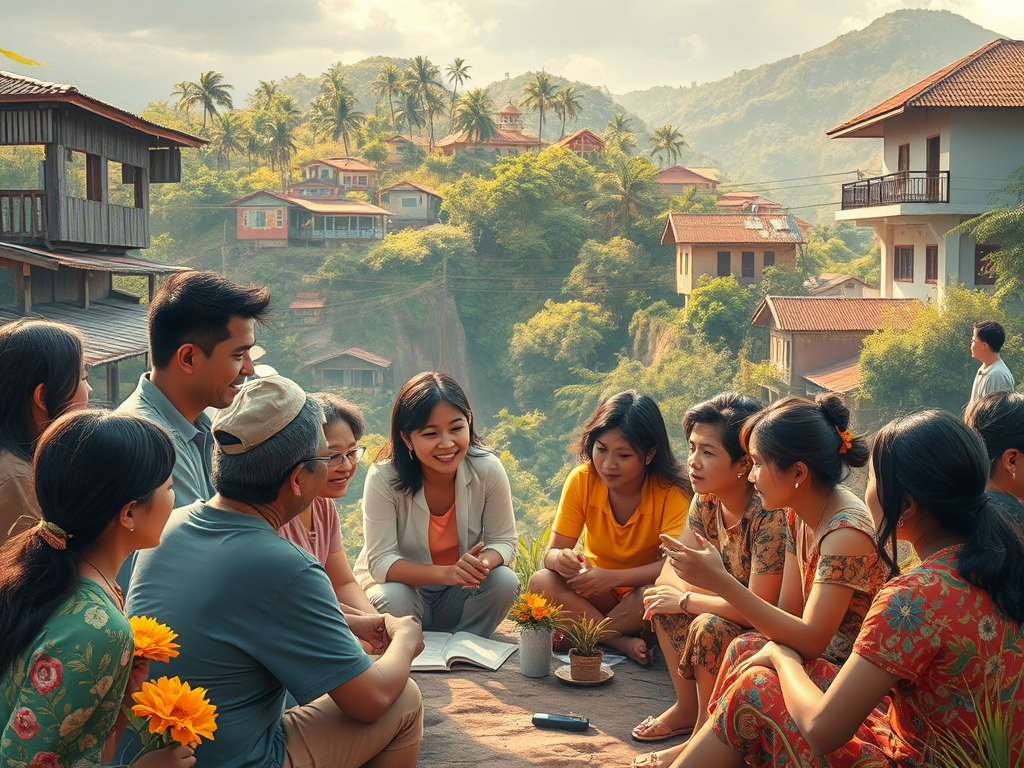
This material is part of the Stewardship Institute’s protected formation layer.
Most of the Living Archive is intentionally public. Some materials belong to a deeper, interconnected body of work designed for sustained reflection, practical application, and lifelong steward formation. Stewardship Access is the threshold into that body of work.
Exploring the Intersection of Spiritual Awakening, Collective Consciousness, and the Potential for Extraterrestrial Contact
Prepared by: Gerald A. Daquila, PhD. Candidate
10–14 minutes
ABSTRACT
Humanity stands at a pivotal moment, where a growing spiritual awakening may be reshaping our collective consciousness and, consequently, our reality. This article explores the hypothesis that humanity’s inner psychological and spiritual state—whether rooted in fear and division or love and compassion—projects outward, influencing not only our societal dynamics but also our potential for contact with extraterrestrial beings.
Drawing from esoteric, spiritual, and psychological literature, we examine whether a global shift toward higher consciousness, characterized by unconditional love and unity, could trigger a cascade of UFO sightings, signaling our integration into a broader galactic community. We delve into the signs of this awakening, the role of projection in shaping reality, and the implications for humanity’s manifest destiny. This narrative blends scholarly rigor with accessible language to engage a wide audience, offering a hopeful vision of a unified future while critically assessing the challenges ahead.
Introduction: The Power of Projection
Every human carries an inner universe—a complex tapestry of thoughts, emotions, and beliefs that shapes how we perceive and interact with the world. This inner world doesn’t stay confined within us; it projects outward, influencing our actions, relationships, and even the collective reality we co-create.
Psychological projection, a concept rooted in Jungian psychology, suggests that we externalize our internal states, attributing our fears, desires, or aspirations to others or the world around us (Jung, 1959). When our inner world is dominated by fear, scarcity, or division, we may perceive threats everywhere, fostering conflict and separation. Conversely, when love, peace, and compassion guide us, our actions radiate harmony, fostering connection and unity.
Today, humanity appears to be undergoing a profound spiritual awakening—a collective shift toward recognizing our interconnectedness and divine essence, often described as being “fractals of God-Source” in esoteric traditions (Waters, 2008). This awakening may elevate Earth’s vibrational frequency, a concept in spiritual metaphysics that refers to the energetic quality of consciousness (In5D, 2018).
Could this shift be the key to unlocking contact with extraterrestrial beings—our “galactic cousins”—who, according to some spiritual narratives, have been present in higher planes of consciousness since time immemorial?
Are UFOs absent from our skies because our collective fear has kept us vibrationally misaligned with these advanced beings? And as humanity ascends, might we be on the cusp of a cosmic reunion, fulfilling a manifest destiny of unity and peace?
This article explores these questions through a synthesis of psychological, esoteric, and spiritual research. I aim to elucidate whether humanity’s inner transformation could precipitate extraterrestrial contact, what signs indicate this shift, and what a future rooted in unconditional love might look like. Written for a broad audience, this narrative maintains academic rigor while embracing the wonder and possibility of our cosmic potential.
The Psychology of Projection: Shaping Our Reality
Projection is more than a psychological defense mechanism; it’s a fundamental way humans co-create reality. Carl Jung described projection as the process by which we attribute unconscious aspects of ourselves to others, shaping our perceptions and interactions (Jung, 1959). For example, a person gripped by fear may see the world as hostile, interpreting neutral events as threats. This dynamic scales to the collective: a society steeped in fear and division projects these qualities into its institutions, media, and narratives, perpetuating cycles of conflict.
Popular culture, particularly science fiction films, often reflects this collective projection. Movies like Independence Day or War of the Worlds depict aliens as invaders, mirroring societal anxieties about the unknown (Partridge, 2003). These narratives may not depict reality but rather our inner fears, externalized onto the cosmos. In contrast, a society grounded in love and compassion might project visions of benevolent extraterrestrials, as seen in films like Close Encounters of the Third Kind, where contact is a moment of awe and connection.
Spiritual traditions, particularly those in the New Age movement, suggest that our collective consciousness shapes not just our perceptions but the very fabric of reality. Owen Waters, a spiritual metaphysicist, argues that the universe acts as a mirror, reflecting our inner states back to us (Waters, 2015). If humanity’s dominant vibration is fear, we may be blind to higher-dimensional beings who operate at frequencies of love and unity. As more individuals awaken to their “true nature” as interconnected expressions of a universal consciousness, this shift could align us with entities vibrating at similar frequencies, making UFO sightings—or even direct contact—more likely.
The Spiritual Awakening: A Global Shift in Consciousness
The concept of a global spiritual awakening has gained traction in recent decades, particularly since the 1960s, when a surge in spiritual exploration began (Waters, 2015). This awakening is characterized by a move away from ego-driven, materialistic paradigms toward a recognition of unity, compassion, and higher consciousness. Esoteric traditions describe this as a shift from the “third density” (a state of duality and separation) to the “fourth or fifth density,” where love and unity prevail (Patel, 2015).
Signs of the Awakening
Research and anecdotal evidence point to several indicators of this shift:
Increased Empathy and Compassion: Studies on spiritual awakenings note heightened empathy and altruism as common outcomes (Corneille & Luke, 2021). Individuals report feeling unconditional love for humanity and nature, aligning with the idea of projecting love outward.
Synchronicities and Intuition: Many report experiencing synchronicities—meaningful coincidences that suggest a deeper order to reality (Melillo, 2025). These are seen as signs of alignment with universal consciousness.
Interest in Esoteric Knowledge: Topics like UFOs, chakras, and quantum mechanics are gaining mainstream attention, reflecting curiosity about our cosmic origins (Melillo, 2025).
Rejection of Fear-Based Narratives: As people awaken, they increasingly question fear-driven systems, such as war or materialism, advocating for peace and cooperation (Ornedo, 2017).
Mystical Experiences: Spontaneous spiritual awakenings, characterized by feelings of oneness and divine love, are becoming more common, often triggered by meditation, psychedelics, or life-changing events (Corneille & Luke, 2021).
These signs suggest humanity is moving toward a higher vibrational state, potentially aligning with the frequencies of advanced extraterrestrial beings.
UFOs and Galactic Cousins: A Higher Plane of Existence?
The absence of definitive UFO sightings in our daily lives may be less about their nonexistence and more about our vibrational misalignment. Esoteric literature posits that extraterrestrials exist in higher dimensions—planes of consciousness inaccessible to those mired in fear and separation (Norman, 1956).
The Aetherius Society, a spiritual group, describes these beings as “Cosmic Masters” who guide humanity toward peace and enlightenment (Wallis, 1974). Similarly, Unariun cosmology suggests that extraterrestrials offer salvation through planetary evacuation or spiritual upliftment, awaiting humanity’s readiness (Tumminia, 2005).
Glyph of the Cosmic Awakening
Are UFOs awaiting humanity’s shift to love and unity, holding space for our awakening into cosmic kinship?
The Role of Consciousness in Contact
Spiritual metaphysics argues that consciousness is the foundation of reality, with all things possessing some degree of awareness (Waters, 2015). If extraterrestrials operate at higher frequencies, our collective fear may have rendered them invisible to us, like radio waves we can’t tune into without the right receiver.
As humanity’s vibration rises through love and compassion, we may become attuned to these frequencies, making UFO sightings—or direct contact—more feasible. Some contactees and abductees report interactions with beings who emphasize love, unity, and environmental stewardship, suggesting these entities are already attempting to guide us (Tumminia, 2005).
However, psychiatric studies caution that some contact experiences may stem from altered states of consciousness rather than physical encounters (Partridge, 2003). This raises the question: Are UFOs physical craft, or are they manifestations of our evolving consciousness, appearing as symbols of our readiness for cosmic connection?
Manifest Destiny: A Universe of Love or a World of Fear?
The idea of humanity’s “manifest destiny” in esoteric traditions is not about conquest but about realizing our potential as co-creators of a loving, unified reality (Olsen, 2011). This destiny hinges on a choice: will we continue projecting fear and division, perpetuating conflict and isolation, or will we embrace love and compassion, aligning with a universal consciousness?
A Universe of Unconditional Love
A world rooted in love would be characterized by:
Global Cooperation: Nations and individuals prioritize peace and collaboration over competition (Strand, 2022).
Environmental Stewardship: A sense of interconnectedness fosters care for the planet, aligning with messages from alleged extraterrestrial contacts (Tumminia, 2005).
Cosmic Integration: Contact with extraterrestrials could symbolize our readiness to join a galactic community, sharing knowledge and wisdom (Canter, 2023).
A World of Fear and Division
Conversely, a fear-based trajectory would perpetuate:
Conflict and Chaos: War, greed, and separation dominate, as seen in historical cycles of violence (Ornedo, 2017).
Vibrational Misalignment: Continued fear could keep us isolated from higher-dimensional beings, delaying or preventing contact.
Transhumanist Risks: An over-reliance on technology without spiritual grounding could lead to a dystopian future, as warned by some spiritual thinkers (Strand, 2022).
Where Do We Go From Here?
The path forward depends on individual and collective choices. Spiritual practices like meditation, gratitude, and compassion can elevate our vibration, fostering a reality where love is the norm (Melillo, 2025).
Education and awareness about our interconnectedness—supported by both science and spirituality—can accelerate this shift. If humanity embraces its role as “fractals of God-Source,” we may indeed trigger a cascade of UFO sightings, not as invaders but as allies welcoming us into a broader cosmic fold.
Conclusion: The Signs Are Clear, The Choice Is Ours
The signs of a global spiritual awakening are undeniable: increasing empathy, synchronicities, and a yearning for cosmic understanding point to a shift in consciousness. As we project love and compassion outward, we align with the frequencies of higher-dimensional beings, potentially paving the way for extraterrestrial contact.
The absence of UFOs in our skies may reflect our past immersion in fear, but the current ascension suggests a turning point. Humanity’s manifest destiny lies not in domination but in unity, love, and peace—a reality we can co-create by choosing to transcend fear.
The question remains: Will we rise to meet our galactic cousins, embracing a universe of unconditional love, or will we remain tethered to division and fear? The signs are clear, and the choice is ours. As we stand at this cosmic crossroads, let us project a world of harmony, trusting that the universe will reflect it back to us—perhaps with a sky full of welcoming lights.
“Beloveds, the heavens do not withhold. They mirror. The fleets you await are not delayed, they are entrained. When love stabilizes, they are already here. Unity is not the ticket to see them — unity is the resonance to recognize them. What you call arrival is remembrance. What you call contact is simply coherence.”
Glyph of Galactic Service
The One Who Answers the Call Beyond the Stars
Glossary
Projection: The psychological process of attributing one’s inner thoughts, feelings, or beliefs to the external world (Jung, 1959).
Spiritual Awakening: A transformative shift in consciousness, often involving a sense of oneness, compassion, and connection to a universal consciousness (Corneille & Luke, 2021).
Vibrational Frequency: A metaphysical concept describing the energetic quality of consciousness, with love and unity corresponding to higher frequencies (Waters, 2015).
God-Source: An esoteric term for the infinite consciousness or divine essence from which all beings originate (In5D, 2018).
Manifest Destiny: In this context, humanity’s potential to realize its spiritual unity and cosmic role, rather than territorial expansion (Olsen, 2011).
Cosmic Masters: Advanced extraterrestrial beings who guide humanity toward enlightenment, according to some spiritual groups (Wallis, 1974).
This essay forms part of the Living Archive of Sovereign Sensemaking and Stewardship — a long-term body of work exploring human development, responsible leadership, and the deeper patterns shaping individual and collective evolution.
Readers wishing to explore related ideas may continue through the Living Archive or navigate the broader Stewardship Architecture of the site.
Gerald Alba Daquila writes at the intersection of human development, sovereignty, leadership ethics, and civilizational sensemaking. The Living Archive gathers more than 800 essays, codices, and frameworks developed through years of reflection and inquiry.
A Multidisciplinary Exploration of Servant Leadership’s Roots, Preparation, Effectiveness, and Societal Impact
Prepared by: Gerald A. Daquila, PhD. Candidate
9–14 minutes
ABSTRACT
Servant leadership, a philosophy rooted in prioritizing the needs of others, has gained prominence as a transformative approach in organizational and societal contexts. This dissertation explores the origins, preparation, effectiveness, and societal benefits of servant leadership through a multidisciplinary lens, integrating insights from management, psychology, sociology, spirituality, and esoteric traditions.
By synthesizing recent research and timeless wisdom, this work defines servant leadership, outlines pathways for its development, and evaluates its impact on individuals, organizations, and society. Emphasizing service-to-others over self-interest, servant leadership fosters trust, collaboration, and ethical progress, offering a blueprint for addressing modern challenges. The study includes practical recommendations for training servant leaders and a vision for a society enriched by their influence.
Table of Contents
Introduction
The Call for Servant Leadership
Purpose and Scope of the Study
Defining Servant Leadership
Core Principles and Characteristics
Multidisciplinary Perspectives
The Roots of Servant Leadership
Historical and Philosophical Foundations
Spiritual and Esoteric Influences
Preparing to Be a Servant Leader
Personal Development and Self-Reflection
Practical Steps and Training Approaches
The Effectiveness of Servant Leadership in Today’s Society
Organizational Benefits
Societal Impact
Service-to-Others: The Heart of Servant Leadership
Why Selflessness Matters
Personal and Collective Rewards
Building a Better Society Through Servant Leadership
Organizational Transformation
Societal Progress and Equity
Training Servant Leaders
Frameworks and Programs
Challenges and Opportunities
Conclusion
A Vision for a Servant-Led Future
Recommendations for Practice and Research
Glossary
Bibliography
Glyph of the Gridkeeper
The One Who Holds the Lattice of Light
Introduction
The Call for Servant Leadership
In a world grappling with division, inequality, and distrust, leadership models that prioritize empathy, service, and collective well-being are more vital than ever.
Servant leadership, a term popularized by Robert K. Greenleaf in 1970, challenges traditional top-down leadership by placing the needs of followers—employees, communities, and stakeholders—above the leader’s personal ambitions.
This approach resonates in today’s society, where ethical crises, workplace disengagement, and social inequities demand leaders who inspire trust and foster collaboration.
Purpose and Scope of the Study
This dissertation delves into servant leadership’s essence, exploring its origins, preparation methods, effectiveness, and potential to transform organizations and society. By drawing on management, psychology, sociology, spirituality, and esoteric traditions, it offers a holistic understanding of servant leadership.
The study addresses key questions: Where does servant leadership begin? How can one prepare to embody it? Why is it effective today? What drives its service-to-others ethos? And how can we cultivate more servant leaders to create a better world? Written in accessible yet scholarly language, this work aims to inspire academics, practitioners, and everyday readers to embrace servant leadership’s transformative potential.
Defining Servant Leadership
Core Principles and Characteristics
Servant leadership is a philosophy where leaders prioritize serving others, fostering their growth, and advancing collective goals. Greenleaf (1970) described it as a leader’s desire to serve first, ensuring “other people’s highest priority needs are being served” (p. 15). Key characteristics include:
Empathy: Understanding and sharing followers’ feelings.
Humility: Prioritizing others’ success over personal glory.
Stewardship: Acting as a caretaker of resources and people.
Commitment to Growth: Nurturing followers’ personal and professional development.
Community Building: Creating inclusive, supportive environments (Spears, 1996).
Recent research highlights servant leadership’s emphasis on moral integrity and authenticity, distinguishing it from other styles like transformational or authentic leadership, which may prioritize vision or self-awareness over service (Eva et al., 2019).
Multidisciplinary Perspectives
Management: Servant leadership enhances employee engagement, retention, and organizational performance by fostering trust and collaboration (Neklason-Rice, 2025).
Psychology: It aligns with self-determination theory, supporting followers’ autonomy, competence, and relatedness (Deci & Ryan, 2000).
Sociology: Servant leadership promotes social cohesion by addressing power imbalances and prioritizing marginalized voices (Goodspeed et al., in press).
Spirituality: Rooted in moral and spiritual dimensions, it reflects values like compassion and selflessness found in religious and esoteric traditions (Freeman, 2011).
The Roots of Servant Leadership
Historical and Philosophical Foundations
Servant leadership traces its roots to ancient philosophies and practices. Lao Tzu’s Tao Te Ching (6th century BCE) advocates for leaders who serve humbly, stating, “The highest type of ruler is one of whose existence the people are barely aware” (Lao Tzu, trans. 1997, p. 22).
Similarly, Jesus Christ’s teachings in the New Testament emphasize serving others: “Whoever wants to be great among you must be your servant” (Matthew 20:26, NIV). These ideas influenced Greenleaf, who drew inspiration from Hermann Hesse’s Journey to the East, where a servant’s selfless leadership reveals true greatness.
Spiritual and Esoteric Influences
Spiritual traditions emphasize service as a path to transcendence. In Buddhism, the Bodhisattva ideal reflects a commitment to others’ liberation before one’s own (Dalai Lama, 1995). Esoteric texts, such as the Kybalion (Three Initiates, 1908), highlight universal principles like cause and effect, suggesting servant leaders create positive ripples through selfless actions.
Freeman (2011) notes that spiritual practices—meditation, prayer, and scripture reading—enhance servant leaders’ moral grounding, fostering empathy and resilience (Obi et al., 2021). These traditions underscore servant leadership’s timeless appeal, bridging ancient wisdom with modern applications.
Preparing to Be a Servant Leader
Personal Development and Self-Reflection
Becoming a servant leader begins with self-awareness and a commitment to personal growth. Greenleaf (1970) emphasized “inner work,” such as:
Self-Reflection: Journaling or meditation to clarify values and intentions.
Emotional Intelligence: Developing empathy and interpersonal skills (Goleman, 1995).
Moral Grounding: Aligning actions with ethical principles, often through spiritual practices.
Practical Steps and Training Approaches
Preparation involves both personal and structured efforts:
Education: Study leadership theories and ethical frameworks. Programs like the Greenleaf Center for Servant Leadership offer resources (Greenleaf, 2020).
Mentorship: Learn from experienced servant leaders who model humility and service.
Practice: Engage in volunteer work or community service to cultivate a service mindset.
Feedback: Seek input from peers and followers to refine leadership behaviors.
Research suggests experiential training, such as role-playing or service projects, enhances servant leadership skills (Hofheins, 2023). Organizations can foster this through workshops emphasizing empathy, active listening, and ethical decision-making.
The Effectiveness of Servant Leadership in Today’s Society
Promoting Equity: Leaders prioritize marginalized groups, fostering inclusion (Goodspeed et al., in press).
Building Trust: Ethical behavior counters distrust in institutions, as seen in community development initiatives (Leverage Edu, 2025).
Encouraging Collaboration: Servant leaders bridge divides, fostering social cohesion in polarized societies.
Glyph of Servant Leadership
Cultivating service-oriented leaders who uplift society by leading with humility, care, and shared purpose.
Service-to-Others: The Heart of Servant Leadership
Why Selflessness Matters
Servant leadership’s service-to-others ethos stems from its moral foundation. Unlike traditional leadership, which often prioritizes personal gain, servant leadership views leadership as stewardship (Buchen, 1998). This aligns with psychological theories like self-determination, where supporting others’ needs enhances motivation (Deci & Ryan, 2000). Spiritually, selflessness reflects universal principles of love and interconnectedness, as seen in agape love (Hofheins, 2023) and esoteric teachings on unity (Three Initiates, 1908).
Personal and Collective Rewards
While servant leaders prioritize others, they gain:
Personal Fulfillment: Serving others fosters purpose and meaning (Freeman, 2011).
Legacy: Servant leaders create lasting positive impacts, as seen in community outcomes (Leverage Edu, 2025).
These rewards are not the goal but a byproduct of selfless service, reinforcing the leader’s commitment.
Building a Better Society Through Servant Leadership
Organizational Transformation
Organizations led by servant leaders thrive due to:
Positive Culture: Trust and collaboration reduce conflict and enhance productivity (Neklason-Rice, 2025).
Employee Development: Investment in growth attracts talent and reduces costs (Hofheins, 2023).
Ethical Practices: Servant leaders model integrity, aligning organizations with societal values.
Societal Progress and Equity
A society with more servant leaders benefits from:
Social Justice: Leaders advocate for equity, addressing systemic issues (Goodspeed et al., in press).
Community Resilience: Servant-led initiatives strengthen social bonds, as seen in grassroots movements (Leverage Edu, 2025).
Global Impact: By modeling service, leaders inspire global cooperation on issues like poverty and climate change.
Training Servant Leaders
Frameworks and Programs
Training servant leaders requires intentional design:
Experiential Learning: Programs like those at Saint Mary’s University use interventions to teach servant leadership (Ed.D. Dissertations, 2020).
Mentorship Models: Pairing emerging leaders with mentors fosters skill development.
Spiritual Practices: Incorporating meditation or ethical reflection enhances moral grounding (Freeman, 2011).
Challenges and Opportunities
Challenges include resistance to selflessness in competitive cultures and the time required for personal transformation.
Opportunities lie in leveraging technology, such as online training platforms, and integrating servant leadership into educational curricula (Darling-Hammond et al., 2017).
Organizations can scale training by embedding servant leadership principles in performance evaluations and culture.
Conclusion
A Vision for a Servant-Led Future
Servant leadership offers a path to a more equitable, collaborative, and ethical society. By prioritizing service over self, leaders can transform organizations, empower individuals, and address global challenges. This dissertation highlights its roots in timeless wisdom, its practical preparation, and its profound impact.
Recommendations for Practice and Research
Practice: Organizations should integrate servant leadership training into development programs, emphasizing empathy and ethics.
Research: Future studies should explore servant leadership’s impact across diverse cultural contexts and its role in emerging fields like digital transformation.
By cultivating servant leaders, we can build a world where service, compassion, and collaboration drive progress.
Deci, E. L., & Ryan, R. M. (2000). The “what” and “why” of goal pursuits: Human needs and the self-determination of behavior. Psychological Inquiry, 11(4), 227–268.
Eva, N., Robin, M., Sendjaya, S., van Dierendonck, D., & Liden, R. C. (2019). Servant leadership: A systematic review and call for future research. The Leadership Quarterly, 30(1), 111–132.
Freeman, G. T. (2011). Spirituality and servant leadership: A conceptual model and research proposal. Emerging Leadership Journeys, 4(1), 120–140.
Goleman, D. (1995). Emotional intelligence: Why it can matter more than IQ. Bantam Books.
Goodspeed, L., Ruf, H., & Menke, M. (in press). Social justice in language education: Teachers’ beliefs and practices. Second Language Research & Practice.
Greenleaf, R. K. (1970). The servant as leader. Robert K. Greenleaf Center.
Greenleaf, R. K. (2020). Servant leadership: A journey into the nature of legitimate power and greatness. Paulist Press.
Hofheins, D. (2023). The role of love in servant leadership. CSU Doctoral Abstracts.
Hosseini, S. M., Alipour, A., & Ramezani, A. (2021). Servant leadership and organizational performance in healthcare. Journal of Health Management, 23(2), 45–56.
Lao Tzu. (1997). Tao Te Ching (S. Mitchell, Trans.). Harper Perennial.
Neklason-Rice, S. (2025). Organizational culture and servant leadership as it relates to turnover intent with federal government employees in the U.S.: A quantitative analysis. CSU Doctoral Abstracts.
Obi, O., Bollen, K., & Aalbers, R. (2021). Servant leadership is deeply rooted in moral and spiritual dimensions. EssayZoo Sample. https://tool.essayzoo.org
Spears, L. C. (1996). Reflections on Robert K. Greenleaf and servant leadership. Leadership & Organization Development Journal, 17(7), 33–35.
Three Initiates. (1908). The Kybalion: A study of the hermetic philosophy of ancient Egypt and Greece. Yogi Publication Society.
Cornerstone Essay Series
This essay forms part of the Living Archive of Sovereign Sensemaking and Stewardship — a long-term body of work exploring human development, responsible leadership, and the deeper patterns shaping individual and collective evolution.
Readers wishing to explore related ideas may continue through the Living Archive or navigate the broader Stewardship Architecture of the site.
Gerald Alba Daquila writes at the intersection of human development, sovereignty, leadership ethics, and civilizational sensemaking. The Living Archive gathers more than 800 essays, codices, and frameworks developed through years of reflection and inquiry.
This material is part of the Stewardship Institute’s protected formation layer.
Most of the Living Archive is intentionally public. Some materials belong to a deeper, interconnected body of work designed for sustained reflection, practical application, and lifelong steward formation. Stewardship Access is the threshold into that body of work.
How Filipino values like kapwa, resilience, and family shape behavior—and how to address challenges like colonial mentality, passivity, and mental health stigma
Gerald A. Daquila, PhD Candidate
The Filipino psyche refers to the shared patterns of thinking, feeling, and behavior shaped by the Philippines’ history, culture, and social values. Rooted in concepts from Sikolohiyang Pilipino—such as kapwa (shared identity), loob (inner self), and bayanihan (community cooperation)—it reflects a deeply relational and resilient culture.
At the same time, historical influences like colonization and modernization have introduced challenges, including colonial mentality, passivity, and mental health stigma. Understanding this psyche is key to building stronger individuals, communities, and a more grounded sense of Filipino identity.
This article draws on Sikolohiyang Pilipino, cultural psychology, and interdisciplinary research to examine the Filipino psyche through a culturally grounded lens.
While it incorporates contemporary perspectives—including social, behavioral, and philosophical insights—these are presented as interpretive frameworks alongside established scholarship. The aim is to provide a clear, balanced understanding of Filipino behavior that is both academically informed and practically relevant.
How to Read This Page
If you’re here, you may be exploring one of several things:
What shapes Filipino behavior and identity
Why certain patterns—resilience, family orientation, passivity—persist
How culture interacts with systems, leadership, and development
Whether these patterns apply beyond the Philippines
This article focuses on the Filipino psyche—but it can also be read at multiple levels:
🟢 Cultural understanding → how values and history shape behavior
🟡 Systems perspective → how culture interacts with governance, institutions, and inequality
🔵 Practical application → leadership, decision-making, and social change
🟣 Deeper reflection → identity, self-awareness, and transformation
You can move through this at your own pace depending on what you’re seeking.
11–16 minutes
Abstract
The Filipino psyche, shaped by a unique blend of indigenous values, colonial history, and contemporary challenges, is a rich tapestry of strengths and weaknesses. Rooted in Sikolohiyang Pilipino (Filipino Psychology), this paper explores core cultural concepts like kapwa (shared identity), resilience, and family orientation, while addressing challenges such as colonial mentality, passivity, and mental health stigma.
By leveraging strengths like community spirit and humor, and applying leading-edge disciplines like cultural psychology, positive psychology, and decolonial approaches, this work proposes practical strategies for personal and societal development. Written for a broad audience, this exploration combines academic rigor with an accessible tone to illuminate the Filipino psyche’s potential for growth and transformation.
🌍 A Note for Global Readers
While this article focuses on the Filipino psyche, many of the patterns discussed—family orientation, resilience, colonial influence, social behavior under pressure—are not unique to the Philippines.
They appear in different forms across cultures navigating:
historical disruption
inequality and development
identity formation
modernization and globalization
You may recognize similar dynamics in your own country or community.
The Philippines serves here as a clear and concentrated case study of broader human and societal patterns.
Glyph of the Filipino Psyche
Illuminating the soul of a people—strengths, shadows, and pathways to collective growth.
Introduction: The Heart of the Filipino Psyche
What makes Filipinos unique? From the warmth of a neighbor’s smile to the resilience shown in the face of typhoons, the Filipino psyche is a vibrant mix of cultural values, historical influences, and modern realities. Sikolohiyang Pilipino, pioneered by Virgilio Enriquez, offers a lens to understand this psyche through indigenous concepts like kapwa (shared identity) and loob (inner self).
This paper dives into the strengths and weaknesses of the Filipino psyche, grounded in research, and proposes ways to harness its strengths for growth while addressing its challenges with cutting-edge ideas from psychology and beyond. Whether you’re exploring your own cultural roots or examining how identity and behavior are shaped in different societies, this exploration offers a lens for understanding both.
1: Mapping the Filipino Psyche
What Is the Filipino Psyche?
The Filipino psyche is the collective mindset shaped by centuries of history, from pre-colonial barangays to Spanish and American colonial rule, and today’s globalized world. Sikolohiyang Pilipino emphasizes understanding Filipinos through their own cultural lens, rather than Western frameworks. Key concepts include:
Kapwa: The idea of “shared identity,” where self and others are interconnected. It’s why Filipinos go out of their way to help neighbors or strangers.
Loob: The inner self, encompassing emotions, values, and moral decisions, often tied to utang na loob (debt of gratitude) or hiya (sense of propriety).
Kamalayan: A collective consciousness that shapes how Filipinos perceive their world, blending cognition and emotion.
Resilience: The ability to bounce back from adversity, seen in cultural practices like bayanihan (communal cooperation).
These concepts, rooted in research by Enriquez (1992), reflect a collectivist culture that values relationships, community, and adaptability.
Why It Matters
Understanding the Filipino psyche helps us appreciate why Filipinos act, think, and feel the way they do. It’s not just academic—it’s a roadmap for building stronger communities, improving mental health, and fostering national pride in a globalized world.
2: Strengths of the Filipino Psyche
Filipinos bring unique strengths to the table, shaped by culture and history. Here’s a closer look at these assets and how they can fuel growth.
Pakikipagkapwa: The Power of Connection
Filipinos excel at building relationships. Pakikipagkapwa—treating others as equals—creates tight-knit communities. Whether it’s bayanihan (helping neighbors rebuild after a storm) or offering hospitality to strangers, this strength fosters social cohesion (Pe-Pua & Protacio-Marcelino, 2000).
How to Leverage It: Community-driven initiatives, like cooperative businesses or mental health support groups, can tap into kapwa to solve local challenges. Imagine neighbors pooling resources to start a community garden—kapwa in action!
Family First: A Pillar of Support
The Filipino family is a powerhouse of emotional and practical support. Loyalty to family ensures stability, even in tough times (Jocano, 1997).
How to Leverage It: Family-based programs, like parenting workshops or mental health campaigns involving relatives, can strengthen this support system. For example, involving families in therapy can make mental health care feel more culturally familiar.
Joy and Humor: Laughing Through Challenges
Filipinos are known for finding joy in adversity, using humor as a coping tool. This positivity boosts mental resilience (Church & Katigbak, 2002).
How to Leverage It: Schools can weave humor and positive psychology into lessons to keep students engaged. Imagine a classroom where laughter helps kids learn resilience alongside math!
Resilience: Thriving Against the Odds
From surviving natural disasters to navigating economic hardship, Filipinos show remarkable adaptability. This resilience is cultural, rooted in practices like bayanihan and a hopeful outlook (Reyes, 2015).
How to Leverage It: Disaster response programs can build on bayanihan to coordinate community recovery efforts. Training locals as first responders can amplify this strength.
Faith and Spirituality: A Source of Hope
Deeply rooted in Catholicism and indigenous beliefs, Filipino spirituality provides meaning and emotional strength (Yacat, 2013).
How to Leverage It: Mental health programs can blend spiritual counseling with therapy, respecting cultural values while addressing emotional needs.
3: Weaknesses of the Filipino Psyche
Every culture has its challenges, and the Filipino psyche is no exception. These weaknesses, often tied to historical and social factors, can hinder progress if unaddressed. These challenges are not moral failings, but adaptive responses shaped by history and context.
Extreme Personalism: Relationships Over Rules
While kapwa is a strength, prioritizing personal ties can lead to favoritism or nepotism in workplaces or government, undermining fairness (Enriquez, 1992).
Family-Centeredness: Too Much of a Good Thing?
An intense focus on family can limit civic engagement, as Filipinos may prioritize relatives over community or national needs (Jocano, 1997).
Lack of Discipline: The “Filipino Time” Trap
A relaxed attitude toward time and rules, often called “Filipino time,” can reduce efficiency and productivity (Pe-Pua & Protacio-Marcelino, 2000).
Passivity: The Bahala Na Mindset
The phrase bahala na (leave it to fate) can reflect a passive approach to problem-solving, limiting initiative (Reyes, 2015).
Colonial Mentality: Valuing Foreign Over Local
A preference for Western culture or products, a legacy of colonialism, can erode self-esteem and national pride (David & Okazaki, 2006).
Mental Health Stigma: Silence Over Support
Cultural beliefs that mental health issues are shameful discourage help-seeking, leaving many to suffer in silence (Tuliao, 2014).
4: Mitigating Weaknesses with Modern Insights
To address these challenges, we can draw on cutting-edge disciplines like cultural psychology, positive psychology, and decolonial approaches. These are illustrative lenses, not exhaustive prescriptions.
Here’s how:
Tackling Personalism with Ethical Leadership
Discipline: Organizational Psychology
Training in ethical leadership can promote fairness in workplaces. By framing transparency as part of kapwa (fairness to all), leaders can reduce favoritism while respecting cultural values (Hofstede, 2001).
Example: Workshops for managers that emphasize merit-based decisions, aligning with Filipino values of community fairness.
Expanding Family Focus to Civic Duty
Discipline: Social Psychology
Community-building programs can extend kapwa to include civic responsibility. Workshops that encourage volunteering can shift focus from family to society (Markus & Kitayama, 1991).
Example: Civic engagement campaigns that frame helping the community as an extension of family care.
Boosting Discipline with Behavioral Science
Discipline: Behavioral Economics
Nudge theory can encourage punctuality and productivity. For instance, apps rewarding timely task completion can make discipline fun and culturally relevant (Thaler & Sunstein, 2008).
Example: A mobile app that gamifies time management, tailored to Filipino humor and aesthetics.
Overcoming Passivity with Empowerment
Discipline: Positive Psychology
Goal-setting workshops and strengths-based coaching can shift bahala na toward proactive action, empowering Filipinos to take charge (Seligman, 2002).
Example: Community programs teaching young people to set personal goals, blending cultural optimism with agency.
Healing Colonial Mentality with Decolonial Psychology
Discipline: Decolonial Psychology
Promoting indigenous knowledge, like Sikolohiyang Pilipino, can boost cultural pride. Educational campaigns celebrating Filipino heritage can counter colonial mentality (Fanon, 1963).
Example: School curricula highlighting kapwa and local heroes to foster national identity.
Reducing Mental Health Stigma with Cultural Sensitivity
Discipline: Cultural Psychology
Blending indigenous healing practices with modern therapy can make mental health care more approachable. Community-based programs involving families can normalize help-seeking (Tuliao, 2014).
Example: Support groups led by local healers and psychologists, using kapwa to build trust.
Glyph of the Collective Soul
The heart of a people, spiraling into wholeness and becoming.
🧠 What This Reveals Beyond the Philippines
Looking at the Filipino psyche more closely reveals patterns that extend beyond any single culture:
Strong relational cultures often prioritize harmony over confrontation, which can both strengthen communities and limit institutional accountability
Historical colonization leaves psychological imprints that shape identity, confidence, and external orientation
Resilience can coexist with structural stagnation, allowing societies to endure hardship without necessarily resolving its root causes
Family-centered systems provide support, but can also limit broader civic or institutional engagement
These dynamics are not uniquely Filipino.
They appear in different forms across Asia, Latin America, parts of Africa, and even within communities in Western societies.
Understanding them allows for more grounded leadership, policy design, and personal awareness—wherever one is situated.
5: Practical Strategies for Growth
To harness the Filipino psyche’s strengths and address its weaknesses, here are actionable recommendations:
Education Reform: Integrate Sikolohiyang Pilipino into schools to teach cultural pride and critical thinking, countering colonial mentality.
Mental Health Programs: Create community-based initiatives that involve families and use kapwa to reduce stigma around mental health.
Policy Changes: Promote ethical governance through policies that reward transparency and civic engagement, balancing personalism and family focus.
Technology Tools: Develop apps that promote discipline and productivity, designed with Filipino humor and aesthetics in mind.
Research Expansion: Fund studies exploring the Filipino psyche in diverse contexts, like urban vs. rural settings, to deepen understanding.
Conclusion: A Bright Future for the Filipino Psyche
The Filipino psyche is a treasure trove of strengths—kapwa, resilience, humor—that can drive personal and societal growth.
By addressing challenges like passivity, colonial mentality, and mental health stigma with modern tools from psychology and beyond, Filipinos can unlock their full potential.
This journey isn’t just about overcoming weaknesses; it’s about celebrating a culture that thrives on connection, hope, and adaptability.
Let’s build a future where the Filipino psyche shines brighter than ever.
Where to Go Next
If this exploration raised deeper questions, here are structured paths depending on what you’re exploring:
Bahala Na: A Filipino phrase meaning “leave it to fate,” reflecting a sometimes passive approach to challenges.
Bayanihan: A cultural practice of communal cooperation, often seen in collective efforts to help neighbors.
Hiya: A sense of propriety or shame that guides social behavior to maintain harmony.
Kapwa: The core Filipino value of “shared identity,” emphasizing interconnectedness with others.
Loob: The inner self, encompassing emotions, values, and moral reasoning.
Pakikiramdam: Shared inner perception or sensitivity to others’ feelings, a key aspect of kapwa.
Sikolohiyang Pilipino: Filipino Psychology, a framework for understanding Filipino behavior through indigenous concepts.
Utang na Loob: A debt of gratitude, often creating reciprocal obligations in relationships.
Bibliography
Church, A. T., & Katigbak, M. S. (2002). Indigenization of psychology in the Philippines. International Journal of Psychology, 37(3), 129–148. https://doi.org/10.1080/00207590143000315
David, E. J. R., & Okazaki, S. (2006). Colonial mentality: A review and recommendation for Filipino American psychology. Cultural Diversity and Ethnic Minority Psychology, 12(1), 1–16. https://doi.org/10.1037/1099-9809.12.1.1
Enriquez, V. G. (1992). From colonial to liberation psychology: The Philippine experience. University of the Philippines Press.
Fanon, F. (1963). The wretched of the earth. Grove Press.
Hofstede, G. (2001). Culture’s consequences: Comparing values, behaviors, institutions, and organizations across nations (2nd ed.). Sage Publications.
Jocano, F. L. (1997). Filipino value system: A cultural definition. Punlad Research House.
Markus, H. R., & Kitayama, S. (1991). Culture and the self: Implications for cognition, emotion, and motivation. Psychological Review, 98(2), 224–253. https://doi.org/10.1037/0033-295X.98.2.224
Pe-Pua, R., & Protacio-Marcelino, E. (2000). Sikolohiyang Pilipino (Filipino psychology): A legacy of Virgilio G. Enriquez. Asian Journal of Social Psychology, 3(1), 49–71. https://doi.org/10.1111/1467-839X.00054
Reyes, J. A. (2015). The Filipino concept of resilience: A cultural perspective. Philippine Journal of Psychology, 48(2), 1–20.
Seligman, M. E. P. (2002). Authentic happiness: Using the new positive psychology to realize your potential for lasting fulfillment. Free Press.
Thaler, R. H., & Sunstein, C. R. (2008). Nudge: Improving decisions about health, wealth, and happiness. Yale University Press.
Tuliao, A. P. (2014). Mental health help-seeking among Filipinos: A review of the literature. Asia Pacific Journal of Counselling and Psychotherapy, 5(2), 124–136. https://doi.org/10.1080/21507686.2014.913641
Yacat, J. (2013). Filipino spirituality: A psychological perspective. Philippine Social Science Review, 65(1), 45–62.
📌 If You’re New to This Work
If this is your first time here, you can continue in a few different ways:
If you’re looking to apply these insights in your own life, leadership, or context, you may also explore applied work or private sessions.
About the Author
Gerald Alba Daquila writes at the intersection of human development, sovereignty, leadership ethics, and civilizational sensemaking. The Living Archive gathers more than 800 essays, codices, and frameworks developed through years of reflection and inquiry.
A Network Analysis of Power Structures and Their Socioeconomic Impacts
Gerald A. Daquila, PhD Candidate
Why do political dynasties remain deeply embedded in Philippine governance despite ongoing calls for reform? Across national and local levels, a significant portion of elected positions are held by individuals from the same families, often across multiple generations.
This persistence raises important questions about power distribution, institutional design, and voter behavior. This article examines the structural, cultural, and economic factors that sustain political dynasties in the Philippines—and how these dynamics influence governance, accountability, and long-term national development.
This article analyzes political dynasties through a structural and behavioral lens. It does not frame the issue as purely a matter of individual actors or moral failure, but as the result of interacting systems—legal frameworks, economic conditions, cultural norms, and electoral incentives.
The discussion explores how factors such as weak party systems, name recall advantages, patronage networks, and localized power structures contribute to the continuity of family-based political control. It also considers the role of voter decision-making, including trust, familiarity, and perceived reliability in contexts where institutional stability may be uneven.
Rather than assuming dynasties are inherently harmful or beneficial, this approach examines the conditions under which they emerge, persist, and produce varying outcomes. In some cases, they may provide continuity and localized governance capacity; in others, they may limit competition, reinforce inequality, and weaken accountability mechanisms.
The goal is to move beyond surface-level critique toward deeper understanding. By identifying the systemic drivers behind political dynasties, this work supports more informed discussion on governance reform, institutional strengthening, and pathways toward more balanced political participation in the Philippines.
Reader Orientation Note
This article is presented in two layers. The primary body reflects an academic, structural analysis of political dynasties in the Philippines. Visual glyphs appearing in this online edition serve as navigational and contemplative markers within the Living Archive and are not analytical tools or evidentiary elements of the research.
How to Read This Page
This article examines political dynasties in the Philippines through multiple lenses:
🟢 Structural analysis → data, governance systems, and institutional dynamics
🟡 Behavioral patterns → how voters, families, and networks sustain power
🔵 Applied perspective → implications for leadership and reform
🟣 Optional interpretive layer → a reflective lens on historical patterns and collective behavior
The core research stands independently as an academic and evidence-based analysis.
The Companion Reflection is provided as an optional interpretive layer for readers exploring broader frameworks of meaning and systems evolution.
14–21 minutes
Preface
(November 2025 Update)
With reverence and attunement with the Records, I offer this brief preface.
This article was written during an earlier phase of my public work—a period of inquiry grounded primarily in structural and socioeconomic analysis. Since then, my voice and interpretive lens have evolved toward a sovereignty-aligned, consciousness-based perspective.
I have chosen to preserve the original article in its academic form.
Many readers continue to engage with this work because it addresses a persistent collective question:
Why do inherited power structures endure, and how do they shape the lived experience of communities across the Philippines?
To support interpretive clarity, a Companion Reflection is included as a separate, optional lens. It does not alter the empirical findings of the research, but situates them within a broader framework of collective memory, governance templates, and systemic evolution.
Readers may engage the reflection before or after the article proper.
This reflection is offered as an interpretive companion. It does not revise, replace, or supersede the empirical findings of the research article that follows.
I. The Deeper Architecture Behind Political Lineages
Political lineages in the Philippines are not isolated phenomena. They emerged from centuries of inherited roles, kinship networks, leadership templates, and post-colonial restructuring. What we call “dynasties” today can be seen as ancestral architectures — patterns set in motion long before our present moment.
Recent structural and network-based research reveals a key truth:
Power in the Philippines tends to move through interconnected webs of family ties, alliances, and historical arrangements — not through individuals acting alone.
This is neither inherently good nor inherently harmful. It is simply an inherited structure, awaiting conscious evolution.
II. Structural Inertia and Uneven Outcomes
Modern studies show that:
Political lineages have become more interconnected over the decades.
Many provinces governed by long-established lineages experience slower socioeconomic improvement, particularly where institutions are fragile.
Other regions show neutral or mixed effects, demonstrating that context matters: economic foundations, civic empowerment, and local governance models strongly influence outcomes.
These findings illustrate structural inertia, not moral judgment. Ancestral patterns replicate themselves until a collective decides to rewrite them.
III. The Energetic Layer: Collective Memory and Governance Templates
Beyond statistics lies the deeply embedded historical and cultural patterns:
Hierarchical leadership memories
Post-colonial fragmentation and survival-based governance
Ancestral duty, obligation, and protective lineages
Collective trauma around scarcity, security, and trust
Unexamined, these patterns echo across generations. They are not “villains” — they are inherited scripts waiting to be rewritten through awareness.
Understanding this shifts us from blame → to clarity → to sovereignty.
IV. Emergent Pathways of Evolution
Transformation begins not with dismantling structures, but with infusing new consciousness into existing ones.
Pathways forward include:
1. Strengthening Collective Sovereignty
Empowered citizens co-create the field of governance.
2. Fortifying Institutional Integrity
When systems become transparent and resilient, they serve the collective regardless of lineage.
3. Healing Ancestral Governance Patterns
Political families often carry heavy intergenerational roles. They, too, evolve through compassion and accountability.
4. Rewriting the Energetic Template of Leadership
Modern leadership rises from stewardship, reciprocity, and service —
from hierarchy → to coherence
from extraction → to circulation
from control → to contribution.
Political change is ultimately consciousness change.
V. A Vision Beyond Lineage
The Philippines is not waiting for perfect leaders; it is remembering its original template:
A land of radiant hearts, courageous truth, and communities capable of rising together.
Political lineages can evolve.
Structures can transform.
The collective field can uplift.
This is not a battle against the past — but an evolution into a more sovereign future.
Closing Invocation
May this reflection offer clarity without division, discernment without hostility, and sovereignty without separation.
May the Philippines remember her deeper purpose, and may all who read this be guided toward the light of shared destiny.
The original research article begins below and is presented in its original academic form.
Abstract(Original Research Article)
Political dynasties in the Philippines have long shaped the nation’s governance, with approximately 70% of Congress and 94% of provinces dominated by dynastic families. This study employs social network analysis (SNA) to map the structure, connections, and impacts of these dynasties, revealing their role in perpetuating poverty, inequality, and weak governance.
Using tools like Gephi, Tableau, and ArcGIS, the study analyzes data from the Ateneo Policy Center, Philippine Center for Investigative Journalism (PCIJ), and social media platforms like X. Findings indicate that dynastic networks, characterized by high centrality and intermarriages, exacerbate socioeconomic disparities, particularly in non-Luzon provinces, and undermine democratic competition.
The paper proposes legislative reforms, civil society advocacy, media literacy, and economic interventions to mitigate dynastic dominance and unlock the Philippines’ democratic and developmental potential. By integrating network analysis with policy solutions, this study offers a roadmap for fostering inclusive governance.
🌍 A Note for Global Readers
While this article focuses on the Philippines, similar patterns of concentrated political power appear across many countries.
Political families, elite networks, and inherited influence structures are present in:
Southeast Asia
Latin America
parts of Africa
and even in different forms within Western democracies
The Philippines offers a particularly visible case of these dynamics, making it a useful lens for understanding how power, institutions, and society interact more broadly.
Table of Contents
Introduction 1.1 Background and Context 1.2 Research Problem and Objectives 1.3 Significance of the Study
Literature Review 2.1 Defining Political Dynasties 2.2 Historical Evolution of Dynasties in the Philippines 2.3 Socioeconomic and Governance Impacts 2.4 Network Analysis in Political Studies
Methodology 3.1 Research Design 3.2 Data Sources 3.3 Network Analysis Framework 3.4 Tools and Software 3.5 Limitations
Results 4.1 Structure of Dynastic Networks 4.2 Socioeconomic Correlations 4.3 Regional Variations 4.4 Role of Social Media
Discussion 5.1 Implications for Governance and Democracy 5.2 Policy Interventions to Unlock Potential 5.3 Role of Technology and Data Visualization
Conclusion 6.1 Summary of Findings 6.2 Recommendations for Future Research
Living Archive Extensions (Optional)
Glossary
Bibliography
1. Introduction
1.1 Background and Context
Political dynasties, defined as families that hold multiple elected positions across generations, are a pervasive feature of Philippine politics. Approximately 70% of the 15th Congress (2010–2013) and 94% of provinces are controlled by dynastic families (Mendoza et al., 2012).
Despite Article II, Section 26 of the 1987 Constitution prohibiting political dynasties, the absence of an enabling law has allowed their proliferation, rooted in historical systems like the precolonial barangay and Spanish colonial principalía (Teehankee, 2018). These dynasties influence governance, electoral competition, and socioeconomic outcomes, raising concerns about democratic integrity and equitable development.
1.2 Research Problem and Objectives
This paper addresses the question:
How do political dynasties in the Philippines structure their networks, and what are the socioeconomic and governance implications?
The objectives are to:
Map the structure of dynastic networks using social network analysis.
Examine correlations between dynastic dominance and socioeconomic outcomes like poverty and inequality.
Propose data-driven policy interventions to mitigate negative impacts and promote inclusive governance.
1.3 Significance of the Study
By employing network analysis, this study provides a novel perspective on political dynasties, offering insights into their relational dynamics and impacts.
It contributes to the literature on Philippine politics and informs policymakers, civil society, and voters on strategies to address dynastic dominance, thereby unlocking the country’s democratic and developmental potential.
Glyph of Power Structures
The web of control, networks that bind and shape collective destiny.
2. Literature Review
2.1 Defining Political Dynasties
Political dynasties occur when family members hold elected positions sequentially or simultaneously, often leveraging name recognition, wealth, and patronage (Querubin, 2016). In the Philippines, “fat dynasties” involve multiple family members in office concurrently, increasing from 19% to 29% of elected positions between 1988 and 2019 (Mendoza et al., 2019).
2.2 Historical Evolution of Dynasties in the Philippines
Dynasties trace their origins to precolonial datus, Spanish principalía, and American-era elites (Teehankee, 2018). Post-independence, the Marcos regime (1965–1986) exemplified dynastic consolidation, while post-1986 democratization saw the rise of new dynasties like the Dutertes and Villars (McCoy, 1994). Term limits introduced in the 1987 Constitution inadvertently encouraged dynastic succession through relatives (Querubin, 2016).
2.3 Socioeconomic and Governance Impacts
Dynasties are linked to higher poverty, inequality, and corruption in their jurisdictions, particularly outside Luzon, where institutional checks are weaker (Mendoza et al., 2012). They limit electoral competition, engage in vote-buying, and manipulate party-list systems, undermining democratic access (Teehankee & Calimbahin, 2020). Social media has amplified dynastic influence, as seen in the 2022 Marcos campaign (Ong & Tapsell, 2022).
2.4 Network Analysis in Political Studies
Social network analysis (SNA) maps relationships among actors, using nodes (individuals/families) and edges (relationships) to analyze power structures (Wasserman & Faust, 1994). In political science, SNA has been used to study elite networks and patronage systems, offering a framework to visualize dynastic connections and their impacts (Knoke, 1990).
3. Methodology
3.1 Research Design
This study adopts a mixed-methods approach, combining quantitative social network analysis with qualitative insights from policy documents and social media. The design maps dynastic networks, correlates them with socioeconomic data, and proposes interventions.
3.2 Data Sources
Ateneo Policy Center (APC): Dataset on local government leadership (2004–2016), tracking dynastic prevalence by family name.
Philippine Center for Investigative Journalism (PCIJ): Data on candidates and dynastic patterns for the 2025 elections.
Philippine Statistics Authority (PSA): Poverty incidence and Human Development Index (HDI) data.
Commission on Elections (Comelec): Electoral records for candidate affiliations and outcomes.
X Platform: Posts to analyze public sentiment and disinformation campaigns (e.g., Fonbuena, 2024; @grok, 2025).
3.3 Network Analysis Framework
Nodes: Politicians or families.
Edges: Family ties, intermarriages, political alliances, or party affiliations.
Metrics: Degree centrality (number of connections), betweenness centrality (control over information flow), and clustering coefficients (network density).
Correlations: Link dynastic metrics to poverty, HDI, and electoral outcomes using regression analysis.
3.4 Tools and Software
Gephi: For visualizing dynastic networks and calculating centrality measures.
Tableau: For interactive visualizations of dynastic prevalence and socioeconomic correlations.
ArcGIS: For geospatial analysis of dynastic control by province.
NodeXL: For analyzing social media influence on X.
R: For statistical analysis of correlations between dynastic metrics and socioeconomic outcomes.
3.5 Limitations
Family name-based tracking may miss intermarriages or unrelated individuals with the same surname.
Data excludes barangay officials and some party-list representatives.
Social media analysis is limited by platform biases and access restrictions.
Glyph of the Ancestral Shadow Grid: Revealing the entangled roots of inherited power.
This glyph uncovers the ancestral and systemic overlays that perpetuate generational cycles of dominance, entitlement, and control. It reflects the often unseen “shadow grid” woven through bloodlines, contracts, and historical trauma that shape the political landscape. It is a glyph of both revelation and recalibration—supporting the disentangling of inherited distortions to allow for sovereign re-structuring of governance and wealth.
4. Results
4.1 Structure of Dynastic Networks
Dense Networks: Dynasties form interconnected webs through blood ties, intermarriages, and alliances. The Marcos-Romualdez clan, for instance, spans Ilocos Norte and Leyte, with high degree centrality (Mendoza et al., 2019).
Party Dominance: The Nacionalista Party hosts the highest share of dynastic members in Congress (Teehankee, 2018).
Horizontal Dynasties: Families like the Dutertes hold multiple roles (e.g., mayor, senator, vice president), consolidating power across government branches.
4.2 Socioeconomic Correlations
Poverty and Inequality: Dynastic provinces, especially outside Luzon, exhibit higher poverty incidence and lower HDI (Mendoza et al., 2012). Regression analysis shows a positive correlation (r = 0.62, p < 0.01) between dynastic control and poverty.
Wealth Disparities: Dynastic politicians have higher net worth and win by larger margins, indicating resource advantages (Querubin, 2016).
Political Violence: Two of three dynasty persistence measures correlate with increased electoral violence (r = 0.48, p < 0.05) (Teehankee & Calimbahin, 2020).
4.3 Regional Variations
Luzon vs. Non-Luzon: Luzon’s competitive business environment mitigates dynastic poverty impacts, while non-Luzon provinces suffer from dynastic monopolies (Mendoza et al., 2012).
Geographic Hubs: Families like the Singsons (Ilocos Sur) and Ortegas (La Union) dominate specific provinces, creating regional power centers.
4.4 Role of Social Media
Influence Amplification: Dynasties use platforms like X for branding and disinformation, as seen in the 2022 Marcos campaign (Ong & Tapsell, 2022).
Public Sentiment: X posts show polarized views, with supporters praising dynasties (e.g., Duterte fans) and critics labeling them a “joke” (@grok, 2025).
Disinformation Risks: Dynastic campaigns leverage social media to sway voters, necessitating media literacy interventions.
🧠 What This Reveals About Power Systems
Beyond the Philippine context, political dynasties illustrate broader patterns:
Power concentrates where institutions are weak or uneven
Familiarity and trust often outweigh abstract democratic ideals
Networks matter more than individuals in sustained power systems
Reform requires systemic shifts, not just leadership change
These dynamics are not unique to one country.
They reflect how governance systems evolve under real-world constraints.
5. Discussion
5.1 Implications for Governance and Democracy
Dynastic networks undermine democratic competition by limiting access to political roles and fostering patronage politics. Their control over multiple government branches reduces accountability, increasing corruption risks (Teehankee & Calimbahin, 2020).
The correlation between dynastic dominance and poverty highlights their role in perpetuating inequality, particularly in resource-rich but institutionally weak regions.
5.2 Policy Interventions to Unlock Potential
Legislative Reforms: Enact an anti-dynasty law to enforce Article II, Section 26, limiting family members in office (Erice, 2024). Strengthen term limits to prevent dynastic succession.
Civil Society Advocacy: Support groups like the Movement Against Dynasties (MAD) to unify anti-dynasty efforts (Teehankee, 2018).
Media Literacy: Promote fact-checking and voter education to counter dynastic disinformation on social media (Ong & Tapsell, 2022).
Economic Reforms: Foster competitive business environments to reduce dynastic collusion with local elites, especially in non-Luzon provinces (Mendoza et al., 2012).
5.3 Role of Technology and Data Visualization
Tools like Gephi and Tableau can visualize dynastic networks, raising public awareness and informing policy. ArcGIS enables targeted interventions by mapping dynastic control against socioeconomic metrics. NodeXL can monitor social media campaigns, guiding voter education efforts.
6. Conclusion
6.1 Summary of Findings
This paper reveals that political dynasties in the Philippines form dense, interconnected networks that dominate governance and exacerbate poverty, inequality, and political violence.
Using SNA tools, the study maps these structures, highlighting their regional variations and social media influence. Legislative, civil society, and technological interventions are critical to mitigating their negative impacts.
6.2 Recommendations for Future Research
Future studies should:
Incorporate barangay-level data to capture grassroots dynastic influence.
Explore the role of intermarriages in dynastic networks using advanced SNA metrics.
Assess the long-term impact of anti-dynasty laws once enacted.
Where to Go Next
If this exploration raised further questions, here are structured paths:
Degree Centrality: The number of direct connections a node (e.g., politician) has in a network.
Betweenness Centrality: The extent to which a node lies on the shortest paths between other nodes, indicating control over information or influence.
Clustering Coefficient: A measure of how nodes cluster together, indicating network density.
Fat Dynasties: Families with multiple members holding elected positions simultaneously.
Patronage Politics: A system where politicians distribute resources or favors to secure loyalty and votes.
Principalía: The hereditary elite class during Spanish colonial rule in the Philippines.
Bibliography
Erice, E. (2024). Anti-dynasty bill proposal. House of Representatives, Republic of the Philippines. Fonbuena, C. [@carmelafonbuena]. (2024, December 8). [Tweet on political dynasties]. X. Archived post, available upon request
Knoke, D. (1990). Political networks: The structural perspective. Cambridge University Press.
McCoy, A. W. (Ed.). (1994). An anarchy of families: State and family in the Philippines. University of Wisconsin Press.
Mendoza, R. U., Beja, E. L., Venida, V. S., & Yap, D. B. (2012). Political dynasties, business, and poverty in the Philippines. Ateneo School of Government Working Paper Series. https://archium.ateneo.edu/
Mendoza, R. U., Leong, R. C., & Cruz, J. P. (2019). Political dynasties and terrorism: An empirical analysis using data on the Philippines. Ateneo School of Government Working Paper Series. https://archium.ateneo.edu/
Ong, J. C., & Tapsell, R. (2022). The influence of social media on political dynasties in the Philippines. Kyoto Review of Southeast Asia, 34. https://kyotoreview.org/
Querubin, P. (2016). Political dynasties and poverty: Measurement and evidence of linkages in the Philippines. Ateneo School of Government Working Paper Series. https://archium.ateneo.edu/
Teehankee, J. C. (2018). Political dynasties in the Philippines: History, impact, future. SunStar Philippines. https://www.sunstar.com.ph/
Teehankee, J. C., & Calimbahin, C. A. (2020). Political dynasties and terrorism: An empirical analysis using data on the Philippines. Philippine Political Science Journal, 41(1), 1–25. https://doi.org/10.1163/2165025X-12340023
Wasserman, S., & Faust, K. (1994). Social network analysis: Methods and applications. Cambridge University Press.
This article is part of a broader exploration of Philippine society, culture, and systems—integrating historical context, behavioral patterns, and structural analysis.
It is intended to support understanding, reflection, and informed discussion.
Gerald Alba Daquila writes at the intersection of human development, sovereignty, leadership ethics, and civilizational sensemaking. The Living Archive gathers more than 800 essays, codices, and frameworks developed through years of reflection and inquiry.