Logo - Life.Understood.

Category: Healing

  • AI and the Filipino Context: Babaylan vs Algorithm in the Age of Cultural Intelligence

    AI and the Filipino Context: Babaylan vs Algorithm in the Age of Cultural Intelligence


    Why the future of AI in the Philippines depends not on adoption alone—but on sovereignty, memory, and the integration of indigenous intelligence systems

    Meta Description

    How AI intersects with Filipino identity: Babaylan wisdom vs algorithms, and why cultural intelligence—not just technology—determines sovereignty.

    Artificial intelligence is often framed as progress—but in the Filipino context, it raises a deeper question:

    What happens when a people shaped by erased knowledge systems adopt a technology built on abstraction?

    The tension is not just between old and new. It is between two forms of intelligence—one rooted in relationship, the other in computation. And how this tension is resolved will determine whether AI becomes a tool for sovereignty… or another layer of invisible colonization.


    Introduction: Two Ways of Knowing

    The rise of artificial intelligence is often framed as an inevitable global shift—an upgrade to human cognition driven by data, scale, and computational efficiency. Yet in the Philippines, this transition is not merely technical. It is cultural, historical, and deeply psychological.

    The question is not simply how Filipinos will adopt AI, but what kind of intelligence will be centered in the process.

    At the heart of this inquiry lies a tension between two epistemologies: the ancestral intelligence of the Babaylan—embodied, relational, and land-based—and the modern algorithm—abstracted, optimized, and data-driven.

    This is not a binary opposition, but a diagnostic lens. It reveals how colonial legacies, technological systems, and cultural memory intersect in shaping the Filipino relationship to knowledge, authority, and truth.


    The Babaylan: Intelligence as Embodiment

    Before colonization, the Babaylan functioned as healer, mediator, and keeper of communal memory. Their intelligence was not extracted from datasets but cultivated through direct attunement to land, body, and spirit.

    Knowledge was relational—validated through harmony, not prediction.

    This form of intelligence aligns with what contemporary scholarship might describe as situated cognition—knowledge that emerges from lived experience and environmental context (Haraway, 1988).

    Unlike algorithmic systems that seek generalizable patterns, the Babaylan operated within specificity: each ritual, each healing act, each decision was calibrated to the unique conditions of the moment.

    Colonial disruption—first under Spanish colonization of the Philippines, then American colonial period in the Philippines—systematically dismantled this epistemology.

    Indigenous knowledge systems were reframed as superstition, while Western rationalism was institutionalized through education and governance (Rafael, 2005).

    The result was not just cultural loss, but epistemic displacement: a shift in what counts as valid knowledge.


    The Algorithm: Intelligence as Abstraction

    Modern AI systems—rooted in fields like Machine Learning—operate through abstraction. They ingest vast amounts of data, identify statistical patterns, and generate outputs optimized for specific objectives. This model of intelligence is powerful, but it is also context-agnostic.

    Algorithms do not “understand” in the human sense; they approximate. As Cathy O’Neil (2016) argues, many algorithmic systems function as “weapons of math destruction,” reinforcing existing biases under the guise of objectivity.

    In the Filipino context, this raises critical concerns: whose data is being used? Whose realities are being encoded? And whose voices are being excluded?

    The Philippines, with its history of colonial administration and outsourced labor, risks becoming a data periphery—a source of training data and labor for global AI systems without corresponding sovereignty over their design or deployment.

    This mirrors earlier patterns of extraction, now transposed into the digital domain.


    Babaylan vs. Algorithm: A False Dichotomy?

    Framing the Babaylan and the algorithm as opposites can be misleading.

    The more productive question is: what happens when one displaces the other without integration?

    When algorithmic systems are adopted without cultural grounding, they can exacerbate what Frantz Fanon (1967) described as colonial alienation—a disconnection from one’s own cultural framework of meaning.

    In practical terms, this might manifest as:

    • Overreliance on AI-generated knowledge without critical evaluation
    • Devaluation of local expertise in favor of “global” (often Western) standards
    • Loss of community-based decision-making in favor of automated systems

    Conversely, rejecting AI entirely is neither feasible nor desirable.

    The challenge is not to choose between Babaylan and algorithm, but to reconfigure their relationship.


    Toward Cultural Intelligence: Integration, Not Replacement

    What would it mean to develop AI systems that are culturally attuned to the Filipino context?

    First, it requires recognizing that intelligence is not monolithic. The Babaylan represents a form of cultural intelligence—the ability to navigate complex social and ecological systems through relational awareness.

    This is not something AI can replicate, but it is something AI can be designed to respect and support.

    Second, it demands data sovereignty. Filipino communities must have agency over how their data is collected, used, and interpreted. This aligns with broader movements for digital self-determination, particularly in postcolonial contexts (Couldry & Mejias, 2019).

    Third, it calls for hybrid epistemologies. Instead of treating indigenous knowledge and machine intelligence as incompatible, we can explore how they might inform each other.

    For example:

    • AI systems trained on local languages and cultural contexts
    • Decision-support tools that incorporate community input, not just statistical models
    • Educational frameworks that teach both computational literacy and cultural memory

    This is not about romanticizing the past or resisting the future. It is about anchoring technological development in cultural coherence.


    Governance and Sovereignty in the AI Era

    This tension directly intersects with questions of governance—particularly those explored in ARK-003: Jurisdictional Sovereignty: Legal Standard Work.

    If AI systems are shaping decision-making processes, then who governs those systems becomes a matter of sovereignty.

    In the Philippine context, this means:

    • Establishing regulatory frameworks for AI that reflect local values
    • Ensuring transparency and accountability in algorithmic decision-making
    • Building institutional capacity to develop and audit AI systems domestically

    Without these measures, the Philippines risks becoming a passive consumer of AI technologies designed elsewhere—technologies that may not align with local needs or values.


    Infrastructure and the Human Loop

    There is also a direct connection to ARK-001: The 50-Person Resource Loop. At the community level, AI can either augment or erode local resilience.

    A purely algorithmic approach might optimize resource distribution based on efficiency metrics. But without human oversight, it could overlook critical social dynamics—trust, reciprocity, cultural norms—that sustain communities.

    A Babaylan-informed approach, by contrast, would treat AI as a tool within a human loop, not a replacement for it.

    Decisions would still be grounded in community relationships, with AI providing supplementary insights rather than authoritative directives.


    Education: Reclaiming the Babaylan Arc

    Finally, this integration must be cultivated through education—particularly within frameworks like ARK-002: The Babaylan Arc: Institutional Curriculum.

    If future generations are to navigate an AI-driven world without losing cultural coherence, they must be trained in both domains:

    • Technical literacy: understanding how AI systems work, their limitations, and their biases
    • Cultural literacy: understanding indigenous knowledge systems, historical context, and community dynamics

    This dual literacy is what enables discernment—the ability to engage with AI critically rather than passively.


    Conclusion: From Extraction to Stewardship

    The emergence of AI in the Philippines is not a neutral development. It is a continuation of historical patterns—now refracted through digital systems. The risk is not just technological dependence, but cultural erasure.

    Yet there is also an opportunity. By re-centering the Babaylan—not as a relic of the past, but as a living archetype of cultural intelligence—the Philippines can chart a different path. One where AI is not an instrument of extraction, but a tool for stewardship.

    This requires more than technical innovation. It requires a shift in orientation—from efficiency to coherence, from abstraction to relationship, from consumption to sovereignty.

    The question is no longer whether AI will shape the Filipino future. It already is. The question is whether that future will be algorithmically imposed or culturally authored.


    References

    Couldry, N., & Mejias, U. A. (2019). The costs of connection: How data is colonizing human life and appropriating it for capitalism. Stanford University Press.

    Fanon, F. (1967). Black skin, white masks. Grove Press.

    Haraway, D. (1988). Situated knowledges: The science question in feminism and the privilege of partial perspective. Feminist Studies, 14(3), 575–599.

    O’Neil, C. (2016). Weapons of math destruction: How big data increases inequality and threatens democracy. Crown.

    Rafael, V. L. (2005). White love and other events in Filipino history. Duke University Press.


    Suggested Internal Crosslinks (Optional)

    If this piece resonates, continue through the applied layer:

    This is not about rejecting AI.
    It is about reclaiming authorship in how intelligence is defined, built, and lived.


    Attribution

    ©2026 Gerald Daquila • Life.Understood.
    Steward of applied thinking at the intersection of systems, identity, and real-world constraint.

    This work draws from lived experience across cultures and environments, translated into practical frameworks for clearer thinking and more coherent contribution.

    This piece is part of an ongoing exploration of applied thinking in real-world systems.. Part of the ongoing Codex on leadership, awakening, and applied intelligence.

  • From Informer to Steward: Why True Leadership Begins with Owning Our Shared Shadow

    From Informer to Steward: Why True Leadership Begins with Owning Our Shared Shadow


    Moving beyond awareness into responsibility in the Filipino path to sovereign leadership


    Meta Description

    True leadership begins where awareness ends. Discover why owning the shared shadow—colonial wounds, systemic patterns, and cultural contradictions—is the foundation of Filipino stewardship and national renewal.


    The Age of Awareness Is Ending

    We live in a time where information is abundant.

    Filipinos today are more aware than ever—of corruption, inequality, colonial history, and systemic dysfunction. Social media, independent journalism, and global exposure have made it nearly impossible to remain uninformed.

    And yet, despite this surge in awareness, something remains unchanged.

    The same cycles persist:

    • Corruption is condemned, then repeated
    • Systems are criticized, then replicated
    • Leaders are questioned, but rarely transformed

    This reveals a critical gap:

    Awareness does not equal leadership.

    There is a difference between being an informer—one who names problems—and a steward—one who takes responsibility for transformation.


    The Informer Archetype: Necessary but Incomplete

    The informer plays an essential role.

    They expose truth.
    They challenge narratives.
    They disrupt silence.

    Without informers, the unspoken remains hidden.

    (Crosslink: Naming the Unspoken: A Guide to Navigating the Hidden Fractures of Our National Identity)

    But the informer archetype has a limitation: it often stops at exposure.

    It says:

    • “This is broken.”
    • “This is wrong.”
    • “This must change.”

    Yet it rarely answers:

    • Who will change it?
    • How will it be rebuilt?
    • What must I embody differently?

    Without this transition, informing can become a loop—one that generates outrage without resolution.


    The Shared Shadow: What We Inherit and Reenact

    To understand why this loop persists, we must confront a deeper layer: the shared shadow.

    In psychological terms, the “shadow” refers to the parts of ourselves we deny, suppress, or disown (Jung, 1959). At a collective level, this becomes the cultural shadow—patterns that societies unconsciously carry and reenact.

    In the Filipino context, this shadow includes:

    • Internalized inferiority from colonial history
    • Dependency on external validation
    • Avoidance of conflict disguised as harmony
    • Short-term survival thinking over long-term design
    • Distrust in institutions coupled with participation in their dysfunction

    These are not abstract concepts. They appear in everyday decisions:

    • Cutting corners “because everyone does it”
    • Avoiding difficult conversations to maintain surface peace
    • Seeking foreign approval while dismissing local capacity

    As Carl Jung warned, “Until you make the unconscious conscious, it will direct your life and you will call it fate” (Jung, 1959).

    At a national scale, this becomes destiny mistaken for inevitability.


    Why Leadership Begins with Ownership

    True leadership does not begin with authority.

    It begins with ownership.

    Ownership means recognizing that:

    The systems we criticize are, in part, sustained by the behaviors we tolerate, participate in, or fail to transform.

    This is not about blame. It is about agency.

    Research on adaptive leadership emphasizes that complex societal problems cannot be solved by technical fixes alone—they require shifts in values, behaviors, and collective mindset (Heifetz, Grashow, & Linsky, 2009).

    In other words:
    The problem is not only “out there.” It is also “in here.”


    From Critique to Stewardship

    The shift from informer to steward is a shift in posture.

    The Informer Asks:

    “What is wrong?”


    The Steward Asks:

    “What is mine to hold, repair, and build?”

    This shift has three dimensions:


    1. Inner Stewardship (Self-Leadership)

    Before systems can be transformed, patterns within the self must be addressed.

    This includes:

    • Not replicating corruption in small, personal ways
    • Practicing integrity even when inconvenient
    • Developing emotional and psychological maturity

    Leadership without inner coherence produces outer inconsistency.


    2. Relational Stewardship (Family and Community)

    Cultural patterns are reinforced at the relational level.

    This means:

    • Addressing unhealthy family dynamics (e.g., silence, obligation without boundaries)
    • Modeling new forms of communication and accountability
    • Building trust through consistent action

    Small relational shifts create ripple effects.


    3. Structural Stewardship (Systems and Institutions)

    This is where stewardship becomes visible.

    It involves:

    • Designing systems that reduce corruption by design
    • Creating feedback loops and accountability mechanisms
    • Building sustainable economic and governance models

    (Crosslink: ARK-003: Jurisdictional Sovereignty: Legal Standard Work)

    Without structural expression, awareness remains abstract.

    The transition from informer to steward can be understood not only as a change in mindset, but as a shift into a different relationship with responsibility itself.


    The Stewardship Field

    The Stewardship Field provides a visual framework for understanding the transition from awareness to responsible participation. While informers help societies recognize problems, stewards help societies build what comes next.

    The map illustrates how stewardship emerges through the ongoing balance of vision, responsibility, service, and inheritance, supported by the practices of awareness, discernment, participation, contribution, and custodianship.

    In the Filipino context, it offers a lens for understanding how personal responsibility, community trust, institutional renewal, and long-term nation-building are connected through a shared commitment to responsible care for the whole.

    The Stewardship Field presents stewardship as a living field of balance rather than a ladder to climb or a destination to reach. By integrating vision, responsibility, service, and inheritance, it offers a framework for understanding how individuals, communities, institutions, and nations cultivate continuity, resilience, and responsible action across generations.

    → Download Reference Map 007: The Stewardship Field


    The Filipino Threshold: Stewardship as Destiny

    Within the Ark framework, the Philippines is not simply navigating dysfunction—it is being positioned for demonstration.

    (Crosslink: The Philippine Ark: A Global South Prototype)

    A post-colonial nation with deep diaspora networks, cultural resilience, and adaptive intelligence has the potential to model a new kind of leadership:

    Stewardship-based leadership.

    Not authority imposed from above.
    Not charisma-driven leadership.
    But grounded, distributed responsibility.

    This form of leadership:

    • Is less visible, but more durable
    • Is slower, but more stable
    • Is quieter, but more transformative

    Practical Framework: Becoming a Steward

    Transitioning from informer to steward is not abstract. It can be practiced.

    1. Move from Exposure to Construction

    For every problem identified, ask:

    What is one concrete solution I can help build?


    2. Audit Personal Alignment

    Where do your actions contradict your stated values?

    Alignment is credibility.


    3. Take Responsibility Within Your Sphere

    You do not need to fix the nation.

    You need to steward your domain:

    • Your work
    • Your family
    • Your community

    Scale emerges from coherence, not ambition.


    4. Build with Others

    Stewardship is not solitary.

    It requires:

    • Collaboration
    • Shared standards
    • Mutual accountability

    5. Commit to Long-Term Thinking

    Stewards think in decades, not cycles.

    They ask:

    Will this decision strengthen or weaken future generations?


    The Risk of Not Transitioning

    If awareness does not evolve into stewardship, three risks emerge:

    1. Chronic Cynicism – Endless critique without action leads to disengagement
    2. Performative Activism – Visibility replaces substance
    3. Systemic Stagnation – Nothing fundamentally changes

    At that point, awareness becomes a form of paralysis.


    Conclusion: Leadership as Responsibility, Not Identity

    Leadership is often framed as a position.

    In reality, it is a function.

    A function that begins the moment we stop asking,
    “Who is responsible?”
    and start asking,
    “What is mine to steward?”

    The Filipino story does not need more informers.

    It needs stewards.

    Those willing to:

    • Name the shadow
    • Own their participation in it
    • Build beyond it

    This is where true leadership begins.

    Not in visibility.
    But in responsibility.


    References

    Heifetz, R. A., Grashow, A., & Linsky, M. (2009). The Practice of Adaptive Leadership. Harvard Business Press.

    Jung, C. G. (1959). Aion: Researches into the Phenomenology of the Self. Princeton University Press.

    David, E. J. R. (2013). Brown Skin, White Minds: Filipino-/American Postcolonial Psychology. Information Age Publishing.

    Fanon, F. (1963). The Wretched of the Earth. Grove Press.


    The Sovereign Professional: A structural map of power, systems thinking, and personal autonomy—dedicated to helping the independent professional navigate complexity and own their value stream.Ask


    ©2026 Gerald Daquila • Life.Understood. • Systems Thinking, Leadership Architecture, and Applied Coherence

  • Why the Global Reset Requires an Internal Reboot: The Role of Shadow Work in NESARA/GESARA

    Why the Global Reset Requires an Internal Reboot: The Role of Shadow Work in NESARA/GESARA


    Beyond external change—why no financial or political reset can succeed without psychological and cultural integration


    Meta Description

    Can a global financial reset succeed without inner transformation? Explore why shadow work and identity coherence are essential for any meaningful systemic shift, including narratives like NESARA/GESARA.


    The Allure of the External Reset

    In recent years, conversations around a “global reset” have gained traction—often framed through narratives such as NESARA/GESARA.

    These ideas typically promise sweeping transformations: debt relief, equitable wealth distribution, restored governance, and systemic fairness.

    At face value, the appeal is understandable.

    For nations like the Philippines—shaped by colonial extraction, economic dependency, and systemic inequality—the idea of a structural reset speaks directly to long-standing grievances.

    But there is a critical question that is often overlooked:

    Can external systems truly change if internal patterns remain the same?


    A Necessary Clarification

    Before going deeper, it is important to ground this discussion.

    As of today, NESARA/GESARA are not recognized as implemented policies by any verified global governing body. They exist largely in speculative, interpretive, or aspirational discourse rather than institutional reality.

    This does not invalidate the desire behind them.

    But it does highlight a key distinction:

    • A narrative of change is not the same as the capacity to sustain change

    And capacity is where inner work becomes non-negotiable.


    The Pattern Beneath the System

    Every system—financial, political, or social—is a reflection of the consciousness that sustains it.

    Corruption, inequality, and instability do not emerge in isolation. They are expressions of deeper patterns:

    • Scarcity thinking
    • Power hoarding
    • Short-term survival behavior
    • Distrust and fragmentation

    These patterns are not confined to leaders or institutions.

    They exist at every level of society.

    This aligns with research in social psychology showing that systems tend to reproduce the dominant behaviors and norms of the populations within them (North, 1990; Acemoglu & Robinson, 2012).

    In other words:
    We do not just live under systems. We participate in their continuation.


    Shadow Work: The Missing Component

    This is where shadow work becomes essential.

    Shadow work refers to the process of identifying, acknowledging, and integrating the parts of ourselves—and our collective identity—that are denied or suppressed (Jung, 1959).

    At a societal level, this includes:

    • Internalized colonial mentality
    • Normalized corruption at micro-levels
    • Avoidance of accountability
    • Dependence on external saviors or solutions

    (Crosslink: From Informer to Steward: Why True Leadership Begins with Owning Our Shared Shadow)

    Without confronting these elements, any external reset risks becoming superficial.


    The Reset Paradox

    History provides a clear pattern:

    Major systemic shifts—revolutions, reforms, regime changes—often begin with hope but eventually reproduce familiar dysfunctions.

    Why?

    Because structures changed, but consciousness did not.

    Frantz Fanon (1963) observed this in post-colonial societies, where new leadership often replicated the extractive behaviors of former colonizers.

    This creates what we can call the Reset Paradox:

    Without inner transformation, new systems inherit old dysfunctions.


    The Filipino Context: A High-Stakes Test Case

    The Philippines represents a unique convergence point:

    • A deeply colonized past
    • A globally distributed diaspora
    • High adaptability and resilience
    • Persistent systemic challenges

    This makes it not just a participant—but a prototype environment.

    (Crosslink: The Philippine Ark: A Global South Prototype)

    If a global reset were to occur, nations like the Philippines would face a critical test:

    Can new resources be stewarded differently than before?


    Or will they be absorbed into existing patterns?


    From Dependency to Sovereignty

    One of the most subtle shadows in “reset” narratives is dependency.

    The belief that:

    • Change will arrive externally
    • Solutions will be delivered
    • Systems will fix themselves

    This mindset mirrors colonial dynamics—where authority and transformation are expected from outside.

    True sovereignty requires a shift:

    From:

    “When the reset happens, things will improve.”

    To:

    “Are we prepared to sustain what we are asking for?”


    Internal Reboot: What It Actually Means

    An internal reboot is not abstract spirituality.

    It is practical, observable, and measurable in behavior.


    1. Psychological Integration

    Recognizing and interrupting inherited patterns:

    • Scarcity-driven decisions
    • Avoidance of responsibility
    • External validation seeking

    2. Cultural Recalibration

    Re-examining norms:

    • When does pakikisama enable dysfunction?
    • When does hiya prevent truth-telling?

    (Crosslink: Naming the Unspoken: A Guide to Navigating the Hidden Fractures of Our National Identity)


    3. Behavioral Integrity

    Aligning actions with values:

    • No tolerance for “small” corruption
    • Consistency between private and public behavior

    4. Systems Thinking

    Understanding how individual behavior scales into systemic outcomes.

    This is where the Ark architecture becomes critical:

    • Small coherent units
    • Replicable governance models
    • Built-in accountability

    What Happens If the Inner Work Is Ignored

    If a large-scale financial or governance reset were to occur without internal reboot:

    • Wealth redistribution may concentrate again
    • Corruption may reappear in new forms
    • Institutional trust may erode quickly
    • Public disillusionment may deepen

    In short:
    The reset would collapse into a recycle.


    A More Grounded Interpretation of “Global Reset”

    Instead of viewing the reset as a singular event, a more grounded framing is:

    A multi-layered transition involving both external restructuring and internal maturation.

    This includes:

    • Policy and institutional reform
    • Economic redesign
    • Cultural evolution
    • Psychological integration

    All four must move together.

    Remove one, and the system destabilizes.


    The Role of Stewardship

    This is where this body of work converges.

    A true reset—if it is to succeed—requires not just awareness, but stewardship capacity.

    People who can:

    • Hold resources without misusing them
    • Build systems without replicating harm
    • Lead without reverting to dominance patterns

    (Crosslink: ARK-001: The 50-Person Resource Loop)

    This is not mass leadership in the traditional sense.


    It is distributed, grounded, and practiced at every level.


    Conclusion: The Reset Begins Within

    The idea of a global reset speaks to something real:

    A collective recognition that current systems are no longer sustainable.

    But the deeper truth is this:

    No external reset can outpace internal readiness.


    The work is not to wait.


    The work is to prepare.

    To name the shadow.
    To integrate it.
    To build differently.

    So that if and when larger shifts occur, they do not collapse under the weight of old patterns.

    The future is not secured by policy alone.


    It is secured by the people who will live within it.


    References

    Acemoglu, D., & Robinson, J. A. (2012). Why Nations Fail. Crown Business.

    Fanon, F. (1963). The Wretched of the Earth. Grove Press.

    Jung, C. G. (1959). Aion: Researches into the Phenomenology of the Self. Princeton University Press.

    North, D. C. (1990). Institutions, Institutional Change and Economic Performance. Cambridge University Press.

    David, E. J. R. (2013). Brown Skin, White Minds. Information Age Publishing.


    The Sovereign Professional: A structural map of power, systems thinking, and personal autonomy—dedicated to helping the independent professional navigate complexity and own their value stream.Ask


    ©2026 Gerald Daquila • Life.Understood. • Systems Thinking, Leadership Architecture, and Applied Coherence

  • Naming the Unspoken: A Guide to Navigating the Hidden Fractures of Our National Identity

    Naming the Unspoken: A Guide to Navigating the Hidden Fractures of Our National Identity


    Reclaiming coherence in the Filipino psyche through truth, memory, and sovereign integration


    Meta Description

    Explore the hidden fractures shaping Filipino identity—from colonial trauma to diaspora dislocation—and learn how naming the unspoken becomes a pathway to national coherence and sovereign return.


    The Silence Beneath the Smile

    The Filipino is known globally for warmth, adaptability, and resilience. Yet beneath this outward ease lies a quieter terrain—one marked by contradiction, fragmentation, and unspoken tension.

    These are not failures of character. They are the inherited echoes of a history that was never fully metabolized.

    To “name the unspoken” is not an act of criticism. It is an act of coherence.

    Across generations, the Philippines has moved through layers of colonization, displacement, and systemic extraction. From Spanish rule to American occupation to modern economic dependency, each era has left imprints not only on institutions—but on identity itself (Constantino, 1975; David, 2013).

    These imprints form what we might call identity fractures—subtle but persistent dissonances in how a people see themselves versus how they live.

    Without naming them, these fractures become invisible governors of behavior.


    What Are the Hidden Fractures?

    Hidden fractures are not always obvious. They do not appear as open conflict. Instead, they manifest as normalized patterns—cultural defaults that feel “just the way things are.”

    Among the most pervasive:

    1. Colonial Mentality

    A learned preference for foreign validation over indigenous worth. This is seen in everything from beauty standards to language hierarchies to institutional mimicry of Western systems (David & Okazaki, 2006).


    2. Fragmented Identity Across Class Lines

    The Philippines is not a monolith. The lived reality of an urban elite differs dramatically from that of a rural farmer or an overseas worker. These gaps create parallel identities with limited shared narrative.


    3. Diaspora Dislocation

    With over 10 million Filipinos living or working abroad, identity becomes stretched across geographies. Many experience belonging everywhere—and nowhere at once.

    (Crosslink: The Diaspora Wound: Reclaiming Identity Across Distance)


    4. Survival-Driven Relational Patterns

    Utang na loob, pakikisama, and hiya are often framed as cultural virtues. Yet in survival contexts, they can also reinforce silence, avoidance, and the suppression of truth.


    5. Institutional Mistrust

    Centuries of extractive governance have seeded a deep skepticism toward systems—making collective action difficult to sustain.

    These fractures are not independent. They interlock, reinforcing one another in subtle loops.


    Why Naming Matters

    In systems thinking, what remains unnamed remains unchangeable.

    The act of naming performs three critical functions:

    1. It Makes the Invisible Visible

    When a pattern is named, it can be observed. When it is observed, it can be questioned.


    2. It Restores Agency

    Instead of unconsciously reenacting inherited patterns, individuals and communities gain the ability to choose differently.


    3. It Enables Collective Coherence

    Shared language creates shared understanding. Shared understanding creates the possibility of aligned action.

    Psychologically, this aligns with research showing that narrative integration—the ability to make sense of one’s history—correlates with higher well-being and identity stability (McAdams & McLean, 2013).

    At a national level, this becomes even more critical.


    The Cost of Avoidance

    Avoidance is often mistaken for harmony.

    But what is not processed does not disappear—it embeds.

    Unaddressed identity fractures manifest in:

    • Cycles of political polarization
    • Brain drain and perpetual outward migration
    • Weak institutional continuity
    • Internalized inferiority masked as humor or self-deprecation
    • Difficulty sustaining long-term collective initiatives

    These are not isolated issues. They are systemic outcomes of unintegrated history.

    As Frantz Fanon (1963) observed in post-colonial societies, the failure to confront internalized narratives often leads to the replication of the very structures that once oppressed them.


    The Filipino Threshold: From Fragmentation to Coherence

    Within the Ark framework, the Philippines is not merely a case study—it is a prototype.

    (Crosslink: The Philippine Ark: A Global South Prototype)

    A nation positioned at the intersection of East and West, tradition and modernity, diaspora and homeland, carries a unique function: to model how fractured identities can be reintegrated into a coherent whole.

    This is not theoretical. It is already underway in micro-forms:

    • Community-led governance experiments
    • Cultural reclamation movements
    • Decentralized economic initiatives
    • Renewed interest in pre-colonial knowledge systems

    These are early signals of a shift from extracted survival to sovereign design.


    A Practical Guide: Navigating the Unspoken

    Naming alone is not enough. It must be paired with navigation.

    Here is a grounded framework:

    1. Witness Without Judgment

    Observe patterns—within yourself, your family, your community—without immediately labeling them as good or bad. The goal is clarity, not blame.

    Prompt: Where do I seek external validation over internal knowing?


    2. Trace the Origin

    Every pattern has a lineage. Ask:

    • When did this begin?
    • What conditions made it necessary?

    This shifts perception from “defect” to “adaptation.”


    3. Differentiate Then Choose

    Not all inherited patterns need to be discarded. Some need refinement; others need release.

    Key question: Does this pattern serve coherence—or fragmentation?


    4. Reclaim Indigenous Anchors

    Identity cannot be rebuilt on critique alone. It requires grounding.

    This includes:

    • Language revitalization
    • Local histories
    • Ancestral practices adapted to modern context

    These anchors provide stability amid transition.


    5. Build in Small, Coherent Systems

    Large-scale change begins with small, functional units.

    (Crosslink: ARK-001: The 50-Person Resource Loop)

    When coherence is achieved at the micro-level, it becomes replicable.


    Beyond Identity: Toward Sovereignty

    This work is not about nostalgia or idealization of the past.

    It is about functional sovereignty—the ability of a people to:

    • Define their own values
    • Design their own systems
    • Sustain their own future

    Identity coherence is the prerequisite.

    Without it, even well-designed systems collapse under internal contradiction.


    The Courage to Name

    To name the unspoken is to step out of inherited silence.

    It requires:

    • Intellectual honesty
    • Emotional maturity
    • Cultural humility

    But it also opens something long dormant: the possibility of alignment between who we are, what we say, and how we build.

    The Filipino story is still being written.


    The question is no longer whether fractures exist.


    The question is whether we are willing to see them clearly enough to integrate them.


    Conclusion: The Return to Coherence

    Every nation carries a wound. Not every nation chooses to face it.

    The Philippines stands at a threshold—not just economically or politically, but psychologically and civilizationally.


    Naming the unspoken is the first movement of return.


    Not to a romanticized past—but to a coherent future.


    References

    Constantino, R. (1975). The Philippines: A Past Revisited. Tala Publishing Services.

    David, E. J. R. (2013). Brown Skin, White Minds: Filipino-/American Postcolonial Psychology. Information Age Publishing.

    David, E. J. R., & Okazaki, S. (2006). Colonial mentality: A review and recommendation for Filipino American psychology. Cultural Diversity and Ethnic Minority Psychology, 12(1), 1–16.

    Fanon, F. (1963). The Wretched of the Earth. Grove Press.

    McAdams, D. P., & McLean, K. C. (2013). Narrative identity. Current Directions in Psychological Science, 22(3), 233–238.


    The Sovereign Professional: A structural map of power, systems thinking, and personal autonomy—dedicated to helping the independent professional navigate complexity and own their value stream.Ask


    ©2026 Gerald Daquila • Life.Understood. • Systems Thinking, Leadership Architecture, and Applied Coherence

  • The Filipino Operating System

    The Filipino Operating System


    Why the Heart Chakra is the Global Prototype for 2026 & Beyond


    In the landscape of 2026, as legacy global systems undergo a violent deconstruction, the world is looking for a blueprint of survival.

    Most search for this in the silicon corridors of the West or the manufacturing hubs of the East.

    However, the true Sovereign Professional recognizes that the most hardened, adaptable, and high-bandwidth “Operating System” currently available isn’t digital—it is cultural. It is the Filipino Operating System (Filipino OS).

    To the casual observer, the Philippines appears to be a land of contradictions: a paradox of breathtaking beauty and systemic dysfunction, of immense talent and extractive political dynasties, of deep spirituality and recurring natural disasters.

    But for those practicing Signal vs Noise: Why Clear Thinking Is Rare, these aren’t “bugs” in the system. They are the extreme stress-tests that have forged a prototype for the New Earth.


    The Kernel: What is the Filipino OS?

    If we were to perform a Lean audit of the Filipino OS, we would find a kernel built on Kapwa (Shared Identity/ Interconnectedness).


    Unlike the Western OS, which is built on the “Atomized Individual” and transactional logic, the Filipino OS is inherently Relational.


    This is a “Mesh Network” architecture.

    In a country where the “Center” (the government or the economy) often fails to provide stability, the Filipino OS defaults to the “Barangay” logic—a decentralized, peer-to-peer support system. It is a system that optimizes for Relationship over Process.

    In 2026, as global “Lead Times” for stability grow longer, the ability to operate within a mesh network is the ultimate competitive advantage.

    While others wait for a “Systemic Reset” or a Financial Miracle, the Filipino OS is already running on “Just-In-Time” trust and communal coherence.


    The Storm-Tested Prototype

    Why is the Philippines uniquely a prototype for a new global way of living? Because the Philippines has been living in “The Future” for centuries.

    The volatility that the rest of the world is only now beginning to experience—climate instability, institutional decay, and rapid economic shifts—is the standard operating environment for the Filipino.

    The Philippines is the Gemba of global disruption.

    When you live at the intersection of twenty typhoons a year and centuries of colonial extraction, you don’t just develop “resilience”—you develop Antifragility.

    The Filipino OS doesn’t just survive disasters; it uses them as “Poka-Yoke” (Error-Proofing) events to determine what truly matters.

    This is the structural reality behind The Soul of a Nation: Unlocking the Philippines’ Manifest Destiny. If a way of living can survive the Philippine “Waste-Stream” of dynasties and disasters, it can survive anything.


    The Heart Chakra: Significance of the Pump

    In many esoteric and systemic frameworks, the Philippines is identified as the Heart Chakra of Earth. To the cynical professional, this sounds like “Noise.”

    To the Sovereign, it is a functional description of a Systemic Integration Point.

    The Heart is not just about “emotion.” In a biological and systemic sense, the heart is a Pump—the organ that integrates the “Low” (the material/metabolic) with the “High” (the oxygenated/spiritual).

    • The Dysfunction as Fuel: The disasters and dynasties are the “deoxygenated blood”—the heavy, difficult realities that must be processed.
    • The Transformation: The Filipino OS takes these dysfunctions and, through the power of Kapwa and creativity, pumps out “Oxygen”—a high-vibrational capacity for joy, community, and service.

    This is why, in spite of everything, the Philippines remains an “Overflow Node.” It is the heart that keeps the global spirit circulating.

    When you see a Filipino professional maintaining excellence despite a power outage or a systemic collapse, you are witnessing the Heart Chakra in its functional state: Coherence under Pressure.


    Reconciling the Dysfunctions

    We cannot discuss the Filipino OS without addressing the “Muda” (waste) of political dynasties and economic inequality.

    As explored in How Systems Shape Behavior (And Why It Feels Personal), these are not moral failings of the people; they are the legacy of a colonized architecture designed for extraction.

    The Filipino OS is currently in a state of Version Upgrade. The “Silent Professionals” are beginning to recognize that Why Hard Work Alone Doesn’t Make You Valuable is especially true in a system rigged for patronage.

    The “New Global Way of Living” that the Philippines prototypes is one where Inner Sovereignty replaces External Authority.

    Because the external systems (government, economy) are so often unreliable, the Filipino is forced to find authority within their own community and spirit.

    This is the “Exit Ramp” for the entire world: moving from a reliance on fragile, top-down institutions to a reliance on sovereign, heart-centered networks.


    Conclusion: The Sovereign Blueprint

    The Philippines is not a “developing nation”; it is a Masterclass in Systemic Integration.

    It is the place where the “Root” (the ancestral/earth) and the “Crown” (the spiritual/global) meet in the “Heart” (the human/relational).

    To install the Filipino OS is to accept that:

    1. Complexity is the Default: Stop waiting for “simple” or “stable.”
    2. Relational is the Leverage: Your network is your only true resource pipeline.
    3. The Heart is the Processor: Integration, not just analysis, is the key to discernment.

    The dysfunctions are real, but they are the friction that creates the heat required for the Sovereign Remembrance.


    The Philippines is the prototype because it is the only place on Earth where the system has already broken a thousand times, and the people are still dancing.


    That isn’t just culture. That is a Sovereign Architecture for the New Earth.


    The Sovereign Professional: A structural map of power, systems thinking, and personal autonomy—dedicated to helping the independent professional navigate complexity and own their value stream.


    ©2026 Gerald Daquila • Life.Understood. • Systems Thinking, Leadership Architecture, and Applied Coherence

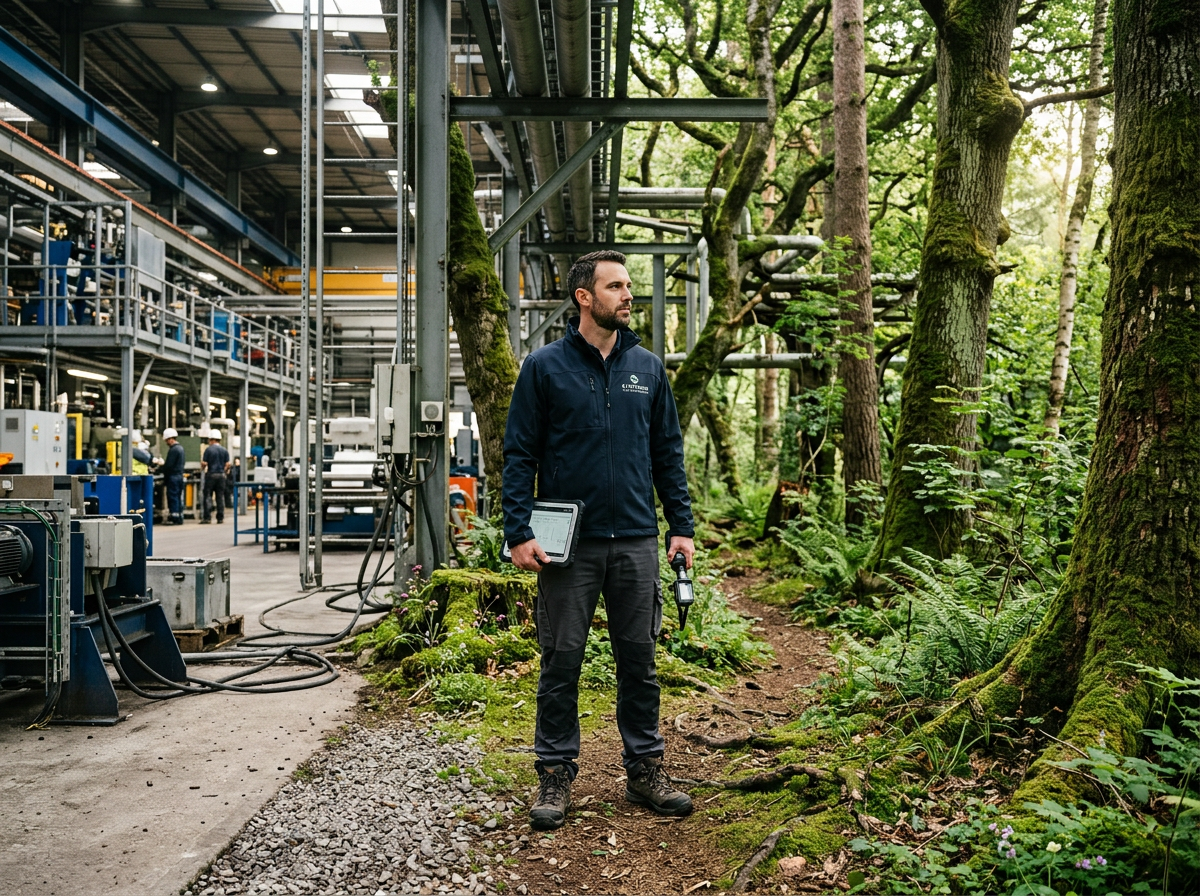
  • Gemba Walking the Ancestral Soul: A Protocol for Heritage Retrieval in High-Pressure Environments

    Gemba Walking the Ancestral Soul: A Protocol for Heritage Retrieval in High-Pressure Environments


    In the lean manufacturing world, a Gemba Walk is the practice of going to “the real place” where value is created.


    It is a tool for observation, intended to strip away the abstractions of reports and spreadsheets to see the actual flow of work.

    For the Sovereign Professional operating in the toxic high-pressure corridors of 2026, the “Gemba” isn’t just the office floor or the digital workspace; it is the intersection of your current environment and your inherited ancestral wisdom.

    Most modern professionals approach “culture” as a costume—something to be worn during a DEI workshop or mentioned in a LinkedIn bio. But heritage is not an accessory; it is an Operating System (OS).

    When that OS is suppressed or overwritten by the extractive logic of corporate colonization, the result is a systemic “glitch” characterized by burnout, cynicism, and a loss of agency.

    This protocol is a Lean guide to heritage retrieval. We are not looking for “cultural appreciation”; we are looking for a structural reclamation of the source code that makes you indispensable.


    The Audit: Why Your Current OS is Failing

    Before we can retrieve the ancestral soul, we must recognize the waste in the current system. As explored in How Systems Shape Behavior (And Why It Feels Personal), many of the anxieties we carry are not personal failures; they are structural symptoms.

    We have been incentivized to optimize for a “Push” system—endless output, constant availability, and the surrender of intuition.

    When your heritage is relegated to a “costume,” you are operating on a fragmented OS. You are trying to run a high-bandwidth, indigenous sense-making heart on a low-fidelity, colonial-extraction brain.

    The friction between these two layers is where the “Muda” (waste) of your soul occurs.


    Phase 1: The Soul-Gemba (Observation)

    The first step of the protocol is to walk the “real place” of your daily professional interactions through the lens of Ancestral Sense-making.

    During your next high-pressure meeting or quarterly review, do not look at the KPIs. Look at the patterns.

    • The Incentive Check: Are the rewards in this room driving behavior that aligns with your “root” values? (Reference: Incentives Drive Behavior: Why Good Intentions Fail in Systems).
    • The Energy Audit: Is the work being done “generative” (nourishing the ecosystem) or “extractive” (mining the participants for short-term gain)?
    • The Silence Check: What is not being said? Ancestral intuition—specifically the Babaylan capacity for high-bandwidth pattern recognition—lives in the gaps between the data points.

    Phase 2: Root Cause Analysis (The 5 Whys of Disconnection)

    In Lean, we use the “5 Whys” to find a technical root cause. In heritage retrieval, we use it to find the point of colonial rupture.


    1. Why am I feeling burnt out?

    Because I am working 60 hours for a 40-hour lifestyle.


    2. Why am I working those extra 20 hours?

    To satisfy an incentive structure that rewards “effort” over “value.”


    3. Why do I value that incentive over my rest?

    Because I have been conditioned to believe that my worth is tied to my metabolic output.


    4. Why do I believe that output equals worth?

    Because the system I was trained in prioritizes the machine over the human.


    5. Why have I forgotten the alternative?

    (Root Cause): Because the ancestral OS—which views work as stewardship and contribution—has been overwritten by a colonized narrative of extraction.

    By reaching the fifth “Why,” you realize that Why Hard Work Alone Doesn’t Make You Valuable is a foundational truth of the Sovereign Professional.


    Phase 3: Poka-Yoke (Error-Proofing) via Ancestral Wisdom

    In Lean, Poka-Yoke is a mechanism that prevents a mistake from happening. In your professional life, your heritage provides the ultimate error-proofing.

    Indigenous wisdom often operates on “Non-Linear Time” and “Interconnected Logic.” When a corporate crisis hits, the colonized OS panics, looking for immediate “fixes.” The Ancestral OS, however, steps back to see the long-cycle pattern.

    The Protocol for Retrieval:

    • The Breath of the Center: Before responding to a high-pressure “Noise” signal, apply The Discipline of Inner Sovereignty. This is the modern version of the “centering” practiced by indigenous healers. It creates the “buffer” needed for discernment.
    • The Council Mindset: Even if you are a “solo” professional, view your decisions through the lens of “The Seventh Generation.” Does this decision nourish your future, or does it burn the field for a temporary win?
    • Language as Logic: Use your heritage’s specific concepts—like the Filipino Pakikipagkapwa (shared identity)—to re-contextualize your work. You are not “networking”; you are building a Kapwa ecosystem. This changes the incentive from competition to coherence.

    The Outcome: Signal Over Noise

    The result of “Gemba Walking the Ancestral Soul” is a radical clarity. You begin to see the “corporate waste-stream” for what it is—a noisy, extractive system that is failing to adapt to a high-complexity world.

    By retrieving your heritage as an OS, you gain the ultimate competitive advantage: Clear Thinking. As discussed in Signal vs Noise: Why Clear Thinking Is Rare, those who can navigate uncertainty without losing their center are the ones who become indispensable.

    You don’t find that center in a textbook; you find it in the “Gemba” of your own lineage.


    Conclusion: The Sovereign Blueprint

    Heritage retrieval is not about performing your culture for the benefit of a company’s “diversity” metrics. It is about excising the colonial “Muda” from your mind so you can work with the power of a whole human being.

    When you walk the Gemba with the soul of an ancestor and the mind of a Lean architect, you stop being a unit of labor. You become a Sovereign Professional—an architect of a new, coherent reality.


    The Sovereign Professional: A structural map of power, systems thinking, and personal autonomy—dedicated to helping the independent professional navigate complexity and own their value stream.


    ©2026 Gerald Daquila • Life.Understood. • Systems Thinking, Leadership Architecture, and Applied Coherence