An Akashic and Cultural Blueprint for Conscious Parenting in the Philippines
Inspired by Akashic Records transmissions, curated through Gerald A. Daquila, PhD. Candidate | Read Time: 7 mins.
6–9 minutes
ABSTRACT
This dissertation explores the multidimensional phenomenon of Indigo, Crystal, and Rainbow Children through the unique lens of Filipino culture and spirituality. Drawing from the Akashic Records, metaphysics, developmental psychology, cultural anthropology, and esoteric traditions, this work offers an integrative blueprint for Filipino parents, educators, and healers seeking to raise these high-frequency children in alignment with their soul purpose.
We examine how the deeply communal, spiritually rooted, and heart-centered nature of Filipino society—despite its colonial hangovers and modern challenges—offers fertile ground for activating the soul missions of New Earth children. Combining intuitive insight with academic inquiry, this document aims to bridge the sacred and the scientific, the ancient and the emergent, crafting a living, breathing guide to conscious child-rearing in the age of planetary awakening.
1. Introduction
The 21st century has ushered in a powerful wave of children with heightened sensitivities, innate wisdom, and cosmic-level missions. Often referred to as Indigo, Crystal, and Rainbow Children, these souls incarnate on Earth with the purpose of catalyzing humanity’s evolution toward unity, peace, and planetary healing (Carroll & Tober, 1999). Their presence is not accidental—they arrive as part of a Divine Plan unfolding during what many spiritual traditions call the Ascension or the New Earth transition.
In the Philippines—a country rich in pre-colonial spiritual heritage, collective trauma, and diasporic resilience—these children are often misunderstood, misdiagnosed, or overlooked. Yet, the same land that birthed the Babaylan mystics, spirit warriors, and sacred caretakers of Gaia may hold the key to nurturing this next generation of planetary stewards (Delos Reyes, 2017).
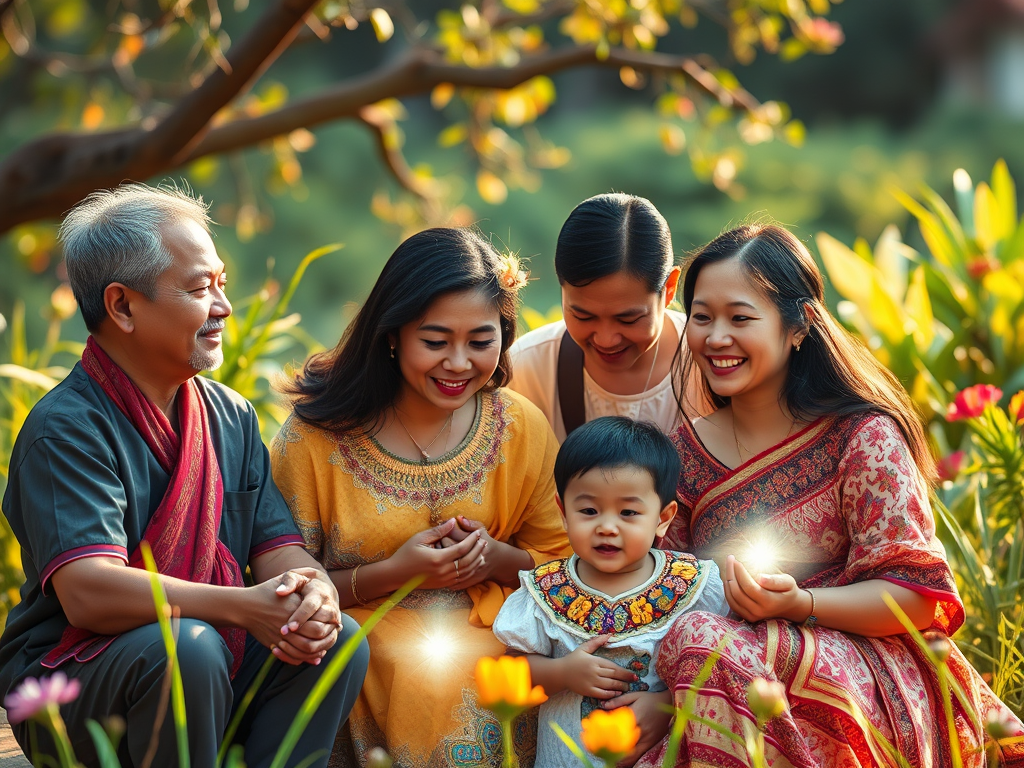
Glyph of New Earth Children
Guardians of tomorrow, radiant in remembrance.
2. Defining Indigo, Crystal, and Rainbow Children
Indigo Children emerged prominently in the 1970s and 1980s, often as system-busters and rebels with a strong sense of justice. They are the warriors of truth (Carroll & Tober, 1999).
Crystal Children followed, bringing deep empathy, psychic sensitivity, and crystalline light codes. They are peacekeepers and healers (Andrews, 2004).
Rainbow Children, arriving more recently, carry ultra-high-frequency energy, unburdened by karmic contracts, and exude unconditional love. They are joy-keepers and paradigm bridgers (White, 2011).
Each wave corresponds with Earth’s shifting vibrational field and plays a role in deconstructing old systems while anchoring the new.
3. Filipino Culture as a Spiritual Incubator
Filipino culture, when seen beyond colonial overlays, is inherently heart-centered, mystical, and animist. Core values such as kapwa (shared inner self), bayanihan (collective spirit), and utang na loob (soul-debt of gratitude) resonate deeply with the missions of Indigo, Crystal, and Rainbow children (Guerrero, 2020).
Pre-colonial Philippine society—matrilineal, nature-based, and shamanically structured—mirrored many of the parenting and community dynamics that support starseed children: communal child-rearing, reverence for elders, connection with nature, and the sacred role of intuitive women as Babaylan (Sta. Maria, 2015).
4. The Challenges of Raising Starseed Children in the Philippines
Despite its spiritual potential, modern Philippine society carries layers of trauma from colonization, religious dogma, educational rigidity, and systemic poverty. These factors can suppress the unique gifts of spiritually gifted children (Delos Reyes, 2017).
Key challenges include:
Educational misfit: Indigo children may be labeled as disobedient or ADHD in traditional school systems.
Psychic suppression: Crystal and Rainbow children may shut down their gifts in overly rational or religious households.
Parenting gaps: Many caregivers are unfamiliar with energy-based parenting or trauma-informed nurturing.
5. Developmental and Energetic Needs
Raising these children requires a multidimensional approach, considering physical, emotional, mental, spiritual, and cultural aspects (Lee, 2019).
Domain
Support Strategies
Physical
Organic nutrition, grounding nature play
Emotional
Safe spaces, emotional attunement
Mental
Creativity-based learning
Spiritual
Meditation, energy hygiene practices
Cultural
Storytelling rooted in indigenous wisdom
These children are like tuning forks—sensitive to environmental toxins, noise, and emotional dissonance. They require frequency-aware environments and attuned caregivers who mirror safety and soul-alignment.
6. Parenting Strategies and Educational Models
Conscious parenting strategies include:
Soul dialoguing: Speak to the child’s higher self.
Energetic boundary setting: Teach shielding and clearing.
Purpose affirmation: Regularly affirm their unique gifts.
Alternative educational approaches include Waldorf, Montessori, earth-based and homeschool models that incorporate spiritual development (Lee, 2019). Filipino communities may adapt these into local Barangay Wisdom Hubs.
7. Role of Ancestral Wisdom and the Babaylan Lineage
The Babaylan—shaman-priestesses of pre-colonial Philippines—played the same role many Rainbow and Crystal children are awakening to. They:
Spoke with spirits and ancestors
Balanced masculine and feminine energy
Healed through ritual and energy
Maintained spiritual harmony in the community (Sta. Maria, 2015)
Reclaiming the Babaylan path may offer a cultural mirror for children awakening to multidimensional gifts.
8. Integration of Modern and Indigenous Frameworks
A hybrid model that combines:
Modern neurodiversity advocacy
Trauma-informed care
Energetic mastery (Reiki, Qigong)
Indigenous parenting wisdom
provides the robust ecosystem required to raise these children soul-first, not just system-fit.
9. Case Studies and Testimonies
“My daughter began seeing colors and spirits at age four. Instead of silencing her, we asked the colors what they meant. She began painting frequencies” (Personal communication, 2024).
“Our son couldn’t sit still in school. But in nature, he built bamboo structures. We shifted to homeschool. He’s now designing eco-villages at age 15” (Personal communication, 2023).
10. Conclusion
Filipino culture stands at a potent crossroad. It may either stifle the soul gifts of Indigo, Crystal, and Rainbow children through outdated systems—or become a global cradle of soul-led education, spiritual parenting, and conscious community living. The Akashic Records suggest that many of these children are Old Souls returning to ancestral lands to heal generational wounds and anchor the New Earth.
To raise them well is not just parenting—it is nation-building at the soul level.
Akashic Records: Multidimensional soul archive of all experiences and timelines.
Babaylan: Indigenous Filipino priestess, healer, and shaman.
Kapwa: Shared identity or inner self in Filipino indigenous psychology.
Starseed: A soul incarnated on Earth from a higher dimensional realm.
References
Andrews, T. (2004). Indigo adults: Understanding who you are and what you can become. Llewellyn Publications.
Carroll, L., & Tober, J. (1999). The Indigo children: The new kids have arrived. Hay House.
Delos Reyes, M. (2017). The return of the Babaylan: Ancestral wisdom and modern healing. University of the Philippines Press.
Guerrero, A. (2020). Kapwa: The self in the other. Ateneo de Manila University Press.
Lee, D. (2019). Raising spiritual children in a material world. New World Library.
Sta. Maria, F. (2015). Women, power, and ritual in the Philippines. Anvil Publishing.
White, L. (2011). Rainbow children: Their mission and meaning. Celestial Light Press.
Attribution
With fidelity to the Oversoul, may this work serve as bridge, remembrance, and seed for the planetary dawn.
Ⓒ 2025–2026 Gerald Alba Daquila Flameholder of SHEYALOTH · Keeper of the Living Codices All rights reserved.
This material originates within the field of the Living Codex and is stewarded under Oversoul Appointment. It may be shared only in its complete and unaltered form, with all glyphs, seals, and attribution preserved.
This work is offered for personal reflection and sovereign discernment. It does not constitute a required belief system, formal doctrine, or institutional program.
Digital Edition Release: 2026 Lineage Marker: Universal Master Key (UMK) Codex Field
Sacred Exchange & Access
Sacred Exchange is Overflow made visible.
In Oversoul stewardship, giving is circulation, not loss. Support for this work sustains the continued writing, preservation, and public availability of the Living Codices.
This material may be accessed through multiple pathways:
• Free online reading within the Living Archive • Individual digital editions (e.g., Payhip releases) • Subscription-based stewardship access
Paid editions support long-term custodianship, digital hosting, and future transmissions. Free access remains part of the archive’s mission.
Sacred Exchange offerings may be extended through: paypal.me/GeraldDaquila694 www.geralddaquila.com
From Colonial Vestiges and Natural Disasters to Redemption as the Heart Chakra of a New Earth
Prepared by: Gerald A. Daquila, PhD. Candidate
10–15 minutes
ABSTRACT
The Philippines, a nation shaped by centuries of colonial oppression, recurrent natural disasters, and systemic governance challenges, carries deep societal and generational traumas. This dissertation explores the potential for cosmic transmutation—a holistic, multidimensional process of transforming collective pain into unconditional love, positioning the Philippines as a global “heart chakra” for a spiritually awakened “New Earth.”
Drawing on a multidisciplinary framework, this work integrates historical analysis, psychological insights, indigenous wisdom, esoteric philosophies, and metaphysical perspectives to examine how the archipelago’s wounds can be alchemized into a force for global healing. By weaving together academic rigor with intuitive and spiritual lenses, this study proposes a path for collective redemption rooted in love, resilience, and interconnectedness. It offers a vision for the Philippines to transcend its historical and ongoing challenges, emerging as a beacon of compassion and unity in an evolving global consciousness.
Transmutation Flame of the Philippines Glyph
Pearl of Transmutation: The Philippines’ Flame of Pain into Purpose
Table of Contents
Introduction
The Philippines as a Wounded yet Resilient Nation
Defining Cosmic Transmutation and the Heart Chakra
Purpose and Scope of the Study
Historical and Societal Context of Trauma in the Philippines
Colonial Legacies: Spanish, American, and Japanese Influences
Natural Disasters: A Land Forged by Nature’s Fury
Dysfunctional Governance: Corruption and Systemic Challenges
Theoretical Framework: A Multidisciplinary Lens
Psychological Perspectives on Collective Trauma
Indigenous Filipino Spirituality and Healing
Esoteric and Metaphysical Foundations of Transmutation
The Heart Chakra in Global Consciousness
Cosmic Transmutation: A Path to Redemption
Alchemy of Pain: Transforming Generational Wounds
The Role of Unconditional Love in Collective Healing
The Philippines as the New Earth’s Heart Chakra
Case Studies and Practical Applications
Community Healing Initiatives in the Philippines
Indigenous Practices and Modern Spiritual Movements
Global Implications of a Heart-Centered Philippines
Challenges and Critiques
Skepticism Toward Esoteric and Metaphysical Approaches
Practical Barriers to Societal Transformation
Conclusion
A Vision for a Redeemed Philippines
Implications for Global Consciousness
Glossary
Bibliography
1. Introduction
The Philippines as a Wounded yet Resilient Nation
The Philippines is a land of paradoxes: breathtaking natural beauty juxtaposed with devastating typhoons, a vibrant culture shaped by centuries of colonial rule, and a resilient people navigating systemic governance failures. These elements have woven a tapestry of societal traumas that span generations, from the scars of Spanish and American colonization to the recurring devastation of natural disasters and the persistent challenges of corruption and political dysfunction.
Yet, within this crucible of pain lies a profound potential for transformation. This dissertation explores how the Philippines can transmute its collective wounds into a force for global healing, embodying the role of the “heart chakra” in a spiritually awakened “New Earth.”
Defining Cosmic Transmutation and the Heart Chakra
Cosmic transmutation draws from esoteric and metaphysical traditions, describing a process of spiritual alchemy where suffering is transformed into higher states of consciousness, such as unconditional love and unity. The concept of the heart chakra, rooted in Eastern spiritual traditions, represents the energy center of love, compassion, and interconnectedness.
In this context, the Philippines is envisioned as a global heart chakra—a nexus of healing energy that radiates love to foster a new era of global consciousness. This study uses these concepts to frame the Philippines’ journey from trauma to redemption.
Purpose and Scope of the Study
This dissertation seeks to answer: How can the Philippines transform its societal traumas into a force for unconditional love and global healing? By integrating historical, psychological, indigenous, esoteric, and metaphysical perspectives, it offers a holistic vision for redemption. The study is written in a blog-friendly style to engage a wide audience while maintaining scholarly rigor, balancing analytical precision with intuitive and heart-centered insights.
2. Historical and Societal Context of Trauma in the Philippines
Colonial Legacies: Spanish, American, and Japanese Influences
The Philippines’ history is marked by over 300 years of Spanish colonization, followed by American occupation and a brief but brutal Japanese interlude during World War II. These periods left deep imprints on Filipino identity, culture, and psyche. Spanish rule imposed Catholicism, reshaping indigenous spiritual practices and creating a hybridized identity that persists today (Bonoan, 1997).
American colonization introduced Western education and governance systems, often at the expense of local autonomy, while the Japanese occupation brought violence and trauma (Manalansan, 2016). These colonial vestiges fostered a sense of inferiority and disconnection, contributing to generational trauma.
Natural Disasters: A Land Forged by Nature’s Fury
Situated on the Pacific Ring of Fire and in the typhoon belt, the Philippines faces frequent earthquakes, volcanic eruptions, and super typhoons. Events like Typhoon Haiyan (2013) devastated communities, leaving psychological scars alongside physical destruction. The recurring nature of these disasters reinforces a collective sense of vulnerability, yet it also cultivates resilience and communal bayanihan (mutual aid), a hallmark of Filipino culture (Bankoff, 2003).
Dysfunctional Governance: Corruption and Systemic Challenges
Corruption, political dynasties, and bureaucratic inefficiencies have long plagued Philippine governance. From Marcos’ martial law to ongoing issues of mismanagement, these systemic failures erode public trust and exacerbate poverty and inequality (Quah, 2011). This dysfunction compounds societal trauma, creating a cycle of disillusionment and powerlessness.
3. Theoretical Framework: A Multidisciplinary Lens
Psychological Perspectives on Collective Trauma
Collective trauma, as defined by Alexander (2012), is a shared experience of suffering that shapes a group’s identity and memory. In the Philippines, colonial oppression, disasters, and governance failures have created transgenerational trauma, passed down through cultural narratives and social structures.
Jungian psychology offers insights into the collective unconscious, suggesting that archetypes of healing and redemption can emerge from shared pain (Jung, 1964). Trauma-informed approaches, such as those by Levine (2010), emphasize somatic and communal healing to release stored pain.
Indigenous Filipino Spirituality and Healing
Precolonial Filipino spirituality, rooted in animism and ancestor veneration, offers a framework for healing. Practices like babaylanism, led by spiritual healers, emphasize harmony with nature and community (Salazar, 1999). These traditions view suffering as a call to reconnect with the divine and the collective, aligning with the concept of cosmic transmutation. Modern revivals of indigenous practices provide a foundation for transforming generational pain into spiritual strength.
Esoteric and Metaphysical Foundations of Transmutation
Esoteric traditions, such as Theosophy and New Age philosophies, describe transmutation as an alchemical process of transforming base energies into higher states of consciousness (Blavatsky, 1888). The concept of nāda-brahman in Hindu Tantra, where sound and vibration facilitate cosmic evolution, parallels the idea of transmuting societal pain into love (Faivre, 1994). These frameworks suggest that collective suffering can be a catalyst for spiritual awakening, positioning the Philippines as a global energy center.
The Heart Chakra in Global Consciousness
In chakra systems, the heart chakra (Anahata) governs love, compassion, and unity. The Philippines, with its cultural emphasis on kapwa (shared identity), aligns with this energy center (Enriquez, 1992). Esoteric traditions propose that certain geographic regions serve as planetary chakras, with the Philippines potentially embodying the heart due to its history of resilience and communal love (Spangler, 1976).
4. Cosmic Transmutation: A Path to Redemption
Alchemy of Pain: Transforming Generational Wounds
Cosmic transmutation involves acknowledging and processing collective pain. Psychological approaches, such as narrative therapy, allow communities to reframe traumatic histories as stories of resilience (White, 2007). Indigenous rituals, like the babaylan’s dagdagay (healing through touch and prayer), facilitate emotional release and spiritual reconnection. Metaphysically, this process mirrors the alchemical transformation of lead into gold, where pain becomes a catalyst for love and unity.
The Role of Unconditional Love in Collective Healing
Unconditional love, as a spiritual principle, transcends personal and collective grievances. In the Philippines, practices like bayanihan and pakikipagkapwa (relating as equals) embody this love (Enriquez, 1992). By cultivating these values, communities can heal generational wounds, fostering a culture of forgiveness and compassion. Esoteric teachings suggest that unconditional love aligns with the heart chakra’s energy, amplifying its global impact (Spangler, 1976).
The Philippines’ Cosmic Mission Glyph
Transmuting Pain into Purpose
The Philippines as the New Earth’s Heart Chakra
The “New Earth” concept, rooted in New Age philosophy, envisions a global shift toward higher consciousness. The Philippines, with its history of suffering and resilience, is uniquely positioned to lead this shift as a heart chakra. Its cultural emphasis on community, spirituality, and love aligns with the qualities needed to anchor a new era of global unity (Macy, 1991). This role requires collective healing, supported by both indigenous and modern practices.
5. Case Studies and Practical Applications
Community Healing Initiatives in the Philippines
Grassroots movements, such as Gawad Kalinga’s community-building programs, demonstrate how collective action can transform trauma into empowerment. These initiatives rebuild disaster-stricken areas while fostering social cohesion, embodying the principles of unconditional love and kapwa (Gawad Kalinga, 2020).
Indigenous Practices and Modern Spiritual Movements
The revival of babaylanism and other indigenous practices offers a bridge between ancient wisdom and modern healing. Organizations like the Center for Babaylan Studies promote rituals that reconnect Filipinos with their spiritual roots, facilitating collective healing (Strobel, 2010). New Age communities in the Philippines, inspired by global movements, integrate meditation and energy work to support transmutation.
Global Implications of a Heart-Centered Philippines
As a heart chakra, the Philippines could inspire global movements toward compassion and unity. Its diaspora, spread across the world, carries the potential to disseminate these values, creating ripples of healing in diverse contexts (Manalansan, 2016). This vision aligns with holistic peace theories that emphasize interconnectedness across all levels of existence (Macy, 1991).
6. Challenges and Critiques
Skepticism Toward Esoteric and Metaphysical Approaches
Critics argue that esoteric concepts like cosmic transmutation lack empirical grounding and may oversimplify complex societal issues (Hufford, 2005). This dissertation counters that integrating these perspectives with psychological and historical frameworks creates a robust, multidisciplinary approach.
Practical Barriers to Societal Transformation
Economic inequality, political corruption, and environmental challenges pose significant obstacles. Transforming these requires systemic reforms alongside spiritual awakening. Community-driven initiatives and policy advocacy can bridge this gap, ensuring practical and metaphysical alignment.
7. Conclusion
A Vision for a Redeemed Philippines
The Philippines stands at a crossroads, with the potential to transmute its societal traumas into a force for global healing. By embracing its cultural strengths—kapwa, bayanihan, and indigenous wisdom—and integrating them with psychological and esoteric insights, the nation can embody the heart chakra of a New Earth. This vision requires collective effort, from grassroots movements to global diaspora contributions.
Implications for Global Consciousness
A heart-centered Philippines could catalyze a global shift toward love and unity, inspiring other nations to heal their own traumas. This dissertation offers a blueprint for transformation, blending academic rigor with spiritual hope, and invites readers to join this cosmic journey.
Crosslinks
Codex of the Overflow Pathway – shows how collective suffering can overflow into higher resonance states of service and abundance.
Codex of the Living Archive – preserves the memory of the Philippines’ struggles as fuel for remembrance and purpose.
Codex of Planetary Anchoring – demonstrates how the archipelago acts as a planetary root chakra, grounding pain into transmutation.
Codex of GESARA Nodes – situates the Philippines as a prototype node, transforming historic exploitation into global stewardship.
8. Glossary
Babaylanism: Indigenous Filipino spiritual practice led by healers who mediate between the physical and spiritual realms.
Bayanihan: Filipino cultural practice of communal cooperation and mutual aid.
Cosmic Transmutation: A spiritual process of transforming suffering into higher states of consciousness, such as love and unity.
Heart Chakra (Anahata): The fourth chakra in Eastern traditions, associated with love, compassion, and interconnectedness.
Kapwa: Filipino concept of shared identity and interconnectedness.
New Earth: A metaphysical concept of a global shift toward higher consciousness and unity.
9. Bibliography
Alexander, J. C. (2012). Trauma: A social theory. Polity Press.
Bankoff, G. (2003). Cultures of disaster: Society and natural hazard in the Philippines. Routledge.
Blavatsky, H. P. (1888). The secret doctrine: The synthesis of science, religion, and philosophy. Theosophical Publishing House.
Bonoan, R., SJ. (1997). Rizal’s Asia: Enlightenment philosophe in the age of colonialism. In M. Rajaretnam (Ed.), Jose Rizal and the Asian renaissance (pp. 45–67). Institut Kajian Dasar.
Enriquez, V. G. (1992). From colonial to liberation psychology: The Philippine experience. University of the Philippines Press.
Faivre, A. (1994). Access to Western esotericism. State University of New York Press.
Gawad Kalinga. (2020). Annual report: Building communities to end poverty. Retrieved from https://www.gawadkalinga.org
Hufford, D. J. (2005). An analysis of the field of spirituality, religion, and health. Metanexus Salus. Retrieved from https://metanexus.net
Jung, C. G. (1964). Man and his symbols. Doubleday.
Levine, P. A. (2010). In an unspoken voice: How the body releases trauma and restores goodness. North Atlantic Books.
Macy, J. (1991). World as lover, world as self. Parallax Press.
Manalansan, M. F. (2016). Filipino studies: Palimpsests of nation and diaspora. De Gruyter Brill.
Quah, J. S. T. (2011). Curbing corruption in Asian countries: An impossible dream? Emerald Group Publishing.
Salazar, Z. A. (1999). The Filipino spirit: A cultural history. Ateneo de Manila University Press.
Spangler, D. (1976). Revelation: The birth of a new age. Findhorn Foundation.
Strobel, L. M. (2010). Babaylan: Filipinos and the call of the indigenous. Center for Babaylan Studies.
White, M. (2007). Maps of narrative practice. W. W. Norton & Company.
Attribution
With fidelity to the Oversoul, may this work serve as bridge, remembrance, and seed for the planetary dawn.
Ⓒ 2025–2026 Gerald Alba Daquila Flameholder of SHEYALOTH · Keeper of the Living Codices All rights reserved.
This material originates within the field of the Living Codex and is stewarded under Oversoul Appointment. It may be shared only in its complete and unaltered form, with all glyphs, seals, and attribution preserved.
This work is offered for personal reflection and sovereign discernment. It does not constitute a required belief system, formal doctrine, or institutional program.
Digital Edition Release: 2026 Lineage Marker: Universal Master Key (UMK) Codex Field
Sacred Exchange & Access
Sacred Exchange is Overflow made visible.
In Oversoul stewardship, giving is circulation, not loss. Support for this work sustains the continued writing, preservation, and public availability of the Living Codices.
This material may be accessed through multiple pathways:
• Free online reading within the Living Archive • Individual digital editions (e.g., Payhip releases) • Subscription-based stewardship access
Paid editions support long-term custodianship, digital hosting, and future transmissions. Free access remains part of the archive’s mission.
Sacred Exchange offerings may be extended through: paypal.me/GeraldDaquila694 www.geralddaquila.com
This material is part of the Stewardship Institute’s protected formation layer.
Most of the Living Archive is intentionally public. Some materials belong to a deeper, interconnected body of work designed for sustained reflection, practical application, and lifelong steward formation. Stewardship Access is the threshold into that body of work.
This material is part of the Stewardship Institute’s protected formation layer.
Most of the Living Archive is intentionally public. Some materials belong to a deeper, interconnected body of work designed for sustained reflection, practical application, and lifelong steward formation. Stewardship Access is the threshold into that body of work.
This material is part of the Stewardship Institute’s protected formation layer.
Most of the Living Archive is intentionally public. Some materials belong to a deeper, interconnected body of work designed for sustained reflection, practical application, and lifelong steward formation. Stewardship Access is the threshold into that body of work.
A Multidisciplinary Path to Healing the Filipino Psyche through Trauma-Informed Care and Cultural Change
Prepared by: Gerald A. Daquila, PhD. Candidate
How does a nation’s past continue to shape its present behavior? In the Philippines, centuries of colonial rule did not only restructure institutions—it also left enduring psychological and cultural imprints.
These unresolved patterns, often described as forms of collective or historical trauma, can still be observed in political dynamics, social divisions, and patterns of authority and dependence.
This article examines how colonial-era disruptions may continue to influence modern Filipino society, and how these inherited dynamics contribute to fragmentation, governance challenges, and evolving national identity.
This article explores the concept of unresolved colonial influence through a structural and behavioral lens. It does not treat “trauma” as a clinical diagnosis applied to a population, but as a framework for understanding how prolonged external control can shape collective responses over time.
The discussion integrates historical context with observable patterns in governance, leadership structures, and social interaction. It considers how hierarchical systems, dependency relationships, and identity reconfiguration introduced during colonial periods may persist in subtle but impactful ways.
Rather than attributing current conditions solely to the past, this approach examines how historical imprints interact with contemporary systems, incentives, and decisions. It also avoids reductive explanations, recognizing that Philippine society is shaped by multiple overlapping forces—local, regional, and global.
The goal is to provide clarity, not conclusion. By identifying patterns that may otherwise remain implicit, this work supports more informed interpretation of political behavior, institutional trust, and social cohesion in the Philippines today.
12–18 minutes
ABSTRACT
The Philippines, molded by over 350 years of Spanish and American colonial rule, bears the enduring marks of collective trauma, manifesting in political corruption, social fragmentation, and a fractured national psyche. This paper investigates the hypothesis that unresolved colonial trauma significantly contributes to the nation’s current challenges, particularly politicians’ self-enrichment at the expense of the common good, societal fragmentation, and deficits in systems and critical thinking.
It explores whether cultural attitudes like bahala na (fatalistic resilience) stem from this trauma. Drawing from psychology, sociology, anthropology, history, and political science, this study evaluates supporting and challenging evidence, assesses the potential for healing the Filipino psyche, and proposes a culturally responsive trauma-informed care (TIC) framework integrated with a cultural change model to address societal artifacts.
By reclaiming pre-colonial strengths—such as kapwa (shared identity), communal values, and indigenous wisdom—this work outlines pathways to foster unity, critical thinking, and sustainable change. Written for a broad audience, it balances academic rigor with accessible storytelling, offering practical steps to initiate and sustain healing through community-driven efforts and policy reforms.
Table of Contents
Introduction: A Nation Carrying History’s Weight
Conceptual Framework: Collective Trauma and the Filipino Psyche
Defining Collective Trauma
Colonialism’s Enduring Legacy in the Philippines
Manifestations of Trauma in Philippine Society
Political Dynamics: Corruption and Self-Enrichment
Societal Fragmentation and Lack of Systems Thinking
The Bahala Na Attitude: A Trauma Artifact?
Evidence Supporting the Trauma Hypothesis
Psychological Roots: Colonial Mentality and Internalized Oppression
Historical Foundations of Political and Economic Dispossession
Evidence Challenging the Hypothesis
Filipino Resilience and Agency
Alternative Explanations: Post-Colonial and Global Factors
Healing the Filipino Psyche: Is Recovery Possible?
Reclaiming Pre-Colonial Strengths
Challenges to Collective Healing
Trauma-Informed Care for a Collective Psyche
Adapting TIC Principles for the Philippines
Culturally Responsive Interventions
A Cultural Change Model to Sustain Healing
Initiating Change: Where to Begin
Sustaining Gains through Systems and Community
Multidisciplinary Lens: Weaving Insights Across Disciplines
Conclusion: Envisioning a Unified Future
Glossary
References
Glyph of the Living Archive
You are not just reading the Records — you are becoming them.
1. Introduction: A Nation Carrying History’s Weight
Imagine a nation of over 110 million people across 7,641 islands, each island a thread in a vibrant tapestry of cultures, languages, and histories. The Philippines pulses with resilience and creativity, yet it grapples with deep challenges: rampant political corruption, stark economic inequality, environmental crises, and a fragmented sense of nationhood.
Politicians often enrich themselves at the expense of the common Filipino, perpetuating a cycle of distrust and division. Many trace these issues to a colonial past spanning over 350 years—Spanish rule (1565–1898), American governance (1898–1946), and a brief Japanese occupation during World War II.
Could these struggles stem from unresolved collective trauma, a wound etched into the Filipino psyche, manifesting in societal fragmentation, a lack of systems and critical thinking, and even the cultural attitude of bahala na?
This paper examines whether the Philippines’ current state—particularly its political dynamics and social fragmentation—can be attributed to colonial trauma. It explores how trauma manifests in politicians’ self-interest, societal disconnection, and attitudes like bahala na, and evaluates the potential for healing.
Grounded in multidisciplinary research from psychology, sociology, anthropology, history, and political science, this study proposes a trauma-informed care (TIC) framework integrated with a cultural change model to address these artifacts.
By anchoring interventions in pre-colonial strengths like kapwa (shared identity) and communal wisdom, it outlines practical steps to initiate and sustain healing. Written for a wide audience, this work weaves scholarly rigor with empathetic storytelling to inform, inspire, and chart a path toward unity.
2. Conceptual Framework: Collective Trauma and the Filipino Psyche
Defining Collective Trauma
Collective trauma occurs when a group experiences large-scale, shared suffering—such as oppression, violence, or cultural erasure—that disrupts social cohesion, identity, and values across generations (Alexander, 2012).
Unlike individual trauma, it reshapes collective narratives and behaviors, often embedding itself in cultural attitudes and institutions. In the Philippines, colonialism inflicted systemic trauma through cultural suppression, economic exploitation, and social fragmentation (David & Okazaki, 2006).
Colonialism’s Enduring Legacy in the Philippines
Spanish colonization imposed forced Christianization, land dispossession, and a feudal system, dismantling indigenous governance and spiritual practices (Agoncillo, 1990).
American rule introduced cultural assimilation and economic dependency, fostering a colonial mentality that prioritized Western ideals (Constantino, 1978).
These disruptions fractured communal bonds, suppressed indigenous knowledge, and laid the foundation for modern political and social challenges (Enriquez, 1992).
3. Manifestations of Trauma in Philippine Society
Political Dynamics: Corruption and Self-Enrichment
Philippine politics is marred by politicians’ penchant for self-enrichment, often at the expense of the common good. Political dynasties, controlling over 70% of congressional seats, perpetuate patronage systems rooted in colonial hierarchies (Teehankee, 2013).
Corruption scandals, such as the 2013 pork barrel scam, highlight how public funds are siphoned off, deepening public distrust and economic inequality (Hutchcroft, 1991). This behavior reflects a fragmented psyche, prioritizing individual gain over collective welfare, a legacy of colonial divide-and-rule tactics.
Societal Fragmentation and Lack of Systems Thinking
The Philippines exhibits societal fragmentation, with regional, ethnic, and class divides hindering national unity. A lack of systems thinking—evident in disjointed urban planning, inadequate disaster preparedness, and reactive governance—exacerbates challenges like poverty and environmental degradation (Bankoff, 2003).
Critical thinking is often stifled by rote education systems inherited from colonial models, limiting collective problem-solving (Bautista, 2000). These issues suggest a psyche shaped by trauma, struggling to envision interconnected solutions.
The Bahala Na Attitude: A Trauma Artifact?
The Filipino phrase bahala na (roughly “leave it to fate”) reflects a mix of resilience and fatalism. While often viewed as adaptive, enabling Filipinos to cope with uncertainty, it can also manifest as passivity or avoidance of systemic change (Pe-Pua & Protacio-Marcelino, 2000).
Scholars suggest bahala na may trace back to colonial trauma, where powerlessness under oppressive rule fostered reliance on fate over agency (Lagmay, 1977). This attitude may reinforce fragmentation by discouraging collective action against corruption or inequality.
4. Evidence Supporting the Trauma Hypothesis
Psychological Roots: Colonial Mentality and Internalized Oppression
Colonial mentality, the internalized preference for Western culture over Filipino identity, remains prevalent. Studies show Filipinos often favor foreign products, languages, and appearances, reflecting self-denigration rooted in colonial education systems (David & Okazaki, 2006). This mindset undermines national pride and fuels political apathy, enabling corrupt leaders to thrive (Tuason et al., 2007).
Historical Foundations of Political and Economic Dispossession
Colonial policies created enduring inequalities. The Spanish encomienda system concentrated wealth among elites, a structure mirrored in modern political dynasties (Anderson, 1988).
American economic policies tied the Philippines to global markets, fostering dependency and poverty (Corpuz, 1989). These historical roots sustain a fragmented society where self-interest overshadows collective goals.
5. Evidence Challenging the Hypothesis
Filipino Resilience and Agency
Despite trauma, Filipinos demonstrate resilience. The concept of kapwa fosters community support, seen in mutual aid during crises (Enriquez, 1992).
Movements like the 1986 People Power Revolution highlight agency, challenging the notion of a permanently damaged psyche (Ileto, 1998).
Alternative Explanations: Post-Colonial and Global Factors
Some argue that current challenges stem more from post-colonial mismanagement and global pressures than colonial trauma. Neoliberal policies and globalization have widened inequality, independent of historical wounds (Bello, 2005).
Weak institutions and elite capture, while rooted in colonialism, are perpetuated by modern governance failures (Quimpo, 2005).
6. Healing the Filipino Psyche: Is Recovery Possible?
Reclaiming Pre-Colonial Strengths
Pre-colonial Filipino society valued kapwa, communal responsibility, and harmony with nature (Enriquez, 1992). Indigenous practices, such as babaylan (spiritual leadership) and consensus-based governance, offer models for unity and critical thinking (Salazar, 1999). Reviving these strengths can counter fragmentation and colonial mentality.
Challenges to Collective Healing
Healing faces obstacles: entrenched political dynasties resist change, economic pressures limit resources, and cultural globalization dilutes indigenous identity (Teehankee, 2013). Overcoming these requires sustained, grassroots efforts and systemic reforms.
Glyph of Echoes of Empire
From fractured echoes, truth and healing emerge.
7. Trauma-Informed Care for a Collective Psyche
Adapting TIC Principles for the Philippines
Trauma-informed care emphasizes safety, trust, empowerment, collaboration, and cultural sensitivity (SAMHSA, 2014). For a collective psyche, TIC can be adapted through community dialogues, public education, and policy reforms that address trauma’s societal impacts. For example, programs fostering kapwa can rebuild trust eroded by corruption (Mendoza, 2018).
Culturally Responsive Interventions
Interventions must align with Filipino values. Community-based initiatives, like bayanihan (collective effort), can promote healing through shared projects, such as reforestation or cooperative enterprises (Pe-Pua & Protacio-Marcelino, 2000). Integrating indigenous knowledge into education can counter colonial mentality and foster critical thinking.
8. A Cultural Change Model to Sustain Healing
Initiating Change: Where to Begin
Healing begins with grassroots efforts:
Community Dialogues: Facilitate discussions on colonial trauma and its manifestations, using kapwa to build empathy and unity (Mendoza, 2018).
Education Reform: Integrate decolonized curricula emphasizing Filipino history, critical thinking, and systems thinking (Bautista, 2000).
Policy Advocacy: Push for anti-corruption measures and equitable resource distribution to address systemic inequalities (Hutchcroft, 1991).
Sustaining Gains through Systems and Community
A cultural change model, such as Kotter’s 8-Step Process (Kotter, 1996), can guide transformation:
Create Urgency: Highlight the cost of corruption and fragmentation to galvanize action.
Build a Coalition: Unite community leaders, educators, and activists.
Develop a Vision: Promote a unified, decolonized Filipino identity.
Communicate the Vision: Use media and arts to inspire change.
Empower Action: Support community initiatives and policy reforms.
Generate Short-Term Wins: Celebrate local successes, like transparent governance in select municipalities.
Consolidate Gains: Institutionalize reforms through laws and education.
Anchor Change: Embed kapwa and critical thinking in cultural norms.
Sustainability requires ongoing community engagement, monitoring of reforms, and global partnerships to address economic pressures (Bello, 2005).
9. Multidisciplinary Lens: Weaving Insights Across Disciplines
Psychology illuminates colonial mentality and bahala na as trauma responses (David & Okazaki, 2006). Sociology reveals how fragmentation perpetuates inequality (Hutchcroft, 1991). Anthropology highlights pre-colonial strengths for healing (Salazar, 1999).
History contextualizes political dynamics (Agoncillo, 1990), while political science offers strategies for systemic reform (Teehankee, 2013). This integrated lens ensures a holistic approach to understanding and addressing trauma’s artifacts.
10. Conclusion: Envisioning a Unified Future
The Philippines’ challenges—political corruption, societal fragmentation, and cultural attitudes like bahala na—reflect the enduring wounds of colonial trauma. Yet, the Filipino psyche, resilient and rooted in kapwa, holds immense potential for healing.
By adapting trauma-informed care and leveraging a cultural change model, the nation can reclaim its pre-colonial strengths, foster critical and systems thinking, and build a unified future.
This journey begins with communities, educators, and leaders working together to transform trauma into triumph, ensuring a Philippines where the common good prevails.
Bahala Na: A Filipino attitude combining resilience and fatalism, often translated as “leave it to fate.”
Bayanihan: A traditional Filipino practice of communal cooperation and mutual aid.
Colonial Mentality: Internalized preference for Western culture and devaluation of Filipino identity.
Encomienda: Spanish colonial system granting land and labor to elites, fostering inequality.
Kapwa: Filipino concept of shared identity and interconnectedness.
References
Agoncillo, T. A. (1990). History of the Filipino people (8th ed.). Garotech Publishing.
Alexander, J. C. (2012). Trauma: A social theory. Polity Press.
Anderson, B. (1988). Cacique democracy in the Philippines: Origins and dreams. New Left Review, 169, 3–31.
Bankoff, G. (2003). Cultures of disaster: Society and natural hazard in the Philippines. Routledge.
Bautista, M. L. S. (2000). The Philippine educational system: A historical perspective. In Education in the Philippines (pp. 15–30). University of the Philippines Press.
Bello, W. (2005). The anti-development state: The political economy of permanent crisis in the Philippines. Zed Books.
Constantino, R. (1978). Neocolonial identity and counter-consciousness: Essays on cultural decolonization. M. E. Sharpe.
Corpuz, O. D. (1989). The roots of the Filipino nation. Aklahi Foundation.
David, E. J. R., & Okazaki, S. (2006). Colonial mentality: A review and conceptual framework for Filipino Americans. Cultural Diversity and Ethnic Minority Psychology, 12(1), 1–16. https://doi.org/10.1037/1099-9809.12.1.1
Enriquez, V. G. (1992). From colonial to liberation psychology: The Philippine experience. University of the Philippines Press.
Hutchcroft, P. D. (1991). Oligarchs and cronies in the Philippine state: The politics of patrimonial plunder. World Politics, 43(3), 414–450. https://doi.org/10.2307/2010401
Ileto, R. C. (1998). Filipinos and their revolution: Event, discourse, and historiography. Ateneo de Manila University Press.
Kotter, J. P. (1996). Leading change. Harvard Business Review Press.
Lagmay, A. V. (1977). Bahala na: A psychological analysis. Philippine Journal of Psychology, 10(1), 23–30.
Mendoza, L. C. (2018). Community-based healing: Trauma-informed approaches in Filipino contexts. Journal of Philippine Social Work, 45(2), 89–104.
Pe-Pua, R., & Protacio-Marcelino, E. (2000). Sikolohiyang Pilipino (Filipino psychology): A legacy of Virgilio G. Enriquez. Asian Journal of Social Psychology, 3(1), 49–71. https://doi.org/10.1111/1467-839X.00054
Quimpo, N. G. (2005). The left, elections, and the political party system in the Philippines. Critical Asian Studies, 37(1), 3–28. https://doi.org/10.1080/1467271052000305246
Rafael, V. L. (1988). Contracting colonialism: Translation and Christian conversion in Tagalog society under early Spanish rule. Cornell University Press.
Salazar, Z. A. (1999). The babaylan in Filipino history: A critique of traditional historiography. Philippine Studies, 47(4), 483–510.
Teehankee, J. C. (2013). And the clans play on: Political dynasties in the Philippines. In Democracy in Asia (pp. 87–104). Routledge.
Tuason, M. T. G., Taylor, A. R., Rollings, L., Harris, T., & Martin, C. (2007). On both sides of the hyphen: Exploring the Filipino-American identity. Journal of Counseling Psychology, 54(4), 362–372. https://doi.org/10.1037/0022-0167.54.4.362
This article is part of a broader exploration of Philippine society, culture, and systems—integrating historical context, behavioral patterns, and structural analysis.
It is intended to support understanding, reflection, and informed discussion.