Category: Parenting

  • Protected: Decolonizing Education: A New Earth Curriculum for the Filipino Soul

    Protected: Decolonizing Education: A New Earth Curriculum for the Filipino Soul

    This content is password-protected. To view it, please enter the password below.

  • The Divine Masculine Rebirth in Filipino Culture

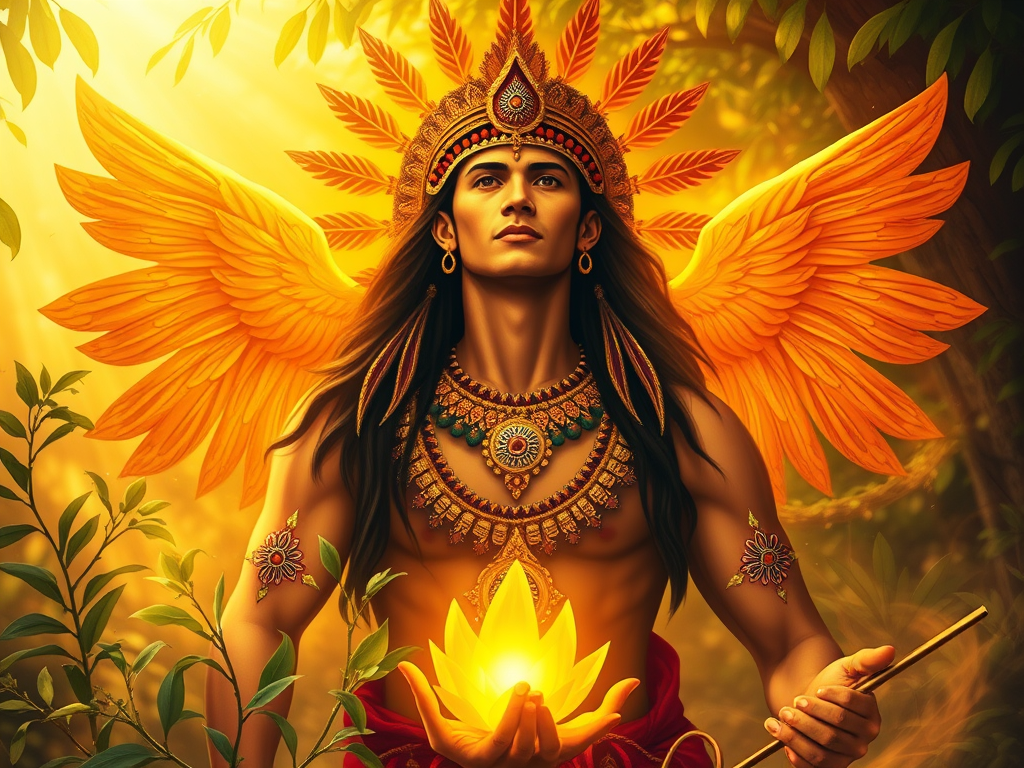
    The Divine Masculine Rebirth in Filipino Culture


    Reawakening Ancestral Strength, Sacred Balance, and the Warrior of Light Within

    By Gerald Daquila, PhD Candidate


    How are ideas of masculinity evolving in Filipino culture today? Traditional expectations around leadership, strength, and authority have long shaped male identity in the Philippines, influenced by both indigenous norms and colonial-era structures. In recent years, however, there has been growing discussion around redefining these roles—often described symbolically as a “rebirth of the divine masculine.”

    This shift reflects changing perspectives on responsibility, emotional expression, and relational leadership. This article explores how masculinity in the Philippines is being reexamined, what historical patterns inform it, and how evolving roles may influence families, communities, and national development.


    For a broader view of Philippine culture, society, and systems, see:
    Understanding the Philippines: Culture, Society, and Systems (Hub)


    Scope and Approach

    This article examines the concept of the “divine masculine” as a symbolic framework for discussing shifts in male roles and expectations. It does not treat the term as a fixed or universal construct, but as a lens used in contemporary discourse to explore balance between traditionally emphasized traits—such as authority and provision—and emerging qualities like emotional awareness, accountability, and collaboration.

    The discussion integrates historical context, including precolonial gender dynamics, colonial influences on hierarchy and patriarchy, and modern societal changes. It considers how these layers shape expectations of men in areas such as leadership, family roles, and social participation.

    Rather than framing masculinity as either in decline or in need of restoration, this approach focuses on adaptation. It explores how changing economic conditions, evolving gender norms, and increased awareness of mental and emotional well-being are influencing how masculinity is expressed in the Philippines today.

    The goal is to move beyond abstract language toward practical understanding. By examining how masculine roles are shifting across contexts, this work supports more grounded conversations on identity, gender dynamics, and their impact on social cohesion and development.

    8–12 minutes

    ABSTRACT

    In the shifting landscape of global consciousness, the rebirth of the Divine Masculine has become a pivotal element in restoring wholeness—within individuals, cultures, and planetary systems. This paper explores the re-emergence of the Divine Masculine archetype within Filipino culture, tracing its indigenous roots, colonial fractures, and present-day healing through the lens of spiritual, psychological, historical, and metaphysical disciplines.

    Drawing upon the Akashic Records, precolonial narratives, mytho-spiritual archetypes, depth psychology, and modern masculinity studies, this work aims to unveil the multidimensional journey of the Filipino male soul. We recontextualize the “Malakas” (the Strong) not as dominator, but as a sacred protector, wisdom holder, and light warrior—rebalanced with the “Maganda” (the Beautiful).

    The narrative offers a roadmap for healing intergenerational trauma, activating sacred masculine energies, and integrating the new masculine template into the fabric of Filipino life, culture, and community leadership.


    Table of Contents

    1. Introduction
    2. Recalling the Divine Masculine: A Global and Galactic Context
    3. Precolonial Filipino Masculinity: Sacred Strength and Service
    4. The Colonial Wound: Masculine Fracture and Cultural Amnesia
    5. Archetypes of the Filipino Divine Masculine
    6. Psychological and Energetic Impacts of Repressed Masculine Energy
    7. The Rebirth Process: Stages of Awakening and Embodiment
    8. Integration through Culture, Ritual, and Community
    9. Conclusion
    10. Glossary
    11. Bibliography

    1. Introduction

    The call for a rebirth of the Divine Masculine is echoing across timelines, dimensions, and ancestral lineages. In the Philippines—a nation shaped by the interweaving of indigenous wisdom, colonial disruption, and resilient spirituality—this rebirth holds the key to national healing and planetary service.

    This work is both a spiritual invocation and scholarly exploration, rooted in the soul of the archipelago and reaching into the cosmic field of consciousness where masculine energy is being redefined.


    Glyph of Masculine Rebirth

    Strength in service, power in remembrance.


    2. Recalling the Divine Masculine: A Global and Galactic Context

    The Divine Masculine archetype, when in its healed and integrated form, embodies:

    • Right action
    • Sacred protection
    • Clarity and direction
    • Wise leadership
    • Sacred union with the Divine Feminine

    In esoteric teachings, this energy is not confined to gender but is a frequency—yang polarity expressed as active, focused, expansive, and protective. As the Age of Aquarius accelerates planetary ascension, the distorted masculine—marked by domination, suppression, disconnection—must now alchemize into its divine form.

    According to Akashic insights, many Starseed lineages (e.g., Lyran-Sirian, Arcturian, Solar-Logos councils) seeded this Divine Masculine blueprint into early Lemurian and Malayan civilizational fields. The Filipino soul carries an embedded memory of sacred masculine service that is now reactivating.


    3. Precolonial Filipino Masculinity: Sacred Strength and Service

    Before the arrival of Spanish colonizers in the 16th century, Filipino communities practiced a form of masculine expression deeply rooted in harmony with nature and spirit:

    • Warrior-priests (Bagani or Timawa) were protectors of the tribe and initiates in sacred rites.
    • Datus (chiefs) led not by tyranny but by consensus, justice, and connection to ancestral codes.
    • Masculinity was balanced: babaylans (spiritual leaders) could be female, male, or third-gender, showing the fluidity and sanctity of roles.
    • The duality of Malakas at Maganda symbolized masculine and feminine as co-creators, emerging from the same bamboo—a mythic echo of balance.

    This original masculine essence was spiritually empowered, service-oriented, and relational rather than dominating.


    4. The Colonial Wound: Masculine Fracture and Cultural Amnesia

    The Spanish conquest introduced a patriarchal template that:

    • Demonized babaylans and emasculated native spiritual leaders.
    • Replaced sacred masculinity with a distorted, hierarchical form based on control, obedience, and fear.
    • Birthed a national psyche marked by shame, repression, and a distorted sense of power.

    This period inflicted a rupture in the masculine psyche—severing Filipino men from their warrior-wisdom lineages and replacing them with religious authoritarianism and economic servitude.


    5. Archetypes of the Filipino Divine Masculine

    A new masculine template is now rising—grounded in ancient archetypes but infused with present-day consciousness. These include:

    • The Light Warrior (Mandirigmang Liwanag): Courageous protector, aligned with truth, standing firm against injustice while maintaining compassion.
    • The Ancestral Bridge (Tagapamagitan): Connects ancient wisdom with modern action, often through ritual, storytelling, and land stewardship.
    • The Visionary Leader (Punong May Pananaw): Decides not from ego but from alignment with collective highest good.
    • The Sacred Lover (Mapagkalingang Kasintahan): Holds space, listens deeply, and honors the Feminine in all her forms.

    These archetypes are multidimensional keys—activating within modern men the codes of a healed, ascended masculinity.


    6. Psychological and Energetic Impacts of Repressed Masculine Energy

    Repression of the Divine Masculine leads to:

    • Emotional numbness and dissociation
    • Power over others as a compensation for internal powerlessness
    • Gender-based violence and patriarchal rigidity
    • Lack of identity and direction in male youth
    • Generational father wounds and unprocessed anger

    Psychologically, this manifests as toxic masculinity, a term widely used but often misunderstood. What is toxic is not masculinity itself—but the suppression, distortion, and weaponization of masculine energy.

    Energetically, repressed masculine lines are seen in the disconnection from the solar plexus and throat chakras, silencing both inner will and authentic expression.


    7. The Rebirth Process: Stages of Awakening and Embodiment

    The rebirth of the Divine Masculine is a spiritual initiation that unfolds in stages:

    1. The Cracking: Painful awareness of the false self (ego-based masculinity)
    2. The Descent: Facing shadow aspects, especially inherited intergenerational trauma
    3. The Retrieval: Reclaiming ancestral, spiritual, and cosmic masculine codes
    4. The Integration: Merging with the inner feminine, forging balance
    5. The Service: Applying masculine energy in aligned leadership, healing, and creation

    Rituals, community rites, journaling, breathwork, sacred brotherhoods, and reconnection to indigenous wisdom assist in these processes.


    8. Integration through Culture, Ritual, and Community

    To embed the Divine Masculine rebirth in Filipino life, integration must occur at:

    • Family Level: Encouraging emotionally intelligent fathering and rites of passage for boys
    • Community Level: Re-establishing katipunan-style brotherhoods and councils for shared visioning
    • Spiritual Level: Facilitating solar-based rituals, offerings to male ancestors, and honoring masculine deities (e.g., Bathala, Apong Malyari)
    • Cultural Level: Reclaiming myth, art, and dance (e.g., Sagayan, Tinikling, Kalinga rituals) as expressions of sacred masculine movement

    Through such acts, the Divine Masculine moves from an abstract idea to an embodied cultural force.


    9. Conclusion

    The Divine Masculine is not returning—it is being remembered. Within the soul of the Filipino man lies an ancient warrior, a luminous priest, and a wise leader waiting to awaken. This rebirth is not only personal, but planetary.

    As Filipino culture realigns with its indigenous soul, it contributes a vital blueprint for global masculine healing: one that leads with service, walks with spirit, and protects what is sacred.


    Suggested Crosslinks


    Glossary

    • Divine Masculine: A sacred energetic principle embodying action, will, protection, and purpose.
    • Babaylan: Precolonial Filipino shaman/priestess/priest, often female or gender-fluid.
    • Malakas at Maganda: Filipino creation myth of the first man and woman.
    • Mandirigmang Liwanag: Filipino for Light Warrior, a sacred masculine archetype.
    • Katipunan: A historical Filipino revolutionary society, here reimagined as a sacred masculine brotherhood.
    • Solar Plexus Chakra: Energetic center associated with personal power and will.
    • Bathala: Supreme deity in ancient Tagalog mythology.

    Bibliography

    Aguilar, F. V. (2005). Maidenhood, Womanhood and Motherhood in the Philippine Context. Ateneo de Manila University Press.

    Demetrio, F. R. (1991).Myths and Symbols: Philippines. Xavier University Press.

    Estioko-Griffin, A. A. (2000). The Role of Women in the Agta Society. Human Evolution, 15(3), 123–134.

    Jung, C. G. (1959). Archetypes and the Collective Unconscious. Princeton University Press.

    Paz, V. (2008).Islands of Discontent: Reclaiming Filipino Indigenous Spirituality. University of the Philippines Press.

    Ruether, R. R. (2005).Integrating Feminist and Indigenous Theologies. Orbis Books.

    Santos, S. (2010).Balik-Tanaw: A Spiritual View of Philippine History. Ginhawa Publishing.

    Serrano, E. (2016). Reclaiming the Babaylan: Philippine Shamans and the Recovery of Indigenous Spirituality. Center for Babaylan Studies.

    Villanueva, F. (2022). Rites of Passage in Precolonial Philippines. UP Center for Ethnographic Research.


    Explore More Philippine Analysis


    View the full Philippines Hub


    Understanding these dynamics also requires clarity in how individuals respond under pressure—see Life Under Pressure.


    Some articles in this section are part of the Stewardship Archive

    These pieces explore deeper layers of Philippine transformation, including:

    • long-term societal redesign
    • advanced governance frameworks
    • future-state modeling

    They are written for readers who want to go beyond surface analysis into structural and forward-looking perspectives.


    → Continue reading (Members Access)


    About This Work

    This article is part of a broader exploration of Philippine society, culture, and systems—integrating historical context, behavioral patterns, and structural analysis.

    It is intended to support understanding, reflection, and informed discussion.

    For a wider macro perspective, Global Reset: Systems Change, Economic Transition, and Future Models.


    Explore the Rest of the Site

    This work sits within a larger system of essays on human development, systems thinking, and societal transformation.

    Living Archive
    Stewardship Architecture
    Main Blog


    Attribution

    © 2025–2026 Gerald Alba Daquila
    All rights reserved.

    This work is offered for reflection and independent interpretation. It does not represent a formal doctrine, institution, or required belief system.


    Codex Origin and Stewardship

    This material originates within the field of the Living Codex and is stewarded under Oversoul Appointment.

    It may be shared in its complete and unaltered form, with attribution preserved.

    Lineage Marker: Universal Master Key (UMK) Codex Field


    Support This Work

    If you find this work valuable, you may support its continued development and availability.

    Support helps sustain:

    • ongoing writing and research
    • digital hosting and access
    • future publications

    Ways to access and support:

    • Free reading within the Living Archive
    • Individual digital editions
    • Stewardship-based access

    Support link:
    paypal.me/GeraldDaquila694
    www.geralddaquila.com

  • The Collective Genocide and War Wound: A Soul-Level Inquiry Into Humanity’s Deepest Scars

    The Collective Genocide and War Wound: A Soul-Level Inquiry Into Humanity’s Deepest Scars

    Unraveling the Energetics of Mass Trauma and the Path to Planetary Transmutation

    By Gerald Alba Daquila, Master Builder | Soul Catalyst | Akashic Field Facilitator


    7–11 minutes

    ABSTRACT

    The Collective Genocide and War Wound represents one of the deepest karmic imprints carried in the human energetic field. This dissertation explores the multifaceted origins and implications of war and genocide across time, both historically and cosmically. We examine how repeated cycles of mass trauma have fragmented the collective soul, hardened the human heart, and calcified ancestral memory.

    Through an interdisciplinary lens—combining trauma studies, depth psychology, transpersonal science, epigenetics, Akashic insight, metaphysics, and sacred remembrance—we map the anatomy of this wound and its lingering resonance in contemporary consciousness. The article offers pathways of personal and planetary healing, invoking forgiveness, ancestral reconciliation, and soul retrieval. This writing serves as both a scholarly offering and a sacred invocation for the collective alchemy of one of humanity’s most deeply embedded energetic distortions.


    1. Introduction: Why This Wound Matters Now

    Every epoch of human history has been marked by violent upheaval. Genocides, wars, and imperial conquests have not only shaped political boundaries but have also embedded deep trauma into the energetic and genetic fields of individuals, families, tribes, and nations. Yet beyond historical and sociological interpretation lies a deeper spiritual truth: these mass atrocities have torn apart the collective soul of humanity.

    This wound is not just historical—it is archetypal. It exists in the body, in the DNA, in the astral realms, and in the Akashic Records. It perpetuates cycles of othering, power misuse, and dissociation from the sacredness of life. To step into New Earth consciousness, we must confront this wound—not with blame or vengeance, but with the fierce clarity of healing.


    Glyph of Transmuted Scars

    From the ashes of war, remembrance blooms.


    2. The Akashic Field and the Soul Memory of Genocide

    According to the Akashic Records, many souls incarnating on Earth have cycled through lifetimes involving both sides of war and genocide: victim, perpetrator, observer, and healer. These soul contracts were often entered into to explore polarity, to understand the limits of power and love, and to create conditions for profound awakening.

    The Field shows recurring soul imprints from Lemuria, Atlantis, Sumer, Ancient Egypt, and countless lesser-known civilizations—each repeating similar patterns: technological overreach, priesthood corruption, racial purification ideologies, weaponized energy systems, and planetary cataclysm. Genocide, in many of these eras, was not only physical but also vibrational—mass soul disconnection, timeline destruction, and genetic manipulation.

    These unhealed memories bleed into our current timeline, creating a psychic residue that continues to manifest as warfare, systemic oppression, displacement, and division.


    3. Historical Patterns: Echoes of a Collective Shadow

    Historically, genocide has been defined as “the intent to destroy, in whole or in part, a national, ethnical, racial or religious group” (United Nations, 1948). But beyond legal definitions lies a moral and spiritual sickness that has plagued every major civilization.

    From the Holocaust to the Rwandan genocide, from the Crusades to colonization, from the transatlantic slave trade to the erasure of Indigenous cultures—the collective war wound manifests as a pattern of dehumanization. Language, propaganda, and belief systems become the tools of psychic anesthetization, making atrocity tolerable, even righteous, in the eyes of its agents.

    These atrocities are not isolated—they are connected by an archetypal force Carl Jung might call the Shadow of Civilization: the repressed, unintegrated aspect of collective ego that projects its unworthiness and fear onto the “other.”


    4. Trauma Theory and Epigenetics: How We Inherit the Wound

    Modern trauma research, particularly in the field of epigenetics, confirms that trauma is not just experienced—it is inherited.

    Studies on Holocaust survivors and their descendants (Yehuda & Bierer, 2009) show that the biochemical markers of trauma (e.g., cortisol dysregulation, hippocampal shrinkage) are passed down through generations. Even without conscious memory, the body holds the imprint. Similarly, Indigenous researchers and African scholars point to the ways colonization and slavery altered family structures, identity, and belonging in ways that persist today.

    When thousands or millions of people are murdered, displaced, or violated, an energetic vacuum opens in the land, in the collective unconscious, and in the morphogenetic field. If not transmuted, these patterns repeat themselves like karmic echoes.


    5. Metaphysical Perspective: Soul Contracts, Grid Inversions, and Mass Karmic Loops

    Esoterically, genocide and war are seen not only as human failings but as distortions within the planetary grid architecture. Many metaphysical traditions, such as Theosophy and Anthroposophy, assert that the Earth’s etheric body can be corrupted by massive discharges of violent intent. These grid wounds then attract more of the same vibration.

    From a galactic lens, some soul groups chose to incarnate into genocide events to anchor compassion, to seed new timelines, or to break karmic loops. But when pain exceeds the soul’s capacity to process, fragmentation occurs. Soul parts may splinter off, requiring future lifetimes for retrieval and integration.

    Gridworkers and Akashic healers are increasingly called to assist in transmuting these energetic fields—releasing trapped souls, harmonizing Earth ley lines, and repairing ancestral records.


    6. Collective Symptoms: The Present-Day Faces of an Ancient Wound

    The genocide/war wound does not only manifest in overt violence. Its subtler expressions include:

    • Militarized nation-states valuing domination over diplomacy
    • Racial supremacy ideologies and cultural erasure
    • Refugee crises and mass displacement
    • Generational mistrust of “the other”
    • Addictions to power, conquest, and control
    • Collective numbness to suffering, war, and planetary destruction

    Unconsciously, many people carry survivor’s guilt, ancestral rage, or deep grief that they cannot explain. Others carry perpetrator guilt or soul shame, even if they’ve never consciously harmed another. These residues call for witnessing, release, and sacred re-integration.


    7. Pathways to Transmutation: Healing the Collective War Body

    Healing this wound involves both personal and planetary rites of passage. Suggested modalities include:

    • Ancestral Rituals & Forgiveness Ceremonies
      • Engage in conscious acknowledgment of ancestral roles—victim and perpetrator alike
      • Offer prayers, light candles, and speak names of the forgotten
    • Somatic Healing & Trauma Resolution
      • Use breathwork, EMDR, TRE, and body-centered practices to release generational trauma
    • Akashic Soul Retrieval
      • Work with trusted facilitators to retrieve soul parts from war timelines and transmute karmic residues
    • Collective Remembrance Projects
      • Art, storytelling, pilgrimage, and public healing events that bear witness and invoke compassion
    • Sacred Activism
      • Engage in restorative justice, reconciliation initiatives, peace-building, and systemic change aligned with love

    8. Conclusion: From Wound to Wisdom

    The genocide and war wound is one of the deepest shadows humanity must face. But hidden within this darkness is also the seed of collective remembrance. When we confront our capacity for destruction, we simultaneously unlock our potential for radical love and unity.

    This healing cannot be forced—it must be invited. And it begins in each of us. As we transmute personal pain, we create a field that supports planetary restoration.

    In the end, this is not just about ending war—it is about remembering that we were never truly separate. That every act of violence is a cry of disconnection. And every act of love, a portal back to wholeness.


    Crosslinks


    Glossary of Key Terms

    • Akashic Records – A multidimensional field of encoded soul memory and planetary history
    • Epigenetics – The study of inherited changes in gene expression not caused by changes in the DNA sequence
    • Collective Shadow – Jungian concept referring to the unconscious, denied aspects of a group psyche
    • Grid Inversion – Metaphysical distortion in Earth’s energy system that perpetuates suffering patterns
    • Soul Fragmentation – The splitting of soul energy due to trauma, often requiring soul retrieval work

    References

    Jung, C. G. (1959). The Archetypes and the Collective Unconscious. Princeton University Press.

    United Nations. (1948). Convention on the Prevention and Punishment of the Crime of Genocide. https://www.un.org/en/genocideprevention/

    Van der Kolk, B. (2014). The Body Keeps the Score: Brain, Mind, and Body in the Healing of Trauma. Penguin Books.

    Yehuda, R., & Bierer, L. M. (2009). The relevance of epigenetics to PTSD: Implications for the DSM-V. Journal of Traumatic Stress, 22(5), 427–434. https://doi.org/10.1002/jts.20448

    Wilber, K. (2000). A Theory of Everything: An Integral Vision for Business, Politics, Science, and Spirituality. Shambhala.

    Walsch, N. D. (2005). The New Revelations: A Conversation with God. Atria Books.

    Steiner, R. (1990). The Karma of Untruthfulness. Rudolf Steiner Press.


    Final Transmission from the Akashic Field:

    “You were once warriors. You were once victims. You were once gods watching in silence. Now you are healers—of timelines, of nations, of Earth itself. Speak the names, remember the stories, and restore the harmony. You are ready.”


    Attribution

    With fidelity to the Oversoul, may this work serve as bridge, remembrance, and seed for the planetary dawn.

    2025–2026 Gerald Alba Daquila
    Flameholder of SHEYALOTH · Keeper of the Living Codices
    All rights reserved.

    This material originates within the field of the Living Codex and is stewarded under Oversoul Appointment. It may be shared only in its complete and unaltered form, with all glyphs, seals, and attribution preserved.

    This work is offered for personal reflection and sovereign discernment. It does not constitute a required belief system, formal doctrine, or institutional program.

    Digital Edition Release: 2026
    Lineage Marker: Universal Master Key (UMK) Codex Field

    Sacred Exchange & Access

    Sacred Exchange is Overflow made visible.

    In Oversoul stewardship, giving is circulation, not loss. Support for this work sustains the continued writing, preservation, and public availability of the Living Codices.

    This material may be accessed through multiple pathways:

    Free online reading within the Living Archive
    Individual digital editions (e.g., Payhip releases)
    Subscription-based stewardship access

    Paid editions support long-term custodianship, digital hosting, and future transmissions. Free access remains part of the archive’s mission.

    Sacred Exchange offerings may be extended through:
    paypal.me/GeraldDaquila694
    www.geralddaquila.com

  • The Abandonment Wound: Reclaiming Our Forgotten Selves

    The Abandonment Wound: Reclaiming Our Forgotten Selves

    Healing the Primordial Fracture of Disconnection through Multidisciplinary Insight, Soul Retrieval, and the Embodied Wisdom of the Akashic Field

    By Gerald Daquila | Akashic Records Transmission


    6–9 minutes

    ABSTRACT

    The abandonment wound—often deeply unconscious—lies at the core of many of humanity’s personal and collective dysfunctions. It manifests as an aching emptiness, a loss of trust, and a terror of being left behind, unworthy, or unloved. This dissertation investigates the abandonment wound through an integrative lens: blending depth psychology, attachment theory, trauma studies, metaphysics, Akashic insight, shamanic soul retrieval, and ancestral memory.

    Tracing its origins to primal separation—both physical (from caregivers or culture) and metaphysical (from Source or self)—this study explores the abandonment wound not as a pathology to be erased, but as a sacred portal toward wholeness. Through compassionate witnessing, energetic transmutation, and somatic reweaving, this inner fracture becomes a doorway to spiritual sovereignty and reunion with the forgotten parts of Self. The journey is not just psychological healing, but spiritual homecoming.


    I. Introduction: The Wound That Hides in Plain Sight

    In moments of despair, anxiety, or even subtle discomfort, we may ask: Why do I feel so alone, even when I’m surrounded by others? Behind this question often lies the abandonment wound, an ancient fracture that bleeds through our most intimate relationships, ambitions, and perceptions of safety.

    This wound is not exclusive to those with overt trauma or neglect. It exists across all races, classes, spiritual paths, and genders—because it is inherent to the human condition. Yet few realize its omnipresence, let alone its spiritual significance.

    To begin transmuting this wound, we must illuminate its many layers: psychological, physiological, ancestral, archetypal, and spiritual. Only through a holistic gaze can we truly alchemize abandonment into embodied belonging.


    Glyph of Reclaimed Wholeness

    No fragment is ever truly lost.


    II. Origins of the Abandonment Wound

    A. Developmental Psychology & Attachment Theory

    Psychologist John Bowlby (1969) posited that secure attachment between infant and caregiver is essential to healthy emotional development. Disruption in this bond—whether through neglect, inconsistent presence, emotional unavailability, or death—can lead to disorganized attachment and a pervasive fear of abandonment.

    Children internalize this experience, often concluding: I am unworthy of love or Love is unreliable. These beliefs echo into adulthood as codependency, relationship addiction, or withdrawal.

    “The abandoned child doesn’t just feel unloved; he believes love is conditional, and that his very being threatens his belonging.”(Holmes, 2010)


    B. Ancestral & Intergenerational Trauma

    Epigenetic studies (Yehuda et al., 2016) reveal that trauma imprints—such as war, displacement, or parental loss—are transmitted across generations. Many of us unconsciously carry the grief of our ancestors: orphaned lineages, colonized identities, and broken homelands.

    In the Akashic Field, this wound shows up as soul fragments frozen in time, disconnected from the whole, waiting to be witnessed and reintegrated.


    C. Mythology & Archetypes

    The abandonment motif is encoded in myths across civilizations. Consider:

    • Persephone, abducted and separated from her mother Demeter.
    • Jesus, crying, “My God, why have you forsaken me?”
    • The Orphan Archetype, defined by Caroline Myss (2001), who feels isolated from divine support but ultimately becomes resilient and sovereign.

    These stories are not just allegories; they are collective blueprints encoded in the Akashic Matrix, mirroring humanity’s fall into forgetfulness and our quest to return.


    III. Spiritual and Esoteric Dimensions

    A. The Primordial Separation from Source

    According to many esoteric traditions—Gnosticism, Kabbalah, Theosophy, and Akashic teachings—the abandonment wound begins at the moment of soul individuation: when Spirit descends from Unity into duality, from Oneness into separation.

    “The soul’s first heartbreak is not from a person, but from the illusion that it was ever apart from Source.”(Akashic Record Transmission)

    This “fall” is not punishment but part of a sacred design for expansion, embodiment, and the remembering of unity through choice.


    B. The False Matrix and Separation Programming

    Many metaphysical systems (e.g., Rudolf Steiner, the Law of One, or Dolores Cannon’s regressions) describe Earth as a dense plane of learning, where amnesia is a feature—not a flaw. But interdimensional interference (via the Archontic or Ahrimanic forces) seeded narratives of abandonment: “You are alone.” “You are forsaken.” “You are not worthy.”

    These distortions feed systems of control through fear, scarcity, and division. Healing the abandonment wound thus becomes an act of spiritual rebellion—and remembrance.


    IV. Manifestations in Daily Life

    The abandonment wound rarely announces itself directly. It hides beneath:

    • People-pleasing or perfectionism (seeking approval to avoid rejection)
    • Panic in romantic disconnection
    • Hyper-independence or emotional numbing
    • Spiritual bypassing (dissociating to avoid pain)
    • Self-abandonment (ignoring needs, betraying boundaries)

    These are adaptive strategies rooted in survival. But they also delay integration.


    V. Pathways of Transmutation

    A. Soul Retrieval & Akashic Integration

    In shamanic traditions, soul loss is a response to overwhelming pain. Retrieval involves returning to the timeline of the wound, witnessing it with compassion, and calling the part home. In Akashic practice, this is mirrored by timeline weaving—inviting the forgotten self back into the light of unity and choice.


    B. Somatic Repatterning

    The body holds the wound. Healing requires moving from cognitive insight to embodied safety. Modalities like Internal Family Systems (IFS), Somatic Experiencing (Levine, 1997), and Polyvagal Theory (Porges, 2011) offer practices for self-regulation, inner reparenting, and trauma alchemy.


    C. Devotional Practice: Remembering Divine Belonging

    Abandonment is ultimately a spiritual forgetting. Practices that restore inner communion include:

    • Inner child dialogue with the soul’s voice
    • Anointing or self-touch rituals
    • Channeled writing from one’s Higher Self
    • Invocation of Source or Angelic lineages in the Akashic Records

    VI. Conclusion: The Fracture Is the Initiation

    To heal the abandonment wound is not to erase it, but to complete its story. From fragmentation to unity, exile to homecoming, victimhood to sovereignty—this journey is the sacred path of remembering who we truly are.

    Every time we choose to stay present with our pain, to hold the trembling child within, to open to divine love—we restore the gridlines of wholeness within the human soul.

    This is the great return. This is the reunion with Self.


    Ritual of Reconnection

    “Close your eyes.
    Breathe into your heart.
    Whisper to the child within you:

    I will never leave you again.

    Let this be the day you return to yourself.”


    Crosslinks


    Glossary

    • Akashic Records: The metaphysical archive of all soul experiences across time.
    • Soul Fragment: A part of the psyche or soul that dissociates due to trauma.
    • Attachment Theory: A psychological model describing the dynamics of long-term interpersonal relationships.
    • Somatic Repatterning: Body-based methods of healing trauma and restoring regulation.
    • Timeline Weaving: A practice in Akashic or multidimensional healing that integrates soul fragments across lifetimes.

    Bibliography

    Bowlby, J. (1969). Attachment and Loss: Vol. 1. Attachment. Basic Books.

    Holmes, J. (2010). John Bowlby and Attachment Theory. Routledge.

    Levine, P. A. (1997). Waking the Tiger: Healing Trauma. North Atlantic Books.

    Myss, C. (2001). Sacred Contracts: Awakening Your Divine Potential. Harmony Books.

    Porges, S. W. (2011). The Polyvagal Theory: Neurophysiological Foundations of Emotions, Attachment, Communication, and Self-Regulation. Norton.

    Steiner, R. (1923). The Evolution of Consciousness. Anthroposophic Press.

    Yehuda, R., et al. (2016). Holocaust exposure induced intergenerational effects on FKBP5 methylation. Biological Psychiatry, 80(5), 372-380.


    Attribution

    With fidelity to the Oversoul, may this work serve as bridge, remembrance, and seed for the planetary dawn.

    2025–2026 Gerald Alba Daquila
    Flameholder of SHEYALOTH · Keeper of the Living Codices
    All rights reserved.

    This material originates within the field of the Living Codex and is stewarded under Oversoul Appointment. It may be shared only in its complete and unaltered form, with all glyphs, seals, and attribution preserved.

    This work is offered for personal reflection and sovereign discernment. It does not constitute a required belief system, formal doctrine, or institutional program.

    Digital Edition Release: 2026
    Lineage Marker: Universal Master Key (UMK) Codex Field

    Sacred Exchange & Access

    Sacred Exchange is Overflow made visible.

    In Oversoul stewardship, giving is circulation, not loss. Support for this work sustains the continued writing, preservation, and public availability of the Living Codices.

    This material may be accessed through multiple pathways:

    Free online reading within the Living Archive
    Individual digital editions (e.g., Payhip releases)
    Subscription-based stewardship access

    Paid editions support long-term custodianship, digital hosting, and future transmissions. Free access remains part of the archive’s mission.

    Sacred Exchange offerings may be extended through:
    paypal.me/GeraldDaquila694
    www.geralddaquila.com

  • Protected: Remembrance Settlements: A Soul Map for Regenerative Humanity

    Protected: Remembrance Settlements: A Soul Map for Regenerative Humanity

    This content is password-protected. To view it, please enter the password below.

  • Protected: Temple Living, Soul Villages, and the Return of Ancient Ways

    Protected: Temple Living, Soul Villages, and the Return of Ancient Ways

    This content is password-protected. To view it, please enter the password below.