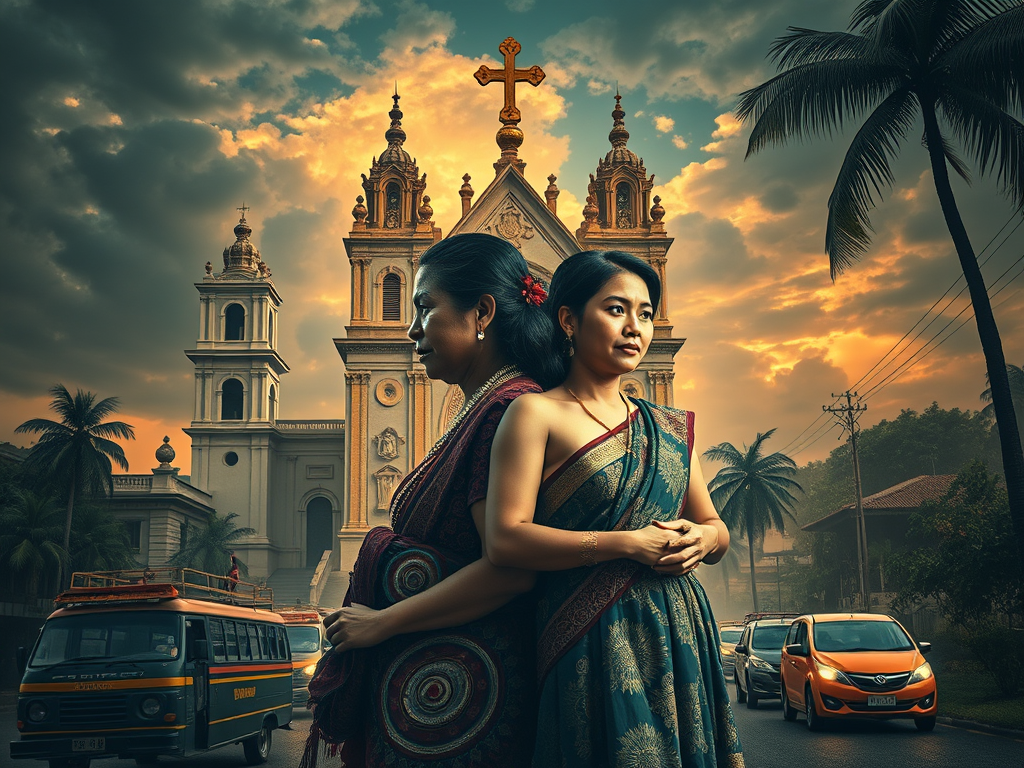
A Multidisciplinary Exploration of Indigenous Governance, Social Cohesion, and Cultural Resilience Before Western Colonization
Author: Gerald A. Daquila, PhD Candidate
What was life like in the Philippines before colonial rule—and what can it reveal about alternative models of governance and community? Prior to external influence, Filipino societies were organized into barangays: small, decentralized communities built on kinship, mutual obligation, and localized leadership.
These systems operated with their own forms of law, trade, and social structure, often adapted to specific geographic and cultural contexts. This article explores how the barangay functioned as a foundational unit of pre-colonial Philippine society, and what its principles suggest about autonomy, cohesion, and grassroots governance.
For a broader view of Philippine culture, society, and systems, see:
→ Understanding the Philippines: Culture, Society, and Systems (Hub)
Scope and Approach
This article examines the pre-colonial barangay as a social, political, and economic system. It does not idealize the past or assume uniformity across all regions, but instead recognizes the diversity of structures that existed across the archipelago.
The discussion focuses on key features of barangay life, including decentralized leadership under the datu, kinship-based organization, customary law, and localized trade networks. It also considers how these systems balanced autonomy with inter-community relations, forming flexible networks rather than rigid hierarchies.
Rather than treating the barangay as a relic of history, this approach evaluates its relevance as a reference point for understanding contemporary issues such as governance, community engagement, and social cohesion. It also examines how colonial restructuring altered or replaced these systems, shaping the trajectory of Philippine institutions.
The goal is to provide a grounded understanding of how early Filipino societies functioned, and how their underlying principles may still offer insight into modern challenges. By examining the barangay not just as history but as a system, this work supports clearer thinking about the relationship between local organization, cultural identity, and national development.
ABSTRACT
The pre-colonial Philippines, a vibrant archipelago of diverse ethnolinguistic communities, thrived as a network of barangays—kinship-based units rooted in communal values like kapwa (shared identity) and bayanihan (collective cooperation). This paper employs a PESTLE framework (Political, Economic, Social, Technological, Legal, Environmental) to dissect the societal structure of pre-colonial Filipino life, grounded in historical, anthropological, psychological, and sociological research.
It examines the roles of datus, babaylans, and community members; the informal rules of reciprocity and consensus; and the dynamic systems of governance, education, and trade that sustained these societies. By imagining a time-travel experience to a pre-colonial barangay, this study vividly reconstructs daily life, highlighting the strengths of communal resilience and areas of concern, such as potential fragmentation and vulnerability to external pressures.
The analysis reveals how colonial disruptions later undermined these systems, while suggesting that reconnecting with pre-colonial values could inspire modern Filipino identity and resilience. Written in accessible, narrative prose, this work balances academic rigor with emotional resonance, appealing to a broad readership seeking to understand the Philippines’ Indigenous past.
Keywords: Pre-colonial Philippines, barangay, kapwa, bayanihan, PESTLE analysis, Indigenous governance, social cohesion, Filipino identity, cultural resilience
Introduction
Imagine stepping into a bustling coastal barangay in the 15th-century Philippines, where the air hums with the rhythm of waves, the scent of coconut and salt, and the laughter of children learning oral epics under a balete tree. This was the pre-colonial Philippines—a mosaic of over 7,000 islands, home to diverse ethnolinguistic groups like the Tagalogs, Visayans, and Moro peoples, united by shared values of community and reciprocity.
Before Spanish galleons arrived in 1521, these societies thrived without centralized kingdoms, relying instead on barangays: small, kinship-based units led by datus and animated by kapwa, the belief in shared humanity. This study uses a PESTLE framework to explore the societal structure of pre-colonial Philippines, answering: Who were the key players? What rules governed their lives? How did governance, social cohesion, education, and economy function?
Through a multidisciplinary lens—drawing from history, anthropology, Sikolohiyang Pilipino (Filipino Psychology), and sociology—we reconstruct this world, grounded in sources like the Laguna Copperplate Inscription (900 CE) and oral traditions (Jocano, 1998; Scott, 1994).
By imagining a time-traveler’s experience, we bring this past to life, spotlighting strengths like communal resilience and concerns like political fragmentation. This narrative aims to inform and inspire, connecting modern Filipinos to their Indigenous roots while addressing how these values could address contemporary challenges.

Glyph of the Gridkeeper
The One Who Holds the Lattice of Light.
PESTLE Analysis of Pre-Colonial Philippine Society
Political: Governance and Leadership
Key Players: The barangay, typically comprising 30–100 families, was the core political unit, led by a datu—a chief chosen for charisma, wisdom, or wealth (Scott, 1994). Larger polities, like the Kingdom of Tondo or Rajahnate of Butuan, emerged by the 10th century, led by rajahs or sultans with broader influence (Jocano, 1998). Babaylans, often female spiritual leaders, wielded significant influence, advising datus and mediating disputes (Enriquez, 1992).
Rules and Governance: Governance was decentralized and consensus-driven, rooted in kapwa—a value prioritizing collective harmony over individual ambition (Enriquez, 2013). Datus resolved conflicts through mediation, guided by customary laws (adat) or Islamic principles in Mindanao’s sultanates (Majul, 1973). The Laguna Copperplate Inscription (900 CE) reveals a legal system addressing debt and kinship ties, indicating sophisticated political organization (Postma, 1992). Alliances were forged through marriage or trade, as seen in Tondo’s ties with China’s Song Dynasty (Scott, 1994).
Experience: As a time-traveler, you’d witness a datu settling a dispute under a communal banyan tree, villagers voicing opinions freely. The absence of rigid hierarchies would feel liberating, but the reliance on personal loyalty to datus could seem precarious, hinting at vulnerability to internal rivalries or external threats.
Concerns: The decentralized structure fostered local autonomy but risked fragmentation. Without a unified political system, barangays were susceptible to manipulation by foreign traders or invaders, a weakness later exploited by Spanish colonizers (Constantino, 1975).
Economic: Trade and Sustenance
Key Players: Farmers, fishers, artisans, and traders drove the economy. Datus and maharlika (nobles) controlled trade, while timawa (freemen) and alipin (dependents) worked the land or crafted goods (Scott, 1994).
Rules and Economy: The economy blended subsistence and trade. Coastal barangays grew rice, root crops, and coconuts, while fishing sustained communities (Jocano, 1998). The Philippines was a hub in the Maritime Silk Road, exporting gold, pearls, and beeswax to China, India, and Southeast Asia (Piacentini, 2023). Barter was common, but gold and Chinese porcelain served as currency in major centers like Butuan (Scott, 1994). The alipin system, where debts tied individuals to service, ensured labor but allowed social mobility through repayment or bravery (Studocu, 2023).
Experience: You’d barter rice for a Chinese jar at a bustling port, marveling at balangay boats laden with goods. The market’s vibrancy would pulse with communal trust, but you might notice tensions when debts bound alipin to elites, hinting at economic inequities.
Concerns: While trade enriched coastal barangays, inland communities had less access, creating disparities. The alipin system, though flexible, could perpetuate dependency, foreshadowing colonial exploitation (Constantino, 1975).
Social: Cohesion and Community
Key Players: The social fabric included datus, maharlika, timawa, alipin, and babaylans. Women often held high status, especially as babaylans or property holders (Enriquez, 1992).
Rules and Social Cohesion: Kapwa fostered a sense of shared identity, where individual well-being depended on the community’s (Enriquez, 2013). Bayanihan—communal work like moving houses or harvesting—cemented bonds (Kilag, 2024). Rituals, led by babaylans, reinforced unity, with feasts celebrating harvests or victories. Social mobility was possible, as alipin could become timawa through service or marriage (Scott, 1994).
Experience: You’d join a bayanihan effort, lifting a nipa hut alongside neighbors, feeling the joy of collective purpose. At night, babaylans would lead rituals under starlit skies, their chants weaving spiritual and social bonds. Yet, you might sense tensions between classes, as alipin worked harder for less status.
Concerns: Class distinctions, though fluid, could strain cohesion, especially when datus favored elites. Inter-barangay rivalries, fueled by competition for trade, occasionally led to conflicts, weakening collective resilience (Jocano, 1998).
Technological: Innovation and Craftsmanship
Key Players: Artisans, boat-builders, and weavers were technological innovators, supported by community knowledge-sharing (Piacentini, 2023).
Rules and Technology: Filipinos excelled in boat-building, crafting balangay outrigger boats for trade and warfare (Scott, 1994). Gold-working, as seen in the Surigao Treasure, showcased intricate artistry (Jocano, 1998). Weaving produced textiles like abaca, traded regionally. The baybayin script enabled record-keeping and communication, though primarily for ritual or personal use (Piacentini, 2023).
Experience: You’d sail on a balangay, awed by its sturdy planks and skilled navigators reading stars and currents. Visiting a goldsmith, you’d see delicate filigree work, while weavers taught you abaca patterns. The ingenuity would inspire, but the reliance on oral transmission might limit widespread technological diffusion.
Concerns: Technological advancements were localized, with coastal barangays outpacing inland ones. The lack of a unified writing system beyond baybayin hindered large-scale knowledge preservation, leaving societies vulnerable to cultural erasure during colonization (Constantino, 1975).
Legal: Customary Laws and Justice
Key Players: Datus and babaylans enforced laws, with community elders advising on disputes (Scott, 1994).
Rules and Legal System: Customary laws (adat) governed behavior, emphasizing restitution over punishment. The Laguna Copperplate Inscription documents debt settlements, showing a formalized legal framework (Postma, 1992). In Mindanao, Islamic sultanates adopted Sharia elements, blending with Indigenous norms (Majul, 1973). Disputes were resolved through consensus, with babaylans mediating spiritual or moral conflicts (Enriquez, 1992).
Experience: You’d attend a dispute resolution, where a datu listens to both sides, guided by elders and a babaylan’s wisdom. The focus on restoring harmony would feel restorative, but the lack of written laws might seem inconsistent across barangays.
Concerns: The oral nature of laws risked inconsistency, and datus’ personal authority could lead to favoritism. In larger polities, integrating diverse customs posed challenges, foreshadowing colonial centralization (Scott, 1994).
Environmental: Harmony with Nature
Key Players: Farmers, fishers, and babaylans interacted closely with the environment, guided by animist beliefs (Jocano, 1998).
Rules and Environmental Practices: Animism shaped environmental stewardship, with spirits (anito) believed to inhabit nature. Rituals ensured sustainable harvests, and communal land use prevented overexploitation (Enriquez, 1992). Coastal barangays adapted to typhoons, building elevated nipa huts and maintaining fish traps (Piacentini, 2023).
Experience: You’d join a ritual thanking the rice spirit, planting seeds with reverence. Fishing with woven traps, you’d feel the community’s respect for the sea. Typhoon preparations would showcase resilience, but frequent storms might highlight environmental vulnerabilities.
Concerns: While sustainable, practices were localized, and growing trade demands could strain resources, as seen in deforestation for boat-building (Jocano, 1998). Climate challenges like typhoons required adaptive resilience, which colonialism later disrupted.
A Time-Traveler’s Experience: Life in a Pre-Colonial Barangay
Picture yourself in a Visayan barangay circa 1400 CE, waking to roosters crowing and the scent of woodsmoke. Your nipa hut, elevated on stilts, sways gently in the tropical breeze. Outside, neighbors greet you with kapwa’s warmth, treating you as kin. You join farmers planting rice, their songs blending with the rustle of palms—a bayanihan rhythm of shared labor.
At the port, traders unload Chinese porcelain, their balangay boats gleaming under the sun. A babaylan invites you to a ritual, her chants invoking anito spirits as the community feasts on roasted pig and rice wine. The datu, adorned with gold, resolves a dispute with calm authority, but you notice whispers of rivalry with a neighboring barangay.
Life feels vibrant yet fragile. The communal spirit uplifts, but class tensions and trade disparities hint at underlying strains. You marvel at the gold jewelry and baybayin inscriptions, yet wonder how these oral traditions will endure. As a typhoon looms, the barangay unites to secure homes, their resilience inspiring but tempered by the lack of centralized coordination. This is a world of harmony and ingenuity, yet one poised on the edge of transformation, vulnerable to external forces.

Glyph of the Barangay Tapestry
Revealing the woven life of the pre-colonial barangay, where kinship, spirit, and land formed the sacred architecture of community.
Areas of Concern and Modern Reflections
These reflections are offered not as prescriptions, but as interpretive bridges between past and present. The pre-colonial Philippines was a testament to communal resilience, but its decentralized structure posed challenges:
- Political Fragmentation: The absence of a unified polity made barangays susceptible to foreign domination, as seen when Spanish colonizers exploited rivalries (Constantino, 1975).
- Economic Disparities: Coastal trade hubs thrived, but inland communities lagged, foreshadowing colonial inequalities (Studocu, 2023).
- Cultural Vulnerability: Oral traditions and localized knowledge risked loss without widespread written systems, a weakness exacerbated by colonial erasure (Piacentini, 2023).
- Social Tensions: While kapwa fostered cohesion, class distinctions and inter-barangay conflicts could undermine unity (Jocano, 1998).
These concerns highlight the fragility of pre-colonial systems, yet their strengths—kapwa, bayanihan, and adaptive resilience—offer lessons for today. Modern Filipinos, facing inequality and cultural alienation, can draw on these values to rebuild collective efficacy. Initiatives like Sikolohiyang Pilipino and decolonized education can revive cultural pride, while community-driven policies can institutionalize bayanihan to address crises (Enriquez, 2013; Kilag, 2024).
Conclusion
The pre-colonial Philippines was a vibrant tapestry of barangays, woven together by kapwa and sustained by cooperative governance, trade, and spiritual harmony. Through a PESTLE lens, we see a society of ingenuity and resilience, yet one vulnerable to fragmentation and external pressures. As a time-traveler, you’d feel the pulse of community, marvel at its artistry, and sense its delicate balance.
By reconnecting with these Indigenous values, modern Filipinos can reclaim their cultural confidence, fostering a society that honors its past while navigating present challenges. This journey through time invites us to celebrate the archipelago’s roots and envision a future where kapwa guides the nation forward.
Suggested Crosslinks
- Unshackling the Filipino Spirit: Could a Pre-Colonial Consciousness Have Forged a Stronger Nation? — for alternative historical trajectories and cultural potential.
- Transmuting the Philippines’ Collective Trauma: Reviving Precolonial Culture as a Pathway to Healing and Global Inspiration — for pathways linking cultural restoration with collective healing and societal renewal.
- Dynasties or Democracy: Envisioning the Philippines in 2035 Through Youth-Driven Reform — for future scenarios involving governance reform and generational change.
- Is the Philippines Matriarchal or Patriarchal? Understanding Gender Dynamics and Hidden Female Power — for how gender roles and informal influence shape societal dynamics.
- Transforming the Philippines: A Holistic Development Strategy Integrating GESARA/NESARA, Quantum Financial Systems, and Off-World Technologies — for integrated economic and systemic transformation frameworks.
Glossary
- Barangay: A pre-colonial Filipino community unit, typically 30–100 families, led by a datu.
- Bayanihan: A tradition of communal cooperation, such as collectively moving a house or harvesting crops.
- Babaylan: Indigenous spiritual leaders, often women, who mediated between communities and spirits.
- Kapwa: A core Filipino value meaning “shared identity,” emphasizing interconnectedness.
- Datu: A barangay chief, chosen for leadership, wisdom, or wealth.
- Timawa: Freemen in the social hierarchy, with rights to land and labor.
- Alipin: Dependents or slaves, often bound by debt, with potential for social mobility.
- Baybayin: A pre-colonial syllabic script used for ritual and personal writing.
- Anito: Spirits or deities in animist beliefs, revered in rituals.
- Adat: Customary laws governing barangay behavior and justice.
Bibliography
Constantino, R., & Constantino, L. R. (1975). The Philippines: A past revisited (Vol. 1). Quezon City: Renato Constantino.
Enriquez, V. G. (1992). From colonial to liberation psychology: The Philippine experience. University of the Philippines Press.
Enriquez, V. G. (2013). From colonial to liberation psychology: The Philippine experience. Philosophy East and West, 63(2), 123-145.
Jocano, F. L. (1998). Filipino indigenous ethnic communities: Patterns, variations, and typologies. Quezon City: Punlad Research House Inc.
Kilag, O. K. (2024). Filipino youth for stronger future of the new Philippines. International Multidisciplinary Journal of Research for Innovation, Sustainability, and Excellence, 1(6). Retrieved from https://risejournals.org
Majul, C. A. (1973). Muslims in the Philippines. Quezon City: University of the Philippines Press.
Piacentini, K. (2023). Influences on Philippine education. Wixsite. Retrieved from https://kpiacentini.wixsite.com/iem-php/unit-1-influences
Postma, A. (1992). The Laguna Copperplate Inscription: Text and commentary. Philippine Studies, 40(2), 183-203.
Scott, W. H. (1994). Barangay: Sixteenth-century Philippine culture and society. Quezon City: Ateneo de Manila University Press.
Studocu. (2023). Module 13 Week 13: Social, political, economic, and cultural issues in Philippine history. Retrieved from https://www.studocu.com
Explore More Philippine Analysis
- Culture and identity → Understanding the Filipino Psyche
- Precolonial systems → Living in the Barangay
- Governance and power → Political Dynasties in the Philippines
→ View the full Philippines Hub
Understanding these dynamics also requires clarity in how individuals respond under pressure—see Life Under Pressure.
Some articles in this section are part of the Stewardship Archive
These pieces explore deeper layers of Philippine transformation, including:
- long-term societal redesign
- advanced governance frameworks
- future-state modeling
They are written for readers who want to go beyond surface analysis into structural and forward-looking perspectives.
→ Continue reading (Members Access)
About This Work
This article is part of a broader exploration of Philippine society, culture, and systems—integrating historical context, behavioral patterns, and structural analysis.
It is intended to support understanding, reflection, and informed discussion.
For a wider macro perspective, Global Reset: Systems Change, Economic Transition, and Future Models.
Explore the Rest of the Site
This work sits within a larger system of essays on human development, systems thinking, and societal transformation.
→ Living Archive
→ Stewardship Architecture
→ Main Blog
Attribution
© 2025–2026 Gerald Alba Daquila
All rights reserved.
This work is offered for reflection and independent interpretation. It does not represent a formal doctrine, institution, or required belief system.
Codex Origin and Stewardship
This material originates within the field of the Living Codex and is stewarded under Oversoul Appointment.
It may be shared in its complete and unaltered form, with attribution preserved.
Lineage Marker: Universal Master Key (UMK) Codex Field
Support This Work
If you find this work valuable, you may support its continued development and availability.
Support helps sustain:
- ongoing writing and research
- digital hosting and access
- future publications
Ways to access and support:
• Free reading within the Living Archive
• Individual digital editions
• Stewardship-based access
Support link:
paypal.me/GeraldDaquila694
www.geralddaquila.com© 2025 Gerald Alba Daquila
This article is offered for educational and interpretive purposes.