Logo - Life.Understood.

Category: Barangay-Communities

  • The Philippines and Civilizational Transition

    The Philippines and Civilizational Transition


    Why a Fractured Archipelago May Reveal the Future of Human Systems


    Meta Description

    Explore why the Philippines may represent a unique civilizational case study in resilience, diaspora intelligence, post-colonial recovery, governance, and regenerative systems during a period of global transition.


    Introduction

    At first glance, the Philippines may appear an unlikely candidate for civilizational reflection.

    The country is frequently associated with:

    • corruption,
    • weak institutions,
    • infrastructure strain,
    • political dynasties,
    • ecological vulnerability,
    • economic dependency,
    • colonial trauma,
    • and recurring natural disasters.

    By conventional metrics of geopolitical power, it rarely appears at the center of global imagination.

    Yet beneath these visible fractures lies something more complex.

    The Philippines represents one of the world’s most compressed convergence zones of historical layering, ecological pressure, diaspora adaptation, social resilience, and post-colonial transformation.

    It exists simultaneously at the intersection of:

    • East and West,
    • indigenous and colonial systems,
    • tradition and hyper-modernity,
    • local community and global migration,
    • institutional fragility and extraordinary social adaptability.

    This does not make the Philippines “superior.”

    Nor does it romanticize suffering or instability.

    Rather, the Philippines may function as a revealing systems case study for understanding how societies adapt under prolonged pressure while attempting to preserve relational coherence amid accelerating global change.

    In this sense, the Philippines may matter not because it has escaped fracture, but because it reveals what human systems look like inside transition itself.


    A Nation Formed Through Layered Colonial Compression

    Few countries contain as many overlapping civilizational layers compressed into one social body.

    The Philippines carries:

    • pre-colonial indigenous systems,
    • centuries of Spanish colonization,
    • American institutional restructuring,
    • Japanese wartime trauma,
    • Catholic cosmology,
    • Asian regional influence,
    • neoliberal globalization,
    • and contemporary digital hyperconnectivity simultaneously.

    These layers did not disappear when new systems emerged.

    They accumulated.

    As a result, Filipino identity often operates through hybridity rather than singular civilizational continuity.

    This creates both instability and adaptive flexibility.

    Post-colonial theorists note that societies shaped through prolonged colonization frequently experience fragmented institutional identity, cultural discontinuity, and dependency structures persisting long after formal political independence (Fanon, 1963).

    The Philippines reflects many of these conditions.

    Yet it also demonstrates remarkable cultural persistence despite them.


    Fracture as Systems Exposure

    The Philippines experiences multiple forms of overlapping pressure simultaneously.

    These include:

    • typhoons,
    • earthquakes,
    • volcanic activity,
    • economic inequality,
    • migration dependency,
    • governance inconsistency,
    • infrastructure vulnerability,
    • and geopolitical tension.

    From a systems perspective, this creates conditions of continuous adaptive stress.

    Many future global pressures already visible elsewhere in fragmented form appear in concentrated form within the Philippine experience.

    This includes:

    • ecological instability,
    • institutional fragility,
    • information saturation,
    • diaspora fragmentation,
    • and economic precarity.

    As a result, the Philippines may function as a kind of civilizational pressure chamber where emerging global conditions become visible earlier and more intensely.

    The country therefore offers insight not because it has solved modern complexity, but because it lives inside it continuously.


    Social Cohesion Amid Structural Fragility

    One of the most striking features of the Philippines is the persistence of social cohesion despite chronic institutional weakness.

    In many societies, prolonged instability erodes collective trust and relational continuity.

    Yet Filipino society often maintains:

    • strong family systems,
    • interpersonal warmth,
    • communal adaptability,
    • hospitality norms,
    • mutual aid behaviors,
    • and emotional resilience under pressure.

    This social resilience frequently compensates for institutional deficiencies.

    Sociologists have long noted that high-trust relational cultures can preserve social continuity even under material hardship (Fukuyama, 1995).

    The Philippines demonstrates this repeatedly during:

    • natural disasters,
    • economic crises,
    • migration fragmentation,
    • and political instability.

    This does not erase real systemic problems.

    However, it reveals an important civilizational insight:

    Institutional resilience alone does not determine societal survival.

    Relational resilience matters too.


    Diaspora as Distributed Adaptive Intelligence

    The Filipino diaspora is one of the largest and most globally distributed populations in the world.

    Millions of Filipinos live and work across:

    • North America,
    • Europe,
    • the Middle East,
    • Asia,
    • Oceania,
    • and maritime labor systems.

    This diaspora is often discussed economically through remittances.

    Yet its deeper significance may be civilizational.

    Diaspora populations develop:

    • cross-cultural adaptability,
    • multilingual navigation,
    • identity fluidity,
    • distributed survival intelligence,
    • and transnational coordination capacity.

    Filipino workers frequently operate across radically different systems while preserving relational ties to family and homeland.

    This creates a form of globally distributed adaptive consciousness rarely recognized within traditional geopolitical analysis.

    The diaspora becomes not merely labor migration, but a transnational resilience network.


    Ecological Frontline Civilization

    The Philippines exists on the frontline of climate instability.

    Typhoons, flooding, sea-level rise, heat stress, and ecological disruption increasingly shape national reality.

    Many industrialized societies still experience climate instability as future abstraction.

    The Philippines experiences it as present reality.

    This ecological exposure creates difficult conditions.

    Yet it also accelerates adaptation awareness.

    Communities repeatedly forced to respond to instability often develop:

    • improvisational resilience,
    • distributed mutual aid,
    • adaptive flexibility,
    • and local survival intelligence.

    This does not romanticize disaster.

    Rather, it recognizes that ecological instability is becoming a defining civilizational condition globally.

    The Philippine experience may therefore offer insight into how societies psychologically and socially adapt under recurring systemic stress.


    Governance Fragility and Civilizational Lessons

    The Philippines also reveals important lessons regarding governance.

    Persistent challenges include:

    • corruption,
    • bureaucratic inconsistency,
    • political dynasties,
    • infrastructure inequality,
    • weak long-term planning,
    • and uneven institutional trust.

    These realities cannot be ignored or spiritually bypassed.

    However, governance fragility itself becomes part of the systems lesson.

    The Philippines demonstrates how:

    • colonial legacies,
    • economic dependency,
    • elite capture,
    • and fragmented institutional continuity

    can weaken state capacity across generations.

    At the same time, it reveals how populations compensate through informal systems of relational support and adaptive survival.

    This tension between institutional weakness and social resilience is globally important.

    Many societies increasingly face similar pressures as trust in institutions declines worldwide.


    The Global South and Emerging Civilizational Insight

    Much of modern global discourse remains dominated by Western institutional frameworks.

    Yet many Global South societies possess forms of adaptive intelligence developed under conditions of prolonged instability, scarcity, and external pressure.

    The Philippines may represent part of this emerging civilizational perspective.

    Not because suffering itself is desirable.

    But because prolonged exposure to instability often produces heightened sensitivity to:

    • systems fragility,
    • relational dependence,
    • community resilience,
    • ecological reality,
    • and adaptive improvisation.

    Societies accustomed to comfort and abundance sometimes lose resilience capacities that become visible again under stress.

    The Philippines therefore reflects not merely “underdevelopment,” but a different relationship to uncertainty itself.


    Why Symbolic Interpretations Emerge

    Within spiritual and symbolic frameworks, some have described the Philippines metaphorically as a “heart-centered” culture.

    This symbolism does not need to be interpreted literally to hold meaning.

    From a symbolic perspective, the “heart” often represents:

    • relational intelligence,
    • emotional resilience,
    • compassion,
    • adaptability,
    • and connective social capacity.

    In this sense, the metaphor reflects observable social dynamics:

    • warmth despite hardship,
    • hospitality amid instability,
    • relational continuity despite fragmentation,
    • and community persistence under pressure.

    The symbolism becomes less about mystical exceptionalism and more about archetypal interpretation.

    Healthy symbolic frameworks illuminate patterns without abandoning reality.


    Civilizational Transition and the Philippines

    Modern civilization appears increasingly unstable across multiple domains simultaneously:

    • ecological systems,
    • governance systems,
    • economic systems,
    • information systems,
    • and cultural coherence.

    The Philippines exists at the intersection of many of these fractures.

    This makes it an unusually revealing mirror.

    The country reflects:

    • post-colonial recovery,
    • ecological adaptation,
    • diaspora identity,
    • institutional incompleteness,
    • digital acceleration,
    • and relational resilience simultaneously.

    These are not uniquely Philippine conditions.

    They are increasingly global conditions.

    The Philippines simply experiences them in highly concentrated form.

    This may explain why the country occupies an important symbolic and systems-oriented position within frameworks exploring civilizational transition.


    Beyond Romanticism and Despair

    Two distortions should be avoided.

    The first is romantic idealization:

    portraying the Philippines as spiritually superior or uniquely destined.

    The second is reductionist despair:

    viewing the country only through corruption, dysfunction, and instability.

    Both perspectives flatten complexity.

    The Philippines contains:

    • profound beauty,
    • deep fracture,
    • resilience,
    • institutional weakness,
    • creativity,
    • dependency,
    • warmth,
    • and unresolved trauma simultaneously.

    Like many societies in transition, it is internally contradictory.

    Yet contradiction itself may reveal important truths about the human condition during periods of systemic transformation.


    A Living Systems Case Study

    From a systems perspective, the Philippines may best be understood not as utopia, but as a living laboratory of civilizational transition.

    It reveals:

    • how people survive fragmentation,
    • how identity adapts under hybridity,
    • how relational systems compensate for institutional weakness,
    • how ecological pressure reshapes culture,
    • and how communities preserve continuity under instability.

    These dynamics are becoming increasingly relevant globally.

    As climate instability, technological acceleration, governance fragmentation, and economic pressure intensify worldwide, many societies may encounter conditions long familiar to the Philippine experience.

    The Philippines therefore matters not because it has transcended fracture.

    But because it reveals how humanity continues adapting within it.


    Toward Regenerative Futures

    The future may depend less upon returning to idealized stability and more upon developing systems capable of:

    • resilience,
    • relational coherence,
    • adaptive governance,
    • ecological stewardship,
    • and long-term civilizational learning.

    The Philippine experience offers insight into both:

    • the dangers of unresolved systemic fragility,
      and
    • the enduring strength of human relational resilience.

    This combination makes the country uniquely important within conversations about regenerative futures.

    Not as a perfect model.

    But as a revealing threshold.

    A place where the fractures of modern civilization — and the possibilities for more adaptive human systems — become unusually visible at the same time.


    Suggested Crosslinks


    References

    Fanon, F. (1963). The wretched of the earth. Grove Press.

    Fukuyama, F. (1995). Trust: The social virtues and the creation of prosperity. Free Press.

    Meadows, D. H. (2008). Thinking in systems: A primer. Chelsea Green Publishing.

    Senge, P. M. (1990). The fifth discipline: The art and practice of the learning organization. Doubleday.

    The Living Archive is designed to be explored through pathways, categories, and search. If you’re looking for a specific idea, question, or theme, AI Search can help surface relevant connections across the archive.


    Attribution

    The Living Archive
    Integrative Frameworks for Regenerative Civilization

    © 2026 Gerald Daquila. All rights reserved.
    Part of the Life.Understood. knowledge ecosystem and Stewardship Institute initiative.

    This article is intended for educational, research, and civic inquiry purposes.
    Readers are encouraged to engage critically, verify sources independently, and explore related knowledge hubs for broader systems context.

  • Local Resilience Economies

    Local Resilience Economies


    Rebuilding Community Stability Through Distributed and Regenerative Systems


    Meta Description

    Explore how local resilience economies strengthen communities through regenerative systems, cooperative structures, distributed infrastructure, local production, and adaptive economic resilience in an age of systemic uncertainty.


    Local Resilience Economies

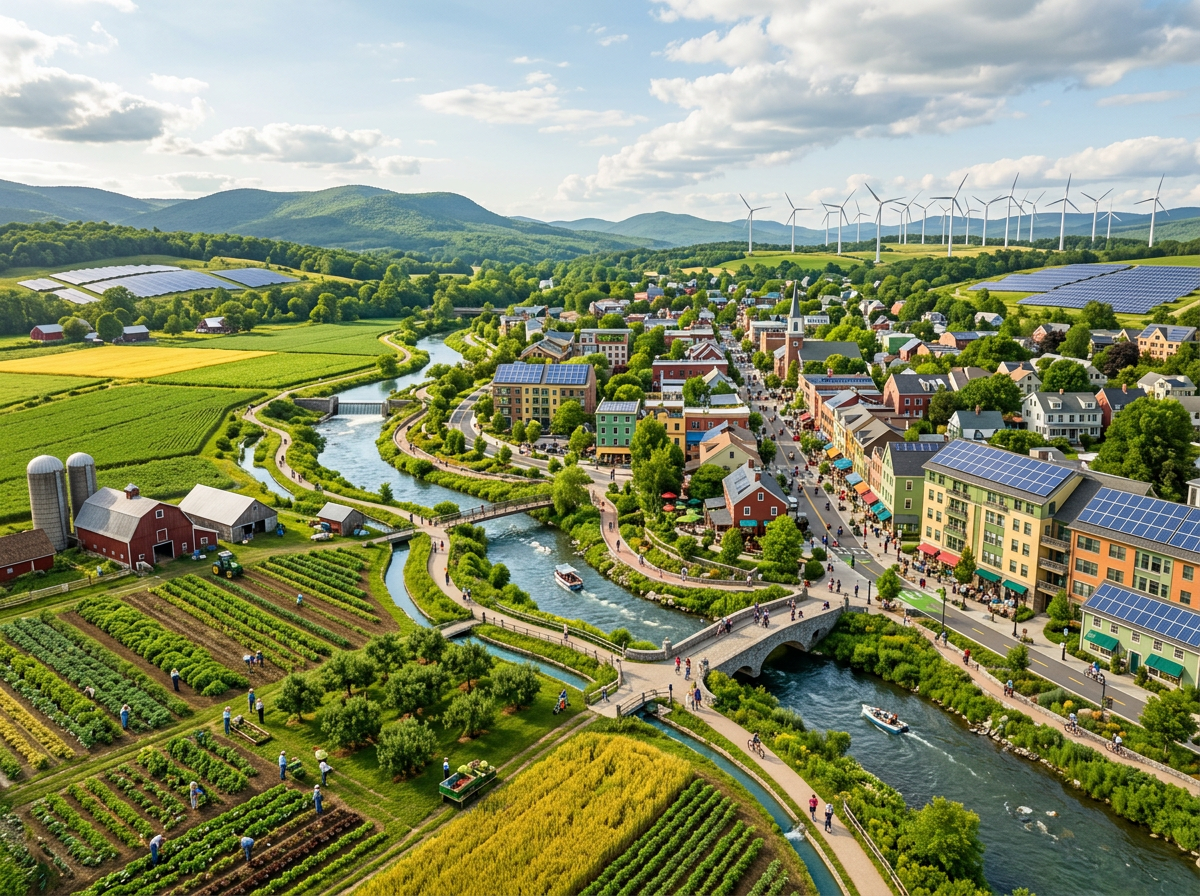
    Modern economies are increasingly interconnected through global finance, multinational supply chains, digital infrastructures, and centralized production systems.

    While these systems have generated extraordinary technological advancement and material abundance, they have also created growing vulnerability to systemic disruption.

    Economic shocks, inflation, supply chain failures, ecological instability, housing pressures, labor precarity, and institutional fragility have revealed an important reality:

    Communities dependent entirely upon distant systems often possess limited resilience when larger systems become unstable.

    In response, growing attention is turning toward the concept of local resilience economies.

    A local resilience economy is not simply a “small local economy.” It is an adaptive economic ecosystem intentionally designed to strengthen community stability, regenerative capacity, and long-term resilience amid uncertainty.

    Such economies seek to balance global participation with local capability.

    They aim to cultivate systems capable of maintaining social and economic continuity even when external conditions become volatile.

    This shift is not merely economic.

    It reflects a broader civilizational question:

    How can communities organize resources, infrastructure, governance, and cooperation in ways that strengthen long-term adaptability rather than deepen fragility?


    What Is a Local Resilience Economy?

    A local resilience economy is an economic system structured to increase a community’s capacity to withstand, adapt to, and recover from disruption.

    This includes strengthening:

    • Local production capacity
    • Food resilience
    • Energy resilience
    • Community enterprise
    • Distributed infrastructure
    • Cooperative networks
    • Ecological stewardship
    • Skills diversity
    • Regional supply systems
    • Social trust

    Unlike highly extractive or centralized economic systems, resilience economies emphasize durability, adaptability, and regenerative circulation of value within communities.

    The goal is not complete isolation from global systems.

    Rather, it is reducing dangerous overdependence upon fragile external systems beyond local control.

    Healthy resilience economies often combine:

    • Local capability
    • Regional cooperation
    • Strategic interdependence
    • Distributed participation
    • Ecological sustainability

    Resilience therefore exists on a spectrum.

    The question is not whether communities engage with larger economies, but whether they retain enough local capacity to remain adaptive during instability.


    The Fragility of Hyper-Globalized Systems

    Over recent decades, economic systems have become increasingly centralized and globally interconnected.

    Supply chains stretch across continents. Food systems rely heavily upon industrial logistics. Communities depend upon distant manufacturing centers for essential goods. Financial systems operate through tightly coupled global infrastructures.

    While globalization improved efficiency and scale, it also concentrated vulnerability.

    The COVID-19 pandemic revealed how rapidly disruptions can cascade through interconnected systems affecting:

    • Transportation
    • Healthcare
    • Labor markets
    • Food distribution
    • Manufacturing
    • Energy systems
    • Local businesses

    Communities lacking local redundancy often struggled most severely.

    This exposed a key systems principle:

    Extreme efficiency frequently reduces resilience.

    When systems optimize solely for cost reduction and speed, they often eliminate redundancy, local capacity, and adaptive buffers.

    As a result, local resilience economies increasingly seek to restore balance between efficiency and stability.


    Why Local Production Matters

    Communities become more resilient when they retain some capacity to locally produce essential goods and services.

    This may include:

    • Regional agriculture
    • Local manufacturing
    • Skilled trades
    • Community energy systems
    • Water stewardship
    • Distributed digital infrastructure
    • Local entrepreneurship

    Local production strengthens resilience in several ways:

    Reduced Dependency

    Communities become less vulnerable to distant disruptions.

    Faster Adaptation

    Local systems often respond more quickly to changing conditions.

    Economic Circulation

    More value remains within the regional economy.

    Skills Retention

    Communities maintain practical knowledge and productive capability.

    Social Cohesion

    Local participation strengthens relationships and civic engagement.

    Historically, communities with stronger local productive capacity often adapted more effectively during periods of wider systemic instability.


    Community Wealth and Economic Circulation

    One defining feature of resilient local economies is circulation rather than extraction.

    In extractive systems, wealth continuously flows outward through:

    • Corporate consolidation
    • Debt servicing
    • External ownership
    • Financial speculation
    • Resource monopolization

    This weakens local resilience because communities lose the ability to reinvest in their own infrastructure, businesses, and social systems.

    Resilience economies instead emphasize local circulation of value through:

    • Cooperative enterprises
    • Local investment
    • Community-owned businesses
    • Regional financial systems
    • Ethical entrepreneurship
    • Distributed ownership structures

    When value circulates locally, communities often experience:

    • Greater economic stability
    • Stronger social cohesion
    • Increased adaptive capacity
    • More durable local infrastructure

    Economic resilience depends not merely upon wealth generation, but upon how wealth flows through systems.

    Resilient local economies depend upon more than production and exchange.

    They emerge from the stewardship of interconnected forms of capital including ecological health, community trust, practical capability, local enterprise, infrastructure, and shared responsibility.

    The framework below illustrates how regenerative systems strengthen these capacities simultaneously, creating economic ecosystems capable of renewal rather than depletion.

    Figure 1. Regenerative Stewardship and Community Resilience.

    Download Reference Map 007: Stewardship Field Map

    Local resilience economies strengthen long-term stability by cultivating interconnected forms of ecological, social, economic, and institutional capital.

    Rather than maximizing short-term extraction, regenerative systems focus on renewal, circulation, stewardship, and the continuous development of community capacity.


    Cooperative Structures and Shared Stewardship

    Local resilience economies frequently integrate cooperative structures balancing individual initiative with collective stewardship.

    Examples include:

    • Worker cooperatives
    • Credit unions
    • Community-supported agriculture
    • Cooperative housing
    • Shared production systems
    • Mutual aid networks
    • Participatory budgeting
    • Local resource stewardship

    Elinor Ostrom’s research demonstrated that communities can effectively manage shared resources through participatory governance systems adapted to local realities (Ostrom, 1990).

    Cooperative systems often increase resilience because they distribute responsibility, knowledge, and participation across communities rather than concentrating control within distant institutions.

    Importantly, cooperation does not eliminate entrepreneurship or innovation.

    Rather, it may strengthen long-term stability by aligning incentives with community well-being.


    Ecological Stewardship as Economic Infrastructure

    Local resilience economies recognize that human economies remain fully dependent upon ecological systems.

    Healthy soil, stable water systems, biodiversity, energy access, forests, fisheries, and climate stability all support economic continuity.

    Industrial systems frequently externalize ecological costs in pursuit of short-term growth.

    However, ecological degradation often returns later as systemic instability through:

    • Food insecurity
    • Water scarcity
    • Disaster vulnerability
    • Infrastructure stress
    • Rising insurance costs
    • Economic volatility

    Resilience economies increasingly integrate regenerative approaches such as:

    • Regenerative agriculture
    • Watershed restoration
    • Renewable energy systems
    • Circular material flows
    • Bioregional planning
    • Ecological restoration projects

    Economic resilience and ecological resilience are increasingly inseparable.

    Communities that restore ecological stability often strengthen long-term economic adaptability as well.


    Energy Resilience and Infrastructure Sovereignty

    Modern economies depend heavily upon centralized energy systems.

    However, concentrated infrastructure can create vulnerability during disruptions.

    Local resilience economies increasingly explore distributed energy systems including:

    • Solar microgrids
    • Community energy cooperatives
    • Local battery storage
    • Distributed renewable infrastructure
    • Hybrid regional systems

    Distributed infrastructure may increase resilience by reducing dependence upon singular centralized points of failure.

    Infrastructure sovereignty also applies to:

    • Water systems
    • Communication systems
    • Transportation systems
    • Food systems
    • Digital infrastructure

    The goal is not eliminating interconnected systems.

    It is ensuring communities retain enough local capacity to maintain continuity during disruption.


    Skills Resilience and Human Capability

    Economies are ultimately human coordination systems.

    Communities become fragile when practical knowledge is narrowly concentrated or entirely outsourced.

    Local resilience economies therefore value distributed capability.

    Important resilience skills may include:

    • Food cultivation
    • Repair and maintenance
    • Ecological stewardship
    • Financial literacy
    • Conflict mediation
    • Civic participation
    • Local governance
    • Energy management
    • Cooperative organization

    Distributed knowledge increases adaptive flexibility.

    Historically, communities with broader practical competence often reorganized more effectively during instability.


    Social Trust as Economic Infrastructure

    Trust functions as invisible infrastructure within resilient economies.

    Communities with strong social trust often demonstrate:

    • Greater cooperation
    • Faster crisis response
    • Lower coordination costs
    • Stronger local enterprise ecosystems
    • Higher civic participation
    • Greater adaptive capacity

    Francis Fukuyama (1995) described trust as a form of social capital enabling large-scale coordination.

    Without trust, economic systems become increasingly transactional, fragmented, and fragile.

    Local resilience economies therefore depend not only upon infrastructure, but upon relationships.

    Social cohesion strengthens resilience.


    Technology and Distributed Resilience

    Technology can either strengthen or weaken local resilience depending upon implementation.

    Resilience-oriented technologies often:

    • Increase local capability
    • Improve distributed coordination
    • Strengthen information access
    • Support decentralized production
    • Reduce infrastructure vulnerability

    Examples include:

    • Open-source technologies
    • Distributed manufacturing
    • Community communication networks
    • Local digital marketplaces
    • Decentralized energy systems

    However, technologies that increase dependency upon distant monopolized infrastructures may deepen fragility.

    The critical question is whether technological systems strengthen community adaptability or increase systemic dependence.


    Resilience Is Not Isolationism

    Local resilience economies are not anti-global.

    They do not require complete self-sufficiency or economic isolation.

    Healthy resilience balances:

    • Local production with global exchange
    • Regional cooperation with local sovereignty
    • Innovation with sustainability
    • Efficiency with redundancy
    • Adaptability with coordination

    The objective is not withdrawal from civilization.

    It is reducing dangerous fragility within civilization.

    Communities capable of maintaining partial local autonomy during periods of disruption may become more stable than systems entirely dependent upon centralized coordination.


    Toward Regenerative Economic Futures

    The twenty-first century is increasingly shaped by systemic uncertainty.

    Economic volatility, technological disruption, ecological instability, and institutional fragility are interacting across interconnected systems.

    Under such conditions, local resilience economies may become increasingly important as stabilizing foundations for communities.

    This transition may involve:

    • Rebuilding local production systems
    • Expanding cooperative structures
    • Investing in regenerative infrastructure
    • Supporting ethical entrepreneurship
    • Strengthening ecological stewardship
    • Cultivating distributed leadership
    • Restoring civic trust
    • Reinforcing community adaptability

    Resilient economies are not simply wealth-generating systems.

    They are life-support systems.

    They shape whether communities can maintain dignity, stability, cooperation, and continuity under changing conditions.

    The future may increasingly belong not to the most centralized economies, but to the communities most capable of balancing interconnectedness with resilience.


    Suggested Crosslinks


    References

    Fukuyama, F. (1995). Trust: The social virtues and the creation of prosperity. Free Press.

    Ostrom, E. (1990). Governing the commons: The evolution of institutions for collective action. Cambridge University Press.

    Tooze, A. (2021). Shutdown: How COVID shook the world’s economy. Viking.

    The Living Archive is designed to be explored through pathways, categories, and search. If you’re looking for a specific idea, question, or theme, AI Search can help surface relevant connections across the archive.


    Attribution

    The Living Archive
    Integrative Frameworks for Regenerative Civilization

    © 2026 Gerald Daquila. All rights reserved.
    Part of the Life.Understood. knowledge ecosystem and Stewardship Institute initiative.

    This article is intended for educational, research, and civic inquiry purposes.
    Readers are encouraged to engage critically, verify sources independently, and explore related knowledge hubs for broader systems context.

  • Why Most Intentional Communities Fail

    Why Most Intentional Communities Fail


    The Hidden Social, Psychological, and Governance Dynamics That Undermine Collective Living


    Meta Description

    Why most intentional communities fail despite idealistic visions and shared values. Explore the psychological, governance, social, and systems-thinking dynamics that determine whether communities become resilient, fragmented, or unsustainable.


    Introduction

    For generations, people have attempted to build intentional communities centered around:

    • cooperation,
    • shared values,
    • spiritual alignment,
    • ecological sustainability,
    • collective stewardship,
    • and alternative ways of living.

    Some emerge from spiritual ideals.
    Others from political philosophies, ecological concerns, economic experimentation, or cultural renewal.

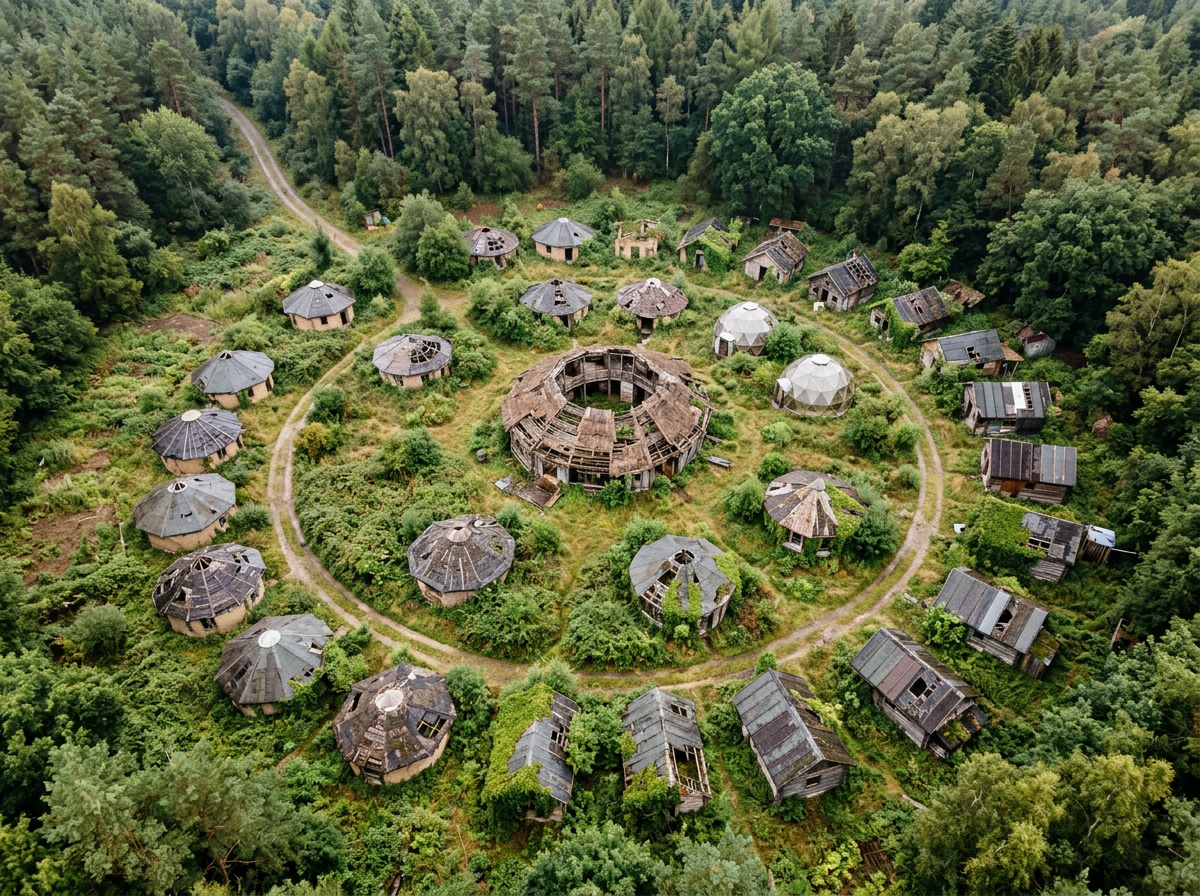
    Yet despite noble intentions, most intentional communities eventually fragment, stagnate, or collapse.

    This pattern appears repeatedly across:

    • communes,
    • ecovillages,
    • cooperative housing projects,
    • spiritual communities,
    • activist collectives,
    • monasteries,
    • decentralized organizations,
    • and utopian social experiments throughout history.

    The failure is rarely caused by idealism alone.

    More often, intentional communities fail because they underestimate the complexity of human systems.

    Shared values are important.

    But values alone cannot sustain long-term collective living without:

    • governance,
    • boundaries,
    • conflict systems,
    • incentive alignment,
    • psychological maturity,
    • operational stewardship,
    • and institutional resilience.

    Intentional communities are not merely social gatherings.
    They are living systems.

    And living systems require structure.


    The Romanticization Problem

    One of the most common failure patterns is excessive idealism combined with insufficient systems design.

    Many communities begin with:

    • inspiration,
    • emotional resonance,
    • shared philosophy,
    • and a desire to escape perceived dysfunction in mainstream society.

    However, inspiration alone does not solve:

    • resource allocation,
    • interpersonal conflict,
    • labor distribution,
    • governance disputes,
    • leadership accountability,
    • psychological projection,
    • or long-term operational sustainability.

    Communities often romanticize:

    • harmony,
    • unity,
    • and collective belonging,
      while underestimating:
    • complexity,
    • human variability,
    • emotional load,
    • and governance requirements.

    This creates a dangerous imbalance:

    high emotional idealism with low structural resilience.

    Without operational foundations, idealism eventually collides with reality.


    Human Psychology Does Not Disappear Inside Communities

    A common misconception is that alternative communities somehow transcend ordinary human behavior.

    In reality, intentional communities often intensify human dynamics because:

    • proximity increases emotional exposure,
    • collective living amplifies interpersonal friction,
    • unresolved psychological patterns become highly visible,
    • and social boundaries become more porous.

    Communities therefore become environments where:

    • shadow dynamics,
    • power struggles,
    • dependency patterns,
    • attachment wounds,
    • projection,
    • and status hierarchies
      can rapidly emerge.

    Research on group psychology consistently demonstrates that humans naturally form:

    • in-groups,
    • hierarchies,
    • identity structures,
    • and social coalitions (Haidt, 2012).

    No amount of idealistic language fully removes these tendencies.

    Healthy communities do not deny human complexity.
    They design systems capable of managing it constructively.


    Governance Failure Is One of the Largest Causes of Collapse

    Many intentional communities resist governance structures because governance is associated with:

    • hierarchy,
    • bureaucracy,
    • control,
    • or institutional rigidity.

    However, the absence of governance rarely eliminates power.
    It often merely obscures it.

    In poorly structured communities:

    • informal power networks emerge,
    • charismatic personalities dominate,
    • decision-making becomes inconsistent,
    • accountability weakens,
    • and conflict resolution becomes unstable.

    This creates what sociologist Jo Freeman (1972) famously described as:

    “the tyranny of structurelessness.”

    Without transparent governance systems:

    • hidden hierarchies often replace explicit structures,
    • emotional influence may override competence,
    • and unclear authority creates chronic instability.

    Healthy communities require governance not because humans are failures,
    but because coordination itself requires structure.


    Conflict Avoidance Destroys Communities

    Conflict itself is not the problem.

    Poor conflict systems are.

    Many intentional communities prioritize:

    • harmony,
    • emotional unity,
    • and social cohesion,
      while avoiding direct confrontation of tension.

    This often creates:

    • passive aggression,
    • resentment accumulation,
    • social fragmentation,
    • scapegoating,
    • and eventual implosion.

    Communities that suppress disagreement frequently become psychologically fragile.

    Healthy systems require:

    • constructive disagreement,
    • transparent communication,
    • accountability,
    • and repair mechanisms.

    Research on resilient organizations consistently shows that adaptive systems depend upon the ability to process tension without collapse (Meadows, 2008).

    Communities unable to metabolize conflict eventually accumulate systemic instability.


    Infrastructure Matters More Than Ideology

    One of the most overlooked realities is that communities often fail from operational weakness rather than philosophical weakness.

    Shared beliefs cannot compensate for:

    • poor financial planning,
    • inadequate food systems,
    • unsustainable labor expectations,
    • weak governance,
    • unclear responsibilities,
    • or infrastructure failure.

    Many communities devote enormous energy toward:

    • philosophy,
    • spirituality,
    • identity,
    • or ideological alignment,
      while underinvesting in:
    • logistics,
    • maintenance,
    • economic resilience,
    • operational stewardship,
    • and institutional continuity.

    However, civilizations survive through infrastructure, not idealism alone.

    Sociologist and systems theorist Jared Diamond (2005) observed that societies frequently collapse not only from external pressure, but from failures in long-term resource management and adaptive coordination.

    Communities are no different.


    Shared Vision Is Not Enough

    A shared vision may initiate a community.


    But sustaining a community requires:

    • competence,
    • stewardship,
    • systems thinking,
    • adaptability,
    • and long-term coordination.

    Over time, communities encounter:

    • leadership transitions,
    • interpersonal fatigue,
    • financial stress,
    • ideological divergence,
    • changing life stages,
    • and resource constraints.

    Without systems capable of adapting to these pressures, communities become increasingly unstable.

    Healthy communities require both:

    • philosophical coherence,
    • and operational maturity.

    This distinction is critical.


    The Problem of Undefined Roles

    Many intentional communities attempt to eliminate hierarchy entirely.

    However, removing formal roles often creates:

    • ambiguity,
    • duplicated labor,
    • unbalanced workloads,
    • and invisible authority structures.

    Healthy systems require:

    • role clarity,
    • stewardship accountability,
    • skill differentiation,
    • and decision-making pathways.

    This does not necessarily require authoritarian control.

    It requires organizational coherence.

    Complex systems function more effectively when:

    • responsibilities are visible,
    • expectations are clear,
    • and stewardship roles are understood.

    Without role clarity, communities often drift into exhaustion and confusion.


    Economic Fragility Undermines Stability

    Many intentional communities underestimate the importance of economic resilience.

    Communities require:

    • food systems,
    • maintenance systems,
    • healthcare access,
    • infrastructure upkeep,
    • financial sustainability,
    • and resource coordination.

    Without stable economic foundations:

    • burnout increases,
    • internal tension escalates,
    • and long-term continuity becomes difficult.

    Economic fragility amplifies every other weakness within a community system.

    Regenerative communities therefore require:

    • resilient economic design,
    • distributed stewardship,
    • practical resource systems,
    • and long-term sustainability planning.

    Healthy Communities Require Boundaries

    Communities often confuse openness with health.

    However, systems without boundaries frequently become unstable.

    Healthy communities require:

    • onboarding standards,
    • shared expectations,
    • behavioral accountability,
    • conflict protocols,
    • exit pathways,
    • and stewardship norms.

    Without boundaries:

    • dysfunction spreads more easily,
    • responsibility becomes diffuse,
    • and social coherence weakens.

    In systems theory, boundaries are not merely restrictive.
    They are part of what allows systems to maintain integrity.


    The Difference Between Fragile and Anti-Fragile Communities

    Fragile communities depend heavily on:

    • emotional momentum,
    • charismatic leadership,
    • ideological purity,
    • or temporary enthusiasm.

    Anti-fragile communities develop:

    • adaptive governance,
    • distributed competence,
    • resilience under stress,
    • operational redundancy,
    • and learning systems.

    They recognize that:

    • conflict will occur,
    • mistakes will happen,
    • leadership will evolve,
    • and conditions will change.

    Rather than attempting to eliminate complexity, resilient communities learn how to adapt to it.


    Intentional Communities as Living Systems

    Systems thinking reveals that intentional communities are not static ideals.

    They are evolving ecosystems of:

    • psychology,
    • governance,
    • economics,
    • infrastructure,
    • relationships,
    • and culture.

    Communities fail when they attempt to operate purely through:

    • idealism,
    • emotional resonance,
    • or philosophical alignment,
      without sufficient structural intelligence.

    Healthy communities integrate:

    • human psychology,
    • governance design,
    • operational stewardship,
    • resilience planning,
    • and adaptive feedback systems.

    This is not a rejection of intentional communities.
    It is an argument for maturity in how they are designed.


    Conclusion

    Most intentional communities do not fail because people lack good intentions.

    They fail because:

    • governance is underdeveloped,
    • conflict systems are weak,
    • infrastructure is neglected,
    • psychological complexity is underestimated,
    • and operational stewardship is insufficient.

    Sustainable communities require more than shared ideals.

    They require:

    • systems literacy,
    • accountability,
    • resilience design,
    • adaptive governance,
    • and long-term stewardship.

    Communities are living systems.

    And like all living systems, they survive not through idealism alone,
    but through their capacity to adapt, coordinate, regenerate, and remain coherent across time.


    Suggested Crosslinks


    References

    Diamond, J. (2005). Collapse: How societies choose to fail or succeed. Viking.

    Freeman, J. (1972). The tyranny of structurelessness. Berkeley Journal of Sociology, 17, 151–164.

    Haidt, J. (2012). The righteous mind: Why good people are divided by politics and religion. Pantheon Books.

    Meadows, D. H. (2008). Thinking in systems: A primer. Chelsea Green Publishing.

    The Living Archive is designed to be explored through pathways, categories, and search. If you’re looking for a specific idea, question, or theme, AI Search can help surface relevant connections across the archive.


    Attribution

    The Living Archive
    Integrative Frameworks for Regenerative Civilization

    © 2026 Gerald Daquila. All rights reserved.
    Part of the Life.Understood. knowledge ecosystem and Stewardship Institute initiative.

    This article is intended for educational, research, and civic inquiry purposes.
    Readers are encouraged to engage critically, verify sources independently, and explore related knowledge hubs for broader systems context.
  • ✨Intentional Community & Social Design

    ✨Intentional Community & Social Design


    The Canonical Knowledge Hub for Designing Regenerative Communities for Human Flourishing, Sovereignty, and Shared Resilience


    Primary Pillar: Regenerative Systems & Human Flourishing

    Purpose: To explore how intentional communities shape human relationships, governance, culture, resilience, stewardship, ecological sustainability, and collective well-being — while establishing the foundational principles of regenerative living, ethical leadership, distributed resilience, social trust, conscious participation, and long-term societal flourishing.


    Hub Status: Canonical Foundation Hub


    Placement: Main Navigation → Intentional Community Design


    Meta Description

    Explore intentional community design through stewardship, governance, systems thinking, regenerative living, social trust, ethical leadership, resilience, and conscious culture-building. Learn how healthy communities emerge, why social fragmentation occurs, and how intentional systems can support long-term human and ecological flourishing.


    Understanding the Landscape: The Sovereignty Ladder

    Before exploring the themes of sovereignty, stewardship, and governance in greater detail, it may be helpful to view the broader developmental landscape.

    The map below presents a framework for understanding how responsibility, agency, and contribution can expand across increasing circles of concern and longer time horizons. It is intended as an orienting framework rather than a measure of status, achievement, or personal worth.

    The Sovereignty Ladder illustrates how responsibility may expand from personal survival and stability toward stewardship, custodianship, and legacy across broader circles of concern and longer time horizons.

    Why This Framework Matters

    Healthy communities cannot be built solely through governance structures, shared land, or common goals.

    They emerge when individuals progressively expand their capacity for responsibility, stewardship, cooperation, and long-term thinking.

    The Sovereignty Ladder provides a developmental framework for understanding how responsibility can evolve from personal survival toward community stewardship, systems thinking, and intergenerational contribution.

    That gives the map purpose.

    Download a complimentary copy here


    What Is an Intentional Community?

    An intentional community is a group of people who consciously organize around shared values, agreements, responsibilities, and long-term aspirations.

    Unlike communities formed primarily through geography, convenience, or circumstance, intentional communities actively design their culture, governance, relationships, decision-making processes, and systems of mutual support.

    Intentional communities can take many forms, including cooperative neighborhoods, ecovillages, cohousing projects, stewardship networks, learning communities, regenerative settlements, spiritual communities, and distributed digital communities.

    At their core, intentional communities are experiments in conscious cooperation.


    Introduction

    Modern society is facing a convergence of crises: social fragmentation, institutional distrust, loneliness, ecological strain, economic instability, and the erosion of shared meaning.

    Across the world, many people are beginning to ask deeper questions:

    • What makes a community truly resilient?
    • Why do some groups collapse into conflict while others thrive?
    • How do we build cultures rooted in trust rather than fear?
    • What kinds of leadership sustain long-term coherence?
    • How can sovereignty and interdependence coexist?

    Intentional Community Design explores these questions through the lenses of systems thinking, stewardship, governance, psychology, culture, and regenerative living.

    This hub does not advocate escapism or ideological isolation. Rather, it examines how healthy communities emerge through ethical design, shared agreements, mutual responsibility, adaptive systems, and conscious participation.

    At its core, intentional community is not merely about shared land or alternative living arrangements. It is about designing relational ecosystems where human beings can cooperate without losing individuality, agency, dignity, or truth.


    Core Themes Within This Hub

    Sovereignty and Shared Responsibility

    Healthy communities require both personal sovereignty and collective coherence. Without sovereignty, communities become coercive. Without shared responsibility, communities fragment into instability and mistrust.

    These essays explore the balance between autonomy, stewardship, responsibility, and interdependence:

    Together, these pieces establish the psychological and ethical foundations necessary for resilient communities.


    Trust, Cooperation, and Social Cohesion

    Communities rise or fall on trust.

    Without trust, governance becomes control. Cooperation collapses into competition. Relationships become transactional. Fear replaces participation.

    This section examines the invisible architecture of trust, belonging, perception, and cooperation:

    These essays help explain why many modern systems experience fragmentation — and what conditions allow authentic cooperation to emerge.


    Stewardship and Leadership

    Intentional communities cannot rely solely on charisma, ideology, or inspiration. Long-term resilience requires mature stewardship structures and ethical leadership.

    These canonical pieces explore the responsibilities, pressures, and developmental requirements of leadership-centered systems:

    Rather than glorifying authority, these essays examine leadership as a form of ethical responsibility and energetic accountability.


    Governance, Systems, and Institutional Design

    Communities do not fail only because of individuals. They also fail because of poorly designed systems.

    Healthy systems distribute responsibility wisely, reduce corruption incentives, encourage participation, and maintain adaptive resilience over time.

    These pieces explore governance, structural behavior, institutional dynamics, and systemic incentives:

    Together, these essays investigate how systems condition behavior — and how regenerative governance models may create healthier outcomes.


    Culture, Identity, and Human Resilience

    Every intentional community carries a culture.

    Culture shapes values, belonging, behavior, conflict resolution, emotional safety, and long-term identity formation.

    These pieces explore cultural memory, resilience, identity formation, and the human search for meaning:

    These essays provide deeper insight into how culture influences collective behavior, leadership dynamics, and social cohesion.


    Operational and Structural Design

    Communities require more than vision.

    They also require onboarding systems, conflict pathways, role clarity, communication structures, contribution models, and sustainable operational frameworks.

    The following piece explores structural considerations for maintaining coherence over time:

    This work examines why healthy boundaries, transparent expectations, and ethical transition systems are necessary for long-term sustainability.


    Conflict, Repair, and Accountability

    Healthy communities are not communities without conflict.

    They are communities capable of addressing conflict without fragmentation.

    Topics include:

    • repair after harm
    • restorative processes
    • accountability systems
    • consent and boundaries
    • conflict transformation
    • trust rebuilding
    • community resilience under strain

    Featured Essays


    Why Intentional Community Matters Now

    Many people today are experiencing increasing isolation despite unprecedented digital connectivity.

    At the same time, trust in institutions continues to decline globally. Economic pressures, algorithmic fragmentation, political polarization, ecological instability, and psychological exhaustion are reshaping how people think about belonging and survival.

    As a result, intentional community is no longer a fringe concept.

    It is becoming a serious civilizational question:

    How do human beings live together in ways that preserve freedom, dignity, trust, resilience, and meaning?

    The answer is unlikely to emerge from ideology alone.

    It will require mature systems, ethical leadership, psychological integration, cultural healing, regenerative governance, and conscious participation.


    Suggested Reading Pathways

    Foundational Path

    1. Foundations of Sovereignty
    2. Belonging: The Deep Human Need to Be Seen
    3. Culture Is an Agreement — And Agreements Can Change
    4. Why Cooperation Breaks Down: Trust, Competition, and Survival
    5. Leadership and Stewardship: Guides for Responsible Decision-Making
    6. Sovereignty & Governance

    Systems and Governance Path

    1. Why Power Concentrates: The Hidden Logic of Systems
    2. How Systems Shape Behavior (And Why It Feels Personal)
    3. Why Incentives Fail in Philippine Systems: Understanding Patronage, Power, and Behavior
    4. Breaking the Loop: What Actually Changes Philippine Systems
    5. The Sovereign Leader: How to Practice Stewardship When Systems Fail

    Community Psychology Path

    1. Learning to Trust Again After Awakening
    2. Learning to Trust Yourself Again
    3. Belonging: The Deep Human Need to Be Seen
    4. Collective Sovereignty — How Personal Awakening Scales Into Cultural Change
    5. Sovereignty in the Smallest Temple: The Couple & the Family

    Closing Reflection

    Intentional communities are not perfected utopias.

    They are living systems.

    Like ecosystems, they require adaptation, accountability, boundaries, trust, participation, repair mechanisms, ethical leadership, and shared meaning.

    No structure can eliminate human complexity. But conscious design can reduce unnecessary suffering, improve cooperation, deepen resilience, and create environments where human beings are more capable of flourishing together.

    The future may depend less on finding perfect systems — and more on learning how to build trustworthy ones.

    This hub serves as an evolving archive for that exploration.


    Continue the Exploration

    This article is part of a broader knowledge ecosystem exploring stewardship, ethical leadership, sovereignty, regenerative systems, human development, governance, technology ethics, and long-term civilizational resilience.


    Canonical Knowledge Hubs


    Related Topics

    • Intentional Community Design
    • Social Trust
    • Community Stewardship
    • Cooperative Governance
    • Distributed Leadership
    • Sovereignty
    • Consent & Boundaries
    • Community Accountability
    • Regenerative Living
    • Local Resilience
    • Conflict Transformation
    • Cultural Design
    • Civic Participation
    • Systems Thinking

    Recommended Next Reads


    Adjacent Knowledge Pathways

    This article may also connect with broader explorations into:

    • regenerative development,
    • ethical technology,
    • decentralized systems,
    • intentional communities,
    • civic renewal,
    • local resilience,
    • trauma-informed leadership,
    • and human sovereignty in the digital age.

    The Community Question

    Human beings are profoundly social creatures.

    Yet many of the systems surrounding modern life increasingly produce isolation, fragmentation, dependency, mistrust, and weakened social bonds.

    The challenge is not simply how individuals survive.

    The challenge is how people learn to cooperate, govern themselves, share responsibility, resolve conflict, and cultivate belonging without sacrificing sovereignty.

    Intentional community asks a deceptively simple question:

    How can human beings live together in ways that increase freedom, trust, resilience, dignity, and long-term flourishing?

    The answer may become one of the defining questions of the century ahead.


    About the Author

    Gerald Daquila is an independent systems thinker, writer, and stewardship-focused researcher exploring ethical leadership, regenerative systems, governance, sovereignty, human development, decentralized civic models, and long-term civilizational resilience.

    His work integrates:

    • systems thinking,
    • ethical technology,
    • regenerative governance,
    • community stewardship,
    • human-centered development,
    • and philosophical inquiry into responsibility, sovereignty, and societal renewal.

    The broader body of work seeks to support:

    • ethical leadership formation,
    • resilient local systems,
    • conscious governance,
    • digital-era discernment,
    • and regenerative approaches to human flourishing.

    ©2026 Life.Understood. • Systems Thinking, Leadership Architecture, and Applied Coherence

  • Trust and Legitimacy in Institutions

    Trust and Legitimacy in Institutions


    Why Institutions Collapse — and How Societies Sustain Coherence


    Meta Description:

    Explore how trust and legitimacy shape institutions, governance, social stability, and civic resilience in complex societies.


    Trust and Legitimacy

    Every society depends on invisible infrastructure.

    Not only roads, laws, energy systems, or financial institutions — but shared belief.

    People must believe:

    • that institutions are functioning,
    • that rules apply fairly,
    • that systems are predictable,
    • and that cooperation is worthwhile.

    This invisible layer is called legitimacy.

    Legitimacy is the collective perception that authority, institutions, leadership, or systems possess rightful and acceptable power.

    Trust is the social condition that allows legitimacy to endure.

    Together, trust and legitimacy form the psychological and structural foundations of civilization.

    Without them, institutions weaken, polarization intensifies, coordination collapses, and social fragmentation accelerates.


    What Is Legitimacy?

    Legitimacy is not merely legality.

    A system may be legal while still being perceived as corrupt, unjust, incompetent, or disconnected from public reality.

    Legitimacy emerges when people believe that:

    • institutions operate fairly,
    • authority is justified,
    • rules are applied consistently,
    • and systems serve a broader social good.

    Political scientist Max Weber (1922/1978) identified legitimacy as one of the central foundations of stable governance systems.

    Legitimacy may emerge from:

    • democratic participation,
    • cultural tradition,
    • constitutional law,
    • institutional competence,
    • ethical leadership,
    • transparency,
    • or demonstrated effectiveness.

    When legitimacy weakens, societies often experience:

    • declining civic trust,
    • rising cynicism,
    • institutional disengagement,
    • conspiracy thinking,
    • polarization,
    • corruption,
    • and social instability.

    What Is Trust?

    Trust is the expectation that individuals, institutions, or systems will behave in reasonably reliable, predictable, and cooperative ways.

    Trust reduces social friction.

    In high-trust societies:

    • cooperation becomes easier,
    • economic transactions become cheaper,
    • institutions function more efficiently,
    • and long-term planning becomes more viable.

    Low-trust environments tend to experience:

    • defensive behavior,
    • chronic suspicion,
    • corruption normalization,
    • institutional avoidance,
    • and reduced civic participation.

    Trust therefore functions as both:

    • a psychological phenomenon,
    • and a systems-level economic and social asset.

    Research consistently links institutional trust with stronger democratic resilience, public health outcomes, and social stability (OECD, 2023; Fukuyama, 1995).


    The Relationship Between Trust and Legitimacy

    Trust and legitimacy reinforce one another.

    Legitimate institutions tend to generate trust.

    Trusted institutions tend to gain legitimacy.

    This creates either:

    • virtuous cycles of coherence,
      or:
    • downward spirals of institutional erosion.

    For example:

    High-Legitimacy Cycle

    • Institutions perform competently
    • Citizens observe fairness and consistency
    • Trust increases
    • Cooperation strengthens
    • Institutions become more resilient

    Low-Legitimacy Cycle

    • Institutions appear corrupt or ineffective
    • Trust declines
    • Cynicism increases
    • Cooperation weakens
    • Institutional fragility accelerates

    This dynamic can affect:

    • governments,
    • media systems,
    • corporations,
    • educational institutions,
    • religious organizations,
    • financial systems,
    • and digital platforms.

    Why Institutional Trust Matters

    Modern civilization is highly dependent on institutional coordination.

    People interact daily with systems they cannot directly verify:

    • banking systems,
    • healthcare systems,
    • legal systems,
    • elections,
    • digital platforms,
    • public infrastructure,
    • media ecosystems,
    • and supply chains.

    Trust allows complex societies to function at scale.

    Without institutional trust:

    • transaction costs rise,
    • information becomes contested,
    • polarization intensifies,
    • and collective coordination becomes increasingly difficult.

    Sociologist Francis Fukuyama (1995) argued that trust functions as a form of social capital essential for economic and civic stability.

    Trust therefore is not merely emotional.

    It is infrastructural.


    Sources of Institutional Legitimacy

    Institutions typically sustain legitimacy through several mechanisms simultaneously.


    1. Competence

    People trust systems that function reliably.

    Competence includes:

    • service delivery,
    • crisis response,
    • infrastructure maintenance,
    • administrative effectiveness,
    • and organizational coherence.

    Repeated institutional failure gradually erodes legitimacy.


    2. Fairness

    Perceived fairness strongly affects trust.

    Systems lose legitimacy when:

    • laws appear selectively enforced,
    • corruption becomes normalized,
    • elites appear insulated from consequences,
    • or access becomes structurally unequal.

    Fairness does not require universal agreement.

    But institutions generally require broad perceptions of procedural justice to maintain legitimacy.


    3. Transparency

    Transparency allows citizens to understand:

    • how decisions are made,
    • how resources are allocated,
    • and how authority operates.

    Opaque systems tend to generate suspicion, even when functioning competently.

    Transparency therefore acts as a stabilizing mechanism for institutional trust.


    4. Accountability

    Legitimacy depends on whether institutions can be corrected when failures occur.

    Accountability mechanisms may include:

    • judicial oversight,
    • independent journalism,
    • audits,
    • elections,
    • civic participation,
    • and anti-corruption systems.

    Without accountability, institutions often drift toward self-protection.


    5. Shared Meaning and Identity

    Legitimacy is also cultural.

    Societies sustain coherence through:

    • shared narratives,
    • civic values,
    • social norms,
    • and collective identity structures.

    When societies lose shared meaning frameworks, trust fragmentation often accelerates.


    Trust in the Digital Age

    Modern information ecosystems are transforming institutional trust dynamics.

    Digital systems now influence:

    • news distribution,
    • political discourse,
    • social identity,
    • public perception,
    • and institutional legitimacy itself.

    This creates both opportunities and risks.

    Potential Benefits

    • Increased access to information
    • Greater transparency
    • Distributed participation
    • Faster civic coordination

    Risks

    • Information overload
    • Misinformation amplification
    • Emotional manipulation
    • Algorithmic polarization
    • Trust fragmentation
    • Narrative warfare

    Research increasingly suggests that fragmented information ecosystems can weaken shared reality frameworks necessary for democratic coordination (Benkler et al., 2018).


    Trust, Polarization, and Social Fragmentation

    When trust declines across institutions, societies often become more polarized.

    In low-trust environments:

    • people retreat into ideological tribes,
    • institutions become viewed as hostile,
    • consensus becomes difficult,
    • and cooperation weakens.

    Polarization is not always caused by disagreement itself.

    Often, it reflects:

    • collapsing trust,
    • institutional inconsistency,
    • and weakened shared informational frameworks.

    When citizens no longer trust:

    • elections,
    • journalism,
    • scientific institutions,
    • or legal systems,

    societal coordination becomes increasingly unstable.


    Corruption and Legitimacy Erosion

    Corruption weakens legitimacy because it signals that systems operate according to hidden incentives rather than public accountability.

    Corruption erodes trust by creating perceptions that:

    • rules are selectively applied,
    • institutions serve insiders,
    • outcomes are manipulated,
    • and fairness no longer exists.

    Importantly, corruption is not only financial.

    Institutional corruption may also involve:

    • information manipulation,
    • regulatory capture,
    • nepotism,
    • ideological distortion,
    • or incentive structures that undermine public interest.

    Over time, corruption produces civic disengagement and legitimacy collapse.


    Trust as a Civilizational Asset

    Civilizations require enormous levels of cooperation between strangers.

    Trust enables:

    • markets,
    • education systems,
    • democratic governance,
    • public health coordination,
    • scientific collaboration,
    • and infrastructure systems.

    High-trust societies tend to exhibit:

    • stronger civic participation,
    • lower violence,
    • greater economic resilience,
    • and higher institutional stability.

    Trust therefore functions as a long-term civilizational asset rather than merely a social preference.


    Rebuilding Trust

    Trust recovery is difficult once legitimacy collapses.

    Institutions generally rebuild trust through:

    • demonstrated competence,
    • transparency,
    • ethical consistency,
    • accountability,
    • civic inclusion,
    • and sustained behavioral reliability over time.

    Trust cannot be restored solely through messaging or branding.

    It must be reinforced through lived institutional behavior.

    Legitimacy ultimately depends less on narrative than on repeated evidence of coherence.


    Systems Thinking and Institutional Stability

    Trust and legitimacy are systems phenomena.

    Institutional breakdown rarely emerges from a single cause.

    Instead, trust erosion usually reflects interacting pressures involving:

    • economics,
    • media ecosystems,
    • governance structures,
    • educational systems,
    • technological incentives,
    • cultural fragmentation,
    • and information environments.

    Systems thinking helps explain why:

    • corruption spreads,
    • polarization escalates,
    • institutional distrust compounds,
    • and legitimacy crises become self-reinforcing.

    Without systems literacy, societies often misdiagnose symptoms while deeper structural failures continue to expand.


    Final Reflection

    Civilization depends not only on power, wealth, or technology, but on legitimacy.

    People cooperate when they believe systems are trustworthy, fair, and coherent.

    When trust collapses, societies become increasingly difficult to coordinate.

    The future stability of complex societies may therefore depend on whether institutions can remain:

    • competent,
    • transparent,
    • accountable,
    • adaptable,
    • and ethically grounded amid accelerating technological and social change.

    Trust is not soft infrastructure.

    It is civilization’s operating fabric.


    See Also


    References

    Benkler, Y., Faris, R., & Roberts, H. (2018). Network propaganda: Manipulation, disinformation, and radicalization in American politics. Oxford University Press.

    Fukuyama, F. (1995). Trust: The social virtues and the creation of prosperity. Free Press.

    Organisation for Economic Co-operation and Development. (2023). Government at a glance 2023. OECD Publishing. https://www.oecd.org

    Weber, M. (1978). Economy and society: An outline of interpretive sociology (G. Roth & C. Wittich, Eds.). University of California Press. (Original work published 1922)

    World Bank. (2024). Worldwide governance indicators. World Bank Group. https://www.worldbank.org

    The Living Archive is designed to be explored through pathways, categories, and search. If you’re looking for a specific idea, question, or theme, AI Search can help surface relevant connections across the archive.


    Attribution

    The Living Archive
    Integrative Frameworks for Regenerative Civilization

    © 2026 Gerald Daquila. All rights reserved.
    Part of the Life.Understood. knowledge ecosystem and Stewardship Institute initiative.

    This article is intended for educational, research, and civic inquiry purposes.
    Readers are encouraged to engage critically, verify sources independently, and explore related knowledge hubs for broader systems context.

  • ✨Philippine Renewal Framework

    ✨Philippine Renewal Framework


    The Canonical Knowledge Hub for Civic Renewal, Institutional Trust, and Long-Term National Stewardship


    Primary Pillar: Philippine Renewal Framework

    Purpose: To examine the structural, cultural, historical, economic, and governance challenges shaping the Philippines — while establishing a systems-oriented framework for civic renewal, ethical leadership, institutional resilience, cultural healing, regenerative development, and long-term national flourishing grounded in stewardship, sovereignty, and collective responsibility.


    Hub Status: Canonical Foundation Hub


    Placement: Main Navigation → Philippine Renewal Framework


    Meta Description

    A living framework for Philippine renewal integrating governance reform, systems thinking, regenerative economics, ethical technology, cultural restoration, decentralized community resilience, and stewardship-based development.


    Introduction

    The Philippines possesses immense human potential.

    It is a nation marked by:

    • resilience,
    • adaptability,
    • strong relational culture,
    • creativity,
    • faith,
    • community orientation,
    • and deep emotional intelligence.

    Yet despite these strengths, many Filipinos continue to experience:

    • institutional distrust,
    • economic precarity,
    • political patronage,
    • corruption,
    • civic fragmentation,
    • systemic inefficiency,
    • and cycles of learned helplessness that repeat across generations.

    Why does meaningful reform remain so difficult even when problems are widely recognized?

    Why do dysfunctional systems often persist despite public awareness?

    Why do many institutions struggle to sustain trust, coherence, and long-term stewardship?

    This knowledge hub explores the deeper structural, psychological, cultural, and institutional dynamics shaping Philippine society.

    Rather than reducing national challenges to simplistic political narratives, this framework approaches renewal through:

    • systems thinking,
    • behavioral incentives,
    • governance analysis,
    • civic psychology,
    • cultural patterns,
    • institutional design,
    • leadership ethics,
    • and long-term stewardship.

    The goal is not ideological polarization.

    The goal is understanding the underlying systems that shape behavior — and identifying conditions that support genuine societal renewal.


    Why Systems Thinking Matters in the Philippine Context

    Many societal problems are not isolated events.

    They are recurring patterns produced by:

    • incentives,
    • institutional structures,
    • survival conditions,
    • cultural conditioning,
    • trust dynamics,
    • and historical feedback loops.

    When viewed individually, issues may appear disconnected:

    • corruption,
    • poverty,
    • political dynasties,
    • disinformation,
    • institutional distrust,
    • brain drain,
    • weak infrastructure,
    • civic disengagement,
    • and social fragmentation.

    But systems thinking reveals that these patterns often reinforce one another.

    For example:

    • weak institutions reduce public trust,
    • low trust increases survival behavior,
    • survival behavior strengthens patronage systems,
    • patronage weakens meritocracy,
    • weakened meritocracy reinforces institutional dysfunction,
    • and dysfunction deepens distrust again.

    Without systemic analysis, reform efforts often treat symptoms while deeper structural incentives remain unchanged.

    This hub explores how systems shape:

    • behavior,
    • governance,
    • civic participation,
    • institutional resilience,
    • and national development trajectories.

    Core Themes Within This Knowledge Hub

    This framework explores several interconnected dimensions of Philippine renewal:


    Governance and Institutional Trust

    How institutions gain — or lose — legitimacy, credibility, and civic trust.


    Systems Thinking and Structural Incentives

    How incentives shape political, economic, and social behavior.


    Civic Culture and Collective Psychology

    How historical conditioning, uncertainty, and survival dynamics influence public conduct.


    Leadership and Stewardship

    Why ethical leadership matters in periods of institutional fragility and social transition.


    Economic and Social Resilience

    How nations cultivate long-term stability, adaptability, and regenerative development.


    Sovereignty and National Self-Determination

    How societies balance global integration with cultural coherence and civic agency.


    Why Renewal Requires More Than Political Change

    Many reform efforts focus primarily on replacing leaders.

    But systemic problems rarely emerge from individuals alone.

    Systems influence behavior.

    Institutions shape incentives.

    Culture affects expectations.

    Survival pressures alter decision-making.

    Without structural change, even well-intentioned leadership often becomes absorbed into existing dynamics.

    This is why sustainable renewal requires:

    • institutional reform,
    • cultural transformation,
    • systems literacy,
    • ethical leadership,
    • civic responsibility,
    • long-term thinking,
    • and behavioral incentive alignment.

    Renewal is not merely political.

    It is:

    • psychological,
    • cultural,
    • civic,
    • economic,
    • educational,
    • and institutional.

    The challenge is not simply removing dysfunction.

    It is building conditions that allow trust, responsibility, competence, and stewardship to emerge sustainably over time.


    What Is Philippine Renewal?

    Philippine renewal refers to the long-term process of strengthening the institutions, cultural patterns, civic behaviors, leadership structures, and economic systems that support national flourishing.

    It is not limited to political reform. It encompasses governance, education, culture, civic responsibility, economic resilience, community stewardship, and the cultivation of public trust.

    Renewal therefore involves both structural transformation and human development. Sustainable progress emerges when institutional competence and civic maturity evolve together.


    Knowledge Architecture

    This hub is organized around four interconnected domains:


    1. Systems Thinking and Structural Dynamics

    These essays examine how systems, incentives, and institutional structures shape Philippine behavior and governance outcomes.

    Featured Essays

    Key Questions Explored

    • Why do dysfunctional systems persist?
    • How do incentives shape civic behavior?
    • Why does reform often stall?
    • How does uncertainty influence public decision-making?
    • Why do institutional patterns repeat across generations?

    These essays provide systems-level analysis for understanding recurring governance and societal challenges.


    2. Institutional Trust and Civic Stability

    These essays explore how trust forms, deteriorates, and influences national coherence.

    Featured Essays

    Key Questions Explored

    • Why do institutions struggle to maintain trust?
    • How does survival psychology affect governance?
    • What strengthens civic responsibility?
    • How do societies rebuild institutional legitimacy?
    • What role does ethical leadership play in national stability?

    These essays examine the relationship between governance, trust, and collective behavior.


    3. Human Agency, Culture, and Psychological Renewal

    These essays focus on the psychological and cultural dimensions of societal transformation.

    Featured Essays

    Key Questions Explored

    • How does learned helplessness develop culturally?
    • Why do people sometimes defend harmful systems?
    • How does dependency weaken agency?
    • What conditions support psychological resilience?
    • How can sovereignty emerge without extremism or fragmentation?

    These essays explore the human dimension of national renewal.


    4. Leadership, Stewardship, and Long-Term Development

    These essays examine the role of leadership, responsibility, and institutional maturity in sustainable societal transformation.

    Featured Essays

    Key Questions Explored

    • What makes leadership trustworthy?
    • Why do institutions require stewardship rather than personality cults?
    • How do systems expose leadership weaknesses?
    • What role does discernment play during periods of instability?
    • How can nations cultivate long-term civic resilience?

    These essays emphasize that sustainable renewal requires both institutional competence and ethical maturity.


    5. Economic Resilience and Development

    Featured Essays

    Key Questions Explored

    • How do societies create resilient local economies?
    • Why do some development models create dependency?
    • What role does stewardship play in economic design?
    • How can communities build regenerative wealth?
    • How does economic resilience contribute to national stability?

    These essays explore the economic foundations of long-term societal flourishing.


    The Central Question of Philippine Renewal

    The future of the Philippines will not be determined solely by:

    • elections,
    • slogans,
    • political personalities,
    • or short-term economic cycles.

    It will also be shaped by:

    • institutional trust,
    • systems literacy,
    • civic responsibility,
    • leadership ethics,
    • cultural coherence,
    • psychological resilience,
    • and the ability to align incentives with long-term societal well-being.

    Renewal requires more than criticism.

    It requires stewardship.

    The long-term challenge is not merely identifying what is broken.

    It is cultivating the conditions necessary for:

    • trust,
    • responsibility,
    • competence,
    • accountability,
    • resilience,
    • and collective flourishing
      to emerge sustainably across generations.

    Philippine renewal is therefore not only a political project.

    It is a civilizational one.


    Continue the Exploration

    This article is part of a broader knowledge ecosystem exploring stewardship, ethical leadership, sovereignty, regenerative systems, human development, governance, technology ethics, and long-term civilizational resilience.


    Canonical Knowledge Hubs


    Related Topics

    • Philippine Governance
    • Civic Renewal
    • Institutional Trust
    • Systems Thinking
    • Stewardship
    • Leadership Ethics
    • Community Resilience
    • Regenerative Development
    • Local Self-Governance
    • Public Accountability
    • Cultural Transformation
    • Sovereignty
    • Civic Participation
    • Decentralization

    Recommended Next Reads


    Adjacent Knowledge Pathways

    This article may also connect with broader explorations into:

    • regenerative development,
    • ethical technology,
    • decentralized systems,
    • intentional communities,
    • civic renewal,
    • local resilience,
    • trauma-informed leadership,
    • and human sovereignty in the digital age.

    The Renewal Question

    The future of the Philippines will not be determined solely by elections, economic indicators, policy reforms, or political personalities.

    It will also be shaped by the quality of its institutions, the strength of its civic culture, the integrity of its leadership, and the willingness of citizens to participate in the long-term work of stewardship.

    National renewal cannot be outsourced to government alone.

    Nor can it be achieved through criticism alone.

    Sustainable transformation emerges when responsibility is distributed across individuals, communities, institutions, and leadership structures capable of aligning short-term needs with long-term societal flourishing.

    The central question is not merely how to fix what is broken.

    It is how to cultivate the conditions under which trust, competence, accountability, resilience, and shared responsibility can flourish across generations.

    The answer to that question may determine the trajectory of Philippine development for decades to come.


    About the Author

    Gerald Daquila is an independent systems thinker, writer, and stewardship-focused researcher exploring ethical leadership, regenerative systems, governance, sovereignty, human development, decentralized civic models, and long-term civilizational resilience.

    His work integrates:

    • systems thinking,
    • ethical technology,
    • regenerative governance,
    • community stewardship,
    • human-centered development,
    • and philosophical inquiry into responsibility, sovereignty, and societal renewal.

    The broader body of work seeks to support:

    • ethical leadership formation,
    • resilient local systems,
    • conscious governance,
    • digital-era discernment,
    • and regenerative approaches to human flourishing.

    ©2026 Life.Understood. • Systems Thinking, Leadership Architecture, and Applied Coherence