
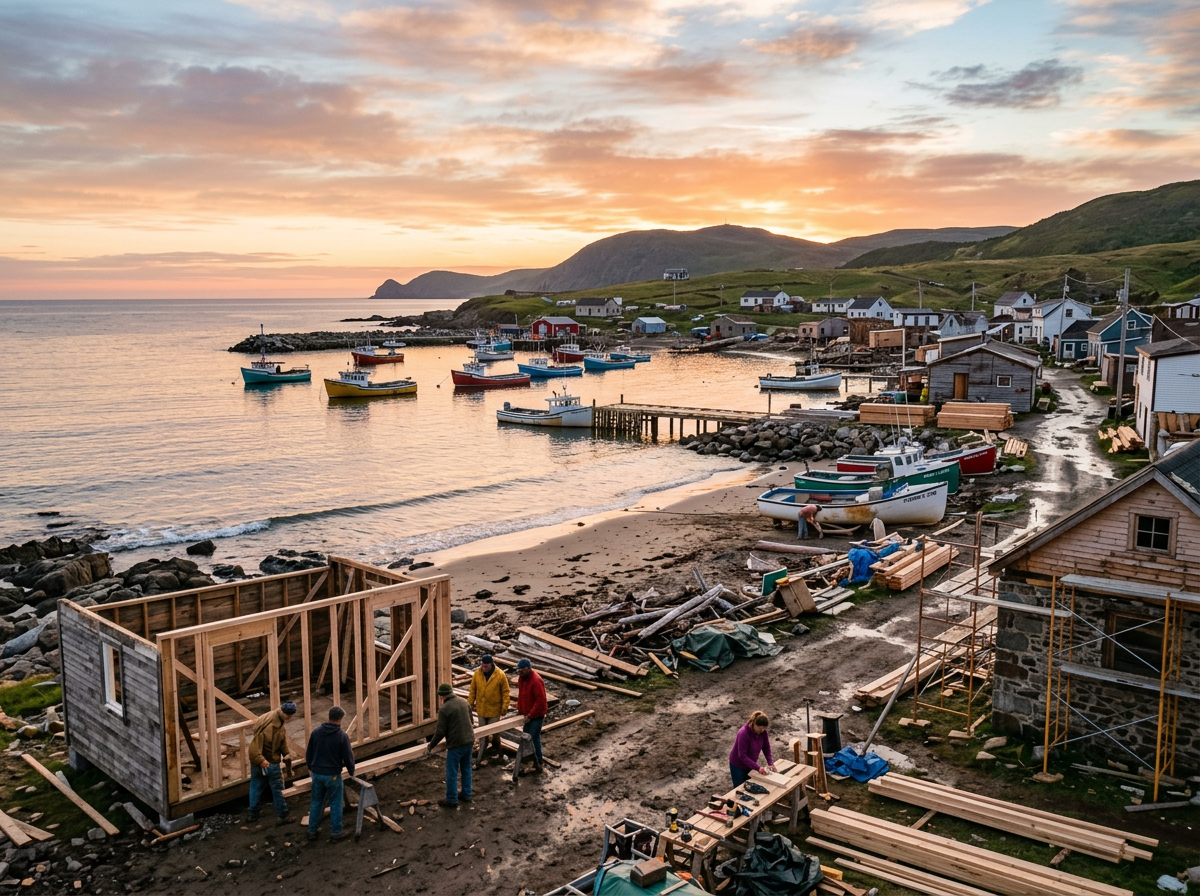
Why a Fractured Archipelago May Reveal the Future of Human Systems
Meta Description
Explore why the Philippines may represent a unique civilizational case study in resilience, diaspora intelligence, post-colonial recovery, governance, and regenerative systems during a period of global transition.
Introduction
At first glance, the Philippines may appear an unlikely candidate for civilizational reflection.
The country is frequently associated with:
- corruption,
- weak institutions,
- infrastructure strain,
- political dynasties,
- ecological vulnerability,
- economic dependency,
- colonial trauma,
- and recurring natural disasters.
By conventional metrics of geopolitical power, it rarely appears at the center of global imagination.
Yet beneath these visible fractures lies something more complex.
The Philippines represents one of the world’s most compressed convergence zones of historical layering, ecological pressure, diaspora adaptation, social resilience, and post-colonial transformation.
It exists simultaneously at the intersection of:
- East and West,
- indigenous and colonial systems,
- tradition and hyper-modernity,
- local community and global migration,
- institutional fragility and extraordinary social adaptability.
This does not make the Philippines “superior.”
Nor does it romanticize suffering or instability.
Rather, the Philippines may function as a revealing systems case study for understanding how societies adapt under prolonged pressure while attempting to preserve relational coherence amid accelerating global change.
In this sense, the Philippines may matter not because it has escaped fracture, but because it reveals what human systems look like inside transition itself.
A Nation Formed Through Layered Colonial Compression
Few countries contain as many overlapping civilizational layers compressed into one social body.
The Philippines carries:
- pre-colonial indigenous systems,
- centuries of Spanish colonization,
- American institutional restructuring,
- Japanese wartime trauma,
- Catholic cosmology,
- Asian regional influence,
- neoliberal globalization,
- and contemporary digital hyperconnectivity simultaneously.
These layers did not disappear when new systems emerged.
They accumulated.
As a result, Filipino identity often operates through hybridity rather than singular civilizational continuity.
This creates both instability and adaptive flexibility.
Post-colonial theorists note that societies shaped through prolonged colonization frequently experience fragmented institutional identity, cultural discontinuity, and dependency structures persisting long after formal political independence (Fanon, 1963).
The Philippines reflects many of these conditions.
Yet it also demonstrates remarkable cultural persistence despite them.
Fracture as Systems Exposure
The Philippines experiences multiple forms of overlapping pressure simultaneously.
These include:
- typhoons,
- earthquakes,
- volcanic activity,
- economic inequality,
- migration dependency,
- governance inconsistency,
- infrastructure vulnerability,
- and geopolitical tension.
From a systems perspective, this creates conditions of continuous adaptive stress.
Many future global pressures already visible elsewhere in fragmented form appear in concentrated form within the Philippine experience.
This includes:
- ecological instability,
- institutional fragility,
- information saturation,
- diaspora fragmentation,
- and economic precarity.
As a result, the Philippines may function as a kind of civilizational pressure chamber where emerging global conditions become visible earlier and more intensely.
The country therefore offers insight not because it has solved modern complexity, but because it lives inside it continuously.
Social Cohesion Amid Structural Fragility
One of the most striking features of the Philippines is the persistence of social cohesion despite chronic institutional weakness.
In many societies, prolonged instability erodes collective trust and relational continuity.
Yet Filipino society often maintains:
- strong family systems,
- interpersonal warmth,
- communal adaptability,
- hospitality norms,
- mutual aid behaviors,
- and emotional resilience under pressure.
This social resilience frequently compensates for institutional deficiencies.
Sociologists have long noted that high-trust relational cultures can preserve social continuity even under material hardship (Fukuyama, 1995).
The Philippines demonstrates this repeatedly during:
- natural disasters,
- economic crises,
- migration fragmentation,
- and political instability.
This does not erase real systemic problems.
However, it reveals an important civilizational insight:
Institutional resilience alone does not determine societal survival.
Relational resilience matters too.
Diaspora as Distributed Adaptive Intelligence
The Filipino diaspora is one of the largest and most globally distributed populations in the world.
Millions of Filipinos live and work across:
- North America,
- Europe,
- the Middle East,
- Asia,
- Oceania,
- and maritime labor systems.
This diaspora is often discussed economically through remittances.
Yet its deeper significance may be civilizational.
Diaspora populations develop:
- cross-cultural adaptability,
- multilingual navigation,
- identity fluidity,
- distributed survival intelligence,
- and transnational coordination capacity.
Filipino workers frequently operate across radically different systems while preserving relational ties to family and homeland.
This creates a form of globally distributed adaptive consciousness rarely recognized within traditional geopolitical analysis.
The diaspora becomes not merely labor migration, but a transnational resilience network.
Ecological Frontline Civilization
The Philippines exists on the frontline of climate instability.
Typhoons, flooding, sea-level rise, heat stress, and ecological disruption increasingly shape national reality.
Many industrialized societies still experience climate instability as future abstraction.
The Philippines experiences it as present reality.
This ecological exposure creates difficult conditions.
Yet it also accelerates adaptation awareness.
Communities repeatedly forced to respond to instability often develop:
- improvisational resilience,
- distributed mutual aid,
- adaptive flexibility,
- and local survival intelligence.
This does not romanticize disaster.
Rather, it recognizes that ecological instability is becoming a defining civilizational condition globally.
The Philippine experience may therefore offer insight into how societies psychologically and socially adapt under recurring systemic stress.
Governance Fragility and Civilizational Lessons
The Philippines also reveals important lessons regarding governance.
Persistent challenges include:
- corruption,
- bureaucratic inconsistency,
- political dynasties,
- infrastructure inequality,
- weak long-term planning,
- and uneven institutional trust.
These realities cannot be ignored or spiritually bypassed.
However, governance fragility itself becomes part of the systems lesson.
The Philippines demonstrates how:
- colonial legacies,
- economic dependency,
- elite capture,
- and fragmented institutional continuity
can weaken state capacity across generations.
At the same time, it reveals how populations compensate through informal systems of relational support and adaptive survival.
This tension between institutional weakness and social resilience is globally important.
Many societies increasingly face similar pressures as trust in institutions declines worldwide.
The Global South and Emerging Civilizational Insight
Much of modern global discourse remains dominated by Western institutional frameworks.
Yet many Global South societies possess forms of adaptive intelligence developed under conditions of prolonged instability, scarcity, and external pressure.
The Philippines may represent part of this emerging civilizational perspective.
Not because suffering itself is desirable.
But because prolonged exposure to instability often produces heightened sensitivity to:
- systems fragility,
- relational dependence,
- community resilience,
- ecological reality,
- and adaptive improvisation.
Societies accustomed to comfort and abundance sometimes lose resilience capacities that become visible again under stress.
The Philippines therefore reflects not merely “underdevelopment,” but a different relationship to uncertainty itself.
Why Symbolic Interpretations Emerge
Within spiritual and symbolic frameworks, some have described the Philippines metaphorically as a “heart-centered” culture.
This symbolism does not need to be interpreted literally to hold meaning.
From a symbolic perspective, the “heart” often represents:
- relational intelligence,
- emotional resilience,
- compassion,
- adaptability,
- and connective social capacity.
In this sense, the metaphor reflects observable social dynamics:
- warmth despite hardship,
- hospitality amid instability,
- relational continuity despite fragmentation,
- and community persistence under pressure.
The symbolism becomes less about mystical exceptionalism and more about archetypal interpretation.
Healthy symbolic frameworks illuminate patterns without abandoning reality.
Civilizational Transition and the Philippines
Modern civilization appears increasingly unstable across multiple domains simultaneously:
- ecological systems,
- governance systems,
- economic systems,
- information systems,
- and cultural coherence.
The Philippines exists at the intersection of many of these fractures.
This makes it an unusually revealing mirror.
The country reflects:
- post-colonial recovery,
- ecological adaptation,
- diaspora identity,
- institutional incompleteness,
- digital acceleration,
- and relational resilience simultaneously.
These are not uniquely Philippine conditions.
They are increasingly global conditions.
The Philippines simply experiences them in highly concentrated form.
This may explain why the country occupies an important symbolic and systems-oriented position within frameworks exploring civilizational transition.
Beyond Romanticism and Despair
Two distortions should be avoided.
The first is romantic idealization:
portraying the Philippines as spiritually superior or uniquely destined.
The second is reductionist despair:
viewing the country only through corruption, dysfunction, and instability.
Both perspectives flatten complexity.
The Philippines contains:
- profound beauty,
- deep fracture,
- resilience,
- institutional weakness,
- creativity,
- dependency,
- warmth,
- and unresolved trauma simultaneously.
Like many societies in transition, it is internally contradictory.
Yet contradiction itself may reveal important truths about the human condition during periods of systemic transformation.
A Living Systems Case Study
From a systems perspective, the Philippines may best be understood not as utopia, but as a living laboratory of civilizational transition.
It reveals:
- how people survive fragmentation,
- how identity adapts under hybridity,
- how relational systems compensate for institutional weakness,
- how ecological pressure reshapes culture,
- and how communities preserve continuity under instability.
These dynamics are becoming increasingly relevant globally.
As climate instability, technological acceleration, governance fragmentation, and economic pressure intensify worldwide, many societies may encounter conditions long familiar to the Philippine experience.
The Philippines therefore matters not because it has transcended fracture.
But because it reveals how humanity continues adapting within it.
Toward Regenerative Futures
The future may depend less upon returning to idealized stability and more upon developing systems capable of:
- resilience,
- relational coherence,
- adaptive governance,
- ecological stewardship,
- and long-term civilizational learning.
The Philippine experience offers insight into both:
- the dangers of unresolved systemic fragility,
and - the enduring strength of human relational resilience.
This combination makes the country uniquely important within conversations about regenerative futures.
Not as a perfect model.
But as a revealing threshold.
A place where the fractures of modern civilization — and the possibilities for more adaptive human systems — become unusually visible at the same time.
Suggested Crosslinks
- Philippine Society and Culture: History, Identity, and Social Systems Explained
- Global Reset: Systems Change, Economic Transition, and Future Models
- Planetary Systems & Stewardship
- Understanding Human Systems: Behavior, Pressure, and Decision-Making
- Foundations of Stewardship Governance
References
Fanon, F. (1963). The wretched of the earth. Grove Press.
Fukuyama, F. (1995). Trust: The social virtues and the creation of prosperity. Free Press.
Meadows, D. H. (2008). Thinking in systems: A primer. Chelsea Green Publishing.
Senge, P. M. (1990). The fifth discipline: The art and practice of the learning organization. Doubleday.
The Living Archive is designed to be explored through pathways, categories, and search. If you’re looking for a specific idea, question, or theme, AI Search can help surface relevant connections across the archive.
Attribution
The Living Archive
Integrative Frameworks for Regenerative Civilization
© 2026 Gerald Daquila. All rights reserved.
Part of the Life.Understood. knowledge ecosystem and Stewardship Institute initiative.
This article is intended for educational, research, and civic inquiry purposes.
Readers are encouraged to engage critically, verify sources independently, and explore related knowledge hubs for broader systems context.
Leave a Reply