
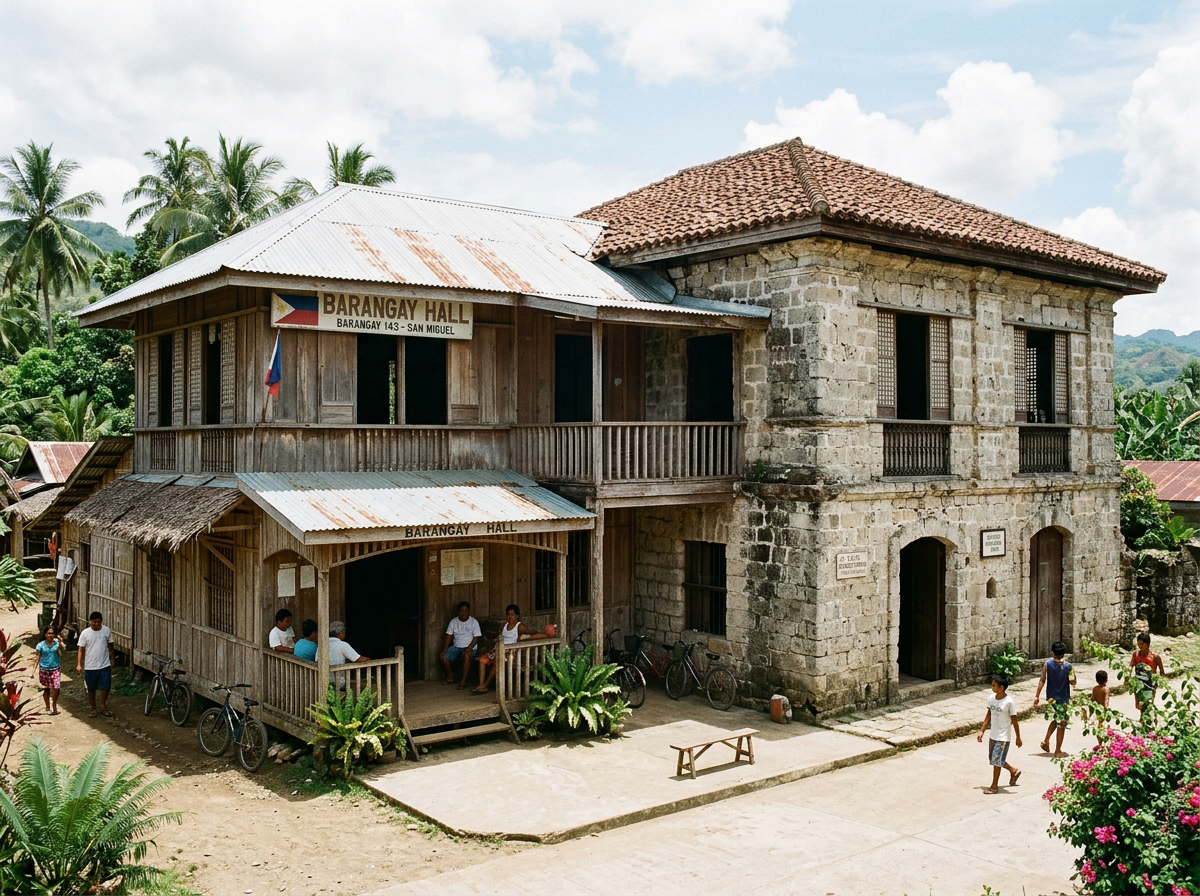
Moving beyond romanticism and revisionism to examine the institutions, knowledge systems, and social capacities altered by centuries of colonial rule.
Meta Description
What was actually lost during the colonial period in the Philippines? Beyond simplistic narratives of decline or progress, this article explores the institutions, knowledge systems, governance structures, and cultural capacities transformed by colonialism.
Few topics generate as much debate in Philippine history as the legacy of colonialism.
Some narratives portray the precolonial Philippines as a lost golden age disrupted by foreign conquest.
Others argue that colonial rule brought the institutions, technologies, and political structures necessary for modernization. Both perspectives contain elements of truth. Both also risk oversimplifying a far more complex reality.
The challenge is that discussions about colonial history often become trapped between nostalgia and justification.
One side romanticizes the past.
The other rationalizes the disruption.
Neither approach fully answers a more important question:
What was actually lost?
Answering this question requires moving beyond ideology and examining the specific systems, capabilities, and social structures that were altered, weakened, replaced, or transformed during centuries of colonial rule.
The goal is not to assign moral purity to either the precolonial or colonial period.
The goal is to understand what changed—and why those changes continue to matter today.
The Philippines Before Colonial Rule
Prior to Spanish colonization in the sixteenth century, the Philippine archipelago was not a unified nation-state.
Instead, it consisted of diverse societies connected through trade networks, kinship systems, maritime routes, and cultural exchange (Scott, 1994).
Communities varied significantly across regions.
- Some were coastal trading settlements connected to broader Asian commercial networks.
- Others were agricultural societies organized around local leadership structures.
- Political authority was often decentralized.
- Social organization was typically rooted in kinship, reciprocity, customary law, and local governance.
Contrary to popular misconceptions, precolonial societies were neither primitive nor isolated.
Archaeological and historical evidence demonstrates extensive interaction with neighboring regions including China, India, the Malay world, and various parts of Southeast Asia (Junker, 2000).
The question is not whether these societies were perfect.
They were not.
The question is what capacities existed that were later disrupted.
The Loss of Indigenous Governance Systems
One of the most significant transformations involved governance.
Precolonial communities possessed locally embedded systems of leadership, dispute resolution, alliance-building, and resource management.
These structures varied across regions but often operated at a human scale.
Authority depended heavily upon relationships, reputation, reciprocity, and demonstrated competence rather than distant bureaucratic administration (Scott, 1994).
Spanish colonial rule gradually replaced many of these structures with centralized governance systems designed to serve imperial objectives.
Local leadership was often incorporated into colonial administration rather than eliminated outright.
However, the logic of governance changed.
Authority increasingly flowed upward toward colonial institutions rather than outward through local networks.
The result was not merely political change.
It was a transformation in how communities related to power itself.
Over time, local governance traditions became less influential while centralized authority became more dominant.
The Disruption of Maritime Identity
Perhaps one of the least discussed losses involves maritime orientation.
- The Philippine archipelago is composed of thousands of islands.
- For much of precolonial history, the sea functioned as a connector rather than a barrier.
- Communities traded extensively across maritime routes.
Economic, cultural, and political relationships often developed through regional networks extending beyond the archipelago itself (Junker, 2000).
Colonial administration gradually reoriented these relationships.
- Trade became increasingly organized around imperial priorities.
- Movement became more regulated.
- Economic activity became more closely tied to colonial centers.
Some historians argue that this contributed to a weakening of indigenous maritime traditions and regional trade autonomy (Bankoff, 2007).
The significance extends beyond economics.
Maritime societies often develop distinct ways of understanding mobility, exchange, adaptation, and identity.
The decline of these traditions altered how communities related to the broader region.
The Transformation of Knowledge Systems
Knowledge systems were also affected.
Every society develops methods for transmitting practical, cultural, ecological, and social knowledge across generations.
These systems include language, oral traditions, apprenticeship structures, agricultural practices, navigation techniques, medicinal knowledge, and customary law.
Colonial rule introduced new educational frameworks, religious institutions, and administrative structures.
Some forms of knowledge expanded.
Others diminished.
The issue is not that colonial education produced no benefits.
The issue is that it frequently prioritized external frameworks while reducing the status and transmission of local knowledge systems.
Many indigenous practices survived.
Others became fragmented, marginalized, or lost altogether.
The consequences remain visible today.
Modern societies often underestimate how much knowledge can disappear when cultural transmission networks weaken.
Language and Cultural Memory
Language serves as more than a communication tool.
It also functions as a repository of cultural memory.
Concepts, relationships, ecological knowledge, social values, and collective experiences are often embedded within language itself.
Colonial periods frequently alter linguistic landscapes.
- New languages gain prestige.
- Existing languages may lose status within formal institutions.
- The Philippines experienced these dynamics repeatedly through Spanish, American, and later global influences.
While linguistic diversity remains one of the country’s strengths, many indigenous languages have experienced decline.
When languages disappear, unique ways of interpreting reality often disappear with them.
This is not merely a cultural issue.
It is a knowledge issue.
Languages contain information accumulated across generations.
Their loss reduces the diversity of human understanding.
The Erosion of Local Institutional Capacity
Another consequence of colonial rule involved institutional dependency.
- When decision-making becomes concentrated within external authorities, local communities may gradually lose opportunities to develop governance capabilities independently.
- This process does not occur because communities lack competence.
- It occurs because institutional responsibility shifts elsewhere.
Over time, populations become accustomed to looking upward for solutions rather than outward toward local cooperation.
This pattern can persist long after colonial rule formally ends.
Political scientists have observed that institutional legacies often influence development trajectories for generations (North, 1990).
The challenge is not merely rebuilding infrastructure.
It is rebuilding institutional confidence and civic capacity.
What Was Not Lost
Historical analysis also requires balance.
Not everything disappeared.
Many indigenous traditions survived despite centuries of disruption.
- Kinship networks remained strong.
- Community reciprocity persisted.
- Local identities endured.
- Languages survived.
- Cultural practices adapted.
- Religious traditions merged with existing beliefs in uniquely Filipino ways.
In many cases, traditions evolved rather than vanished.
This distinction matters.
The Philippines is not simply a society recovering from loss.
It is also a society shaped by adaptation.
Much of what exists today reflects centuries of cultural synthesis rather than straightforward replacement.
Understanding this complexity helps avoid simplistic narratives of either total destruction or uninterrupted continuity.
Beyond Nostalgia
One of the dangers of historical reflection is nostalgia.
- When societies encounter contemporary challenges, the past can appear more coherent than it actually was.
- Precolonial communities faced conflict, inequality, environmental pressures, and political competition like all human societies.
- There was no utopian golden age.
Yet rejecting romanticism does not require dismissing genuine losses.
Historical inquiry is most useful when it helps identify capacities that may still hold value today.
- The goal is not restoration.
- The goal is learning.
- What governance practices fostered local accountability?
- What forms of community cooperation proved resilient?
- What ecological knowledge remains relevant?
- What institutional principles deserve renewed attention?
These questions are more productive than attempts to recreate the past.
What Recovery Actually Means
Discussions about decolonization often focus on symbols, narratives, and identity.
These issues matter.
Yet meaningful recovery may depend even more upon rebuilding capacities.
A society cannot recover what it no longer understands.
The task is therefore not simply remembering history.
It is understanding the systems embedded within that history.
Recovery may involve:
- Strengthening local governance capacity
- Preserving linguistic diversity
- Revitalizing ecological knowledge
- Rebuilding civic participation
- Supporting community resilience
- Reconnecting with regional and maritime perspectives
These efforts are not about rejecting modernity.
They are about expanding the range of resources available for navigating contemporary challenges.
A More Useful Question
The most important question may not be whether colonialism was entirely good or entirely bad.
History rarely operates through such simple categories.
A more useful question is:
What capacities existed before colonial rule that remain relevant today?
This shift changes the conversation.
Instead of debating idealized pasts, it encourages examination of practical lessons.
The Philippines faces many twenty-first-century challenges involving governance, resilience, identity, development, and institutional trust.
Addressing these challenges requires looking forward.
Yet looking forward becomes easier when societies understand what historical resources remain available.
The purpose of studying what was lost is not to remain attached to loss.
It is to identify what can still be learned, adapted, and renewed.
In that sense, history becomes less about nostalgia and more about possibility.
Crosslinks
- The Barangay Before the State: Human-Scale Governance in Practice
- From Collective Trauma to System Design: A Living Archive Framework for the Philippines
- The Digital Barangay: A Structural Framework for Decentralized Diaspora Stewardship
- Living Between Worlds: The Psychology of Civilizational Transition
- Institutional Consciousness: Can Systems Evolve Beyond Survival Logic?
- Systems Theory & Sensemaking
- What Is Overflow? Reframing Abundance Beyond Wealth Accumulation
References
Bankoff, G. (2007). Islands at the center of the world: The Philippine archipelago in global history. Ateneo de Manila University Press.
Junker, L. L. (2000). Raiding, trading, and feasting: The political economy of Philippine chiefdoms. University of Hawai’i Press.
North, D. C. (1990). Institutions, institutional change and economic performance. Cambridge University Press.
Scott, W. H. (1994). Barangay: Sixteenth-century Philippine culture and society. Ateneo de Manila University Press.
The Living Archive is designed to be explored through pathways, categories, and search. If you’re looking for a specific idea, question, or theme, AI Search can help surface relevant connections across the archive.
Attribution
The Living Archive
Integrative Frameworks for Regenerative Civilization
© 2026 Gerald Daquila. All rights reserved.
Part of the Life.Understood. knowledge ecosystem and Stewardship Institute initiative.
This article is intended for educational, research, and civic inquiry purposes.
Readers are encouraged to engage critically, verify sources independently, and explore related knowledge hubs for broader systems context.
Leave a Reply