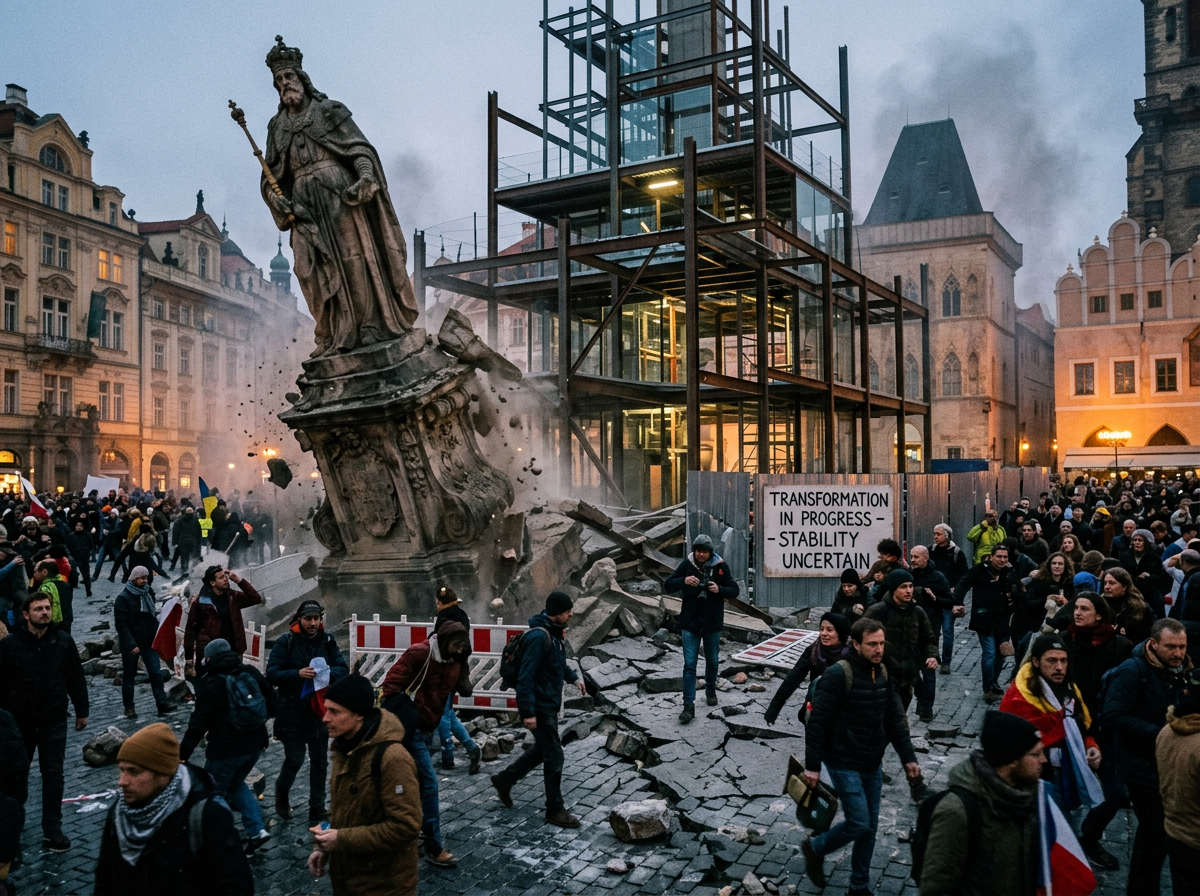
From upheaval to integration to re-entering the world — without losing yourself
4–6 minutes
We hear a lot about awakening.
The breakthroughs. The realizations. The moments that shake your sense of reality and rearrange how you see yourself and the world.
But what’s talked about far less is what comes after.
Not the peak. Not the collapse. But the long, quiet stretch where change becomes livable.
This series was written for that stretch.
For the people who are no longer in crisis, but not quite who they used to be. For those who feel calmer on the outside, yet unsure how to move forward from this new inner ground.
If that’s where you are, you’re not behind.
You may be in the part of the journey where growth stops being dramatic — and starts becoming real.
1. The Quiet After the Awakening
After emotional or spiritual intensity, many people expect lasting clarity or bliss. Instead, they meet a strange lull.
Life looks ordinary again. The revelations slow. The urgency fades. And in that quiet, doubts creep in:
“Was any of that real?” “Why do I feel flat?” “Have I gone backwards?”
This stage is often misread as regression. But it’s frequently integration beginning — when the nervous system starts to absorb what happened, instead of just surviving it.
The absence of fireworks doesn’t mean nothing is happening. It often means your system is finally safe enough to settle.
2. Living Through the Quiet Integration Phase
Once the intensity fades, the real work shifts into daily life.
This phase can feel boring, unproductive, or emotionally muted. But it’s where your body and nervous system recalibrate. It’s where new patterns become sustainable instead of temporary.
Here, growth looks like:
needing more rest
having less tolerance for drama
moving more slowly
doing less, but with more presence
Nothing dramatic is happening — and that’s often exactly the point.
3. When Purpose Returns Softly
After the lull, a quiet question begins to surface:
“What now?”
But the old answers don’t fit. Purpose can no longer be driven by pressure, proving, or fear. The motivations that once pushed you forward may have gone quiet.
In their place comes something subtler:
Small interests. Gentle curiosity. Modest next steps that feel sustainable rather than urgent.
Purpose, in this phase, isn’t a grand plan. It’s a series of livable choices that your nervous system can support. Direction grows not from intensity, but from stability.
4. Rebuilding Relationships After You’ve Changed
As your inner world shifts, your relational life begins to shift too.
You may need more space. More honesty. Less performance. You may feel less able to carry emotional weight that once felt normal.
This doesn’t mean you’ve outgrown love. It means your nervous system is asking for connection that includes mutuality, pacing, and respect for limits.
Some relationships deepen. Some soften. Some drift. New ones form slowly.
This isn’t isolation. It’s integration extending into how you relate.
5. Learning to Trust Yourself Again
After big internal change, many people feel unsure of their own guidance.
The old inner voice — often driven by pressure or fear — has quieted. The new one is softer, more physical, and easier to miss.
Self-trust returns not through certainty, but through small acts of listening: Resting when tired. Saying no when something feels off. Taking time before deciding.
You don’t become someone who never doubts. You become someone who can stay in relationship with yourself while moving forward.
How do you participate in the world without abandoning the steadiness you’ve rebuilt?
You may no longer be able to operate from overdrive. Pace becomes as important as performance. Contribution becomes something you offer from sustainability, not depletion.
This isn’t stepping back from life. It’s stepping into a way of showing up that doesn’t cost you yourself.
This Is Not a Linear Path — It’s a Living Process
You may move back and forth between these stages. You may feel settled one week and uncertain the next. That doesn’t mean you’re failing.
It means you’re human.
Deep change doesn’t end with a single realization. It continues as your nervous system, relationships, work, and identity slowly reorganize around a new baseline.
The dramatic part of awakening gets attention.
But this quieter part — the part where you learn to live differently, gently, sustainably — is where transformation becomes a life, not just an experience.
If you find yourself in the calm after the storm, unsure but softer than before, you may be exactly where you need to be.
Nothing is exploding. Nothing is collapsing. You’re just learning how to be here — in your life — without leaving yourself behind.
Gerry explores themes of change, emotional awareness, and inner coherence through reflective writing. His work is shaped by lived experience during times of transition and is offered as an invitation to pause, notice, and reflect.
If you’re curious about the broader personal and spiritual context behind these reflections, you can read a longer note here.
Moving beyond romanticism and revisionism to examine the institutions, knowledge systems, and social capacities altered by centuries of colonial rule.
Meta Description
What was actually lost during the colonial period in the Philippines? Beyond simplistic narratives of decline or progress, this article explores the institutions, knowledge systems, governance structures, and cultural capacities transformed by colonialism.
Few topics generate as much debate in Philippine history as the legacy of colonialism.
Some narratives portray the precolonial Philippines as a lost golden age disrupted by foreign conquest.
Others argue that colonial rule brought the institutions, technologies, and political structures necessary for modernization. Both perspectives contain elements of truth. Both also risk oversimplifying a far more complex reality.
The challenge is that discussions about colonial history often become trapped between nostalgia and justification.
One side romanticizes the past.
The other rationalizes the disruption.
Neither approach fully answers a more important question:
What was actually lost?
Answering this question requires moving beyond ideology and examining the specific systems, capabilities, and social structures that were altered, weakened, replaced, or transformed during centuries of colonial rule.
The goal is not to assign moral purity to either the precolonial or colonial period.
The goal is to understand what changed—and why those changes continue to matter today.
The Philippines Before Colonial Rule
Prior to Spanish colonization in the sixteenth century, the Philippine archipelago was not a unified nation-state.
Instead, it consisted of diverse societies connected through trade networks, kinship systems, maritime routes, and cultural exchange (Scott, 1994).
Communities varied significantly across regions.
Some were coastal trading settlements connected to broader Asian commercial networks.
Others were agricultural societies organized around local leadership structures.
Political authority was often decentralized.
Social organization was typically rooted in kinship, reciprocity, customary law, and local governance.
Contrary to popular misconceptions, precolonial societies were neither primitive nor isolated.
Archaeological and historical evidence demonstrates extensive interaction with neighboring regions including China, India, the Malay world, and various parts of Southeast Asia (Junker, 2000).
The question is not whether these societies were perfect.
They were not.
The question is what capacities existed that were later disrupted.
The Loss of Indigenous Governance Systems
One of the most significant transformations involved governance.
Precolonial communities possessed locally embedded systems of leadership, dispute resolution, alliance-building, and resource management.
These structures varied across regions but often operated at a human scale.
Authority depended heavily upon relationships, reputation, reciprocity, and demonstrated competence rather than distant bureaucratic administration (Scott, 1994).
Spanish colonial rule gradually replaced many of these structures with centralized governance systems designed to serve imperial objectives.
Local leadership was often incorporated into colonial administration rather than eliminated outright.
However, the logic of governance changed.
Authority increasingly flowed upward toward colonial institutions rather than outward through local networks.
The result was not merely political change.
It was a transformation in how communities related to power itself.
Over time, local governance traditions became less influential while centralized authority became more dominant.
The Disruption of Maritime Identity
Perhaps one of the least discussed losses involves maritime orientation.
The Philippine archipelago is composed of thousands of islands.
For much of precolonial history, the sea functioned as a connector rather than a barrier.
Communities traded extensively across maritime routes.
Economic, cultural, and political relationships often developed through regional networks extending beyond the archipelago itself (Junker, 2000).
Colonial administration gradually reoriented these relationships.
Trade became increasingly organized around imperial priorities.
Movement became more regulated.
Economic activity became more closely tied to colonial centers.
Some historians argue that this contributed to a weakening of indigenous maritime traditions and regional trade autonomy (Bankoff, 2007).
The significance extends beyond economics.
Maritime societies often develop distinct ways of understanding mobility, exchange, adaptation, and identity.
The decline of these traditions altered how communities related to the broader region.
The Transformation of Knowledge Systems
Knowledge systems were also affected.
Every society develops methods for transmitting practical, cultural, ecological, and social knowledge across generations.
These systems include language, oral traditions, apprenticeship structures, agricultural practices, navigation techniques, medicinal knowledge, and customary law.
Colonial rule introduced new educational frameworks, religious institutions, and administrative structures.
Some forms of knowledge expanded.
Others diminished.
The issue is not that colonial education produced no benefits.
The issue is that it frequently prioritized external frameworks while reducing the status and transmission of local knowledge systems.
Many indigenous practices survived.
Others became fragmented, marginalized, or lost altogether.
The consequences remain visible today.
Modern societies often underestimate how much knowledge can disappear when cultural transmission networks weaken.
Language and Cultural Memory
Language serves as more than a communication tool.
It also functions as a repository of cultural memory.
Concepts, relationships, ecological knowledge, social values, and collective experiences are often embedded within language itself.
Colonial periods frequently alter linguistic landscapes.
New languages gain prestige.
Existing languages may lose status within formal institutions.
The Philippines experienced these dynamics repeatedly through Spanish, American, and later global influences.
While linguistic diversity remains one of the country’s strengths, many indigenous languages have experienced decline.
When languages disappear, unique ways of interpreting reality often disappear with them.
This is not merely a cultural issue.
It is a knowledge issue.
Languages contain information accumulated across generations.
Their loss reduces the diversity of human understanding.
The Erosion of Local Institutional Capacity
Another consequence of colonial rule involved institutional dependency.
When decision-making becomes concentrated within external authorities, local communities may gradually lose opportunities to develop governance capabilities independently.
This process does not occur because communities lack competence.
It occurs because institutional responsibility shifts elsewhere.
Over time, populations become accustomed to looking upward for solutions rather than outward toward local cooperation.
This pattern can persist long after colonial rule formally ends.
Political scientists have observed that institutional legacies often influence development trajectories for generations (North, 1990).
The challenge is not merely rebuilding infrastructure.
It is rebuilding institutional confidence and civic capacity.
What Was Not Lost
Historical analysis also requires balance.
Not everything disappeared.
Many indigenous traditions survived despite centuries of disruption.
Kinship networks remained strong.
Community reciprocity persisted.
Local identities endured.
Languages survived.
Cultural practices adapted.
Religious traditions merged with existing beliefs in uniquely Filipino ways.
In many cases, traditions evolved rather than vanished.
This distinction matters.
The Philippines is not simply a society recovering from loss.
It is also a society shaped by adaptation.
Much of what exists today reflects centuries of cultural synthesis rather than straightforward replacement.
Understanding this complexity helps avoid simplistic narratives of either total destruction or uninterrupted continuity.
Beyond Nostalgia
One of the dangers of historical reflection is nostalgia.
When societies encounter contemporary challenges, the past can appear more coherent than it actually was.
Precolonial communities faced conflict, inequality, environmental pressures, and political competition like all human societies.
There was no utopian golden age.
Yet rejecting romanticism does not require dismissing genuine losses.
Historical inquiry is most useful when it helps identify capacities that may still hold value today.
The goal is not restoration.
The goal is learning.
What governance practices fostered local accountability?
What forms of community cooperation proved resilient?
What ecological knowledge remains relevant?
What institutional principles deserve renewed attention?
These questions are more productive than attempts to recreate the past.
What Recovery Actually Means
Discussions about decolonization often focus on symbols, narratives, and identity.
These issues matter.
Yet meaningful recovery may depend even more upon rebuilding capacities.
A society cannot recover what it no longer understands.
The task is therefore not simply remembering history.
It is understanding the systems embedded within that history.
Recovery may involve:
Strengthening local governance capacity
Preserving linguistic diversity
Revitalizing ecological knowledge
Rebuilding civic participation
Supporting community resilience
Reconnecting with regional and maritime perspectives
These efforts are not about rejecting modernity.
They are about expanding the range of resources available for navigating contemporary challenges.
A More Useful Question
The most important question may not be whether colonialism was entirely good or entirely bad.
History rarely operates through such simple categories.
A more useful question is:
What capacities existed before colonial rule that remain relevant today?
This shift changes the conversation.
Instead of debating idealized pasts, it encourages examination of practical lessons.
The Philippines faces many twenty-first-century challenges involving governance, resilience, identity, development, and institutional trust.
Addressing these challenges requires looking forward.
Yet looking forward becomes easier when societies understand what historical resources remain available.
The purpose of studying what was lost is not to remain attached to loss.
It is to identify what can still be learned, adapted, and renewed.
In that sense, history becomes less about nostalgia and more about possibility.
This article is intended for educational, research, and civic inquiry purposes. Readers are encouraged to engage critically, verify sources independently, and explore related knowledge hubs for broader systems context.
As machines increasingly perform cognitive tasks once reserved for humans, the deeper challenge may not be technological disruption—but the search for purpose, significance, and identity.
Meta Description
Artificial intelligence is transforming work, knowledge, and creativity. Yet beneath these changes lies a deeper challenge: a growing crisis of meaning. Explore how AI is reshaping human purpose, identity, and the search for significance.
Understanding the Process: The Semantic Mediation Model
Before exploring the ideas presented in this article in greater detail, it may be helpful to view the broader process through which information becomes understanding and understanding becomes meaningful action.
The map below illustrates how facts, data, and knowledge are transformed through synthesis, interpretation, contextualization, and relationship-mapping into coherent understanding and wise decision-making. It also highlights the complementary roles of human judgment and AI-assisted analysis, as well as the importance of discernment, verification, and context in navigating an increasingly complex information environment.
The Semantic Mediation Model presents a framework for understanding how meaning emerges between information and action. Rather than treating knowledge as a collection of isolated facts, it emphasizes the relationships, patterns, and contexts that allow understanding to form and wisdom to develop.
A complimentary one-page guide illustrating how information becomes understanding through synthesis, interpretation, context, and discernment.
While the model focuses on the development of understanding and wisdom, this article explores a further question: how understanding becomes meaning, purpose, and human significance in an age of intelligent machines.
The distinction between information processing and wise action becomes especially important when considering the rapidly expanding role of artificial intelligence in modern society.
Much of the public conversation surrounding artificial intelligence focuses on capability.
Can AI replace jobs?
Can it improve productivity?
Can it accelerate scientific discovery?
Can it transform education, healthcare, governance, and business?
These are important questions.
Yet they may not be the most important questions.
Throughout history, technological revolutions have altered how societies function. Artificial intelligence appears poised to do something even more profound.
It may alter how human beings understand their place within society.
The challenge is not simply economic.
It is existential.
As machines become increasingly capable of performing tasks once considered uniquely human, individuals may be forced to reconsider assumptions about value, contribution, purpose, and meaning.
In this sense, the AI era is not merely a technological transition.
It is a meaning transition.
Meaning Is More Than Happiness
Modern discussions often confuse meaning with happiness.
The two are related.
They are not identical.
Happiness concerns positive emotional experience.
Meaning concerns significance.
It answers questions such as:
Why does this matter?
What am I contributing?
What responsibilities do I hold?
How does my life connect to something larger than myself?
Psychologist Viktor Frankl argued that human beings possess a fundamental need for meaning that extends beyond comfort, pleasure, or success (Frankl, 1959/2006).
People can endure extraordinary challenges when they perceive purpose.
Conversely, even materially comfortable lives can feel empty when purpose becomes unclear.
The relevance of this insight is becoming increasingly visible.
Many contemporary anxieties involve not only uncertainty but significance.
People increasingly wonder where they fit within rapidly changing systems.
The Historical Relationship Between Work and Meaning
For centuries, work has served as one of the primary sources of meaning in modern societies.
Occupations provide more than income.
They provide identity.
They provide social roles.
They provide structure.
They provide opportunities to contribute.
Questions such as “What do you do?” frequently function as shorthand for social identity.
Industrial societies reinforced this relationship.
Productivity became closely linked to value.
Achievement became closely linked to status.
Professional competence became closely linked to self-worth.
Artificial intelligence introduces a challenge to this framework.
If machines increasingly perform cognitive tasks, what happens to identities built around those tasks?
The answer remains uncertain.
Yet the question itself is becoming increasingly difficult to ignore.
When Intelligence Becomes Abundant
Historically, intelligence was scarce.
Specialized expertise required years of education and experience.
Access to information was limited.
Analytical capabilities were valuable precisely because they were difficult to acquire.
Artificial intelligence changes these conditions.
Knowledge retrieval becomes easier.
Content generation becomes faster.
Analysis becomes more accessible.
Translation, summarization, coding assistance, and pattern recognition increasingly become available on demand.
As intelligence becomes more abundant, societies may need to reconsider what remains scarce.
This shift mirrors previous economic transformations.
When physical labor became amplified through machines, economic value migrated toward new capabilities.
The AI era may produce a similar transition.
The challenge is identifying what those capabilities are (Harari, 2018; Tegmark, 2017).
The Productivity Trap
One of the risks associated with technological progress is the assumption that efficiency automatically produces fulfillment.
Modern societies often equate progress with productivity.
More output.
More optimization.
More performance.
Yet human flourishing has never depended solely upon efficiency (Frankl, 1959/2006).
A perfectly optimized life is not necessarily a meaningful life.
Artificial intelligence may expose this distinction.
If machines can dramatically increase productivity, societies will still face questions regarding purpose.
What are people optimizing for?
What constitutes a good life?
What responsibilities accompany increased technological capability?
These questions cannot be answered by technology alone.
They are philosophical questions.
Cultural questions.
Human questions.
Creativity, Uniqueness, and Human Value
The rise of generative AI has intensified debates surrounding creativity.
Machines can now produce text, images, music, software, and design concepts with remarkable speed(Tegmark, 2017; Russell, 2019).
For many people, this development feels unsettling.
Creative expression has long been associated with uniquely human capacities.
The concern often extends beyond economics.
It touches identity.
If machines can create, what distinguishes human creativity?
One possible answer is that creativity has never been solely about production.
Human creativity emerges from experience.
Memory.
Emotion.
Embodiment.
Relationships.
Culture.
Meaning.
A painting is not valuable merely because it exists.
A story is not meaningful merely because it is coherent.
Their significance often derives from the human experiences they express.
The rise of AI may therefore encourage a deeper understanding of creativity itself.
The Crisis of Significance
Many technological discussions focus on capability.
The meaning crisis concerns significance.
The question is not merely whether humans remain useful.
It is whether they remain meaningful.
Usefulness and meaning are not identical.
People derive purpose from:
Relationships
Service
Stewardship
Community
Learning
Creativity
Caregiving
Belonging
Many of these activities generate value that cannot be measured easily through productivity metrics.
Yet they remain central to human flourishing.
As AI reshapes labor and knowledge systems, societies may need to elevate these dimensions rather than treating them as secondary.
The Collapse of Traditional Meaning Structures
The meaning crisis cannot be attributed solely to artificial intelligence.
Its roots run deeper.
Many traditional sources of meaning have weakened for decades.
Community participation has declined in many regions.
Religious affiliation has shifted.
Institutional trust has eroded.
Shared narratives have fragmented.
Digital technologies have accelerated informational and cultural change.
Artificial intelligence enters this environment at a particularly sensitive moment(Harari, 2018).
The technology amplifies existing questions.
It does not create them from nothing.
The challenge is therefore broader than automation.
It involves rebuilding frameworks capable of helping people understand their place within increasingly complex societies.
Why Meaning Cannot Be Automated
Artificial intelligence can assist with information.
It can support decision-making.
It can accelerate learning.
It can generate content.
Yet meaning operates differently.
Meaning emerges through interpretation.
Relationships.
Values.
Commitments.
Responsibilities.
These dimensions cannot simply be generated externally.
The Semantic Mediation Model illustrates how information can be transformed into understanding and wisdom, but meaning requires an additional human dimension: lived commitment, value formation, and participation in something larger than oneself.
Meaning is experienced rather than delivered (Frankl, 1959/2006).
A machine can explain a purpose.
It cannot provide one (Russell, 2019).
A system can offer recommendations.
It cannot determine what ought to matter.
These remain fundamentally human questions.
Technology may assist reflection.
It cannot replace it.
The Rise of Stewardship
If the industrial era emphasized production, the emerging era may increasingly emphasize stewardship.
Stewardship involves caring for systems larger than oneself.
Families.
Communities.
Institutions.
Cultures.
Ecosystems.
Future generations.
Stewardship provides meaning because it connects individuals to ongoing responsibilities (Frankl, 1959/2006).
Unlike productivity, stewardship is not primarily measured through output.
Its focus is continuity, health, and contribution.
This distinction may become increasingly important.
As machines assume more productive tasks, human value may become more closely associated with judgment, responsibility, care, and wisdom.
Meaning in a Complex World
Complex societies require more than information (Harari, 2018).
They require orientation.
People need frameworks that help them understand:
Who they are
What matters
What responsibilities they hold
How their lives connect to larger systems
These questions become more important rather than less important during periods of technological transformation.
Artificial intelligence increases capability.
Meaning determines direction.
Capability without meaning creates confusion.
Meaning without capability creates frustration (Frankl, 1959/2006).
Healthy societies require both.
The challenge is maintaining balance.
Beyond Utility
The deepest risk of the AI era may not be unemployment.
It may be reductionism.
The temptation to define human beings primarily through their utility.
Modern societies already struggle with this tendency.
People are often valued according to productivity, performance, achievement, and measurable output.
Artificial intelligence challenges this framework.
Machines may eventually outperform humans across many utilitarian tasks (Russell, 2019; Tegmark, 2017).
If human value depends solely upon utility, the implications become troubling.
Most people intuitively reject this conclusion (Frankl, 1959/2006).
Human dignity appears to rest on something deeper.
Relationships.
Conscious experience.
Moral agency.
Creativity.
Care.
Meaning.
The AI era may therefore force societies to articulate assumptions that were previously taken for granted.
The Future of Meaning
Every major technological revolution eventually becomes a human story.
The printing press transformed knowledge.
The industrial revolution transformed labor.
The internet transformed communication.
Artificial intelligence may transform meaning (Harari, 2018; Tegmark, 2017).
Not because technology determines purpose.
But because it changes the conditions under which people search for it.
The challenge of the coming decades may therefore be less about keeping humans economically relevant and more about helping them remain existentially grounded.
The future will likely require new forms of education, governance, community, and culture capable of supporting meaning in an increasingly automated world.
The central question is not whether machines become more intelligent.
They almost certainly will (Russell, 2019).
The central question is whether human beings can develop equally sophisticated understandings of purpose, responsibility, and significance.
In the end, the meaning crisis is not a technological problem.
It is a human one.
And its resolution will depend not on what machines become, but on what people choose to value.
Frankl, V. E. (2006). Man’s search for meaning. Beacon Press. (Original work published 1959)
Harari, Y. N. (2018). 21 lessons for the 21st century. Spiegel & Grau.
Russell, S. (2019). Human compatible: Artificial intelligence and the problem of control. Viking.
Tegmark, M. (2017). Life 3.0: Being human in the age of artificial intelligence. Knopf.
The Living Archive is designed to be explored through pathways, categories, and search. If you’re looking for a specific idea, question, or theme, AI Search can help surface relevant connections across the archive.
Attribution
The Living Archive Integrative Frameworks for Regenerative Civilization
This article is intended for educational, research, and civic inquiry purposes. Readers are encouraged to engage critically, verify sources independently, and explore related knowledge hubs for broader systems context.
Understanding the Psychological, Economic, and Cultural Strain of Living Between Two Eras
Meta Description
Why do so many people feel exhausted, disconnected, and uncertain about the future? Explore transition fatigue, institutional trust, social change, and the challenges of living between declining systems and emerging realities.
Across many societies, a growing number of people share a similar feeling.
Something no longer works.
The feeling is often difficult to articulate. It may appear as frustration with politics, dissatisfaction at work, declining trust in institutions, economic anxiety, social fragmentation, or a persistent sense that the future feels less predictable than it once did.
People may disagree about causes and solutions. Yet beneath these disagreements lies a common experience: exhaustion.
Many individuals are not merely responding to isolated problems. They are responding to the cumulative effects of living through a period of systemic transition.
This condition can be described as transition fatigue—the psychological, social, and cultural strain that emerges when old systems lose legitimacy faster than new systems can establish stability (Turner, 1969; Grupe & Nitschke, 2013).
Understanding transition fatigue helps explain many of the emotional, political, and social dynamics shaping contemporary life.
Living Between Worlds
Periods of major social transformation are not unusual in human history.
Agricultural societies transitioned into industrial societies.
Empires gave way to nation-states.
Feudal systems evolved into market economies.
New technologies repeatedly transformed social structures.
However, transitions often create uncertainty because people must navigate competing realities simultaneously.
The old system still exists.
The new system is not fully formed.
Rules become unclear.
Expectations become unstable.
Institutions struggle to adapt.
Individuals find themselves living between worlds.
Anthropologist Victor Turner described such conditions through the concept of liminality—a transitional state in which familiar structures dissolve before new ones emerge (Turner, 1969).
Many contemporary societies appear to be experiencing liminality at scale, as economic, technological, and cultural systems undergo simultaneous transformation (Vervaeke, 2019).
The transition from one social reality to another rarely occurs in a straight line.
Individuals and societies often move through periods of uncertainty, disorientation, adaptation, and reorganization before new forms of stability emerge.
The framework below illustrates the broader journey that many transitional periods follow, helping explain why systemic change often feels exhausting while it is occurring.
Figure 1. Transitional phases often observed during periods of major personal, social, and institutional change. While specific transitions vary, many involve a movement from stability through disruption, uncertainty, adaptation, and eventual reorganization.
The framework provides a lens for understanding why periods of systemic transformation frequently generate confusion, fatigue, and competing narratives before new forms of coherence emerge.
The Collapse of Institutional Confidence
One of the most visible symptoms of transition fatigue is declining trust.
Public confidence has fallen across numerous institutions, including:
Governments
Media organizations
Religious institutions
Corporations
Educational systems
Financial systems
Trust functions as a form of social infrastructure that enables cooperation and reduces social friction (Fukuyama, 1995).
When trust declines, uncertainty increases and collective action becomes more difficult to sustain (Fukuyama, 1995).
People spend more energy verifying information, protecting themselves from perceived risks, and questioning authority.
Political scientist Francis Fukuyama (1995) argued that trust reduces social friction and enables cooperation. When trust erodes, social coordination becomes more difficult and costly.
The result is often collective exhaustion.
Citizens no longer feel supported by institutions they once assumed were stable.
Information Overload and Cognitive Exhaustion
Previous generations received information through relatively limited channels.
Today, individuals navigate a continuous stream of news, opinions, crises, commentary, and competing narratives.
Digital technologies have dramatically expanded access to information, but greater access does not automatically produce greater clarity.
Excessive information exposure can contribute to decision fatigue, reduced self-regulation, and cognitive overload (Baumeister & Tierney, 2011).
However, greater access does not automatically produce greater clarity.
In many cases, it produces overwhelm.
Psychologists note that excessive information can contribute to decision fatigue, anxiety, and reduced cognitive performance (Baumeister & Tierney, 2011).
People increasingly struggle to answer basic questions:
Which sources can be trusted?
Which problems deserve attention?
What information is accurate?
What future should be prepared for?
The challenge is no longer access to information.
The challenge is interpretation.
Economic Success Feels Less Predictable
For much of the twentieth century, many populations embraced a relatively straightforward social contract.
Work hard.
Acquire education.
Build a career.
Improve living standards.
While never universally accessible, this narrative provided a degree of predictability.
Today, many people perceive that contract as weakening.
Rising housing costs, technological disruption, labor market volatility, and growing inequality have contributed to uncertainty regarding long-term economic security across many developed economies (World Economic Forum, 2025).
Importantly, transition fatigue is not limited to material conditions.
It is amplified when expectations and reality diverge.
Individuals who feel they followed established rules but received diminishing rewards often experience frustration and disillusionment.
The Psychology of Constant Change
Human beings possess remarkable adaptive capacity.
However, adaptation requires energy.
When change becomes continuous, adaptation itself becomes exhausting.
Modern societies face simultaneous transformations involving:
Technology
Work
Family structures
Media ecosystems
Education
Governance
Culture
Economics
Each change independently may be manageable.
Together, they create cumulative stress.
Researchers studying uncertainty consistently find that unpredictable environments often generate more psychological strain than difficult but predictable ones (Grupe & Nitschke, 2013).
The issue is not simply change itself but the inability to reliably anticipate future conditions (Grupe & Nitschke, 2013).
Why Polarization Often Increases During Transitions
Political psychology research suggests that uncertainty can increase attraction to simplified narratives and stronger group identities, particularly during periods of social disruption (Marcus et al., 2000).
This is not necessarily because people become more hostile.
Often, they become more uncertain.
Under uncertainty, individuals naturally seek stability.
Different groups may respond by embracing different narratives about what is happening and what should happen next.
Some seek restoration.
Others seek transformation.
Some prioritize order.
Others prioritize experimentation.
As competing visions emerge, polarization can intensify.
The underlying issue is often not disagreement itself.
It is the absence of a broadly shared narrative about the future.
The Meaning Crisis
Many analysts describe contemporary challenges as economic, political, or technological.
Increasingly, however, researchers also identify a crisis of meaning.
Human beings require more than material security; they also seek meaning, purpose, belonging, and coherent identity structures (Seligman, 2011).
They also seek:
Purpose
Belonging
Identity
Contribution
Coherence
Historically, institutions often helped provide these functions.
Religious communities, civic organizations, neighborhoods, and cultural traditions offered frameworks that connected individual lives to larger narratives.
As traditional meaning-making institutions weaken, individuals increasingly bear responsibility for constructing meaning themselves (Vervaeke, 2019).
While this creates freedom, it can also create strain.
Meaning itself becomes a responsibility.
Why Old Systems Feel Broken
Many institutions were designed for conditions that no longer exist, creating growing misalignment between institutional structures and societal realities (North, 1990).
Some refer to economic systems.
Others refer to political systems.
Still others refer to educational, cultural, or social systems.
Despite these differences, several common themes emerge:
Transition fatigue emerges because individuals experience uncertainty before they experience resolution.
Building Resilience During Transition
If transition fatigue is partly a response to systemic change, resilience requires more than individual coping strategies.
Societies may need to strengthen capacities such as:
Community trust
Civic participation
Institutional adaptability
Media literacy
Psychological resilience
Long-term thinking
At the personal level, resilience often grows through meaningful relationships, purposeful activity, and participation in communities capable of providing stability amid uncertainty.
The goal is not eliminating change.
The goal is increasing our ability to navigate it.
From Breakdown to Reorganization
Systems theorists note that complex systems frequently reorganize when existing structures can no longer effectively manage changing environmental conditions (Meadows, 2008).
This process can appear disorderly.
Old assumptions weaken.
New possibilities emerge.
Experiments multiply.
Some fail.
Others become foundations for future systems.
Transition fatigue is often a sign that existing arrangements are under strain.
It is not necessarily evidence that collapse is inevitable.
In many cases, it may indicate that adaptation is underway.
The challenge is distinguishing genuine breakdown from the discomfort of transformation.
Conclusion
Many people today feel exhausted not because they are personally failing, but because they are navigating extraordinary levels of systemic change.
Economic uncertainty, technological disruption, declining institutional trust, information overload, and shifting cultural narratives have created conditions that place significant demands on individuals and communities alike.
Transition fatigue is therefore not merely an individual psychological phenomenon but a societal response to large-scale structural change occurring across multiple domains simultaneously (Turner, 1969; Grupe & Nitschke, 2013; Meadows, 2008).
Understanding this condition does not solve the challenges of our time.
However, it provides a framework for interpreting them.
Periods of transition are rarely comfortable.
Yet they are often the periods in which societies redefine themselves.
The task is not merely enduring uncertainty.
It is learning how to participate constructively in what comes next.
Baumeister, R. F., & Tierney, J. (2011). Willpower: Rediscovering the greatest human strength. Penguin Press.
Fukuyama, F. (1995). Trust: The social virtues and the creation of prosperity. Free Press.
Grupe, D. W., & Nitschke, J. B. (2013). Uncertainty and anticipation in anxiety: An integrated neurobiological and psychological perspective. Nature Reviews Neuroscience, 14(7), 488–501. https://doi.org/10.1038/nrn3524
North, D. C. (1990). Institutions, institutional change and economic performance. Cambridge University Press.
Marcus, G. E., Neuman, W. R., & MacKuen, M. (2000). Affective intelligence and political judgment. University of Chicago Press.
Meadows, D. H. (2008). Thinking in systems: A primer. Chelsea Green Publishing.
Turner, V. (1969). The ritual process: Structure and anti-structure. Aldine Publishing.
World Economic Forum. (2025). The future of jobs report 2025. World Economic Forum.
Vervaeke, J. (2019). Awakening from the meaning crisis. University of Toronto (lecture series).
The Living Archive is designed to be explored through pathways, categories, and search. If you’re looking for a specific idea, question, or theme, AI Search can help surface relevant connections across the archive.
Attribution
The Living Archive Integrative Frameworks for Regenerative Civilization
This article is intended for educational, research, and civic inquiry purposes. Readers are encouraged to engage critically, verify sources independently, and explore related knowledge hubs for broader systems context.
Why Thriving Systems Depend Not Merely on Growth, but on the Capacity to Maintain Stability, Meaning, and Trust Amid Complexity
Meta Description
What are overflow states, and how can individuals and communities sustain them? Explore coherence, resilience, trust, stewardship, and the conditions that allow people and systems to thrive beyond survival.
Much of human history has been shaped by scarcity.
Communities organized around survival.
Institutions emerged to manage limited resources.
Individuals focused on security, protection, and stability.
Yet an intriguing question arises when basic needs become increasingly secure:
What happens after survival?
Conventional thinking often assumes that prosperity automatically produces well-being. However, experience suggests otherwise. Many individuals and societies achieve material abundance while continuing to struggle with burnout, fragmentation, distrust, loneliness, and declining meaning.
The challenge is not simply creating abundance.
The challenge is sustaining coherence.
This distinction becomes increasingly important as societies move beyond immediate survival concerns toward questions of flourishing, stewardship, and long-term resilience.
Overflow states describe conditions in which individuals, communities, or institutions possess sufficient resources, trust, capacity, and adaptability to contribute beyond their own immediate needs.
Such states are characterized not merely by surplus, but by coherence—the ability to maintain alignment among values, relationships, goals, and behavior over time.
Understanding how overflow states emerge and persist may become one of the defining governance and social questions of the twenty-first century.
Beyond Survival and Scarcity
Psychologist Abraham Maslow famously proposed that human motivation often progresses from basic physiological and safety needs toward belonging, esteem, and self-actualization (Maslow, 1943).
Although later research has refined aspects of Maslow’s framework, the central insight remains influential.
When survival becomes less pressing, new challenges emerge.
Individuals begin asking questions such as:
What gives life meaning?
How should abundance be used?
What responsibilities accompany prosperity?
How can communities remain healthy over time?
These questions signal a shift from scarcity management toward coherence management.
The problem is no longer obtaining enough.
The problem becomes sustaining enough.
What Is Coherence?
Coherence refers to the alignment of multiple elements within a system.
At the individual level, coherence often involves consistency between:
Values
Beliefs
Behavior
Relationships
Purpose
At the community level, coherence involves alignment among:
Institutions
Cultural norms
Shared narratives
Governance structures
Collective goals
Systems theorists note that resilient systems are often characterized by strong internal coherence combined with sufficient adaptability to respond to changing conditions (Meadows, 2008).
Coherence therefore differs from rigidity.
Rigid systems resist change.
Coherent systems integrate change without losing identity.
This distinction is crucial.
Many systems collapse not because they lack resources, but because they lose coherence.
Before examining why some individuals and communities are able to sustain overflow states, it is useful to understand the dynamics that maintain coherence over time.
The Coherence Cycle illustrates how trust, participation, shared meaning, stewardship, adaptation, and renewal reinforce one another within healthy systems.
Overflow emerges when these reinforcing processes remain aligned despite changing conditions.
Economic growth has historically improved living standards across many societies.
However, prosperity does not automatically generate well-being.
Research consistently shows that once basic needs are met, factors such as social relationships, meaning, trust, and psychological health become increasingly important determinants of life satisfaction (Seligman, 2011).
This helps explain a common paradox.
A society may possess:
Advanced technology
High productivity
Material abundance
while simultaneously experiencing:
Social fragmentation
Institutional distrust
Mental health challenges
Polarization
Declining civic engagement
Material capacity and social coherence do not necessarily rise together.
One can increase while the other declines.
Overflow states require both.
Trust as Social Energy
One of the most important ingredients of collective coherence is trust.
Political scientist Francis Fukuyama argued that trust functions as a foundational social asset that enables cooperation and reduces friction within societies (Fukuyama, 1995).
Trust allows individuals and institutions to coordinate effectively without excessive monitoring, bureaucracy, or enforcement.
When trust is high:
Cooperation becomes easier.
Innovation accelerates.
Civic participation increases.
Transaction costs decrease.
When trust declines, societies often compensate through increased control mechanisms.
Rules multiply.
Oversight expands.
Administrative complexity grows.
Energy that could support flourishing is redirected toward managing uncertainty.
Trust therefore functions as a form of social surplus.
It creates collective capacity.
Individual Overflow States
At the personal level, overflow states often emerge when fundamental needs are sufficiently stable that energy becomes available for contribution rather than merely survival.
Research in positive psychology identifies several factors associated with flourishing:
Positive relationships
Meaning and purpose
Engagement
Accomplishment
Psychological resilience (Seligman, 2011)
Individuals experiencing these conditions frequently contribute beyond themselves through mentoring, caregiving, creativity, stewardship, teaching, and community participation.
Importantly, overflow does not imply perfection.
People can experience challenges, grief, uncertainty, and setbacks while remaining fundamentally coherent.
The defining characteristic is not the absence of difficulty but the presence of sufficient capacity to respond constructively.
Community Overflow States
Communities can also enter overflow conditions.
Such communities typically exhibit:
Strong social trust
Functional institutions
Shared identity
Civic participation
Adaptive governance
Long-term orientation
These characteristics generate resilience.
When challenges emerge, coherent communities possess greater capacity to absorb shocks without descending into fragmentation.
Sociologist Robert Putnam demonstrated that social capital—networks of trust, reciprocity, and civic engagement—plays a significant role in community effectiveness and collective problem-solving (Putnam, 2000).
Overflow states can therefore be understood as environments where social capital exceeds the minimum required for stability.
The surplus becomes available for innovation and stewardship.
The Role of Shared Meaning
Material resources alone rarely sustain coherence.
Human beings also require meaning.
Meaning provides context for sacrifice, cooperation, and long-term commitment.
Without shared meaning, abundance can become destabilizing rather than unifying.
People may possess resources yet remain disconnected from one another.
Increasingly, scholars argue that many contemporary challenges involve not merely economic issues but crises of meaning and belonging (Vervaeke, 2019).
Communities capable of sustaining coherent narratives often demonstrate greater resilience because members understand how individual efforts contribute to collective goals.
Shared meaning transforms cooperation from obligation into participation.
Stewardship Versus Consumption
Overflow states create choices.
Surplus resources can be consumed, accumulated, or stewarded.
The Wealth Stewardship Cycle provides a useful framework for understanding how healthy societies transform surplus into long-term flourishing.
Rather than viewing prosperity as simple accumulation, the cycle illustrates how value must continually move through creation, exchange, allocation, stewardship, regeneration, and legacy.
Overflow becomes sustainable when these functions remain coherent over time.
These questions become increasingly important as communities move beyond immediate scarcity concerns.
The future may depend less on generating additional surplus and more on learning how to steward existing surplus wisely.
Maintaining Coherence During Change
One of the greatest challenges facing modern societies is maintaining coherence amid rapid transformation.
Technological innovation, economic disruption, demographic shifts, and cultural change continuously reshape social conditions.
Coherence therefore cannot depend solely on stability.
It must also depend upon adaptability.
Research on resilient systems suggests that long-term viability often depends upon balancing continuity and change (Meadows, 2008).
Systems that never change become brittle.
Systems that change constantly lose identity.
Overflow states require both stability and flexibility.
The capacity to preserve core values while adapting structures may be one of the defining characteristics of sustainable societies.
The Governance Dimension
Governance plays a critical role in sustaining collective coherence.
Traditional governance models often focus on managing resources, enforcing rules, and maintaining order.
These functions remain essential.
However, flourishing societies increasingly require governance capacities that support:
Trust
Participation
Transparency
Collaboration
Institutional learning
Governance becomes not merely a mechanism of control but a framework for enabling coordinated flourishing.
The most effective institutions may be those capable of generating coherence rather than simply enforcing compliance.
Why Overflow Matters
Many contemporary discussions focus on crises.
Climate crises.
Governance crises.
Trust crises.
Economic crises.
These challenges are real.
Yet an exclusive focus on crisis can obscure an equally important question:
What conditions allow individuals and communities to thrive?
Understanding breakdown is valuable.
Understanding flourishing is equally important.
Overflow states provide a framework for studying not only how systems fail but how they succeed.
They direct attention toward the capacities that enable long-term resilience, cooperation, and stewardship.
Conclusion
Human societies have spent much of their history learning how to survive scarcity.
The next challenge may be learning how to sustain coherence amid abundance.
Overflow states represent conditions in which individuals and communities possess sufficient resources, trust, meaning, and adaptability to contribute beyond immediate survival needs.
They are characterized not merely by surplus, but by alignment—among values, relationships, institutions, and shared purpose.
The future may depend less upon producing ever-greater quantities of wealth and more upon cultivating the forms of coherence that allow prosperity to generate flourishing.
In this sense, overflow is not simply an economic condition.
It is a cultural, psychological, and civic achievement.
The question is no longer whether abundance is possible.
The question is whether societies can learn to sustain it wisely.
Fukuyama, F. (1995). Trust: The social virtues and the creation of prosperity. Free Press.
Maslow, A. H. (1943). A theory of human motivation. Psychological Review, 50(4), 370–396.
Meadows, D. H. (2008). Thinking in systems: A primer. Chelsea Green Publishing.
Putnam, R. D. (2000). Bowling alone: The collapse and revival of American community. Simon & Schuster.
Seligman, M. E. P. (2011). Flourish: A visionary new understanding of happiness and well-being. Free Press.
Vervaeke, J. (2019). Awakening from the meaning crisis. University of Toronto lecture series.
The Living Archive is designed to be explored through pathways, categories, and search. If you’re looking for a specific idea, question, or theme, AI Search can help surface relevant connections across the archive.
Attribution
The Living Archive Integrative Frameworks for Regenerative Civilization
This article is intended for educational, research, and civic inquiry purposes. Readers are encouraged to engage critically, verify sources independently, and explore related knowledge hubs for broader systems context.
Why Times of Uncertainty Often Feel Like Endings—and How History Suggests They May Also Be Beginnings
Meta Description
Are today’s crises signs of societal collapse or systemic transformation? Explore how societies interpret instability, why uncertainty feels overwhelming, and what history reveals about periods of major change.
Periods of instability have a unique ability to reshape how societies understand themselves.
Economic disruptions, political polarization, technological revolutions, institutional distrust, cultural fragmentation, and environmental challenges often generate a common question:
Are we witnessing collapse—or transformation?
The answer is rarely obvious in real time.
History shows that people living through periods of major change often struggle to distinguish between systemic breakdown and systemic adaptation. Existing institutions appear less effective. Familiar assumptions lose credibility. Long-standing narratives begin to fracture.
To those experiencing such transitions, uncertainty can feel indistinguishable from decline.
Yet history also demonstrates that periods perceived as collapse frequently become foundations for new forms of social organization (Tainter, 1988).
The challenge is not simply understanding what is changing.
The challenge is understanding how human beings interpret change itself.
Why Instability Feels Like Collapse
Human beings are pattern-seeking creatures.
Psychologists have long observed that people derive security from predictability, familiarity, and stable expectations (Kahneman, 2011).
When institutions function reliably, most individuals rarely think about them.
Transportation systems work.
Supply chains operate.
Governments maintain order.
Economic systems appear relatively predictable.
The very stability of these systems makes them largely invisible.
However, when disruptions occur, attention shifts immediately toward uncertainty.
Events that challenge assumptions often receive disproportionate psychological weight because human cognition is particularly sensitive to perceived threats and losses (Kahneman & Tversky, 1979).
As a result, periods of instability frequently feel larger, more permanent, and more catastrophic than they may ultimately prove to be.
This does not mean concerns are unfounded.
It means that perception and reality do not always move at the same speed.
The Historical Pattern of Transitional Eras
Throughout history, societies have repeatedly experienced periods during which old systems weakened before new systems emerged.
Examples include:
The transition from agrarian to industrial economies
The decline of empires and emergence of nation-states
The Industrial Revolution
The Information Age
Major political realignments
Shifts in energy systems and production methods
Importantly, these transitions rarely felt orderly to those living through them.
The Industrial Revolution brought unprecedented innovation, but also social dislocation, labor unrest, urban crowding, and widespread uncertainty (Polanyi, 1944).
Similarly, the transition into the digital era has created remarkable opportunities while simultaneously disrupting industries, professions, and social norms.
Periods of transformation often contain both progress and disruption simultaneously.
This duality makes interpretation difficult.
The Narrative Battle: Decline vs Renewal
Societies rarely agree on what periods of instability mean.
Different groups often construct competing narratives.
Some view instability as evidence of decline.
Others view the same events as signs of necessary transformation.
Political scientist Samuel Huntington observed that periods of rapid change frequently generate competing interpretations regarding the legitimacy and direction of social institutions (Huntington, 1968).
These narratives influence public behavior.
If people believe collapse is inevitable, they may prioritize protection, withdrawal, and short-term survival.
If they believe transformation is possible, they may invest in adaptation, innovation, and institution-building.
The stories societies tell about change can therefore influence how change unfolds.
Why Institutions Struggle During Transitions
Institutions are designed to solve problems that existed when they were created.
Over time, conditions evolve.
Technology changes.
Demographics shift.
Economic structures transform.
Cultural expectations evolve.
Yet institutions often adapt more slowly than their environments.
Institutional economist Douglas North argued that formal and informal institutions frequently lag behind changing realities, creating periods of friction and misalignment (North, 1990).
This lag can produce a widespread perception that systems no longer work.
In many cases, institutions are not necessarily failing completely.
Rather, they are operating under assumptions that no longer match present conditions.
The resulting tension contributes significantly to transition fatigue and declining trust.
Complexity Makes Prediction Difficult
Modern societies are extraordinarily complex.
Economic systems interact with political systems.
Political systems interact with media systems.
Media systems interact with cultural systems.
Technological innovations influence all of them simultaneously.
Systems theorist Donella Meadows emphasized that complex systems often behave in ways that are difficult to predict because outcomes emerge from numerous interconnected relationships rather than simple linear causes (Meadows, 2008).
This complexity complicates public interpretation.
People naturally seek clear explanations.
Complex systems rarely provide them.
The gap between our desire for certainty and the reality of complexity often fuels anxiety.
The Role of Collective Trauma
Periods of instability are not interpreted in a vacuum.
Historical experiences matter.
Societies carrying unresolved collective trauma may be particularly sensitive to signals of disruption.
Past experiences of war, colonization, economic collapse, authoritarian rule, or social upheaval can shape how populations interpret current events (Alexander et al., 2004).
This helps explain why similar challenges may produce very different responses across societies.
Events are filtered through historical memory.
The same disruption may be perceived as manageable adaptation in one context and existential threat in another.
Collective interpretation is influenced not only by present circumstances but also by inherited narratives about survival, loss, and resilience.
The Transformation Perspective
While discussions of instability often focus on risk, transformation perspectives emphasize adaptation.
Complex systems frequently reorganize when existing arrangements become insufficient.
Ecological systems adapt.
Economic systems evolve.
Political systems reform.
Organizations restructure.
Communities develop new practices.
Transformation does not imply that disruption is painless.
Nor does it guarantee positive outcomes.
Rather, it recognizes that instability can create opportunities for innovation that stable periods may suppress.
Historian Arnold Toynbee argued that civilizations often develop new capacities when confronted by significant challenges (Toynbee, 1946).
The key variable is not the existence of challenges but how societies respond to them.
Signals of Transformation Already Underway
Many developments frequently interpreted as signs of breakdown may also represent adaptive responses.
Examples include:
New forms of digital collaboration
Alternative governance experiments
Community resilience initiatives
Regenerative economic models
Cooperative ownership structures
Emerging well-being metrics
Network-based forms of organization
These developments remain incomplete and uneven.
However, they illustrate an important principle.
New systems rarely appear fully formed.
They emerge gradually alongside older systems.
Consequently, transitional periods often contain both decay and innovation simultaneously.
Avoiding False Certainty
One of the greatest dangers during periods of instability is excessive certainty.
Predictions of inevitable collapse often underestimate human adaptability.
Predictions of inevitable progress often underestimate systemic risks.
History provides examples of both outcomes.
Some societies successfully adapt.
Others experience prolonged decline.
Most experience mixtures of both.
A more useful perspective may involve maintaining humility regarding forecasts while strengthening capacities that support resilience.
These capacities include:
Social trust
Institutional adaptability
Civic participation
Community cohesion
Critical thinking
Long-term stewardship
Regardless of future outcomes, these qualities improve collective response capacity.
The Importance of Meaning
How people interpret instability depends heavily upon meaning.
Events themselves do not carry fixed significance.
Human beings assign significance through stories, values, and collective narratives.
Research in psychology suggests that meaning-making plays a central role in resilience and adaptation (Seligman, 2011).
Communities capable of constructing coherent narratives around challenge often respond more effectively than those overwhelmed by confusion and fragmentation.
Meaning does not eliminate uncertainty.
It helps people navigate it.
Collapse and Transformation Can Occur Together
Perhaps the most important insight is that collapse and transformation are not always opposites.
Often, they occur simultaneously.
Some institutions decline while others emerge.
Some industries contract while others expand.
Certain social norms weaken while new ones develop.
Collapse frequently creates conditions for transformation.
The future is rarely a simple continuation of the past.
Nor is it a complete rupture.
It is usually a complex reorganization of existing structures into new configurations.
Conclusion
Periods of instability challenge more than institutions.
They challenge interpretation itself.
The question of whether a society is collapsing or transforming is often difficult to answer while events are still unfolding. Human beings naturally seek certainty during uncertain times, yet history suggests that major transitions are rarely linear.
Some systems fail.
Others adapt.
Many evolve.
The most resilient societies may be those capable of acknowledging risks without becoming paralyzed by them and recognizing opportunities without ignoring genuine challenges.
The future is not predetermined.
What matters most may be less whether instability represents collapse or transformation and more how individuals, communities, and institutions choose to respond.
History suggests that the answer often becomes visible only in retrospect.
The responsibility of the present is to build the capacities that make constructive transformation possible.
Alexander, J. C., Eyerman, R., Giesen, B., Smelser, N. J., & Sztompka, P. (2004). Cultural trauma and collective identity. University of California Press.
Huntington, S. P. (1968). Political order in changing societies. Yale University Press.
Kahneman, D. (2011). Thinking, fast and slow. Farrar, Straus and Giroux.
Kahneman, D., & Tversky, A. (1979). Prospect theory: An analysis of decision under risk. Econometrica, 47(2), 263–291.
Meadows, D. H. (2008). Thinking in systems: A primer. Chelsea Green Publishing.
North, D. C. (1990). Institutions, institutional change and economic performance. Cambridge University Press.
Polanyi, K. (1944). The great transformation: The political and economic origins of our time. Farrar & Rinehart.
Seligman, M. E. P. (2011). Flourish: A visionary new understanding of happiness and well-being. Free Press.
Tainter, J. A. (1988). The collapse of complex societies. Cambridge University Press.
Toynbee, A. J. (1946). A study of history (Abridged ed.). Oxford University Press.
The Living Archive is designed to be explored through pathways, categories, and search. If you’re looking for a specific idea, question, or theme, AI Search can help surface relevant connections across the archive.
Attribution
The Living Archive Integrative Frameworks for Regenerative Civilization
This article is intended for educational, research, and civic inquiry purposes. Readers are encouraged to engage critically, verify sources independently, and explore related knowledge hubs for broader systems context.