
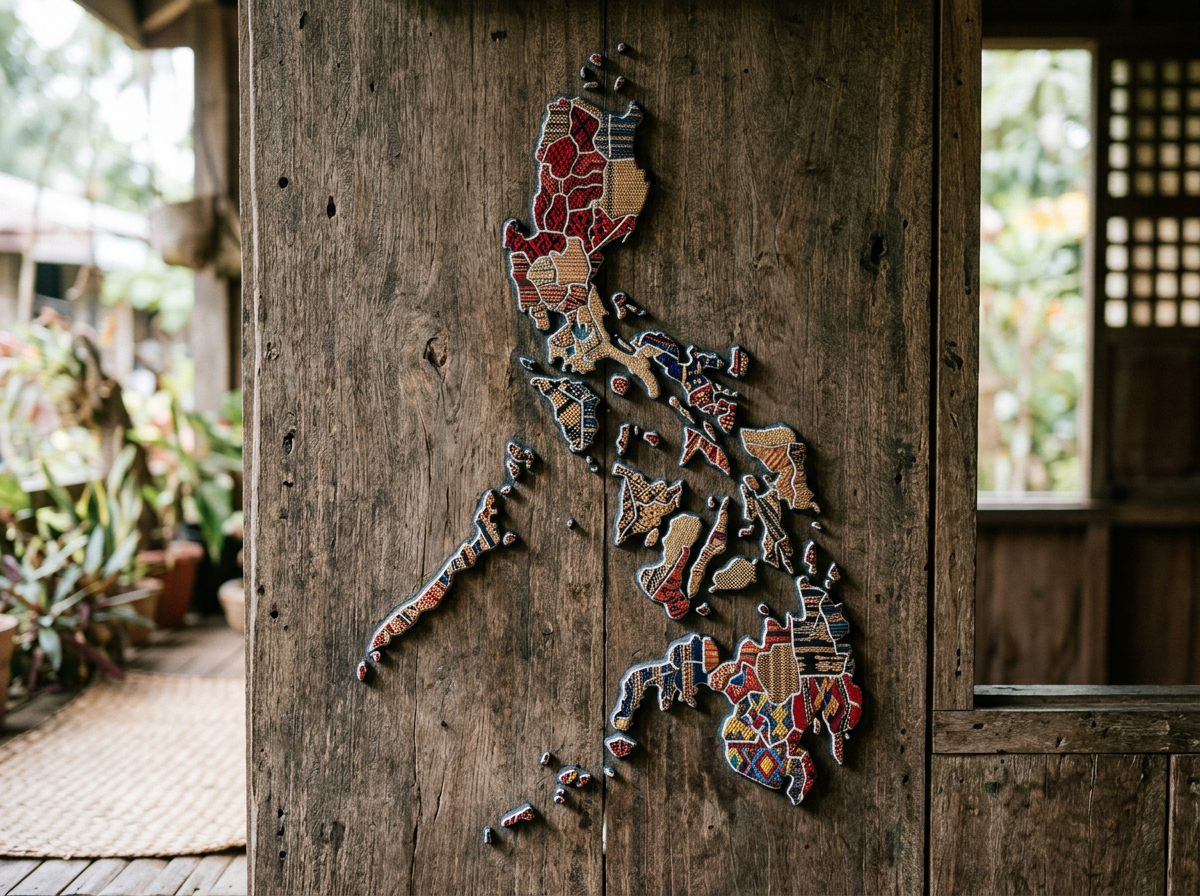
A global perspective of human adaptation under pressure
The Philippine identity is often described by outsiders as a series of irreconcilable paradoxes. It is a nation that is “East meets West,” a culture that is simultaneously deeply traditional and aggressively globalized.
However, through a psychological and historical lens, these contradictions are not flaws; they are systemic adaptations—mechanisms developed to survive and thrive within the duality of a colonial past and a globalized future.
The Colonial Root of Systematic Adaptation
To understand the Filipino psyche, one must first address the “split” created by over 400 years of colonial rule. The historical trajectory—moving from Spanish religious hegemony to American democratic imperialism—created a societal structure where indigenous values had to “mask” themselves within Western frameworks.
Psychologists often refer to this as Colonial Mentality, a form of internalized oppression where the colonized culture perceives its own values as inferior to those of the colonizer (David & Okazaki, 2006).
However, what looks like “maladaptation” to a Western observer—such as the tendency toward patronage politics or a perceived lack of “discipline”—is often a localized strategy for navigating a state apparatus that has historically been exclusionary or predatory.
The Anatomy of Filipino Core Values
The core of Filipino social psychology, or Sikolohiyang Pilipino, centers on the concept of the “shared self.” These values act as the internal gears that allow Filipinos to reconcile their fragmented history into a unified lived experience.
- Kapwa (The Shared Self): Virgilio Enriquez, the father of Philippine Psychology, identified Kapwa as the core construct of Filipino social interaction. Unlike the Western “I,” Kapwa implies that the “other” is not separate from the self (Enriquez, 1992). This is the foundation of the Filipino’s radical empathy. It is the recognition that the other is not separate from the self. In a history marked by displacement and external rule, kapwa became a defensive mechanism of radical empathy. If the state cannot provide, the kapwa will.
- Pakikisama (Social Symmetry): Often criticized as a “lack of backbone” or “conformity,” pakikisama is actually a high-level social lubricant. In an archipelago of 7,641 islands and dozens of languages, maintaining harmony (pakikisama) was the only way to prevent total systemic collapse under colonial “divide and rule” tactics.
- Bahala Na (Calculated Surrender): While frequently mistranslated as fatalism or “whatever,” the etymological root is Bathala na (Leave it to God/the Creator). Lagmay (1977) argued that it is a radical acceptance of uncertainty. In a land prone to typhoons, volcanic eruptions, and political upheavals, bahala na is the psychological pivot that allows a Filipino to smile in the middle of a flood. It is not giving up; it is the courage to move forward when the path is invisible, Lagmay (1977). It is an “improvisatory courage” that allows individuals to face extreme uncertainty (like typhoons or political instability) without becoming paralyzed by anxiety.
The Duality of the Global Filipino
Today, this adaptive architecture has moved beyond the borders of the archipelago. The Philippines has become the “Universal Donor” of the global labor force. Millions of Overseas Filipino Workers (OFWs)—including nurses, seafarers, engineers, and BPO professionals—serve as the hidden backbone of the world’s economy.
This diaspora represents the ultimate reconciliation of the Filipino duality. The Filipino worker is prized globally precisely because of their adaptive traits:
- Cultural Fluency: The ability to assimilate into foreign cultures while retaining a strong internal identity.
- Emotional Labor: The application of Kapwa in healthcare and service sectors, providing a level of care that is often absent in more individualistic societies.
- Resilience: The “Bahala Na” spirit that allows seafarers and factory workers to endure isolation and harsh conditions to provide for their families back home.
As of 2023, personal remittances from OFWs accounted for approximately 8.5% of the Philippines’ GDP (Bangko Sentral ng Pilipinas, 2024), proving that these “adaptive” psychological traits have tangible, global economic power.
From Paradox to Unity: A New Identity
The struggle to define a singular “Filipino Identity” is an ongoing process of decolonizing the mind. From the outside, the Philippines looks like a nation of contradictions. From the inside, it is a model of how a people can hold multiple truths at once.
The “Filipino Psyche” is essentially a bridge. It bridges the indigenous and the global, the suffering of the past and the opportunity of the future. What were once survival mechanisms born out of colonial trauma have evolved into a unique form of social intelligence. The Filipino does not seek to resolve the paradox of their existence; they seek to inhabit it with grace, humor, and an unshakeable sense of community.
References
- Bangko Sentral ng Pilipinas. (2024). External Sector Statistics: Remittances.
- David, E. J. R., & Okazaki, S. (2006). The Colonial Mentality Scale (CMS) for Filipino Americans: Scale construction and psychometric properties. Journal of Counseling Psychology.
- Enriquez, V. G. (1992). From Colonial to Liberation Psychology: The Philippine Experience. University of the Philippines Press.
- Lagmay, A. V. (1977). Bahala Na: A study into the dynamics of Filipino risk-taking. Philippine Journal of Psychology.
- Parreñas, R. S. (2001). Servants of Globalization: Women, Migration, and Domestic Work. Stanford University Press.
Explore the Rest of the Site
This hub is part of a broader system of essays on human development, systems thinking, and societal transformation.
→ Explore the Living Archive
→ View the Stewardship Architecture
→ Return to Main Blog
© 2025-2026 Gerald Alba Daquila • Life.Understood. • All rights reserved
Exploring structure, meaning, and human experience across systems and inner life.
Leave a Reply