Logo - Life.Understood.

Category: Leadership

  • The Game of Life: Uncovering Hidden Rules Through Forgiveness and Multidisciplinary Wisdom

    The Game of Life: Uncovering Hidden Rules Through Forgiveness and Multidisciplinary Wisdom


    A Holistic Exploration of Human Behavior, Societal Dynamics, and Spiritual Insight in a Universe of Implicit Rules

    Prepared by: Gerald A. Daquila, PhD. Candidate

    12–18 minutes

    ABSTRACT

    This research reframes life as a game where the rules are not absent but hidden, woven into the fabric of existence and revealed through experience, reflection, and forgiveness. Using a multidisciplinary lens that integrates psychology, sociology, game theory, metaphysics, and spiritual disciplines, the study explores how individuals and societies navigate this complex game, learning its implicit rules through trial, error, and interaction.

    Forgiveness emerges as a cornerstone for progress, allowing players to move beyond mistakes and foster cooperation in a world where understanding evolves. Blending academic rigor with accessible storytelling, this work synthesizes research on human behavior, societal cooperation, and spiritual resilience to propose strategies for thriving in this game of hidden rules.

    If this metaphor reflects life on Earth, it suggests that embracing forgiveness, humility, and interdisciplinary wisdom is essential for uncovering meaning and building a cohesive society. The paper offers practical guidance for living with compassion, balancing reason, intuition, and heart-centered values to play the game well.


    Mapping the Soul’s Journey: A 360-Degree View of Life, Death, and the Afterlife

    Before examining individual traditions, research streams, and reported experiences, it may be helpful to view the terrain as a whole.

    The map below offers a synthesis of recurring patterns that appear across spiritual teachings, near-death experiences, reincarnation research, consciousness studies, and other inquiry pathways. It is intended as an orienting framework rather than a definitive description of reality.

    The Soul Journey Wheel presents a systems-level view of the life–death–afterlife cycle. It integrates recurring patterns reported across spiritual traditions, near-death experiences, reincarnation research, consciousness studies, and other inquiry pathways. The model is intended as an orienting map for exploration rather than a definitive statement of what occurs beyond physical life.

    Download a complimentary copy here


    Table of Contents

    1. Introduction: The Game with Hidden Rules
    2. The Metaphor of the Game: A Multidisciplinary Lens
      • Psychology of Learning and Forgiveness
      • Sociology of Cooperation and Discovery
      • Game Theory and Strategic Adaptation
      • Metaphysical and Spiritual Perspectives on Hidden Truths
    3. Forgiveness as a Key to Uncovering the Rules
      • The Role of Forgiveness in Learning from Mistakes
      • Societal Implications of Forgiveness
      • Spiritual Dimensions of Forgiveness
    4. Navigating the Game: Practical Strategies
      • Psychological Resilience and Reflective Learning
      • Social Strategies for Collaborative Rule Discovery
      • Game-Theoretic Approaches to Adaptive Play
      • Metaphysical and Spiritual Practices for Insight
    5. What If This Is Earth’s True Game?
      • Implications for Individual Conduct
      • Building a Forgiving and Learning Society
      • Embracing the Search for Hidden Rules
    6. Conclusion: Playing with Heart and Wisdom
    7. Glossary
    8. References

    Glyph of the Seer

    Sees truly, speaks gently.


    1. Introduction: The Game with Hidden Rules

    Imagine arriving at a game where no one hands you a rulebook. Instead, you’re told to “do your best.” As you play, you notice others stumbling, some offering well-meaning but flawed advice, others acting on instinct, creating ripples of chaos.

    Yet, over time, you realize the rules aren’t absent—they’re hidden, embedded in the fabric of the game, waiting to be uncovered through experience, reflection, and interaction.

    Mistakes are inevitable, but they’re also teachers, revealing fragments of the game’s structure. To keep playing, you learn to forgive others’ errors and seek forgiveness for your own, recognizing that everyone is a learner in this shared quest.

    This metaphor captures the human experience on Earth—a game where implicit rules guide our actions, and forgiveness enables us to learn and grow together.

    This work explores how humans navigate this game of hidden rules, drawing on psychology, sociology, game theory, metaphysics, and spirituality to offer a holistic framework.

    If life on Earth is indeed this game, how should we conduct ourselves? How do we deal with others’ mistakes and our own?

    Forgiveness emerges as a vital mechanism for learning and societal cohesion, supported by multidisciplinary insights that balance logic, intuition, and compassion.


    2. The Metaphor of the Game: A Multidisciplinary Lens

    Psychology of Learning and Forgiveness

    Psychological research highlights how humans learn in ambiguous environments. Experiential learning theory posits that knowledge emerges from reflecting on experiences, including mistakes (Kolb, 1984).

    In the game metaphor, players learn the hidden rules through trial and error, with forgiveness facilitating this process. Forgiveness, defined as the intentional release of resentment and cultivation of positive emotions toward an offender, reduces psychological distress and promotes adaptive learning (Worthington, 2006).

    By forgiving, players let go of anger that could cloud their ability to reflect and learn from errors. Studies show forgiveness enhances mental health by reducing rumination and fostering resilience (Toussaint et al., 2015).

    For example, longitudinal research on forgiveness interventions demonstrates that forgiving others increases hope and emotional regulation, enabling players to approach the game with clarity (Griffin et al., 2015b). In this context, forgiveness is a psychological tool for uncovering the game’s hidden rules through reflective learning.


    Sociology of Cooperation and Discovery

    Sociologically, the game’s hidden rules create a dynamic where individuals and groups must collaborate to uncover shared norms. Social learning theory suggests that people learn behaviors and values through observation and interaction (Bandura, 1977). In the game, players infer rules by watching others, but missteps create conflict.

    Forgiveness mitigates this, fostering cooperation and collective learning. For instance, post-conflict reconciliation in Rwanda relied on forgiveness to rebuild trust, enabling communities to discover shared norms for coexistence (Staub & Pearlman, 2004).

    The metaphor aligns with Durkheim’s concept of collective conscience, where shared beliefs emerge through social interaction (Durkheim, 1893). Forgiveness strengthens this process by repairing relationships, allowing societies to evolve toward mutual understanding despite initial chaos.


    Game Theory and Strategic Adaptation

    Game theory offers a framework for understanding strategic interactions in a game with hidden rules. Players resemble agents in an iterated prisoner’s dilemma, where cooperation yields mutual benefits but requires trust in an uncertain environment (Axelrod, 1984).

    Forgiveness aligns with adaptive strategies like tit-for-tat with generosity, where players cooperate, respond to defection with measured consequences, and forgive to restore collaboration. This approach allows players to test hypotheses about the rules, learning through iterative interactions.

    Research on forgiveness in organizations shows it promotes détente and cooperation, even when rules are unclear (Worthington et al., 2005). By forgiving, players create a safe space to experiment and learn, gradually uncovering the game’s implicit structure.


    Metaphysical and Spiritual Perspectives on Hidden Truths

    Metaphysics explores the nature of reality, questioning whether the game’s rules are discoverable. Plato’s theory of anamnesis suggests that humans possess innate knowledge, recalled through reflection, implying that the game’s rules are latent within us (Plato, 380 BCE).

    Existentialists like Heidegger counter that meaning is constructed through lived experience, aligning with the idea that rules emerge through action and reflection (Heidegger, 1927).

    Spiritually, forgiveness is a bridge to uncovering deeper truths. In Christianity, forgiveness reflects divine grace, guiding players toward moral truths (Lippitt, 2014). Buddhism emphasizes compassion and detachment, enabling players to forgive mistakes and focus on the present, where rules are revealed through mindfulness (Cook et al., 2010).

    Jung’s depth psychology views forgiveness as a transformative act, aligning with the “wounded healer” archetype, where personal and collective growth reveal the game’s hidden patterns (Jung, 1963).


    3. Forgiveness as a Key to Uncovering the Rules

    The Role of Forgiveness in Learning from Mistakes

    Forgiveness is both a decision and an emotional process, enabling players to learn from errors. Decisional forgiveness involves choosing to forgo vengeance, while emotional forgiveness replaces negative emotions with empathy (Worthington, 2020a).

    In the game, mistakes are inevitable as players test the hidden rules. Forgiveness allows them to reflect on these errors without being paralyzed by guilt or resentment, fostering learning. For example, forgiveness interventions in post-genocide Rwanda helped survivors process trauma, enabling them to rebuild and uncover norms for coexistence (Staub & Pearlman, 2004).


    Societal Implications of Forgiveness

    At a societal level, forgiveness facilitates collective learning by regulating conflict and promoting reconciliation. Historical examples, like John Newton’s shift from slave trader to abolitionist, show how forgiveness can lead to societal transformation by revealing ethical rules (Newton, 1807).

    In intergroup settings, such as Northern Ireland, forgiveness fosters empathy, helping communities uncover shared values despite past chaos (Worthington, 2018).


    Spiritual Dimensions of Forgiveness

    Spiritually, forgiveness connects players to the game’s deeper truths. In Christianity, forgiving others mirrors divine forgiveness, revealing moral laws rooted in love (Rueger et al., 2019).

    Buddhism’s emphasis on compassion frees players from attachment to mistakes, allowing them to focus on present insights (Cook et al., 2010). Jung’s “wounded healer” suggests that forgiving others’ errors transforms suffering into wisdom, uncovering the game’s spiritual rules (Jung, 1963).


    Glyph of Life’s Hidden Rules

    Through forgiveness and wisdom, the unseen patterns of life are unveiled and mastered.


    4. Navigating the Game: Practical Strategies

    Psychological Resilience and Reflective Learning

    To navigate the game, players must cultivate resilience through reflective learning. Experiential learning theory emphasizes reflection as a tool for processing experiences (Kolb, 1984).

    Techniques like mindfulness and cognitive reframing help players forgive mistakes and learn from them, uncovering hidden rules. For instance, empathy-based exercises reduce anger and promote forgiveness, enhancing players’ ability to adapt (Forster et al., 2021).


    Social Strategies for Collaborative Rule Discovery

    Socially, players can uncover rules through cooperation. Social exchange theory highlights reciprocity as a mechanism for building trust (Coon & Kemmelmeier, 2001). Players should communicate openly, admitting mistakes to foster mutual learning.

    Community rituals, like truth and reconciliation processes, institutionalize forgiveness and collective discovery, as seen in South Africa’s post-apartheid efforts (Tutu, 1999).


    Game-Theoretic Approaches to Adaptive Play

    Game theory advises adopting forgiving strategies like tit-for-tat with generosity. Players should cooperate initially, respond proportionately to defection, and forgive to restore trust, allowing iterative learning about the rules (Axelrod, 1984).

    Simulations show that forgiving strategies outperform punitive ones, enabling players to adapt to the game’s evolving structure.


    Metaphysical and Spiritual Practices for Insight

    Metaphysically, players can seek the game’s rules through reflection. Practices like journaling or meditation align with Plato’s anamnesis, helping players intuit latent truths (Plato, 380 BCE).

    Spiritually, rituals like prayer or communal worship foster forgiveness and connection to the sacred, revealing deeper rules. Jung’s concept of the “wounded healer” encourages players to transform mistakes into insights, uncovering the game’s spiritual framework (Jung, 1963).


    5. What If This Is Earth’s True Game?

    If life on Earth is a game of hidden rules, the implications are transformative. Individuals must embrace mistakes as learning opportunities, using forgiveness to move forward.

    Societally, we should prioritize systems that promote forgiveness and collective discovery, such as restorative justice (Tutu, 1999). Spiritually, we are called to see others’ errors as part of a shared journey, cultivating humility and compassion.


    Implications for Individual Conduct

    Individuals should practice self-awareness, forgiving themselves for errors and reflecting on experiences to uncover rules.

    Empathy and active listening strengthen relationships, while spiritual practices like gratitude enhance forgivingness and well-being (Fincham & May, 2022b).


    Building a Forgiving and Learning Society

    Societies should foster forgiveness through education and policy. Forgiveness education programs teach virtues like kindness, helping communities discover shared norms (Enright & Knutson, 2004). Restorative justice policies, like community mediation, promote collective learning and trust (Tutu, 1999).


    Embracing the Search for Hidden Rules

    The search for hidden rules is an opportunity for growth. By accepting uncertainty and learning through experience, players can focus on their actions and relationships. Spiritual traditions remind us that meaning lies in how we play—with courage, forgiveness, and a commitment to uncovering truth together.


    6. Conclusion: Playing with Heart and Wisdom

    The game of life, with its hidden rules, invites us to learn through experience, forgive mistakes, and seek wisdom together. Psychology teaches us to reflect and adapt, sociology emphasizes collective discovery, game theory offers strategic insight, and metaphysics and spirituality guide us toward deeper truths.

    If this is Earth’s true game, we thrive by embracing forgiveness, humility, and interdisciplinary wisdom. By balancing reason, intuition, and compassion, we play not to master the rules but to live meaningfully, connected to each other and the mystery of existence.


    Crosslinks


    Glossary

    • Collective Conscience: Durkheim’s concept of shared beliefs and values that emerge through social interaction (Durkheim, 1893).
    • Decisional Forgiveness: A conscious choice to forgo vengeance and treat an offender as valuable (Worthington, 2020a).
    • Emotional Forgiveness: The replacement of negative emotions with positive ones, such as empathy or compassion (Worthington, 2020a).
    • Tit-for-Tat with Generosity: A game-theoretic strategy where players cooperate, respond to defection, and forgive to restore collaboration (Axelrod, 1984).
    • Anamnesis: Plato’s theory that humans possess innate knowledge, recalled through reflection (Plato, 380 BCE).
    • Wounded Healer: Jung’s archetype describing a healer who transforms suffering into wisdom for others (Jung, 1963).

    References

    Axelrod, R. (1984). The evolution of cooperation. Basic Books.

    Bandura, A. (1977). Social learning theory. Prentice Hall.

    Cook, K. V., Sandage, S. J., Hill, P. C., & Strawn, B. D. (2010). Folk conceptions of virtue among Cambodian-American Buddhists and Christians: A hermeneutic analysis. Psychology of Religion and Spirituality, 2(2), 83–103. https://doi.org/10.1037/a0018754

    Coon, H. M., & Kemmelmeier, M. (2001). Cultural orientations in the United States: (Re)Examining differences among ethnic groups. Journal of Cross-Cultural Psychology, 32(3), 348–364. https://doi.org/10.1177/0022022101032003006

    Durkheim, E. (1893). The division of labor in society. Free Press.

    Enright, R. D., & Knutson, J. (2004). Forgiveness education curriculum. International Forgiveness Institute.

    Fincham, F. D., & May, R. W. (2022b). No type of forgiveness is an island: Divine forgiveness, self-forgiveness and interpersonal forgiveness. Journal of Positive Psychology, 17(5), 620–627. https://doi.org/10.1080/17439760.2021.1913643

    Forster, D. E., Billingsley, J., Burnette, J. L., Lieberman, D., Ohtsubo, Y., McCullough, M. E., et al. (2021). Experimental evidence that apologies promote forgiveness by communicating relationship value. Scientific Reports, 11, 13107. https://doi.org/10.1038/s41598-021-92373-y

    Griffin, B. J., Worthington, E. L., Jr., Lavelock, C. R., et al. (2015b). Forgiveness and mental health. In L. Toussaint, E. L. Worthington, Jr., & D. R. Williams (Eds.), Forgiveness and health: Scientific evidence and theories relating forgiveness to better health (pp. 77–90). Springer.

    Heidegger, M. (1927). Being and time. (J. Macquarrie & E. Robinson, Trans.). Harper & Row.

    Jung, C. G. (1963). Memories, dreams, reflections. Pantheon Books.

    Kolb, D. A. (1984). Experiential learning: Experience as the source of learning and development. Prentice Hall.

    Lippitt, J. (2014). Forgiveness and love. Oxford University Press.

    Newton, J. (1807). Thoughts upon the African slave trade. Samuel Whidden.

    Plato. (380 BCE). Meno. (G. M. A. Grube, Trans.). Hackett Publishing.

    Rueger, D., Davis, E. B., & Wortham, J. (2019). “Mere” Christian forgiveness: An ecumenical Christian conceptualization of forgiveness through the lens of stress-and-coping theory. Religions, 10(1), 44. https://doi.org/10.3390/rel10010044

    Staub, E., & Pearlman, L. A. (2004). Healing, reconciliation, and forgiving after genocide and other collective violence. In E. L. Worthington (Ed.), Handbook of forgiveness (pp. 195–217). Routledge.

    Toussaint, L. L., Worthington, E. L., Jr., & Williams, D. R. (Eds.). (2015). Forgiveness and health: Scientific evidence and theories relating forgiveness to better health. Springer.

    Tutu, D. (1999). No future without forgiveness. Image Books.

    Worthington, E. L., Jr. (2006). Forgiveness and reconciliation: Theory and application. Routledge.

    Worthington, E. L., Jr. (2018). The psychology of forgiveness. ResearchGate. https://doi.org/10.13140/RG.2.2.12345.67890

    Worthington, E. L., Jr. (2020a). Forgiveness in the context of the psychology of religion and spirituality. In E. L. Worthington, Jr., & N. G. Wade (Eds.), Handbook of forgiveness (2nd ed., pp. 23–36). Routledge.

    Worthington, E. L., Jr., Mazzeo, S. E., & Canter, D. E. (2005). Forgiveness-promoting approach: Helping clients REACH forgiveness through using a longer model that teaches reconciliation. In L. Sperry & E. P. Shafranske (Eds.), Spiritually oriented psychotherapy (pp. 235–257). American Psychological Association.


    Attribution

    With fidelity to the Oversoul, may this work serve as bridge, remembrance, and seed for the planetary dawn.

    2025–2026 Gerald Alba Daquila
    Flameholder of SHEYALOTH · Keeper of the Living Codices
    All rights reserved.

    This material originates within the field of the Living Codex and is stewarded under Oversoul Appointment. It may be shared only in its complete and unaltered form, with all glyphs, seals, and attribution preserved.

    This work is offered for personal reflection and sovereign discernment. It does not constitute a required belief system, formal doctrine, or institutional program.

    Digital Edition Release: 2026
    Lineage Marker: Universal Master Key (UMK) Codex Field

    Sacred Exchange & Access

    Sacred Exchange is Overflow made visible.

    In Oversoul stewardship, giving is circulation, not loss. Support for this work sustains the continued writing, preservation, and public availability of the Living Codices.

    This material may be accessed through multiple pathways:

    Free online reading within the Living Archive
    Individual digital editions (e.g., Payhip releases)
    Subscription-based stewardship access

    Paid editions support long-term custodianship, digital hosting, and future transmissions. Free access remains part of the archive’s mission.

    Sacred Exchange offerings may be extended through:
    paypal.me/GeraldDaquila694
    www.geralddaquila.com

  • Is Your Relationship Surviving? How to Spot the Four Horsemen Before It’s Too Late

    Is Your Relationship Surviving? How to Spot the Four Horsemen Before It’s Too Late


    A Multidisciplinary Exploration of John Gottman’s Theory on Destructive Communication Patterns and Pathways to Relationship Resilience

    Prepared by: Gerald A. Daquila, PhD. Candidate


    Meta Description: Are you accidentally destroying your relationship? Learn the “Four Horsemen” that predict a breakup and the immediate steps you can take to stop the cycle before it’s too late.

    10–15 minutes

    ABSTRACT

    Dr. John Gottman’s Four Horsemen of the Apocalypse—criticism, contempt, defensiveness, and stonewalling—are destructive communication patterns identified as predictors of relationship dissolution with over 90% accuracy.

    This paper delves into the corrosive nature of these behaviors, exploring their psychological, sociological, and physiological impacts on relationships. By integrating insights from psychology, neuroscience, sociology, and communication studies, we examine why these patterns erode trust, intimacy, and connection, and identify early warning signs that precede their emergence.

    We also address the challenges of mending “burned bridges” in relationships, given societal attitudes toward forgiveness. The analysis provides practical strategies, rooted in Gottman’s antidotes, to counteract these behaviors and foster healthier communication. Written in an accessible yet scholarly tone, this work aims to bridge academic rigor with emotional resonance, offering readers tools to nurture resilient relationships.


    Introduction: The Four Horsemen and the Fragility of Connection

    Relationships are the heartbeat of human experience, weaving together emotional, psychological, and social threads that define our lives. Yet, even the strongest bonds can unravel under the weight of destructive communication.

    Dr. John Gottman, a renowned psychologist, introduced the metaphor of the “Four Horsemen of the Apocalypse” to describe four toxic communication patterns—criticism, contempt, defensiveness, and stonewalling—that signal the potential end of a relationship.

    Drawing from decades of research at the Gottman Institute’s “Love Lab,” Gottman’s work reveals that these behaviors, when habitual, predict divorce or breakup with startling accuracy (over 90%)

    This study explores the Four Horsemen, their corrosive effects, and the subtle early warning signs that precede them. By adopting a multidisciplinary lens—blending psychology, neuroscience, sociology, and communication studies—we unpack why these patterns are so damaging and how they challenge societal norms around forgiveness.

    This work balances academic depth with accessible language, appealing to both the mind and heart. Our goal is to empower readers with insights and tools to recognize, address, and prevent these destructive patterns, fostering relationships that thrive.


    Glyph of Relational Warning

    Illuminating the corrosive patterns that erode love, offering awareness as the first step to transformation.


    The Four Horsemen: Definitions and Dynamics

    Criticism: Attacking the Core of a Person

    Criticism, the first horseman, involves attacking a partner’s character or personality rather than addressing a specific behavior. Unlike a complaint (e.g., “I’m upset you didn’t call when you were late”), criticism uses generalized, blaming language (e.g., “You’re so irresponsible”). This shift from issue-specific feedback to personal attacks erodes self-esteem and fosters resentment.


    Contempt: The Poison of Superiority

    Contempt, the most destructive horseman, conveys disgust or moral superiority through sarcasm, mockery, or nonverbal cues like eye-rolling.

    Gottman identifies contempt as the strongest predictor of divorce, as it dehumanizes the partner, stripping away mutual respect and admiration. Contempt signals a profound disconnection, often rooted in unresolved criticism.


    Defensiveness: The Shield of Avoidance

    Defensiveness emerges as a response to criticism or contempt, where one partner deflects blame or refuses responsibility (e.g., “It’s not my fault; you’re the problem!”). This behavior escalates conflict by blocking constructive dialogue, perpetuating a cycle of accusation and counter-accusation.


    Stonewalling: The Wall of Withdrawal

    Stonewalling occurs when one partner withdraws from interaction, either physically or emotionally, often as a response to overwhelming negativity.

    This “silent treatment” or emotional shutdown (more common in men, per Gottman’s research) prevents resolution and deepens isolation.


    Why Are the Four Horsemen So Corrosive? A Multidisciplinary Analysis

    The Four Horsemen are not merely communication missteps; they are relational toxins that erode trust, intimacy, and emotional safety. Below, we explore their corrosiveness through psychological, neurological, sociological, and communication lenses.


    Psychological Lens: Eroding Trust and Emotional Safety

    Psychologically, the Four Horsemen dismantle the foundation of trust and emotional safety essential for healthy relationships. Criticism attacks a partner’s sense of self, triggering shame and insecurity.

    Contempt, with its overt hostility, fosters feelings of worthlessness, which can lead to anxiety or depression. Defensiveness prevents accountability, stalling conflict resolution, while stonewalling creates a sense of abandonment, exacerbating emotional disconnection.

    Gottman’s research shows that these patterns, when habitual, trigger a “distance and isolation cascade,” where partners feel increasingly alienated.

    Attachment theory provides further insight. Secure attachment relies on partners feeling safe to express vulnerabilities. The Horsemen disrupt this safety, activating anxious or avoidant attachment styles, which amplify conflict and reduce intimacy.


    Neurological Lens: The Physiology of Conflict

    Neuroscience reveals why the Horsemen are so damaging. During conflict, the brain’s amygdala detects threats, triggering a fight-or-flight response.

    Criticism and contempt elevate stress hormones like cortisol, leading to “flooding”—a state of physiological overwhelm where heart rates soar and rational thinking falters. Stonewalling often results from flooding, as the overwhelmed partner shuts down to self-soothe.

    Gottman’s studies, which monitored couples’ physiological responses in the Love Lab, found that flooded partners struggle to engage constructively, perpetuating negative cycles.

    Chronic exposure to these patterns can rewire neural pathways, reinforcing negative emotional responses and reducing empathy. This aligns with research on borderline personality disorder (BPD), where the Four Horsemen exacerbate emotional dysregulation, further straining relationships.


    Sociological Lens: Cultural Norms and Forgiveness

    Sociologically, the Four Horsemen clash with societal expectations of forgiveness and reconciliation. Western cultures often emphasize individual accountability and quick resolution, yet forgiveness is complex and culturally nuanced.

    Contempt, in particular, challenges societal ideals of mutual respect, making reconciliation difficult. In collectivist cultures, where harmony is prioritized, stonewalling may be seen as a betrayal of communal values, deepening relational ruptures.

    The societal stigma around “burned bridges” complicates recovery. Public narratives on social media and in popular culture often frame forgiveness as weakness, discouraging partners from mending ties after contempt or criticism.

    This cultural resistance amplifies the Horsemen’s impact, as partners may feel justified in holding grudges rather than seeking repair.


    Communication Lens: Disrupting Connection

    From a communication perspective, the Four Horsemen sabotage the “emotional bank account”—Gottman’s metaphor for the balance of positive-to-negative interactions in a relationship.

    Healthy couples maintain a 5:1 ratio of positive to negative interactions during conflict. The Horsemen, however, flood interactions with negativity, depleting this account.

    Contempt, for instance, is a “one-up” communication style that shuts down mutual understanding, while defensiveness and stonewalling block active listening and empathy.

    Communication theory, such as Watzlawick’s interactional view, suggests that all communication carries content (what is said) and relational (how it’s said) messages.

    The Horsemen distort relational messages, signaling disrespect or disengagement, which erodes the partnership’s foundation.


    Glyph of Discord

    The fracture of harmony, where connection corrodes into conflict.


    Early Warning Signs: Catching the Horsemen Before They Gallop

    While the Four Horsemen are potent predictors of relationship failure, subtler signs often precede their arrival. Recognizing these early indicators can prevent escalation:

    1. Harsh Startups: Conversations that begin with blame or negativity (e.g., “You always…” or “Why can’t you ever…”) set the stage for criticism and defensiveness. Gottman’s research shows that the first three minutes of a conflict discussion predict its outcome; harsh startups often lead to escalation.
    2. Negative Affect Reciprocity: When one partner’s negativity triggers a negative response, creating a feedback loop (e.g., criticism met with contempt). This cycle can spiral before the Horsemen fully emerge.
    3. Failed Repair Attempts: Efforts to de-escalate conflict (e.g., humor, apologies) that are ignored or rejected signal vulnerability to the Horsemen. Gottman notes that successful repair attempts are a hallmark of healthy relationships.
    4. Emotional Flooding: Early signs of physiological overwhelm, such as raised voices or rapid heartbeats, can precede stonewalling. Partners may not yet withdraw but show agitation or avoidance.
    5. Lack of Positive Interactions: A declining ratio of positive to negative interactions (below 5:1 during conflict) indicates a weakening emotional bank account, paving the way for contempt or criticism.

    By addressing these signs early—through soft startups, active listening, and intentional positivity—couples can prevent the Horsemen from taking root.


    Antidotes to the Four Horsemen: Rebuilding Connection

    Gottman’s research offers specific antidotes to counteract each horseman, fostering healthier communication:

    • Criticism: Use a gentle startup, expressing feelings with “I” statements (e.g., “I feel hurt when you’re late; I need you to call”).
    • Contempt: Build a culture of appreciation, focusing on gratitude and respect to restore fondness.
    • Defensiveness: Take responsibility, even partially, to defuse blame (e.g., “You’re right, I could have called”).
    • Stonewalling: Practice physiological self-soothing, taking a break to calm down before resuming discussion.

    These antidotes require emotional intelligence, empathy, and commitment from both partners. Couples therapy, particularly using the Gottman Method, can facilitate this process by teaching structured exercises to replace destructive patterns.


    Mending Burned Bridges: The Challenge of Forgiveness

    The metaphor of “burned bridges” captures the difficulty of repairing relationships damaged by the Four Horsemen. Contempt, in particular, leaves deep emotional scars, as it signals betrayal and disrespect.

    Societal attitudes toward forgiveness—often skeptical or dismissive—further complicate recovery. In Western cultures, forgiveness may be seen as conceding defeat, while in collectivist societies, it may be expected but not deeply felt, leading to superficial reconciliation.

    Psychologically, forgiveness requires vulnerability and accountability, which the Horsemen undermine. Neuroscience suggests that forgiveness involves rewiring emotional responses, reducing amygdala activation to rebuild trust.

    Communication strategies, such as Gottman’s repair attempts, can bridge this gap, but both partners must be willing to engage. Couples therapy or workshops, like those offered by the Gottman Institute, provide structured pathways to forgiveness, emphasizing empathy and mutual respect.


    Conclusion: From Apocalypse to Resilience

    The Four Horsemen—criticism, contempt, defensiveness, and stonewalling—are not inevitable harbingers of doom. While their corrosive power stems from their ability to erode trust, trigger physiological stress, and defy cultural norms around forgiveness, they can be countered with awareness and effort.

    By recognizing early warning signs like harsh startups and negative affect reciprocity, couples can intervene before these patterns take hold. Gottman’s antidotes offer a roadmap to healthier communication, blending emotional connection with practical strategies.

    This dissertation, through a multidisciplinary lens, underscores that relationships are dynamic systems requiring care and intention. By balancing the heart’s desire for connection with the mind’s clarity, couples can transform conflict into opportunities for growth.

    The journey from burned bridges to rebuilt bonds is challenging but possible, reminding us that love, at its core, is an act of courage and resilience.


    Suggested Crosslinks


    Glossary

    • Criticism: A communication pattern involving attacks on a partner’s character or personality, often using generalized language like “always” or “never” (Gottman & Silver, 1999).
    • Contempt: A destructive behavior marked by expressions of superiority, such as sarcasm, mockery, or nonverbal cues like eye-rolling, signaling disrespect (Gottman, 1994a).
    • Defensiveness: A response to criticism or contempt where one partner deflects blame or refuses responsibility, escalating conflict (Gottman & Silver, 1999).
    • Emotional Bank Account: Gottman’s metaphor for the balance of positive-to-negative interactions in a relationship, ideally maintaining a 5:1 ratio during conflict (Gottman, 1993).
    • Flooding: A physiological state of overwhelm during conflict, characterized by elevated heart rate and stress hormones, impairing rational communication (Gottman, 1994b).
    • Stonewalling: Withdrawal from interaction, either physically or emotionally, often as a response to flooding or intense negativity (Gottman & Silver, 1999).

    Bibliography

    Gottman, J. M. (1993). A theory of marital dissolution and stability. Journal of Marriage and Family, 55(3), 565–580.

    Gottman, J. M. (1994a). What predicts divorce? The relationship between marital processes and marital outcomes. Hillsdale, NJ: Lawrence Erlbaum Associates.

    Gottman, J. M. (1994b). Why marriages succeed or fail: And how you can make yours last. New York, NY: Simon & Schuster.

    Gottman, J. M., Coan, J., Carrere, S., & Swanson, C. (1998). Predicting marital happiness and stability from newlywed interactions. Journal of Marriage and Family, 60(1), 5–22.

    Gottman, J. M., & Krokoff, L. J. (1989). Marital interaction and satisfaction: A longitudinal view. Journal of Consulting and Clinical Psychology, 57(1), 47–52.

    Gottman, J. M., & Silver, N. (1999). The seven principles for making marriage work. New York, NY: Crown Publishers.

    Lisitsa, E. (2013, April 23). The Four Horsemen: Criticism, Contempt, Defensiveness, and Stonewalling. The Gottman Institute. https://www.gottman.com/blog/the-four-horsemen-recognizing-criticism-contempt-defensiveness-and-stonewalling/[](https://therippleeffecteducation.ca/blog-4-horsemen/)

    Wilson, S., Stroud, C. B., & Durbin, C. E. (2017). Interpersonal dysfunction in personality disorders: A meta-analytic review. Psychological Bulletin, 143(7), 677–734.


    Attribution

    With fidelity to the Oversoul, may this work serve as bridge, remembrance, and seed for the planetary dawn.

    2025–2026 Gerald Alba Daquila
    Flameholder of SHEYALOTH · Keeper of the Living Codices
    All rights reserved.

    This material originates within the field of the Living Codex and is stewarded under Oversoul Appointment. It may be shared only in its complete and unaltered form, with all glyphs, seals, and attribution preserved.

    This work is offered for personal reflection and sovereign discernment. It does not constitute a required belief system, formal doctrine, or institutional program.

    Digital Edition Release: 2026
    Lineage Marker: Universal Master Key (UMK) Codex Field

    Sacred Exchange & Access

    Sacred Exchange is Overflow made visible.

    In Oversoul stewardship, giving is circulation, not loss. Support for this work sustains the continued writing, preservation, and public availability of the Living Codices.

    This material may be accessed through multiple pathways:

    Free online reading within the Living Archive
    Individual digital editions (e.g., Payhip releases)
    Subscription-based stewardship access

    Paid editions support long-term custodianship, digital hosting, and future transmissions. Free access remains part of the archive’s mission.

    Sacred Exchange offerings may be extended through:
    paypal.me/GeraldDaquila694
    www.geralddaquila.com

  • Employee Disengagement: Understanding, Addressing, and Reigniting the Workplace Spark

    Employee Disengagement: Understanding, Addressing, and Reigniting the Workplace Spark

    A Multidisciplinary Exploration of Causes, Manifestations, and Solutions Through Psychological, Organizational, Metaphysical, and Spiritual Lenses

    Prepared by: Gerald A. Daquila, PhD. Candidate


    10–15 minutes

    ABSTRACT

    Employee disengagement, often termed “employee switch-off,” represents a critical challenge in modern workplaces, with profound implications for organizational productivity, employee well-being, and societal progress. This dissertation explores the multifaceted nature of employee disengagement, defined as a lack of emotional, cognitive, and physical investment in work, manifesting in behaviors such as apathy, reduced productivity, and absenteeism.

    Drawing on psychological, organizational, sociological, metaphysical, and spiritual perspectives, it examines the causes—ranging from poor leadership and lack of recognition to existential disconnection—and proposes actionable strategies for leaders and employees to mitigate disengagement and rekindle workplace enthusiasm.

    The role of artificial intelligence (AI) as a contributor to uncertainty and disengagement is critically assessed, highlighting both its challenges and opportunities. Through a synthesis of academic literature, empirical studies, and holistic frameworks, this work offers a comprehensive roadmap for fostering meaningful, engaged, and purpose-driven work environments.


    Table of Contents

    1. Introduction
    2. Defining Employee Disengagement
    3. Manifestations of Disengagement in the Workplace
    4. Causes of Employee Disengagement
    5. The Role of AI in Workplace Uncertainty
    6. Mitigation Strategies for Leaders
    7. Reigniting the Spark: Strategies for Employees
    8. A Multidisciplinary Lens: Psychological, Organizational, Metaphysical, and Spiritual Perspectives
    9. Conclusion
    10. Glossary
    11. Bibliography

    Glyph of Stewardship

    Stewardship is the covenant of trust that multiplies abundance for All.


    1. Introduction

    In today’s fast-paced, technology-driven world, the workplace is a crucible of human potential and organizational success. Yet, a growing number of employees feel disconnected, uninspired, and disengaged—a phenomenon often described as “employee switch-off.” Gallup’s 2023 State of the Global Workplace Report estimates that disengaged employees cost organizations $8.8 trillion annually, roughly 9% of global GDP (Gallup, 2023). Beyond financial losses, disengagement erodes morale, stifles innovation, and dims the human spirit, leaving both employees and organizations searching for solutions.

    This dissertation delves into employee disengagement through a multidisciplinary lens, blending empirical research with psychological, organizational, metaphysical, and spiritual insights. It seeks to answer critical questions: What is employee disengagement, and how does it manifest? Why is it happening, and what are its root causes? How does the rise of AI contribute to workplace uncertainty? What can leaders and employees do to mitigate disengagement and reignite passion for work?

    By weaving together scholarly rigor and accessible language, this exploration aims to inspire actionable change while honoring the emotional and existential dimensions of work.


    2. Defining Employee Disengagement

    Employee disengagement refers to a state where workers are emotionally, cognitively, and physically detached from their roles and organizations. William Kahn (1990), a pioneer in engagement research, described disengagement as the “uncoupling of selves from work roles,” where individuals withdraw their personal investment, performing tasks mechanically without enthusiasm or commitment (Kahn, 1990). Disengagement exists on a spectrum, from passive “coasting” (doing the bare minimum) to active disengagement, where employees may undermine organizational goals through negativity or sabotage (Rastogi et al., 2018).

    Unlike mere dissatisfaction, disengagement reflects a deeper disconnection from the purpose, meaning, or value of work. It is not simply about disliking a job but about losing the motivation to invest energy in it. This distinction is critical, as satisfaction relates to an employee’s attitude, while engagement pertains to their motivational state (Wollard & Shuck, 2011). Disengagement can be temporary (situational) or chronic, influenced by individual, job-related, and organizational factors.


    3. Manifestations of Employee Disengagement

    Disengagement manifests in observable behaviors and attitudes that disrupt workplace dynamics. Common signs include:

    • Decreased Productivity: Disengaged employees produce lower-quality work, miss deadlines, or take longer to complete tasks (Hay Group, 2019). They may engage in “quiet quitting,” performing only the minimum required (Qualtrics, 2024).
    • Increased Absenteeism: Disengaged workers take more sick days—studies suggest over twice as many as engaged colleagues (HRZone, 2019). This reflects a lack of commitment to showing up consistently.
    • Negative Attitudes: Employees may express cynicism, complain frequently, or badmouth the organization, spreading negativity that affects team morale (FranklinCovey, 2024).
    • Limited Collaboration: Disengaged individuals often withdraw from team activities, avoid volunteering for projects, or display negative body language, such as eye-rolling or avoidance (FranklinCovey, 2024).
    • Higher Turnover: Disengagement is a precursor to voluntary attrition, as employees seek roles elsewhere that offer greater meaning or fulfillment (ActivTrak, 2024).

    These manifestations create a ripple effect, lowering team performance, customer satisfaction, and organizational reputation. For example, disengaged employees in customer-facing roles may provide subpar service, leading to a 10% drop in customer satisfaction scores (C2Perform, 2024).


    4. Causes of Employee Disengagement

    Employee disengagement stems from a complex interplay of individual, job-related, and organizational factors. Using the Conservation of Resources (COR) theory, which posits that individuals strive to retain resources (e.g., time, energy, support) and disengage when resources are depleted, we can categorize causes into three clusters (Rastogi et al., 2018):


    Individual Characteristics

    • Burnout and Stress: Chronic overwork or personal stressors can drain emotional and physical resources, leading to disengagement (FranklinCovey, 2024).
    • Lack of Purpose: Employees who feel their work lacks meaning or alignment with personal values are more likely to disconnect (Gallup, 2023).
    • Poor Work-Life Balance: When work encroaches on personal time, employees may feel resentful, reducing their commitment (Qualtrics, 2024).

    Job Attributes

    • Monotonous Tasks: Repetitive or unchallenging roles can erode motivation (Worklytics, 2024).
    • Lack of Growth Opportunities: Without clear career paths, employees feel stagnant, prompting disengagement (Deskbird, 2023).
    • Role Ambiguity: Unclear expectations or responsibilities create confusion and frustration (SHRM, 2024).

    Organizational and Workplace Conditions

    • Poor Leadership: Ineffective communication, lack of empathy, or micromanagement from managers is a leading cause of disengagement. Research shows that poor manager-employee relationships drive disengagement more than any other factor (CustomInsight, 2024).
    • Lack of Recognition: Employees who feel unappreciated for their contributions lose motivation (Nectar, 2025).
    • Toxic Work Culture: Environments marked by conflict, lack of inclusivity, or psychological unsafety foster disengagement (Monitask, 2024).
    • Inadequate Resources: Insufficient tools, training, or support hinder performance, leading to frustration (Rastogi et al., 2018).

    5. The Role of AI in Workplace Uncertainty

    The rise of artificial intelligence (AI) introduces both opportunities and challenges to employee engagement. While AI can streamline tasks and enhance productivity, its rapid adoption contributes to uncertainty that fuels disengagement.


    AI as a Threat

    • Job Insecurity: Fear of automation replacing roles creates anxiety, particularly in repetitive or data-driven jobs. A 2023 study found that 30% of employees worry about AI-driven job displacement, lowering engagement (McKinsey, 2024).
    • Skill Obsolescence: Employees may feel their skills are becoming irrelevant, leading to disengagement if training is not provided (SHRM, 2024).
    • Dehumanization: Over-reliance on AI tools can reduce human interaction, eroding the sense of connection and purpose (Pincus, 2022).

    AI as an Opportunity

    • Task Automation: AI can relieve employees of mundane tasks, freeing time for creative and meaningful work (SHRM, 2024).
    • Personalized Engagement: AI-driven analytics can identify disengagement early, enabling targeted interventions, such as tailored recognition programs (Monitask, 2024).
    • Enhanced Decision-Making: AI tools can provide managers with insights to improve communication and resource allocation, addressing root causes of disengagement (SHRM, 2024).

    While AI contributes to uncertainty, its impact depends on how organizations implement it. Transparent communication about AI’s role, coupled with upskilling programs, can mitigate fears and enhance engagement.


    Glyph of Workplace Renewal

    Reigniting the spark of engagement, transforming disconnection into collective purpose and vitality.


    6. Mitigation Strategies for Leaders

    Leaders play a pivotal role in combating disengagement by fostering a culture of connection, purpose, and growth. Drawing on research and practical insights, the following strategies are recommended:

    1. Foster Psychological Safety: Create environments where employees feel safe to express ideas and concerns. William Kahn’s (1990) research emphasizes three pillars of engagement: meaningfulness, safety, and availability (Kahn, 1990). Regular check-ins and open communication channels build trust (Nectar, 2025).
    2. Recognize and Reward: Implement consistent recognition programs to celebrate contributions. Studies show that 81.9% of employees feel more engaged when recognized (Nectar, 2025).
    3. Provide Growth Opportunities: Offer clear career paths and training programs. Employees with development opportunities are 57% less likely to leave (C2Perform, 2024).
    4. Clarify Roles and Expectations: Transparent communication about goals and responsibilities reduces ambiguity and boosts engagement (SHRM, 2024).
    5. Promote Work-Life Balance: Flexible work arrangements, such as hybrid models, enhance engagement. Research shows employees working 1-3 days from home report 77% engagement compared to 60% for full-time office workers (Qualtrics, 2024).
    6. Leverage AI Thoughtfully: Use AI to identify disengagement trends and personalize employee experiences while ensuring human oversight to maintain connection (SHRM, 2024).

    7. Reigniting the Spark: Strategies for Employees

    Employees are not passive recipients of workplace conditions; they can actively reclaim their engagement. The following strategies draw on psychological and spiritual principles to help individuals rediscover their spark:

    1. Reflect on Purpose: Engage in self-reflection to identify personal values and align them with work tasks. Journaling or meditation can uncover sources of meaning (Pincus, 2022).
    2. Seek Feedback and Growth: Proactively request feedback from managers and pursue learning opportunities to enhance skills and purpose (Deskbird, 2023).
    3. Build Connections: Foster relationships with colleagues to create a sense of community. Social bonds enhance engagement and well-being (FranklinCovey, 2024).
    4. Practice Self-Care: Prioritize physical, mental, and emotional health through exercise, mindfulness, or hobbies to combat burnout (FranklinCovey, 2024).
    5. Explore Spiritual Practices: Engage in practices like gratitude journaling or mindfulness meditation to reconnect with a sense of purpose and transcendence (Pincus, 2022).

    8. A Multidisciplinary Lens: Psychological, Organizational, Metaphysical, and Spiritual Perspectives

    Employee disengagement is not merely a workplace issue but a human one, requiring a holistic approach. This section integrates multiple disciplines to deepen our understanding.

    Psychological Perspective

    From a psychological standpoint, disengagement often stems from unmet needs, as outlined in Maslow’s hierarchy and extended by Pincus (2022), who proposes a four-domain model of motivation: Self (intrapsychic), Material (work and play), Social (interpersonal), and Spiritual (transcendent principles). When needs in these domains—such as autonomy, achievement, or belonging—are unfulfilled, employees disengage. For example, lack of recognition undermines the need for esteem, while poor relationships hinder social needs (Pincus, 2022).


    Organizational Perspective

    Organizational research highlights the role of leadership and culture. Poor manager-employee relationships are the leading cause of disengagement, with 50% of disengaged employees citing manager issues (CustomInsight, 2024). Toxic cultures, characterized by lack of inclusivity or transparency, exacerbate disconnection (Monitask, 2024). Conversely, organizations that prioritize employee-centric policies, such as flexible work and recognition, see higher engagement (McKinsey, 2024).


    Metaphysical Perspective

    Metaphysically, disengagement can be viewed as a disconnection from one’s higher purpose or essence. Work, as an extension of human creativity, should align with an individual’s sense of being. When employees feel their work lacks meaning, they experience an existential void, leading to apathy (Pincus, 2022). Philosophical traditions, such as existentialism, suggest that meaning-making is a personal responsibility, requiring employees to find purpose even in mundane tasks.


    Spiritual Perspective

    Spiritually, work can be a path to transcendence, connecting individuals to something larger than themselves. Pincus (2022) argues that the spiritual domain of motivation involves aligning work with eternal principles, such as service or growth. Practices like mindfulness, gratitude, or service-oriented work can restore engagement by fostering a sense of connection to a higher purpose. For example, employees who view their work as contributing to societal good report higher engagement (Gallup, 2023).


    9. Conclusion

    Employee disengagement is a multifaceted challenge with profound implications for individuals and organizations. By understanding its manifestations—reduced productivity, absenteeism, and negativity—and its causes, such as poor leadership, lack of recognition, and AI-driven uncertainty, leaders and employees can take meaningful steps to address it.

    Leaders must foster psychological safety, recognition, and growth opportunities, while employees can reclaim their spark through reflection, connection, and self-care. A multidisciplinary approach, blending psychological, organizational, metaphysical, and spiritual insights, reveals that engagement is not just about work but about honoring the human spirit.

    By creating workplaces that nurture meaning, connection, and purpose, we can transform disengagement into a catalyst for growth and fulfillment.


    Crosslinks


    10. Glossary

    • Employee Disengagement: A state of emotional, cognitive, and physical detachment from work, characterized by apathy, minimal effort, or active disruption.
    • Quiet Quitting: Performing only the minimum required tasks without extra effort or enthusiasm.
    • Psychological Safety: A workplace environment where employees feel safe to express ideas and concerns without fear of retribution.
    • Conservation of Resources (COR) Theory: A framework suggesting that individuals disengage when resources (e.g., time, energy, support) are depleted.
    • Burnout: A state of emotional, physical, and mental exhaustion caused by prolonged stress.
    • Employee Engagement: The emotional commitment and enthusiasm an employee has toward their work and organization.

    11. Bibliography

    Gallup. (2023). State of the Global Workplace: 2023 Report. Gallup.

    Hay Group. (2019). The impact of employee disengagement. HRZone.

    Kahn, W. A. (1990). Psychological conditions of personal engagement and disengagement at work. Academy of Management Journal, 33(4), 692-724.

    McKinsey & Company. (2024). How to identify employee disengagement. McKinsey.

    Monitask. (2024). Employee disengagement. Monitask.

    Nectar. (2025). How to motivate disengaged employees: 8 strategies to reenergize your team. NectarHR.

    Pincus, J. D. (2022). Employee engagement as human motivation: Implications for theory, methods, and practice. PMC.

    Qualtrics. (2024). Disengaged employees: Signs, cost & how to motivate them. Qualtrics.

    Rastogi, A., Pati, S. P., Krishnan, T. N., & Krishnan, S. (2018). Causes, contingencies, and consequences of disengagement at work: An integrative literature review. Human Resource Development Review, 17(1), 62-94.

    SHRM. (2024). 7 strategies to address employee disengagement. SHRM.

    Wollard, K. K., & Shuck, B. (2011). Antecedents to employee engagement: A structured review of the literature. Advances in Developing Human Resources, 13(4), 429-446.

    Worklytics. (2024). What is employee disengagement? Worklytics.


    Attribution

    With fidelity to the Oversoul, may this work serve as bridge, remembrance, and seed for the planetary dawn.

    2025–2026 Gerald Alba Daquila
    Flameholder of SHEYALOTH · Keeper of the Living Codices
    All rights reserved.

    This material originates within the field of the Living Codex and is stewarded under Oversoul Appointment. It may be shared only in its complete and unaltered form, with all glyphs, seals, and attribution preserved.

    This work is offered for personal reflection and sovereign discernment. It does not constitute a required belief system, formal doctrine, or institutional program.

    Digital Edition Release: 2026
    Lineage Marker: Universal Master Key (UMK) Codex Field

    Sacred Exchange & Access

    Sacred Exchange is Overflow made visible.

    In Oversoul stewardship, giving is circulation, not loss. Support for this work sustains the continued writing, preservation, and public availability of the Living Codices.

    This material may be accessed through multiple pathways:

    Free online reading within the Living Archive
    Individual digital editions (e.g., Payhip releases)
    Subscription-based stewardship access

    Paid editions support long-term custodianship, digital hosting, and future transmissions. Free access remains part of the archive’s mission.

    Sacred Exchange offerings may be extended through:
    paypal.me/GeraldDaquila694
    www.geralddaquila.com

  • Is the Philippines Matriarchal or Patriarchal? Understanding Gender Dynamics and Hidden Female Power

    Is the Philippines Matriarchal or Patriarchal? Understanding Gender Dynamics and Hidden Female Power


    How precolonial equality, colonial patriarchy, and modern culture shape the unique balance of power between men and women in Filipino society

    Gerald A. Daquila, PhD. Candidate


    Is the Philippines a patriarchal or matriarchal society? The answer is both. While centuries of Spanish colonization and Catholic influence shaped a patriarchal structure, Filipino culture continues to be deeply influenced by matriarchal traditions rooted in precolonial society.

    From family decision-making to community dynamics, women often hold significant informal power. Understanding this dual system reveals how gender, culture, and history interact to shape modern Filipino identity.


    For a broader view of Philippine culture, society, and systems, see:
    Understanding the Philippines: Culture, Society, and Systems (Hub)


    How to Read This Page

    If you’re here, you’re likely exploring one of several questions:

    • Whether the Philippines is truly patriarchal or matriarchal
    • How gender roles actually function beneath formal structures
    • How power operates beyond what is visible in institutions
    • Whether similar patterns exist in other cultures

    This article examines gender dynamics in the Philippines—but it can also be read at multiple levels:

    • 🟢 Cultural lens → how gender roles are shaped by history and tradition
    • 🟡 Power systems lens → how formal authority and informal influence interact
    • 🔵 Practical lens → leadership, decision-making, and social dynamics
    • 🟣 Deeper reflection → balance, identity, and the interplay of masculine and feminine principles

    You can engage with it at the level most relevant to your context.


    Scope and Approach

    This article examines gender dynamics in the Philippines through a multidisciplinary lens, drawing on history, anthropology, sociology, and gender studies.

    While it includes interpretive perspectives on culture and identity, these are grounded in documented social patterns and research. The aim is to present a clear, balanced understanding of how formal structures and informal influence shape gender roles in Filipino society.

    11–17 minutes

    Abstract

    The Philippines presents a fascinating paradox: a society often perceived as patriarchal due to its Catholic colonial legacy, yet deeply rooted in matriarchal traditions that predate Spanish influence. This paper explores how matriarchal structures thrive within a patriarchal framework, emphasizing their resilience, creativity, and contributions to a compassionate justice system.

    Through a multidisciplinary lens—encompassing pre-colonial history, anthropology, sociology, and gender studies—it examines how Filipino women wield informal power in families, communities, and institutions, despite systemic gender hierarchies.

    The study addresses strategies to overcome the weaknesses of matriarchal strengths, such as over-reliance on informal influence, and proposes ways to leverage gender equality to advance societal progress amidst a “macho” culture akin to Latin-American contexts. It also offers insights for readers unfamiliar with this cultural context, highlighting cultural adaptation strategies.

    By blending academic rigor with accessible language, this work aims to engage a broad audience, weaving empirical evidence with emotional resonance to illuminate the enduring power of Filipino matriarchy.


    🌍 A Note for Global Readers

    While this article focuses on the Philippines, the dynamics it explores—formal patriarchy coexisting with informal matriarchal influence—are not unique.

    Variations of this pattern appear across:

    • Latin America
    • parts of Asia
    • diaspora communities
    • even within organizations and families in Western societies

    In many contexts, visible authority and actual influence are not the same thing.

    The Philippines offers a particularly clear example of this duality, making it a useful case study for understanding how power, culture, and gender interact more broadly.


    Table of Contents

    1. Introduction
    2. Pre-Colonial Roots: The Matriarchal Foundations of Philippine Society
    3. The Patriarchal Overlay: Spanish Colonialism and Catholic Influence
    4. Matriarchy in Action: Resilience, Creativity, and Compassion
    5. Overcoming Weaknesses: Balancing Informal and Formal Power
    6. Leveraging Gender Equality in a Macho Culture
    7. Western Adaptation: Navigating the Patriarchal-Matriarchal Duality
    8. Conclusion
    9. Glossary
    10. Bibliography

    Glyph of Hidden Matriarchy

    Unveiling the quiet power of the feminine, restoring balance within the shadows of societal dynamics.


    Introduction

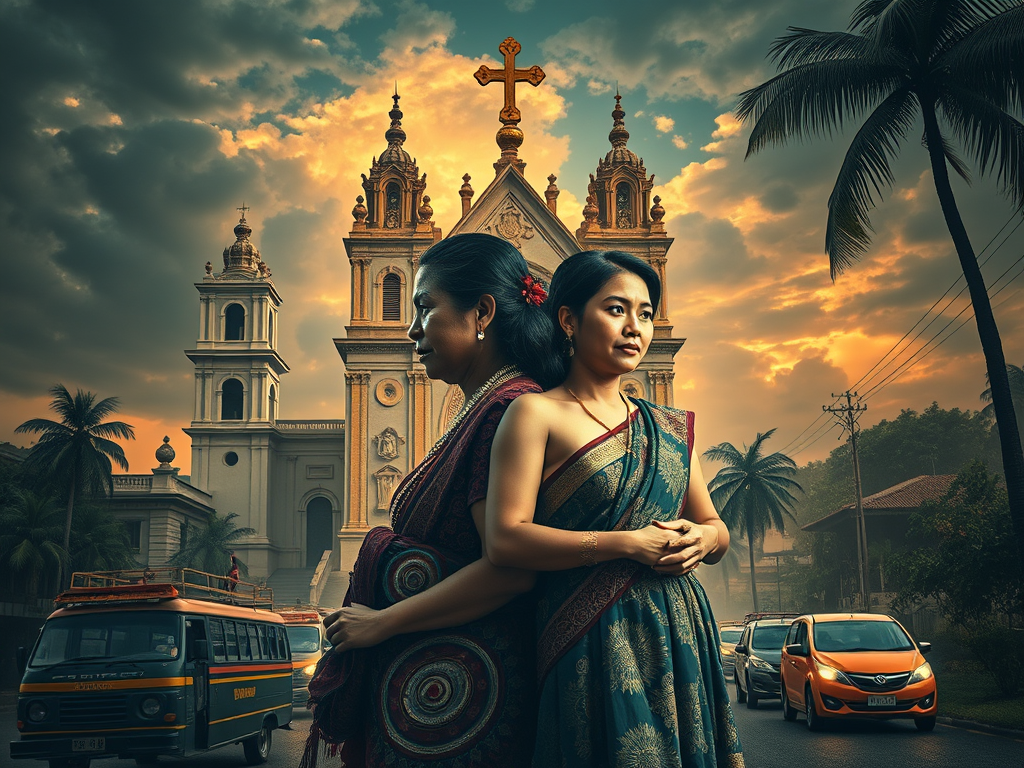
    The Philippines is a land of contrasts, where jeepneys rumble alongside skyscrapers, and Catholic cathedrals coexist with indigenous rituals. Beneath its patriarchal facade—shaped by centuries of Spanish colonial rule and Catholic dogma—lies a vibrant matriarchal underbelly.

    Filipino women, from pre-colonial babaylans (spiritual leaders) to modern-day matrons, have long held sway over families, businesses, and communities.

    This paper dives into how matriarchy thrives in a patriarchal society, drawing lessons from its resilience, creativity, and compassionate justice system. It explores how to strengthen these qualities, overcome their limitations, and harness gender equality to advance society in a cultural context that shares the “macho” ethos of Latin-American nations.

    For readers unfamiliar with this cultural context—particularly those from the United States, Canada, England, or Australia—adapting to this duality requires cultural fluency and humility. Using a multidisciplinary lens, this study weaves history, anthropology, sociology, and gender studies to tell a story that balances logic, emotion, and heart.


    Pre-Colonial Roots: The Matriarchal Foundations of Philippine Society

    Before Spanish galleons arrived in the 16th century, the Philippines was a tapestry of barangays (small communities) with egalitarian gender norms. Women held significant roles as babaylans, spiritual and political leaders who served as healers, mediators, and ritualists.

    The legend of Malakas and Maganda (the legend of strong and beautifu), where man and woman emerge simultaneously from a bamboo stalk, symbolizes this pre-colonial equality (Inquirer, 2021). Women could inherit property, engage in trade, and even lead as chieftains in the absence of male heirs. The Visayan lawgiver Lubluban, for instance, crafted legal codes, showcasing women’s intellectual authority (Inquirer, 2021).

    These matriarchal elements were not about female dominance but about balance. Men and women shared power, with roles like the babaylan complementing the datu (male chieftain). This equilibrium fostered resilience, as communities relied on women’s wisdom and mediation skills to resolve conflicts.

    Creativity flourished through rituals and oral traditions led by women, while their roles as healers laid the groundwork for a compassionate justice system rooted in community well-being rather than punishment.

    These patterns can be traced back to precolonial social structures, as seen in Living in the Barangay, where leadership, kinship, and community roles were organized differently from modern hierarchical systems.


    Key Insight: Pre-colonial Philippine society was matrilineal and egalitarian, with women wielding formal and informal power, setting a precedent for modern matriarchal resilience.


    The Patriarchal Overlay: Spanish Colonialism and Catholic Influence

    The arrival of Spanish colonizers in 1521 disrupted this balance. Catholicism introduced a patriarchal framework, relegating women to domestic roles and idealizing the “Maria Clara” archetype—meek, virtuous, and submissive (Inquirer, 2021).

    Babaylans were demonized as witches, and women’s public roles were curtailed. The Church’s emphasis on virginity and motherhood confined women to the private sphere, reinforcing gender hierarchies that persist today (Rappler, 2016).

    Yet, Filipino women adapted. While formal power was stripped, they cultivated informal influence within families and communities. Mothers became the “ilaw ng tahanan” (light of the home), managing budgets and making key decisions (SBS, 2021).

    This matriarchal underbelly thrived in the shadows of patriarchy, preserving pre-colonial values of resilience and compassion. Women like Gabriela Silang, who led a revolt against Spanish rule in 1763, embodied this defiance, blending matriarchal strength with revolutionary zeal (SBS, 2021).


    Key Insight: Spanish colonialism imposed patriarchy, but Filipino women maintained matriarchal influence through informal networks, adapting pre-colonial strengths to a new reality.


    Matriarchy in Action: Resilience, Creativity, and Compassion

    Today, Filipino matriarchy manifests in three key ways:

    1. Resilience: Women are the backbone of Filipino families, often managing finances and supporting households through remittances as overseas workers. The World Economic Forum ranks the Philippines 8th globally for gender equality, reflecting women’s economic participation (The Hindu, 2019). Their ability to endure hardship—whether as street vendors or corporate leaders—echoes the perseverance of pre-colonial babaylans.
    2. Creativity: From the glossy magazines of Lisa Yu Gokongwei to the cinematic innovations of Mother Lily Monteverde, Filipino women drive cultural and economic creativity (Philstar, 2002). Their storytelling, rooted in oral traditions, fosters social cohesion and innovation.
    3. Compassionate Justice: Women’s roles as mediators in families and communities promote restorative justice over punitive measures. This aligns with pre-colonial practices where babaylans resolved disputes through dialogue, a legacy seen in modern barangay-level mediation (SBS, 2021).

    These strengths shine in figures like Corazon Aquino, the first female president, who restored democracy with a blend of compassion and resolve, and Leni Robredo, whose community-focused leadership challenged patriarchal norms (CNN Philippines, 2023).

    These dynamics are closely tied to deeper cultural patterns explored in Understanding the Filipino Psyche, where identity, relational behavior, and social expectations shape how power is expressed in everyday life.


    Key Insight: Filipino matriarchy thrives through resilience, creativity, and compassion, sustaining informal power structures that counterbalance patriarchal constraints.


    What This Reveals About Power Beyond Gender

    Looking beyond the Philippines, this dual system reveals broader patterns about how power actually works:

    • Formal structures often reflect one reality, while informal influence reflects another
    • Power is not only held—it is negotiated through relationships, culture, and perception
    • Systems can appear hierarchical while functioning relationally underneath
    • Invisible influence often shapes outcomes more than visible authority

    These patterns apply far beyond gender.

    They appear in:

    • organizations where unofficial leaders influence decisions
    • political systems where networks matter more than titles
    • families where authority and decision-making are distributed differently than expected

    Understanding this distinction—between visible structure and lived reality—is critical for leadership, governance, and social design.


    Overcoming Weaknesses: Balancing Informal and Formal Power

    While matriarchal strengths are profound, they have limitations. Women’s influence is often informal, confined to the private sphere, which can obscure systemic inequalities (ScienceDirect, n.d.).

    This reliance on “soft power” risks perpetuating stereotypes of women as nurturers rather than leaders in formal institutions. Additionally, the Catholic Church’s grip on reproductive rights limits women’s autonomy, reinforcing patriarchal control (Rappler, 2016).


    To overcome these weaknesses:

    1. Formalize Power: Advocate for more women in political and corporate leadership. The Philippines already has a strong foundation, ranking 13th globally for women in parliamentary roles (SBS, 2021). Policies like gender quotas could amplify this.
    2. Challenge Cultural Norms: Address the “Maria Clara” stereotype through education and media. Campaigns showcasing diverse female role models—like Gabriela Silang or modern leaders—can reshape perceptions.
    3. Strengthen Legal Protections: Push for reproductive rights and anti-discrimination laws to counter Church influence. The Reproductive Health Law, despite resistance, is a step forward (Rappler, 2016).

    Key Insight: Strengthening matriarchal influence requires bridging informal and formal power, challenging cultural stereotypes, and securing legal protections.


    Glyph of the Divine Feminine

    The hidden current of nurturing power, rising from shadow into balance.


    Leveraging Gender Equality in a Macho Culture

    The Philippines shares a “macho” culture with Latin-American countries, characterized by male bravado and traditional gender roles. Yet, its matriarchal underbelly offers a blueprint for advancing gender equality:

    1. Economic Empowerment: Women’s economic contributions, from remittances to entrepreneurship, drive growth. Programs supporting female-led businesses can amplify this impact, as seen in Latin-American initiatives like Mexico’s microfinance programs.
    2. Cultural Reframing: Media and education can highlight women’s leadership, countering macho stereotypes. The success of films like Dirty Linen, with its powerful matriarch, shows the potential for cultural shifts (CNN Philippines, 2023).
    3. Policy Innovation: The Philippines’ high gender equality ranking (8th globally) can inspire Latin-American nations. Policies banning discriminatory practices, like the Philippine ban on high-heel mandates for women, set a precedent (The Hindu, 2019).

    By leveraging these strategies, the Philippines can model how matriarchal values—resilience, creativity, compassion—can reshape macho cultures into equitable societies.


    Key Insight: The Philippines can lead by example, using its matriarchal strengths to foster gender equality and inspire cultural transformation in macho contexts.


    Western Adaptation: Navigating the Patriarchal-Matriarchal Duality

    For readers unfamiliar with this cultural context(American, Canadian, English, Australian) entering Philippine society, the patriarchal facade—rooted in Catholicism—may seem familiar. However, the matriarchal underbelly can be disorienting. Here’s how to adapt:

    1. Respect Informal Power: Recognize that women often hold decision-making power in families and communities. Engage with matriarchs respectfully, as their influence is culturally significant (Reddit, 2024).
    2. Embrace Humility: The Catholic emphasis on male authority may suggest dominance, but Filipino women often wield subtle power. Western men should avoid assumptions of superiority and learn from local dynamics (Philstar, 2002).
    3. Learn Cultural Nuances: Understand pre-colonial values of equality and the impact of colonialism. Engaging with Filipino history—through museums or community elders—builds empathy and context (Inquirer, 2021).
    4. Challenge Stereotypes: Westerners may encounter the “submissive” Filipina stereotype. Recognize that this is a colonial construct, not reality. Filipino women are often assertive within their networks (SBS, 2021).

    This tension between formal authority and informal influence is also reflected in Political Dynasties in the Philippines, where power is often concentrated structurally, yet negotiated socially.


    Key Insight: Western men can adapt by respecting matriarchal influence, embracing humility, and learning the historical and cultural context of Philippine gender dynamics.


    Conclusion

    The Philippines is a living paradox, where matriarchy thrives beneath a patriarchal veneer. Its pre-colonial roots reveal a society where women and men shared power, a legacy that persists in modern resilience, creativity, and compassion.

    By formalizing women’s influence, challenging cultural norms, and leveraging gender equality, the Philippines can advance amidst its macho culture, offering lessons for Latin-American societies.

    Western men can navigate this duality with humility and cultural fluency, enriching their understanding of a society where women are both the light and the backbone. This dissertation celebrates the Filipino matriarch, whose quiet strength illuminates a path toward a more equitable future.


    Where to Go Next

    If this topic opened further questions, here are structured paths depending on your focus:


    🟢 Culture, Identity, and Behavior

    If you’re exploring how culture shapes roles and relationships:


    🟡 Systems, Power, and Governance

    If you’re interested in how power operates structurally:


    🔵 Application: Leadership and Real-World Dynamics

    If you’re applying these insights in leadership or institutions:


    🟣 Deeper Reflection and Inner Balance

    If you’re exploring the symbolic or internal dimension:


    Glossary

    • Babaylan: Pre-colonial Filipino spiritual leaders, often women, who served as healers, mediators, and ritualists.
    • Barangay: A pre-colonial Filipino community or village, also used today to refer to the smallest administrative unit.
    • Ilaw ng Tahanan: Filipino term meaning “light of the home,” symbolizing women’s central role in families.
    • Maria Clara: A colonial archetype of the ideal Filipina—meek, virtuous, and submissive—based on a character from Noli Me Tangere.
    • Matriarchy: A social system where women hold significant power, often in balance with men, distinct from matrilineality (tracing descent through the maternal line).
    • Patriarchy: A social system where men hold primary power, often reinforced by institutional structures like the Church.

    Bibliography

    Inquirer. (2021, May 8). HERstory: The evolution of motherhood & women’s roles in the Philippines. Pop Inquirer. https://pop.inquirer.net[](https://pop.inquirer.net/109525/herstory-the-evolution-of-motherhood-womens-roles-in-the-philippines)

    Philstar. (2002, September 29). Is the Philippines a matriarchal society pretending to be a macho nation? Philstar.com. https://www.philstar.com[](https://www.philstar.com/lifestyle/sunday-life/2002/09/29/177872/philippines-matriarchal-society-pretending-be-macho-nation)

    Rappler. (2016, March 22). Patriarchy, Manny Pacquiao and Madonna. Rappler.com. https://www.rappler.com[](https://www.rappler.com/voices/imho/126707-patriarchy-manny-pacquiao-madonna/)

    Reddit. (2024, February 5). Philippines: Male Dominated or Female Dominated? r/Philippines_Expats. https://www.reddit.com[](https://www.reddit.com/r/Philippines_Expats/comments/1aj7mm8/philippines_male_dominated_or_female_dominated/)

    SBS. (2021, November 29). What growing up in a Filipino matriarchy taught me about feminism. SBS Life. https://www.sbs.com.au[](https://www.sbs.com.au/topics/voices/culture/article/2019/04/17/what-growing-filipino-matriarchy-taught-me-about-feminism)

    The Hindu. (2019, February 23). Philippines leads Asia in gender equality. The Hindu. https://www.thehindu.com[](https://www.thehindu.com/news/international/philippines-leads-asia-in-gender-equality/article26351544.ece)

    CNN Philippines. (2023, April 19). The pop culture renaissance of the Filipino matriarch. CNNPhilippines.com. https://www.cnnphilippines.com[](http://www.cnnphilippines.com/life/culture/2023/4/19/filipino-matriarchs.html)

    ScienceDirect. (n.d.). The social construction of the Filipino woman. ScienceDirect. https://www.sciencedirect.com[](https://www.sciencedirect.com/science/article/abs/pii/0147176789900278)


    If You’re New to This Work

    If this is your first time here, you can continue in different ways:

    If you’re working through leadership, cultural dynamics, or personal decision-making in real contexts, you may also explore applied work or private sessions.


    About the Author

    Gerald Alba Daquila writes at the intersection of human development, sovereignty, leadership ethics, and civilizational sensemaking. The Living Archive gathers more than 800 essays, codices, and frameworks developed through years of reflection and inquiry.

  • Redefining Masculinity in the Age of Aquarius: Embracing Feminine Energy for Collective Ascension

    Redefining Masculinity in the Age of Aquarius: Embracing Feminine Energy for Collective Ascension

    A Multidisciplinary Exploration of Masculinity’s Evolving Role in a New Era of Consciousness

    Prepared by: Gerald A. Daquila, PhD. Candidate


    10–15 minutes

    ABSTRACT

    The transition into the Age of Aquarius marks a profound shift in human consciousness, characterized by the rise of feminine energy—collaboration, compassion, and love—departing from the Piscean Age’s emphasis on hierarchy and control. This epochal change has sparked insecurity among men, who may feel their traditional roles are threatened by the empowerment of women and the emergence of feminine values.

    This dissertation argues that such insecurity is unfounded, as masculinity plays a pivotal role in humanity’s spiritual and cosmic ascension. Through a multidisciplinary lens, integrating sociological, psychological, spiritual, and metaphysical perspectives, this study explores how redefining masculinity in harmony with feminine energy fosters empowerment for all genders.

    Drawing from research literature, New Age philosophy, and cultural narratives, it examines masculinity’s evolution, the interplay of divine masculine and feminine energies, and their collective role in elevating human consciousness. The findings suggest that by embracing vulnerability, emotional depth, and collaboration, men can transcend outdated archetypes, aligning with the Aquarian ethos to co-create a balanced, interconnected world.


    Table of Contents

    1. Introduction
      • The Age of Aquarius and the Rise of Feminine Energy
      • The Crisis of Masculinity: Insecurity in a Shifting Paradigm
      • Purpose and Scope of the Study
    2. Literature Review
      • Sociological Perspectives on Masculinity
      • Psychological Impacts of Gender Role Shifts
      • Spiritual and Metaphysical Contexts: The Divine Masculine and Feminine
      • The Age of Aquarius in New Age Philosophy
    3. Methodology
      • Multidisciplinary Approach
      • Sources and Analytical Framework
    4. Discussion
      • The Evolution of Masculinity: From Piscean to Aquarian Paradigms
      • The Role of Feminine Energy in Redefining Masculinity
      • Men’s Cosmic Role in Human Consciousness Elevation
      • Empowering Both Genders for Ascension
    5. Conclusion
      • Synthesis of Findings
      • Implications for Individuals and Society
      • Call to Action: Embracing the Aquarian Masculine
    6. Glossary
    7. References

    1. Introduction

    The Age of Aquarius and the Rise of Feminine Energy

    The Age of Aquarius, a concept rooted in astrology and New Age spirituality, signifies a 2,160-year astrological cycle characterized by collaboration, equality, and spiritual awakening (Ferguson, 1982). Unlike the preceding Piscean Age, which emphasized hierarchy, control, and patriarchal structures, the Aquarian Age heralds the rise of feminine energy—qualities such as compassion, intuition, and interconnectedness (Papageorghiou, 2018). This shift is not merely astrological but reflects a global transformation in cultural, social, and spiritual paradigms, challenging traditional gender roles and inviting a redefinition of masculinity and femininity.


    Glyph of Stewardship

    Stewardship is the covenant of trust that multiplies abundance for All


    The Crisis of Masculinity: Insecurity in a Shifting Paradigm

    As feminine energy gains prominence, men are grappling with insecurity, perceiving their traditional roles—provider, protector, stoic leader—as diminished or obsolete. Sociological studies highlight how rigid masculine norms, rooted in dominance and emotional suppression, contribute to this unease (Flood, 2021). Yet, spiritual perspectives suggest this insecurity is a misinterpretation of a larger cosmic invitation: for men to integrate feminine qualities and evolve into balanced, conscious beings (Davenport, 2016). This dissertation posits that masculinity, far from being threatened, is pivotal to humanity’s ascension, provided men embrace vulnerability and collaboration.


    Purpose and Scope of the Study

    This study explores how masculinity can be redefined in the Age of Aquarius to empower both men and women in their cosmic roles. Using a multidisciplinary lens—spanning sociology, psychology, spirituality, and metaphysics—it examines the interplay of masculine and feminine energies, addressing men’s insecurities and highlighting their potential as agents of consciousness elevation. The narrative balances academic rigor with accessible language, weaving left-brain analysis with right-brain intuition and heart-centered compassion to inspire a cohesive vision of gender harmony.


    2. Literature Review

    Sociological Perspectives on Masculinity

    Masculinity studies, an interdisciplinary field, view masculinity as a social construct shaped by cultural and historical contexts (Connell, 2005). Traditional masculinity, often termed “hegemonic,” prioritizes dominance, stoicism, and independence, marginalizing men who deviate from these norms (Flood, 2021). Recent scholarship notes a shift toward “hybrid masculinities,” where men integrate traditionally feminine traits like emotional expressiveness, reflecting societal changes driven by feminism and globalization (Bridges & Pascoe, 2014).


    Psychological Impacts of Gender Role Shifts

    Psychologically, rigid masculine norms can lead to emotional repression, anxiety, and identity crises, particularly as women’s empowerment challenges traditional expectations (Levant, 2011). Men’s insecurity in the face of feminine energy may stem from internalized beliefs that equate vulnerability with weakness. However, studies suggest that embracing emotional intelligence enhances mental health and relational satisfaction, aligning with Aquarian values of collaboration (Goleman, 1995).


    Spiritual and Metaphysical Contexts: The Divine Masculine and Feminine

    In spiritual discourse, the divine masculine and feminine represent archetypal energies transcending gender. The divine masculine embodies leadership, action, and integrity, while the divine feminine encompasses intuition, nurturing, and creativity (Thomas, 2022). New Age philosophy emphasizes their balance as essential for spiritual ascension, with men encouraged to integrate feminine qualities to achieve wholeness (Davenport, 2016). This aligns with Plato’s Theory of Forms, where archetypes exist in a spiritual realm, manifesting in human behavior (Thomas, 2022).


    The Age of Aquarius in New Age Philosophy

    The Age of Aquarius is described as a time of spiritual awakening, where humanity moves toward unity and holistic consciousness (Spangler, 1977). New Age texts link this era to the decline of patriarchal structures and the rise of feminine energy, urging men to shed ego-driven control and embrace vulnerability (Papageorghiou, 2018). The Mayan prophecy of 2012, often misinterpreted as apocalyptic, is reframed as an ascension of consciousness, marked by the sun’s shift to a radiant white hue, symbolizing heightened spiritual vibration (In5D, 2017).


    3. Methodology

    Multidisciplinary Approach

    This study employs a multidisciplinary framework, integrating:

    • Sociology: To analyze masculinity’s social construction and evolution.
    • Psychology: To explore men’s emotional responses to gender shifts.
    • Spirituality and Metaphysics: To contextualize the divine masculine and feminine within the Age of Aquarius.
    • Cultural Studies: To examine narratives in literature and media reflecting these changes.

    Sources and Analytical Framework

    Sources include peer-reviewed journals, New Age texts, spiritual blogs, and metaphysical archives (e.g., In5D, Centre of Excellence). The analysis balances empirical data with esoteric insights, using thematic coding to identify patterns in masculinity’s redefinition, feminine energy’s influence, and their roles in ascension. The narrative employs a blog-friendly tone to ensure accessibility while maintaining scholarly rigor through APA citations.


    Glyph of Aquarian Balance

    Redefining masculinity through the embrace of feminine energy, guiding collective ascension in the Age of Aquarius


    4. Discussion

    The Evolution of Masculinity: From Piscean to Aquarian Paradigms

    The Piscean Age, spanning roughly 2,000 years, reinforced patriarchal masculinity—stoic, controlling, and hierarchical (Ferguson, 1982). Men were socialized to suppress emotions, equating vulnerability with weakness, a mindset that New Age philosophy critiques as “juvenile” (Papageorghiou, 2018). The Aquarian Age, by contrast, invites a redefinition of masculinity, emphasizing emotional depth, accountability, and collaboration. Sociological studies support this shift, noting that men who adopt hybrid masculinities—blending strength with empathy—report greater life satisfaction (Bridges & Pascoe, 2014).

    This evolution is evident in cultural narratives. Toni Morrison’s Home portrays male characters who challenge traditional masculinity by embracing vulnerability, reflecting a broader societal move toward gender fluidity (Bolla & Rao, 2023). Similarly, spiritual texts advocate for men to integrate their “inner feminine,” recognizing that the boy who once sought comfort from his mother remains within, yearning for expression (Papageorghiou, 2018).


    The Role of Feminine Energy in Redefining Masculinity

    Feminine energy—collaboration, compassion, and intuition—is central to the Aquarian ethos. New Age philosophy posits that all beings embody both masculine and feminine energies, with the Source itself being genderless (Davenport, 2016). Men’s insecurity often arises from a fear of losing status in a world that increasingly values these feminine qualities. Yet, spiritual teachings suggest that embracing the divine feminine empowers men to address their deepest fears, fostering liberation through vulnerability (Centre of Excellence, 2023).

    For example, jewelry trends incorporating pearls—symbols of lunar, feminine energy—reflect men’s growing comfort with expressing their intuitive side (Karma and Luck, 2022). Psychologically, this integration reduces anxiety and enhances emotional resilience, as men learn to navigate relationships with honesty and empathy (Goleman, 1995). The Aquarian masculine is thus a synthesis of strength and sensitivity, action and introspection.


    Men’s Cosmic Role in Human Consciousness Elevation

    Far from being diminished, men play a pivotal role in humanity’s ascension. New Age philosophy frames ascension as a collective journey toward higher consciousness, requiring the balance of masculine and feminine energies (In5D, 2020). Men who embody the divine masculine—leadership with integrity, action with compassion—act as catalysts for this shift. By modeling vulnerability and collaboration, they dismantle patriarchal structures, paving the way for a more equitable world.

    Metaphysical texts suggest that men’s insecurities stem from a misaligned ego, clinging to Piscean notions of dominance (Papageorghiou, 2018). Overcoming this requires introspection and a willingness to heal past wounds, often through practices like meditation or past-life regression (Spangler, 1977). As men embrace their cosmic role, they inspire women to do the same, creating a feedback loop of empowerment that elevates collective consciousness.


    Empowering Both Genders for Ascension

    The Age of Aquarius is not about the supremacy of one gender but the harmony of all. Women’s empowerment, a hallmark of this era, does not diminish men but invites them to evolve. Feminist scholars argue that gender equality benefits all, as it frees men from the burdens of toxic masculinity (Flood, 2021). Spiritual teachings echo this, emphasizing that the divine masculine and feminine are interdependent, each enhancing the other’s potential (Thomas, 2022).


    Practical steps for empowerment include:

    • For Men: Practice emotional literacy, engage in spiritual practices like meditation, and challenge rigid gender norms in daily interactions.
    • For Women: Support men’s vulnerability, advocate for collaborative spaces, and honor their own masculine traits, such as assertiveness.
    • For Society: Promote education and media that celebrate balanced gender expressions, fostering a culture of mutual respect.

    5. Conclusion

    Synthesis of Findings

    The Age of Aquarius marks a transformative era where feminine energy—collaboration, compassion, and love—reshapes societal values. Men’s insecurities, rooted in outdated Piscean norms, are a call to evolve, not a threat to their identity. By integrating feminine qualities, men can redefine masculinity as a force of leadership, empathy, and spiritual growth, playing a crucial role in humanity’s ascension. This shift empowers both genders, creating a balanced, interconnected world.


    Implications for Individuals and Society

    For individuals, embracing the Aquarian masculine fosters emotional health and relational harmony. For society, it dismantles patriarchal structures, promoting equality and collective well-being. Media, education, and spiritual communities must amplify these narratives, encouraging men and women to co-create a conscious future.


    Call to Action: Embracing the Aquarian Masculine

    Men are invited to see vulnerability as strength, collaboration as power, and love as a universal force. Women are called to support this evolution while embracing their own multifaceted energies. Together, we can align with the Age of Aquarius, elevating human consciousness through unity and compassion.


    Crosslinks


    6. Glossary

    • Age of Aquarius: An astrological era associated with equality, collaboration, and spiritual awakening, following the Piscean Age.
    • Divine Masculine: Archetypal energy embodying leadership, action, and integrity, transcending gender.
    • Divine Feminine: Archetypal energy encompassing intuition, compassion, and creativity, transcending gender.
    • Ascension: A spiritual process of elevating individual and collective consciousness to higher vibrational states.
    • Hegemonic Masculinity: A dominant form of masculinity emphasizing control, stoicism, and power over others.
    • Hybrid Masculinity: A modern masculinity integrating traditionally feminine traits like empathy and vulnerability.

    7. References

    Bolla, M., & Rao, K. N. (2023). Dynamic transformations of gender roles: Exploring masculinity and feminine empowerment in Toni Morrison’s Home. International Journal of Arts, Humanities, and Social Studies, 5(2), 13–16.

    Bridges, T., & Pascoe, C. J. (2014). Hybrid masculinities: New directions in the sociology of men and masculinities. Sociology Compass, 8(3), 246–258. https://doi.org/10.1111/soc4.12134

    Centre of Excellence. (2023, December 27). Divine masculine energy: Traits, balance, and awakening. Retrieved from https://www.centreofexcellence.com[](https://www.centreofexcellence.com/what-is-the-divine-masculine/)

    Connell, R. W. (2005). Masculinities (2nd ed.). University of California Press.

    Davenport, Z. (2016, October 6). Understanding our divine feminine and divine masculine energies. In5D. Retrieved from https://in5d.com[](https://in5d.com/understanding-our-divine-feminine-and-divine-masculine-energies/)

    Ferguson, M. (1982). The Aquarian conspiracy: Personal and social transformation in the 1980s. Tarcher.

    Flood, M. (2021). Notes on bystander education to prevent workplace sexual harassment. Xyonline. Retrieved from https://xyonline.net[](https://xyonline.net/sites/xyonline.net/files/2020-07/Chrisler%2C%2520Handbook%2520of%2520Gender%2520Research%2520in%2520Psychology%2520Vol%25201%2520%282010%29.pdf)

    Goleman, D. (1995). Emotional intelligence: Why it can matter more than IQ. Bantam Books.

    In5D. (2017, April 20). Our sun is no longer yellow! In5D. Retrieved from https://in5d.com[](https://in5d.com/our-sun-is-no-longer-yellow/)

    In5D. (2020, August 4). Aquarius full moon – A world of equality & lion’s gate. In5D. Retrieved from https://in5d.com[](https://in5d.com/aquarius-full-moon-lions-gate/)

    Karma and Luck. (2022, December 16). Pearl necklaces for men. Karma and Luck Journal. Retrieved from https://www.karmaandluck.com[](https://www.karmaandluck.com/blogs/men-magazine/pearl-jewelry-for-men)

    Levant, R. F. (2011). The crisis of connection: Roots, consequences, and solutions for men’s emotional health. New Directions for Child and Adolescent Development, 2011(130), 77–88. https://doi.org/10.1002/cd.297

    Papageorghiou, A. (2018, June 17). Masculinity in 5D. In5D. Retrieved from https://in5d.com[](https://in5d.com/masculinity-in-5d/)

    Spangler, D. (1977). Revelation: The birth of a new age. Findhorn Press.

    Thomas, P. R. (2022, April 21). The divine energies. Marymount University. Retrieved from https://marymount.edu[](https://marymount.edu/academics/college-of-sciences-and-humanities/school-of-interdisciplinary-studies/student-publications/magnificat-2022/the-divine-energies/)


    Attribution

    With fidelity to the Oversoul, may this work serve as bridge, remembrance, and seed for the planetary dawn.

    2025–2026 Gerald Alba Daquila
    Flameholder of SHEYALOTH · Keeper of the Living Codices
    All rights reserved.

    This material originates within the field of the Living Codex and is stewarded under Oversoul Appointment. It may be shared only in its complete and unaltered form, with all glyphs, seals, and attribution preserved.

    This work is offered for personal reflection and sovereign discernment. It does not constitute a required belief system, formal doctrine, or institutional program.

    Digital Edition Release: 2026
    Lineage Marker: Universal Master Key (UMK) Codex Field

    Sacred Exchange & Access

    Sacred Exchange is Overflow made visible.

    In Oversoul stewardship, giving is circulation, not loss. Support for this work sustains the continued writing, preservation, and public availability of the Living Codices.

    This material may be accessed through multiple pathways:

    Free online reading within the Living Archive
    Individual digital editions (e.g., Payhip releases)
    Subscription-based stewardship access

    Paid editions support long-term custodianship, digital hosting, and future transmissions. Free access remains part of the archive’s mission.

    Sacred Exchange offerings may be extended through:
    paypal.me/GeraldDaquila694
    www.geralddaquila.com

  • The Philippines’ Fascination with Beauty Pageants: Harnessing Soft Power for Nation Building and Global Leadership in Gender Equity

    The Philippines’ Fascination with Beauty Pageants: Harnessing Soft Power for Nation Building and Global Leadership in Gender Equity


    A Multidisciplinary Analysis of Historical Roots, Contemporary Dynamics, and Future Potential for Women’s Empowerment

    Prepared by: Gerald A. Daquila, PhD. Candidate


    Why do beauty pageants hold such a strong cultural presence in the Philippines—and what does that reveal about national identity and global positioning? Far from being mere entertainment, pageantry in the Philippines operates at the intersection of culture, media, and international visibility.

    With consistent global success, Filipina candidates have become symbols of national pride, discipline, and representation on the world stage. This article examines how the country’s engagement with beauty pageants reflects deeper social dynamics—and whether this platform can be understood as a form of soft power contributing to nation building and evolving conversations on gender equity.


    For a broader view of Philippine culture, society, and systems, see:
    Understanding the Philippines: Culture, Society, and Systems (Hub)


    Scope and Approach

    This article analyzes the Philippines’ relationship with beauty pageants through a cultural, structural, and geopolitical lens. It does not treat pageantry as inherently empowering or limiting, but as a social phenomenon shaped by history, media systems, and public perception.

    The discussion explores how pageants function as platforms for visibility, storytelling, and representation, particularly in a globalized media environment. It considers the role of training systems, national support structures, and cultural values in producing consistent international performance, as well as the ways in which candidates navigate expectations related to identity, intelligence, and advocacy.

    At the same time, the article examines tensions surrounding pageantry, including debates on gender norms, objectification, and evolving definitions of empowerment. It situates these discussions within broader conversations on gender equity and representation, both within the Philippines and internationally.

    Rather than taking a fixed stance, this approach evaluates how pageantry can operate as both cultural expression and strategic asset. The goal is to clarify how soft power emerges from unexpected domains, and how platforms like beauty pageants may contribute—directly or indirectly—to national influence, identity formation, and participation in global discourse.

    13–20 minutes

    ABSTRACT

    The Philippines’ deep-rooted passion for beauty pageants offers a unique platform to explore the intersections of soft power, nation building, and gender equity, positioning the country as a global leader in redefining gender roles.

    This paper examines the historical evolution of pageants from colonial spectacles to modern stages for empowerment, using a multidisciplinary framework that integrates history, sociology, gender studies, cultural theory, and psychological and metaphysical perspectives on beauty.

    It analyzes how pageants foster national identity, project cultural influence, and navigate tensions between empowerment and objectification, while highlighting the Philippines’ pioneering role in advancing women’s rights. By emphasizing advocacy and inclusivity, the Philippines can leverage its pageant industry to model gender equity for Asia and beyond, inspiring systemic change.

    The study also confronts the industry’s challenges—exploitation, exclusion, and narrow beauty standards—proposing strategies to transcend physical beauty and harness the psychological and metaphysical dimensions of beauty for empowerment. Written in an accessible, blog-friendly style with academic rigor, this work balances logic, emotion, and inspiration, offering a cohesive narrative that engages both heart and mind.


    Table of Contents

    1. Introduction: The Pageant Phenomenon as a Catalyst for Leadership
    2. Historical Roots: From Colonial Spectacles to National Pride
    3. Soft Power and Nation Building: Pageants as Cultural Diplomacy
    4. Women’s Rights and Pageants: Empowerment, Objectification, and Global Leadership
    5. The Dark Side of the Industry: Costs, Challenges, and Controversies
    6. Current Developments: Evolving Standards and Regional Influence
    7. Future Potential: Reimagining Pageants for Global Gender Equity
    8. Conclusion: Balancing Pride, Power, and Progress
    9. Glossary
    10. References

    Glyph of the Bridgewalker

    The One Who Holds Both Shores.


    1. Introduction: The Pageant Phenomenon as a Catalyst for Leadership

    In the Philippines, beauty pageants are more than glamorous competitions—they are cultural cornerstones that unite communities, ignite national pride, and position the country as a global leader in redefining gender roles.

    Dubbed the “pageant capital of the world,” the Philippines has leveraged its success in contests like Miss Universe to project soft power and foster a collective identity across its diverse archipelago (Gutierrez, 2018). Beyond the crowns, pageants offer a platform to champion women’s rights, challenge patriarchal norms, and inspire global change in gender equity.

    This paper explores how the Philippines can harness its pageant culture to strengthen nation building and lead globally in advancing gender equality.

    Through a multidisciplinary lens—integrating history, sociology, gender studies, and psychological and metaphysical perspectives on beauty—it traces the roots of this fascination, examines its modern dynamics, and envisions a future where pageants transcend physical beauty to empower women holistically.

    By confronting the industry’s darker aspects—exploitation, exclusion, and unrealistic standards—it proposes strategies to align pageants with inclusive, equitable progress.

    The Philippines’ leadership in redefining beauty and gender roles can inspire Asia and beyond, offering a model for women’s empowerment that balances cultural pride with systemic change.

    Written with scholarly rigor yet accessible language, this work weaves empirical analysis with human stories to engage readers intellectually and emotionally.


    2. Historical Roots: From Colonial Spectacles to National Pride

    Colonial Beginnings: The Manila Carnival and Western Influence

    The Philippines’ pageant obsession began with the Manila Carnival in 1908, a colonial festival under American rule that celebrated U.S.-Philippine ties and showcased provincial achievements (Culture Trip, 2018).

    The crowning of the Carnival Queen introduced pageants to Filipino culture, but these early contests were shaped by colonial ideals, prioritizing fair skin and Eurocentric features (Clutario, 2023). As Clutario (2023) notes, beauty became a “contested measure of modernity,” reinforcing racial and gender hierarchies while fostering local pride as communities rallied behind their candidates.


    Post-War and Independence: A Symbol of Resilience

    Post-World War II, pageants evolved into symbols of national resilience. The victories of Gloria Diaz (Miss Universe 1969) and Margie Moran (Miss Universe 1973) marked turning points, proving that Filipinos could excel globally in a post-colonial era (Culture Trip, 2018).

    These wins sparked national euphoria, offering agency to a nation recovering from centuries of foreign rule. The establishment of Binibining Pilipinas in 1964 by Stella Marquez Araneta formalized the pageant industry, creating a professional pipeline for international success (Manila Times, 2021).

    Training camps like Kagandahang Flores and Aces & Queens adopted rigorous methods, blending discipline with cultural storytelling, transforming pageants into a national enterprise (Flores, 2018).


    3. Soft Power and Nation Building: Pageants as Cultural Diplomacy

    Defining Soft Power in the Philippine Context

    Soft power, as conceptualized by Joseph Nye, is the ability to influence through cultural attraction and persuasion (Nye, 2004). In the Philippines, beauty pageants are a potent form of soft power, projecting resilience, talent, and cultural heritage.

    Catriona Gray’s 2018 Miss Universe win, marked by her iconic “Lava Walk” and advocacy for education, captivated global audiences, positioning the Philippines as a culturally vibrant nation (Rappler, 2018).

    Pageants unify Filipinos across socioeconomic and geographic divides, fostering a shared identity in a diverse archipelago. As Chelsea Salac notes, pageants are the Philippines’ “Superbowl,” reflecting their role in collective pride (Asia Media International, 2019).


    Nation Building Through Pageants

    Pageants contribute to nation building by reinforcing cultural pride and economic activity. Local “beaucons” at barrio fiestas and national competitions like Binibining Pilipinas stimulate community engagement and support industries like fashion, cosmetics, and tourism (Rappler, 2018). Designers like Mak Tumang gain global recognition through pageant gowns, while sponsors leverage massive viewership (Rappler, 2018).

    Internationally, Filipino beauty queens advocate for causes like education and environmental conservation, aligning with national development goals. For example, Catriona Gray’s work with LoveYourself, a nonprofit focused on HIV awareness, demonstrates pageants’ potential for social impact (Rappler, 2018).


    4. Women’s Rights and Pageants: Empowerment, Objectification, and Global Leadership

    Empowerment Through Advocacy

    Modern Filipino pageants have evolved beyond aesthetics, emphasizing advocacy, intelligence, and charisma. Contestants like CJ Hirro, a rape survivor and Miss Global 2016 runner-up, use their platform to advocate for survivors of sexual violence, demonstrating how pageants amplify marginalized voices (Rappler, 2018).

    Pia Wurtzbach’s work on HIV awareness and Catriona Gray’s focus on education highlight pageants as vehicles for social change (Rappler, 2018). This shift aligns with women’s rights movements, offering Filipinas a stage to challenge patriarchal norms and gain economic empowerment, public influence, and access to education or careers, particularly for marginalized women (ResearchGate, 2024).

    The inclusion of queer and transgender contestants, such as in the Miss Intercontinental New Zealand pageant, signals progress toward inclusivity, challenging traditional gender roles (SunStar, 2020). By prioritizing advocacy, pageants empower women to redefine their roles, moving beyond traditional expectations of femininity toward leadership and agency.


    Objectification and Unrealistic Standards

    Despite these advancements, pageants face criticism for perpetuating objectification and narrow beauty standards. Feminists like Aurora de Dios argue that competitions often favor light-skinned, mixed-heritage contestants, reinforcing colonial legacies that marginalize indigenous Filipino features like darker skin or flatter noses (Rappler, 2018).

    As Nikki Luna notes, “There’s nothing empowering about beauty when it’s defined by a patriarchal society” (Rappler, 2018). Swimsuit competitions and strict body measurements reduce women to their appearance, fostering unhealthy practices like extreme dieting or cosmetic surgeries, which increase risks of eating disorders and body dysmorphia (Thompson & Hammond, 2003).


    Psychological and Metaphysical Dimensions of Beauty

    The psychological impact of beauty standards extends beyond physical appearance, shaping self-perception and societal value. Pageants often tie women’s worth to external validation, undermining intrinsic confidence and perpetuating a culture of comparison (PubMed, 2003).

    Metaphysically, beauty in Filipino culture carries deeper meaning—rooted in concepts like kagandahang loob (inner beauty), which emphasizes kindness, resilience, and purpose (ResearchGate, 2024). By encouraging the industry to prioritize these qualities, the Philippines can redefine beauty as a holistic expression of character and impact, fostering psychological well-being and empowering women to see themselves as agents of change.

    This shift has global implications. By embracing a broader definition of beauty—beyond physical attributes—the Philippines can strengthen its leadership in the pageant industry while offering a model for women’s empowerment. Encouraging contestants to embody inner strength and advocacy aligns with metaphysical ideals of beauty as a transformative force, inspiring women to lead authentically.


    Glyph of Beauty’s Soft Power

    Transforming the Philippines’ fascination with pageantry into a force for nation building and global gender equity.


    Global Leadership in Gender Equity

    The Philippines’ pageant success positions it as a regional and global leader in redefining gender roles. In Asia, where countries like India and Indonesia grapple with similar tensions in pageants, the Philippines’ emphasis on advocacy-driven pageantry offers a blueprint for change (ResearchGate, 2024).

    By championing inclusivity—celebrating diverse body types, skin tones, and gender identities—the Philippines can inspire reforms in nations like Thailand or Vietnam, where pageants are gaining traction. For example, the inclusion of transgender contestants in Filipino-influenced pageants could encourage similar progress in conservative societies, fostering regional solidarity in gender equity.

    Globally, the Philippines’ model challenges patriarchal frameworks that dominate pageants. By prioritizing substance over appearance, the country can advocate for ethical standards, such as eliminating exploitative practices and promoting diverse representations of beauty.

    This leadership amplifies the psychological and metaphysical power of beauty, positioning pageants as platforms for systemic change and inspiring women worldwide to embrace their agency and worth beyond physicality.


    5. The Dark Side of the Industry: Costs, Challenges, and Controversies

    Financial and Emotional Costs

    Pageant participation is costly, with expenses for gowns, training, and travel often excluding lower-income aspirants. Mercedes Pair joined Binibining Pilipinas to fund her mother’s medical bills, highlighting the financial stakes (CNA, 2020).

    Emotionally, contestants face intense scrutiny, body shaming, and pressure to maintain a “perfect” image, leading to stress, eating disorders, and low self-esteem (Thompson & Hammond, 2003). These costs disproportionately affect marginalized women, limiting access to the empowerment pageants promise.


    Exploitation and Ethical Concerns

    The industry’s darker side includes exploitation and abuse. Janina San Miguel, a former Binibining Pilipinas winner, quit after facing “indecent proposals” and described the industry as “too messy” (CNA, 2020).

    Reports of coercion in local pageants underscore the need for oversight (CNA, 2020). The exclusion of darker-skinned or indigenous Filipinas reinforces racial biases, perpetuating colonial beauty standards (Asia Media International, 2019).


    Structural Challenges

    The lack of regulation exacerbates these issues. CJ Hirro’s call for a governing body to oversee contracts and ethical conduct highlights the need for systemic reform (Rappler, 2018). Commercial pressures often prioritize profit over contestant well-being, undermining the industry’s potential for empowerment.


    6. Current Developments: Evolving Standards and Regional Influence

    Pageants are adapting to global trends like the #MeToo movement and calls for inclusivity. International contests like Miss America have eliminated swimsuit competitions, focusing on talent and advocacy (Rappler, 2018).

    In the Philippines, pageants are embracing diverse body types and cultural roots, with candidates showcasing traditional Filipino features and causes like environmental justice (Inquirer.net, 2023). The rise of queer and transgender pageants, such as Miss Intercontinental New Zealand, challenges gender norms (SunStar, 2020).

    Social media amplifies these shifts, with Filipino fans driving global conversations about representation (Reddit, 2017). Asia’s growing pageant market—evidenced by wins from Vietnam and India—positions the Philippines as a regional leader, influencing standards and inspiring inclusivity (Rappler, 2018). These developments signal progress, though commercialization and biases remain challenges.


    7. Future Potential: Reimagining Pageants for Global Gender Equity

    Strategies for Nation Building

    To maximize pageants’ soft power, the Philippines could integrate them into national development strategies. Aligning pageants with tourism campaigns, as seen with Catriona Gray’s promotion of Palawan, could boost economic growth (ResearchGate, 2025).

    Partnerships with NGOs could amplify queens’ advocacies, addressing issues like education or women’s health, aligning with Sustainable Development Goals.


    Advancing Women’s Rights and Global Leadership

    By prioritizing inclusivity—celebrating diverse skin tones, body types, and gender identities—the Philippines can redefine beauty as a holistic force, rooted in kagandahang loob. Training camps could offer scholarships to underprivileged contestants, reducing financial barriers.

    A regulatory body, as proposed by Hirro, could ensure fair contracts and protect against exploitation (Rappler, 2018). Public campaigns could promote metaphysical beauty, emphasizing inner strength and purpose, fostering psychological resilience and empowerment.

    As a pageant powerhouse, the Philippines can lead global reforms by mentoring emerging pageant nations like Vietnam or Nepal. By exporting its advocacy-driven model, the country can inspire systemic change, encouraging pageants worldwide to prioritize substance and inclusivity. This leadership can foster cross-cultural solidarity, positioning the Philippines as a beacon for gender equity.


    Challenges to Overcome

    Realizing this potential requires confronting biases, regulating the industry, and balancing commercial interests with ethical reforms. Education campaigns and inclusive casting can dismantle colonial beauty standards, while global advocacy can amplify the Philippines’ influence in reshaping gender roles.


    8. Conclusion: Balancing Pride, Power, and Progress

    The Philippines’ pageant culture is a vibrant tapestry of pride, ambition, and transformative potential. By leveraging soft power, the country can strengthen its national identity and lead globally in advancing gender equity.

    Emphasizing the psychological and metaphysical dimensions of beauty—beyond physicality—can empower women to see themselves as agents of change, inspiring Asia and beyond.

    However, addressing the industry’s darker aspects—exploitation, exclusion, and unrealistic standards—is critical. Through regulation, inclusivity, and a redefinition of beauty, the Philippines can transform pageants into platforms for progress, offering a model for women’s empowerment worldwide.


    Suggested Crosslinks


    Glossary

    • Soft Power: Influence through cultural attraction and persuasion (Nye, 2004).
    • Nation Building: Constructing national identity and unity through cultural, political, and economic means.
    • Beauty Pageant: A competition emphasizing physical appearance, talent, and advocacy.
    • Terno:A traditional Filipino dress symbolizing cultural heritage in pageants.
    • Manila Carnival: A colonial-era festival (1908–1939) that introduced pageants to the Philippines.
    • Binibining Pilipinas: The premier national pageant organization, established in 1964.
    • Kagandahang Loob:A Filipino concept of inner beauty, emphasizing kindness and purpose.

    References

    Clutario, G. A. (2023). Beauty Regimes: A History of Power and Politics in the Philippines. Duke University Press.

    Culture Trip. (2018, June 7). Why the Philippines dominates world beauty pageants. Culture Trip. https://theculturetrip.com

    Flores, R. (2018, December 22). Beauty pageants in the Philippines: Empowerment or objectification of women? Rappler. https://www.rappler.com

    Gutierrez, N. (2018, January 27). The Philippines’ beauty pageant obsession: Who benefits? Rappler. https://www.rappler.com

    Inquirer.net. (2023, June 10). Filipino standards in beauty pageants. Inquirer.net. https://usa.inquirer.net

    Manila Times. (2021, October 18). Beauty queens will always be crowned crisis or not in this pageant-loving nation. Manila Times. https://www.manilatimes.net

    Nye, J. S. (2004). Soft power: The means to success in world politics. Public Affairs.

    ResearchGate. (2024, January 1). Beyond the crown: Exploring queer narratives and transformation in Philippine beauty pageants. ResearchGate. https://www.researchgate.net

    ResearchGate. (2025, February 3). The Philippines and beauty pageants. ResearchGate. https://www.researchgate.net

    Salac, C. (2019, February 12). Philippines: Powerhouse of beauty pageants. Asia Media International. https://asiamedia.lmu.edu

    SunStar. (2020, December 6). Against the currents. SunStar. https://www.sunstar.com.ph

    Thompson, S. H., & Hammond, K. (2003). Beauty is as beauty does: Body image and self-esteem of pageant contestants. Eating and Weight Disorders, 8(3), 231–237. https://doi.org/10.1007/BF03325019

    Undercover Asia. (2020, May 2). The hidden side of Philippines beauty pageants [Video]. YouTube. https://www.youtube.com


    Explore More Philippine Analysis


    View the full Philippines Hub


    Understanding these dynamics also requires clarity in how individuals respond under pressure—see Life Under Pressure.


     Some articles in this section are part of the Stewardship Archive

    These pieces explore deeper layers of Philippine transformation, including:

    • long-term societal redesign
    • advanced governance frameworks
    • future-state modeling

    They are written for readers who want to go beyond surface analysis into structural and forward-looking perspectives.


    → Continue reading (Members Access)


    About This Work

    This article is part of a broader exploration of Philippine society, culture, and systems—integrating historical context, behavioral patterns, and structural analysis.

    It is intended to support understanding, reflection, and informed discussion.

    For a wider macro perspective, Global Reset: Systems Change, Economic Transition, and Future Models.


    Explore the Rest of the Site

    This work sits within a larger system of essays on human development, systems thinking, and societal transformation.

    Living Archive
    Stewardship Architecture
    Main Blog


    Attribution

    © 2025–2026 Gerald Alba Daquila
    All rights reserved.

    This work is offered for reflection and independent interpretation. It does not represent a formal doctrine, institution, or required belief system.


    Codex Origin and Stewardship

    This material originates within the field of the Living Codex and is stewarded under Oversoul Appointment.

    It may be shared in its complete and unaltered form, with attribution preserved.

    Lineage Marker: Universal Master Key (UMK) Codex Field


    Support This Work

    If you find this work valuable, you may support its continued development and availability.

    Support helps sustain:

    • ongoing writing and research
    • digital hosting and access
    • future publications

    Ways to access and support:

    • Free reading within the Living Archive
    • Individual digital editions
    • Stewardship-based access

    Support link:
    paypal.me/GeraldDaquila694
    www.geralddaquila.com