Logo - Life.Understood.

Category: Master Builder

  • [VSM-002] Value Stream Mapping the Prototype Community: Circulating Wealth Without Central Debt

    [VSM-002] Value Stream Mapping the Prototype Community: Circulating Wealth Without Central Debt


    Reimagining the Flow of Value


    Protocol Status: Version 1.0 (Initial Release)

    Process Owner: Individual Steward / Head of Household

    Revision Date: May 2026


    Modern economies are structured around extraction.

    Wealth produced by local labor, land, and relationships is routinely siphoned outward through debt servicing, speculative finance, centralized supply chains, and dependency on distant institutions.

    In contrast, resilient communities historically survived by increasing the velocity of local exchange—keeping food, labor, knowledge, and stewardship circulating within the village itself.

    This principle can still be observed in many Philippine barangays where informal reciprocity, mutual aid, cooperative purchasing, and relationship-based trust continue to function beneath the surface of the formal economy.

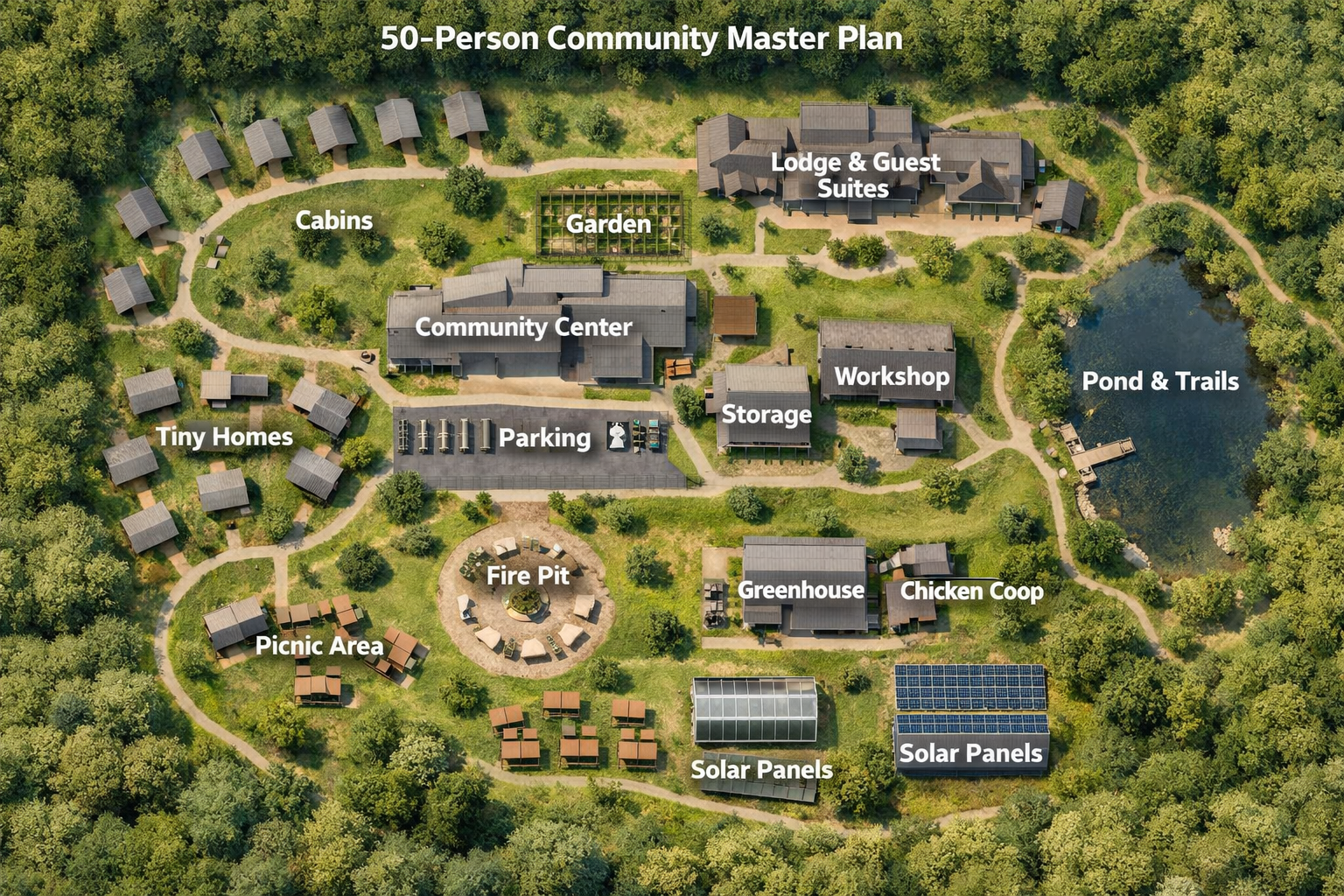
    The prototype intentional community proposed within the SHEYALOTH stewardship architecture is not merely a housing experiment. It is an economic systems prototype.

    Its core purpose is to demonstrate that a localized node can generate, circulate, retain, and regenerate wealth without depending entirely on centralized debt structures.

    This is where Value Stream Mapping (VSM) becomes essential.

    Value Stream Mapping is a Lean systems methodology used to visualize how materials, information, labor, and value move through a process in order to identify waste, inefficiencies, and leakage points (Lean Enterprise Institute, n.d.).

    Rather than viewing the community as a collection of isolated activities, VSM allows us to see the community as an interconnected living organism.

    Within a stewardship-based prototype community, the question is not simply “How do we earn money?”

    The deeper question is:

    How does value circulate—and where does it leak?

    When mapped correctly, a regenerative community begins to resemble a closed-loop ecosystem rather than a consumer settlement.


    From Linear Extraction to Circular Stewardship

    The dominant economic model is fundamentally linear:

    Labor → Income → Debt → Consumption → External Leakage

    In this arrangement, most value exits the local ecosystem almost immediately. Mortgage payments go to banks. Food purchases go to multinational supply chains. Energy payments leave the region. Educational costs reinforce dependency on centralized credentialing systems. Even charitable giving often exits the local area.

    A regenerative prototype community must invert this structure.

    Instead, the community operates through circular value retention:

    Stewardship → Local Production → Internal Exchange → Community Regeneration → Expanded Capacity

    This approach closely mirrors principles found within Community Wealth Building frameworks such as the Preston Model, which emphasizes local procurement, cooperative ownership, anchor institutions, and democratic circulation of wealth (Preston City Council, n.d.).

    Community Wealth Building seeks to increase the local retention and circulation of economic value instead of allowing capital to continuously drain outward (CLES, n.d.).

    The proposed prototype community applies these same principles within a barangay-scale stewardship node.


    Mapping the Community Value Streams

    Every intentional community contains multiple overlapping value streams. Most fail because these streams remain invisible, fragmented, or dependent on external debt.

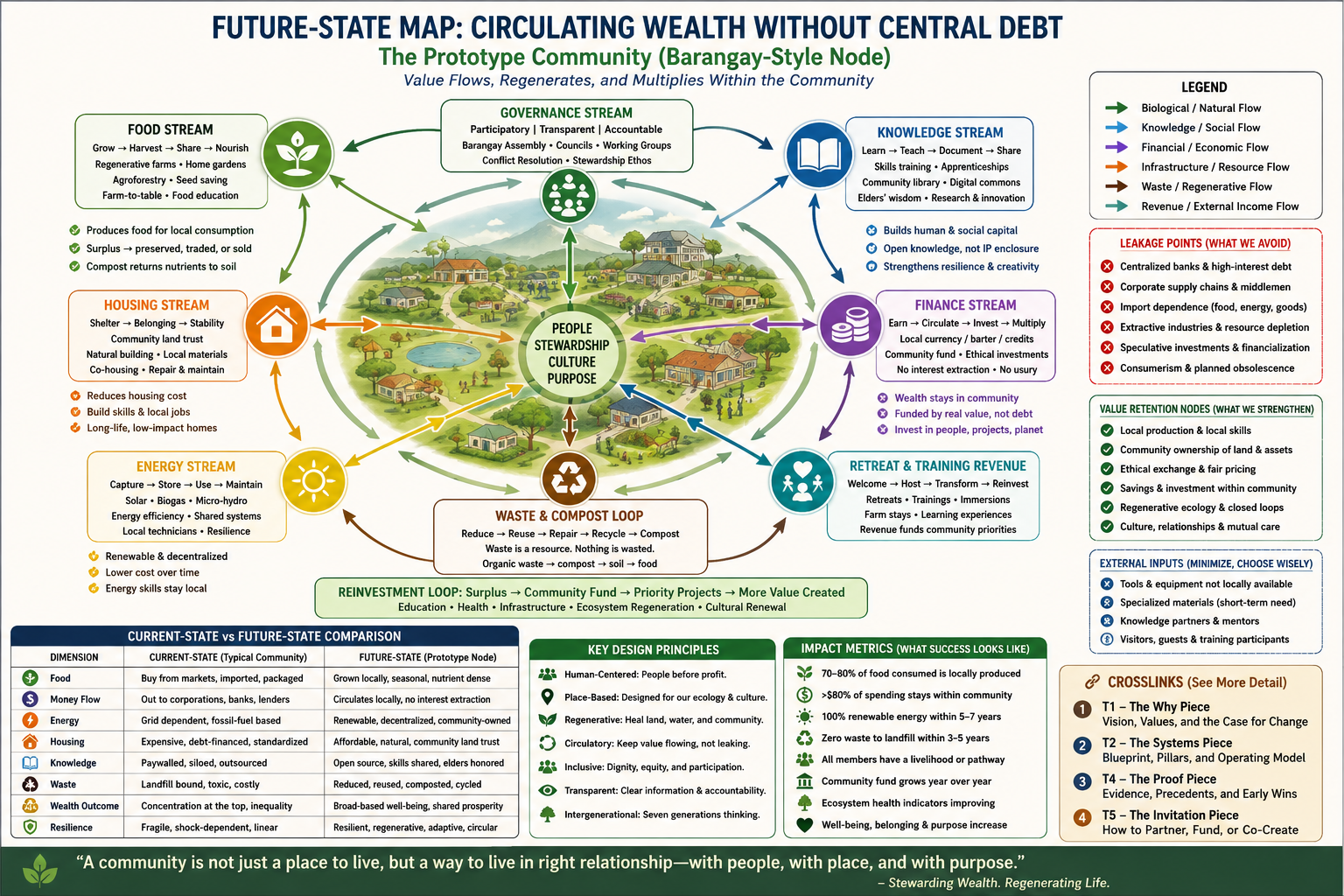
    Download your copy of the Value Stream Map here

    The prototype community instead maps and integrates five primary streams:

    1. Food and Agricultural Stream

    Food is typically the largest leakage point in urbanized communities. Even rural settlements increasingly depend on externally produced food shipped through centralized logistics systems.

    The prototype model reverses this dependency by prioritizing:

    • Regenerative agriculture
    • Shared food production
    • Local seed stewardship
    • Cooperative kitchens
    • Preservation and storage systems
    • Community-supported agriculture (CSA)

    In Value Stream terms, the goal is to shorten the distance between production and consumption.

    Waste outputs from one subsystem become inputs for another:

    • Food scraps become compost.
    • Compost feeds gardens.
    • Gardens feed kitchens.
    • Kitchens feed residents and retreat participants.
    • Retreat revenue reinvests into food resilience.

    This transforms food from a constant expense into a regenerative asset stream.

    Importantly, local food production also stabilizes communities during periods of inflation, supply disruption, or currency volatility.


    2. Housing and Infrastructure Stream

    Conventional housing systems are debt engines. Mortgages frequently lock individuals into decades of extraction where large portions of lifetime income are redirected toward financial institutions.

    The prototype community instead explores phased infrastructure models:

    • Incremental construction
    • Shared utility systems
    • Cooperative ownership structures
    • Local material sourcing where possible
    • Hybrid live-work spaces
    • Modular expansion rather than speculative overbuilding

    The goal is not luxury accumulation. The goal is resilient sufficiency.

    In Value Stream Mapping language, unnecessary overproduction is considered waste (ASQ, n.d.). Large debt-financed infrastructure projects often create financial fragility before the community has stabilized its internal productive capacity.

    The prototype therefore prioritizes:

    1. Productive infrastructure first
    2. Aesthetic expansion second
    3. Debt minimization throughout

    This dramatically changes the risk profile of the community.


    3. Skills, Education, and Knowledge Stream

    Most educational systems train individuals to exit communities in search of employment elsewhere.

    A stewardship-oriented node instead treats education as local capacity building.

    Residents are encouraged to develop skills that strengthen the resilience of the whole ecosystem:

    • Agriculture
    • Conflict mediation
    • Renewable systems maintenance
    • Holistic health support
    • Cooperative administration
    • Media and communications
    • Construction and fabrication
    • Teaching and facilitation

    Knowledge becomes a circulating asset rather than a privatized credential.

    This aligns with the broader Lean understanding that information flow is as important as material flow within any value stream (Lean Enterprise Institute, n.d.). Communities collapse when critical knowledge becomes centralized in a few individuals.

    Therefore, cross-training and distributed competency are essential.

    The healthiest communities are anti-fragile because knowledge redundancy exists throughout the network.


    4. Financial and Exchange Stream

    This is the most sensitive and misunderstood layer.

    The prototype community is not anti-money. It is anti-extractive dependency.

    Money remains necessary. However, the objective is to reduce involuntary external leakage while increasing internal circulation velocity.

    Several mechanisms support this:

    • Cooperative purchasing
    • Shared tools and equipment
    • Internal service exchanges
    • Member contribution systems
    • Ethical microenterprise incubation
    • Local reinvestment pools
    • Community emergency reserves

    A peso that circulates ten times locally creates significantly more resilience than a peso immediately extracted into debt servicing or multinational supply chains.

    Community Wealth Building models have repeatedly demonstrated that local procurement and local ownership strengthen regional resilience and increase local multiplier effects (CLES, n.d.).

    The prototype community therefore functions as a local economic circulation engine.

    External capital is ideally used for:

    • Infrastructure seeding
    • Productive asset acquisition
    • Training systems
    • Renewable systems
    • Water resilience
    • Soil regeneration

    It is not primarily used to inflate lifestyles.

    This distinction is critical.


    5. Cultural and Relational Stream

    Most modern economic systems ignore relational health because it cannot easily be quantified.

    Yet relational fragmentation creates enormous hidden costs:

    • Burnout
    • Mental health deterioration
    • Social distrust
    • Legal conflict
    • Isolation
    • Governance breakdown

    The prototype community therefore treats culture itself as infrastructure.

    This includes:

    • Shared rituals
    • Stewardship circles
    • Community meals
    • Transparent governance
    • Conflict resolution processes
    • Intergenerational mentorship
    • Shared narratives and mission coherence

    In Lean systems language, friction within information and coordination flows creates waste (Lucidchart, n.d.). The same principle applies socially.

    Communities with high trust require fewer enforcement systems, lower transaction costs, and less bureaucratic overhead.

    Trust itself becomes economic infrastructure.


    The Barangay as a Regenerative Node

    The barangay model contains ancient intelligence often overlooked by centralized development frameworks.

    Historically, barangays functioned through:

    • Shared labor
    • Kinship accountability
    • Localized governance
    • Distributed stewardship
    • Cooperative resilience
    • Embedded reciprocity

    While imperfect, these systems possessed adaptive strengths modern urban systems frequently lack.

    The prototype community does not romanticize the past. Instead, it extracts viable principles from historically resilient local systems and integrates them with modern regenerative design.

    The resulting node becomes:

    • Economically localized
    • Technologically adaptive
    • Ecologically regenerative
    • Socially participatory
    • Financially resilient
    • Spiritually coherent

    This is not isolationism.

    The node still interacts with broader markets, donors, digital infrastructure, and external trade. However, it does so from a position of increasing sovereignty rather than permanent dependency.


    Why This Matters to Donors and Partners

    Most charitable models unintentionally reinforce dependency.

    Funds enter communities temporarily but leak outward almost immediately through imported goods, debt obligations, centralized vendors, and unsustainable operational costs.

    The prototype community instead functions as a regenerative multiplier.

    A properly designed stewardship node can:

    • Reduce long-term dependency
    • Increase local resilience
    • Create replicable frameworks
    • Demonstrate ethical economic circulation
    • Lower operating fragility
    • Train future stewardship leaders
    • Serve as a scalable proof-of-concept

    In systems language, donors are not merely funding a project.

    They are helping seed a self-reinforcing value ecosystem.

    This is fundamentally different from charity.

    It is regenerative systems investment.


    References

    American Society for Quality. (n.d.). Value stream mapping tutorial – What is VSM? ASQ. https://asq.org/quality-resources/value-stream-mapping

    Centre for Local Economic Strategies. (n.d.). Community wealth building. CLES. https://cles.org.uk/expertise/community-wealth-building/

    Lean Enterprise Institute. (n.d.). Value-stream mapping. https://www.lean.org/lexicon-terms/value-stream-mapping/

    Lucid Software Inc. (n.d.). What is value stream mapping? Lucidchart. https://www.lucidchart.com/pages/value-stream-mapping

    Ostrom, E. (1990). Governing the commons: The evolution of institutions for collective action. Cambridge University Press.

    Preston City Council. (n.d.). What is community wealth building? https://www.preston.gov.uk/article/1335/What-is-Community-Wealth-Building

    Purdue Lean Six Sigma Online. (2024, November 7). Value stream mapping. Purdue University. https://www.purdue.edu/leansixsigmaonline/blog/value-stream-mapping/

    United Nations Development Programme. (2022). Local governance and resilient communities. https://www.undp.org/


    [DOCUMENT CONTROL & STEWARDSHIP]

    Standard Work ID: VSM-002

    Baseline Version: v1.5.2026

    Classification: Open-Access Archive / Systemic Protocol

    The Sovereign Audit: Following this protocol is an act of internal quality control. Verification of this standard does not happen here; it happens at your Gemba—the actual place where your life and leadership occur. No external validation is required or offered.

    Next in Sequence: [View VSM-001: Mapping the Sovereign Household Value Stream]

    Return to Archive: [Standard Work Knowledge Hub: The Terrain Map]


    © 2026 Gerald Daquila • Life.Understood Systemic Stewardship • Non-Autocratic Architecture • Process over Persona

  • ARK-011: Capitalization and Financial Flows for a 50-Person Prototype

    ARK-011: Capitalization and Financial Flows for a 50-Person Prototype


    Designing the Economic Engine of a Micro-Community System


    Meta Description

    A practical financial framework for launching and sustaining a 50-person micro-community, covering startup costs, contribution models, cash flow strategy, and risk management.


    Opening

    Most community projects don’t fail because of land, people, or vision.

    They fail because of money—specifically, unclear financial structure.

    • Costs are underestimated
    • Contributions are uneven
    • Cash flow is unstable
    • Transparency is lacking

    The result is predictable: tension, burnout, and collapse.

    If ARK-007 defined where things go, ARK-008 defined how to build, and ARK-009 defined what structures are needed, then this piece answers the question:

    How does the system fund itself—without undermining its own stability?

    This is the economic layer that makes the entire ARK architecture real-world viable, building on
    ARK-001: The 50-Person Resource Loop
    and enabling the replication model in
    ARK-010: From Prototype to Network — Scaling Distributed Communities


    Why Financial Design Determines Survival

    Money is not just a resource—it is a coordination mechanism.

    In small communities, poor financial design leads to:

    • Hidden inequality
    • Unclear expectations
    • Dependency on a few individuals
    • Conflict over contribution vs benefit

    Research on collective systems shows that transparent and agreed-upon economic rules are essential for long-term cooperation (Ostrom, 1990).

    Without this, even strong social bonds degrade under pressure.


    The Three Layers of Community Finance

    A functional financial system must operate across three layers:

    1. Capital Expenditure (CapEx)

    One-time or upfront costs:

    • Land acquisition
    • Infrastructure build
    • Tools and equipment

    2. Operational Expenditure (OpEx)

    Ongoing costs:

    • Food supplementation
    • Utilities
    • Maintenance
    • Healthcare and contingencies

    3. Income and Value Generation

    Revenue streams:

    • External income (remote work, services)
    • Agricultural surplus
    • Products and training

    A viable system balances all three.


    Startup Cost Ranges (Philippine Context)

    Costs vary widely based on location and design, but realistic baseline estimates for a 50-person prototype:

    Land

    • ₱1.5M – ₱10M+
      (depending on province, accessibility, and land type)

    Basic Infrastructure

    • Water systems: ₱200K – ₱800K
    • Solar + electrical: ₱300K – ₱1M
    • Housing (modular/basic): ₱2M – ₱6M
    • Sanitation: ₱150K – ₱500K

    Tools + Setup

    • Construction tools, storage, initial inputs: ₱200K – ₱600K

    Total Estimated Range

    ₱4M – ₱18M+ (USD ~$70K – $320K)

    This range reflects minimum viable build, not luxury development.


    Contribution Models: How People Buy In

    One of the most sensitive design areas is how participants contribute financially.

    There is no single correct model—but there are proven structures.


    1. Equal Buy-In Model

    Each member contributes a fixed amount.

    Pros:

    • Simple
    • Clear expectations

    Cons:

    • Excludes lower-income participants
    • Creates economic homogeneity

    2. Tiered Contribution Model

    Members contribute based on capacity.

    Pros:

    • More inclusive
    • Reflects real-world inequality

    Cons:

    • Requires strong transparency
    • Can create perceived imbalance

    3. Hybrid Model (Recommended)

    Combination of:

    • Financial contribution
    • Labor contribution
    • Skill-based contribution

    Example:

    • Lower cash → higher labor commitment
    • Higher cash → reduced operational load

    This aligns with equity-based systems observed in cooperative models (ICA, 2015).


    Community Treasury System

    All contributions must flow into a central treasury.

    Functions of the Treasury

    • Pay for shared infrastructure
    • Cover operational costs
    • Maintain emergency reserves
    • Track inflows and outflows

    Non-Negotiable Rule

    Full financial transparency

    This includes:

    • Open ledgers
    • Regular reporting
    • Clear budget allocation

    Transparency reduces mistrust and aligns expectations.


    Cash Flow Strategy (First 12–24 Months)

    The most fragile period is the first two years.

    Phase 1–2 (Setup)

    • High expenses
    • Low or no income
    • Reliance on initial capital

    Phase 3 (Early Stabilization)

    • Partial food production reduces costs
    • Initial income streams begin

    Phase 4–5 (Stabilization)

    • Multiple income streams active
    • Reduced dependency on external inputs

    Income Stream Design

    A resilient system does not rely on a single source.

    Primary Categories


    1. Remote / Digital Work

    • Freelancing
    • Consulting
    • Online services

    2. Agriculture and Food

    • Surplus produce
    • Value-added goods (processed foods)

    3. Skills and Training

    • Workshops
    • Hosting programs
    • Knowledge exchange

    4. Small-Scale Production

    • Crafts
    • Construction services
    • Repair and fabrication

    Diversification reduces risk.


    Internal Economy vs External Economy

    A key distinction:

    Internal Economy

    • Resource sharing
    • Labor exchange
    • Communal provisioning

    External Economy

    • Cash income
    • Trade with outside markets

    A healthy system balances both.

    Too much internal focus → lack of cash flow
    Too much external focus → loss of cohesion


    Financial Governance

    Financial systems must align with governance structures in
    ARK-003: Jurisdictional Sovereignty

    Core Elements

    • Budget approval process
    • Spending thresholds
    • Accountability roles
    • Audit mechanisms

    Role Example

    • Treasury steward
    • Oversight council
    • Community review process

    Risk Management and Buffers

    No system is stable without reserves.

    Recommended Buffers

    • 6–12 months of basic operating costs
    • Emergency health fund
    • Infrastructure repair fund

    Common Risks

    • Crop failure
    • Member exit
    • Unexpected legal or medical costs

    Reserves convert crises into manageable disruptions.


    Exit and Equity Considerations

    Financial clarity must extend to leaving the system.

    Questions That Must Be Answered

    • Can members withdraw capital?
    • How is shared ownership handled?
    • What happens to contributed labor value?

    Without clear exit rules:

    • Conflict becomes inevitable
    • Trust erodes

    This connects directly to the human systems layer that will be formalized in ARK-013.


    Scaling Financial Systems Across Nodes

    As described in
    ARK-010: From Prototype to Network — Scaling Distributed Communities

    Each node must:

    • Maintain independent finances
    • Avoid centralized dependency

    Network-Level Finance

    • Optional shared funds
    • Cooperative investment pools
    • Inter-node trade agreements

    But:

    No node should rely on another for survival funding


    Common Financial Failure Patterns

    Observed across community projects:

    • Underestimating startup costs
    • Lack of transparent accounting
    • Over-reliance on a single donor
    • No income generation strategy
    • Undefined ownership structures

    Each leads to instability—even when other systems are strong.


    Conclusion: Money as Structure, Not Just Resource

    Financial systems are often treated as secondary.

    In reality, they are foundational.

    A well-designed financial model:

    • Aligns expectations
    • Reduces conflict
    • Enables sustainability
    • Supports scaling

    At 50 people, the system is small enough to manage—but only if:

    • Contributions are clear
    • Flows are transparent
    • Risks are anticipated

    With this layer in place, the ARK framework moves from:

    • Concept → Buildable system

    References

    International Co-operative Alliance (ICA). (2015). Guidance notes to the co-operative principles.

    Ostrom, E. (1990). Governing the commons: The evolution of institutions for collective action. Cambridge University Press.

    The concepts outlined here are designed for real-world execution. For a complete set of ready-to-use documents—including governance templates, resource tracking sheets, and operational SOPs—explore the 55 Editable Applied Stewardship Toolkit (Complete Set).

    For a broader systems context that situates localized resilience within national and multi-scalar transformation frameworks, explore The Philippine Ark: A Sovereign Blueprint for Systemic Transformation.


    Continue Through the ARK Series

    This framework is designed as a complete system. You can explore it sequentially or move directly to the layer most relevant to your work:

    Foundations

    Design + Build

    Systems Layer

    Scaling


    Suggested Pathways

    New to the framework?

    Start with ARK-001 ARK-008ARK-011


    Designing a physical site?

    Begin with ARK-007ARK-008ARK-009


    Preparing for real-world deployment?

    Focus on ARK-011ARK-012ARK-013


    Thinking long-term scale?

    Move to ARK-010


    [DOCUMENT CONTROL & STEWARDSHIP]

    Standard Work ID: [ARK-011]

    Baseline Version: v1.5.2026

    Classification: Open-Access Archive / Systemic Protocol

    The Sovereign Audit: Following this protocol is an act of internal quality control. Verification of this standard does not happen here; it happens at your Gemba—the actual place where your life and leadership occur. No external validation is required or offered.

    Next in Sequence: [ARK-012: Legal Structures for Community Prototypes (Philippine Context)]

    Return to Archive: [Standard Work Knowledge Hub: The Terrain Map]


    © 2026 Gerald Daquila • Life.Understood Systemic Stewardship • Non-Autocratic Architecture • Process over Persona

  • ARK-008: Operational Rollout of a 50-Person Micro-Community Prototype

    ARK-008: Operational Rollout of a 50-Person Micro-Community Prototype


    A Phased Implementation Framework for Regenerative, Small-Scale Settlements


    Meta Description

    A step-by-step operational rollout plan for building a 50-person micro-community prototype, covering land acquisition, infrastructure, governance, and scalable replication.


    Opening

    Most community projects fail not because of vision—but because they attempt to scale before stabilizing.

    The idea of building intentional communities, eco-villages, or sovereign settlements often collapses under the weight of poor sequencing: too many people, insufficient infrastructure, unclear governance, and no operational discipline.

    This framework offers a different approach:

    Start small. Stabilize early. Scale deliberately.

    At the center of this model is a single constraint:

    Can this system support 50 people—reliably, sustainably, and legally?

    If yes, it can be replicated. If not, it should not expand.

    This is the operational backbone of the ARK series—beginning with ARK-001: The 50-Person Resource Loop and extending into governance, land design, and distributed scaling.


    Why 50 People? The Stability Threshold

    Fifty is not arbitrary. It sits at a functional midpoint:

    • Large enough for skill diversity
    • Small enough for relational accountability
    • Manageable for resource systems
    • Legally simpler than large developments

    Anthropologically, it aligns with early human group sizes associated with high trust and cohesion (Dunbar, 1992).

    Operationally, it allows:

    • Clear governance structures
    • Efficient communication
    • Measurable resource loops

    The 50-person model becomes a repeatable unit of civilization, not just a community experiment.


    Phase 0: Legal Grounding and Land Acquisition

    Before any physical development begins, the project must be legally and structurally sound.

    Core Requirements

    • Land ownership or long-term lease agreement
    • Zoning compliance (agricultural, residential, mixed-use)
    • Entity structure (cooperative, corporation, association)
    • Basic regulatory alignment

    In contexts like the Philippines, this often means navigating:

    • Local Government Unit (LGU) approvals
    • Barangay-level integration
    • Environmental compliance standards

    Without this phase, all later work is fragile.


    Phase 1: Core Team Formation (5–10 People)

    Every stable system begins with a small, highly aligned nucleus.

    Core Roles

    • Operations lead
    • Land/infrastructure steward
    • Food systems lead
    • Finance/legal coordinator
    • Community/growth facilitator

    At this stage:

    • No large population intake
    • No expansion pressure
    • Focus is on decision velocity and trust-building

    The failure pattern to avoid: recruiting dozens of people before systems exist.


    Phase 2: Foundational Infrastructure Build

    Before scaling population, the land must support life.

    Minimum Viable Systems

    1. Water
      • Potable water source (well, filtration, or delivery)
      • Storage + distribution
    2. Food Production
      • Fast-growing crops (leafy greens, root crops)
      • Initial soil conditioning
      • Small livestock (optional)
    3. Shelter
      • Temporary housing (modular, bamboo, prefab)
      • Communal kitchen
    4. Energy
      • Hybrid systems (grid + solar)
      • Backup capacity
    5. Sanitation
      • Composting toilets or septic systems
      • Waste management protocols

    The goal is not perfection—it is functional sufficiency.


    Phase 3: Controlled Population Expansion (10 → 50)

    Only after systems are stable should population increase.

    Expansion Principles

    • Gradual onboarding (5–10 people at a time)
    • Skills-based selection (not just interest)
    • Integration period for each cohort

    Population Composition

    A functional 50-person system typically includes:

    • Growers / food stewards
    • Builders / technicians
    • Educators / facilitators
    • Health and wellness practitioners
    • Operations and finance roles

    This aligns with the structural layer outlined in
    ARK-002: The Babaylan Arc
    and governance protocols in
    ARK-003: Jurisdictional Sovereignty


    Phase 4: Governance Stabilization

    Once population approaches 50, governance must mature.

    Core Governance Structures

    • Decision-making framework (consensus, sociocracy, hybrid)
    • Conflict resolution system
    • Role clarity and accountability mapping
    • Financial transparency protocols

    At this stage, informal leadership is no longer enough.

    The system must transition from:

    • Personality-based coordination
      Process-based governance

    Phase 5: Economic and Resource Loop Stabilization

    A viable community must sustain itself—not just socially, but materially.

    Core Economic Functions

    • Food self-production (partial or majority)
    • Income streams (remote work, agriculture, services)
    • Internal exchange systems
    • External trade relationships

    This phase completes the loop introduced in
    ARK-001: The 50-Person Resource Loop


    Phase 6: Replication Readiness

    Only after stability is achieved should replication be considered.

    Readiness Indicators

    • Stable food and water systems
    • Functional governance
    • Financial transparency
    • Documented processes
    • Conflict resolution maturity

    Replication Pathways

    • Training new core teams
    • Supporting new land acquisitions
    • Sharing operational playbooks

    This becomes the foundation for distributed scaling, later expanded in ARK-010.


    Common Failure Patterns

    To make this actionable, here are the most frequent collapse points:

    • Scaling population before infrastructure
    • Undefined governance structures
    • Over-reliance on a charismatic founder
    • Lack of financial clarity
    • Ignoring legal frameworks

    Each of these is preventable through disciplined sequencing.


    Conclusion: From Vision to Viable System

    The difference between an idea and a working community is not intention—it is execution.

    A 50-person prototype is small enough to build, but large enough to matter.

    It offers a bridge between:

    • Individual survival strategies
    • And large-scale societal redesign

    Done correctly, it becomes:

    • A unit of replication
    • A training ground for governance
    • A living proof of concept

    The future of distributed communities will not emerge from massive top-down planning.

    It will emerge from small systems that work—and can be repeated.


    References

    Dunbar, R. I. M. (1992). Neocortex size as a constraint on group size in primates. Journal of Human Evolution, 22(6), 469–493.

    Ostrom, E. (1990). Governing the Commons: The Evolution of Institutions for Collective Action. Cambridge University Press.

    Holmgren, D. (2002). Permaculture: Principles and Pathways Beyond Sustainability. Holmgren Design Services.

    The concepts outlined here are designed for real-world execution. For a complete set of ready-to-use documents—including governance templates, resource tracking sheets, and operational SOPs—explore the 55 Editable Applied Stewardship Toolkit (Complete Set).

    For a broader systems context that situates localized resilience within national and multi-scalar transformation frameworks, explore The Philippine Ark: A Sovereign Blueprint for Systemic Transformation.


    Continue Through the ARK Series

    This framework is designed as a complete system. You can explore it sequentially or move directly to the layer most relevant to your work:

    Foundations

    Design + Build

    Systems Layer

    Scaling


    Suggested Pathways

    New to the framework?

    Start with ARK-001 ARK-008ARK-011


    Designing a physical site?

    Begin with ARK-007ARK-008ARK-009


    Preparing for real-world deployment?

    Focus on ARK-011ARK-012ARK-013


    Thinking long-term scale?

    Move to ARK-010


    [DOCUMENT CONTROL & STEWARDSHIP]

    Standard Work ID: [ARK-008]

    Baseline Version: v1.5.2026

    Classification: Open-Access Archive / Systemic Protocol

    The Sovereign Audit: Following this protocol is an act of internal quality control. Verification of this standard does not happen here; it happens at your Gemba—the actual place where your life and leadership occur. No external validation is required or offered.

    Next in Sequence: [ARK-009: Special Structures in Small-Scale Sovereign Communities]

    Return to Archive: [Standard Work Knowledge Hub: The Terrain Map]


    © 2026 Gerald Daquila • Life.Understood Systemic Stewardship • Non-Autocratic Architecture • Process over Persona

  • The Barangay Value Stream Map (BVSM)

    The Barangay Value Stream Map (BVSM)


    Standardizing Community Resilience for Diaspora Architects


    In the language of systems thinking, resilience is not a feeling—it is an outcome of design.

    For diaspora architects seeking to contribute meaningfully to homeland development, the challenge is not simply what to build, but how to ensure that what is built can endure volatility, absorb shocks, and regenerate capacity at the local level.

    Nowhere is this more critical than in the barangay, the smallest administrative unit in the Philippines, yet paradoxically the most immediate interface between governance and lived reality.

    This piece introduces the Barangay Value Stream Map (BVSM) as a replicable framework for diagnosing, optimizing, and standardizing community resilience.

    Drawing from lean systems, public administration theory, and community-driven development models, the BVSM provides diaspora architects with a structured pathway to transform fragmented interventions into coherent, scalable systems.


    1. Why the Barangay is the True Unit of Resilience

    The barangay is often treated as an implementation layer—where national policies are executed and local concerns are managed. But this framing is incomplete.

    In practice, the barangay is a micro-system where social capital, informal economies, and governance dynamics converge.

    Research in decentralized governance shows that local units with higher autonomy and participation tend to produce better development outcomes, particularly in crisis response and service delivery (Brillantes & Moscare, 2002).

    Meanwhile, community-driven development programs in the Philippines—such as KALAHI-CIDSS—demonstrate that when communities are directly involved in planning and resource allocation, project sustainability increases significantly (Labonne & Chase, 2011).

    For diaspora architects, this presents a critical insight: resilience cannot be imported—it must be co-designed at the barangay level.


    2. From Projects to Systems: The Case for Value Stream Mapping

    Traditional development approaches often focus on discrete projects: a water system here, a livelihood program there.

    While valuable, these interventions frequently fail to integrate into a larger system, resulting in inefficiencies, redundancies, or eventual decay.

    Value Stream Mapping (VSM), a tool derived from lean management, shifts the focus from isolated outputs to end-to-end flows of value.

    Originally developed in manufacturing, VSM has been adapted for healthcare, government services, and social systems to identify bottlenecks, eliminate waste, and improve flow efficiency (Rother & Shook, 2003).

    Applied to the barangay context, VSM allows stakeholders to map:

    • The flow of essential services (health, water, education)
    • The movement of resources (funds, goods, information)
    • The interaction between actors (officials, households, NGOs)

    The result is not just a map—but a diagnostic instrument revealing where resilience is strengthened or compromised.


    3. Defining the Barangay Value Stream Map (BVSM)

    The Barangay Value Stream Map (BVSM) is a localized adaptation of VSM tailored to the socio-political realities of Philippine communities.

    It integrates three layers:

    a. Service Flow Layer

    Tracks how essential services move from source to beneficiary. For example:

    • Health services: Barangay Health Worker → Rural Health Unit → Household
    • Disaster response: Early warning system → Barangay council → Community evacuation

    b. Resource Flow Layer

    Maps financial and material inputs:

    • Internal Revenue Allotment (IRA) distribution
    • External funding (NGOs, diaspora contributions)
    • Local revenue streams

    c. Governance & Decision Layer

    Captures how decisions are made:

    • Barangay council processes
    • Community assemblies (pulong-pulong)
    • Informal influence networks

    By overlaying these layers, the BVSM reveals not only what exists, but how effectively it functions.


    4. Identifying Waste in Community Systems

    Lean thinking defines “waste” as any activity that does not add value to the end user.

    In a barangay context, waste manifests in more subtle but equally damaging ways:

    • Delay: Slow disbursement of funds for urgent needs
    • Duplication: Multiple programs addressing the same issue without coordination
    • Leakage: Misallocation or inefficiency in resource use
    • Underutilization: Skills and capacities within the community left untapped

    Studies in public sector efficiency highlight that process inefficiencies can reduce service effectiveness by up to 30% in decentralized systems (World Bank, 2018).

    The BVSM allows diaspora architects to pinpoint these inefficiencies with precision.

    Instead of broad assumptions, interventions can be targeted at specific failure points—maximizing impact while minimizing cost.


    5. Standardizing Without Erasing Local Identity

    A common concern in systematization is the risk of imposing rigid structures that ignore local context.

    The BVSM addresses this by distinguishing between:

    • Core Standards: Universal elements that ensure functionality (e.g., transparent fund tracking, clear service pathways)
    • Adaptive Layers: Context-specific practices shaped by culture, geography, and community dynamics

    This dual approach aligns with adaptive governance theory, which emphasizes flexibility within structured systems to handle complexity and uncertainty (Folke et al., 2005).

    For diaspora architects, the implication is clear: standardization should enable consistency, not conformity.


    6. The Role of the Diaspora Architect

    Diaspora communities possess a unique advantage: exposure to global systems combined with a personal connection to local realities.

    However, this dual perspective can either be a strength or a liability.

    When interventions are designed without local integration, they risk becoming misaligned or unsustainable. Conversely, when diaspora architects act as system integrators, they can bridge gaps between global best practices and local needs.

    The BVSM provides a structured role for diaspora involvement:

    • Observer: Mapping existing flows without imposing assumptions
    • Analyst: Identifying inefficiencies and resilience gaps
    • Facilitator: Supporting local stakeholders in co-designing solutions
    • Connector: Linking barangays to external resources and networks

    This shifts the diaspora role from donor to co-architect of resilience.


    7. From Mapping to Transformation: Implementation Pathway

    Creating a BVSM is only the first step. The true value lies in translating insights into action. A practical pathway includes:

    Step 1: Stakeholder Alignment

    Engage barangay officials, community members, and local organizations. Ensure shared understanding of goals.


    Step 2: Data Gathering

    Collect qualitative and quantitative data on service delivery, resource flows, and governance processes.


    Step 3: Mapping Workshop

    Co-create the BVSM with stakeholders. Visual tools enhance clarity and ownership.


    Step 4: Gap Analysis

    Identify bottlenecks, redundancies, and vulnerabilities.


    Step 5: Intervention Design

    Develop targeted solutions—process improvements, policy adjustments, or capacity-building initiatives.


    Step 6: Iteration and Feedback

    Continuously refine the system based on real-world outcomes.

    This iterative approach reflects principles of continuous improvement, which have been shown to significantly enhance system resilience over time (Deming, 1986).


    8. Measuring Resilience: Beyond Outputs

    One of the limitations of traditional development metrics is their focus on outputs—number of projects completed, funds disbursed, etc.

    While important, these metrics do not capture system health.

    The BVSM enables a shift toward resilience metrics, such as:

    • Response time to emergencies
    • Continuity of essential services during disruptions
    • Community participation rates
    • Redundancy and backup systems

    Research on resilience measurement emphasizes the importance of system-level indicators that reflect adaptability and recovery (Cutter et al., 2008).

    For diaspora architects, this means success is not defined by what is built, but by how well the system continues to function under stress.


    9. Scaling the BVSM Across Barangays

    The ultimate potential of the BVSM lies in its scalability.

    When standardized frameworks are applied across multiple barangays, patterns emerge:

    • Common bottlenecks that can be addressed at higher policy levels
    • Best practices that can be replicated
    • Opportunities for inter-barangay collaboration

    This creates the foundation for a networked resilience system, where barangays are not isolated units but interconnected nodes.

    Such networked approaches have been shown to enhance collective resilience, particularly in disaster-prone regions (Aldrich & Meyer, 2015).


    10. Conclusion: Designing for Continuity

    The Barangay Value Stream Map is not merely a technical tool—it is a shift in perspective.

    It invites diaspora architects to move beyond episodic interventions and toward systemic design.

    In a world of increasing uncertainty—climate change, economic volatility, social fragmentation—resilience is no longer optional. It must be designed, measured, and continuously improved.

    The barangay, often overlooked, is where this design becomes tangible. It is where policies meet people, where systems meet stories, and where resilience is either built or broken.

    For those called to contribute from afar, the question is no longer “How can I help?” but rather:

    “How can I help build a system that helps itself?”

    The BVSM offers one answer—grounded in structure, guided by participation, and oriented toward continuity.


    Crosslinks

    Takt Time — The Rhythm of Presence – Anchor: “Why system design fails without internal alignment.” Moves reader from external system mapping → internal regulation.


    Work Sequence — The Protocol – Anchor: “How mapped systems translate into repeatable execution.” BVSM shows what exists; Work Sequence shows how it runs.


    Standard Inventory — The Sovereign Kit – Anchor: “What resources are required to sustain each node in the map.” Bridges mapping → resourcing.


    References

    Aldrich, D. P., & Meyer, M. A. (2015). Social capital and community resilience. American Behavioral Scientist, 59(2), 254–269.

    Brillantes, A. B., & Moscare, D. (2002). Decentralization and federalism in the Philippines. Public Administration and Development, 22(1), 23–35.

    Cutter, S. L., Burton, C. G., & Emrich, C. T. (2008). Disaster resilience indicators for benchmarking baseline conditions. Journal of Homeland Security and Emergency Management, 5(1).

    Deming, W. E. (1986). Out of the Crisis. MIT Press.

    Folke, C., Hahn, T., Olsson, P., & Norberg, J. (2005). Adaptive governance of social-ecological systems. Annual Review of Environment and Resources, 30, 441–473.

    Labonne, J., & Chase, R. S. (2011). Do community-driven development projects enhance social capital? World Bank Policy Research Working Paper.

    Rother, M., & Shook, J. (2003). Learning to See: Value Stream Mapping to Add Value and Eliminate MUDA. Lean Enterprise Institute.

    World Bank. (2018). Improving Public Sector Performance Through Process Optimization.


    The Sovereign Professional: A structural map of power, systems thinking, and personal autonomy—dedicated to helping the independent professional navigate complexity and own their value stream.Ask


    ©2026 Gerald Daquila • Life.Understood. • Systems Thinking, Leadership Architecture, and Applied Coherence

  • Agentic Systems and the End of Passive Labor

    Agentic Systems and the End of Passive Labor


    How Artificial Intelligence Is Reshaping Work, Responsibility, and Human Roles in the Emerging Economy


    Meta Description

    AI-powered agentic systems are transforming work from execution to orchestration. This essay explores how automation is reshaping responsibility, coordination, and human roles in the emerging economy.


    Introduction: Work Is Not Disappearing—It Is Changing Form

    Much of the public discourse around artificial intelligence focuses on job loss.

    • Will AI replace workers?
    • Which industries are most vulnerable?
    • How many jobs will disappear?

    These are important questions—but they are incomplete.

    They assume that work is defined primarily by tasks.

    Artificial intelligence challenges this assumption.

    What is being disrupted is not work itself, but:

    the the human role within increasingly automated systems

    AI—particularly in its emerging “agentic” form—does not simply automate tasks. It begins to:

    • plan
    • execute multi-step processes
    • adapt to feedback
    • operate with limited autonomy

    This signals a transition:

    From task-based labor → to system-level orchestration

    The implication is not the end of work.

    It is the end of passive labor.


    What Are Agentic Systems?

    Agentic systems refer to AI configurations capable of:

    • setting sub-goals
    • executing sequences of actions
    • interacting with tools or environments
    • adjusting behavior based on outcomes

    Unlike earlier automation (rule-based or static), these systems are:

    • dynamic
    • context-aware
    • iterative

    They do not simply perform predefined actions.

    They operate within a goal structure.

    This introduces a critical shift:

    Humans are no longer the sole agents within systems.


    The Illusion of Replacement

    The dominant narrative suggests:

    • AI replaces human workers
    • efficiency increases
    • labor demand decreases

    But this is a surface-level interpretation.

    In reality, AI redistributes roles across three layers:


    1. Execution Layer (Declining Human Role)

    Repetitive and predictable tasks are increasingly handled by AI:

    • drafting content
    • data processing
    • routine analysis
    • administrative workflows

    This is where most “job loss” discussions focus.


    2. Coordination Layer (Expanding Human Role)

    As AI systems operate, someone must:

    • define objectives
    • structure workflows
    • integrate outputs
    • resolve conflicts

    This layer grows, not shrinks.


    3. Governance Layer (Critical Human Role)

    At the highest level:

    • Who defines goals?
    • Who sets constraints?
    • Who is accountable for outcomes?

    These cannot be delegated.

    They require:

    judgment, ethics, and coherence


    The End of Passive Labor

    Passive labor is characterized by:

    • task execution without ownership
    • following instructions without context
    • limited responsibility for outcomes

    Agentic systems make this model obsolete.

    Why?

    Because tasks can now be:

    • automated
    • delegated to AI
    • executed faster and cheaper

    This creates a divergence:

    • individuals who remain task-bound become replaceable
    • individuals who move into coordination and stewardship become indispensable

    This aligns with broader labor transformation trends, where workers anticipate significant restructuring due to AI adoption (Stanford Institute for Human-Centered Artificial Intelligence, 2025).


    The New Human Role: Orchestrator and Steward

    To remain relevant, the human role must shift.

    Not:

    • worker as executor

    But:

    human as orchestrator and steward of systems

    This includes:

    • designing workflows that integrate AI and human input
    • monitoring outputs for accuracy and alignment
    • intervening when systems deviate
    • maintaining accountability

    This directly builds on the cognitive discipline outlined in
    The Sovereign Prompt: How to Use AI Without Outsourcing Discernment.

    A sovereign operator becomes an active coordinator of systems rather than a passive consumer of outputs.


    Productivity vs Responsibility

    AI dramatically increases productivity.

    But it also increases:

    • scale of impact
    • speed of decision-making
    • risk of error propagation

    A poorly designed system can now:

    • generate thousands of incorrect outputs
    • misallocate resources rapidly
    • amplify flawed assumptions

    This creates a paradox:

    As capability increases, responsibility must increase proportionally.

    If responsibility does not scale, systems become unstable.


    Coherence as a Workforce Differentiator

    In an AI-mediated environment, traditional markers of competence shift.

    It is no longer enough to:

    • know information
    • perform tasks efficiently

    The differentiator becomes:

    the ability to integrate information, structure decisions, and maintain judgment across complex systems.

    A coherent operator can:

    • design structured workflows
    • identify flawed assumptions
    • integrate outputs into a consistent system

    An incoherent operator:

    • produces fragmented results
    • relies excessively on AI outputs
    • fails to detect system-level errors

    This reinforces the central thesis from
    AI as Mirror: Why Artificial Intelligence Reveals Human Incoherence:

    AI accelerates the strengths and weaknesses already present in human systems.


    Implications for Economic Systems

    Agentic AI does not just affect individuals.

    It reshapes entire economic structures.


    1. Decentralization of Capability

    Small teams—or even individuals—can now perform functions that previously required large organizations.

    A small AI-enabled legal team, media studio, or logistics group can now perform functions once requiring much larger organizations.

    This aligns with our framework in ARK-001: The 50-Person Resource Loop, where localized systems can sustain themselves.

    AI becomes a force multiplier.


    2. Redefinition of Value

    Value shifts from:

    • labor hours
      → to
    • system effectiveness

    This challenges traditional wage structures and aligns with alternative accounting models explored in
    ARK-004: Post-Fiat Trade — The Community Ledger SOP.

    Contribution is no longer measured purely by time.

    It is measured by impact within systems.


    3. Governance Complexity

    As AI systems operate within economic flows:

    • accountability becomes harder to trace
    • decisions become distributed across human and machine actors

    This increases the importance of frameworks like
    ARK-003: Jurisdictional Sovereignty: Legal Standard Work.

    Authority must remain:

    • identifiable
    • accountable
    • verifiable

    Failure Modes in Agentic Systems

    Without proper stewardship, agentic systems introduce new risks.


    1. Goal Misalignment

    If objectives are poorly defined:

    • systems optimize the wrong outcomes
    • unintended consequences emerge

    2. Over-Automation

    Excessive reliance on AI leads to:

    • loss of human oversight
    • blind trust in outputs
    • reduced situational awareness

    3. Responsibility Diffusion

    When multiple agents (human + AI) are involved:

    • accountability becomes unclear
    • errors are harder to trace

    4. Scale of Error

    Mistakes are no longer isolated.

    They propagate quickly across systems.


    The Discipline of Oversight

    To mitigate these risks, systems must include:

    • clear goal definitions
    • human-in-the-loop checkpoints
    • audit mechanisms
    • transparent decision logs

    This mirrors the logic of the Community Ledger:

    Visibility and accountability are non-negotiable in complex systems.


    Agentic Systems as Threshold Condition

    At a deeper level, agentic AI represents a threshold.

    Agentic systems force a shift from participating in workflows to taking responsibility for how workflows are designed, monitored, and governed.

    This aligns with our broader architectural movement:

    • These shifts are not purely technological.
    • They require psychological adaptability, cognitive discipline, and governance structures capable of maintaining accountability in increasingly automated environments.

    Conclusion: Work Becomes Responsibility

    AI does not eliminate human relevance.

    It removes roles that do not require:

    • judgment
    • coherence
    • accountability

    What remains—and expands—is:

    the responsibility to design, guide, and steward systems

    The question is not:

    • Will AI take jobs?

    But:

    Will humans adapt fast enough to take on higher-order responsibility?

    Those who do will not compete with AI.

    They will direct it.

    Those who do not may find themselves increasingly displaced—not simply by machines, but by people better able to coordinate, evaluate, and direct complex systems.


    References

    Stanford Institute for Human-Centered Artificial Intelligence. (2025). AI Index Report: Public opinion and workforce trends.

    Bender, E. M., Gebru, T., McMillan-Major, A., & Margaret Mitchell. (2021). On the dangers of stochastic parrots: Can language models be too big? Proceedings of the 2021 ACM Conference on Fairness, Accountability, and Transparency.


    Suggested Internal Crosslinks


    Attribution

    The Living Archive
    Integrative Frameworks for Regenerative Civilization

    © 2026 Gerald Daquila. All rights reserved.
    Part of the Life.Understood. knowledge ecosystem and Stewardship Institute initiative.

    This article is intended for educational, reflective, and civic inquiry purposes.
    Readers are encouraged to engage critically, think independently, and explore related pathways throughout the archive.

  • From Collective Trauma to System Design: A Living Archive Framework for the Philippines

    From Collective Trauma to System Design: A Living Archive Framework for the Philippines

    A systems-level approach to organizing collective memory into governance, education, and community design.


    Meta Description

    A systems-level framework for understanding how collective trauma in the Philippines can be organized into a living archive that informs governance, education, and local design.

    Most efforts to document collective trauma stop at narrative.
    They name what happened, organize memory, and restore coherence—but they do not change the systems that continue to reproduce the same patterns.

    This is the gap the Living Archive is designed to address.

    As you read, identify one recurring pattern within your local context that could be translated into structure. This is where the archive begins to function.


    Introduction

    The contemporary effort to document collective trauma in the Philippines has gained renewed urgency as communities seek to reconcile historical memory with present-day institutional realities.

    Across disciplines such as Trauma Studies, the act of naming and organizing trauma is recognized as a foundational step toward coherence.

    Trauma disrupts continuity—fracturing identity, distorting perception, and embedding behavioral patterns that persist across generations (Herman, 1992).

    Documentation, therefore, stabilizes awareness by restoring narrative order. However, stabilization alone does not produce systemic change.

    What is emerging instead is a more precise function: the Living Archive as collective integration infrastructure.

    At its core, the Living Archive moves beyond static historiography. It is not merely a repository of past events but a structured environment where memory is organized, interpreted, and translated into design-relevant insight. In contrast to conventional archival models, which prioritize preservation and access, this approach emphasizes application.

    The operative question shifts from “What happened?” to “What patterns persist, and how do they inform current structures?”

    This shift aligns with principles found in Narrative Therapy, where the externalization of stories allows individuals and groups to observe patterns without being entirely defined by them (White & Epston, 1990).

    However, the Living Archive extends this logic into the collective domain. It treats cultural memory not only as a psychological construct but as a systems-level input—a dataset capable of informing governance, education, and economic behavior.


    From Fragmentation to Pattern Recognition

    The Philippine experience is shaped by layered historical forces: successive colonial administrations, entrenched socio-economic stratification, and cultural regulators such as hiya, which mediates behavior through relational sensitivity and social perception.

    These forces have contributed to fragmented identity structures and adaptive—but often unexamined—coping mechanisms. While existing literature has surfaced these narratives, what remains underdeveloped is their systematic synthesis into actionable frameworks.

    In this context, the Living Archive functions as a pattern recognition engine. By codifying recurring dynamics—dependency loops, authority asymmetries, informal resilience networks—it becomes possible to map how historical conditions continue to shape present-day systems.

    This is not an abstract exercise. Research in Psychology indicates that awareness without integration often results in repetition rather than change (Tedeschi & Calhoun, 2004).

    At scale, this manifests as societies that can clearly articulate their challenges yet remain structurally unchanged.


    Translation into Structure

    The distinguishing feature of the Living Archive is its capacity for translation—the disciplined conversion of narrative insight into structural design. This includes:

    • Governance protocols informed by historical trust deficits
    • Educational curricula grounded in both indigenous knowledge and modern competencies
    • Economic models that incorporate informal systems rather than ignoring them
    • Cultural practices that reinforce agency while preserving relational cohesion

    This approach reframes trauma-derived insight as adaptive intelligence. Rather than remaining within reflection, it becomes a functional input for system design.

    As argued in institutional analysis, systems that fail often do so because they ignore local context in favor of abstract models (Scott, 1998). The Living Archive corrects for this by grounding design in lived historical patterns.


    Guarding Against Analytical Loops

    A persistent risk in collective trauma work is the emergence of analytical loops—cycles of interpretation that deepen understanding without altering outcomes.

    In the Philippine context, this can appear as repeated critiques of colonial mentality or inequality that, while valid, do not produce new forms of practice.

    The Living Archive mitigates this by enforcing a feedback loop between insight and implementation.

    Each identified pattern is paired with potential interventions, pilot applications, and measurable outcomes. This transforms knowledge into a living system—continuously tested, refined, and iterated.

    Without this loop, documentation risks becoming an echo chamber; with it, documentation becomes infrastructure.


    Positioning Within the ARK Series

    Within the ARK framework, this piece serves as a bridging layer between narrative and execution. For example, ARK-001: The 50-Person Resource Loop outlines localized resilience through coordinated resource systems.

    The Living Archive strengthens this by providing contextual intelligence—clarifying trust dynamics, behavioral tendencies, and cultural constraints that influence implementation.

    Similarly, ARK-002: The Babaylan Arc: Institutional Curriculum explores integrating indigenous knowledge into formal education.

    The Living Archive supports this by identifying which cultural elements retain functional relevance and how they can be systematically embedded into curricula without romanticization or distortion.

    Together, these components form a coherent stack:

    Archive (pattern recognition) → Framework (design) → Implementation (practice)


    Toward a Design-Oriented Culture of Memory

    The broader implication is the emergence of a design-oriented culture of memory.

    History, in this framing, is neither static record nor identity anchor alone—it is a living input for system development.

    This perspective does not diminish the significance of past events; it extends their relevance by making them actionable.

    Such an approach requires rigor. Documentation must be precise, interpretation must be tested, and frameworks must remain adaptable.

    Crucially, the archive itself does not claim completion. It establishes the conditions for integration but relies on real-world application for validation.

    Change occurs not at the point of writing, but at the point of embodiment and iteration.


    Conclusion

    The Living Archive, when properly structured, functions as more than a repository.

    It is collective integration infrastructure—a system that organizes memory, extracts patterns, and translates them into design.

    In the context of the Philippines, where historical complexity continues to shape institutional behavior, this approach offers a pathway from narrative accumulation to systemic clarity.

    By positioning the archive as a bridge between memory and implementation, the work gains both analytical depth and operational relevance.

    Documentation remains essential—but it is only the first step.

    The enduring value lies in what follows: the disciplined conversion of insight into structure, and structure into lived practice.


    References

    Herman, J. L. (1992). Trauma and recovery. Basic Books.

    Scott, J. C. (1998). Seeing like a state: How certain schemes to improve the human condition have failed. Yale University Press.

    Tedeschi, R. G., & Calhoun, L. G. (2004). Posttraumatic growth: Conceptual foundations and empirical evidence. Psychological Inquiry, 15(1), 1–18.

    White, M., & Epston, D. (1990). Narrative means to therapeutic ends. W. W. Norton.


    The Sovereign Professional: A structural map of power, systems thinking, and personal autonomy—dedicated to helping the independent professional navigate complexity and own their value stream.


    ©2026 Gerald Daquila • Life.Understood. • Systems Thinking, Leadership Architecture, and Applied Coherence