
Logo - Life.Understood.

Category: Systems Thinking & Civilizational Design

The Canonical Knowledge Hub for Mapping the Architecture of Coherent Futures explores systems thinking, regenerative design, and institutional coherence to reshape governance, economics, and culture. It addresses societal challenges by emphasizing resilience, ethical technology, and cultural narratives, advocating for adaptive frameworks that align institutions with long-term human flourishing and ecological sustainability.

  • Incentive Design for Healthy Systems

    Incentive Design for Healthy Systems


    How Reward Structures Shape Human Behavior, Institutions, and Civilizational Stability

    Meta Description

    Explore how incentive design shapes governance, economics, institutions, technology, and human behavior. Learn how healthy systems align incentives with resilience, stewardship, trust, and long-term societal stability.


    Introduction

    Human behavior does not emerge in isolation.

    Individuals, institutions, markets, governments, and technological systems continuously respond to incentives embedded within the environments they inhabit.

    These incentives shape decision-making, organizational behavior, cultural norms, economic activity, and governance outcomes across every scale of civilization.

    Over time, incentive structures become invisible architectures guiding collective behavior.

    Societies therefore tend to produce not merely what they claim to value, but what their systems consistently reward.

    This principle is foundational to systems thinking.

    A civilization may publicly promote sustainability while economically rewarding extraction. It may advocate cooperation while politically incentivizing polarization. It may speak of innovation while structurally rewarding short-term optimization and risk aversion simultaneously.

    The result is often systemic contradiction.

    Incentive design concerns how systems shape behavior through rewards, constraints, penalties, feedback loops, and opportunities.

    Healthy systems align incentives with long-term resilience, trust, adaptability, ecological sustainability, and collective well-being.

    Fragile systems frequently reward behaviors that generate short-term gains while quietly undermining long-term stability.

    As modern civilization faces increasing complexity, incentive design may become one of the most important dimensions of governance itself.

    Because incentives, over time, shape civilization.


    What Are Incentives?

    Incentives are the forces encouraging or discouraging specific behaviors within systems.

    They may be:

    • Financial
    • Social
    • Institutional
    • Political
    • Technological
    • Cultural
    • Psychological

    Examples include:

    • Salaries and profit structures
    • Social recognition
    • Regulatory penalties
    • Algorithmic amplification
    • Career advancement systems
    • Political rewards
    • Cultural approval
    • Access to resources

    Human beings continuously adapt behavior according to perceived incentives, whether consciously or unconsciously.

    Importantly, incentives often influence outcomes more powerfully than stated intentions or ideological narratives.

    Systems therefore tend to generate behavior consistent with operational incentives rather than official rhetoric alone.


    Incentives as Invisible Governance

    Incentives function as hidden governance systems.

    They shape:

    • Economic behavior
    • Institutional conduct
    • Technological development
    • Political coordination
    • Ecological impact
    • Cultural norms
    • Information ecosystems

    For example:

    • Financial systems rewarding speculation encourage speculative behavior.
    • Media systems rewarding engagement amplify emotionally charged content.
    • Political systems rewarding outrage intensify polarization.
    • Corporate systems rewarding quarterly growth encourage short-term optimization.

    No central conspiracy is required.

    Behavior emerges naturally from incentive environments.

    This is one reason systems thinking focuses heavily upon structure rather than solely individual morality.

    People often behave rationally relative to the systems they inhabit.


    Healthy Systems Align Incentives With Long-Term Stability

    One of the defining characteristics of resilient systems is alignment between incentives and long-term systemic health.

    Healthy systems tend to reward behaviors that strengthen:

    • Trust
    • Stewardship
    • Cooperation
    • Transparency
    • Resilience
    • Ecological sustainability
    • Adaptive learning
    • Distributed accountability

    Fragile systems often reward behaviors that undermine these conditions.

    Examples include:

    • Extractive economic activity
    • Infrastructure neglect
    • Institutional opacity
    • Resource overconsumption
    • Hyper-polarization
    • Information manipulation
    • Planned obsolescence

    Incentive design therefore becomes central to civilizational resilience.

    The question is not merely:

    “What values do societies proclaim?”

    But also:

    “What behaviors do their systems consistently reward?”


    Economic Incentives and Systemic Fragility

    Modern economic systems heavily influence societal behavior.

    If economic systems reward:

    • Short-term speculation
    • Resource extraction
    • Debt dependency
    • Hyper-consumption
    • Disposable production

    then these behaviors expand across civilization.

    This may generate impressive short-term growth while simultaneously increasing:

    • Ecological degradation
    • Supply chain fragility
    • Infrastructure stress
    • Wealth concentration
    • Institutional distrust

    Many systemic crises emerge because financial incentives become disconnected from long-term resilience.

    For example:

    • Industrial systems may externalize ecological costs.
    • Housing markets may reward speculation over affordability.
    • Healthcare systems may optimize billing structures over preventive care.
    • Financial markets may reward volatility and leverage despite systemic risk.

    Healthy economic systems instead align incentives with durable value creation and regenerative continuity.


    Incentive Misalignment in Governance

    Political systems are deeply shaped by incentive structures.

    Short electoral cycles may reward:

    • Symbolic conflict
    • Immediate visibility
    • Narrative management
    • Reactive policymaking
    • Polarization

    while discouraging:

    • Long-term infrastructure investment
    • Ecological stewardship
    • Institutional reform
    • Preventive resilience planning

    Governance systems therefore often optimize for political survivability rather than long-term societal stability.

    This creates structural tension between democracy’s short-term incentives and civilization’s long-term needs.

    Healthy governance architectures seek to reduce this tension by integrating:

    • Institutional continuity
    • Long-range planning
    • Transparent accountability
    • Civic participation
    • Distributed oversight

    Technology and Behavioral Incentives

    Digital systems increasingly shape civilization through algorithmic incentives.

    Social media platforms optimize heavily around metrics such as:

    • Engagement
    • Retention
    • Click-through rates
    • Emotional activation
    • Attention duration

    As a result, systems may unintentionally amplify:

    • Outrage
    • Polarization
    • Emotional contagion
    • Misinformation
    • Tribal reinforcement

    These are not necessarily ideological outcomes.

    They are incentive outcomes.

    Technology therefore increasingly functions as behavioral architecture.

    The incentives embedded within digital systems shape cognition, communication, and collective behavior at planetary scale.

    This raises profound governance questions regarding:

    • Algorithmic accountability
    • Attention economics
    • Information integrity
    • Technological stewardship

    Ecological Incentives and Regenerative Systems

    Industrial civilization often treats ecological systems as external to economic systems.

    This creates incentive structures encouraging extraction without accounting for long-term ecological consequences.

    Examples include:

    • Pollution externalization
    • Soil depletion
    • Deforestation
    • Overfishing
    • Carbon-intensive production
    • Resource overshoot

    When systems reward short-term extraction while externalizing ecological costs, fragility accumulates invisibly.

    Regenerative systems instead align incentives with:

    • Ecological restoration
    • Circular resource flows
    • Long-term stewardship
    • Renewable energy integration
    • Biodiversity preservation
    • Resource regeneration

    Ecological resilience depends partly upon whether societies reward regenerative behavior rather than extractive throughput alone.


    Social Incentives and Cultural Behavior

    Culture itself operates through incentives.

    Social approval, recognition, status, and belonging strongly shape behavior.

    Cultures may incentivize:

    • Cooperation
    • Civic participation
    • Trustworthiness
    • Stewardship
    • Responsibility
    • Long-term thinking

    Or they may incentivize:

    • Hyper-individualism
    • Consumption signaling
    • Status competition
    • Tribal polarization
    • Short-term gratification

    Cultural incentives often become self-reinforcing through feedback loops between institutions, media systems, economics, and social behavior.

    Healthy cultures generally reward behaviors strengthening collective resilience and social trust.


    Incentive Complexity and Unintended Consequences

    Incentive systems frequently produce unintended outcomes.

    Complex systems are nonlinear.

    Interventions designed to improve one metric may destabilize others.

    Examples include:

    • Productivity incentives weakening quality control
    • Educational metrics reducing deep learning
    • Policing quotas distorting institutional behavior
    • Economic growth targets increasing ecological overshoot

    Good incentive design therefore requires systems awareness.

    Questions include:

    • What secondary effects may emerge?
    • What behaviors are unintentionally rewarded?
    • What feedback loops may amplify consequences?
    • Does the system reward appearance or actual outcomes?

    Many institutional failures result not from absence of incentives, but from poorly aligned incentives.


    Feedback Loops and Incentive Reinforcement

    Incentives interact closely with feedback loops.

    Behavior rewarded repeatedly tends to amplify over time.

    Examples include:

    • Viral algorithmic amplification
    • Financial speculation cycles
    • Institutional bureaucratic expansion
    • Polarization reinforcement
    • Consumer consumption loops

    Positive feedback loops may generate rapid growth or innovation, but they may also produce instability if balancing mechanisms weaken.

    Healthy systems therefore integrate corrective feedback structures such as:

    • Transparency
    • Accountability
    • Regulatory oversight
    • Ecological constraints
    • Distributed governance
    • Civic participation

    Balancing feedback stabilizes incentives before runaway fragility emerges.


    Incentive Design and Organizational Health

    Organizations frequently become distorted when internal incentives drift away from core mission.

    Examples include:

    • Universities prioritizing credential production over education
    • Healthcare systems prioritizing billing optimization
    • Media organizations prioritizing engagement over informational integrity
    • Bureaucracies prioritizing self-preservation over service

    Healthy organizations continuously evaluate whether operational incentives remain aligned with institutional purpose.

    Adaptive organizations preserve mission coherence through:

    • Transparent accountability
    • Feedback integration
    • Long-term evaluation
    • Distributed learning
    • Ethical governance

    Trust as an Incentive Environment

    High-trust societies create powerful cooperative incentives.

    When populations trust institutions and one another, societies often experience:

    • Lower coordination costs
    • Greater civic participation
    • Stronger economic resilience
    • More effective governance
    • Higher adaptive capacity

    Francis Fukuyama (1995) described trust as social capital enabling large-scale coordination.

    Distrust environments, by contrast, incentivize defensive behavior, short-term extraction, corruption, and fragmentation.

    Trust itself therefore becomes an emergent product of incentive architecture.


    Designing Incentives for Resilient Civilization

    Healthy incentive systems increasingly require balancing:

    • Innovation and stability
    • Efficiency and resilience
    • Competition and cooperation
    • Growth and sustainability
    • Freedom and accountability

    No incentive system is perfect.

    Complex societies remain partially unpredictable.

    However, systems can be designed to reduce structural fragility while strengthening adaptive capacity.

    This may involve rewarding:

    • Long-term stewardship
    • Infrastructure maintenance
    • Ecological restoration
    • Civic participation
    • Ethical technological development
    • Distributed resilience
    • Transparency
    • Regenerative economics

    Civilization ultimately reflects the behaviors its systems reinforce across time.


    Toward Stewardship-Oriented Systems

    The future may increasingly depend upon whether societies can redesign incentive structures around long-term resilience rather than perpetual short-term extraction.

    This transition may involve:

    • Regenerative economic systems
    • Transparent governance
    • Ecological accountability
    • Adaptive institutions
    • Distributed participation
    • Ethical technological stewardship
    • Long-range infrastructure planning

    Healthy systems do not emerge accidentally.

    They emerge when governance architectures align incentives with the enduring conditions required for collective flourishing.

    Because incentive design is not merely an economic issue.

    It is a civilizational issue.

    And the systems societies reward eventually become the civilizations they inhabit.


    Suggested Crosslinks


    References

    Fukuyama, F. (1995). Trust: The social virtues and the creation of prosperity. Free Press.

    Meadows, D. H. (2008). Thinking in systems: A primer. Chelsea Green Publishing.

    Raworth, K. (2017). Doughnut economics: Seven ways to think like a 21st-century economist. Chelsea Green Publishing.

    Senge, P. M. (1990). The fifth discipline: The art and practice of the learning organization. Doubleday.

    The Living Archive is designed to be explored through pathways, categories, and search. If you’re looking for a specific idea, question, or theme, AI Search can help surface relevant connections across the archive.


    Attribution

    The Living Archive
    Integrative Frameworks for Regenerative Civilization

    © 2026 Gerald Daquila. All rights reserved.
    Part of the Life.Understood. knowledge ecosystem and Stewardship Institute initiative.

    This article is intended for educational, research, and civic inquiry purposes.
    Readers are encouraged to engage critically, verify sources independently, and explore related knowledge hubs for broader systems context.


  • Feedback Loops and Civilization

    Feedback Loops and Civilization


    How Reinforcing and Balancing Dynamics Shape Societies Over Time


    Meta Description

    Explore how feedback loops shape civilization through economics, governance, technology, ecology, institutions, and human behavior. A systems-thinking examination of reinforcing and balancing dynamics in complex societies.


    Introduction

    Civilizations are not static structures.

    They are dynamic systems continuously shaped by feedback.

    Economic systems respond to incentives. Governance systems react to public trust and institutional performance. Ecological systems respond to extraction pressures. Technological systems reshape behavior, which then alters institutions, culture, and social organization in return.

    These interacting cycles form feedback loops.

    Feedback loops influence whether systems stabilize, destabilize, adapt, expand, fragment, or collapse over time.

    Understanding civilization therefore requires more than analyzing isolated events or individual decisions.

    It requires understanding the recursive dynamics shaping collective behavior across interconnected systems.

    Many of the most important forces influencing societies are not immediately visible because feedback loops often operate gradually, indirectly, and across multiple scales simultaneously.

    Yet they profoundly shape:

    • Economic stability
    • Governance legitimacy
    • Social trust
    • Ecological resilience
    • Technological acceleration
    • Institutional adaptation
    • Cultural transformation
    • Civilizational continuity

    Feedback loops are among the foundational mechanisms through which complex systems evolve.

    Civilization itself can be understood as a vast network of interacting feedback systems.


    What Is a Feedback Loop?

    A feedback loop occurs when the output of a system influences the future behavior of that same system.

    In simple terms:

    A system reacts to its own effects.

    Feedback loops exist throughout nature, technology, economics, governance, ecosystems, and human behavior.

    There are two primary categories:

    Positive Feedback Loops

    These amplify change.

    They reinforce movement in a particular direction.

    Examples include:

    • Viral social media amplification
    • Financial bubbles
    • Population growth cycles
    • Escalating political polarization
    • Compounding technological adoption

    Positive feedback loops accelerate systems.

    They increase momentum.


    Negative Feedback Loops

    These stabilize systems.

    They counteract extremes and restore balance.

    Examples include:

    • Thermostatic regulation
    • Ecological predator-prey balancing
    • Regulatory oversight
    • Community accountability systems
    • Market corrections

    Negative feedback loops increase stability and resilience.

    Healthy systems generally contain both reinforcing and balancing dynamics.


    Civilization as a Feedback System

    Human civilization operates through countless interacting feedback loops.

    Economic systems influence governance legitimacy. Governance structures shape public trust. Public trust affects institutional stability. Institutional conditions influence economic behavior. Ecological systems shape resource availability, which then affects political and economic systems.

    These interactions continuously reshape civilization over time.

    Importantly, many feedback loops are nonlinear.

    Small changes can produce disproportionately large outcomes when loops amplify themselves recursively.

    For example:

    • Small technological innovations may transform entire industries.
    • Minor financial instability can trigger systemic contagion.
    • Social narratives can escalate rapidly through networked communication systems.
    • Ecological degradation may compound across decades before becoming visibly destabilizing.

    Civilizational change therefore often appears gradual until feedback amplification accelerates visible transformation.


    Economic Feedback Loops

    Economic systems are deeply recursive.

    Consumer behavior influences markets. Markets influence employment. Employment shapes consumption patterns. Financial systems influence investment, which then reshapes production and infrastructure.

    Examples of reinforcing economic feedback loops include:

    Wealth Concentration

    Capital accumulation often generates increasing returns, allowing wealth concentration to reinforce itself over time.

    Financial Speculation

    Rising asset prices attract more speculation, which further inflates prices until instability emerges.

    Debt Expansion

    Easy credit stimulates consumption and growth, which may encourage further debt expansion.

    Balancing feedback loops also exist:

    • Market corrections
    • Regulatory intervention
    • Resource constraints
    • Interest rate adjustments

    When balancing mechanisms weaken, positive loops may become destabilizing.

    This can contribute to economic bubbles, systemic fragility, and institutional stress.


    Governance and Institutional Feedback

    Governance systems depend heavily upon feedback integrity.

    Healthy institutions require accurate information regarding:

    • Public conditions
    • Infrastructure performance
    • Economic stability
    • Ecological stress
    • Institutional trust
    • Policy outcomes

    When governance systems process feedback effectively, adaptation becomes possible.

    However, institutional decay often involves feedback distortion.

    Examples include:

    • Bureaucratic filtering of bad news
    • Politicization of information
    • Narrative management replacing transparency
    • Incentive structures discouraging accountability
    • Data manipulation
    • Public distrust reducing informational coherence

    As feedback quality deteriorates, institutions lose adaptive capacity.

    Systems become increasingly disconnected from reality while maintaining surface stability.

    Eventually, accumulated distortions may produce systemic crises.


    Technology and Accelerating Feedback Loops

    Modern technology dramatically accelerates feedback dynamics.

    Digital systems compress communication timescales from days or months to seconds.

    This amplification reshapes:

    • Information spread
    • Financial markets
    • Political mobilization
    • Cultural trends
    • Social coordination
    • Emotional contagion

    Social media platforms operate heavily through positive feedback loops.

    Algorithms amplify content generating high engagement. Increased engagement produces greater visibility, which generates further engagement.

    This recursive amplification can intensify:

    • Polarization
    • Outrage cycles
    • Viral misinformation
    • Memetic contagion
    • Collective emotional synchronization

    Technological acceleration therefore increases the speed and scale at which feedback loops shape civilization.


    Ecological Feedback Loops

    Ecological systems contain complex balancing and reinforcing feedback structures.

    Examples include:

    Climate Feedback Loops

    Melting ice reduces planetary reflectivity, increasing heat absorption and accelerating warming.

    Soil Degradation

    Loss of biodiversity weakens ecosystem resilience, increasing vulnerability to further degradation.

    Deforestation Cycles

    Forest loss alters rainfall patterns, which may intensify ecological instability.

    Human systems increasingly interact with ecological feedback loops at planetary scale.

    Industrial civilization often disrupts balancing mechanisms while unintentionally amplifying destabilizing loops.

    Ecological overshoot emerges when extraction and consumption exceed regenerative capacity over time.

    Understanding ecological feedback dynamics is therefore essential for long-term civilizational stability.


    Social Trust and Civilizational Stability

    Trust itself operates through feedback dynamics.

    High-trust societies often experience:

    • Greater cooperation
    • Stronger institutions
    • Lower transaction costs
    • More effective governance
    • Higher civic participation

    These conditions reinforce one another.

    Conversely, distrust may generate destabilizing loops:

    • Institutional failure reduces trust
    • Reduced trust weakens cooperation
    • Weak cooperation reduces governance effectiveness
    • Governance failures further erode trust

    Francis Fukuyama (1995) described trust as a form of social capital enabling large-scale coordination.

    Civilizations therefore depend not only upon material infrastructure, but upon relational feedback systems.


    Feedback Delays and Systems Blindness

    One major challenge in complex systems is delayed feedback.

    Actions may generate consequences years or decades later.

    Examples include:

    • Ecological degradation
    • Infrastructure neglect
    • Debt accumulation
    • Institutional erosion
    • Educational decline
    • Public health deterioration

    Delayed consequences often create systems blindness because short-term conditions may appear stable while long-term fragility accumulates invisibly.

    This delay encourages short-term optimization even when long-term risks intensify.

    Political systems especially struggle with delayed feedback because electoral cycles often reward immediate visible outcomes over long-term resilience planning.


    Positive Feedback and Civilizational Fragility

    Positive feedback loops are not inherently harmful.

    They often drive innovation, growth, learning, and adaptation.

    However, unchecked positive loops may destabilize systems when balancing mechanisms weaken.

    Examples include:

    • Financial bubbles
    • Ecological overshoot
    • Hyper-polarization
    • Runaway technological acceleration
    • Institutional overcomplexification
    • Resource extraction spirals

    Joseph Tainter (1988) argued that societies often respond to problems by increasing complexity, which initially improves coordination but eventually increases maintenance burdens and systemic fragility.

    This can become a reinforcing loop:

    More complexity → higher maintenance burden → more institutional strain → reduced adaptability → further complexity accumulation.

    Without balancing mechanisms, civilizations may become increasingly brittle.


    Balancing Feedback and Resilience

    Resilient systems depend heavily upon balancing feedback loops.

    Examples include:

    • Ecological regeneration cycles
    • Constitutional checks and balances
    • Community accountability
    • Transparent information systems
    • Distributed governance
    • Economic regulation
    • Cultural norms reinforcing cooperation

    Balancing mechanisms help systems remain adaptive without collapsing into instability.

    Healthy civilizations generally maintain dynamic equilibrium rather than permanent stasis.

    Too much rigidity weakens adaptability.

    Too much amplification destabilizes coherence.

    Resilience emerges through adaptive balance.


    Information Systems and Reality Integrity

    Civilizations increasingly depend upon informational feedback systems.

    Public understanding influences:

    • Economic behavior
    • Governance legitimacy
    • Social coordination
    • Crisis response
    • Institutional trust

    When information systems become distorted, societies lose accurate feedback regarding reality itself.

    This may occur through:

    • Disinformation ecosystems
    • Algorithmic amplification
    • Ideological fragmentation
    • Attention economies
    • Narrative monopolization

    Without reliable informational feedback, adaptive governance becomes difficult because systems lose the ability to perceive conditions accurately.

    Reality integrity therefore becomes a civilizational resilience issue.


    Feedback Loops and Human Consciousness

    Feedback loops also shape human psychology and culture.

    Human behavior responds continuously to:

    • Social reinforcement
    • Institutional incentives
    • Technological environments
    • Economic pressures
    • Cultural narratives
    • Emotional contagion

    Civilization is therefore partly a cognitive feedback environment.

    Cultural norms reinforce behaviors, which reshape institutions, which then influence future behavior.

    Understanding civilization requires recognizing that societies continuously recreate themselves recursively through collective interaction.


    Adaptive Civilizations and Feedback Literacy

    Adaptive civilizations tend to maintain stronger feedback sensitivity.

    This includes:

    • Transparent information systems
    • Institutional accountability
    • Ecological awareness
    • Long-term thinking
    • Distributed governance
    • Open scientific inquiry
    • Civic participation
    • Corrective mechanisms

    Healthy systems remain capable of self-correction because they preserve feedback integrity.

    Fragile systems often suppress, distort, or ignore feedback until instability becomes unavoidable.

    Feedback literacy may therefore become an essential form of civilizational intelligence.


    Toward Feedback-Aware Governance

    Modern civilization increasingly operates within tightly interconnected systems where feedback amplification occurs at unprecedented speed and scale.

    Future resilience may depend upon building governance systems capable of:

    • Detecting emerging instability early
    • Integrating distributed information
    • Preserving accountability
    • Maintaining balancing mechanisms
    • Reducing runaway amplification
    • Supporting adaptive learning

    This requires systems thinking rather than isolated event-based analysis.

    Civilization is not shaped solely by isolated decisions.

    It evolves recursively through interacting loops of behavior, incentives, information, ecology, infrastructure, and institutional adaptation.

    The future may belong to societies capable of understanding these dynamics without becoming overwhelmed by them.

    Because civilizations often rise or fall not from singular events alone, but from the feedback systems silently shaping them across time.


    Suggested Crosslinks


    References

    Fukuyama, F. (1995). Trust: The social virtues and the creation of prosperity. Free Press.

    Meadows, D. H. (2008). Thinking in systems: A primer. Chelsea Green Publishing.

    Senge, P. M. (1990). The fifth discipline: The art and practice of the learning organization. Doubleday.

    Tainter, J. A. (1988). The collapse of complex societies. Cambridge University Press.

    The Living Archive is designed to be explored through pathways, categories, and search. If you’re looking for a specific idea, question, or theme, AI Search can help surface relevant connections across the archive.


    Attribution

    The Living Archive
    Integrative Frameworks for Regenerative Civilization

    © 2026 Gerald Daquila. All rights reserved.
    Part of the Life.Understood. knowledge ecosystem and Stewardship Institute initiative.

    This article is intended for educational, research, and civic inquiry purposes.
    Readers are encouraged to engage critically, verify sources independently, and explore related knowledge hubs for broader systems context.
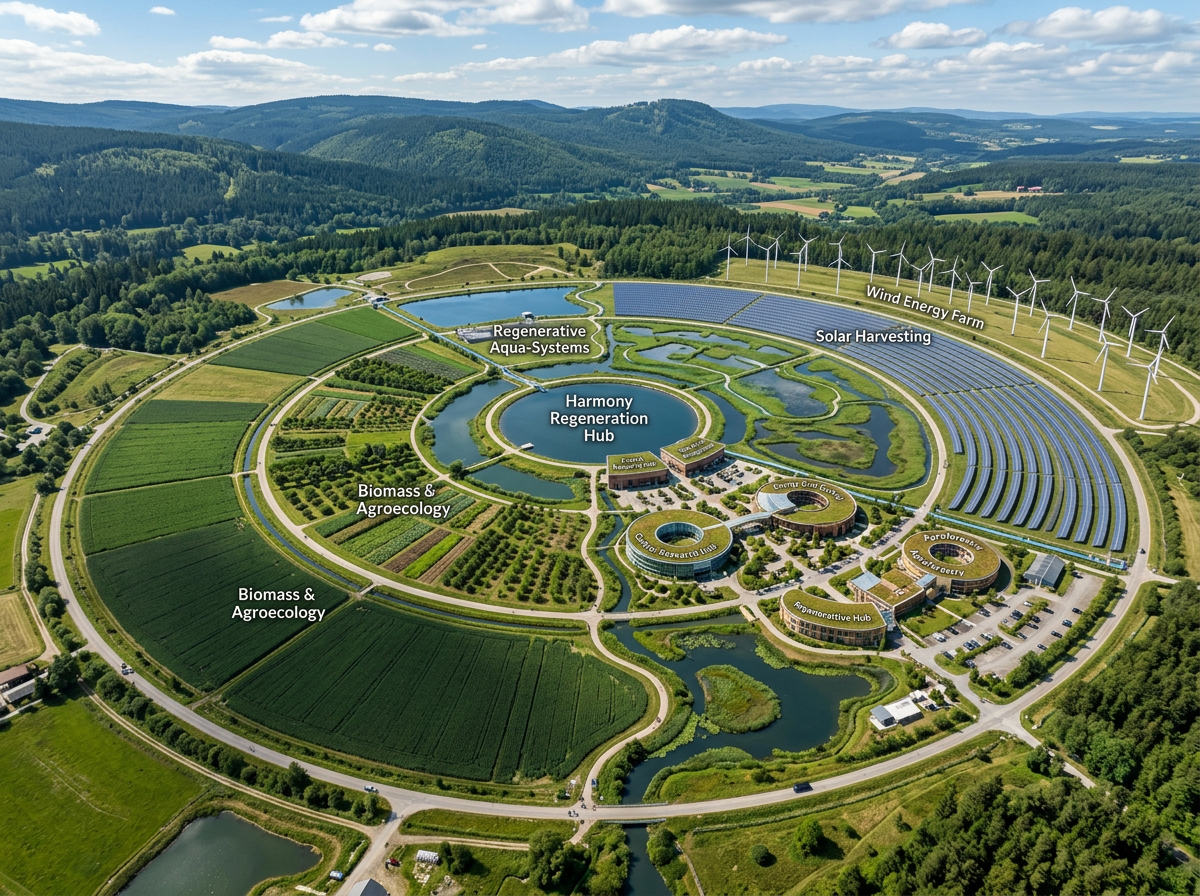
  • Circular Resource Systems

    Circular Resource Systems


    Designing Economies That Regenerate Rather Than Deplete


    Meta Description

    Explore circular resource systems and how regenerative design, circular economies, ecological stewardship, and systems thinking can strengthen resilience, reduce waste, and support long-term civilizational sustainability.


    Introduction

    Modern industrial civilization largely operates through linear resource systems.

    Resources are extracted, processed, consumed, discarded, and replaced in continuous cycles of throughput.

    This model enabled rapid economic expansion during the industrial era, yet it also generated increasing ecological pressure, waste accumulation, resource depletion, and systemic fragility.

    As populations grow and technological complexity increases, linear extraction models face mounting constraints.

    Ecological systems cannot absorb infinite waste.

    Material systems cannot sustain infinite throughput within finite planetary boundaries.

    This reality is driving increasing interest in circular resource systems.

    Circular systems seek to redesign economic and industrial processes around regeneration, reuse, durability, adaptability, and ecological integration rather than continuous extraction and disposal.

    At its core, circularity reflects a systems principle:

    Healthy systems recycle resources.

    Natural ecosystems operate through circular flows where outputs from one process become inputs for another. Waste from one organism becomes nourishment for another system.

    Industrial civilization, by contrast, often externalizes waste while separating economic activity from ecological cycles.

    Circular resource systems attempt to realign human systems with regenerative principles already visible throughout ecological systems.


    What Are Circular Resource Systems?

    Circular resource systems are economic and infrastructural models designed to minimize waste while maximizing resource longevity, regeneration, reuse, repair, and cyclical material flows.

    Rather than operating through linear patterns of:

    Extract → Produce → Consume → Dispose

    Circular systems aim for:

    Regenerate → Use → Recover → Reintegrate

    Key principles often include:

    • Material reuse
    • Repairability
    • Modular design
    • Recycling systems
    • Regenerative agriculture
    • Durable infrastructure
    • Resource recovery
    • Closed-loop production
    • Renewable energy integration
    • Waste minimization

    Circularity is not merely about recycling.

    It is about redesigning systems themselves to reduce structural dependency upon perpetual extraction.


    Linear Economies and Systemic Fragility

    Linear industrial systems generated extraordinary productive capacity.

    However, they also produced several long-term vulnerabilities:

    • Resource depletion
    • Ecological degradation
    • Waste accumulation
    • Supply chain fragility
    • Energy inefficiency
    • Pollution externalization
    • Planned obsolescence
    • Infrastructure instability

    Linear systems often prioritize short-term efficiency and growth while transferring hidden costs into ecological systems, future generations, or vulnerable populations.

    Examples include:

    • Disposable consumer products
    • Soil degradation from industrial agriculture
    • Plastic pollution accumulation
    • Resource-intensive manufacturing
    • Electronic waste expansion
    • Overdependence on distant extraction systems

    As complexity increases, these externalized costs accumulate across interconnected systems.

    Circular approaches seek to reduce systemic fragility by shortening resource loops and increasing regenerative capacity.


    Nature as a Circular System

    Ecological systems demonstrate circularity continuously.

    Forests recycle nutrients through decomposition. Water cycles regenerate through evaporation and precipitation. Ecosystems reuse energy and matter across interconnected relationships.

    Waste in natural systems rarely exists in the industrial sense.

    Outputs become inputs within broader ecological cycles.

    This does not mean human civilization can perfectly replicate natural ecosystems.

    However, ecological systems reveal important design principles:

    • Diversity increases resilience
    • Redundancy stabilizes systems
    • Waste minimization strengthens efficiency
    • Regeneration supports continuity
    • Distributed systems improve adaptability

    Circular resource systems increasingly apply these principles to economics, infrastructure, manufacturing, and urban planning.


    Energy, Materials, and Civilizational Throughput

    Civilization functions through material and energetic throughput.

    Modern economies require:

    • Metals
    • Water
    • Energy
    • Agricultural inputs
    • Rare earth minerals
    • Construction materials
    • Industrial chemicals
    • Biological resources

    Linear systems continuously increase extraction pressure to maintain growth and consumption patterns.

    Circular systems attempt to reduce throughput intensity by extending material lifecycles and improving resource efficiency.

    This may involve:

    • Product remanufacturing
    • Material recovery systems
    • Shared ownership models
    • Repair ecosystems
    • Circular supply chains
    • Biodegradable materials
    • Renewable resource integration

    Reducing unnecessary throughput can strengthen long-term resilience by lowering dependency upon unstable extraction systems.


    Regenerative Agriculture and Biological Circularity

    Food systems represent one of the most important areas for circular redesign.

    Industrial agriculture frequently operates through extractive models dependent upon:

    • Intensive chemical inputs
    • Soil depletion
    • Monoculture systems
    • High fossil fuel usage
    • Long-distance transportation
    • Water overconsumption

    Regenerative agricultural systems instead emphasize:

    • Soil restoration
    • Nutrient cycling
    • Biodiversity
    • Water retention
    • Ecological integration
    • Local resilience
    • Carbon sequestration

    Healthy soil itself functions as a living circular system recycling nutrients through biological activity.

    Circular food systems often increase resilience because they restore ecological foundations rather than continuously degrading them.


    Waste as a Design Failure

    Circular systems treat waste not merely as a disposal issue, but as a systems design problem.

    Much industrial waste exists because systems were not designed for long-term material recovery.

    Examples include:

    • Non-repairable electronics
    • Single-use plastics
    • Planned obsolescence
    • Mixed-material manufacturing difficult to recycle
    • Infrastructure designed for disposability

    Circular design principles instead prioritize:

    • Modularity
    • Durability
    • Repairability
    • Material separation
    • Resource recovery
    • Long lifecycle planning

    This shifts economic logic from perpetual replacement toward stewardship and continuity.


    Infrastructure and Urban Circularity

    Cities are major centers of material and energy consumption.

    Circular urban systems may include:

    • Water recycling systems
    • Distributed renewable energy
    • Circular construction materials
    • Local food production
    • Public transportation integration
    • Waste-to-resource infrastructure
    • Shared mobility systems
    • Adaptive building reuse

    Urban resilience increasingly depends upon reducing vulnerability to distant resource dependencies while improving local regenerative capacity.

    Circular infrastructure often strengthens resilience because it reduces systemic inefficiencies and material leakage.


    Economic Incentives and Circular Transition

    One major challenge involves incentive structures.

    Many existing economic systems reward:

    • High consumption
    • Rapid replacement
    • Short product lifecycles
    • Extraction-based growth
    • Externalization of ecological costs

    Circular systems often require different incentive architectures.

    Examples may include:

    • Extended producer responsibility
    • Repair incentives
    • Regenerative investment
    • Material recovery systems
    • Durable product design standards
    • Resource stewardship frameworks

    Without incentive realignment, circularity remains difficult to scale because linear extraction models may continue generating short-term financial advantages despite long-term instability.


    Circular Systems and Local Resilience

    Circular systems frequently strengthen local resilience.

    Communities capable of recovering, repairing, reusing, and regenerating resources often become less dependent upon fragile global supply chains.

    Local circular resilience may involve:

    • Repair cooperatives
    • Regional material recovery
    • Local agriculture
    • Shared production systems
    • Community energy systems
    • Distributed manufacturing
    • Resource-sharing networks

    These systems reduce dependency upon continuous external throughput while strengthening adaptive capacity during disruption.

    Circularity therefore supports not only sustainability, but resilience.


    Technology and Circular Innovation

    Technology can support circular systems when aligned with regenerative principles.

    Examples include:

    • Advanced recycling systems
    • Modular manufacturing
    • Precision agriculture
    • Resource tracking systems
    • Distributed fabrication
    • Renewable energy integration
    • Smart infrastructure optimization

    However, technology alone cannot solve structural problems if underlying systems continue incentivizing extraction and disposability.

    Technological innovation must therefore operate within broader governance, economic, and cultural transitions toward stewardship-oriented design.


    Circularity and Governance

    Circular resource systems require governance coordination across:

    • Infrastructure planning
    • Economic incentives
    • Manufacturing standards
    • Urban development
    • Waste systems
    • Ecological regulation
    • Supply chain transparency

    This creates governance challenges because modern economies often remain fragmented across jurisdictions, industries, and regulatory systems.

    Adaptive governance increasingly requires systems thinking capable of integrating ecological realities into economic coordination.

    Circularity is therefore not merely a technical issue.

    It is a civilizational coordination challenge.


    Circular Systems Are Not Infinite Systems

    Circular systems improve efficiency and resilience, but they do not eliminate all limits.

    No system achieves perfect circularity.

    Energy losses, entropy, material degradation, and ecological constraints still exist.

    Circularity therefore should not be understood as a technological utopia capable of sustaining infinite growth within finite systems.

    Rather, circularity reduces waste, strengthens resilience, and aligns human systems more closely with ecological regeneration.

    Long-term sustainability still requires balancing:

    • Consumption
    • Population pressures
    • Energy use
    • Material throughput
    • Ecological regeneration capacity

    Circular systems improve alignment with these realities rather than eliminating them.


    Toward Regenerative Civilization

    The future may increasingly depend upon whether human civilization can transition from extractive throughput models toward regenerative systems capable of maintaining prosperity without destabilizing ecological foundations.

    This transition may involve:

    • Circular manufacturing
    • Regenerative agriculture
    • Distributed resilience systems
    • Renewable energy infrastructure
    • Adaptive governance
    • Localized resource loops
    • Durable product design
    • Ecological restoration
    • Stewardship-oriented economics

    Circular resource systems ultimately represent more than environmental policy.

    They represent a shift in civilizational logic.

    From extraction toward regeneration.

    From disposability toward stewardship.

    From short-term throughput toward long-term continuity.

    Civilizations capable of integrating circular principles may prove more resilient within an era increasingly defined by ecological limits, resource pressures, and systemic complexity.

    Because systems that endlessly consume without regenerating eventually destabilize the very foundations supporting civilization itself.


    Suggested Crosslinks


    References

    Braungart, M., & McDonough, W. (2002). Cradle to cradle: Remaking the way we make things. North Point Press.

    Ellen MacArthur Foundation. (2013). Towards the circular economy: Economic and business rationale for an accelerated transition.

    Odum, H. T. (2007). Environment, power, and society for the twenty-first century. Columbia University Press.

    Raworth, K. (2017). Doughnut economics: Seven ways to think like a 21st-century economist. Chelsea Green Publishing.

    The Living Archive is designed to be explored through pathways, categories, and search. If you’re looking for a specific idea, question, or theme, AI Search can help surface relevant connections across the archive.


    Attribution

    The Living Archive
    Integrative Frameworks for Regenerative Civilization

    © 2026 Gerald Daquila. All rights reserved.
    Part of the Life.Understood. knowledge ecosystem and Stewardship Institute initiative.

    This article is intended for educational, research, and civic inquiry purposes.
    Readers are encouraged to engage critically, verify sources independently, and explore related knowledge hubs for broader systems context.

  • Governance as Coordination Architecture

    Governance as Coordination Architecture


    How Societies Organize Complexity, Cooperation, and Collective Survival


    Meta Description

    Explore governance as coordination architecture and how societies organize cooperation, infrastructure, institutions, economics, and resilience through systems design, distributed coordination, and adaptive governance.


    Introduction

    Governance is often reduced to politics, elections, legislation, or state authority.

    Yet beneath these visible structures lies a deeper reality:

    Governance is fundamentally a coordination architecture.

    Human societies require mechanisms capable of organizing collective behavior across populations, infrastructures, economies, information systems, ecological systems, and institutions.

    Without coordination, large-scale civilization becomes difficult to sustain.

    Governance therefore concerns how societies align decision-making, distribute resources, resolve conflict, maintain continuity, process information, and adapt to changing conditions.

    At small scales, coordination may emerge informally through relationships and local norms. At civilizational scale, however, coordination becomes increasingly complex.

    Modern societies depend upon governance systems to coordinate:

    • Energy infrastructure
    • Transportation networks
    • Legal systems
    • Public health
    • Financial systems
    • Communication systems
    • Environmental stewardship
    • Disaster response
    • Economic activity
    • Institutional continuity

    As societies become more interconnected, governance increasingly functions as a systems architecture problem rather than merely an ideological debate.

    The critical question is no longer simply who governs.

    It is how coordination itself is designed.


    What Is Coordination Architecture?

    Coordination architecture refers to the structures, incentives, institutions, processes, and communication systems through which collective behavior becomes organized.

    Every society possesses coordination architectures whether formally recognized or not.

    These architectures shape:

    • Decision-making flows
    • Authority distribution
    • Resource allocation
    • Information processing
    • Incentive structures
    • Conflict mediation
    • Accountability systems
    • Collective adaptation

    Governance architectures may be:

    • Centralized
    • Decentralized
    • Hierarchical
    • Distributed
    • Participatory
    • Technocratic
    • Cooperative
    • Hybrid

    Importantly, governance systems are not static.

    They evolve continuously in response to technological change, ecological pressures, economic conditions, institutional complexity, and cultural transformation.

    Healthy governance systems remain adaptive.

    Rigid systems often become fragile under changing conditions.

    Governance becomes easier to understand when viewed as a coordination system rather than simply a political structure.

    Every society must organize information flows, resource allocation, decision-making authority, accountability mechanisms, infrastructure, trust networks, and adaptive feedback processes.

    The framework below illustrates how these elements interact to create the broader architecture through which societies maintain coherence, respond to complexity, and coordinate collective life.

    Figure 1. Governance as Coordination Architecture.

    Download Reference Map 010: Governance System Map

    Governance extends beyond formal political institutions to include the information flows, incentive systems, trust networks, infrastructure, decision processes, and feedback mechanisms that enable societies to coordinate behavior across multiple scales.

    Effective governance depends on balancing coherence, adaptability, accountability, resilience, and collective problem-solving within increasingly complex environments.


    Human Civilization as a Coordination Challenge

    Civilization itself can be understood as a large-scale coordination phenomenon.

    Human beings cooperate across extraordinary scales compared to most species.

    This cooperation enables:

    • Cities
    • Infrastructure
    • Trade systems
    • Scientific research
    • Educational systems
    • Healthcare networks
    • Technological innovation
    • Cultural continuity

    However, large-scale coordination introduces complexity.

    As populations grow, societies require increasingly sophisticated systems to manage:

    • Information flows
    • Resource distribution
    • Institutional accountability
    • Infrastructure maintenance
    • Economic activity
    • Social trust
    • Environmental pressures

    Governance emerges because unmanaged complexity eventually produces instability.

    The role of governance is therefore not merely control.

    It is maintaining functional coherence across interconnected systems.


    Governance Beyond Politics

    Political systems are only one layer of governance.

    Governance also includes:

    • Economic coordination
    • Institutional design
    • Technological systems
    • Cultural norms
    • Information architectures
    • Social trust networks
    • Legal frameworks
    • Ecological stewardship systems

    For example:

    Markets govern resource allocation through price signals.

    Digital platforms govern communication visibility through algorithms.

    Cultural norms govern acceptable behavior through social reinforcement.

    Institutions govern organizational behavior through incentive systems.

    Governance therefore exists wherever systems shape coordinated human behavior.

    This broader perspective reveals that modern societies are governed simultaneously through multiple overlapping architectures rather than solely through formal state institutions.


    Centralization and Coordination Efficiency

    Centralized governance systems often emerge because they improve coordination efficiency at scale.

    Centralization can enable:

    • Standardized infrastructure
    • Unified legal systems
    • National defense coordination
    • Large-scale crisis mobilization
    • Administrative consistency
    • Macroeconomic management

    Historically, centralized systems supported the development of roads, sanitation systems, public administration, and large-scale trade coordination.

    However, centralization also concentrates risk.

    Overly centralized systems may become:

    • Bureaucratically rigid
    • Slow to adapt
    • Vulnerable to single points of failure
    • Detached from local realities
    • Prone to institutional capture

    As complexity increases, purely centralized governance often struggles to process sufficient information rapidly enough to remain adaptive.

    This creates tension between coordination efficiency and resilience.


    Decentralization and Adaptive Capacity

    Decentralized systems distribute authority and problem-solving across multiple nodes.

    This often increases:

    • Local responsiveness
    • Flexibility
    • Innovation diversity
    • Redundancy
    • Community participation
    • Adaptive resilience

    Elinor Ostrom’s research demonstrated that decentralized governance systems can effectively manage shared resources when local accountability and participatory stewardship are present (Ostrom, 1990).

    Decentralized systems may outperform centralized systems in rapidly changing environments because local actors often possess contextual knowledge unavailable to distant institutions.

    However, decentralization also introduces challenges:

    • Coordination fragmentation
    • Uneven standards
    • Slower large-scale mobilization
    • Conflicting local priorities
    • Reduced systemic coherence

    Effective governance therefore often requires balancing centralized coordination with decentralized adaptability.


    Information Processing and Governance Capacity

    One of the most important functions of governance systems is information processing.

    Societies continuously generate enormous amounts of information regarding:

    • Economic conditions
    • Infrastructure performance
    • Ecological changes
    • Public health
    • Social behavior
    • Resource flows
    • Technological risks

    Governance systems must process this information sufficiently well to coordinate effective responses.

    This creates a major challenge in complex societies.

    Friedrich Hayek argued that centralized systems struggle to aggregate dispersed local knowledge effectively because information is distributed across populations and contexts (Hayek, 1945).

    Meanwhile, excessively fragmented systems may struggle to coordinate large-scale responses.

    Governance architecture therefore partly concerns designing systems capable of integrating distributed information while maintaining coherent coordination.


    Incentives as Governance Mechanisms

    Governance systems operate heavily through incentives.

    Institutions shape behavior by rewarding certain actions and discouraging others.

    Examples include:

    • Tax structures
    • Regulatory systems
    • Economic rewards
    • Legal penalties
    • Social norms
    • Platform algorithms
    • Institutional metrics

    Incentives influence:

    • Economic behavior
    • Environmental stewardship
    • Innovation
    • Civic participation
    • Institutional trust
    • Organizational conduct

    Poorly aligned incentives often produce unintended consequences.

    For example:

    • Financial systems rewarding short-term speculation may increase systemic fragility.
    • Political systems rewarding polarization may weaken governance legitimacy.
    • Media systems optimizing engagement may amplify social fragmentation.

    Governance architecture therefore involves designing incentives aligned with long-term societal resilience rather than narrow short-term optimization.


    Governance and Social Trust

    Trust functions as invisible coordination infrastructure.

    Societies with higher social trust often experience:

    • Lower transaction costs
    • Greater civic participation
    • More effective institutions
    • Stronger cooperation capacity
    • Greater crisis adaptability

    Francis Fukuyama (1995) described trust as a foundational form of social capital enabling large-scale coordination.

    Without trust, governance systems become increasingly dependent upon coercion, surveillance, bureaucracy, and transactional enforcement.

    High-trust societies can coordinate more efficiently because populations maintain greater confidence in institutions and one another.

    Trust therefore reduces coordination friction.


    Complexity, Fragility, and Adaptive Governance

    Modern governance operates within unprecedented complexity.

    Globalized supply chains, digital infrastructure, financial systems, ecological instability, technological acceleration, and information ecosystems interact across tightly interconnected networks.

    This creates conditions of systemic simultaneity where disruptions cascade rapidly across sectors.

    Rigid governance systems often struggle under such conditions.

    Adaptive governance increasingly requires:

    • Feedback sensitivity
    • Distributed resilience
    • Transparent information systems
    • Flexible coordination mechanisms
    • Cross-sector integration
    • Long-term systems thinking

    Governance architectures designed solely for stability may become fragile under accelerating change.

    Resilient systems must remain capable of learning.


    Technology as Coordination Infrastructure

    Technology increasingly functions as governance architecture itself.

    Algorithms shape attention flows.

    Platforms regulate communication visibility.

    Digital systems mediate commerce, labor participation, information access, and social interaction.

    This creates new forms of infrastructural governance beyond traditional political institutions.

    Technological governance raises important questions:

    • Who controls digital infrastructure?
    • How are algorithms shaping collective behavior?
    • What incentives govern platform systems?
    • How transparent are coordination mechanisms?
    • Who retains sovereignty over information systems?

    The future of governance increasingly involves not only governments, but technological architectures shaping societal coordination at planetary scale.


    Ecological Governance and Long-Term Survival

    Governance systems must also coordinate relationships between human systems and ecological systems.

    Ecological instability increasingly pressures:

    • Food systems
    • Water systems
    • Energy systems
    • Infrastructure
    • Migration systems
    • Public health systems

    Industrial-era governance often prioritized short-term extraction over long-term ecological stewardship.

    However, governance architectures incapable of integrating ecological realities may generate increasing systemic fragility.

    Long-term resilience likely requires governance systems capable of balancing:

    • Economic productivity
    • Ecological sustainability
    • Social stability
    • Technological adaptation
    • Resource stewardship

    Governance therefore increasingly becomes a planetary coordination challenge.


    Governance Is Not Merely Authority

    One of the most important shifts in systems thinking is recognizing that governance is not simply top-down control.

    Governance is the architecture through which societies coordinate complexity.

    Healthy governance systems do not merely enforce compliance.

    They enable:

    • Cooperation
    • Adaptation
    • Resilience
    • Accountability
    • Information flow
    • Collective problem-solving
    • Long-term continuity

    Strong governance does not necessarily mean maximal centralization.

    Nor does resilience require complete decentralization.

    The challenge is designing architectures capable of balancing coherence with adaptability.


    Toward Adaptive Coordination Systems

    The future may increasingly belong to societies capable of building governance systems that are:

    • Transparent
    • Adaptive
    • Participatory
    • Ecologically integrated
    • Technologically literate
    • Distributed yet coherent
    • Resilient under complexity

    Such systems may combine:

    • Local autonomy
    • Strategic coordination
    • Distributed resilience
    • Civic participation
    • Ethical stewardship
    • Long-term systems awareness

    Civilization ultimately depends upon coordination capacity.

    The societies most capable of organizing complexity without collapsing beneath it may prove more resilient within an era defined by accelerating transformation.

    Governance as coordination architecture therefore concerns far more than politics alone.

    It concerns how humanity organizes collective life itself.


    Suggested Crosslinks


    References

    Fukuyama, F. (1995). Trust: The social virtues and the creation of prosperity. Free Press.

    Hayek, F. A. (1945). The use of knowledge in society. American Economic Review, 35(4), 519–530.

    Ostrom, E. (1990). Governing the commons: The evolution of institutions for collective action. Cambridge University Press.

    Senge, P. M. (1990). The fifth discipline: The art and practice of the learning organization. Doubleday.

    The Living Archive is designed to be explored through pathways, categories, and search. If you’re looking for a specific idea, question, or theme, AI Search can help surface relevant connections across the archive.


    Attribution

    The Living Archive
    Integrative Frameworks for Regenerative Civilization

    © 2026 Gerald Daquila. All rights reserved.
    Part of the Life.Understood. knowledge ecosystem and Stewardship Institute initiative.

    This article is intended for educational, research, and civic inquiry purposes.
    Readers are encouraged to engage critically, verify sources independently, and explore related knowledge hubs for broader systems context.

  • Institutional Memory Systems

    Institutional Memory Systems


    Why Civilizations Depend Upon the Preservation, Transmission, and Integrity of Knowledge


    Meta Description

    Explore how institutional memory systems preserve governance continuity, organizational resilience, collective knowledge, and civilizational stability through archives, culture, education, and adaptive systems design.


    Introduction

    Civilizations are not sustained by infrastructure alone.

    They are sustained by memory.

    Every society depends upon the preservation and transmission of knowledge across generations.

    Governance systems, legal frameworks, engineering practices, ecological understanding, cultural traditions, scientific discoveries, organizational procedures, and social norms all rely upon institutional memory systems capable of maintaining continuity over time.

    Without memory, systems repeatedly lose accumulated learning.

    Mistakes recur. Coordination weakens. Fragility increases. Institutions become reactive rather than adaptive because hard-earned knowledge disappears faster than societies can integrate it.

    Institutional memory systems therefore function as civilizational infrastructure.

    They preserve not only information, but continuity itself.

    In an era of accelerating complexity, technological disruption, informational overload, and institutional instability, the integrity of collective memory may become increasingly important to long-term societal resilience.

    Because civilizations that cannot remember eventually struggle to sustain coherence.


    What Is Institutional Memory?

    Institutional memory refers to the accumulated knowledge, experience, practices, cultural understanding, operational procedures, and historical awareness retained within organizations, communities, and societies across time.

    Institutional memory may include:

    • Governance procedures
    • Legal precedents
    • Engineering knowledge
    • Ecological stewardship practices
    • Historical records
    • Cultural traditions
    • Organizational lessons
    • Scientific understanding
    • Crisis response experience
    • Social coordination mechanisms

    This memory can exist within:

    • Archives
    • Educational systems
    • Oral traditions
    • Cultural norms
    • Digital databases
    • Institutional structures
    • Experienced individuals
    • Community practices

    Institutional memory allows societies to build cumulatively rather than restarting continuously from fragmentation.


    Civilization as Accumulated Knowledge

    Human civilization advances partly because knowledge accumulates across generations.

    Agriculture, medicine, governance, architecture, science, mathematics, engineering, philosophy, and infrastructure all emerged through preserved learning over long historical timescales.

    When knowledge transmission weakens, societal capacity may decline rapidly.

    Historical collapses often involved not merely political instability, but degradation of institutional continuity itself.

    Examples throughout history include:

    • Loss of engineering knowledge
    • Decline of literacy systems
    • Fragmentation of governance records
    • Disruption of trade coordination
    • Collapse of educational institutions
    • Destruction of archives and libraries

    Civilizations require mechanisms capable of carrying forward operational understanding across periods of instability.

    Without memory systems, complexity becomes difficult to sustain.


    Institutional Memory and Governance Stability

    Governance systems rely heavily upon continuity.

    Administrative competence depends upon accumulated operational knowledge regarding:

    • Legal systems
    • Infrastructure management
    • Resource coordination
    • Crisis response
    • Diplomatic processes
    • Financial systems
    • Public administration

    When experienced personnel disappear without effective knowledge transfer, institutional capability often weakens.

    This phenomenon may appear through:

    • Bureaucratic dysfunction
    • Repeated policy failures
    • Loss of procedural coherence
    • Organizational inefficiency
    • Declining adaptive capacity

    Institutional memory therefore functions as a stabilizing mechanism within governance systems.

    Healthy institutions preserve learning while remaining capable of adaptation.

    Fragile institutions frequently lose memory faster than they develop wisdom.


    Tacit Knowledge and the Limits of Documentation

    Not all institutional knowledge can be fully written down.

    Much operational competence exists as tacit knowledge — practical understanding developed through lived experience.

    Examples include:

    • Leadership judgment
    • Community trust networks
    • Ecological intuition
    • Skilled craftsmanship
    • Crisis management experience
    • Informal coordination systems
    • Cultural interpretation

    Tacit knowledge is often difficult to formalize because it depends upon context, relationships, timing, and embodied practice.

    As a result, institutional memory depends not only upon archives, but upon mentorship, apprenticeship, participation, and intergenerational transmission.

    Societies that lose pathways for transmitting tacit knowledge may experience hidden forms of decline even when formal information remains available.


    Information Overload and the Modern Memory Crisis

    Modern civilization produces unprecedented quantities of information.

    However, information abundance does not automatically create wisdom.

    In fact, excessive informational fragmentation may weaken institutional memory by overwhelming the capacity for coherent integration.

    Herbert Simon (1971) warned that an abundance of information creates a scarcity of attention.

    Modern systems increasingly face challenges such as:

    • Data overload
    • Fragmented archives
    • Algorithmic filtering
    • Shortened attention cycles
    • Rapid media turnover
    • Ephemeral digital content
    • Loss of contextual understanding

    Under such conditions, societies may accumulate massive amounts of information while simultaneously losing long-term coherence.

    This creates a paradox:

    Civilization may become increasingly data-rich while becoming memory-poor.


    Digital Systems and the Fragility of Knowledge Preservation

    Digital systems dramatically expand humanity’s capacity to store information.

    However, digital memory systems also introduce new vulnerabilities.

    These include:

    • Platform dependency
    • Data corruption
    • Cybersecurity risks
    • Proprietary access control
    • Technological obsolescence
    • Algorithmic invisibility
    • Information manipulation
    • Centralized infrastructure fragility

    Unlike physical archives that can survive independently across centuries, digital systems often depend upon highly complex technological ecosystems requiring constant maintenance and compatibility.

    Long-term preservation therefore becomes a systems challenge rather than merely a storage challenge.

    Questions increasingly emerge regarding:

    • Digital sovereignty
    • Open standards
    • Decentralized archives
    • Redundant preservation systems
    • Knowledge accessibility
    • Information integrity

    Institutional memory in the digital age depends not only upon storage capacity, but resilience architecture.


    Cultural Memory and Civilizational Identity

    Institutional memory is not purely administrative.

    Culture itself functions as a memory system.

    Stories, rituals, language, art, philosophy, ethics, myths, and collective narratives transmit civilizational identity across generations.

    Cultural memory helps societies preserve:

    • Shared meaning
    • Moral frameworks
    • Historical lessons
    • Identity continuity
    • Collective orientation
    • Intergenerational cohesion

    When cultural memory fragments, societies may experience increasing disorientation, polarization, and instability.

    Civilizations require not only technical coordination, but narrative coherence.

    Without shared memory, collective identity weakens.


    Ecological Memory and Indigenous Knowledge

    Many traditional and indigenous societies preserved sophisticated ecological memory systems across generations.

    These systems often included:

    • Seasonal agricultural knowledge
    • Watershed management
    • Biodiversity stewardship
    • Fire management practices
    • Fisheries coordination
    • Ecological observation cycles

    Such knowledge frequently emerged through long-term relationship with specific ecosystems rather than abstract centralized planning.

    Modern industrial systems sometimes displaced these memory systems while underestimating their adaptive sophistication.

    As ecological instability increases, societies may increasingly recognize the importance of preserving diverse forms of ecological memory and localized stewardship knowledge.


    Organizational Amnesia and Institutional Fragility

    Organizations frequently experience institutional amnesia.

    This occurs when knowledge loss outpaces knowledge transfer.

    Common causes include:

    • Leadership turnover
    • Short-term incentives
    • Bureaucratic fragmentation
    • Rapid scaling
    • Outsourcing of expertise
    • Technological disruption
    • Weak documentation systems
    • Cultural erosion

    Institutional amnesia increases fragility because organizations repeatedly encounter problems they previously solved but failed to remember.

    This creates cyclical dysfunction.

    Adaptive systems require mechanisms for retaining lessons across time.

    Otherwise, complexity repeatedly resets itself through avoidable failure.


    Learning Systems and Adaptive Civilization

    Healthy institutional memory systems do more than preserve the past.

    They enable adaptive learning.

    This requires balancing:

    • Stability and flexibility
    • Preservation and innovation
    • Tradition and adaptation
    • Continuity and experimentation

    Rigid institutions sometimes preserve outdated structures too aggressively.

    Conversely, hyper-disrupted systems may lose continuity entirely.

    Adaptive civilizations maintain memory while remaining capable of integrating new realities.

    This may involve:

    • Transparent archives
    • Open knowledge systems
    • Intergenerational mentorship
    • Civic education
    • Decentralized preservation
    • Historical literacy
    • Institutional accountability
    • Long-term systems thinking

    Learning societies strengthen resilience because they accumulate wisdom rather than merely accumulating information.


    Institutional Memory and Civilizational Resilience

    Resilience depends partly upon whether societies can remember previous disruptions, adaptations, and failures.

    Institutional memory strengthens:

    • Crisis preparedness
    • Governance continuity
    • Ecological stewardship
    • Technological adaptation
    • Infrastructure maintenance
    • Social coordination
    • Civic trust

    Without memory systems, civilizations often become trapped in cycles of repeated instability.

    Each generation rediscovers problems already encountered by previous generations.

    Institutional memory therefore acts as a form of temporal resilience.

    It allows civilizations to extend learning beyond individual lifespans.


    The Ethics of Memory Preservation

    Institutional memory also raises ethical questions.

    Who controls collective memory?

    Which narratives are preserved?

    Which histories are erased?

    Which knowledge systems are considered legitimate?

    Power strongly shapes memory preservation.

    Throughout history, institutions often preserved certain narratives while marginalizing others.

    Healthy memory systems therefore require pluralism, transparency, and distributed access rather than centralized informational monopolies.

    Civilizational wisdom depends partly upon preserving diverse perspectives and maintaining openness to revision based upon emerging understanding.


    Toward Resilient Memory Systems

    As modern civilization faces increasing complexity, institutional memory systems may become more important than ever.

    Future resilience may depend upon building systems capable of preserving:

    • Knowledge integrity
    • Historical awareness
    • Ecological understanding
    • Governance continuity
    • Cultural coherence
    • Technical competence
    • Civic literacy
    • Distributed archives

    This requires more than technological storage.

    It requires cultures capable of valuing long-term continuity within an age dominated by acceleration and distraction.

    Civilizations survive not merely through power or innovation alone.

    They survive through their ability to remember, learn, adapt, and transmit wisdom across generations.

    Because societies that lose memory often lose continuity itself.


    Suggested Crosslinks


    References

    Assmann, J. (2011). Cultural memory and early civilization: Writing, remembrance, and political imagination. Cambridge University Press.

    Ostrom, E. (1990). Governing the commons: The evolution of institutions for collective action. Cambridge University Press.

    Simon, H. A. (1971). Designing organizations for an information-rich world. In M. Greenberger (Ed.), Computers, communications, and the public interest (pp. 37–72). Johns Hopkins University Press.

    Tainter, J. A. (1988). The collapse of complex societies. Cambridge University Press.

    The Living Archive is designed to be explored through pathways, categories, and search. If you’re looking for a specific idea, question, or theme, AI Search can help surface relevant connections across the archive.


    Attribution

    The Living Archive
    Integrative Frameworks for Regenerative Civilization

    © 2026 Gerald Daquila. All rights reserved.
    Part of the Life.Understood. knowledge ecosystem and Stewardship Institute initiative.

    This article is intended for educational, research, and civic inquiry purposes.
    Readers are encouraged to engage critically, verify sources independently, and explore related knowledge hubs for broader systems context.

  • Human Incentives and Emergent Behavior

    Human Incentives and Emergent Behavior


    How Individual Actions Create Collective Systems No One Intentionally Designed


    Meta Description

    Explore how incentives, feedback loops, and emergent behavior shape economies, institutions, governance, technology, and civilization. A systems-thinking examination of human behavior, complexity, coordination, and unintended consequences.


    Introduction

    Human civilization is shaped not only by laws, institutions, and technologies, but by incentives.

    Individuals respond continuously to rewards, pressures, constraints, risks, social expectations, and survival conditions embedded within systems.

    Over time, billions of individual decisions interact to produce large-scale collective outcomes that no single person fully controls or intentionally designs.

    This process gives rise to emergent behavior.

    Emerent behavior refers to complex patterns arising from many smaller interactions between individuals, institutions, and systems. These patterns often cannot be fully understood by examining isolated parts alone.

    Markets emerge from countless transactions. Cultural norms emerge from repeated social behaviors. Political polarization emerges from interacting informational and institutional dynamics.

    Economic instability, technological disruption, ecological degradation, and institutional fragility frequently emerge through distributed interactions rather than centralized intent.

    Understanding modern civilization therefore requires more than analyzing individual morality or isolated policy decisions.

    It requires understanding how systems shape incentives — and how incentives shape collective behavior.


    What Are Incentives?

    Incentives are the forces that influence decision-making.

    They may be:

    • Economic
    • Social
    • Political
    • Psychological
    • Technological
    • Institutional
    • Cultural

    Human beings respond to both explicit and implicit incentives.

    Examples include:

    • Wages influence labor decisions
    • Social approval shapes behavior
    • Algorithms influence attention
    • Political systems shape cooperation or polarization
    • Financial markets reward certain forms of risk-taking
    • Institutions incentivize specific metrics and outcomes

    Importantly, incentives do not always produce intended consequences.

    Systems frequently generate outcomes very different from those policymakers, institutions, or participants originally expected.

    This occurs because incentives interact dynamically across complex systems.


    Emergent Behavior and Complex Systems

    Emergent behavior occurs when interactions between many individual agents create larger patterns that are not centrally directed.

    Examples include:

    • Traffic patterns
    • Financial bubbles
    • Social movements
    • Market fluctuations
    • Information cascades
    • Cultural trends
    • Institutional norms
    • Collective panic
    • Technological adoption cycles

    Complex systems often display behaviors impossible to predict purely from examining isolated individuals.

    Melanie Mitchell (2009) describes emergence as one of the defining characteristics of complexity itself.

    For example:

    No single bird controls the movement of an entire flock, yet coordinated flocking behavior emerges through local interactions between birds following relatively simple rules.

    Similarly, human societies generate large-scale social patterns through distributed interactions among individuals responding to incentives within institutional and cultural systems.


    Incentives Often Matter More Than Intentions

    One of the most important insights from systems thinking is that systems frequently produce behavior according to incentives rather than stated ideals.

    People may hold ethical intentions while simultaneously operating within structures that reward contradictory behavior.

    Examples include:

    • Financial systems rewarding speculative risk despite long-term instability
    • Media systems rewarding outrage and engagement over accuracy
    • Political systems incentivizing polarization over cooperation
    • Corporate structures prioritizing short-term growth over ecological sustainability
    • Educational systems emphasizing test performance over deep learning

    This does not necessarily imply widespread malice.

    Rather, systems shape behavior through incentive architectures.

    As economist Steven Landsburg famously observed:

    “Most of economics can be summarized in four words: People respond to incentives.”

    The challenge is that incentives often generate second-order effects invisible during initial implementation.


    The Gap Between Individual Rationality and Collective Outcomes

    A central feature of emergent systems is that individually rational behavior can generate collectively irrational outcomes.

    This dynamic appears across many domains.

    Examples include:

    Traffic Congestion

    Each driver attempts to optimize personal travel time, yet collective behavior generates congestion for everyone.

    Financial Bubbles

    Individual investors pursue profit opportunities, yet collective speculation creates systemic instability.

    Ecological Overshoot

    Companies maximize production and extraction for competitive advantage, while collective activity degrades ecological systems supporting civilization itself.

    Information Polarization

    Individuals seek emotionally reinforcing information, yet collective behavior fragments shared reality and weakens social cohesion.

    Garrett Hardin (1968) described this dynamic through the “tragedy of the commons,” where individually rational resource use produces collective depletion of shared systems.

    Emergent behavior therefore reveals an important truth:

    Civilizational outcomes cannot always be understood solely through individual intentions.

    System structure matters.


    Institutional Incentives and Organizational Behavior

    Institutions themselves respond to incentives.

    Governments, corporations, bureaucracies, media organizations, universities, and financial systems all develop internal reward structures shaping behavior over time.

    Institutional incentives may prioritize:

    • Profit growth
    • Political survival
    • Bureaucratic expansion
    • Risk avoidance
    • Public perception
    • Data metrics
    • Shareholder returns
    • Electoral cycles

    Over time, institutions often optimize around measurable incentives even when those incentives become disconnected from broader societal well-being.

    This process can generate institutional drift.

    For example:

    • Healthcare systems may prioritize billing efficiency over patient care.
    • Universities may optimize credential production over intellectual development.
    • Social media platforms may maximize engagement despite increasing polarization.
    • Political systems may reward performative conflict rather than governance effectiveness.

    Emergent institutional behavior frequently arises without centralized conspiracy.

    It emerges from incentive structures interacting across large systems.


    Feedback Loops and Behavioral Amplification

    Complex systems operate through feedback loops.

    Positive feedback loops amplify behavior.

    Negative feedback loops stabilize systems.

    Examples of positive feedback loops include:

    • Viral social media amplification
    • Financial speculation cycles
    • Political outrage escalation
    • Algorithmic attention reinforcement

    Negative feedback loops include:

    • Regulatory stabilizers
    • Ecological balancing mechanisms
    • Market corrections
    • Community accountability structures

    When positive feedback loops become excessive, systems may become unstable.

    For example:

    • Social media algorithms amplify emotionally charged content because outrage increases engagement.
    • Increased engagement rewards further outrage production.
    • Polarization intensifies through recursive amplification.

    No single actor necessarily intends the final outcome.

    The system produces emergent escalation through interacting incentives.


    Technology and Algorithmic Incentives

    Digital systems increasingly shape human behavior through invisible incentive architectures.

    Algorithms influence:

    • Attention
    • Consumption
    • Communication
    • Political perception
    • Emotional engagement
    • Social validation
    • Economic behavior

    These systems often optimize for metrics such as:

    • Engagement duration
    • Advertising revenue
    • Click-through rates
    • Platform retention

    As a result, human cognition increasingly interacts with machine-optimized behavioral systems.

    This creates new forms of emergent behavior at planetary scale.

    For example:

    • Attention fragmentation
    • Memetic contagion
    • Rapid narrative cascades
    • Collective emotional synchronization
    • Information polarization

    Technological systems therefore increasingly function as behavioral environments shaping societal dynamics.


    Economic Incentives and Civilizational Direction

    Economic systems powerfully influence emergent civilization-level behavior.

    If systems reward extraction, extraction increases.

    If systems reward speculation, speculation expands.

    If systems reward short-term growth regardless of ecological cost, long-term instability may accumulate beneath short-term prosperity.

    Economic incentives influence:

    • Urban design
    • Labor systems
    • Resource consumption
    • Technological development
    • Ecological impact
    • Institutional priorities

    Importantly, economies are not merely financial systems.

    They are behavioral coordination systems.

    The incentives embedded within economies shape how entire civilizations allocate energy, attention, labor, and resources.


    Culture as Emergent Coordination

    Culture itself emerges through distributed interaction.

    Norms, values, customs, and collective assumptions evolve through repeated behavioral reinforcement across populations.

    Culture can therefore function both as:

    • A stabilizing coordination mechanism
    • A driver of systemic change

    Cultural incentives strongly influence:

    • Cooperation
    • Trust
    • Consumption patterns
    • Governance expectations
    • Family structures
    • Community participation
    • Institutional legitimacy

    Societies with strong trust and cooperative norms often coordinate more effectively during periods of uncertainty.

    Francis Fukuyama (1995) argued that trust acts as a form of social capital enabling large-scale coordination within complex societies.

    Culture therefore shapes systemic resilience.


    Emergence Is Not Fully Predictable

    One of the defining characteristics of emergent systems is partial unpredictability.

    Complex interactions generate nonlinear outcomes.

    Small changes may create disproportionate effects.

    Minor incentives may unexpectedly reshape entire systems over time.

    This is why many interventions generate unintended consequences.

    Policies designed to solve one problem may produce secondary effects elsewhere within interconnected systems.

    Systems thinking therefore emphasizes humility.

    Human beings rarely possess complete understanding of all interacting variables shaping collective behavior.

    However, understanding incentives and emergence still improves the ability to perceive patterns, anticipate risks, and design more adaptive systems.


    Designing Better Incentive Structures

    If incentives shape behavior, then institutional design matters profoundly.

    Healthy systems often align incentives with long-term societal well-being.

    This may include designing systems that reward:

    • Ecological stewardship
    • Long-term thinking
    • Cooperation
    • Transparency
    • Civic participation
    • Regenerative economics
    • Distributed resilience
    • Ethical innovation

    Poorly aligned incentives frequently produce fragility.

    Well-aligned incentives can strengthen resilience and collective flourishing.

    This does not require perfect control over human behavior.

    Rather, it requires understanding that systems continuously shape the conditions under which behavior emerges.


    Toward a More Systems-Aware Civilization

    Modern civilization increasingly operates through interconnected systems whose complexity exceeds intuitive human perception.

    Understanding incentives and emergence may therefore become essential forms of civilizational literacy.

    Without systems awareness:

    • Societies misdiagnose structural problems
    • Institutions optimize destructive incentives
    • Polarization escalates
    • Ecological instability intensifies
    • Fragility accumulates invisibly

    Systems-aware societies may instead cultivate:

    • Adaptive governance
    • Long-term thinking
    • Incentive transparency
    • Distributed resilience
    • Ecological integration
    • Cooperative structures
    • Ethical technological stewardship

    Human civilization is not shaped solely by isolated choices.

    It is shaped by the invisible architectures guiding collective behavior across systems.

    To understand where societies are going, one must understand not only what people believe, but what systems reward.

    Because incentives, over time, become civilization itself.


    Suggested Crosslinks


    References

    Fukuyama, F. (1995). Trust: The social virtues and the creation of prosperity. Free Press.

    Hardin, G. (1968). The tragedy of the commons. Science, 162(3859), 1243–1248.

    Mitchell, M. (2009). Complexity: A guided tour. Oxford University Press.

    Senge, P. M. (1990). The fifth discipline: The art and practice of the learning organization. Doubleday.

    The Living Archive is designed to be explored through pathways, categories, and search. If you’re looking for a specific idea, question, or theme, AI Search can help surface relevant connections across the archive.


    Attribution

    The Living Archive
    Integrative Frameworks for Regenerative Civilization

    © 2026 Gerald Daquila. All rights reserved.
    Part of the Life.Understood. knowledge ecosystem and Stewardship Institute initiative.

    This article is intended for educational, research, and civic inquiry purposes.
    Readers are encouraged to engage critically, verify sources independently, and explore related knowledge hubs for broader systems context.