Exploring How Collective Psychology Shapes Political Leadership Across Cultures and History
Meta Description
Why do societies repeatedly elevate similar types of leaders? Explore archetypes in governance, political psychology, leadership patterns, collective identity, and the hidden narratives that shape power.
History often appears to move forward.
- Technologies evolve.
- Institutions change.
- Empires rise and fall.
- Economic systems transform.
Yet beneath these visible changes, certain leadership patterns seem remarkably persistent.
Across centuries and cultures, societies repeatedly elevate familiar types of leaders:
- The warrior.
- The protector.
- The reformer.
- The visionary.
- The strongman.
- The sage.
- The builder.
- The revolutionary.
- The guardian.
Although circumstances differ, the underlying patterns often remain recognizable.
Why does this happen?
Why do populations facing entirely different challenges frequently gravitate toward similar leadership styles?
Political explanations often emphasize institutions, incentives, economic conditions, and strategic interests. These factors are important. Yet they do not fully explain the recurring symbolic roles leaders occupy in collective imagination.
A deeper explanation emerges from psychology.
Societies do not merely select leaders.
They often select archetypes.
Understanding archetypes in governance helps explain why political behavior frequently follows patterns that appear surprisingly consistent across time and geography.
What Is an Archetype?
Psychologist Carl Jung introduced the concept of archetypes as recurring symbolic patterns that appear across cultures, myths, stories, and human experience (Jung, 1964).
Archetypes are not specific individuals.
They are recurring psychological templates.
Examples include:
- The Hero
- The Sage
- The Caregiver
- The Ruler
- The Rebel
- The Explorer
- The Creator
- The Warrior
These patterns appear repeatedly in mythology, literature, religion, and social life.
Importantly, archetypes do not determine behavior.
Rather, they influence how human beings interpret meaning, authority, and identity.
In governance, archetypes help explain why leadership often carries symbolic significance beyond practical competence.
Leadership as Collective Projection
Political leaders rarely function solely as administrators.
They become symbols.
Citizens frequently project hopes, fears, aspirations, frustrations, and expectations onto public figures.
Psychologist Erich Fromm argued that societies often seek authority figures capable of reducing uncertainty during periods of instability (Fromm, 1941).
As a result, leaders frequently embody psychological functions that extend beyond policy.
A leader may represent:
- Security
- Renewal
- Stability
- Strength
- Wisdom
- Change
- Restoration
The symbolic role often becomes as important as actual performance.
Understanding governance therefore requires understanding collective psychology.
The Protector Archetype
Periods of uncertainty frequently elevate protector figures.
When societies experience:
- Economic instability
- External threats
- Social fragmentation
- Institutional distrust
citizens often prioritize security.
The protector archetype promises:
- Order
- Stability
- Safety
- Defense
Political psychology research suggests that perceived threats frequently increase preferences for stronger authority structures and more decisive leadership styles (Marcus, Neuman, & MacKuen, 2000).
The appeal is understandable.
Fear creates demand for reassurance.
The protector archetype fulfills that psychological function.
However, excessive reliance on protection can sometimes weaken adaptability and participation if authority becomes overly centralized.
The Reformer Archetype
When institutions appear stagnant or ineffective, societies often seek reformers.
The reformer archetype emerges during periods when citizens perceive that systems no longer serve their intended purpose.
Reformers typically embody:
- Renewal
- Accountability
- Transparency
- Change
- Modernization
As discussed in Transition Fatigue: Why So Many People Feel the Old Systems No Longer Work, periods of systemic strain often generate demand for leaders who promise transformation.
The reformer archetype channels collective frustration into visions of improvement.
Its strength lies in adaptation.
Its weakness lies in the possibility of unrealistic expectations.
The Warrior Archetype
The warrior archetype appears whenever conflict dominates public consciousness.
Historically, warrior leaders often emerge during:
- Military threats
- National crises
- Revolutionary periods
- Existential challenges
The warrior symbolizes courage, determination, sacrifice, and resistance.
In moderation, these qualities can be valuable.
However, governance built exclusively around warrior logic may struggle with compromise, cooperation, and long-term institution building.
The challenge is that archetypes optimized for crisis are not always optimized for peace.
The Sage Archetype
Some societies elevate leaders perceived as wise rather than powerful.
The sage archetype emphasizes:
- Knowledge
- Judgment
- Perspective
- Reflection
- Prudence
Historically, philosopher-kings, elder councils, and respected statesmen often embodied this role.
The sage archetype becomes especially attractive when complexity increases.
Citizens seek guidance rather than force.
Yet wisdom itself can be difficult to measure.
Consequently, societies sometimes struggle to distinguish genuine wisdom from its performance.
The Builder Archetype
Periods of development frequently elevate builders.
Builders focus on:
- Infrastructure
- Institutions
- Economic growth
- Long-term planning
- Practical achievement
Unlike reformers, who emphasize change, builders emphasize construction.
Unlike warriors, who emphasize defense, builders emphasize creation.
Many successful societies depend upon extended periods of builder-oriented leadership capable of translating vision into durable institutions.
The builder archetype often receives less attention than more dramatic leadership forms.
Yet its influence is frequently profound.
Why Archetypes Recur
The persistence of leadership archetypes reflects recurring human needs.
Although technologies change, certain psychological realities remain remarkably stable.
Societies continue requiring:
- Security
- Meaning
- Direction
- Cooperation
- Identity
- Adaptation
Archetypes provide symbolic frameworks through which these needs are understood.
As discussed in Mythic Systems in the Modern World: Why Symbolism Still Governs Human Behavior, symbolic narratives remain powerful because human beings interpret reality through stories as much as through facts.
Leadership archetypes are part of those stories.
Collective Inner States and Leadership Selection
The archetypes societies elevate often reveal underlying psychological conditions.
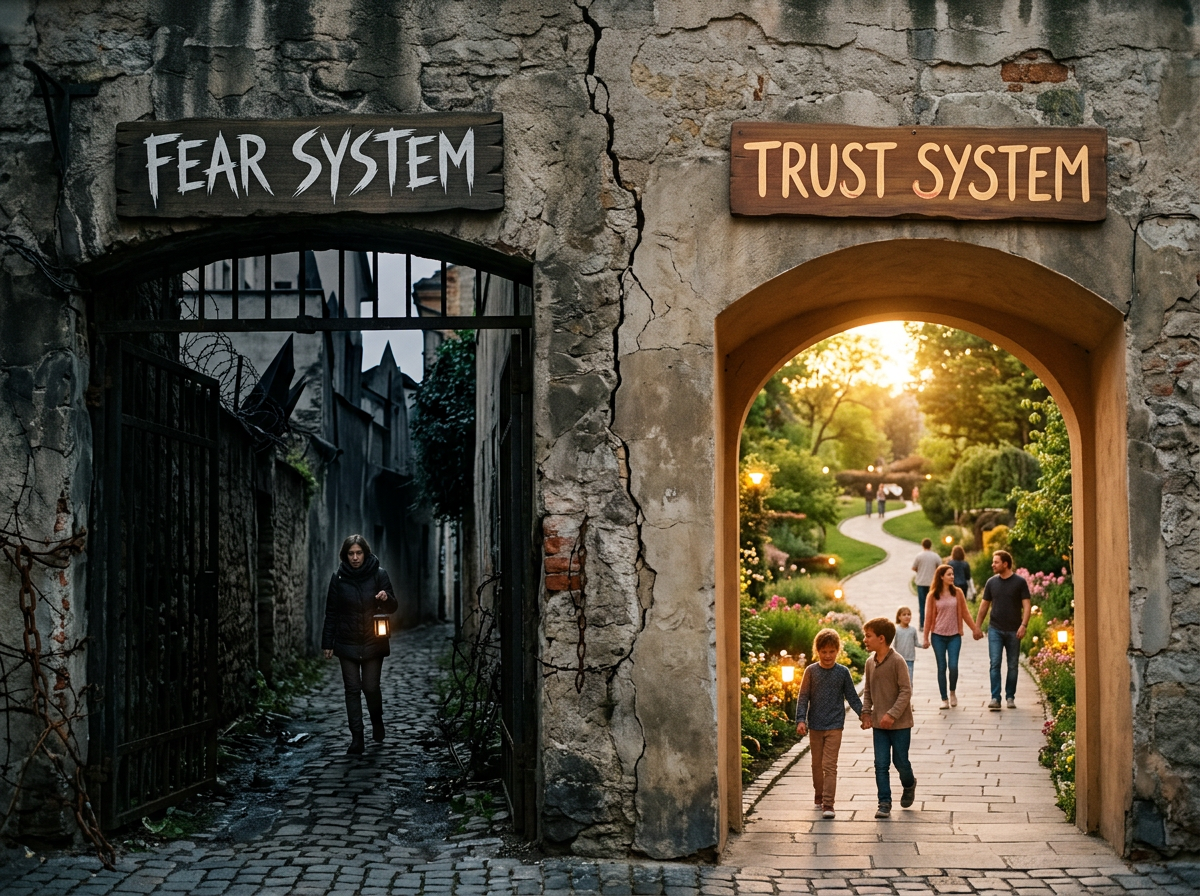
- A fearful society may seek protectors.
- A frustrated society may seek reformers.
- A fragmented society may seek unifiers.
- A stagnant society may seek revolutionaries.
This observation aligns closely with The Psychology of Power: Why Governance Reflects Collective Inner States.
Leadership does not emerge independently from society.
Rather, leadership reflects collective emotional and cultural conditions.
Political systems often function as mirrors.
The leaders who rise frequently reveal what populations collectively desire, fear, or believe.
The Shadow Side of Archetypes
Every archetype contains strengths.
Every archetype also contains risks.
- The protector can become authoritarian.
- The reformer can become destabilizing.
- The warrior can become aggressive.
- The sage can become detached.
- The builder can become technocratic.
Psychologist Carl Jung emphasized that archetypal patterns often possess shadow dimensions that emerge when balance is lost (Jung, 1964).
Healthy governance therefore requires more than selecting the “right” archetype.
It requires integrating multiple capacities.
Complex societies need protection, wisdom, adaptation, and construction simultaneously.
Beyond Hero-Centered Governance
Modern governance increasingly confronts challenges that exceed the capacity of any individual leader.
- Climate adaptation.
- Technological transformation.
- Institutional complexity.
- Global interdependence.
These realities suggest a need to move beyond purely hero-centered models of leadership.
Systems thinking emphasizes distributed capability rather than dependence on exceptional individuals (Meadows, 2008).
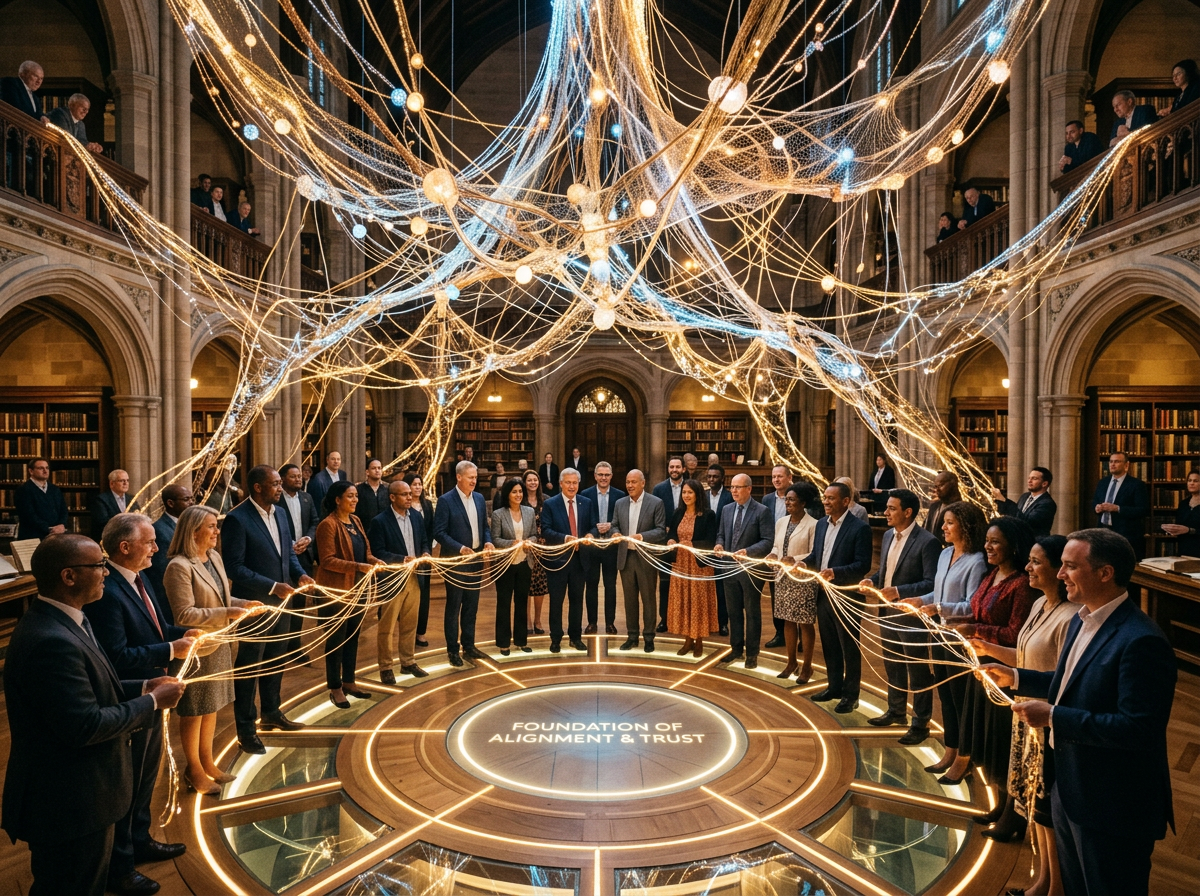
The future may therefore require governance structures that embody archetypal strengths collectively rather than concentrating them in single figures.
A healthy society may need institutions capable of expressing:
- The wisdom of the sage
- The courage of the warrior
- The adaptability of the reformer
- The practicality of the builder
without becoming dependent on any one personality.
Archetypes and Civic Maturity
Understanding archetypes does not eliminate their influence.
It makes their influence visible.
Citizens capable of recognizing archetypal patterns may become less susceptible to purely symbolic appeals.
Instead of asking:
“Do I like this leader?”
they may ask:
“What archetype does this leader represent?”
and
“What collective need is this archetype responding to?”
These questions encourage deeper political literacy.
They shift attention from personalities toward underlying social dynamics.
Conclusion
Societies repeatedly recreate familiar leadership patterns because human beings continue confronting familiar psychological challenges.
Security, identity, meaning, adaptation, and cooperation remain central concerns regardless of historical era. Leadership archetypes emerge as symbolic responses to these recurring needs.
The protector, reformer, warrior, sage, and builder are not merely political roles. They are expressions of collective psychology, cultural narratives, and social conditions.
Understanding archetypes in governance reveals that political leadership is never purely administrative. It is also symbolic.
The leaders societies elevate often reflect deeper collective hopes, fears, and aspirations.
Consequently, the future of governance may depend not only upon better institutions but also upon greater awareness of the psychological patterns that shape how power is understood and exercised.
A mature society is not one that eliminates archetypes.
It is one that recognizes them consciously.
Related Reading
- The Psychology of Power: Why Governance Reflects Collective Inner States
- Trauma and Governance: How Unhealed Societies Create Dysfunctional Institutions
- Transition Fatigue: Why So Many People Feel the Old Systems No Longer Work
- Collapse or Transformation? How Societies Interpret Periods of Instability
- From Nation-State to Meaning-State: The Future of Collective Identity
- The Future of Power: From Domination to Stewardship
- Why Cooperation Breaks Down: Trust, Competition, and Survival
- Institutional Stability vs Individual Competence: Why Capability Alone Doesn’t Win
- Regenerative Governance Principles
References
Fromm, E. (1941). Escape from freedom. Farrar & Rinehart.
Jung, C. G. (1964). Man and his symbols. Doubleday.
Marcus, G. E., Neuman, W. R., & MacKuen, M. (2000). Affective intelligence and political judgment. University of Chicago Press.
Meadows, D. H. (2008). Thinking in systems: A primer. Chelsea Green Publishing.
Pearson, C. S. (1991). Awakening the heroes within: Twelve archetypes to help us find ourselves and transform our world. HarperCollins.
Post, J. M. (2005). The psychological assessment of political leaders: With profiles of Saddam Hussein and Bill Clinton. University of Michigan Press.
Smith, J. Z. (1998). Map is not territory: Studies in the history of religions. University of Chicago Press.
The Living Archive is designed to be explored through pathways, categories, and search. If you’re looking for a specific idea, question, or theme, AI Search can help surface relevant connections across the archive.
Attribution
The Living Archive
Integrative Frameworks for Regenerative Civilization
© 2026 Gerald Daquila. All rights reserved.
Part of the Life.Understood. knowledge ecosystem and Stewardship Institute initiative.
This article is intended for educational, research, and civic inquiry purposes.
Readers are encouraged to engage critically, verify sources independently, and explore related knowledge hubs for broader systems context.