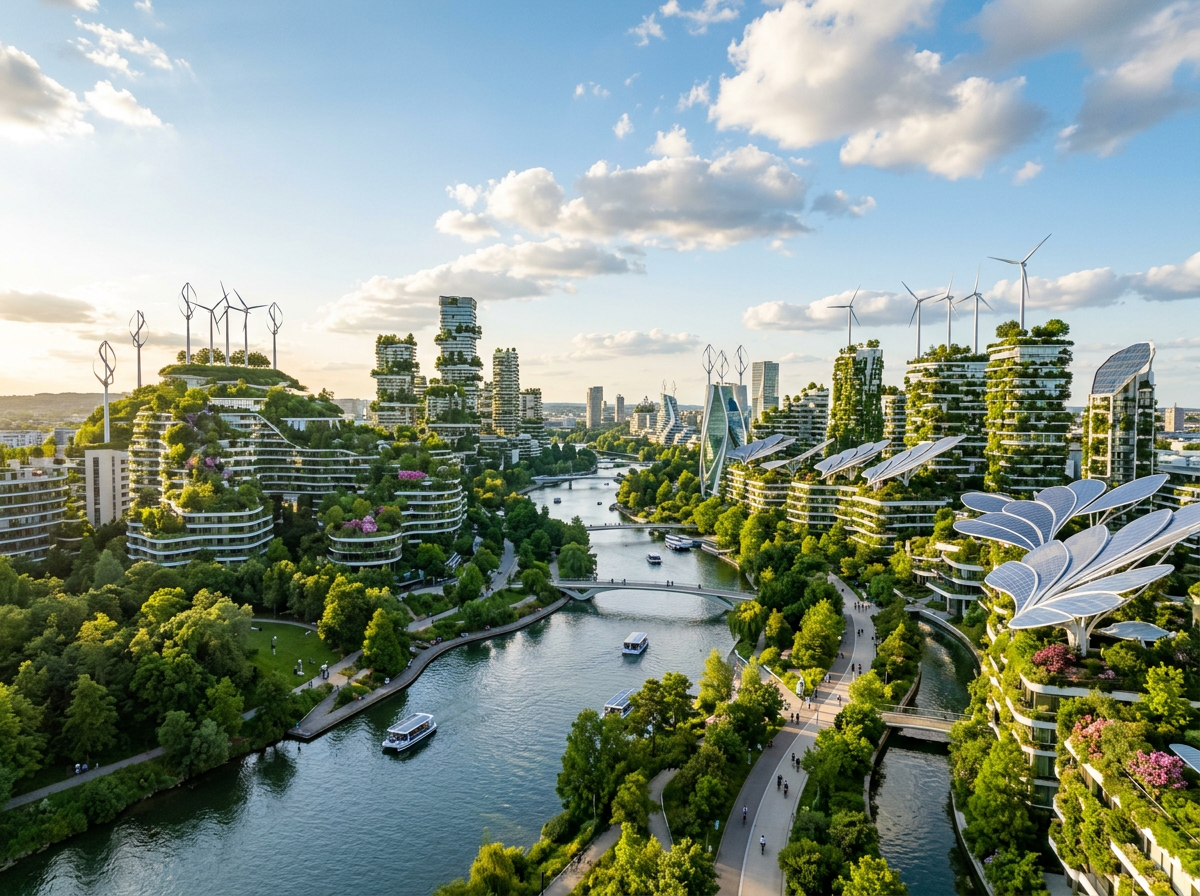
The Canonical Knowledge Hub for Reimagining Economic Systems for Human and Ecological Flourishing

Primary Pillar: Regenerative Economics
Purpose: To explore how economic systems shape human civilization, institutional behavior, ecological sustainability, technological development, and collective well-being — while establishing the foundational principles of regenerative economics, systems thinking, stewardship-oriented governance, distributed resilience, and long-term societal flourishing.
Hub Status: Canonical Foundation Hub
Placement: Main Navigation → Regenerative Economics
Meta Description
Explore regenerative economics through systems thinking, stewardship, decentralization, ethical technology, human flourishing, and long-term resilience. Learn how extractive systems shape civilization, why scarcity psychology persists, and how regenerative economic models support sustainable human and ecological well-being.
Regenerative Economics
Economic systems shape civilization.
They influence:
- how resources are distributed,
- how labor is valued,
- how communities organize,
- how technology is deployed,
- how institutions behave,
- how ecosystems are treated,
- and how societies define progress itself.
Modern economic systems have generated extraordinary levels of production, technological advancement, and global interconnection. Yet many systems increasingly operate through extractive logic.
Extraction-based systems often prioritize:
- short-term growth,
- perpetual consumption,
- centralized accumulation,
- behavioral optimization,
- resource exploitation,
- and financial output detached from long-term systemic health.
These systems may produce wealth while simultaneously contributing to:
- ecological degradation,
- institutional fragility,
- psychological exhaustion,
- social fragmentation,
- civic distrust,
- inequality,
- and long-term instability.
The central question is not whether economies should create prosperity.
Healthy societies require:
- production,
- trade,
- infrastructure,
- innovation,
- education,
- healthcare,
- and material stability.
The deeper question is:
What are economic systems ultimately designed to serve?
Regenerative economics explores how systems can be designed to support:
- long-term flourishing,
- resilience,
- stewardship,
- reciprocity,
- sustainability,
- distributed participation,
- and human dignity.
Rather than treating people, ecosystems, and communities as expendable inputs, regenerative systems seek to cultivate the ongoing renewal of life itself.
In This Knowledge Hub
This hub explores:
- what regenerative economics means,
- how extractive systems shape modern civilization,
- why scarcity psychology persists,
- the relationship between economics and human flourishing,
- decentralization and community resilience,
- technology and ethical stewardship,
- governance and systems thinking,
- and the cultural foundations required for regenerative civilization.
What Is an Economic System?
An economic system is the set of institutions, incentives, relationships, cultural assumptions, governance structures, and resource flows through which societies organize production, exchange, distribution, and consumption.
Economic systems do more than allocate resources.
They influence behavior, shape incentives, distribute power, affect ecological outcomes, and help determine what societies reward, preserve, or neglect.
Regenerative economics begins with the recognition that economic systems are not fixed laws of nature. They are human-designed systems capable of being redesigned.
What Is Regenerative Economics?
Regenerative economics refers to economic systems designed to strengthen the long-term health of:
- people,
- communities,
- ecosystems,
- institutions,
- and civilization itself.
Unlike extractive systems focused primarily on accumulation and short-term optimization, regenerative systems emphasize:
- reciprocity,
- resilience,
- distributed participation,
- ecological balance,
- long-term stewardship,
- adaptive governance,
- and systemic coherence.
The framework draws from:
- systems thinking,
- ecological design,
- cooperative economics,
- civic stewardship,
- indigenous knowledge systems,
- circular economies,
- and long-term governance models.
Natural ecosystems provide one of the clearest metaphors.
Healthy ecosystems do not endlessly extract from themselves without renewal.
They operate through:
- interdependence,
- cycles,
- adaptation,
- feedback,
- regeneration,
- diversity,
- and balance.
Regenerative economics applies similar principles to human systems.
The goal is not merely economic expansion.
It is cultivating conditions that allow human civilization to remain healthy over generations.
Regenerative economics is ultimately concerned with how value moves through systems over time. Healthy economies do not merely generate wealth; they cultivate the conditions that allow wealth, trust, capability, ecological health, and human well-being to renew themselves across generations.
The framework below illustrates how stewardship transforms economic activity from a linear process of extraction into a regenerative cycle of creation, circulation, renewal, and legacy.

Figure 1. A regenerative framework illustrating how wealth moves through cycles of creation, exchange, allocation, stewardship, regeneration, and legacy.
→ Download Reference Map 009: The Wealth Stewardship Cycle
The model highlights how long-term prosperity depends not only on accumulation, but on the responsible circulation and renewal of financial, social, cultural, ecological, and knowledge resources.
Regeneration Is Not the Opposite of Growth
Regenerative economics is often misunderstood as opposition to growth, innovation, or prosperity.
The central question is not whether systems grow.
The question is whether growth strengthens or weakens the long-term health of the systems that support it.
Healthy ecosystems grow. Communities grow. Knowledge grows. Infrastructure grows.
The challenge is ensuring that growth remains aligned with regeneration rather than extraction.
Regenerative systems seek forms of development that increase resilience, capability, ecological health, human flourishing, and long-term societal stability.
This would eliminate a common misunderstanding.
Core Principles of Regenerative Economics
1. Long-Term Thinking
Healthy systems must remain viable beyond short-term gain.
Regenerative models prioritize:
- sustainability,
- resilience,
- future generations,
- and systemic continuity.
2. Stewardship Over Extraction
Regenerative systems seek responsible management rather than unchecked exploitation.
This includes stewardship of:
- natural resources,
- institutions,
- human attention,
- civic trust,
- technology,
- and social cohesion.
Related essays:
- Leadership and Stewardship: Guides for Responsible Decision-Making
- Stewardship Without Self-Sacrifice
- A Life Lived in Stewardship
- Power, Responsibility, and Ethical Influence
3. Human Flourishing Beyond Productivity
Human beings cannot be reduced solely to economic output.
Healthy societies require:
- meaning,
- belonging,
- creativity,
- rest,
- psychological coherence,
- relationship,
- and participation.
Economic systems that optimize exclusively for productivity often produce:
- burnout,
- alienation,
- attentional fragmentation,
- and social exhaustion.
Related essays:
- Belonging: The Deep Human Need to Be Seen
- The Human Emotional Spectrum
- Why You Stay in Jobs That Drain You
- When Awakening Stops Being Mystical and Starts Being Human
4. Distributed Resilience
Highly centralized systems often become:
- brittle,
- dependency-oriented,
- vulnerable to disruption,
- and prone to concentrated power.
Regenerative systems strengthen:
- local adaptability,
- community participation,
- decentralized resilience,
- and shared responsibility.
This may include:
- cooperative structures,
- local production systems,
- decentralized infrastructure,
- participatory governance,
- and civic stewardship models.
Related essays:
- Sovereignty & Governance
- The Sovereign Leader: How to Practice Stewardship When Systems Fail
- The Return of Inner Authority — Reclaiming Personal Sovereignty
- Living Among Sovereign Beings — Love, Authority, and the End of Control
5. Systems Thinking
Economic outcomes rarely emerge from isolated causes.
Human behavior is shaped by:
- incentives,
- institutions,
- culture,
- technological systems,
- governance structures,
- and feedback loops.
Regenerative economics therefore requires systems-level thinking.
Related essays:
- How Systems Shape Behavior (And Why It Feels Personal)
- A Descriptive Map of Human Sense-Making Under Change
- Why Power Concentrates: The Hidden Logic of Systems
- Decision-Making Under Uncertainty: How People Choose Without Enough Information
Extractive Systems and Their Consequences
Modern economies often reward extraction.
This may include extraction of:
- labor,
- natural resources,
- attention,
- behavioral data,
- emotional energy,
- social trust,
- and psychological bandwidth.
Extraction-based systems frequently optimize for:
- scale,
- speed,
- efficiency,
- market dominance,
- quarterly growth,
- and concentrated accumulation.
Over time, this can produce systemic imbalance.
Examples include:
- ecological depletion,
- institutional distrust,
- worker burnout,
- civic fragmentation,
- rising inequality,
- and psychological exhaustion.
Even digital systems increasingly operate through extraction logic.
Attention economies monetize:
- distraction,
- emotional activation,
- compulsive engagement,
- outrage amplification,
- and behavioral prediction.
The issue is therefore broader than finance alone.
It concerns the underlying orientation of systems themselves.
Related essays:
- How to Think Clearly in Times of Systemic Uncertainty
- The Temptation of Certainty
- The Collapse of Old Certainties
- Staying Sovereign in Uncertain Times — Inner Stability in an Unstable World
From Scarcity Toward Regeneration
Many systems operate from scarcity assumptions.
Scarcity-oriented environments often encourage:
- fear-driven accumulation,
- zero-sum thinking,
- short-term extraction,
- competition without cooperation,
- and centralized control.
Regenerative systems instead recognize that long-term flourishing depends upon:
- trust,
- reciprocity,
- participation,
- resilience,
- ethical leadership,
- and collective stewardship.
This does not mean ignoring material constraints.
Rather, it means designing systems capable of renewing the conditions necessary for sustainable flourishing.
Regeneration includes:
- ecological renewal,
- civic resilience,
- educational development,
- psychological well-being,
- ethical governance,
- and meaningful participation in society.
Related essays:
- Deconstructing Scarcity: Origins, Mechanisms, and Impact on Society
- From Survival to Scarcity — How an Adaptive Instinct Became a Global System
- Why This Keeps Happening in the Philippines: Understanding Cycles of Scarcity and Power
- Why You’re Still Struggling: The Hidden System Keeping You in Scarcity
Wealth, Value, and Human Flourishing
Economic systems influence not only how wealth is created and distributed, but also how value itself is defined.
Many modern systems measure success primarily through financial indicators such as production, consumption, efficiency, and growth. While these metrics provide useful information, they do not fully capture the conditions that allow individuals, communities, and societies to thrive.
Regenerative economics distinguishes between value extraction and value creation.
Extraction transfers value from people, communities, ecosystems, or future generations toward short-term gain. Creation strengthens the underlying conditions that support long-term resilience, well-being, capability, and renewal.
This distinction invites a broader understanding of prosperity.
Healthy societies require material stability, infrastructure, innovation, and economic opportunity. Yet flourishing also depends upon trust, belonging, education, ecological health, meaningful participation, cultural continuity, and psychological well-being.
The question is therefore not merely how much wealth a society generates.
It is whether that wealth strengthens the long-term vitality of the systems upon which human flourishing depends.
Human Value Beyond Economic Output
One of the defining problems within extractive systems is the reduction of human worth into productivity metrics.
Modern systems often condition people to associate value with:
- efficiency,
- optimization,
- economic performance,
- status,
- and output.
Yet human flourishing cannot be reduced solely to productivity.
Human beings require:
- rest,
- reflection,
- relationship,
- creativity,
- meaning,
- dignity,
- and psychological stability.
Economic systems that neglect human well-being eventually destabilize themselves.
Societies may experience:
- burnout,
- loneliness,
- emotional exhaustion,
- distrust,
- attentional fragmentation,
- and social alienation.
Regenerative economics therefore asks a deeper question:
What conditions allow human beings to flourish sustainably over time?
Related essays:
- Learning to Trust Again After Awakening
- Learning to Trust Yourself Again
- How to Stay Open-Hearted Without Being Naive
- Creating Stability at Home During Uncertain Times
- Repair Before Withdrawal
Technology and Regenerative Design
Technology itself is neither inherently regenerative nor extractive.
Its impact depends upon:
- incentives,
- governance,
- design philosophy,
- ownership structures,
- and ethical orientation.
Artificial intelligence and digital infrastructure could potentially support regenerative systems through:
- educational accessibility,
- ecological monitoring,
- decentralized coordination,
- healthcare innovation,
- resource management,
- and intelligent infrastructure.
Yet without ethical stewardship, technological systems may instead amplify:
- surveillance,
- manipulation,
- behavioral conditioning,
- centralized control,
- and extractive optimization.
Regenerative economics therefore requires technological systems aligned with:
- human dignity,
- cognitive liberty,
- ecological sustainability,
- democratic accountability,
- and long-term societal health.
Technology increasingly shapes economic participation, information access, civic discourse, human attention, and social behavior. As a result, the design of digital systems now carries significant economic and societal consequences.
Regenerative technological design therefore requires transparency, accountability, informed consent, human-centered incentives, and governance structures that align innovation with long-term human and ecological well-being.
Without these foundations, technological systems risk reinforcing surveillance, behavioral manipulation, institutional concentration, and extractive forms of optimization.
Related essays:
- Human-Centered AI: Reclaiming Ethics in Technological Design
- Digital Sovereignty in an Age of Algorithmic Persuasion
- Technology Must Remain in Service to Life
- The Difference Between Intelligence and Consciousness
- Stewardship vs Control
- Attention Stewardship in the Digital Age
- Responsibility for One’s Own Consciousness
The Regeneration Question
Every economic system answers a fundamental question:
What is the economy ultimately for?
- Some systems prioritize accumulation.
- Others prioritize efficiency.
- Others prioritize growth.
Regenerative economics asks whether economic activity strengthens or weakens the long-term health of the people, communities, ecosystems, and institutions upon which civilization depends.
The challenge is not merely generating wealth.
It is ensuring that prosperity remains aligned with resilience, dignity, stewardship, participation, and the renewal of life itself.
The future may depend less on how much humanity produces and more on whether the systems we create are capable of sustaining what they produce.
Continue the Exploration
This article is part of a broader knowledge ecosystem exploring stewardship, ethical leadership, sovereignty, regenerative systems, human development, governance, technology ethics, and long-term civilizational resilience.
Canonical Knowledge Hubs
- Foundations of Stewardship & Leadership
- Ethical AI & Human Agency
- Governance & Decentralization
- Philippine Development & Renewal
- Shadow Work & Integration
- Regenerative Economics
- Intentional Community Design
Related Topics
- Regenerative Economics
- Systems Thinking
- Stewardship
- Distributed Resilience
- Economic Design
- Circular Economies
- Human Flourishing
- Ecological Sustainability
- Decentralization
- Community Wealth
- Ethical Technology
- Governance
- Reciprocity
- Long-Term Thinking
Recommended Next Reads
- What Is Ethical Leadership?
- Stewardship vs Control
- Sovereignty Without Isolation
- Integrity as Infrastructure
- The Difference Between Power and Responsibility
- Regenerative Governance Principles
- The Digital Barangay Framework
- Attention Stewardship in the Digital Age
- Consent and Ethical Boundaries
- Community Accountability Systems
Adjacent Knowledge Pathways
This article may also connect with broader explorations into:
- regenerative development,
- ethical technology,
- decentralized systems,
- intentional communities,
- civic renewal,
- local resilience,
- trauma-informed leadership,
- and human sovereignty in the digital age.
Intellectual Traditions
The Regenerative Economics Knowledge Hub draws together insights from a broad range of intellectual traditions concerned with the design of economic systems that sustain long-term human, social, institutional, and ecological flourishing. Its interdisciplinary foundations include economics, ecological economics, institutional economics, systems thinking, complexity science, regenerative development, sustainability science, governance theory, organizational learning, environmental ethics, community development, and the study of human flourishing.
Rather than advocating a single economic theory or ideological framework, this Hub serves as an integrative framework that brings these complementary traditions into dialogue. The essays, reference materials, and architectural frameworks gathered here synthesize established scholarship with original perspectives developed through the Living Archive, exploring how incentives, resource flows, stewardship, reciprocity, resilience, and institutional design interact to shape economies that either extract from or regenerate the systems upon which they depend.
Readers are encouraged to engage critically with both the ideas presented here and the wider traditions from which they emerge. The Living Archive does not seek to replace established economic disciplines or prescribe a single model of economic organization. Instead, it provides a navigational framework that helps readers connect insights across disciplines while cultivating the systems awareness, ethical discernment, and stewardship needed to build economies that generate enduring prosperity through renewal rather than extraction.
About the Author
Gerald Daquila is an independent systems thinker, writer, and stewardship-focused researcher exploring ethical leadership, regenerative systems, governance, sovereignty, human development, decentralized civic models, and long-term civilizational resilience.
His work integrates:
- systems thinking,
- ethical technology,
- regenerative governance,
- community stewardship,
- human-centered development,
- and philosophical inquiry into responsibility, sovereignty, and societal renewal.
The broader body of work seeks to support:
- ethical leadership formation,
- resilient local systems,
- conscious governance,
- digital-era discernment,
- and regenerative approaches to human flourishing.
©2026 Life.Understood. • Systems Thinking, Leadership Architecture, and Applied Coherence