Logo - Life.Understood.

Category: Mindset

  • Why Resiliency Is a Trap: Moving from Colonial Survival to New Earth Stewardship

    Why Resiliency Is a Trap: Moving from Colonial Survival to New Earth Stewardship


    How the celebrated strength of the Filipino spirit can quietly reinforce the very systems it seeks to endure


    Meta Description

    Is Filipino resilience empowering—or limiting? Discover how resilience can become a trap, and why moving toward stewardship is the key to true sovereignty and long-term transformation.


    The Most Celebrated Trait

    “Filipinos are resilient.”

    https://images.openai.com/static-rsc-4/8uoZccnLBOsVBEpiVtl-A4H4f8zEuTPtT1BpKUZHVNW6XZ_NsDlQooLYPCr3xKXgv4T3-pDEVe_X5N-yGRDBZeS0Ydg5UsQlb6kQ9cQid42b6wHGWIblYoMwmuTLJRihRtv9TjAbtb_9S7KjBWgu3fIpzJIFoyUea3abRN0jL2hww4Kd-tbCD2BdyJtEQU7s?purpose=fullsize

    It is a phrase repeated in media, policy discussions, and everyday conversation—especially in the aftermath of crisis. Typhoons, economic shocks, political instability—each time, the same narrative emerges:

    Despite everything, Filipinos endure.

    https://images.openai.com/static-rsc-4/fe88O7ddP7tw1LZKJQwPppeAXbXzaOJJektrABqnWB_30-YMX3uG88hgJGL5GeBlOZ6ebG9s9D1jvarCEwfXalUndJUcjtppWeaw3VcXvTl-Q4Kw-SBguodSPKkHqjicob7GxMbOIN0ELeS-emyDoJgBJ3eTZT7UI4GGWEJRAe8IJBcIKArg801Sd_xM2wIh?purpose=fullsize

    At first glance, this seems like a compliment.

    And in many ways, it is. The ability to adapt, recover, and continue in the face of difficulty is undeniably a strength.

    https://images.openai.com/static-rsc-4/o_q500qPnpqgI-bxsWh8oj3a5DShjE7zniqmccfbAhTG_B7jV5oDs-r1A6Rjqt8gwKHGi6MdHr3ij7nmppv7vd1j1lzOfkGEYYZs_ZNQ-g6N1NrldYPoyk0obprt5PijlrnLngn89xJkmsBjcj3Oz1ON-KmsNZp7sh6VoZV5CVajAbPZiEAIYgEstmF5egq3?purpose=fullsize

    But there is a deeper question that is rarely asked:

    What if resilience, when over-relied upon, becomes a mechanism that keeps people in cycles they should no longer have to endure?


    Resilience vs. Transformation

    Resilience is the capacity to withstand and recover.


    Transformation is the capacity to change the conditions that require recovery in the first place.

    These are not the same.

    A resilient system can survive dysfunction indefinitely.

    A transformed system eliminates the need for constant survival.


    The danger arises when resilience is mistaken for progress.


    The Colonial Roots of Survival

    To understand why resilience is so deeply embedded in the Filipino identity, we must examine its origins.

    Centuries of colonization—Spanish, American, and Japanese—created conditions where survival was not optional. It was required.

    • Economic extraction limited local wealth-building
    • Political control reduced autonomy
    • Cultural disruption fragmented identity

    In such environments, resilience becomes adaptive.

    It allows individuals and communities to:

    • Endure instability
    • Maintain social cohesion
    • Continue functioning under pressure

    But over generations, this adaptation becomes identity.


    And identity becomes expectation.


    When Strength Becomes a Script

    The problem is not resilience itself.


    The problem is when it becomes the default script, even when conditions change.

    This script says:

    • “Just keep going.”
    • “We’ll get through this.”
    • “That’s life.”

    While these statements can provide comfort, they can also:

    • Normalize systemic dysfunction
    • Discourage structural change
    • Suppress legitimate frustration

    Research in social systems suggests that populations can become adapted to suboptimal conditions, maintaining stability at the cost of progress (North, 1990).

    In other words:

    People adjust to what should be changed.


    The Resilience Trap

    The resilience trap occurs when:

    1. Hardship is expected
    2. Endurance is praised
    3. Change is deprioritized

    This creates a loop:

    Crisis → Adaptation → Recovery → Repeat

    Over time, resilience becomes a form of containment.

    It keeps individuals functioning—but within the same constraints.


    The Filipino Context: Everyday Resilience

    In the Philippines, this trap appears in multiple domains:

    1. Economic Survival

    Multiple jobs, overseas work, and informal economies are normalized responses to systemic gaps.

    (Crosslink: The Ghosts of the Galleon Trade: How Colonial Echoes Still Dictate Your Financial Decisions)


    2. Family Responsibility

    Extended support structures absorb financial strain—often without addressing root causes.


    3. Disaster Response

    Communities rebuild repeatedly, but underlying vulnerabilities remain.


    4. Institutional Tolerance

    Corruption and inefficiency are criticized—but often endured.

    (Crosslink: Naming the Unspoken: A Guide to Navigating the Hidden Fractures of Our National Identity)


    These are not failures.

    They are evidence of resilience operating at scale.


    The Psychological Cost

    While resilience enables survival, it carries hidden costs:

    • Chronic stress
    • Burnout
    • Emotional suppression
    • Reduced expectations for improvement

    Over time, individuals may internalize the belief that:

    “This is as good as it gets.”

    This aligns with research on learned adaptation, where repeated exposure to uncontrollable conditions reduces motivation to change them (Seligman, 1975).


    From Resilience to Stewardship

    If resilience is not the endpoint, what is?

    Stewardship.


    Stewardship shifts the focus from enduring systems to designing better ones.

    (Crosslink: From Informer to Steward: Why True Leadership Begins with Owning Our Shared Shadow)

    A steward does not ask:

    “How do we survive this?”

    They ask:

    “How do we ensure this no longer happens?”


    The New Earth Framing (Grounded Interpretation)

    “New Earth” is often used in spiritual discourse to describe a higher state of collective existence.

    Grounded practically, it can be understood as:

    • Systems designed for sustainability
    • Economies built on value creation and retention
    • Governance rooted in accountability
    • Cultures that support dignity and growth

    This is not an escape from reality.

    It is an evolution of it.


    The Shift: Survival → Design

    Moving beyond the resilience trap requires a shift in orientation.

    From:

    • Reactive adaptation
    • Short-term coping
    • Individual endurance

    To:

    • Proactive design
    • Long-term planning
    • Collective responsibility

    (Crosslink: ARK-001: The 50-Person Resource Loop)

    Small, well-designed systems reduce the need for constant resilience.


    Practical Pathways Out of the Trap

    1. Question the Narrative

    When resilience is praised, ask:

    What condition required this resilience?


    2. Validate Frustration

    Discomfort is not weakness.

    It is often a signal that change is needed.


    3. Build Stability, Not Just Recovery

    Focus on:

    • Preventive systems
    • Risk reduction
    • Long-term security

    4. Shift from Coping to Creating

    Instead of:

    “How do I manage this?”

    Ask:

    “What can I build that changes this?”


    5. Develop Stewardship Capacity

    (Crosslink: From Fragmented Souls to Sovereign Stewards: Reclaiming Identity After 500 Years of Institutional Trauma)

    This includes:

    • Systems thinking
    • Emotional regulation
    • Collaborative leadership

    The Role of the Nervous System

    Resilience often operates in a stress-adapted state.

    To move into stewardship, individuals must access regulated states:

    • Calm
    • Clarity
    • Strategic thinking

    (Crosslink: Financial Sovereignty Is a Nervous System State: Grounding the QFS in the Filipino Reality)

    Without this shift, efforts remain reactive.


    The Risk of Overcorrecting

    It is important not to reject resilience entirely.

    Resilience is still necessary.

    But it must be:

    • Contextual, not constant
    • Transitional, not permanent
    • Supported by systems, not relied on alone

    The goal is not to stop being resilient.

    It is to stop needing resilience as often.


    The Ark Perspective: From Endurance to Emergence

    Within the Ark framework, the Philippines is positioned not just to endure—but to demonstrate transition.

    (Crosslink: The Philippine Ark: A Global South Prototype)

    A society that has mastered survival has the raw capacity for stewardship.

    The question is whether that capacity is redirected.


    Conclusion: The Courage to Want More

    Resilience has carried the Filipino people through centuries of disruption.


    It deserves recognition.


    But it is not the destination.

    The next phase requires something different:

    The courage to say:

    “Surviving is not enough.”

    The willingness to ask:

    “What would it look like to design a life—and a system—where survival is no longer the baseline?”

    This is the shift from:

    • Enduring the world
      to
    • Shaping it

    From:

    • Resilient individuals
      to
    • Sovereign stewards

    References

    North, D. C. (1990). Institutions, Institutional Change and Economic Performance. Cambridge University Press.

    Seligman, M. E. P. (1975). Helplessness: On Depression, Development, and Death. Freeman.

    David, E. J. R. (2013). Brown Skin, White Minds. Information Age Publishing.

    Constantino, R. (1975). The Philippines: A Past Revisited. Tala Publishing Services.


    The Sovereign Professional: A structural map of power, systems thinking, and personal autonomy—dedicated to helping the independent professional navigate complexity and own their value stream.Ask


    ©2026 Gerald Daquila • Life.Understood. • Systems Thinking, Leadership Architecture, and Applied Coherence

  • The Ancestral Debt: Healing the Generational Shame of Poverty in the Filipino Psyche

    The Ancestral Debt: Healing the Generational Shame of Poverty in the Filipino Psyche


    Why financial struggle is not just economic—and how releasing inherited shame unlocks true sovereignty


    Meta Description

    Explore how generational shame around poverty shapes Filipino identity and financial behavior—and learn how healing ancestral patterns can unlock dignity, agency, and long-term wealth.


    The Debt No One Talks About

    In many Filipino families, debt is a familiar reality.

    But beyond financial obligations lies a deeper, less visible burden:

    The emotional inheritance of poverty.

    This is not just about lack of money.
    It is about the shame associated with having less—a quiet, persistent feeling that one is somehow behind, lacking, or not enough.

    This shame rarely announces itself directly.

    Instead, it shows up as:

    • Reluctance to talk about money
    • Fear of being judged for financial status
    • Overcompensation through generosity or appearance
    • Silent pressure to “make it” for the family

    This is what we can call ancestral debt—not owed in currency, but carried in identity.


    Where the Shame Began

    To understand this, we must look beyond individual experience.

    The Filipino relationship with poverty was shaped through centuries of disruption:

    • Colonial extraction that destabilized local economies
    • Land dispossession and labor control
    • War, occupation, and reconstruction cycles
    • Modern economic structures that export labor rather than build local capital

    These conditions did not just create poverty.

    They created meaning around poverty.

    Over time, scarcity became associated with:

    • Failure
    • Inferiority
    • Social limitation

    Psychological research shows that repeated exposure to inequality and marginalization can lead to internalized stigma, where individuals adopt negative beliefs about their own worth (Corrigan & Watson, 2002).

    In the Filipino context, this often blends with colonial mentality—where external standards define value (David, 2013).


    Shame vs. Reality

    It is important to distinguish:

    Poverty is a condition.
    Shame is an interpretation.

    Two families can experience the same economic reality—but carry it differently.

    Shame develops when:

    • Struggle is hidden rather than discussed
    • Worth is tied to financial status
    • Comparison becomes constant

    Over generations, this creates a feedback loop:

    Poverty → Shame → Silence → Repetition


    How Generational Shame Manifests Today

    The ancestral debt expresses itself in subtle but powerful ways:

    1. Over-Responsibility

    Many Filipinos feel obligated to financially support extended family, often at the expense of their own stability.

    This is not purely cultural generosity—it is often tied to:

    “I must succeed so we are no longer seen as lacking.”


    2. Fear of Visibility

    Success can feel uncomfortable.

    People may:

    • Downplay achievements
    • Avoid standing out
    • Fear being judged or resented

    3. Financial Avoidance

    Money conversations are delayed or avoided:

    • Budgeting feels overwhelming
    • Investing feels inaccessible
    • Planning feels uncertain

    4. Performative Stability

    Spending to maintain appearances:

    • Social pressure to “look okay”
    • Celebrations funded beyond capacity
    • Reluctance to show struggle

    5. Inherited Limitation Beliefs

    Quiet assumptions like:

    • “People like us don’t become wealthy”
    • “Stability is enough—don’t risk more”

    These beliefs are rarely questioned.

    They are inherited.


    Naming the Hidden Layer

    Before any financial strategy can work, the emotional layer must be acknowledged.

    (Crosslink: Naming the Unspoken: A Guide to Navigating the Hidden Fractures of Our National Identity)

    When shame remains unspoken, it quietly dictates behavior.

    When it is named, it becomes workable.


    The Link to Broader Economic Patterns

    Generational shame does not exist in isolation.

    It connects directly to national patterns:

    • Limited asset accumulation
    • High remittance dependency
    • Short-term financial decision-making

    (Crosslink: The Ghosts of the Galleon Trade: How Colonial Echoes Still Dictate Your Financial Decisions)

    These are not just economic issues.

    They are psychological continuities.


    From Shame to Stewardship

    Healing ancestral debt is not about rejecting responsibility.

    It is about transforming it.

    (Crosslink: From Informer to Steward: Why True Leadership Begins with Owning Our Shared Shadow)

    The shift is subtle but powerful:

    From:

    “I must carry this burden alone.”

    To:

    “I can honor my lineage without repeating its limitations.”


    A Practical Framework for Healing

    This work must be both internal and actionable.

    1. Acknowledge the Inheritance

    Recognize that many financial behaviors are learned, not inherent.

    Prompt: What money beliefs did I grow up hearing?


    2. Separate Worth from Wealth

    Your value is not determined by your financial status.

    This is foundational.

    Without it, every financial move is emotionally charged.


    3. Reframe Family Support

    Support can be given without self-erasure.

    This may involve:

    • Setting boundaries
    • Creating structured assistance
    • Prioritizing sustainability over sacrifice

    4. Normalize Financial Conversations

    Break the silence:

    • Discuss money openly with trusted circles
    • Learn without shame
    • Ask questions without fear

    5. Build Slowly but Intentionally

    Wealth-building does not require dramatic shifts.

    It requires:

    • Consistency
    • Education
    • Long-term thinking

    6. Engage in Financial Shadow Work

    Identify emotional triggers:

    • Fear of loss
    • Guilt around earning more
    • Anxiety around visibility

    Integration reduces reactivity.


    The Role of Systems

    Individual healing is essential—but insufficient on its own.

    It must be supported by coherent systems.

    (Crosslink: ARK-001: The 50-Person Resource Loop)

    When communities:

    • Share resources
    • Build collectively
    • Create accountability

    Shame is replaced with shared resilience.


    The Filipino Threshold: Dignity as Foundation

    Within your Ark framework, the shift is not just economic.

    It is dignity restoration.

    (Crosslink: The Philippine Ark: A Global South Prototype)

    A nation cannot build sustainable wealth if its people:

    • Feel inherently lacking
    • Avoid financial visibility
    • Carry unprocessed shame

    Dignity is not a byproduct of wealth.


    It is a prerequisite for building it.


    Conclusion: Releasing the Invisible Burden

    Ancestral debt is not listed in any ledger.

    But it shapes decisions every day.

    It determines:

    • How money is handled
    • How opportunities are perceived
    • How success is experienced

    Healing it does not erase history.

    It transforms relationship.

    From:

    Burden

    To:

    Inheritance with choice

    The Filipino story is not defined by poverty.

    But it must reckon with the meaning attached to it.

    Only then can financial sovereignty become more than strategy.

    It becomes identity.


    References

    Corrigan, P. W., & Watson, A. C. (2002). Understanding the impact of stigma on people with mental illness. World Psychiatry, 1(1), 16–20.

    David, E. J. R. (2013). Brown Skin, White Minds: Filipino-/American Postcolonial Psychology. Information Age Publishing.

    Mullainathan, S., & Shafir, E. (2013). Scarcity: Why Having Too Little Means So Much. Times Books.

    Constantino, R. (1975). The Philippines: A Past Revisited. Tala Publishing Services.


    The Sovereign Professional: A structural map of power, systems thinking, and personal autonomy—dedicated to helping the independent professional navigate complexity and own their value stream.Ask


    ©2026 Gerald Daquila • Life.Understood. • Systems Thinking, Leadership Architecture, and Applied Coherence

  • ARK-005: The Babaylan Arc — Pilot Implementation Model

    ARK-005: The Babaylan Arc — Pilot Implementation Model


    From Curriculum Design to Field-Tested Leadership Formation


    Meta Description

    A field-tested pilot model for implementing the Babaylan Arc curriculum in Philippine communities, integrating cultural memory, systems thinking, and leadership training into measurable real-world outcomes.


    Introduction: Where Most Ideas Fail

    ARK-002 established the Babaylan Arc as a curricular intervention—a response to the fragmentation of modern education and the historical disruption of integrative leadership traditions.

    But most frameworks fail at a predictable point:

    They remain conceptually compelling but operationally vague.

    This piece closes that gap.

    ARK-005 defines how the Babaylan Arc is actually run—under constraint, with real participants, in a real community.

    This follows the same logic introduced in
    ARK-001: The 50-Person Resource Loop
    where systems are validated only when they function under pressure, not when they read well on paper.

    A system is only real when it produces behavior under constraint.


    Why This Cannot Stay Theoretical

    The Philippines’ education crisis is often framed in terms of funding, access, or curriculum gaps. These matter—but they are not the root.

    The deeper issue is contextual incoherence.

    Filipino students are trained in abstract frameworks that do not map onto their lived realities.

    This is reflected in persistently low performance in assessments such as the Programme for International Student Assessment (PISA), where Filipino learners struggle not just with knowledge recall, but with application and reasoning in unfamiliar contexts (OECD, 2019).

    This supports an earlier critique by Renato Constantino, who argued that Philippine education historically produced individuals who are literate but detached from their own socio-cultural grounding (Constantino, 1970).

    The Babaylan Arc is not trying to add more content.

    It is attempting to restore alignment between knowledge, identity, and action.


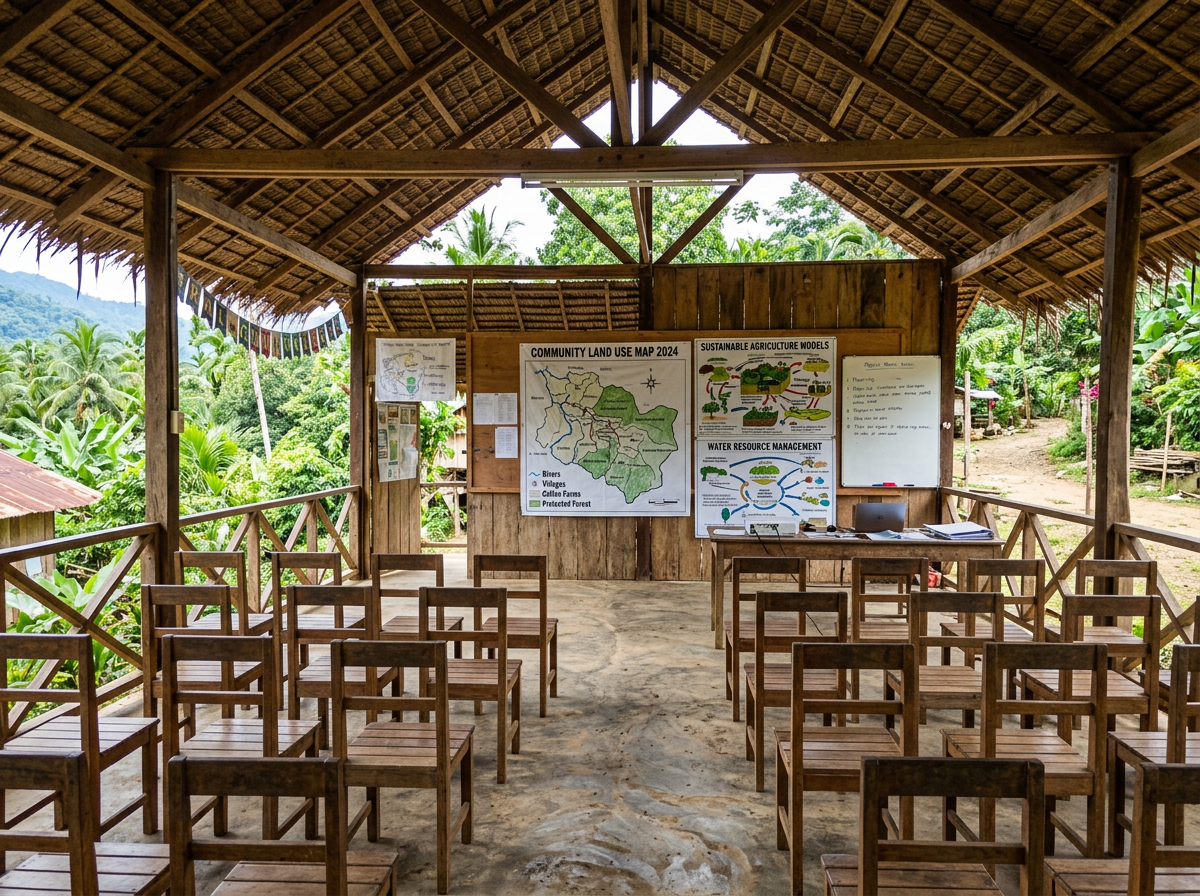
    Pilot Design: The Smallest Unit That Matters

    https://images.openai.com/static-rsc-4/zJzu0-yep6CNVIhep7dwNLKHZiifxh4JEVrAPC6wJz-5dSskdOZN1Fq6zJL62us0dVHREKaTKfcD62-X8GKd337irEErSAxJ3C2LeAWqbY68q88QgkwJSG-vtfZH2vOrq123IXLfpZZPdMdYdBb0pUhGsA3nwaqf_hIetixtwAtAICLkjhOduW_2CZy9raNL?purpose=fullsize

    The pilot must operate at a scale where:

    • Human dynamics are visible
    • Systems can be tested
    • Failure is survivable

    Design Parameters:

    • Cohort Size: 24 participants
    • Duration: 16 weeks
    • Setting: Barangay-level or LGU-supported community
    • Cadence: 2 sessions per week (3–4 hours each)
    • Expected Output: At least one functioning micro-system

    This is not arbitrary.

    It mirrors anthropological observations of community-scale cohesion in pre-colonial Philippine societies, where leadership roles—including those associated with figures like the babaylan—operated within tight social units rather than large anonymous populations (Scott, 1994).


    Phase Structure — With Week-Level Reality


    Phase 1 (Weeks 1–4): Cultural Grounding

    This phase is not “orientation.”
    It is deconditioning.


    Participants confront:

    • Their assumptions about history
    • Their relationship to authority
    • Their level of disconnection from local systems

    Activities include:

    • Mapping local resource flows (food, water, labor)
    • Reconstructing pre-colonial systems using guided materials
    • Identifying gaps between inherited narratives and lived reality

    This phase draws directly from
    Pre-colonial Philippine Economics


    Observed Reality (Week 2–3):

    • Participants often default to “textbook answers”
    • Discomfort emerges when asked to describe their own barangay systems
    • Early signs of disengagement from abstract learners

    Output:
    A Context Map—not theoretical, but specific to their barangay


    Phase 2 (Weeks 5–8): Relational Stress Testing

    https://images.openai.com/static-rsc-4/m3J9mJdFftUjFXRJ-Te-3euJ_ELhghs6V79bCDbsiIUpujO5viD_wAUt4mQ6X66c86DiVAg-FA17fe9N3hFT3uL3y2vcu7mmdd9f9ptbOpWJkVE4VGNdUdsIjpWnwQa2f13yX5LFFHifVTydvjac06B1yINZS_L8WtSZb2b6QeZuy4MX0xW3nU2kdp0soM-k?purpose=fullsize

    This is where most programs fail.

    Because this is where friction becomes visible.


    Participants are placed in:

    • Conflicting decision scenarios
    • Resource allocation dilemmas
    • Leadership rotation exercises

    What emerges is predictable:

    • Dominant personalities attempt control
    • Passive participants withdraw
    • Conflict avoidance patterns surface (common in high “hiya” cultures)

    These dynamics align with broader cultural patterns explored in
    The Architecture of Silence

    Research in critical pedagogy shows that learning accelerates when participants are forced to confront real relational tension, not avoid it (Freire, 1970).


    Observed Reality (Week 6–7):

    • First major conflicts emerge
    • Some participants consider dropping out
    • Cohort cohesion either stabilizes—or fractures

    Output:
    Demonstrated ability to navigate structured conflict without facilitator intervention


    Phase 3 (Weeks 9–12): Systems Under Constraint

    This is the pivot point.

    https://images.openai.com/static-rsc-4/2NPpF7Qf5koTcSaw72DmqolXIKBcYB6yxBbI1tLixQGz-aC4e1oYaPUSWxhRaZvMJ5KN5NCb5SBproQ4zv6FkQgyLIgqMd1699j78o9aGNaBTt7NvLefkpUPTe-TtfMs0aEj0t63JYqQq9MLMReZtvZvum-4_W9bW9AdthnLPWT7gym_JPF2_GTifYiDHE8j?purpose=fullsize

    Participants must now:

    • Work with incomplete data
    • Engage real stakeholders
    • Design systems that function despite limitations

    They are tasked to build systems aligned with:
    ARK-001: The 50-Person Resource Loop


    Examples:

    • Small-scale food redistribution network
    • Community study group for struggling students
    • Waste-to-resource initiative

    Observed Reality (Week 10–11):

    • Plans initially overcomplicate
    • Participants underestimate logistical constraints
    • First contact with community resistance

    Output:

    A working prototype plan with clear inputs, outputs, and failure points


    Phase 4 (Weeks 13–16): Deployment and Feedback

    This phase separates:

    • Those who can explain systems
    • From those who can run them

    Participants:

    • Launch their system (even at micro scale)
    • Track outputs (participation, flow, breakdowns)
    • Present results to barangay stakeholders

    Observed Reality (Week 14–16):

    • Systems partially fail (this is expected)
    • Participants experience real accountability
    • Confidence shifts from abstract to grounded

    Output:

    An operational system, however imperfect


    Facilitator Structure: Preventing Collapse

    The pilot fails without proper facilitation.

    https://images.openai.com/static-rsc-4/DrRD5cdFBr2aTkAVHD85HlfIf2Pmrsu21rEoYHtYPfEtO4ZXNeTS00P_OjsIkjTJXHdbI03anM9vjb_-FAXsZ8RiiRo5W6eVv4Lfn1f2MU9qmoMTa-SfIu7nDEaVXgsWEgcOPw5DH3I4F9W6CQW3zB2sWJohpIJ49FM6A7sV_xFUyDw4IM7y6QMeYDZ1VeoL?purpose=fullsize

    Required Roles:

    • Lead Facilitator: Maintains structural integrity
    • Cultural Anchor: Prevents abstraction drift
    • Technical Advisor: Engaged during system design phase
    • Cohort Leads: Rotating participant leadership

    This reflects the integrative leadership model documented by William Henry Scott, where authority was functional, not hierarchical (Scott, 1994).


    Assessment: What Actually Gets Measured

    Traditional education asks:

    “What do you know?”

    This model asks:

    “What can you sustain?”


    Metrics

    1. Coherence Index
      • Can participants link identity → decision → outcome?
    2. Relational Stability
      • Does the group function under stress?
    3. System Viability
      • Does the micro-system operate for at least 2 weeks?
    4. Community Validation
      • Do external stakeholders perceive value?

    This aligns with experiential learning frameworks where real-world performance is the primary indicator of competence (Freire, 1970).


    Philippine Feasibility: Why This Can Actually Work

    The model is intentionally low-resource:

    • Uses barangay infrastructure
    • Requires minimal technology
    • Leverages local knowledge holders

    This makes it viable for LGUs, where community programs exist but often lack systemic coherence.

    The key advantage:

    It does not require systemic overhaul to begin.

    Only a single functioning pilot.


    Failure Modes (Realistic, Not Theoretical)

    • Participant dropout (Week 5–8)
    • Conflict breakdown (Phase 2)
    • Overdesigned systems that fail in execution
    • Community disengagement

    These are not bugs.

    They are the actual training environment.


    Conclusion: From Curriculum to Capability

    The Babaylan Arc cannot prove itself through narrative.

    It must prove itself through:

    • Participants who can stabilize groups
    • Systems that function under constraint
    • Communities that experience tangible benefit

    This pilot does not guarantee success.

    It guarantees something more valuable:

    Feedback grounded in reality.


    References

    Constantino, R. (1970). The Miseducation of the Filipino.

    Freire, P. (1970). Pedagogy of the Oppressed.

    OECD. (2019). PISA 2018 Results.

    Scott, W. H. (1994). Barangay: Sixteenth-Century Philippine Culture and Society.

    The concepts outlined here are designed for real-world execution. For a complete set of ready-to-use documents—including governance templates, resource tracking sheets, and operational SOPs—explore the 55 Editable Applied Stewardship Toolkit (Complete Set).

    For a broader systems context that situates localized resilience within national and multi-scalar transformation frameworks, explore The Philippine Ark: A Sovereign Blueprint for Systemic Transformation.


    Continue Through the ARK Series

    This framework is designed as a complete system. You can explore it sequentially or move directly to the layer most relevant to your work:

    Foundations

    Design + Build

    Systems Layer

    Scaling


    Suggested Pathways

    New to the framework?

    Start with ARK-001 ARK-008ARK-011


    Designing a physical site?

    Begin with ARK-007ARK-008ARK-009


    Preparing for real-world deployment?

    Focus on ARK-011ARK-012ARK-013


    Thinking long-term scale?

    Move to ARK-010


    [DOCUMENT CONTROL & STEWARDSHIP]

    Standard Work ID: [ARK-005]

    Baseline Version: v1.5.2026

    Classification: Open-Access Archive / Systemic Protocol

    The Sovereign Audit: Following this protocol is an act of internal quality control. Verification of this standard does not happen here; it happens at your Gemba—the actual place where your life and leadership occur. No external validation is required or offered.

    Next in Sequence: [ARK-006: Governance Protocols for Distributed Communities]

    Return to Archive: [Standard Work Knowledge Hub: The Terrain Map]


    © 2026 Gerald Daquila • Life.Understood • Systemic Stewardship • Non-Autocratic Architecture • Process over Persona

  • 🧠How to Think Clearly in Times of Systemic Uncertainty

    🧠How to Think Clearly in Times of Systemic Uncertainty


    We are living in an era where information moves faster than understanding.

    2–3 minutes

    Economic headlines shift weekly.


    Political narratives mutate daily.


    Predictions circulate hourly.

    In this environment, the greatest risk is not external collapse —


    it is internal confusion.


    Clear thinking begins with something quieter.


    1. Separate Event From Interpretation


    An event happens.


    Then commentary happens.


    Then reaction happens.

    Most people respond not to the event, but to the interpretation layered on top of it.


    If a bank fails, a policy shifts, or a currency fluctuates — those are events.

    The meaning assigned to them is interpretation.


    Clarity requires asking:

    • What actually happened?
    • What is verified?
    • What is speculative?
    • Who benefits from amplifying this narrative?

    This single habit dramatically reduces emotional contagion.


    2. Slow the Nervous System Before Drawing Conclusions


    When uncertainty rises, the nervous system scans for threat.


    In that state, nuance disappears.

    We interpret neutral developments as catastrophic.
    We assume speed equals truth.
    We mistake urgency for importance.


    Before drawing conclusions:

    • Pause.
    • Step away from the screen.
    • Breathe.
    • Revisit the issue 24 hours later.

    If it is real, it will still be real tomorrow.


    3. Distinguish Structural Change From Narrative Drama


    Systems do evolve.


    But structural shifts move slowly and through multiple layers.


    Dramatic headlines often exaggerate incremental changes.


    Ask:

    • Is this a policy shift?
    • A liquidity fluctuation?
    • A rhetorical statement?
    • Or a structural redesign?

    Most news cycles amplify surface movement.

    True structural shifts reveal themselves over months and years, not hours.


    4. Anchor Back to Personal Agency

    No matter what unfolds externally, your immediate sphere remains:

    • Your choices
    • Your work
    • Your relationships
    • Your skill development
    • Your financial prudence

    Clear thinking returns you to what you can influence.


    Unclear thinking pulls you toward what you cannot.


    The most powerful position during systemic uncertainty is not prediction.

    It is steadiness.


    And steadiness is a discipline.


    A Quiet Note to the Reader

    If the world feels loud, move slowly.

    Systems evolve. Narratives surge and fade. Institutions adapt and fracture.

    Clarity is not found in urgency — it is built through steady attention.


    This space is dedicated to thoughtful inquiry:

    • Systems literacy without hysteria
    • Sovereignty without isolation
    • Spiritual reflection without escapism

    If you are here seeking coherence rather than noise, you are welcome.


    Further Reading


    👉 Start Here


    Want a simple way to filter information?
    Signal vs Noise


    Just want to know what actually matters right now?
    Current Signal


    About the author

    Gerry explores themes of change, emotional awareness, and inner coherence through reflective writing. His work is shaped by lived experience during times of transition and is offered as an invitation to pause, notice, and reflect.

    If you’re curious about the broader personal and spiritual context behind these reflections, you can read a longer note here.

  • When the World Is Imperfect:

    When the World Is Imperfect:


    Sovereignty, Suffering, and the Assurance That Nothing Essential Is Lost

    4–6 minutes

    Every soul enters a world already in motion.

    Cultures precede us.
    Family systems predate our consent.
    Economic, political, and emotional climates are inherited before we can evaluate them.

    By the time awareness matures, patterns are already in place—many shaped not by wisdom, but by survival, fear, and repetition. It is not controversial to say that most human behavior is unconscious most of the time. It is simply observable.

    And within such a world, harm occurs.

    Not always through cruelty.
    Not always through intent.
    Often through unexamined habits, normalized neglect, inherited wounds, and systems that evolved for survival rather than care.

    For a sensitive or awakening soul, this raises a painful and persistent question:

    If the world is this unconscious, what chance did I ever have?


    Collateral Damage Without Moral Failure

    Many people carry an unspoken belief that if their life has been unusually difficult—marked by accidents, instability, abuse, illness, repeated loss, or prolonged struggle—then something must be fundamentally wrong with them.

    This belief is rarely stated aloud, but it shapes identity quietly.

    Yet another interpretation is available—one that neither excuses harm nor spiritualizes it:

    In an imperfect world, harm can occur without requiring personal failure.

    Souls incarnate into environments shaped by collective unconsciousness. The resulting friction, injury, and distortion are not verdicts on worth or readiness. They are byproducts of incomplete systems interacting with vulnerable beings.

    Recognizing this does not remove responsibility where it belongs—but it does release the false responsibility many have carried for what was never theirs to hold.


    Separation as Experience, Not Erasure

    At some point, nearly everyone touches the feeling of separation—
    from meaning, from safety, from others, from Source, or from themselves.

    This experience can be so convincing that it feels ontological, as if something essential has been broken or lost forever.

    Yet separation, as it is lived, is experiential rather than absolute.

    Awareness can contract.
    Identity can fragment.
    Trust can dissolve.

    But the deeper continuity of being does not vanish.

    A helpful way to hold this—without demanding belief—is this:

    Nothing that is real can be destroyed; only our access to it can be obscured.

    This is not a moral claim. It is an assurance about continuity.


    Learning Without Justifying Suffering

    There is understandable resistance to any framework that frames pain as “necessary.” Many spiritual narratives have caused harm by insisting that suffering was chosen, deserved, or required for growth.

    This essay does not make that claim.

    Instead, it names a quieter truth:

    Meaning arises through integration, not through mandate.

    Life does not need to be painful to be instructive.
    But when pain occurs, it does not automatically become meaningless.

    Learning happens after the fact—when experience is metabolized, not when it is imposed. Some experiences take years, lifetimes, or multiple chapters to integrate. Some are never fully understood—and still do not invalidate the soul.


    The Assurance Beneath the Chaos

    For those whose lives have been marked by instability, the most healing question is often not “Why did this happen?” but:

    “Is there something fundamentally unsafe about existence itself?”

    Here, a gentle assurance matters:

    No matter how difficult a life becomes, no soul is erased by the experience of it.

    Bodies can be harmed.
    Paths can be derailed.
    Identity can fracture.

    Yet nothing essential is annihilated.

    This assurance is not a promise that everything will be made right immediately—or even within one lifetime. It is a deeper reassurance that existence itself is not hostile to being.

    For many, this is the first sense of safety they have ever felt.


    Sovereignty Begins With Safety

    Sovereignty is often misunderstood as strength, independence, or control.

    In truth, sovereignty begins much earlier and much quieter—with safety.

    Before a soul can reclaim agency, it must first feel that:

    • its existence is not a mistake
    • its injuries do not define its worth
    • its path, however disrupted, has not disqualified it from meaning

    Only then does choice return naturally:

    • the choice to pause
    • the choice to leave
    • the choice to speak
    • the choice to rebuild at one’s own pace

    This is why reassurance is not indulgence. It is preparatory.

    Without it, calls to agency feel like pressure.
    With it, agency feels possible.


    An Imperfect World, a Preserved Essence

    To live in an unconscious world is to risk injury.
    To awaken within it is to feel that risk more acutely.

    Yet awakening does not require despair.

    It requires discernment—knowing what belongs to the world, what belongs to others, and what belongs to you.

    And at the deepest level, it requires remembering this:

    You were not broken by what you survived.
    You were shaped, marked, and challenged—but not erased.

    Nothing essential has been lost.

    Not your capacity for meaning.
    Not your connection to Source.
    Not your right to sovereignty.

    Even if those things feel distant now.


    Closing Orientation

    This essay does not ask you to conclude anything.

    It simply offers an orientation—one that steadies rather than explains, reassures rather than instructs.

    If life has been hard, that hardness is not proof of failure.
    If the world has been unconscious, that unconsciousness is not your fault.
    If meaning feels delayed, that delay is not a verdict.

    Safety is deeper than circumstance.
    Continuity is deeper than memory.

    And from that ground, agency can return—when you are ready.


    Optional Continuations

    If this reflection resonates, you may find it supportive to continue with:

    These pieces explore stability, agency, and orientation from complementary angles, at a pace designed to support integration rather than urgency.


    About the author

    Gerry explores themes of change, emotional awareness, and inner coherence through reflective writing. His work is shaped by lived experience during times of transition and is offered as an invitation to pause, notice, and reflect.

    If you’re curious about the broader personal and spiritual context behind these reflections, you can read a longer note here.

  • From Survival to Scarcity — How an Adaptive Instinct Became a Global System

    From Survival to Scarcity — How an Adaptive Instinct Became a Global System


    Tracing the evolution of “not enough” from body memory to world structure

    5–8 minutes

    Prologue — The Instinct That Kept Us Alive

    Before cities, before markets, before money, there was winter.

    There were seasons when food disappeared, rivers dried, animals migrated, and survival depended on preparation. The human nervous system adapted to uncertainty with a simple, intelligent response:

    Store when there is plenty. Conserve when there is not.

    This instinct was not greed.
    It was memory encoded into the body.

    What we now call scarcity consciousness began as a biological survival strategy — an adaptive reflex designed to protect life in unpredictable environments. In early stages of human development, this instinct sat close to the foundation of our needs, similar to the safety and survival layers later described by Abraham Maslow.

    The challenge is not that this instinct exists.
    The challenge is that it never turned off.


    I · When a Seasonal Strategy Became a Permanent Mindset

    Originally, storage was cyclical.

    Food was gathered in abundance, then used during lean months. Tools were preserved to ensure the tribe’s survival through winter. There was a rhythm of gather → endure → replenish.

    Over time, as settlements stabilized and agriculture expanded, surplus began to accumulate beyond immediate survival needs. Gradually, surplus shifted meaning:

    • Surplus became security
    • Security became status
    • Status became power

    A strategy once tied to seasons became tied to identity.

    Scarcity moved from environmental reality to psychological expectation.

    Instead of “Winter is coming”, the inner message slowly became:
    “There may never be enough.”


    II · The Dam Effect — How Holding Back Creates Shortage

    https://images.openai.com/static-rsc-3/c-9LzwIrwiG-Rx1pKhOYa8tEOEklSCraOMlod7qdSxm8Di0rqkOxXplw1chCnvD0Jn9P7ZJkdoriQbmh1OItKJCD9wC2ShwwjukmrFthAeo?purpose=fullsize&v=1

    In nature, abundance depends on flow.

    A river that moves freely nourishes forests, wetlands, animals, and soil downstream. When a dam holds back most of the water, the reservoir behind it fills — while life downstream begins to thin, dry, and disappear.

    The shortage downstream is not caused by lack of water.
    It is caused by interrupted circulation.

    Scarcity psychology works in a similar way.

    When individuals, families, or institutions hold more than they use — just in case — circulation slows. What was meant as protection at one point in the system reduces availability elsewhere.

    No one intends to create collapse.
    Each part is trying to feel secure.

    Yet collectively, these protective actions accumulate into a pattern where:
    the fear of not enough helps create the experience of not enough.


    III · From Personal Fear to Collective Structure

    As scarcity thinking normalized, social systems began reflecting it.

    Three assumptions gradually embedded themselves into economic and cultural structures:

    1. Resources are fundamentally limited
    2. Safety comes from accumulation
    3. Control over access equals power

    These assumptions shape how societies organize land, labor, money, and opportunity. Systems built on these premises naturally prioritize:

    • Extraction over regeneration
    • Competition over cooperation
    • Growth over balance

    Institutions, corporations, and markets are not separate from human psychology — they are scaled expressions of it. When survival-driven fear operates at scale, it becomes embedded in policies, contracts, and infrastructures.

    The result is not a conspiracy of intention, but a continuity of unexamined survival logic.


    IV · The Pyramid of Accumulation

    https://images.openai.com/static-rsc-3/5lcuaZiku6TqVqEfFQWeD1mf0dDDog-iVLmGa1_ukn2BDpEjQgK2XUrfLzx0-cDKQSraGJdS7wFqVe74rlUctOkzAAfSO1sFC2Sw2qIA3ZU?purpose=fullsize&v=1
    https://images.openai.com/static-rsc-3/kZ2t8HW-_ErfPu7yZ-TIuosj1W4BzxuOJXlzS5pIs8L_2aJrwHgQQ7ilWiDXXQ8xY_6XPtOACE3jpz7POLpT0RenngO0nvM5smIqJbJIAgE?purpose=fullsize&v=1

    When accumulation is equated with safety, a pyramid naturally forms.

    At the top:

    • Reserves exceed survival needs many times over
    • Access to resources becomes easier
    • Risk decreases

    At the bottom:

    • Access to essentials becomes less stable
    • Competition intensifies
    • Risk increases

    This structure produces inequality, but it emerges gradually from repeated survival-driven choices rather than a single decision point. Each layer of the pyramid reflects a belief:

    “If I do not secure my portion, I may not survive.”

    Over generations, this belief becomes institutionalized. Systems then appear to confirm the original fear — reinforcing the very mindset that created them.


    V · The Self-Reinforcing Loop

    Scarcity systems sustain themselves through feedback:

    LevelExperienceResponseEffect
    IndividualFear of not enoughHold backReduced circulation
    CommunityVisible shortageCompete moreIncreased tension
    InstitutionsManage instabilityCentralize controlWider inequality
    SocietyGrowing disparityHeightened fearMore hoarding

    Each level looks at the outcome and concludes:
    “See? There really isn’t enough.”

    The original survival reflex is validated by the system it helped shape.


    VI · How Exploitation Emerges Without Intention

    When scarcity becomes the operating assumption, systems organize around meeting needs through controlled access.

    Basic human requirements — food, water, shelter, energy, healthcare — become commodities. Profit models form around sustained demand, which indirectly relies on continued perception of insufficiency.

    Environmental depletion follows a similar logic. If the present moment is prioritized over long-term balance, extraction can feel more rational than regeneration.

    These patterns do not require moral failure to operate.
    They arise from short-term survival logic applied to long-term planetary systems.

    The same instinct that once preserved a small group through winter now operates inside global supply chains.


    VII · The Quiet Turning Point — Restoring Flow

    Scarcity begins to soften where safety and circulation meet.

    It does not dissolve merely because there is more supply.
    It eases when systems and relationships feel stable enough for flow to resume.

    This shift starts small and local:

    • Sharing information instead of guarding it
    • Supporting mutual aid and cooperative structures
    • Investing in regenerative practices rather than purely extractive ones
    • Allowing oneself to receive as well as give

    These are not dramatic acts. They are subtle recalibrations of the survival reflex.

    When circulation increases, pressure reduces.
    When pressure reduces, fear softens.
    When fear softens, holding relaxes.

    Flow becomes possible again.


    Closing Reflection — Updating the Survival Code

    Scarcity is not evidence that humanity is flawed.

    It is evidence that ancient survival intelligence is still running in conditions it was never designed for.

    The instinct to store and protect once ensured survival through winter. Today, that same instinct operates inside financial systems, institutions, and personal habits — often without conscious awareness.

    Seeing this pattern is not about blame.
    It is about updating the code.

    When individuals notice where fear prompts unnecessary holding — of resources, time, trust, or support — a new option appears: measured flow.

    Small, consistent acts of circulation begin to rewrite the deeper expectation that life is always on the edge of loss.

    From there, systems slowly follow.


    Related Readings

    If this exploration of scarcity as a survival inheritance resonated, you may also find these pieces supportive:

    🔹 From Learned Helplessness to Personal Agency – Explores how long-term survival stress can condition individuals into passivity — and how agency can be gently rebuilt without force or shame.

    🔹 Repair Before Withdrawal – Looks at the instinct to pull away when things feel unsafe, and why small acts of repair often restore stability more effectively than self-protection alone.

    🔹 Four Horsemen of Relationships — Early Warning & Repair – Examines how protective habits formed under stress can quietly erode connection — and how awareness restores relational flow.

    🔹 The Ethics of Receiving – A reflection on why receiving can feel unsafe in scarcity-conditioned systems, and how balanced circulation supports both giver and receiver.

    🔹 Energy Hydration & Mineralization Rite — Remembering the Living Waters – A symbolic and practical reminder that life thrives through flow, replenishment, and circulation — not stagnation.


    About the author

    Gerry explores themes of change, emotional awareness, and inner coherence through reflective writing. His work is shaped by lived experience during times of transition and is offered as an invitation to pause, notice, and reflect.

    If you’re curious about the broader personal and spiritual context behind these reflections, you can read a longer note here.