
A Lean Audit of the Sovereign Professional
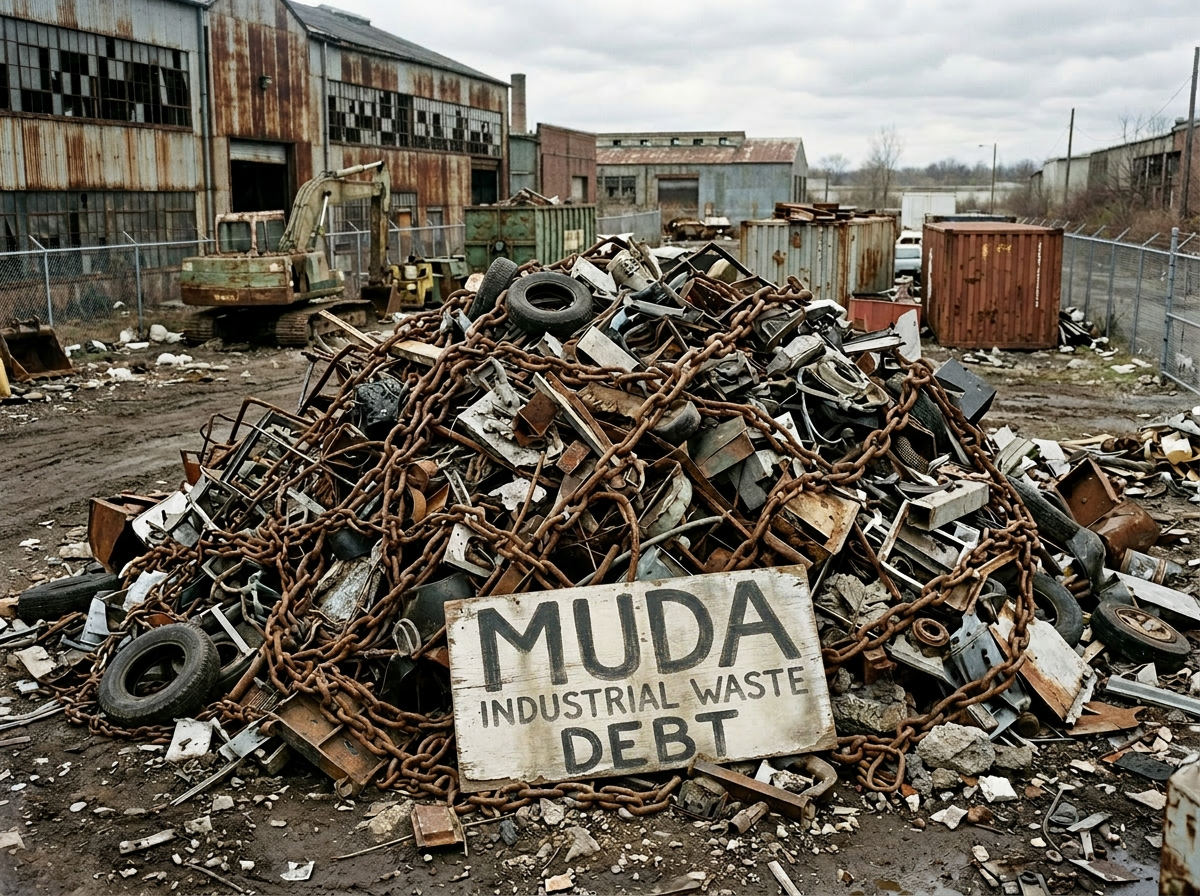
In the industrial manufacturing world, Muda is the Japanese term for waste—any activity that consumes resources but creates no value for the end customer.
In the domain of the Sovereign Professional, the “product” being manufactured is your unique value and creative output, while the “customer” is your future self and your autonomy.
When we apply a Lean audit to the human operating system, we discover that interest-based debt is not merely a financial line item or a neutral tool of leverage. It is an extractive defect.
It is a systemic leak that ensures a portion of your vital energy—your time, focus, and labor—is siphoned off before it can ever reach the intended recipient of your work.
To move toward a true state of autonomy, one must treat debt as a fundamental failure of the system.
The Systemic Trap: Why Intent Isn’t Enough
A common pitfall for the modern professional is believing that a “strategic” loan or a high-limit credit line will lead to future freedom. However, as established in Incentives Drive Behavior: Why Good Intentions Fail in Systems, the structure of a system dictates its outcome regardless of the individual’s goals.
The system of interest-bearing debt is structurally designed to prioritize the lender’s cash flow over your creative flow.
In Lean terms, debt is an anti-flow mechanism. It creates a “push” system in a world that requires “pull.” When you carry debt, you are pulling future consumption into the present, which in turn creates a mandatory “push” of future labor to service that choice.
This obligation disrupts The Discipline of Inner Sovereignty. Instead of making professional choices based on discernment and market pull, you make them based on the metabolic demand of the debt collector.
The Audit: Mapping the 8 Wastes of Debt
To deconstruct why debt is the ultimate “Muda,” we must map the traditional “7+1 Wastes” (TIMWOODS) of Lean manufacturing to the professional’s daily reality.
1. Transportation (Unnecessary Movement)
In a factory, moving parts without adding value is waste. For the Sovereign, this is the movement of money from your revenue stream directly to a banking institution. You are merely a waypoint for capital that belongs to someone else. This “movement” adds zero value to your craft or your clients.
2. Inventory (Unused Potential)
Inventory is “dead capital” sitting on a shelf. For the professional, your inventory is your time and cognitive bandwidth. Debt acts as a warehouse lock; it forces you to keep your talent stored in “safe,” predictable, but low-growth roles just to ensure the monthly interest is met. You cannot pivot to higher-leverage ventures because your inventory is already spoken for.
3. Motion (The Financial Hustle)
Motion waste is extra steps taken to solve a problem. Think of the hours spent managing credit scores, refinancing, or the “hustle” required to cover a monthly deficit. This is the opposite of high-leverage work; it is motion without progress. It makes achieving a state of flow impossible because the brain is constantly distracted by the “noise” of insolvency.
4. Waiting (The Delay of Freedom)
Every dollar of interest paid is a minute of your life you are “waiting” to reclaim. Debt extends the lead time between your creative impulse and your ability to act on it. If a high “debt floor” prevents you from launching a new project for three years, you are suffering from a massive systemic bottleneck.
5. Overproduction (The 60-Hour Grind)
Are you working 60 hours a week to fund a 40-hour lifestyle? If the delta is interest, you are overproducing. You are creating more “work product” than you actually require for your own sustenance, with the excess being harvested by an extractive third party. This is a primary reason Why Hard Work Alone Doesn’t Make You Valuable; value is about what you retain and leverage, not just what you produce.
6. Over-processing (Complexity as a Trap)
Managing complex debt vehicles—rewards hacking, balance transfers, and tiered interest rates—is financial over-processing. It is high-effort, low-value complexity that distracts from the core mission of your professional practice. It violates the lean principle of simplicity.
7. Defects (Interest as Scrap)
In Lean, a defect is a part that must be discarded because it doesn’t meet specifications. Interest is the ultimate scrap. It is a payment that buys zero equity, zero assets, and zero utility. It is pure waste.
8. Skills (The Underutilized Professional)
This is the “8th Waste”—failing to use the full potential of the human being. Debt forces a professional to optimize for solvency (paying the bills) rather than capability. When the system is designed this way, it explains How Systems Shape Behavior (And Why It Feels Personal). You feel the weight of the system as a personal failure of discipline, when in reality, it is a structural defect.
Moving from “Push” to “Pull”
A Lean enterprise thrives on a Pull System—you only produce what the market demands. Debt creates a False Push. It pulls future earnings into the present, which then “pushes” you into labor you might otherwise decline.
By eliminating the Muda of debt, the Sovereign Professional transitions back to a Pull System. You work when the opportunity is high-leverage and high-signal. You rest (or “re-tool”) when the market is quiet. This agility is only possible when you master the Signal vs Noise: Why Clear Thinking Is Rare and recognize debt for the noise it truly is.
Conclusion: Reclaiming the Value Stream
The Sovereign Professional recognizes that interest is a tax on the soul. To allow debt into the system is to allow an extractive third party to own the gears of your professional machine. By conducting a Lean audit and identifying debt as Muda, you stop servicing a lender and start serving your craft.
True sovereignty starts when the value you create stays within the system you own. The mandate is clear: Excise the waste, fix the defect, and reclaim your value stream.
The Sovereign Professional: A structural map of power, systems thinking, and personal autonomy—dedicated to helping the independent professional navigate complexity and own their value stream.
©2026 Gerald Daquila • Life.Understood. • Systems Thinking, Leadership Architecture, and Applied Coherence
Leave a Reply