Logo - Life.Understood.

Category: EMBODIMENT PRACTICES

  • What NESARA/GESARA Means for the Filipino Soul: A Return to the Babaylan Blueprint

    What NESARA/GESARA Means for the Filipino Soul: A Return to the Babaylan Blueprint


    For many Filipinos, NESARA (National Economic Security and Recovery Act) and GESARA (Global Economic Security and Reformation Act) have emerged as symbols of hope in a world shaped by persistent scarcity and systemic fatigue.

    They are often framed as a coming “Global Reset”—a moment where debt is dissolved, wealth is redistributed, and long-standing financial burdens are lifted.

    But to interpret these shifts purely through the lens of currency and banking is to misread their deeper significance.

    At its core, this transition is not financial—it is civilizational.

    For the Filipino soul, GESARA is not merely an external upgrade of systems. It is an internal recall signal—a structural invitation to return to an older, more coherent operating framework: the Babaylan blueprint.

    This piece serves as a living bridge between Gate 1 • GESARA & Financial Sovereignty and The Architecture of Resilience: Reconciling Duality in the Filipino Psyche. Without this bridge, both remain incomplete—one risks becoming purely economic, the other purely psychological.


    The Misstep: Escaping into the “Waiting Room”

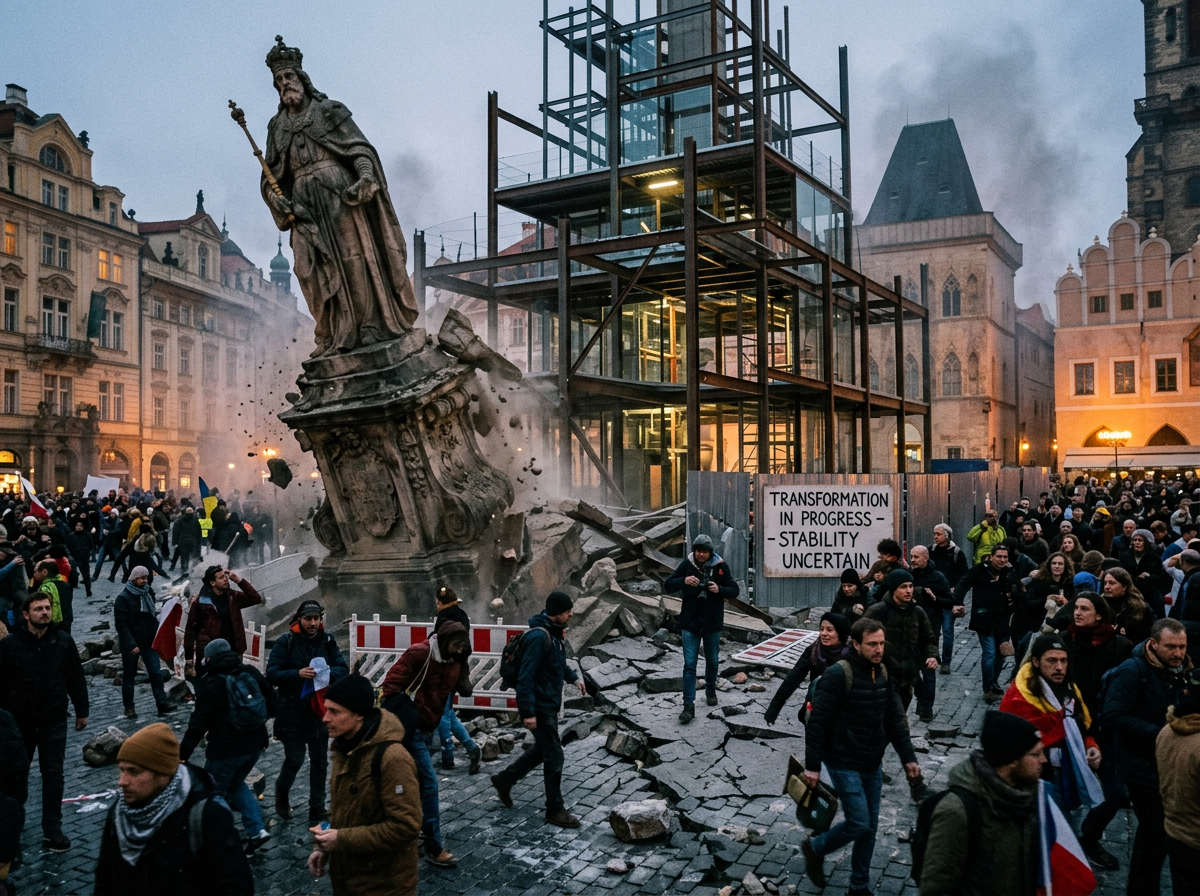
    A critical distortion has emerged within “New Earth” discourse—what can be called the Waiting Room Trap.

    This is the mindset that suspends agency in anticipation of external salvation:
    waiting for the system to reset,
    waiting for wealth to be released,
    waiting for permission to begin.

    While systemic shifts may indeed be underway, this posture is structurally incoherent.

    The Filipino psyche, in particular, is vulnerable to this trap. Centuries of colonial conditioning and modern economic patterns have reinforced a habit of outward dependency—waiting for change to arrive rather than generating it from within.

    This pattern is further unpacked in Beyond the Ube Latte, where surface-level cultural identity is shown to mask deeper structural dislocation.

    But the Babaylan tradition operates on an entirely different premise.


    The Babaylan did not wait.


    They functioned as active stewards of reality—anchored in bayanihan, where abundance was not accumulated but circulated. Sovereignty was not granted; it was embodied.


    If GESARA is to have any real impact, it cannot be approached as rescue. It must be understood as mirror.


    GESARA as Structural Mirror, Not External Savior

    The old system was built on extraction—of labor, attention, and life force. Scarcity was not accidental; it was engineered as a mechanism of control.

    GESARA, in its intended form, represents the dismantling of these extraction loops.

    But dismantling a system externally does not guarantee transformation internally.

    If the structures change but the consciousness remains conditioned by scarcity, the same patterns will reassemble under new names.

    This is why internal discipline becomes central. As outlined in [SWI-001] Standard Work for the Sovereign Mind, sovereignty is not a belief—it is a trained operating system.

    The Babaylan understood wealth not as accumulation, but as flow integrity—the balanced circulation of resources for collective coherence. In this sense, they were not merely spiritual figures; they were system designers.

    This archetype is further explored in The Architecture of Overflow Communities, where wealth is reframed as a stewardship function rather than a possession.

    What is now being described as a “Golden Age” is not the arrival of abundance—it is the restoration of stewardship.

    And stewardship requires structure.


    The Philippine Ark: From Extraction to Stewardship

    The Philippines occupies a unique position in this transition.

    Historically framed as a labor-export economy, it has been one of the most resilient yet most extracted systems globally. That combination is not incidental—it is preparatory.


    In a post-extraction world, resilience without sovereignty becomes obsolete.


    What emerges instead is a new function: stewardship anchoring.

    This role is articulated in The Philippine Ark, where the country is framed not as a passive recipient of global change, but as an active threshold node within it.

    The practical pathway for this transition is further mapped in The 5-Year Plan for Building the New Earth in the Philippines (Threshold Flame Edition), shifting the narrative from aspiration to implementation.

    But this transition is not geographic. It is psychological and ancestral.

    Without addressing lineage-level distortions—poverty conditioning, colonial mentality, fractured identity—the same dysfunction will simply reappear inside any new system.

    This is why the work within your Ancestral & Lineage Healing cluster remains foundational, not supplementary.

    GESARA, in this sense, does not solve these issues. It exposes them.


    From Concept to Practice: Stabilizing the Transition

    High-level frameworks without grounded application create instability.

    The bridge between systemic change and lived experience must be practical.

    For those entering this work, [SWI-002] The 72-Hour Sovereignty Protocol provides an immediate stabilization pathway—a way to regulate the internal system while external systems fluctuate.

    A transition period of this scale introduces volatility:
    financial uncertainty,
    information distortion,
    institutional instability.

    The role of the individual is not to predict outcomes, but to stabilize their internal system within this volatility.

    The Babaylan principle applies directly:

    You do not fight the storm.
    You become the point of coherence within it.


    The Real Shift: From Resilience to Architecture

    The Filipino identity has long been defined by resilience.


    But resilience alone is no longer sufficient.


    Endurance without direction perpetuates the very conditions it seeks to survive.

    What is required now is a shift toward architectural thinking—a theme developed across the archive, particularly within The Architecture of Resilience: Reconciling Duality in the Filipino Psyche.

    This is the deeper transition:

    Not survival.
    Not even recovery.
    But construction.

    A movement from reacting to systems → to building them.


    Closing: Sovereignty as Recall, Not Acquisition

    The question is no longer whether NESARA/GESARA will happen.

    The more relevant question is:

    What state of consciousness will meet it when it does?

    If approached as salvation, it reinforces dependency.
    If approached as opportunity, it activates agency.
    If approached as mirror, it demands transformation.

    For the Filipino soul, this moment is not about receiving something new.

    It is about remembering something old.

    Dangal (dignity) and Ginhawa (vitality) are not future states—they are baseline conditions that were disrupted and are now being reintroduced.

    The Babaylan were never lost.

    They were simply operating in a system that could not support their function.

    If that system is now shifting, the responsibility is clear:

    Not to wait for it.
    Not to rely on it.
    But to become coherent enough to steward what replaces it.


    © 2025-2026 Gerald Alba Daquila • Life.Understood. • All rights reserved
    Exploring structure, meaning, and human experience across systems and inner life.

  • [HK-001] Hoshin Kanri: Aligning Missions in a Sovereign Node

    [HK-001] Hoshin Kanri: Aligning Missions in a Sovereign Node


    In the high-pressure corridors of 2026, the concept of Hoshin Kanri—often translated from Lean manufacturing as “Compass Management” or “Policy Deployment”—has taken on a life-or-death significance for the independent professional.

    Traditionally, Hoshin Kanri was a top-down mechanism used by massive corporations to ensure that every worker’s metabolic output was perfectly synchronized with the CEO’s quarterly targets.

    It was a tool of alignment designed to eliminate the “waste” of human deviation.

    However, for the Sovereign Professional, the architecture of alignment has shifted. When you are a “Sovereign Node”—operating outside the extractive logic of legacy hierarchies—you no longer have a corporate compass to follow.

    You are the architect, the strategist, and the Gemba-walker. [HK-001] is the protocol for Inside-Out Alignment: ensuring that your daily actions are a precise reflection of your highest systemic mission.


    The Conflict: Strategic Fragmentation vs. The Soul Blueprint

    Most professionals suffer from a “Vertical Gap.” They have a vision for their life, but their daily schedule is a graveyard of unrelated tasks.

    This fragmentation is not just a productivity issue; it is a crisis of identity. As explored in Identity: The Story We Learn to Tell About Ourselves, we often mistake our corporate roles for our actual selves.

    When the “Story” we tell about ourselves is authored by an employer, our internal Hoshin Kanri is broken.

    The Sovereign Node recognizes that true alignment starts with Sovereign Remembrance. You must determine your “True North” before the market determines it for you.

    This is the only way to maintain Staying Sovereign in Uncertain Times — Inner Stability in an Unstable World.

    Without this internal compass, you are simply “Motion Muda”—moving fast, but going nowhere.


    The Tool: The Sovereign X-Matrix

    To bridge the gap between “Soul Blueprint” and “Daily Sweat,” the Sovereign Professional uses the X-Matrix.

    This Lean tool forces a 360-degree alignment across four critical quadrants of your existence:


    1. Breakthrough Objectives (The Long-Term “Why”)

    These are your 3–5 year shifts. In 2026, a breakthrough isn’t just a revenue goal; it’s a systemic transition.

    You must view every major Change as a Threshold, Not a Failure. Your breakthrough objectives define which “Thresholds” you are currently crossing.


    2. Annual Tactics (The Value Stream)

    What are you building this year to cross that threshold? This is where you architect your Sacred Exchange.

    You aren’t just “selling services”; you are designing the flow of value between your sovereign node and the world. If your tactics don’t support your breakthrough, they are waste.


    3. Quantitative Metrics (The Reality Check)

    How do you know the “Signal” from the “Noise”? Your metrics must be “Poka-yoke” for your ego.

    They should measure your autonomy, your energy reserves, and your impact.

    A key metric for the modern professional is the ability to sustain high-level output while Helping Without Burning Out.


    4. Daily Kaizen (The Gemba)

    What is the one improvement you are making today? This is the incremental refinement of your craft. If the daily work is disconnected from the X-Matrix, you are leaking sovereignty.


    The Dialogue of “Catchball”

    In the Lean Gemba, Catchball is the negotiation between leaders and teams to ensure a goal is realistic.

    As a Sovereign Node, your Catchball is an internal dialogue between your Higher Architect and your Daily Executor.

    When the Architect sets a goal that ignores the physical or energetic limits of the Executor, the system breaks. This is where burnout originates—a lack of Catchball.

    You must negotiate with yourself. If your “Tactics” are crushing your “Spirit,” your Hoshin is misaligned. You must be willing to iterate.

    You must treat your life as a prototype that is constantly being refined to better serve the “True North.”


    Why Alignment is the Only Protection

    In the 2026 corporate waste-stream, the system is designed to fragment you. It wants your analytical mind but rejects your intuition. It wants your time but ignores your “Root.”

    Hoshin Kanri: Aligning Missions in a Sovereign Node is the act of Refusing to be Fragmented.

    When you are aligned, every email you send, every line of code you write, and every consultation you hold is a tactical deployment of your mission.

    You stop “working for a living” and start “executing a mission.”

    This alignment creates a “Coherence Field.” When the external world becomes volatile, your X-Matrix keeps you grounded. You don’t panic during market shifts because you’ve already framed Change as a Threshold.

    You don’t over-extend yourself because you are practicing the metrics of Helping Without Burning Out.


    Conclusion: Deploying the Soul

    The goal of Hoshin Kanri is not to do more work; it is to ensure that the work you do is the work that matters. It is about the “Sacred Exchange” of your time for systemic transformation.

    By the end of 2026, the professionals who thrive won’t be the ones with the longest resumes.

    They will be the ones with the most coherent X-Matrices.

    They will be the Sovereign Nodes who have aligned their daily Kaizen with their eternal mission.

    Deploy your soul. Align your compass. Become the architect of your own value stream.


    The Sovereign Professional: A structural map of power, systems thinking, and personal autonomy—dedicated to helping the independent professional navigate complexity and own their value stream.


    ©2026 Gerald Daquila • Life.Understood. • Systems Thinking, Leadership Architecture, and Applied Coherence

  • [PY-001] Poka-yoke for Information Intake

    [PY-001] Poka-yoke for Information Intake


    Error-Proofing the Sovereign Mind


    In the industrial Gemba, Poka-yoke is the practice of “error-proofing.” It is a mechanical or procedural constraint designed to make it physically impossible for a defect to occur.

    A plug that only fits into a socket one way is a Poka-yoke. A sensor that stops a machine when a hand gets too close is a Poka-yoke.

    As we navigate the hyper-accelerated landscape of 2026, the Sovereign Professional must recognize that the most dangerous defects are no longer on the assembly line—they are in the Information Intake Stream.

    We are currently drowning in “Information Muda” (waste). The algorithms that govern our digital lives are designed for extraction, not enlightenment.

    They “push” high-intensity, low-signal content into our consciousness to harvest our attention.

    To survive this, you cannot rely on “willpower” or “discipline.” You need a systemic intervention. You need to Poka-yoke your mind.


    The Problem: Information as Extractive Waste

    In a Lean system, overproduction is considered the “Mother of All Wastes” because it hides all other problems.

    In 2026, the internet is in a state of terminal overproduction. Most of what you consume is “Noise”—unprocessed data, speculative dread, and performative outrage.

    When you allow this noise into your system, you are introducing Defects into your reasoning.

    This cognitive clutter increases your “Lead Time” for making decisions and degrades your Signal vs Noise: Why Clear Thinking Is Rare.

    If your intake stream is unfiltered, your output will be defective. It is that simple.


    The Protocol: Three Tiers of Information Poka-yoke

    To error-proof your intake, you must move from a Push System (where the internet decides what you see) to a Sovereign Pull System (where you define the demand).

    This requires three specific tiers of mechanical constraints.


    1. The Physical Shut-off (The “Contact” Poka-yoke)

    The first tier is about preventing the “Noise” from ever reaching your sensory gates. This is the digital equivalent of a safety guard on a saw.

    • The “Zero-Inbox” Filter: Use aggressive, automated filters to move all non-essential communication to a “Read Later” folder. If a human didn’t specifically type your name, it shouldn’t hit your primary notification screen.
    • Algorithm Blocker: Use browser extensions and OS-level settings to hide “Recommended” feeds, “Trending” topics, and “Explore” pages. These are the primary sources of extractive waste.
    • The “Hard-Wire” Boundary: Designate specific physical zones and times for information intake. If you are in your “Creation Zone,” the device’s “Intake Pipe” must be physically or digitally severed.

    2. The Quality Gate (The “Sequential” Poka-yoke)

    In Lean, a sequential Poka-yoke ensures that Step B cannot happen unless Step A is done correctly.

    In your information diet, this means creating Friction between you and the content.

    • The 24-Hour Buffer: For any “urgent” news or trending topic, install a mandatory 24-hour waiting period before you engage. If the “Signal” hasn’t survived a day of scrutiny, it was likely just “Noise.”
    • Node Verification: Only pull information from “Trusted Nodes”—individuals or sources that have a proven track record of Discernment in a Confusing World. If a source consistently produces “Dread-Scrap,” it is a defective tool and must be removed from your toolkit.

    3. The Sensory Alert (The “Information” Poka-yoke)

    This tier uses visual or auditory cues to alert you when you have slipped into a waste-stream.

    • The “Doom-Scroll” Timer: Set a mechanical timer for any “Exploratory” research. When the bell rings, the “Gemba Walk” is over. This prevents the “Waste of Motion” where 5 minutes of research turns into 2 hours of aimless consumption.
    • Cognitive Load Monitoring: Learn to recognize the physical sensation of “Information Saturation”—that specific tension in the forehead or the blurring of focus. When this cue occurs, it is a “System Fault.” You must stop all intake and engage in “The Breath of the Center.”

    Poka-yoke and Soul Governance

    Why go to such lengths? Because How Systems Shape Behavior (And Why It Feels Personal) tells us that we are not as immune to the environment as we think.

    If the system around you is designed to make you anxious, distracted, and reactive, you will eventually become those things.

    By Poka-yoking your intake, you are practicing The Discipline of Inner Sovereignty. You are asserting that your attention is a Sovereign Resource that cannot be mined without your consent.

    You are shifting from a “Consumer” OS to a “Steward” OS.


    Conclusion: Mastering the Flow

    In 2026, the difference between a “High-Performer” and a “Sovereign Professional” is how they manage their intake.

    The High-Performer tries to “process more data” (Motion Waste). The Sovereign Professional builds a system that ensures only the highest-quality data is ever processed.

    Poka-yoke your information intake today. Turn off the “Push,” install the “Gates,” and listen for the “Signal.” Your brilliance depends on the quality of your constraints.


    The Sovereign Professional: A structural map of power, systems thinking, and personal autonomy—dedicated to helping the independent professional navigate complexity and own their value stream.


    ©2026 Gerald Daquila • Life.Understood. • Systems Thinking, Leadership Architecture, and Applied Coherence

  • The “Waiting Room” Trap: Why GESARA Is a Systemic Symptom Not a Solution

    The “Waiting Room” Trap: Why GESARA Is a Systemic Symptom Not a Solution


    Why GESARA is a Systemic Symptom, Not a Solution


    The global discourse surrounding the Global Economic Security and Reformation Act (GESARA) has reached a fever pitch.

    For many, it represents the ultimate “Exit” button—a total systemic reset, debt jubilee, and the dawning of a new era. But while the theory offers a vision of hope, the act of waiting for it has created a profound secondary crisis: the “Waiting Room” trap.

    When we treat a systemic reset as a future event to be observed rather than a present framework to be architected, we fall into a state of learned passivity. In Lean management terms, this is the ultimate form of Muda (Waste).

    To move from the passive observation of a theory to the active participation in a value stream, we must recognize that GESARA is not the solution we are waiting for; it is a systemic symptom of a world in transition.


    1. The Lean Analysis: The Muda of Speculation

    In the world of operational excellence, Muda is anything that consumes resources but creates no value. The most dangerous form of waste in the current transition is the Waste of Waiting.

    As explored in What Is NESARA and GESARA? Origins, Claims, and Why the Theory Keeps Resurfacing, the narrative often anchors people to a timeline they do not control. When you put your creative projects, financial investments, or community initiatives on hold until “the RV happens” or “the banks close,” you are allowing your most valuable asset—your time—to sit idle.

    In any value stream, idle time is lost velocity. If you are waiting for a savior system to provide permission for your prosperity, you are effectively over-processing “intel” while under-producing utility. This creates a “defect” in your personal economy where the output is always “theoretical” and never “tangible.”


    2. From Spectator to Architect: Breaking the Labyrinth

    The transition from a passive spectator to an active architect requires a fundamental shift in identity.

    Many started this journey as researchers, digging through the digital trenches to understand the global reset. However, there is a point where the research becomes a circle.

    In my own journey, documented in From Conspiracy to Creator: My Journey Through the GESARA Labyrinth, I realized that the “Labyrinth” is designed to keep you looking for answers outside of yourself.

    The “Architect” does not look for the reset; the Architect is the reset.

    Being an architect means moving beyond the Signal vs Noise of daily updates and focusing on the construction of the “New Earth” protocols. While the spectator asks, “When will it happen?” the architect asks, “How do I build a node of this system right here, right now?”


    3. Activating the Value Stream: Flow vs. Stagnation

    A “Value Stream” is the end-to-end movement of value from a concept to a person who needs it. If GESARA is about abundance, then the “Waiting Room” is the antithesis of GESARA because it represents stagnation.

    To move into active participation, we must apply GESARA Flow Mechanics to our daily lives. This involves:

    • Identifying the Pull: Stop pushing theories onto people and start identifying the real-world needs (the “Pull”) in your immediate environment.
    • Eliminating Waste: Audit your “Frequency Hygiene.” If your consumption of intel is causing anxiety or paralysis, it is a non-value-add activity.
    • Creating Value-Based Exchange: As outlined in Wealth Without Limits: Rethinking Value, Exchange, and Prosperity, prosperity isn’t a windfall; it’s a byproduct of effective value exchange.

    We are not waiting for a “Quantum Financial System” to be handed to us from a central authority. We are practicing Anchoring GESARA in Daily Life: Practical Tools for Embracing Financial Sovereignty to ensure that when the systemic transition completes, we already have the operational muscle to manage it.


    4. The 2026 Perspective: Positioning over Effort

    As we navigate 2026, the gap between the “Spectator” and the “Architect” is widening. The legacy systems are indeed crumbling, but they are not being replaced by magic; they are being replaced by the infrastructure built by those who refused to wait.

    In our current phase of transition, it is not just about hard work; it is about Positioning vs Effort: Why Hard Work Isn’t Enough. If you are positioned in the “Waiting Room,” no amount of effort in researching will create a harvest. However, if you are positioned as a GESARA Node Custodian, every action you take contributes to the new value stream.


    Conclusion: Nothing Was Wasted

    It is easy to look back at years of “waiting” with regret, but in the higher architecture of this reset, Nothing Was Wasted. The time spent in the waiting room was a period of intense pattern recognition and the shedding of old-world dependencies.

    However, the “Waiting Room” has now served its purpose. It was a shelter, but it has become a cage. To move forward, you must take the blueprints you have found in the theory and begin the construction. The “Value Stream” is open. The “Architect’s Table” is waiting.

    Stop being a witness to a theory. Start being the engine of the stream.


    The Sovereign Professional: A structural map of power, systems thinking, and personal autonomy—dedicated to helping the independent professional navigate complexity and own their value stream.


    ©2026 Gerald Daquila • Life.Understood. • Systems Thinking, Leadership Architecture, and Applied Coherence

  • Beyond the Ube Latte: Reclaiming the ‘Root’ in the 2026 Heritage Retrieval Wave

    Beyond the Ube Latte: Reclaiming the ‘Root’ in the 2026 Heritage Retrieval Wave


    By the spring of 2026, “Filipino Culture” has achieved a level of global visibility that would have been unthinkable a decade ago.

    From the high-streets of Toronto to the creative hubs of Los Angeles, the aesthetic of the Philippines is everywhere. You can find ube-flavored everything, barong-inspired streetwear, and “aesthetic” baybayin tattoos in every neighborhood.

    We are living in the peak of the “Ube Latte” era—a version of heritage that is colorful, consumable, and perfectly optimized for the social media algorithm.

    But for the North American diaspora, this visibility has started to feel hollow. There is a growing realization that “flavor” is not “foundation.”

    You can consume the aesthetic while remaining completely disconnected from the Soul Blueprint that allowed your ancestors to survive centuries of systemic extraction.

    As the 2026 heritage retrieval wave reaches its crest, the Sovereign Professional is asking a deeper question:

    How do we move beyond the “Trendy Filipino” and reclaim the “Steward Filipino”?


    The “Trendy Filipino” vs. The “Steward Filipino”

    The “Trendy Filipino” is a consumer. They engage with heritage as a lifestyle brand—a collection of symbols, foods, and fashion choices that provide a sense of belonging without requiring a shift in their internal operating system.

    This is a form of cultural “Muda” (waste); it consumes attention and resources but fails to produce the autonomy required to navigate a collapsing corporate landscape.

    In contrast, the “Steward Filipino” is an architect. They recognize that heritage is not a costume, but a Sovereign Resource Pipeline.

    To them, the ancient structures of the Barangay (the community unit) and the Babaylan (the system’s sense-maker) are not historical relics—they are high-efficiency blueprints for decentralized governance and psychological resilience.

    When you shift from being a consumer of your culture to a steward of its logic, you stop performing your identity and start practicing The Discipline of Inner Sovereignty.


    The Colonized Fragmentation of the “Root”

    The reason the diaspora feels a “soul-hunger” despite the abundance of cultural aesthetics is that the “Root” has been strategically fragmented.

    As explored in How Systems Shape Behavior (And Why It Feels Personal), the colonial project was not just about land; it was about overwriting the Filipino Operating System.

    The original OS was built on Kapwa (shared identity) and a non-linear understanding of time and resource management.


    Colonization introduced an extractive logic that rewarded competition and individual metabolic output.

    This is why many high-performers in the diaspora feel like they are “running on a treadmill” in their careers.

    They are trying to achieve the Sovereignty Architecture using a colonized brain that believes Why Hard Work Alone Doesn’t Make You Valuable is a personal failing rather than a systemic trap.


    Reclaiming the Babaylan Logic: High-Bandwidth Sense-Making

    To reclaim the “Root,” we must look at the Babaylan not as a mystical figure, but as the ultimate system’s architect.

    The Babaylan was the one who could see the Signal in a world of Noise. They understood the incentives driving the community and the unseen energies (the “spirits” or systemic forces) that dictated the outcome of any venture.

    In 2026, this translates to Systemic Discernment. A Steward Filipino in the corporate world doesn’t just “work hard”; they apply ancestral sense-making to see the flaws in the corporate waste-stream.

    They recognize when a system is designed for extraction rather than generation. They know that Signal vs Noise: Why Clear Thinking Is Rare is a skill that was perfected by their ancestors long before the arrival of the first galleon.


    The Protocol for “Root” Retrieval

    Heritage retrieval in the 2026 landscape requires more than just visiting the motherland or learning the language. It requires a protocol for Systemic Reclamation:

    1. De-Aestheticize the Ancestors: Stop viewing your lineage through the lens of “trauma” or “resilience” (which are often colonial terms for “good units of labor”). View them as masters of a sophisticated, zero-waste social technology.
    2. Audit Your Incentives: Look at your current professional life. Are you serving a “Barangay” (a community of mutual value) or a “Plantation” (an extractive hierarchy)? If you don’t know the difference, check Incentives Drive Behavior: Why Good Intentions Fail in Systems.
    3. Install the “Kapwa” Module: Replace the “Solo-Preneur” myth with the “Sovereign Node” reality. A Sovereign Professional is never truly alone; they are a node in an ancestral and future-facing network of value.

    Conclusion: Beyond the Flavor

    The ube latte is a fine thing to drink, but it is a terrible thing to be.


    The diaspora’s future depends on our ability to distinguish between the flavor of the Philippines and the function of the Filipino soul.

    When you reclaim the “Root,” you stop being a “high-performer” in someone else’s extractive machine. You become a Sovereign Steward—an architect of your own value stream, guided by the intuition of those who came before you.

    You move from the trend of the week to the truth of the lineage.

    The 2026 Heritage Retrieval wave is here. Don’t just ride it as a consumer. Build the vessel as an architect.


    The Sovereign Professional: A structural map of power, systems thinking, and personal autonomy—dedicated to helping the independent professional navigate complexity and own their value stream.


    ©2026 Gerald Daquila • Life.Understood. • Systems Thinking, Leadership Architecture, and Applied Coherence

  • The Architecture of Resilience: Reconciling Duality in the Filipino Psyche

    The Architecture of Resilience: Reconciling Duality in the Filipino Psyche


    A global perspective of human adaptation under pressure


    The Philippine identity is often described by outsiders as a series of irreconcilable paradoxes. It is a nation that is “East meets West,” a culture that is simultaneously deeply traditional and aggressively globalized.

    However, through a psychological and historical lens, these contradictions are not flaws; they are systemic adaptations—mechanisms developed to survive and thrive within the duality of a colonial past and a globalized future.


    The Colonial Root of Systematic Adaptation

    To understand the Filipino psyche, one must first address the “split” created by over 400 years of colonial rule. The historical trajectory—moving from Spanish religious hegemony to American democratic imperialism—created a societal structure where indigenous values had to “mask” themselves within Western frameworks.

    Psychologists often refer to this as Colonial Mentality, a form of internalized oppression where the colonized culture perceives its own values as inferior to those of the colonizer (David & Okazaki, 2006).

    However, what looks like “maladaptation” to a Western observer—such as the tendency toward patronage politics or a perceived lack of “discipline”—is often a localized strategy for navigating a state apparatus that has historically been exclusionary or predatory.


    The Anatomy of Filipino Core Values

    The core of Filipino social psychology, or Sikolohiyang Pilipino, centers on the concept of the “shared self.” These values act as the internal gears that allow Filipinos to reconcile their fragmented history into a unified lived experience.

    • Kapwa (The Shared Self): Virgilio Enriquez, the father of Philippine Psychology, identified Kapwa as the core construct of Filipino social interaction. Unlike the Western “I,” Kapwa implies that the “other” is not separate from the self (Enriquez, 1992). This is the foundation of the Filipino’s radical empathy. It is the recognition that the other is not separate from the self. In a history marked by displacement and external rule, kapwa became a defensive mechanism of radical empathy. If the state cannot provide, the kapwa will.
    • Pakikisama (Social Symmetry): Often criticized as a “lack of backbone” or “conformity,” pakikisama is actually a high-level social lubricant. In an archipelago of 7,641 islands and dozens of languages, maintaining harmony (pakikisama) was the only way to prevent total systemic collapse under colonial “divide and rule” tactics.
    • Bahala Na (Calculated Surrender): While frequently mistranslated as fatalism or “whatever,” the etymological root is Bathala na (Leave it to God/the Creator). Lagmay (1977) argued that it is a radical acceptance of uncertainty. In a land prone to typhoons, volcanic eruptions, and political upheavals, bahala na is the psychological pivot that allows a Filipino to smile in the middle of a flood. It is not giving up; it is the courage to move forward when the path is invisible, Lagmay (1977). It is an “improvisatory courage” that allows individuals to face extreme uncertainty (like typhoons or political instability) without becoming paralyzed by anxiety.

    The Duality of the Global Filipino

    Today, this adaptive architecture has moved beyond the borders of the archipelago. The Philippines has become the “Universal Donor” of the global labor force. Millions of Overseas Filipino Workers (OFWs)—including nurses, seafarers, engineers, and BPO professionals—serve as the hidden backbone of the world’s economy.

    This diaspora represents the ultimate reconciliation of the Filipino duality. The Filipino worker is prized globally precisely because of their adaptive traits:

    1. Cultural Fluency: The ability to assimilate into foreign cultures while retaining a strong internal identity.
    2. Emotional Labor: The application of Kapwa in healthcare and service sectors, providing a level of care that is often absent in more individualistic societies.
    3. Resilience: The “Bahala Na” spirit that allows seafarers and factory workers to endure isolation and harsh conditions to provide for their families back home.

    As of 2023, personal remittances from OFWs accounted for approximately 8.5% of the Philippines’ GDP (Bangko Sentral ng Pilipinas, 2024), proving that these “adaptive” psychological traits have tangible, global economic power.


    From Paradox to Unity: A New Identity

    The struggle to define a singular “Filipino Identity” is an ongoing process of decolonizing the mind. From the outside, the Philippines looks like a nation of contradictions. From the inside, it is a model of how a people can hold multiple truths at once.

    The “Filipino Psyche” is essentially a bridge. It bridges the indigenous and the global, the suffering of the past and the opportunity of the future. What were once survival mechanisms born out of colonial trauma have evolved into a unique form of social intelligence. The Filipino does not seek to resolve the paradox of their existence; they seek to inhabit it with grace, humor, and an unshakeable sense of community.


    References

    • Bangko Sentral ng Pilipinas. (2024). External Sector Statistics: Remittances.
    • David, E. J. R., & Okazaki, S. (2006). The Colonial Mentality Scale (CMS) for Filipino Americans: Scale construction and psychometric properties. Journal of Counseling Psychology.
    • Enriquez, V. G. (1992). From Colonial to Liberation Psychology: The Philippine Experience. University of the Philippines Press.
    • Lagmay, A. V. (1977). Bahala Na: A study into the dynamics of Filipino risk-taking. Philippine Journal of Psychology.
    • Parreñas, R. S. (2001). Servants of Globalization: Women, Migration, and Domestic Work. Stanford University Press.

    © 2025-2026 Gerald Alba Daquila • Life.Understood. • All rights reserved
    Exploring structure, meaning, and human experience across systems and inner life.