
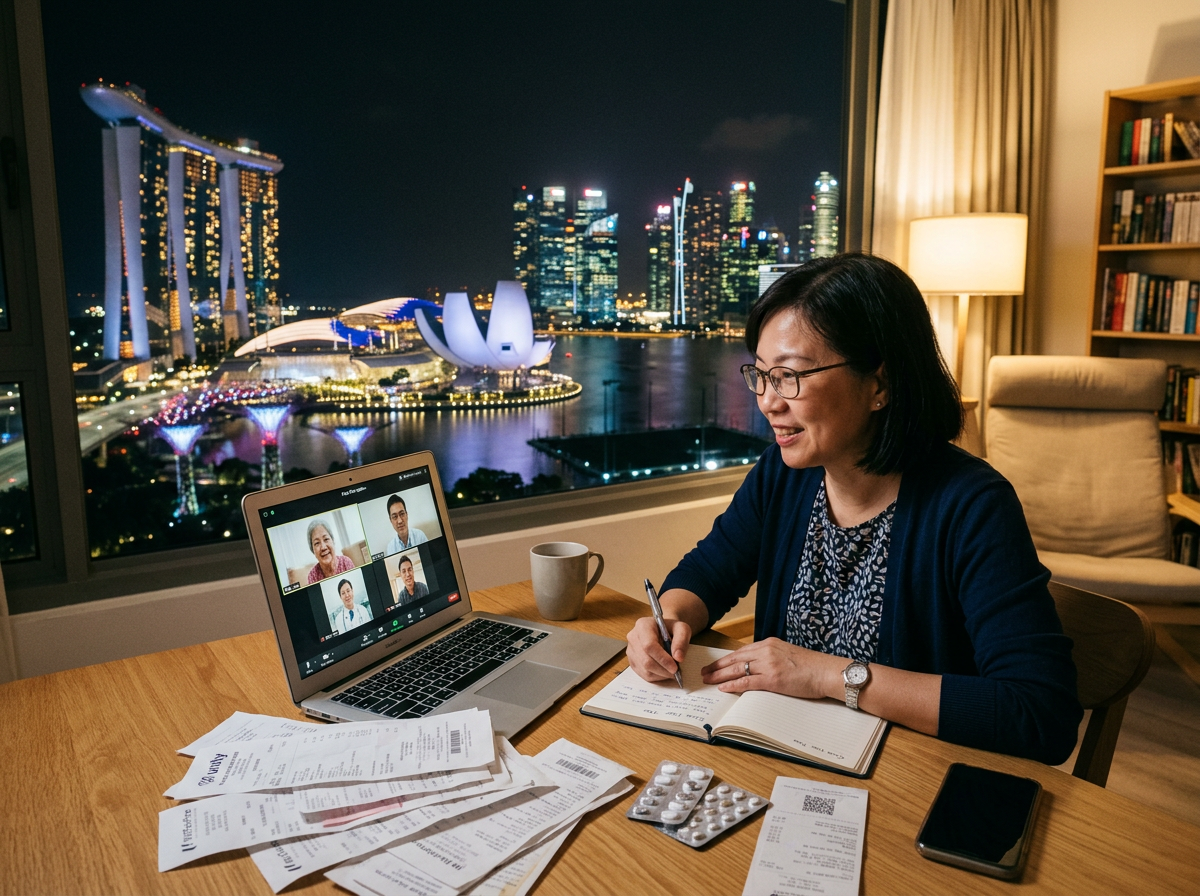
A practical framework for Overseas Filipinos to move from remittance cycles and financial pressure toward asset ownership, economic independence, and a sustainable path back to the Philippines.
Meta Description
A financial roadmap for OFWs: shift from remittances to assets, navigate global changes, and build a sustainable, sovereign return to the Philippines.
You were taught how to earn.
You were never taught how to exit.The Sovereign Economy is where that changes—
from income dependency to asset control,
from remittance cycles to long-term stability.
💰 The Sovereign Economy: A Financial Exit Framework for the Filipino Diaspora
For millions of Overseas Filipino Workers (OFWs), financial life follows a familiar rhythm: earn abroad, send money home, repeat. Over time, this cycle becomes normalized—almost unquestioned. It provides stability for families, but often at the cost of long-term independence for the worker.

The result is a paradox:
You are financially productive, yet structurally stagnant.

This page exists to resolve that contradiction.
The Sovereign Economy is not about earning more—it is about changing the structure of how your income functions, so that it builds something that eventually no longer depends on your physical presence abroad.

The Core Problem: Income Without Exit
The global labor system is designed for continuity. It rewards consistency, endurance, and output—but rarely provides a clear pathway out.
For many Filipinos abroad, this creates three hidden traps:
1. The Remittance Loop
Money flows outward—to family, obligations, and immediate needs—but very little is retained or multiplied.
2. Delayed Personal Stability
Major life milestones—home ownership, business creation, retirement—are postponed indefinitely.
3. Invisible Burnout
Financial pressure continues even when income increases, because the structure has not changed.
These are not personal failures. They are structural conditions.
What a Sovereign Economy Actually Means
A sovereign economy at the individual level is simple in definition, but powerful in implication:
Your income is no longer tied to your continuous labor abroad—and your financial system supports your return home.
This requires a shift across three layers:
1. From Remittance to Asset Conversion
Sending money home is not the problem.
Sending money home without converting it into assets is.

Asset conversion means:
- Turning remittances into income-generating structures
- Prioritizing ownership over consumption
- Creating systems that continue to produce value even when you are not present

Examples include:
- Small-scale rental properties
- Local businesses with delegated management
- Agricultural or cooperative-based income streams

The goal is not complexity. The goal is continuity without dependence on you.
2. From Linear Income to Layered Income
Most OFWs operate on a single income stream: their job abroad.
A sovereign structure introduces layers:
- Primary income (your job)
- Secondary income (investments or small enterprises)
- Future income (assets that mature over time)
This reduces pressure and creates optionality.
You are no longer forced to stay abroad because there is no alternative.
3. From Global Dependence to Local Stability
A key part of financial sovereignty is geographic.

If all your income depends on being abroad, then your life does too.

The long-term objective is to anchor your economic base in the Philippines, where:
- Cost of living is more controllable
- Community support structures are stronger
- Cultural alignment reduces psychological strain
This does not require an immediate return.
It requires intentional positioning over time.

Navigating Global Economic Shifts
Many OFWs are already sensing that global systems are changing—whether through inflation, job instability, or shifting financial policies.
To understand these shifts at a macro level, you can explore:
→ What Is NESARA and GESARA? Origins, Claims, and Why the Theory Keeps Resurfacing
But theory alone is not enough.
The Sovereign Economy translates these large-scale ideas into practical decisions:
- Where should money be held?
- What kinds of assets are resilient?
- How do you prepare for uncertainty without panic?
Clarity replaces speculation.
From Obligation to Strategy
One of the most difficult transitions is psychological.
Many OFWs carry a deep sense of responsibility toward their families. This is not something to remove—it is something to structure more effectively.
Instead of:
- Reactive sending
- Emergency-driven decisions
The shift becomes:
- Planned allocation
- Defined financial roles
- Clear boundaries that protect both you and your family
Support does not have to mean self-depletion.
Your Next Steps Inside This Pathway
This pillar is not a single idea—it is a progression.
Start with:
- The OFW Financial Exit Strategy: From Remittance to Asset Ownership
A step-by-step framework for transitioning from income dependence to asset stability.
Then move to:
- Remittance vs Investment: Why Most OFWs Stay Financially Stuck
Practical systems for turning cash flow into long-term value.
Then explore:
- Building Income Streams in the Philippines While Working Abroad
How local economies in the Philippines can become your base of operations.
Each layer builds on the previous one.
How This Connects to the Larger Journey
Financial sovereignty does not exist in isolation.
As you stabilize economically, other dimensions begin to surface:
- Questions of identity and belonging
- The emotional impact of years abroad
- The desire to return—not just physically, but meaningfully
From here, you may want to explore:
- The Lineage & Ancestral Return pathway (identity and cultural grounding)
- The Healing the Diaspora Psyche pathway (burnout and emotional recovery)
- The Strategic Return pathway (structured reintegration into life in the Philippines)
Final Perspective
The goal is not to abandon opportunity abroad.
The goal is to use that opportunity to build something that eventually frees you from needing it.
A sovereign economy is not built overnight.
But it begins with a single shift:
From earning for survival
→ to building for return.
Call to Action
You have already done the hard part—leaving, adapting, and enduring.
Now it is time to make that effort lead somewhere definitive.
Begin with the Financial Exit Strategy—and start building a system that brings you home.
The Sovereign Professional: A structural map of power, systems thinking, and personal autonomy—dedicated to helping the independent professional navigate complexity and own their value stream.Ask
©2026 Gerald Daquila • Life.Understood. • Systems Thinking, Leadership Architecture, and Applied Coherence