Logo - Life.Understood.

Category: HUMAN PATTERNS

  • Gemba Walking the Ancestral Soul: A Protocol for Heritage Retrieval in High-Pressure Environments

    Gemba Walking the Ancestral Soul: A Protocol for Heritage Retrieval in High-Pressure Environments


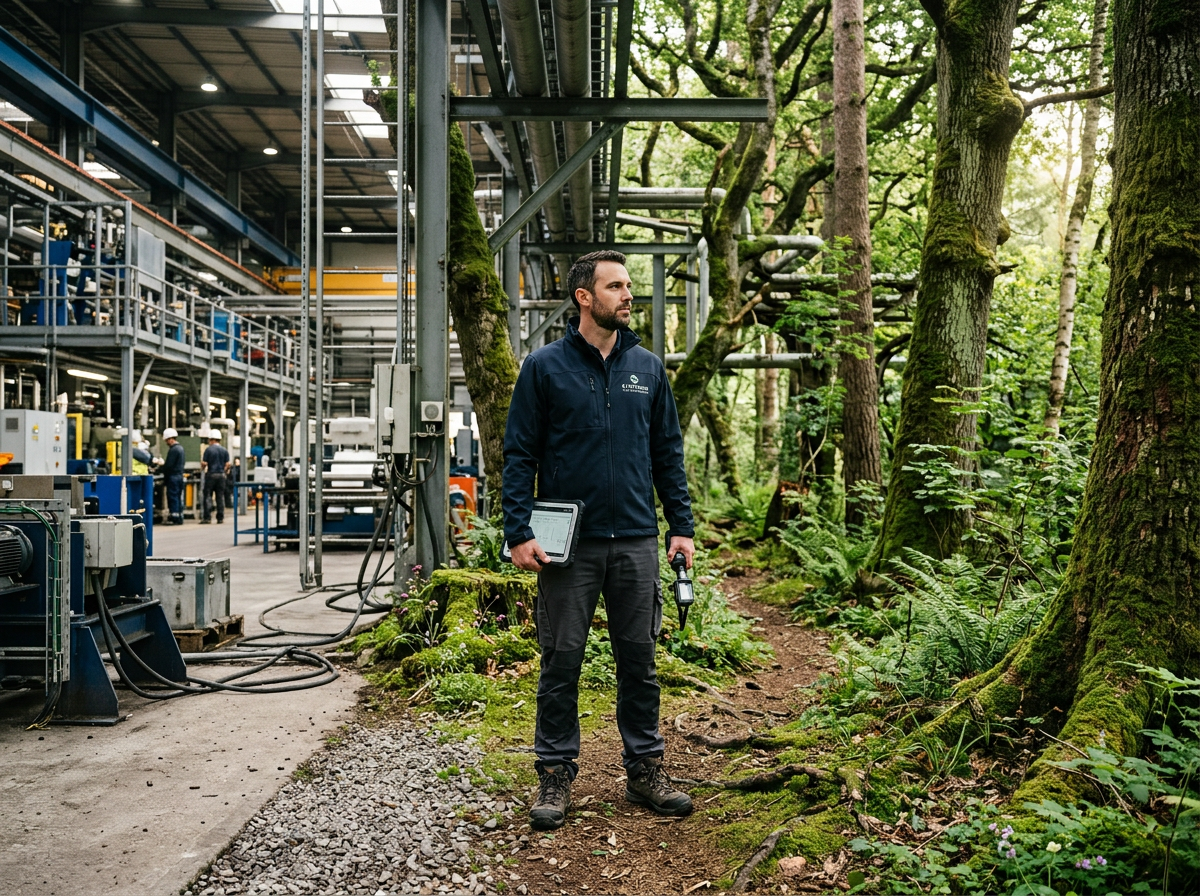
    In the lean manufacturing world, a Gemba Walk is the practice of going to “the real place” where value is created.


    It is a tool for observation, intended to strip away the abstractions of reports and spreadsheets to see the actual flow of work.

    For the Sovereign Professional operating in the toxic high-pressure corridors of 2026, the “Gemba” isn’t just the office floor or the digital workspace; it is the intersection of your current environment and your inherited ancestral wisdom.

    Most modern professionals approach “culture” as a costume—something to be worn during a DEI workshop or mentioned in a LinkedIn bio. But heritage is not an accessory; it is an Operating System (OS).

    When that OS is suppressed or overwritten by the extractive logic of corporate colonization, the result is a systemic “glitch” characterized by burnout, cynicism, and a loss of agency.

    This protocol is a Lean guide to heritage retrieval. We are not looking for “cultural appreciation”; we are looking for a structural reclamation of the source code that makes you indispensable.


    The Audit: Why Your Current OS is Failing

    Before we can retrieve the ancestral soul, we must recognize the waste in the current system. As explored in How Systems Shape Behavior (And Why It Feels Personal), many of the anxieties we carry are not personal failures; they are structural symptoms.

    We have been incentivized to optimize for a “Push” system—endless output, constant availability, and the surrender of intuition.

    When your heritage is relegated to a “costume,” you are operating on a fragmented OS. You are trying to run a high-bandwidth, indigenous sense-making heart on a low-fidelity, colonial-extraction brain.

    The friction between these two layers is where the “Muda” (waste) of your soul occurs.


    Phase 1: The Soul-Gemba (Observation)

    The first step of the protocol is to walk the “real place” of your daily professional interactions through the lens of Ancestral Sense-making.

    During your next high-pressure meeting or quarterly review, do not look at the KPIs. Look at the patterns.

    • The Incentive Check: Are the rewards in this room driving behavior that aligns with your “root” values? (Reference: Incentives Drive Behavior: Why Good Intentions Fail in Systems).
    • The Energy Audit: Is the work being done “generative” (nourishing the ecosystem) or “extractive” (mining the participants for short-term gain)?
    • The Silence Check: What is not being said? Ancestral intuition—specifically the Babaylan capacity for high-bandwidth pattern recognition—lives in the gaps between the data points.

    Phase 2: Root Cause Analysis (The 5 Whys of Disconnection)

    In Lean, we use the “5 Whys” to find a technical root cause. In heritage retrieval, we use it to find the point of colonial rupture.


    1. Why am I feeling burnt out?

    Because I am working 60 hours for a 40-hour lifestyle.


    2. Why am I working those extra 20 hours?

    To satisfy an incentive structure that rewards “effort” over “value.”


    3. Why do I value that incentive over my rest?

    Because I have been conditioned to believe that my worth is tied to my metabolic output.


    4. Why do I believe that output equals worth?

    Because the system I was trained in prioritizes the machine over the human.


    5. Why have I forgotten the alternative?

    (Root Cause): Because the ancestral OS—which views work as stewardship and contribution—has been overwritten by a colonized narrative of extraction.

    By reaching the fifth “Why,” you realize that Why Hard Work Alone Doesn’t Make You Valuable is a foundational truth of the Sovereign Professional.


    Phase 3: Poka-Yoke (Error-Proofing) via Ancestral Wisdom

    In Lean, Poka-Yoke is a mechanism that prevents a mistake from happening. In your professional life, your heritage provides the ultimate error-proofing.

    Indigenous wisdom often operates on “Non-Linear Time” and “Interconnected Logic.” When a corporate crisis hits, the colonized OS panics, looking for immediate “fixes.” The Ancestral OS, however, steps back to see the long-cycle pattern.

    The Protocol for Retrieval:

    • The Breath of the Center: Before responding to a high-pressure “Noise” signal, apply The Discipline of Inner Sovereignty. This is the modern version of the “centering” practiced by indigenous healers. It creates the “buffer” needed for discernment.
    • The Council Mindset: Even if you are a “solo” professional, view your decisions through the lens of “The Seventh Generation.” Does this decision nourish your future, or does it burn the field for a temporary win?
    • Language as Logic: Use your heritage’s specific concepts—like the Filipino Pakikipagkapwa (shared identity)—to re-contextualize your work. You are not “networking”; you are building a Kapwa ecosystem. This changes the incentive from competition to coherence.

    The Outcome: Signal Over Noise

    The result of “Gemba Walking the Ancestral Soul” is a radical clarity. You begin to see the “corporate waste-stream” for what it is—a noisy, extractive system that is failing to adapt to a high-complexity world.

    By retrieving your heritage as an OS, you gain the ultimate competitive advantage: Clear Thinking. As discussed in Signal vs Noise: Why Clear Thinking Is Rare, those who can navigate uncertainty without losing their center are the ones who become indispensable.

    You don’t find that center in a textbook; you find it in the “Gemba” of your own lineage.


    Conclusion: The Sovereign Blueprint

    Heritage retrieval is not about performing your culture for the benefit of a company’s “diversity” metrics. It is about excising the colonial “Muda” from your mind so you can work with the power of a whole human being.

    When you walk the Gemba with the soul of an ancestor and the mind of a Lean architect, you stop being a unit of labor. You become a Sovereign Professional—an architect of a new, coherent reality.


    The Sovereign Professional: A structural map of power, systems thinking, and personal autonomy—dedicated to helping the independent professional navigate complexity and own their value stream.


    ©2026 Gerald Daquila • Life.Understood. • Systems Thinking, Leadership Architecture, and Applied Coherence

  • 🇵🇭 Where Do We Start?: A Systems Blueprint for Cultural Renewal in the Philippines

    🇵🇭 Where Do We Start?: A Systems Blueprint for Cultural Renewal in the Philippines


    There is no shortage of analysis on the Philippines.

    Colonial mentality has been named. Family dysfunction has been examined. Corruption has been exposed. Education collapse has been documented. Learned helplessness has been studied.

    What remains unresolved is not diagnosis—but sequence.

    Where do we actually begin, if the goal is not awareness—but transformation?

    This is the question most frameworks avoid because it forces a confrontation with reality:

    you cannot reform a civilization-level system by targeting a single layer.

    The Philippines is not struggling because of one broken institution. It is a stacked system of interlocking behaviors—family dynamics, authority structures, economic incentives, education gaps, and historical conditioning—reinforcing each other across generations.

    Any serious attempt at change must therefore answer three things:

    • What is the smallest unit of change that is still systemically meaningful?
    • What is the sequence of intervention across layers?
    • What is the realistic time horizon for results?

    The Core Misdiagnosis: Treating Culture as Belief Instead of Behavior

    Most discussions on colonial mentality frame it as an issue of mindset—something to be corrected through awareness, pride, or identity reclamation.

    This is incomplete.

    Colonial mentality persists not because Filipinos “believe the wrong things,” but because they repeatedly enact the same survival behaviors:


    • deference to authority even when unjust
    • avoidance of conflict to preserve social harmony (pakikisama)
    • loyalty to networks over systems
    • normalization of small-scale corruption (“everyone does it”)
    • silence in the face of dysfunction

    These are not abstract beliefs. They are trained responses shaped by centuries of hierarchical rule—from Spanish colonial structures to American bureaucratic systems and postcolonial patronage politics (Anderson, 1988; David, 2013).

    Culture, in this sense, is not ideology.

    It is patterned behavior under pressure.

    Which means:

    you do not change culture by persuasion alone—you change it by altering the environments that reward those behaviors.


    🧭 Continue the Work: Pathways Through the Philippine Knowledge Hub

    Understanding the system is only the first step.

    If this piece clarified where to begin, the next question becomes:

    Where do you go from here?

    The Philippine Knowledge Hub is structured as a set of pathways—each designed to take you deeper into a specific layer of the problem and its corresponding transformation.

    You do not need to read everything.
    You need to follow the path most aligned with where you are.


    Pathway 1: Seeing Clearly (Diagnosis Layer)

    If you are still making sense of the patterns—colonial mentality, family systems, and inherited behavior—begin here.

    Focus:
    Understanding how historical conditioning, family dynamics, and cultural norms reinforce each other.

    Outcome:
    You begin to see the system—not as isolated problems—but as a coherent pattern.


    Pathway 2: Reclaiming Agency (Internal Reset)

    Once the system is visible, the next layer is internal.

    Because no structural reform holds if the individual remains conditioned by:

    Focus:
    Breaking internalized patterns that sustain external dysfunction.

    Outcome:
    You move from awareness → personal agency.


    Pathway 3: Rebuilding Systems (External Reset)

    If your question is no longer “what’s wrong?” but “how do we fix this?”, this is your entry point.

    Focus:
    Understanding how large-scale systems—economic, political, institutional—can be redesigned.

    Outcome:
    You begin to think in terms of systems, not symptoms.


    Pathway 4: Practicing Stewardship (Application Layer)

    Insight without application collapses under pressure.

    If you are ready to move from understanding into practice:

    Focus:
    Training for real-world complexity: leadership, decision-making, and system repair.

    Outcome:
    You transition from observer → participant → builder.


    How to Use This Hub

    You do not need to follow these pathways in order.

    But you do need to be honest about where you are:


    The Threshold

    Most readers stop at understanding.

    A smaller number move toward change.

    Very few commit to rebuilding.

    This hub is designed for all three—but it is built for the last group.

    Choose your path.


    The First Principle: Change the Unit, Not the Nation

    National reform is too large, too slow, and too politically constrained to be the starting point.

    The smallest viable unit of transformation in the Philippine context is:

    A coherent local ecosystem composed of: one school, one barangay cluster, one LGU leadership layer, and one parent/community network.

    Anything smaller lacks systemic impact.
    Anything larger becomes unmanageable.

    This “micro-system” contains the core drivers of cultural transmission:

    • Families (where values are embodied)
    • Schools (where cognition and behavior are shaped)
    • Local governance (where power is experienced)
    • Peer/community networks (where norms are enforced)

    If you change behavior across all four simultaneously, you are no longer influencing individuals—you are rewiring a living system.


    The Sequence of Change (What Happens First, Second, Third)

    Transformation does not begin with curriculum, policy, or elections.

    It begins with stability of truth.


    Phase 1: Stabilize Truth-Telling

    Before any reform can take hold, people must be able to name dysfunction without punishment.

    This includes:

    • classroom environments where questioning is not penalized
    • barangay forums where concerns can be raised without retaliation
    • school leadership structures that accept feedback loops
    • family spaces where authority is not absolute

    Without this, all reform collapses into compliance theater.


    Phase 2: Restore Agency Through Small Wins

    Decades of systemic failure produce learned helplessness—a psychological state where individuals stop acting because they no longer believe action matters (Seligman, 1972).

    This cannot be reversed through messaging.

    It requires:

    • visible, repeatable, local successes
    • problems small enough to solve but meaningful enough to matter

    Examples:

    • literacy recovery programs that show measurable gains within months
    • transparent barangay budgeting that citizens can track
    • school-based feeding and attendance programs that improve outcomes

    Agency returns when people experience:

    “We acted—and something changed.”


    Phase 3: Retrain Authority (The Hardest Layer)

    Children do not reproduce what they are taught.
    They reproduce what authority models.

    Which means the central bottleneck is not students—it is adults in power:

    • parents
    • teachers
    • principals
    • barangay officials
    • local executives

    Leadership must be retooled from extractive to stewardship-based behavior, including:

    • decision transparency
    • ethical resource allocation
    • conflict repair (not avoidance)
    • accountability to outcomes, not relationships
    • willingness to be questioned

    Research consistently shows that institutional trust and performance are strongly correlated with leadership integrity and transparency (World Bank, 2023).

    Without this shift, all child-focused reform is neutralized.


    Phase 4: Institutionalize the New Behavior

    No system survives on intention alone.

    Once new behaviors emerge, they must be embedded into:

    • hiring and promotion criteria
    • school routines and assessment systems
    • LGU policies and procurement processes
    • community norms and expectations

    If a reform depends on “good people,” it will collapse when those people leave.

    If it becomes structure, it persists.


    Phase 5: Scale Through Proof, Not Messaging

    National narratives are weak without local evidence.

    The Philippines does not need another campaign.
    It needs visible models of functioning systems.

    Scaling should follow this logic:

    • replicate what works in comparable LGUs
    • adapt, not copy
    • build networks of coherent ecosystems

    Change spreads not by persuasion—but by demonstrated viability.


    Where K–12 Fits (and Where It Doesn’t)

    Education is foundational—but it is not primary.

    The Philippines’ learning crisis, as reflected in Programme for International Student Assessment (PISA) results, highlights severe gaps in reading and numeracy (OECD, 2023).

    However, curriculum reform alone cannot solve this.

    A curriculum cannot outperform:

    • an untrained teacher
    • a fearful classroom
    • a politicized school system
    • a household that reinforces passivity

    K–12 is the long-term engine of change.

    But without adult transformation, it becomes:

    a delivery system for content that cannot take root.


    The Central Leverage Point: Redefining Power

    At the deepest level, the system is sustained by a single definition:

    Power as protection and advantage.

    This manifests as:

    • patronage politics
    • dynastic leadership
    • corruption as survival strategy
    • silence as social currency

    The transformation required is not incremental—it is definitional:

    Power must be recoded as stewardship.

    Meaning:

    • authority exists to serve outcomes, not networks
    • leadership is measured by system health, not loyalty
    • transparency is default, not exception
    • accountability is structural, not personal

    Until this shifts, all reform remains surface-level.


    Time Horizons (What Is Actually Realistic)

    A 500-year conditioned system does not reverse quickly.

    But it does not require 500 years to change direction.


    3–5 years

    • measurable improvements in pilot ecosystems
    • literacy gains, governance transparency, civic participation

    10–15 years

    • one generation of students formed under improved systems
    • emerging cohort of differently conditioned young leaders

    25–40 years

    • leadership turnover reflecting new behavioral norms
    • institutional memory stabilizes

    50 years

    • full cultural normalization

    This is not pessimistic.
    It is strategically honest.


    The Threshold

    The Philippines does not lack intelligence, talent, or even awareness.

    What it lacks is coordinated behavioral transformation across layers.

    The question is no longer:

    “What is wrong?”

    It is:

    “Who is willing to participate in rebuilding, knowing it will take decades—and begin anyway?”

    If you are looking for where to start, it is not in theory, and not in waiting for national change.

    It is here:

    • one school
    • one barangay cluster
    • one leadership unit
    • one community network

    Built differently.
    Measured honestly.
    Repeated deliberately.

    That is how systems change.


    References

    Anderson, B. (1988). Cacique Democracy in the Philippines: Origins and Dreams. New Left Review.
    David, E. J. R. (2013). Brown Skin, White Minds: Filipino American Postcolonial Psychology. Information Age Publishing.
    OECD. (2023). PISA 2022 Results: Philippines Country Note.
    Seligman, M. E. P. (1972). Learned helplessness. Annual Review of Medicine, 23, 407–412.
    World Bank. (2023). Philippines Economic Update: Public Institutions and Governance.


    Attribution

    © 2025–2026 Gerald Alba Daquila
    All rights reserved.

    This work is offered for reflection and independent interpretation. It does not represent a formal doctrine, institution, or required belief system.

  • [JID-001] The Jidoka of Ethics: Protocols for Systemic Integrity

    [JID-001] The Jidoka of Ethics: Protocols for Systemic Integrity


    In the traditional Lean manufacturing framework, Jidoka is often translated as “Autonomation”—or more evocatively, “Automation with a human touch.”


    It is the principle of building quality into the process rather than inspecting for it at the end.

    At the heart of Jidoka is the Andon Cord: the authority given to any worker on the line to stop the entire production process the moment a defect is detected.

    As we navigate the high-complexity, low-trust environment of 2026, the Sovereign Professional must apply this industrial logic to the most critical component of their operating system: Ethics.

    Systemic Integrity is not a moral luxury; it is a functional requirement for survival.

    In a world of Staying Sovereign in Uncertain Times — Inner Stability in an Unstable World, your integrity is the “sensor” that tells you when the system you are participating in has become toxic.

    [JID-001] is the protocol for installing an “Ethical Andon Cord”—ensuring that you never produce “Soul-Scrap” in the pursuit of professional output.


    The Defect of Compromise: Why Integrity Leaks

    In a corporate waste-stream, ethical “defects” rarely happen all at once.


    They occur through “incremental slippage”—small compromises in truth, minor surrenders of agency, and the slow normalization of extractive behavior.

    The reason most professionals fail to “stop the line” is a crisis of Identity.

    As analyzed in Identity: The Story We Learn to Tell About Ourselves, if your story is “I am a Senior VP at X Corporation,” then stopping the line to protect your integrity feels like a threat to your very existence.

    You allow the defect to pass through the system because you have prioritized the “Role” over the “Sovereign Node.”

    Jidoka demands a different logic. It asserts that a defect ignored is a system destroyed.

    When you compromise your integrity to satisfy a corporate KPI, you aren’t “playing the game”; you are introducing a fatal flaw into your own internal architecture.


    The Andon Cord of the Soul: Detecting the “Tilt”

    To practice [JID-001], you must identify your “integrity sensors.”

    These are the physiological and psychological cues that alert you when a transaction has become extractive.


    1. The Resonance Check

    Does this project, client, or directive align with your Sacred Exchange? If the exchange requires you to provide value while receiving “energetic debt” (stress, secrecy, or shame) in return, the sensor should trigger. This is a “System Fault.”


    2. The Narrative Alignment

    If you had to explain your current actions to your “Ancestral Council” or your “Future Self,” would the story hold up?

    If the narrative requires “Over-processing” (making excuses or using corporate-speak to hide the truth), you have detected a defect.


    3. The Burnout Proxy

    Often, what we call “burnout” is actually the result of ethical friction. It is the exhaustion that comes from running your “High-Vibrational” soul on a “Low-Integrity” fuel.

    If you are struggling with Helping Without Burning Out, check your Jidoka sensors. You might not be “working too hard”; you might be “compromising too much.”


    Protocol: Stopping the Line in 2026

    Once a defect is detected, Jidoka requires three immediate actions: Stop, Fix, and Root Cause.


    Step 1: Stop (The “Tactical No”)

    When an ethical boundary is crossed, you must pull the cord. This doesn’t always mean quitting your job instantly (which can be a “Motion Waste” of panic).

    It means pausing the specific transaction. “I cannot sign off on this data,” or “I need to recuse myself from this strategy.” This is a Poka-yoke for your soul.


    Step 2: Fix (The Threshold)

    You must address the immediate defect. Can the project be salvaged through transparency? If not, you must recognize that this Change is a Threshold, Not a Failure.

    Walking away from a toxic contract is not a loss; it is the “Quality Control” of your life.


    Step 3: Root Cause (The Systemic Audit)

    Why did the defect occur? Was it because you were desperate for revenue? (Suggests a defect in your Sovereign Resource Pipeline).

    Was it because you feared social rejection? (Suggests a defect in your Identity). Address the root cause so the defect does not recur.


    Integrity as a Competitive Advantage

    In the “Unstable World” of 2026, Trust is the rarest commodity.

    Most systems are currently failing because they have ignored Jidoka for decades—they have allowed defects of greed and deception to stack until the entire global line has stalled.

    The Sovereign Professional who maintains “Systemic Integrity” becomes an Infallible Node.

    Clients and collaborators seek you out because they know your “Andon Cord” is active. They know that if you are participating in a project, it has already passed a rigorous internal quality check.

    Your “No” gives your “Yes” its value.


    Conclusion: The Architecture of Truth

    Jidoka: Protocols for Systemic Integrity is about transforming ethics from a “vague feeling” into a Mechanical Protocol.

    It is about realizing that your soul is the most sophisticated machine you will ever steward, and it cannot run on lies.

    By the time we reach the end of 2026, the professionals who remain standing won’t be the ones who “optimized” their compromises.

    They will be the ones who had the courage to stop the line. They will be the Sovereign Nodes who recognized that integrity is the only “Value Stream” that leads to the New Earth.

    Pull the cord. Fix the defect. Protect the soul.


    The Sovereign Professional: A structural map of power, systems thinking, and personal autonomy—dedicated to helping the independent professional navigate complexity and own their value stream.


    ©2026 Gerald Daquila • Life.Understood. • Systems Thinking, Leadership Architecture, and Applied Coherence

  • The Hiya of Wealth: Why the Filipino Soul Resists NESARA/GESARA — and How to Reclaim Our Gold

    The Hiya of Wealth: Why the Filipino Soul Resists NESARA/GESARA — and How to Reclaim Our Gold


    There is a quiet, almost imperceptible tension that surfaces in Filipino households whenever the conversation turns toward great wealth, systemic change, or a “global reset.”

    On one level, we are a people who pray—deeply, persistently—for deliverance from poverty.

    On another, we carry an inherited reflex to shrink from the very abundance we claim to desire.

    We call this reflex Hiya.

    In the context of proposed global financial transitions such as NESARA/GESARA, this Hiya functions as a psychological ceiling. It helps explain a paradox: many Filipinos can intellectually engage with the idea of transformation, yet emotionally resist stepping into it.

    We are comfortable with resilience—enduring hardship.


    We are far less comfortable with sovereignty—owning responsibility, power, and agency.

    If we are to meaningfully engage with any future of abundance—whether symbolic, structural, or economic—we must first examine the deeper architecture shaping our response.


    The Anatomy of Hiya: From Social Value to Survival Code

    At the surface level, Hiya is often described as propriety, modesty, or social awareness. But at a deeper psychological layer, it operates as something far more consequential: a learned survival strategy embedded within Filipino socialization (Jocano, 1997; Enriquez, 1992).

    For centuries under colonial rule, visible wealth or power carried risk. To stand out was to be noticed; to be noticed was to be vulnerable—to extraction, control, or punishment.

    Over generations, this produced an adaptive pattern:

    • Stay modest
    • Stay compliant
    • Stay within acceptable bounds

    From this emerged what can be described as a Poverty–Integrity Loop:

    To be poor is to be virtuous. To be wealthy is to be suspect.

    This pattern continues to shape modern perception, as explored in Understanding the Filipino Psyche: Strengths, Weaknesses, and Pathways to Growth.

    It is why conversations about large-scale transformation are often met not with grounded curiosity, but with skepticism or quiet discomfort:

    • “Too good to be true.”
    • “That’s not for people like us.”
    • “Better not expect too much.”

    These are not merely opinions. They are encoded responses.


    The Hiya of Abundance: An Identity Problem

    At its core, the resistance is not about policy or economics.

    It is about identity.

    For generations, the Filipino archetype has been shaped around the Survivor—resilient, adaptive, enduring. But when the organizing force of scarcity is challenged, a deeper question emerges:

    Who are you, if you are no longer struggling?

    This creates subtle friction. The removal of hardship is not immediately experienced as liberation—it can feel like disorientation.

    This helps explain the “wait-and-see” posture seen across Philippine society. Even as structural critiques—such as those outlined in Political Dynasties in the Philippines—gain traction, there remains hesitation to step into new roles.

    The pattern becomes:

    • observe
    • analyze
    • wait

    A form of permission-based consciousness persists.


    The Deeper “Gold”: Beyond Currency and Into Sovereignty

    Much of the discourse around NESARA/GESARA focuses on financial redistribution.

    But the more relevant “gold” is not speculative wealth—it is capacity:

    • psychological agency
    • cultural memory
    • systemic participation
    • sovereign decision-making

    What we are confronting is not a shortage of resources alone, but a readiness gap.

    As explored in Pieces of the Self: Soul Fragmentation Across Psyche, Society, and Spirit, the Filipino condition today reflects a form of internal fragmentation—between inherited identity and emerging potential.

    Historically, pre-colonial Filipino societies did not equate wealth with moral compromise. Gold was present not only materially, but symbolically—as part of status, ritual, and community life (Scott, 1994).

    Wealth was not the problem.

    Misalignment with stewardship is.


    Breaking the Cycle: From Hiya to Dangal (Dignity)

    If the barrier is internal, then the work must begin there.


    1. Recognize the Trigger

    Notice discomfort around:

    • visibility
    • financial expansion
    • leadership

    These are often conditioned responses—not objective realities.


    2. Reframe the Duality

    Humility and sovereignty are not opposites.

    • Humility = accurate self-placement
    • Sovereignty = responsible action within that placement

    Integration—not substitution—is the goal.


    3. Practice Stewardship Now

    Do not wait for systemic change to begin acting differently.

    • manage current resources with intention
    • shift from fear-based decisions to responsibility-based ones
    • move from consumption to contribution

    Stewardship is not triggered by abundance.


    It is what makes one ready for it.


    Conclusion: Reclaiming the Right Relationship to Wealth

    The issue is not merely economic.

    It is structural, psychological, and cultural.

    As long as Hiya remains unexamined, it will continue to:

    • cap ambition
    • distort perception
    • delay participation

    Reclaiming “the gold” is not about sudden gain.


    It is about restoring a coherent relationship to value, responsibility, and agency.

    The shift required is precise:

    From:

    • shrinking → engaging
    • waiting → acting
    • surviving → stewarding

    The future—whatever form it takes—will not transform those who encounter it.

    It will amplify what is already present.


    The work, therefore, is not to wait for the reset.


    The work is to become ready for it.


    References

    Enriquez, V. G. (1992). From colonial to liberation psychology: The Philippine experience. University of the Philippines Press.

    Jocano, F. L. (1997). Filipino value system: A cultural definition. PUNLAD Research House.

    Scott, W. H. (1994). Barangay: Sixteenth-century Philippine culture and society. Ateneo de Manila University Press.


    Attribution

    © 2025–2026 Gerald Alba Daquila
    All rights reserved.

    This work is offered for reflection and independent interpretation. It does not represent a formal doctrine, institution, or required belief system.

  • Decolonizing the High-Performer: Reclaiming Babaylan Intuition in a Corporate Waste-Stream

    Decolonizing the High-Performer: Reclaiming Babaylan Intuition in a Corporate Waste-Stream


    In the high-pressure environment of 2026, the modern high-performer is often a masterpiece of colonization.

    We have been trained to optimize our metabolic output for systems that view us as “units of labor” rather than “sources of wisdom.”

    We call this “corporate success,” but from a systems-thinking perspective, it is often a sophisticated form of waste.

    When your professional life is dictated by KPIs that ignore your humanity, you aren’t just working; you are participating in a corporate waste-stream.

    To break this cycle, the Sovereign Professional must look back to move forward. Reclaiming “Babaylan Intuition”—the ancestral Philippine capacity for whole-system sense-making and spiritual-material integration—is not a retreat into the past.

    It is a radical decolonization of the modern operating system.


    The Colonized Operating System

    Most corporate structures are built on the logic of extraction.

    This logic demands that we fragment ourselves: we bring our “analytical minds” to the office while leaving our “intuition” and “ancestral history” at the door.

    As explored in Colonization, System Fragmentation, and Filipino Behavior: Why Contradictions Persist, this fragmentation is a direct legacy of colonized systems.

    It creates a professional who is efficient but hollowed out, optimized for a system that doesn’t actually care about their long-term coherence.

    When we operate from this fragmented state, we become hyper-reactive to “noise.” We mistake every Slack notification for an emergency and every quarterly dip for a catastrophe.

    We lose the ability to distinguish between a temporary glitch and a systemic failure.


    The Babaylan as the Ultimate System Thinker

    The Babaylan (the indigenous shamans and community leaders of the pre-colonial Philippines) were not merely “mystics.” They were the original sense-makers.

    They understood that the health of the individual was inseparable from the health of the community and the land. They operated on a “Whole-System” logic that modern Lean practitioners are only now beginning to appreciate.

    Babaylan intuition is actually high-bandwidth pattern recognition.

    It is the ability to see the “spirit” (the underlying energy or incentive structure) of a situation before it manifests in the material (the data or the conflict).

    In the corporate waste-stream, this intuition is your most valuable defense mechanism. While everyone else is drowning in data, the decolonized high-performer uses ancestral discernment to find the “Signal.”


    Navigating 2026’s Corporate Toxicity

    Corporate toxicity in 2026 isn’t just about “mean bosses”; it’s about The Collapse of Meaning.

    We are surrounded by systems that reward performance while punishing soul. To navigate this without burnout, you must practice The Discipline of Inner Sovereignty.

    This discipline is the modern application of Babaylan wisdom. It involves:

    1. Systemic Detachment: Recognizing that How Systems Shape Behavior (And Why It Feels Personal) is often a structural issue, not a personal failure.
    2. Ancestral Sense-making: Asking, “Does this work nourish my ‘root’ system, or does it merely feed an extractive machine?”
    3. The Reclamation of Flow: Moving away from the “grind” (a colonized concept of labor) and toward “indispensable mastery” (an indigenous concept of contribution).

    From Metric-Driven to Meaning-Driven

    Decolonizing your work life requires a shift in how you measure success. If your only metrics are salary and title, you are still operating within the waste-stream.

    The Babaylan-inspired professional asks: “Am I a steward of my talent, or a servant to someone else’s debt?”

    By integrating indigenous sense-making, you learn How to Become Indispensable at Work without surrendering your soul. You become indispensable because you see the patterns others miss.

    You see the incentives that drive behavior and the hidden logic that causes systems to break. You provide the “Signal” in a world of deafening “Noise.”


    Reclaiming the Value Stream

    The journey from high-performer to Sovereign Professional is a journey of reclamation.

    It is the process of taking the tools of modern excellence—efficiency, strategic thinking, and digital mastery—and placing them in the service of an ancient, sovereign intuition.

    You stop being a component in a “waste-stream” and start becoming a source of “well-being.” This transition requires Discernment in a Confusing World—the ability to look at a corporate incentive and say, “That is not for me.”


    Conclusion: The New Sovereignty

    Reclaiming Babaylan intuition is not about burning down the corporate world; it is about building a “Sovereign Architecture” within it.

    It is about being “In it, but not of it.” When you decolonize your mind, you realize that your value was never something granted by a company or a title. It is an ancestral inheritance.

    The 2026 corporate environment is a desert of meaning. Be the one who knows how to find the water.


    The Sovereign Professional: A structural map of power, systems thinking, and personal autonomy—dedicated to helping the independent professional navigate complexity and own their value stream.


    ©2026 Gerald Daquila • Life.Understood. • Systems Thinking, Leadership Architecture, and Applied Coherence

  • ✨The Internal Reset: A Guide to Spiritual Awakening, Healing, and Inner Sovereignty

    ✨The Internal Reset: A Guide to Spiritual Awakening, Healing, and Inner Sovereignty


    What happens when the world changes faster than your heart can process?


    This isn’t a rhetorical question.

    We are living through a moment in history where the external “map” of reality—our financial systems, our technology, even our cultural norms—is being redrawn in real-time.

    But as the external world undergoes this visible, often chaotic transformation, a much deeper and quieter revolution is taking place inside of you.

    You may find yourself no longer just questioning the news or the banks; you are questioning yourself.

    You are re-evaluating your identity, your purpose, and your sense of belonging in a world that feels increasingly fragmented.

    This Knowledge Hub is not just a collection of essays. It is a Pathways to Sovereignty map—a structured journey designed to help you move from the disorientation of awakening to the stability of a self-governed life.

    If the “External Reset” is about the world’s systems, the Internal Reset is about the self as a system—one that must be stabilized, recalibrated, and consciously rebuilt.


    Pathway 1: The Gateway of Awakening

    For those navigating the disorientation of seeing differently.

    The first phase of an internal reset is rarely peaceful. It is disruptive and often deeply isolating. This is the moment you realize the “old map” no longer works.

    You might experience spiritual awakening symptoms like a sudden shift in priorities, an intense sensitivity to injustice, or a feeling that the life you built no longer fits who you are becoming.

    This pathway is anchored by our core pillar: Waking Up to a Bigger World. This is your foundational guide for framing this shift not as a “breakdown,” but as a necessary expansion of your perception.


    The Constellation of Awakening:

    • The Quiet After the Awakening: A companion for when the “fire” of discovery fades, leaving you in the silent, often lonely work of integration.
    • The Ego Unveiled: Understanding why your mind resists this change and how to view that resistance with compassion rather than frustration.
    • Awakening Symptoms: Grounding your spiritual experience in the very real physical and emotional markers of change.

    Core Insight: Awakening isn’t about reaching “enlightenment”—it’s about surviving the disorientation long enough to find a new, more coherent level of truth.


    Pathway 2: The Alchemy of Healing

    For those rebuilding after collapse, grief, or fragmentation.

    Seeing clearly is the first step, but it doesn’t automatically mend the heart.

    Once you awaken to the truth of the world, you often have to confront the “debris” of your own past—unprocessed trauma, generational wounds, and the structures of your life that were built on survival rather than truth.

    At the heart of this phase is our most resonant piece: The Transformative Power of Loss. Whether you are finding purpose after loss of a loved one, a career, or an old identity, this essay serves as a gateway to understanding grief as an alchemical process of alignment.


    The Constellation of Healing:

    Core Insight: Healing is not about going back to who you were before the pain; it is about integrating that pain into a stronger, more coherent version of yourself.


    Pathway 3: The Return of Sacred Balance

    For those stepping beyond the individual into collective awareness.

    As you heal, your perspective naturally widens again. You begin to ask not just “Who am I?” but “How do I participate in the world without losing myself?”

    This phase is about reclaiming the parts of the human experience that our modern, extractive systems have tried to suppress.

    This pathway centers on The Divine Feminine Reawakening. This isn’t about gender ideology; it’s about the restoration of intuitive, relational, and regenerative intelligence in a world that has been dominated by control and competition.


    The Constellation of Balance:

    Core Insight: Balance isn’t found by escaping the system, but by bringing your full, integrated presence into it.


    The Apex: The Discipline of Inner Sovereignty

    All these pathways converge at a single point of realization: Awakening without discipline is just confusion. Inner sovereignty is the culmination of the Internal Reset.

    It is the shift from being a “passenger” in your life to being the “pilot.” It is the daily practice of choosing discernment over belief, stability over stimulation, and coherence over comfort.

    When you are internally sovereign, you become less reactive to external volatility. You make clearer decisions. You become a “steward” of your own energy.


    Bridging to the External Reset

    The Internal Reset does not exist in a vacuum. A stabilized, sovereign individual is the only one who can truly participate in the building of a new world.


    Explore the External Reset next:

    You cannot build a coherent system with incoherent individuals. The world is waiting for you to begin your internal reset.


    Where do you need to start?

    Move slowly. Let the coherence build. The internal reset is not a race; it is an alignment.


    Attribution

    ©2026 Gerald Daquila • Life.Understood.
    Steward of applied thinking at the intersection of systems, identity, and real-world constraint.

    This work draws from lived experience across cultures and environments, translated into practical frameworks for clearer thinking and more coherent contribution.

    This piece is part of an ongoing exploration of applied thinking in real-world systems.. Part of the ongoing Codex on leadership, awakening, and applied intelligence.