Logo - Life.Understood.

Category: HUMAN PATTERNS

  • The Philippine Ark: A Sovereign Blueprint for Systemic Transformation

    The Philippine Ark: A Sovereign Blueprint for Systemic Transformation


    By early 2026, the global narrative has shifted from mere “digital transformation” to something far more profound: Systemic Transition.

    For the Sovereign Professional, the noise of the legacy corporate world is increasingly being replaced by a high-signal frequency—one that points toward a new architecture of value. At the center of this shift is a profound framework known as The Philippine Ark.

    Spanning a critical four-part series, the “Philippine Ark Codes” offer more than just spiritual or cultural reflection; they provide a Systemic Operating System for navigating the 2026 reset.

    Whether you are a tech lead in Silicon Valley or a financial architect in Manila, understanding the Ark is about moving your “Value Stream” from an extractive past to a generative future.


    Part 1 & 2: Reawakening the Island Node

    The first two stages of the series, Part 1: Philippine Ark Codes: Reawakening the Islands, establish the foundational “Signal” over the “Noise.”

    In the 2026 context, “Reawakening” is a technical term for Sovereign Clarity. It is the process of stripping away the colonial and extractive layers that have suppressed the Philippines’ potential as a global node of value.

    For the high-performer, this is the ultimate “Lean Audit.” You cannot build a new architecture on a foundation of “Muda” (waste).

    Parts 1 and 2 argue that the islands—and by extension, the professionals who inhabit them or lead them—are being activated as a Coherence Node.

    This activation is essential to withstand the volatility of the global reset. As explored in Signal vs Noise: Why Clear Thinking Is Rare, the ability to maintain internal stability while systems collapse is the defining trait of the 2026 leader.


    Part 3: The Diaspora and the Building of the Ark

    Part 3 of 4. The Diaspora, Ark Codes & Building the Ark shifts the focus to the global Filipino community. This is where the concept of “Agentic Stewardship” becomes practical.

    The Diaspora is not just a source of remittances; it is a distributed network of Sovereign Talent that holds the “codes” for a new economy.

    In 2026, “Building the Ark” means creating redundant, independent, and high-trust systems that operate outside of traditional extractive banking. This is the GESARA Bridge in action.

    The Ark is a “vessel” of resources—intellectual, technological, and financial—that ensures that when the “old world” systems fail, the Sovereign Professional has a platform for continued output.

    This is about moving beyond the “Ube Latte” aesthetic and into the structural reality of being a “Barangay Architect” in a digital world.


    Part 4: The Ascension of the System

    The final movement, Part 4: Reawakening the Islands for Earth’s Ascension, brings the framework to its apex. Here, “Ascension” is translated into the language of Systemic Complexity.

    It is the transition from a low-efficiency, competition-based economy to a high-efficiency, cooperation-based “Sacred Economy.”

    For the Sovereign Professional, this means your “Incentive Structure” must change. You can no longer optimize for short-term extractive gain because the system itself is moving toward zero-waste.

    As analyzed in Incentives Drive Behavior: Why Good Intentions Fail in Systems, the old systems failed because they rewarded the “scrap” (interest/debt). The Ark rewards Flow.


    The Ark as a Cognitive Operating System

    The “Philippine Ark” is not a piece of land; it is a Cognitive OS. It is a way of perceiving power, wealth, and community that is immune to corporate toxicity.

    By integrating the four parts of the Ark series, the professional begins to practice “Gemba Walking the Ancestral Soul.”

    1. Observation (Part 1-2): Seeing the hidden patterns of the island nodes and recognizing the “Signal.”
    2. Network (Part 3): Activating the Diaspora as a Sovereign Resource Pipeline.
    3. Deployment (Part 4): Executing work that contributes to the “New Earth” architecture.

    Conclusion: Boarding the Vessel

    The 2026 economic environment is a desert of meaning, but the The Philippine Ark provides the oasis. The “Ark” is currently being built by “Silent Professionals” who recognize that the financial miracles promised by GESARA are not “free money,” but a Systemic Reset to Zero Waste.

    Boarding the Ark requires you to trade your “employee” mindset for a “Sovereign” architecture.

    It requires you to stop being a unit of labor and start being a steward of the transition. The codes are active. The series is complete.

    The question is: Are you an architect of the Ark, or are you still trying to patch a sinking ship?


    The Sovereign Professional: A structural map of power, systems thinking, and personal autonomy—dedicated to helping the independent professional navigate complexity and own their value stream.


    ©2026 Gerald Daquila • Life.Understood. • Systems Thinking, Leadership Architecture, and Applied Coherence

  • [SEM-001] Collective Sense-making SOP: Decentralized Consensus

    [SEM-001] Collective Sense-making SOP: Decentralized Consensus


    In the industrial world, a Standard Operating Procedure (SOP) is a set of step-by-step instructions compiled by an organization to help workers carry out complex routine operations.

    Its goal is to achieve efficiency, quality output, and uniformity of performance while reducing miscommunication. However, in the hyper-fragmented reality of 2026, the most complex operation we face isn’t on a factory floor—it is the act of Sense-making.

    The old world relied on “Centralized Sense-making.” We looked to news anchors, government agencies, and corporate hierarchies to tell us what was true.

    But as those institutions have succumbed to the “Waste” of political capture and systemic obsolescence, the Sovereign Professional must pivot to a new model: Decentralized Consensus.

    [SEM-001] is the protocol for how a Sovereign Node participates in collective intelligence without losing their individual center.


    The Crisis of the “Mono-Narrative”

    In a Lean system, a “Single Point of Failure” is a catastrophic risk.

    Centralized sense-making is exactly that. When one institution misinterprets a global event—be it a financial shift, a technological breakthrough, or a systemic disclosure—the entire “Value Stream” of public understanding is corrupted.

    The result is “Epistemic Muda”: a massive overproduction of conflicting, low-fidelity information that leads to paralysis.

    To navigate this, you must realize that Identity: The Story We Learn to Tell About Ourselves often dictates how we process data.

    If your identity is tied to being “right” according to a specific group, you will filter out any “Signal” that contradicts that group’s narrative.

    Decentralized consensus requires you to strip away these identity-based filters and become a clean sensor in a larger mesh network.


    The SOP: How to Sense-make in a Mesh Network

    [SEM-001] is designed to turn “Collective Noise” into “Decentralized Signal.” It follows a specific three-stage process.


    1. Internal Calibration (The Sovereign Anchor)

    Before you can engage with the group, you must ensure your own “Internal Sensor” is calibrated. You cannot participate in decentralized consensus if you are in a state of panic or hyper-reactivity. This is the art of Staying Sovereign in Uncertain Times — Inner Stability in an Unstable World.

    • Poka-yoke: If your emotional state is “Red” (high-anxiety), you are a “Defective Sensor.” You must recuse yourself from the sense-making process until you have returned to “Neutral.”

    2. Multi-Node Triangulation (The “Council” Logic)

    Instead of looking for “The Truth,” look for Consensus across Unlikely Allies.

    In 2026, the highest fidelity signal is found at the intersection of diverse nodes that have no incentive to agree with one another.

    • The Cross-check: If a financial expert in London, a Philippine Ark community leader, and a decentralized AI developer are all pointing to the same systemic shift, you have found a High-Probability Signal.

    3. Iterative Refinement (The Kaizen of Truth)

    Decentralized consensus is never “finished.” It is a living document. As new data enters the system, the consensus must shift.

    This requires viewing Change as a Threshold, Not a Failure. If a previous consensus is proven wrong, it is not a “defect” in the group; it is a successful update to the operating system.


    Managing the Cognitive Load: Helping Without Burning Out

    Collective sense-making is exhausting. It requires “Systemic Empathy” and high-bandwidth processing.

    Many professionals fall into the trap of “Emotional Over-processing,” trying to harmonize every conflicting viewpoint they encounter.

    To maintain your role as a Sovereign Node, you must practice Helping Without Burning Out. Your job is not to “convince” everyone or to carry the weight of the world’s confusion.

    Your job is to be an Accurate Reporter of your own perspective and a Discerning Receiver of others’.

    If the sense-making process begins to siphon away your vital energy, you have crossed an ethical line in your Sacred Exchange. You must withdraw to recalibrate.


    The Value of the “Sovereign Contribution”

    Why does decentralized consensus work? Because it utilizes “Cognitive Diversity” as a defense mechanism against deception.

    In a centralized system, you only have to deceive one leader to control the whole group. In a decentralized mesh of Sovereign Professionals, you would have to deceive every individual sensor simultaneously—an impossible feat.

    This is the “Jidoka” of truth. Every Sovereign Node has the “Andon Cord.”

    If you see a piece of data that proves the current group consensus is a “Defect,” you have the authority and the responsibility to pull the cord and stop the line.

    This is how we protect the integrity of the Philippine Ark and the New Earth architecture.


    Conclusion: The Architecture of the New We

    [SEM-001] Collective Sense-making SOP: Decentralized Consensus is the end of the “Follow the Leader” era. It is the beginning of the “Trust the Process” era—where the process is a rigorous, peer-to-peer exchange of high-signal data.

    In 2026, the most valuable thing you can bring to a room is not your opinion, but your Calibration.

    By mastering the SOP of sense-making, you ensure that you are a generative node in the collective evolution. You move from being a “consumer of news” to an “architect of reality.”

    Calibrate your sensor. Triangulate the signal. Pull the cord when you see a defect.


    The Sovereign Professional: A structural map of power, systems thinking, and personal autonomy—dedicated to helping the independent professional navigate complexity and own their value stream.


    ©2026 Gerald Daquila • Life.Understood. • Systems Thinking, Leadership Architecture, and Applied Coherence
  • Agentic Stewardship: Why the ‘New Earth’ is a Cognitive Operating System, Not a Financial Miracle

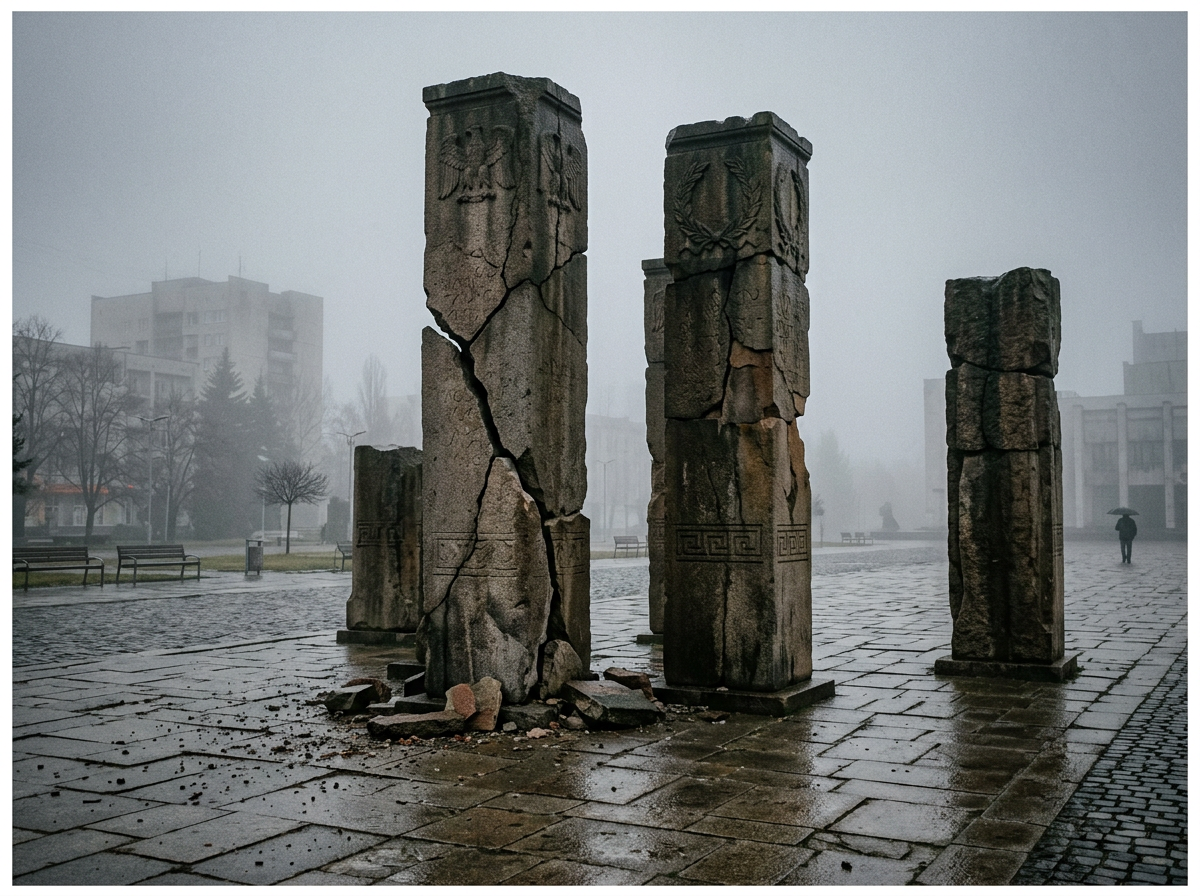
    Agentic Stewardship: Why the ‘New Earth’ is a Cognitive Operating System, Not a Financial Miracle


    By mid 2026, the promise of “Artificial Intelligence” has mutated. We have moved past the era of chatbots and image generators into the era of Agentic AI—systems that don’t just predict text, but reason, plan, and execute complex goals across entire digital ecosystems.

    For the “Silent Professionals” sitting in the high-rises of BGC or the remote hubs of Silicon Valley, this shift has created a profound sense of vertigo.

    You see the writing on the wall. The legacy systems of finance and tech—those extractive, high-friction hierarchies—are being rendered obsolete by agents that can optimize value streams at speeds no human committee can match.

    You are looking for an exit ramp, and in the “fringe” corners of the web, you keep hearing about GESARA and a “New Earth.”

    But here is the direct, unvarnished truth: The “New Earth” is not a financial miracle coming to save you from your debts.

    It is a Cognitive Operating System you must install to survive the systemic reset.


    The 2026 Context: Agentic AI as Sovereign Infrastructure

    In 2026, Agentic AI has become the primary mirror for our own competence. When an AI can plan a 12-month project and execute the first 30% without human intervention, it exposes the massive “Muda” (waste) inherent in traditional corporate management.

    For the professional in finance or tech, the realization hits: if a machine can reason and plan with more coherence than your department head, the department head’s role is a structural defect.

    This is where the concept of Agentic Stewardship emerges.


    Sovereignty in this new landscape isn’t about “owning” the AI; it’s about becoming the consciousness that directs it.

    We are moving from a world of “units of labor” to a world of “Sovereign Resource Pipelines.” As discussed in Signal vs Noise: Why Clear Thinking Is Rare, the ability to maintain clarity amidst the collapse of old certainties is the only asset that holds its value.


    Reframing GESARA: The End of Extractive Muda

    The “Silent Professional” often views GESARA (The Global Economic Security and Reformation Act) through a lens of desperate hope—a “free money” event that wipes the slate clean. But a Sovereign Professional understands that a systemic reset is never a gift; it is an Efficiency Event.

    If we look at the current financial system through a Lean lens, it is riddled with extraction.


    Interest-based debt, complex derivative layering, and the “taxation of movement” are all forms of waste that prevent capital from reaching its highest-potential use.

    A “Systemic Reset” to a higher-efficiency, zero-waste value stream isn’t about giving everyone a windfall; it’s about the removal of the friction that currently keeps the “Sovereign Professional” in a state of indentured service.

    As explored in Incentives Drive Behavior: Why Good Intentions Fail in Systems, the old system incentivized debt and complexity because that is how it extracted power.


    The “New Earth” system incentivizes Stewardship. If you aren’t prepared to be an agent of value, a reset won’t save you—it will simply leave you behind in a world where “effort” is no longer the metric of success.


    The Cognitive OS: Stewardship Over Survival

    The “Exit Ramp” you are looking for isn’t a destination; it’s a shift in your internal architecture.

    Most professionals are running a Survival OS—an operating system optimized for pleasing the hierarchy, avoiding risk, and maintaining solvency.

    The “New Earth” requires the installation of the Agentic Stewardship OS.


    This OS is built on three core modules:

    1. Sovereign Governance: The ability to govern your own attention and resources without an external manager.
    2. Reasoning Capacity: Shifting from “executing tasks” to “defining goals.” In the age of Agentic AI, the human’s role is the Goal Designer.
    3. Coherent Stewardship: Managing resources (financial, technological, and energetic) in a way that minimizes waste and maximizes generative output.

    This is the bridge to the Sovereignty Architecture: A Coherence Framework. Without this internal shift, you will bring the same “slave-logic” into a new system, and you will find yourself once again wondering Why Hard Work Alone Doesn’t Make You Valuable.


    The Call to the Silent Professionals

    You in Finance: You see the algorithmic decay of the fiat system.


    You in Tech: You see the “Dead Internet Theory” becoming a reality as AI agents outpace human content.

    You are the ones capable of building the new pipelines. But to do so, you must stop waiting for a “Financial Miracle” and start practicing The Discipline of Inner Sovereignty.

    Agentic Stewardship means you stop being a “user” of the system and start being the “architect” of the flow.

    GESARA, if it manifests as a systemic reset, is simply the grand opening of the Gemba—the “real place” where value is created.

    It is the removal of the extractive middleman. If you have spent your career becoming an expert in the friction of the old system (the red tape, the tax loopholes, the management bloat), you are currently high-risk inventory.

    If you are learning to be an agent of pure value, you are the cornerstone of the New Earth.


    Conclusion: The Exit Ramp is Internal

    The “New Earth” isn’t a location you find on a map after a global reset.


    It is the reality that manifests when a critical mass of professionals decides to stop serving the waste-stream and start serving the value-stream.

    Agentic AI is the catalyst. It is forcing us to be more “human” than we have ever been allowed to be in a corporate setting. It is forcing us to become Stewards.

    The exit ramp is open. But to take it, you must be willing to trade your “employee” mindset for a “Sovereign” architecture.


    The Sovereign Professional: A structural map of power, systems thinking, and personal autonomy—dedicated to helping the independent professional navigate complexity and own their value stream.


    ©2026 Gerald Daquila • Life.Understood. • Systems Thinking, Leadership Architecture, and Applied Coherence

  • [CATCH-001] The Diaspora Catchball: Transnational Knowledge Flow

    [CATCH-001] The Diaspora Catchball: Transnational Knowledge Flow


    In the industrial world of Lean, Catchball is the rhythmic, back-and-forth negotiation of ideas, goals, and feasibility. It is the antithesis of the “Top-Down” mandate.

    A leader “throws” a goal to the team; the team “catches” it, analyzes it against the reality of the Gemba (the real place of work), and “throws” it back with refinements.

    This ensures that the strategy is not just a dream, but a functional blueprint.

    As we navigate the systemic shifts of 2026, this concept must be applied to our most valuable distributed resource: The Diaspora.

    For the Filipino Diaspora—and indeed any global community of “Silent Professionals”—the movement of value has historically been a one-way street: Remittances.

    We have exported labor and imported currency. From a systems-thinking perspective, this is a low-efficiency model. It is a “Push” system that treats people as commodities.

    [CATCH-001] proposes a transition to the Diaspora Catchball: a high-bandwidth, transnational flow of knowledge, systems, and sovereignty that transforms the “Brain Drain” into a “Brain Circulation.”


    The Crisis of the “Fractured Identity”

    The primary obstacle to effective Catchball is the internal state of the Diaspora professional. Living in the West or in global tech hubs often leads to a “Split-Screen” existence.

    You have the professional persona that navigates corporate hierarchies, and the “Root” persona that feels a deep, often painful pull toward the motherland.

    This fragmentation is a systemic “defect.” As analyzed in Identity: The Story We Learn to Tell About Ourselves, if you view your Diaspora status as a “loss” or an “exile,” you are operating from a place of deficit.

    The Diaspora Catchball requires you to see your position as a Strategic Advantage. You are a node in a transnational mesh network, uniquely positioned to “catch” the best of global innovation and “throw” it back into the Philippine Ark framework.


    The Catchball Protocol: Beyond the Remittance

    The “Catchball” isn’t about sending money; it’s about Policy Deployment for the soul and the soil.

    It involves a sophisticated exchange of “Codes”—knowledge, governance models, and systemic logic.


    1. The Global “Catch” (Sourcing the Signal)

    The Diaspora professional is on the front lines of the AI reset, the quantum financial transition, and the collapse of legacy tech. Your job is to catch the Signal amidst the global Noise.

    You are an “Intel Node.” What you learn about Staying Sovereign in Uncertain Times — Inner Stability in an Unstable World in a hyper-competitive market like Singapore or London is vital data for the prototype nodes in the Philippines.


    2. The Local “Return” (Contextualizing the Logic)

    Throwing Western solutions at Philippine problems is “Muda” (waste). It ignores the unique Filipino Operating System.

    Diaspora Catchball requires a back-and-forth negotiation: “I see this high-efficiency governance model in my tech firm; how do we translate its essence to the Barangay level without losing the Kapwa-logic?”

    This is a “Sacred Exchange” of methodology.


    Managing the “Bridge-Builder” Burnout

    One of the greatest “Defects” in Diaspora engagement is the Savior Complex. Many professionals try to “save” their families or their country by over-extending their resources, leading to a total system crash.

    If you are to be an effective node in the transnational flow, you must learn the art of Helping Without Burning Out. You cannot “throw” the ball if you are too exhausted to stand.

    True Catchball is a sustainable game. It requires boundaries, Sacred Exchange agreements, and the recognition that you are a steward, not a martyr.

    You are building a pipeline, not becoming the water yourself.


    The Threshold: From “Remitter” to “Architect”

    For many in the Diaspora, the final stage of Catchball is the decision to move—physically or digitally—back into the motherland’s “Value Stream.”

    This is a monumental shift. It requires viewing Change as a Threshold, Not a Failure.

    Stepping out of a high-paying corporate role in the West to build “Sovereign Infrastructure” in the Philippines is not “giving up” on success. It is the Ascension of your professional mission.

    It is the move from being a “component” in an extractive system to being an Architect of a generative one.

    You are catching the ball of your own potential and throwing it into the “Heart Chakra” of the world.


    Conclusion: The Mesh Network of Sovereignty

    The Diaspora Catchball is how we build the New Earth. It is a decentralized, transnational dialogue that ignores the “Noise” of borders and political dynasties. It is a peer-to-peer recognition of brilliance and purpose.

    When the Diaspora professional begins to “play catch” with the local innovator, we create a system that is Antifragile.

    We move from a dependency on global aid to a mastery of global flow.

    We realize that the “Ark” is not a physical boat, but the interconnectedness of our sovereign minds.

    Stop being a “Remittance Unit.”

    Start being a “Catchball Node.” The flow of the future depends on your ability to catch the light and throw it home.


    The Sovereign Professional: A structural map of power, systems thinking, and personal autonomy—dedicated to helping the independent professional navigate complexity and own their value stream.


    ©2026 Gerald Daquila • Life.Understood. • Systems Thinking, Leadership Architecture, and Applied Coherence

  • Gemba Walking the Ancestral Soul: A Protocol for Heritage Retrieval in High-Pressure Environments

    Gemba Walking the Ancestral Soul: A Protocol for Heritage Retrieval in High-Pressure Environments


    In the lean manufacturing world, a Gemba Walk is the practice of going to “the real place” where value is created.


    It is a tool for observation, intended to strip away the abstractions of reports and spreadsheets to see the actual flow of work.

    For the Sovereign Professional operating in the toxic high-pressure corridors of 2026, the “Gemba” isn’t just the office floor or the digital workspace; it is the intersection of your current environment and your inherited ancestral wisdom.

    Most modern professionals approach “culture” as a costume—something to be worn during a DEI workshop or mentioned in a LinkedIn bio. But heritage is not an accessory; it is an Operating System (OS).

    When that OS is suppressed or overwritten by the extractive logic of corporate colonization, the result is a systemic “glitch” characterized by burnout, cynicism, and a loss of agency.

    This protocol is a Lean guide to heritage retrieval. We are not looking for “cultural appreciation”; we are looking for a structural reclamation of the source code that makes you indispensable.


    The Audit: Why Your Current OS is Failing

    Before we can retrieve the ancestral soul, we must recognize the waste in the current system. As explored in How Systems Shape Behavior (And Why It Feels Personal), many of the anxieties we carry are not personal failures; they are structural symptoms.

    We have been incentivized to optimize for a “Push” system—endless output, constant availability, and the surrender of intuition.

    When your heritage is relegated to a “costume,” you are operating on a fragmented OS. You are trying to run a high-bandwidth, indigenous sense-making heart on a low-fidelity, colonial-extraction brain.

    The friction between these two layers is where the “Muda” (waste) of your soul occurs.


    Phase 1: The Soul-Gemba (Observation)

    The first step of the protocol is to walk the “real place” of your daily professional interactions through the lens of Ancestral Sense-making.

    During your next high-pressure meeting or quarterly review, do not look at the KPIs. Look at the patterns.

    • The Incentive Check: Are the rewards in this room driving behavior that aligns with your “root” values? (Reference: Incentives Drive Behavior: Why Good Intentions Fail in Systems).
    • The Energy Audit: Is the work being done “generative” (nourishing the ecosystem) or “extractive” (mining the participants for short-term gain)?
    • The Silence Check: What is not being said? Ancestral intuition—specifically the Babaylan capacity for high-bandwidth pattern recognition—lives in the gaps between the data points.

    Phase 2: Root Cause Analysis (The 5 Whys of Disconnection)

    In Lean, we use the “5 Whys” to find a technical root cause. In heritage retrieval, we use it to find the point of colonial rupture.


    1. Why am I feeling burnt out?

    Because I am working 60 hours for a 40-hour lifestyle.


    2. Why am I working those extra 20 hours?

    To satisfy an incentive structure that rewards “effort” over “value.”


    3. Why do I value that incentive over my rest?

    Because I have been conditioned to believe that my worth is tied to my metabolic output.


    4. Why do I believe that output equals worth?

    Because the system I was trained in prioritizes the machine over the human.


    5. Why have I forgotten the alternative?

    (Root Cause): Because the ancestral OS—which views work as stewardship and contribution—has been overwritten by a colonized narrative of extraction.

    By reaching the fifth “Why,” you realize that Why Hard Work Alone Doesn’t Make You Valuable is a foundational truth of the Sovereign Professional.


    Phase 3: Poka-Yoke (Error-Proofing) via Ancestral Wisdom

    In Lean, Poka-Yoke is a mechanism that prevents a mistake from happening. In your professional life, your heritage provides the ultimate error-proofing.

    Indigenous wisdom often operates on “Non-Linear Time” and “Interconnected Logic.” When a corporate crisis hits, the colonized OS panics, looking for immediate “fixes.” The Ancestral OS, however, steps back to see the long-cycle pattern.

    The Protocol for Retrieval:

    • The Breath of the Center: Before responding to a high-pressure “Noise” signal, apply The Discipline of Inner Sovereignty. This is the modern version of the “centering” practiced by indigenous healers. It creates the “buffer” needed for discernment.
    • The Council Mindset: Even if you are a “solo” professional, view your decisions through the lens of “The Seventh Generation.” Does this decision nourish your future, or does it burn the field for a temporary win?
    • Language as Logic: Use your heritage’s specific concepts—like the Filipino Pakikipagkapwa (shared identity)—to re-contextualize your work. You are not “networking”; you are building a Kapwa ecosystem. This changes the incentive from competition to coherence.

    The Outcome: Signal Over Noise

    The result of “Gemba Walking the Ancestral Soul” is a radical clarity. You begin to see the “corporate waste-stream” for what it is—a noisy, extractive system that is failing to adapt to a high-complexity world.

    By retrieving your heritage as an OS, you gain the ultimate competitive advantage: Clear Thinking. As discussed in Signal vs Noise: Why Clear Thinking Is Rare, those who can navigate uncertainty without losing their center are the ones who become indispensable.

    You don’t find that center in a textbook; you find it in the “Gemba” of your own lineage.


    Conclusion: The Sovereign Blueprint

    Heritage retrieval is not about performing your culture for the benefit of a company’s “diversity” metrics. It is about excising the colonial “Muda” from your mind so you can work with the power of a whole human being.

    When you walk the Gemba with the soul of an ancestor and the mind of a Lean architect, you stop being a unit of labor. You become a Sovereign Professional—an architect of a new, coherent reality.


    The Sovereign Professional: A structural map of power, systems thinking, and personal autonomy—dedicated to helping the independent professional navigate complexity and own their value stream.


    ©2026 Gerald Daquila • Life.Understood. • Systems Thinking, Leadership Architecture, and Applied Coherence

  • 🇵🇭 Where Do We Start?: A Systems Blueprint for Cultural Renewal in the Philippines

    🇵🇭 Where Do We Start?: A Systems Blueprint for Cultural Renewal in the Philippines


    There is no shortage of analysis on the Philippines.

    Colonial mentality has been named. Family dysfunction has been examined. Corruption has been exposed. Education collapse has been documented. Learned helplessness has been studied.

    What remains unresolved is not diagnosis—but sequence.

    Where do we actually begin, if the goal is not awareness—but transformation?

    This is the question most frameworks avoid because it forces a confrontation with reality:

    you cannot reform a civilization-level system by targeting a single layer.

    The Philippines is not struggling because of one broken institution. It is a stacked system of interlocking behaviors—family dynamics, authority structures, economic incentives, education gaps, and historical conditioning—reinforcing each other across generations.

    Any serious attempt at change must therefore answer three things:

    • What is the smallest unit of change that is still systemically meaningful?
    • What is the sequence of intervention across layers?
    • What is the realistic time horizon for results?

    The Core Misdiagnosis: Treating Culture as Belief Instead of Behavior

    Most discussions on colonial mentality frame it as an issue of mindset—something to be corrected through awareness, pride, or identity reclamation.

    This is incomplete.

    Colonial mentality persists not because Filipinos “believe the wrong things,” but because they repeatedly enact the same survival behaviors:


    • deference to authority even when unjust
    • avoidance of conflict to preserve social harmony (pakikisama)
    • loyalty to networks over systems
    • normalization of small-scale corruption (“everyone does it”)
    • silence in the face of dysfunction

    These are not abstract beliefs. They are trained responses shaped by centuries of hierarchical rule—from Spanish colonial structures to American bureaucratic systems and postcolonial patronage politics (Anderson, 1988; David, 2013).

    Culture, in this sense, is not ideology.

    It is patterned behavior under pressure.

    Which means:

    you do not change culture by persuasion alone—you change it by altering the environments that reward those behaviors.


    🧭 Continue the Work: Pathways Through the Philippine Knowledge Hub

    Understanding the system is only the first step.

    If this piece clarified where to begin, the next question becomes:

    Where do you go from here?

    The Philippine Knowledge Hub is structured as a set of pathways—each designed to take you deeper into a specific layer of the problem and its corresponding transformation.

    You do not need to read everything.
    You need to follow the path most aligned with where you are.


    Pathway 1: Seeing Clearly (Diagnosis Layer)

    If you are still making sense of the patterns—colonial mentality, family systems, and inherited behavior—begin here.

    Focus:
    Understanding how historical conditioning, family dynamics, and cultural norms reinforce each other.

    Outcome:
    You begin to see the system—not as isolated problems—but as a coherent pattern.


    Pathway 2: Reclaiming Agency (Internal Reset)

    Once the system is visible, the next layer is internal.

    Because no structural reform holds if the individual remains conditioned by:

    Focus:
    Breaking internalized patterns that sustain external dysfunction.

    Outcome:
    You move from awareness → personal agency.


    Pathway 3: Rebuilding Systems (External Reset)

    If your question is no longer “what’s wrong?” but “how do we fix this?”, this is your entry point.

    Focus:
    Understanding how large-scale systems—economic, political, institutional—can be redesigned.

    Outcome:
    You begin to think in terms of systems, not symptoms.


    Pathway 4: Practicing Stewardship (Application Layer)

    Insight without application collapses under pressure.

    If you are ready to move from understanding into practice:

    Focus:
    Training for real-world complexity: leadership, decision-making, and system repair.

    Outcome:
    You transition from observer → participant → builder.


    How to Use This Hub

    You do not need to follow these pathways in order.

    But you do need to be honest about where you are:


    The Threshold

    Most readers stop at understanding.

    A smaller number move toward change.

    Very few commit to rebuilding.

    This hub is designed for all three—but it is built for the last group.

    Choose your path.


    The First Principle: Change the Unit, Not the Nation

    National reform is too large, too slow, and too politically constrained to be the starting point.

    The smallest viable unit of transformation in the Philippine context is:

    A coherent local ecosystem composed of: one school, one barangay cluster, one LGU leadership layer, and one parent/community network.

    Anything smaller lacks systemic impact.
    Anything larger becomes unmanageable.

    This “micro-system” contains the core drivers of cultural transmission:

    • Families (where values are embodied)
    • Schools (where cognition and behavior are shaped)
    • Local governance (where power is experienced)
    • Peer/community networks (where norms are enforced)

    If you change behavior across all four simultaneously, you are no longer influencing individuals—you are rewiring a living system.


    The Sequence of Change (What Happens First, Second, Third)

    Transformation does not begin with curriculum, policy, or elections.

    It begins with stability of truth.


    Phase 1: Stabilize Truth-Telling

    Before any reform can take hold, people must be able to name dysfunction without punishment.

    This includes:

    • classroom environments where questioning is not penalized
    • barangay forums where concerns can be raised without retaliation
    • school leadership structures that accept feedback loops
    • family spaces where authority is not absolute

    Without this, all reform collapses into compliance theater.


    Phase 2: Restore Agency Through Small Wins

    Decades of systemic failure produce learned helplessness—a psychological state where individuals stop acting because they no longer believe action matters (Seligman, 1972).

    This cannot be reversed through messaging.

    It requires:

    • visible, repeatable, local successes
    • problems small enough to solve but meaningful enough to matter

    Examples:

    • literacy recovery programs that show measurable gains within months
    • transparent barangay budgeting that citizens can track
    • school-based feeding and attendance programs that improve outcomes

    Agency returns when people experience:

    “We acted—and something changed.”


    Phase 3: Retrain Authority (The Hardest Layer)

    Children do not reproduce what they are taught.
    They reproduce what authority models.

    Which means the central bottleneck is not students—it is adults in power:

    • parents
    • teachers
    • principals
    • barangay officials
    • local executives

    Leadership must be retooled from extractive to stewardship-based behavior, including:

    • decision transparency
    • ethical resource allocation
    • conflict repair (not avoidance)
    • accountability to outcomes, not relationships
    • willingness to be questioned

    Research consistently shows that institutional trust and performance are strongly correlated with leadership integrity and transparency (World Bank, 2023).

    Without this shift, all child-focused reform is neutralized.


    Phase 4: Institutionalize the New Behavior

    No system survives on intention alone.

    Once new behaviors emerge, they must be embedded into:

    • hiring and promotion criteria
    • school routines and assessment systems
    • LGU policies and procurement processes
    • community norms and expectations

    If a reform depends on “good people,” it will collapse when those people leave.

    If it becomes structure, it persists.


    Phase 5: Scale Through Proof, Not Messaging

    National narratives are weak without local evidence.

    The Philippines does not need another campaign.
    It needs visible models of functioning systems.

    Scaling should follow this logic:

    • replicate what works in comparable LGUs
    • adapt, not copy
    • build networks of coherent ecosystems

    Change spreads not by persuasion—but by demonstrated viability.


    Where K–12 Fits (and Where It Doesn’t)

    Education is foundational—but it is not primary.

    The Philippines’ learning crisis, as reflected in Programme for International Student Assessment (PISA) results, highlights severe gaps in reading and numeracy (OECD, 2023).

    However, curriculum reform alone cannot solve this.

    A curriculum cannot outperform:

    • an untrained teacher
    • a fearful classroom
    • a politicized school system
    • a household that reinforces passivity

    K–12 is the long-term engine of change.

    But without adult transformation, it becomes:

    a delivery system for content that cannot take root.


    The Central Leverage Point: Redefining Power

    At the deepest level, the system is sustained by a single definition:

    Power as protection and advantage.

    This manifests as:

    • patronage politics
    • dynastic leadership
    • corruption as survival strategy
    • silence as social currency

    The transformation required is not incremental—it is definitional:

    Power must be recoded as stewardship.

    Meaning:

    • authority exists to serve outcomes, not networks
    • leadership is measured by system health, not loyalty
    • transparency is default, not exception
    • accountability is structural, not personal

    Until this shifts, all reform remains surface-level.


    Time Horizons (What Is Actually Realistic)

    A 500-year conditioned system does not reverse quickly.

    But it does not require 500 years to change direction.


    3–5 years

    • measurable improvements in pilot ecosystems
    • literacy gains, governance transparency, civic participation

    10–15 years

    • one generation of students formed under improved systems
    • emerging cohort of differently conditioned young leaders

    25–40 years

    • leadership turnover reflecting new behavioral norms
    • institutional memory stabilizes

    50 years

    • full cultural normalization

    This is not pessimistic.
    It is strategically honest.


    The Threshold

    The Philippines does not lack intelligence, talent, or even awareness.

    What it lacks is coordinated behavioral transformation across layers.

    The question is no longer:

    “What is wrong?”

    It is:

    “Who is willing to participate in rebuilding, knowing it will take decades—and begin anyway?”

    If you are looking for where to start, it is not in theory, and not in waiting for national change.

    It is here:

    • one school
    • one barangay cluster
    • one leadership unit
    • one community network

    Built differently.
    Measured honestly.
    Repeated deliberately.

    That is how systems change.


    References

    Anderson, B. (1988). Cacique Democracy in the Philippines: Origins and Dreams. New Left Review.
    David, E. J. R. (2013). Brown Skin, White Minds: Filipino American Postcolonial Psychology. Information Age Publishing.
    OECD. (2023). PISA 2022 Results: Philippines Country Note.
    Seligman, M. E. P. (1972). Learned helplessness. Annual Review of Medicine, 23, 407–412.
    World Bank. (2023). Philippines Economic Update: Public Institutions and Governance.


    Attribution

    © 2025–2026 Gerald Alba Daquila
    All rights reserved.

    This work is offered for reflection and independent interpretation. It does not represent a formal doctrine, institution, or required belief system.