From Self-Development to the Care of What Endures
Meta Description
Explore stewardship as the mature expression of human development, where identity, responsibility, and contribution expand beyond the self toward the flourishing of people, communities, institutions, and living systems.
Excerpt
For much of life, human development is concerned with becoming someone. We cultivate knowledge, identity, competence, and meaning as we learn to navigate the complexities of the world. Yet mature development does not end with the self. It gradually expands into responsibility for realities larger than ourselves. This essay explores stewardship not as a profession or moral obligation, but as the natural expression of an integrated human life.
Human maturity has often been measured by the wrong standards.
Modern societies tend to equate maturity with independence, achievement, expertise, or the accumulation of status and wealth.
We celebrate the individual who becomes increasingly self-sufficient, capable, and accomplished, assuming that these qualities represent the natural destination of adult development. While each has its place, none fully captures what it means to mature as a human being (Kegan, 1994).
Development points toward a different horizon.
As people mature, their attention often begins to shift in subtle but profound ways. The questions that once centered upon personal identity, ambition, or recognition gradually give way to concerns that extend beyond the boundaries of the individual self. Success becomes less compelling than significance. Accomplishment gives way to responsibility. The desire to possess slowly yields to the desire to contribute (Erikson, 1968).
This transformation is rarely dramatic. More often, it unfolds quietly through ordinary life. Raising children changes the way a parent understands time. Caring for an aging relative reshapes priorities. Leading an organization reveals that decisions ripple far beyond one’s immediate interests.
Even tending a garden teaches that flourishing depends less upon control than upon patient participation in processes larger than ourselves.
These experiences share a common insight.
Human maturity is not measured solely by what a person achieves, but by what they become capable of carrying.
This distinction marks an important turning point within the Human System. The previous cornerstone explored how identity gradually emerges, stabilizes, and becomes capable of conscious participation.
A coherent identity is an extraordinary developmental achievement, but it is not the destination. Identity provides the stability from which a larger movement becomes possible.
The mature question is no longer simply, Who am I?
Nor even, Who am I becoming?
It becomes something both simpler and more demanding.
What has been entrusted to my care?
Within that question lies a profound reorientation. Life is no longer understood primarily as a project of self-construction. It becomes an invitation to participate responsibly in relationships, communities, institutions, ecosystems, and generations that both preceded us and will continue long after we are gone.
This is the beginning of stewardship.
Stewardship is often misunderstood as a role, an ethic, or a professional responsibility. It is commonly associated with environmental care, organizational leadership, financial management, or public service. Each reflects an important expression of stewardship, yet none reaches its deepest meaning (Block, 2013).
Before stewardship becomes something we do, it is something we become.
It is the gradual emergence of a way of being in which care, responsibility, reciprocity, and participation become increasingly natural expressions of a mature human life.
Rather than asking what can be gained from the world, the steward begins asking how their knowledge, relationships, resources, and influence might contribute to the flourishing of realities beyond themselves.
Seen in this light, stewardship is not an additional stage placed alongside human development. It is one of its most recognizable expressions. It reveals that maturity is not measured by how completely we free ourselves from dependence upon others, but by how willingly and wisely we accept responsibility for what our lives have made possible.
The question, then, is no longer whether stewardship matters.
The deeper question—and the one this cornerstone explores—is this:
What does it mean for stewardship to become the mature expression of a fully integrated human life?
I. Beyond Self-Development
Much of modern culture encourages us to think of development as a personal project.
We are urged to become healthier, wiser, more resilient, more productive, more emotionally intelligent, and more self-aware. These aspirations are worthwhile, and they have contributed significantly to our understanding of human growth. Yet they also carry an unspoken assumption—that the primary purpose of development is the improvement of the individual (Maslow, 1968).
The Human System suggests a broader perspective.
Human development does not culminate in a perfected self. It culminates in a person who is increasingly capable of participating wisely within larger living systems. Growth matters not because it elevates the individual above others, but because it expands the individual’s capacity to contribute to relationships, communities, institutions, and the wider world (Kegan, 1994).
This distinction is subtle, yet it changes the entire direction of development.
When personal growth becomes an end in itself, it can quietly turn inward.
Every experience becomes another opportunity for self-optimization. Knowledge becomes something to accumulate. Skills become markers of competence. Even reflection can become another form of self-preoccupation if it never extends beyond the boundaries of the individual.
There is nothing inherently wrong with these pursuits. Indeed, they often represent necessary stages of development.
A fragmented person cannot easily become a responsible steward. Emotional maturity, self-awareness, and psychological integration provide the foundations upon which stewardship becomes possible.
Yet foundations are not destinations.
The previous cornerstones have explored how human beings develop, how our lives are shaped before conscious choice, how identity gradually emerges, and how meaning helps organize experience into a coherent life.
Each represents an essential movement in becoming fully human. Together they prepare us for a deeper transition—not away from the self, but beyond the self as the primary center of concern.
This transition rarely arrives through abstract philosophy alone. More often, life itself invites it.
- A teacher discovers that the deepest satisfaction comes not from mastering a subject but from watching students surpass expectations they once held for themselves.
- A physician gradually recognizes that healing involves far more than technical expertise.
- A community leader learns that lasting change depends less upon personal influence than upon cultivating conditions in which others can flourish.
- Parents experience this movement almost daily as the well-being of their children quietly becomes inseparable from their own understanding of a meaningful life.
Across these very different lives, a common pattern begins to emerge.
Development becomes less concerned with what a person possesses and more concerned with what a person makes possible.
Knowledge becomes wisdom when it is shared. Freedom becomes maturity when it is exercised responsibly. Influence becomes stewardship when it is directed toward the flourishing of realities that extend beyond personal ambition (Erikson, 1963).
This is one of the quiet paradoxes of adulthood.
The more integrated the self becomes, the less it needs to remain the center of every question.
Identity does not disappear; it simply finds its proper place within a wider field of relationships and responsibilities.
Rather than diminishing individuality, this expansion allows individuality to become more fully expressed through participation in purposes that exceed the interests of the individual alone.
Seen in this light, self-development reaches its fulfillment not in self-completion but in contribution.
The question therefore begins to change once again. Instead of asking how we might continue becoming better versions of ourselves, we begin asking how the person we have become might faithfully serve the larger systems of which we are already a part.
That question marks the threshold of stewardship and prepares us for the next movement in understanding how responsibility itself becomes a developmental capacity.
II. Responsibility as a Developmental Capacity
Responsibility is often understood as something imposed from the outside.
Parents give responsibilities to children. Organizations assign responsibilities to employees. Governments establish responsibilities for citizens. In everyday life, responsibility is frequently experienced as obligation—a set of duties that accompany particular roles or circumstances.
There is truth in this understanding, but it reaches only part of the picture.
Human development suggests that responsibility is not merely assigned.
It is gradually cultivated. As our capacity to understand ourselves, other people, and the wider consequences of our actions expands, so too does our capacity to carry responsibilities that would once have overwhelmed us. Responsibility grows because the person grows (Kegan, 1994).
This is why the same task can feel profoundly different at different stages of life.
A young professional may experience leadership primarily as authority. Years later, that same individual may discover that leadership is less about directing others than about creating conditions in which trust, competence, and collaboration can flourish.
The external role may appear unchanged, yet the quality of responsibility has deepened because the person inhabiting it has changed.
The same pattern appears across countless domains of life.
- Owning land is different from stewarding it.
- Raising children is different from helping another human being become fully themselves.
- Holding public office is different from safeguarding the institutions upon which future generations will depend.
- Possessing knowledge is different from recognizing that knowledge carries an obligation to teach, preserve, and apply it wisely.
In each case, responsibility evolves from managing tasks to caring for living systems.
This shift represents one of the clearest signs of maturity. Early in life we often measure responsibility by the amount we are able to accomplish.
Later, we begin recognizing that genuine responsibility cannot be reduced to productivity alone. It includes discernment, restraint, patience, and the willingness to consider consequences that extend well beyond our immediate interests.
The mature person therefore asks different questions.
Not simply,
Can I do this?
But,
Should it be done?
Who will be affected?
What becomes possible because I chose this course rather than another?
These questions reveal that responsibility is becoming increasingly systemic. Decisions are no longer evaluated solely by their immediate outcomes but by the relationships they strengthen or weaken, the institutions they sustain or erode, and the future they quietly help create.
This broader perspective changes the meaning of freedom as well.
Freedom is often imagined as the absence of constraints—the ability to act according to one’s own preferences without interference. Development points toward a richer understanding.
The more mature a person becomes, the more freedom is experienced not as escape from responsibility but as the capacity to assume it wisely. Freedom and responsibility cease to compete with one another. They become mutually reinforcing dimensions of human maturity (Frankl, 2006).
Seen from this perspective, stewardship is neither burdensome nor sacrificial in the conventional sense.
It arises because our understanding of ourselves has expanded to include realities that were once experienced as separate from us. The well-being of a family, a community, a watershed, an institution, or a future generation no longer feels like someone else’s concern. It becomes part of the horizon within which our own lives acquire meaning.
Responsibility, then, is not the weight that maturity must endure. It is one of maturity’s clearest expressions.
This realization prepares us for another transition. As responsibility deepens, the measures by which we evaluate a life begin to change. Achievement remains valuable, but it no longer provides a sufficient account of a life well lived.
Gradually, another standard begins to emerge—one measured less by what we have accumulated than by what we have enabled others to become.
That movement, from achievement toward contribution, marks another decisive threshold in the development of stewardship.
III. From Achievement to Contribution
For much of life, achievement provides an important measure of development.
Learning new skills, building careers, raising families, creating organizations, producing knowledge, and overcoming adversity all represent genuine accomplishments. They reflect discipline, perseverance, and the gradual expansion of human capability. Achievement is not something to be dismissed. It is often one of the ways maturity first becomes visible.
Yet achievement, by itself, cannot sustain a meaningful life indefinitely.
Many people eventually discover that reaching long-pursued goals brings a satisfaction that is both real and surprisingly brief. The promotion arrives. The business succeeds. The degree is earned. Recognition follows years of effort. For a time these accomplishments feel deeply significant. Then, almost imperceptibly, another question begins to emerge.
What now?
The question is not born from dissatisfaction alone. Often it arises precisely because achievement has fulfilled its promise. Having demonstrated what one is capable of doing, attention gradually shifts toward a different concern: what those capabilities are ultimately for.
This marks a subtle but profound transition in adult development.
Achievement is largely concerned with what an individual can accomplish. Contribution asks what those accomplishments make possible for others.
The focus widens from personal success to shared flourishing. Knowledge becomes something to cultivate not merely for personal mastery, but for the wisdom it can offer.
Leadership becomes less about directing outcomes and more about developing people. Creativity becomes an act of cultural participation rather than personal expression alone.
The external activities may remain remarkably similar.
A teacher still teaches. A scientist still conducts research. An entrepreneur still builds organizations. A farmer still cultivates the land. What changes is the center of gravity from which those activities arise.
Contribution requires a different relationship with success.
Success asks whether a goal has been reached. Contribution asks whether something of lasting value has been added to the lives of others.
One can succeed without contributing, just as one can make profound contributions that receive little recognition. Mature stewardship gradually learns to distinguish between these two measures without dismissing either.
This distinction becomes increasingly important in a culture that often celebrates visibility more readily than value.
Many of the most significant forms of stewardship leave few obvious traces.
- Restoring trust within a fractured family seldom becomes public knowledge.
- Preserving the integrity of an institution may appear uneventful precisely because disaster was quietly prevented.
- Caring faithfully for land, mentoring younger colleagues, strengthening communities, or transmitting wisdom across generations rarely attracts widespread recognition.
- Yet civilizations depend upon such acts far more than they depend upon extraordinary moments of individual achievement.
This invites a different understanding of legacy.
Legacy is often imagined as something we leave behind after our lives have ended. Stewardship suggests a broader view. Legacy is continually being formed through the conditions we help create in the present (Erikson, 1963).
Every relationship strengthened, every institution made more trustworthy, every landscape restored, every life encouraged toward greater flourishing becomes part of a future we may never personally witness.
Seen in this light, contribution is not measured primarily by scale.
Some people influence nations. Others transform a single family. Some reshape entire disciplines. Others quietly alter the course of one young person’s life through patience, encouragement, and example.
Stewardship does not compare these contributions. It asks only whether our capacities are being faithfully placed in service of realities larger than ourselves.
Perhaps this is why contribution often brings a deeper and more enduring satisfaction than achievement alone.
Achievement confirms what we are capable of doing. Contribution reveals who we are becoming.
It is here that maturity begins to express itself not merely through competence, but through generosity, fidelity, and care. The self no longer seeks fulfillment only through personal advancement. It discovers that some of life’s deepest meaning emerges through helping other people, communities, and living systems become more capable of flourishing because we were present within them.
From this point, stewardship expands once again. Contribution is no longer directed only toward individual lives, but toward the larger systems that sustain human existence itself.
Families, institutions, cultures, ecosystems, and future generations all become part of the horizon within which a mature life learns to participate.
IV. Living Within Larger Systems
No human life exists in isolation.
From our first breath, we belong to networks of relationship that make our existence possible.
- Families nurture us before we can care for ourselves.
- Communities provide language, culture, education, and opportunity.
- Institutions preserve knowledge across generations.
- Ecosystems sustain every breath we take and every meal we eat.
- Even the ideas through which we understand the world are inherited from countless lives that came before our own.
Stewardship begins with recognizing this reality.
The modern imagination often celebrates the independent individual—the person who succeeds through determination, talent, and personal effort alone.
While individual agency is real and worthy of respect, it is never the whole story. Every accomplishment rests upon foundations that others helped build, often without our awareness.
To mature is not to diminish personal achievement but to place it within the larger web of relationships that made it possible.
This recognition naturally gives rise to humility.
Humility is sometimes mistaken for self-diminishment, as though it required thinking less of oneself. In practice, it means seeing oneself more accurately. It acknowledges both human agency and human dependence.
We are capable of extraordinary creativity and responsibility, yet none of us creates the conditions of our own existence. We inherit languages we did not invent, institutions we did not establish, ecosystems we did not create, and cultural traditions shaped by generations we will never meet.
Stewardship grows from gratitude before it grows from obligation.
When we recognize how profoundly our lives have been sustained by others, care begins to feel less like a burden and more like an appropriate response to reality itself.
Gratitude expands into reciprocity. We begin asking not merely what we have received, but how we might strengthen, preserve, and enrich those same conditions for those who follow.

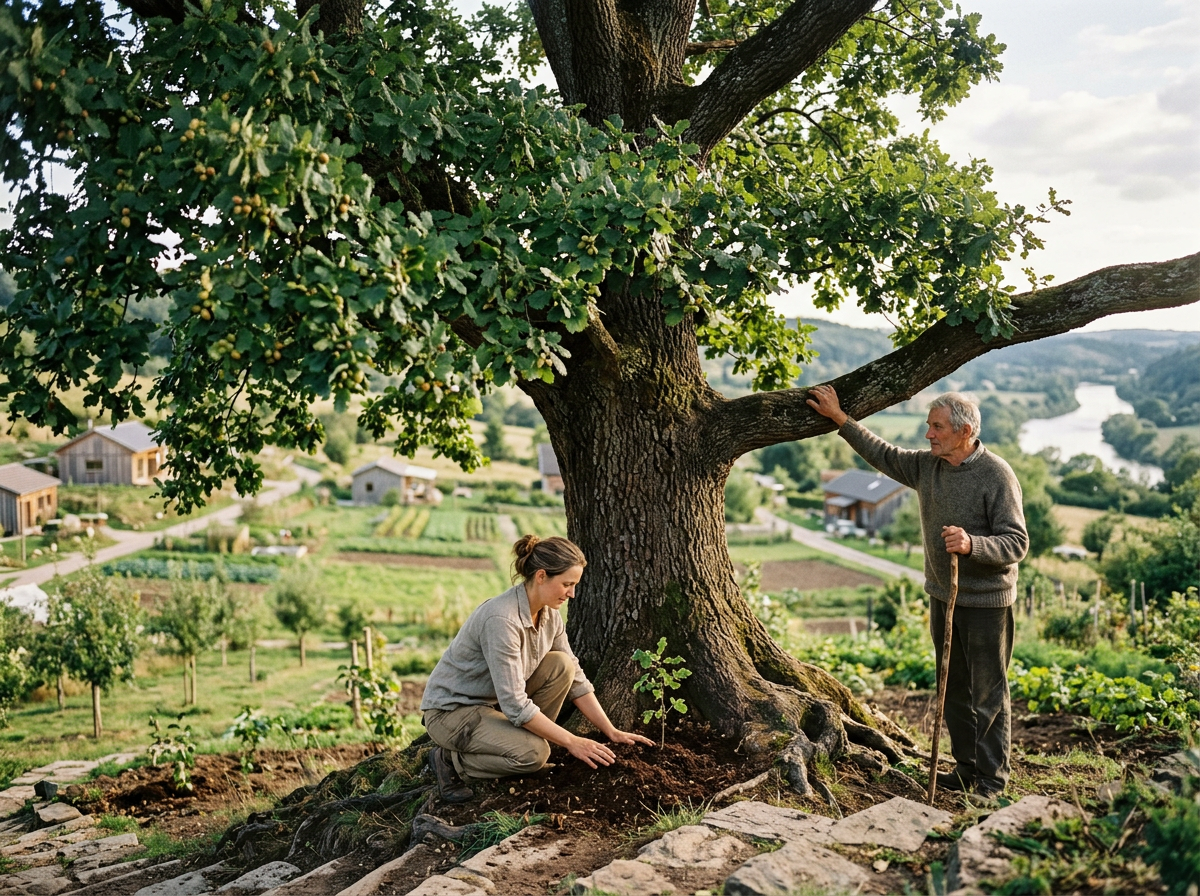
The Stewardship Field visualizes stewardship as an emergent relational field rather than a discrete role. Identity, responsibility, reciprocity, participation, and long-term care converge within larger human and ecological systems, illustrating the transition from individual development to mature participation.
This shift changes the way we understand systems.
A system is not simply a collection of interconnected parts.
- It is a living pattern of relationships whose health depends upon the quality of those relationships over time.
- Families are sustained by trust rather than biology alone.
- Communities endure through cooperation rather than proximity alone.
- Institutions remain legitimate through integrity rather than authority alone.
- Ecosystems flourish through balance rather than control alone.
Stewardship therefore requires more than good intentions. It asks us to understand the systems within which our actions unfold (Meadows, 2008).
This is one of the reasons systems thinking occupies such an important place within the Living Archive. The mature steward learns to look beyond isolated events toward the patterns that generate them (Meadows, 2008).
Immediate problems are considered within longer time horizons. Individual decisions are evaluated not only for their direct effects but also for the relationships they strengthen, weaken, or unintentionally reshape.
Such thinking gradually transforms the way responsibility is exercised.
Rather than reacting only to visible crises, stewardship seeks to cultivate conditions under which fewer crises emerge in the first place. It becomes concerned with resilience rather than mere recovery, regeneration rather than simple maintenance, and long-term flourishing rather than short-term success.
The steward begins asking not only whether a system functions today, but whether it is becoming more capable of supporting life tomorrow.
This widening horizon also reshapes our understanding of time.
Modern life often rewards immediate results. Stewardship introduces a longer perspective. Decisions are no longer measured solely by what they accomplish within months or years, but by the futures they quietly help create.
The people who will inherit those futures may never know our names. That does not diminish our responsibility toward them. If anything, it deepens it.
Perhaps this is one of the clearest signs of human maturity.
The mature person gradually comes to understand that they are not simply living within systems.
They are continually participating in their renewal or their decline. Every act of care, every neglected responsibility, every institution strengthened or weakened, every landscape restored or exhausted becomes part of a much larger story extending beyond the span of any single human life.
Seen in this light, stewardship is no longer simply an ethical choice. It becomes a realistic description of how mature human beings participate within an interconnected world.
The question is no longer whether our lives shape larger systems—they always do. The deeper question is whether we are shaping them with sufficient wisdom, humility, and care.
That realization brings us to the final movement of this essay: stewardship not as a role we occasionally assume, but as the mature expression of an integrated human life.
V. Stewardship as Human Maturity
There comes a point in human development when stewardship ceases to feel like an external expectation and becomes an internal orientation.
It is no longer experienced primarily as a responsibility assigned by circumstance, profession, or social role. Instead, it emerges as a natural expression of the kind of person one has gradually become.
This transformation rarely announces itself.
It appears quietly in the way people make decisions when no recognition is expected, in the care they extend toward places they may never personally benefit from, and in their willingness to preserve opportunities for people they will never meet.
Such actions are not performed because they are required. They arise because maturity has expanded the boundaries of the self to include realities that once seemed separate.
This, perhaps more than anything else, distinguishes stewardship from obligation.
Obligation often asks, What must I do? Stewardship asks, What is now mine to care for?
The difference is subtle, yet profound. One begins with external expectation. The other begins with relationship. We care because we recognize that our lives have become inseparable from the flourishing of the people, communities, institutions, and living systems entrusted to us.
This understanding also reshapes power.
Power is frequently understood as the capacity to influence outcomes or direct the actions of others. Stewardship reframes power as the capacity to cultivate conditions in which life can continue to flourish beyond one’s own presence.
The mature steward seeks not simply to achieve results, but to strengthen the relationships, knowledge, trust, and resilience that allow others to carry the work forward (Block, 2013).
In this sense, stewardship is always generative.
It leaves people more capable than it found them. It leaves institutions more trustworthy. It leaves communities more coherent. It leaves landscapes healthier. It leaves knowledge more accessible.
The steward understands that genuine success is measured not only by immediate accomplishments, but by the enduring capacities that remain after one’s own direct involvement has ended.
This orientation also changes the meaning of legacy.
Legacy is no longer something reserved for the end of life. It becomes the cumulative consequence of daily participation. Every conversation conducted with integrity, every act of mentorship, every institution strengthened rather than exploited, every ecosystem restored rather than depleted contributes to a future that extends beyond the horizon of individual achievement.
The steward lives with an awareness that today’s ordinary decisions quietly become tomorrow’s inherited conditions.
Perhaps this is the deepest expression of human maturity.
A mature life no longer seeks fulfillment through independence alone, nor even through personal meaning. It discovers fulfillment through faithful participation in realities larger than itself. Identity remains important.
Meaning continues to guide action. Yet both now serve a wider purpose. They become capacities through which care, wisdom, and responsibility enter the world.
Seen from this perspective, stewardship is not an additional virtue added to an already complete life. It is the form that an integrated life naturally begins to take.
Human development reaches one of its fullest expressions when knowledge becomes wisdom, freedom becomes responsibility, achievement becomes contribution, and identity becomes participation in the ongoing flourishing of life itself.
The Human System began by asking what it means to be human.
It has explored how we develop, the lives we inherit, and the identities we gradually construct. This essay completes the next movement of that journey by suggesting that maturity is not measured simply by what we know, possess, or accomplish. It is measured by what we are prepared to sustain, protect, cultivate, and pass forward.
For that reason, stewardship is not merely one dimension of a mature life.
It is the quiet evidence that human development has begun to bear its deepest fruit.
References
Block, P. (2013). Stewardship: Choosing Service Over Self-Interest (2nd ed.).
Erikson, E. H. (1963). Childhood and Society.
Erikson, E. H. (1968). Identity: Youth and Crisis.
Frankl, V. E. (2006). Man’s Search for Meaning.
Kegan, R. (1994). In Over Our Heads: The Mental Demands of Modern Life.
Maslow, A. H. (1968). Toward a Psychology of Being.
Meadows, D. H. (2008). Thinking in Systems: A Primer.
Senge, P. M. (2006). The Fifth Discipline: The Art & Practice of the Learning Organization.
Taylor, C. (1989). Sources of the Self: The Making of the Modern Identity.
Vanier, J. (1998). Becoming Human.
Living Archive Companion
Every Cornerstone forms part of a larger architecture of inquiry. The Living Archive Companion situates this essay within the broader Living Archive by highlighting its scholarly context, methodological foundations, scope, continuing questions, and related pathways for exploration. As the Living Archive evolves, this companion may expand to reflect new research, historical casework, instruments, and practical applications.
Comparative Perspectives
Where this essay sits within the broader conversation
Stewardship as Human Maturity argues that stewardship is not primarily a leadership role, ethical obligation, or institutional position. It is the mature expression of human development. The essay reframes stewardship as an emergent developmental capacity arising from increasing coherence, responsibility, discernment, and participation. Rather than asking how people acquire authority, it asks what kind of person becomes capable of holding authority wisely.
Developmental Psychology
Developmental psychologists have long described human maturation as extending beyond childhood into progressively more integrated ways of making meaning, relating to others, and exercising responsibility. This essay builds on those traditions by interpreting stewardship as a developmental achievement rather than a professional competency.
Adult Development Theory
Research in adult development suggests that increasing psychological maturity involves expanding one’s capacity to integrate complexity, hold multiple perspectives, and act from internally coherent values. The essay extends these ideas by presenting stewardship as one expression of mature developmental integration.
Virtue Ethics
Classical virtue traditions have explored the cultivation of character through lifelong practice. Rather than emphasizing isolated moral behaviors, this essay similarly understands stewardship as the gradual formation of dispositions that enable wise participation in families, institutions, communities, and civilization.
Systems Thinking
From a systems perspective, mature stewards recognize that their decisions influence interconnected human systems extending far beyond immediate outcomes. The essay therefore presents stewardship as an orientation toward long-term flourishing rather than short-term optimization.
The Living Archive’s distinctive contribution
The Living Archive integrates developmental psychology, systems thinking, virtue ethics, governance, and human development into a unified understanding of stewardship. Rather than defining stewardship as a role reserved for leaders, it presents stewardship as the natural maturation of human agency itself—an orientation that enables individuals to participate responsibly in increasingly complex living systems.
Evidence & Foundations
Knowledge domains informing this essay
Primary disciplines
- Adult Development Theory
- Developmental Psychology
- Virtue Ethics
- Systems Thinking
- Human Development
- Leadership Studies
- Organizational Psychology
- Governance Studies
Representative thinkers
- Robert Kegan
- Jane Loevinger
- Carol Dweck
- Peter Senge
- Alasdair MacIntyre
- Donella H. Meadows
- Parker J. Palmer
- Elinor Ostrom
Nature of the evidence
✓ Integrative synthesis across multiple disciplines
✓ Developmental interpretation of stewardship and maturity
✓ Comparative engagement with leadership, virtue, and systems research
✓ Historical and philosophical synthesis
◻ Comparative longitudinal research on mature leadership and stewardship (future)
◻ Stewardship developmental assessment frameworks (planned)
This essay presents an integrative architectural synthesis informed by multiple disciplines, historical observation, and lived experience. It is intended to support orientation rather than serve as a comprehensive empirical theory. As the Living Archive evolves, this framework may be refined through comparative scholarship, practical instrumentation, historical casework, and empirical research.
Boundaries & Limitations
This essay presents stewardship as a developmental framework rather than a comprehensive theory of leadership, morality, or adult psychology.
Accordingly, it should not be interpreted as:
- a claim that maturity follows a single universal developmental pathway;
- an assertion that stewardship is reserved for individuals in formal positions of authority;
- a substitute for empirical leadership research or organizational science;
- a complete account of ethical development across cultures and traditions.
Instead, the framework explores how increasing coherence, responsibility, discernment, and systems awareness gradually enable people to participate more wisely in the lives of others and in the institutions they help sustain.
Questions for Further Inquiry
Stewardship as Human Maturity raises important questions for future interdisciplinary research.
Readers may wish to explore:
- What developmental experiences most consistently cultivate stewardship?
- How can institutions recognize and support mature stewardship without reducing it to credentials or status?
- What distinguishes stewardship from leadership, management, or authority in practice?
- How do communities transmit stewardship capacities across generations?
- Which institutional designs best encourage developmental maturity rather than dependency or control?
These questions continue to shape the Living Archive’s evolving research agenda.
Continue Exploring
This time I’ve intentionally curated these around the developmental movement of the essay rather than the generic stewardship cluster.
If you’re exploring how stewardship emerges through human development…
- Becoming Fully Human
- The Life We Inherit: Becoming the Author of a Conscious Life
- The Architecture of Identity
If you’re asking where mature stewardship begins…
- The First Institution: Why Human Development Begins at Home
- From Awakening to Stewardship
- A Life Lived in Stewardship
If you’re exploring stewardship beyond the individual…
- Trust Architecture
- Institutional Consciousness
- Beyond Bureaucracy: Why Industrial Governance Systems Are Failing Human Complexity
Research Note
Stewardship as Human Maturity synthesizes insights from developmental psychology, adult development, systems thinking, ethics, generativity research, ecological thought, organizational leadership, and virtue ethics. Rather than treating stewardship primarily as environmental management or institutional responsibility, this essay approaches stewardship as an emergent developmental capacity arising from the maturation of identity, responsibility, and participation within larger human and ecological systems.
About this Essay
Stewardship as Human Maturity is a Cornerstone Essay within The Human System, the Living Archive’s exploration of human development, identity, meaning, and stewardship. It argues that stewardship is not merely an ethical obligation or professional role but the mature expression of a fully integrated human life. As identity, responsibility, and participation deepen, stewardship emerges naturally as the capacity to care wisely for realities larger than oneself.
Together with Becoming Fully Human, The Life We Inherit, The Architecture of Identity, and The Crisis of Meaning, this essay completes the developmental movement from human growth toward responsible participation within larger living systems. It prepares the way for the branch’s culminating cornerstone, Human Flourishing, where the focus expands from mature individuals to the conditions under which people, communities, institutions, and civilizations can flourish together.
The Living Archive
Stewardship as Human Maturity is part of the Twelve Cornerstone Hubs of the Living Archive.
Curated and developed by Gerald Daquila as part of the ongoing Life.Understood. and Living Archive initiatives exploring governance, stewardship, intelligence, meaning, and human flourishing.
© 2026 Gerald Daquila. All rights reserved.