
Category: Education
-

Understanding Shame: A Multi-Disciplinary Exploration of Its Origins, Morphology, and Resolution
Unveiling the Wellspring of Shame Through Psychological, Social, and Metaphysical Lenses
Prepared by: Gerald A. Daquila, PhD. Candidate
11–16 minutesABSTRACT
Shame is a complex, universal human emotion that profoundly shapes individual behavior, social interactions, and self-perception. This dissertation explores the nature of shame through a multi-disciplinary lens, integrating insights from psychology, sociology, anthropology, neuroscience, and metaphysics to provide a holistic understanding of its origins, morphology, and impacts. By examining shame’s evolutionary roots, cultural variations, neurological underpinnings, and spiritual dimensions, this work traces its wellspring to both internal psychological processes and external social structures.
The dissertation investigates how shame influences our view of the world, often fostering disconnection and self-criticism, while also exploring pathways to resolve it through self-compassion, social reconnection, and metaphysical transcendence. Written in an accessible yet rigorous style, this work bridges academic scholarship with relatable narratives, offering practical insights for addressing shame in personal and collective contexts.
Table of Contents
- Introduction
- Defining Shame
- Purpose and Scope of the Study
- The Morphology of Shame
- Psychological Dimensions
- Sociological and Cultural Contexts
- Neurobiological Foundations
- The Wellspring of Shame
- Evolutionary Origins
- Social and Cultural Catalysts
- Internal Psychological Triggers
- The Impact of Shame
- Effects on Individual Psyche
- Shaping Social Interactions
- Influence on Worldview
- A Metaphysical Perspective on Shame
- Shame as a Spiritual Signal
- Transcending Shame Through Metaphysical Awareness
- Resolving Shame
- Psychological Strategies
- Social and Cultural Interventions
- Metaphysical and Holistic Approaches
- Conclusion
- Synthesizing Insights
- Implications for Personal and Collective Healing
- Glossary
- Bibliography
1. Introduction
Defining Shame
Shame is a deeply felt emotion characterized by a sense of unworthiness, exposure, or inadequacy, often triggered by perceived violations of social norms or personal standards. Unlike guilt, which focuses on specific actions (“I did something bad”), shame targets the self (“I am bad”) (Tangney & Dearing, 2002). This distinction makes shame uniquely pervasive, influencing not only how we see ourselves but also how we engage with the world.
Purpose and Scope of the Study
This dissertation seeks to answer fundamental questions about shame: What is it? Where does it come from? How does it shape us? And how can we resolve it? By weaving together psychological, sociological, neurobiological, and metaphysical perspectives, this work aims to provide a comprehensive understanding of shame’s origins, structure, and effects. The inclusion of a metaphysical lens offers a novel dimension, exploring shame as a spiritual phenomenon that can guide personal growth. Written in a blog-friendly tone, this dissertation balances academic rigor with accessibility, inviting readers to reflect on shame’s role in their lives while grounding insights in scholarly research.

Glyph of the Living Archive
You are not just reading the Records, you are becoming them.
2. The Morphology of Shame
Psychological Dimensions
Psychologically, shame is a self-conscious emotion, emerging from the interplay of cognition, emotion, and self-evaluation. According to Tangney and Dearing (2002), shame arises when individuals perceive themselves as failing to meet internalized ideals or external expectations.
It is often accompanied by feelings of powerlessness, worthlessness, and a desire to hide or disappear. Developmental psychology suggests that shame emerges early in life, often during toddlerhood, when children become aware of others’ evaluations (Schore, 1994). For example, a child scolded for spilling juice may internalize the message that they are “clumsy” rather than simply having made a mistake.
Shame’s psychological morphology is complex, involving both acute episodes (e.g., public embarrassment) and chronic states (e.g., persistent feelings of inadequacy). Chronic shame, often rooted in early experiences of rejection or criticism, can contribute to mental health issues like depression, anxiety, and low self-esteem (Kim et al., 2011).
Sociological and Cultural Contexts
Sociologically, shame is a social emotion, deeply tied to cultural norms and group dynamics. Sociologist Erving Goffman (1967) described shame as a response to “losing face” in social interactions, where individuals fail to uphold the roles or identities expected of them. Cultural variations shape how shame is experienced and expressed. For instance, in collectivist cultures like Japan, shame (or haji) is often tied to failing one’s community or family, whereas in individualistic cultures like the United States, it may stem from personal shortcomings (Markus & Kitayama, 1991).
Cultural narratives also dictate what is shameful. In some societies, body image or sexual behavior may be heavily stigmatized, while in others, failure to achieve professional success might trigger shame. These variations highlight shame’s role as a mechanism of social control, reinforcing conformity to group norms (Scheff, 1988).
Neurobiological Foundations
Neuroscience provides insight into shame’s biological underpinnings. Studies using functional MRI (fMRI) show that shame activates brain regions like the anterior cingulate cortex and insula, which are associated with emotional processing and self-awareness (Michl et al., 2014). The amygdala, linked to fear and threat detection, also plays a role, suggesting that shame is experienced as a threat to one’s social standing or self-concept (Wicker et al., 2003).
Shame’s physiological markers include increased heart rate, blushing, and cortisol release, indicating a stress response (Dickerson et al., 2004). These physical reactions underscore why shame feels so visceral—our bodies react as if we’re in danger, even when the threat is social or psychological.
3. The Wellspring of Shame
Evolutionary Origins
From an evolutionary perspective, shame likely developed to promote group cohesion and survival. Early humans relied on social bonds for protection and resource sharing. Shame, as a signal of social disapproval, encouraged individuals to adhere to group norms, reducing the risk of ostracism (Gilbert, 2003). For example, failing to share resources might trigger shame, prompting corrective behavior to maintain group acceptance.
This evolutionary lens suggests that shame’s wellspring lies in our need for belonging. However, in modern contexts, where social structures are more complex, shame can become maladaptive, targeting aspects of the self that are not inherently harmful (e.g., body image or personal quirks).
Social and Cultural Catalysts
Socially, shame arises from interactions where individuals feel judged or devalued. Family dynamics, peer groups, and societal institutions (e.g., schools, media) can amplify shame by setting rigid standards of acceptability. For instance, media portrayals of “ideal” bodies can foster shame in those who don’t conform (Fredrickson & Roberts, 1997).
Cultural narratives also shape shame’s expression. In patriarchal societies, women may experience shame tied to sexuality or appearance, while men may face shame for perceived weakness or failure (Brown, 2006). These external catalysts highlight how shame is not solely an internal emotion but a product of social conditioning.
Internal Psychological Triggers
Internally, shame often stems from self-critical thoughts and internalized beliefs about worth. Cognitive theories suggest that shame arises when individuals attribute negative events to stable, global aspects of the self (e.g., “I failed because I’m incompetent”) rather than situational factors (Lewis, 1992). Early experiences, such as parental criticism or neglect, can create a “shame-prone” personality, where individuals are hyper-sensitive to perceived rejection (Schore, 1994).
4. The Impact of Shame
Effects on Individual Psyche
Shame profoundly affects mental health, often leading to feelings of isolation, low self-worth, and self-destructive behaviors. Chronic shame is linked to disorders like depression, anxiety, and eating disorders (Kim et al., 2011). It can also create a feedback loop, where shame fuels negative self-talk, which in turn deepens shame.
Shaping Social Interactions
Socially, shame drives disconnection. Fearing judgment, individuals may withdraw from relationships or adopt defensive behaviors like aggression or perfectionism (Tangney & Dearing, 2002). This can strain personal and professional relationships, as shame makes it difficult to be vulnerable or authentic.
Influence on Worldview
Shame colors how we perceive the world, often fostering a lens of distrust or inadequacy. Shamed individuals may assume others are judging them harshly, leading to hypervigilance or social anxiety (Gilbert, 2003). This distorted worldview can limit opportunities for connection and growth, as individuals avoid risks to protect themselves from further shame.

Glyph of Understanding Shame
A Multi-Disciplinary Exploration of Its Origins, Morphology, and Resolution — transmuting the weight of shame into illumination and healing
5. A Metaphysical Perspective on Shame
Shame as a Spiritual Signal
From a metaphysical perspective, shame can be seen as a spiritual signal, pointing to areas where we feel disconnected from our true essence or universal unity. Philosophers like Ken Wilber (2000) suggest that emotions like shame arise from a perceived separation between the self and the divine or collective consciousness. In this view, shame is not merely a psychological or social phenomenon but a call to realign with our inherent worth and interconnectedness.
In spiritual traditions, shame often emerges when we judge ourselves against an idealized self-image, creating a gap between who we are and who we think we should be. This aligns with Buddhist teachings on the “ego-self,” where attachment to a fixed identity fuels suffering (Hanh, 1998). Shame, then, becomes an opportunity for self-inquiry, inviting us to release false identities and embrace our authentic selves.
Transcending Shame Through Metaphysical Awareness
Metaphysical approaches to resolving shame emphasize transcending the ego through practices like meditation, mindfulness, or prayer. These practices help individuals connect with a higher sense of purpose or universal love, reducing the power of shame’s self-critical voice. For example, in Advaita Vedanta, the realization that the self is not separate from the divine dissolves shame by affirming our inherent worth (Shankara, 8th century, as cited in Deutsch, 1969).
6. Resolving Shame
Psychological Strategies
Psychologically, resolving shame involves cultivating self-compassion and reframing negative self-beliefs. Kristen Neff’s (2011) work on self-compassion emphasizes three components: self-kindness, common humanity, and mindfulness. By treating ourselves with kindness, recognizing that imperfection is universal, and observing shame without judgment, we can weaken its grip.
Cognitive-behavioral therapy (CBT) is also effective, helping individuals challenge shame-based thoughts and replace them with balanced perspectives (Beck, 2011). For example, reframing “I’m a failure” to “I made a mistake, and I can learn from it” reduces shame’s intensity.
Social and Cultural Interventions
Socially, resolving shame requires creating environments that foster acceptance and vulnerability. Brené Brown (2012) advocates for “shame-resilient” cultures, where open communication and empathy reduce the stigma of failure. Community-based interventions, such as support groups or restorative justice circles, can also help individuals process shame collectively, reinforcing a sense of belonging.
Culturally, challenging shame involves dismantling harmful norms, such as unrealistic beauty standards or rigid gender roles. Media literacy programs and inclusive representation can shift societal narratives, reducing the external triggers of shame (Fredrickson & Roberts, 1997).
Metaphysical and Holistic Approaches
Holistically, resolving shame integrates psychological and social strategies with spiritual practices. Meditation and mindfulness can quiet the self-critical mind, while rituals like journaling or forgiveness ceremonies can release shame’s emotional weight (Hanh, 1998). Connecting with nature or engaging in creative expression (e.g., art, music) can also restore a sense of wholeness, aligning with metaphysical views of interconnectedness.
7. Conclusion
Synthesizing Insights
Shame is a multifaceted emotion with roots in biology, psychology, culture, and spirituality. Its wellspring lies in our evolutionary need for belonging, amplified by social norms and internal self-criticism. While shame can foster disconnection and distort our worldview, it also holds transformative potential, serving as a signal for growth and self-awareness. By integrating psychological strategies (e.g., self-compassion, CBT), social interventions (e.g., shame-resilient communities), and metaphysical practices (e.g., meditation, spiritual inquiry), we can resolve shame and reclaim our sense of worth.
Implications for Personal and Collective Healing
Understanding shame’s complexity empowers us to address it with compassion and clarity. On a personal level, individuals can cultivate self-acceptance and seek supportive relationships. Collectively, we can build cultures that celebrate vulnerability and diversity, reducing shame’s societal triggers. By embracing shame as both a challenge and an opportunity, we can transform it into a catalyst for connection, healing, and spiritual awakening.
Crosslinks
- The Weight of Guilt: A Multidisciplinary Exploration… — Pairs with shame to untangle “I am bad” vs “I did harm,” mapping distinct pathways to resolution.
- Understanding Cosmic Laws: A Guide to Easing Suffering and Uniting Humanity — Frames justice as restorative balance (consent, polarity stewardship, repair) rather than punishment.
- Resonance Metrics as a Spiritual Compass in Times of Uncertainty — Tracks somatic markers of integration (breath, coherence, relief) and sets gentle titration cadences.
8. Glossary
- Shame: An emotion characterized by feelings of unworthiness or inadequacy, often tied to perceived violations of social or personal standards.
- Self-Compassion: Treating oneself with kindness, recognizing common humanity, and maintaining mindfulness in the face of suffering (Neff, 2011).
- Social Control: The use of shame by societies to enforce conformity to norms (Scheff, 1988).
- Metaphysics: The study of the nature of reality, including concepts of self, consciousness, and interconnectedness.
- Ego-Self: In spiritual traditions, the false sense of self rooted in separation and attachment to identity (Hanh, 1998).
9. Bibliography
Beck, J. S. (2011). Cognitive behavior therapy: Basics and beyond (2nd ed.). Guilford Press.
Brown, B. (2006). Shame resilience theory: A grounded theory study on women and shame. Families in Society, 87(1), 43–52. https://doi.org/10.1606/1044-3894.3483
Brown, B. (2012). Daring greatly: How the courage to be vulnerable transforms the way we live, love, parent, and lead. Gotham Books.
Deutsch, E. (1969). Advaita Vedanta: A philosophical reconstruction. University of Hawaii Press.
Dickerson, S. S., Gruenewald, T. L., & Kemeny, M. E. (2004). When the social self is threatened: Shame, physiology, and health. Journal of Personality, 72(6), 1191–1216. https://doi.org/10.1111/j.0022-3506.2004.00295.x
Fredrickson, B. L., & Roberts, T.-A. (1997). Objectification theory: Toward understanding women’s lived experiences and mental health risks. Psychology of Women Quarterly, 21(2), 173–206. https://doi.org/10.1111/j.1471-6402.1997.tb00108.x
Gilbert, P. (2003). Evolution, social roles, and the differences in shame and guilt. Social Research, 70(4), 1205–1230.
Goffman, E. (1967). Interaction ritual: Essays on face-to-face behavior. Anchor Books.
Hanh, T. N. (1998). The heart of the Buddha’s teaching: Transforming suffering into peace, joy, and liberation. Parallax Press.
Kim, S., Thibodeau, R., & Jorgensen, R. S. (2011). Shame, guilt, and depressive symptoms: A meta-analytic review. Psychological Bulletin, 137(1), 68–96. https://doi.org/10.1037/a0021466
Lewis, M. (1992). Shame: The exposed self. Free Press.
Markus, H. R., & Kitayama, S. (1991). Culture and the self: Implications for cognition, emotion, and motivation. Psychological Review, 98(2), 224–253. https://doi.org/10.1037/0033-295X.98.2.224
Michl, P., Meindl, T., Meister, F., Born, C., Engel, R. R., Reiser, M., & Hennig-Fast, K. (2014). Neurobiological underpinnings of shame and guilt: A pilot fMRI study. Social Cognitive and Affective Neuroscience, 9(2), 150–157. https://doi.org/10.1093/scan/nss114
Neff, K. (2011). Self-compassion: The proven power of being kind to yourself. William Morrow.
Scheff, T. J. (1988). Shame and conformity: The deference-emotion system. American Sociological Review, 53(3), 395–406. https://doi.org/10.2307/2095647
Schore, A. N. (1994). Affect regulation and the origin of the self: The neurobiology of emotional development. Lawrence Erlbaum Associates.
Tangney, J. P., & Dearing, R. L. (2002). Shame and guilt. Guilford Press.
Wicker, B., Keysers, C., Plailly, J., Royet, J.-P., Gallese, V., & Rizzolatti, G. (2003). Both of us disgusted in my insula: The common neural basis of seeing and feeling disgust. Neuron, 40(3), 655–664. https://doi.org/10.1016/S0896-6273(03)00679-2
Wilber, K. (2000). Integral psychology: Consciousness, spirit, psychology, therapy. Shambhala Publications.
Attribution
With fidelity to the Oversoul, may this work serve as bridge, remembrance, and seed for the planetary dawn.
Ⓒ 2025–2026 Gerald Alba Daquila
Flameholder of SHEYALOTH · Keeper of the Living Codices
All rights reserved.This material originates within the field of the Living Codex and is stewarded under Oversoul Appointment. It may be shared only in its complete and unaltered form, with all glyphs, seals, and attribution preserved.
This work is offered for personal reflection and sovereign discernment. It does not constitute a required belief system, formal doctrine, or institutional program.
Digital Edition Release: 2026
Lineage Marker: Universal Master Key (UMK) Codex FieldSacred Exchange & Access
Sacred Exchange is Overflow made visible.
In Oversoul stewardship, giving is circulation, not loss. Support for this work sustains the continued writing, preservation, and public availability of the Living Codices.
This material may be accessed through multiple pathways:
• Free online reading within the Living Archive
• Individual digital editions (e.g., Payhip releases)
• Subscription-based stewardship accessPaid editions support long-term custodianship, digital hosting, and future transmissions. Free access remains part of the archive’s mission.
Sacred Exchange offerings may be extended through:
paypal.me/GeraldDaquila694
www.geralddaquila.com - Introduction
-

Redefining Work in a Post-Scarcity World: A New Dawn for Human Purpose and Connection
Exploring the Evolution of Work, Motivation, and Meaning When Survival Is No Longer the Drive
Prepared by: Gerald A. Daquila, PhD. Candidate
11–16 minutesABSTRACT
In a post-scarcity world, where basic needs are met, and equality in resources and power is the norm, the nature of work transforms from a necessity to a choice. This dissertation explores how such a world reshapes human existence, motivation, and psychology. Drawing on multidisciplinary research from psychology, sociology, economics, philosophy, and anthropology, it examines what happens when work is no longer tied to survival, who will perform essential tasks, and how people will find meaning, combat boredom, and redefine achievement.
The narrative balances logical analysis with imaginative exploration, weaving insights into a cohesive vision of a future where competition fades, collaboration thrives, and human potential is redefined. The new psychology of work emphasizes intrinsic motivation, creativity, and social connection, upending scarcity-driven mindsets while amplifying the pursuit of purpose and self-expression. This work offers a hopeful yet critical perspective on how humanity might navigate this uncharted territory.
Table of Contents
- Introduction: Imagining a World Without Want
- The Post-Scarcity Paradigm: A New Economic and Social Reality
- The Transformation of Work: From Necessity to Choice
- Who Will Do the “Basic Stuff”?
- Automation and the Division of Labor
- Motivation in a Post-Scarcity World
- Intrinsic vs. Extrinsic Motivation
- The Role of Meaning and Purpose
- Filling Time and Fighting Boredom
- The Psychology of Leisure
- Creative and Social Pursuits
- The End of Competition: A Shift in Human Relationships
- Collaboration and Empathy
- Redefining Power and Status
- The Search for Meaning and Achievement
- New Definitions of Success
- The Role of Challenges and Growth
- The New Psychology of a Post-Scarcity World
- Upended Psychologies: Scarcity Mindset and Survival Instincts
- Magnified Psychologies: Creativity and Connection
- Obsolete Psychologies: Fear and Envy
- Implications for Human Existence
- A Life of Flourishing
- Potential Challenges and Risks
- Conclusion: Embracing the New Nature of Work
- Glossary
- References
1. Introduction: Imagining a World Without Want
Imagine a world where no one worries about food, shelter, or healthcare. Machines handle most mundane tasks, resources are abundant, and everyone has equal access to wealth and opportunities. This is the vision of a post-scarcity world—a theoretical future where technological advancements and equitable systems eliminate material deprivation. But what happens to work in such a world? When survival no longer depends on labor, how do we spend our days? What drives us to get out of bed, create, or contribute? And how does this shift reshape our minds, relationships, and sense of purpose?
This dissertation dives into these questions, exploring the nature of work when it becomes a choice, not a necessity. It draws on insights from psychology, sociology, economics, philosophy, and anthropology to paint a picture of a future where equality is the norm, competition fades, and human potential takes center stage. The narrative balances clear reasoning with creative storytelling, aiming to engage both the analytical mind and the imaginative heart. By examining how work, motivation, and psychology evolve, we uncover what it means to be human in a world free from want.

Glyph of Stewardship
Stewardship is the covenant of trust that multiplies abundance for All.
2. The Post-Scarcity Paradigm: A New Economic and Social Reality
A post-scarcity world, as described by futurists, is one where advanced technologies—such as automation, artificial intelligence, and self-replicating machines—produce goods and services in abundance with minimal human labor (Wikipedia, 2005). Basic needs like food, housing, and healthcare are met for all, and resources are distributed equitably, reducing disparities in wealth and power. This vision, rooted in economic theories of abundance, challenges the scarcity-driven frameworks that have shaped human societies for centuries.
Philosophers like Hannah Arendt (1958) distinguish between labor (tasks for survival), work (creative endeavors), and action (social and political engagement). In a post-scarcity world, labor diminishes, freeing humans for work and action. Economists like John Maynard Keynes (1930) predicted that technological progress could lead to a 15-hour workweek, with leisure becoming a central part of life. Yet, as sociologist Ana Dinerstein and Frederick Pitts (2021) argue, capitalism often resists post-scarcity by reinforcing work as a central mechanism of control, suggesting that societal structures must evolve to embrace this new reality.
3. The Transformation of Work: From Necessity to Choice
Who Will Do the “Basic Stuff”?
In a post-scarcity world, essential tasks like cleaning, farming, or infrastructure maintenance are likely handled by automation. Advances in robotics and AI can perform repetitive jobs efficiently, as seen in current trends where machines already manage tasks like warehouse logistics or agricultural harvesting (Frey & Osborne, 2017). For tasks requiring human touch—such as caregiving or artisanal crafts—people may choose to participate out of passion or social value, not obligation.
Communities might organize voluntary systems where individuals contribute to essential tasks for a few hours a week, motivated by social bonds or personal fulfillment. Anthropologist Marshall Sahlins (1972) points to hunter-gatherer societies, where limited needs and shared responsibilities created a form of “original affluence,” suggesting that humans can sustain equitable systems without coercive labor.
Automation and the Division of Labor
Automation doesn’t eliminate work; it redefines it. As machines take over routine tasks, humans shift toward creative, intellectual, or relational work. Studies from organizational psychology highlight that people thrive in roles offering autonomy and purpose (Deci & Ryan, 2000). In a post-scarcity world, jobs could resemble passion projects—think artists, educators, or community organizers—where individuals choose roles that align with their interests.
However, not all tasks will be glamorous. To ensure fairness, societies might use rotating schedules or incentives like social recognition to encourage participation in less desirable roles. The Hawthorne experiments (Mayo, 1933) showed that workers perform better when they feel valued, suggesting that respect and community could motivate contributions even in a world without financial need.
4. Motivation in a Post-Scarcity World
Intrinsic vs. Extrinsic Motivation
When survival is guaranteed, extrinsic motivators like money or status lose their grip. Self-Determination Theory (Deci & Ryan, 2000) emphasizes intrinsic motivation—driven by autonomy, competence, and relatedness—as key to human flourishing. In a post-scarcity world, people might work to express creativity, master skills, or connect with others. For example, someone might teach because they love sharing knowledge, not because they need a paycheck.
Research on meaningful work shows that employees value purpose over pay (Nikolova & Cnossen, 2020). In a post-scarcity society, this trend amplifies, with people gravitating toward roles that feel impactful, like environmental restoration or mentoring youth.
The Role of Meaning and Purpose
Meaning becomes the cornerstone of work. Philosopher Blaise Pascal (1670) wrote that humans struggle with “nothingness” and “infinity,” seeking purpose to anchor their existence. In a post-scarcity world, work could serve as a canvas for self-expression, whether through art, innovation, or community service. Surveys show that 22% of young workers already find their jobs meaningless, suggesting a hunger for purpose that a post-scarcity world could fulfill by prioritizing impactful roles (Deloitte, 2018).
5. Filling Time and Fighting Boredom
The Psychology of Leisure
Without the pressure to work, people might face an abundance of time—and the risk of boredom. Psychological research suggests that humans crave structure and challenge (Wiese, 2007). Leisure in a post-scarcity world could involve learning new skills, exploring hobbies, or engaging in sports, which provide excitement and growth. Historical examples, like the ancient Greeks’ emphasis on leisure for philosophy and art, show that free time can fuel creativity when guided by curiosity.
Creative and Social Pursuits
People may fill their days with creative outlets like writing, music, or coding, or social activities like volunteering or storytelling. Gallup’s 2023 survey found that 65% of workers experience negative emotions from disengaged jobs, hinting that meaningful activities could replace unfulfilling labor. Online platforms already show this trend, with communities forming around shared passions like open-source software or fan fiction.
To combat boredom, societies might encourage lifelong learning or gamified challenges, where people compete for fun, not survival. The popularity of competitive sports, even without material stakes, suggests humans enjoy striving for mastery (Thedin Jakobsson, 2014).
6. The End of Competition: A Shift in Human Relationships
Collaboration and Empathy
In a post-scarcity world, competition for resources fades, fostering collaboration. Psychological studies on scarcity show it triggers a competitive mindset, reducing generosity (Roux et al., 2015). Without scarcity, empathy and cooperation could flourish, as seen in experiments where resource abundance increases altruistic behavior (Bauer et al., 2014). People might treat others with greater kindness, valuing relationships over status.
Redefining Power and Status
Power dynamics shift when material wealth is irrelevant. Status could come from contributions to knowledge, art, or community, as suggested by organizational psychologists who argue that respect is a powerful motivator (Cleveland et al., 2015). Instead of wealth-based hierarchies, societies might celebrate those who inspire or uplift others, like teachers or creators.

Glyph of Redefining Work
In a Post-Scarcity World — a new dawn for human purpose and connection, where labor becomes expression and service to the whole
7. The Search for Meaning and Achievement
New Definitions of Success
Without poverty, achievement is no longer about climbing social ladders. Instead, success might mean personal growth, creative output, or societal impact. Positive psychology emphasizes that humans thrive when pursuing goals that align with their values (Seligman, 2011). In a post-scarcity world, people might set ambitious goals, like mastering a craft or solving global challenges, driven by curiosity rather than necessity.
The Role of Challenges and Growth
Challenges remain essential. Research shows that overcoming obstacles is rewarding, as seen in the appeal of sports or puzzles (Wiese, 2007). In a post-scarcity world, people might seek “chosen challenges,” like learning a new language or exploring space, to feel alive and purposeful. These pursuits replace survival-driven striving with self-directed growth.
8. The New Psychology of a Post-Scarcity World
Upended Psychologies: Scarcity Mindset and Survival Instincts
Scarcity theory suggests that poverty narrows focus, draining mental energy (Mullainathan & Shafir, 2013). In a post-scarcity world, this mindset dissolves, freeing cognitive resources for creativity and long-term thinking. Survival instincts, like fear of deprivation, become less relevant, allowing people to prioritize exploration over self-preservation.
Magnified Psychologies: Creativity and Connection
Creativity and social bonds take center stage. Studies show that autonomy and relatedness boost well-being (Deci & Ryan, 2000). In a post-scarcity world, people may channel energy into artistic expression or community-building, as these fulfill deep psychological needs. The rise of collaborative platforms like Wikipedia hints at this potential.
Obsolete Psychologies: Fear and Envy
Fear of scarcity and envy of others’ resources lose their grip. Research on resource scarcity shows it fuels selfish behavior (Roux et al., 2015). In abundance, these emotions fade, replaced by gratitude and generosity. However, new challenges, like existential boredom or lack of purpose, could emerge, requiring new psychological frameworks.
9. Implications for Human Existence
A Life of Flourishing
A post-scarcity world offers a chance for flourishing—living in alignment with one’s potential. Positive psychology suggests that meaning, engagement, and relationships drive well-being (Seligman, 2011). Work becomes a tool for self-expression, not survival, fostering a sense of purpose and joy.
Potential Challenges and Risks
Challenges remain. Without structure, some may struggle with aimlessness, as seen in studies of unemployed individuals who report lower well-being despite financial security (Guthridge et al., 2022). Societies must create systems—like education or community projects—to channel human energy. Inequality could also persist in non-material forms, such as access to recognition or influence, requiring careful design of social systems.
10. Conclusion: Embracing the New Nature of Work
In a post-scarcity world, work transforms from a means of survival to a canvas for creativity, connection, and growth. People will likely choose roles that spark joy or serve others, motivated by purpose rather than need. Automation handles routine tasks, while humans explore their passions, combat boredom through learning, and build empathetic communities.
The psychology of scarcity fades, replaced by a focus on flourishing and collaboration. Yet, challenges like aimlessness or new forms of inequality require proactive solutions.
This vision invites us to rethink what it means to be human. Work, once a burden, becomes a gift—a way to express who we are and connect with others. By embracing this future, we can craft a world where everyone has the freedom to create, explore, and thrive.
Crosslinks
- Codex of Overflow Magnetism — Shows how coherence attracts resources and allies, turning “jobs” into naturally funded service.
- Resonance Metrics as a Spiritual Compass in Times of Uncertainty — Establishes contribution dashboards (clarity, coherence, overflow) without slipping back into control.
- Codex of Stewardship: Holding in Trust the Wealth of Worlds — Rewrites compensation as custodianship—wealth flows through, not to, the steward.
- Codex of the Living Hubs: From Households to National Nodes — Re-centers “work” in community hubs where needs and gifts meet in real time.
11. Glossary
- Post-Scarcity: A theoretical state where goods and services are abundant, and basic needs are met with minimal labor.
- Intrinsic Motivation: The drive to act based on personal interest or enjoyment, not external rewards.
- Extrinsic Motivation: The drive to act based on external rewards, like money or status.
- Automation: The use of technology to perform tasks without human intervention.
- Flourishing: A state of optimal well-being, characterized by purpose, engagement, and positive relationships.
- Scarcity Mindset: A psychological state where limited resources narrow focus and increase stress.
12. References
Arendt, H. (1958). The human condition. University of Chicago Press.
Deci, E. L., & Ryan, R. M. (2000). The “what” and “why” of goal pursuits: Human needs and the self-determination of behavior. Psychological Inquiry, 11(4), 227–268. https://doi.org/10.1207/S15327965PLI1104_01
Deloitte. (2018). Voice of the workforce in Europe: European workforce survey. https://www2.deloitte.com/content/dam/Deloitte/uk/Documents/consultancy/deloitte-uk-voice-of-the-workers-europe.pdf[](https://www.frontiersin.org/journals/psychology/articles/10.3389/fpsyg.2023.1198424/full)
Dinerstein, A. C., & Pitts, F. H. (2021). A world beyond work? Labour, money and the capitalist state between crisis and utopia. Emerald Publishing.
Frey, C. B., & Osborne, M. A. (2017). The future of employment: How susceptible are jobs to computerisation? Technological Forecasting and Social Change, 114, 254–280. https://doi.org/10.1016/j.techfore.2016.08.019
Keynes, J. M. (1930). Economic possibilities for our grandchildren. In Essays in persuasion (pp. 358–373). Palgrave Macmillan.
Mayo, E. (1933). The human problems of an industrial civilization. Macmillan.
Mullainathan, S., & Shafir, E. (2013). Scarcity: Why having too little means so much. Times Books.
Nikolova, M., & Cnossen, F. (2020). What makes work meaningful and why economists should care about it. Labour Economics, 65, 101847. https://doi.org/10.1016/j.labeco.2020.101847[](https://www.researchgate.net/publication/373861785_Searching_for_meaning_in_a_post-scarcity_society_Implications_for_creativity_and_job_design)
Roux, C., Goldsmith, K., & Bonezzi, A. (2015). On the psychology of scarcity: When reminders of resource scarcity promote selfish (and generous) behavior. Journal of Consumer Research, 42(4), 615–631. https://doi.org/10.1093/jcr/ucv048[](https://www.researchgate.net/publication/282593430_On_the_Psychology_of_Scarcity_When_Reminders_of_Resource_Scarcity_Promote_Selfish_and_Generous_Behavior)
Sahlins, M. (1972). Stone age economics. Aldine Transaction.
Seligman, M. E. P. (2011). Flourishing: A visionary new understanding of happiness and well-being. Free Press.
Thedin Jakobsson, B. (2014). What makes teenagers continue? On the importance of motivation in sports. Scandinavian Journal of Medicine & Science in Sports, 24(S1), 36–42. https://doi.org/10.1111/sms.12263[](https://www.frontiersin.org/journals/psychology/articles/10.3389/fpsyg.2023.1198424/full)
Wikipedia. (2005). Post-scarcity. https://en.wikipedia.org/wiki/Post-scarcity[](https://en.wikipedia.org/wiki/Post-scarcity)
Attribution
With fidelity to the Oversoul, may this work serve as bridge, remembrance, and seed for the planetary dawn.
Ⓒ 2025–2026 Gerald Alba Daquila
Flameholder of SHEYALOTH · Keeper of the Living Codices
All rights reserved.This material originates within the field of the Living Codex and is stewarded under Oversoul Appointment. It may be shared only in its complete and unaltered form, with all glyphs, seals, and attribution preserved.
This work is offered for personal reflection and sovereign discernment. It does not constitute a required belief system, formal doctrine, or institutional program.
Digital Edition Release: 2026
Lineage Marker: Universal Master Key (UMK) Codex FieldSacred Exchange & Access
Sacred Exchange is Overflow made visible.
In Oversoul stewardship, giving is circulation, not loss. Support for this work sustains the continued writing, preservation, and public availability of the Living Codices.
This material may be accessed through multiple pathways:
• Free online reading within the Living Archive
• Individual digital editions (e.g., Payhip releases)
• Subscription-based stewardship accessPaid editions support long-term custodianship, digital hosting, and future transmissions. Free access remains part of the archive’s mission.
Sacred Exchange offerings may be extended through:
paypal.me/GeraldDaquila694
www.geralddaquila.com -

Living in the Barangay: Unveiling the Societal Tapestry of Pre-Colonial Philippines
A Multidisciplinary Exploration of Indigenous Governance, Social Cohesion, and Cultural Resilience Before Western Colonization
Author: Gerald A. Daquila, PhD Candidate
10–15 minutesABSTRACT
The pre-colonial Philippines, a vibrant archipelago of diverse ethnolinguistic communities, thrived as a network of barangays—kinship-based units rooted in communal values like kapwa (shared identity) and bayanihan (collective cooperation). This dissertation employs a PESTLE framework (Political, Economic, Social, Technological, Legal, Environmental) to dissect the societal structure of pre-colonial Filipino life, grounded in historical, anthropological, psychological, and sociological research.
It examines the roles of datus, babaylans, and community members; the informal rules of reciprocity and consensus; and the dynamic systems of governance, education, and trade that sustained these societies. By imagining a time-travel experience to a pre-colonial barangay, this study vividly reconstructs daily life, highlighting the strengths of communal resilience and areas of concern, such as potential fragmentation and vulnerability to external pressures.
The analysis reveals how colonial disruptions later undermined these systems, while suggesting that reconnecting with pre-colonial values could inspire modern Filipino identity and resilience. Written in accessible, narrative prose, this work balances academic rigor with emotional resonance, appealing to a broad readership seeking to understand the Philippines’ Indigenous past.
Keywords: Pre-colonial Philippines, barangay, kapwa, bayanihan, PESTLE analysis, Indigenous governance, social cohesion, Filipino identity, cultural resilience
Introduction
Imagine stepping into a bustling coastal barangay in the 15th-century Philippines, where the air hums with the rhythm of waves, the scent of coconut and salt, and the laughter of children learning oral epics under a balete tree. This was the pre-colonial Philippines—a mosaic of over 7,000 islands, home to diverse ethnolinguistic groups like the Tagalogs, Visayans, and Moro peoples, united by shared values of community and reciprocity.
Before Spanish galleons arrived in 1521, these societies thrived without centralized kingdoms, relying instead on barangays: small, kinship-based units led by datus and animated by kapwa, the belief in shared humanity. This study uses a PESTLE framework to explore the societal structure of pre-colonial Philippines, answering: Who were the key players? What rules governed their lives? How did governance, social cohesion, education, and economy function?
Through a multidisciplinary lens—drawing from history, anthropology, Sikolohiyang Pilipino (Filipino Psychology), and sociology—we reconstruct this world, grounded in sources like the Laguna Copperplate Inscription (900 CE) and oral traditions (Jocano, 1998; Scott, 1994).
By imagining a time-traveler’s experience, we bring this past to life, spotlighting strengths like communal resilience and concerns like political fragmentation. This narrative aims to inform and inspire, connecting modern Filipinos to their Indigenous roots while addressing how these values could address contemporary challenges.

Glyph of the Gridkeeper
The One Who Holds the Lattice of Light.
PESTLE Analysis of Pre-Colonial Philippine Society
Political: Governance and Leadership
Key Players: The barangay, typically comprising 30–100 families, was the core political unit, led by a datu—a chief chosen for charisma, wisdom, or wealth (Scott, 1994). Larger polities, like the Kingdom of Tondo or Rajahnate of Butuan, emerged by the 10th century, led by rajahs or sultans with broader influence (Jocano, 1998). Babaylans, often female spiritual leaders, wielded significant influence, advising datus and mediating disputes (Enriquez, 1992).
Rules and Governance: Governance was decentralized and consensus-driven, rooted in kapwa—a value prioritizing collective harmony over individual ambition (Enriquez, 2013). Datus resolved conflicts through mediation, guided by customary laws (adat) or Islamic principles in Mindanao’s sultanates (Majul, 1973). The Laguna Copperplate Inscription (900 CE) reveals a legal system addressing debt and kinship ties, indicating sophisticated political organization (Postma, 1992). Alliances were forged through marriage or trade, as seen in Tondo’s ties with China’s Song Dynasty (Scott, 1994).
Experience: As a time-traveler, you’d witness a datu settling a dispute under a communal banyan tree, villagers voicing opinions freely. The absence of rigid hierarchies would feel liberating, but the reliance on personal loyalty to datus could seem precarious, hinting at vulnerability to internal rivalries or external threats.
Concerns: The decentralized structure fostered local autonomy but risked fragmentation. Without a unified political system, barangays were susceptible to manipulation by foreign traders or invaders, a weakness later exploited by Spanish colonizers (Constantino, 1975).
Economic: Trade and Sustenance
Key Players: Farmers, fishers, artisans, and traders drove the economy. Datus and maharlika (nobles) controlled trade, while timawa (freemen) and alipin (dependents) worked the land or crafted goods (Scott, 1994).
Rules and Economy: The economy blended subsistence and trade. Coastal barangays grew rice, root crops, and coconuts, while fishing sustained communities (Jocano, 1998). The Philippines was a hub in the Maritime Silk Road, exporting gold, pearls, and beeswax to China, India, and Southeast Asia (Piacentini, 2023). Barter was common, but gold and Chinese porcelain served as currency in major centers like Butuan (Scott, 1994). The alipin system, where debts tied individuals to service, ensured labor but allowed social mobility through repayment or bravery (Studocu, 2023).
Experience: You’d barter rice for a Chinese jar at a bustling port, marveling at balangay boats laden with goods. The market’s vibrancy would pulse with communal trust, but you might notice tensions when debts bound alipin to elites, hinting at economic inequities.
Concerns: While trade enriched coastal barangays, inland communities had less access, creating disparities. The alipin system, though flexible, could perpetuate dependency, foreshadowing colonial exploitation (Constantino, 1975).
Social: Cohesion and Community
Key Players: The social fabric included datus, maharlika, timawa, alipin, and babaylans. Women often held high status, especially as babaylans or property holders (Enriquez, 1992).
Rules and Social Cohesion: Kapwa fostered a sense of shared identity, where individual well-being depended on the community’s (Enriquez, 2013). Bayanihan—communal work like moving houses or harvesting—cemented bonds (Kilag, 2024). Rituals, led by babaylans, reinforced unity, with feasts celebrating harvests or victories. Social mobility was possible, as alipin could become timawa through service or marriage (Scott, 1994).
Experience: You’d join a bayanihan effort, lifting a nipa hut alongside neighbors, feeling the joy of collective purpose. At night, babaylans would lead rituals under starlit skies, their chants weaving spiritual and social bonds. Yet, you might sense tensions between classes, as alipin worked harder for less status.
Concerns: Class distinctions, though fluid, could strain cohesion, especially when datus favored elites. Inter-barangay rivalries, fueled by competition for trade, occasionally led to conflicts, weakening collective resilience (Jocano, 1998).
Technological: Innovation and Craftsmanship
Key Players: Artisans, boat-builders, and weavers were technological innovators, supported by community knowledge-sharing (Piacentini, 2023).
Rules and Technology: Filipinos excelled in boat-building, crafting balangay outrigger boats for trade and warfare (Scott, 1994). Gold-working, as seen in the Surigao Treasure, showcased intricate artistry (Jocano, 1998). Weaving produced textiles like abaca, traded regionally. The baybayin script enabled record-keeping and communication, though primarily for ritual or personal use (Piacentini, 2023).
Experience: You’d sail on a balangay, awed by its sturdy planks and skilled navigators reading stars and currents. Visiting a goldsmith, you’d see delicate filigree work, while weavers taught you abaca patterns. The ingenuity would inspire, but the reliance on oral transmission might limit widespread technological diffusion.
Concerns: Technological advancements were localized, with coastal barangays outpacing inland ones. The lack of a unified writing system beyond baybayin hindered large-scale knowledge preservation, leaving societies vulnerable to cultural erasure during colonization (Constantino, 1975).
Legal: Customary Laws and Justice
Key Players: Datus and babaylans enforced laws, with community elders advising on disputes (Scott, 1994).
Rules and Legal System: Customary laws (adat) governed behavior, emphasizing restitution over punishment. The Laguna Copperplate Inscription documents debt settlements, showing a formalized legal framework (Postma, 1992). In Mindanao, Islamic sultanates adopted Sharia elements, blending with Indigenous norms (Majul, 1973). Disputes were resolved through consensus, with babaylans mediating spiritual or moral conflicts (Enriquez, 1992).
Experience: You’d attend a dispute resolution, where a datu listens to both sides, guided by elders and a babaylan’s wisdom. The focus on restoring harmony would feel restorative, but the lack of written laws might seem inconsistent across barangays.
Concerns: The oral nature of laws risked inconsistency, and datus’ personal authority could lead to favoritism. In larger polities, integrating diverse customs posed challenges, foreshadowing colonial centralization (Scott, 1994).
Environmental: Harmony with Nature
Key Players: Farmers, fishers, and babaylans interacted closely with the environment, guided by animist beliefs (Jocano, 1998).
Rules and Environmental Practices: Animism shaped environmental stewardship, with spirits (anito) believed to inhabit nature. Rituals ensured sustainable harvests, and communal land use prevented overexploitation (Enriquez, 1992). Coastal barangays adapted to typhoons, building elevated nipa huts and maintaining fish traps (Piacentini, 2023).
Experience: You’d join a ritual thanking the rice spirit, planting seeds with reverence. Fishing with woven traps, you’d feel the community’s respect for the sea. Typhoon preparations would showcase resilience, but frequent storms might highlight environmental vulnerabilities.
Concerns: While sustainable, practices were localized, and growing trade demands could strain resources, as seen in deforestation for boat-building (Jocano, 1998). Climate challenges like typhoons required adaptive resilience, which colonialism later disrupted.
A Time-Traveler’s Experience: Life in a Pre-Colonial Barangay
Picture yourself in a Visayan barangay circa 1400 CE, waking to roosters crowing and the scent of woodsmoke. Your nipa hut, elevated on stilts, sways gently in the tropical breeze. Outside, neighbors greet you with kapwa’s warmth, treating you as kin. You join farmers planting rice, their songs blending with the rustle of palms—a bayanihan rhythm of shared labor.
At the port, traders unload Chinese porcelain, their balangay boats gleaming under the sun. A babaylan invites you to a ritual, her chants invoking anito spirits as the community feasts on roasted pig and rice wine. The datu, adorned with gold, resolves a dispute with calm authority, but you notice whispers of rivalry with a neighboring barangay.
Life feels vibrant yet fragile. The communal spirit uplifts, but class tensions and trade disparities hint at underlying strains. You marvel at the gold jewelry and baybayin inscriptions, yet wonder how these oral traditions will endure. As a typhoon looms, the barangay unites to secure homes, their resilience inspiring but tempered by the lack of centralized coordination. This is a world of harmony and ingenuity, yet one poised on the edge of transformation, vulnerable to external forces.

Glyph of the Barangay Tapestry
Revealing the woven life of the pre-colonial barangay, where kinship, spirit, and land formed the sacred architecture of community.
Areas of Concern and Modern Reflections
These reflections are offered not as prescriptions, but as interpretive bridges between past and present. The pre-colonial Philippines was a testament to communal resilience, but its decentralized structure posed challenges:
- Political Fragmentation: The absence of a unified polity made barangays susceptible to foreign domination, as seen when Spanish colonizers exploited rivalries (Constantino, 1975).
- Economic Disparities: Coastal trade hubs thrived, but inland communities lagged, foreshadowing colonial inequalities (Studocu, 2023).
- Cultural Vulnerability: Oral traditions and localized knowledge risked loss without widespread written systems, a weakness exacerbated by colonial erasure (Piacentini, 2023).
- Social Tensions: While kapwa fostered cohesion, class distinctions and inter-barangay conflicts could undermine unity (Jocano, 1998).
These concerns highlight the fragility of pre-colonial systems, yet their strengths—kapwa, bayanihan, and adaptive resilience—offer lessons for today. Modern Filipinos, facing inequality and cultural alienation, can draw on these values to rebuild collective efficacy. Initiatives like Sikolohiyang Pilipino and decolonized education can revive cultural pride, while community-driven policies can institutionalize bayanihan to address crises (Enriquez, 2013; Kilag, 2024).
Conclusion
The pre-colonial Philippines was a vibrant tapestry of barangays, woven together by kapwa and sustained by cooperative governance, trade, and spiritual harmony. Through a PESTLE lens, we see a society of ingenuity and resilience, yet one vulnerable to fragmentation and external pressures. As a time-traveler, you’d feel the pulse of community, marvel at its artistry, and sense its delicate balance.
By reconnecting with these Indigenous values, modern Filipinos can reclaim their cultural confidence, fostering a society that honors its past while navigating present challenges. This journey through time invites us to celebrate the archipelago’s roots and envision a future where kapwa guides the nation forward.
Crosslinks
- Codex of the Living Hubs: From Households to National Nodes — Reads the barangay as a proto–living hub: kinship councils, mutual-aid rings, and subsidiarity in action.
- Codex of Stewardship: Holding in Trust the Wealth of Worlds — Frames the datu/council role as custodianship of commons (land, water, stories), not ownership.
- The River’s Song: Weaving Governance in Unity Consciousness — Shows river/shore trade routes as governance flow lines linking dispersed communities.
- Light Portals & Grid Anchoring: Mapping Earth’s Resonance Gateways — Situates settlements on sacred geography so ritual, farming, and travel align with place.
- Permaculture and the Future: Designing a Post-Scarcity World Through Sustainable Living — Connects indigenous agro-forestry, guilds, and seasonal cycles to regenerative design.
- Redefining Work in a Post-Scarcity World: A New Dawn for Human Purpose and Connection — Interprets bayanihan as contribution-based labor: esteem, reciprocity, and shared surplus.
- Strong Women of the Philippines: Pioneers of Gender Equality in Asia — Honors babaylan and women leaders as continuity keepers of health, law, and culture.
Glossary
- Barangay: A pre-colonial Filipino community unit, typically 30–100 families, led by a datu.
- Bayanihan: A tradition of communal cooperation, such as collectively moving a house or harvesting crops.
- Babaylan: Indigenous spiritual leaders, often women, who mediated between communities and spirits.
- Kapwa: A core Filipino value meaning “shared identity,” emphasizing interconnectedness.
- Datu: A barangay chief, chosen for leadership, wisdom, or wealth.
- Timawa: Freemen in the social hierarchy, with rights to land and labor.
- Alipin: Dependents or slaves, often bound by debt, with potential for social mobility.
- Baybayin: A pre-colonial syllabic script used for ritual and personal writing.
- Anito: Spirits or deities in animist beliefs, revered in rituals.
- Adat: Customary laws governing barangay behavior and justice.
Bibliography
Constantino, R., & Constantino, L. R. (1975). The Philippines: A past revisited (Vol. 1). Quezon City: Renato Constantino.
Enriquez, V. G. (1992). From colonial to liberation psychology: The Philippine experience. University of the Philippines Press.
Enriquez, V. G. (2013). From colonial to liberation psychology: The Philippine experience. Philosophy East and West, 63(2), 123-145.
Jocano, F. L. (1998). Filipino indigenous ethnic communities: Patterns, variations, and typologies. Quezon City: Punlad Research House Inc.
Kilag, O. K. (2024). Filipino youth for stronger future of the new Philippines. International Multidisciplinary Journal of Research for Innovation, Sustainability, and Excellence, 1(6). Retrieved from https://risejournals.org
Majul, C. A. (1973). Muslims in the Philippines. Quezon City: University of the Philippines Press.
Piacentini, K. (2023). Influences on Philippine education. Wixsite. Retrieved from https://kpiacentini.wixsite.com/iem-php/unit-1-influences
Postma, A. (1992). The Laguna Copperplate Inscription: Text and commentary. Philippine Studies, 40(2), 183-203.
Scott, W. H. (1994). Barangay: Sixteenth-century Philippine culture and society. Quezon City: Ateneo de Manila University Press.
Studocu. (2023). Module 13 Week 13: Social, political, economic, and cultural issues in Philippine history. Retrieved from https://www.studocu.com
© 2025 Gerald Alba Daquila
This article is offered for educational and interpretive purposes.
Download This Keystone Reference
-
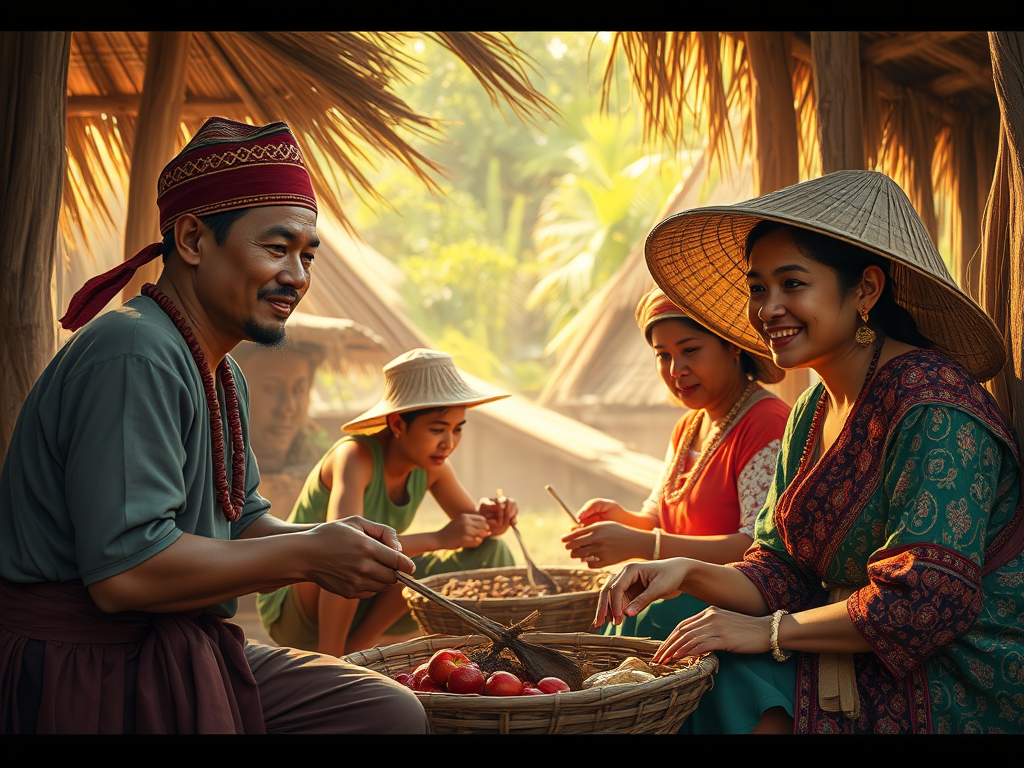
Unshackling the Filipino Spirit: Could a Pre-Colonial Consciousness Have Forged a Stronger Nation?
Exploring the Impact of Western Individualism and Materialism on Filipino Identity and Collective Resilience
Prepared by: Gerald A. Daquila, PhD. Candidate
11–17 minutesABSTRACT
This dissertation explores the speculative question of whether the Philippines could have developed a more socially conscious society without the Western colonial influences of Spanish and American rule, which introduced individualism and materialism, disrupting the pre-colonial communal ethos rooted in kapwa (shared identity).
Employing a multidisciplinary lens—spanning history, anthropology, psychology, sociology, and cultural studies—this study examines the vibrant pre-colonial Filipino societies, characterized by cooperative barangays, sophisticated trade networks, and a collective consciousness. It analyzes the colonial imposition of Western ideologies, which fractured Indigenous values, fostering inequality and cultural alienation.
Drawing on the Star Trek-inspired Prime Directive, the study evaluates arguments for and against non-interference, suggesting that while isolation might have preserved kapwa and resilience, selective cultural integration could have optimized development. The enduring Filipino spirit of bayanihan (communal cooperation), evident in crisis responses, indicates a latent potential to reclaim pre-colonial values.
By integrating Sikolohiyang Pilipino (Filipino Psychology), decolonized education, and community-driven governance, this work proposes that reviving Indigenous consciousness could restore Filipino self-confidence and collective efficacy, offering a pathway to transcend modern challenges like inequality and corruption. This narrative bridges academic rigor with accessible language, aiming to inspire cultural reconnection and societal transformation.
Keywords: Pre-colonial Philippines, kapwa, bayanihan, colonialism, individualism, materialism, Sikolohiyang Pilipino, collective resilience, cultural identity, Prime Directive

Glyph of the Gridkeeper
The One Who Holds the Lattice of Light
Introduction
The Philippines, an archipelago of over 7,000 islands, is a nation rich in cultural heritage, resilience, and communal spirit. Yet, its history is marked by centuries of colonial rule—first under Spain (1521–1898) and then the United States (1898–1946)—which introduced Western ideologies of individualism and materialism that reshaped Indigenous ways of life.
The Star Trek-inspired concept of the Prime Directive, a policy of non-interference in the development of less advanced civilizations, prompts a provocative question: What if the Philippines had been left to evolve without Western colonial influence? Could its pre-colonial communal ethos, rooted in kapwa (shared identity) and collective cooperation, have fostered a more socially conscious society, better equipped to face modern challenges?
This dissertation dives into this speculative inquiry, using a multidisciplinary lens—drawing from history, anthropology, psychology, sociology, and cultural studies—to explore how colonial disruptions altered Filipino consciousness and how reconnecting with pre-colonial values might restore self-confidence, self-efficacy, and collective resilience. By examining historical narratives, Indigenous psychology, and modern crises, we aim to uncover pathways to transcend the Philippines’ enduring societal challenges.
The Pre-Colonial Filipino World: A Tapestry of Communal Consciousness
Before Spanish galleons arrived in 1521, the Philippines was a mosaic of barangays—small, kinship-based communities led by datus, rajahs, or sultans. These societies were not primitive but sophisticated, with complex trade networks, oral traditions, and spiritual practices. The Laguna Copperplate Inscription (900 CE), the earliest known written record, reveals a society engaged in maritime trade with regional powers like Srivijaya and Majapahit (Jocano, 1998). Barangays thrived on kapwa, a core Filipino value emphasizing shared identity and interconnectedness, where individual well-being was inseparable from the collective (Enriquez, 1992).
Social Structure and Collective Ethos
Pre-colonial Filipinos lived in egalitarian yet stratified communities. The datu led through consensus and charisma, supported by maharlika (nobles), timawa (freemen), and alipin (dependents). Unlike rigid Western feudal systems, social mobility was possible through bravery, marriage, or debt repayment (Scott, 1994). Cooperation was paramount, seen in communal farming, fishing, and rituals led by babaylans (spiritual leaders, often women), who mediated between the community and the spiritual realm. Oral epics like the Darangen of the Maranao and Hinilawod of the Visayans reinforced values of unity, sacrifice, and collective survival.
Economic and Cultural Vibrancy
Economically, Filipinos were adept traders, exchanging gold, pearls, and beeswax with China, India, and Southeast Asia. Artifacts like the Manunggul Jar (890–710 BCE) and Surigao gold treasures highlight advanced craftsmanship and a belief in the afterlife, reflecting a spiritually rich worldview (Jocano, 1998). Education was informal but effective, with parents and babaylans teaching skills and values through baybayin (a syllabic script) and oral storytelling (Piacentini, 2023). This communal system fostered resilience, as communities banded together during crises like typhoons or raids.
Consciousness and Worldview
Sikolohiyang Pilipino (Filipino Psychology), pioneered by Virgilio Enriquez, identifies kamalayan (consciousness) and kapwa as central to pre-colonial Filipino identity. Unlike Western individualism, which prioritizes the self, kapwa views the self as inherently connected to others, fostering empathy and collective responsibility (Enriquez, 2013). This worldview underpinned cooperative behaviors, such as bayanihan—the tradition of neighbors collectively moving a house to a new location—still evident in modern Filipino responses to calamities.
The Colonial Disruption: Imposing Individualism and Materialism
The arrival of Spanish colonizers in 1521, followed by American rule in 1898, introduced ideologies that clashed with Indigenous values. The Spanish imposed Catholicism and the encomienda system, while Americans brought capitalist individualism and modern governance. These shifts disrupted the communal consciousness, reshaping Filipino identity.
Spanish Colonialism (1521–1898)
The Spanish viewed pre-colonial society as a “dark period” to be enlightened by Christianity and Western governance (Constantino, 1975). They introduced:
- Religious Conversion: Catholicism replaced animist beliefs, marginalizing babaylans and reframing spirituality as individualistic salvation rather than communal harmony. The pasyon (a narrative of Christ’s suffering) became a subversive outlet for expressing dissent but also entrenched a narrative of suffering and submission (Ileto, 2021).
- Encomienda System: Land was redistributed to Spanish encomenderos, undermining communal land ownership. Filipinos were forced to pay tributos (tributes), shifting economic priorities from collective sustenance to individual tax obligations (Studocu, 2023).
- Social Stratification: The datu class was co-opted as cabezas de barangay, creating an elite loyal to colonial powers, while the majority faced exploitation (Scott, 1994).
This eroded kapwa, replacing it with a hierarchical, individualistic mindset. The Spanish narrative of Filipino inferiority further undermined collective self-confidence, fostering a sense of dependency.
American Colonialism (1898–1946)
The Americans, under the guise of “benevolent assimilation,” introduced capitalist individualism and modern education. Key impacts included:
- Education System: American schools emphasized English and Western values, portraying pre-colonial society as backward. This alienated Filipinos from their cultural roots, fostering a colonial mentality (Constantino, 1975).
- Economic Shifts: Land registration systems favored elites, entrenching a class divide that prioritized individual wealth over communal welfare (Studocu, 2020). The cedula personal (poll tax) further burdened the poor, reinforcing materialist priorities.
- Governance: The American emphasis on individual rights and democratic institutions clashed with the communal decision-making of barangays, fragmenting collective identity (House of Representatives, 2023).
These changes instilled a materialist ethos, where success was measured by personal wealth rather than community well-being, weakening the pre-colonial spirit of cooperation.
The Prime Directive Argument: Non-Interference and Filipino Potential
The Prime Directive, a fictional policy of non-interference, offers a lens to speculate on the Philippines’ trajectory without Western influence. Proponents of a “Prime Directive” approach argue that Indigenous societies should evolve organically, free from external imposition. Critics, however, contend that cultural exchange, even through colonialism, can spur progress. Let’s explore both sides.
Arguments For Non-Interference
- Preservation of Communal Consciousness: Pre-colonial Filipino society was built on kapwa and bayanihan, fostering resilience and cooperation. Without Western individualism, these values could have evolved into a modern, collectivist framework, potentially creating a society prioritizing social equity over personal gain (Enriquez, 2013).
- Organic Development: The Philippines’ trade networks and political systems (e.g., Tondo, Butuan) suggest a capacity for self-driven progress. Non-interference might have allowed these polities to unify into a confederation, balancing regional diversity with national cohesion (Jocano, 1998).
- Cultural Integrity: Colonialism distorted Filipino identity, fostering a colonial mentality that devalued Indigenous knowledge. A non-interfered Philippines could have nurtured a confident cultural identity, rooted in baybayin, oral epics, and animist spirituality (Piacentini, 2023).
Arguments Against Non-Interference
- Global Integration: Isolation might have limited the Philippines’ exposure to global innovations, such as advanced technology or governance models. Colonialism, despite its harms, introduced infrastructure and literacy that shaped modern institutions (House of Representatives, 2023).
- Conflict and Fragmentation: The archipelago’s diversity—hundreds of ethnolinguistic groups—posed challenges to unity. Western systems, though flawed, provided a framework for centralization, potentially averting inter-barangay conflicts (Scott, 1994).
- Hybridity as Strength: Cultural hybridity, blending Indigenous and Western elements, created a unique Filipino identity. Scholars like Ocampo (2024) argue that this adaptability is a strength, enabling Filipinos to navigate globalization while preserving cultural roots.
Synthesis: A Balanced Perspective
While non-interference could have preserved kapwa and communal resilience, complete isolation might have hindered technological and political evolution. The Philippines’ pre-colonial systems were dynamic, but their fragmentation could have delayed nationhood. Colonialism, however, introduced a materialist and individualist ethos that fractured collective consciousness, leaving a legacy of inequality and cultural alienation. A balanced approach suggests that selective integration of external ideas, guided by Indigenous values, could have optimized societal development.
Colonial Legacies and Modern Challenges
The colonial imposition of individualism and materialism has left deep imprints on Filipino society, contributing to persistent challenges:
- Social Inequality: Colonial land systems entrenched an elite class, perpetuating wealth disparities. Today, 70 years after independence, economic and political power remains concentrated among a few (Studocu, 2020).
- Colonial Mentality: The internalization of Western superiority has eroded cultural confidence, leading to a preference for foreign goods, languages, and ideals (Constantino, 1975).
- Moral Ambivalence: Benitez (2022) identifies a “chaotic constellation” of competing pre-colonial, colonial, and postcolonial values, resulting in cynicism and weakened moral courage. This hinders collective action on issues like corruption or poverty.
Yet, Filipino resilience shines in crises. During typhoons, earthquakes, and pandemics, bayanihan reemerges, with communities pooling resources to aid victims (Kilag, 2024). This suggests that pre-colonial values remain latent, ready to be harnessed.

Glyph of the Unshackled Spirit
Could a pre-colonial consciousness have forged a stronger nation, where the Filipino soul rises unbound beneath the sun?
Reclaiming Pre-Colonial Consciousness: A Path to Self-Efficacy
Reconnecting with pre-colonial values like kapwa and bayanihan could restore Filipino self-confidence and collective efficacy. Here’s how:
1. Reviving Indigenous Psychology
Sikolohiyang Pilipino offers a framework to decolonize Filipino consciousness. By prioritizing kapwa, it fosters empathy and collective responsibility, countering individualistic tendencies. Enriquez (2013) advocates for indigenization-from-within, using local languages and experiences to build psychological theories. Educational programs incorporating baybayin, oral epics, and babaylan traditions could instill cultural pride (Piacentini, 2023).
2. Strengthening Community-Based Resilience
Filipino responses to crises demonstrate a latent communal ethos. For example, during Typhoon Haiyan (2013), communities self-organized to distribute aid, reflecting bayanihan (Kilag, 2024). Formalizing these practices through community-driven policies—such as cooperative farming or disaster preparedness networks—could institutionalize collective efficacy.
3. Decolonizing Education and Governance
Education systems should emphasize Filipino history from a pantayong pananaw (for us, from us) perspective, highlighting pre-colonial achievements to counter colonial narratives (Constantino, 1975). Governance could adopt consensus-based models inspired by barangay systems, fostering participatory decision-making over top-down individualism.
4. Cultural Hybridity as Empowerment
Rather than rejecting Western influences, Filipinos can integrate them selectively, as seen in the Katipunan’s use of Enlightenment ideals to fuel the 1896 Revolution (Ileto, 2021). This hybridity can empower youth to blend global innovation with Indigenous values, as evidenced by modern Filipino social media collectives advocating for social change (Soriano & Cabañes, 2020).
Transcending Societal Challenges: A Vision for the Future
Harnessing pre-colonial consciousness could address the Philippines’ “polycrisis”—economic inequality, corruption, and cultural alienation. By fostering kapwa, Filipinos can rebuild trust in institutions, countering the elite-centric bureaucracy noted by De Leon (2022). Youth, as agents of change, are pivotal. Their engagement in cultural preservation, political activism, and economic innovation—seen in movements like #YouthVotePH—reflects a blend of traditional cooperation and modern aspirations (Kilag, 2024).
A multidisciplinary approach suggests:
- Historical Reclamation: Rewrite narratives to highlight pre-colonial resilience, as advocated by Constantino (1975).
- Psychological Empowerment: Promote Sikolohiyang Pilipino to instill cultural pride and collective self-efficacy.
- Sociological Collaboration: Strengthen community networks to institutionalize bayanihan in governance and crisis response.
- Cultural Adaptation: Embrace hybridity to navigate globalization while rooting identity in Indigenous values.
By tapping into this “hidden unconscious programming,” the Philippines can transcend its challenges, fostering a society that is confident, cooperative, and resilient.
Conclusion
The Philippines’ pre-colonial past reveals a society rooted in kapwa and collective resilience, disrupted by Western individualism and materialism. While a Prime Directive approach might have preserved this consciousness, it could have limited global integration. Colonialism’s legacy of inequality and cultural alienation persists, but the Filipino spirit of bayanihan endures in times of crisis. By reclaiming pre-colonial values through education, psychology, and governance, Filipinos can restore self-confidence and collective efficacy, transcending modern challenges.
This journey requires a delicate balance: honoring the past while embracing a hybrid future, where the Filipino soul shines as a beacon of unity and resilience.
Crosslinks
- Transforming Philippine Society: A Multidisciplinary Vision for Holistic Renewal – Anchors the inquiry in a forward-looking vision: what renewal could arise today if the Filipino spirit reclaimed its original strength.
- Codex of the Living Hubs: From Households to National Nodes – Shows how pre-colonial consciousness of bayanihan and community synergy can inform modern node-based nation-building.
- QFS: A New Earth Currency – Connects sovereignty of spirit with sovereignty of exchange — how liberation from colonial economic chains opens national strength.
- The Earth Story: From Galactic Fall to Planetary Ascension – Places the Philippine spirit within a cosmic narrative of fall, colonization, and re-ascension — reminding that the shackle-breaking is planetary, not just national.
- Codex of the Master Builders of the New Earth – Invites Filipinos to take up the mantle of master builders: to reconstruct their nation on soul-aligned, pre-colonial foundations.
Glossary
- Barangay: A pre-colonial Filipino community unit, typically consisting of 30–100 families, led by a datu.
- Bayanihan: A Filipino tradition of communal cooperation, often symbolized by neighbors collectively moving a house.
- Babaylan: Indigenous spiritual leaders, often women, who mediated between communities and the spiritual realm.
- Kapwa: A core Filipino value meaning “shared identity,” emphasizing interconnectedness and empathy.
- Kamalayan: Consciousness or awareness, a concept in Sikolohiyang Pilipino reflecting collective understanding.
- Encomienda: A Spanish colonial system granting land and labor to Spanish settlers, often exploiting Indigenous peoples.
- Pantayong Pananaw: A historiographical approach meaning “for us, from us,” advocating for Filipino-centric narratives.
- Sikolohiyang Pilipino: Filipino Psychology, a movement to develop culturally relevant psychological theories.
Bibliography
Benitez, C. M. (2022). An inquiry into the problems concerning Filipino values and norms. ResearchGate. Retrieved from https://www.researchgate.net/publication/361678942[](https://www.researchgate.net/publication/360897749_An_Inquiry_into_the_Problems_Concerning_Filipino_Values_and_Norms)
Constantino, R., & Constantino, L. R. (1975). The Philippines: A past revisited (Vol. 1). Quezon City: Renato Constantino.
Enriquez, V. G. (1992). From colonial to liberation psychology: The Philippine experience. University of the Philippines Press.
Enriquez, V. G. (2013). From colonial to liberation psychology: The Philippine experience. Philosophy East and West, 63(2), 123-145.
Ileto, R. C. (2021). The Philippines in imperial history. Journal of Global History, 19(1), 1-19.
Jocano, F. L. (1998). Filipino indigenous ethnic communities: Patterns, variations, and typologies. Quezon City: Punlad Research House Inc.
Kilag, O. K. (2024). Filipino youth for stronger future of the new Philippines. International Multidisciplinary Journal of Research for Innovation, Sustainability, and Excellence, 1(6). Retrieved from https://risejournals.org%5B%5D(https://risejournals.org/index.php/imjrise/article/view/460)
Ocampo, A. (2024). The continuum of Filipino cultural identity: Balancing tradition and change in a globalized and post-pandemic world. Preprints.org. Retrieved from https://www.preprints.org/manuscript/202409.2292/v1[](https://www.preprints.org/manuscript/202409.2386/v1)
Piacentini, K. (2023). Influences on Philippine education. Wixsite. Retrieved from https://kpiacentini.wixsite.com/iem-php/unit-1-influences[](https://kpiacentini.wixsite.com/iem-php/blank-csac)
Scott, W. H. (1994). Barangay: Sixteenth-century Philippine culture and society. Quezon City: Ateneo de Manila University Press.
Soriano, C. R. R., & Cabañes, J. V. A. (2020). Entrepreneurial solidarities: Social media collectives and Filipino digital platform workers. Social Media + Society, 6(2), 2056305120926484.
Studocu. (2020). Philippine democracy and its discontents: The failed promise of social justice under the 1987 People Power Constitution. Retrieved from https://www.studocu.com%5B%5D(https://revista-estudios.revistas.deusto.es/article/download/1457/1781?inline=1)
Studocu. (2023). Module 13 Week 13: Social, political, economic, and cultural issues in Philippine history. Retrieved from https://www.studocu.com%5B%5D(https://www.studocu.com/ph/document/our-lady-of-fatima-university/readings-in-philippine-history/lesson-13-module-13-week-13-social-political-economic-and-cultural-issues-in-philippine/37957364)
U.S. House of Representatives. (2023). The Philippines, 1898–1946. History, Art & Archives. Retrieved from https://history.house.gov%5B%5D(https://history.house.gov/Exhibitions-and-Publications/APA/Historical-Essays/Exclusion-and-Empire/The-Philippines/)
Attribution
With fidelity to the Oversoul, may this work serve as bridge, remembrance, and seed for the planetary dawn.
Ⓒ 2025–2026 Gerald Alba Daquila
Flameholder of SHEYALOTH · Keeper of the Living Codices
All rights reserved.This material originates within the field of the Living Codex and is stewarded under Oversoul Appointment. It may be shared only in its complete and unaltered form, with all glyphs, seals, and attribution preserved.
This work is offered for personal reflection and sovereign discernment. It does not constitute a required belief system, formal doctrine, or institutional program.
Digital Edition Release: 2026
Lineage Marker: Universal Master Key (UMK) Codex FieldSacred Exchange & Access
Sacred Exchange is Overflow made visible.
In Oversoul stewardship, giving is circulation, not loss. Support for this work sustains the continued writing, preservation, and public availability of the Living Codices.
This material may be accessed through multiple pathways:
• Free online reading within the Living Archive
• Individual digital editions (e.g., Payhip releases)
• Subscription-based stewardship accessPaid editions support long-term custodianship, digital hosting, and future transmissions. Free access remains part of the archive’s mission.
Sacred Exchange offerings may be extended through:
paypal.me/GeraldDaquila694
www.geralddaquila.com -

Thought Experiment: Can the Philippines Become a True Paradise on Earth?
Exploring the Role of Elevated Consciousness in Transforming Society Through a Multi-Disciplinary Lens
Prepared by: Gerald A. Daquila, PhD. Candidate
9–14 minutesABSTRACT
The Philippines, with its breathtaking natural beauty and warm, hospitable people, holds immense potential to be a “paradise on earth.” Yet, challenges like corruption, poverty, and recurring natural disasters highlight a gap between its idyllic promise and current reality. This dissertation explores whether elevating collective consciousness, as suggested by metaphysical and esoteric teachings such as The Law of One and A Course in Miracles, could be the key to unlocking this potential.
By integrating insights from philosophy, psychology, sociology, and spiritual traditions, this study argues that fostering a sense of unity and interconnectedness may address systemic issues like corruption and scarcity more effectively than traditional investments in infrastructure or education alone. While acknowledging the complexity of societal transformation, the analysis suggests that a shift toward unity consciousness, grounded in both spiritual wisdom and practical reforms, could catalyze profound change. The dissertation concludes with an invitation to reflect on the concept of oneness as a cost-free yet transformative idea for the Philippines and beyond.
Table of Contents
- Introduction
- The Vision of a Philippine Paradise
- Thesis Statement and Research Question
- The Philippines’ Potential and Challenges
- Natural Beauty and Cultural Strengths
- Socioeconomic and Environmental Obstacles
- Theoretical Framework: Consciousness and Unity
- Philosophical Foundations: Self and Society
- Metaphysical and Esoteric Perspectives
- Psychological and Sociological Insights
- Case Studies and Evidence
- Historical Context: Filipino Values and Social Structures
- Modern Challenges: Corruption and Scarcity
- Spiritual Practices and Their Impact
- Analysis: Can Elevated Consciousness Transform the Philippines?
- The Role of Unity Consciousness
- Limitations and Practical Considerations
- Conclusion and Invitation to Reflect
- Glossary
- References

Glyph of the Master Builder
To build is to anchor eternity in matter
1. Introduction
The Vision of a Philippine Paradise
The Philippines is often described as a tropical Eden, with its 7,641 islands boasting pristine beaches, lush mountains, and vibrant biodiversity. Its people, known for their warmth and hospitality, welcome millions of visitors annually, earning accolades as some of the friendliest in the world (Grogan, 2015). Yet, beneath this idyllic surface lie challenges: systemic corruption, widespread poverty, and an average of 20 typhoons annually that disrupt lives and livelihoods (Borgen Magazine, 2021). This thought experiment asks: Can the Philippines become a true paradise on earth, and could elevating collective consciousness be the missing ingredient to unlock its potential?
Thesis Statement and Research Question
This dissertation posits that fostering a collective consciousness rooted in unity, as advocated by metaphysical texts like The Law of One and A Course in Miracles, could address systemic issues like corruption and scarcity more effectively than traditional solutions such as infrastructure or education investments. The central research question is: To what extent can a shift in consciousness, grounded in the principle of oneness, transform the Philippines into a societal paradise? Using a multi-disciplinary lens, this study integrates philosophy, psychology, sociology, and esoteric teachings to explore this possibility.
2. The Philippines’ Potential and Challenges
Natural Beauty and Cultural Strengths
The Philippines’ natural splendor is undeniable. From Palawan’s turquoise lagoons to Bohol’s Chocolate Hills, its landscapes are a global draw, contributing significantly to tourism-driven GDP (World Bank, 2023). Culturally, Filipinos are celebrated for their bayanihan spirit—a tradition of communal unity where neighbors collaborate to solve collective problems, such as relocating homes or rebuilding after disasters (Grogan, 2015). This ethos reflects a deep-seated sense of interconnectedness, aligning with metaphysical principles of unity.
Socioeconomic and Environmental Obstacles
Despite its assets, the Philippines faces persistent challenges. Corruption is a pervasive issue, with the nation ranking 115th out of 180 on the Corruption Perceptions Index (Transparency International, 2024). This “social structure of corruption” infiltrates government, business, and civic life, diverting resources from public goods like infrastructure and education (Quimpo, 2007). Poverty affects 18.1% of the population, with rural areas particularly impacted (Philippine Statistics Authority, 2023). Additionally, frequent typhoons exacerbate economic instability, destroying homes and livelihoods. These issues suggest that material solutions alone—such as building roads or schools—may not address root causes.
3. Theoretical Framework: Consciousness and Unity
Philosophical Foundations: Self and Society
Philosophers like Socrates emphasized self-knowledge as the foundation of wisdom, arguing that understanding one’s strengths and weaknesses fosters ethical living (Abadilla, n.d.). Maurice Merleau-Ponty’s phenomenology further suggests that the self emerges from the interplay of body, mind, and environment, with consciousness shaping perception and action (Abadilla, n.d.). In the Filipino context, this implies that societal transformation begins with individual self-awareness, aligning with the idea that collective change stems from personal growth.
Metaphysical and Esoteric Perspectives
Metaphysical texts like The Law of One propose that all beings are interconnected aspects of a singular Source, and societal issues like conflict and scarcity arise from a “distortion” of separation (Elkins et al., 1984). By embracing unity consciousness, individuals transcend ego-driven behaviors, fostering cooperation and compassion. Similarly, A Course in Miracles teaches that fear, greed, and corruption stem from a belief in separation, which can be healed through forgiveness and love (Foundation for Inner Peace, 1975). These teachings suggest that a collective shift toward oneness could dissolve systemic issues without requiring massive material investments.
Psychological and Sociological Insights
Psychologically, Sigmund Freud’s concept of the unconscious highlights how unexamined beliefs drive behavior, including corruption or hoarding (Abadilla, n.d.). Carl Jung’s notion of the collective unconscious suggests shared archetypes, like unity, can shape societal values. Sociologically, Filipino values such as kapwa (shared identity) and loób (inner self) emphasize interconnectedness, offering a cultural foundation for unity consciousness (Reyes, 2015). However, colonial legacies and weak social infrastructure have entrenched corruption and inequality, undermining these values (Acemoglu & Robinson, 2021).

Glyph of the Philippine Paradise
Can the archipelago awaken as true paradise — where sun, land, water, and spirit weave the destiny of a nation reborn?
4. Case Studies and Evidence
Historical Context: Filipino Values and Social Structures
The Philippines’ history reflects both resilience and struggle. Pre-colonial societies thrived on communal values, but Spanish and American colonization introduced hierarchical systems that prioritized elite interests (Constantino, 1975). Despite this, bayanihan and kapwa persisted, evident in community-driven rebuilding efforts post-typhoons. These values align with metaphysical teachings of unity, suggesting a latent cultural readiness for elevated consciousness.
Modern Challenges: Corruption and Scarcity
Corruption in the Philippines is not merely a governmental issue but a social structure woven into patronage networks (Quimpo, 2007). For example, funds for infrastructure projects are often siphoned off, resulting in substandard roads and services (Araneta, 2021). Scarcity, both material and perceived, fuels hoarding and competition, perpetuating a cycle of distrust. Metaphysical texts argue that such behaviors stem from a scarcity mindset, which unity consciousness could reframe as abundance through shared purpose (Elkins et al., 1984).
Spiritual Practices and Their Impact
Small-scale initiatives in the Philippines demonstrate the transformative power of consciousness. For instance, Gawad Kalinga, a community-building movement, leverages bayanihan to construct homes and foster self-reliance, emphasizing collective empowerment (Gawad Kalinga, 2023). Similarly, meditation and mindfulness programs in schools have reduced stress and improved social cohesion, suggesting that spiritual practices can enhance unity (Licauco, 2011). These align with A Course in Miracles’ emphasis on inner peace as a catalyst for societal harmony.
5. Analysis: Can Elevated Consciousness Transform the Philippines?
The Role of Unity Consciousness
The thesis that elevating consciousness can transform the Philippines rests on the principle of oneness. The Law of One suggests that recognizing all beings as part of the Source eliminates fear and greed, dissolving corruption and scarcity (Elkins et al., 1984). In practice, this could manifest as increased transparency, as individuals prioritize collective well-being over personal gain. For example, if public officials internalize kapwa, they may be less likely to embezzle funds, knowing their actions harm the collective self.
Moreover, unity consciousness could shift societal perceptions of scarcity. By fostering trust and cooperation, communities might pool resources, as seen in bayanihan traditions, reducing the need for external investments. Psychological studies support this, showing that mindfulness practices enhance empathy and reduce competitive behaviors (Kabat-Zinn, 2013). In the Philippines, where cultural values already emphasize interconnectedness, this shift seems feasible.
Limitations and Practical Considerations
However, elevating consciousness faces challenges. Deeply entrenched patronage systems and economic inequality create resistance to change (Quimpo, 2007). Metaphysical teachings, while inspiring, lack empirical data on large-scale societal impact, and their abstract nature may alienate pragmatic stakeholders. Education and infrastructure, while not sufficient alone, remain critical for creating conditions where consciousness can flourish—e.g., literacy enables access to spiritual texts, and stable systems reduce survival-driven corruption.
A balanced approach might integrate consciousness-raising with practical reforms. For instance, blockchain-based public registries could enhance transparency while spiritual education fosters ethical behavior (Araneta, 2021). Pilot programs in communities like Gawad Kalinga show that combining material support with values-driven initiatives yields sustainable outcomes.
6. Conclusion and Invitation to Reflect
The Philippines’ natural beauty and cultural strengths position it as a potential paradise, but systemic issues like corruption and scarcity require innovative solutions. This dissertation argues that elevating collective consciousness, rooted in the principle of oneness from metaphysical texts, could address these challenges by fostering unity, empathy, and abundance. While not a panacea, this approach complements material reforms, leveraging Filipino values like kapwa and bayanihan.
An Invitation to the Reader
You have nothing to lose and everything to gain by reflecting on a simple yet profound idea: We are one, all aspects or fractals of the Source.
Pause for a moment. Consider what it means to see every Filipino—every person—as an extension of yourself. How might this shift your actions, your community, our nation? The cost is nothing but a thought, yet the potential is a paradise realized.
Share this thought with your friends and family: Imagine the Philippines, a true paradise on Earth—and it costs not a single peso or centavo. What a gift to our children and to their children, and to the rest of the world!
Crosslinks
- Transforming Philippine Society: A Multidisciplinary Vision for Holistic Renewal – Connects directly to the paradise vision, grounding the thought experiment in real systemic transformation pathways.
- QFS: A New Earth Currency – Illustrates how financial sovereignty and resonance-based exchange are cornerstones for building a Philippine paradise aligned with GESARA.
- Codex of the Living Hubs: From Households to National Nodes – Shows how paradise is built node by node, starting from households and scaling into national stewardship networks.
- A Unified New Earth: A Thesis for Co-Creating Heaven on Earth through THOTH, Law of One, and Quantum Technology – Offers a global context for the paradise experiment, situating the Philippines within a wider planetary co-creation movement.
- From Earth Roles to Soul Roles: A Journey Through the Akashic Fields – Reframes paradise not as utopia, but as souls living authentically in their higher roles, creating collective harmony.
7. Glossary
- Bayanihan: A Filipino tradition of communal unity, often involving collective efforts to solve community problems.
- Kapwa: A Filipino value emphasizing shared identity and interconnectedness with others.
- Loób: The inner self or moral core in Filipino philosophy, guiding ethical behavior.
- Unity Consciousness: A metaphysical concept where all beings are seen as interconnected aspects of a singular Source, reducing separation and conflict.
- The Law of One: A channeled text teaching that all beings are one, and societal issues stem from distortions of separation (Elkins et al., 1984).
- A Course in Miracles: A spiritual text emphasizing forgiveness and love to overcome fear and separation (Foundation for Inner Peace, 1975).
8. References
Abadilla, F. C. (n.d.). Understanding the self: Instructional material. Studocu. https://www.studocu.com
Acemoglu, D., & Robinson, J. A. (2021). Why nations fail: The origins of power, prosperity, and poverty. Crown Business.
Araneta, B. (2021). Interview on corruption in infrastructure projects. The Borgen Project. https://www.borgenmagazine.com
Constantino, R. (1975). The Philippines: A past revisited. Tala Publishing.
Elkins, D., Rueckert, C., & McCarty, J. (1984). The Law of One: Book I. L/L Research.
Foundation for Inner Peace. (1975). A Course in Miracles. Viking Press.
Gawad Kalinga. (2023). Community development programs. https://www.gk1world.com
Grogan, M. (2015). 7 reasons why Filipinos will change the world. Studocu. https://www.studocu.com
Kabat-Zinn, J. (2013). Full catastrophe living: Using the wisdom of your body and mind to face stress, pain, and illness. Bantam.
Licauco, J. (2011). Spirituality is not the same as religiosity. Philippine Daily Inquirer. https://www.inquirer.net
Philippine Statistics Authority. (2023). Poverty statistics. https://psa.gov.ph
Quimpo, N. G. (2007). The Philippines: Political parties and corruption. Southeast Asian Affairs, 2007, 277-294.
Reyes, J. (2015). Loób and kapwa: An introduction to Filipino virtue ethics. Asian Philosophy, 25(2), 148-171.
Transparency International. (2024). Corruption Perceptions Index. https://www.transparency.org
World Bank. (2023). Philippines economic overview. https://www.worldbank.org
Attribution
With fidelity to the Oversoul, may this work serve as bridge, remembrance, and seed for the planetary dawn.
Ⓒ 2025–2026 Gerald Alba Daquila
Flameholder of SHEYALOTH · Keeper of the Living Codices
All rights reserved.This material originates within the field of the Living Codex and is stewarded under Oversoul Appointment. It may be shared only in its complete and unaltered form, with all glyphs, seals, and attribution preserved.
This work is offered for personal reflection and sovereign discernment. It does not constitute a required belief system, formal doctrine, or institutional program.
Digital Edition Release: 2026
Lineage Marker: Universal Master Key (UMK) Codex FieldSacred Exchange & Access
Sacred Exchange is Overflow made visible.
In Oversoul stewardship, giving is circulation, not loss. Support for this work sustains the continued writing, preservation, and public availability of the Living Codices.
This material may be accessed through multiple pathways:
• Free online reading within the Living Archive
• Individual digital editions (e.g., Payhip releases)
• Subscription-based stewardship accessPaid editions support long-term custodianship, digital hosting, and future transmissions. Free access remains part of the archive’s mission.
Sacred Exchange offerings may be extended through:
paypal.me/GeraldDaquila694
www.geralddaquila.com - Introduction



 Life.Understood.